
How to Choose a Dental Specialist in Chevy Chase, MD
A decision guide for Chevy Chase patients: when aging crowns, implants, cosmetic work, or a large treatment plan calls for a prosthodontist, and what to evaluate before committing.
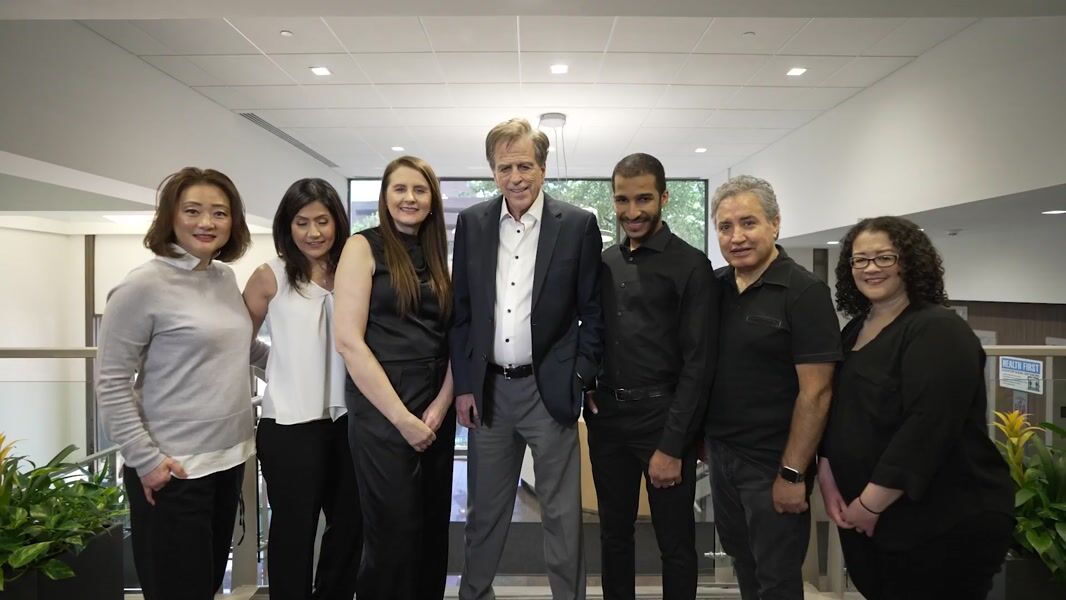
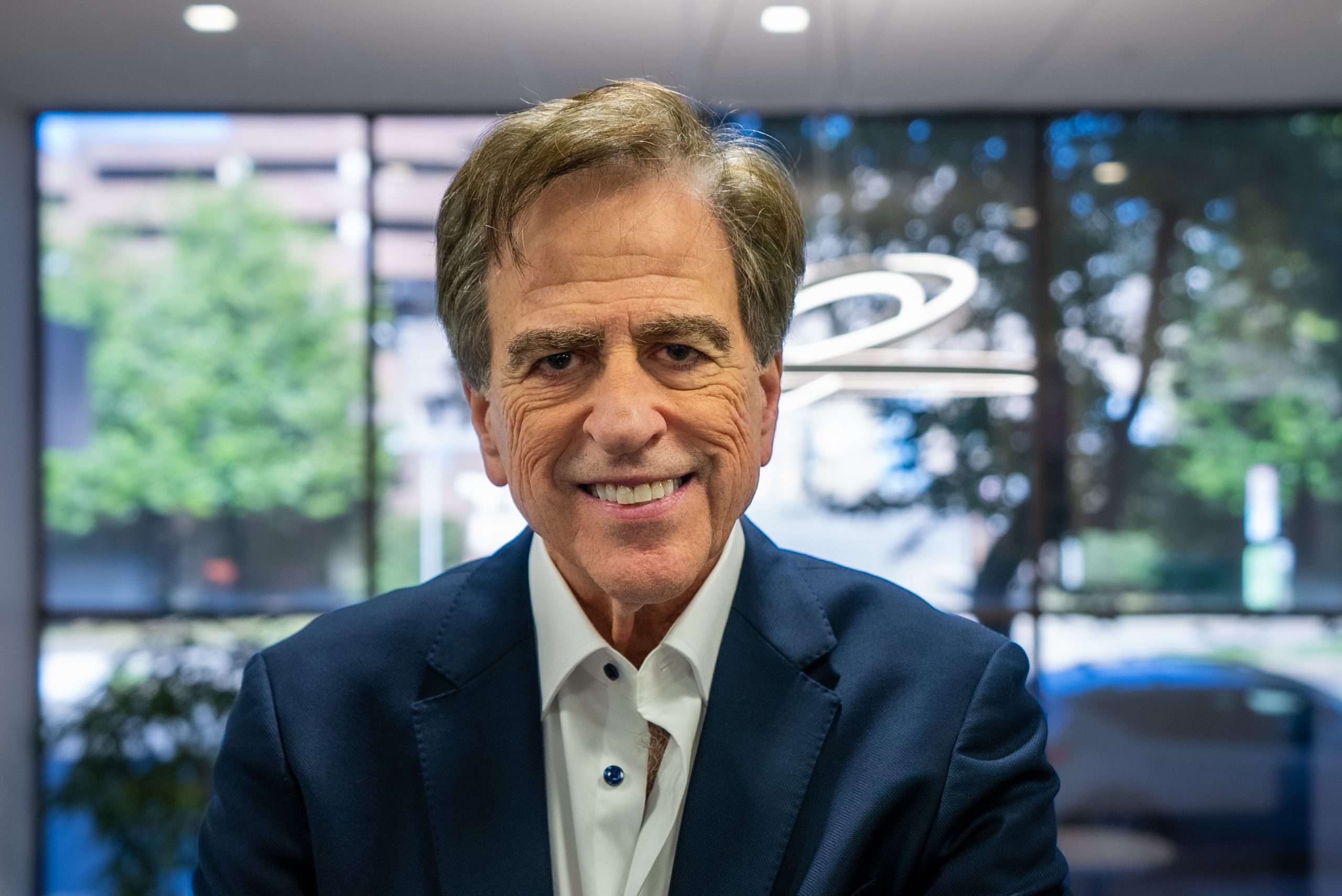
Practice clinician: Gerald M. Marlin, DMD, MSD, prosthodontist, Elite Prosthetic Dentistry, Friendship Heights, Washington, DC. Last updated .
For Chevy Chase patients, Elite Prosthetic Dentistry is a short drive away in Friendship Heights, Washington DC, just south of the Maryland line; the practice does not have a Chevy Chase office. The real question is not distance. It is knowing when older crowns, bridgework, implants, or a proposed treatment plan deserve specialist-level diagnosis before anything irreversible happens.
Many patients who come to us from Chevy Chase have crowns and bridges placed years or decades ago, often excellent work that is still serving well. The question they bring is usually not an emergency. It is whether a specific restoration has developed a problem worth addressing, which ones are sound and should be left alone, and how to sequence any work that is needed.
The Quiet Decision: Renew on Your Terms or Repair on the Tooth’s Terms
Problems with restorations rarely announce themselves. A dark line at a crown margin, food catching where it never used to, a bridge that has been recemented twice. Each item seems minor, and some are. The evaluation separates a cosmetic change from a structural one. When several restorations show real problems at the same time, a coordinated plan is often more predictable than replacing them one at a time as each fails; when only one does, limited treatment is the right answer.
That question, repair again or renew deliberately, is the subject of our guide to aging crowns, bridges, and implant restorations, the most relevant starting point for many Chevy Chase readers. The companions cover the neighboring situations: replacing older cosmetic work so it reads as teeth, not dentistry; what a comprehensive rebuild involves when the bite itself is part of the problem; how implant treatment should be planned when failing bridgework raises that question; getting an independent read before any extraction or large plan; and a fair look at implant centers versus specialty care.
A Maintenance Framework for Aging Dentistry
Aging dentistry rewards the same discipline as any well-built structure: you do not wait for the roof to fail; you inspect, prioritize, and schedule.
Judge each restoration on its condition, not its age. How long a crown, bridge, or veneer serves depends on the materials, the bite it lives in, and hygiene access, and it varies widely. Work placed twenty or more years ago may still be excellent, or may look sound on the surface while decay works under a margin. Only imaging and a careful examination can tell the difference, and the answer is made restoration by restoration.
Watch the early signals by restoration type. For crowns: dark margin lines, floss catching or shredding, sensitivity that comes and goes. For bridges: looseness, repeated recementing, food packing under the span. For veneers: chipped edges, dulling or mismatch as natural teeth age around them. For implant crowns: gum recession showing metal, a contact that opens so food traps, wear that no longer matches neighboring teeth.
Sequence by consequence, not by symptom. A failing bridge abutment can take supporting teeth with it; a cosmetic mismatch can wait. A proper evaluation ranks what protects tooth structure first, then function, then appearance, and puts calendar dates on each so nothing is decided in an emergency.
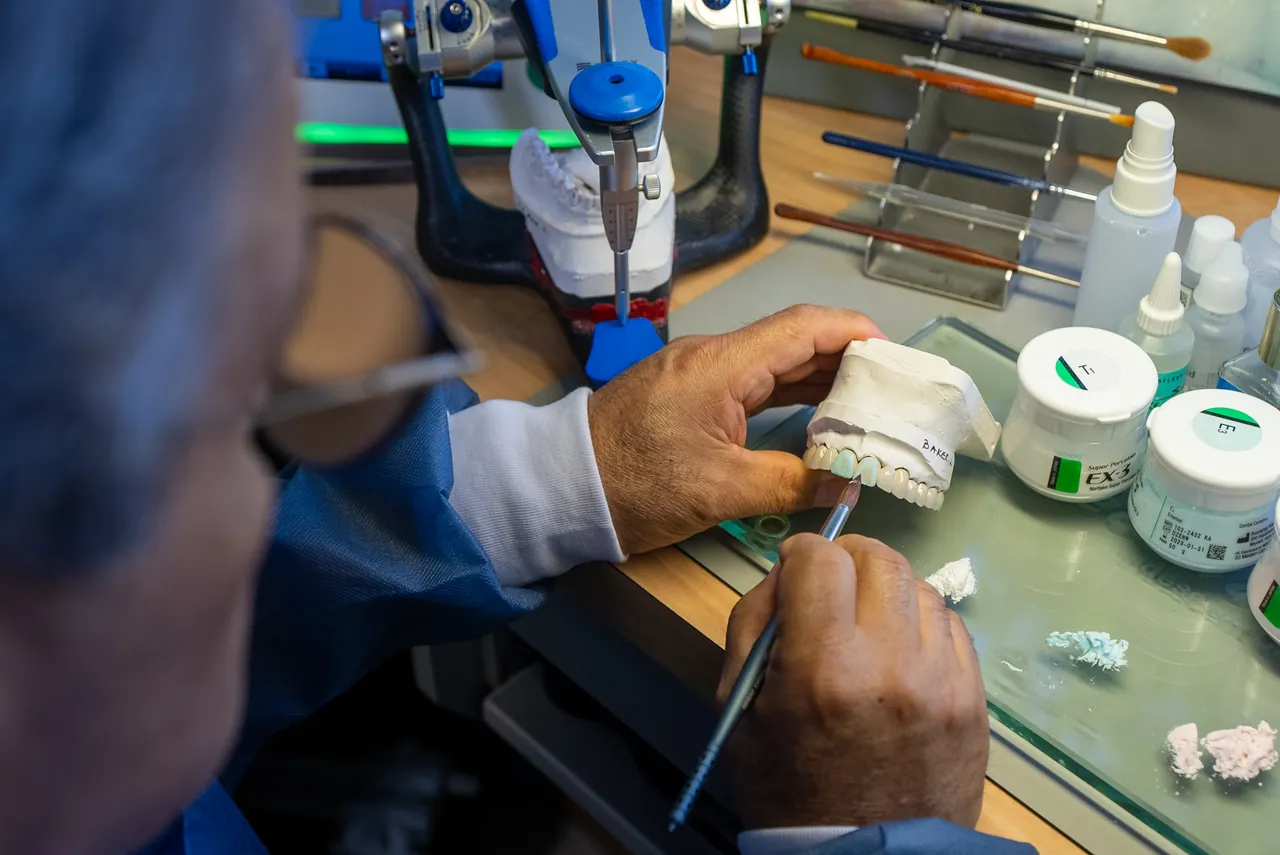
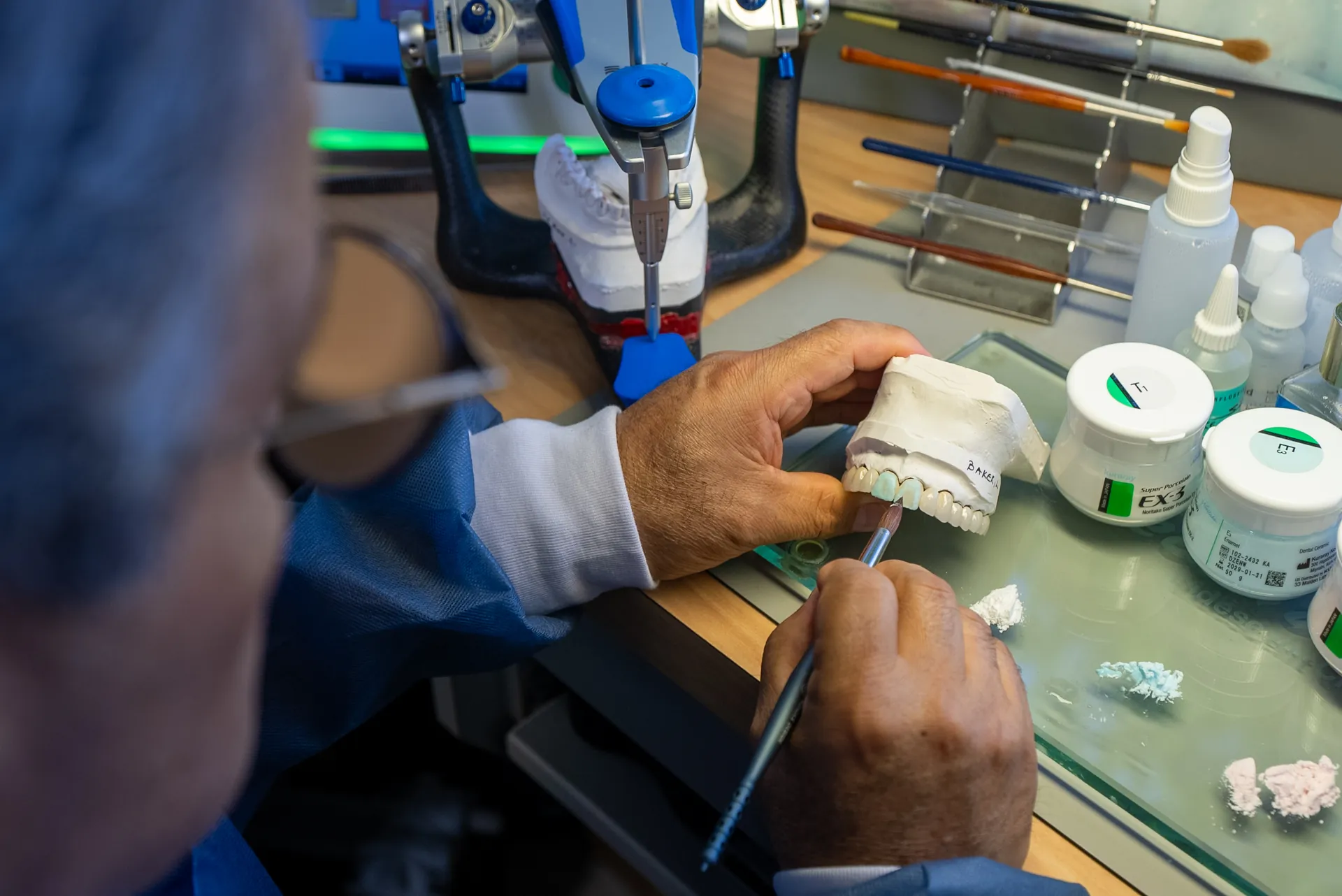
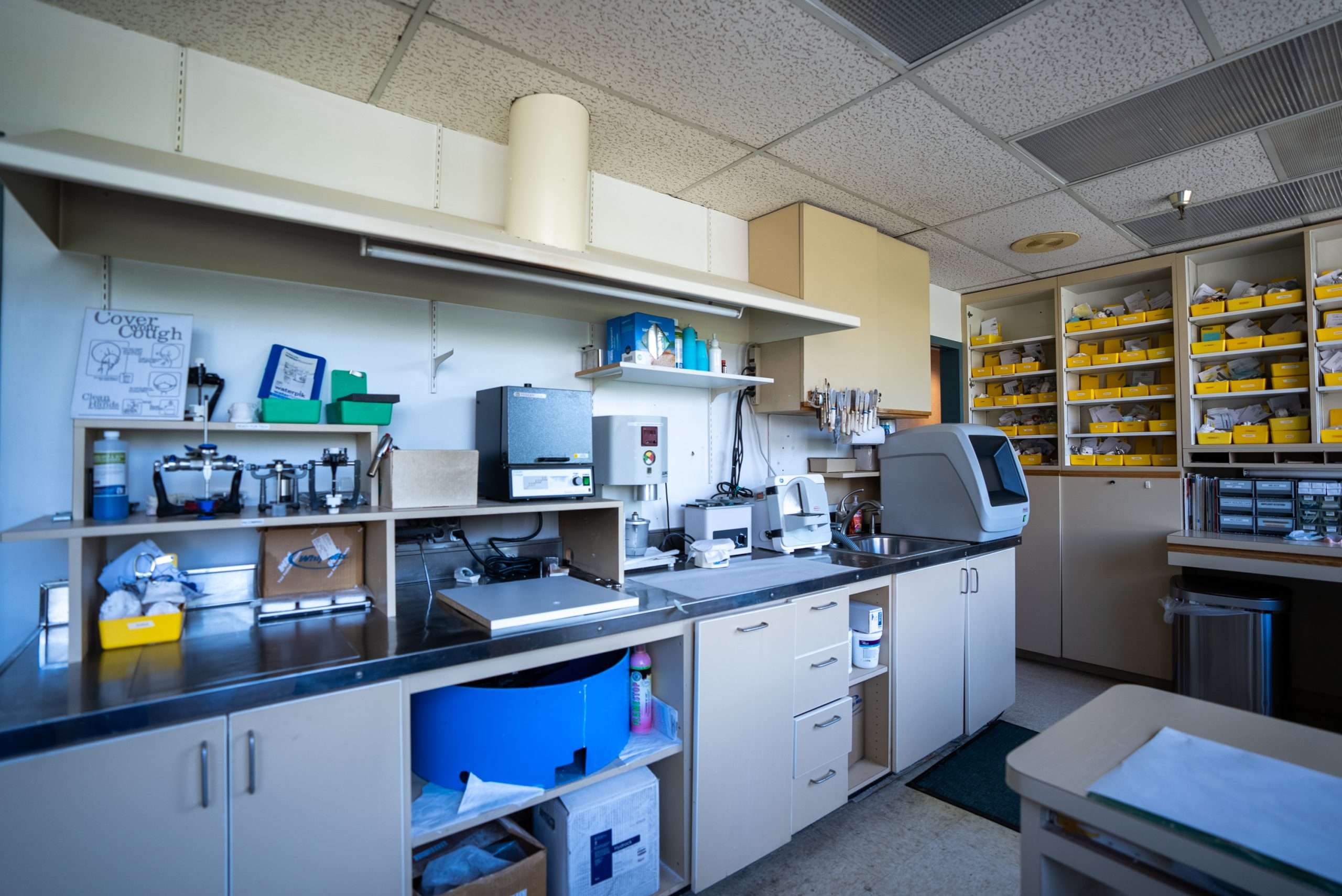
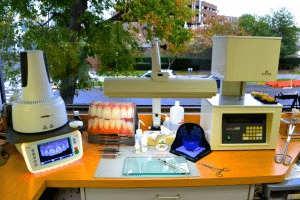
Ask how materials are chosen. Modern ceramics vary widely in strength and translucency. The right choice depends on position, bite force, and the appearance of adjacent teeth, decisions our in-house laboratory refines with the clinical team in person rather than by courier.
Three Questions Chevy Chase Patients Ask
A missing or failing front tooth. A front tooth is the least forgiving replacement in dentistry; the gum line, the implant position and the crown all have to match one specific neighbor. Our guide on replacing a missing front tooth explains when an implant, a bridge or saving the tooth is the right answer, with documented cases, including a front tooth missing for more than ten years after the patient was told there was not enough bone.
Bone loss around an existing implant. Bone loss on an X-ray does not automatically mean the implant is lost. The evaluation separates a loose crown or abutment from a loose implant, measures the bone that remains and determines whether the implant can be treated and kept or should be removed and the site rebuilt. Two documented cases show both outcomes: a failing implant with bone loss evaluated, treated and followed for six years and a compromised implant removed early, the ridge rebuilt and a replacement placed. Our page on bone loss around dental implants covers the evaluation.
A loose snap-in denture. Looseness in an implant overdenture is usually the attachments, the denture base or the bite, not the implants, and each is corrected differently. Our page on loose snap-in dentures explains the evaluation, and the guide on fixed implant teeth versus a removable implant denture covers whether a different design would serve better. A documented case: severely worn implant overdentures remade on the patient’s existing implant bars.
Coordinating With Your Dentist in Chevy Chase
Before a first visit, ask your dentist to send existing X-rays and any CBCT scan, or let us request them. After treatment, routine hygiene can stay with your dentist in Chevy Chase; we send the records, materials and maintenance schedule. If a restoration we made needs attention, call us first.
When Elite Prosthetic Dentistry Is a Strong Fit for Chevy Chase Patients
- Several crowns, veneers, bridges, or implant restorations show problems at once and you want one coordinated plan.
- You want to know which restorations are sound and which need attention, so that any work is planned rather than done in an emergency.
- Appearance matters, but you want results that read as natural teeth, not obvious dental work.
- You want the entire process, from diagnosis through laboratory refinement, handled in one practice a short drive from home.
When Another Setting May Serve You Better
- A single routine crown with an established general dentist you trust does not need a specialist.
- If you are shopping primarily on price or speed, a specialty practice built around comprehensive planning is the wrong tool.
Proof Worth Reviewing
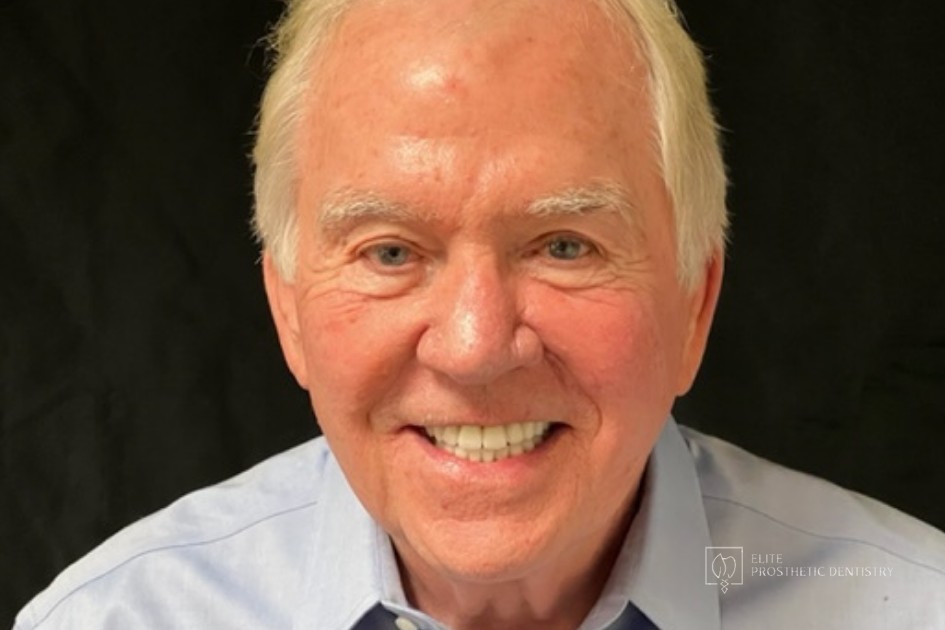
Judge us by documented work, not marketing: older implant crowns redesigned for a better bite and more natural appearance shows how existing implant work is upgraded rather than merely replaced, and aging, opaque restorations replaced with customized ceramic restorations shows the difference laboratory control makes when the goal is dentistry that does not look like dentistry. The full library is organized by situation in our success story hubs.
Getting Here from Chevy Chase
The practice is in Friendship Heights, Washington DC. From Chevy Chase Circle, the Village, or anywhere along the Connecticut Avenue corridor, the office is a short drive south to 4400 Jenifer Street NW, Suite 220, just below the Maryland/DC line. On-site parking is available in the building, and evaluation and laboratory visits are scheduled with your calendar in mind. Request a private consultation or call (202) 244-2101. No pressure. Clear answers. A defined plan.
Frequently Asked Questions
How close is Elite Prosthetic Dentistry to Chevy Chase?
The office is in Friendship Heights, Washington DC, at 4400 Jenifer Street NW, just south of the Maryland/DC border. From Chevy Chase Circle or the Village, that is roughly a three to five minute drive down Connecticut or Wisconsin Avenue, depending on traffic. The practice does not have a Chevy Chase office.
My crowns were placed decades ago and still feel fine. Why evaluate them?
Age by itself is not a reason to replace a restoration. Many crowns placed decades ago are still sound and should be left alone. The reason to evaluate is that problems such as an open margin, decay under a crown, or a loosening bridge often develop without symptoms. An evaluation does not commit you to treatment. It identifies which restorations are sound, which show a specific problem, and which can simply be monitored.
Can treatment be kept discreet and unrushed?
Care is planned visit by visit, and provisional restorations are designed to maintain appearance and function between phases. Treatment is paced to the case rather than to a package, and the sequence is set out in advance so you know what each visit involves.
Does replacing older dentistry always mean a big case?
No. The point of an evaluation is proportion. Some patients need one or two restorations renewed; others benefit from a coordinated plan across several. The evaluation separates what is sound from what is aging, so the treatment matches the actual condition rather than a package.
Related Patient Success Stories
Explore similar patient success stories demonstrating our expertise in advanced prosthetic dentistry.
 Before
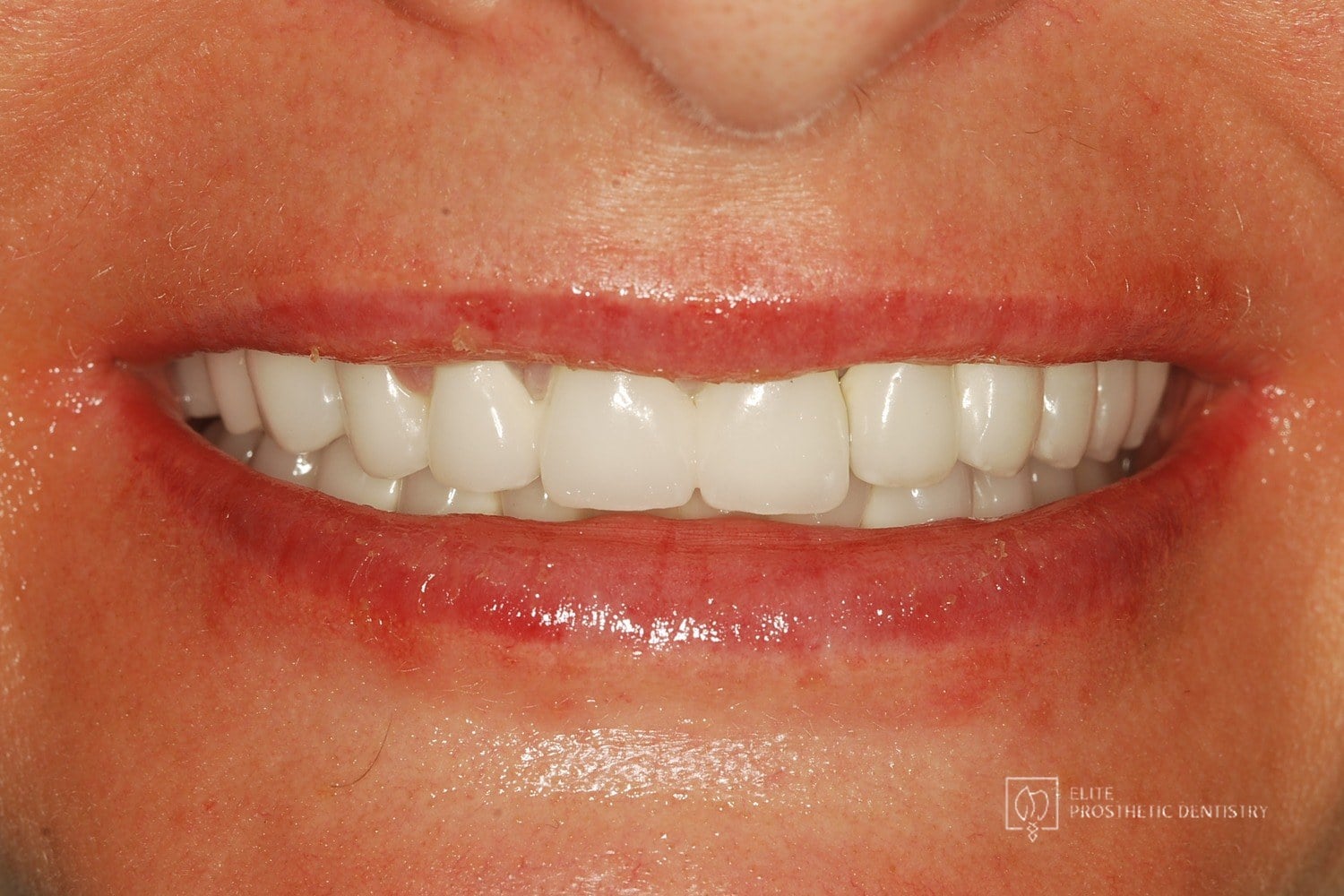 After
How Aging, Failing Dentistry Was Replaced with a Coordinated Full-Mouth Implant and Crown Reconstruction
The patient presented with throbbing upper-molar pain, long-standing infections, multiple root canals and unfinished prior treatment, generalized sensitivity, and several hopeless teeth.
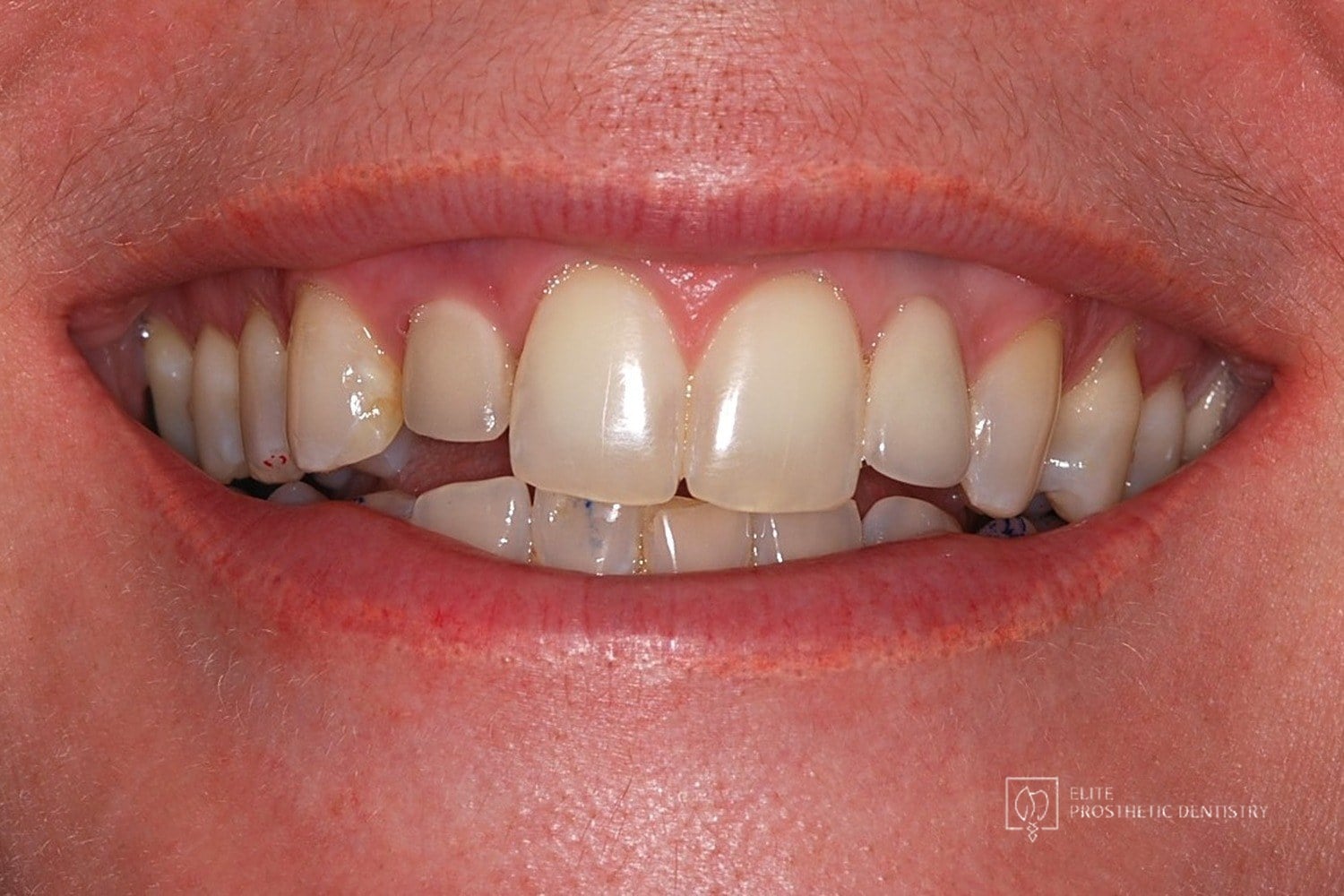 Before
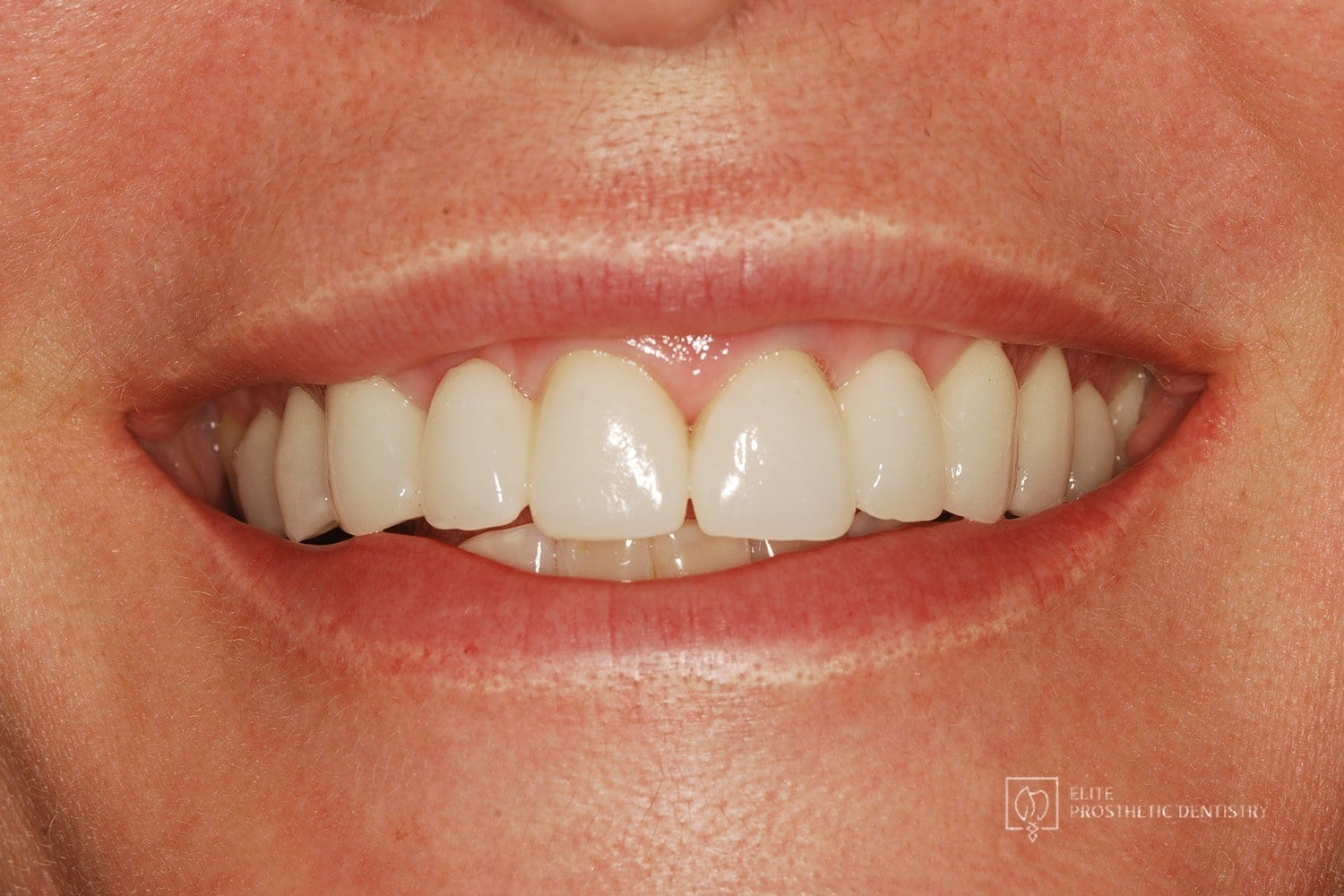 After
How Failing Lateral Incisor Implants Were Replaced with Custom Zirconia Bridges After Severe Bone Loss Made Replacement Implants Impossible
Comprehensive examination including CBCT imaging revealed significant bone loss surrounding implants that were placed outside the buccal plate, most likely due to placement without a CBCT-generated surgical guide. The implants were determined non-salvageable, and the alveolar ridge was too narrow to support replacement implants without extensive reconstruction.
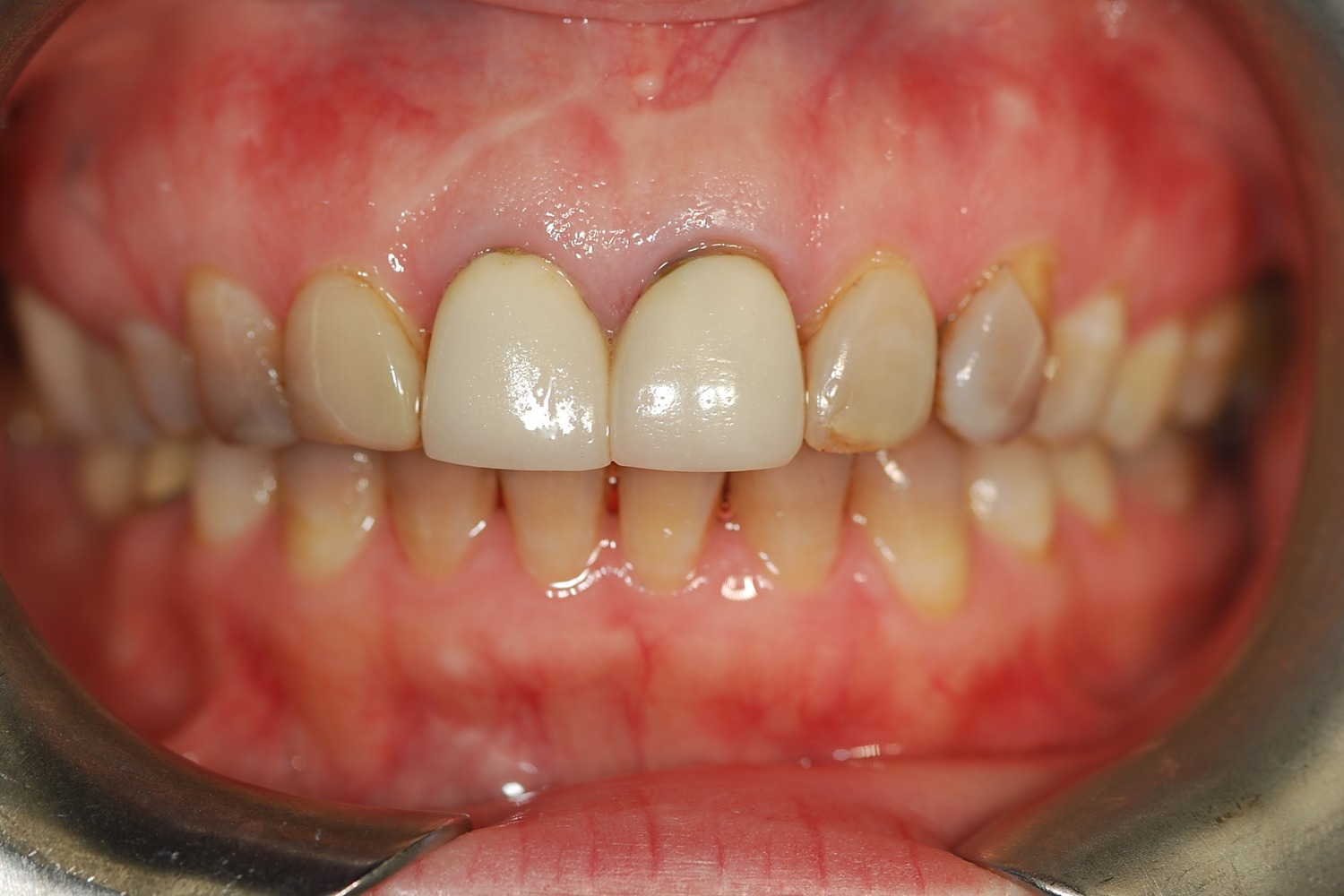 Before
 After
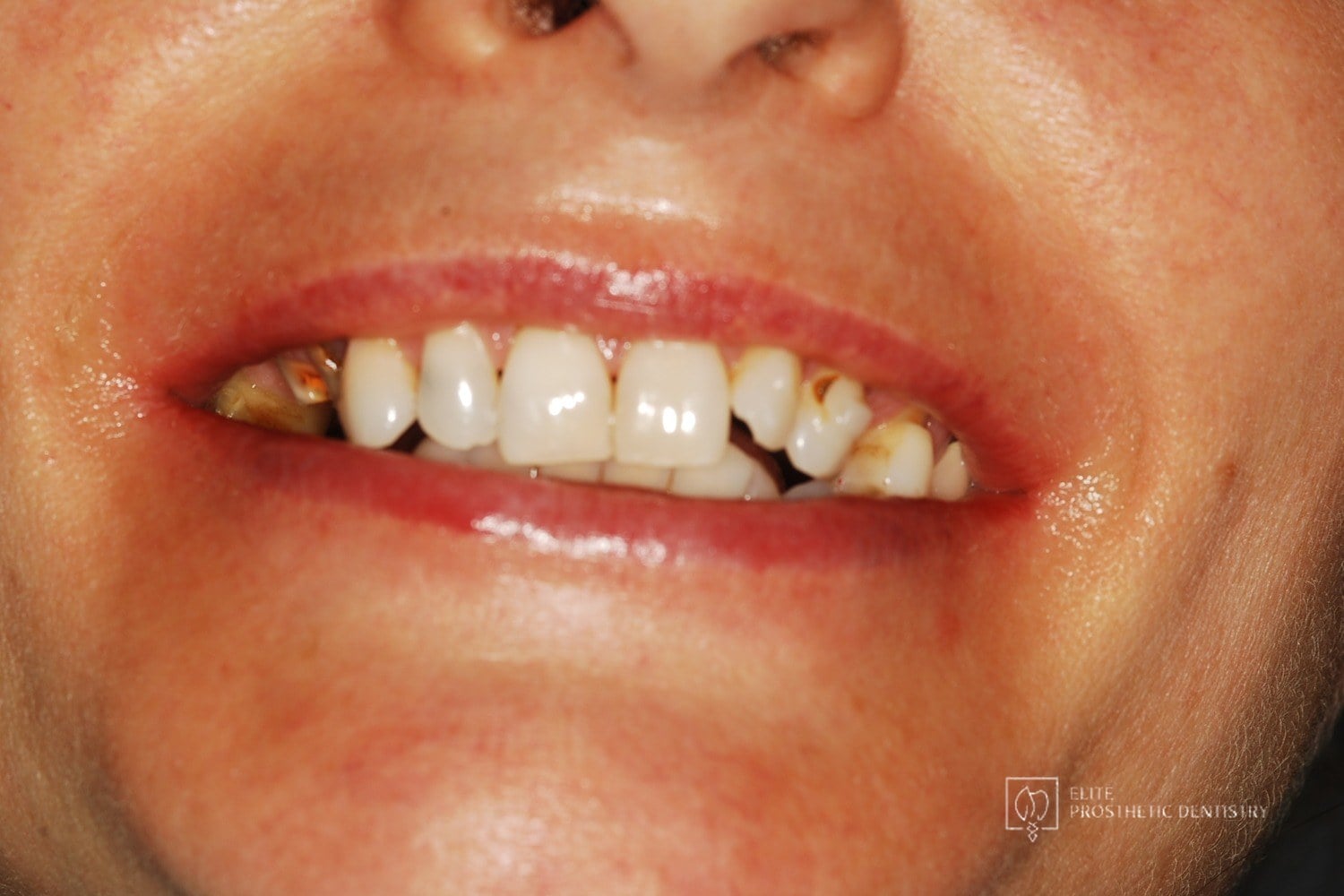
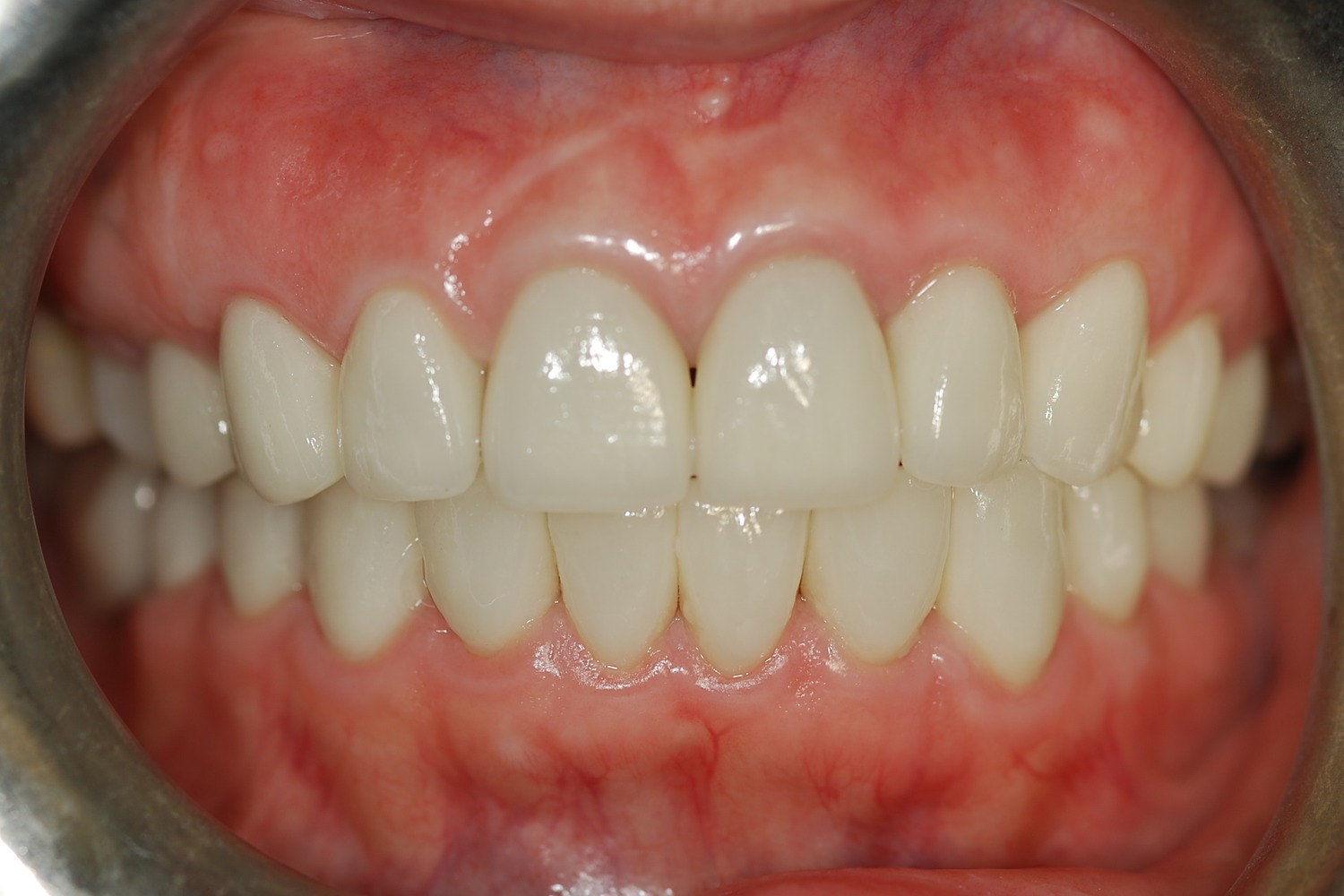
How Aging, Opaque Restorations Were Replaced with Customized Ceramic Restorations Designed for Long-Term Natural Esthetics
The existing restorations appeared opaque, worn, and unnatural over time, affecting both confidence and overall smile harmony.
 Before
 After
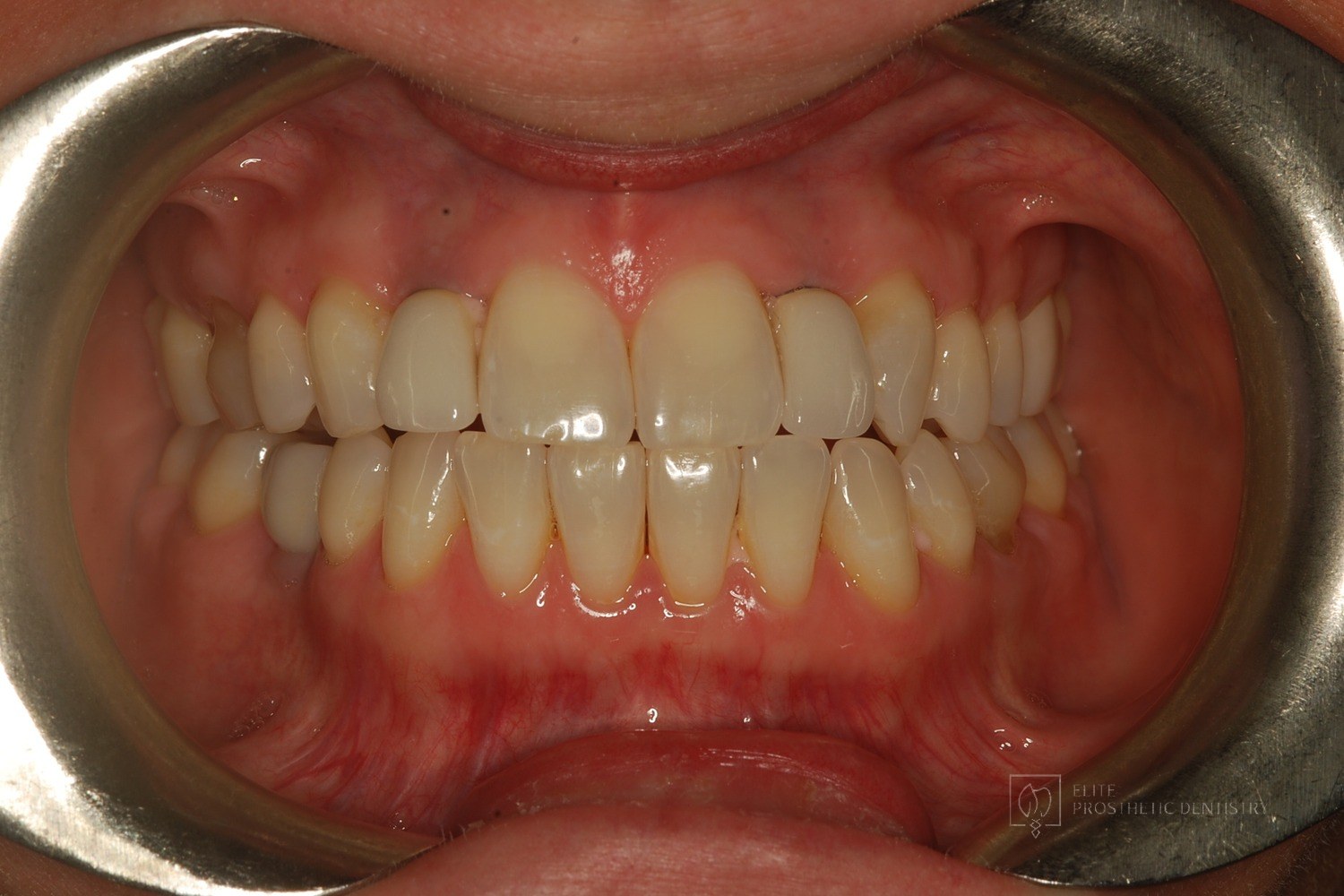
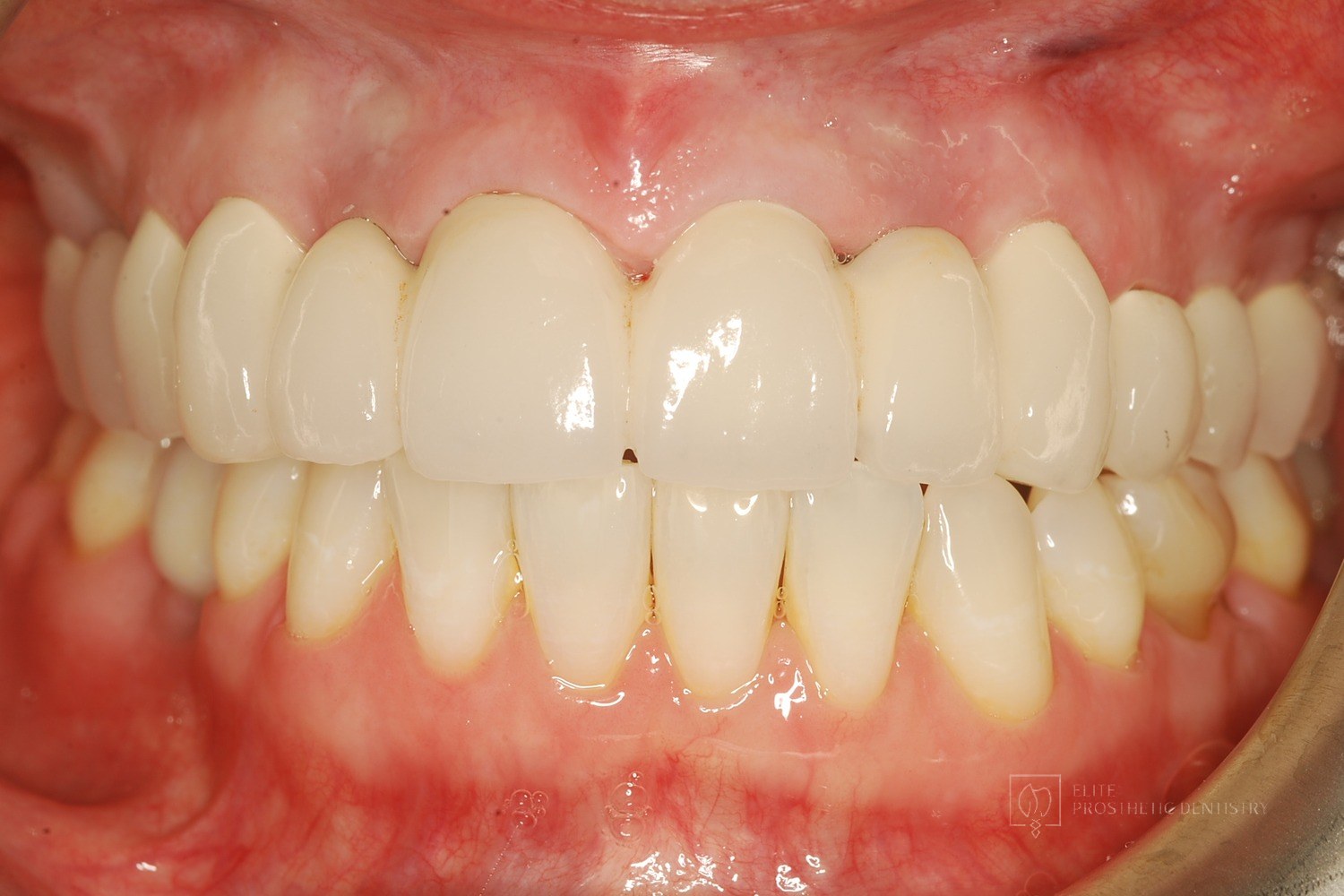
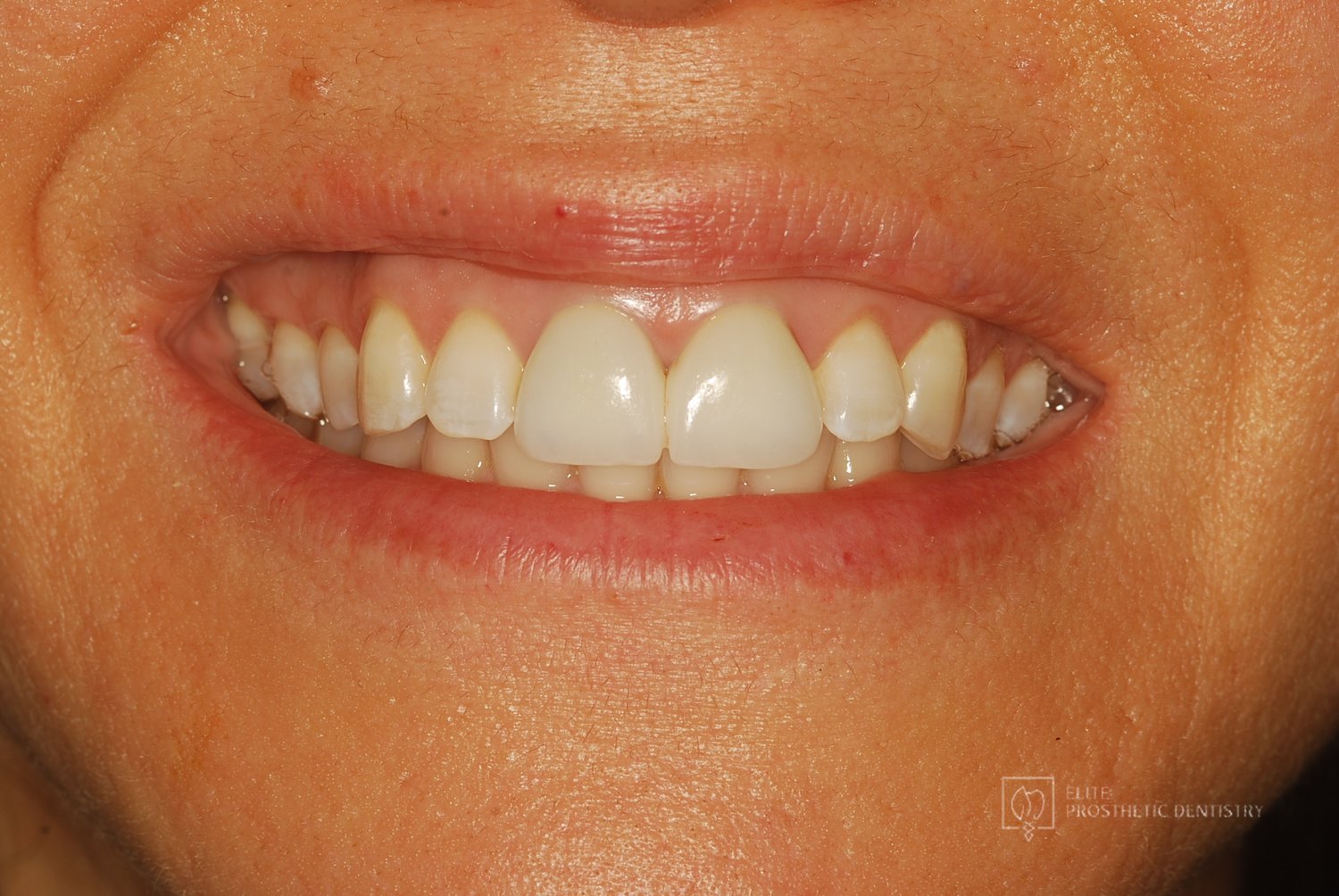
How Older Implant Crowns Were Redesigned for a Better Bite and More Natural Appearance
The patient came in after years of living with implant-supported crowns placed more than twenty years earlier that no longer looked or functioned well. CBCT evaluation, reviewed with a radiologist colleague, showed the implants had been placed too far to the buccal in very thin bone and could not support a healthy long-term restoration.
 Before
 After
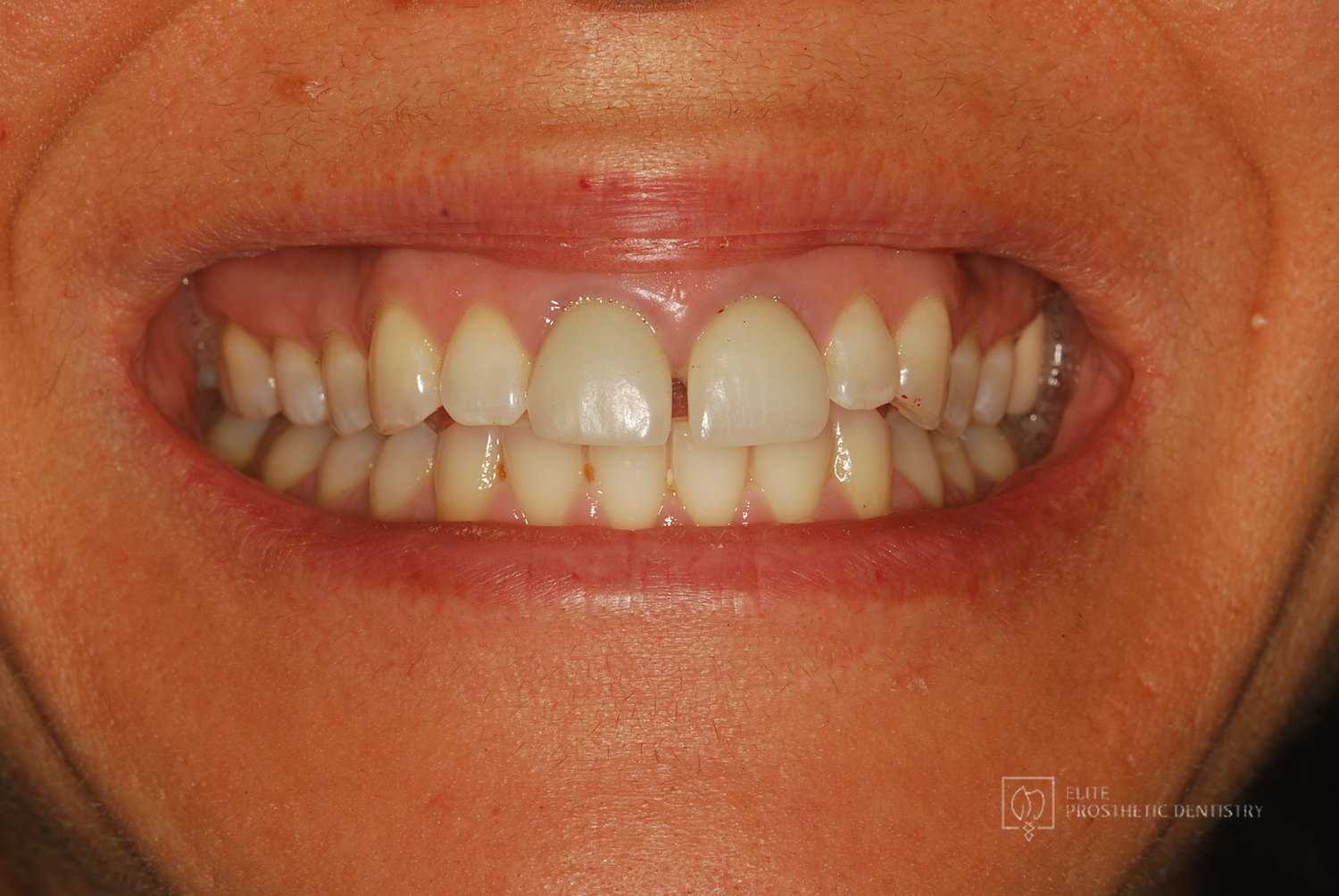
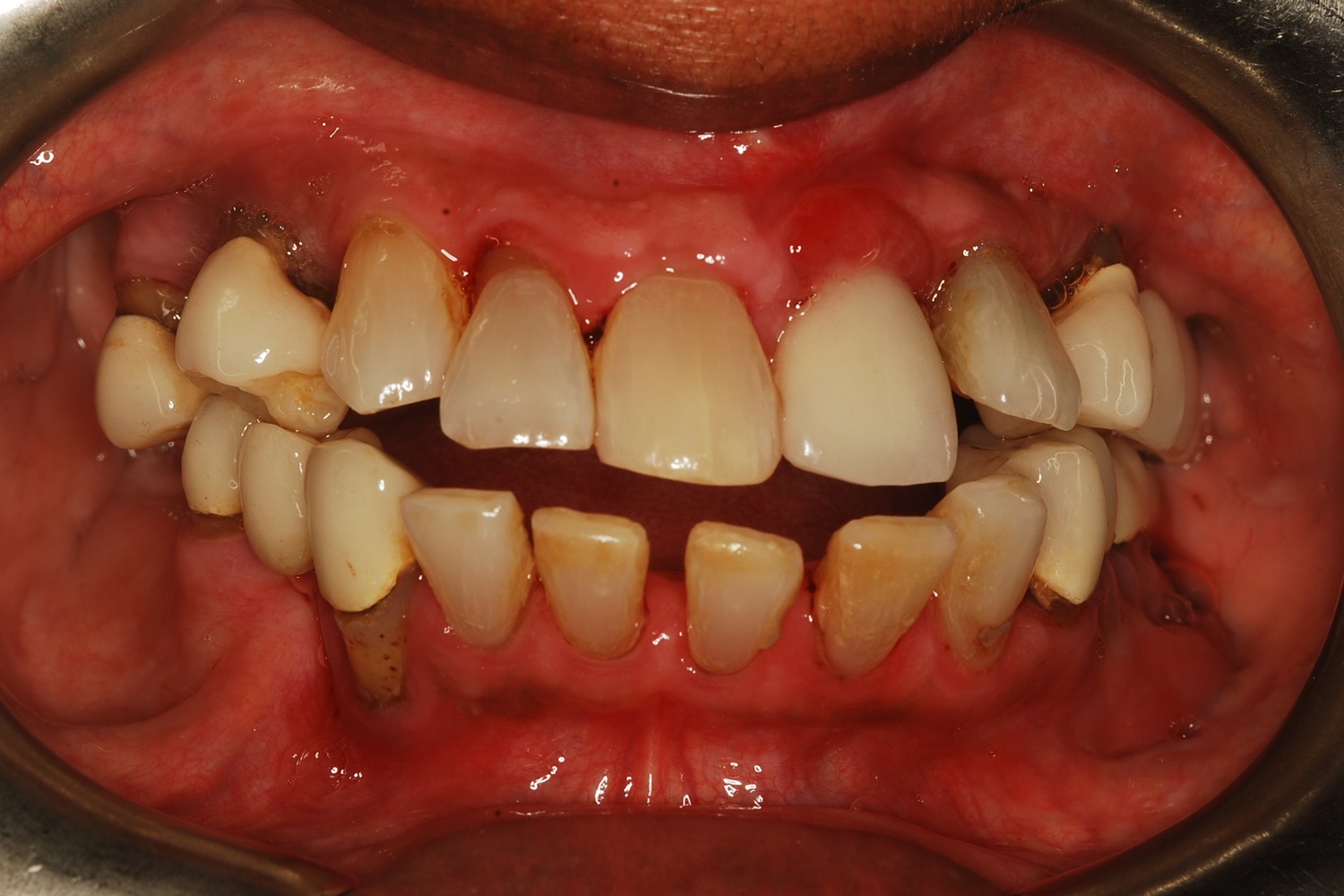
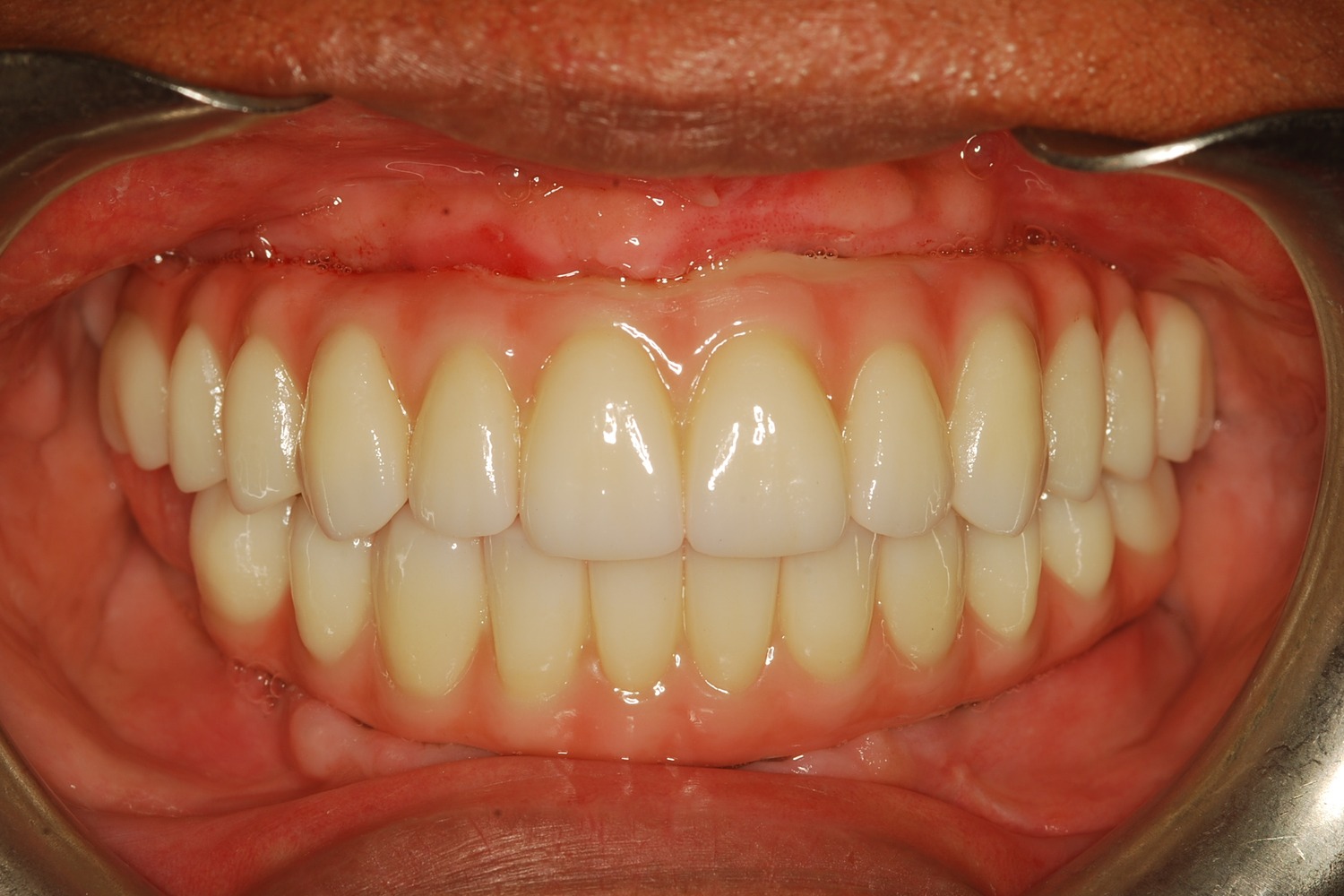
Two Front Teeth Saved From Extraction: A Second Opinion, Custom Gold Posts, and Crowns Made to Last
Two upper central incisors with failed root canal treatment and recurrent decay had been recommended for extraction and implant replacement. A CBCT evaluation showed that removing the roots from their thin facial bone housing could create a visible esthetic defect in the gum and bone contour, made worse by the patient's high lip line.
 Before
 After
How Severe Bone Loss and Bite Dysfunction Were Rebuilt with All-on-6 Implants and a Milled Zirconia Hybrid Prosthesis
The patient presented with severe bone loss, advanced periodontal disease, malocclusion, and a dysfunctional bite that required full-arch rebuilding.
Related Articles
Deepen your knowledge with additional insights on this topic.
 Choosing a Prosthodontist
The Patient's Guide to Implant, Cosmetic and Restorative Dentistry
How to judge quality in implant, cosmetic, and restorative dentistry: choosing a practitioner, why the lab matters, financing, and the questions to ask.
 Choosing a Prosthodontist
What is a Prosthodontist?
A prosthodontist is a dental specialist with advanced training in crowns, implants, dentures, and complex restorations. Washington, DC specialist.
 Choosing a Prosthodontist
4 Ways You Can Benefit from Our In-House Dental Lab
Custom aesthetics, precision fit, shorter waits, and fast repairs: four ways an in-house dental laboratory changes both your experience and your results.
 Choosing a Prosthodontist
What Is the Difference Between a Dentist and a Prosthodontist?
Every prosthodontist is a dentist, but with years of extra specialty training in restoring and replacing teeth. A DC prosthodontist explains who does what.
 Choosing a Prosthodontist
Don't Wait 'Til It's Too Late: Start with a Virtual Dental Consultation
A virtual consultation is a convenient first step: discuss your concerns, share records, and hear options from a DC prosthodontist before an in-person exam.
 Choosing a Prosthodontist
Emergency Dentistry: The Benefits of an In-House Laboratory
When a tooth or restoration breaks, an on-site dental lab can mean a natural-looking repair in a day instead of a week. How emergency fabrication works in DC.
Our Services in Chevy Chase
Beyond Choosing a Specialist, Chevy Chase patients rely on Dr. Marlin for a full range of advanced dental care.
More services available in Chevy Chase:
Choosing a Specialist Near Chevy Chase
Dr. Marlin also provides choosing a specialist services for patients in these neighboring communities.
Getting Here from Chevy Chase
Elite Prosthetic Dentistry is conveniently located near Chevy Chase, MD.
Chevy Chase patients drive south on Wisconsin Avenue or Connecticut Avenue to our Friendship Heights office at 4400 Jenifer Street NW, Suite 220, just south of the Maryland/DC border. Building parking is available.
Address:
4400 Jenifer Street NW, Suite 220
Washington, DC 20015
Phone: (202) 244-2101
Request a ConsultationRequest a Specialist Consultation from Chevy Chase
Chevy Chase residents come to Dr. Marlin for specialist prosthodontic care. With 3,900+ implants placed over 40+ years, evaluation, planning, and execution are handled with the depth complex cases require.