

When Should Old Crowns and Bridges Be Replaced? Proactive Replacement vs. Waiting for Failure in Washington, DC
Old crowns and bridges do not have an expiration date, but they do show warning signs. How to tell aging dentistry that can wait from dentistry that should be replaced before it fails, and how a prosthodontist plans the replacement.
Practice clinician: Gerald M. Marlin, DMD, MSD, prosthodontist, Elite Prosthetic Dentistry, Friendship Heights, Washington, DC. Last updated .
Crowns and bridges age. The porcelain wears and dulls, the gum recedes and exposes a margin, the cement washes out at an edge, and the tooth beneath can quietly decay for years before anything hurts. The question many patients face is not whether their dentistry will eventually need replacement, but when: replace it on a schedule you choose, or wait until it fails and replace it on the schedule the failure sets. This guide explains how to tell the difference between aging dentistry that can wait and aging dentistry that should be rebuilt now.
Many patients who come to Elite Prosthetic Dentistry are not in pain. Their crowns and bridges were placed fifteen, twenty or thirty years ago, have served well, and are now showing their age. They have been told by a general dentist that things look “okay for now,” or they have noticed a dark line at the gum, a change in the way their teeth meet, or a front crown that no longer matches its neighbors. They want to know whether to act and, if so, how to plan it so the work is done once and lasts.
Age Is Not the Reason. Condition Is.
A crown placed in 1995 may be in better shape than one placed in 2015. What decides replacement is what the examination finds:
- The margin. Where the crown meets the tooth is where restorations fail. A gap, a ledge, a dark line or softness at the margin means bacteria have a path to the tooth. Recession can expose a margin that was once under the gum, which is an appearance problem and sometimes a decay risk.
- The tooth beneath. Decay under a crown is painless until it reaches the nerve. It is found on X-rays and by probing, not by the patient. A tooth that has already had a root canal gives no warning at all.
- The bite. Wear on the crown or on the opposing teeth, a change in how the teeth meet, or chipping at the edges shows that the restoration is carrying force it was not designed for. Our guide on why crowns keep breaking covers this pattern.
- The gum and bone. Bleeding, inflammation, recession or bone loss around a crowned tooth or a bridge abutment changes the prognosis of the tooth, which changes the plan for the restoration.
- The bridge. A bridge depends on the teeth that hold it. If one supporting tooth decays or fractures, the whole bridge is affected. Older bridges are also sometimes longer than current design would recommend, which places more load on fewer teeth.
- Appearance. Older porcelain-fused-to-metal crowns become opaque or show a gray line as the gum recedes. Surrounding natural teeth change color over time while crowns do not. This is a legitimate reason to replace a crown when it matters to the patient, and an opportunity to correct the bite and design at the same time.
Why Waiting Can Cost the Tooth
A crown replaced while the tooth beneath is sound is one of the more predictable procedures in dentistry. The tooth is cleaned, reshaped as needed, and a new restoration is made. When replacement waits until failure, the failure often involves the tooth: decay that has reached the nerve and requires root canal treatment, a fracture that leaves too little tooth to hold a crown, or infection that costs the tooth entirely. At that point the conversation is no longer about a crown. It is about a post and core, a bridge, an implant, or an extraction. Proactive replacement, when the signs are present, is about protecting the tooth rather than the restoration.
This does not mean every aging crown should be replaced. A crown with intact margins, a healthy tooth beneath, no decay on imaging and a stable bite can be monitored. The evaluation produces a tooth-by-tooth judgment: replace now, plan to replace, or monitor.
One at a Time, or as a Plan
The single most common mistake with aging dentistry is replacing it piecemeal. Each crown is replaced as it fails, often years apart, matched to the neighboring crowns that are themselves aging and will be replaced next. Over a decade the result is a mouth of restorations from different years, different materials and different bites, none of which was designed with the others in mind.
When several restorations share the same age, the same wear and the same bite, the better approach is to plan them together even if the work is staged. The bite is decided once. The shade and shape are decided once. The sequence is set so that each phase supports the next. Patients do not have to do everything at once; they have to decide everything at once. Our guide on general dentist versus prosthodontist for aging dentistry explains who is suited to that planning.
What the Evaluation Should Give You
- An X-ray and clinical finding for each existing crown and bridge, with the margin, the tooth and the surrounding bone described.
- A classification for each: replace now, plan to replace within a stated period, or monitor at a stated interval.
- An assessment of the bite as a whole, and whether the replacement is an opportunity to correct it.
- For bridges, the condition of each supporting tooth and whether a new bridge or implants is the sounder replacement.
- A sequence, if more than one restoration is involved, that explains what is done first and why.
- The materials proposed and the reason for each, matched to the forces and the appearance requirements of that part of the mouth.
How Elite Prosthetic Dentistry Approaches Aging Dentistry
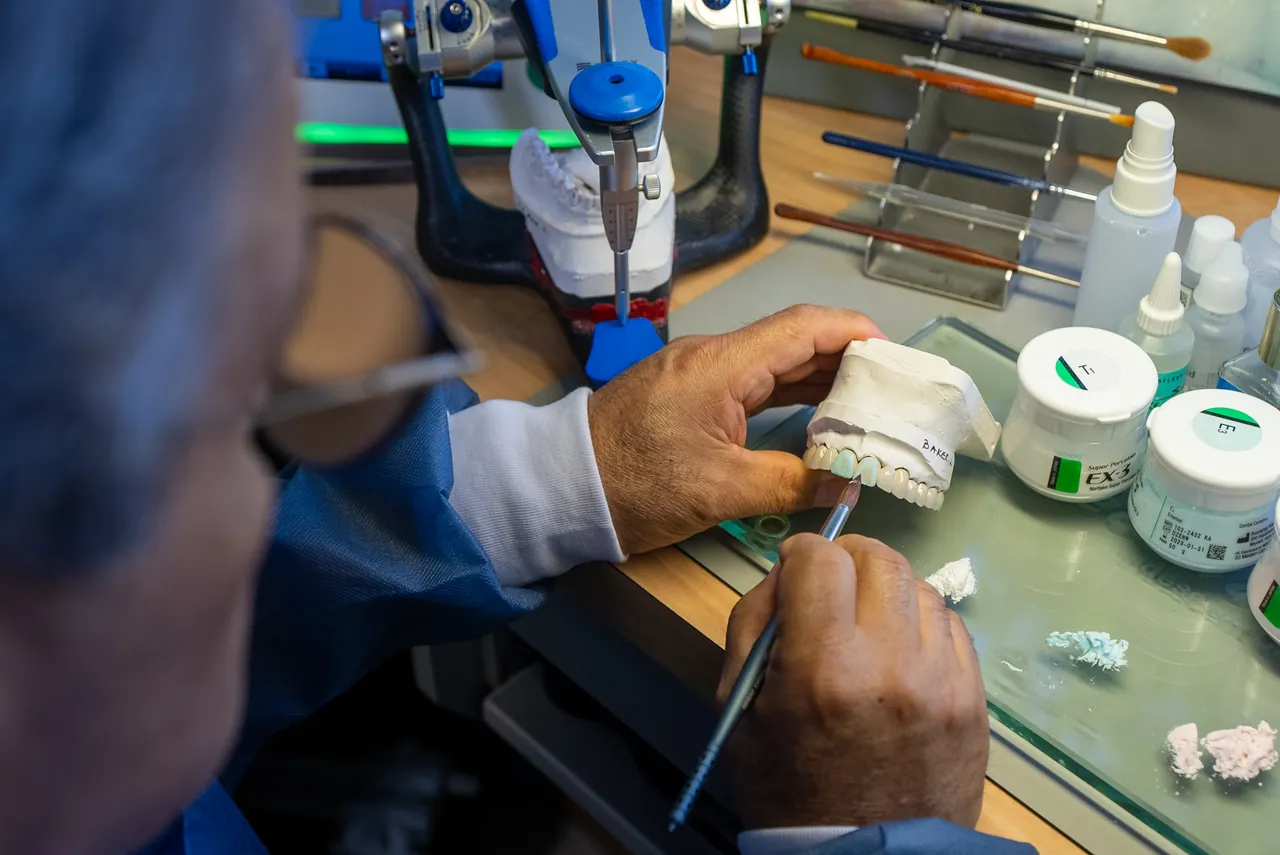
The practice sees patients for both comprehensive reconstruction and proactive replacement of aging dentistry. Many simply want dentistry that looks natural, functions properly and lasts, and the treatment ranges from replacing a few older crowns to rebuilding a full arch depending on what the records show. Dr. Gerald M. Marlin evaluates each restoration and the tooth beneath it, mounts records to study the bite, and develops a plan that can be carried out in phases without compromising the end result. Crowns and bridges are fabricated in the practice’s on-site laboratory, which allows shade, contour and bite to be refined while the patient is present. Where a failing bridge is better replaced with implants, Dr. Marlin plans, places and restores the implants in the same practice.
The goal is to help patients make thoughtful long-term decisions, whether the treatment is limited or comprehensive.
When Another Setting Fits Better
A single aging crown in a mouth that is otherwise stable can be replaced well by a general dentist, especially one who already knows the patient. A patient with active periodontal disease needs that treated before restorative planning. A patient who wants only a cosmetic refresh of front teeth, with no functional or structural concerns, has a wider choice of providers. The evaluation will say when a specialty practice is not needed.
Documented Cases That Show the Decision
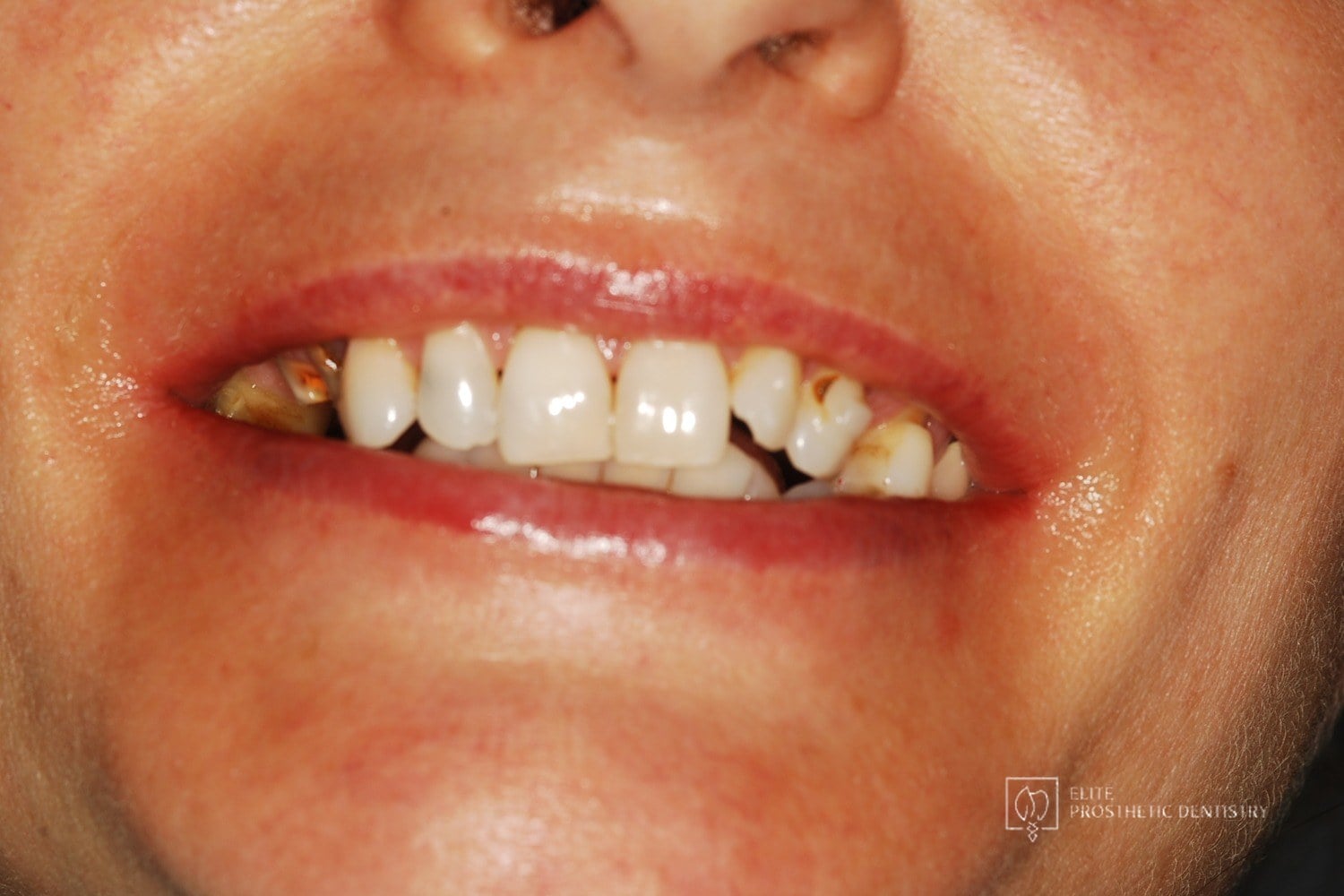
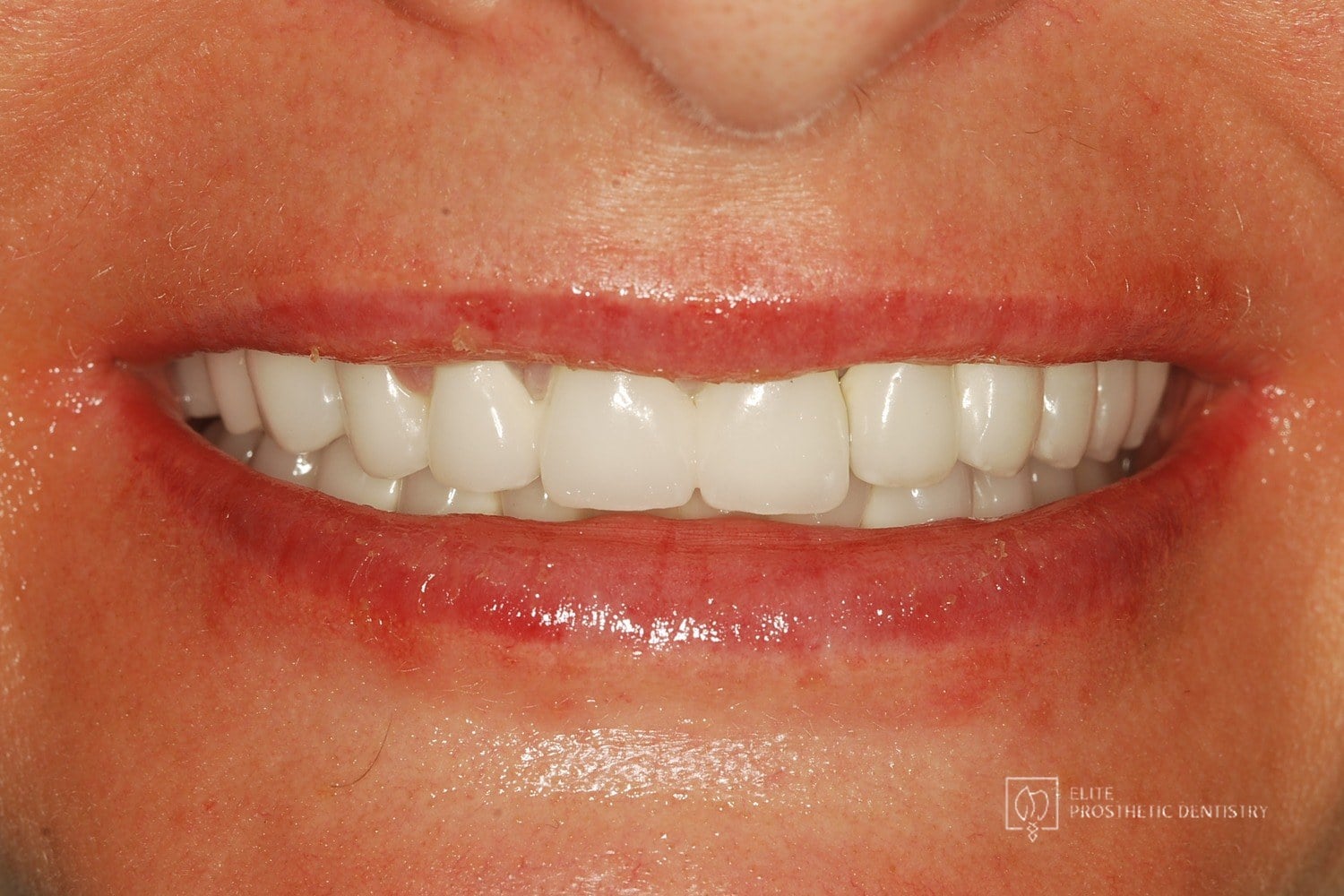
- Aging, opaque restorations replaced with customized ceramic restorations: proactive replacement planned as one design.
- Aging, failing dentistry replaced across both arches with a coordinated implant and crown reconstruction.
- Aging crowns and a long-standing bridge rebuilt with provisional verification and in-house fabrication.
- Loose, failing crowns with hidden decay beneath them, strategic teeth saved and both arches rebuilt: what waiting can look like, and how it was resolved.
- Aging composite veneers replaced with whitening and custom crowns.
- Older implant crowns redesigned for a better bite and more natural appearance: aging implant restorations follow the same logic.
More cases are organized in the replacing aging dentistry success story hub.
Related Decision Guides
- Why Am I Getting Decay Under My Crowns?
- Signs Your Dental Work Is Wearing Out
- General dentist vs. prosthodontist for aging crowns, bridges and implant restorations
- Why do my crowns keep breaking?
- How to choose a dentist for crowns in Washington, DC
- Keep your teeth or replace them?
- When to seek a second opinion before major treatment
Request an Evaluation of Your Existing Dentistry
If your crowns or bridges are showing their age, request an appointment or call (202) 244-2101. Recent X-rays and a list of when your restorations were placed are useful; the evaluation will tell you what can wait and what should not.
Your Best Smile Is Within Reach
Request a specialist consultation with Dr. Marlin to discuss your situation and the most appropriate path forward.
Frequently Asked Questions
How long should a crown or bridge last?
There is no fixed number. Well-made restorations on sound teeth in a balanced bite can serve for decades; others fail in a few years. Age alone is not a reason to replace a crown. The condition of the margin, the tooth beneath it, the bite it lives in and the health of the surrounding gum are what matter, and those are examined, not guessed from the date.
What are the warning signs that an old crown should be replaced?
A dark line or gap at the gum margin, decay detected under the edge on an X-ray or by probing, sensitivity or pain on biting, a crown that has loosened, chipped porcelain, a visible change in the bite, bleeding or recession around the crown, or an appearance that has become opaque or mismatched as the surrounding teeth changed. Any one of these warrants an evaluation; several together usually mean replacement is coming, and planning it is better than waiting for it.
Is it better to replace aging crowns before they fail?
Often, yes, when the signs are present. A crown replaced on a sound tooth is a straightforward procedure. A crown that fails with decay underneath may cost the tooth its nerve or its structure, and sometimes the tooth itself, which turns a crown replacement into a root canal, a post, a bridge or an implant. Proactive replacement is about keeping the tooth, not about the crown.
Should old crowns be replaced one at a time or together?
It depends on the pattern. One failing crown in an otherwise sound mouth is replaced on its own. Several aging restorations that share the same bite, the same wear and the same age are usually better planned together, even if the work is staged over time, because the bite and the appearance are decided once rather than compromised crown by crown. A plan can still be carried out in phases.
Can an old bridge be replaced with implants?
Sometimes. When the teeth supporting a bridge are failing, or when the bridge has become too long to be stable, implants may replace it. When the supporting teeth are sound, a new bridge may be the better choice. The decision depends on the condition of the supporting teeth, the bone where the missing teeth were, and the bite, and it should be made from records rather than from a preference for one or the other.
Related Patient Success Stories
Explore similar patient success stories demonstrating our expertise in advanced prosthetic dentistry.
 Before
 After
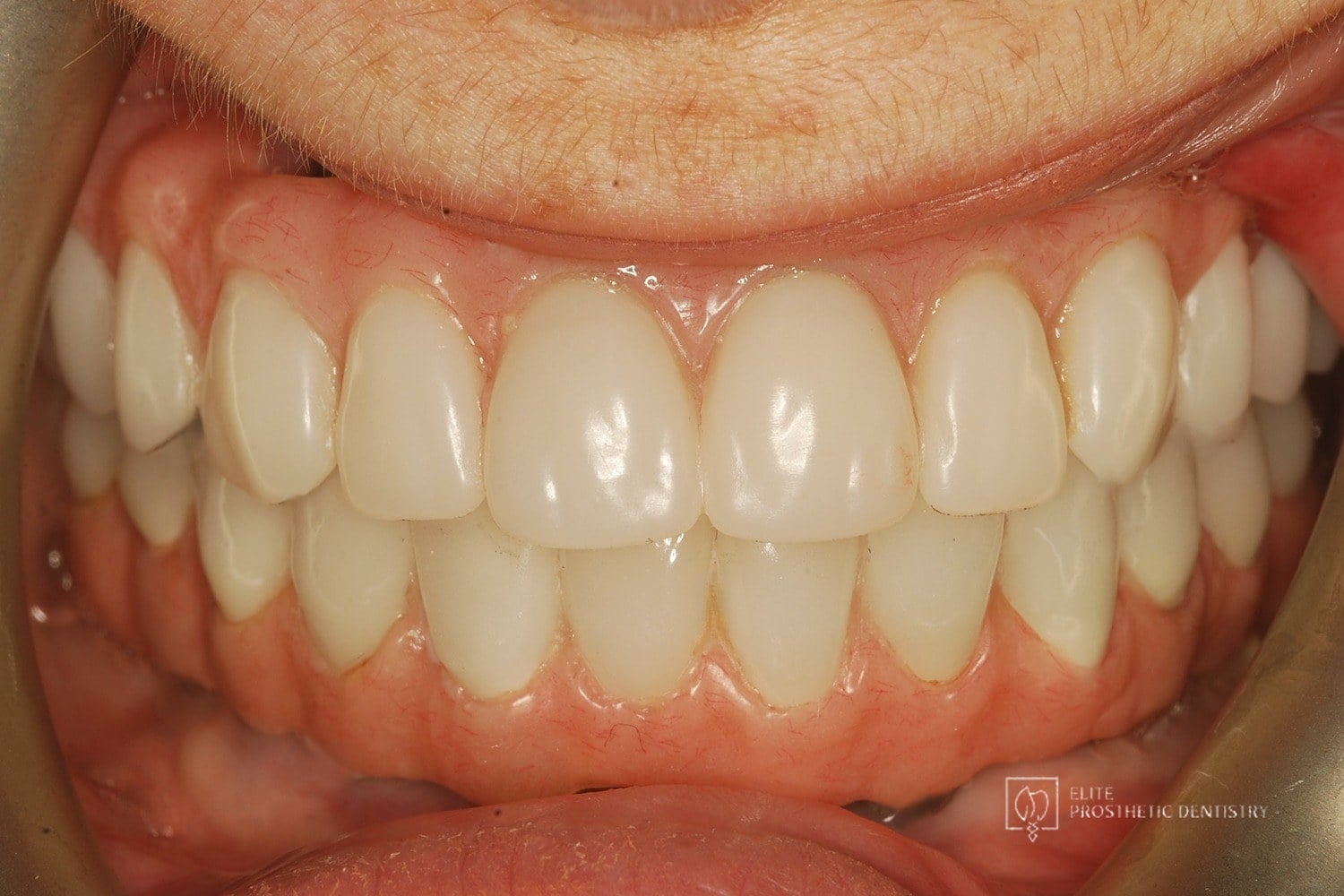
How Aging, Failing Dentistry Was Replaced with a Coordinated Full-Mouth Implant and Crown Reconstruction
The patient presented with throbbing upper-molar pain, long-standing infections, multiple root canals and unfinished prior treatment, generalized sensitivity, and several hopeless teeth.
 Before
 After
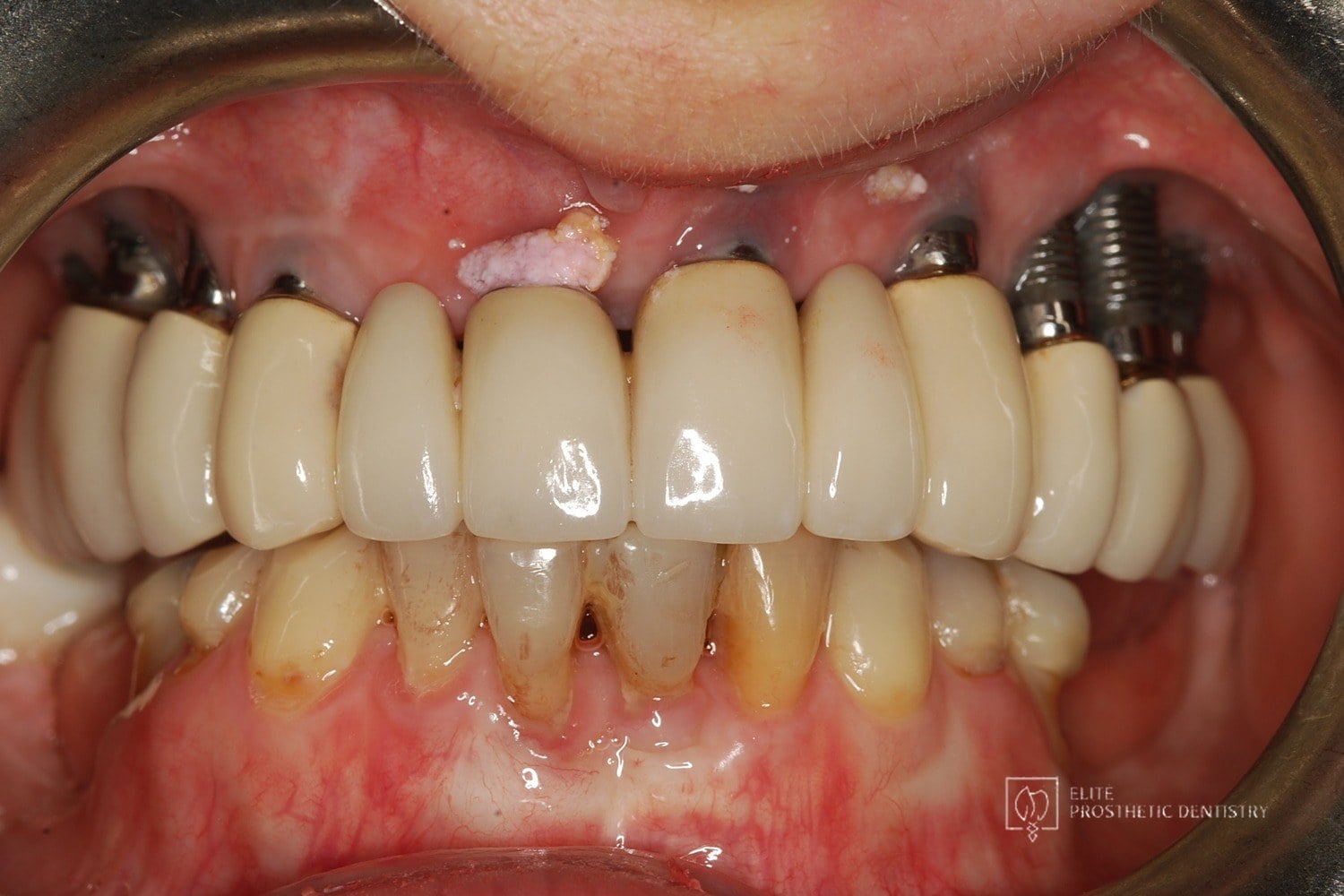
How Failing Implants and Severe Bone Loss Were Rebuilt Into a Stable Full-Arch Implant Reconstruction
The patient presented with significant complications from previously placed implants, severe bone loss, failing posterior implants, and an unesthetic full-arch bridge. Both arches required full reconstruction, with the upper arch showing the most advanced bone loss and instability.
 Before
 After
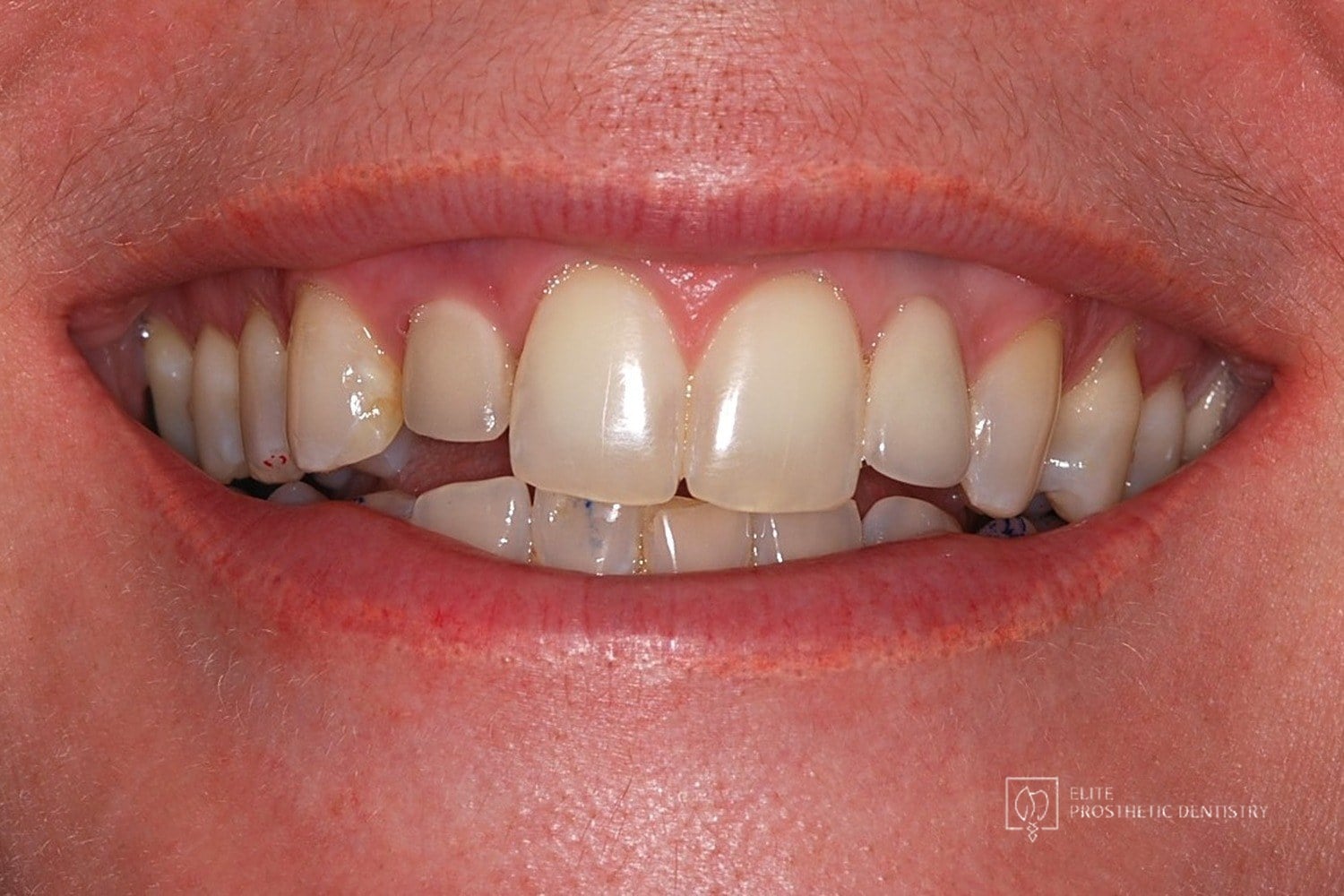
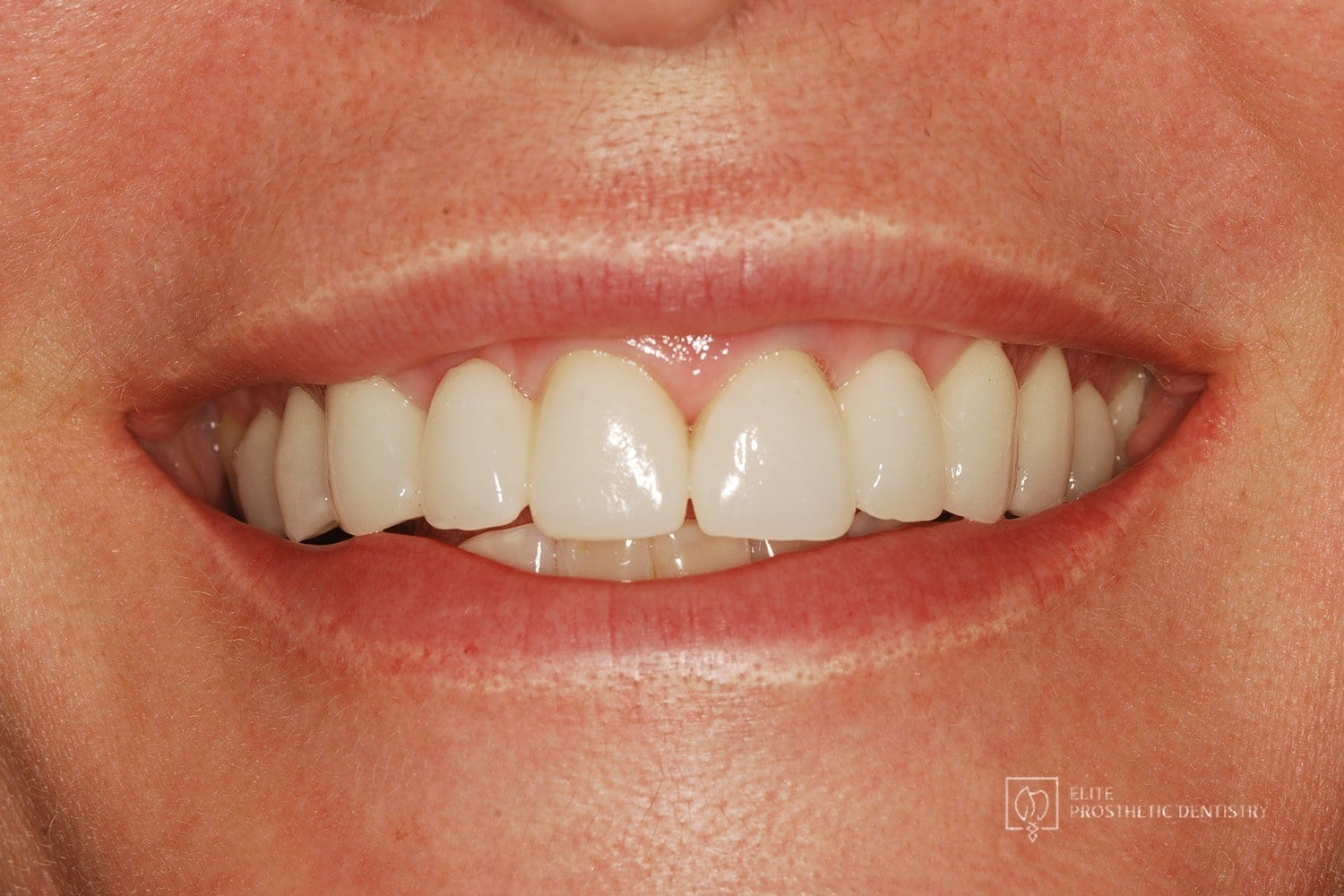
How Failing Lateral Incisor Implants Were Replaced with Custom Zirconia Bridges After Severe Bone Loss Made Replacement Implants Impossible
Comprehensive examination including CBCT imaging revealed significant bone loss surrounding implants that were placed outside the buccal plate, most likely due to placement without a CBCT-generated surgical guide. The implants were determined non-salvageable, and the alveolar ridge was too narrow to support replacement implants without extensive reconstruction.
 Before
 After
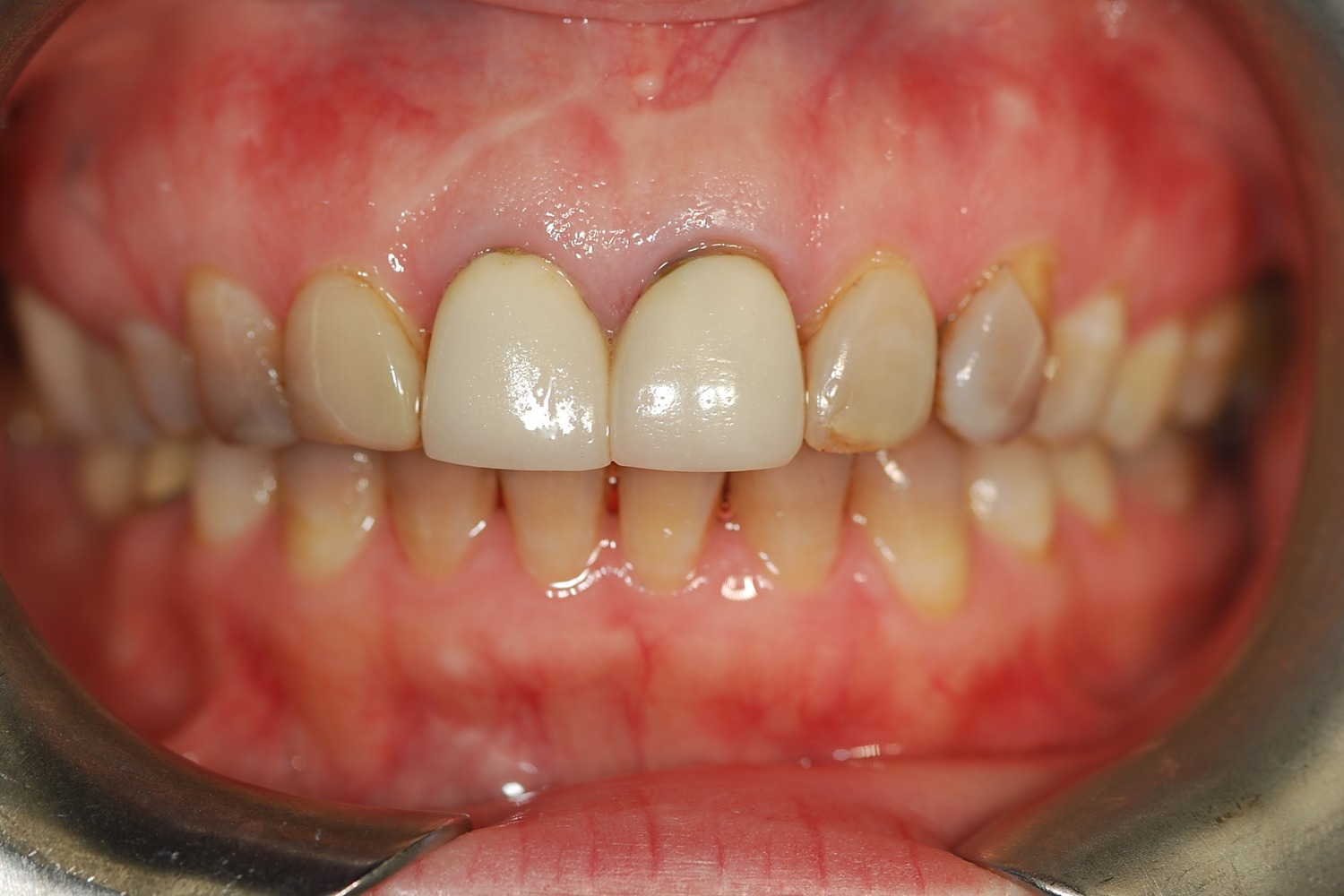
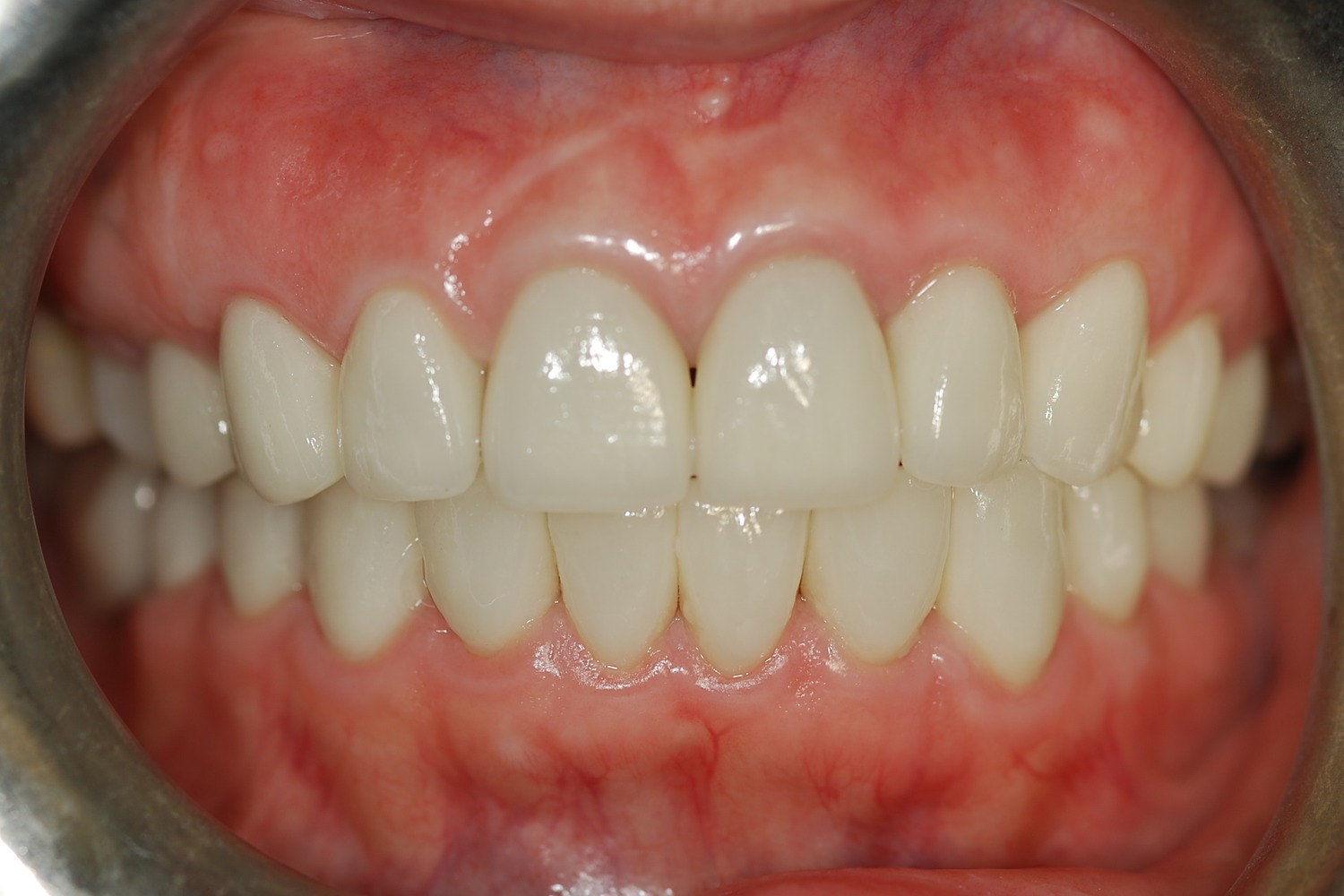
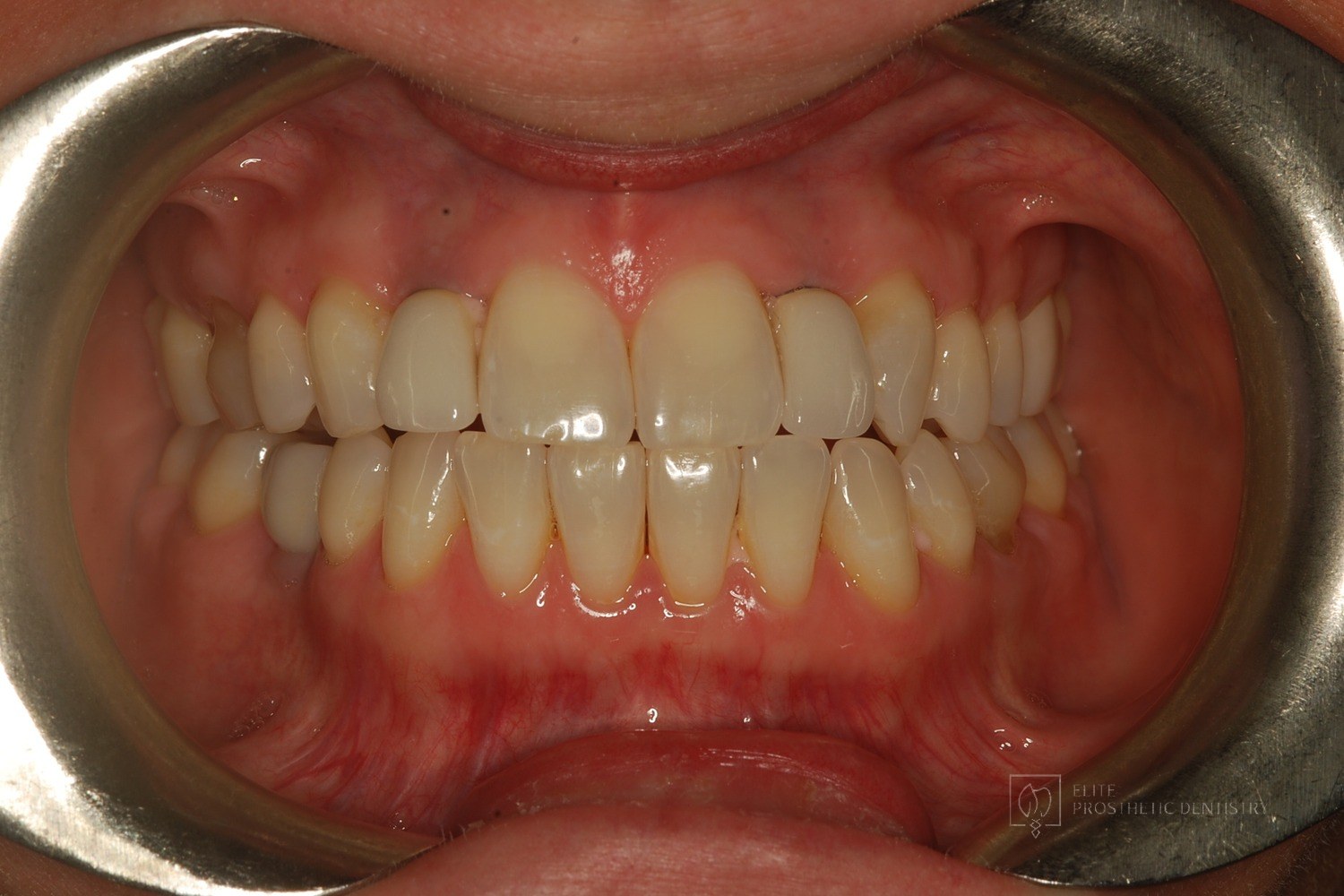
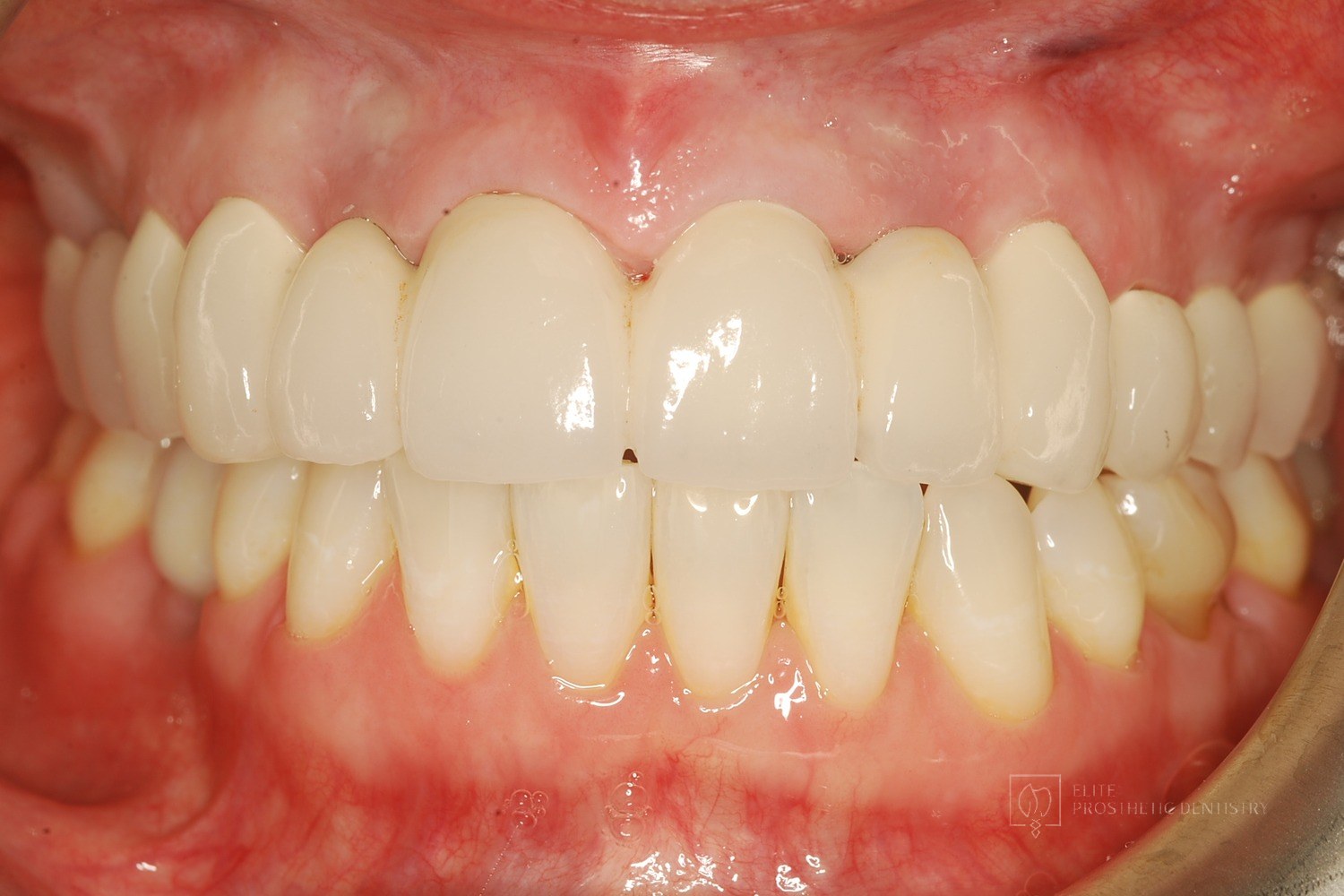
How Aging, Opaque Restorations Were Replaced with Customized Ceramic Restorations Designed for Long-Term Natural Esthetics
The existing restorations appeared opaque, worn, and unnatural over time, affecting both confidence and overall smile harmony.
 Before
 After
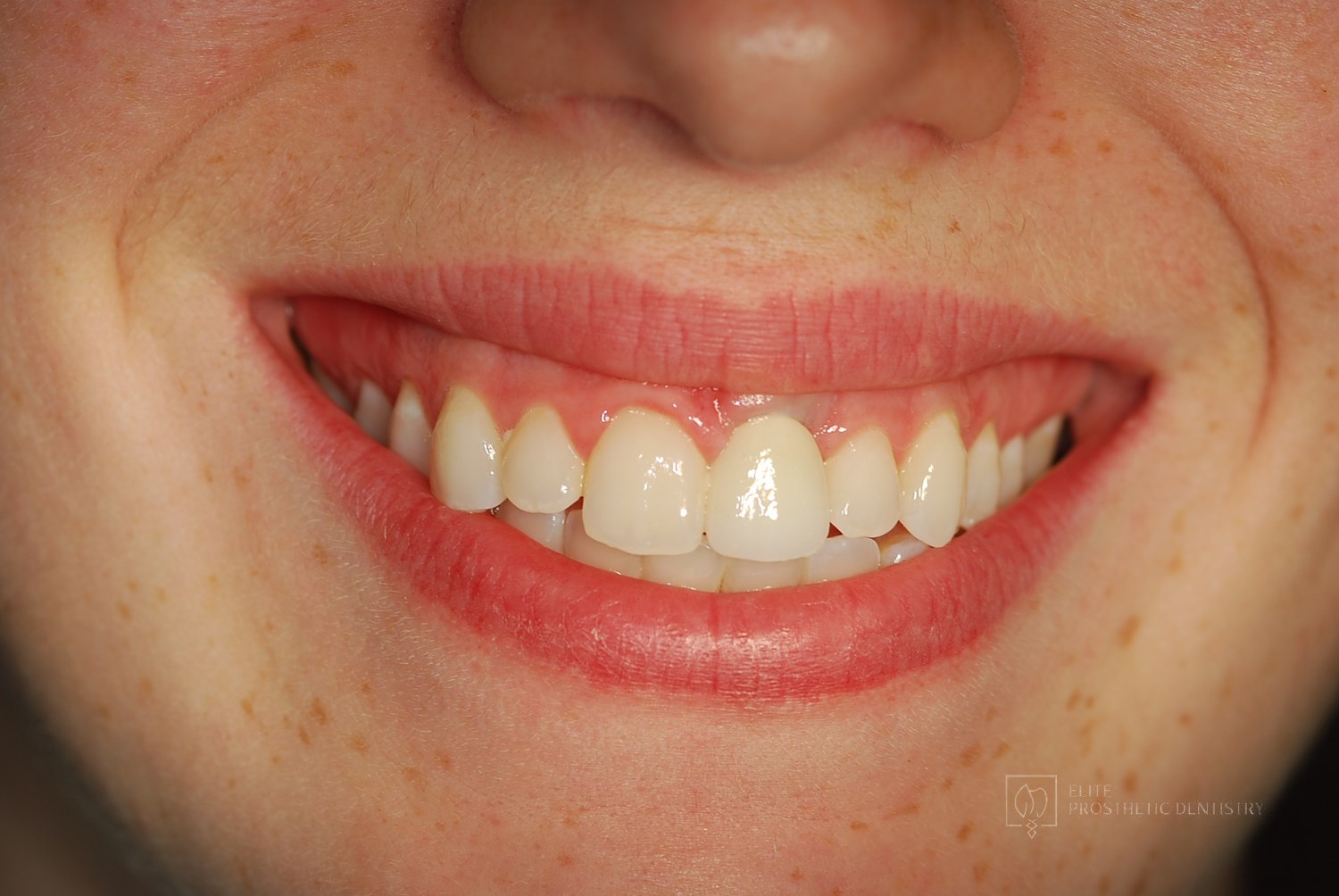
How Older Implant Crowns Were Redesigned for a Better Bite and More Natural Appearance
The patient came in after years of living with implant-supported crowns placed more than twenty years earlier that no longer looked or functioned well. CBCT evaluation, reviewed with a radiologist colleague, showed the implants had been placed too far to the buccal in very thin bone and could not support a healthy long-term restoration.
 Before
 After
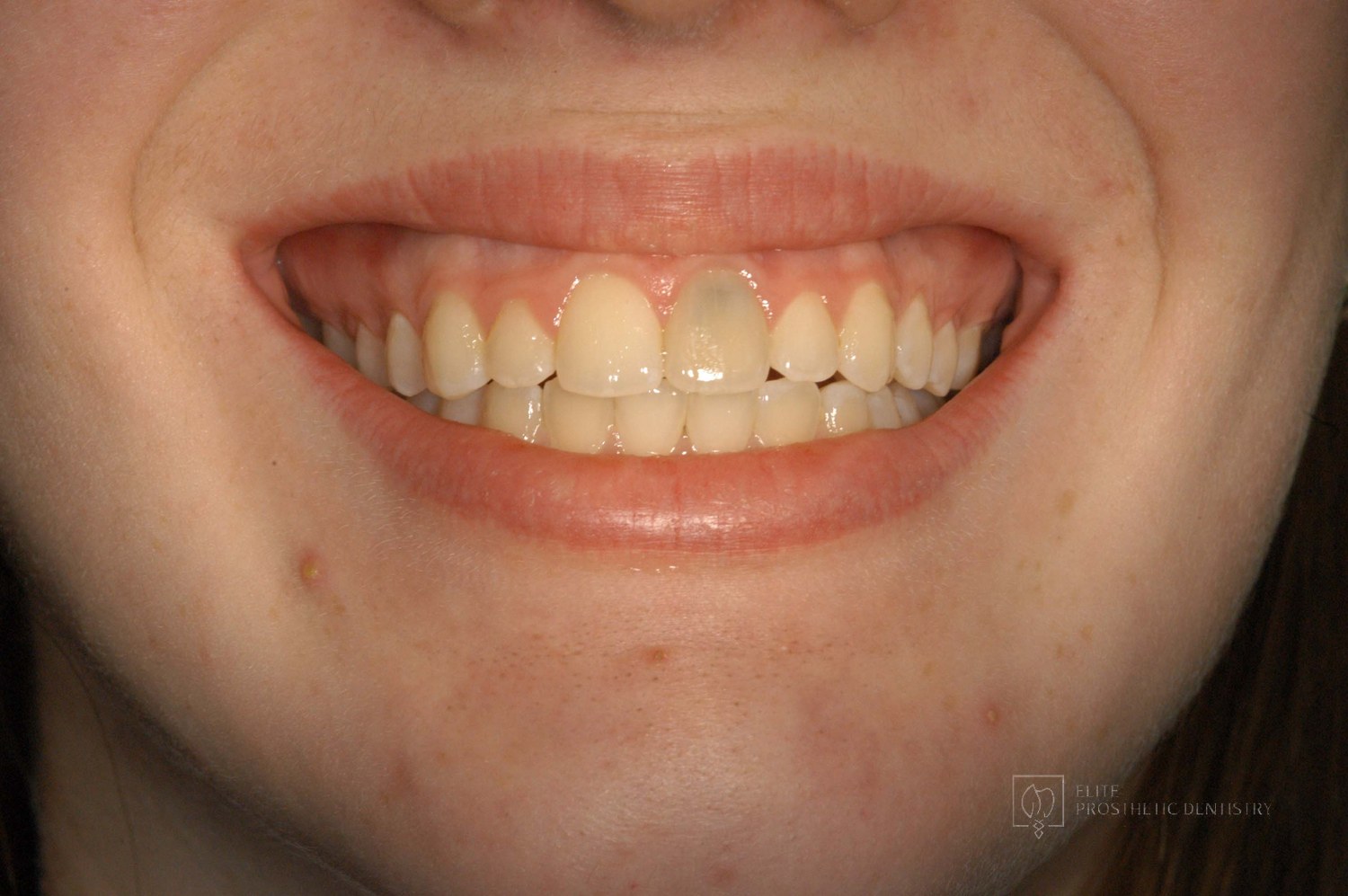
How a Front Tooth Lost to Childhood Trauma Was Rebuilt with Bone Grafting and a Long-Lasting Implant
A teenager was referred by her father after earlier trauma left her upper left front tooth slowly failing from root resorption. She was still growing, so an immediate implant was the wrong move. The tooth had to be maintained to buy time, then replaced correctly once she reached skeletal maturity.
Related Services
Why Am I Getting Decay Under My Crowns?
Learn more →Signs Your Dental Work Is Wearing Out
Learn more →Dental Crowns
Learn more →Dental Bridges
Learn more →General Dentist vs. Prosthodontist for Aging Dentistry
Learn more →Why Crowns Keep Breaking
Learn more →Replacing Aging Dentistry: Patient Cases
Learn more →All Decision Guides
Learn more →Ready to Transform Your Smile?
With 40+ years of experience and 3,900+ dental implants placed, Dr. Marlin and the team deliver dentistry planned to last. Request a specialist consultation.