
Professional Teeth Whitening in Washington, DC
Professional teeth whitening at Elite Prosthetic Dentistry is performed under specialist supervision with in-office and custom take-home options. When whitening is the right answer, results are predictable. When it is not, a specialist evaluation identifies the correct cosmetic approach.
40+
Years Experience
1985
In-House Lab Since
2026
Top Dentist List
9
Restoration Patents

Gerald M. Marlin, DMD, MSD
Specialty-Trained Prosthodontist (DMD, MSD)
Washingtonian "Top Dentist" 2026 and Hall of Fame
Why See a Prosthodontist for Whitening
- Specialist evaluation determines whether whitening is actually the right answer
- Identifies discoloration that whitening will not improve before you spend the money
- Coordinates whitening with veneers, crowns, or restorations when both are needed
- Custom take-home trays designed by an experienced lab team
- Diagnoses underlying causes of staining for a long-term solution
Or call now: (202) 244-2101
Professional Whitening Options
Several whitening approaches exist. The right choice depends on the cause of the discoloration, your timeline, and your sensitivity level. Specialist evaluation matches the right approach to your situation.
In-Office Whitening
Concentrated whitening agent applied in the office under controlled conditions. Fastest visible results, typically completed in a single appointment.
Custom Take-Home Whitening
Custom-fitted trays made in our in-house lab and a professional-grade whitening gel for use at home. Effective and well-suited for sensitive patients who prefer a slower, controlled progression.
Combination Approach
In-office treatment followed by custom take-home trays for maintenance. Maximizes initial result and extends longevity.
How Professional Whitening Works
Whitening is a planned process. Specialist evaluation identifies whether the discoloration will respond to whitening, what method is most appropriate, and how to manage sensitivity.
Whitening Consultation
Clinical exam and discussion of the discoloration, your goals, and your sensitivity history. Diagnostic determination of whether whitening alone can deliver the result you want.
Custom Trays or In-Office Treatment
For take-home whitening, custom trays are fabricated in our in-house lab. For in-office treatment, the appointment is scheduled and the procedure is completed under controlled conditions.
Whitening Progression
Take-home whitening typically requires two to four weeks of consistent use to reach the full result. In-office whitening shows immediate results that may continue to refine over the following days.
Maintenance Plan
Touch-up protocols and maintenance recommendations to extend the result. Periodic touch-up whitening is normal and easily managed with the custom trays.
When Whitening Is Not the Answer
Whitening works for some types of discoloration and fails for others. Specialist evaluation matters because it prevents patients from spending money on whitening that will not deliver the expected result, when the actual answer is different.
-
Diagnostic Distinction
Surface staining responds well to whitening. Tetracycline staining, fluorosis, and internal discoloration from dental work respond poorly. The correct answer for the latter is veneers or crowns.
-
Coordinated With Restorative Work
When the plan includes veneers or crowns, whitening is typically completed first so the restorations can be color-matched to the final desired shade. Specialist planning gets the sequencing right.
-
Sensitivity Management
Whitening sensitivity is manageable but varies between patients. Specialist evaluation identifies risk factors and tailors the approach to your tolerance.
-
Long-Term Color Stability
Whitening results fade over time. Specialist planning includes a maintenance protocol that keeps the result stable rather than requiring repeated full treatments.

Who Is a Candidate for Professional Whitening?
Whitening works best for surface staining caused by food, drink, smoking, or normal age-related yellowing. Other types of discoloration may need a different approach.
Surface Staining
Discoloration from coffee, tea, red wine, tobacco, or normal aging. Responds predictably to professional whitening.
Pre-Restoration Whitening
Patients planning veneers or crowns benefit from whitening adjacent natural teeth first so the restorations can be matched to the final desired shade.
Pre-Event Whitening
Patients preparing for weddings, professional photographs, or other public-facing events. Predictable improvement on a reasonable timeline.
Maintenance for Previous Whitening
Previous whitening patients whose results have faded. Touch-up whitening with custom trays is straightforward and well-suited to ongoing maintenance.
When Whitening Is the Right Answer
Whitening addresses surface staining and age-related yellowing of healthy natural teeth. When the discoloration is on the surface and the underlying tooth is structurally sound, professional whitening produces predictable results.
Common situations where whitening is the right answer:
- Coffee, tea, or red wine staining
- Age-related yellowing of teeth
- Stains from smoking or tobacco use
- Pre-event preparation for weddings, photographs, or professional milestones
- Pre-restoration whitening before veneers or crowns
Specialist evaluation also identifies when whitening is NOT the right answer. Tetracycline staining, severe fluorosis, internal discoloration from past dental work, and discoloration caused by restorations do not respond to whitening. Patients with these situations are better served by veneers, crowns, or other cosmetic approaches.
When Whitening Is the Wrong Answer
A significant fraction of patients arrive interested in whitening when the underlying problem will not respond to it. Specialist evaluation prevents the disappointment and wasted expense of whitening that does not work.
Situations where whitening is unlikely to deliver the expected result:
- Tetracycline staining. Antibiotic staining from childhood produces gray or banded discoloration that resists whitening. Veneers are typically required.
- Severe fluorosis. Excessive fluoride exposure during tooth development produces white or brown patches that whitening does not improve. Veneers or microabrasion may be appropriate.
- Internal discoloration. Teeth darkened from past trauma, decay, or root canal treatment. Internal bleaching or restorative coverage is typically needed.
- Discoloration from restorations. Existing crowns, veneers, or fillings do not change color with whitening. The restorations must be replaced to match a new shade.
- Translucent or thin enamel. Whitening primarily affects the dentin underneath. Patients with very thin or worn enamel may not see significant change.
When whitening is not the right answer, the alternative is typically veneers or crowns, often as part of a smile makeover.
In-Office vs. Take-Home Whitening
| Criterion | In-Office Whitening | Custom Take-Home Whitening |
|---|---|---|
| Time to visible result | Single appointment | 2 to 4 weeks |
| Convenience | One visit to the office | Daily use at home |
| Sensitivity management | Controlled in office | Patient controls progression |
| Per-session cost | Higher | Lower |
| Maintenance | Touch-up trays often used afterward | Same trays for maintenance |
| Suitable for sensitive patients | Modified protocols required | Generally better tolerated |
Many patients use a combination: in-office treatment for the initial result, custom take-home trays for maintenance.
Whitening as Part of a Larger Cosmetic Plan
Whitening is frequently the first step in a multi-procedure cosmetic plan rather than the only procedure. When veneers or crowns are part of the plan, whitening is typically completed first so the restorations can be color-matched to the final desired shade. Working in the wrong order produces restorations that no longer match the surrounding teeth once whitening is added.
Specialist coordination gets the sequencing right. Read more about smile makeover and cosmetic dentistry for context on multi-procedure cosmetic planning.
Whitening Treatment for Washington DC Patients
Elite Prosthetic Dentistry serves teeth whitening patients across the Washington DC metropolitan area, including Bethesda, Chevy Chase, Potomac, McLean, Great Falls, and surrounding communities. Our office is located in Friendship Heights, one block from the Red Line Metro station, with building parking.
For patients traveling from outside the DMV region for cosmetic work, our travel for care and concierge dentistry services coordinate appointment scheduling and lodging logistics so out-of-town consultations and treatment can be efficient.
Ready to Discuss Your Treatment Options With a Specialist?
Real Patient Results
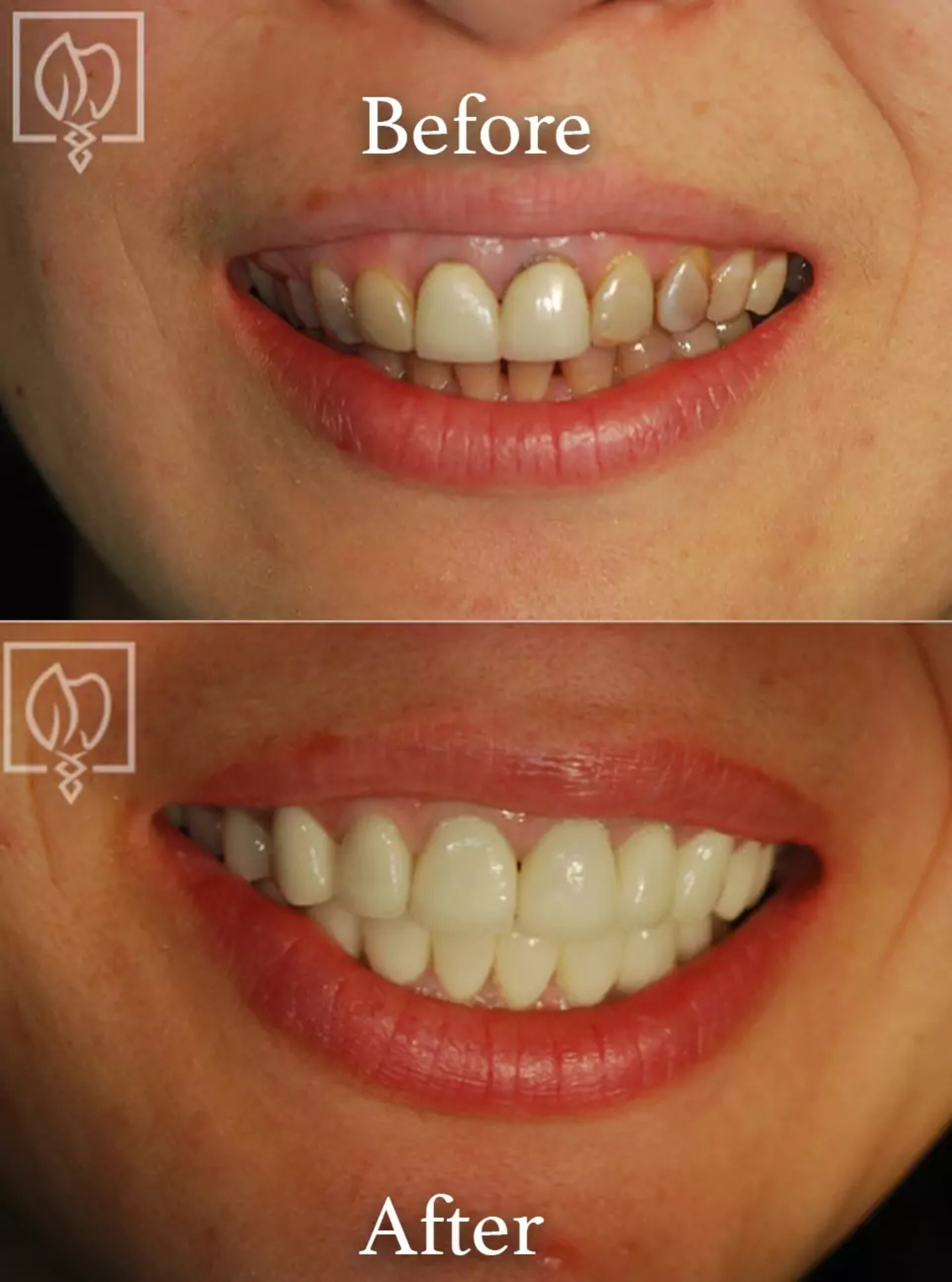
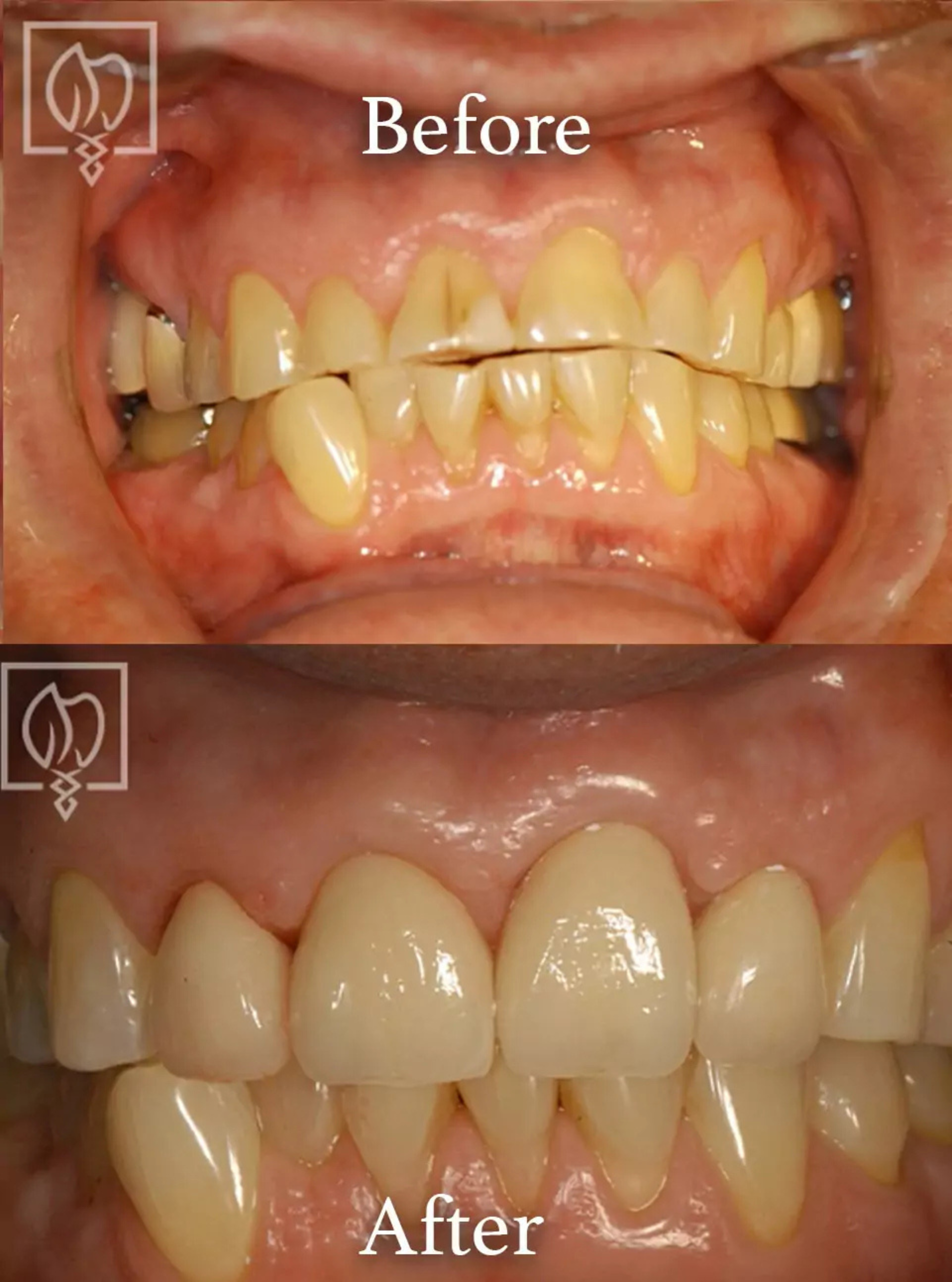
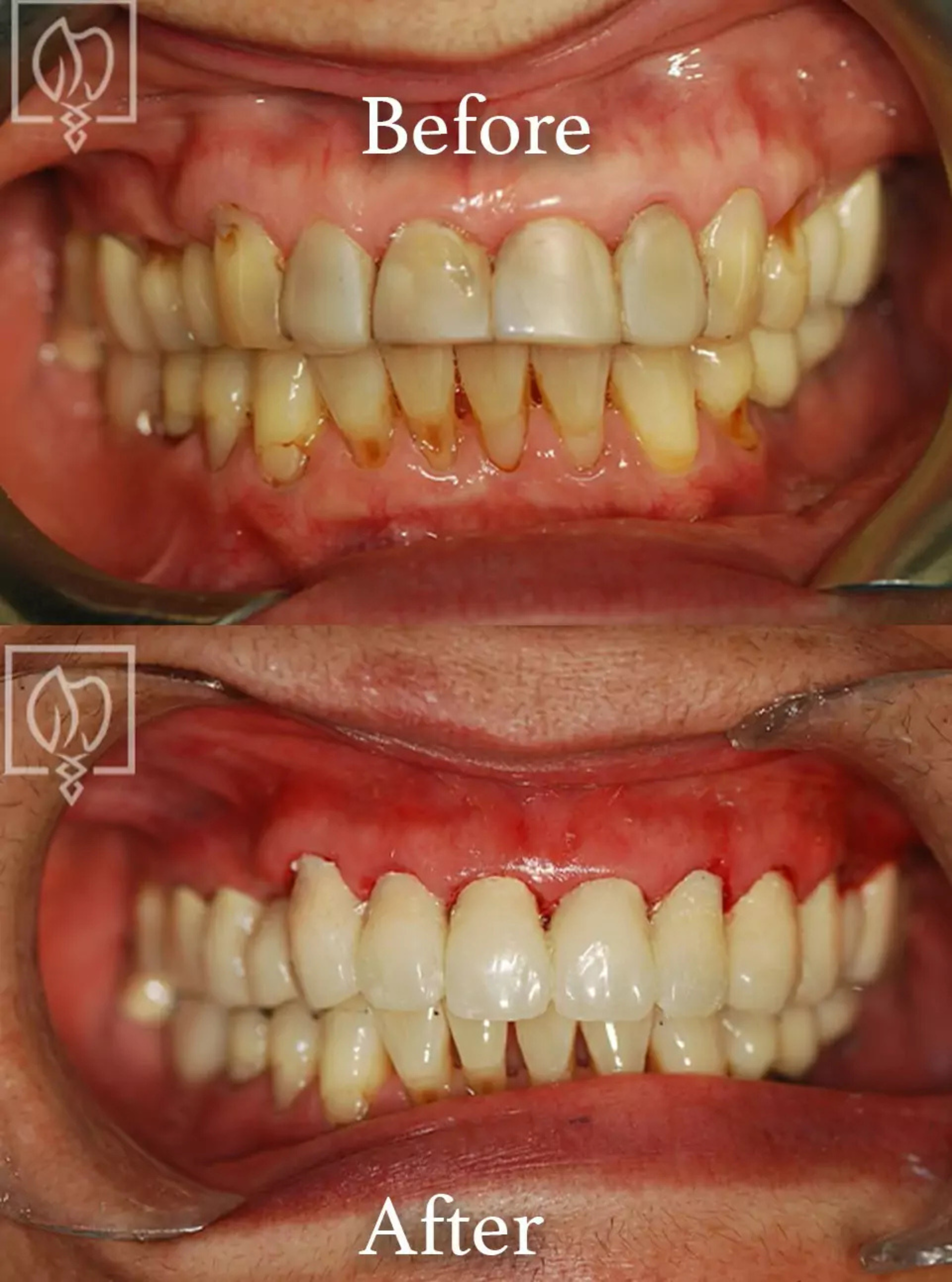
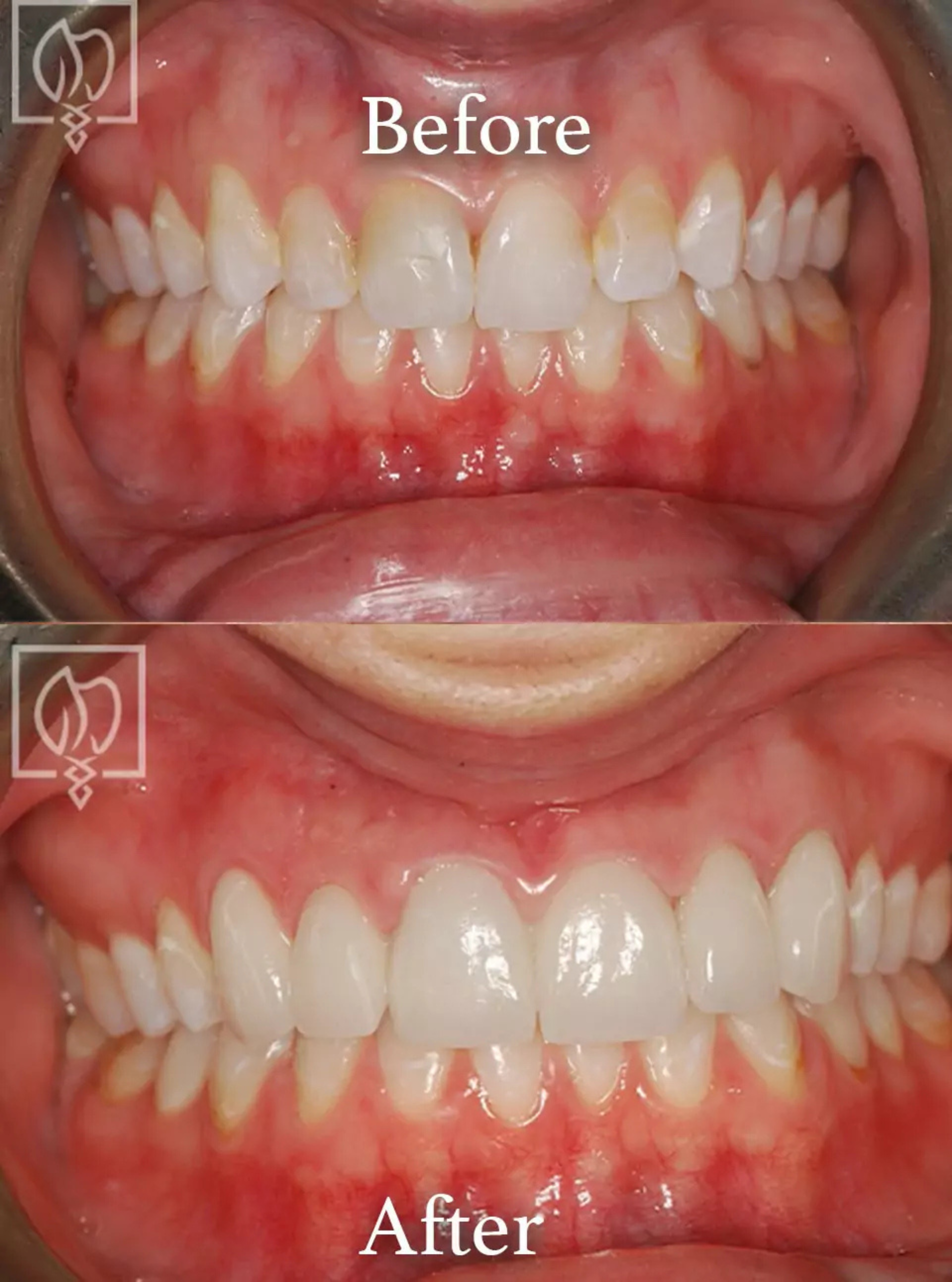
Every result below was achieved at the Washington, DC practice under specialist supervision by Dr. Marlin.
Frequently Asked Questions
Is professional whitening better than over-the-counter products?
Professional whitening uses higher-concentration whitening agents under controlled conditions, with sensitivity protocols and custom-fitted delivery systems. The result is more predictable, faster, and better managed than over-the-counter alternatives. The difference is most significant for patients with significant discoloration, sensitivity concerns, or planning whitening as part of a larger cosmetic project.
Does whitening damage my teeth?
Properly performed professional whitening does not damage healthy enamel. Sensitivity during and after treatment is common and resolves after whitening ends. Patients with significant existing tooth wear, exposed roots, or pre-existing sensitivity require modified protocols. Specialist evaluation identifies these factors before treatment begins.
How long do whitening results last?
Results vary based on diet, habits, and oral hygiene. Most patients see noticeable fading over six to twelve months without maintenance. Periodic touch-up whitening with custom trays maintains the result indefinitely. Habits that contribute to staining (coffee, tea, red wine, tobacco) influence how quickly the result fades.
Why might whitening not work for my teeth?
Some discoloration types do not respond to whitening. Tetracycline staining, severe fluorosis, internal discoloration from past trauma or root canal treatment, and discoloration from restorations are common examples. For these, the correct answer is typically [veneers](/veneers/) or [crowns](/dental-crowns/), not whitening. Specialist evaluation identifies which category your situation falls into before you commit to whitening.
Will whitening affect my existing crowns or veneers?
Whitening agents work only on natural tooth structure and do not change the color of existing crowns, veneers, fillings, or other restorations. Patients with existing restorations should plan whitening accordingly: whiten first, then replace or update restorations to match the new shade. This is one reason specialist coordination matters.
Is in-office or take-home whitening better?
Both work. In-office whitening produces immediate visible results in a single appointment and is well-suited for patients with a deadline or specific event. Custom take-home whitening produces equivalent final results over two to four weeks with custom-fitted trays and is well-suited for patients who want a slower progression or have sensitivity concerns. Combination treatment is also available.
Why see a prosthodontist for whitening when general dentists offer it?
Whitening is within the scope of general dentistry, and many patients are well-served by their general dentist for straightforward whitening. Specialist consultation is most valuable when whitening is part of a larger cosmetic plan, when the discoloration may not respond to whitening, or when the patient has not been satisfied with previous whitening attempts elsewhere.
Related Patient Success Stories
Explore similar patient success stories demonstrating our expertise in advanced prosthetic dentistry.
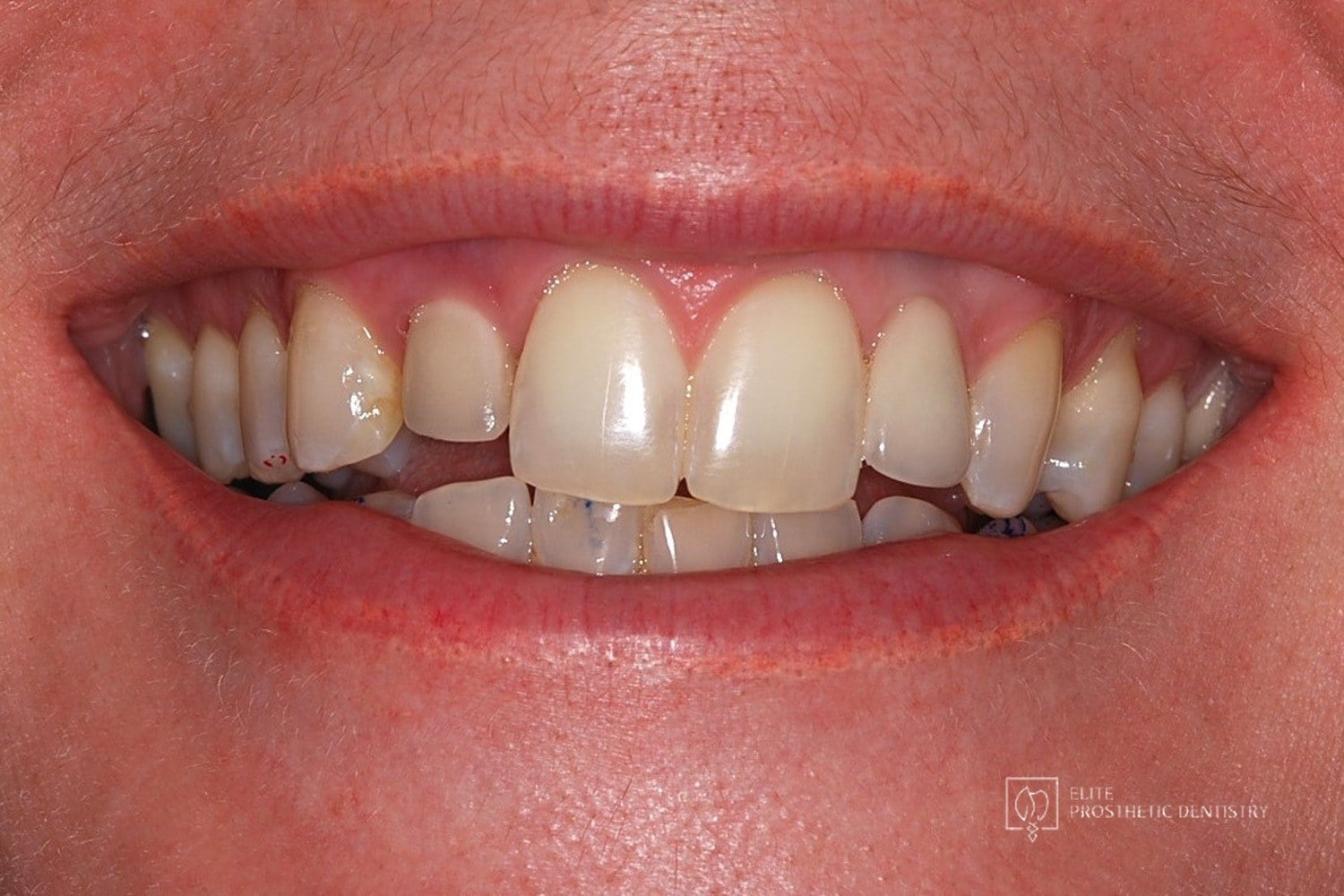 Before
 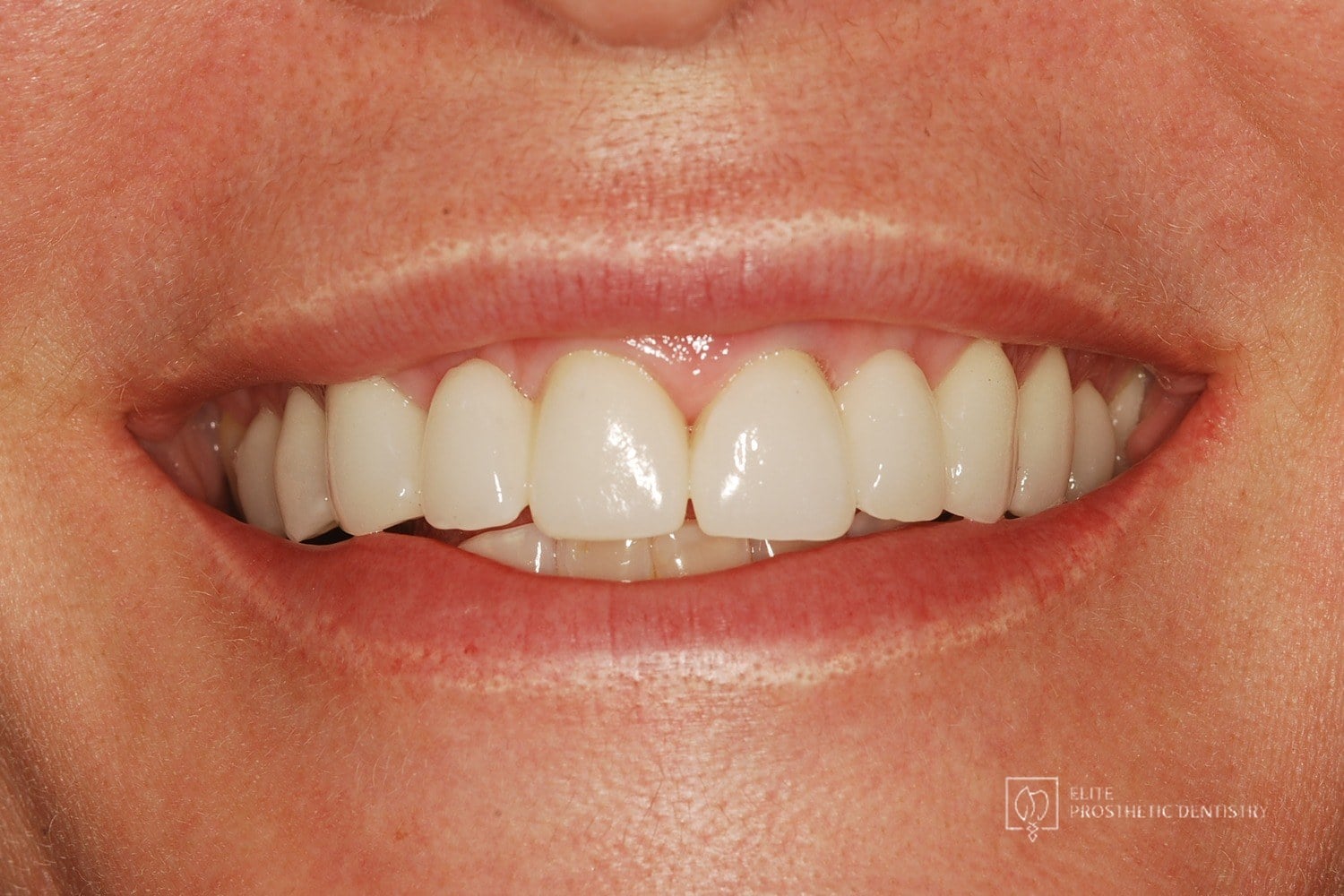 After
After How Failing Lateral Incisor Implants Were Replaced with Custom Zirconia Bridges After Severe Bone Loss Made Replacement Implants Impossible
Comprehensive examination including CBCT imaging revealed significant bone loss surrounding implants that were placed outside the buccal plate, most likely due to placement without a CBCT-generated surgical guide. The implants were determined non-salvageable, and the alveolar ridge was too narrow to support replacement implants without extensive reconstruction.
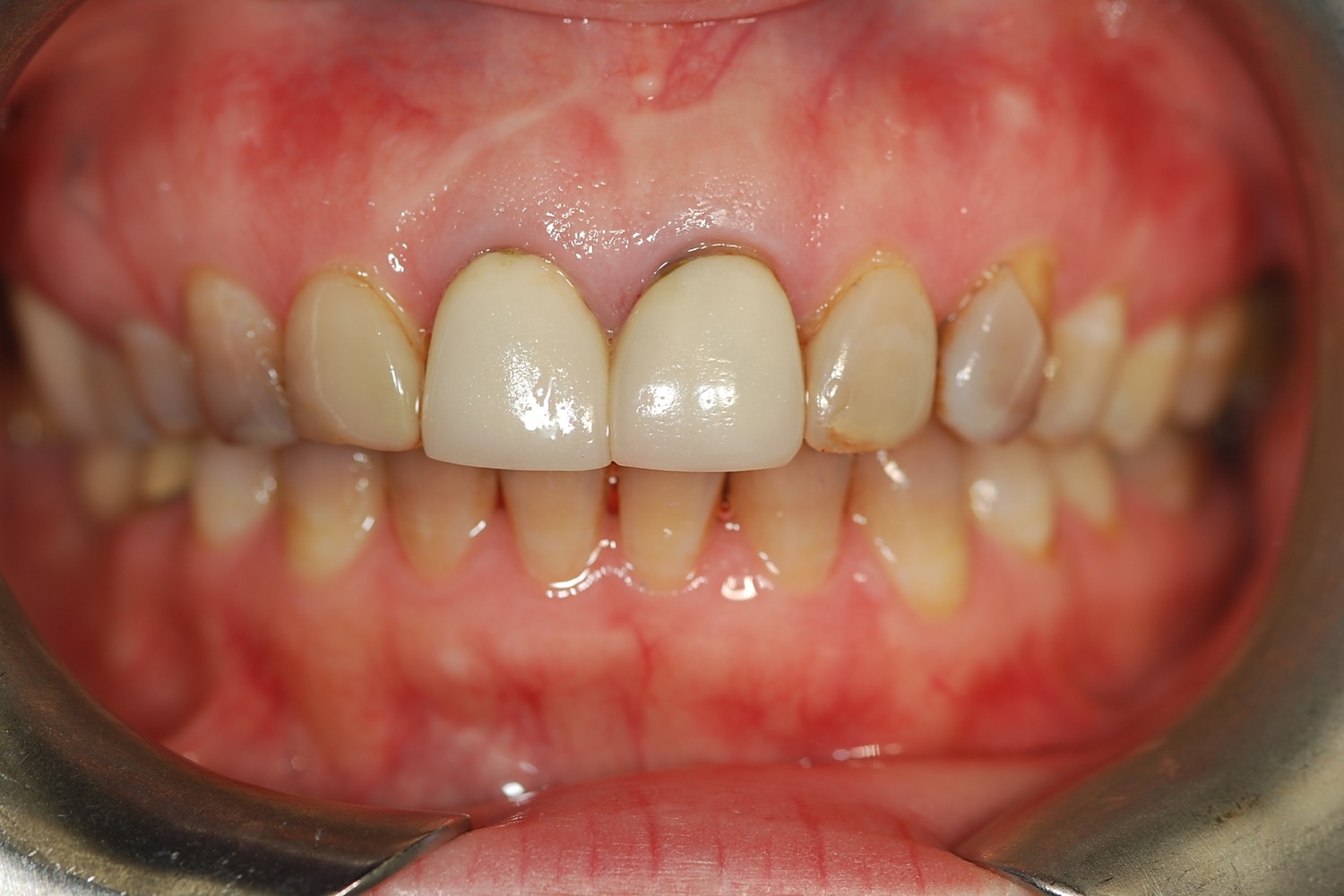 Before
 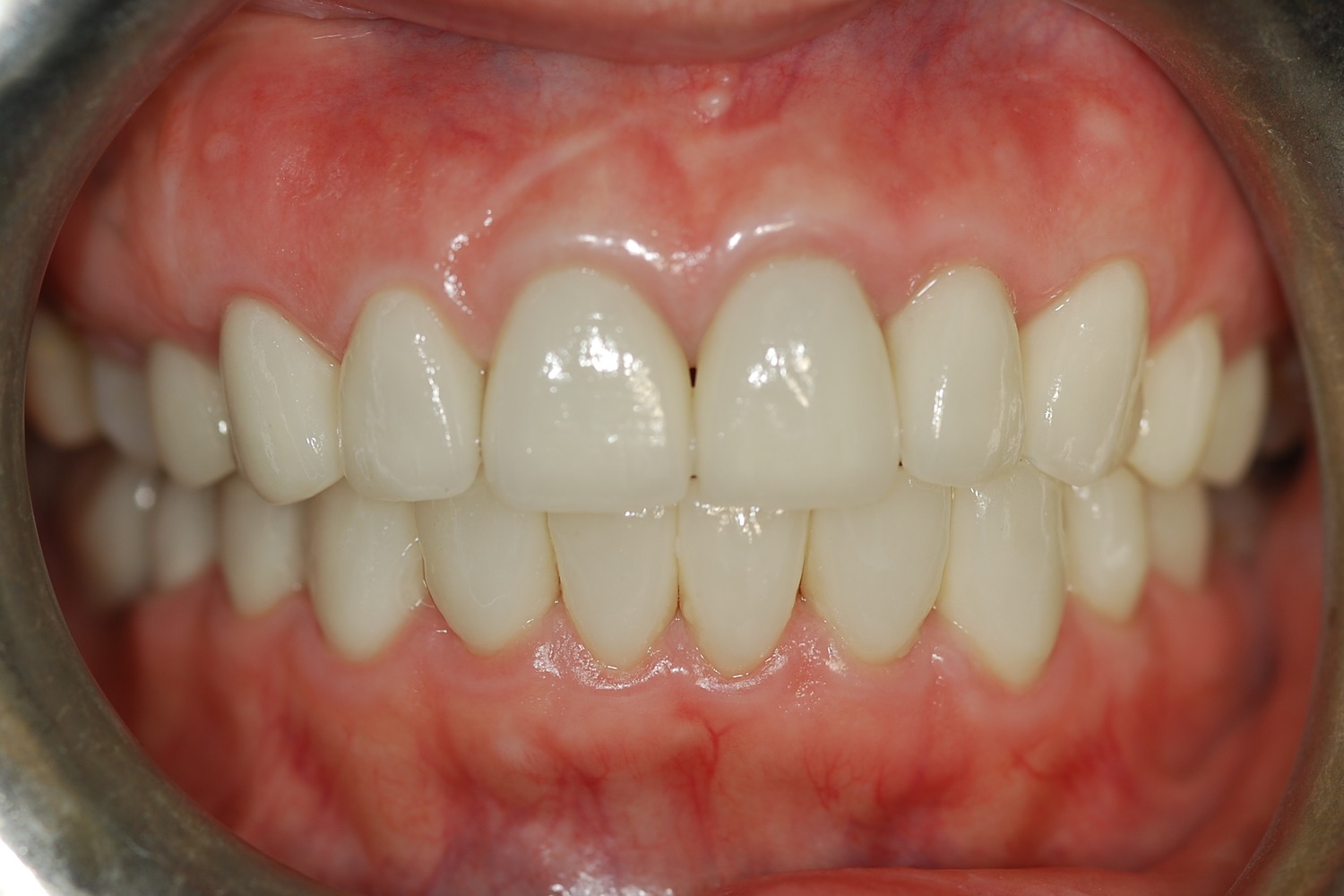 After
After How Aging, Opaque Restorations Were Replaced with Customized Ceramic Restorations Designed for Long-Term Natural Esthetics
The existing restorations appeared opaque, worn, and unnatural over time, affecting both confidence and overall smile harmony.
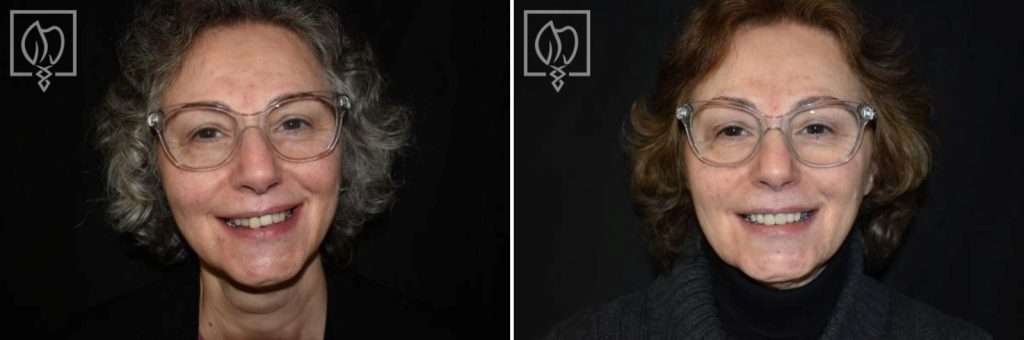
Temporary Crowns Restore a Patient's Smile in One Day with an Immediate Smile Makeover
A patient from Potomac, Maryland came to the practice in pain from a failing dental implant whose restoration was also compromising her appearance and her confidence.
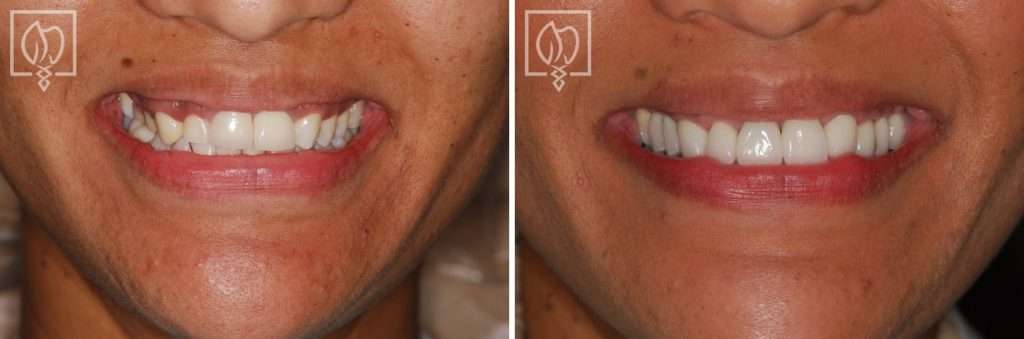
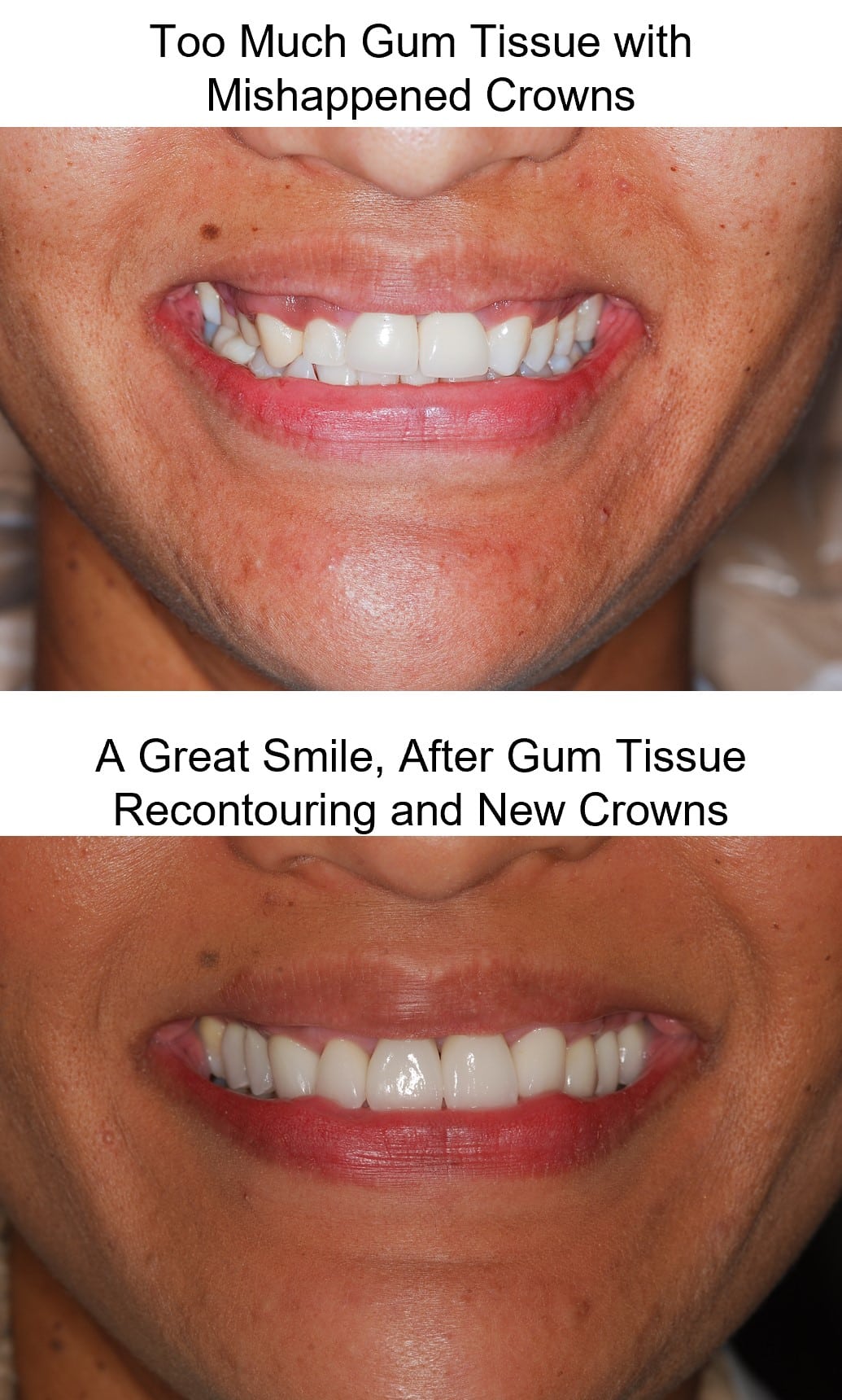
Multi-Faceted Treatment for a Patient Unhappy With the Appearance of Her Crowns, Teeth, and Gums
The patient was unhappy with how her teeth and gums affected her smile: front-tooth crowns that no longer blended with her natural teeth, a missing lateral incisor with the larger canine sitting in its space, and an uneven gum line.
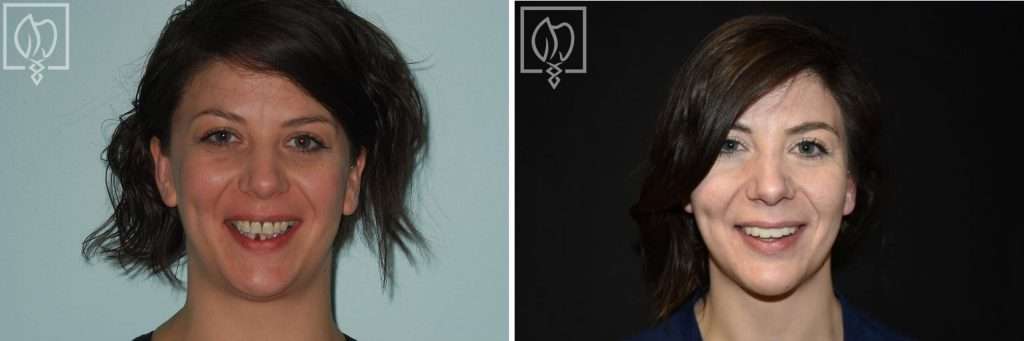
Salvaging Severely Broken-Down Upper and Lower Teeth from Gum and Bone Disease
The patient presented in distress at 34 with severe periodontal disease: two lower front teeth close to being lost and wide gaps opening between her upper and lower front teeth.
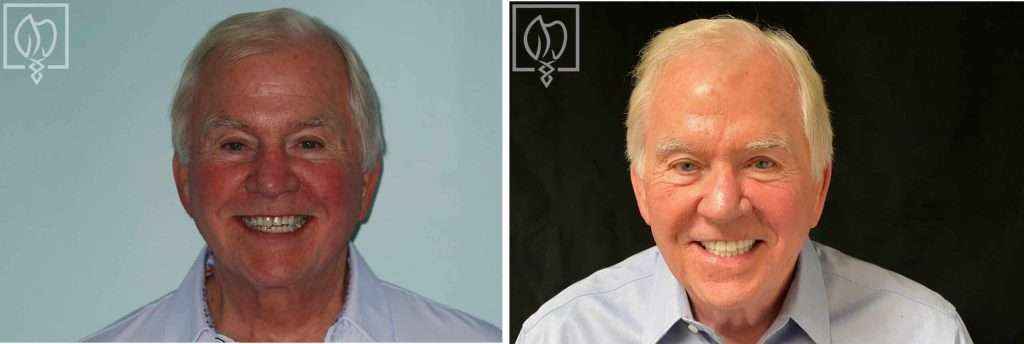
A Smile Transformation in Just Four Months: A Patient’s Dental Crown Restoration for a TV Series
A patient with dental crowns that were in poor shape was going to appear on a streaming video series on a major TV network that was scheduled to begin filming soon. Our patient, John, an author about to embark on a book tour, was anxious as his teeth were not up to his standards to appear on television.
Related Articles
Deepen your knowledge with additional insights on this topic.
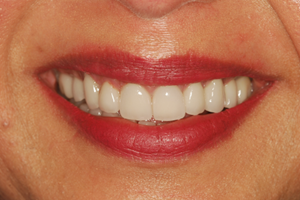 Cosmetic Dentistry
 Can My Tetracycline-Stained Teeth Be Made to Look Beautiful?
Tetracycline staining sits deep inside the tooth, so bleaching cannot fix it. See how translucent porcelain crowns create a bright, natural smile instead.
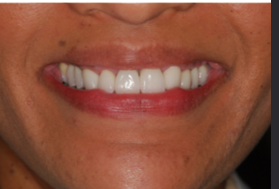 Cosmetic Dentistry
 How Is a Gummy Smile Fixed?
From gum reshaping to custom crowns, a DC prosthodontist explains how a gummy smile is fixed, with a real patient transformation and healing timeline.
 Cosmetic Dentistry
 Discovering Cosmetic Dentistry Beyond Aesthetics
Cosmetic dentistry improves more than looks: easier hygiene, restored chewing function, and better long-term oral health. A DC prosthodontist explains.
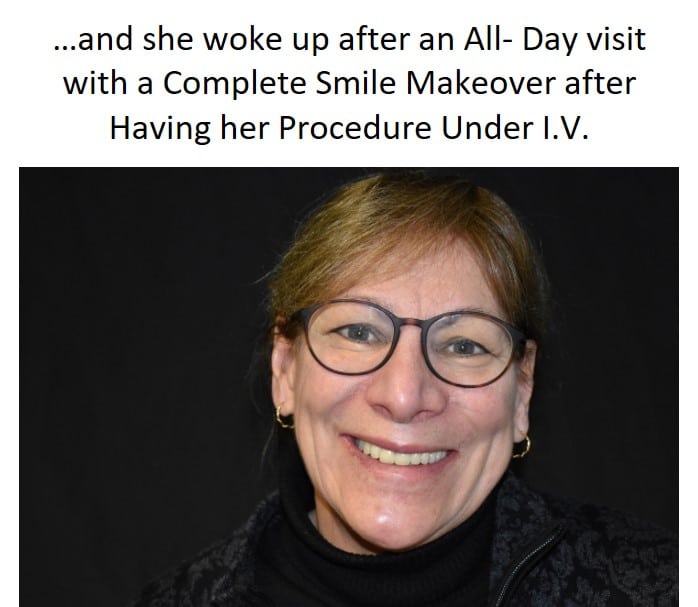 Cosmetic Dentistry
 Benefits of a Cosmetic Smile Makeover With Dental Sedation
Sedation lets longer smile makeover visits feel brief, eases anxiety, and may reduce soreness afterward. A DC prosthodontist explains the benefits.
 Cosmetic Dentistry
 Does Treating or Rehabilitating a Gummy Smile Require Surgery?
Not every gummy smile needs surgery. A DC prosthodontist explains restorative and other alternatives, and what to expect when gum surgery is the right call.
Cosmetic Dentistry Treatable Dental Conditions That Make Patients Self-Conscious About Their Smile
Discolored, worn, gapped, or missing teeth and gummy smiles are all treatable. A DC prosthodontist maps each common condition to its modern fix.
Whitening and Cosmetic Resources
Cosmetic Dentistry Overview
Whitening in the context of broader cosmetic options.
Porcelain Veneers
When whitening will not improve the discoloration.
Custom Dental Crowns
Full coverage for teeth that cannot be whitened.
Smile Makeover
Comprehensive cosmetic treatment combining whitening and other procedures.
Teeth Look Yellow or Dull
Patient-experience perspective on tooth discoloration.
Professional Teeth Whitening in Washington, DC Near You
Dr. Marlin provides specialty care to patients throughout the Washington, DC metropolitan area. Select your community to learn more.
Conveniently Located in Friendship Heights
Serving Washington DC, Bethesda, Chevy Chase, McLean, Great Falls, Potomac, and surrounding communities. One block from the Friendship Heights Metro on the Red Line.
Request Your Specialist Consultation
Personally reviewed by Dr. Marlin or his team.
Hours
- Monday — Thursday8:00 AM — 5:00 PM
- Friday8:00 AM — 2:00 PM
- Saturday — SundayClosed