
Both Arches Rebuilt After Advanced Periodontal Disease: Twelve Guided Implants and a Signature Hybrid Prosthesis
Intraoral view
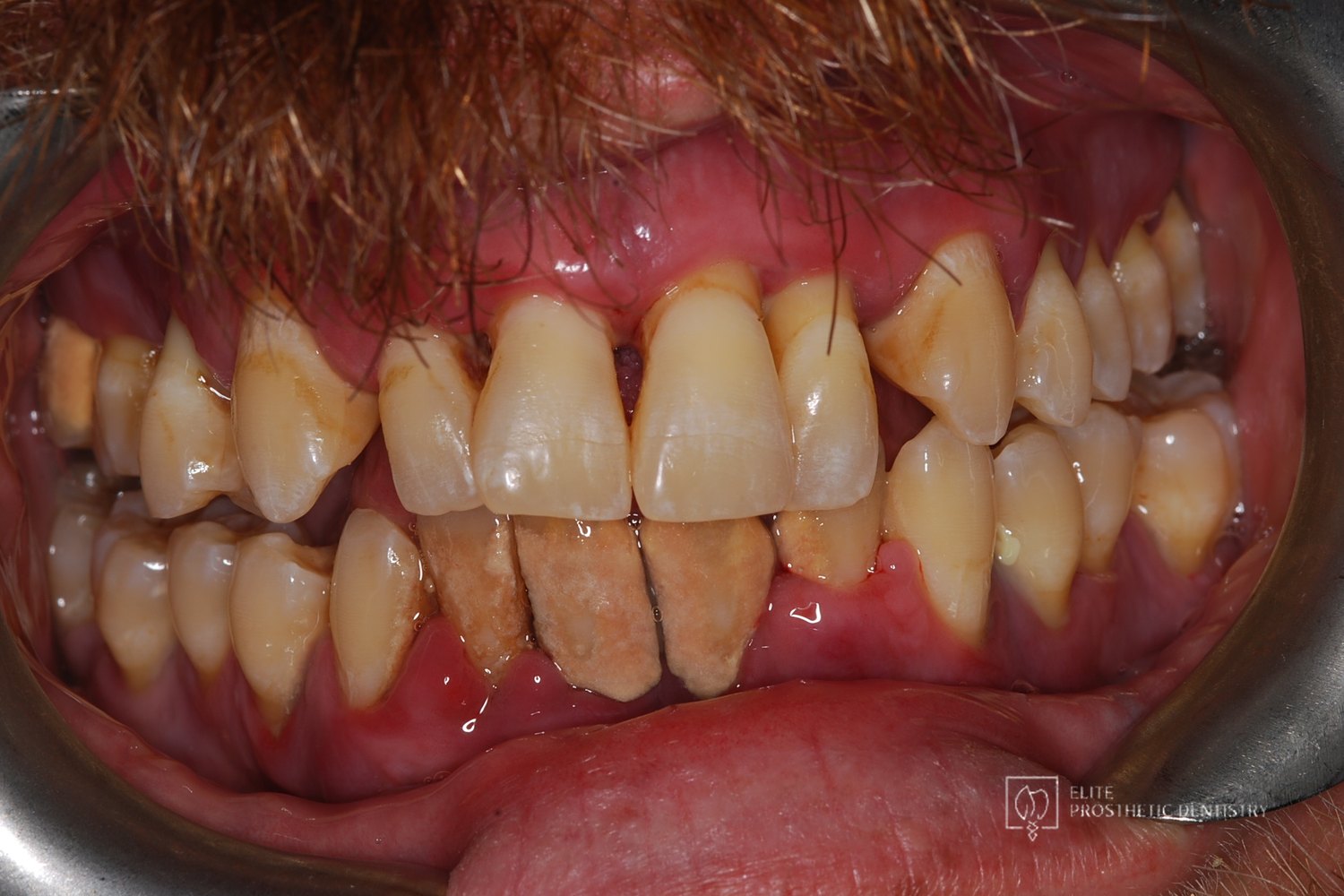 Before
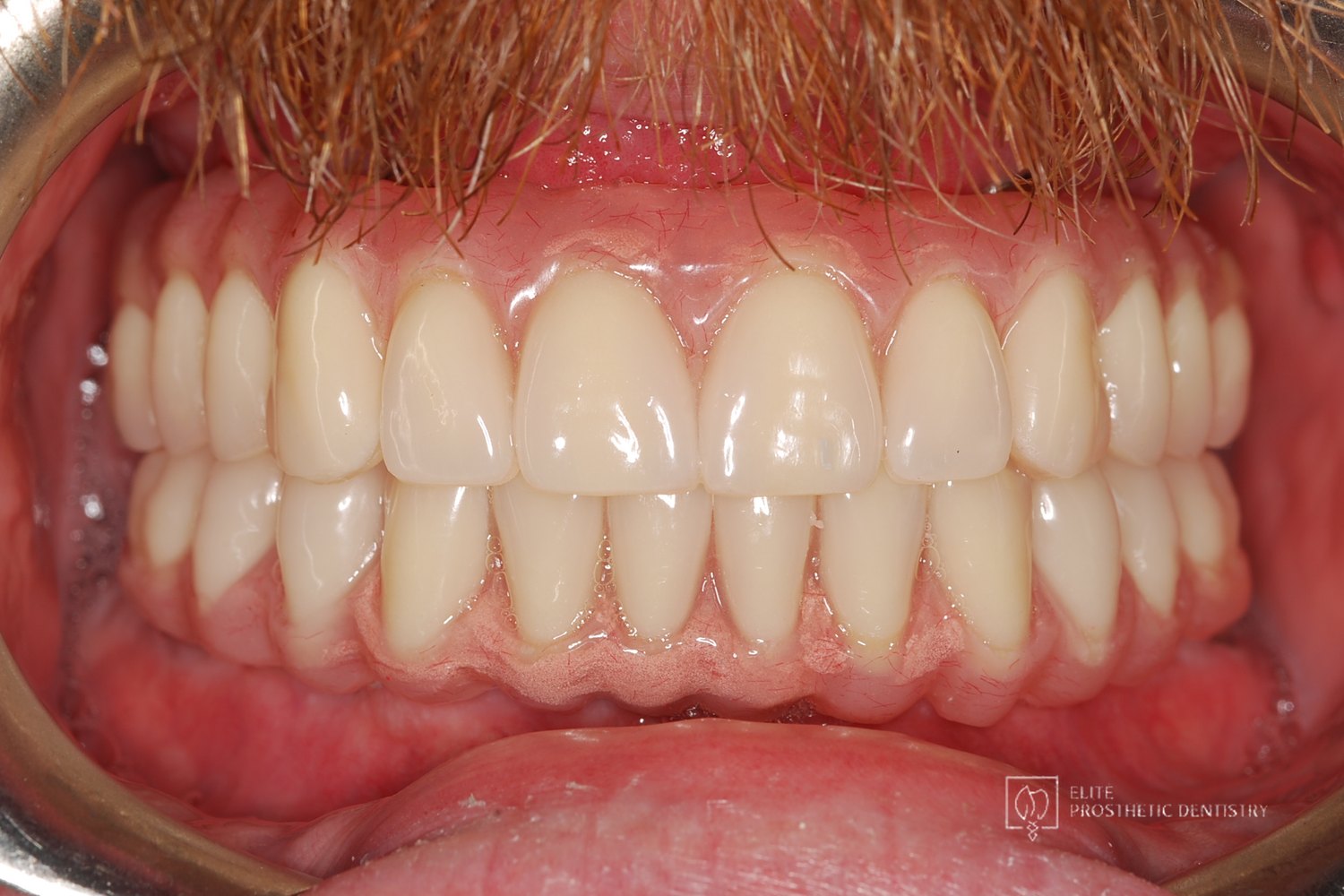 After
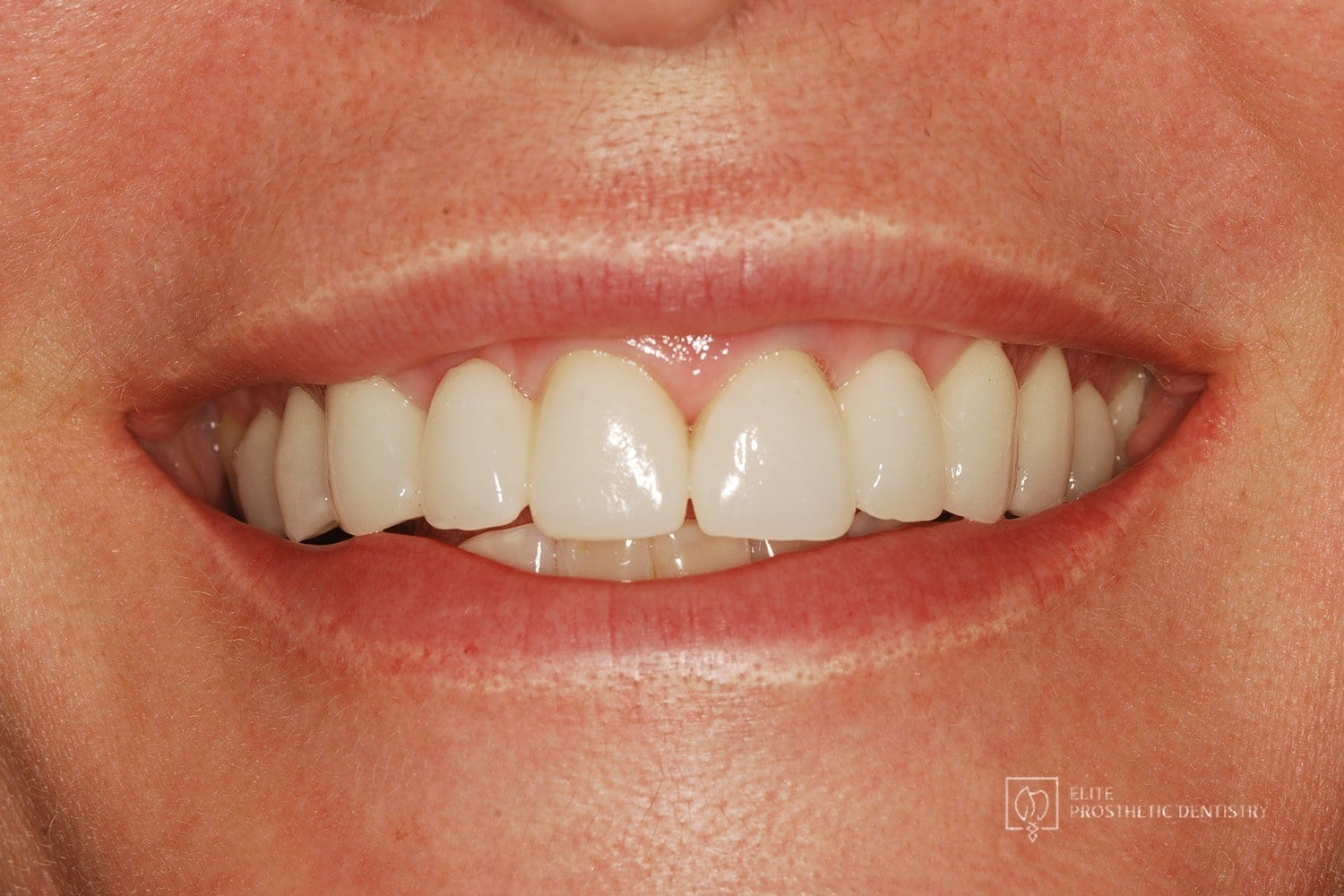
Completed smile
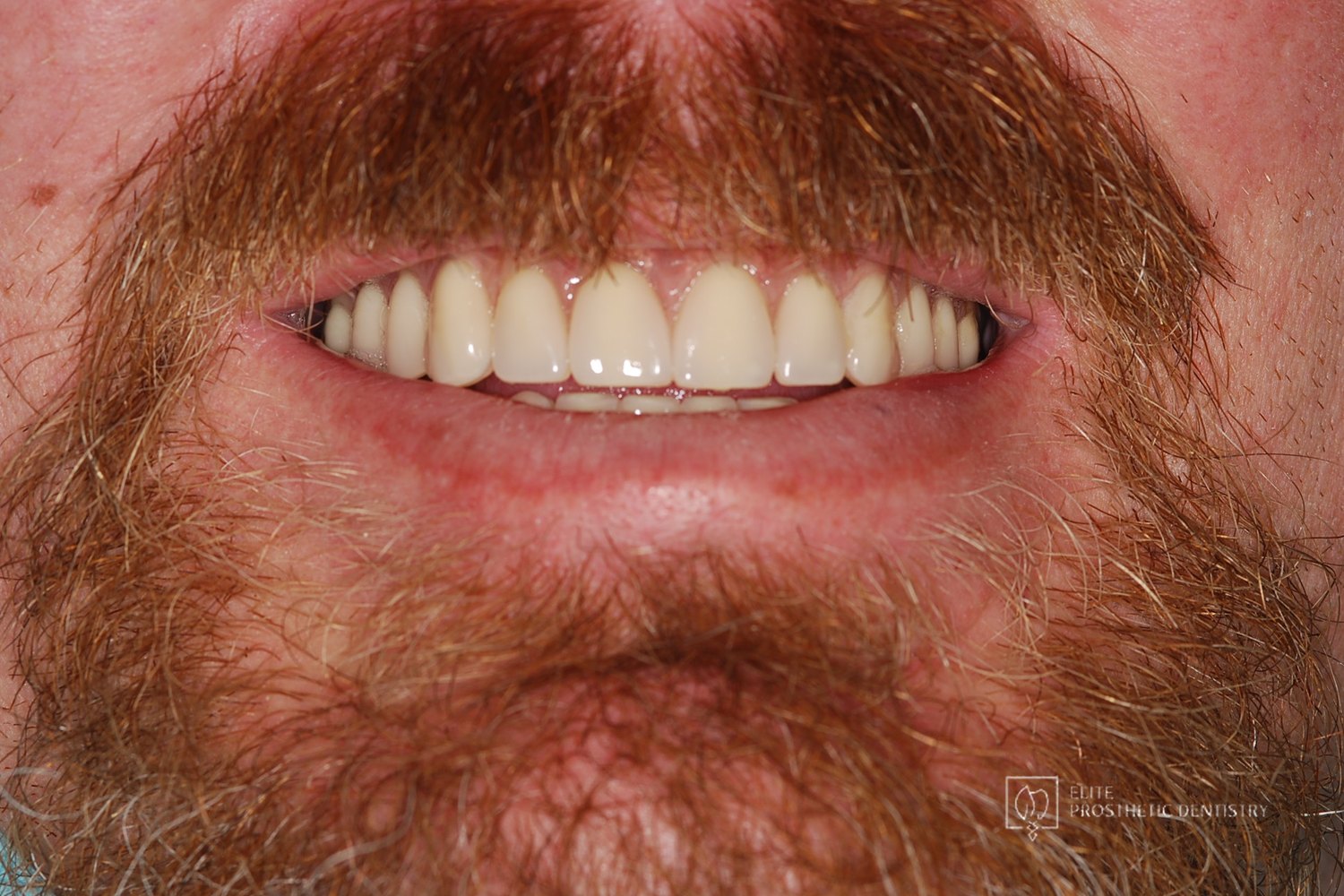
Both arches rebuilt on implants after advanced periodontal disease
Full-arch implant reconstruction of both arches in Washington, DC for a patient whose remaining teeth had been lost to advanced periodontal disease. This documented case at Elite Prosthetic Dentistry sequenced extractions, bone grafting, sinus lifts, and osseodensification before six guided implants were placed in each arch and restored with a Signature hybrid prosthesis. Treatment was planned and completed by Gerald Marlin, D.M.D., M.S.D., a prosthodontist who plans the surgical and restorative phases of full-arch cases together within one specialist practice.
Case at a Glance
- Treatment
- Full-arch implant reconstruction of both arches with a Signature hybrid prosthesis
- Approach
- Comprehensive evaluation and digital imaging, strategic extractions, bone grafting and sinus lifts, osseodensification, six guided implants per arch, custom hybrid prostheses
- Case Type
- Implant reconstruction / Full-arch rehabilitation after periodontal disease
- Patient Concern
- Advanced periodontal disease in both arches with failing, loose teeth that could no longer be restored.
- Decision Point
- Keep patching teeth with no remaining support, or remove them in a planned sequence, rebuild the bone, and carry both arches on implants.
- Outcome
- Stable, implant-supported arches with a prosthesis matched to the patient's goals and budget priorities, and a smile he could use again without hesitation.
- Why It Matters
- Shows that a full-arch case after severe bone loss is a sequence of foundation work before it is a set of teeth, and that the prosthesis can be tailored to the patient without compromising the engineering underneath it.
The presenting condition
By the time this patient came to the practice, periodontal disease had progressed well beyond what cleaning and gum treatment could reverse. The bone that holds teeth in place had been lost around the upper and lower teeth, the teeth were loose and failing, and traditional restorative options such as crowns or bridges had nothing stable left to attach to. He wanted a result that would hold up, and he wanted to understand each step before committing to it.
Clinical Findings
- →Advanced periodontal disease affecting both the upper and lower arches
- →Remaining teeth loose and failing, with no predictable way to restore them
- →Periodontal bone loss that had compromised the structural foundation in both jaws
- →Insufficient bone height in the posterior upper jaw, requiring sinus lifts before implants could be placed
- →A patient who wanted a durable, functional result and a solution matched to his priorities
Why the foundation had to be rebuilt before any teeth were made
A full-arch implant case after periodontal disease is not a tooth-replacement problem first; it is a bone problem first. Implants need bone of adequate height, width, and density to integrate and to carry chewing forces for decades. When the disease has taken that bone, placing implants into what remains invites the same instability the patient is trying to leave behind. The sequence matters: remove the sources of infection, rebuild the ridge and the sinus floor where bone is short, improve the density of the bone that will hold the implants, and only then place implants in positions chosen for the final prosthesis rather than for whatever bone happens to be available. A prosthodontist plans the final prosthesis first and works backward to the surgery that will support it, so the surgical sequence, the periodontal foundation, the prosthetic design, and the comfort plan are engineered together before treatment begins.
The treatment plan
After a comprehensive evaluation and digital imaging, the reconstruction was organized as a phased sequence with the final prosthesis design driving every surgical decision.
-
1
Strategic extractions and bone preservation
Teeth that could not be saved were removed in a planned order, with bone grafting at the time of extraction to preserve as much ridge as possible for the implants to come.
-
2
Sinus lifts and ridge grafting
Where the upper posterior bone was too short, sinus lift procedures and additional grafting rebuilt the height needed for implant placement. See sinus augmentation for how this is done.
-
3
Osseodensification to improve bone quality
Rather than drilling bone away, osseodensification compacts and widens the ridge at each implant site, improving the density and stability of the bone that will hold the implant.
-
4
Six guided implants in each arch
Using surgical guides fabricated from the digital plan, six implants were placed in the upper arch and six in the lower in positions chosen to support a full-arch prosthesis evenly. Six implants per arch is a configuration selected for long-term stability and load distribution.
-
5
Signature hybrid prostheses
After integration, each arch was restored with the practice's Signature hybrid prosthesis, a custom-designed implant-supported bridge with acrylic teeth. The patient chose this option because it delivered reliable function and esthetics at a level of investment that matched his goals. The prostheses were fabricated in direct coordination between Dr. Marlin and the practice's in-house laboratory to maintain control over fit, contour, function, and esthetics.
The outcome
The completed reconstruction gave the patient two stable, implant-supported arches in place of teeth that could no longer be kept. The before and after views at the top of this page show the change from loose, failing teeth to a complete, even smile. At every stage the team walked him through what was being done and why, and the final result restored not only his ability to chew comfortably but his confidence to smile again.
Result Highlights
- ✓Advanced periodontal disease in both arches resolved through a planned extraction sequence
- ✓Bone grafting, sinus lifts, and osseodensification rebuilt a foundation that disease had taken away
- ✓Six guided implants per arch, placed from a digital plan for even support of the final prosthesis
- ✓A Signature hybrid prosthesis matched to the patient's functional, esthetic, and investment priorities
- ✓Surgical and restorative phases planned together within one specialist practice
Who this case may sound familiar to
This story tends to resonate with patients in a few recognizable situations:
- You have been told your remaining teeth cannot be saved because of gum disease and you want to understand what a planned, permanent solution looks like.
- You have lost bone and have been told implants are not possible without rebuilding it first.
- You want a fixed, implant-supported result rather than a removable denture, and you want to know the options at different levels of investment.
- You want one practice to plan and carry out the surgery and the final teeth rather than coordinating between offices.
- You want the foundation done correctly so the result is still stable many years from now.
If any of those describe where you are, a consultation with Dr. Marlin can give you the diagnostic picture and the specific plan for your case.
Frequently asked questions
Can dental implants be placed after advanced periodontal disease?
Yes, once the disease is controlled and the bone has been rebuilt where it is deficient. Periodontal disease destroys the bone implants depend on, so most of these cases begin with extractions, bone grafting, and sometimes sinus lifts before implants are placed. The timing and sequence are planned from imaging so that the implants end up in positions that support the final prosthesis properly.
Why place six implants in each arch instead of four?
Both configurations can succeed. Six implants per arch spread chewing forces across more support, give the prosthodontist more flexibility in prosthesis design, and provide a margin of safety if one implant were ever to have a problem. The number is chosen case by case from the available bone, the patient’s bite forces, and the prosthesis planned for the arch.
What is a hybrid prosthesis?
A hybrid prosthesis is a full-arch bridge that is fixed to the implants rather than removable by the patient. It replaces the teeth and the lost gum and bone contour in one piece. Hybrids can be made with different tooth materials and frameworks; the practice offers several designs so the choice can be matched to the patient’s function, esthetics, and investment priorities.
What is osseodensification and why was it used here?
Osseodensification is a way of preparing an implant site that compacts and expands the surrounding bone instead of removing it. In a jaw weakened by periodontal disease, it improves the density of the bone around each implant and can widen a narrow ridge, which helps the implant achieve stable integration.
More about the work behind this case
This case combines full-arch dental implants with bone grafting and sinus augmentation to rebuild what periodontal disease removed. The sequencing reflects the practice’s philosophy on complex reconstruction, and the prosthesis was built with the in-house laboratory.
Elite Prosthetic Dentistry treats patients from across the DMV including Bethesda, Chevy Chase, McLean, Arlington, Potomac, and Great Falls, and from much further out for cases that warrant the trip.
Related Services
Related Patient Success Stories
Explore similar patient success stories demonstrating our expertise in advanced prosthetic dentistry.
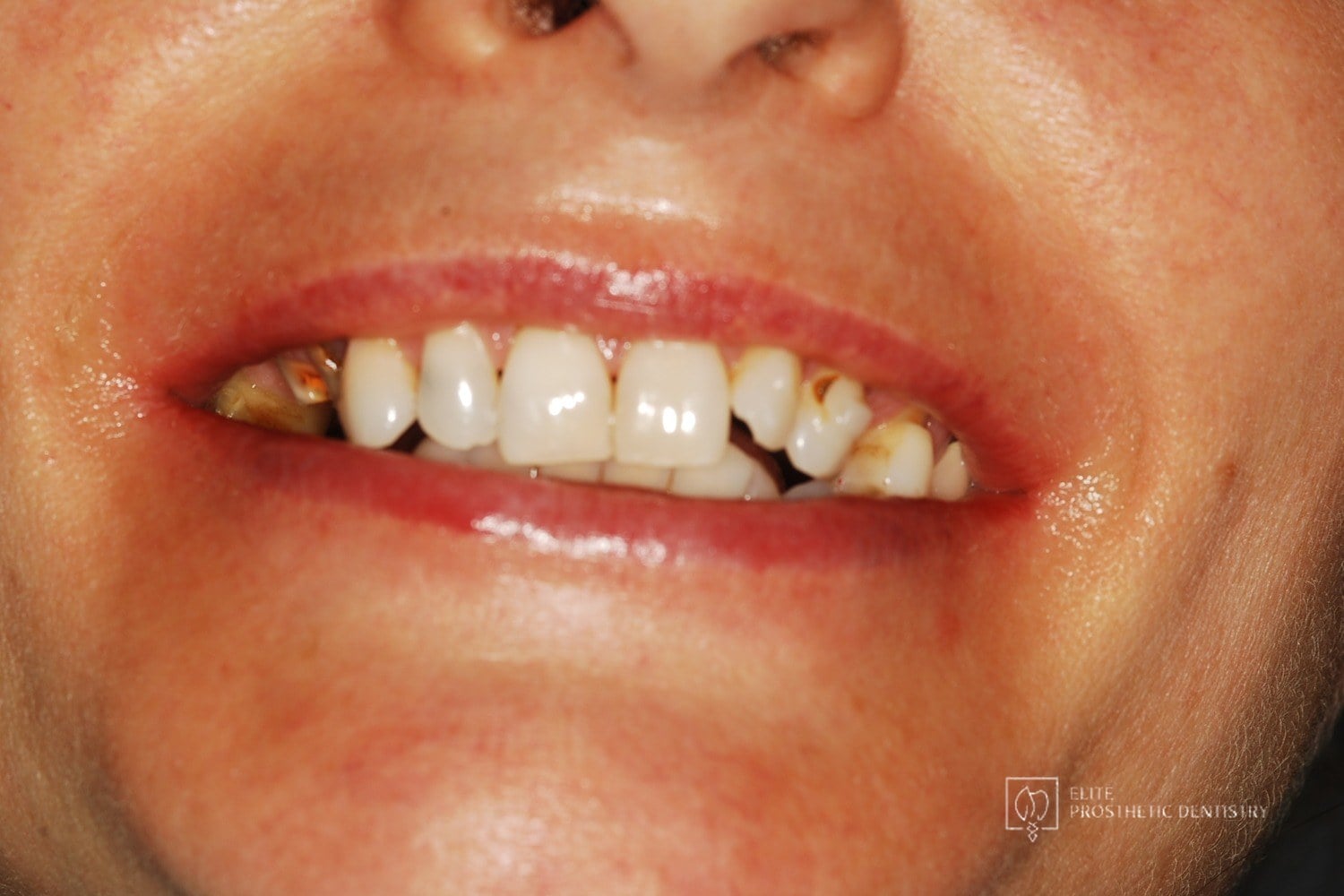 Before
 After
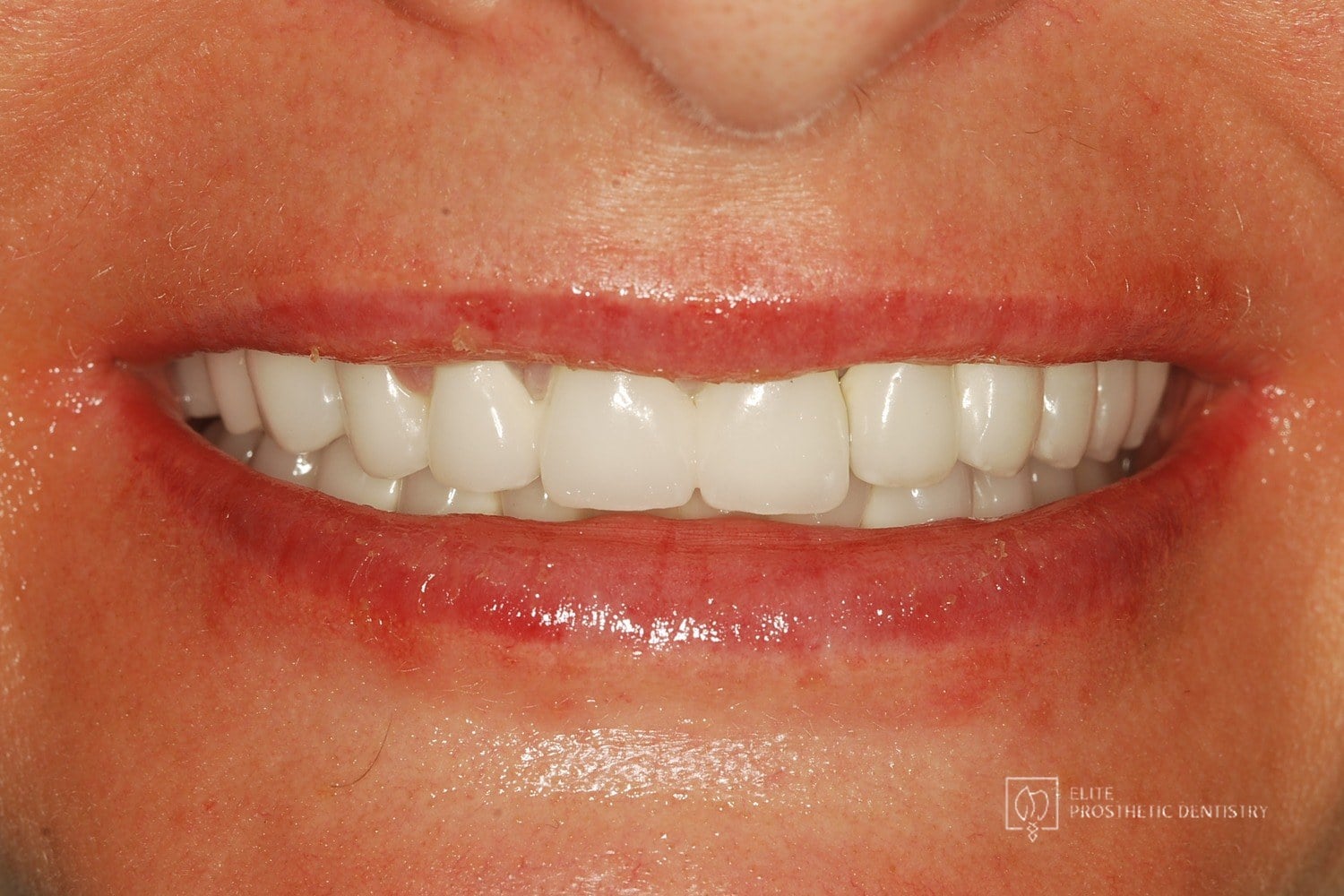
How Aging, Failing Dentistry Was Replaced with a Coordinated Full-Mouth Implant and Crown Reconstruction
The patient presented with throbbing upper-molar pain, long-standing infections, multiple root canals and unfinished prior treatment, generalized sensitivity, and several hopeless teeth.
 Before
 After
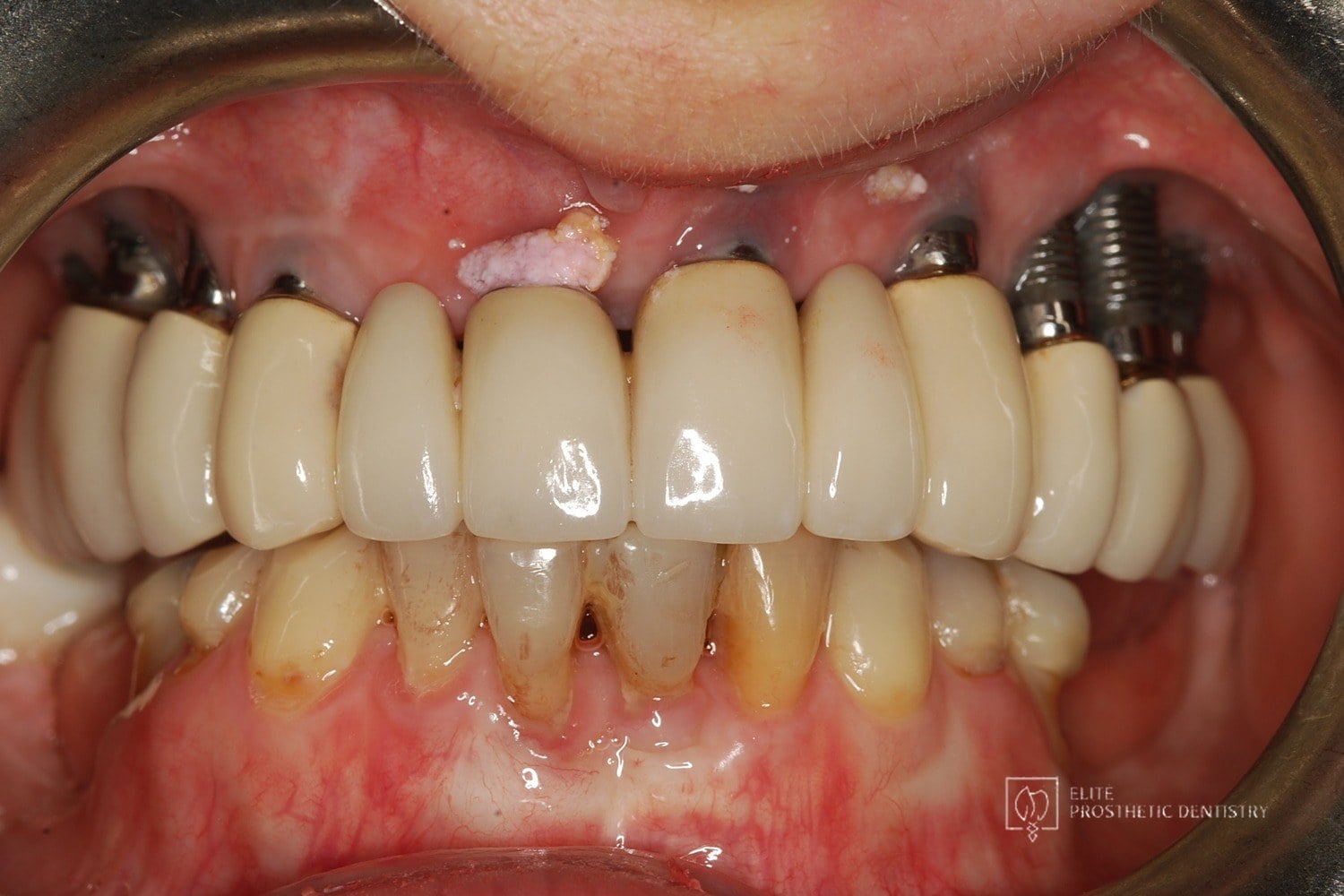
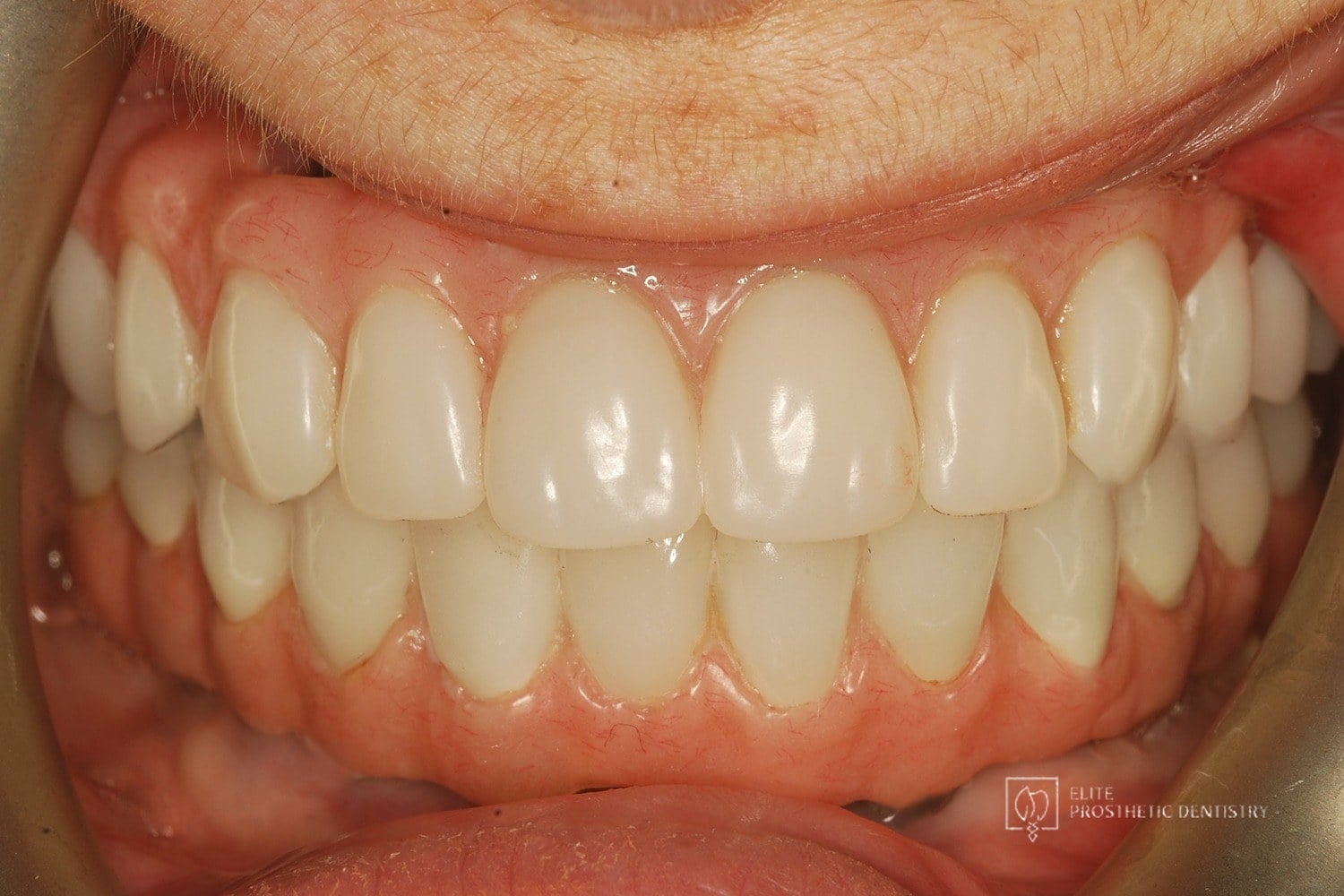
How Failing Implants and Severe Bone Loss Were Rebuilt Into a Stable Full-Arch Implant Reconstruction
The patient presented with significant complications from previously placed implants, severe bone loss, failing posterior implants, and an unesthetic full-arch bridge. Both arches required full reconstruction, with the upper arch showing the most advanced bone loss and instability.
 Before
 After
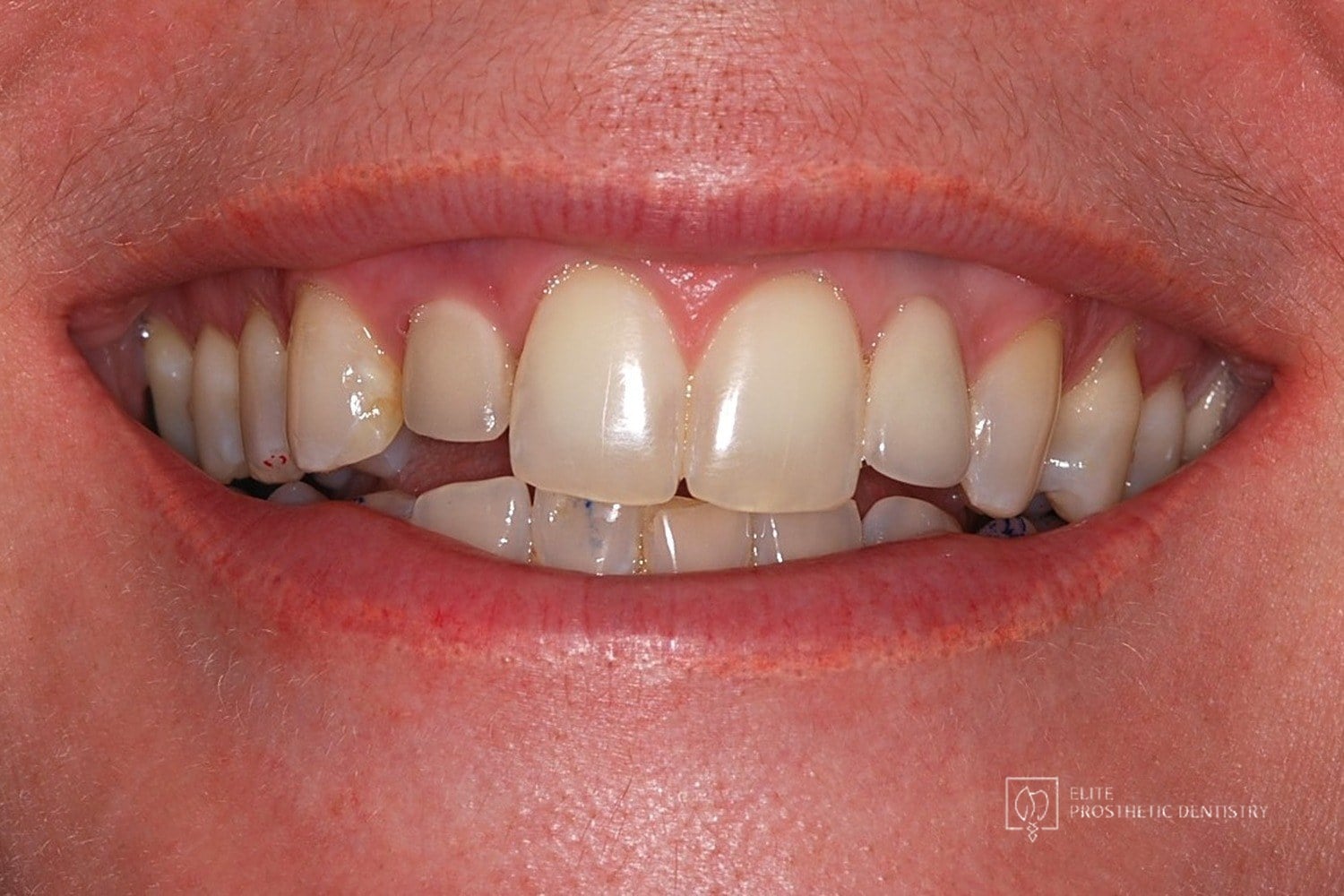
How Failing Lateral Incisor Implants Were Replaced with Custom Zirconia Bridges After Severe Bone Loss Made Replacement Implants Impossible
Comprehensive examination including CBCT imaging revealed significant bone loss surrounding implants that were placed outside the buccal plate, most likely due to placement without a CBCT-generated surgical guide. The implants were determined non-salvageable, and the alveolar ridge was too narrow to support replacement implants without extensive reconstruction.