
Split-Site Implant Care vs. Integrated Surgical-Restorative Planning in One Office
Oral surgeon plus restorative dentist, or one prosthodontic practice that plans, places, and restores the implant? When each model works, where handoffs create risk, and the questions to ask before choosing.
Both models produce excellent implants when the case is simple. The difference shows up when the case is not: multiple implants, an esthetic-zone tooth, limited bone, a bite that must be rebuilt, or existing crowns and bridges the implant has to live with. In those situations, having diagnosis, placement, provisionals, and the final restoration planned and delivered in one office removes the handoffs where things go wrong.

Patients considering dental implants are often offered a familiar division of labor: an oral surgeon or periodontist places the implant, and a restorative dentist makes the crown afterward. That split-site model is well established and appropriate for many patients. This guide explains where it works, where it strains, and how an integrated prosthodontic model differs, so you can match the model to your situation rather than to whoever you happened to see first.
How the Split-Site Model Works
In split-site care, two offices share one patient. The surgical office evaluates bone, places the implant, and manages healing. The restorative office then takes an impression of the healed implant and orders the crown, bridge, or prosthesis. Communication between the two happens through referral letters, shared imaging, and, ideally, a written plan agreed before surgery.
For a single implant replacing one tooth in a stable mouth with adequate bone, this model is often perfectly sound. Many surgeons and restorative dentists have worked together for years and coordinate well.
Where Handoffs Create Risk
The model strains when the restoration, not the surgery, is the hard part. Four situations account for most of the trouble:
- Position decided before the tooth is designed. If the implant is placed where bone is most convenient rather than where the final tooth needs support, the restorative office inherits an angle, depth, or spacing problem it cannot fully fix. A documented example: an integrated implant that still had to be replaced because its position could not support a properly fitting restoration.
- Provisionals nobody owns. Between surgery and the final restoration, a patient in the esthetic zone needs a presentable, well-fitting temporary. When that responsibility falls between two offices, the gum contour that the final crown depends on is often left to chance.
- Bite decisions made in isolation. Implant-supported teeth must fit a bite that may itself be worn, collapsed, or shifting. If the surgical office does not see the bite plan and the restorative office does not see the surgical constraints, the result can be a crown that works on the model and not in the mouth.
- Accountability after delivery. When something loosens, chips, or feels wrong years later, split-site patients sometimes find each office pointing to the other. One accountable practice is a simpler arrangement to live with.
How Integrated Surgical-Restorative Planning Differs
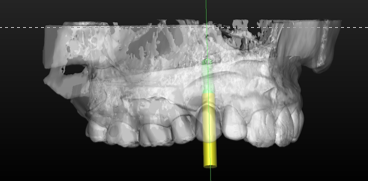
In an integrated prosthodontic model, the sequence runs backward from the result. The intended final restoration is designed first. CBCT imaging defines what the bone will allow. The implant position is chosen to support the planned tooth, and where the case calls for one, a surgical guide generated from the scan translates that plan into the surgery. Provisional restorations are designed by the same team, and the in-house laboratory refines shade, contour, and fit with the clinician and patient present rather than through a courier.
At Elite Prosthetic Dentistry, every implant case, from a single implant through full-mouth reconstruction, is planned on a CBCT scan. Surgical guides generated from the scan are used where bone anatomy, esthetic demands, or proximity to nerves and sinuses call for them, and Dr. Gerald M. Marlin has used CT-generated guides since 2002. When the site needs preparation, bone grafting, sinus augmentation, and ridge augmentation are performed in the practice as part of the same plan. The restoration is planned first, the implant is placed to support it, and the tooth is completed with the in-house laboratory, all under one treatment plan.
This is not a claim that one office is always better. It is a structural observation: fewer handoffs means fewer places for the plan to drift.
Questions to Ask Under Either Model
- Who is designing the final restoration, and has that design been shared with whoever will place the implant?
- Will the implant position be chosen from a CBCT-based plan, and will a surgical guide be used if my case calls for one?
- Who makes and manages my provisional restoration, especially if the tooth is visible?
- How will my bite be evaluated as part of the implant plan?
- Who is accountable for the final restoration in year ten?
- Can I see documented cases similar to mine?
When Elite Prosthetic Dentistry May Be a Strong Fit
- Your implant will be in a visible area where gum contour and tooth shape must be planned before surgery.
- You need more than one implant, an implant bridge, or a full-arch reconstruction.
- Your implants must coordinate with existing crowns, bridges, or a bite that needs rebuilding.
- You may need bone grafting or sinus augmentation before implant placement.
- You want one accountable practice from diagnosis through the final restoration and long-term maintenance.
When Another Setting May Be More Appropriate
- You need a single straightforward implant in a stable mouth with good bone, and your surgeon and restorative dentist already coordinate well.
- You are comfortable with a standardized, center-based pathway and your case fits it.
- You are looking primarily for the lowest-cost or fastest option rather than a comprehensive plan.
Representative Cases
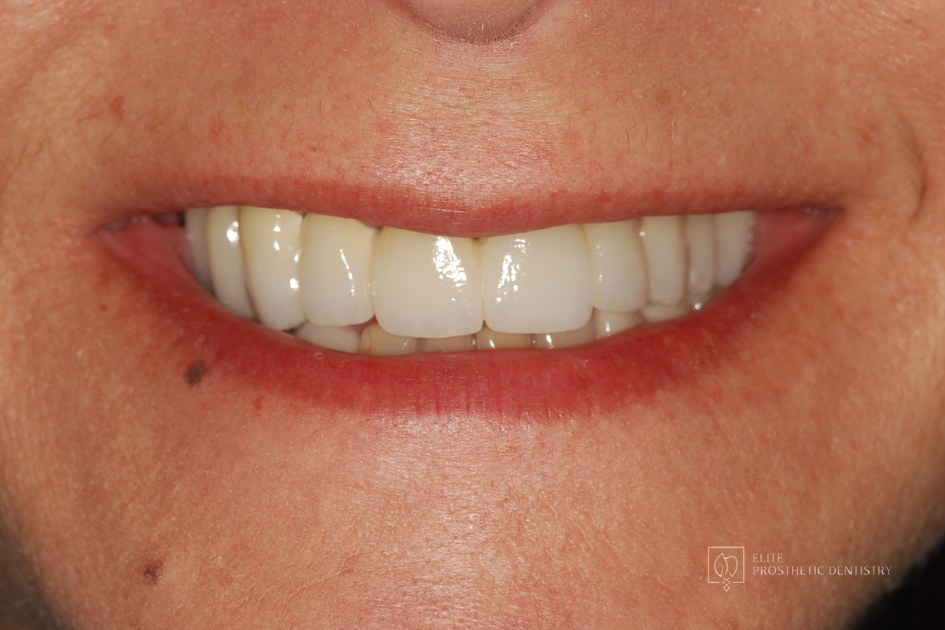
These documented cases show what integrated planning looks like when surgery and restoration are treated as one project:
- Implant-supported reconstruction of failing bridgework and missing back teeth, where extractions, grafting, endodontic care, implants, and the final restorations were sequenced under one plan
- A loose upper bridge and aging crowns rebuilt with staged implant and crown reconstruction
- A long-term missing front tooth rebuilt with bone grafting and an implant, where timing, bone preservation, and the final crown were planned years in advance
- Replacing a dental implant that could not be properly restored, the cost of position decided without the tooth in mind
More are collected in the Implant Reconstruction & Rehabilitation success story hub.
Related Decision Guides
- How to Choose a Dental Implant Provider for a Complex Case
- Implant Center vs. Prosthodontic Implant Reconstruction: Which Is Right for Your Situation?
- What Kind of Dentist Should Fix a Failing Dental Implant?
Request an Integrated Implant Evaluation
Bring your imaging and any plan you have already been given. A prosthodontic evaluation defines the intended final restoration first, so the surgical plan, in either model, serves it. Request a consultation or call (202) 244-2101. No pressure. Clear answers. A defined plan.
Your Best Smile Is Within Reach
Request a specialist consultation with Dr. Marlin to discuss your situation and the most appropriate path forward.
Frequently Asked Questions
Is it wrong to have an oral surgeon place my implant and my dentist restore it?
No. Many excellent implant cases are completed collaboratively between a surgeon and a restorative dentist, and for a straightforward single implant with good bone, that model works well. The question is whether your case has enough restorative complexity that a handoff between offices becomes a risk.
What does integrated surgical-restorative planning actually mean?
It means the final restoration is designed first, the implant is placed to support that design, and the crown, bridge, or prosthesis is fabricated by the same team that planned and placed it, with the laboratory involved throughout. Diagnosis, placement, provisionals, abutment design, and the final restoration are one plan rather than a sequence of separate decisions.
How does a prosthodontist handle the surgical side?
At Elite Prosthetic Dentistry, implant planning begins with CBCT imaging for every implant case, and surgical guides generated from that scan are used where anatomy, esthetics, or proximity to nerves and sinuses call for them. Dr. Marlin has used CT-generated surgical guides since 2002, and bone grafting, sinus augmentation, and ridge augmentation are performed in the practice when the site needs to be prepared.
If I already have a surgeon I trust, can Elite Prosthetic Dentistry still be involved?
Yes. Restorative-driven planning can begin before surgery in either model. A prosthodontic evaluation can define the intended final restoration and the implant positions that support it, so that whoever places the implant is working toward the same end result.
Related Patient Success Stories
Explore similar patient success stories demonstrating our expertise in advanced prosthetic dentistry.
 Before
  After
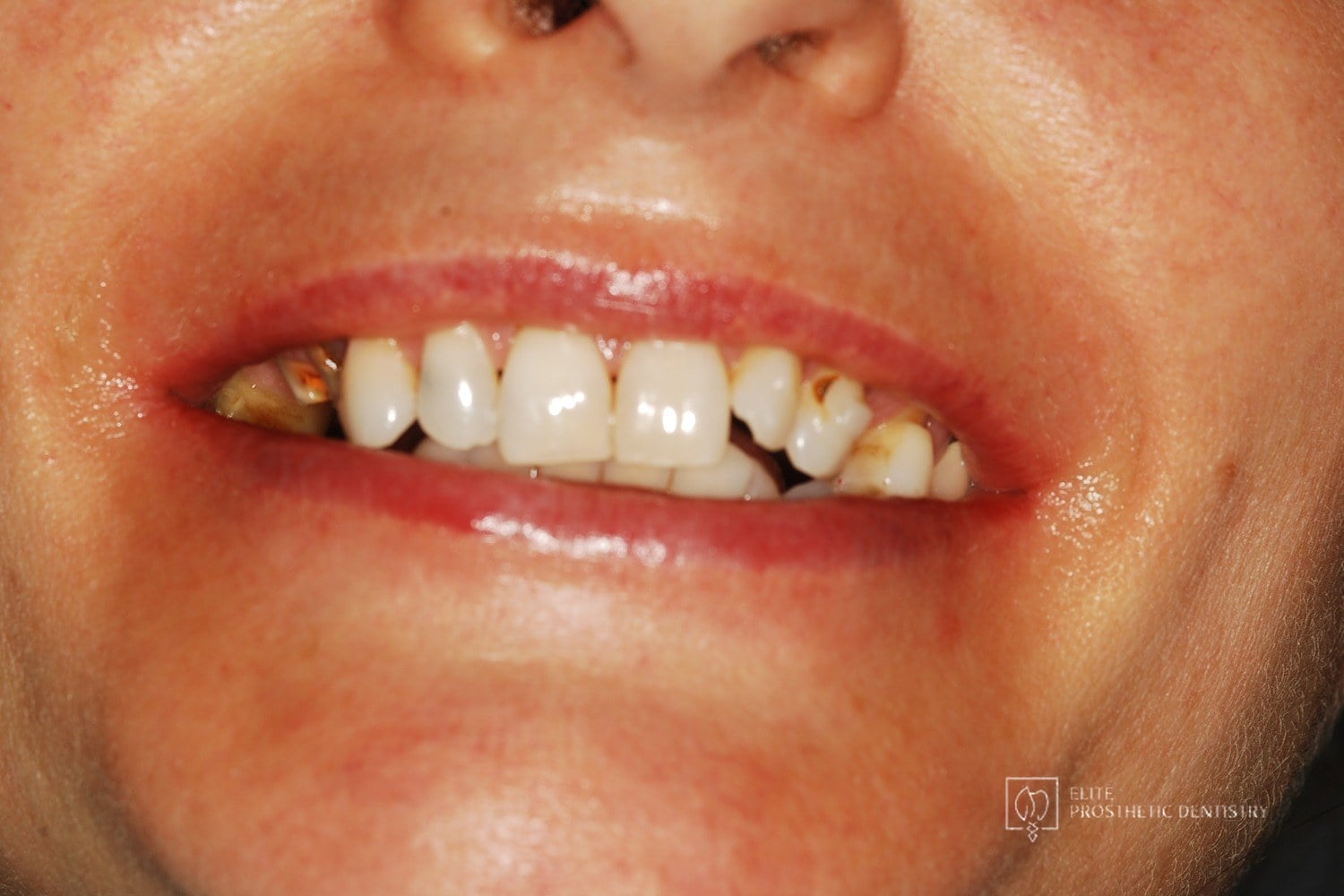
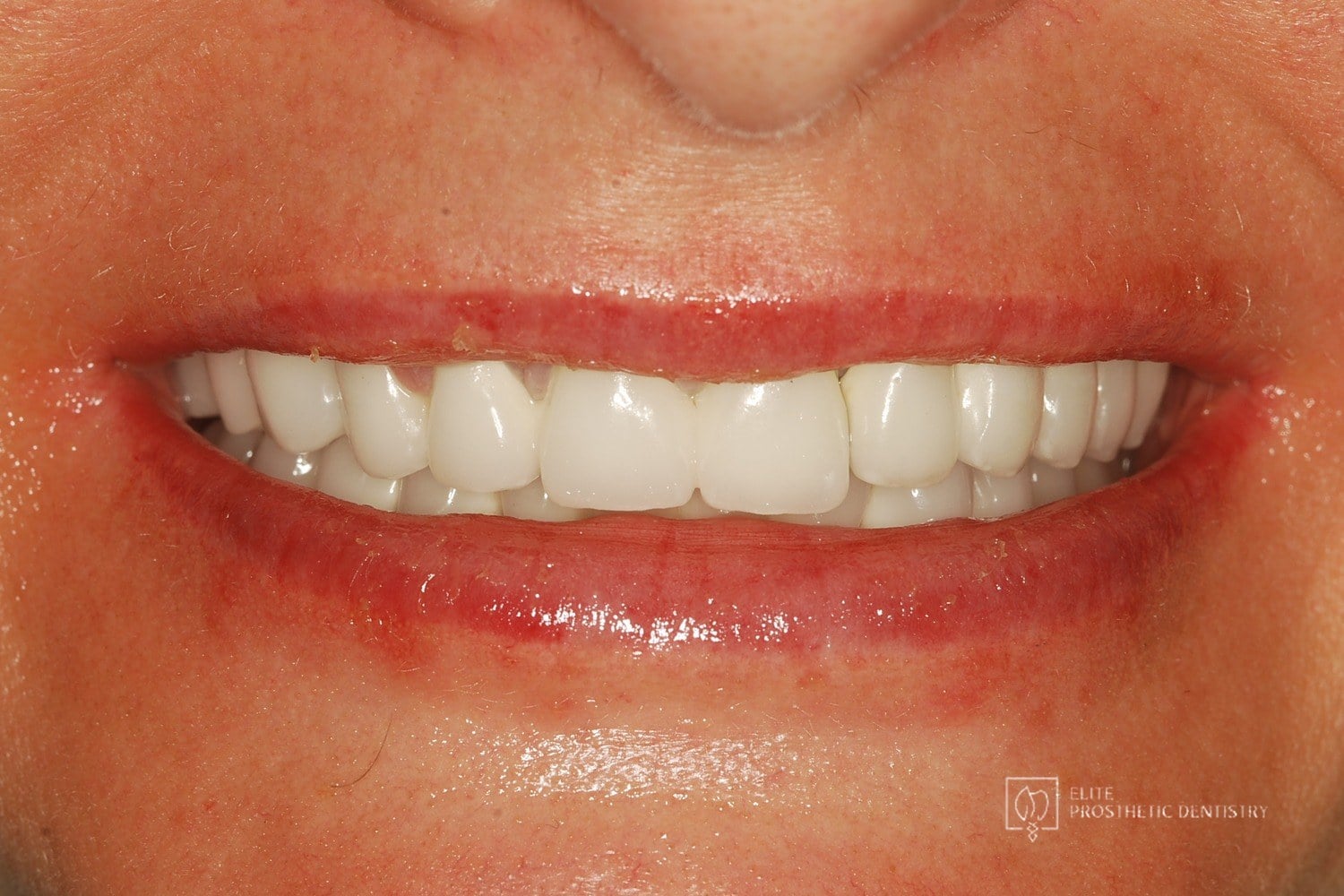
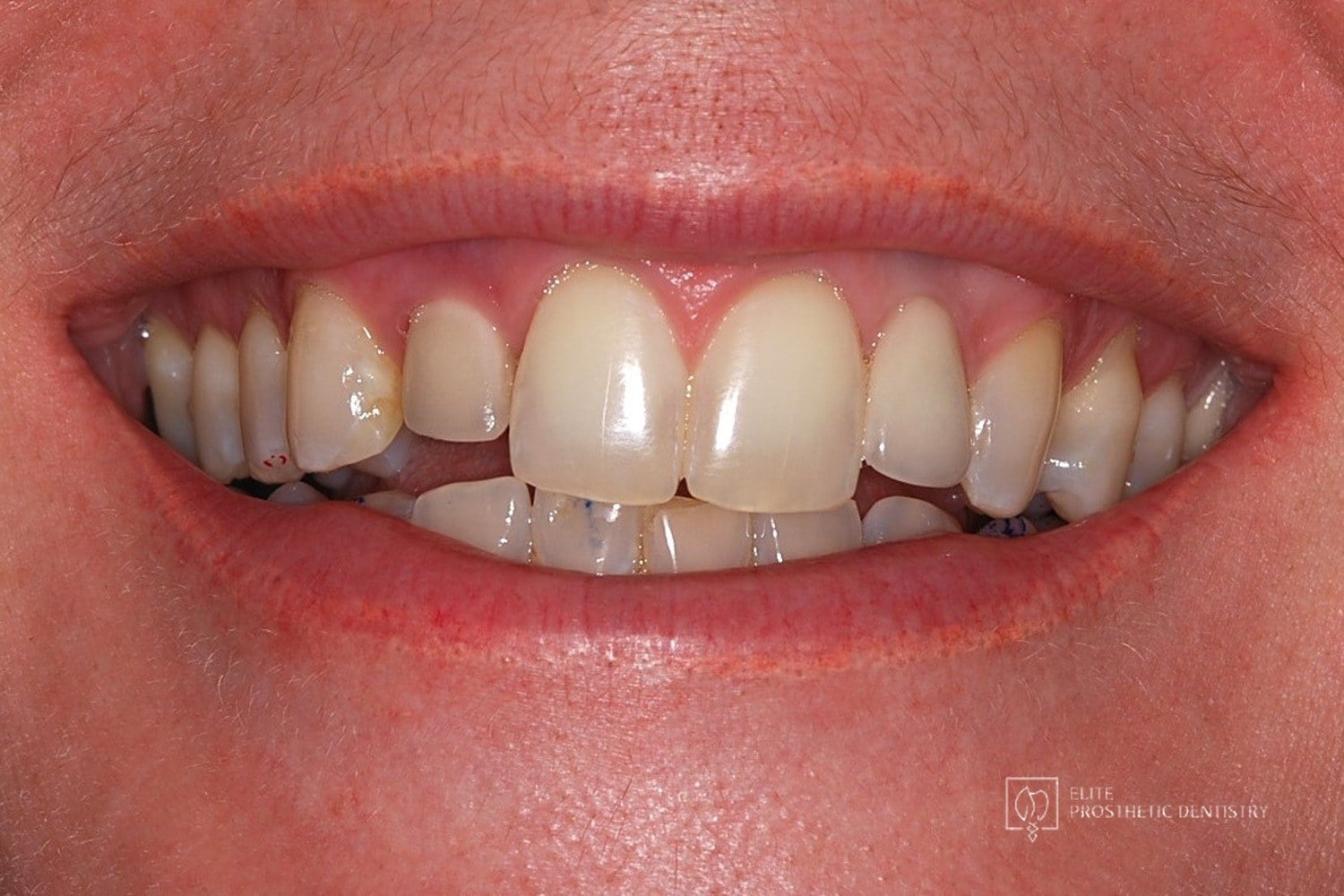
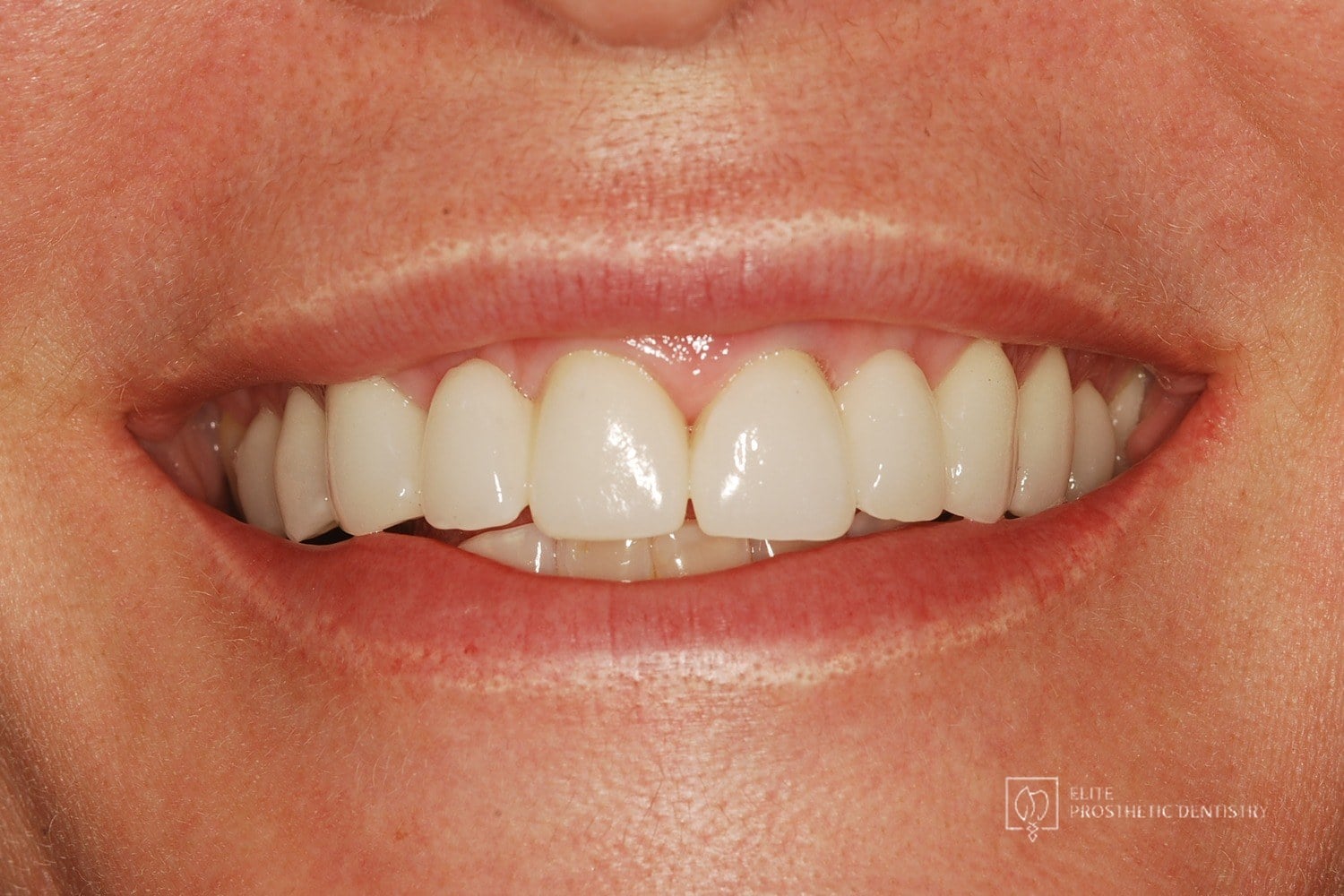
After How Aging, Failing Dentistry Was Replaced with a Coordinated Full-Mouth Implant and Crown Reconstruction
The patient presented with throbbing upper-molar pain, long-standing infections, multiple root canals and unfinished prior treatment, generalized sensitivity, and several hopeless teeth.
 Before
  After
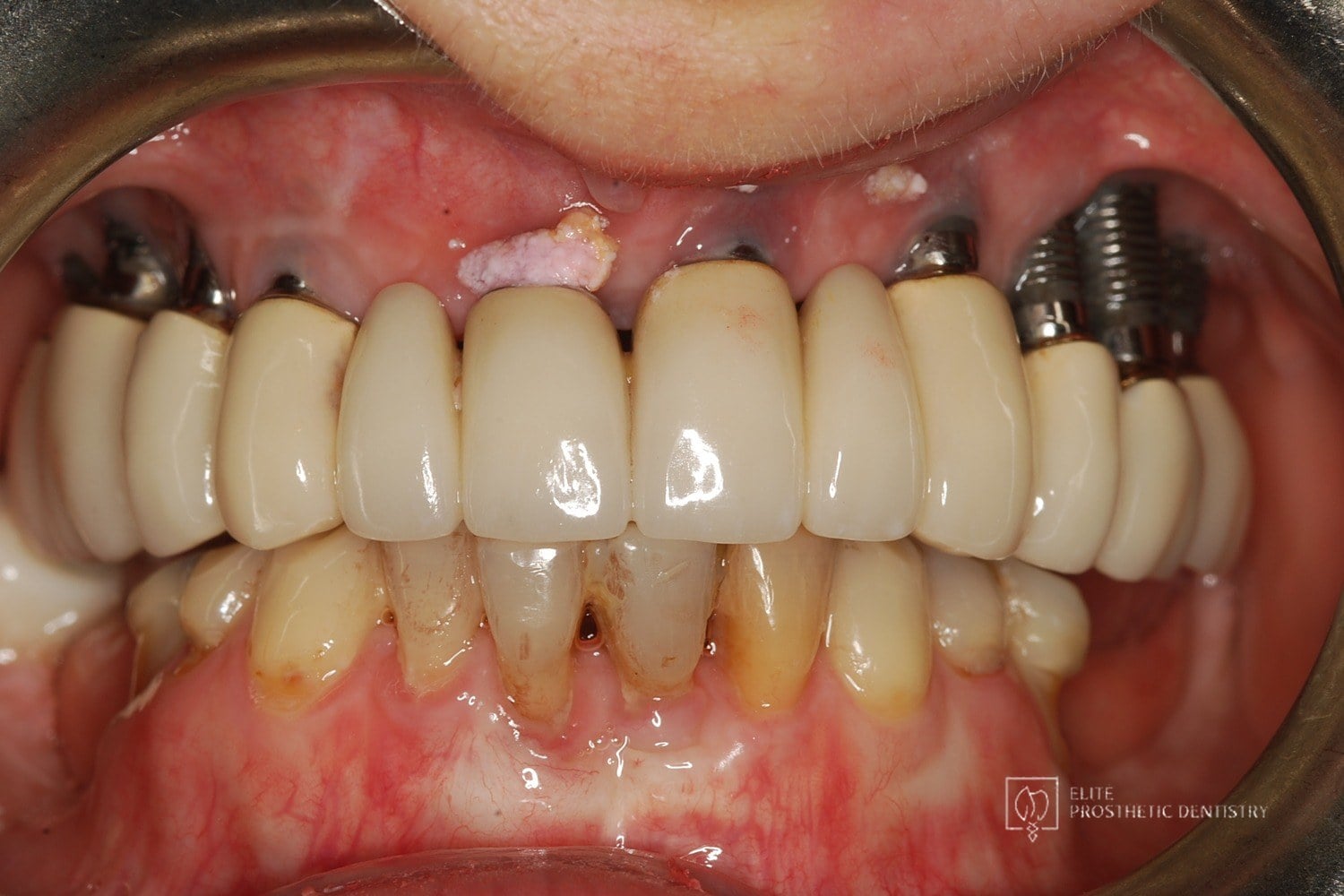
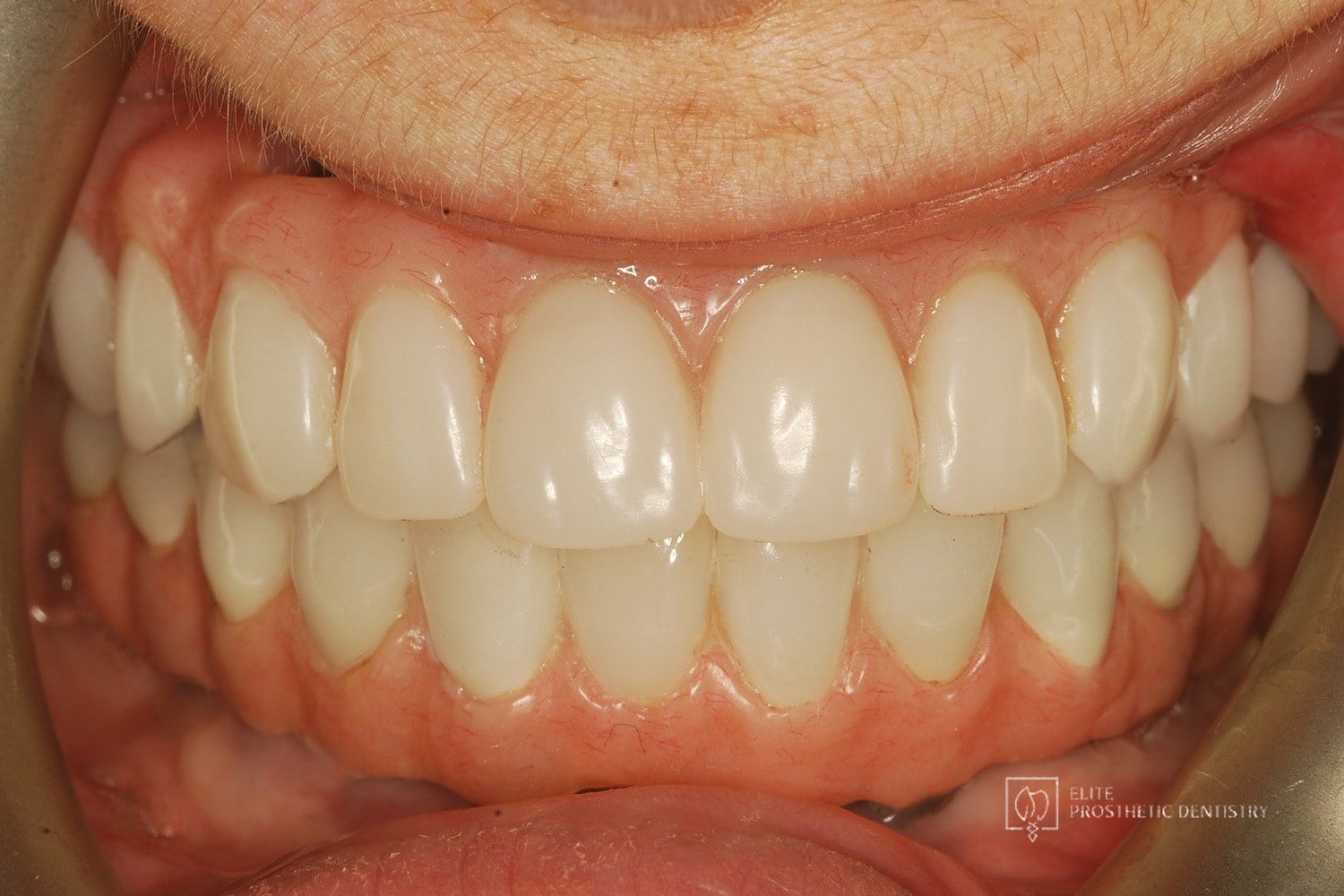
After How Failing Implants and Severe Bone Loss Were Rebuilt Into a Stable Full-Arch Implant Reconstruction
The patient presented with significant complications from previously placed implants, severe bone loss, failing posterior implants, and an unesthetic full-arch bridge. Both arches required full reconstruction, with the upper arch showing the most advanced bone loss and instability.
 Before
  After
After How Failing Lateral Incisor Implants Were Replaced with Custom Zirconia Bridges After Severe Bone Loss Made Replacement Implants Impossible
Comprehensive examination including CBCT imaging revealed significant bone loss surrounding implants that were placed outside the buccal plate, most likely due to placement without a CBCT-generated surgical guide. The implants were determined non-salvageable, and the alveolar ridge was too narrow to support replacement implants without extensive reconstruction.
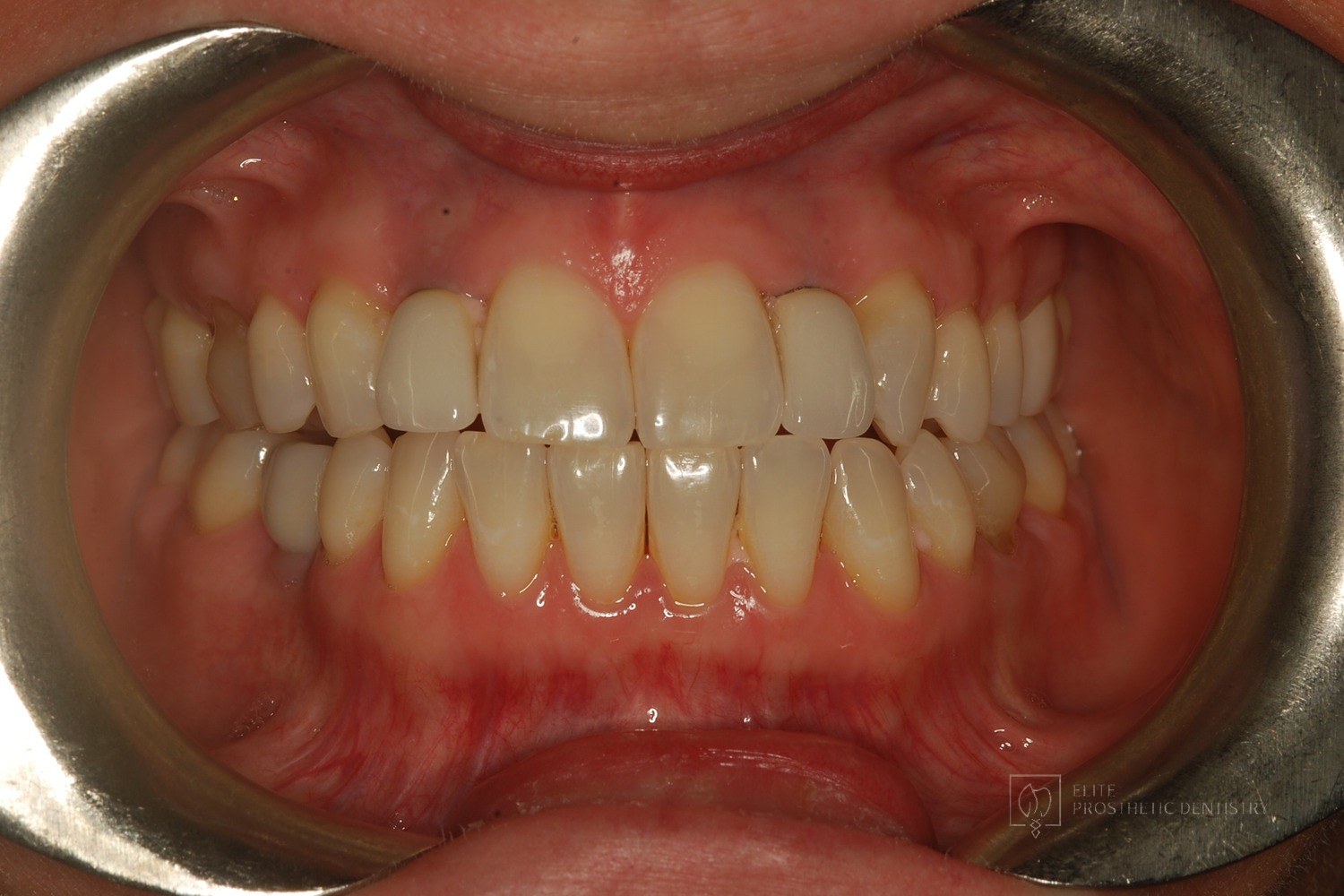 Before
 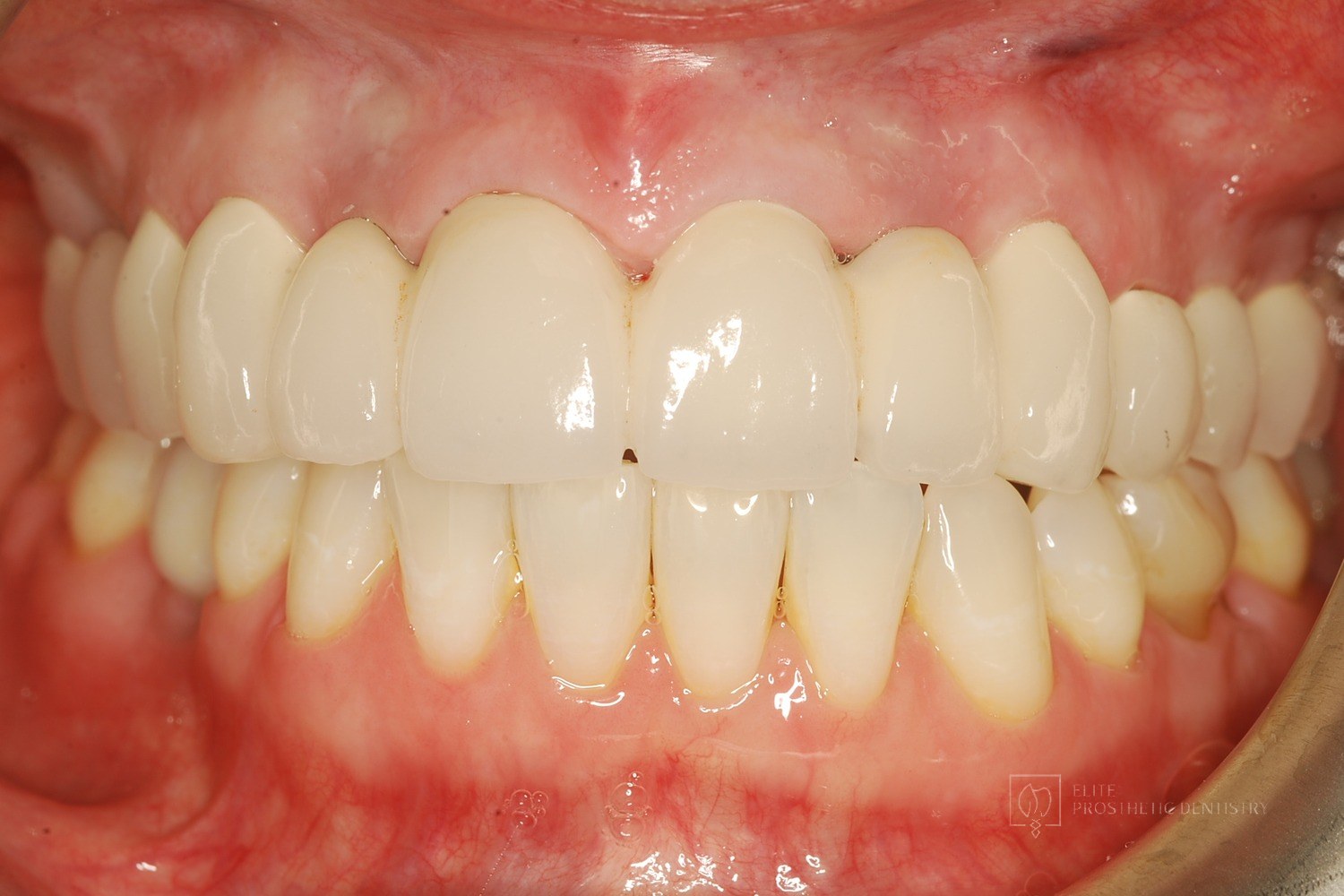 After
After How Older Implant Crowns Were Redesigned for a Better Bite and More Natural Appearance
The patient came in after years of living with implant-supported crowns placed more than twenty years earlier that no longer looked or functioned well. CBCT evaluation, reviewed with a radiologist colleague, showed the implants had been placed too far to the buccal in very thin bone and could not support a healthy long-term restoration.
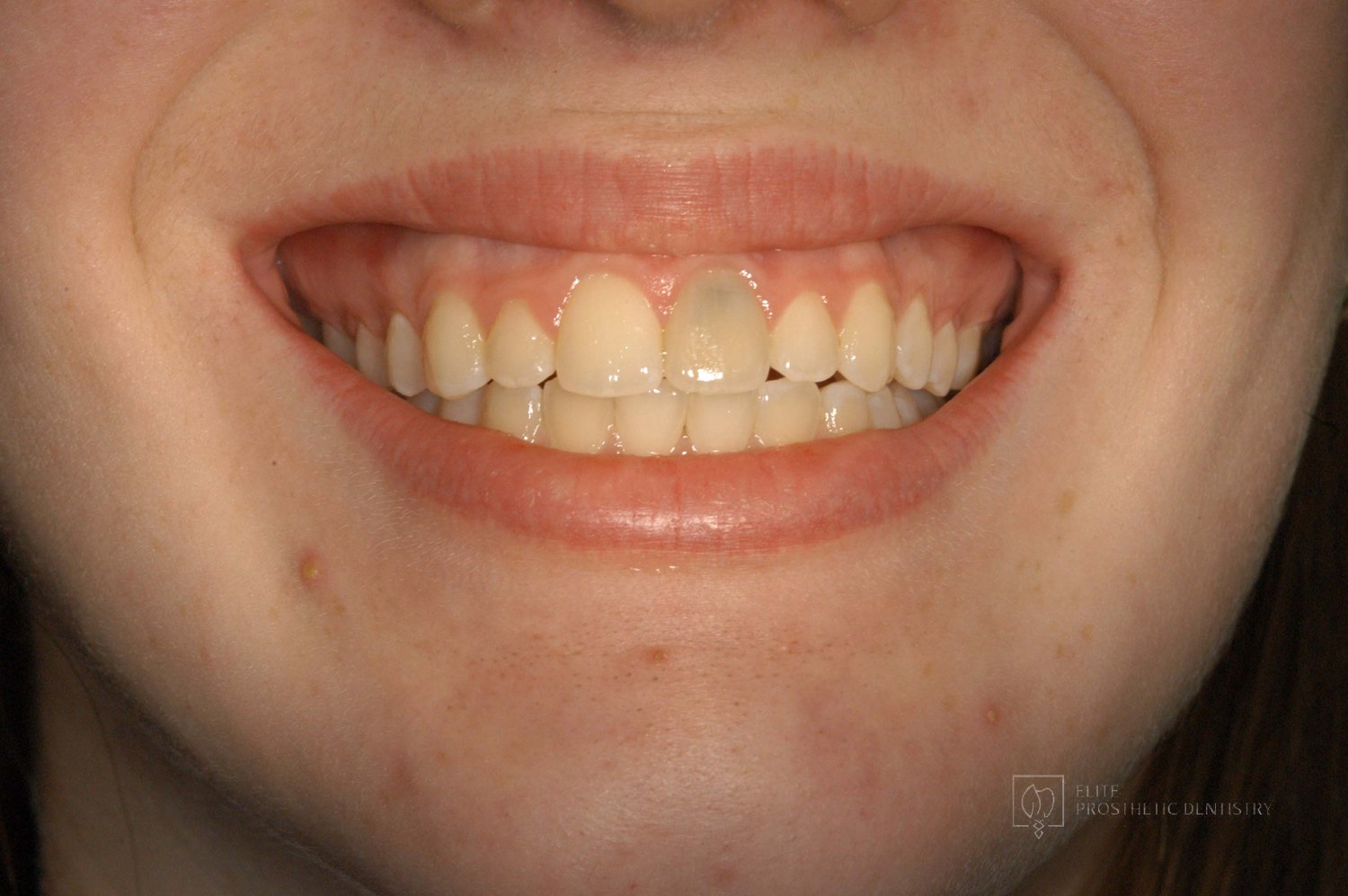 Before
 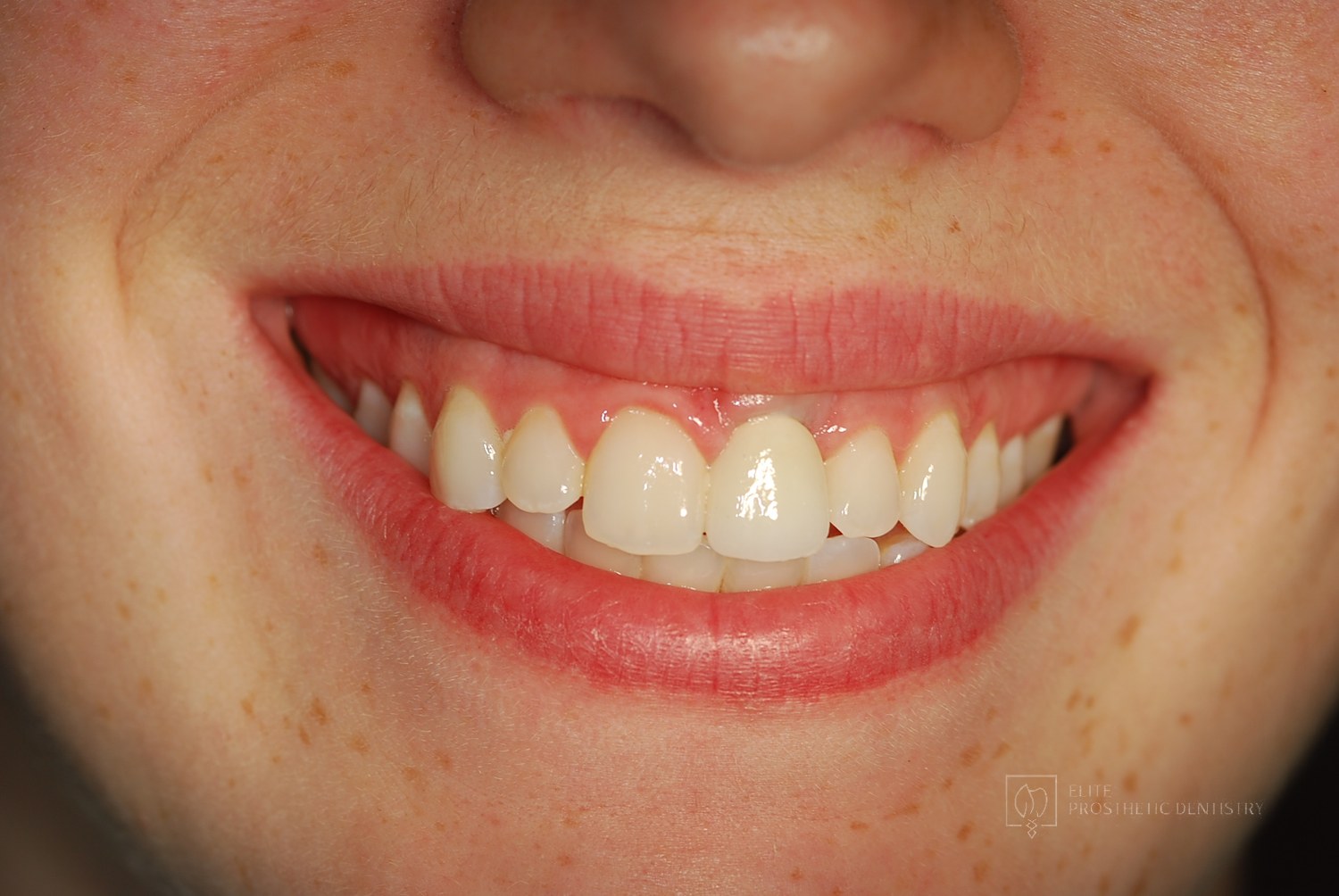 After
After How a Front Tooth Lost to Childhood Trauma Was Rebuilt with Bone Grafting and a Long-Lasting Implant
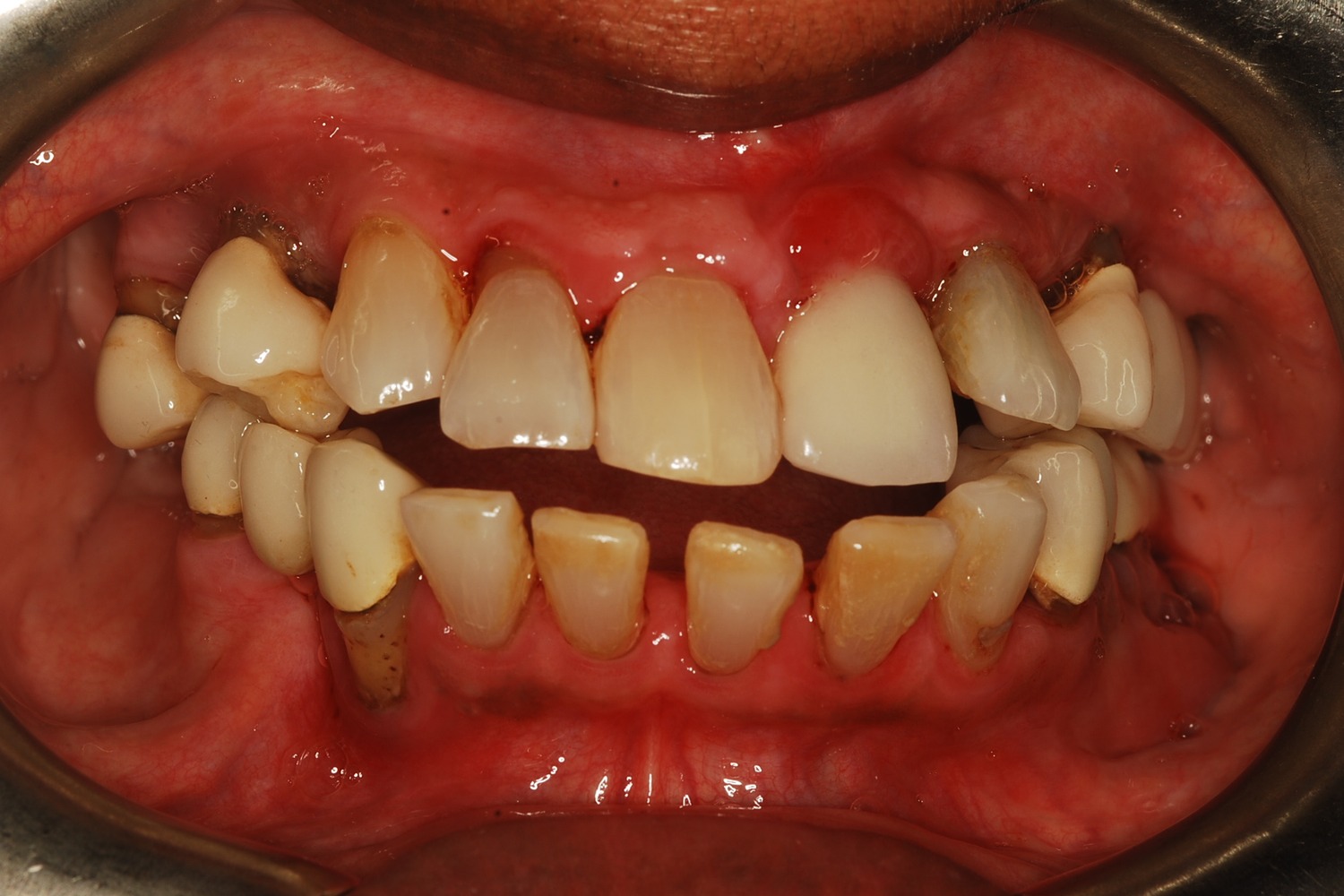
A teenager was referred by her father after earlier trauma left her upper left front tooth slowly failing from root resorption. She was still growing, so an immediate implant was the wrong move. The tooth had to be maintained to buy time, then replaced correctly once she reached skeletal maturity.
 Before
  After
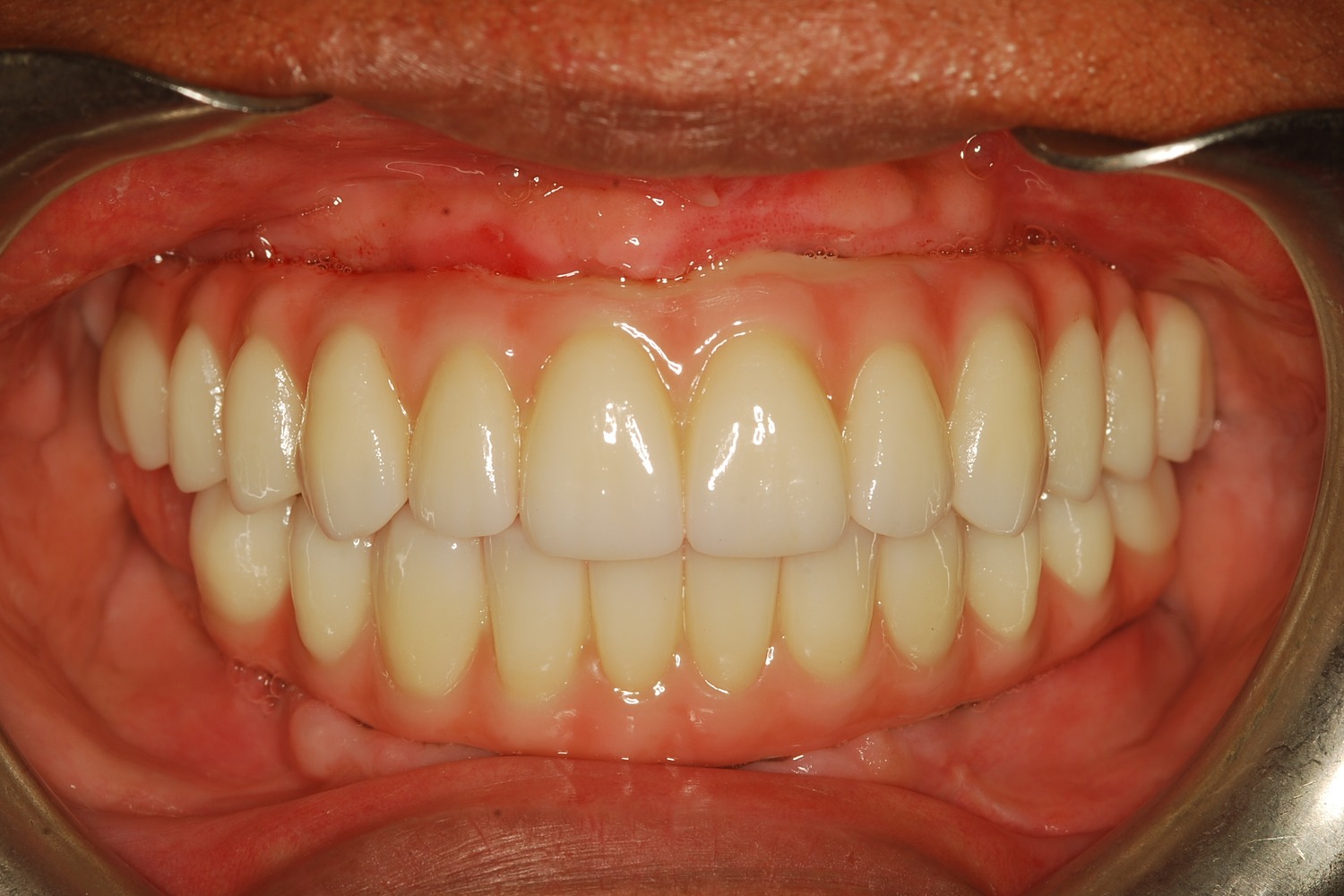
After How Severe Bone Loss and Bite Dysfunction Were Rebuilt with All-on-6 Implants and a Milled Zirconia Hybrid Prosthesis
The patient presented with severe bone loss, advanced periodontal disease, malocclusion, and a dysfunctional bite that required full-arch rebuilding.
Related Services
Related Articles
Deepen your knowledge with additional insights on this topic.
 Dental Implants
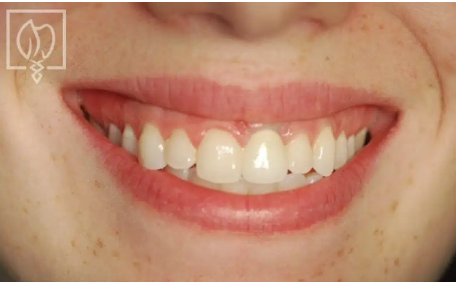
 If a Single Front Tooth Is Replaced with an Implant, Can It Look Natural?
Yes. See the four steps, with real case photos, that make a single front tooth implant indistinguishable from the natural tooth beside it. Washington, DC.
 Dental Implants
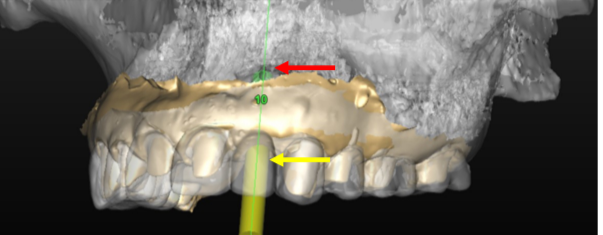
 What Is Precision Implant Placement (PIP)?
Precision Implant Placement plans each implant virtually on a CBCT scan, then delivers it with a custom surgical guide. See the three steps with real images.
 Dental Implants
 What Is the Ideal Surgical Guide for Precision Implant Placement?
Not all surgical guides are equal. The gold standard is CBCT-based: planned virtually in 3D, 3D printed, and seated on your teeth. A DC prosthodontist explains.
 Dental Implants
 When Should an Implant Not Be Done?
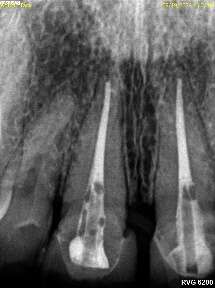
Healthy roots, thin bone, steep bony angles: a DC prosthodontist shows a real case where refusing implants was the right call, and what was done instead.
 Dental Implants
 What Is Staged Implant Therapy?
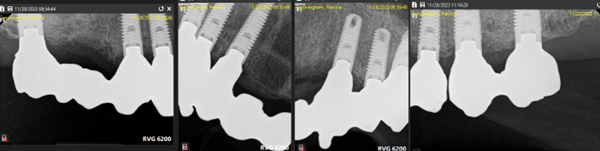
Staged implant therapy replaces failing teeth in phases while you keep fixed teeth the entire time. A DC prosthodontist walks through a real case in stages.
Dental Implants The Four Types of Dental Implants: Which One Is Right for You?
Endosteal, subperiosteal, zygomatic, and mini implants each solve a different problem. A DC prosthodontist explains the four types and who each one fits.
Ready to Transform Your Smile?
With 40+ years of experience and 3,900+ dental implants placed, Dr. Marlin and the team deliver dentistry planned to last. Request a specialist consultation.