
Specialist Prosthodontist vs. Corporate Implant Centers
Patients evaluating dental implant treatment in the DMV area face two main models: specialty-trained prosthodontic practices and corporate dental implant centers. The two operate fundamentally differently. This page documents the differences so patients can make informed decisions about which model fits their case.
40+
Years Experience
1985
In-House Lab Since
3,900+
Implants Placed
9
U.S. Patents

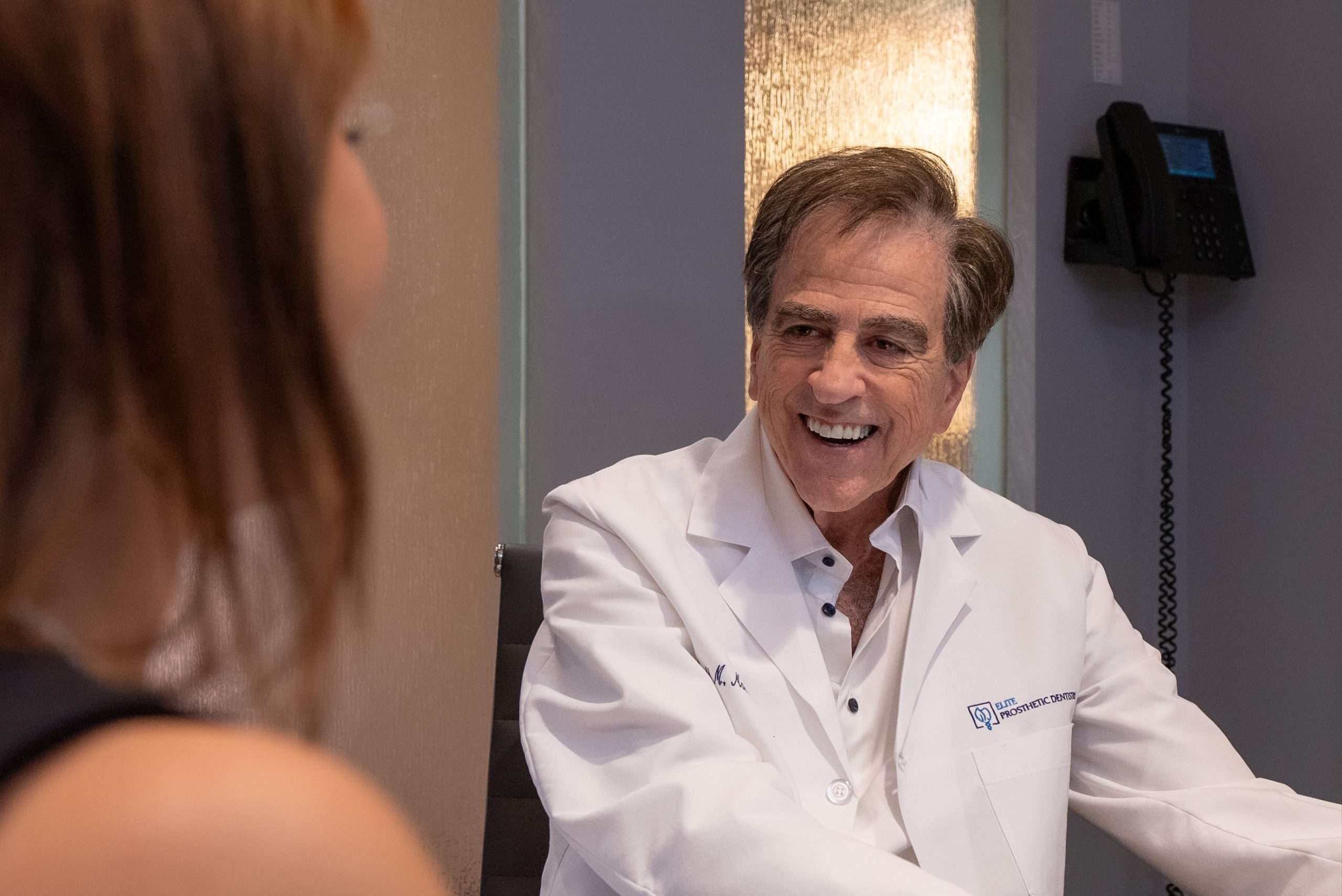
Gerald M. Marlin, DMD, MSD
Specialty-Trained Prosthodontist (DMD, MSD)
Washingtonian "Top Dentist" 2026 and Hall of Fame
What This Comparison Covers
- Specialty training depth: prosthodontist vs. general dentist or mixed clinical staff
- Integrated specialist-led care vs. split or rotating care
- In-house lab collaboration vs. outside or centralized labs
- Custom case planning vs. standardized protocols
- Long-term accountability and follow-up after treatment
Or call now: (202) 244-2101
The Two Implant Treatment Models
Both models can produce successful outcomes for straightforward cases. The differences become significant when cases involve complex anatomy, aesthetic priorities, existing restorative work, or eventual revision.
Specialty-Trained Prosthodontic Practice
Each case is led by a specialty-trained prosthodontist and managed within one practice and one treatment plan, from initial consultation through final restoration. Three additional years of postgraduate residency in restoration methodology, occlusion, and complex case planning. In-house dental laboratory controls quality and refinement.
Corporate Dental Implant Center
Standardized treatment protocols, with surgical and restorative roles often divided among different clinicians, who may be general dentists rather than specialty-trained prosthodontists. Outside or centralized laboratories. Operations built around high case volume.
Where Each Model Works Well
Corporate centers can be appropriate for patients with straightforward anatomy who prioritize convenience and predictable pricing over case customization. Specialty practices are appropriate for complex anatomy, aesthetic priorities, revision work, and cases where long-term accountability matters.
How the Two Models Differ in Practice
The differences show up in specific operational and clinical decisions during treatment. Here is how each model typically operates across the implant treatment cycle.
Initial Consultation
Specialty practice: extended consultation with the prosthodontist who will lead your case, including diagnostic imaging, bite analysis, and written treatment plan. Corporate center: a more standardized consultation, often with a shorter diagnostic workup before treatment commitment.
Treatment Planning
Specialty practice: case-specific plan accounting for your anatomy, existing restorations, bite mechanics, and aesthetic goals. Corporate center: standardized protocols applied across most cases, with less customization for individual anatomy or restorative history.
Restoration Fabrication
Specialty practice: in-house dental laboratory with master ceramist working directly with the prosthodontist on every restoration. Real-time shade verification, contour refinement, and same-visit adjustments. Corporate center: often an outside or centralized laboratory working from impressions, prescriptions, and photographs, so refinements travel back and forth.
Coordination Across Phases
Specialty practice: surgical and restorative phases are planned together, with the same records and treatment plan carried from consultation through final restoration and follow-up over years. Corporate center: some centers separate the surgical and restorative roles, so the surgeon, restorative dentist, and follow-up provider may be different individuals.
Long-Term Follow-Up
Specialty practice: an established practice available for follow-up adjustments, revisions, or new restorative needs over decades. Corporate center: staffing and operational changes can complicate long-term follow-up if issues develop years after initial treatment.
What Matters Most for Long-Term Outcomes
Dental implant outcomes measured at the 10, 15, and 20 year follow-up reflect the structural differences between treatment models. Here is what matters most for cases planned to function for decades.
-
Diagnostic Depth Determines Long-Term Success
Implants placed in inadequate bone, poor angulation, or without considering future restorative needs frequently develop complications years later. Specialty-trained diagnostic depth identifies these issues during planning rather than addressing them as failures after the fact.
-
In-House Lab Quality Compounds Over Time
Because the laboratory is inside the practice, the clinician and technician refine shade, contour, fit, and bite together. The benefit of that closer control shows up over years of service rather than only at delivery.
-
Practice Continuity Enables Coordinated Long-Term Planning
Dental cases evolve over decades. A practice that has managed your case from initial implant placement through subsequent restorative work, with the original plan and records in hand, understands the planning intent. Continuity supports better long-term decision-making.
-
Accountability for Revision Work
Implants and restorations occasionally need refinement or revision. Specialty practices that stand behind their long-term work provide a consistent point of accountability for that work over time.

When the Specialty Model Matters Most
For some cases, either model produces acceptable outcomes. For these cases specifically, specialty-trained care meaningfully changes results.
Complex Anatomy or Bone Compromise
Patients with significant bone loss, sinus anatomy challenges, or atypical jaw structure benefit from specialist diagnostic depth. Standardized protocols designed for routine cases may not account for complex anatomy.
Aesthetic-Zone Front Tooth Implants
Front-tooth implants require precise positioning, custom abutment design, and aesthetic case planning. Visible implant crowns benefit from shade, contour, and emergence refined chairside with the laboratory in the same building.
Full Mouth Reconstruction Cases
Reconstruction involving multiple teeth, occlusion rebuilding, and coordinated case planning is the central scope of prosthodontic specialty training. Standardized centers typically do not handle this case complexity.
Existing Restorations or Failed Treatment
Patients with existing crowns, bridges, or implants from other providers need case planning that accounts for their existing dental landscape. Revision of failed treatment from corporate centers is a frequent reason patients seek specialty care.
Long-Term Care Continuity Matters
Patients planning to maintain a relationship with one practice over decades for ongoing dental care benefit from the continuity that established specialty practices offer.
Why This Comparison Page Exists
Patients evaluating dental implant treatment options in the DMV area frequently see marketing from both specialty practices and corporate dental implant centers. The marketing language is similar across both models. The underlying operations are not.
This page documents the structural differences between the two treatment models so patients can make informed decisions about which fits their specific case.
The Two Models in Brief
Specialty-trained prosthodontic practice: A specialty-trained prosthodontist (three additional years of postgraduate residency after dental school) leads each case from initial consultation through final restoration, within one practice and under one treatment plan. In-house dental laboratory. Case-specific planning. Long-term continuity of care.
Corporate dental implant center: Standardized treatment protocols, with surgical and restorative roles often divided among different clinicians, frequently general dentists rather than specialty-trained prosthodontists. Outside or centralized laboratory. Operations built around high case volume.
Both models have their place. The differences become clinically significant when cases involve complex anatomy, aesthetic priorities, or revision work.
When the Specialty Model Matters Most
Specialty care meaningfully changes outcomes for cases involving:
- Complex anatomy or bone compromise requiring careful diagnostic planning
- Front-tooth implants where aesthetic precision is critical
- Full mouth reconstruction with multiple teeth and coordinated planning
- Existing restorations that the new implant work must integrate with
- Revision of failed treatment from previous providers
- Long-term care relationships where continuity of care matters
For routine single-tooth implants in non-aesthetic positions with simple anatomy, either model produces acceptable outcomes.
A Note on Revision Work
A meaningful portion of Elite Prosthetic Dentistry’s work involves revising failed dental implant treatment from other providers, including from corporate dental implant centers. These cases form one of the strongest data points for the differences between the two treatment models: when treatment fails, who provides accountability for revision?
Patients who experienced failure with corporate center treatment frequently seek specialty care for revision because the original treating provider is no longer available, the original protocol does not match the patient’s needs, or the original case planning did not account for the specific anatomy or aesthetic factors that led to failure.
This is not a criticism of any specific competitor, it is documentation of the operational reality that produces these revision referrals.
A Specific ClearChoice Comparison
For patients specifically evaluating ClearChoice, we maintain a more detailed comparison page that addresses ClearChoice’s specific protocol approach and how a specialty prosthodontic practice differs. See Specialist Alternative to ClearChoice for that comparison.
Schedule a Specialist Consultation
If you are evaluating dental implant treatment options and considering whether specialty or corporate care fits your case, we invite you to schedule a consultation. Bring any existing treatment plans from other providers for objective review.
Elite Prosthetic Dentistry 4400 Jenifer Street NW, Suite 220 Washington, DC 20015 (202) 244-2101
Request a Consultation or call (202) 244-2101.
Ready to Discuss Your Treatment Options With a Specialist?
Frequently Asked Questions
Are corporate dental implant centers always lower quality?
No. Corporate centers can produce successful outcomes for straightforward cases. The structural differences become significant for complex cases, aesthetic priorities, or long-term continuity considerations. Both models exist because both serve some patient needs adequately.
Why does specialty training matter for dental implants?
Implants involve complex anatomic considerations, occlusal planning, prosthetic design, and long-term aesthetic outcomes. Prosthodontic specialty training adds three years of focused postgraduate study after dental school in these specific areas. For complex cases, the diagnostic depth differs meaningfully.
Is in-house lab capability really that important?
For straightforward single-tooth implants in non-aesthetic areas, the difference is small. For full-arch cases, front-tooth implants, or aesthetic-zone work, in-house lab capability changes what is achievable in the final restoration.
How do I know if my case is complex enough to need a specialist?
Specialist consultation can determine this. Indicators that suggest specialty care include: multiple teeth involved, front-tooth aesthetic priorities, existing restorative work, bone loss requiring grafting, previous implant failure, or any case where the patient has been told the case is 'difficult.'
How does cost compare between specialty practices and corporate centers?
Pricing varies by case complexity and materials. Corporate centers often have standardized pricing for typical cases. Specialty practices typically provide itemized treatment plans that reflect the specific work required for each case. Long-term cost comparison should consider revision and replacement rates over decades.
Why do specialty practices often cost more for simple cases?
Specialty practice operations include in-house lab overhead, longer consultation times, and detailed case planning. For routine cases, this additional process may be unnecessary. For complex cases, the additional process changes outcomes meaningfully.
Can I get a second opinion from a specialist before committing to corporate center treatment?
Yes, and we encourage it. Bring your existing treatment plan from another provider to a specialist consultation for review. We provide objective evaluation of treatment plans from other practices.
Related Resources
Specialist Alternative to ClearChoice
Detailed specialist alternative information for patients evaluating ClearChoice specifically.
How to Choose a Prosthodontist
Specific evaluation criteria and questions for initial consultation.
Dental Implants Overview
Complete information about implant treatment at Elite Prosthetic Dentistry.
All-on-X Full-Arch Restoration
Specialist-level full-arch implant treatment options.
Repairing Failing Implants
Specialty revision of failed implant work from other providers.
Awards & Recognition
External peer recognition documenting clinical reputation.
Conveniently Located in Friendship Heights
Serving Washington DC, Bethesda, Chevy Chase, McLean, Great Falls, Potomac, and surrounding communities. One block from the Friendship Heights Metro on the Red Line.
Request Your Specialist Consultation
Personally reviewed by Dr. Marlin or his team.
Hours
- Monday — Thursday8:00 AM — 5:00 PM
- Friday8:00 AM — 2:00 PM
- Saturday — SundayClosed