
Bone Loss Around a New Lower Front Implant: Removed Early, the Ridge Rebuilt, and a Replacement Implant Restored
Close-up smile view
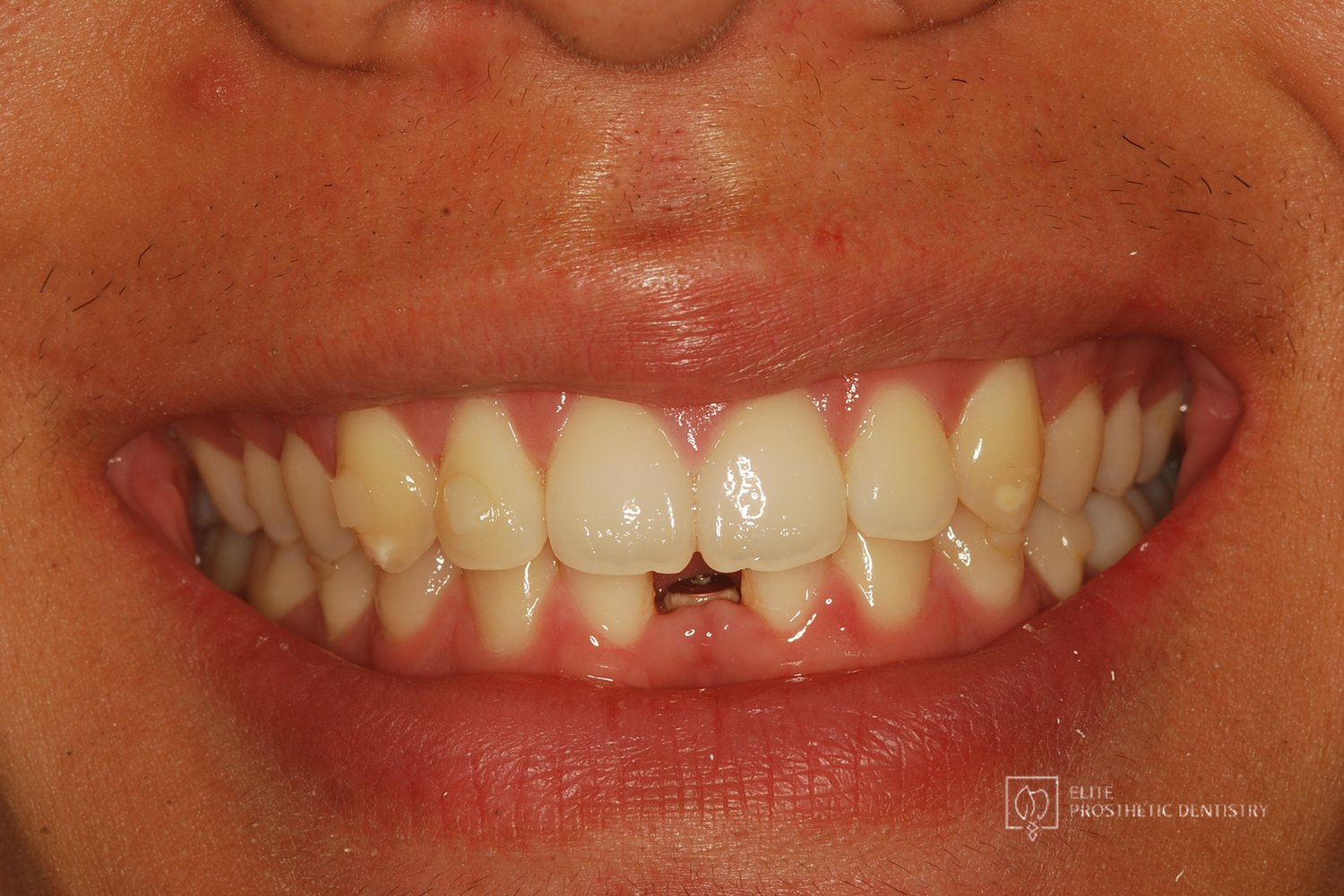 Before
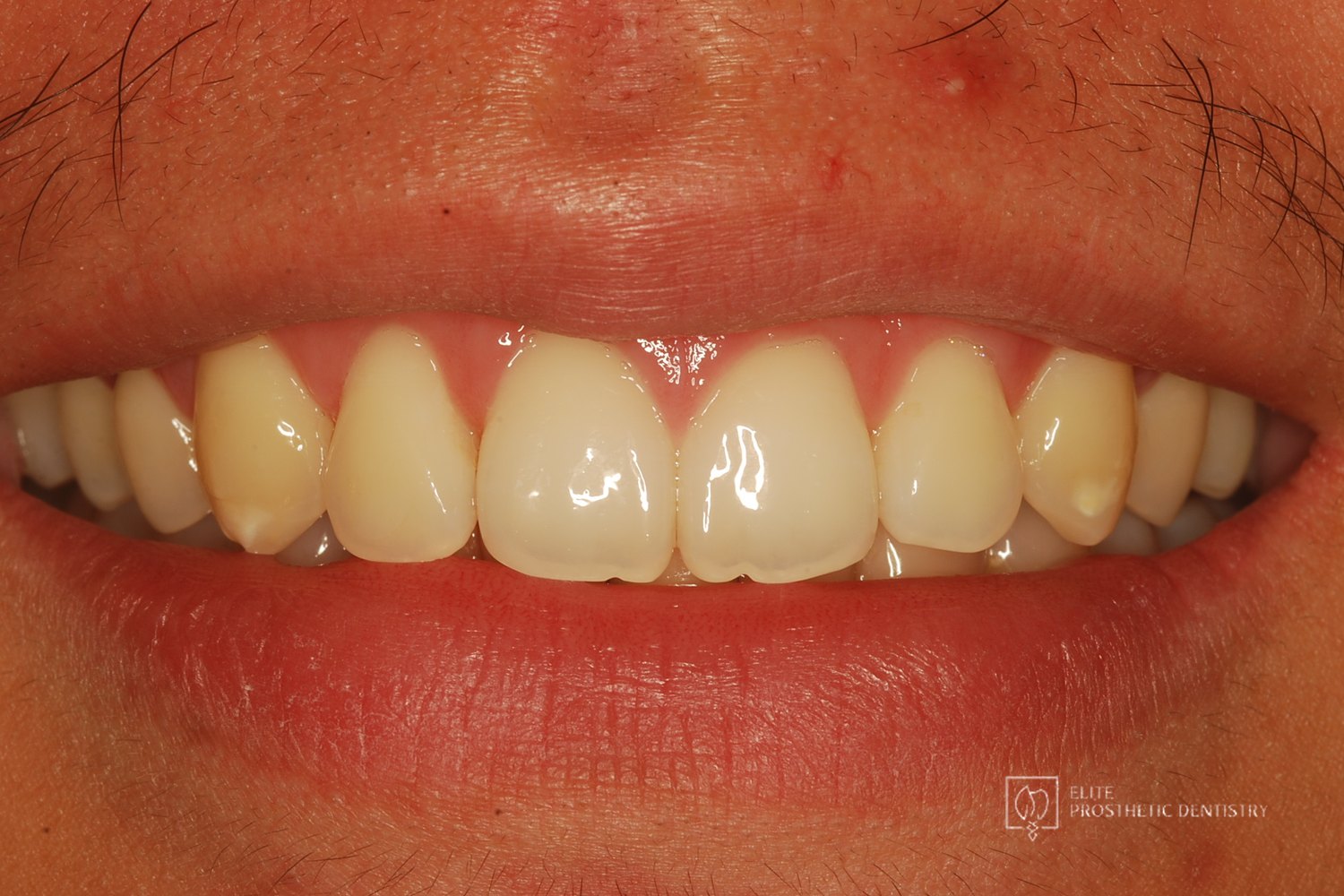 After
Intraoral view
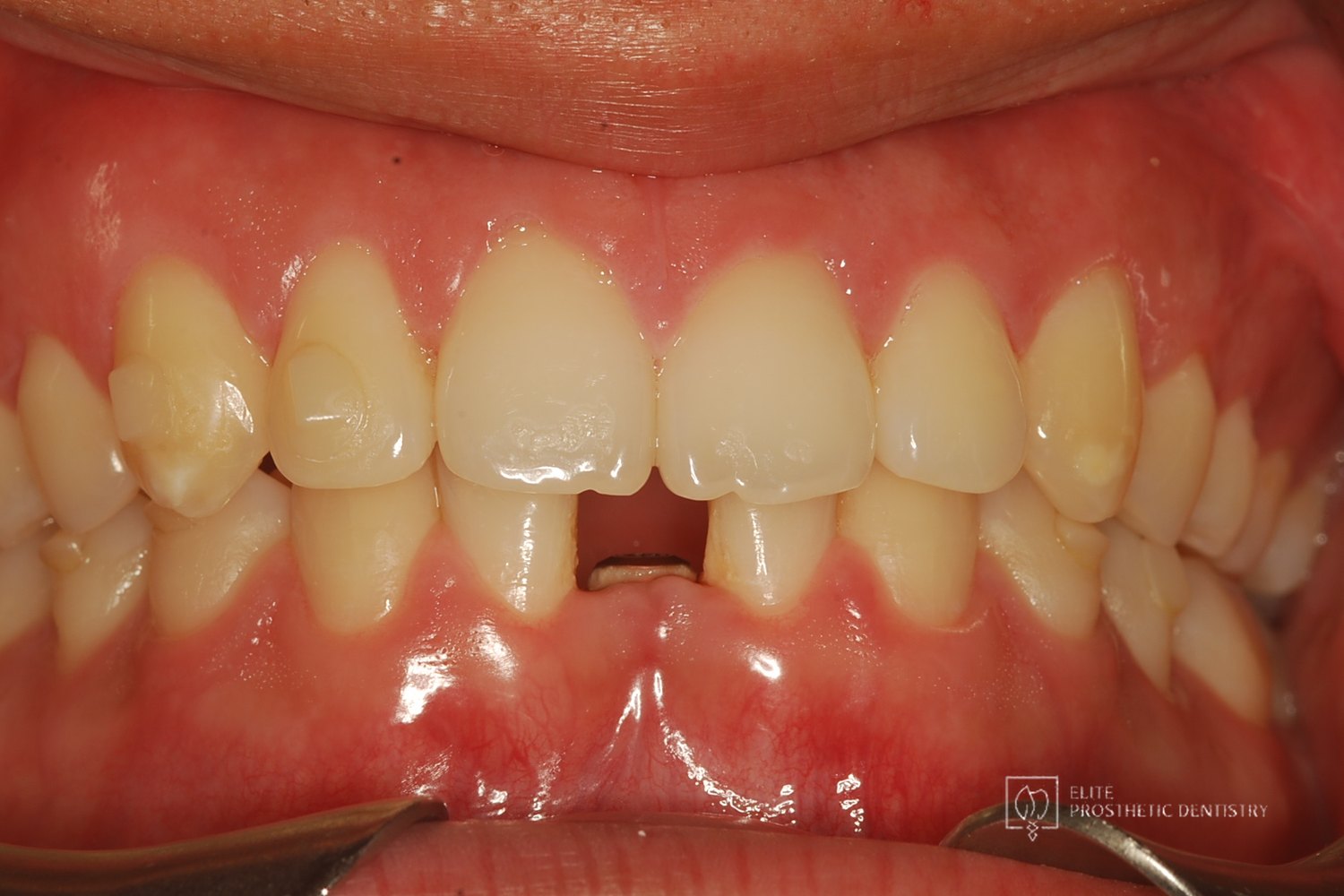 Before
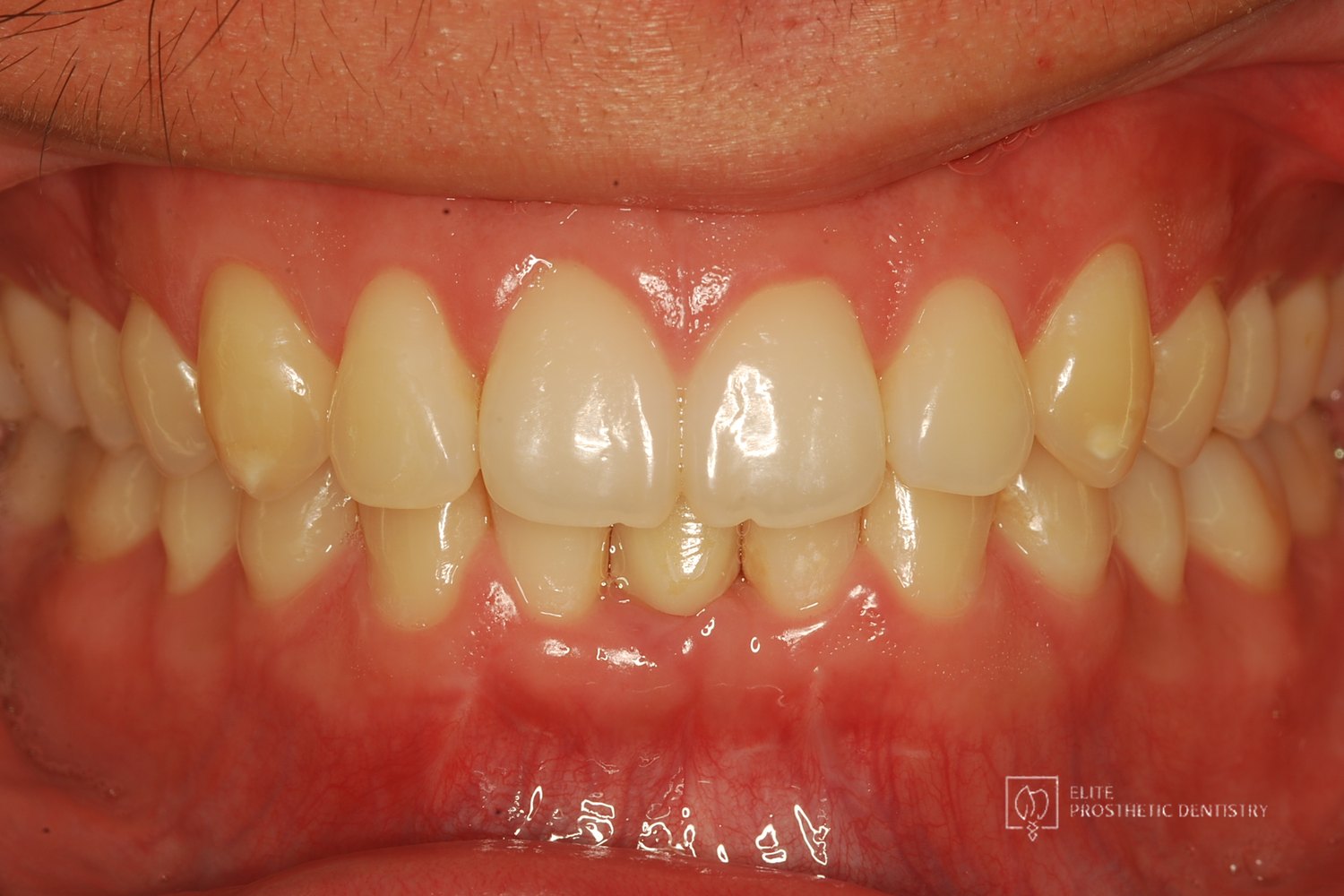 After
The implant site
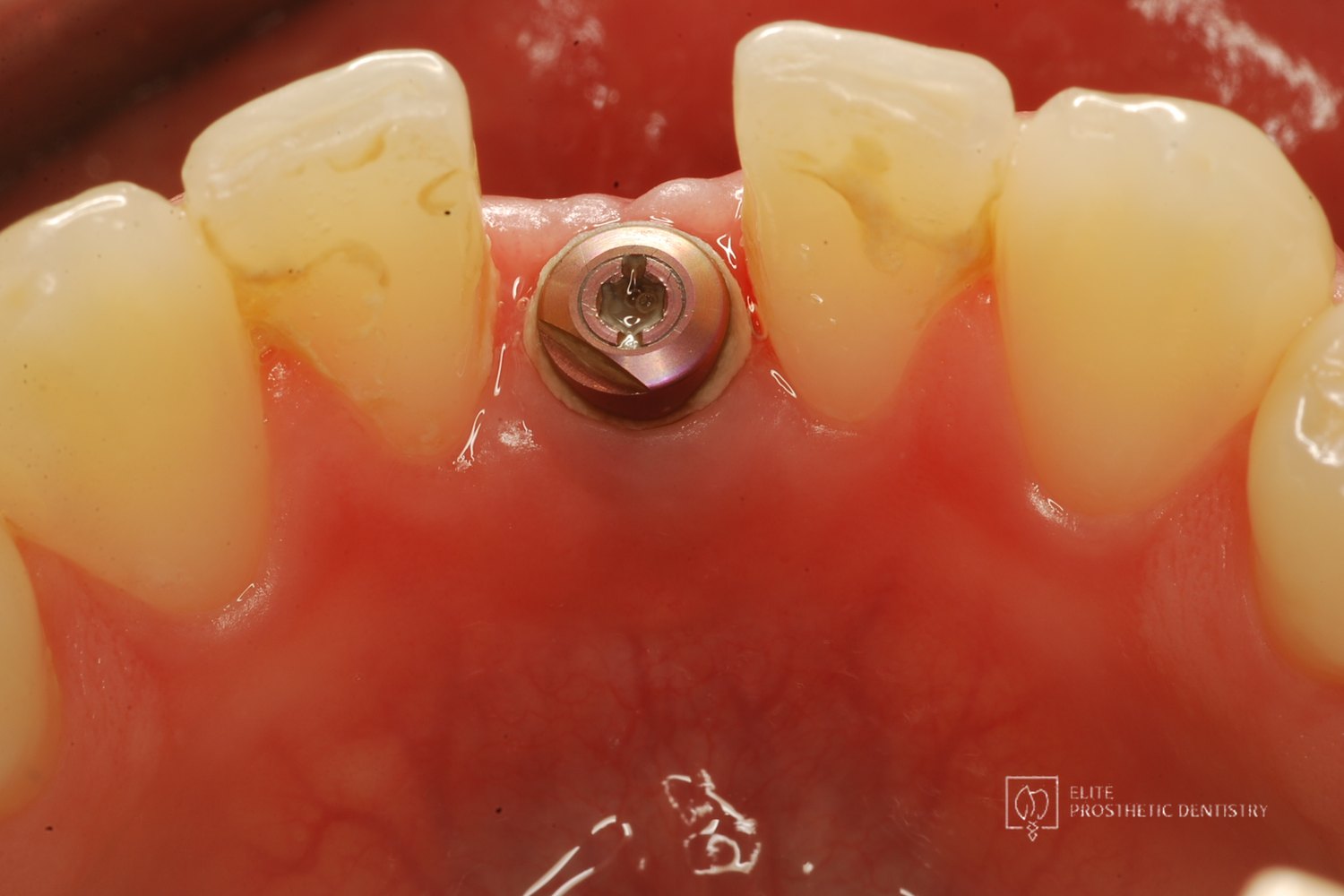 Before
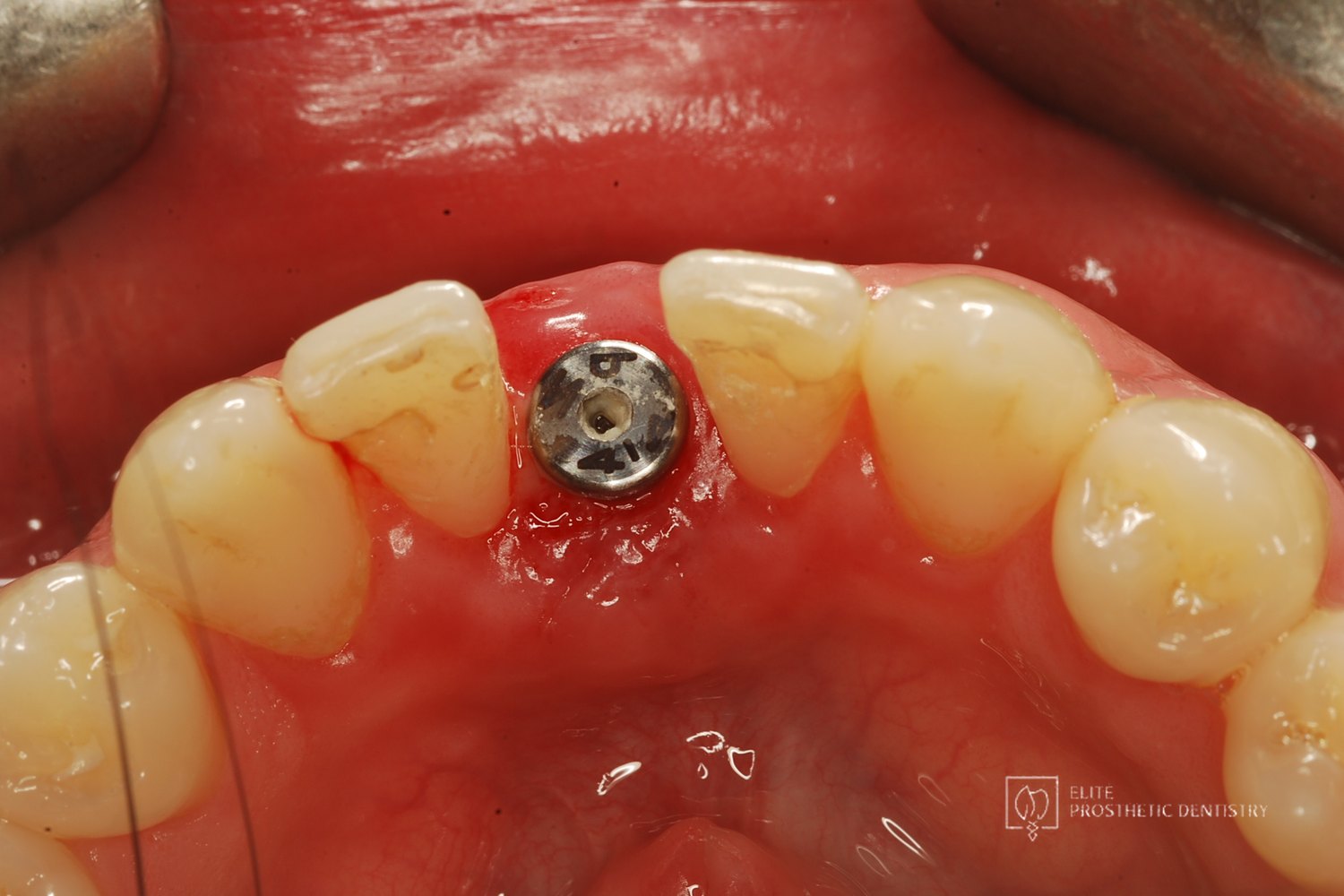 After
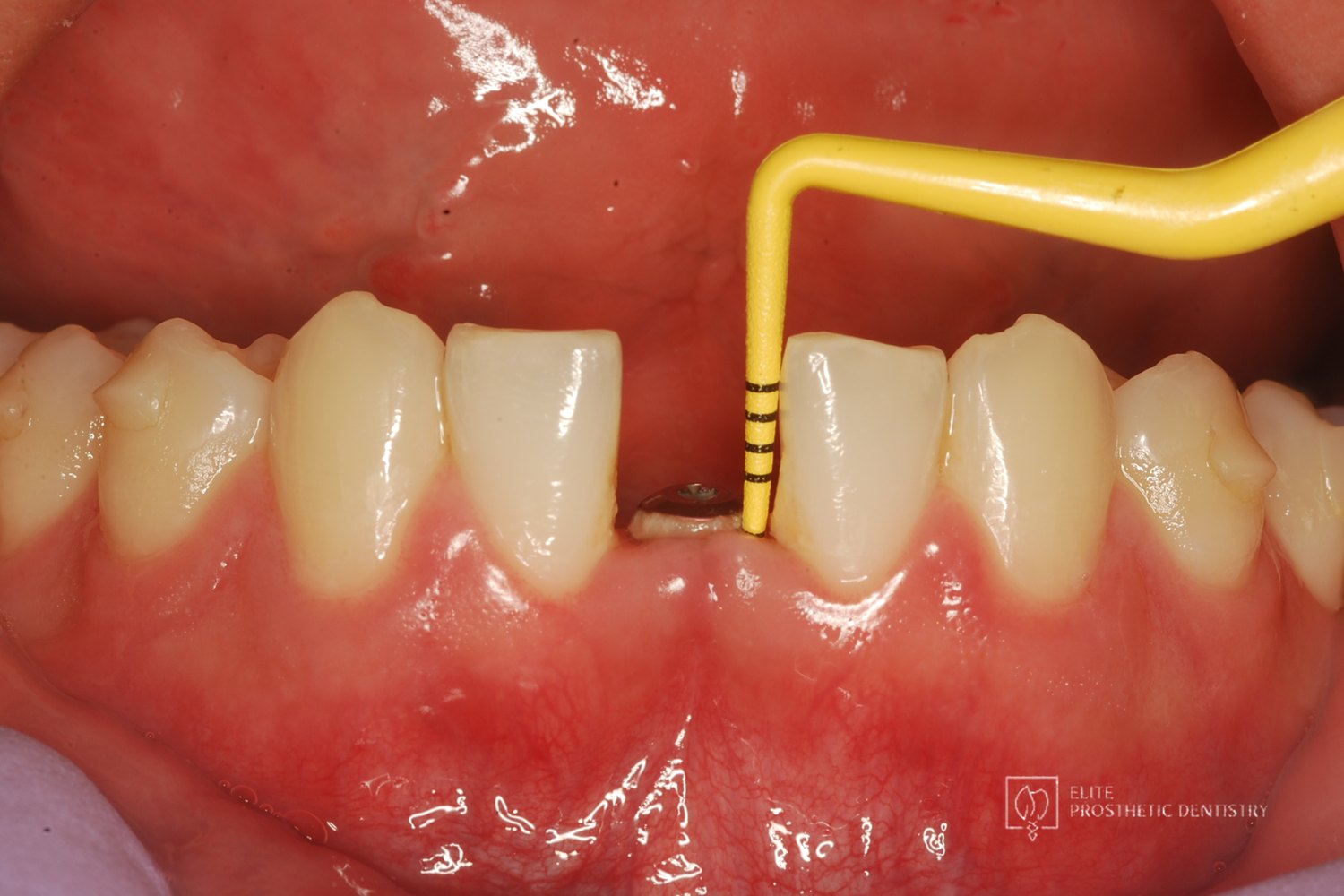
Clinical finding at presentation
Imaging after treatment
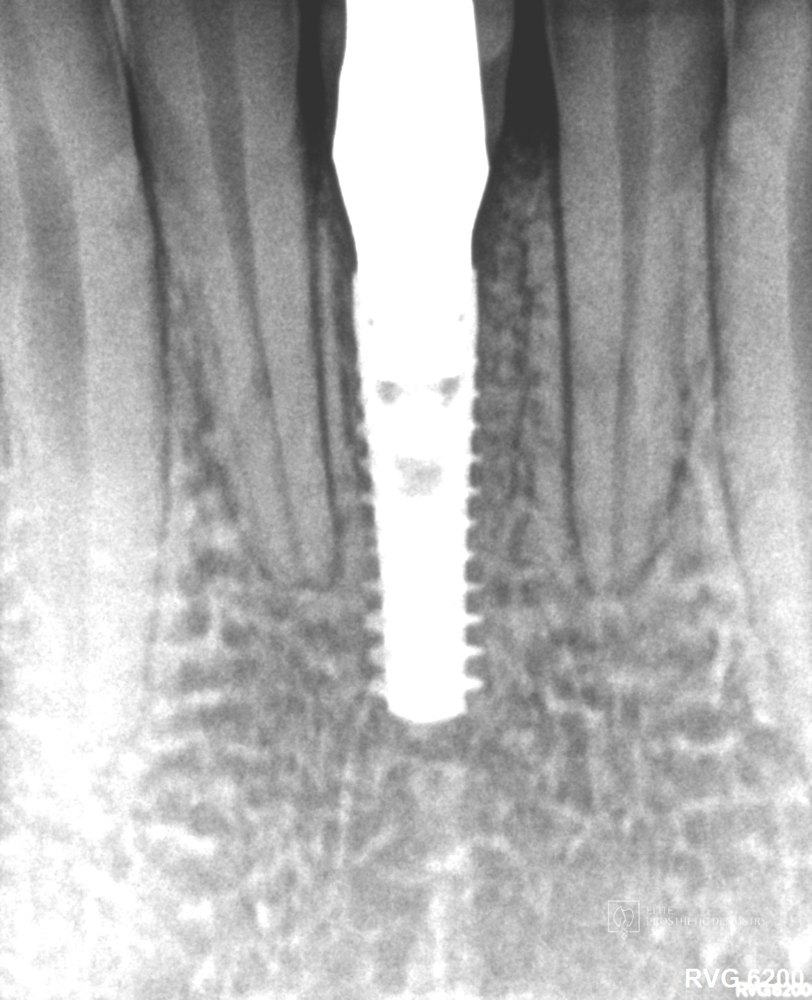
A compromised new implant replaced on a rebuilt foundation
Corrective implant treatment in Washington, DC for a patient referred for restoration of a lower front implant that had been placed a few months earlier to replace a congenitally missing tooth. This documented case at Elite Prosthetic Dentistry found pocketing, bone loss, and exposed threads around the implant, removed it before further integration, rebuilt the ridge with widening and bone grafting, and placed and restored a replacement implant with a customized abutment and crown. Treatment was planned and completed by Gerald Marlin, D.M.D., M.S.D., a prosthodontist who plans implant foundations and final restorations together.
Case at a Glance
- Treatment
- Removal of a compromised lower front implant, ridge widening and bone grafting, replacement implant, and a customized abutment and crown
- Approach
- Comprehensive implant evaluation with periapical imaging, assessment of bone loss and implant prognosis, early removal, ridge reconstruction, staged healing, replacement implant placement and customized restoration
- Case Type
- Corrective implant therapy / Early implant removal and site reconstruction
- Patient Concern
- A congenitally missing lower front tooth; an implant placed elsewhere a few months earlier was ready for its crown, but the gum and bone around it were not healthy.
- Decision Point
- Restore the existing implant with an abutment and crown despite bone loss and exposed threads, or remove it early, rebuild the site, and place a new implant on a sound foundation.
- Outcome
- A lower front tooth replaced on a healthy, reconstructed foundation rather than on an implant already losing bone.
- Why It Matters
- Shows that an implant-supported crown can only perform as well as the bone under it, and that sometimes the predictable path is a step back before the final restoration.
The presenting condition
This patient had been missing several teeth from birth and had completed orthodontic treatment with clear aligners to open the proper space for an implant at a lower front tooth site. The implant was placed in the spring and exposed that summer. When she and her mother came to the practice for the crown, the evaluation found approximately 5 mm pocketing on the mesiofacial and distofacial aspects of the implant, bone loss, and exposed implant threads. Early bone loss around a recently placed implant can happen for a number of reasons, and it is not always visible from the outside. An abutment and crown could technically have been made. The question was whether a restoration on that foundation would last.
Clinical Findings
- →Several congenitally missing teeth, with prior clear-aligner orthodontics to create space for a lower front implant
- →An implant placed a few months earlier and exposed for restoration
- →Approximately 5 mm pocketing at the mesiofacial and distofacial aspects of the implant
- →Bone loss around the implant with exposed implant threads
- →A compromised supporting ridge requiring reconstruction before a predictable replacement could be placed
Why the implant was removed rather than restored
Dental implants depend on healthy surrounding bone and soft tissue for long-term stability. An implant can be present in the mouth and ready for a crown from a mechanical standpoint while the tissues around it are already failing. Pocketing of 5 mm and exposed threads on a lower front implant indicated a foundation that could not be expected to hold a crown predictably; the likely course would have been progressive bone loss and, eventually, a far more difficult revision with the crown already in place. Because the implant had been placed only a few months earlier, removing it now, before it integrated more extensively, offered a cleaner opportunity to rebuild the site. The philosophy in complex implant care is to address the underlying condition rather than restore over it. The treatment became a sequence: remove the compromised implant, rebuild the ridge, allow it to heal, and only then place and restore a new implant in bone that could carry it. See dental implant bone loss for how these findings are evaluated.
The treatment plan
The plan put the foundation first, so the final crown would sit on an implant with a future.
-
1
Comprehensive implant evaluation
The history of congenital tooth absence and orthodontic preparation was reviewed with the patient and her mother. Clinical examination and periapical imaging documented the pocketing, the bone loss, and the exposed threads, and the findings were explained so the family understood the concern with the existing implant.
-
2
Evaluation of long-term prognosis
An abutment and crown could have been fabricated for the existing implant, but doing so would not have addressed the bone loss. The risk of progressive resorption and a compromised final restoration led to a recommendation to remove the implant now rather than after it had integrated further.
-
3
Implant removal and ridge reconstruction
The compromised implant was removed. The deficient ridge was then widened and grafted to rebuild the site into a favorable foundation for a replacement implant. See ridge augmentation.
-
4
Replacement implant placement
After the reconstructed site had healed, a new implant was placed at the site with careful attention to position, since the lower front teeth are visible in the smile.
-
5
Customized abutment and crown
Once the new implant had integrated and the tissues were ready, a customized implant abutment and crown were fabricated to replace the missing tooth and blend with the neighboring teeth, in direct coordination between Dr. Marlin and the practice's in-house laboratory to control fit, contour, and esthetics.
The outcome
The compromised implant was removed before the condition could become more advanced, the site was reconstructed, and a replacement implant was placed and restored with a customized abutment and crown. The photographs at the top of this page document the sequence: the original implant with exposed threads and the probing that measured the pocketing, the replacement implant in the rebuilt ridge, the radiograph of the new implant seated in bone, and the completed crown among the natural teeth. The case illustrates a principle in implant dentistry that is easy to state and hard to follow: a predictable result sometimes means taking a step backward before moving forward.
Result Highlights
- ✓Comprehensive evaluation identified approximately 5 mm pocketing and exposed threads on a recently placed implant
- ✓Early removal chosen over restoring an implant with compromised supporting bone
- ✓Ridge widening and bone grafting rebuilt the deficient site
- ✓Replacement implant placed after healing with attention to position in a visible area
- ✓Customized implant abutment and crown completed the replacement of the congenitally missing tooth
Who this case may sound familiar to
This story tends to resonate with patients in a few recognizable situations:
- You have a recently placed implant and have been told, or suspect, that the bone around it is not healthy.
- You were referred for an implant crown and want a specialist to confirm the implant is sound before the crown is made.
- You or your child are missing teeth from birth and want the replacement planned to last for decades.
- You want a practice that will tell you when the right step is to rebuild rather than to finish.
- You want the foundation done correctly so the crown is not the first part of a longer problem.
Our goal is to help patients make thoughtful long-term decisions, whether treatment is limited or comprehensive. Sometimes the thoughtful decision is to rebuild the foundation before the final restoration is made.
If any of those describe where you are, a consultation with Dr. Marlin can give you the diagnostic picture and the specific plan for your case.
Frequently asked questions
What does bone loss around a new implant mean?
Bone loss shortly after placement, especially with pocketing and exposed threads, indicates that the implant does not have the healthy, stable support it needs. It can result from a number of factors in the site, the healing, or the surrounding tissue. The finding has to be evaluated before any crown is made, because a crown cannot fix the foundation under it.
Why remove an implant instead of placing the crown and watching it?
Restoring an implant that is already losing bone usually leads to more bone loss and a more complicated revision later, with the crown in the way. When the implant is recent and not yet extensively integrated, removing it early and rebuilding the site is often the more predictable path to a replacement that will last.
How is the site rebuilt after an implant is removed?
After removal, the ridge is evaluated for width and height. Ridge widening and bone grafting restore the dimensions a new implant needs, the site is allowed to heal, and the replacement implant is then placed into reconstructed bone rather than into the defect the first implant left behind.
Can an implant that was placed elsewhere be evaluated and restored by a prosthodontist?
Yes. Prosthodontists frequently receive patients referred for the restorative phase of implant treatment. Part of that role is confirming that the implant and the surrounding bone and soft tissue are sound before the abutment and crown are designed, and recommending corrective treatment when they are not.
More about the work behind this case
This case combines corrective implant treatment with ridge augmentation and a replacement dental implant. The foundation-first decision reflects the practice’s philosophy on long-term planning, and the crown was fabricated with the in-house laboratory.
Elite Prosthetic Dentistry treats patients from across the DMV including Bethesda, Chevy Chase, McLean, Arlington, Potomac, and Great Falls, and from much further out for cases that warrant the trip.
Related Services
Related Patient Success Stories
Explore similar patient success stories demonstrating our expertise in advanced prosthetic dentistry.
 Before
 After
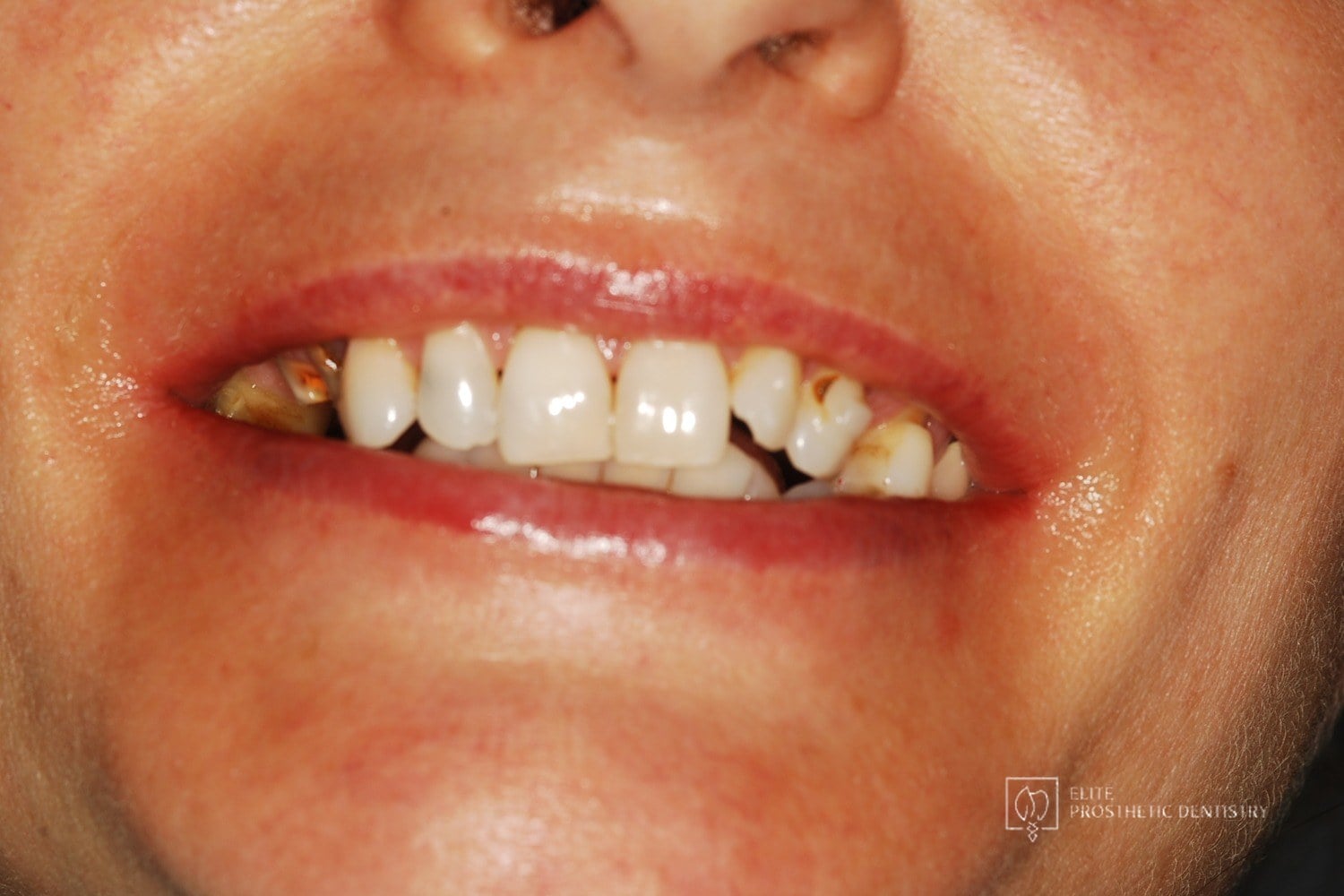
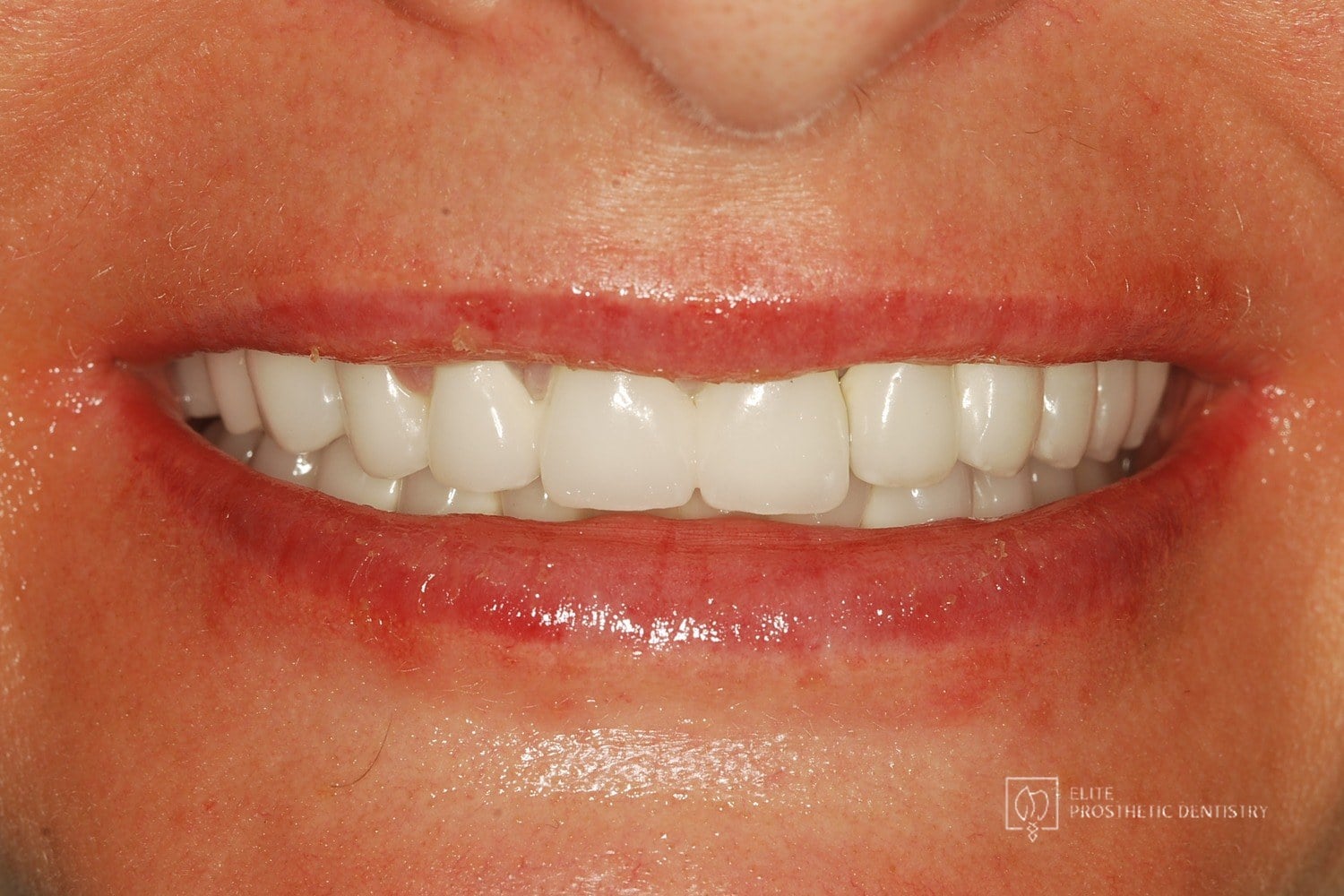
How Aging, Failing Dentistry Was Replaced with a Coordinated Full-Mouth Implant and Crown Reconstruction
The patient presented with throbbing upper-molar pain, long-standing infections, multiple root canals and unfinished prior treatment, generalized sensitivity, and several hopeless teeth.
 Before
 After
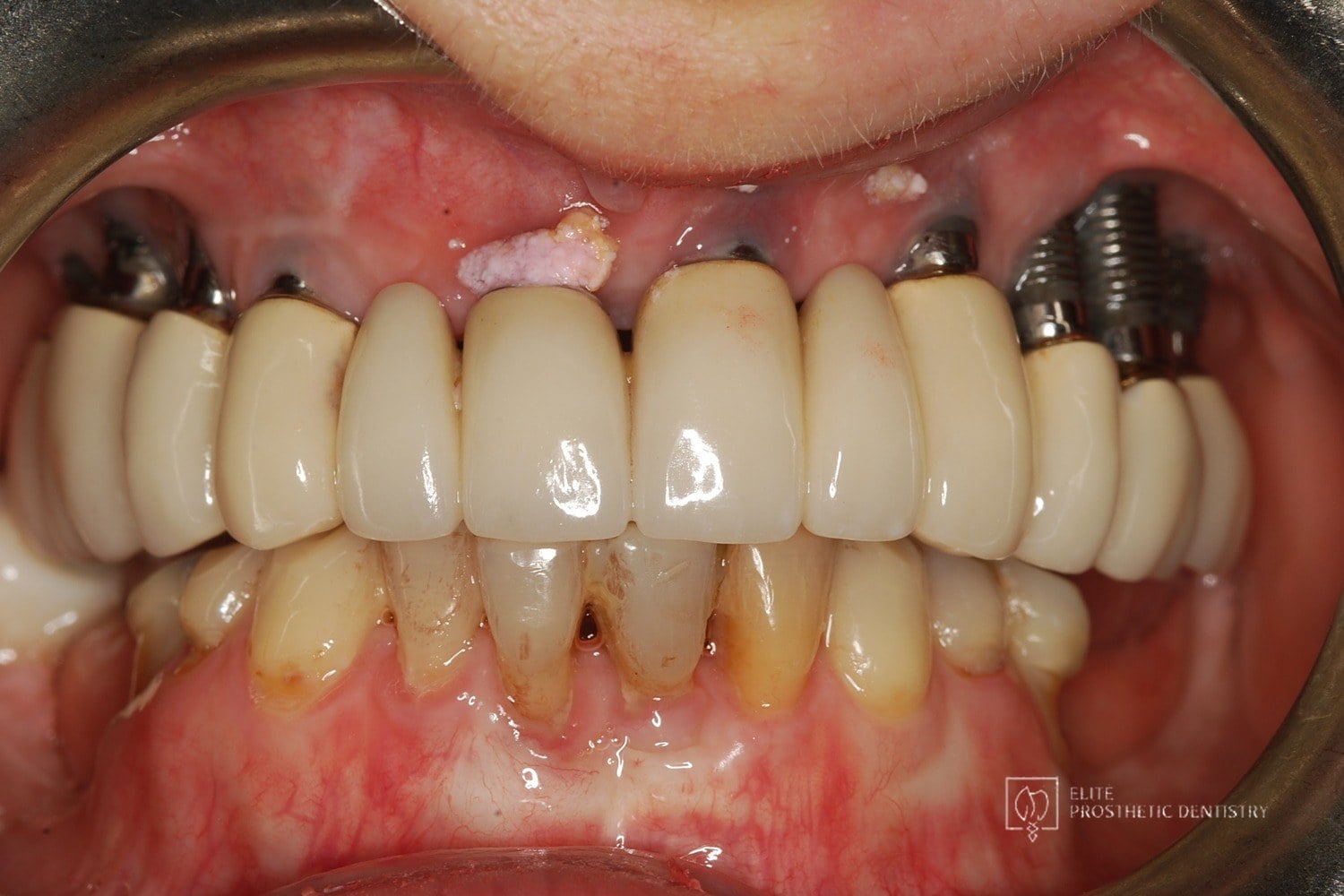
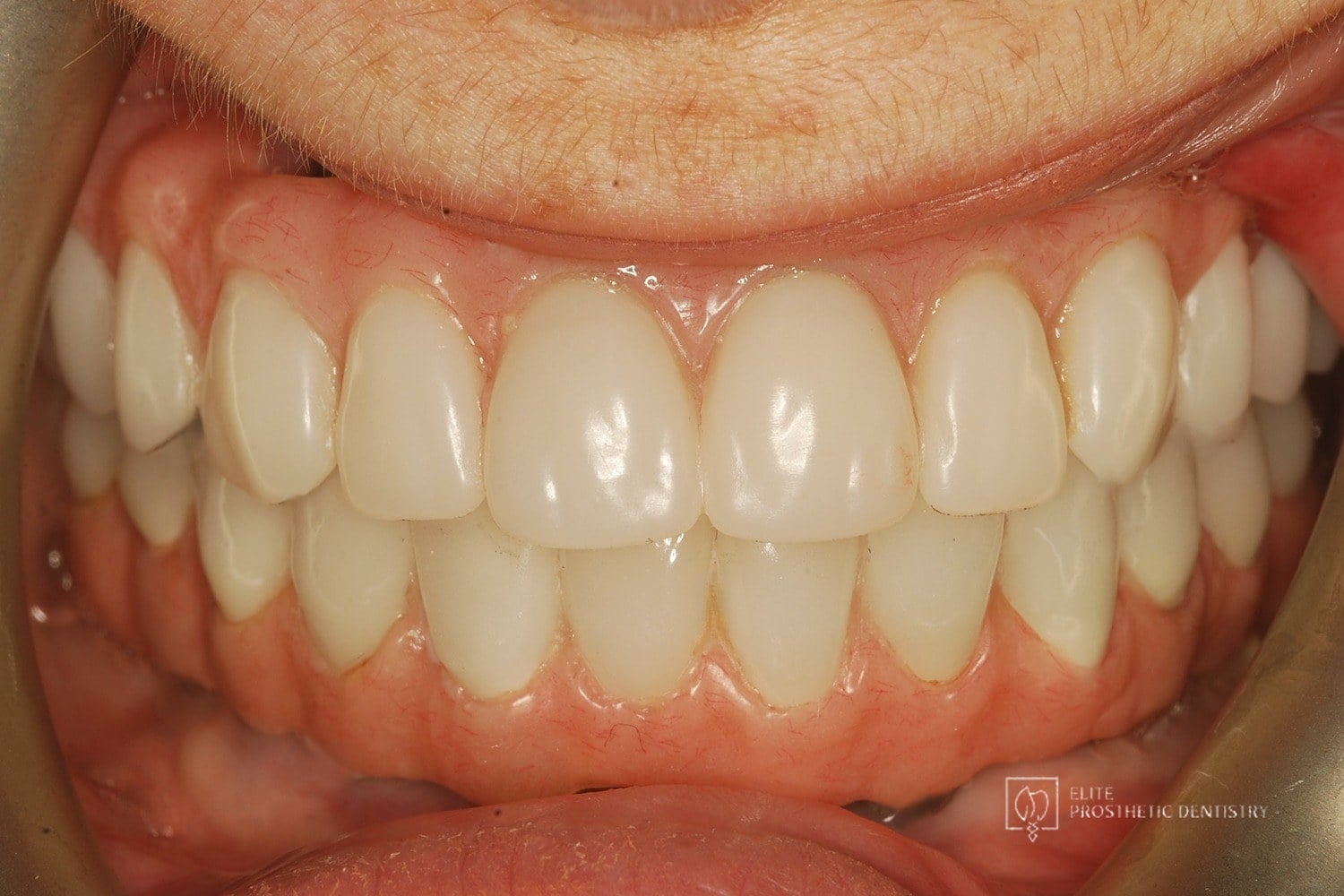
How Failing Implants and Severe Bone Loss Were Rebuilt Into a Stable Full-Arch Implant Reconstruction
The patient presented with significant complications from previously placed implants, severe bone loss, failing posterior implants, and an unesthetic full-arch bridge. Both arches required full reconstruction, with the upper arch showing the most advanced bone loss and instability.
 Before
 After
How Failing Lateral Incisor Implants Were Replaced with Custom Zirconia Bridges After Severe Bone Loss Made Replacement Implants Impossible
Comprehensive examination including CBCT imaging revealed significant bone loss surrounding implants that were placed outside the buccal plate, most likely due to placement without a CBCT-generated surgical guide. The implants were determined non-salvageable, and the alveolar ridge was too narrow to support replacement implants without extensive reconstruction.