
Implant-Supported Dentures in Washington, DC
Implant-supported dentures (sometimes called overdentures) anchor to dental implants for dramatically improved stability compared to conventional removable dentures. At Elite Prosthetic Dentistry, both the surgical implant placement and the final prosthesis are planned together within one specialist practice.
3,900+
Implants Placed
97%+
Success at 20+ Yrs
40+
Years Experience
1985
In-House Lab Since

Gerald M. Marlin, DMD, MSD
Specialty-Trained Prosthodontist (DMD, MSD)
Washingtonian "Top Dentist" 2026 and Hall of Fame
Why Patients Choose a Prosthodontist for Implant Dentures
- 3,900+ implants placed; 97%+ implant success at 20+ years
- Planning, placement, and restoration coordinated under one specialist-led plan
- Implant denture designed and fabricated in our in-house lab
- Full pathway from removable overdenture to fixed All-on-X if desired
- Bone preservation is part of every plan
Or call now: (202) 244-2101
What Is an Implant-Supported Denture?
An implant-supported denture is a removable prosthesis that anchors to two or more dental implants in the jaw. The denture snaps onto attachments connected to the implants, providing retention and stability that conventional dentures cannot match. The result is a removable solution that stays in place during eating, speaking, and laughing.
Snap-On Overdentures (Ball or Locator)
Two to four implants per arch support a removable denture that snaps onto ball or Locator attachments. Patient removes the denture nightly for cleaning.
Bar-Retained Overdentures
Implants connected by a custom bar; the denture clips onto the bar. Provides stronger retention and is well-suited when multiple implants support the case.
Fixed Implant Teeth (All-on-X)
When patients want teeth that stay in the mouth 24/7 with no removal, All-on-X is the fixed implant alternative. Same surgical concept extended to a non-removable prosthesis.
How Implant-Supported Denture Treatment Works
Implant denture treatment is a multi-stage process spanning several months. Clear expectations and a detailed plan before treatment begins are part of how a specialist practice approaches every case.
Consultation and 3D Imaging
Clinical exam and detailed discussion of options. Every implant case at Elite Prosthetic Dentistry, from a single implant through full-mouth reconstruction, is planned on a CBCT (cone beam CT) scan. Whether two-implant, four-implant, bar-retained, or fixed All-on-X is appropriate is determined at this visit.
Implant Placement Surgery
Two to four implants placed at strategic positions in the jaw. Sedation options available. A temporary denture may be modified or made to wear during the healing phase.
Osseointegration and Healing
Three to six months for the bone to integrate with the implants. During this time, the temporary denture provides function and appearance.
Final Denture Fabrication and Delivery
After integration, attachments are placed on the implants and the final overdenture is fabricated in our in-house lab. Fit, function, and bite are refined at delivery and follow-up.
Why Specialist Training Matters for Implant Dentures
Implant denture treatment crosses surgical and prosthetic domains. The placement of the implants, the design of the prosthesis, and the engineering of the attachment system all affect the outcome. Specialist training and in-house lab control structurally change what is possible.
-
One Plan From Start to Finish
Surgical placement and prosthetic restoration are designed together within one specialist practice. No transfers between practices, no incompatible specifications between surgical and restorative phases.
-
Implants Placed for the Final Restoration
Implant position is determined by what the final overdenture requires, not by surgical convenience. This is a structural difference from the standard general-practice model where surgery is referred out.
-
In-House Lab for the Prosthesis
The final overdenture is designed and fabricated in our on-site lab by a master ceramist working directly with the clinician. Attachment fit and prosthesis function are refined in real time.
-
Pathway to Fixed Implant Teeth
When patients eventually want a fixed solution rather than a removable overdenture, the same specialist practice can plan and deliver the upgrade. See [All-on-X](/all-on-x/) for the fixed alternative.

Who Is a Candidate for Implant-Supported Dentures?
Implant dentures suit patients with extensive tooth loss who want substantial improvement over conventional dentures without the cost or commitment of fixed implant teeth. The right answer for your case depends on bone, health, and goals.
Patients Frustrated With Conventional Dentures
Slipping, dietary limitations, daily adhesive, sore spots, and embarrassment. Implant-supported dentures address most of these issues directly.
Patients Missing All Teeth in an Arch
Complete tooth loss in one or both arches. Two to four implants per arch can dramatically improve retention while remaining more economical than full-arch fixed implant treatment.
Patients With Adequate Bone
Sufficient bone volume to support two to four implants. When bone is inadequate, [bone grafting](/bone-grafting/) can rebuild the foundation.
Patients Considering Their Long-Term Path
Implant-supported dentures are a middle option between conventional dentures and fixed implant teeth. Many patients begin here and later upgrade to fixed solutions.
When Implant-Supported Dentures Are the Right Answer
Implant-supported dentures address a specific patient situation: extensive tooth loss with a desire for substantial improvement over conventional dentures, but not requiring (or budgeting for) fixed implant teeth like All-on-X.
Common situations where implant-supported dentures are the right answer:
- Patient wearing a conventional denture that no longer stays in place
- Patient missing all teeth in an arch and wanting better function than a conventional denture
- Patient who has been told they need a complete denture and wants to explore alternatives
- Patient with adequate bone for two to four implants but not committing to full-arch fixed teeth
- Patient considering a long-term path that may eventually include fixed implant teeth
Specialist evaluation also identifies when implant dentures are NOT the right answer. Patients with significant bone loss may need bone grafting before implants can be placed. Patients who want completely fixed teeth that never come out are usually better served by All-on-X. Patients with mostly intact natural teeth may benefit from a partial denture or other restorative approach.
Comparing Removable and Fixed Implant Solutions
The decision between an implant-supported overdenture and fixed implant teeth is significant. Both improve dramatically over conventional dentures; they differ in convenience, function, and cost.
| Criterion | Implant Overdenture | All-on-X Fixed Implant Teeth |
|---|---|---|
| Implants per arch | 2 to 4 | 4 to 6+ |
| Removable | Yes, nightly | No, stays in mouth |
| Retention | Snap-on attachments | Screwed or cemented to implants |
| Function | Dramatically better than conventional | Closest to natural teeth |
| Cleaning | Daily removal and brushing | Brushing and flossing in place |
| Bone preservation | Partial | Strong |
| Initial cost | Lower | Higher |
| Lifetime cost | Moderate, attachments wear and need replacement | Lower long-term, fewer maintenance interventions |
A specialist consultation evaluates your case against both options and identifies the right answer for your specific situation. Some patients begin with an overdenture and later upgrade to fixed teeth. Read more about All-on-X full-arch implants.
Attachment Systems for Implant Dentures
The mechanism connecting the denture to the implants influences retention, ease of use, and long-term maintenance.
Locator attachments are the most common modern choice. A small abutment on the implant snaps into a corresponding insert in the underside of the denture. Easy for the patient to manage; inserts can be replaced as they wear.
Ball attachments use a spherical abutment on the implant and a corresponding cap in the denture. Simple, reliable, and well-suited for two-implant cases.
Bar attachments connect multiple implants with a custom bar that the denture clips onto. Provides exceptional retention and force distribution; well-suited for four-implant cases or when bone or bite forces require additional support.
Selection happens at consultation based on the number of implants, the bone, the bite forces, and your priorities. The in-house lab fabricates the final overdenture to fit the chosen attachment system precisely.
The In-House Lab Advantage for Implant Dentures
Implant overdentures are mechanically demanding restorations. The fit between the attachment in the denture and the abutment on the implant must be precise. Most practices send restorations to an outside laboratory, which works from impressions, prescriptions, and photographs, so refinements travel back and forth.
Elite Prosthetic Dentistry has operated an in-house dental laboratory continuously since 1985. The final overdenture is designed and fabricated by the same master ceramist working directly with the clinician. Attachment fit, prosthesis contour, tooth shade, and bite refinement happen in real time. Read more about our in-house laboratory.
Common Concerns Patients Raise About Implant Dentures
“I have been told I cannot have implants because of bone loss.” Bone loss is frequently solvable with bone grafting. A specialist evaluation determines whether grafting is appropriate and what the timeline would be. Many patients told they were not candidates for implants are actually candidates after a proper evaluation.
“How long do the implants last?” With proper home care and regular professional maintenance, Dr. Marlin’s practice has a documented in-practice implant success rate above 97% for implants placed more than 20 years ago. The overdenture itself has a service life of five to ten years before relines or replacement are typically needed; the implants themselves typically outlast the dentures.
“Do the attachments wear out?” Yes. Attachment inserts (the part inside the denture) typically need replacement every one to three years depending on use. Replacement is a quick chairside procedure. The abutments on the implants themselves are more durable and replaced less frequently.
“Can I upgrade to fixed teeth later?” Yes, in most cases. Patients who begin with an implant-supported overdenture and later decide they want fixed implant teeth can transition to All-on-X or a similar fixed solution. The existing implants may be used in the new plan, depending on their position and the new prosthesis design. Specialist planning during the original placement can specifically anticipate this potential upgrade path.
Implant Denture Treatment for Washington DC Patients
Elite Prosthetic Dentistry serves implant denture patients across the Washington DC metropolitan area, including Bethesda, Chevy Chase, Potomac, McLean, Great Falls, and surrounding communities. Our office is located in Friendship Heights, one block from the Red Line Metro station, with building parking.
For patients traveling from outside the DMV region for implant work, our travel for care and concierge dentistry services coordinate multi-appointment scheduling and lodging logistics so out-of-town consultations and treatment can be efficient.
Ready to Discuss Your Treatment Options With a Specialist?
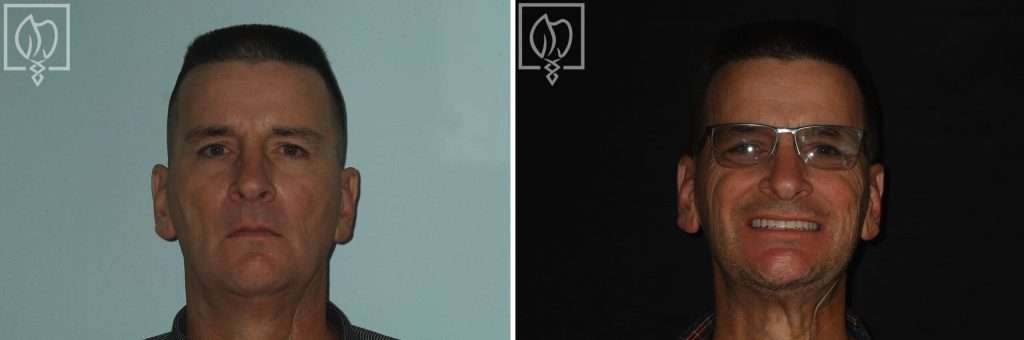
Real Patient Results
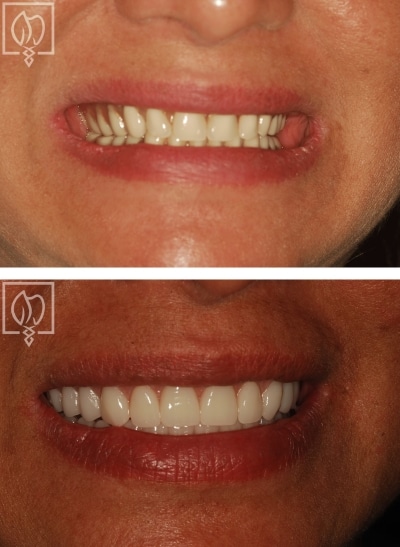
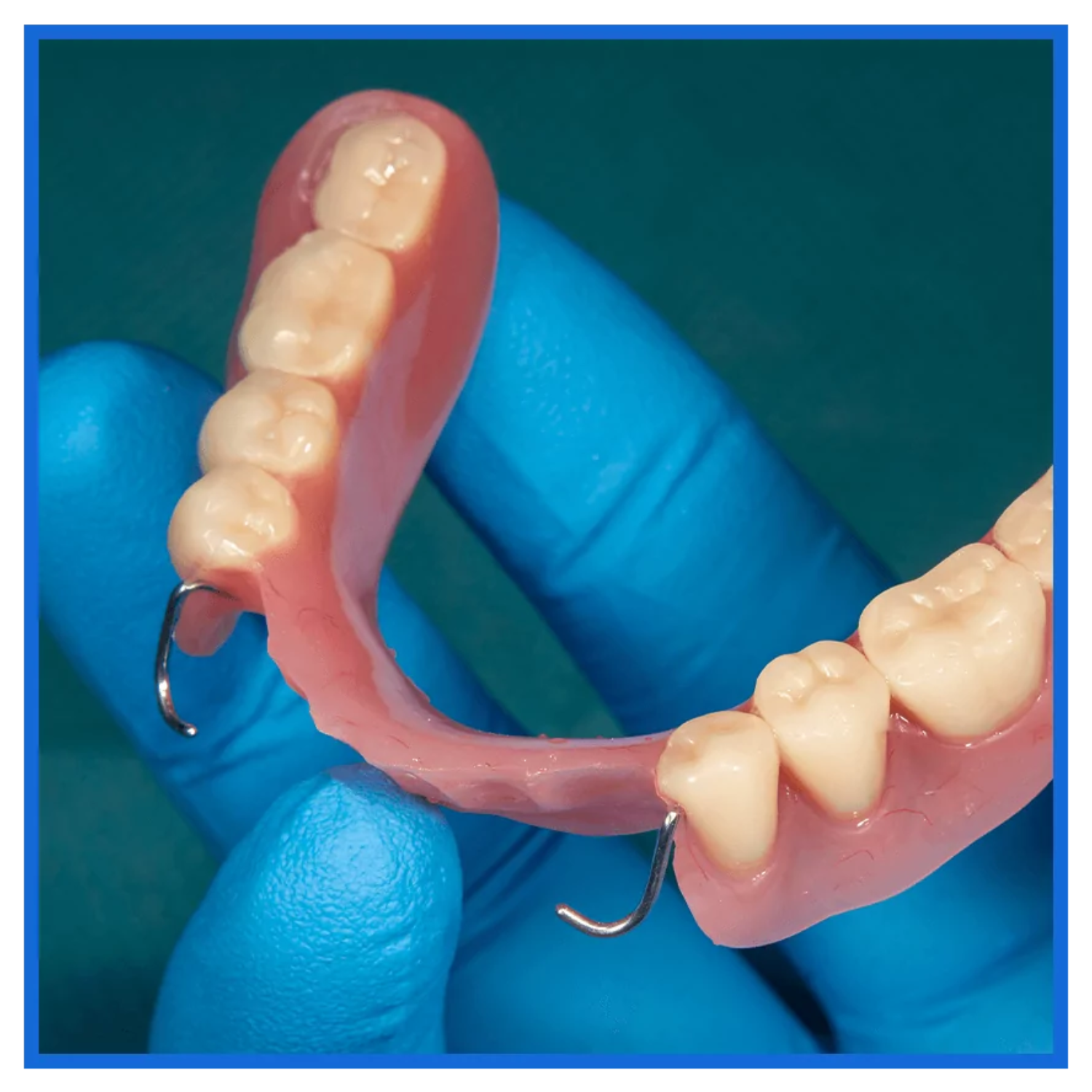
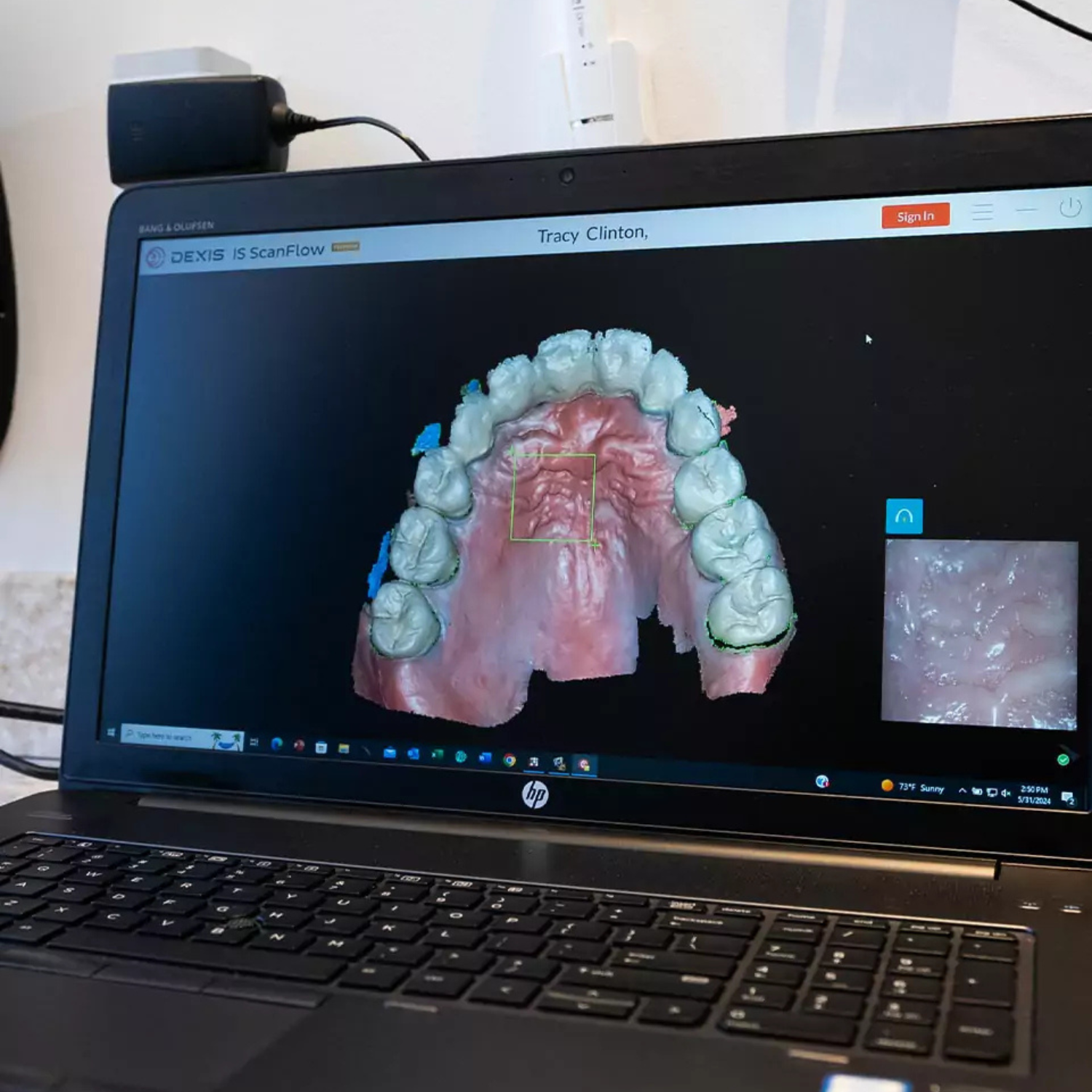
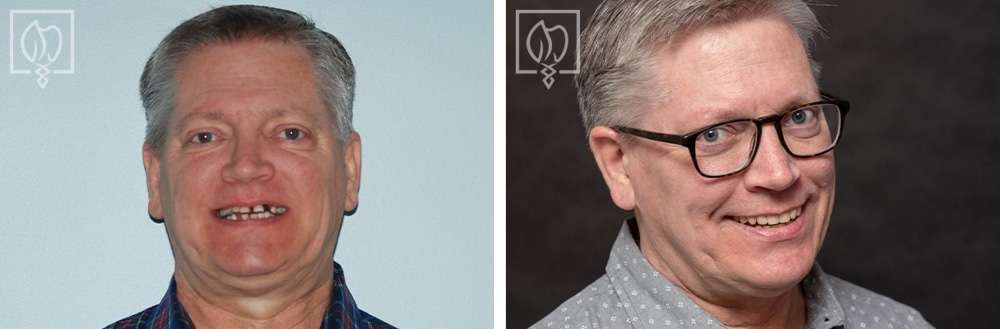
Every result below was planned, surgically placed, and restored at the Washington, DC practice under Dr. Marlin's direction.
When Elite Prosthetic Dentistry Is a Strong Fit
A strong fit if you are looking for
- An implant-retained or implant-supported denture designed for stability, comfort, and long-term bone health
- A candid comparison of removable overdentures and fixed full-arch options for your situation
- Existing implant overdentures that are worn, loose, or uncomfortable and need to be rebuilt or redesigned
- Bar, attachment, and denture design coordinated with the implant plan inside the practice
- Fabrication and adjustment in the in-house laboratory
The honest boundary
Elite Prosthetic Dentistry may not be the right fit if you are primarily looking for routine insurance-based dentistry, the lowest-cost option, or a quick single-visit solution without a comprehensive evaluation.
Frequently Asked Questions
How is an implant-supported denture different from a conventional denture?
A conventional denture rests on the gum and relies on suction and adhesive for retention. An implant-supported denture anchors to two or more implants in the jaw. The result is dramatically improved stability, the ability to eat a wider range of foods, no need for adhesive, and slower bone loss over time. The denture is still removable for cleaning.
How is an implant denture different from All-on-X?
An implant-supported overdenture is removable. The patient takes it out nightly for cleaning. All-on-X is fixed; the teeth stay in the mouth and are not removed by the patient. All-on-X typically uses more implants (four to six per arch) and provides function closer to natural teeth. Overdentures are usually more economical and require fewer implants. The right answer depends on the patient's goals, anatomy, and budget.
How many implants do I need for an implant-supported denture?
Two implants per arch is the minimum and provides significantly better retention than a conventional denture. Three or four implants per arch provide additional stability and reduce the rotation patients can feel during chewing. The right number depends on bone, bite forces, and the chosen attachment system. Specialist evaluation determines what is appropriate for your case.
How long does the implant denture process take?
From initial consultation to final delivery typically spans three to six months. Surgical placement is one visit; osseointegration takes three to six months; the final overdenture is fabricated and delivered after integration. A temporary denture is worn during the healing phase. Your treatment plan includes a specific timeline reviewed at consultation.
Does the denture still come out at night?
Yes, with an implant-supported overdenture. The denture snaps off the implant attachments for cleaning. The implants themselves stay in place permanently. For patients who do not want to remove the denture at all, [All-on-X](/all-on-x/) provides fixed implant teeth that stay in the mouth 24/7.
Will I be able to eat normally?
Patients with implant-supported dentures eat a dramatically wider range of foods than conventional denture wearers. Most report being able to eat foods they had not enjoyed in years. Some restrictions remain because the prosthesis is still removable; fully fixed solutions like All-on-X come closest to natural chewing function.
Why see a prosthodontist for implant dentures instead of a general dentist?
Implant denture treatment crosses surgical and prosthetic domains. Prosthodontists complete three additional years of specialty training in tooth replacement, including implant prosthetics. Combined with an in-house lab, specialist planning, and more than 40 years of clinical practice, the specialist setup structurally changes the predictability and longevity of the final result.
Related Patient Success Stories
Explore similar patient success stories demonstrating our expertise in advanced prosthetic dentistry.
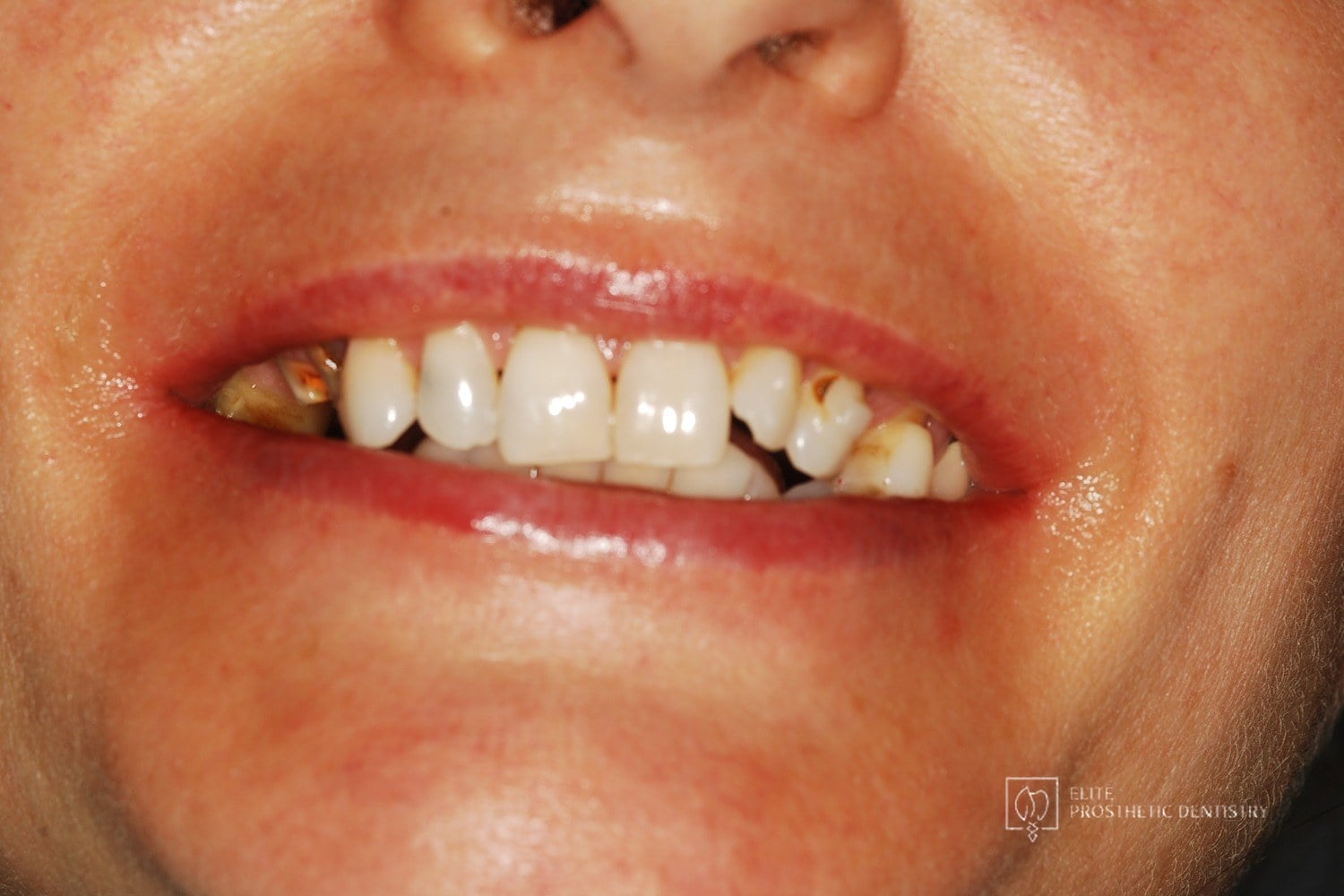 Before
 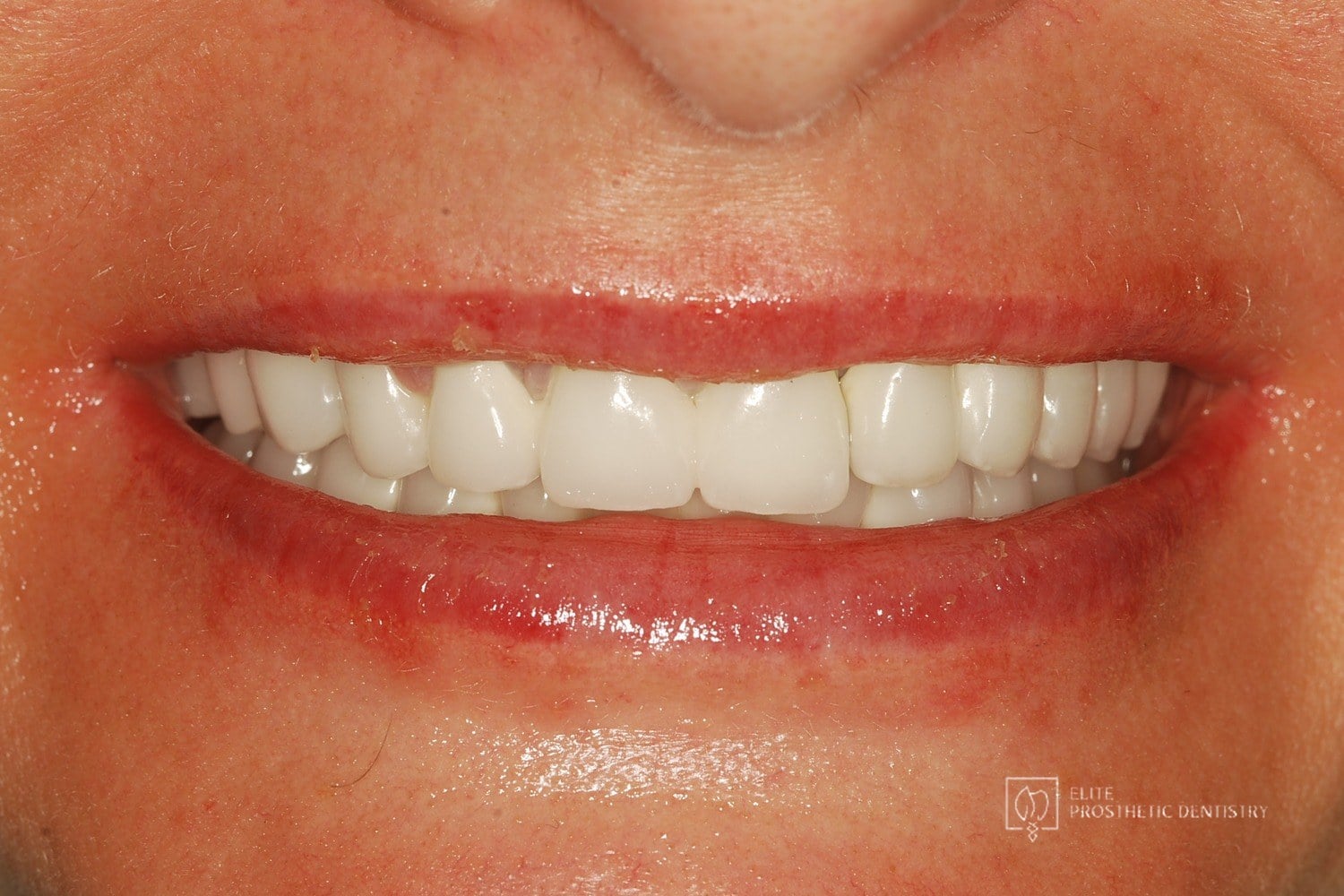 After
After How Aging, Failing Dentistry Was Replaced with a Coordinated Full-Mouth Implant and Crown Reconstruction
The patient presented with throbbing upper-molar pain, long-standing infections, multiple root canals and unfinished prior treatment, generalized sensitivity, and several hopeless teeth.
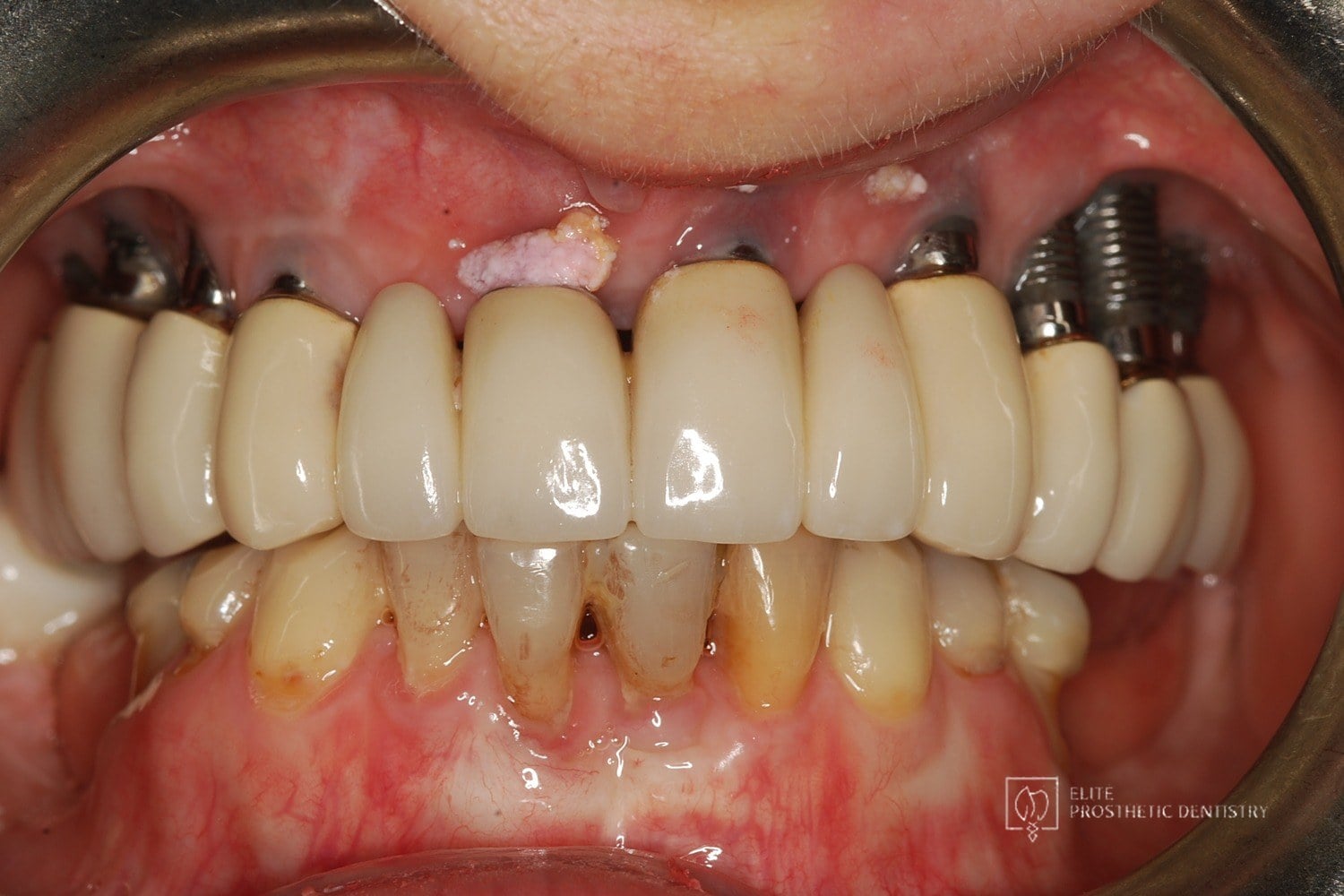 Before
 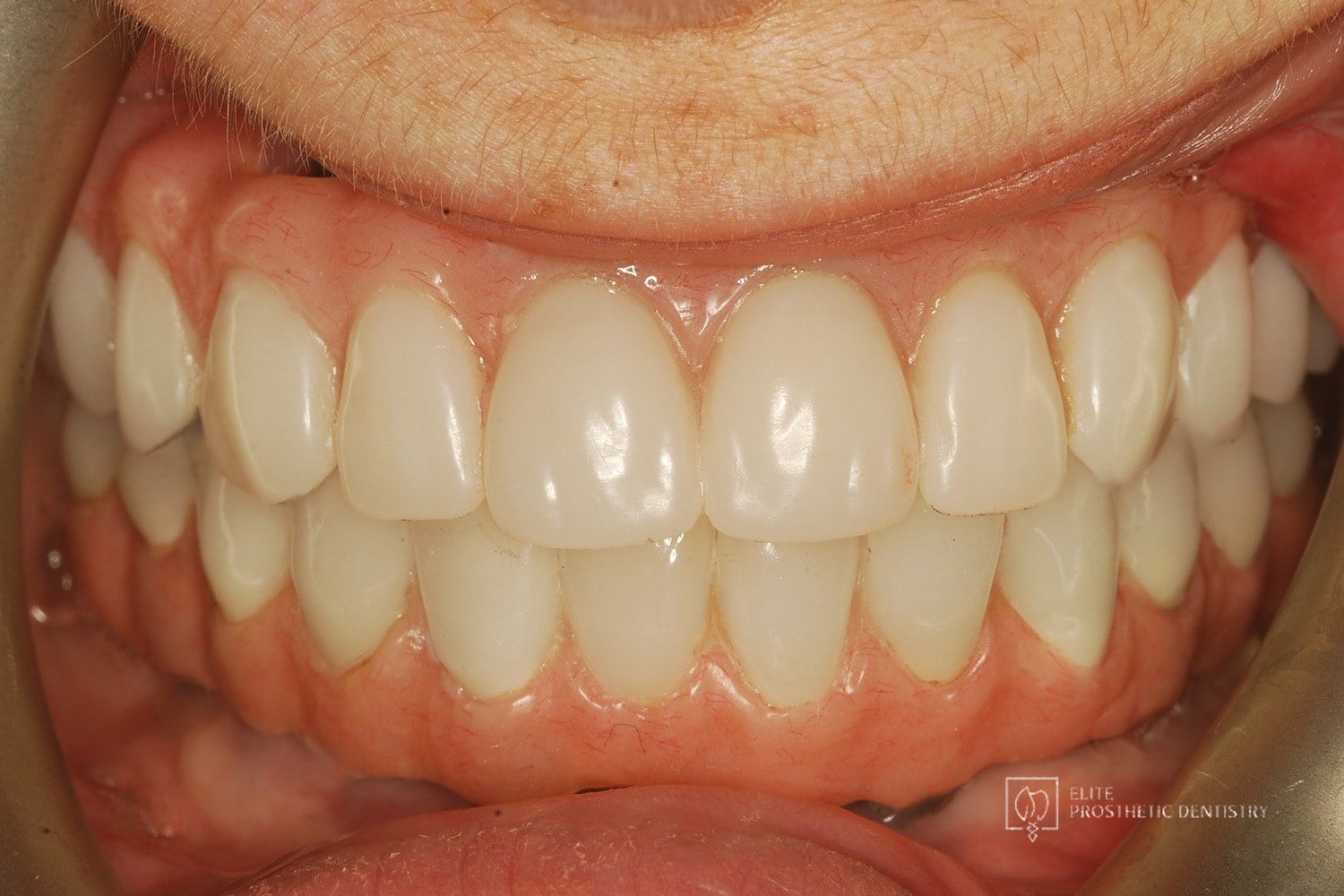 After
After How Failing Implants and Severe Bone Loss Were Rebuilt Into a Stable Full-Arch Implant Reconstruction
The patient presented with significant complications from previously placed implants, severe bone loss, failing posterior implants, and an unesthetic full-arch bridge. Both arches required full reconstruction, with the upper arch showing the most advanced bone loss and instability.
 Before
  After
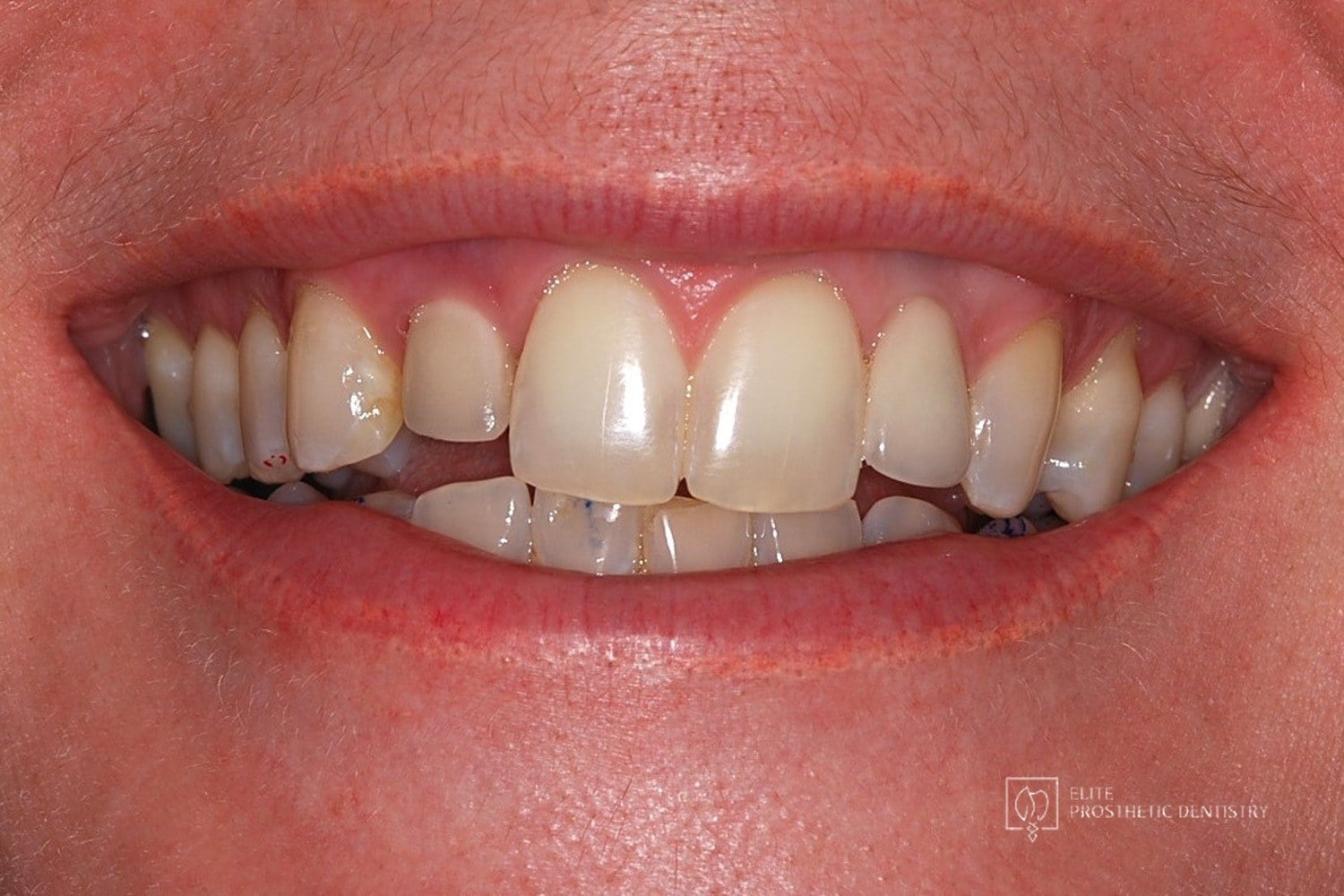
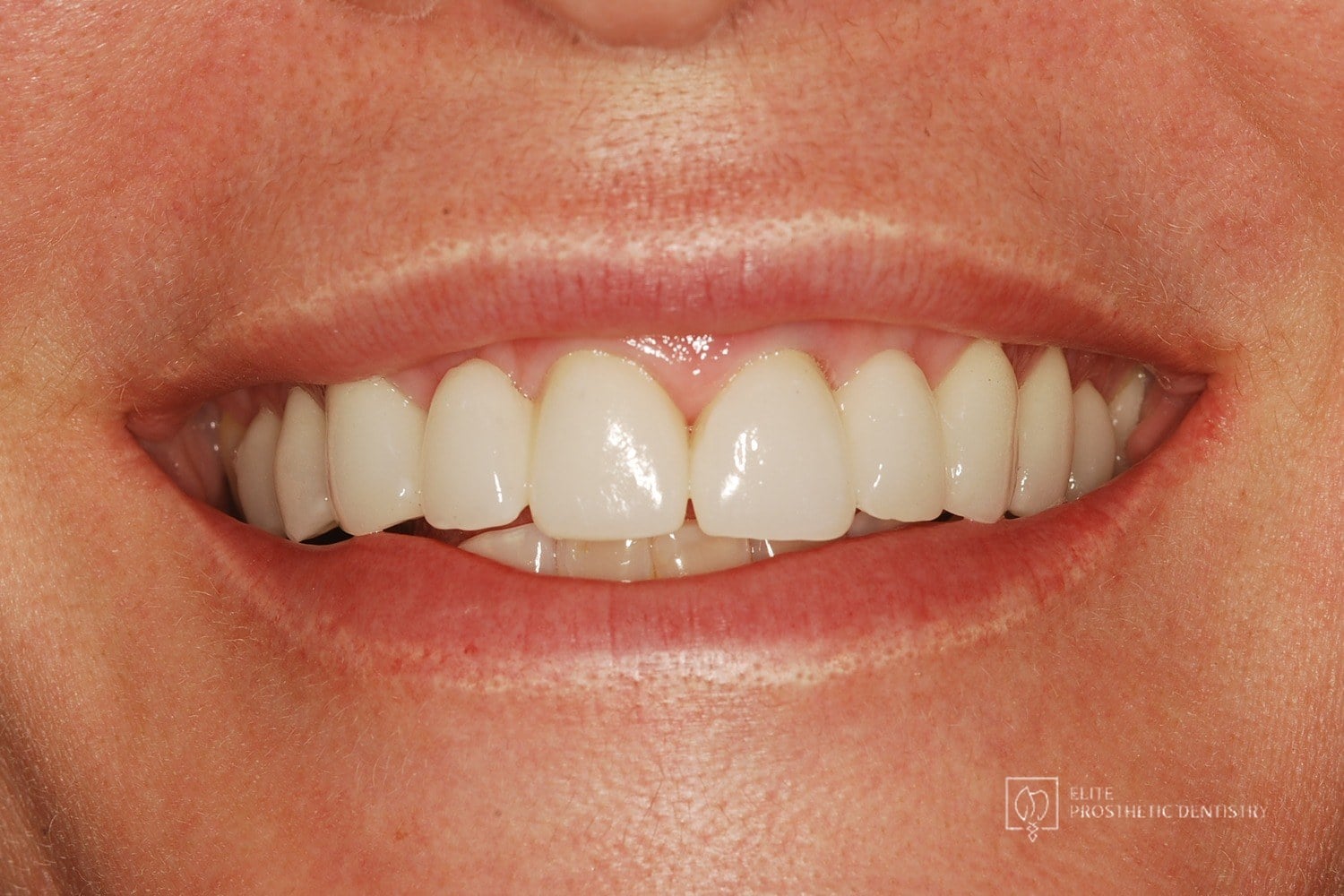
After How Failing Lateral Incisor Implants Were Replaced with Custom Zirconia Bridges After Severe Bone Loss Made Replacement Implants Impossible
Comprehensive examination including CBCT imaging revealed significant bone loss surrounding implants that were placed outside the buccal plate, most likely due to placement without a CBCT-generated surgical guide. The implants were determined non-salvageable, and the alveolar ridge was too narrow to support replacement implants without extensive reconstruction.
 Before
  After
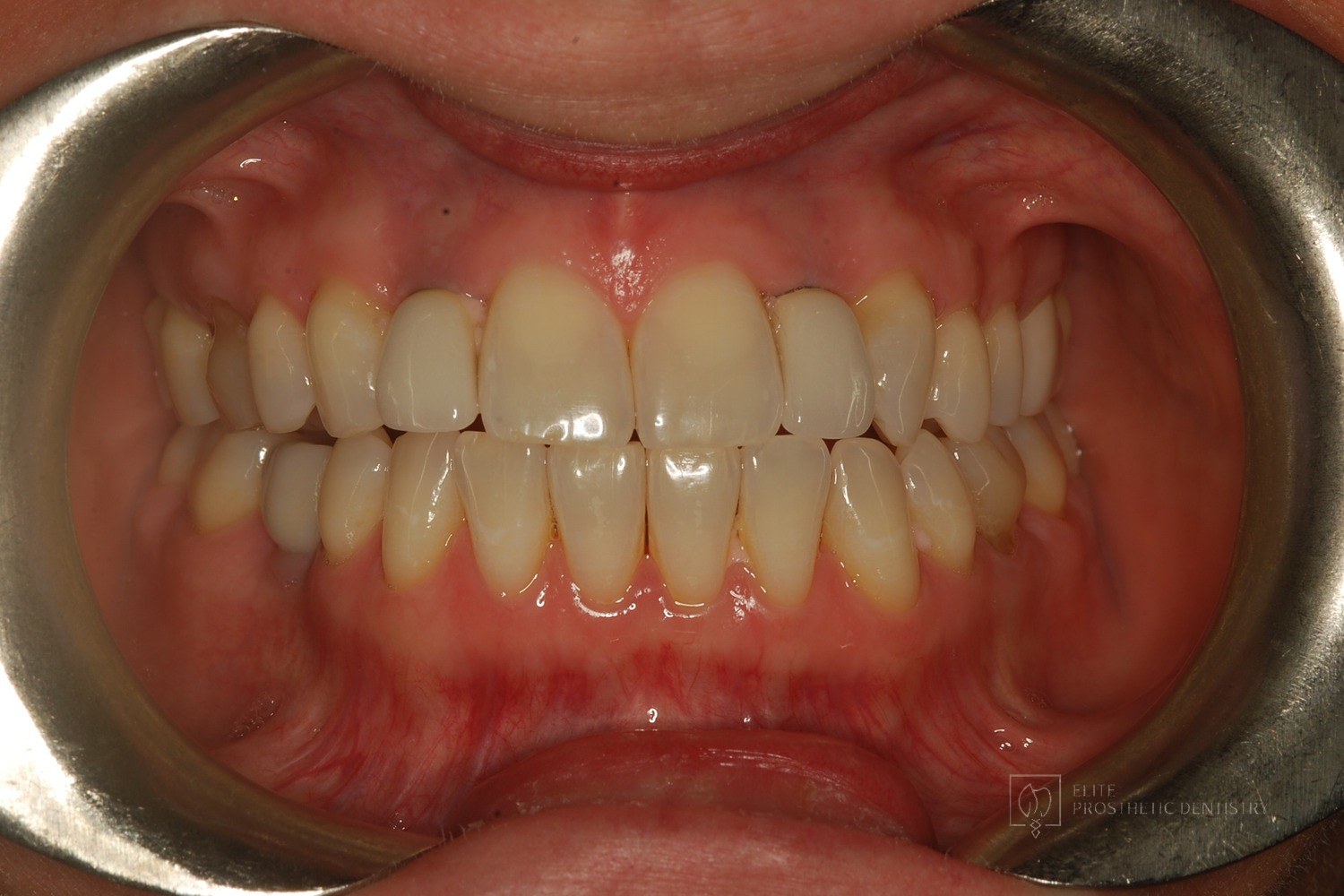
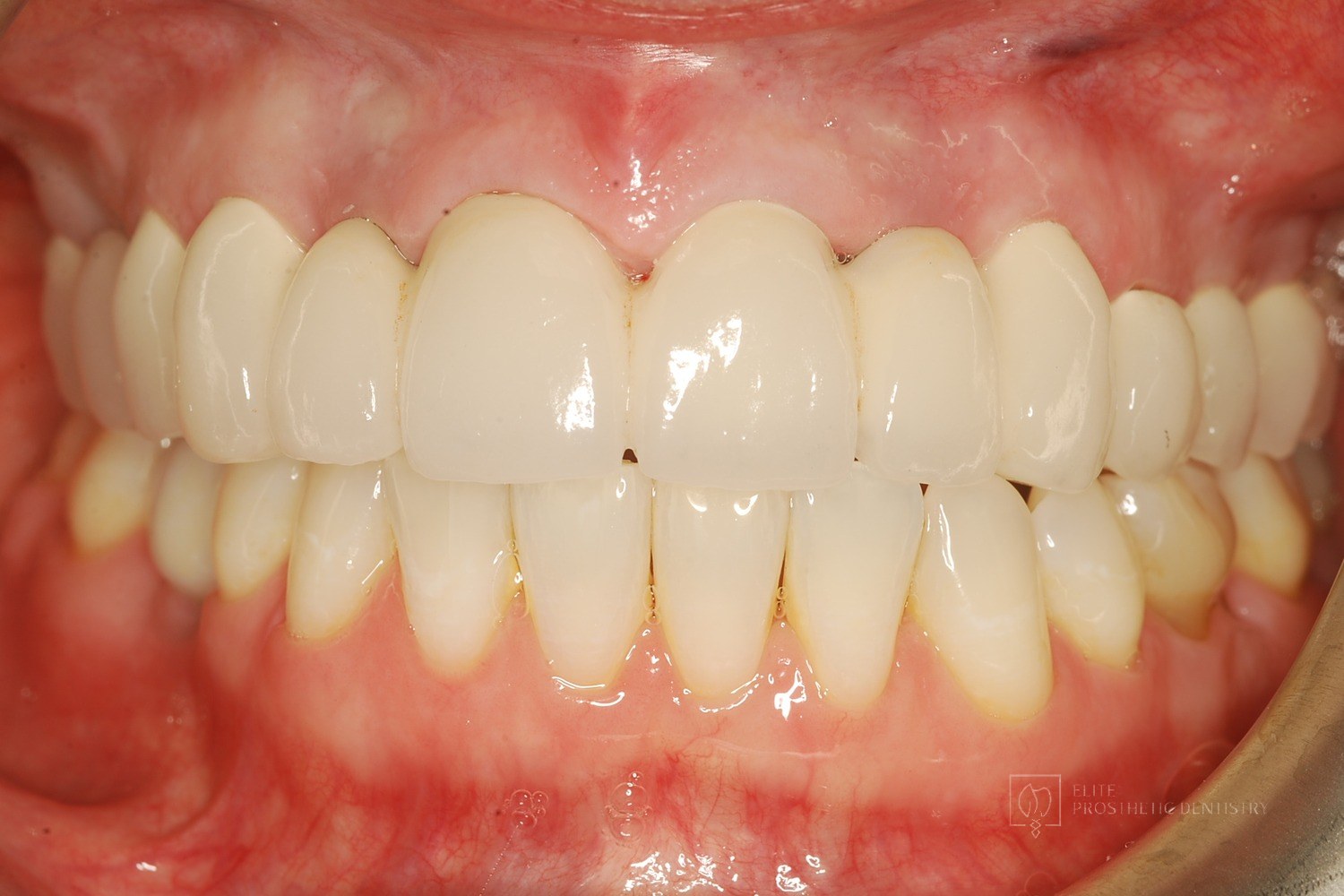
After How Older Implant Crowns Were Redesigned for a Better Bite and More Natural Appearance
The patient came in after years of living with implant-supported crowns placed more than twenty years earlier that no longer looked or functioned well. CBCT evaluation, reviewed with a radiologist colleague, showed the implants had been placed too far to the buccal in very thin bone and could not support a healthy long-term restoration.
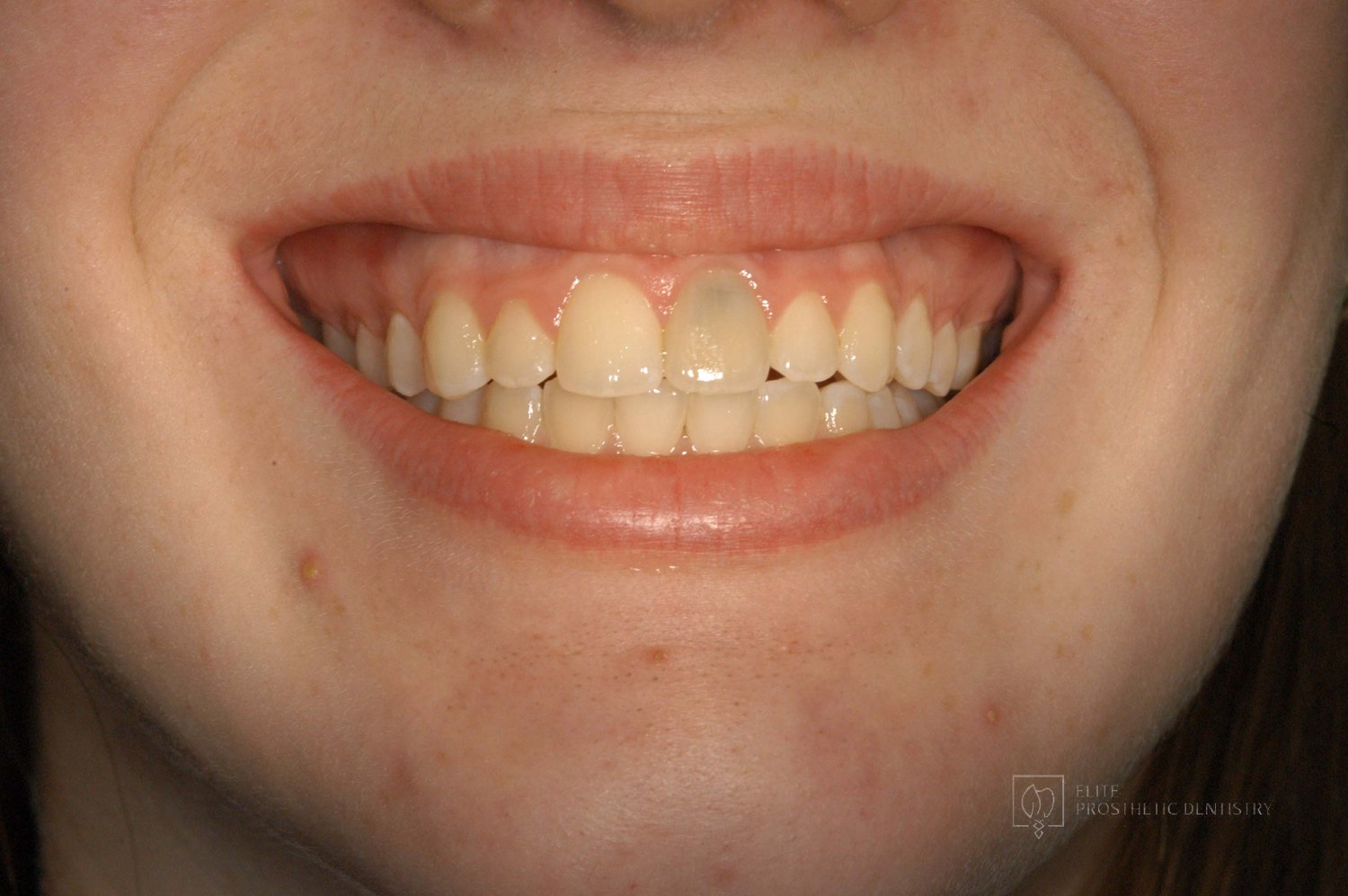 Before
 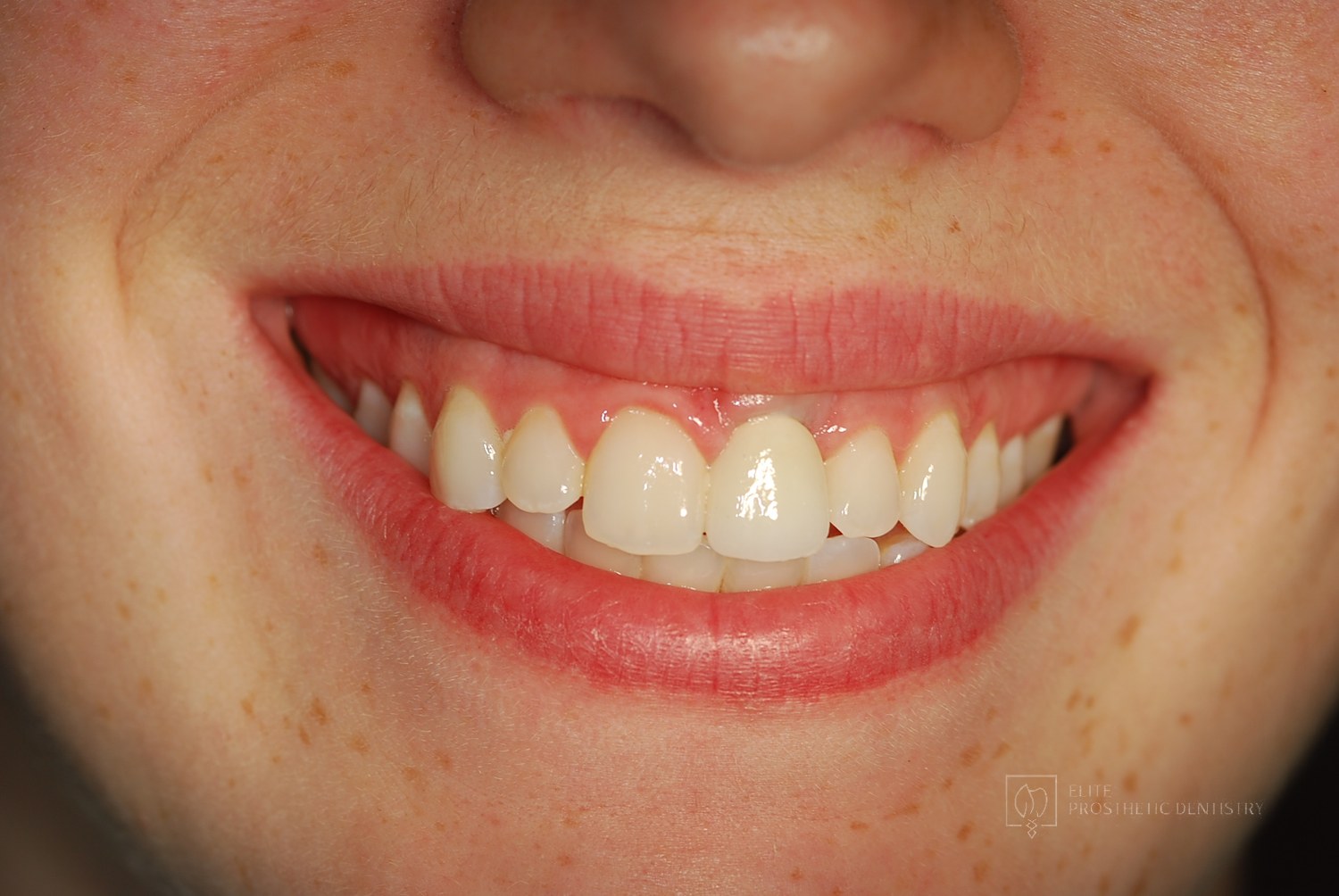 After
After How a Front Tooth Lost to Childhood Trauma Was Rebuilt with Bone Grafting and a Long-Lasting Implant
A teenager was referred by her father after earlier trauma left her upper left front tooth slowly failing from root resorption. She was still growing, so an immediate implant was the wrong move. The tooth had to be maintained to buy time, then replaced correctly once she reached skeletal maturity.
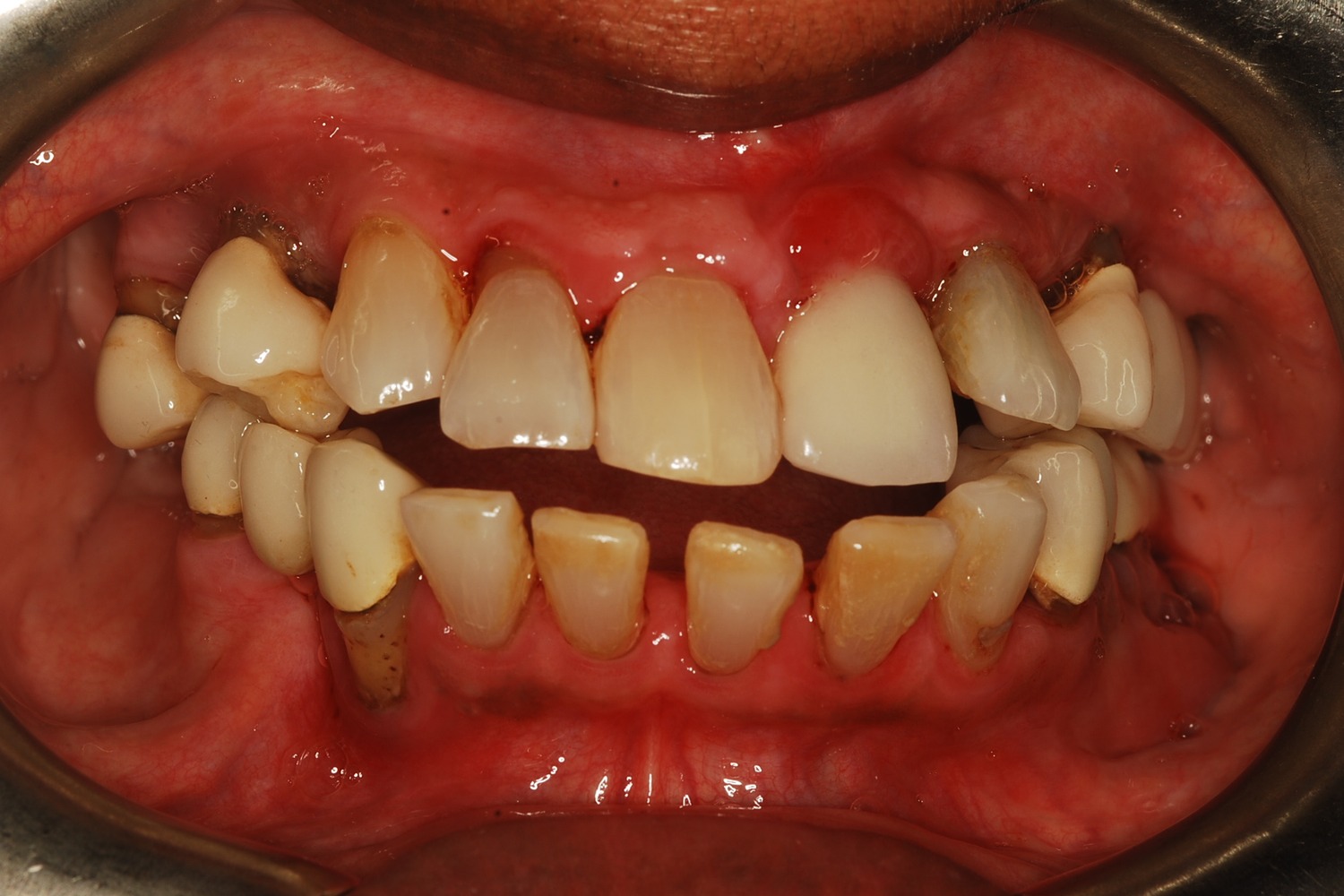 Before
 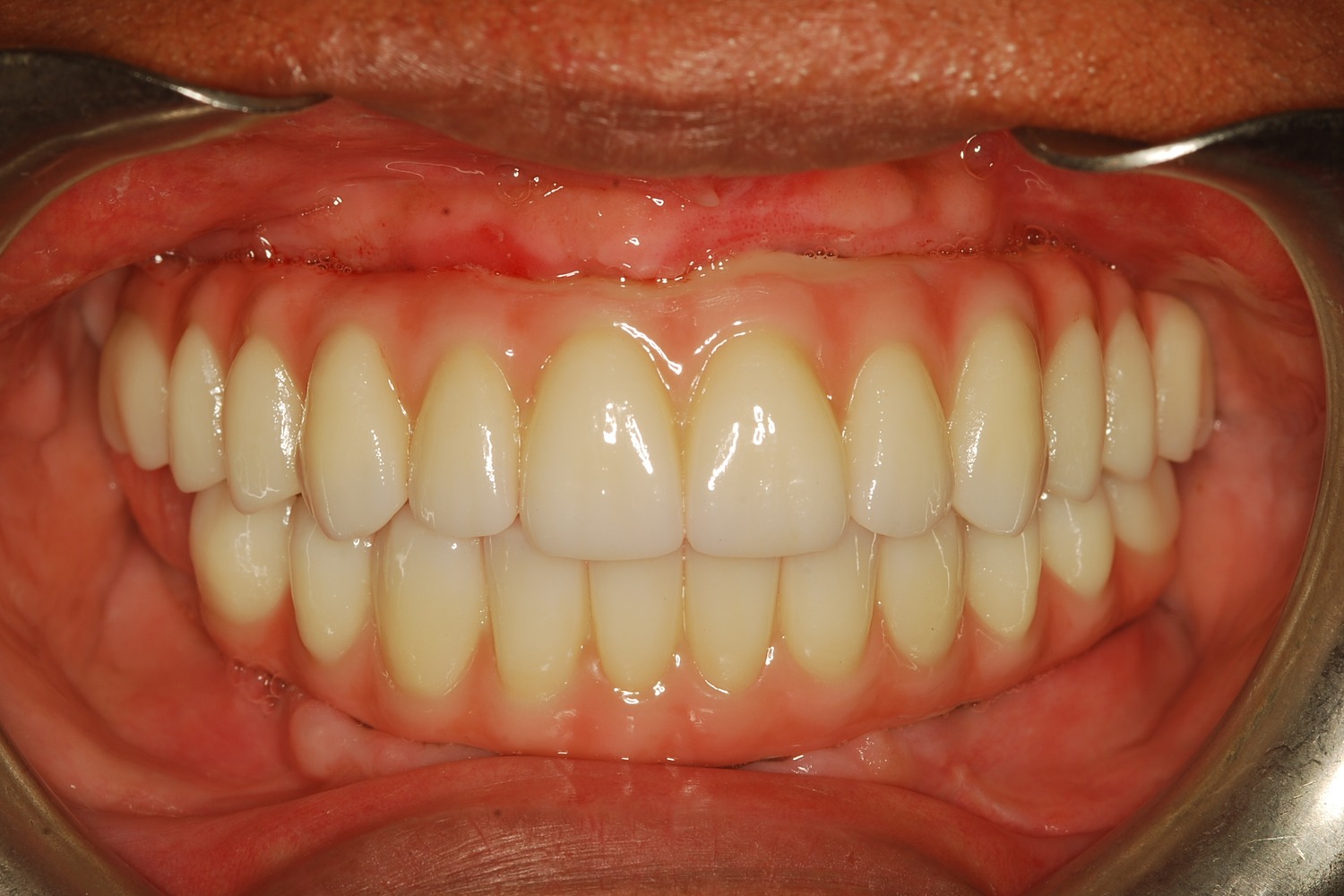 After
After How Severe Bone Loss and Bite Dysfunction Were Rebuilt with All-on-6 Implants and a Milled Zirconia Hybrid Prosthesis
The patient presented with severe bone loss, advanced periodontal disease, malocclusion, and a dysfunctional bite that required full-arch rebuilding.
Implant Denture Patient Stories
Related Articles
Deepen your knowledge with additional insights on this topic.
Implant Denture and Related Resources
Conventional Dentures
Traditional removable denture options.
All-on-X Full-Arch Implants
Fixed implant teeth as an alternative to removable overdentures.
Full Mouth Dental Implants
Complete upper and lower arch implant rehabilitation.
Dental Implants Overview
The foundation of all implant treatment options.
Bone Grafting
When bone volume needs to be rebuilt to support implants.
Implant Denture Problems
Issues with existing implant dentures and revision options.
Loose Snap-In Denture
What to do when an existing implant denture loses retention.
Conveniently Located in Friendship Heights
Serving Washington DC, Bethesda, Chevy Chase, McLean, Great Falls, Potomac, and surrounding communities. One block from the Friendship Heights Metro on the Red Line.
Request Your Specialist Consultation
Personally reviewed by Dr. Marlin or his team.
Hours
- Monday — Thursday8:00 AM — 5:00 PM
- Friday8:00 AM — 2:00 PM
- Saturday — SundayClosed