
How to Find the Best Veneer Dentist in Washington, DC
Choosing a veneer dentist in DC: veneers vs. crowns vs. bonding, what a careful veneer process includes, replacing old veneers, and what to ask first.
The best dentist for veneers is the one who answers the right question first. The most important veneer decision is not which dentist has the most striking before-and-after photos. It is whether veneers are the right treatment for your teeth at all. Choose a dentist who examines the underlying teeth, the gums, and the bite first, shows you the planned result in a mockup or provisionals before any enamel is removed, and is willing to tell you when a crown, bonding, whitening, or no treatment would serve you better.
Veneers are thin ceramic shells bonded to the front of the teeth. Done well on the right teeth, they change color, shape, and proportion while preserving most of the natural tooth. Done on the wrong teeth, or designed without regard for the bite, they chip, debond, stain at the edges, or look like a row of identical tiles. Because the enamel removed for a veneer does not grow back, the decision deserves more care than the marketing around it suggests.
Veneers, Crowns, or Bonding? Start With the Teeth Underneath
A veneer covers only the front surface, so it depends on what is behind it. Large fillings, cracks, previous root canals, active decay, and gum inflammation all change the answer. One patient in our practice came in, referred by her plastic surgeon, expecting to replace four old composite veneers with porcelain ones. The examination found very large fillings under the old work, and full-coverage crowns protected those teeth better than veneers could have. That is the kind of finding a careful dentist looks for before agreeing to your preferred treatment.
The veneers page compares composite bonding, porcelain veneers, and crowns side by side. In short: bonding suits small chips and gaps, veneers suit sound teeth that need a change in color or shape, and crowns suit teeth that need strength as well as appearance. When veneers are not as good as crowns goes deeper on that boundary. When veneers are not as good as crowns goes deeper on that boundary.
What a Careful Veneer Process Looks Like
- Diagnosis first. Photographs, an examination of the gums and existing restorations, and an evaluation of how the front teeth meet during biting and grinding.
- A design you can see. A wax-up or provisional restorations that show length, shape, and proportion before any enamel is removed.
- Whitening decisions made early. If neighboring teeth will stay natural, whitening them first sets the target shade and can reduce the number of veneers needed.
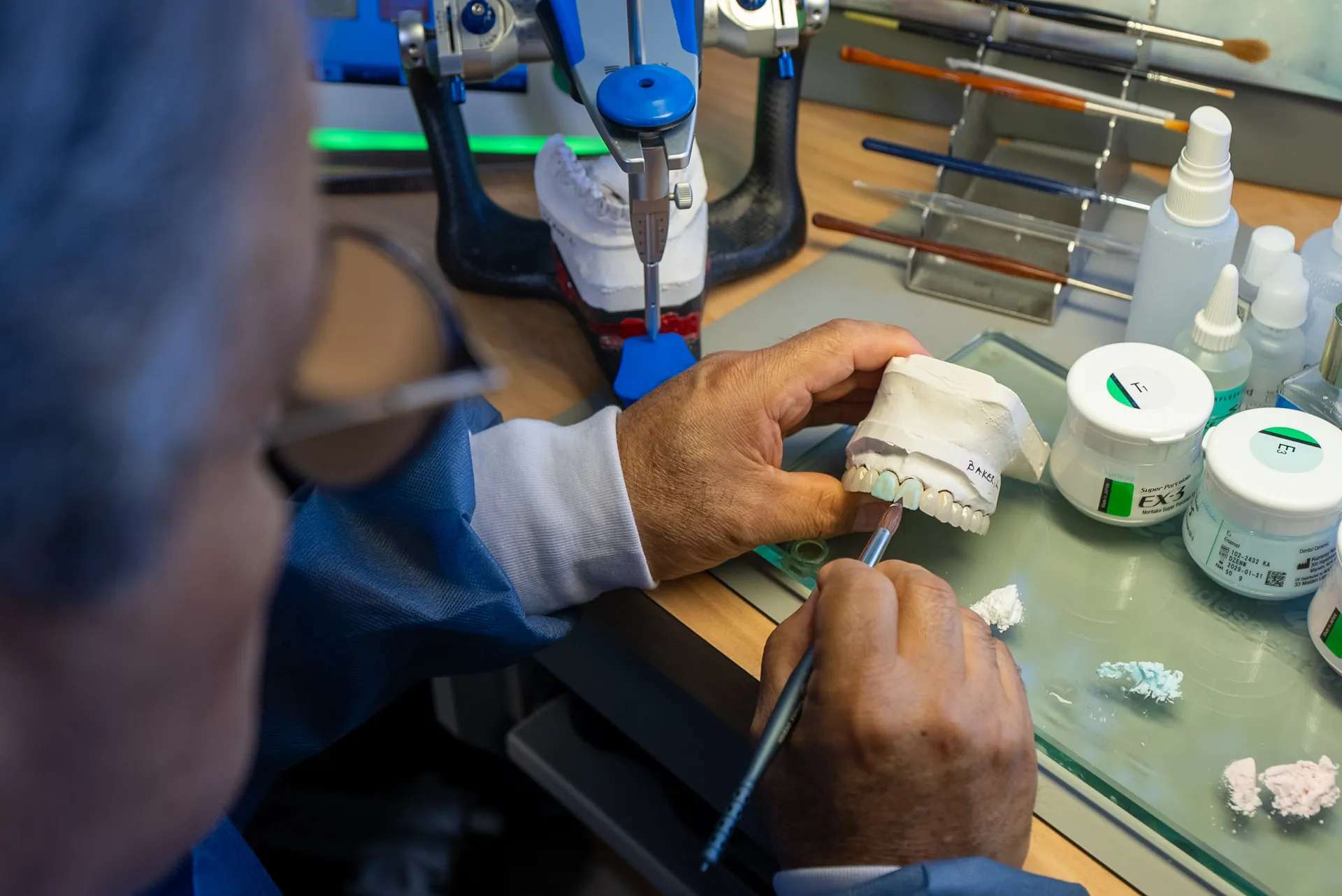
- Shade chosen with the technician. Translucency and surface texture matter as much as color. At Elite Prosthetic Dentistry, the ceramist works with the clinician directly, often with the patient present.
- Protection after delivery. Patients who clench or grind often need a night guard to protect the result.
Replacing Old or Failed Veneers
Many patients searching for a veneer dentist already have veneers. Composite veneers stain over time. A single porcelain veneer can stop matching its neighbor after the other teeth are whitened. Veneers that are too bulky at the gum line can keep the tissue inflamed. These problems are usually fixable, but the replacement should start with a fresh diagnosis rather than a copy of the old work. The pages on veneer discoloration, chipped or cracked veneers, veneer failure and repair, and cosmetic dentistry revision cover the common situations.
Questions to Ask Any Veneer Provider
For a fuller pre-consultation checklist, see what to know before your veneer consultation and what to look for in a cosmetic dentist in DC and Bethesda.
For a fuller pre-consultation checklist, see what to know before your veneer consultation and what to look for in a cosmetic dentist in DC and Bethesda.
- Are my teeth healthy enough for veneers, or would some of them do better with crowns or bonding?
- Will I see the planned result in a mockup or provisionals before my teeth are prepared?
- How much enamel will be removed, and from which teeth?
- How was the number of veneers decided?
- Who makes the veneers, and how is the shade chosen?
- What happens if one veneer chips or debonds later?
Who Tends to Be a Strong Fit Here
- Patients with older veneers or crowns on the front teeth that no longer look natural.
- Patients whose front teeth are worn, chipped, or previously restored, where veneers may or may not be the right answer.
- Smiles that need veneers on some teeth and crowns on others, with a perfect match between them.
- Patients with a gummy smile or uneven gum line, where gum correction has to be planned with the restorations. See who should fix a gummy smile.
When Simpler Care Makes More Sense
If your teeth are healthy and the concern is mild color, professional whitening may be enough. A single small chip is often best repaired with bonding by your general dentist. And if speed and a set package matter more to you than a diagnostic workup and a trial design, another cosmetic office may suit that priority better than this practice.
Front-Tooth Cases From Our Practice
Several of these patients came in asking for veneers. The evaluation decided what they actually received:
- Crowns chosen over veneers for four heavily filled front teeth
- Stained composite veneers replaced after whitening, with custom crowns from the in-house laboratory
- A single mismatched veneer replaced with an all-ceramic crown that matched its neighbor
- Poorly proportioned veneers and a gummy smile line corrected before a wedding
- Severely worn teeth rebuilt to restore the smile line
Related Decision Guides
- Prosthodontist vs. Cosmetic Dentist for Complex Smile Reconstruction
- How to Find the Best Dentist for Crowns
- Who Should Fix a Gummy Smile?
Request a Veneer Consultation
If you are considering veneers or replacing veneers you already have, the first visit should tell you whether veneers are the right answer. Request a consultation or call (202) 244-2101. No pressure. Clear answers. A defined plan.
Your Best Smile Is Within Reach
Request a specialist consultation with Dr. Marlin to discuss your situation and the most appropriate path forward.
Frequently Asked Questions
How do I find the best dentist for veneers near me?
Look past the before-and-after gallery. Ask how the dentist decides whether veneers are right for your teeth, whether you will see a mockup or provisionals before any enamel is removed, who makes the veneers, and how the bite is checked. A dentist who sometimes recommends crowns, bonding, or whitening instead is usually a good sign.
Are veneers reversible?
Porcelain veneers usually require removing a thin layer of enamel, so in most cases they are a long-term commitment rather than a reversible choice. That is the main reason to test the planned design in a mockup or provisionals before any tooth is prepared.
How do I know whether I need veneers or crowns?
Veneers suit teeth that are structurally sound and need a change in color, shape, or proportion. Teeth with large fillings, cracks, or a root canal usually need the full coverage of a crown. Sometimes the answer is a mix of both on neighboring teeth, which then have to match each other exactly.
Can old or failed veneers be replaced?
Yes. Composite veneers that have stained, porcelain veneers that chipped or no longer match, and veneers that irritate the gums can all be replaced. Replacement starts with the same questions as the first time: what is underneath, how the bite works, and whether veneers are still the right restoration.
How many veneers will I need?
That depends on how wide your smile is and what you want to change, and it should be decided after an examination and a design, not before. Some patients need one or two; others need the full width of the visible smile so color and proportion stay consistent.
Related Patient Success Stories
Explore similar patient success stories demonstrating our expertise in advanced prosthetic dentistry.
 Before
  After
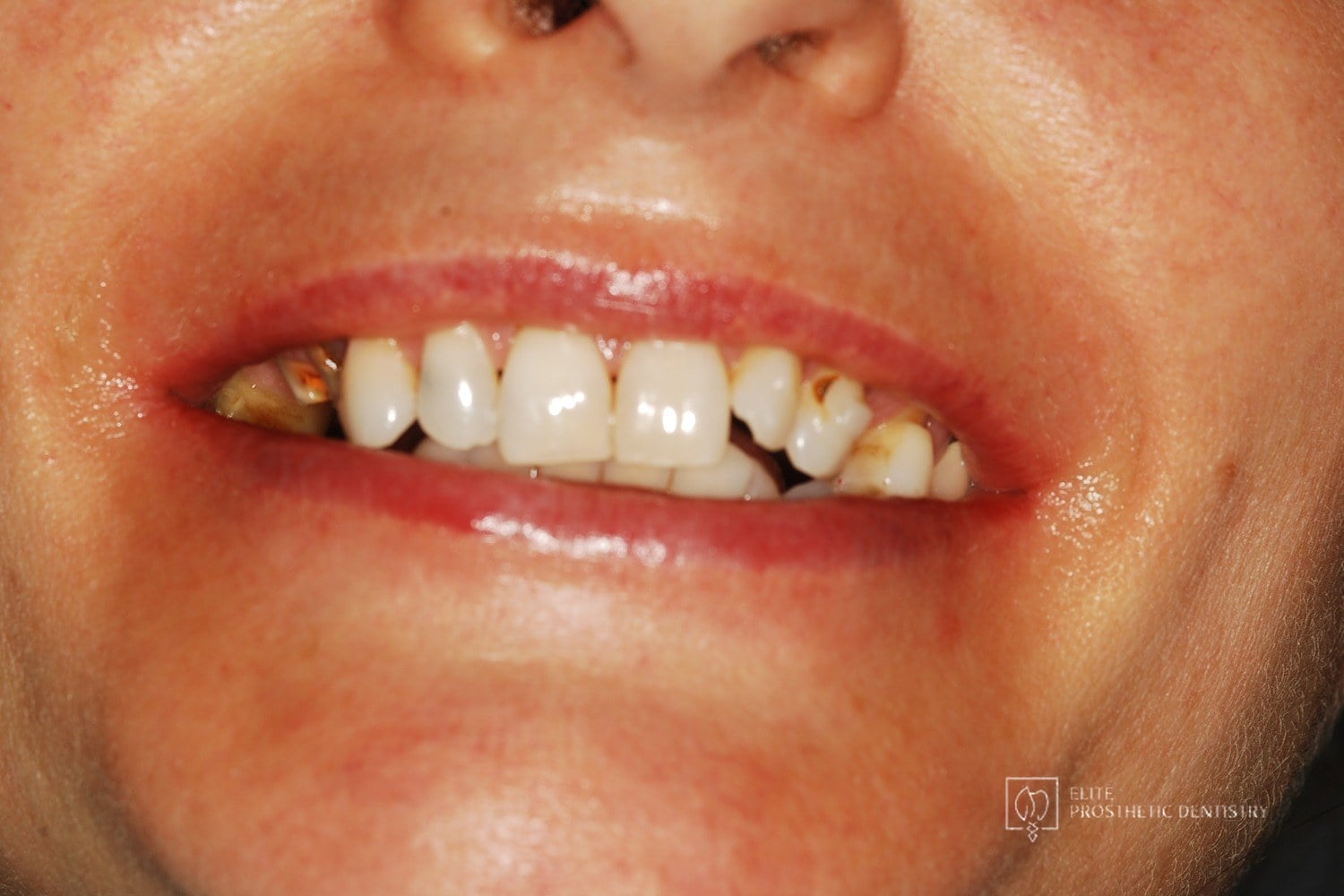
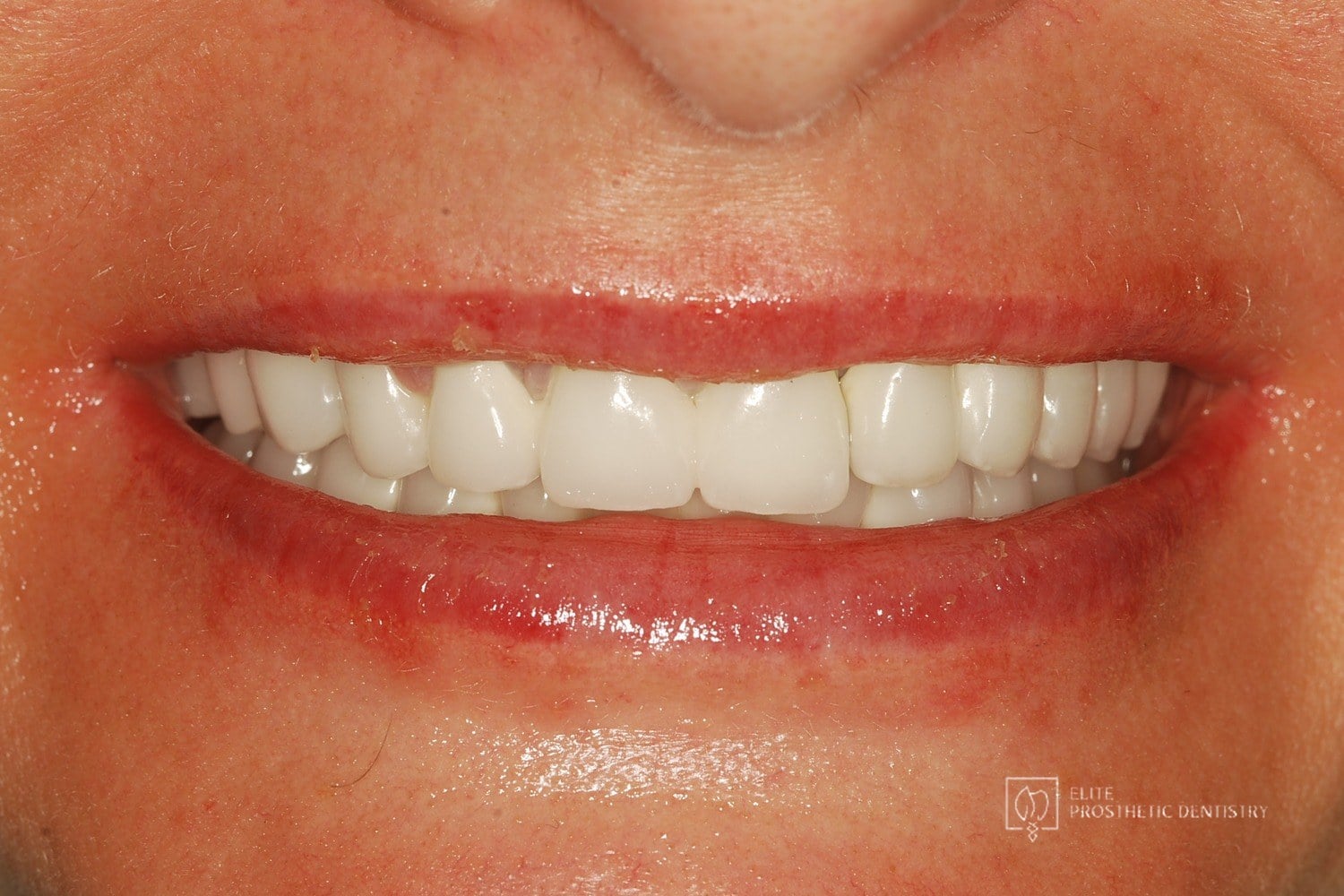
After How Aging, Failing Dentistry Was Replaced with a Coordinated Full-Mouth Implant and Crown Reconstruction
The patient presented with throbbing upper-molar pain, long-standing infections, multiple root canals and unfinished prior treatment, generalized sensitivity, and several hopeless teeth.
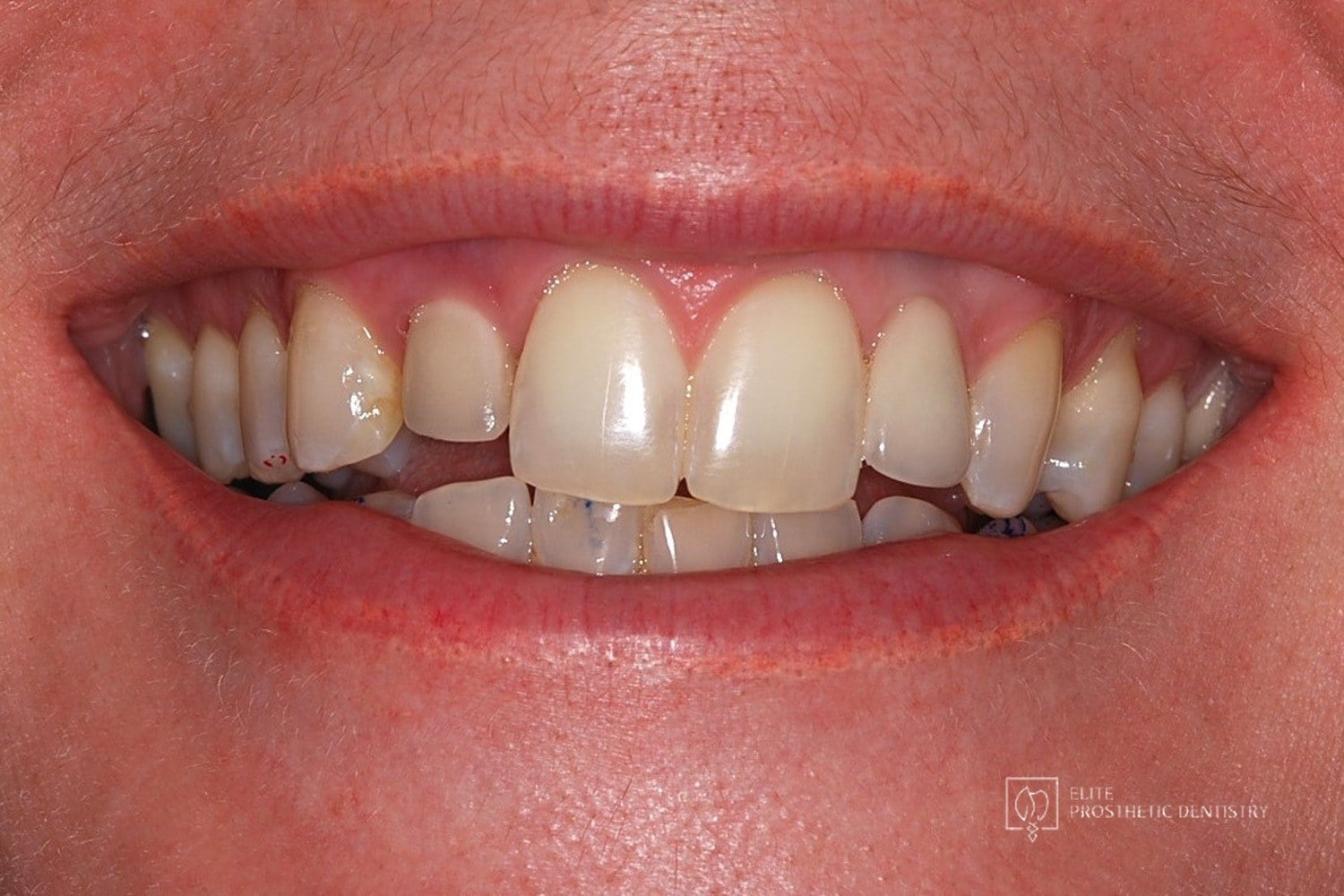 Before
 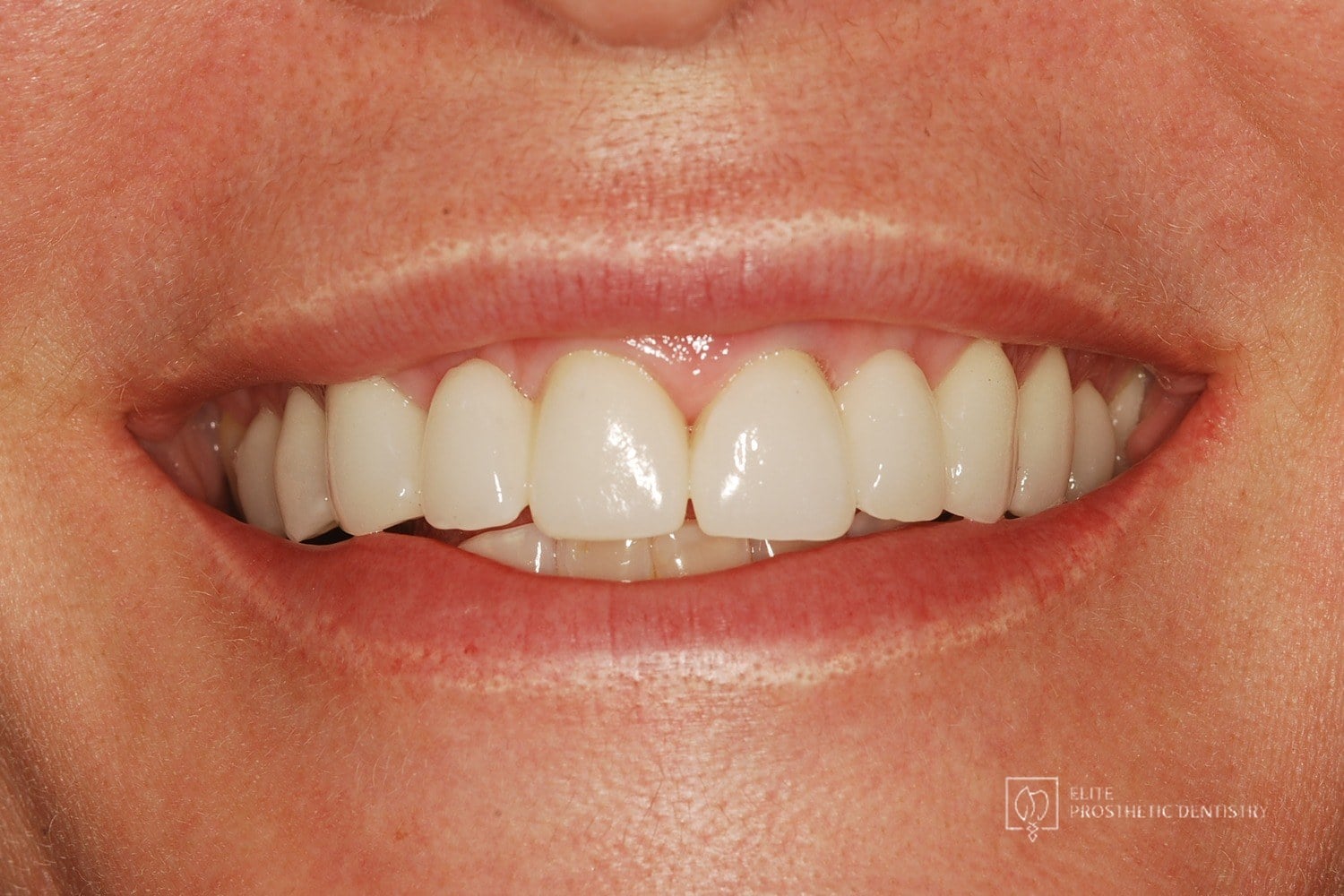 After
After How Failing Lateral Incisor Implants Were Replaced with Custom Zirconia Bridges After Severe Bone Loss Made Replacement Implants Impossible
Comprehensive examination including CBCT imaging revealed significant bone loss surrounding implants that were placed outside the buccal plate, most likely due to placement without a CBCT-generated surgical guide. The implants were determined non-salvageable, and the alveolar ridge was too narrow to support replacement implants without extensive reconstruction.
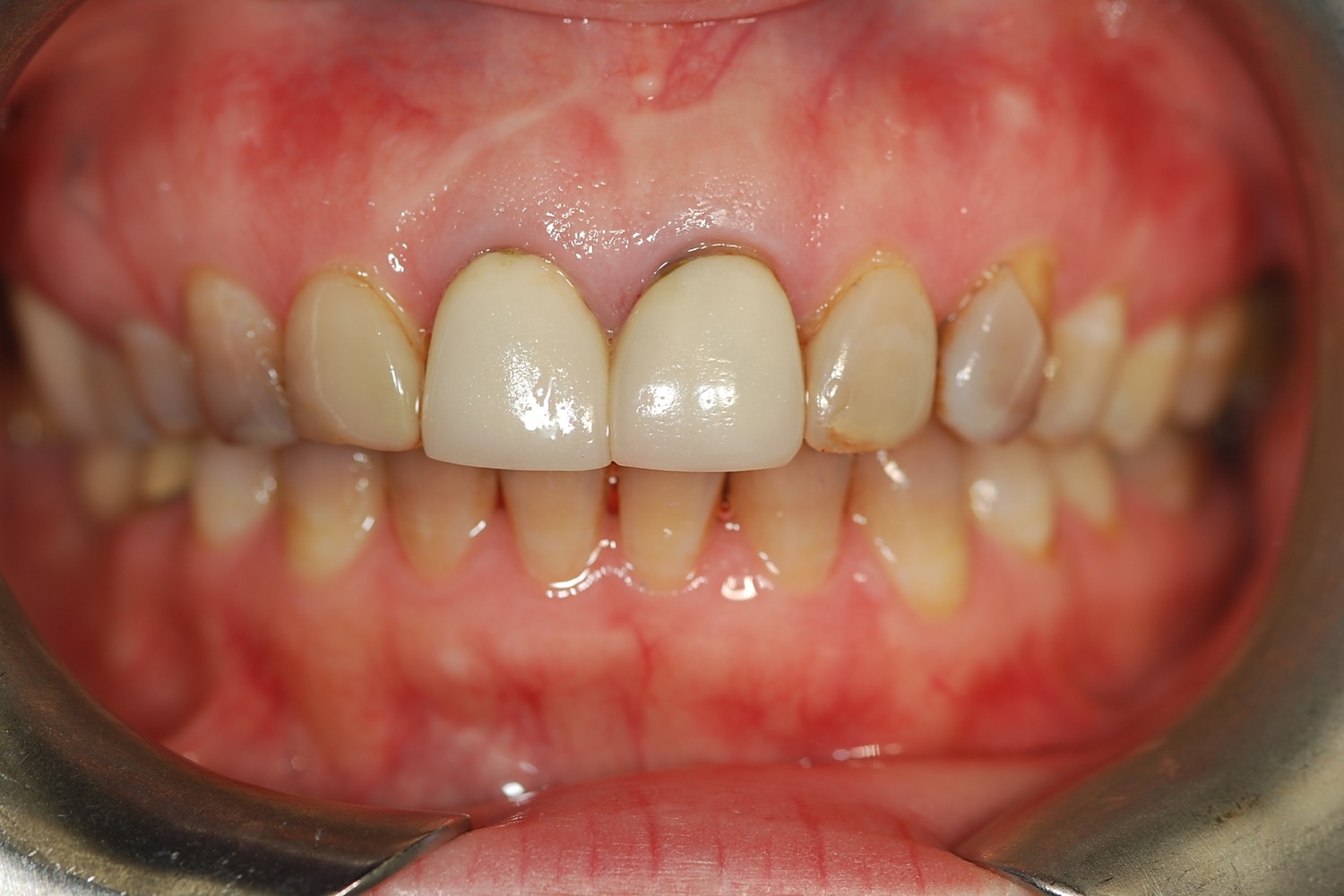 Before
 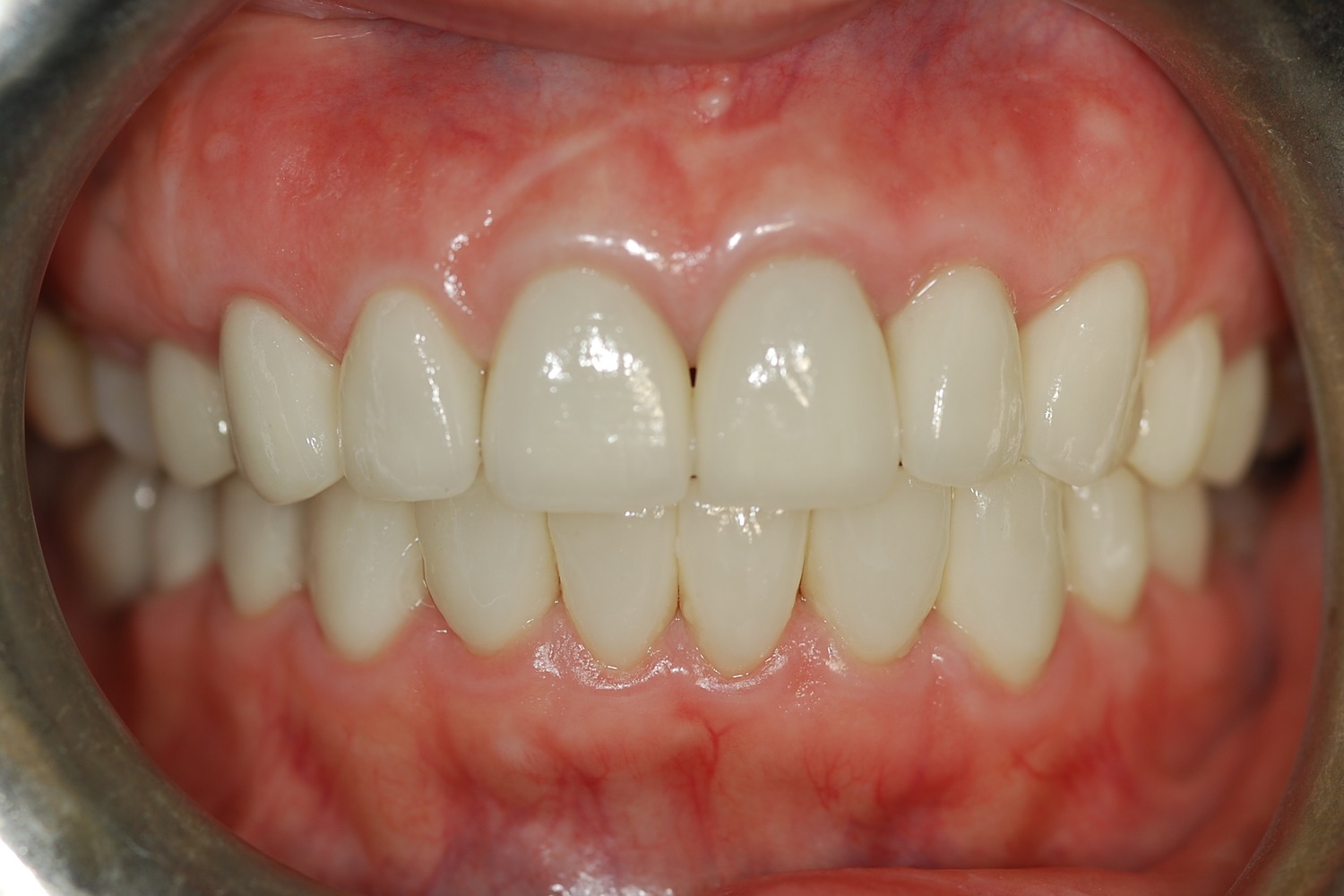 After
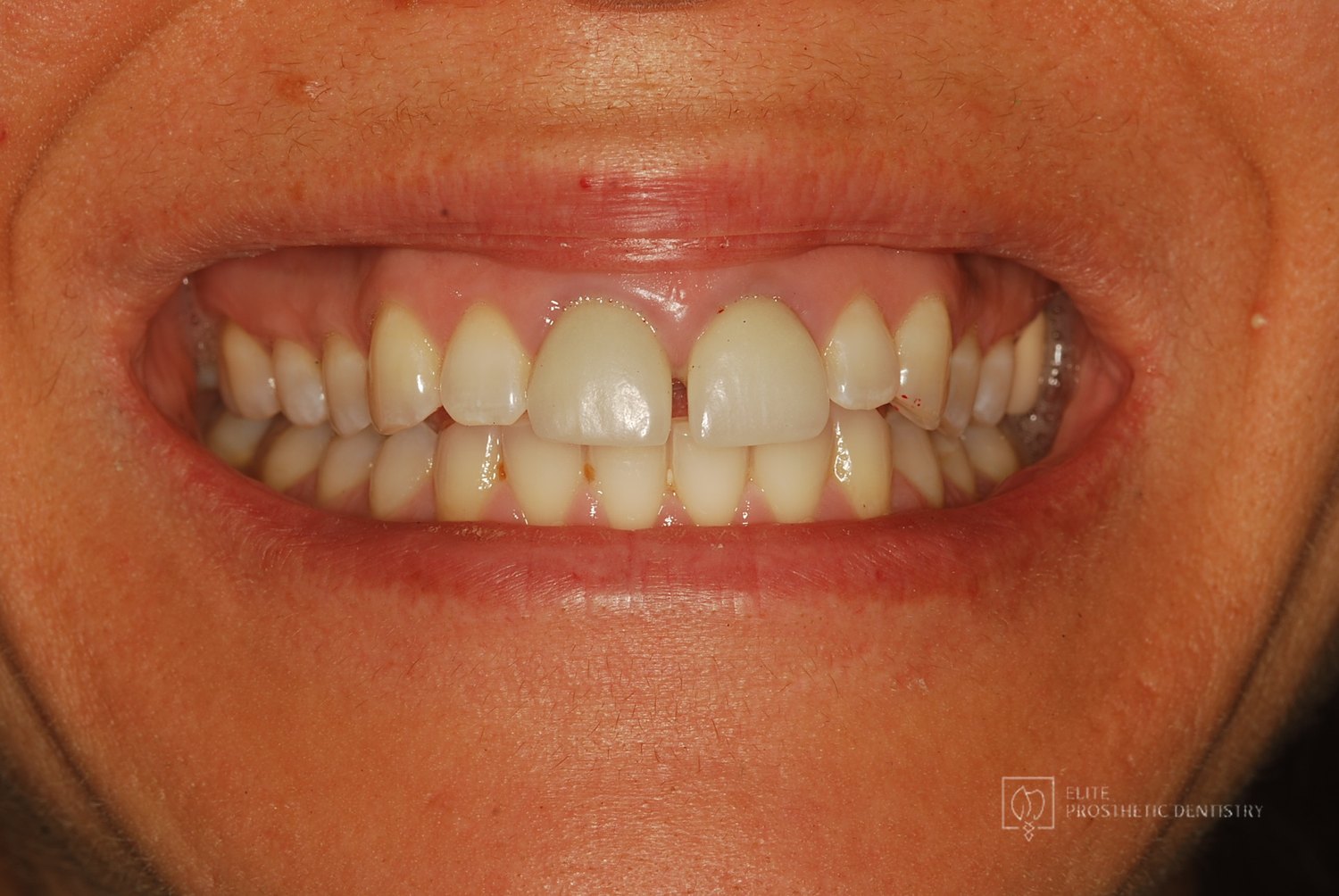
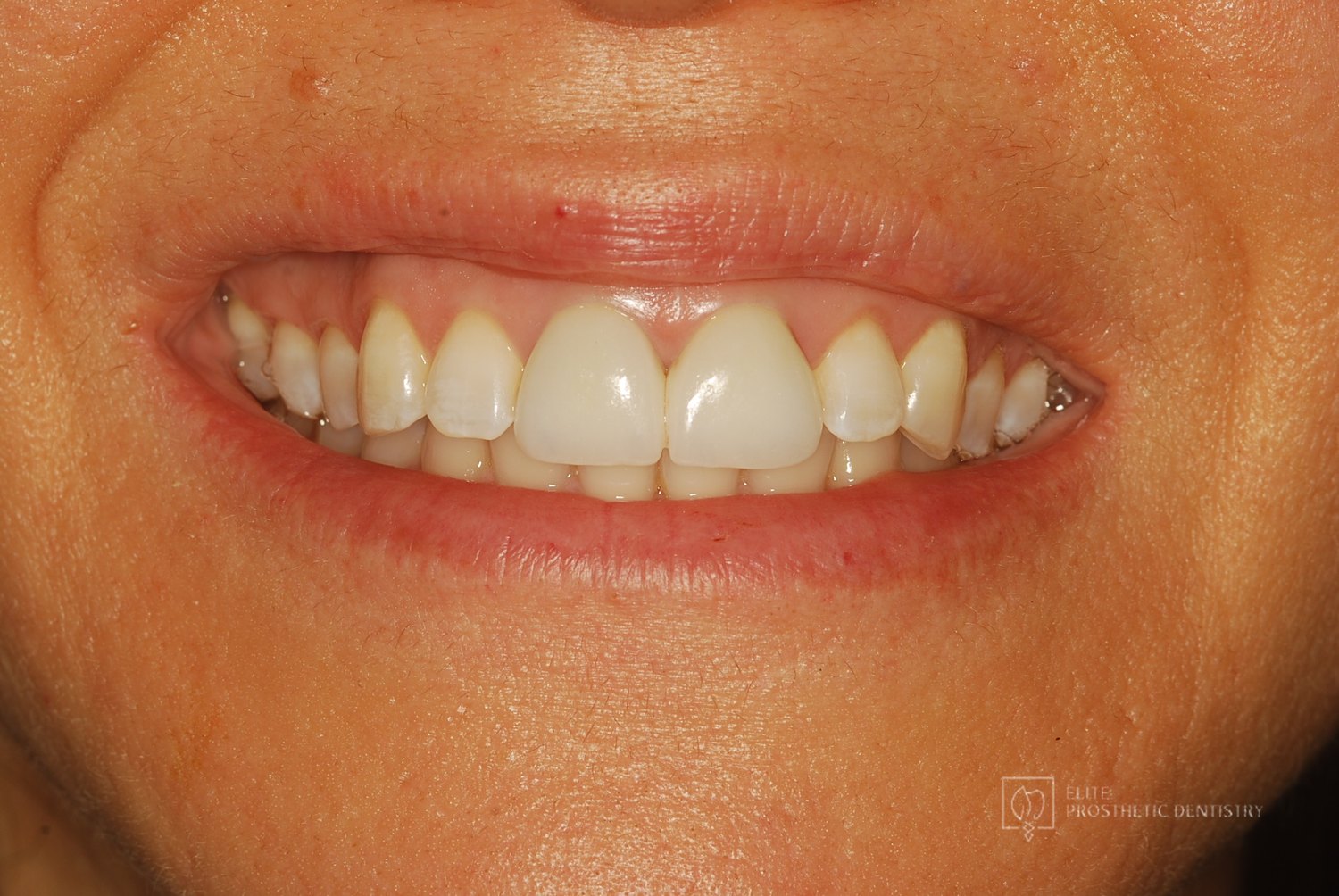
After How Aging, Opaque Restorations Were Replaced with Customized Ceramic Restorations Designed for Long-Term Natural Esthetics
The existing restorations appeared opaque, worn, and unnatural over time, affecting both confidence and overall smile harmony.
 Before
  After
After Two Front Teeth Saved From Extraction: A Second Opinion, Custom Gold Posts, and Crowns Made to Last
Two upper central incisors with failed root canal treatment and recurrent decay had been recommended for extraction and implant replacement. A CBCT evaluation showed that removing the roots from their thin facial bone housing could create a visible esthetic defect in the gum and bone contour, made worse by the patient's high lip line.

Temporary Crowns Restore a Patient's Smile in One Day with an Immediate Smile Makeover
A patient from Potomac, Maryland came to the practice in pain from a failing dental implant whose restoration was also compromising her appearance and her confidence.
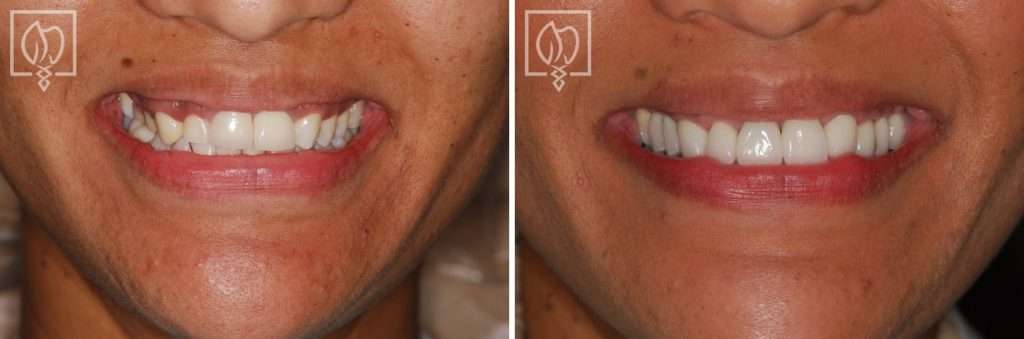
Multi-Faceted Treatment for a Patient Unhappy With the Appearance of Her Crowns, Teeth, and Gums
The patient was unhappy with how her teeth and gums affected her smile: front-tooth crowns that no longer blended with her natural teeth, a missing lateral incisor with the larger canine sitting in its space, and an uneven gum line.
Related Services
Related Articles
Deepen your knowledge with additional insights on this topic.
Choosing a Prosthodontist The Patient's Guide to Implant, Cosmetic and Restorative Dentistry
How to judge quality in implant, cosmetic, and restorative dentistry: choosing a practitioner, why the lab matters, financing, and the questions to ask.
 Choosing a Prosthodontist
 What is a Prosthodontist?
A prosthodontist is a dental specialist with advanced training in crowns, implants, dentures, and complex restorations. Washington, DC specialist.
 Choosing a Prosthodontist
 4 Ways You Can Benefit from Our In-House Dental Lab
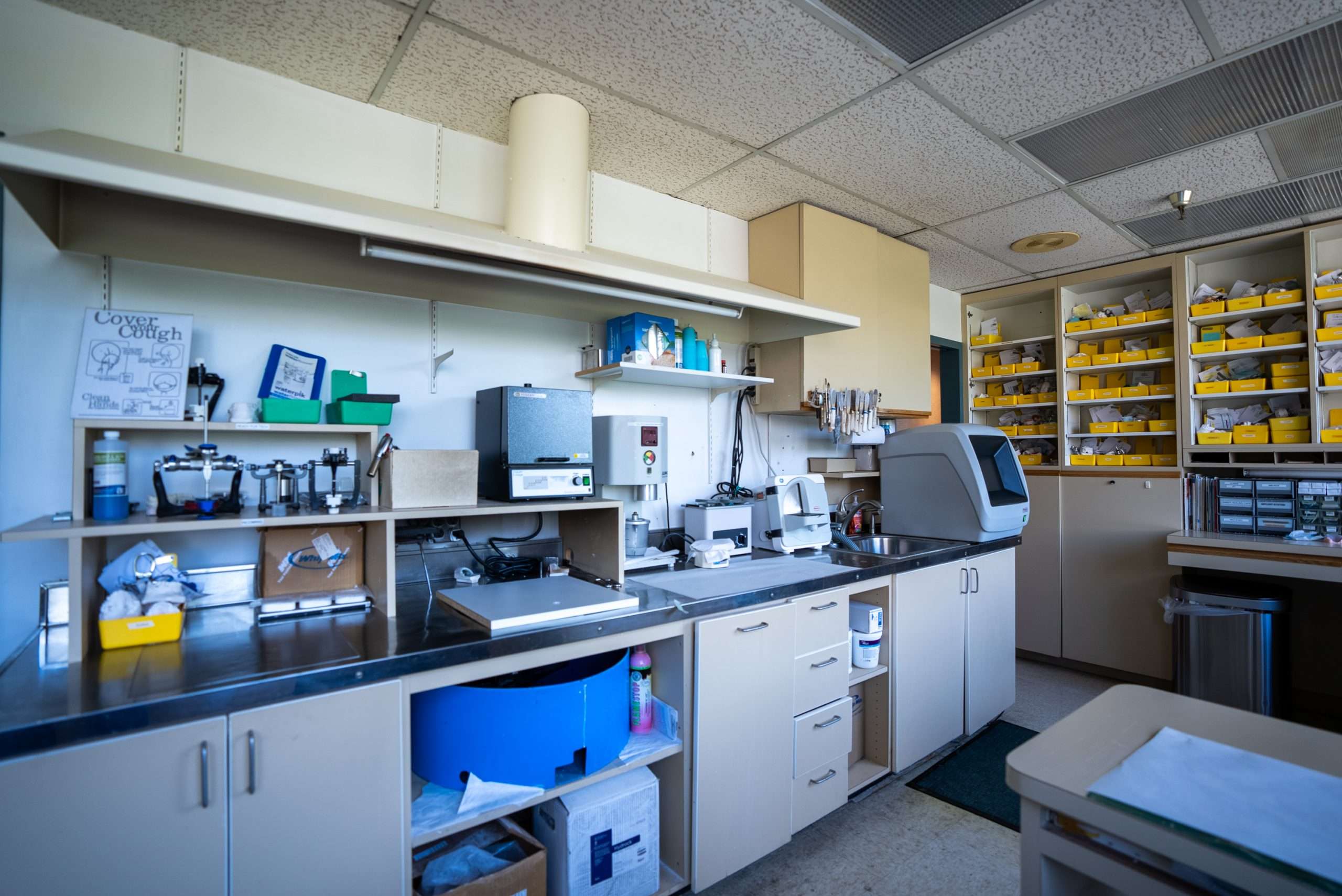
Custom aesthetics, precision fit, shorter waits, and fast repairs: four ways an in-house dental laboratory changes both your experience and your results.
 Choosing a Prosthodontist
 What Is the Difference Between a Dentist and a Prosthodontist?
Every prosthodontist is a dentist, but with years of extra specialty training in restoring and replacing teeth. A DC prosthodontist explains who does what.
 Choosing a Prosthodontist
 Don't Wait 'Til It's Too Late: Start with a Virtual Dental Consultation
A virtual consultation is a convenient first step: discuss your concerns, share records, and hear options from a DC prosthodontist before an in-person exam.
 Choosing a Prosthodontist
 Emergency Dentistry: The Benefits of an In-House Laboratory
When a tooth or restoration breaks, an on-site dental lab can mean a natural-looking repair in a day instead of a week. How emergency fabrication works in DC.
Ready to Transform Your Smile?
With 40+ years of experience and 3,900+ dental implants placed, Dr. Marlin and the team deliver dentistry planned to last. Request a specialist consultation.