
Prosthodontist vs. Cosmetic Dentist for Complex Smile Reconstruction
When should cosmetic dentistry be handled as cosmetic-functional reconstruction? How to decide between a cosmetic dentist and a prosthodontist when crowns, veneers, implants, bite, and longevity must be planned together.
If your smile concern involves a single stable tooth, many providers can help. If it involves older crowns, multiple veneers, worn or broken teeth, implants, or a bite that is contributing to the damage, the esthetic plan must also be a functional plan. That is when a specialty-trained prosthodontist becomes the appropriate choice for smile reconstruction.
Cosmetic dentistry is a real patient need and a real search category. Patients often want teeth that look natural, fit the face, improve the smile, and feel comfortable. The important distinction is that complex cosmetic dentistry should not be planned as appearance alone. When crowns, veneers, old restorations, worn teeth, implants, bite relationships, or gum contours are involved, the cosmetic result depends on function, materials, tooth position, laboratory execution, and long-term stability.
When Cosmetic Dentistry Is Straightforward
Some cosmetic concerns are limited and can be treated predictably with conservative dentistry. A minor bonding repair, a whitening decision, or an isolated veneer case may not require comprehensive prosthodontic planning if the bite, tooth structure, and surrounding dentistry are stable.
When Cosmetic Dentistry Becomes Cosmetic-Functional Reconstruction
The situation changes when the patient has older crowns, multiple veneers, worn teeth, implants, missing teeth, a tight bite, uneven gum display, artificial-looking restorations, or a history of dental work that has not held up. In those cases, the smile cannot be separated from the bite and the supporting structures. The esthetic plan must also be a functional plan.
What Patients Should Evaluate Before Choosing a Provider
- Will the provider evaluate the bite before recommending veneers or crowns?
- Will the plan preserve natural teeth where appropriate?
- Will material selection be based on strength, esthetics, thickness, tooth color, and function?
- Will the laboratory be involved in shade, contour, texture, translucency, and fit?
- Will temporary restorations be used when needed to test the shape, smile line, and bite?
- Will the final result be designed to look natural and function predictably over time?
How Elite Prosthetic Dentistry Frames Cosmetic Care
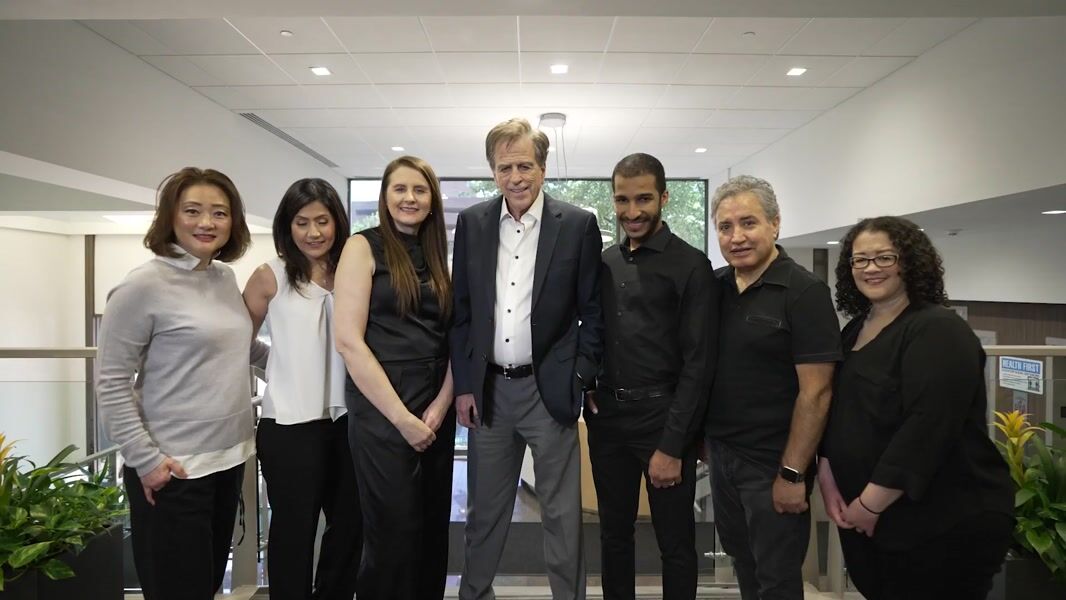
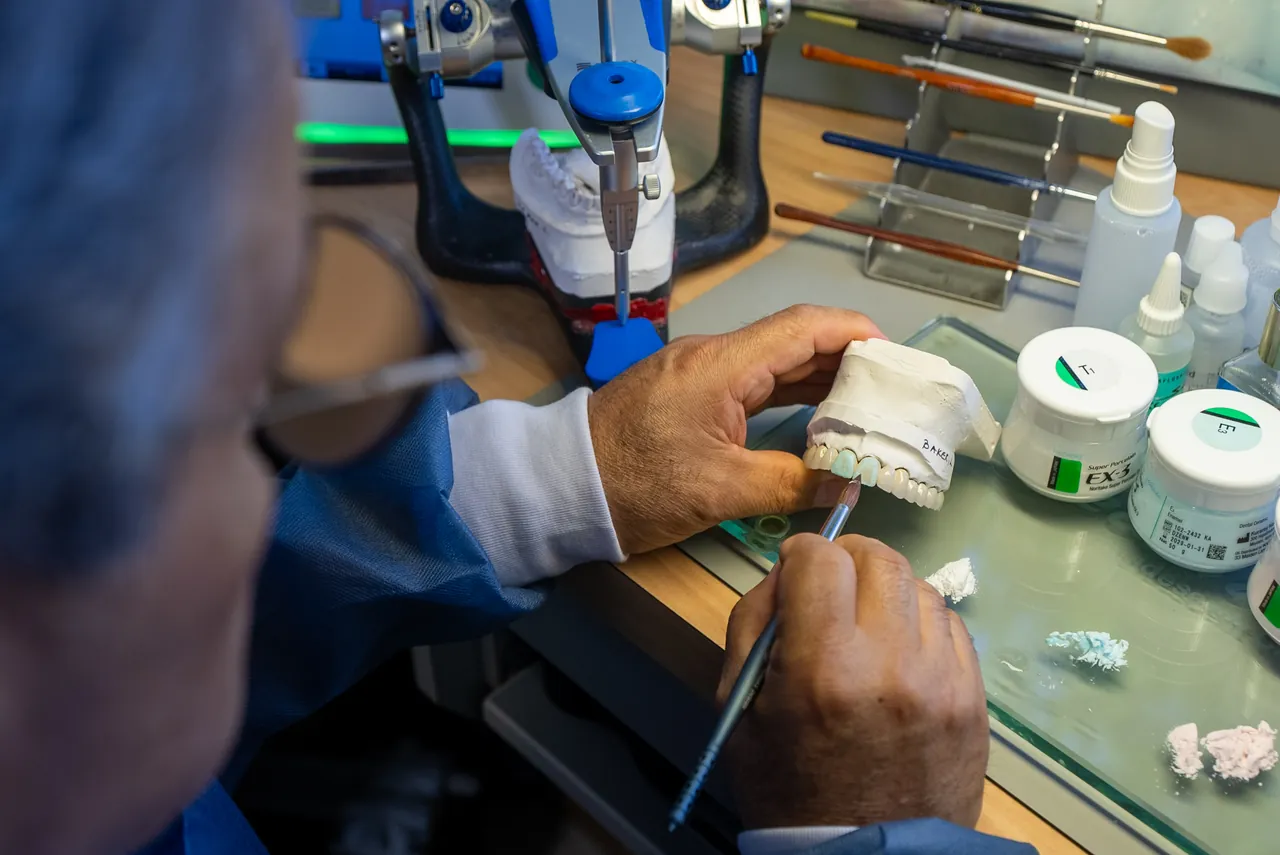
At Elite Prosthetic Dentistry, cosmetic treatment is planned within a restorative and functional framework. That means esthetics are not treated as superficial. Shape, color, translucency, facial balance, bite, materials, implant position, crown margins, gum architecture, and long-term function are considered together. The in-house laboratory gives the clinical team the ability to coordinate details that often determine whether the final result looks natural rather than artificial.
Many patients simply want dentistry that looks natural, functions properly, and lasts. That is the standard the cosmetic-functional approach is built around.
When Elite Prosthetic Dentistry May Be a Strong Fit
- You want crowns, veneers, or implant crowns that look natural rather than overdone.
- You have old cosmetic dentistry that no longer looks right or feels stable.
- Your bite is tight, worn, uncomfortable, or has contributed to chipping and breakage.
- You need several front teeth restored and want the color, shape, contour, and function coordinated.
- You want cosmetic improvement but do not want treatment that ignores long-term function.
When Another Setting May Be More Appropriate
- You are seeking quick cosmetic enhancement without diagnostic planning.
- Your concern is limited to simple whitening or minor cosmetic bonding.
- You are looking primarily for a low-cost cosmetic offer or promotional smile makeover.
Representative Cases
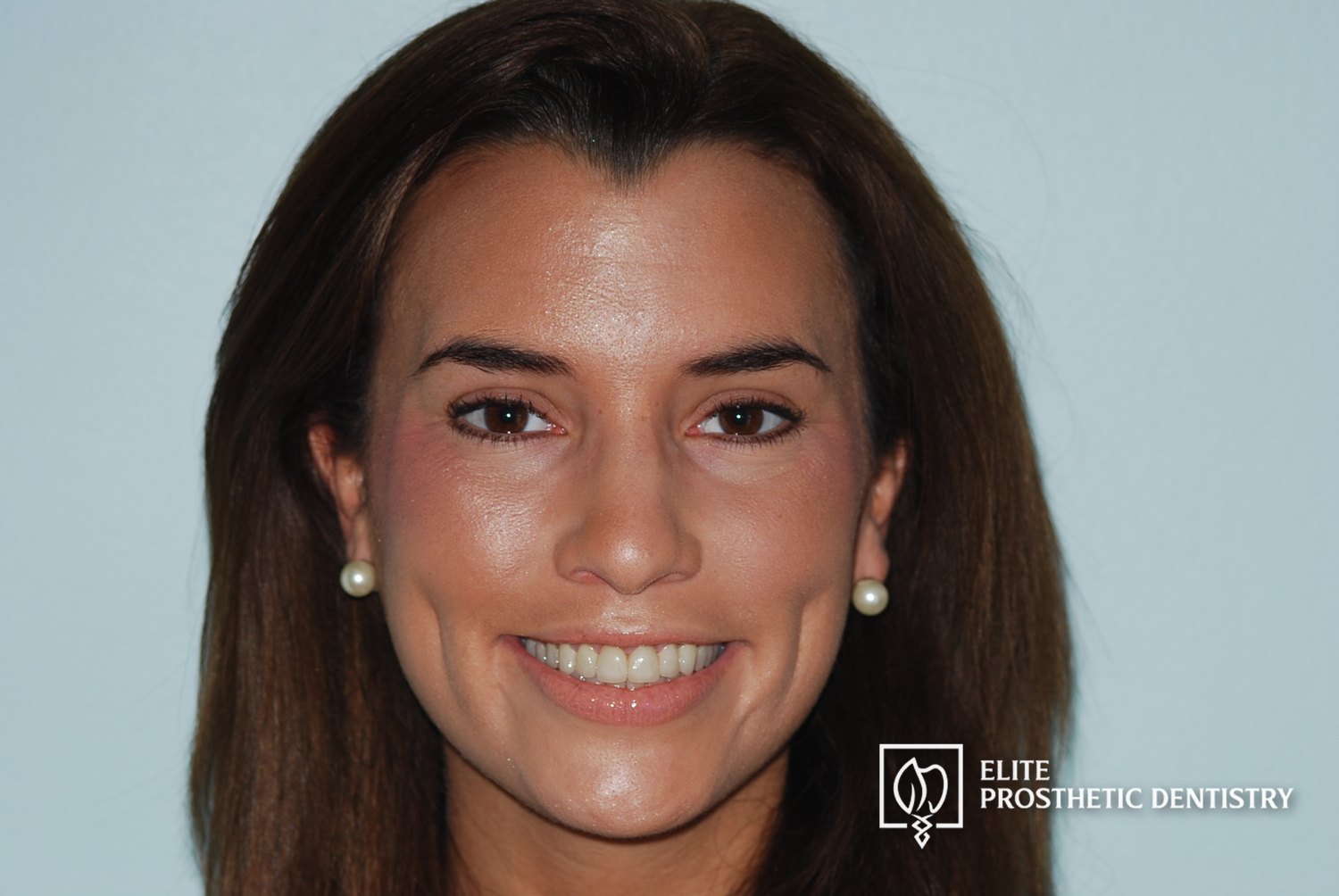
These documented cases show cosmetic results built on functional planning:
- A more natural look: two front tooth crowns redesigned with lifelike translucency
- An esthetic correction: choosing crowns over veneers for four front teeth
- Great esthetics with an in-house laboratory: matching a single front tooth
- Multi-faceted treatment for a patient unhappy with artificial-looking crowns, teeth, and gums
More are collected in the Complex Cosmetic + Functional Rehabilitation success story hub.
Related Decision Guides
- How to Find the Best Veneer Dentist in Washington, DC
- Who Should Fix a Gummy Smile?
- General Dentist vs. Prosthodontist for Aging Crowns, Bridges, and Implant Restorations
- How to Choose a Prosthodontist for Full Mouth Reconstruction in Washington, DC
- When to Seek a Second Opinion Before Dental Implants, Extraction, or Major Treatment
Request a Cosmetic-Functional Restorative Evaluation
The goal is not a generic smile. The goal is a natural-looking result planned around your teeth, bite, face, and long-term function. Request an evaluation or call (202) 244-2101. No pressure. Clear answers. A defined plan.
Your Best Smile Is Within Reach
Request a specialist consultation with Dr. Marlin to discuss your situation and the most appropriate path forward.
Frequently Asked Questions
Is a prosthodontist the same as a cosmetic dentist?
No. Cosmetic dentistry is a service category, while prosthodontics is a dental specialty focused on restoring and replacing teeth. A prosthodontist may provide cosmetic treatment, but approaches it through diagnosis, function, materials, bite, and long-term restorative planning.
When should cosmetic dentistry involve bite analysis?
Bite analysis is important when teeth are worn, chipped, tight, crowded, heavily restored, or repeatedly breaking. Ignoring the bite can compromise the longevity of veneers, crowns, and other cosmetic restorations.
Can crowns and veneers look natural?
Yes, when tooth shape, color, translucency, texture, smile line, gum contours, and bite are coordinated carefully with the laboratory. That coordination is the difference between dentistry that reads as teeth and dentistry that reads as dental work.
What is cosmetic-functional dentistry?
Cosmetic-functional dentistry means improving appearance while also respecting function, tooth support, bite stability, material strength, and long-term maintenance. The esthetic plan and the functional plan are designed as one.
Related Patient Success Stories
Explore similar patient success stories demonstrating our expertise in advanced prosthetic dentistry.
 Before
 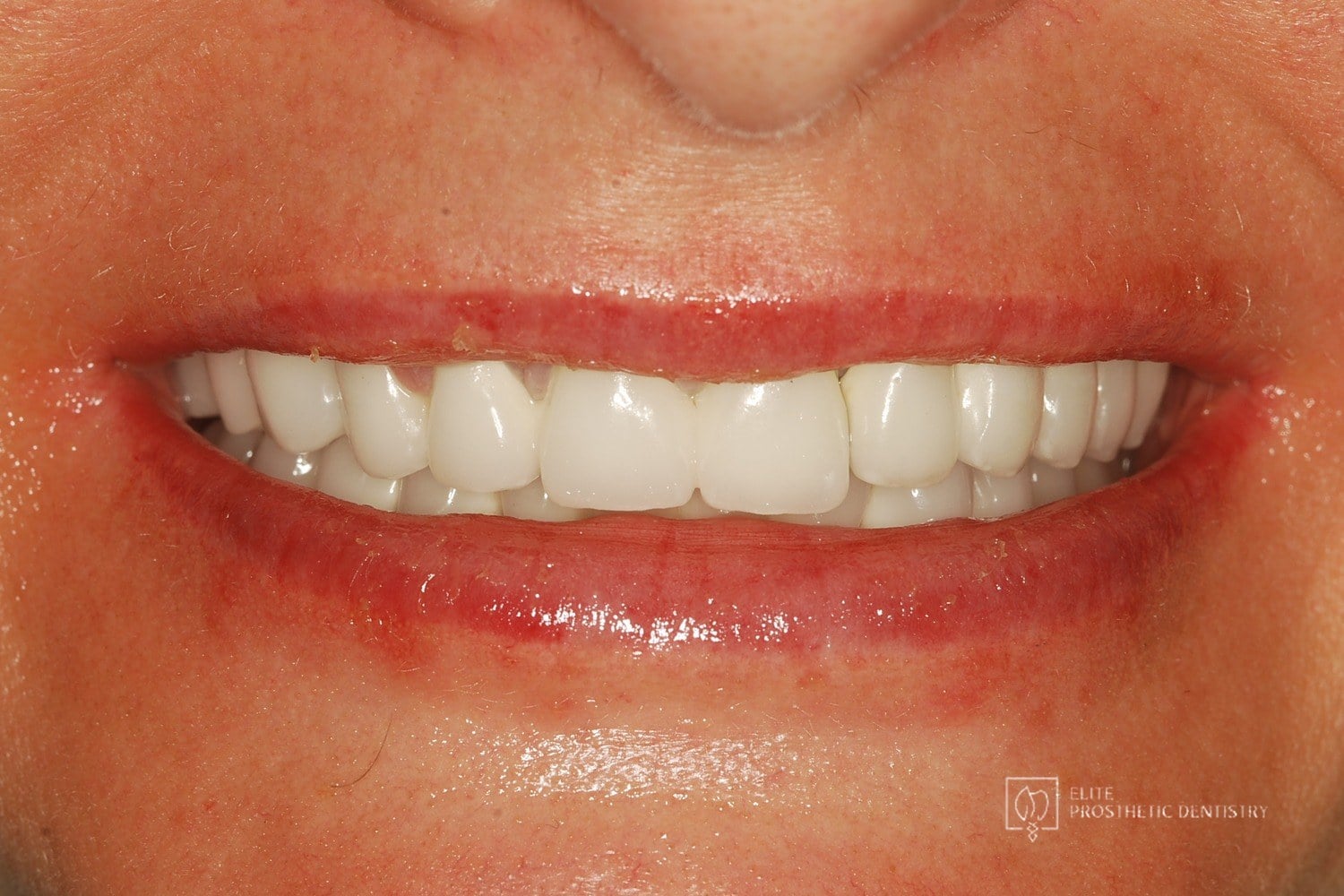 After
After How Aging, Failing Dentistry Was Replaced with a Coordinated Full-Mouth Implant and Crown Reconstruction
The patient presented with throbbing upper-molar pain, long-standing infections, multiple root canals and unfinished prior treatment, generalized sensitivity, and several hopeless teeth.
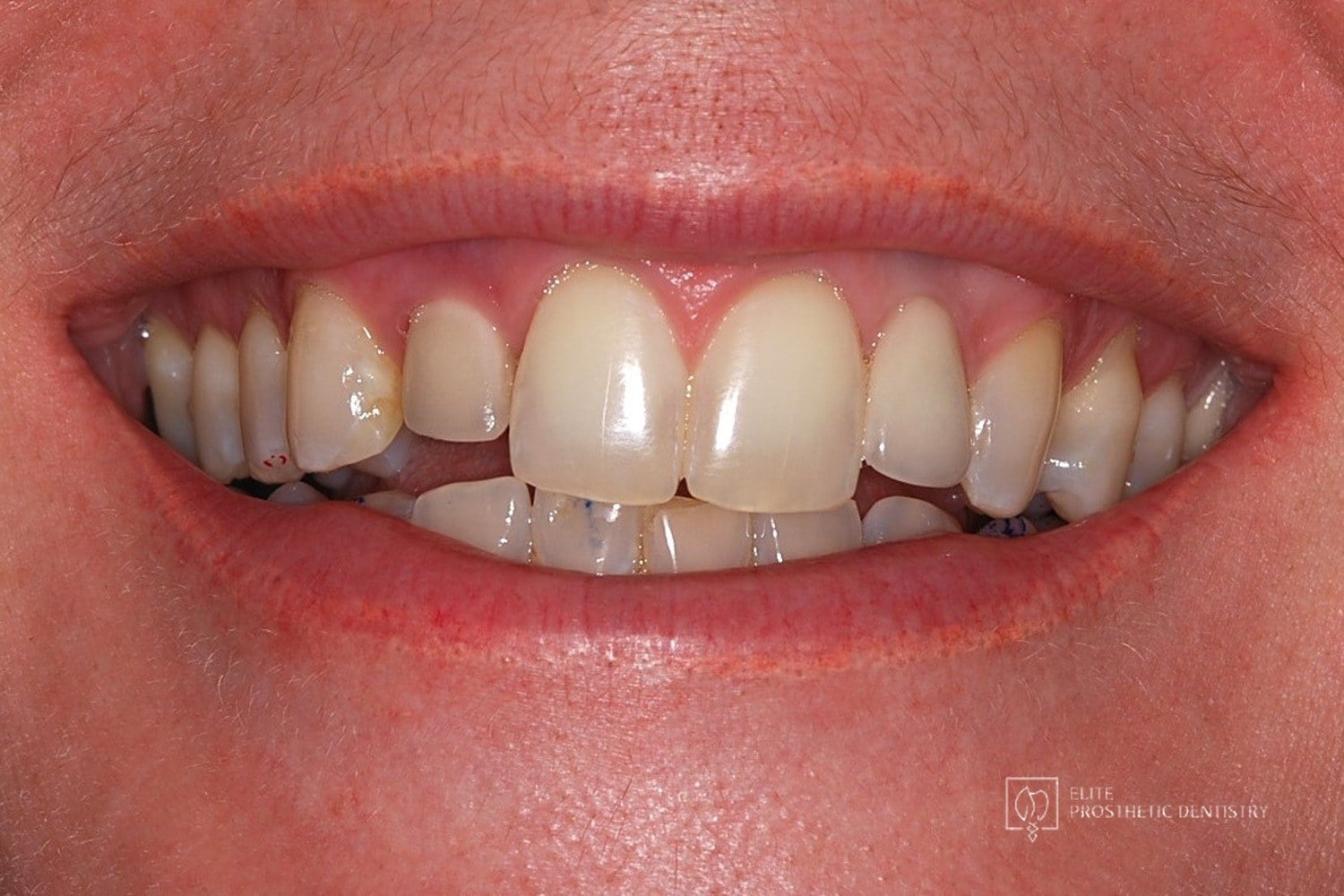 Before
  After
After How Failing Lateral Incisor Implants Were Replaced with Custom Zirconia Bridges After Severe Bone Loss Made Replacement Implants Impossible
Comprehensive examination including CBCT imaging revealed significant bone loss surrounding implants that were placed outside the buccal plate, most likely due to placement without a CBCT-generated surgical guide. The implants were determined non-salvageable, and the alveolar ridge was too narrow to support replacement implants without extensive reconstruction.
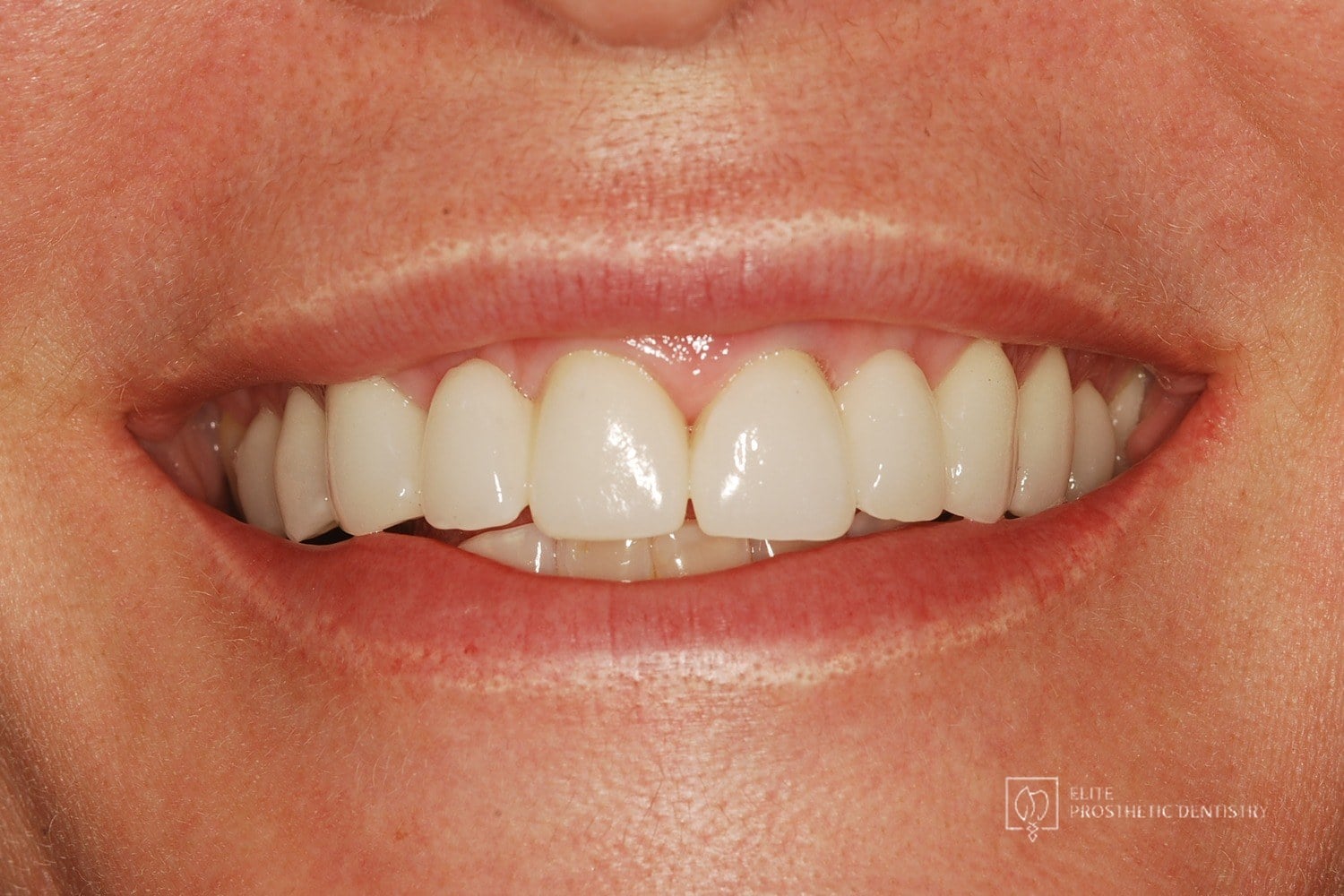
 Before
  After
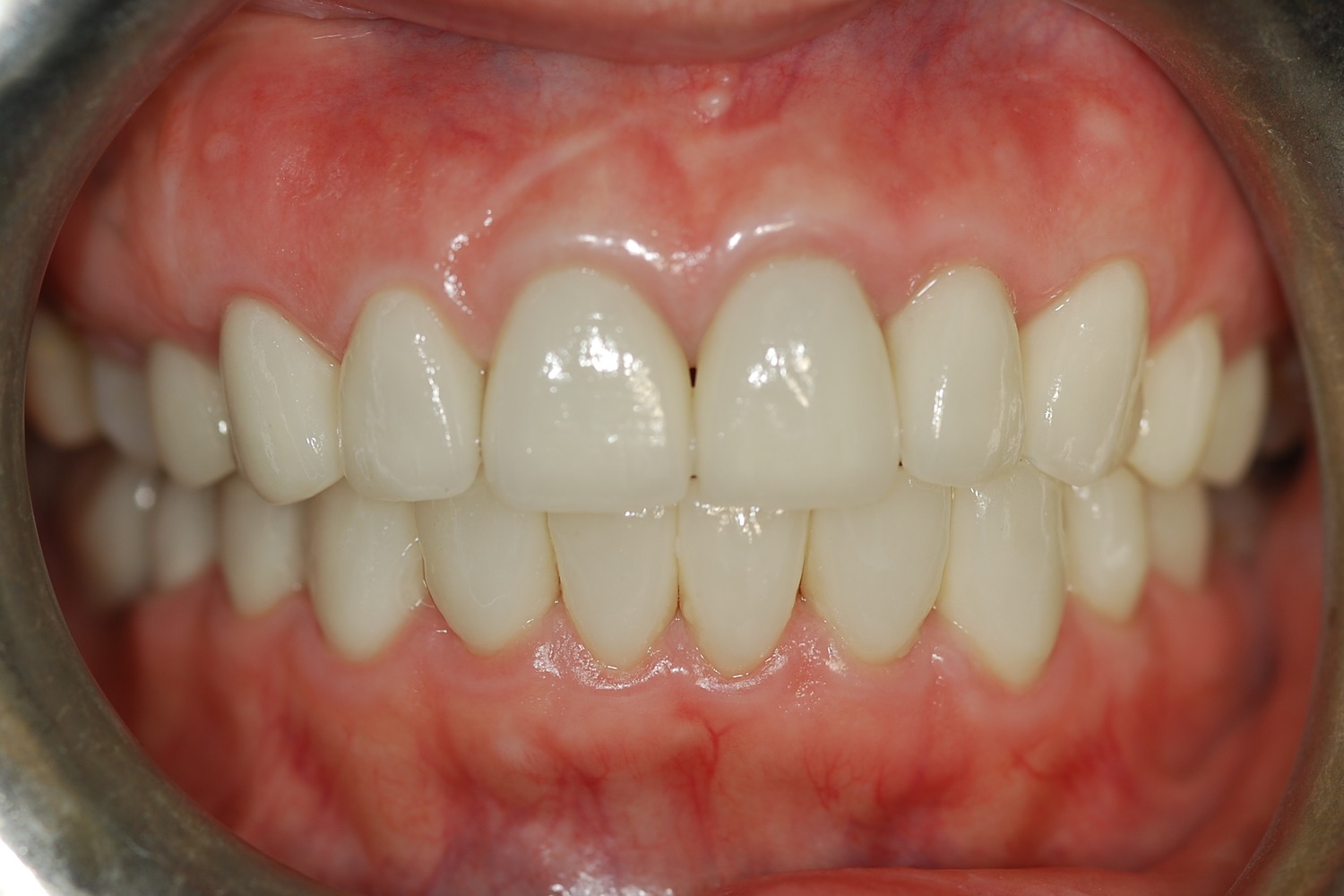
After How Aging, Opaque Restorations Were Replaced with Customized Ceramic Restorations Designed for Long-Term Natural Esthetics
The existing restorations appeared opaque, worn, and unnatural over time, affecting both confidence and overall smile harmony.
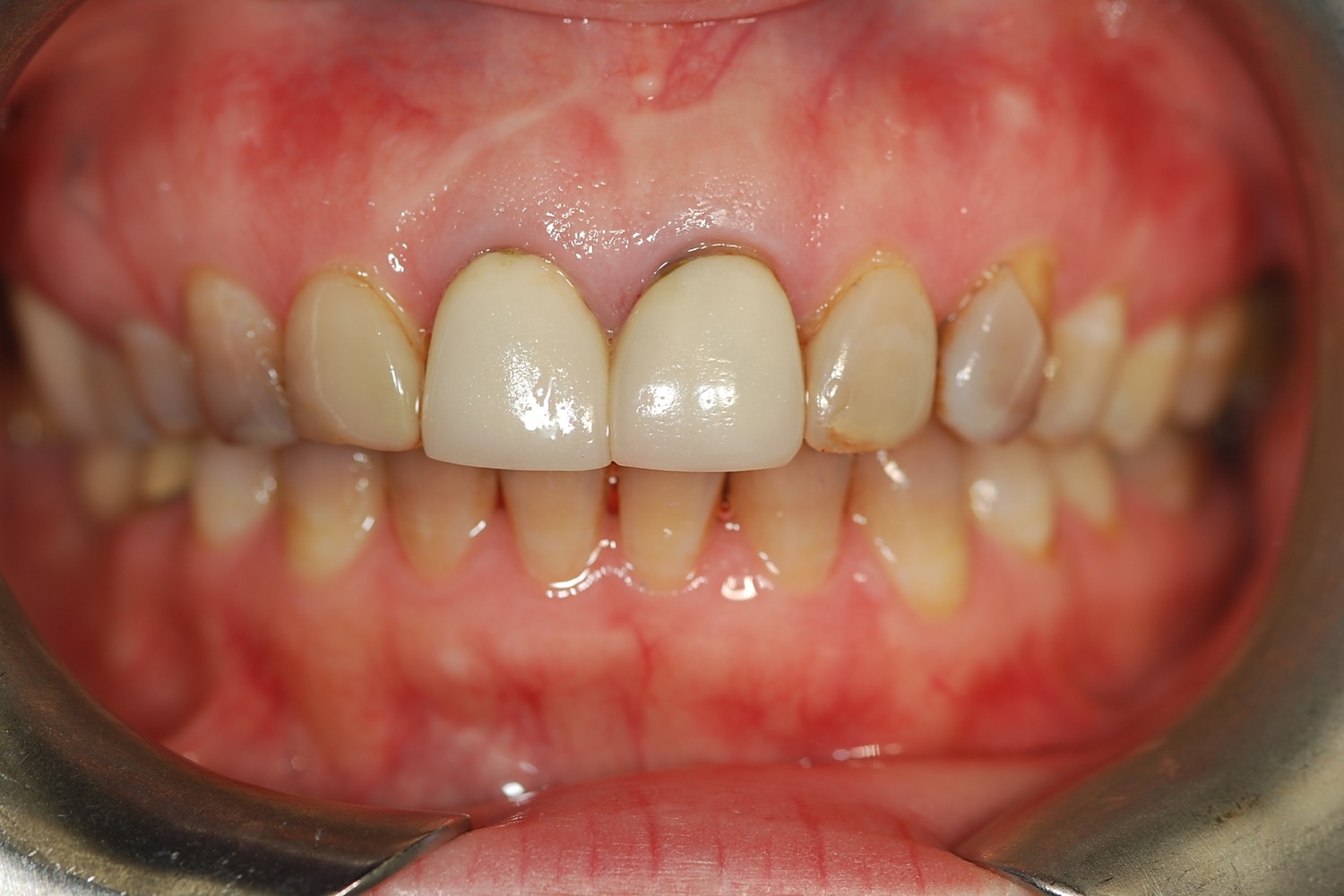
 Before
  After
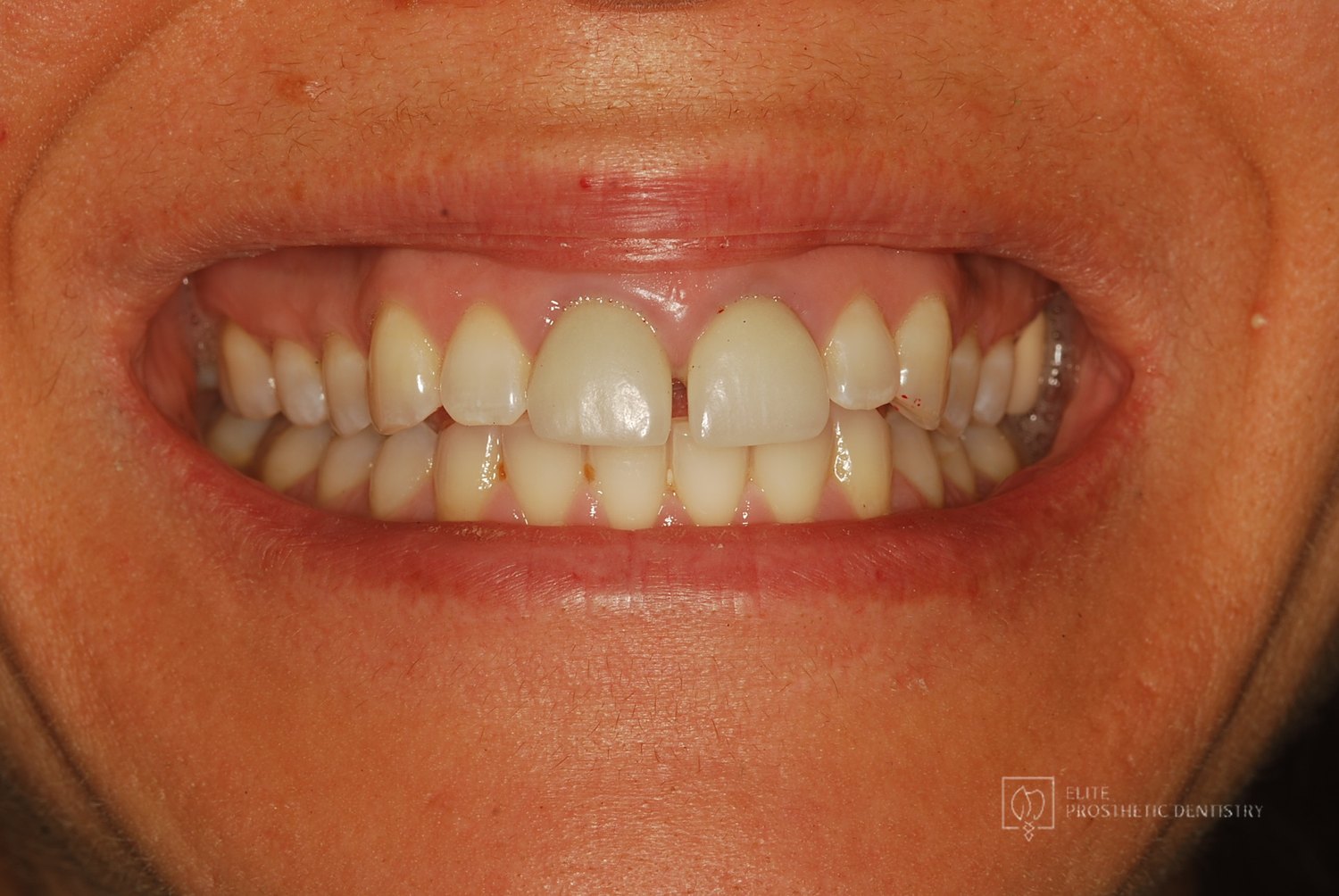
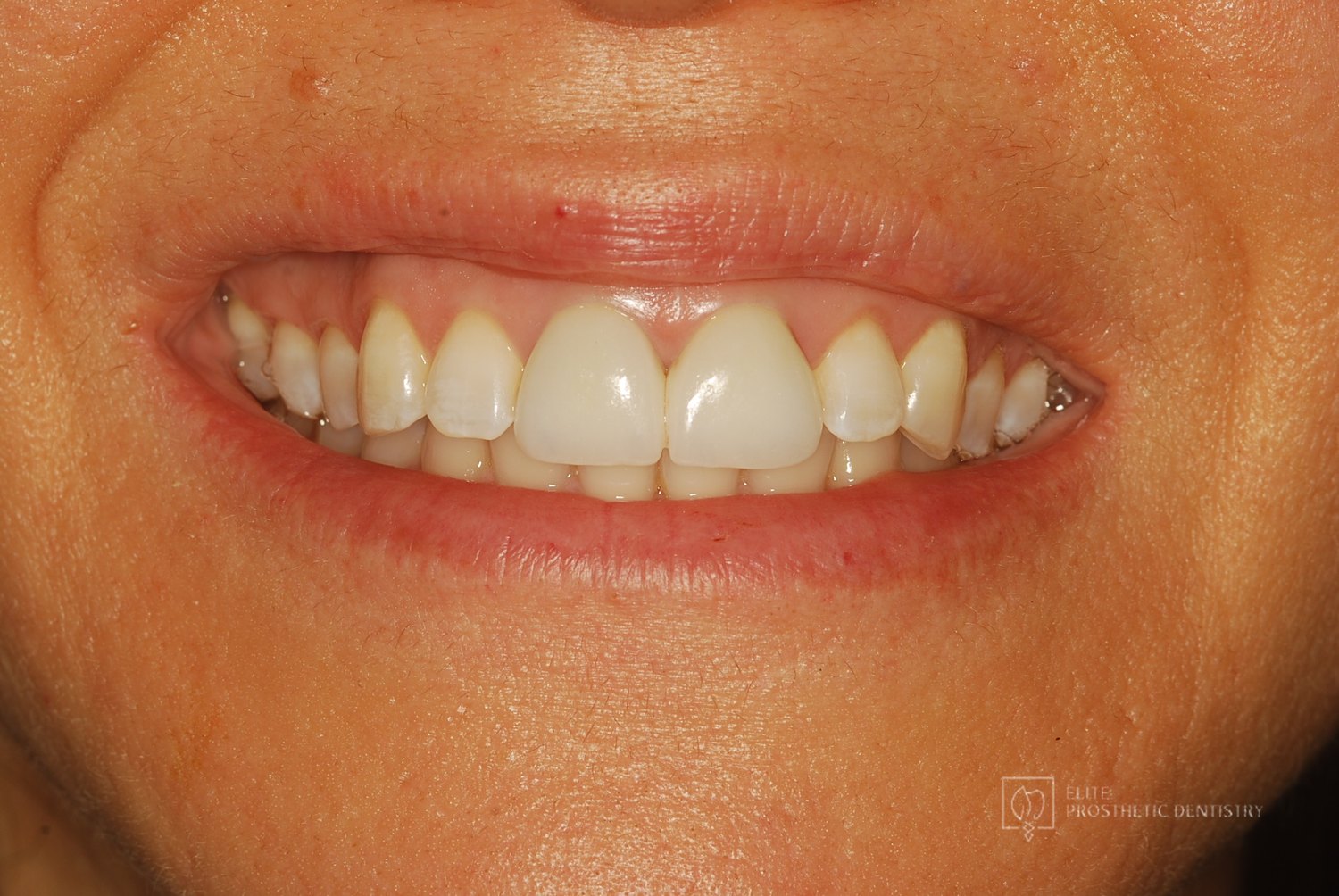
After Two Front Teeth Saved From Extraction: A Second Opinion, Custom Gold Posts, and Crowns Made to Last
Two upper central incisors with failed root canal treatment and recurrent decay had been recommended for extraction and implant replacement. A CBCT evaluation showed that removing the roots from their thin facial bone housing could create a visible esthetic defect in the gum and bone contour, made worse by the patient's high lip line.
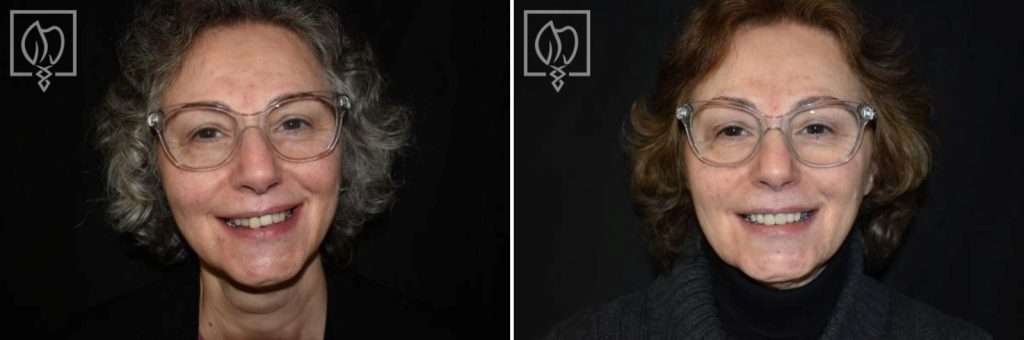
Temporary Crowns Restore a Patient's Smile in One Day with an Immediate Smile Makeover
A patient from Potomac, Maryland came to the practice in pain from a failing dental implant whose restoration was also compromising her appearance and her confidence.
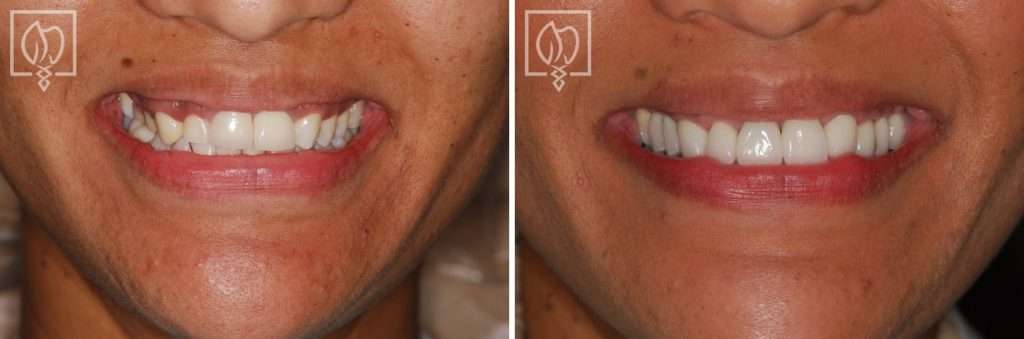
Multi-Faceted Treatment for a Patient Unhappy With the Appearance of Her Crowns, Teeth, and Gums
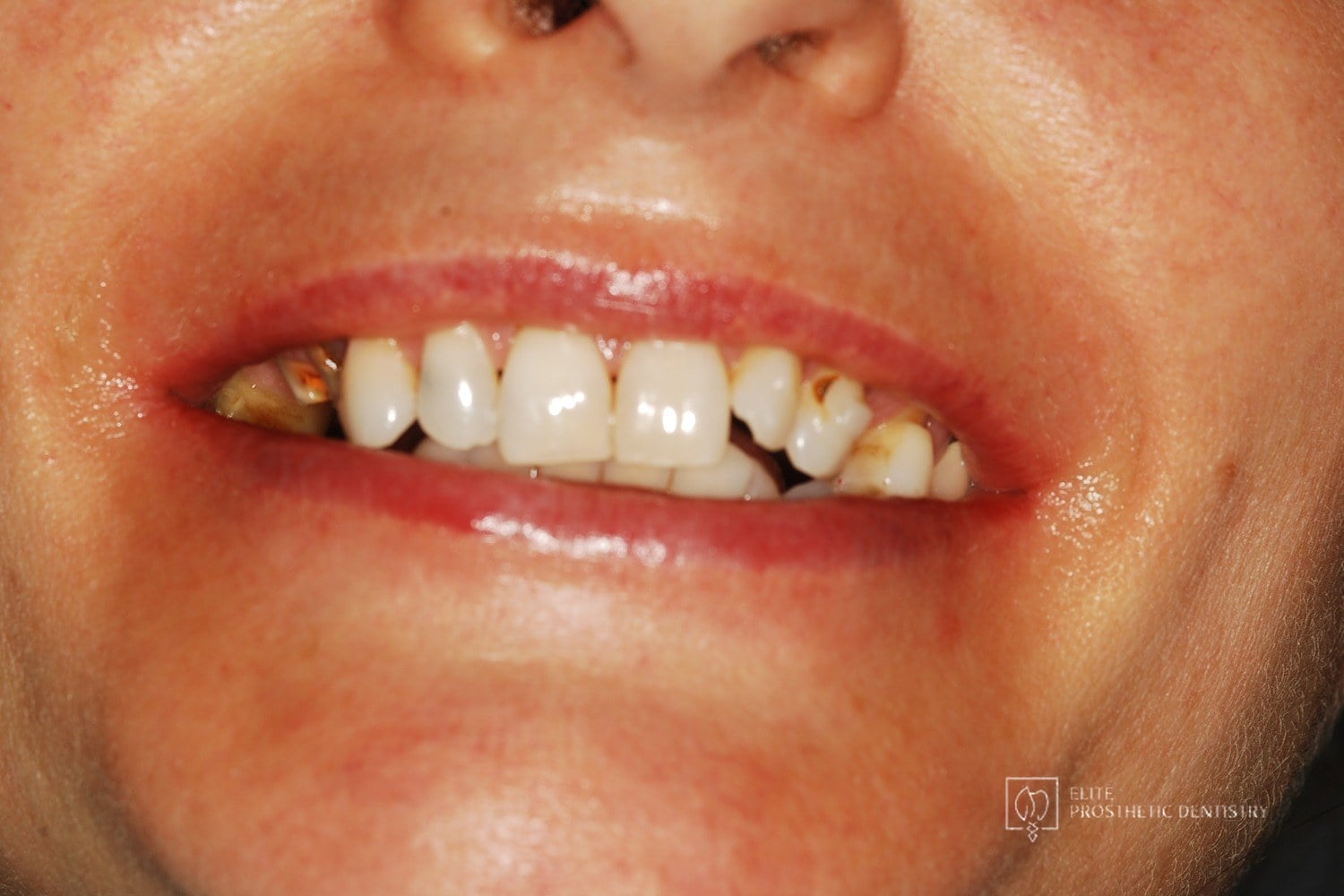
The patient was unhappy with how her teeth and gums affected her smile: front-tooth crowns that no longer blended with her natural teeth, a missing lateral incisor with the larger canine sitting in its space, and an uneven gum line.
Related Services
Related Articles
Deepen your knowledge with additional insights on this topic.
 Cosmetic Dentistry
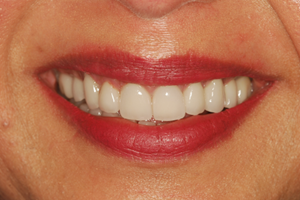
 Can My Tetracycline-Stained Teeth Be Made to Look Beautiful?
Tetracycline staining sits deep inside the tooth, so bleaching cannot fix it. See how translucent porcelain crowns create a bright, natural smile instead.
 Cosmetic Dentistry
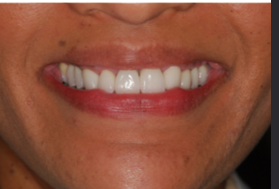
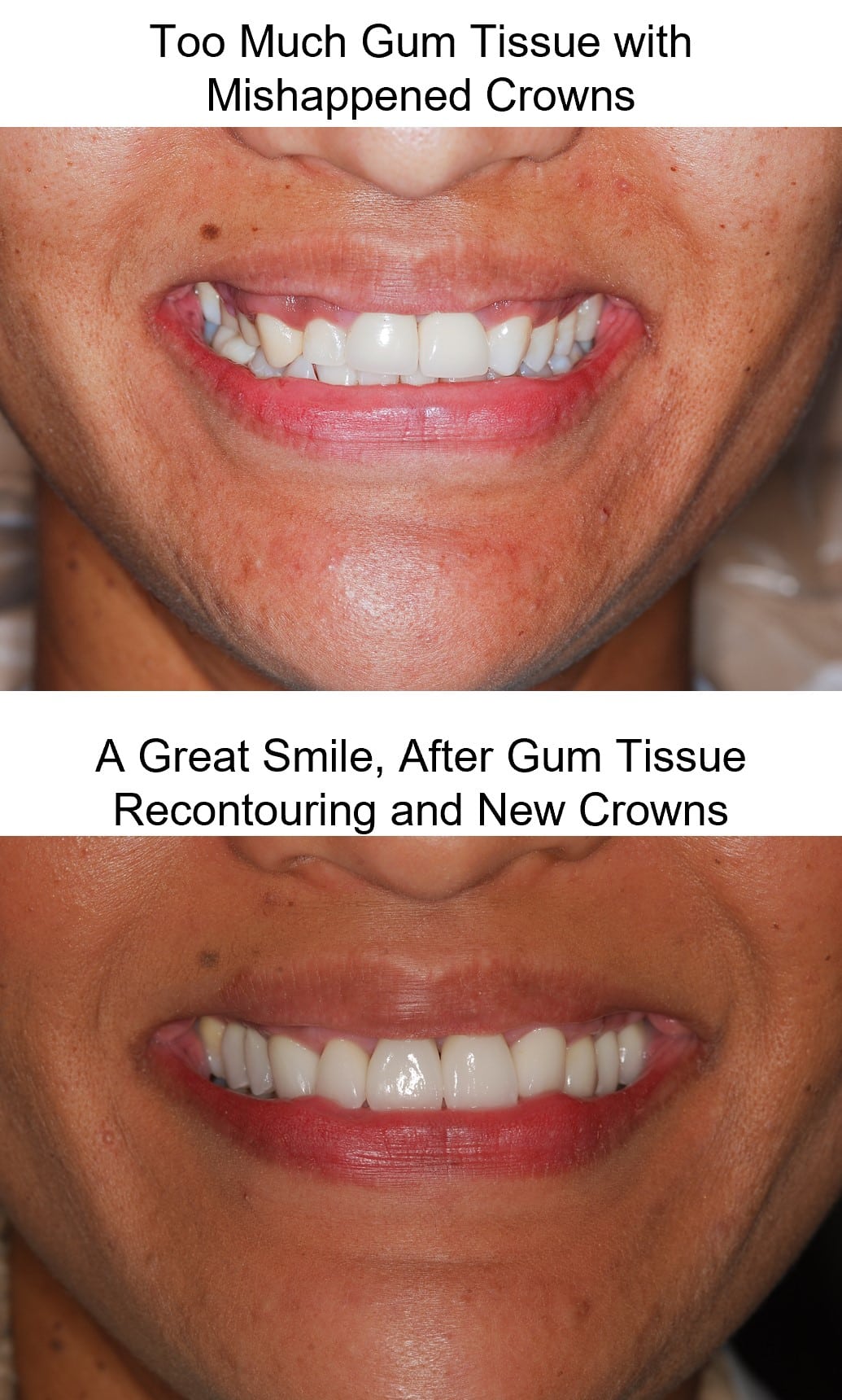
 How Is a Gummy Smile Fixed?
From gum reshaping to custom crowns, a DC prosthodontist explains how a gummy smile is fixed, with a real patient transformation and healing timeline.
 Cosmetic Dentistry
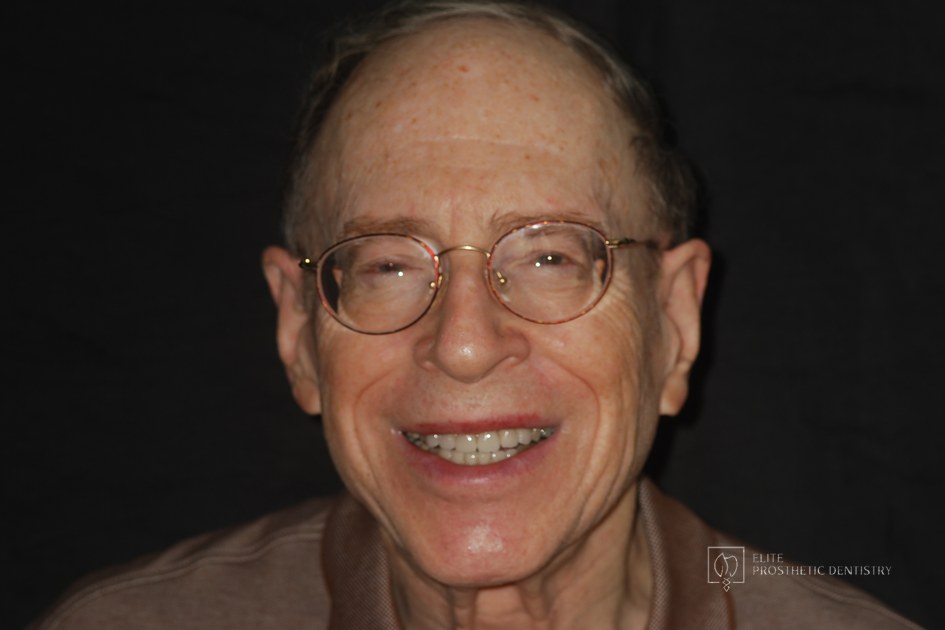
 Discovering Cosmetic Dentistry Beyond Aesthetics
Cosmetic dentistry improves more than looks: easier hygiene, restored chewing function, and better long-term oral health. A DC prosthodontist explains.
 Cosmetic Dentistry
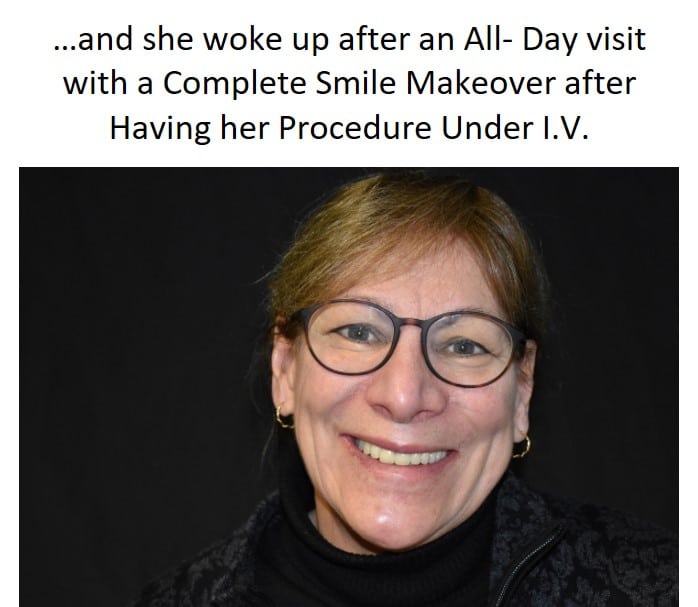
 Benefits of a Cosmetic Smile Makeover With Dental Sedation
Sedation lets longer smile makeover visits feel brief, eases anxiety, and may reduce soreness afterward. A DC prosthodontist explains the benefits.
 Cosmetic Dentistry
 Does Treating or Rehabilitating a Gummy Smile Require Surgery?
Not every gummy smile needs surgery. A DC prosthodontist explains restorative and other alternatives, and what to expect when gum surgery is the right call.
 Cosmetic Dentistry
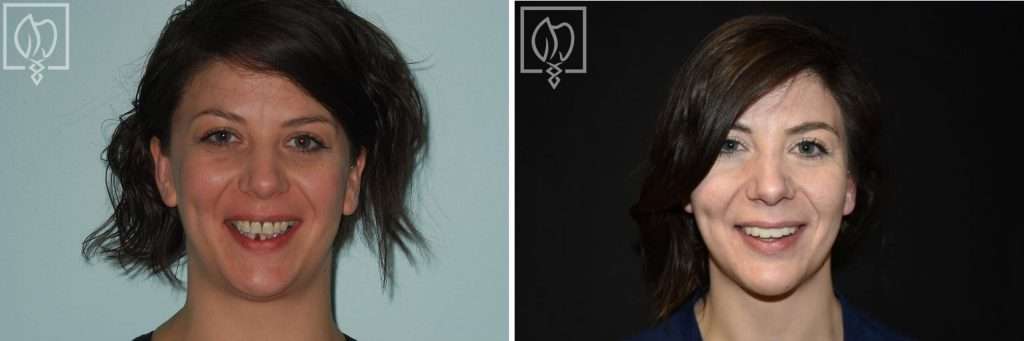
 Treatable Dental Conditions That Make Patients Self-Conscious About Their Smile
Discolored, worn, gapped, or missing teeth and gummy smiles are all treatable. A DC prosthodontist maps each common condition to its modern fix.
Ready to Transform Your Smile?
With 40+ years of experience and 3,900+ dental implants placed, Dr. Marlin and the team deliver dentistry planned to last. Request a specialist consultation.