
Fixed Implant Teeth vs. a Removable Implant Denture: How to Decide in Washington, DC
Fixed full-arch implant teeth, a snap-in implant overdenture or a conventional denture: the clinical factors that decide which fits you, what each demands in maintenance, and how a prosthodontist evaluates the choice.
Practice clinician: Gerald M. Marlin, DMD, MSD, prosthodontist, Elite Prosthetic Dentistry, Friendship Heights, Washington, DC. Last updated .
When an entire arch of teeth is to be replaced with implants, the prosthesis decision is as important as the surgery. Fixed implant teeth, a removable implant overdenture and a conventional denture are three different ways of living with replacement teeth, with different demands on bone, hygiene, maintenance and the patient’s daily life. This guide explains what actually decides between them so you can evaluate the recommendation you have been given.
Patients researching full-arch treatment meet a confusing vocabulary: All-on-4®, All-on-6®, All-on-X, hybrid, zirconia bridge, snap-in denture, overdenture, locator, bar. Underneath the names there are three structural options, and the decision between them rests on a small number of clinical and personal factors.
The Three Options, Plainly
- Fixed full-arch implant teeth. A complete arch of teeth attached to implants with screws. It does not come out; the dentist removes it for maintenance. Variants differ by number of implants and by material (a milled zirconia prosthesis or an acrylic hybrid on a framework).
- A removable implant overdenture. A denture that snaps onto implants through attachments or a bar. The patient removes it for cleaning and at night. It gains stability and chewing ability from the implants while remaining a denture in form.
- A conventional complete denture. No implants. It rests on the gums and relies on fit, suction and muscle control for stability. It remains the right answer for some patients and the starting point for others.
The common mistake is to treat these as a quality ranking, with fixed teeth at the top. They are different tools, and a prosthesis that does not fit the patient’s anatomy, hygiene ability or expectations fails regardless of how advanced it is.
What Actually Decides Between Them
Bone volume and position. Fixed teeth need enough implants, in stable bone, spaced to carry the arch. Where bone has been lost, grafting, sinus procedures or angled placement may make that possible. Where the remaining bone supports fewer implants, an overdenture may be the more predictable design.
Lip and cheek support. When bone and gum have receded, the face loses support that the natural teeth and ridge once provided. A removable denture has a flange that can replace that support. A fixed prosthesis can replace some of it with pink prosthetic material, but there are limits; in some faces a fixed design leaves the lip unsupported. This is a prosthodontic judgment made with the patient and the mirror, before surgery.
Hygiene and dexterity. A fixed prosthesis must be cleaned underneath, every day, with floss threaders, water irrigators or interdental brushes. Patients with limited dexterity, or who know they will not keep up that routine, are often better served by an overdenture they can remove and clean in the hand.
Bite force and the opposing arch. Heavy grinders and patients with a natural or implant-supported opposing arch place different demands on prosthesis material. The material decision, zirconia or acrylic, follows from this; our guide on zirconia versus acrylic full-arch prostheses covers it.
Speech and comfort. An upper fixed prosthesis leaves the palate uncovered, which many patients prefer for taste and speech. An upper overdenture can be made with or without palatal coverage depending on the implant support. Some patients adapt to one design and not the other; a trial with a provisional prosthesis is how that is found out.
Maintenance over the years. Attachments on overdentures wear and are replaced on a schedule. Acrylic teeth wear and prostheses are relined or remade. Zirconia resists wear but is repaired differently when something chips. Screws on fixed prostheses are checked and retightened. Every option has a maintenance plan; the question is whether the plan suits the patient.
The transition. Patients should not be without teeth. Depending on the plan, an immediate provisional fixed bridge, a provisional denture or a converted existing denture is worn while implants heal. The plan should say which.
Questions to Ask Before Choosing
- Why does this prosthesis design fit my bone, my face and my bite, and what would change the recommendation?
- How many implants, where, and does that implant layout allow the other design if I change my mind later?
- What will I do every day to clean it, and have you watched patients like me manage that?
- What material, and why that material for my bite and my opposing arch?
- What is the maintenance schedule for the first five years, and what does it typically involve?
- What will I wear while the implants heal?
- Who makes the prosthesis, and can the design be adjusted while I am in the chair?
How Elite Prosthetic Dentistry Evaluates the Choice
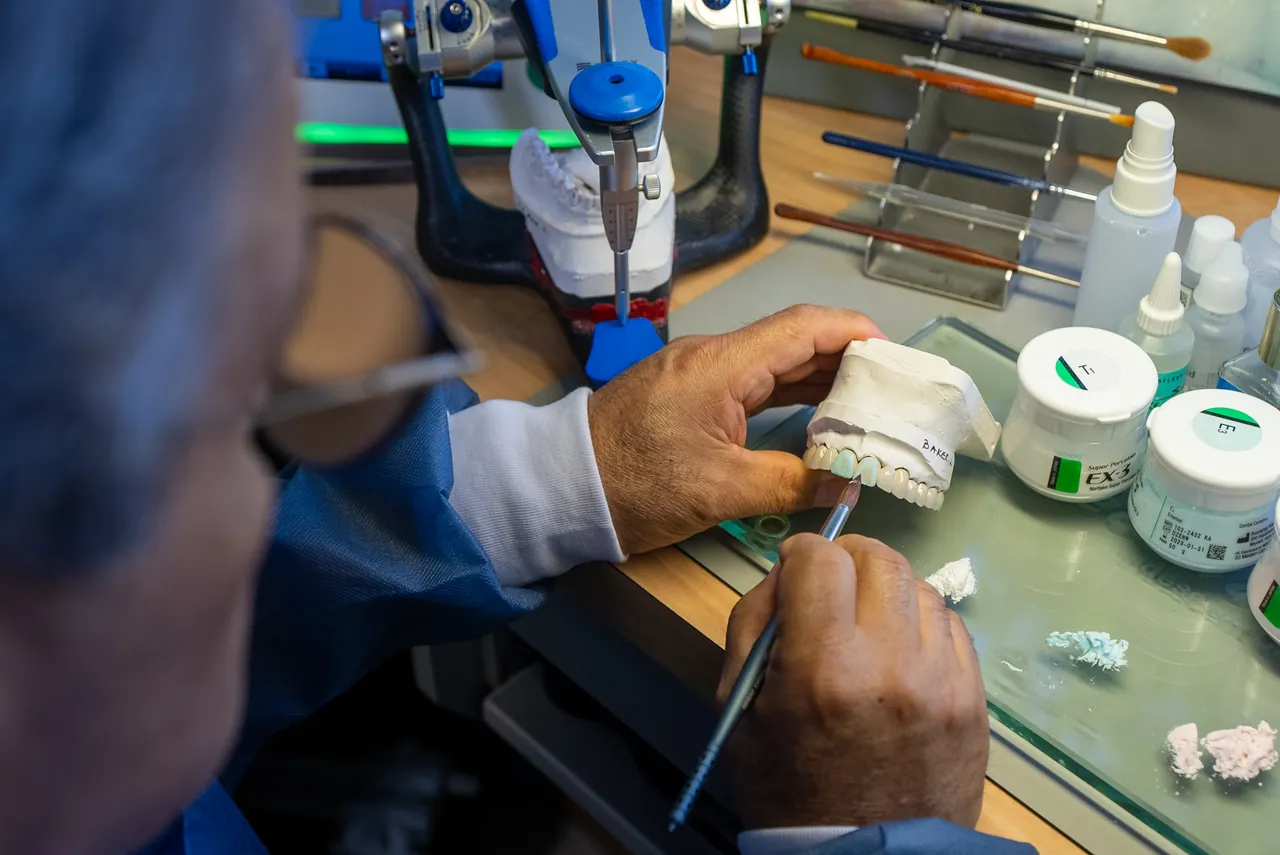
The evaluation records bone volume on a CBCT scan, the position of the lip and the amount of support needed, the space available for a prosthesis, the opposing arch and the bite, and the patient’s hygiene habits and preferences. A diagnostic set-up or provisional prosthesis lets the patient see and feel the design before the final is made. Dr. Gerald M. Marlin plans, surgically places and restores the implants in the practice, and the practice’s on-site laboratory fabricates the prosthesis, which allows fit, bite and appearance to be refined during treatment rather than sent out and returned.
The practice provides fixed full-arch teeth in both zirconia and hybrid designs, implant overdentures on attachments or bars, and conventional dentures, so the recommendation is not constrained by what the office can make. Dr. Marlin has placed more than 3,900 dental implants and holds 9 U.S. patents in dental implant restoration methodology.
When Another Setting Fits Better
A patient who needs extensive surgery under general anesthesia may be better served in an oral-surgical or hospital setting for the surgical phase. A patient with uncontrolled medical conditions may need those addressed before any implant surgery. A patient who wants a conventional denture only, with no implants, can be well served by many general and prosthodontic practices; the practice provides that service but the choice of provider is wider.
Documented Cases That Show the Decision
- Severe bone loss and bite dysfunction rebuilt with six implants per arch and a milled zirconia prosthesis: fixed teeth in a durable material for a demanding bite.
- Both arches rebuilt after heavy grinding with four guided implants per arch and a hybrid prosthesis: a fixed hybrid design with high-performance teeth.
- Severely worn implant overdentures remade on existing implant bars: the removable design was retained, and the original appliances were reworked as backups.
- A collapsed bite restored with new custom dentures: conventional dentures re-established the bite, with an implant phase under discussion.
More cases are organized in the implant reconstruction success story hub.
Related Decision Guides
- Dental Care for an Aging Parent
- Life After Reconstruction: Maintenance
- Keep your teeth or replace them? Selective implants vs. full-arch extraction
- How to choose a denture dentist
- All-on-4 vs. All-on-6
- Implant center vs. prosthodontic implant reconstruction
- Who should place your dental implant?
Request a Full-Arch Evaluation
To find out which design fits your mouth, request an appointment or call (202) 244-2101. Bring any existing scan or treatment plan; the evaluation will address the prosthesis decision directly.
All-on-4® and All-on-6® are registered trademarks of their respective owners and are referenced here for descriptive purposes only. Elite Prosthetic Dentistry is not affiliated with, endorsed by, or sponsored by the trademark holders.
Your Best Smile Is Within Reach
Request a specialist consultation with Dr. Marlin to discuss your situation and the most appropriate path forward.
Frequently Asked Questions
Is a fixed implant bridge always better than a removable implant denture?
No. Fixed teeth stay in the mouth and feel most like natural teeth, but they require more implants, enough bone to support them, good access for cleaning and a patient who can maintain them. A removable implant overdenture is easier to clean, needs fewer implants, can replace lost lip and cheek support with its flange, and can be repaired or remade more simply. Which is better depends on the mouth and the person, not on the label.
How many implants does each option need?
A removable implant overdenture is commonly supported by two to four implants in the lower jaw and four or more in the upper jaw. Fixed full-arch teeth are commonly supported by four to six implants per arch, sometimes more, depending on bone quality, bite forces and the design of the prosthesis. The number is a planning decision based on the scan and the restoration, not a fixed rule.
Can a removable implant denture be converted to fixed teeth later?
Sometimes, if the implants were positioned and spaced with that possibility in mind and enough of them are present. If the plan starts as removable, ask whether the implant positions would permit a fixed prosthesis later. If they would not, that is worth knowing before the first surgery.
What is the difference between a zirconia and an acrylic fixed prosthesis?
A zirconia prosthesis is milled from a dense ceramic and resists wear and staining; an acrylic hybrid uses a metal or reinforced framework with acrylic teeth and gum material, which is lighter, easier to adjust and repair, and wears faster. The choice depends on bite force, the opposing arch, space available and how the patient wants to manage maintenance over time. Our comparison of zirconia and acrylic full-arch prostheses covers the trade-offs in detail.
Will I be without teeth during treatment?
Not in a well-sequenced plan. Depending on the case, patients wear a provisional denture, an immediate fixed provisional bridge or a modified existing denture while implants heal. How the transition is managed should be explained to you before treatment starts.
Related Patient Success Stories
Explore similar patient success stories demonstrating our expertise in advanced prosthetic dentistry.
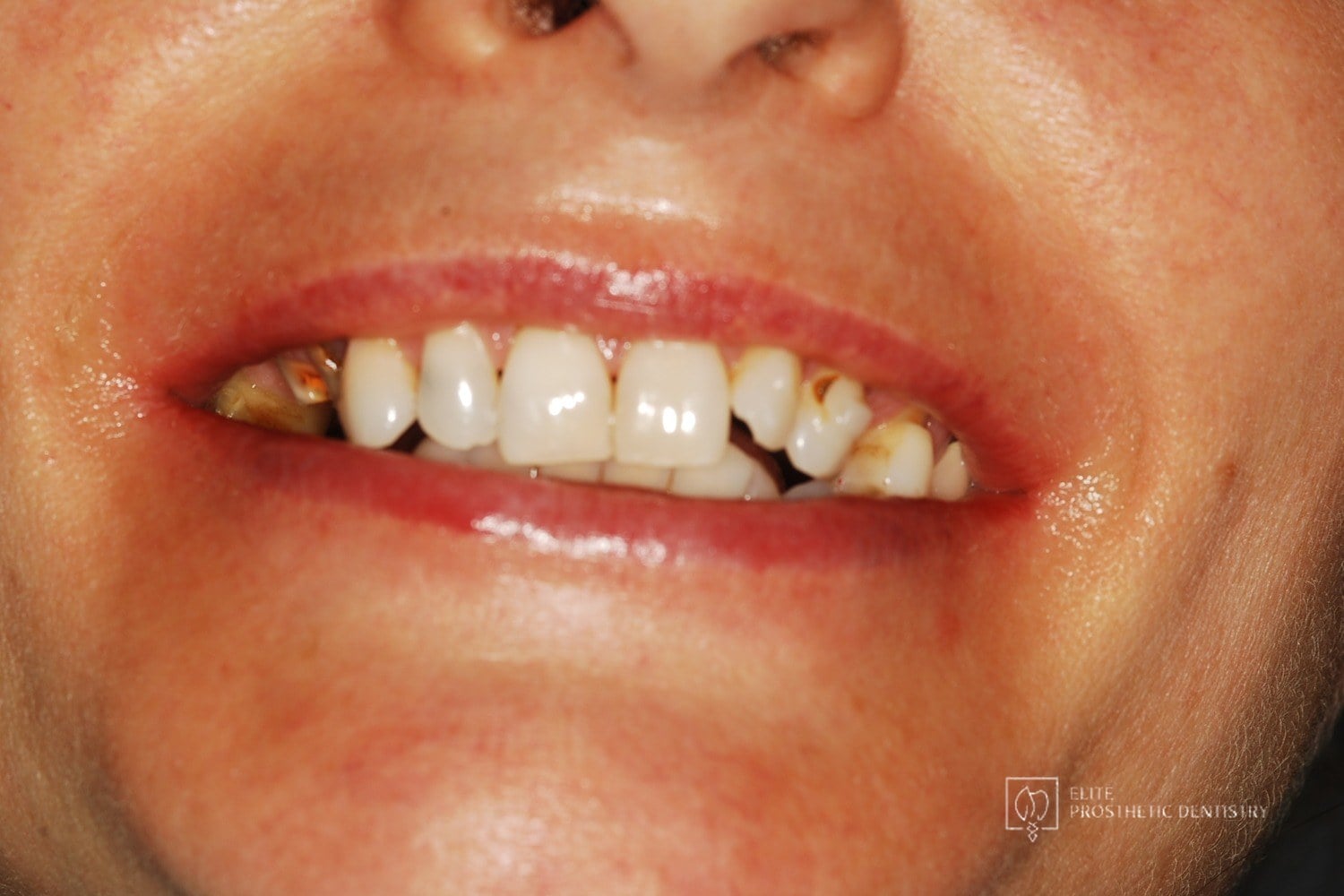 Before
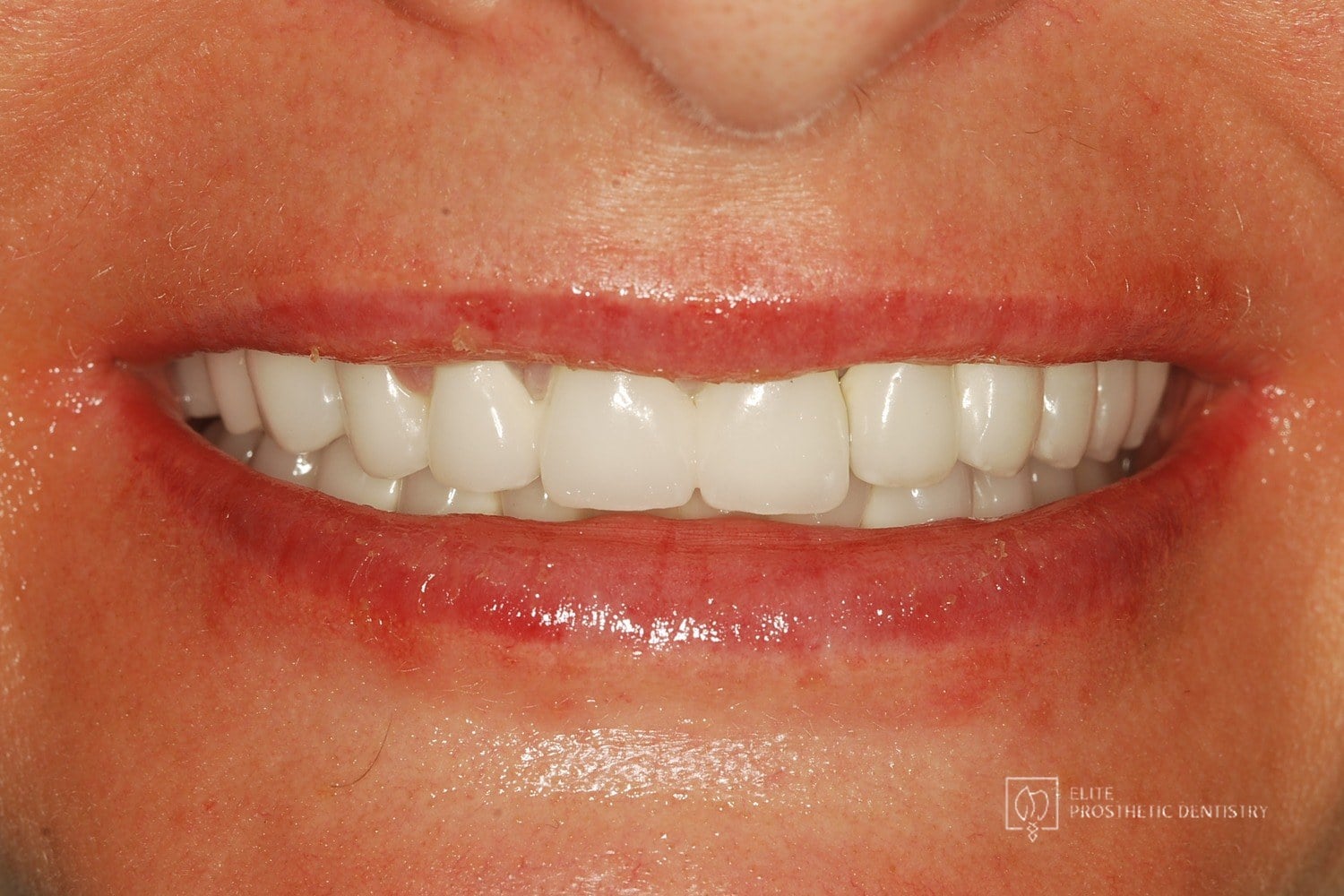 After
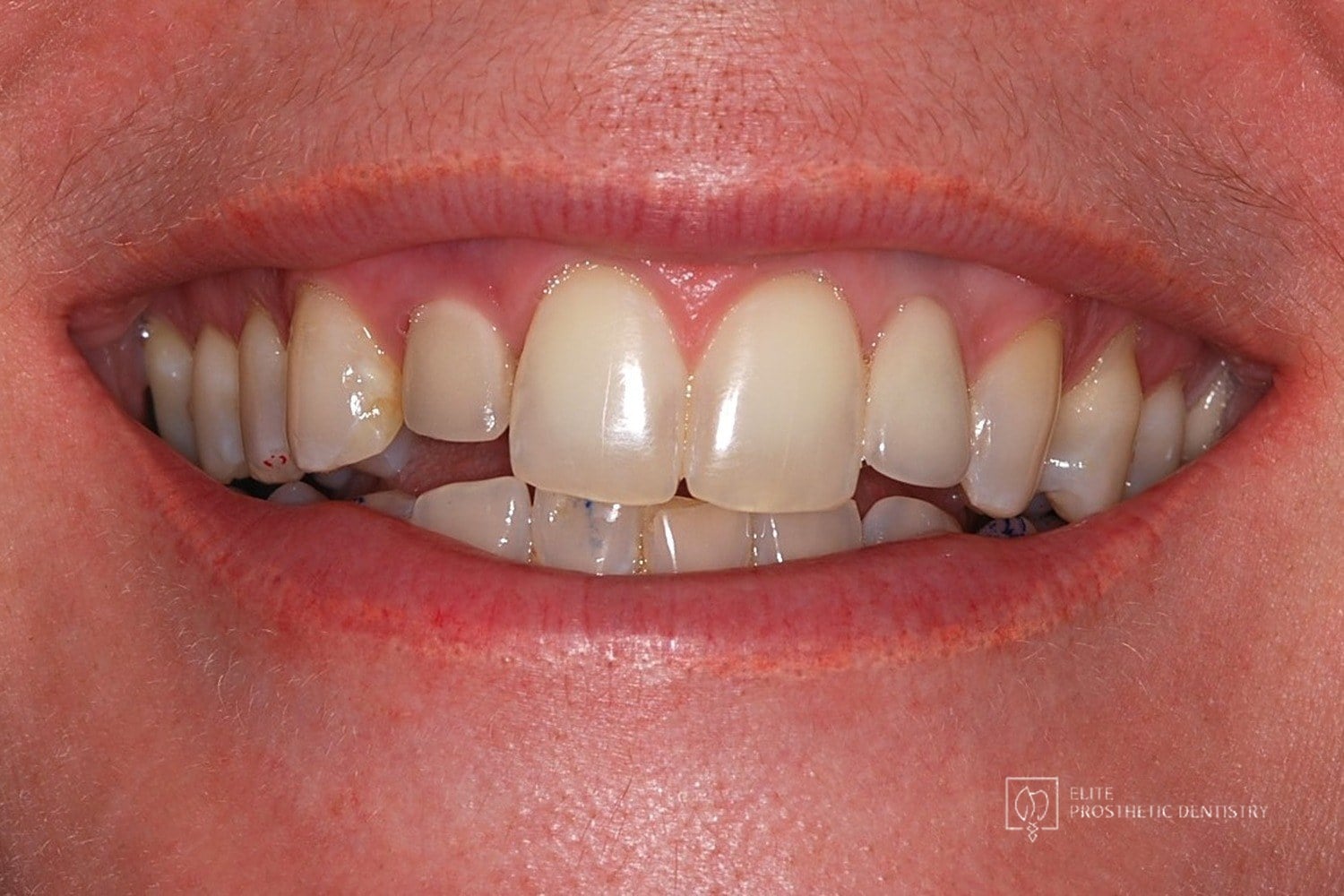
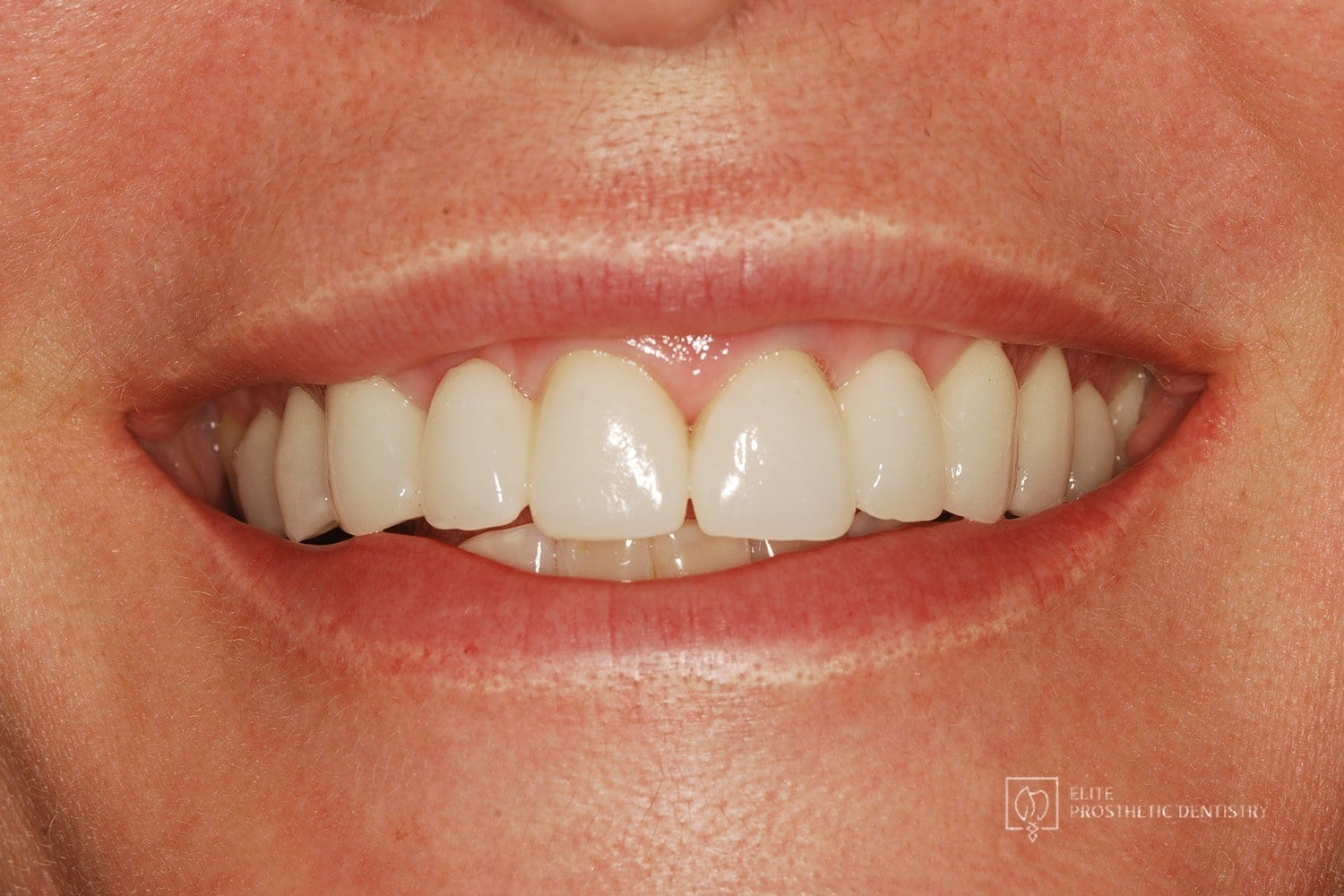
How Aging, Failing Dentistry Was Replaced with a Coordinated Full-Mouth Implant and Crown Reconstruction
The patient presented with throbbing upper-molar pain, long-standing infections, multiple root canals and unfinished prior treatment, generalized sensitivity, and several hopeless teeth.
 Before
 After
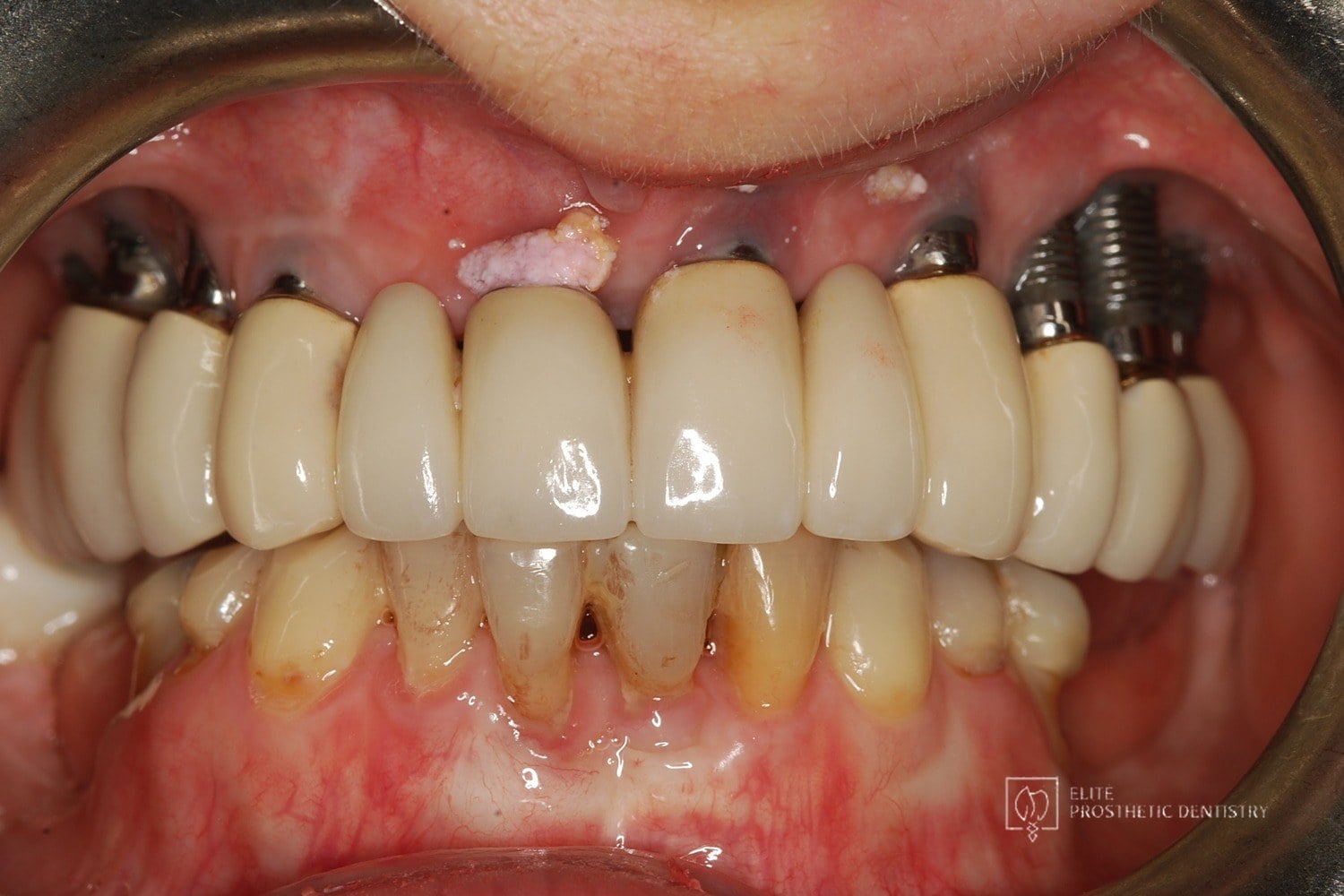
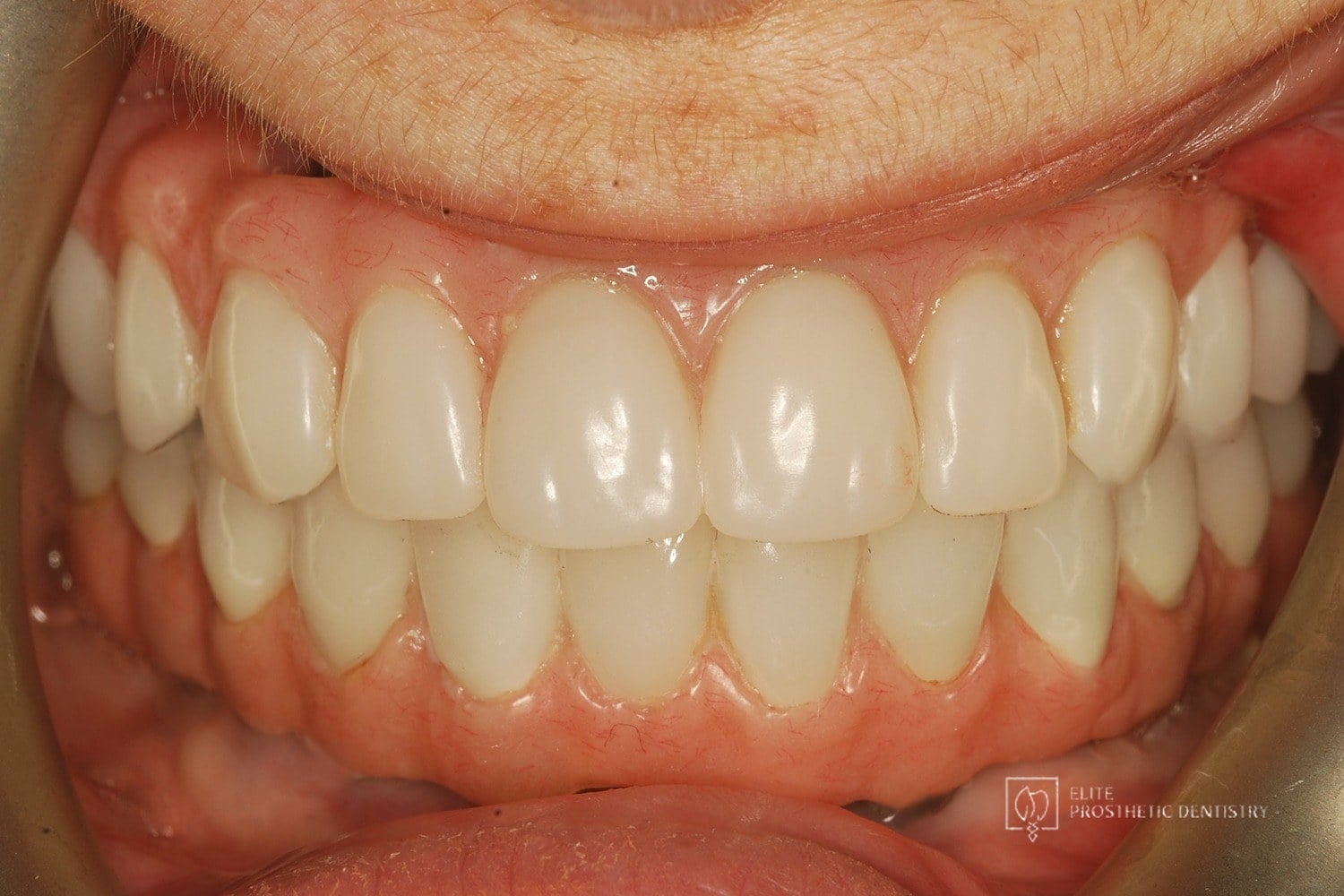
How Failing Implants and Severe Bone Loss Were Rebuilt Into a Stable Full-Arch Implant Reconstruction
The patient presented with significant complications from previously placed implants, severe bone loss, failing posterior implants, and an unesthetic full-arch bridge. Both arches required full reconstruction, with the upper arch showing the most advanced bone loss and instability.
 Before
 After
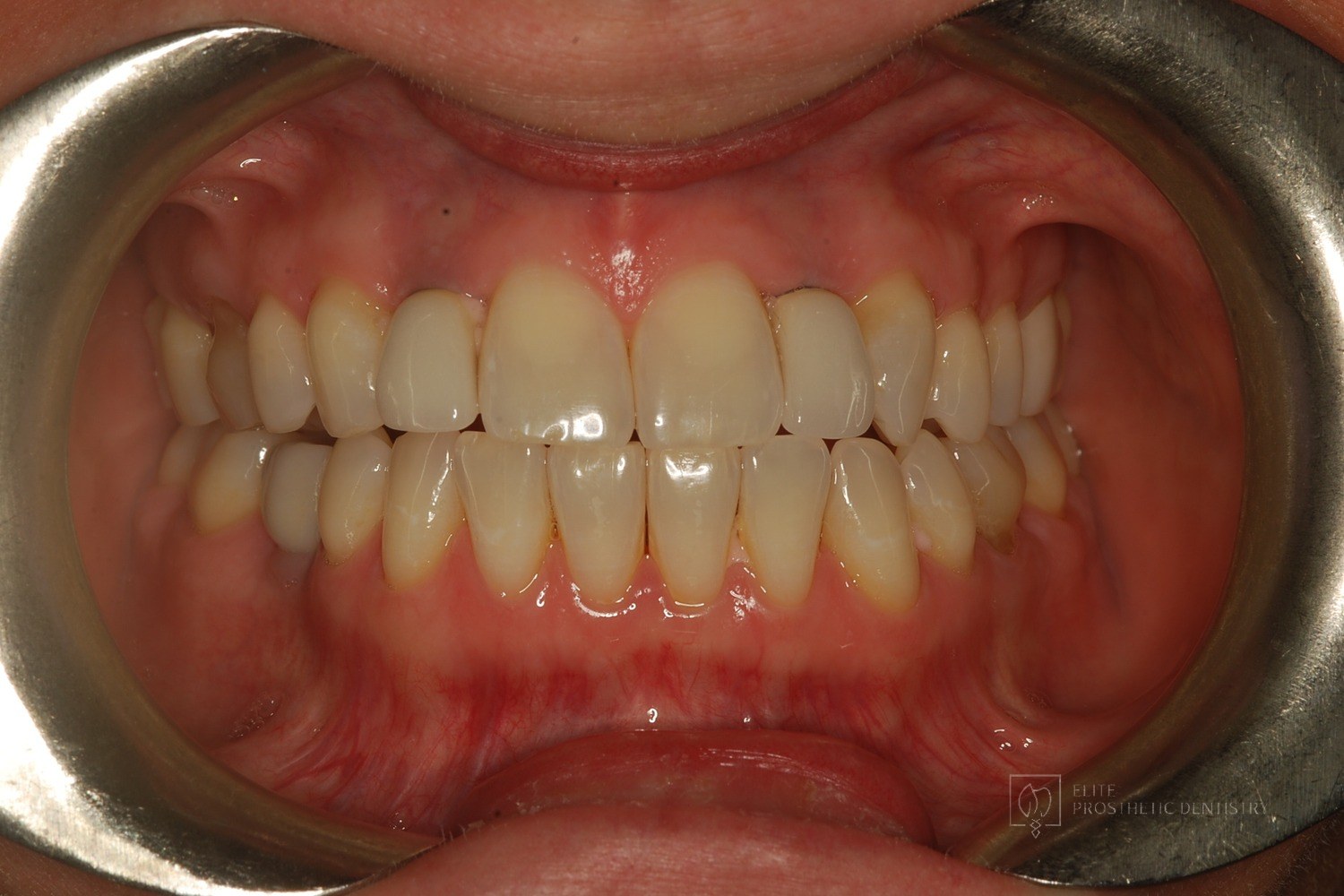
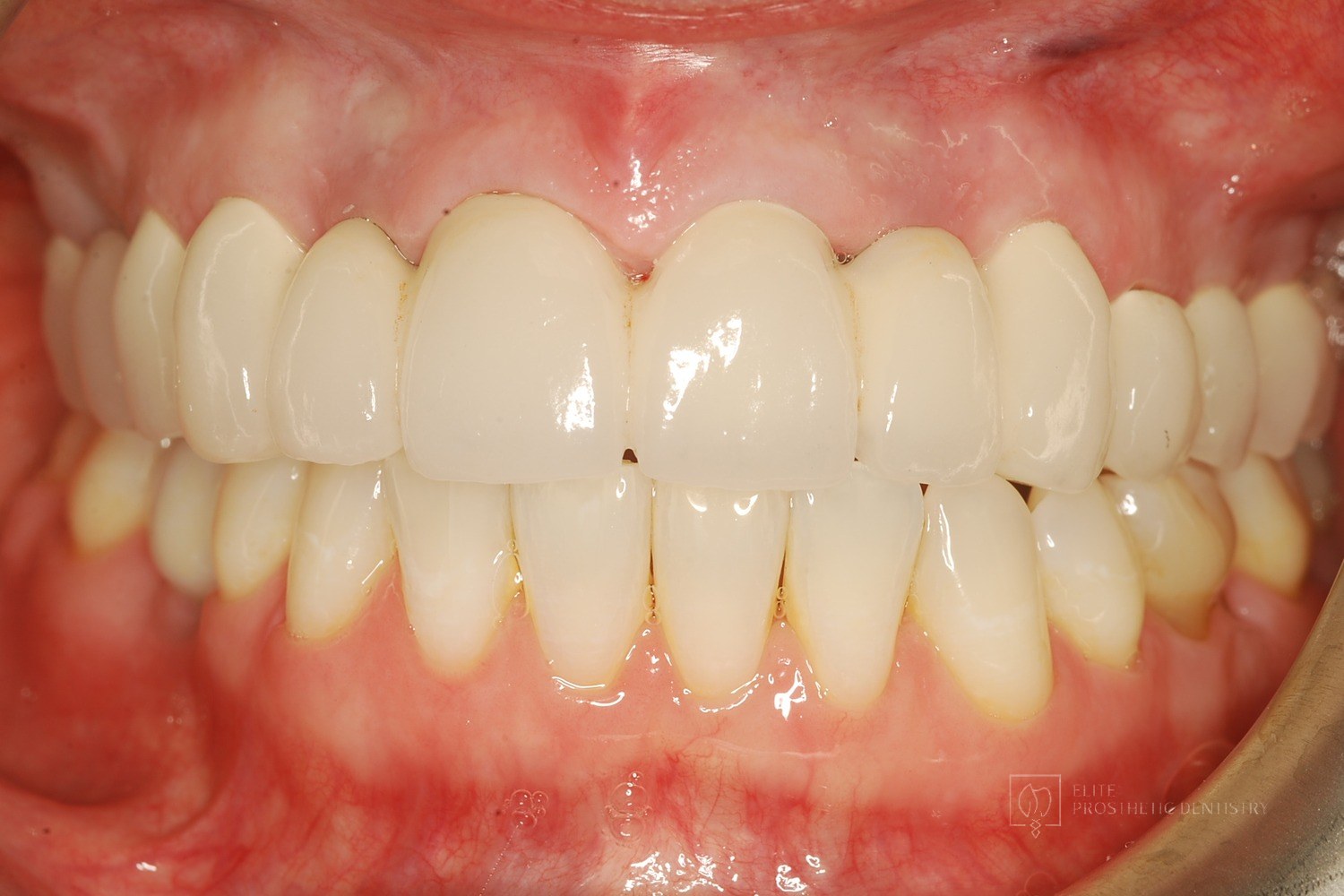
How Failing Lateral Incisor Implants Were Replaced with Custom Zirconia Bridges After Severe Bone Loss Made Replacement Implants Impossible
Comprehensive examination including CBCT imaging revealed significant bone loss surrounding implants that were placed outside the buccal plate, most likely due to placement without a CBCT-generated surgical guide. The implants were determined non-salvageable, and the alveolar ridge was too narrow to support replacement implants without extensive reconstruction.
 Before
 After
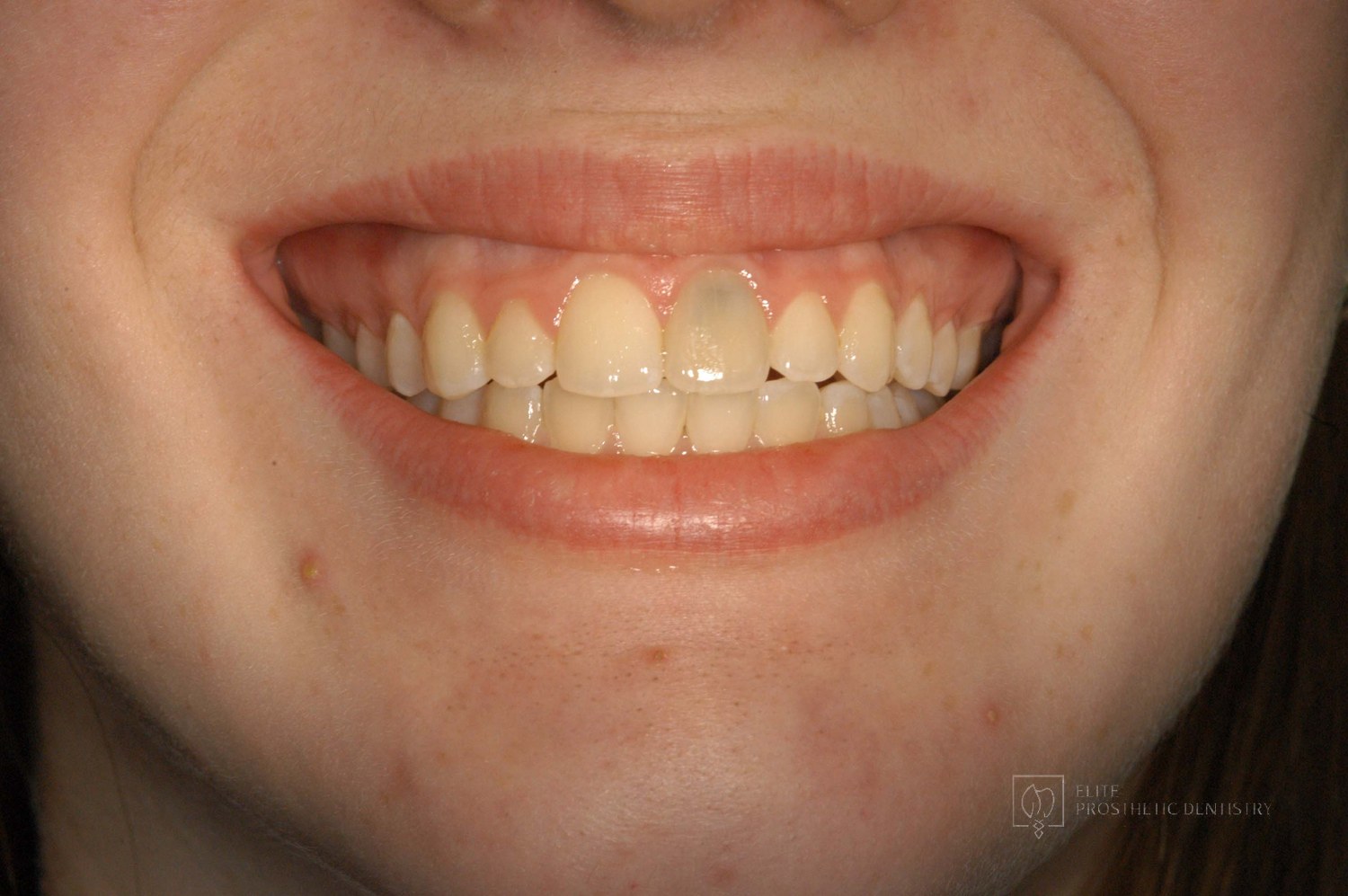
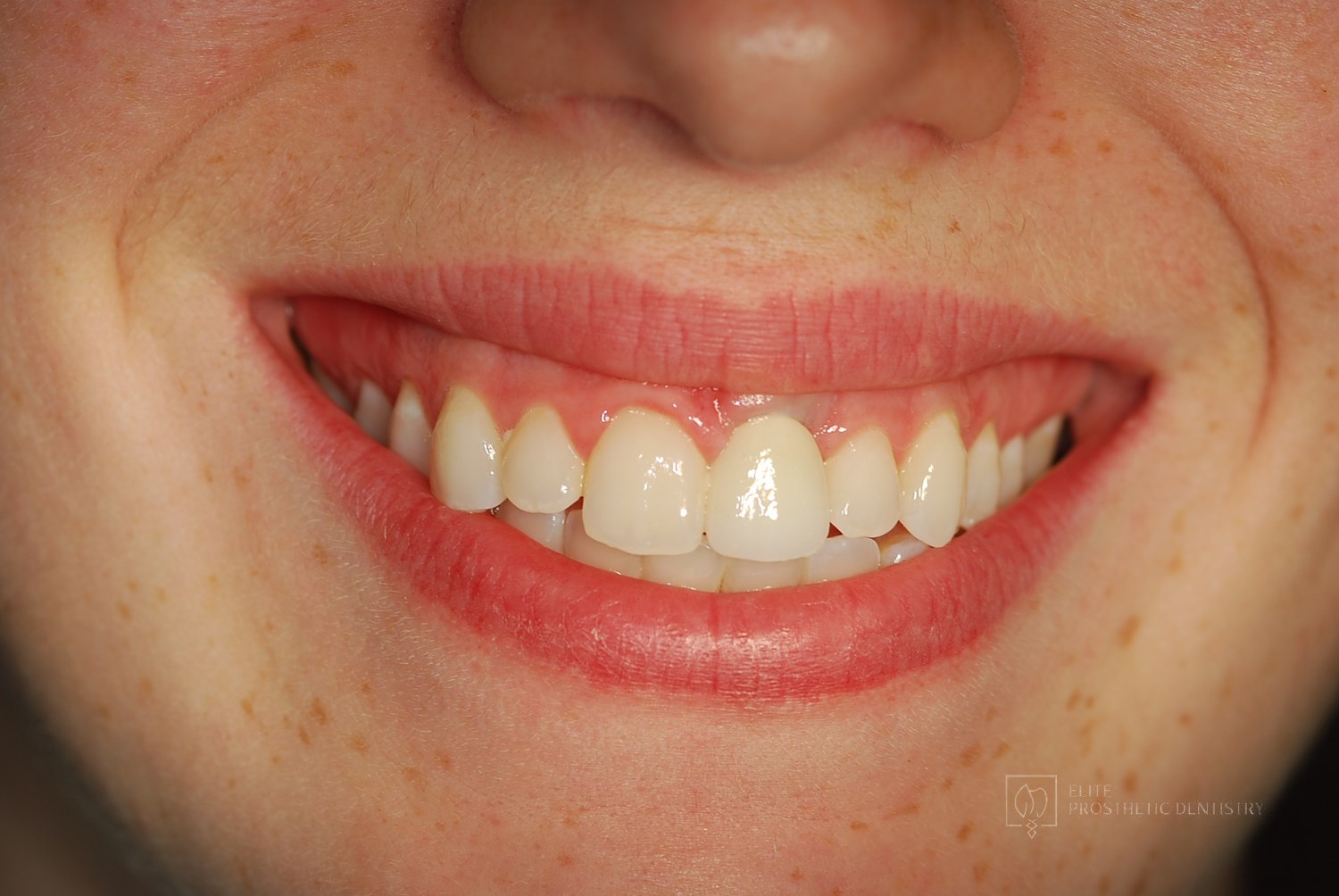
How Older Implant Crowns Were Redesigned for a Better Bite and More Natural Appearance
The patient came in after years of living with implant-supported crowns placed more than twenty years earlier that no longer looked or functioned well. CBCT evaluation, reviewed with a radiologist colleague, showed the implants had been placed too far to the buccal in very thin bone and could not support a healthy long-term restoration.
 Before
 After
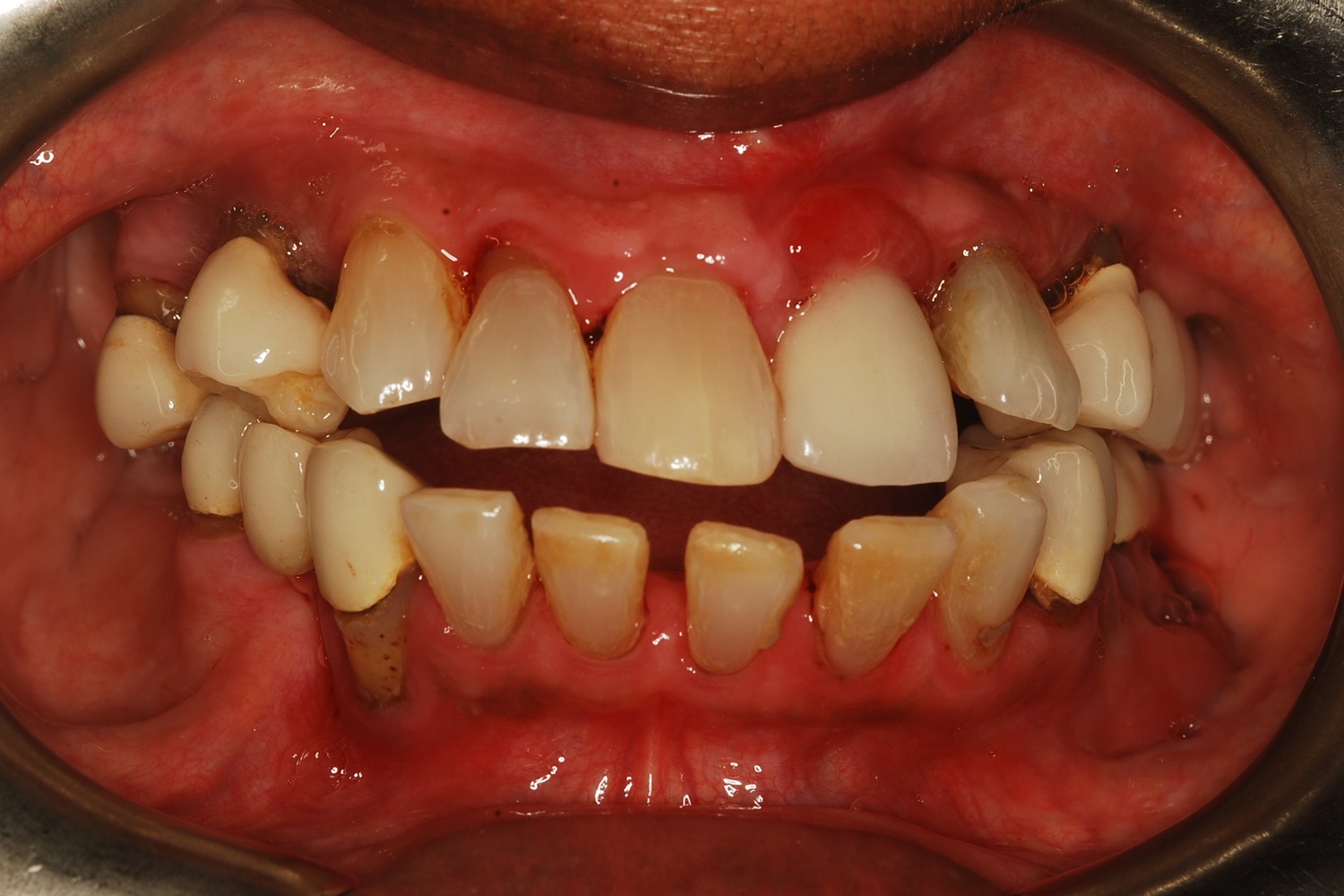
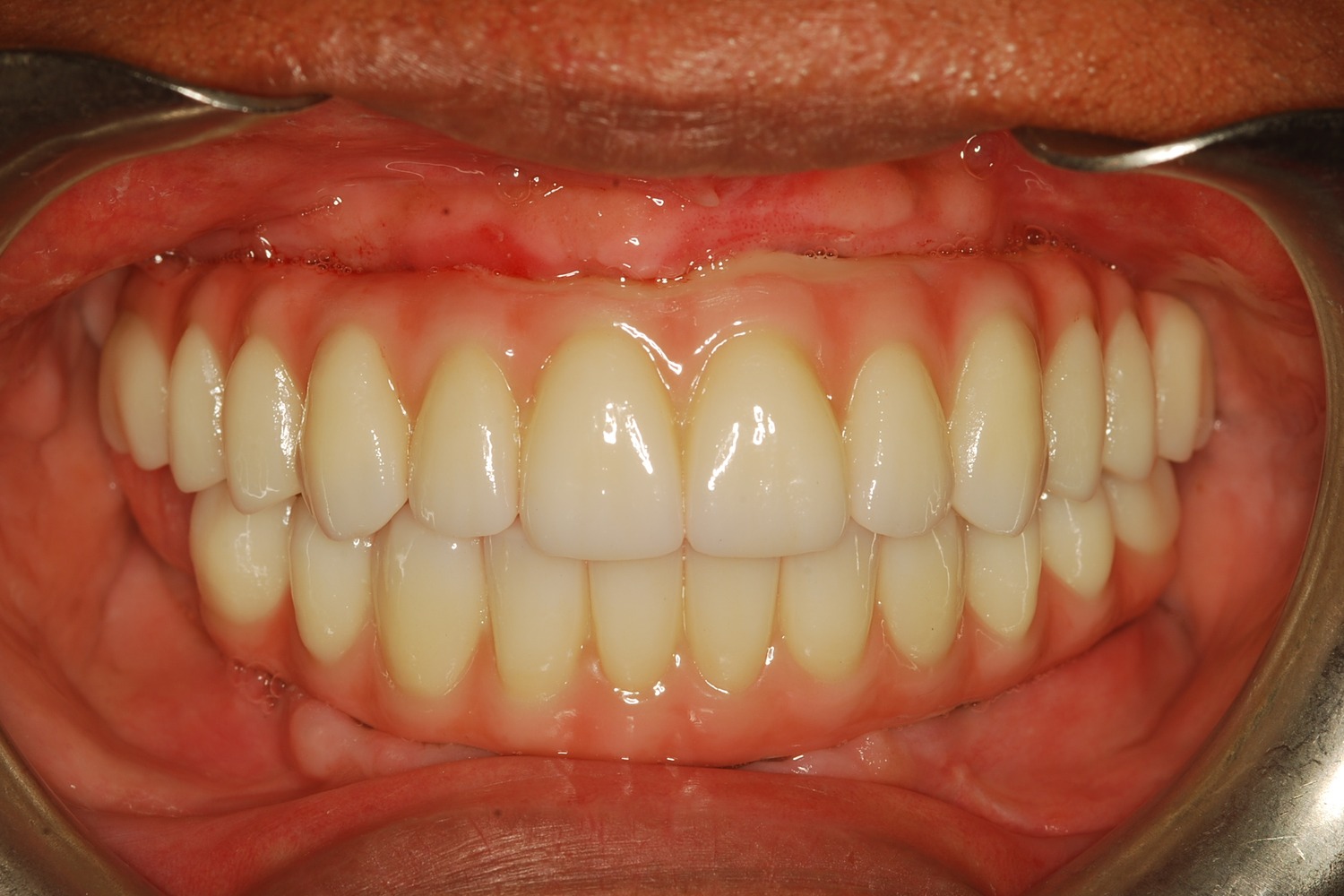
How a Front Tooth Lost to Childhood Trauma Was Rebuilt with Bone Grafting and a Long-Lasting Implant
A teenager was referred by her father after earlier trauma left her upper left front tooth slowly failing from root resorption. She was still growing, so an immediate implant was the wrong move. The tooth had to be maintained to buy time, then replaced correctly once she reached skeletal maturity.
 Before
 After
How Severe Bone Loss and Bite Dysfunction Were Rebuilt with All-on-6 Implants and a Milled Zirconia Hybrid Prosthesis
The patient presented with severe bone loss, advanced periodontal disease, malocclusion, and a dysfunctional bite that required full-arch rebuilding.
Related Services
Dental Care for an Aging Parent
Learn more →Life After Reconstruction: Maintenance
Learn more →Full Mouth Dental Implants
Learn more →Implant-Supported Dentures
Learn more →All-on-X Full-Arch Implants
Learn more →Zirconia vs. Acrylic Full-Arch Prosthesis
Learn more →Keep Your Teeth or Replace Them?
Learn more →All Decision Guides
Learn more →Related Articles
Deepen your knowledge with additional insights on this topic.
 Dental Implants
If a Single Front Tooth Is Replaced with an Implant, Can It Look Natural?
Yes. See the four steps, with real case photos, that make a single front tooth implant indistinguishable from the natural tooth beside it. Washington, DC.
 Dental Implants
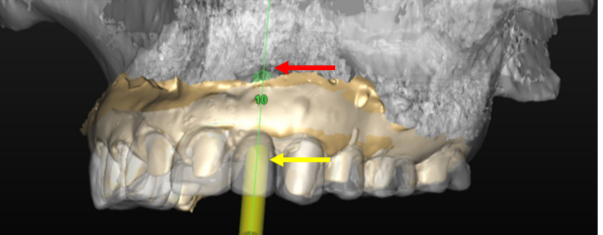
What Is Precision Implant Placement (PIP)?
Precision Implant Placement plans each implant virtually on a CBCT scan, then delivers it with a custom surgical guide. See the three steps with real images.
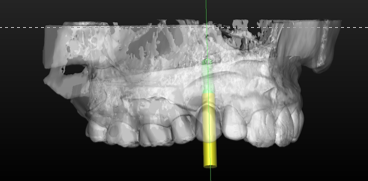 Dental Implants
What Is the Ideal Surgical Guide for Precision Implant Placement?
Not all surgical guides are equal. The gold standard is CBCT-based: planned virtually in 3D, 3D printed, and seated on your teeth. A DC prosthodontist explains.
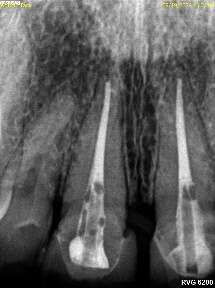 Dental Implants
When Should an Implant Not Be Done?
Healthy roots, thin bone, steep bony angles: a DC prosthodontist shows a real case where refusing implants was the right call, and what was done instead.
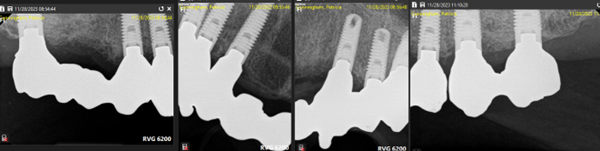 Dental Implants
What Is Staged Implant Therapy?
Staged implant therapy replaces failing teeth in phases while you keep fixed teeth the entire time. A DC prosthodontist walks through a real case in stages.
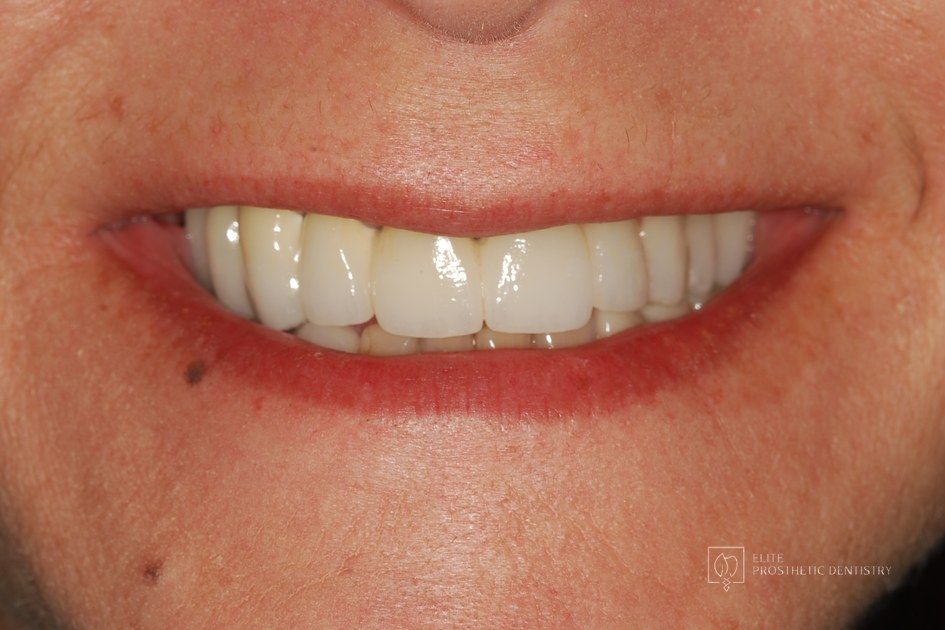 Dental Implants
The Four Types of Dental Implants: Which One Is Right for You?
Endosteal, subperiosteal, zygomatic, and mini implants each solve a different problem. A DC prosthodontist explains the four types and who each one fits.
Ready to Transform Your Smile?
With 40+ years of experience and 3,900+ dental implants placed, Dr. Marlin and the team deliver dentistry planned to last. Request a specialist consultation.