
All-on-4 vs. All-on-6: Which Full-Arch Implant Protocol Is Right?
The decision between four and six implants is a clinical judgment based on bone availability, bite forces, and prosthesis design, not a marketing choice. Both protocols produce excellent long-term results in the right candidate.
3,900+
Implants Placed
97%+
Success at 20+ Yrs
9
U.S. Patents
1985
In-House Lab Since
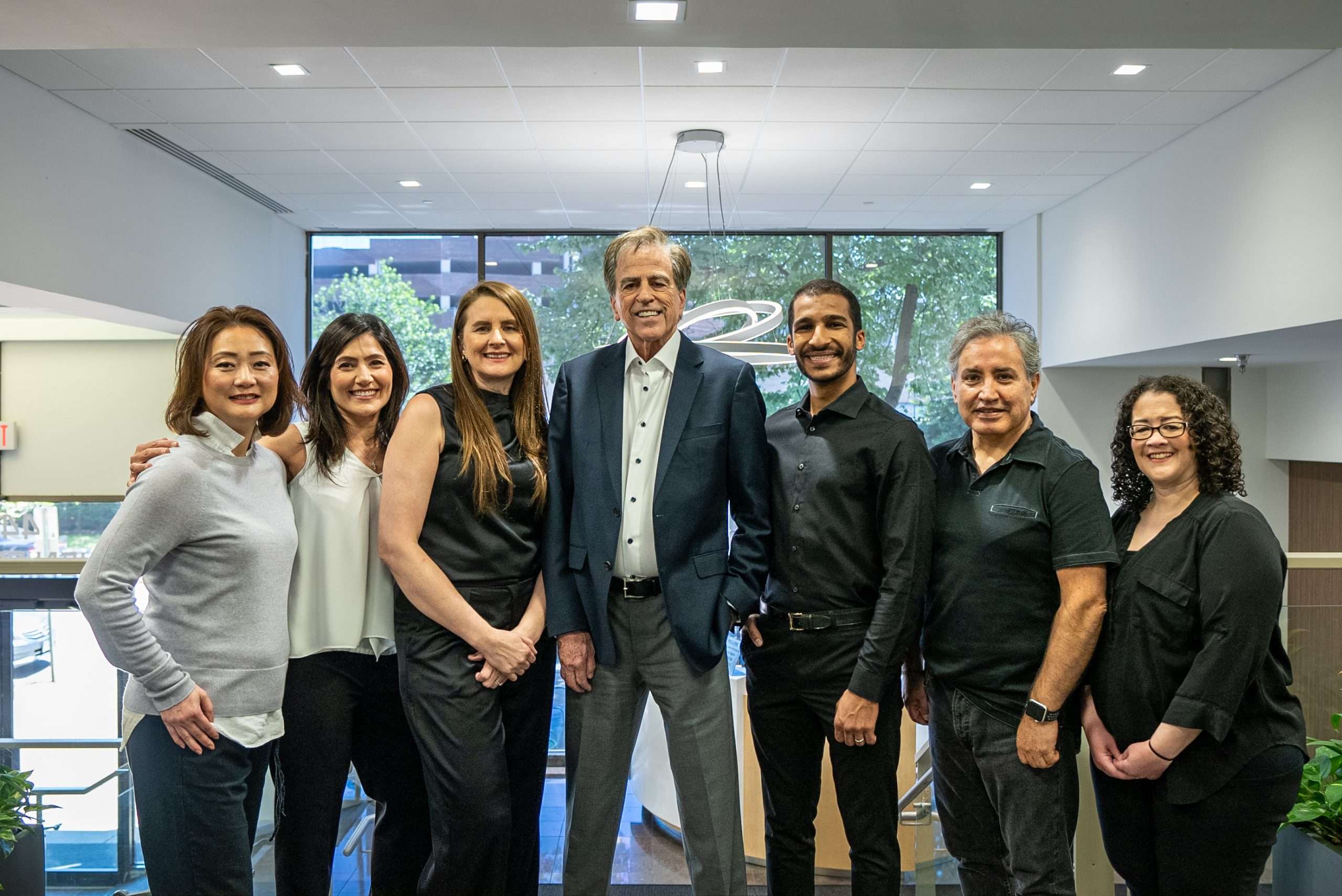
Gerald M. Marlin, DMD, MSD
Specialty-Trained Prosthodontist (DMD, MSD)
- Washingtonian "Top Dentist" 2026 and Hall of Fame
- Surgical and restorative care planned together, in one practice
- In-house dental laboratory since 1985
Or call (202) 244-2101

For patients facing full-arch implant treatment, one of the most consequential decisions is how many implants the case should use. The two most established protocols are All-on-4® (four implants per arch) and All-on-6® (six implants per arch). Both can produce excellent long-term results when properly planned and executed. They are, however, structurally different solutions with different clinical indications, different bone requirements, and different biomechanical profiles.
This page documents the comparison from the perspective of a specialty-trained prosthodontist. The summary: the right choice depends on the patient’s specific anatomy, bite forces, and clinical situation. There is no universal answer.
Request a Specialist Consultation Call (202) 244-2101
Quick Reference: All-on-4 vs. All-on-6
| Criterion | All-on-4® | All-on-6® |
|---|---|---|
| Number of implants per arch | 4 | 6 |
| Implant positioning | 2 anterior vertical, 2 posterior tilted | 4-6 across the arch, typically less tilted |
| Bone requirement | Adequate anterior bone, can avoid posterior bone | Adequate bone across full arch |
| Bone grafting needed | Often avoidable | More frequently required if bone is compromised |
| Load distribution | Concentrated on 4 implants | Distributed across 6 implants |
| Redundancy | Less margin if one implant has issues | More margin if one implant has issues |
| Suitable for high bite forces | Yes, with planning | Better suited |
| Surgical complexity | Lower | Slightly higher |
| Treatment timeline | Same | Same |
| Fixed temporary during healing | Yes | Yes |
| Cost | Lower | Higher |
| Long-term predictability | Excellent in right candidate | Excellent in right candidate |
How Each Protocol Works Biomechanically
All-on-4 Biomechanics
The All-on-4 design uses two vertical implants in the anterior region (where bone density is consistently strongest) and two tilted implants in the posterior region, angled at 30 to 45 degrees. The angulation does three things:
- It positions the implant body inside the available bone, avoiding the maxillary sinus in the upper jaw and the mandibular nerve in the lower jaw.
- It increases the implant’s effective length, distributing force over a longer engagement with the bone.
- It moves the posterior support of the final prosthesis backward, reducing the cantilever forces on the back of the prosthesis.
The geometry works well for patients with adequate anterior bone and compromised posterior bone, which is a common pattern after years of tooth loss.
All-on-6 Biomechanics
The All-on-6 design places six implants across the arch, typically with less aggressive tilting than All-on-4. The additional implants:
- Distribute occlusal forces over a larger area, reducing stress concentration at any single point.
- Provide biomechanical redundancy: if one implant develops a long-term issue, the prosthesis can typically continue functioning on the remaining five.
- Allow for a more natural tooth position in the final prosthesis, often with less cantilevering and a design closer to the original dentition.
- Reduce reliance on tilted implant positioning, which some clinicians prefer biomechanically.
The geometry works well when bone is adequate across the full arch, including the posterior regions where the additional implants are placed.
Bone Requirements
This is the single most important clinical factor in the All-on-4 vs. All-on-6 decision.
All-on-4 bone requirements:
- Adequate bone in the anterior region (the front of the jaw, between the canine teeth).
- The posterior bone can be compromised, because the tilted implant design avoids the posterior bone deficit.
- Patients with significant posterior bone loss from long-term tooth absence are often excellent All-on-4 candidates.
All-on-6 bone requirements:
- Adequate bone across the full arch, including the posterior regions where additional implants are placed.
- Patients with compromised posterior bone typically need bone grafting, sinus augmentation, or ridge augmentation before All-on-6 placement.
- Bone augmentation adds time, cost, and complexity to the case.
For patients with posterior bone loss, the question becomes: graft and then place All-on-6, or place All-on-4 without grafting? The right answer depends on bite forces, aesthetic goals, the patient’s willingness to undergo grafting, timeline, and budget. This is exactly the kind of clinical judgment specialist training is structured to make.
Biomechanical Trade-offs
Load Concentration
All-on-4 concentrates the entire occlusal load on four implants. For patients with average bite forces and well-planned implant placement, this is biomechanically acceptable. For patients with very high bite forces (heavy chewing, parafunctional clenching, bruxism), the load on each implant is at the upper end of what the bone-implant interface can handle long-term.
All-on-6 distributes the same load across six implants, reducing the per-implant load by roughly 30 to 40 percent. This is a meaningful biomechanical advantage for high-force patients.
Tilted Implant Considerations
All-on-4 relies on tilted posterior implants. The biomechanics of tilted implants are well-studied and clinically validated, but they introduce certain considerations:
- Tilted implants must be parallel to each other to support the prosthesis correctly.
- Bone density and quality at the tilted-implant insertion point are critical.
- The prosthesis design must accommodate the tilted positioning.
All-on-6 typically uses less aggressive tilting (or no tilting at all in patients with adequate posterior bone), avoiding these considerations.
Cantilever Effects
The final prosthesis must extend back from the most posterior implant to provide the patient with a complete arch of teeth. The portion of the prosthesis that extends beyond the most posterior implant is called the cantilever. Excessive cantilevering creates flexural forces that stress the implants and the prosthesis material.
- All-on-4 has longer cantilevers if the posterior implants are not tilted far enough back, which is one reason the protocol uses aggressive posterior tilting.
- All-on-6 typically has shorter cantilevers because the additional implants extend the support zone further posteriorly.
Longevity Comparison
Both protocols have documented long-term success when properly planned and executed:
- All-on-4: Multiple peer-reviewed studies report 10-year survival rates above 94 percent for the protocol when executed by experienced clinicians.
- All-on-6: Similar long-term survival rates, with some studies suggesting marginally higher long-term predictability in high-load situations.
In practical terms, both protocols are designed to last decades when the patient is well-selected, the surgical execution is accurate, the prosthesis is well-designed, and ongoing maintenance is appropriate.
The single biggest determinant of long-term success is not the number of implants but the quality of the planning and execution. Dr. Marlin has placed more than 3,900 dental implants, including both All-on-4 and All-on-6 cases, with a documented in-practice implant success rate above 97% for implants placed more than 20 years ago.
Cost Difference
All-on-6 typically costs more than All-on-4 due to:
- Two additional implants.
- Two additional implant components (abutments, screws, etc.).
- More surgical time.
- Potential bone grafting if posterior bone is compromised.
The exact difference depends on the specific case. Material selection for the final prosthesis (zirconia vs. acrylic-hybrid, reviewed on the zirconia vs. acrylic page) often has a larger impact on total case cost than the four-vs-six implant difference. Detailed cost itemization is provided at the planning consultation. Financing and insurance benefit coordination are reviewed on the implant insurance and financing page.
When Each Is the Right Choice
All-on-4 Is Often the Right Choice For:
- Patients with significant posterior bone loss who would otherwise require extensive grafting.
- Patients prioritizing minimum surgical complexity and faster path to treatment.
- Patients with budget constraints who still want fixed full-arch reconstruction.
- Patients with average bite forces and no significant parafunctional habits.
- Patients seeking a well-documented, predictable protocol with strong long-term evidence.
All-on-6 Is Often the Right Choice For:
- Patients with adequate bone volume across the full arch.
- Patients with high bite forces or parafunctional habits like clenching or grinding.
- Patients prioritizing long-term redundancy and maximum stability.
- Patients with larger arches where load distribution matters more.
- Patients who specifically request additional implants for peace-of-mind beyond clinical minimums.
Customized All-on-X
In some cases, neither protocol is the optimal fit. A five-implant plan or an eight-implant plan may be clinically warranted based on the patient’s anatomy. The All-on-X hub page covers the customized approach.
How the Decision Is Actually Made
The decision is not made from a marketing brochure. It is made from:
- Clinical exam of the existing teeth, gums, and bite.
- CBCT 3D imaging of the jaw, revealing bone density, height, and width across the entire arch. We plan every implant case, from a single implant through full-mouth reconstruction, on a CBCT scan.
- Bite force assessment including history of clenching, grinding, or related habits.
- Discussion of patient goals including aesthetic priorities, longevity expectations, and budget.
- Treatment plan development with the recommended protocol and the rationale.
The patient leaves the planning consultation with a clear recommendation, an understanding of why that protocol was recommended, and the option to ask about alternatives.
Request a Specialist Consultation Call (202) 244-2101
All-on-4® and All-on-6® are registered trademarks of their respective owners and are referenced here for descriptive purposes only. Elite Prosthetic Dentistry is not affiliated with, endorsed by, or sponsored by the trademark holders.
Ready to Discuss Your Treatment Options With a Specialist?
Frequently Asked Questions
Is All-on-6 better than All-on-4?
Neither is universally better. Each protocol has clinical situations where it is the right choice. All-on-4 is appropriate when posterior bone is compromised but anterior bone is adequate. All-on-6 is often preferred when bone density allows and the patient has higher bite forces. The decision is made during planning based on the patient's individual anatomy.
Why would I choose All-on-6 over All-on-4?
All-on-6 distributes occlusal forces across six implants instead of four, provides redundancy if any one implant has long-term issues, and offers more design flexibility in the final prosthesis. It is often preferred when bone density allows, when the patient has high bite forces, and when long-term stability is the priority over the minimum-implant approach.
Why would I choose All-on-4 over All-on-6?
All-on-4 is often the better choice when posterior bone loss makes posterior implant placement impractical without extensive bone grafting. The tilted-implant design of All-on-4 takes advantage of the dense bone in the anterior of the jaw, often eliminating the need for grafting. It is also typically less expensive than All-on-6.
Does All-on-6 cost more than All-on-4?
Yes, typically. Two additional implants and any associated bone grafting or sinus augmentation add to the case fee. The exact difference depends on the specific case. Material selection for the final prosthesis also influences cost. Detailed cost itemization is reviewed at the planning consultation.
Can I upgrade from All-on-4 to All-on-6 later?
Adding implants to an existing All-on-4 prosthesis is technically possible but complex. The existing prosthesis would typically need to be replaced, and bone grafting may be needed before placing additional implants. Starting with the right number of implants from the beginning, based on clinical planning, avoids this situation.
Conveniently Located in Friendship Heights
Serving Washington DC, Bethesda, Chevy Chase, McLean, Great Falls, Potomac, and surrounding communities. One block from the Friendship Heights Metro on the Red Line.
Request Your Specialist Consultation
Personally reviewed by Dr. Marlin or his team.
Hours
- Monday — Thursday8:00 AM — 5:00 PM
- Friday8:00 AM — 2:00 PM
- Saturday — SundayClosed
All-on-4® and All-on-6® are registered trademarks of their respective owners and are referenced here for descriptive purposes only. Elite Prosthetic Dentistry is not affiliated with, endorsed by, or sponsored by the trademark holders.