
Choosing Dental Care for an Aging Parent: Dentures, Implant Dentures and Failing Teeth in Their 70s and 80s
For adult children helping a parent in their seventies or eighties: when a loose denture should be relined, remade or supported by implants, whether age or medical history rules implants out, how to plan around dexterity and caregiving, and what to ask.
Practice clinician: Gerald M. Marlin, DMD, MSD, prosthodontist, Elite Prosthetic Dentistry, Friendship Heights, Washington, DC. Last updated .
Adult children in their fifties and sixties often find themselves researching dental care for a parent: a mother whose lower denture no longer stays in, a father whose remaining teeth are failing and who has been told to “just get dentures,” a parent who has stopped eating well and stopped smiling in photographs. The questions are different from the ones you would ask for yourself. This guide is written for the family member doing the research: what the options are for a patient in their seventies or eighties, whether age or medical history rules anything out, how dexterity and caregiving shape the design, and what to ask.
What Usually Brings a Family to This Question
- A lower denture that will not stay in, despite adhesive and relines. The lower ridge shrinks more than the upper, and a lower denture has little to hold onto. This is the most common and most solvable problem on this page.
- Remaining teeth that are failing: loose from bone loss, decayed under old crowns, or fractured, with a recommendation to remove them.
- A parent who has stopped eating well. Soft, limited diets because chewing is painful or unreliable, with the weight loss and nutrition problems that follow.
- A parent who has withdrawn socially, covering their mouth, declining photographs, avoiding restaurants.
- An old denture, worn for decades, that has changed the shape of the face and the bite.
The Options, From Smallest to Largest
Reline the existing denture. The inside surface is refitted to the current ridge. Appropriate when the denture’s teeth and bite are still sound and the only problem is fit. Quick and inexpensive relative to the alternatives, and sometimes all that is needed.
Remake the denture. A new denture made to the current ridge, with the bite height and the teeth designed for the parent’s face as it is now. Appropriate when the old denture is worn, the bite has collapsed, or relining will not solve the fit. A well-made conventional denture serves many patients well, particularly in the upper jaw, where suction and the palate provide stability.
Implant-supported overdenture. Two or more implants in the jaw, with a denture that snaps onto them. The denture still comes out for cleaning, but it no longer lifts, shifts or requires adhesive, and chewing improves substantially. For the lower jaw this is the design that most often returns a parent to normal eating, and it is frequently achievable in patients in their eighties with a modest surgical visit. Our guide on fixed implant teeth versus a removable implant denture explains the design choice.
Fixed implant teeth. A full arch of teeth fixed to implants, which the patient does not remove. The most tooth-like result, and the most demanding to clean and maintain. For a patient with good health, good dexterity and the wish for fixed teeth, it is an excellent option. For a patient who cannot clean under it, it is the wrong design regardless of what is clinically possible.
Keeping and restoring remaining teeth. When a parent has been told to remove their remaining teeth, the first question is whether that is actually necessary. Teeth that can be kept help stabilize a partial denture and preserve the ridge. Our guide on keeping your teeth or replacing them explains how each tooth is classified.
Age, Health and What Actually Rules Things Out
Age alone rules nothing out. Health, medications and healing capacity are what the evaluation reviews, with the parent’s physician involved where a condition or medication bears on surgery. Blood thinners are managed, not stopped on the dental office’s say-so. Bone medications are reviewed by drug, dose and duration. Diabetes is a question of control. A recent cardiac event means elective surgery waits. Our guide on implants and your medical history covers each situation. Where implants are not advisable, a well-made conventional denture designed for the parent’s anatomy is a real solution, not a consolation.
Designing Around Dexterity and Caregiving
The best restoration for an older patient is the one that will be kept clean and will be maintained. That is a design input, not an afterthought:
- Dexterity. A removable overdenture can be cleaned in the hand, by the patient or a caregiver. A fixed prosthesis must be cleaned underneath in the mouth every day. Arthritis, tremor, vision and memory all weigh toward removable designs.
- Caregiving. If a caregiver will be responsible for cleaning, the design should be one a caregiver can manage, and the caregiver should be shown how.
- Maintenance. Attachment inserts on overdentures wear and are replaced on a schedule; relines are periodic; the implants need professional cleaning. The maintenance plan is written down and shared with the family. Our guide on life after reconstruction explains it.
- Visits. The number of visits is stated at planning, surgical steps are consolidated under sedation where health allows, and appointments are placed around transportation and the family’s availability.
What to Ask at the Consultation
- Which of the options above fits my parent, and why not the others?
- Does anything in the medical history change the plan, and has the physician been consulted?
- If implants are proposed, how many, where, and what is the surgical visit like for a patient this age?
- Who will clean the result every day, and has the design been chosen with that in mind?
- How many visits, over what period, and which can be combined?
- What will the maintenance involve, and who does it?
- What does my parent wear during treatment?
- What happens if something does not go as planned?
How Elite Prosthetic Dentistry Approaches Older Patients
Prosthodontics is the specialty of replacing teeth, and dentures, implant overdentures and fixed implant prostheses are its core work. Dr. Gerald M. Marlin plans, surgically places and restores the implants in the practice, and the on-site laboratory makes, relines and repairs the dentures, which keeps the sequence short and the adjustments immediate. The evaluation includes the medical history, with the parent’s physician involved where needed, and the design is chosen with cleaning and maintenance in view. Family members are welcome at the planning visit. The practice offers nitrous oxide, oral sedation and intravenous sedation administered by a certified registered nurse anesthetist, matched to the patient’s health.
When Another Setting Fits Better
A parent whose medical condition requires hospital-based care for any surgery is referred for the surgical phase and restored in the practice afterward. A parent who is homebound or in a care facility may be best served by a provider who visits, for routine care, with the practice handling the prosthetic work. A parent who wants only a simple reline of a sound denture can be served by many general practices.
Documented Cases
- A collapsed bite restored with new custom dentures, with an implant phase under discussion.
- Severely worn implant overdentures remade on the patient’s existing implant bars.
- Restoring multiple old dental implants that had fractured or failed.
More cases are organized in the implant reconstruction success story hub.
Related Decision Guides
- How to choose a denture dentist
- Fixed implant teeth vs. a removable implant denture
- Dental implants and your medical history
- Keep your teeth or replace them?
- Life after reconstruction: maintenance over the years
Arrange an Evaluation for Your Parent
Request an appointment or call (202) 244-2101. Mention that you are arranging care for a parent, so the visit can be planned with that in mind, and have the medication list and physician contacts ready for the first visit.
Your Best Smile Is Within Reach
Request a specialist consultation with Dr. Marlin to discuss your situation and the most appropriate path forward.
Frequently Asked Questions
Is my parent too old for dental implants?
No one is too old by age alone. What matters is overall health, the medications they take, the bone available, their ability to heal, and whether they or a caregiver can clean the result. Patients in their eighties receive implants routinely, often two to four to stabilize a lower denture that has become impossible to wear. The evaluation reviews the medical history with the parent's physician where needed.
My parent's denture is loose. Does it need to be replaced?
Not necessarily. A denture loosens because the ridge beneath it shrinks over the years. The options, in order of scale, are a reline (refitting the inside of the existing denture), a remake (a new denture to the current ridge), or implant support (two or more implants that the denture snaps onto). Which is right depends on the condition of the denture, the ridge, the parent's health and what they want to be able to eat. A lower denture that will not stay in despite relines is the classic case for implant support.
What if my parent cannot manage cleaning a complicated restoration?
Then the plan should not include one. A removable implant overdenture can be taken out and cleaned in the hand, by the patient or a caregiver, which is why it is often the better design for a patient with limited dexterity or memory, even when a fixed prosthesis is possible. The design decision includes who will clean it and how.
How many visits will this involve, and can they be reduced?
A new denture takes a short series of visits; an implant-supported denture adds the surgical visit and a healing period. Where health allows, surgical steps are consolidated under sedation, and the practice plans visits around transportation and caregiving. Ask for the visit count at the planning stage.
Can I attend the appointments and be part of the decision?
Yes, with your parent's agreement. Many patients in their seventies and eighties bring an adult child to the planning visit, and the practice welcomes it. The patient remains the decision-maker; the family member helps with questions, records, scheduling and follow-through.
Related Patient Success Stories
Explore similar patient success stories demonstrating our expertise in advanced prosthetic dentistry.
 Before
 After
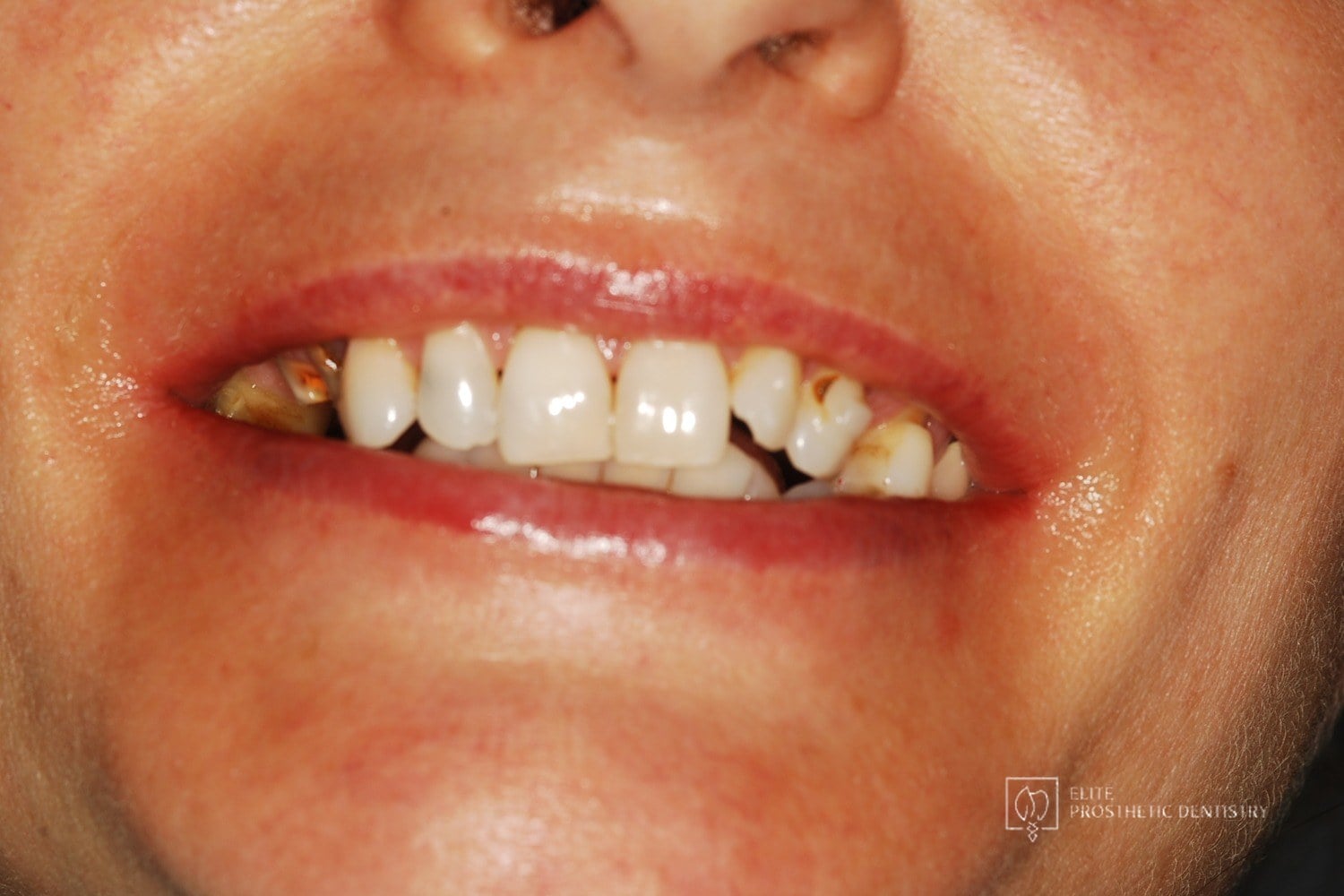
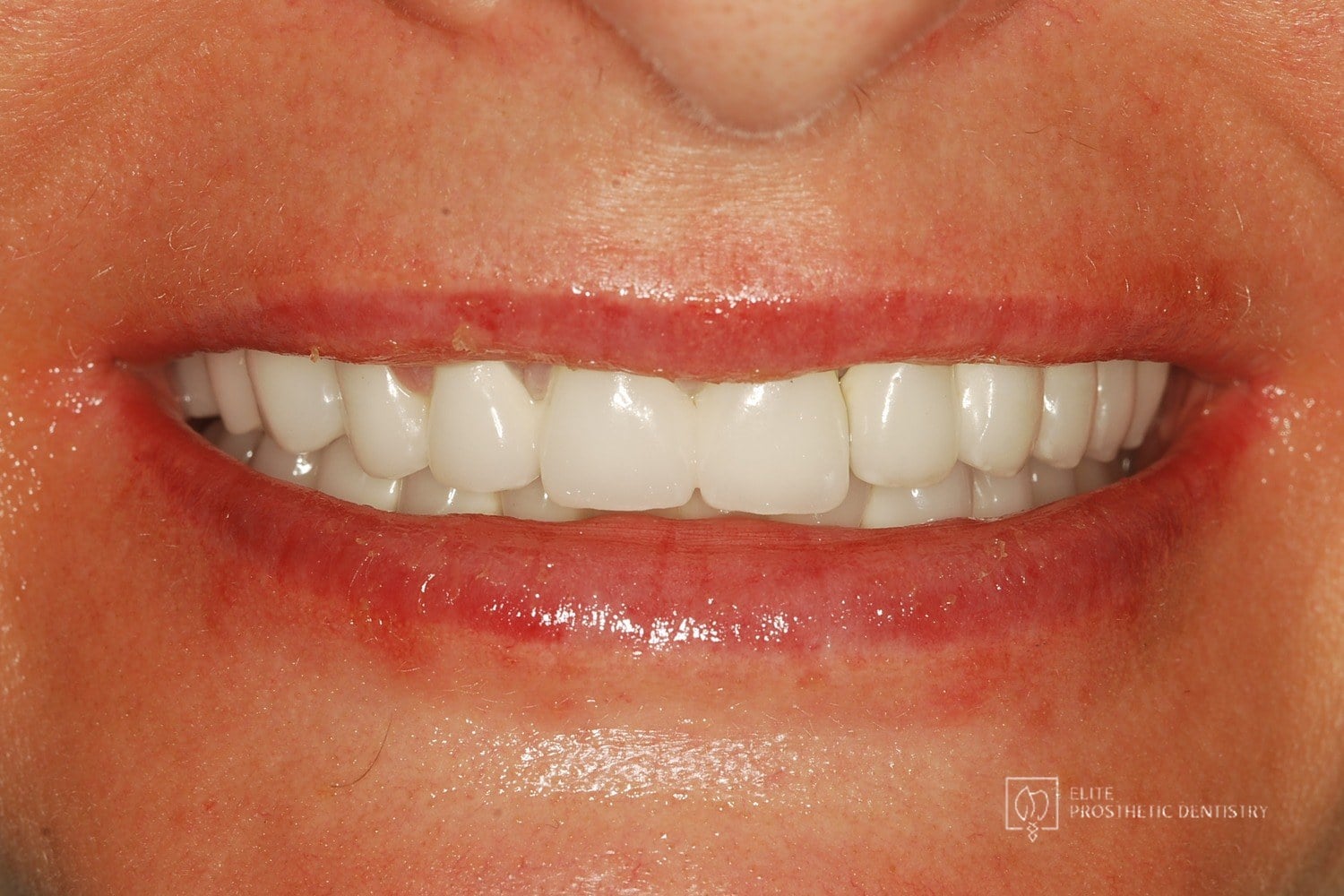
How Aging, Failing Dentistry Was Replaced with a Coordinated Full-Mouth Implant and Crown Reconstruction
The patient presented with throbbing upper-molar pain, long-standing infections, multiple root canals and unfinished prior treatment, generalized sensitivity, and several hopeless teeth.
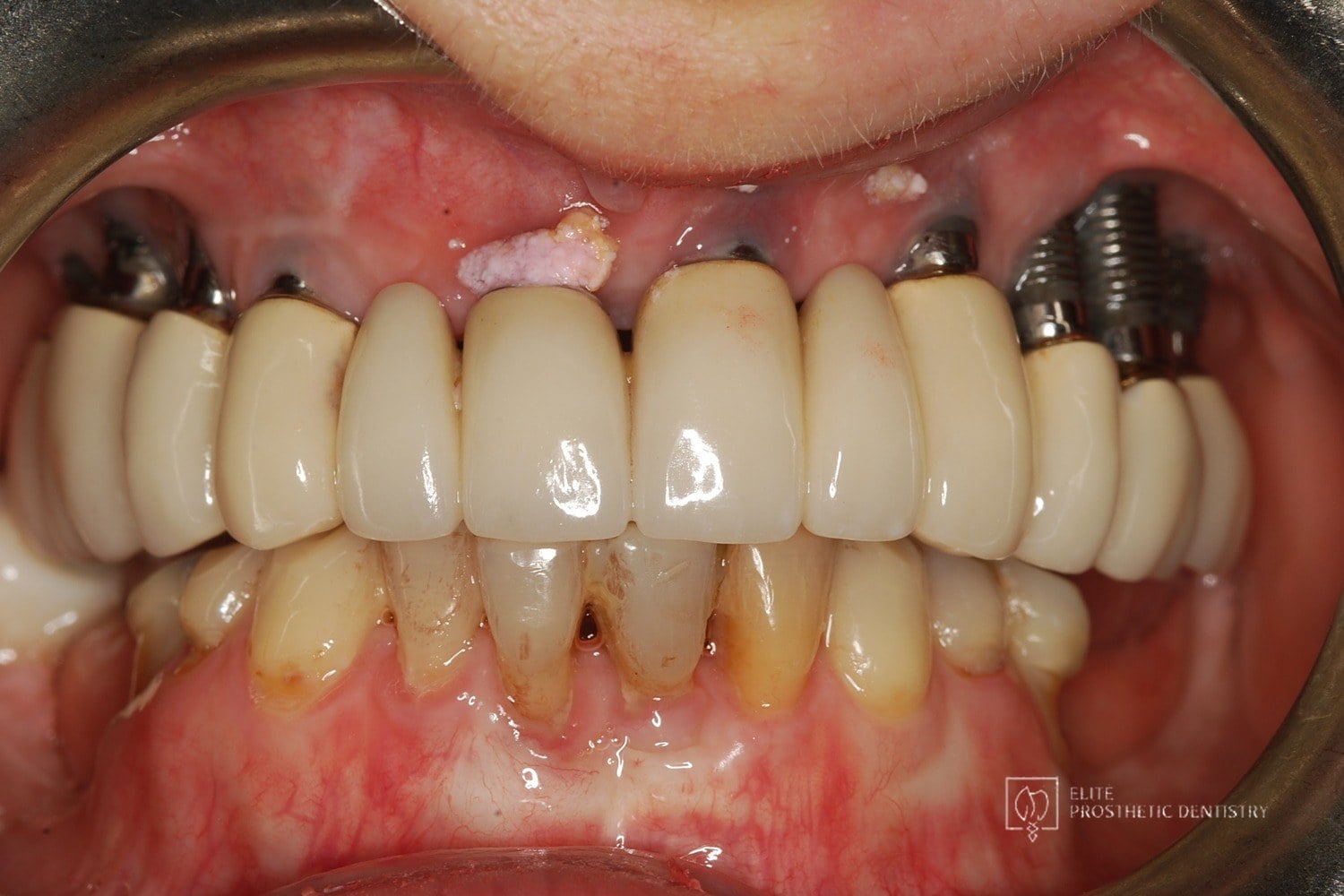 Before
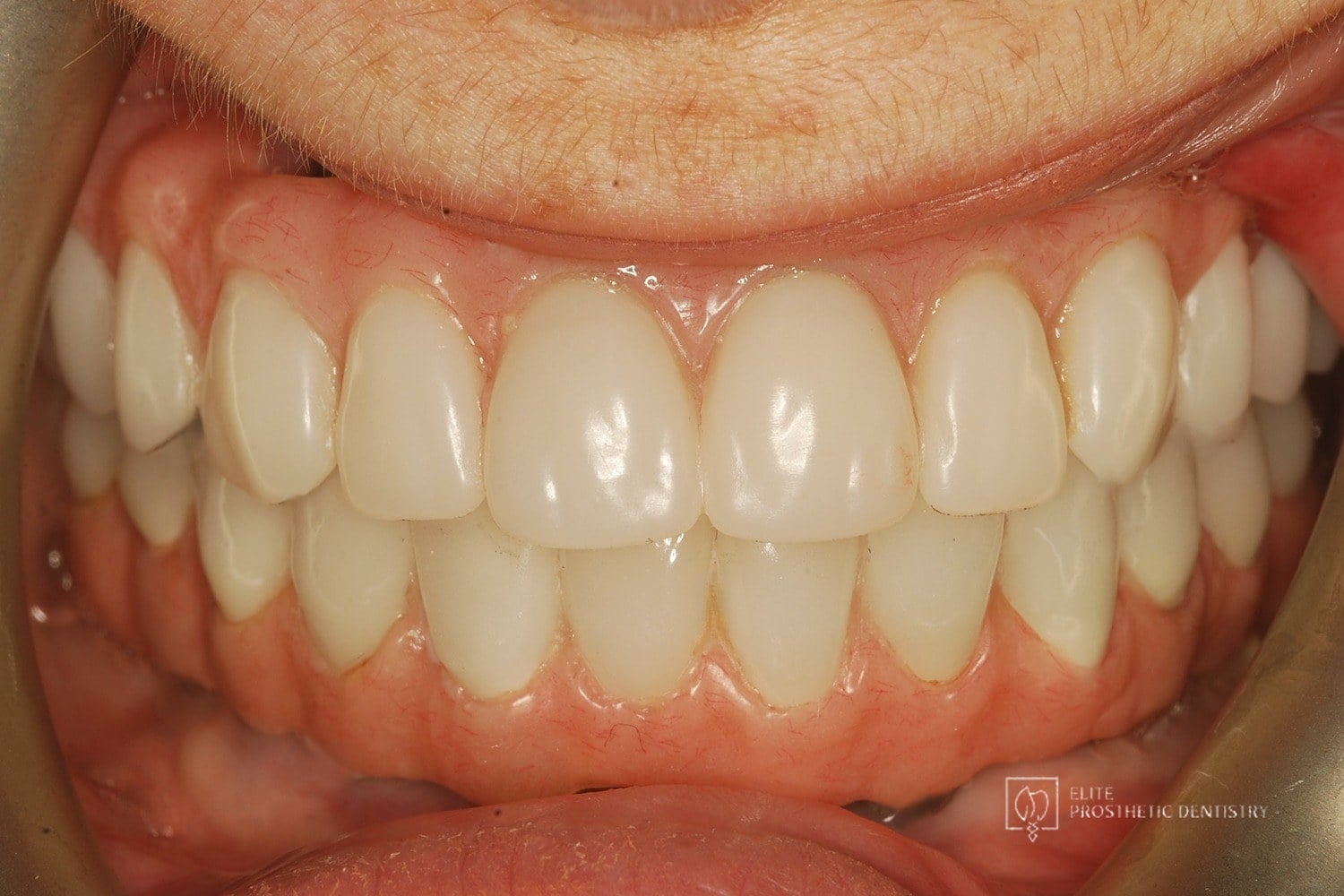 After
How Failing Implants and Severe Bone Loss Were Rebuilt Into a Stable Full-Arch Implant Reconstruction
The patient presented with significant complications from previously placed implants, severe bone loss, failing posterior implants, and an unesthetic full-arch bridge. Both arches required full reconstruction, with the upper arch showing the most advanced bone loss and instability.
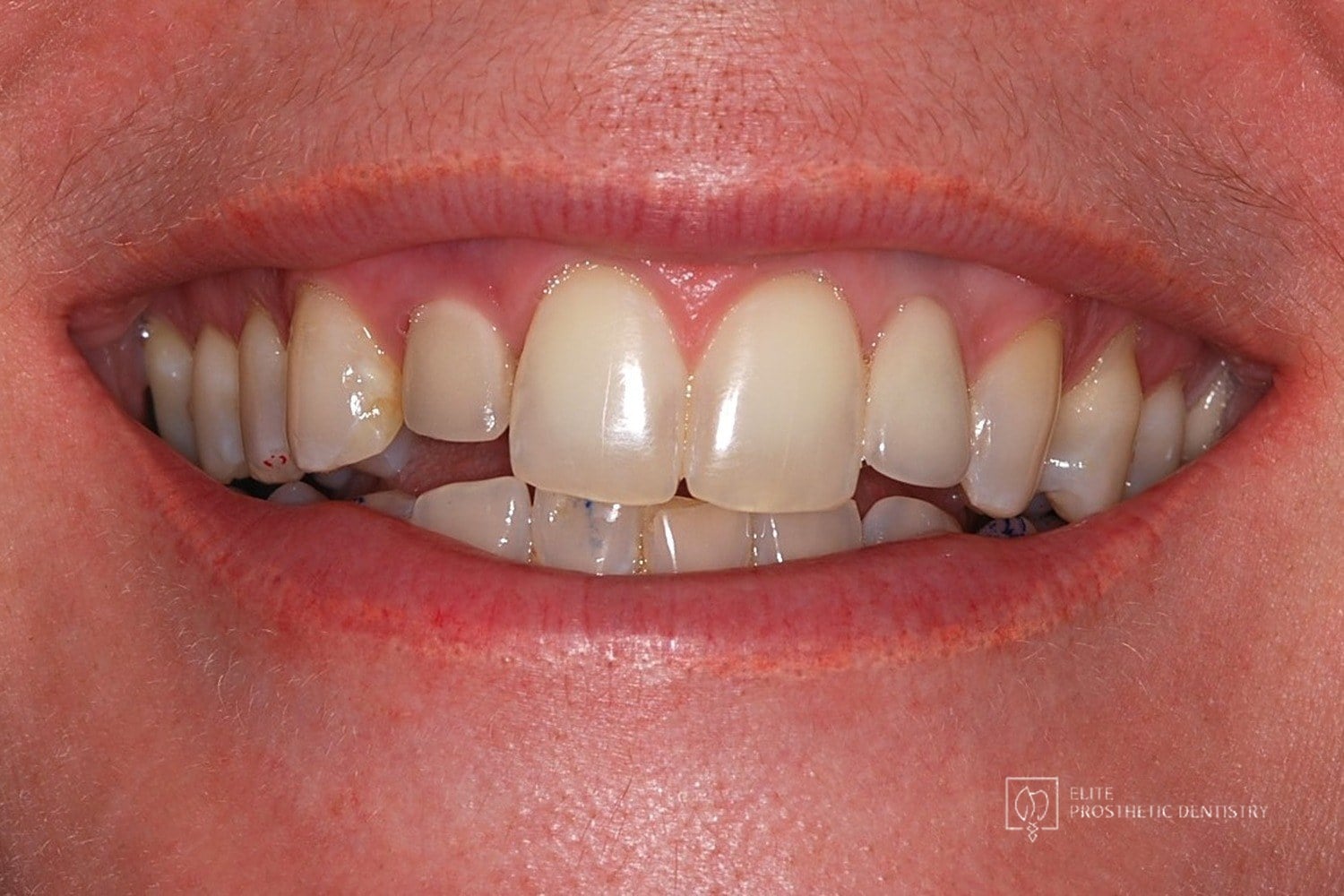 Before
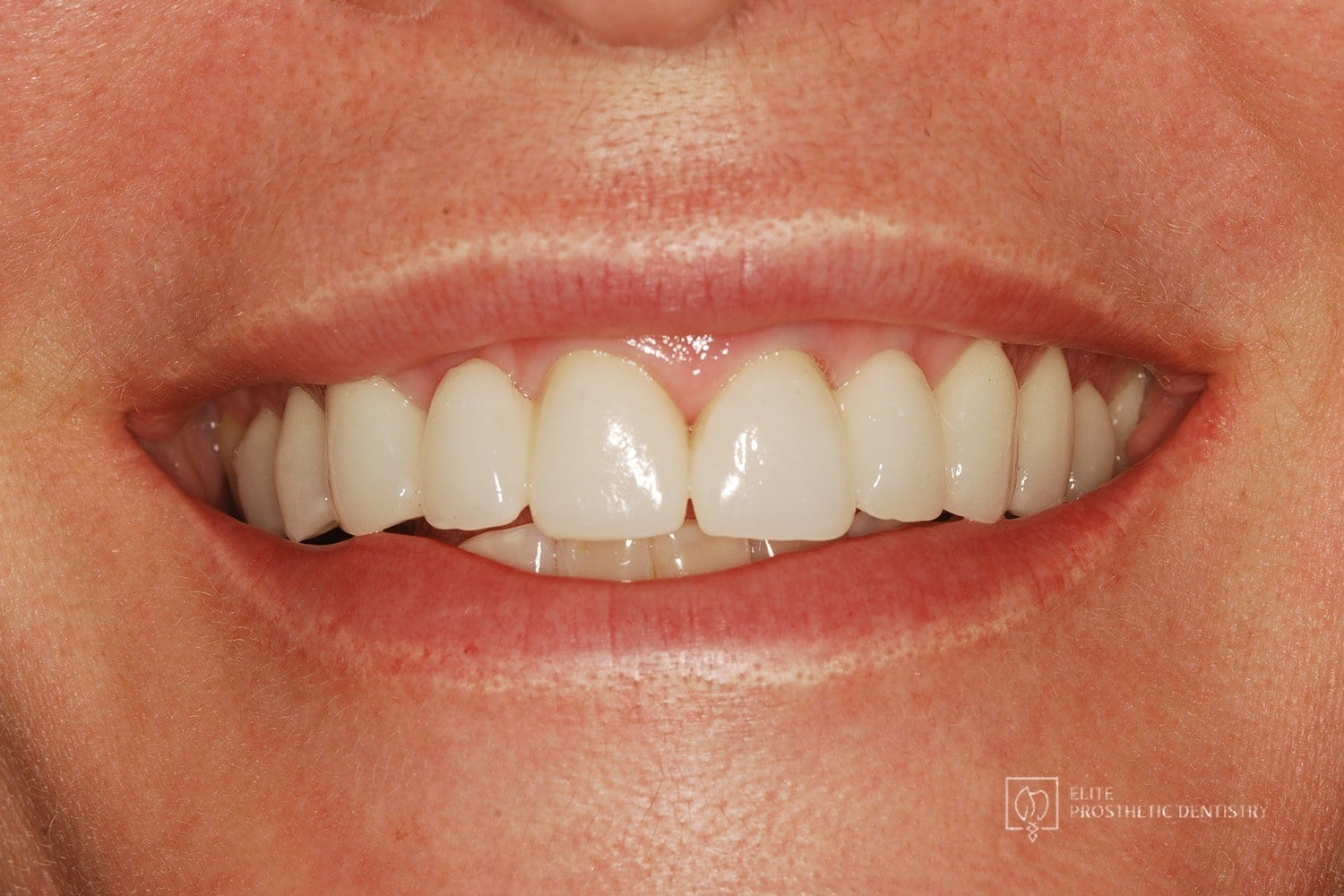 After
How Failing Lateral Incisor Implants Were Replaced with Custom Zirconia Bridges After Severe Bone Loss Made Replacement Implants Impossible
Comprehensive examination including CBCT imaging revealed significant bone loss surrounding implants that were placed outside the buccal plate, most likely due to placement without a CBCT-generated surgical guide. The implants were determined non-salvageable, and the alveolar ridge was too narrow to support replacement implants without extensive reconstruction.
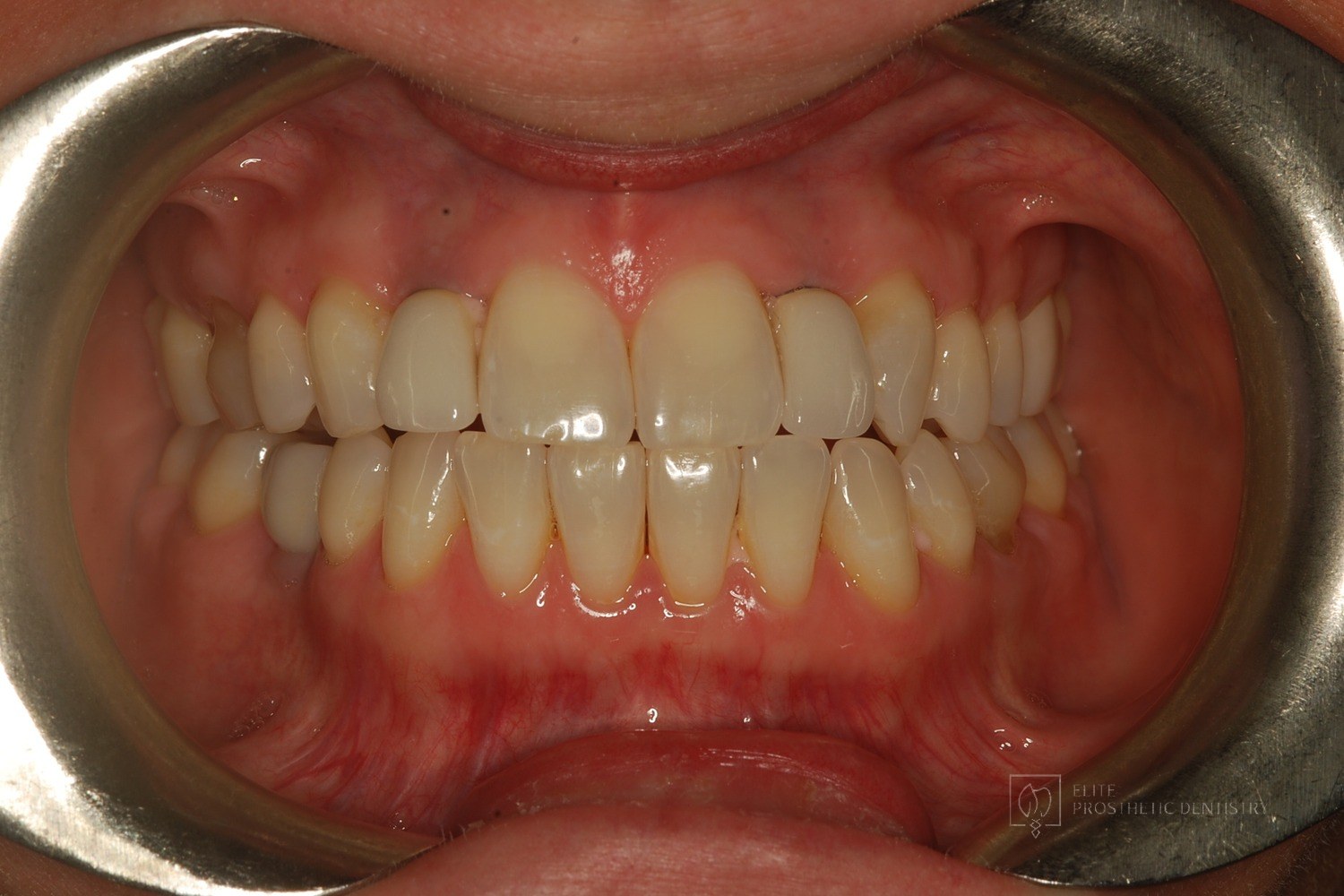 Before
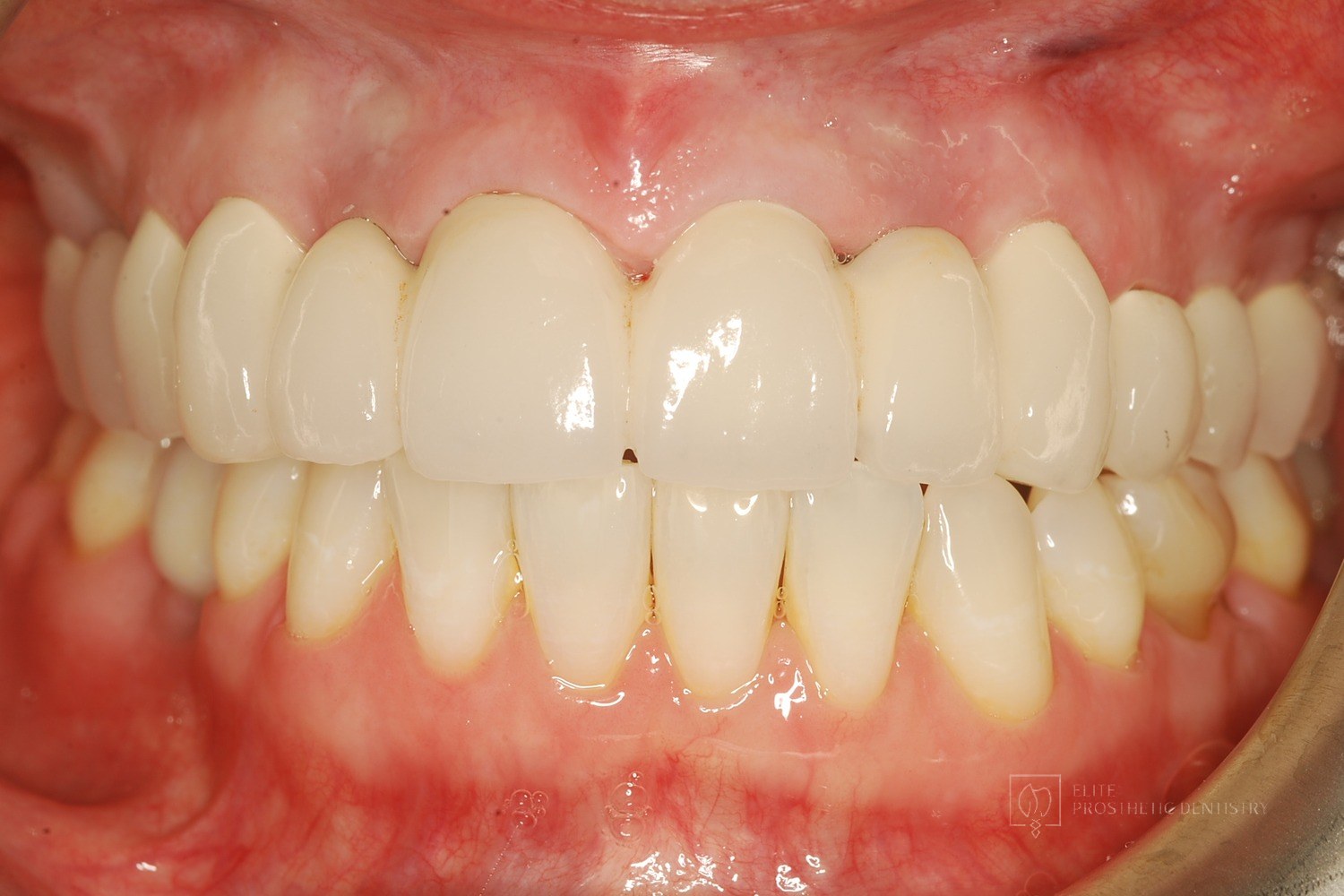 After
How Older Implant Crowns Were Redesigned for a Better Bite and More Natural Appearance
The patient came in after years of living with implant-supported crowns placed more than twenty years earlier that no longer looked or functioned well. CBCT evaluation, reviewed with a radiologist colleague, showed the implants had been placed too far to the buccal in very thin bone and could not support a healthy long-term restoration.
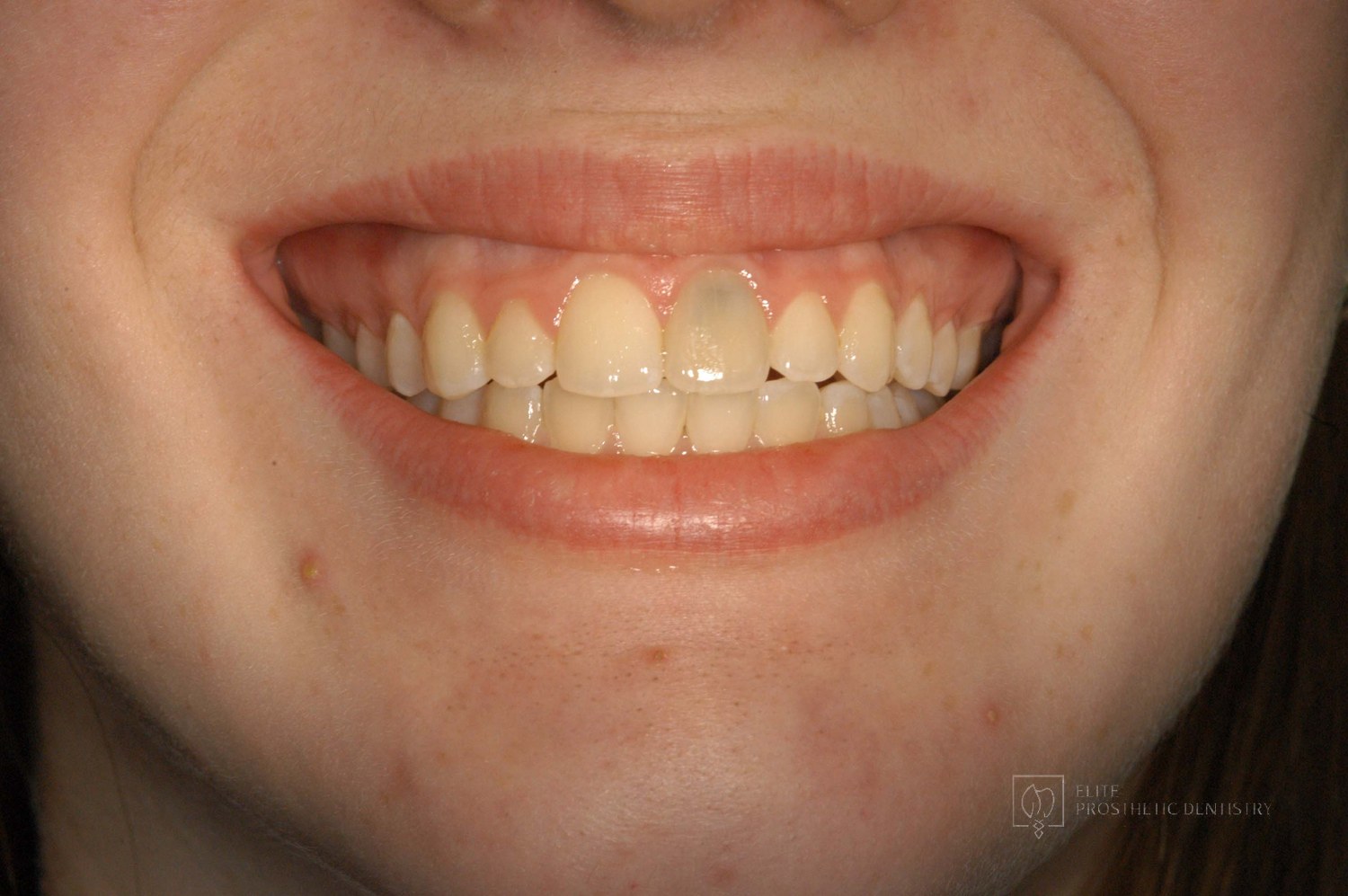 Before
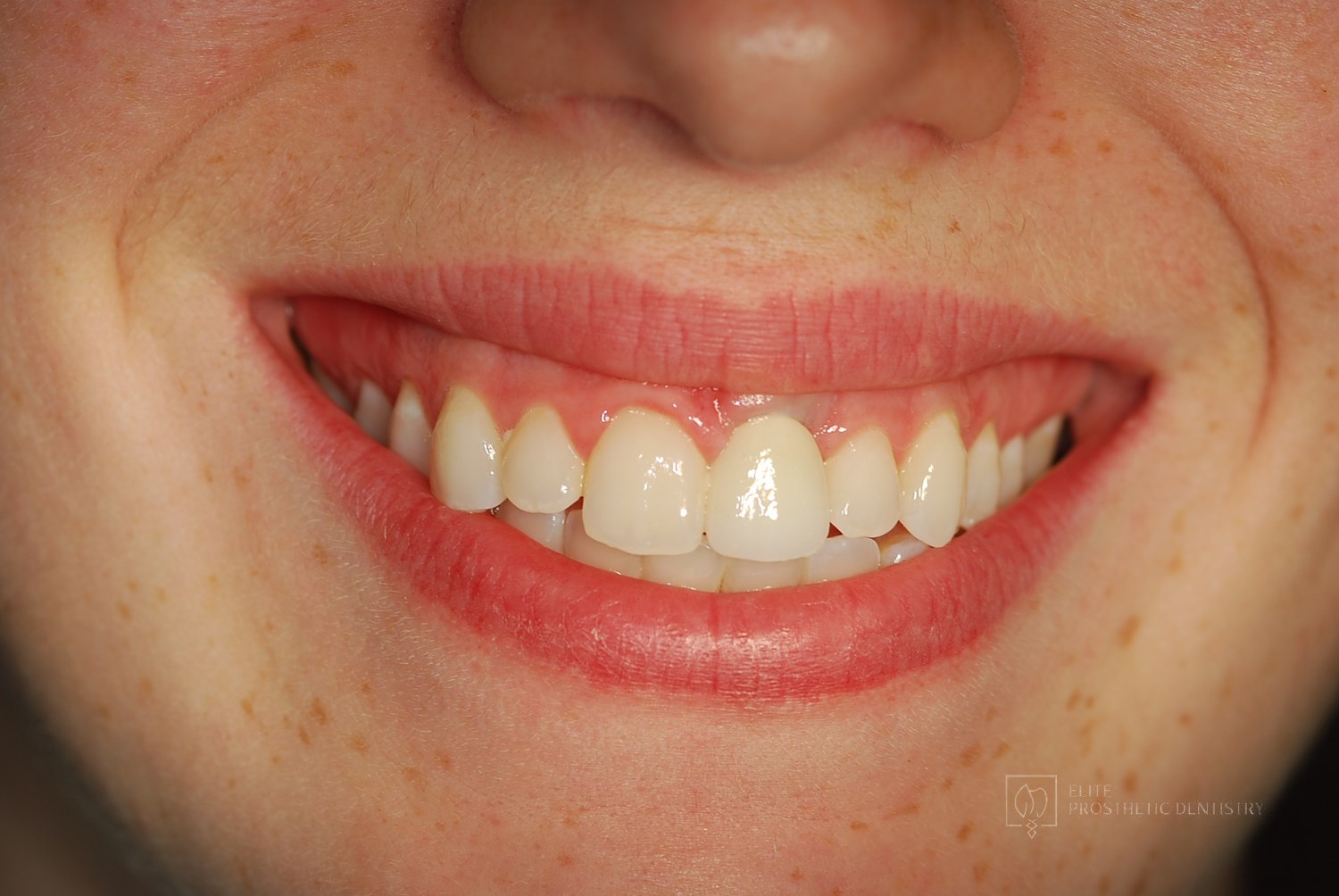 After
How a Front Tooth Lost to Childhood Trauma Was Rebuilt with Bone Grafting and a Long-Lasting Implant
A teenager was referred by her father after earlier trauma left her upper left front tooth slowly failing from root resorption. She was still growing, so an immediate implant was the wrong move. The tooth had to be maintained to buy time, then replaced correctly once she reached skeletal maturity.
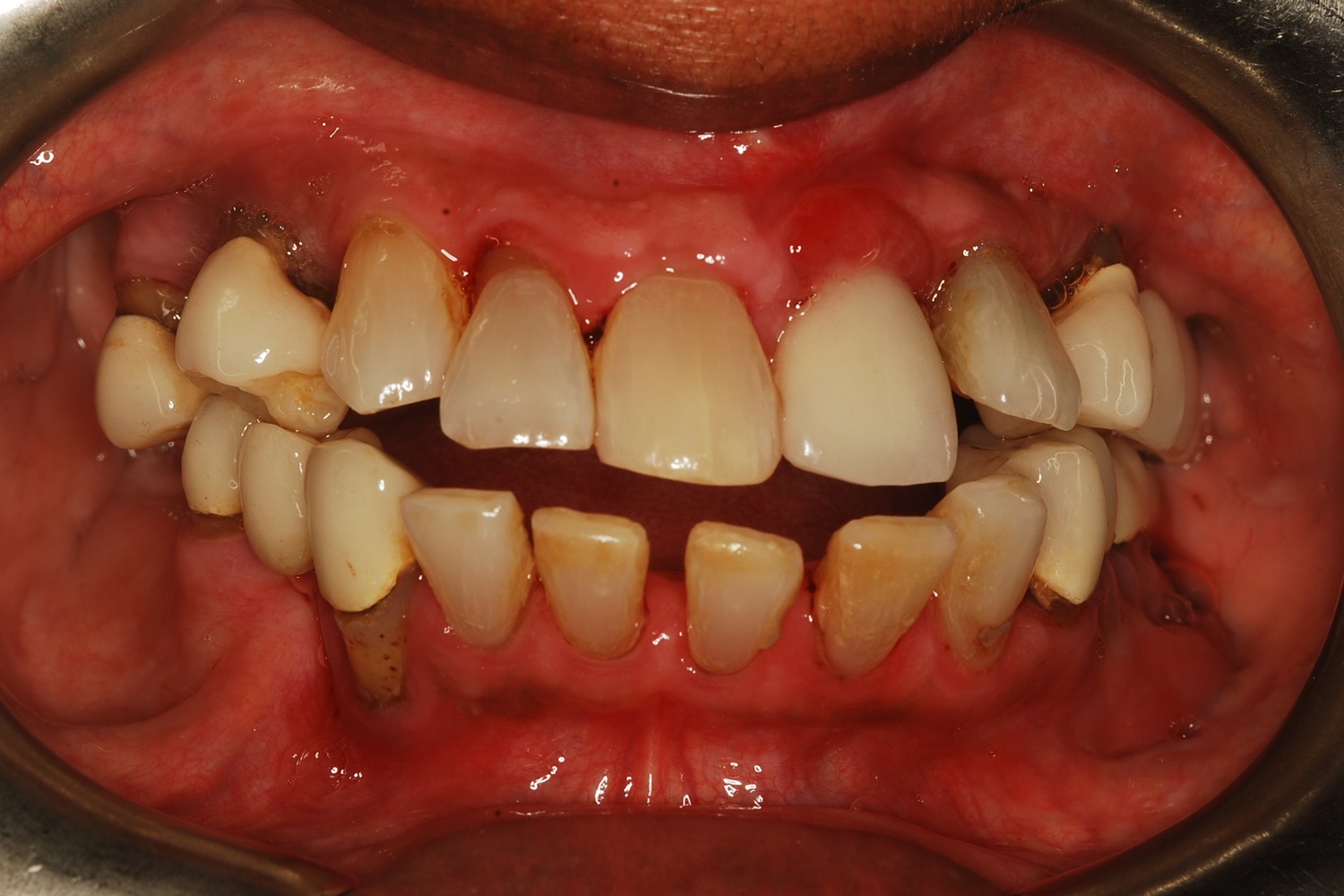 Before
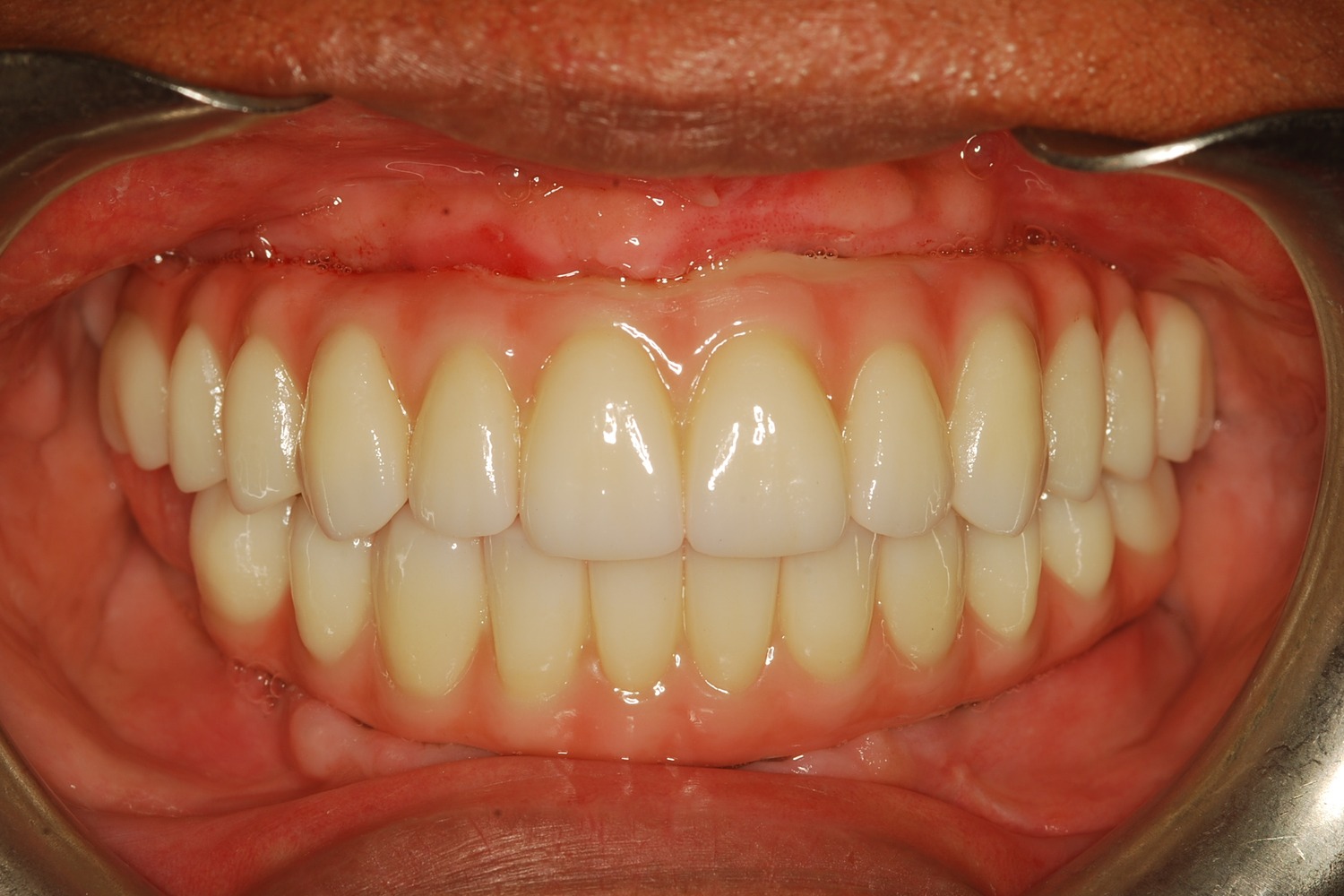 After
How Severe Bone Loss and Bite Dysfunction Were Rebuilt with All-on-6 Implants and a Milled Zirconia Hybrid Prosthesis
The patient presented with severe bone loss, advanced periodontal disease, malocclusion, and a dysfunctional bite that required full-arch rebuilding.
Related Articles
Deepen your knowledge with additional insights on this topic.
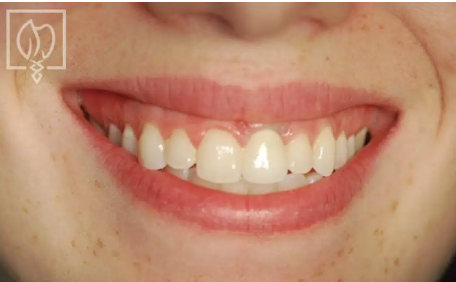 Dental Implants
If a Single Front Tooth Is Replaced with an Implant, Can It Look Natural?
Yes. See the four steps, with real case photos, that make a single front tooth implant indistinguishable from the natural tooth beside it. Washington, DC.
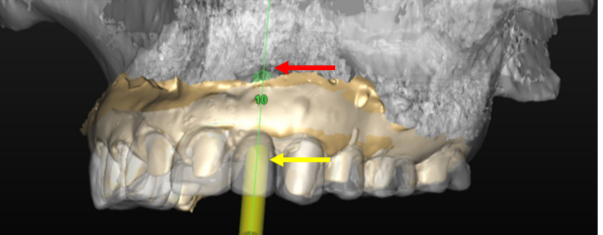 Dental Implants
What Is Precision Implant Placement (PIP)?
Precision Implant Placement plans each implant virtually on a CBCT scan, then delivers it with a custom surgical guide. See the three steps with real images.
 Dental Implants
What Is the Ideal Surgical Guide for Precision Implant Placement?
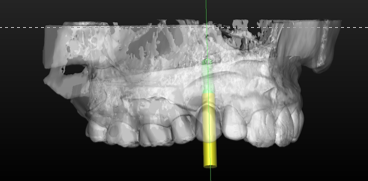
Not all surgical guides are equal. The gold standard is CBCT-based: planned virtually in 3D, 3D printed, and seated on your teeth. A DC prosthodontist explains.
 Dental Implants
When Should an Implant Not Be Done?
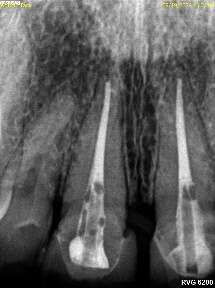
Healthy roots, thin bone, steep bony angles: a DC prosthodontist shows a real case where refusing implants was the right call, and what was done instead.
 Dental Implants
What Is Staged Implant Therapy?
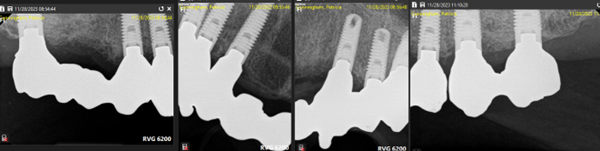
Staged implant therapy replaces failing teeth in phases while you keep fixed teeth the entire time. A DC prosthodontist walks through a real case in stages.
 Dental Implants
The Four Types of Dental Implants: Which One Is Right for You?
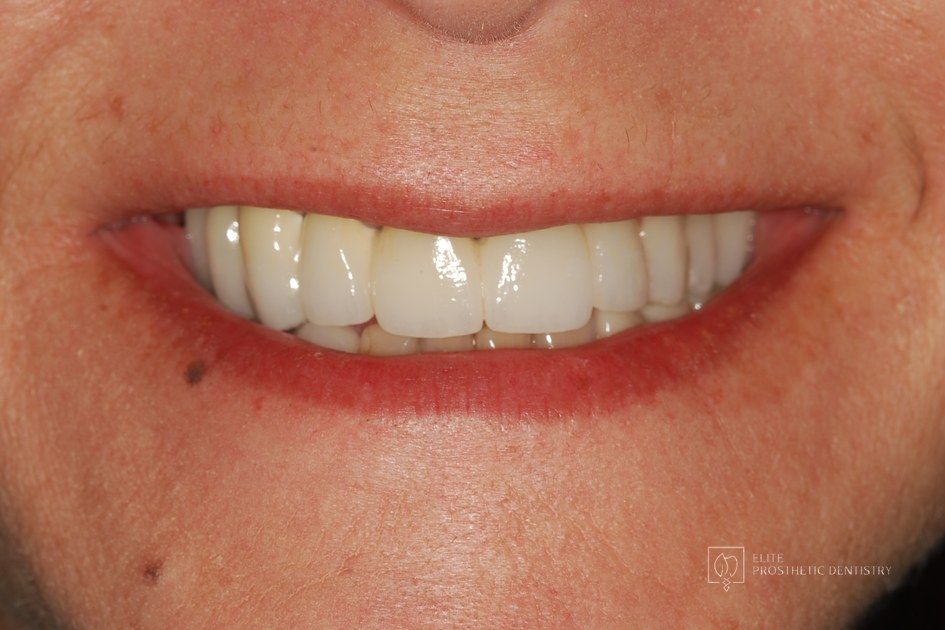
Endosteal, subperiosteal, zygomatic, and mini implants each solve a different problem. A DC prosthodontist explains the four types and who each one fits.
Ready to Transform Your Smile?
With 40+ years of experience and 3,900+ dental implants placed, Dr. Marlin and the team deliver dentistry planned to last. Request a specialist consultation.