

Dental Work Before Retirement: Timing Comprehensive Treatment While You Still Have Employer Benefits
Why the years before retirement are when many patients address aging dentistry: what employer dental benefits, HSA and FSA funds, COBRA and Medicare actually do with major treatment, how to phase a plan across benefit years, and what to decide first. No fees quoted.
Practice clinician: Gerald M. Marlin, DMD, MSD, prosthodontist, Elite Prosthetic Dentistry, Friendship Heights, Washington, DC. Last updated .
The five years before retirement are when many patients decide to address the dentistry they have been living with. The reasons are practical. Employer dental benefits end with employment. Health savings account balances are at their highest. The teeth and restorations placed in their thirties and forties are now thirty years old. And the prospect of managing failing dental work on a fixed income, without a plan, is unattractive. This guide explains what employer benefits, HSA and FSA funds, COBRA and Medicare actually do with major dental treatment, how a plan is phased across benefit years, and what to decide first. It quotes no fees; the practice provides a written plan with fees after an examination.

Why This Window Matters
Three things converge in the years before retirement. Dentistry placed decades ago is reaching the end of its service, and the signs are usually present if someone looks: margins exposed by recession, decay under one crown of a set, porcelain chipped by years of grinding, a bite that has lost height. The resources that help pay for major treatment, employer dental coverage, flexible spending contributions and health savings account balances, are at their most available. And the patient has reached the point of wanting the problem solved rather than managed. Patients come to us for both comprehensive reconstruction and proactive replacement of aging dentistry, and the pre-retirement patient is often the clearest example of the second.
The practical mistake is to wait. Deferring the diagnosis until after retirement does not defer the problems; it moves them into a period with fewer resources and more urgency. Our guide on signs your dental work is wearing out is a reasonable self-check before the planning visit.
What Each Resource Actually Does
This is general information about how these programs commonly work. Plan terms differ and change; confirm your own with the plan administrator.
Employer dental insurance. Most PPO plans contribute a percentage of their allowed fee toward major restorative work, up to an annual maximum that resets each plan year and is typically a small fraction of a comprehensive plan. Many exclude implants or apply waiting periods and missing-tooth clauses. A predetermination of benefits submitted before treatment tells you what the plan will contribute. Coverage usually ends with employment. Two plan years, the last working year and the next, can each contribute when a plan is phased across them. Our guide on what determines cost and how to compare quotes explains the mechanics.
Flexible spending accounts. FSA contributions are generally forfeited at the end of the plan year, subject to any grace period or limited carryover the employer allows. Dental treatment that restores function is an eligible expense. Patients phasing treatment often align a phase with the final FSA year of employment.
Health savings accounts. HSA funds can generally be used for eligible dental expenses at any time, including after retirement and after Medicare enrollment, though new contributions generally stop once a person is enrolled in Medicare. For many pre-retirement patients the HSA is the largest dental resource they have, and it does not expire.
COBRA and retiree plans. Continuation coverage under COBRA may extend employer dental coverage for a limited period at the full premium. Some employers offer retiree dental plans; terms vary. Either can keep a benefit year available for a phase scheduled after the last day of work.
Medicare. Original Medicare does not cover most dental care, including examinations, crowns, bridges, dentures and implants; it covers a narrow set of dental services tied to a covered medical procedure. Some Medicare Advantage plans include dental benefits, with annual limits, networks and covered services that vary widely and change yearly; most contribute modestly toward major work. Patients should read the specific plan’s dental summary rather than assume coverage.
Financing. Elite Prosthetic Dentistry is a fee-for-service practice that works with three independent healthcare lenders, whose terms are set by the lenders and are subject to credit approval. Details are on the insurance and financing page.
Decide the Whole Plan, Then Phase It
The clinical order of a comprehensive plan does not change for the calendar: disease and infection first, then failing teeth, then the structural work that the rest depends on, then the restorations, with the bite designed at the start so that each phase fits the last. Within that order, the schedule can be built to the patient’s resources:
- A diagnostic and planning visit now, so the whole plan is known before any benefit year ends.
- The most urgent phase in the current benefit year.
- The next phase early in the following plan year, so a second annual maximum applies.
- FSA contributions aligned with a phase that falls inside the plan year.
- HSA funds held for the phases after employment ends.
- A predetermination submitted for each phase, so the contribution is known in advance.
Our guide on understanding your treatment plan explains what a complete plan contains, including the phases.
What to Decide First
- What is actually failing, and what can wait. The examination classifies each restoration and each tooth: replace now, plan to replace, or monitor. Our guide on when to replace old crowns and bridges explains the judgment.
- Whether the mouth needs a plan or a repair. One failing crown in a stable mouth is a repair. Several aging restorations that share the same bite and the same age are a plan, even if carried out in phases.
- What the result should be. A rebuilt bite that will serve for decades is designed differently from a series of replacements, and the design is decided once.
- What the result will need. Maintenance over the years is part of the plan and part of the budget. Our guide on life after reconstruction explains it.
How Elite Prosthetic Dentistry Approaches Pre-Retirement Planning
After the examination, imaging and records, Dr. Gerald M. Marlin sets out a written plan with fees before anything begins: the classification of each tooth and restoration, the alternatives considered, the end result, the phases and their order, and what each phase includes. The team submits predeterminations of benefits where they are useful and helps with financing applications. Where a patient’s resources favor a particular schedule, the phases are placed to use them, without changing the clinical sequence. The goal is to help patients make thoughtful long-term decisions, whether treatment is limited or comprehensive, and the pre-retirement window is one of the better moments to make them.
When Another Setting Fits Better
A patient whose examination shows a stable mouth with routine needs does not need a comprehensive plan and is well served by their general dentist. A patient whose only question is how a specific insurance or Medicare plan works is best served by the plan’s own documentation and a benefits advisor. A patient with active gum disease needs it treated before restorative planning.
Documented Cases
- Aging, opaque restorations replaced with customized ceramic restorations, proactive replacement planned as one design.
- Aging crowns and a long-standing bridge replaced as one coordinated plan.
- Aging, failing dentistry replaced across both arches with a coordinated implant and crown reconstruction.
- A loose upper bridge and aging crowns rebuilt with staged implant reconstruction, a plan carried out in stages.
More cases are organized in the replacing aging dentistry success story hub.
Related Decision Guides
- What determines the cost of implants and reconstruction, and how to compare two quotes
- When should old crowns and bridges be replaced?
- Signs your dental work is wearing out
- Understanding your dental treatment plan
- General dentist vs. prosthodontist for aging crowns, bridges and implant restorations
Request a Planning Visit
If retirement is within a few years and your dental work is as old as your career, request an appointment or call (202) 244-2101. The planning visit produces a written plan with phases, so you can decide what to do in which benefit year.
Your Best Smile Is Within Reach
Request a specialist consultation with Dr. Marlin to discuss your situation and the most appropriate path forward.
Frequently Asked Questions
Does Medicare cover dental implants, crowns or dentures?
Original Medicare does not cover most dental care, including routine examinations, crowns, bridges, dentures and implants. It covers a narrow set of dental services that are tied to a covered medical procedure. Some Medicare Advantage plans include dental benefits, but what they cover, the annual limits and the provider networks vary widely from plan to plan and year to year, and most provide modest contributions toward major work. Patients should read the specific plan's dental summary rather than assume.
Can I still use my HSA after I retire?
In general, money already in a health savings account can continue to be spent on eligible dental expenses, including implants, crowns and dentures, after retirement and after Medicare enrollment. New contributions generally stop once a person is enrolled in Medicare. The practical point is that an HSA balance built during working years remains available for dental treatment later. Confirm the current rules with your plan administrator or tax advisor.
What happens to my dental insurance when I leave my employer?
Employer dental coverage usually ends with employment or at the end of that month. Continuation coverage under COBRA may be available for a limited period at the full premium, and some employers offer retiree dental plans. Individual dental plans can be purchased but often have waiting periods and lower annual limits for major work. The reliable window is the one you have now, and a predetermination of benefits tells you what it will contribute.
Should I do everything before I retire, or spread it out?
Decide the whole plan first, then schedule it. Infection, failing teeth and structural problems come first on clinical grounds. Within that order, the phases can be placed so that employer benefits, an FSA plan year, HSA funds and the first year of retirement each contribute where they can. What should not happen is deferring the diagnosis until the benefits are gone and the problems are larger.
Is it worth replacing aging dental work that is not yet failing?
Often, when the signs are present: exposed margins, decay found under one crown of a set, chipped porcelain, a bite that has changed. Replacing a crown while the tooth beneath is sound is a smaller procedure than replacing it after the tooth has failed. The guide on when to replace old crowns and bridges explains the judgment. The years before retirement are when many patients make that decision deliberately rather than reactively.
Related Patient Success Stories
Explore similar patient success stories demonstrating our expertise in advanced prosthetic dentistry.
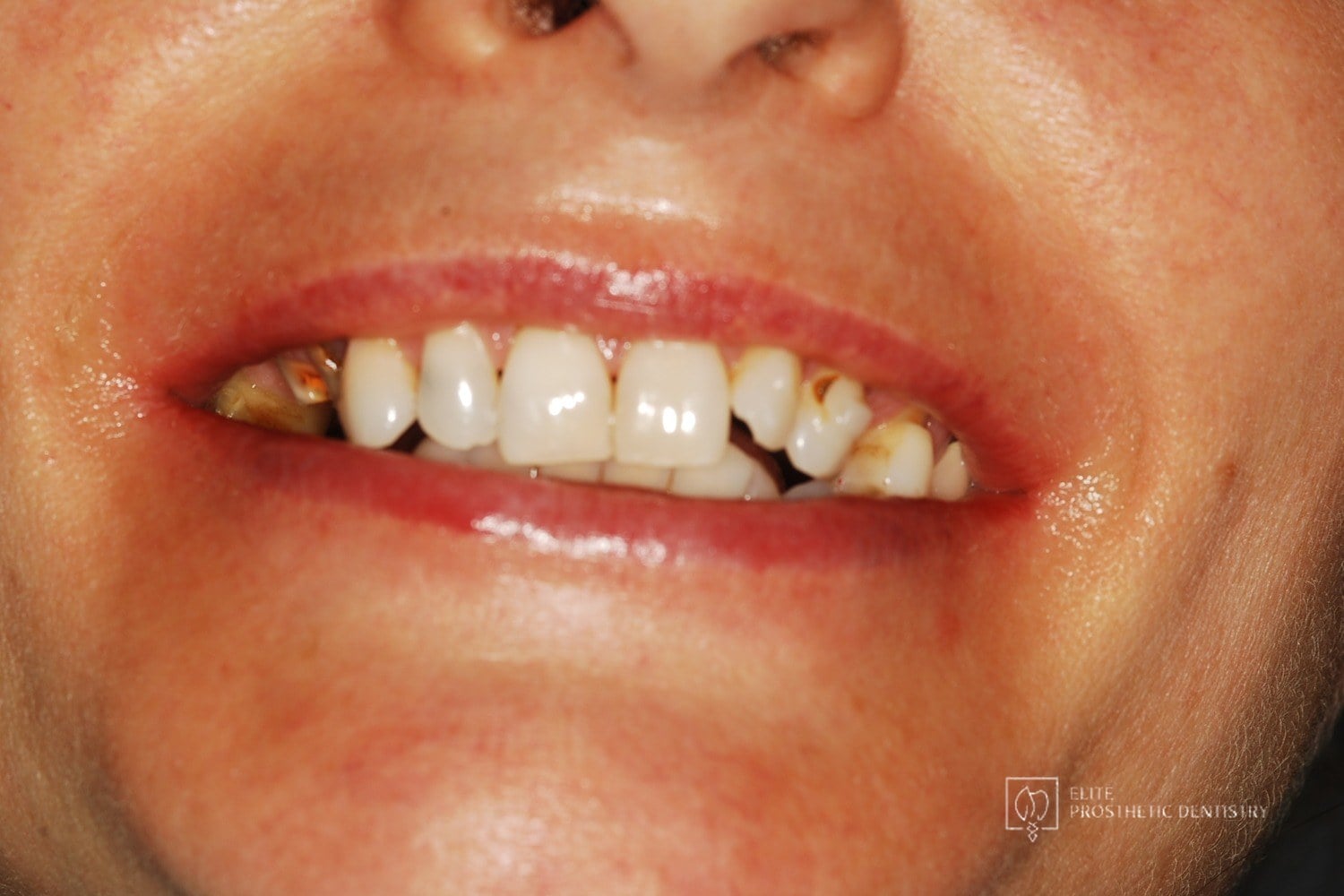 Before
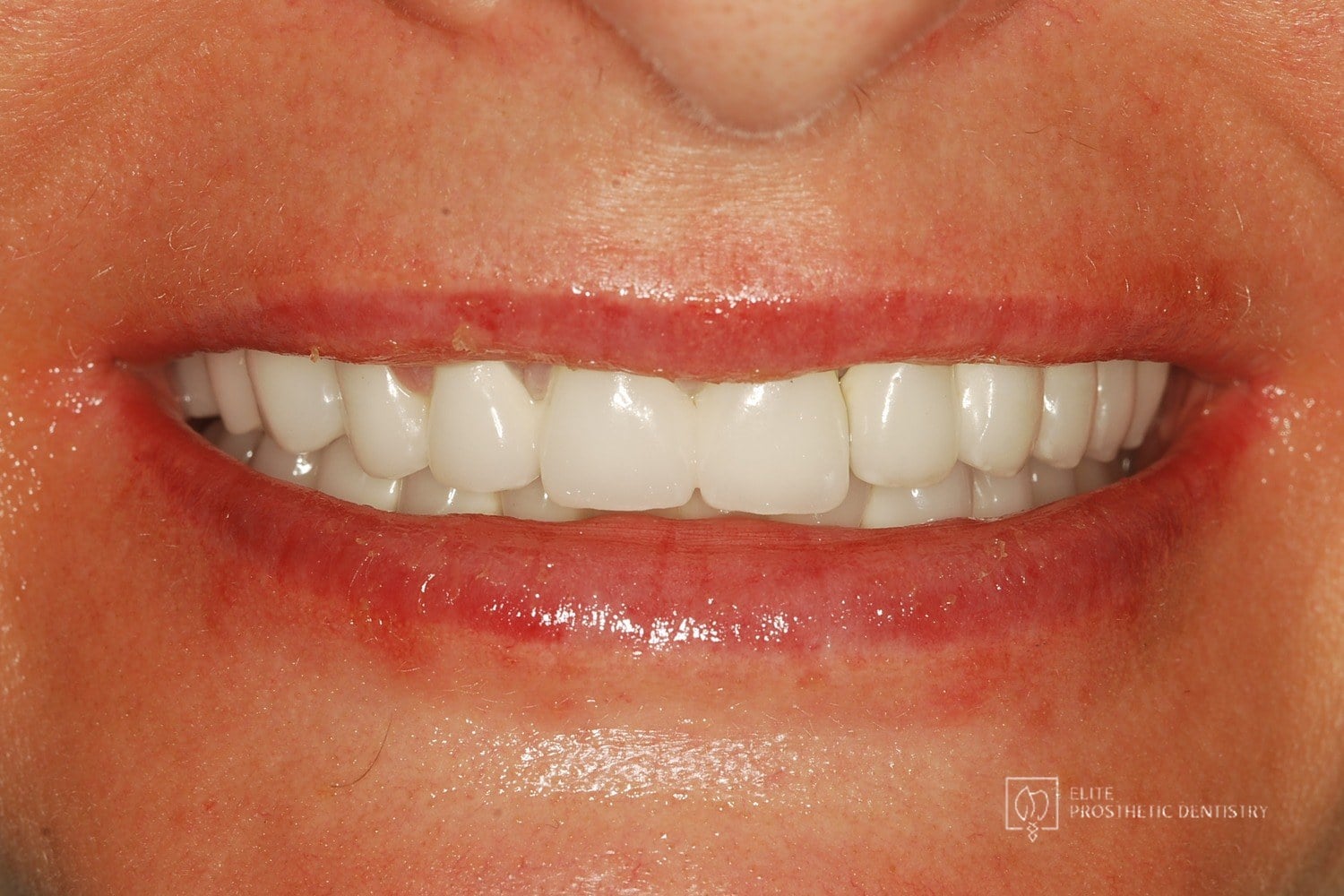 After
How Aging, Failing Dentistry Was Replaced with a Coordinated Full-Mouth Implant and Crown Reconstruction
The patient presented with throbbing upper-molar pain, long-standing infections, multiple root canals and unfinished prior treatment, generalized sensitivity, and several hopeless teeth.
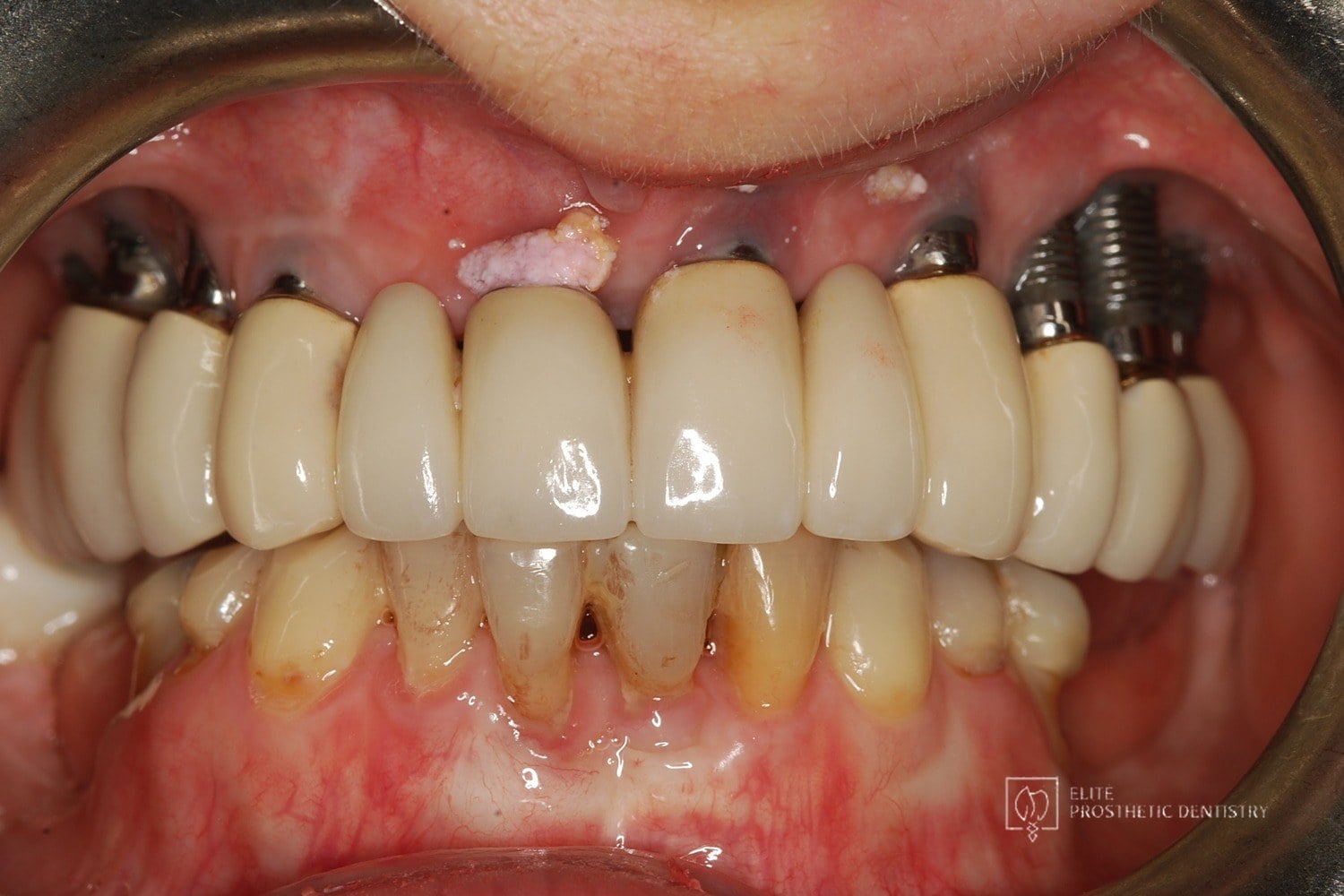 Before
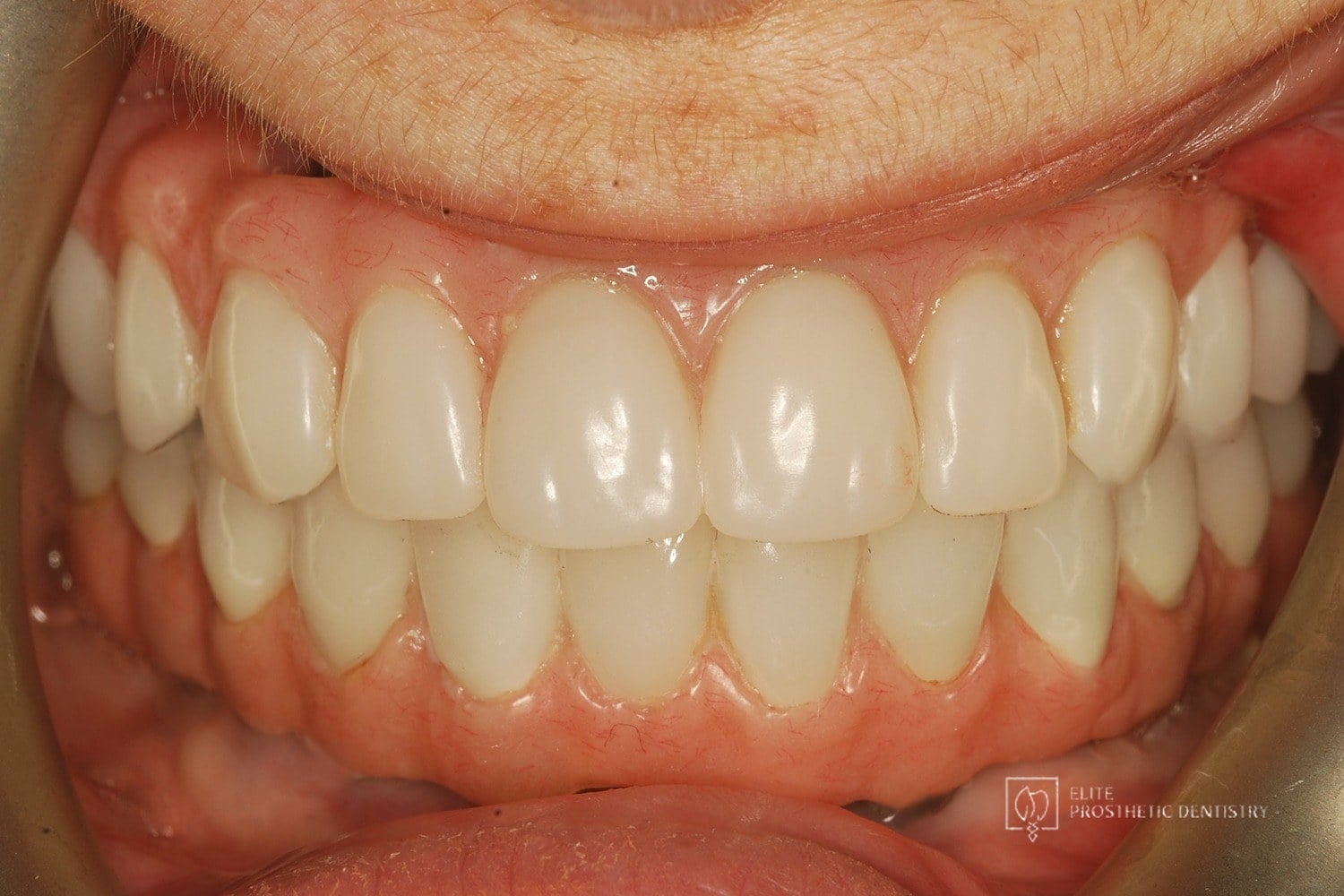 After
How Failing Implants and Severe Bone Loss Were Rebuilt Into a Stable Full-Arch Implant Reconstruction
The patient presented with significant complications from previously placed implants, severe bone loss, failing posterior implants, and an unesthetic full-arch bridge. Both arches required full reconstruction, with the upper arch showing the most advanced bone loss and instability.
 Before
 After
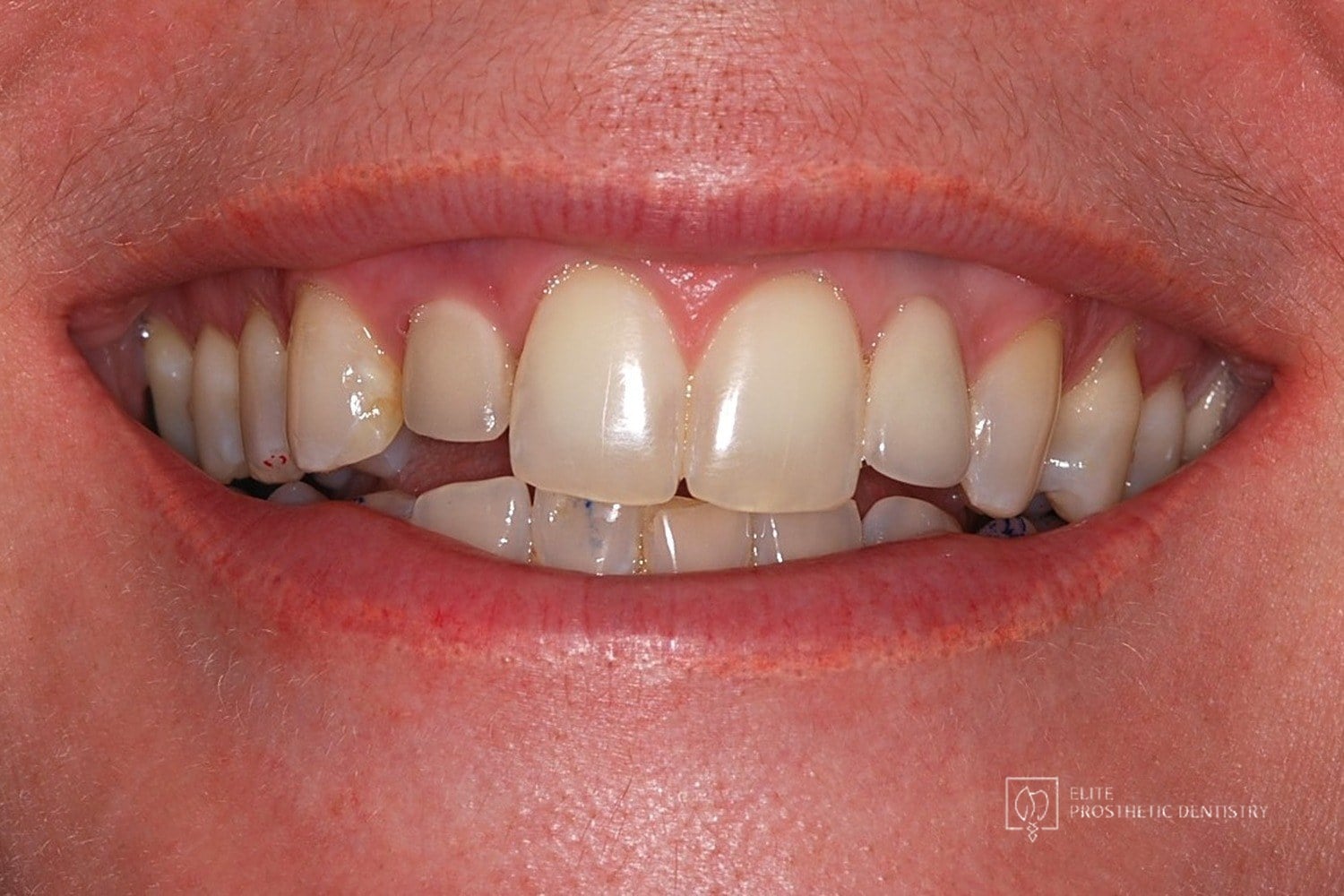
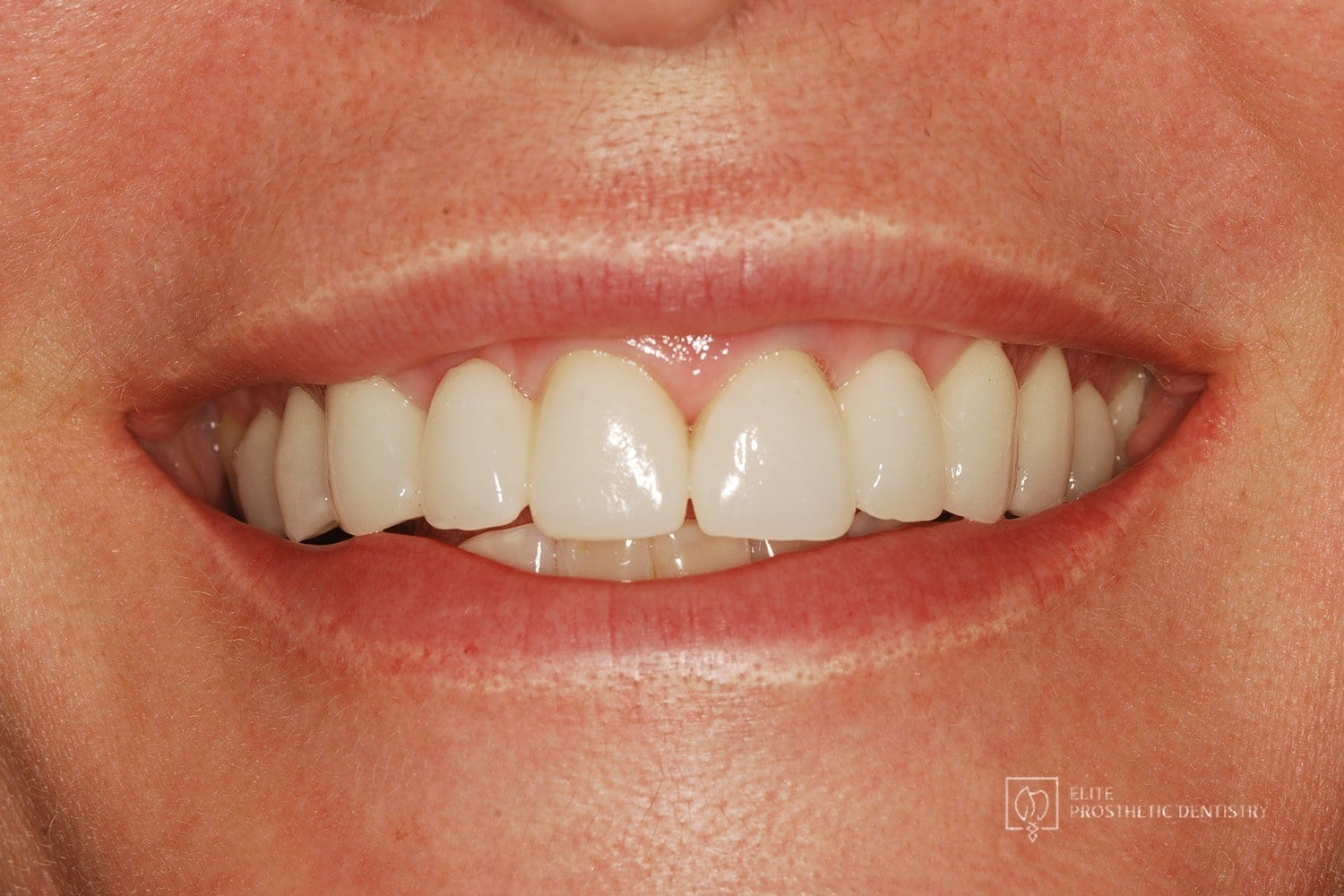
How Failing Lateral Incisor Implants Were Replaced with Custom Zirconia Bridges After Severe Bone Loss Made Replacement Implants Impossible
Comprehensive examination including CBCT imaging revealed significant bone loss surrounding implants that were placed outside the buccal plate, most likely due to placement without a CBCT-generated surgical guide. The implants were determined non-salvageable, and the alveolar ridge was too narrow to support replacement implants without extensive reconstruction.
 Before
 After
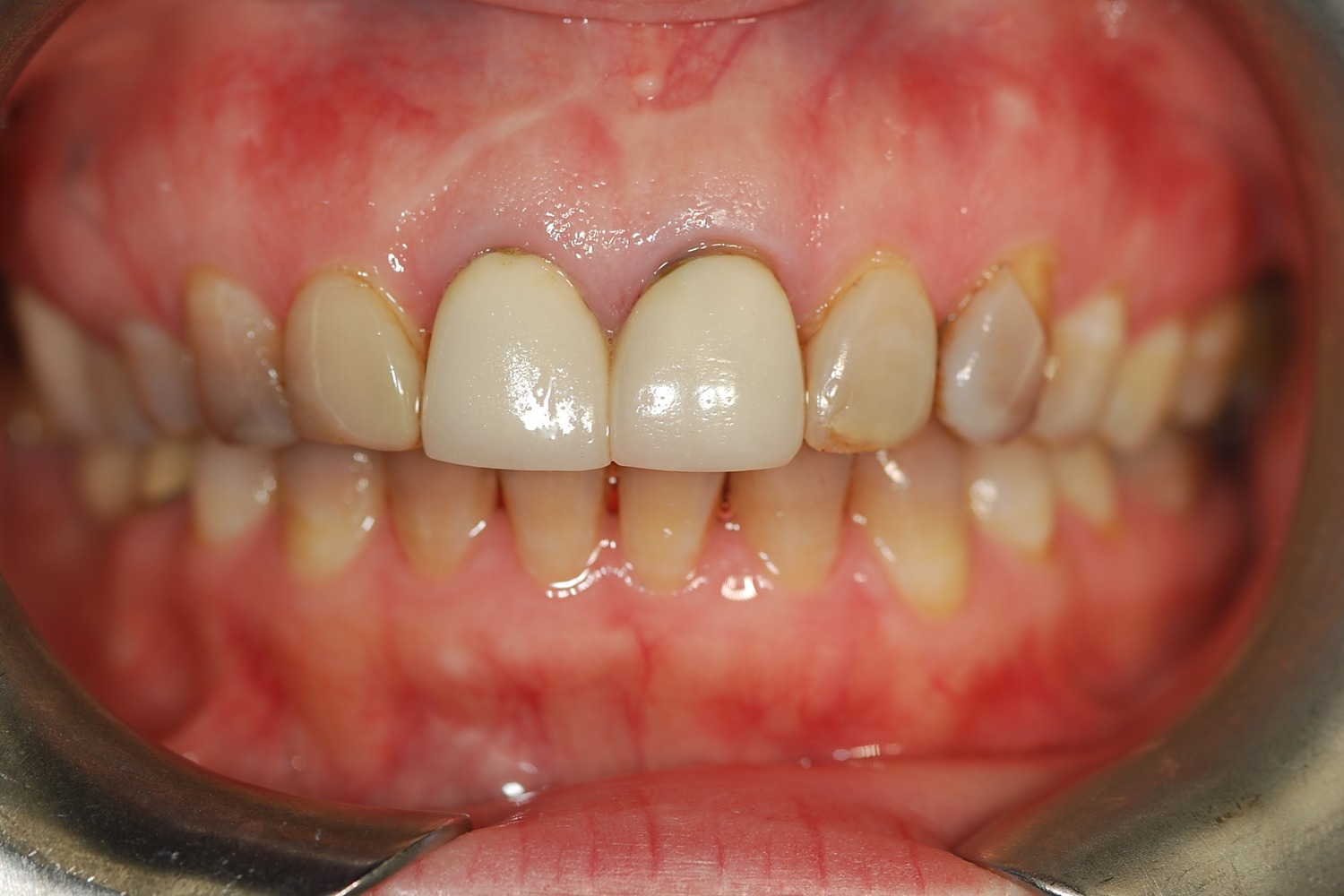
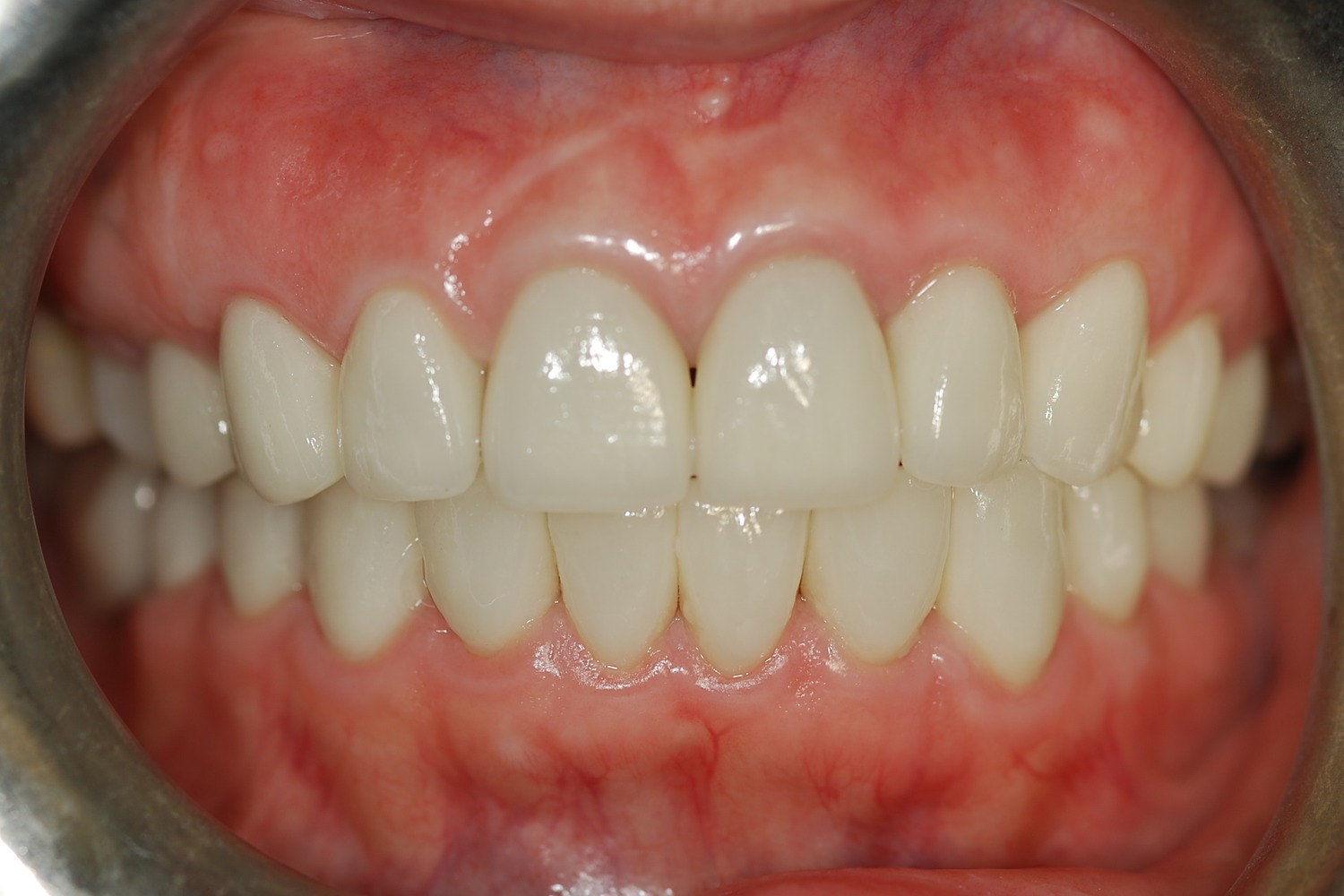
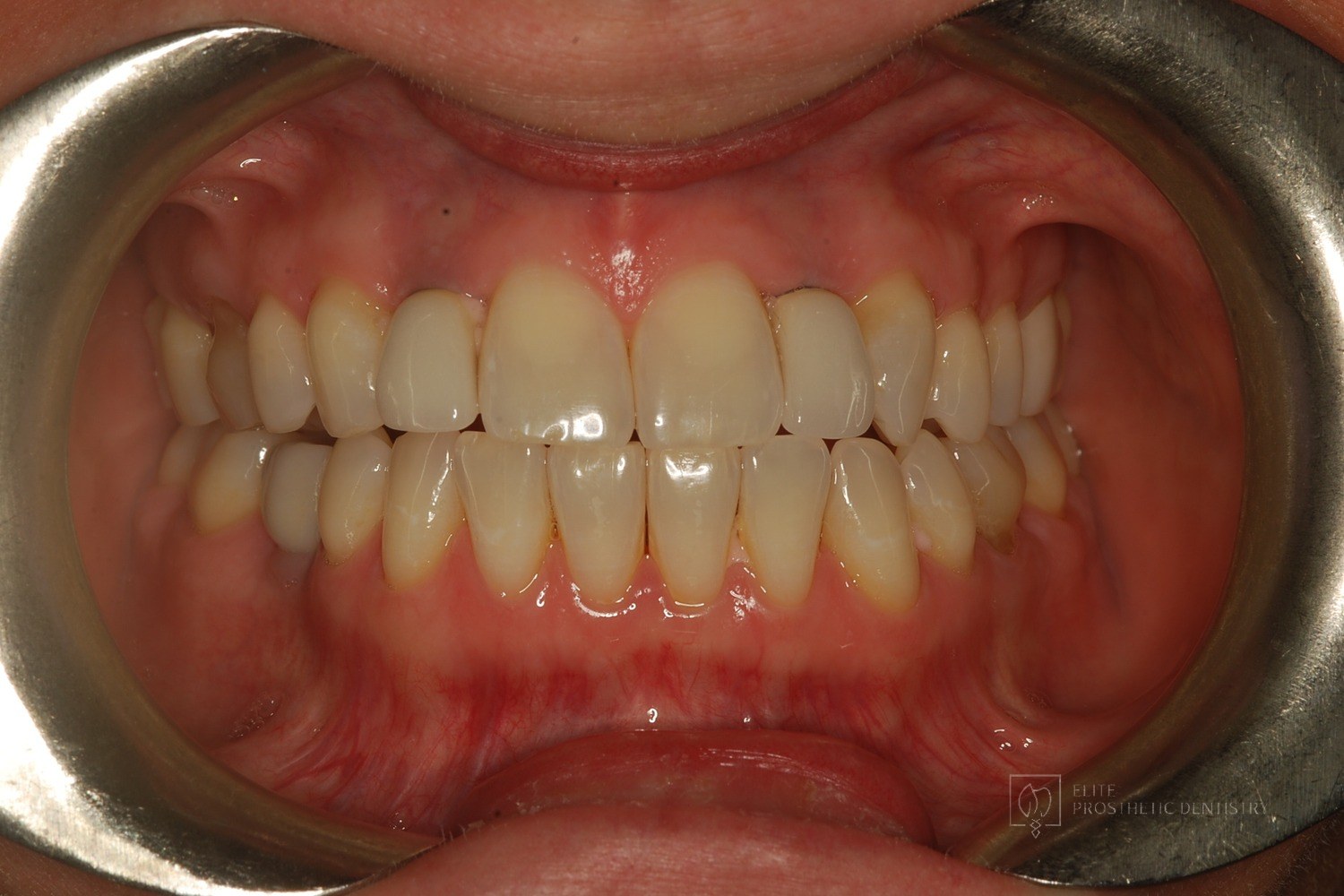
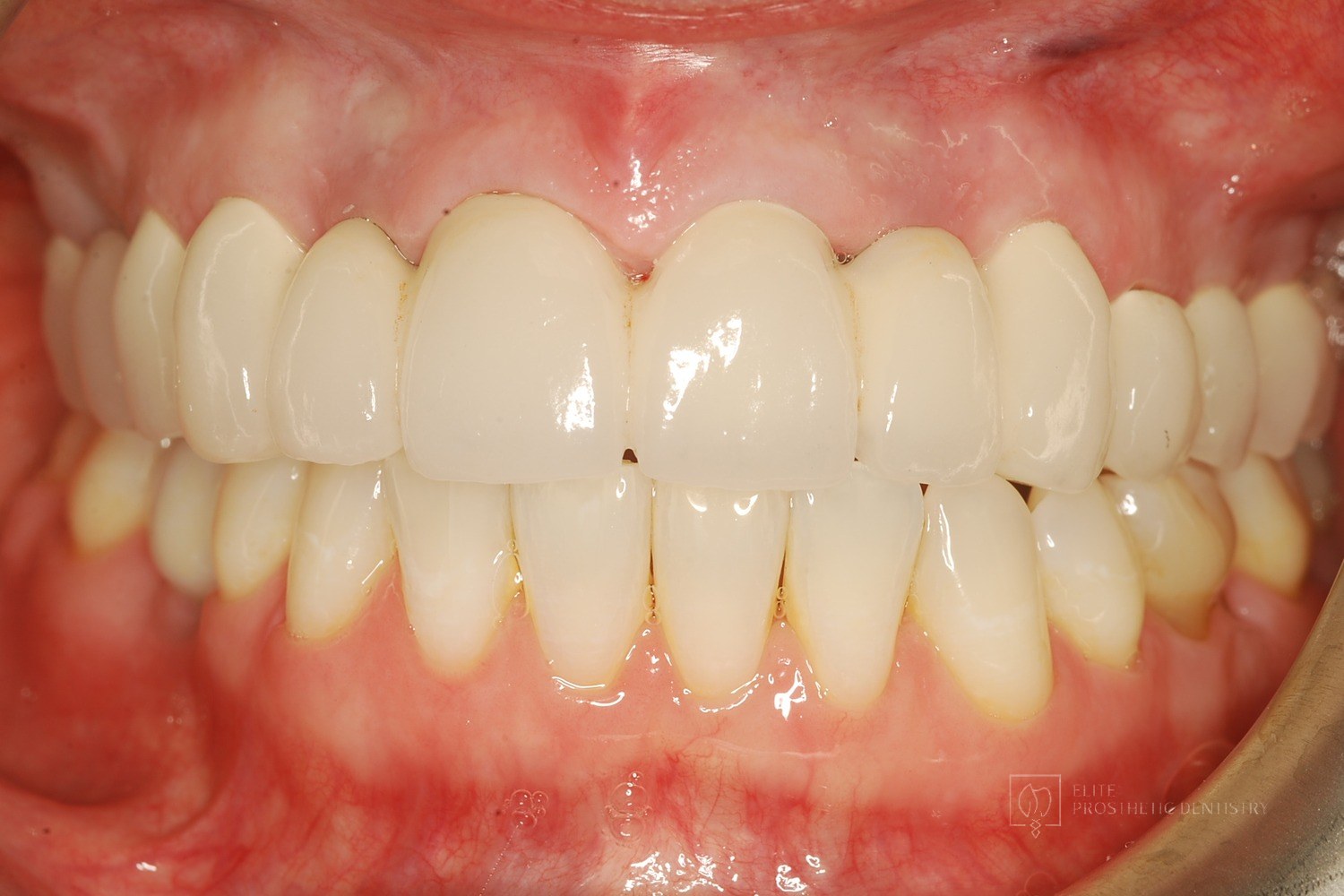
How Aging, Opaque Restorations Were Replaced with Customized Ceramic Restorations Designed for Long-Term Natural Esthetics
The existing restorations appeared opaque, worn, and unnatural over time, affecting both confidence and overall smile harmony.
 Before
 After
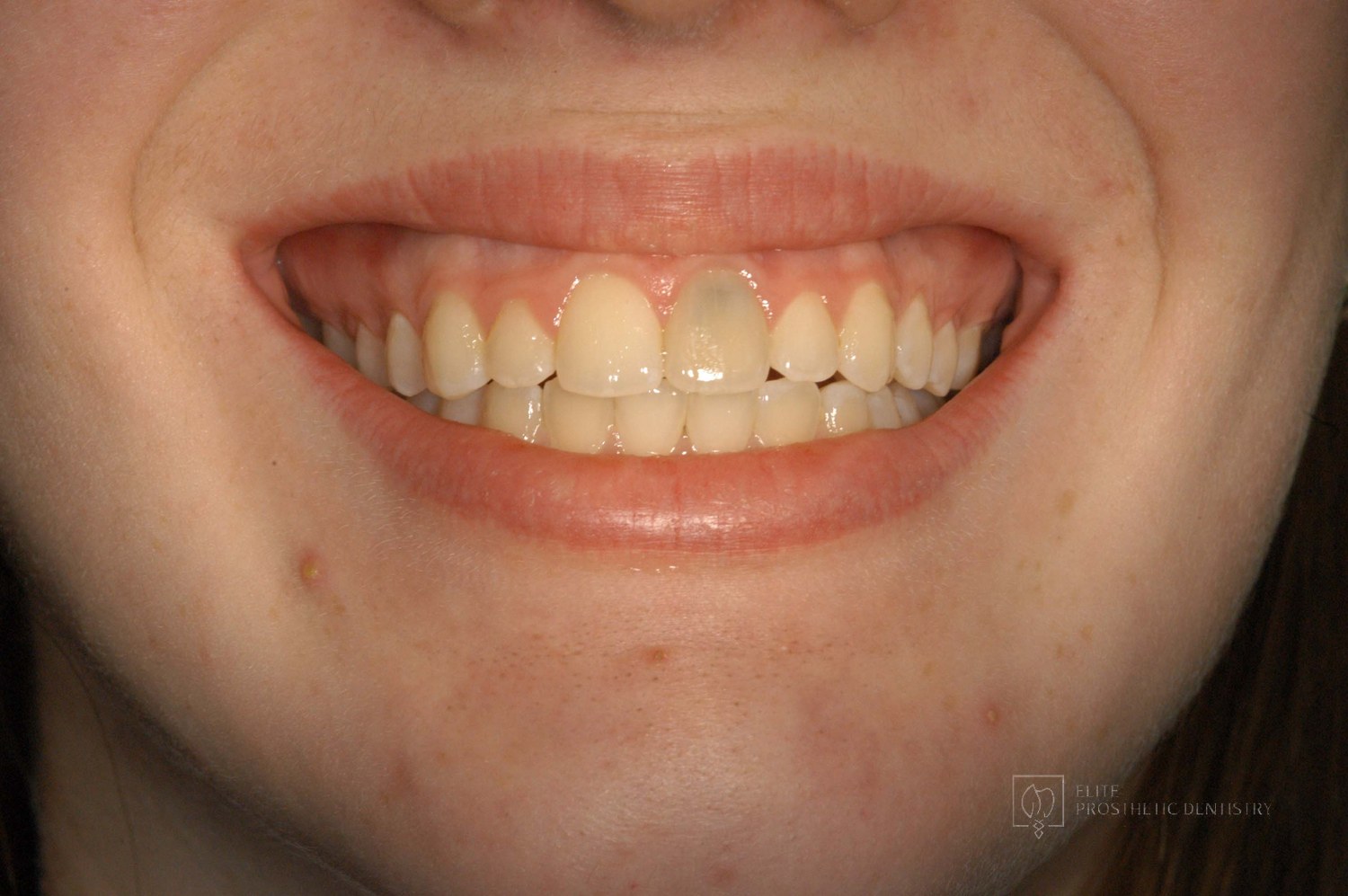
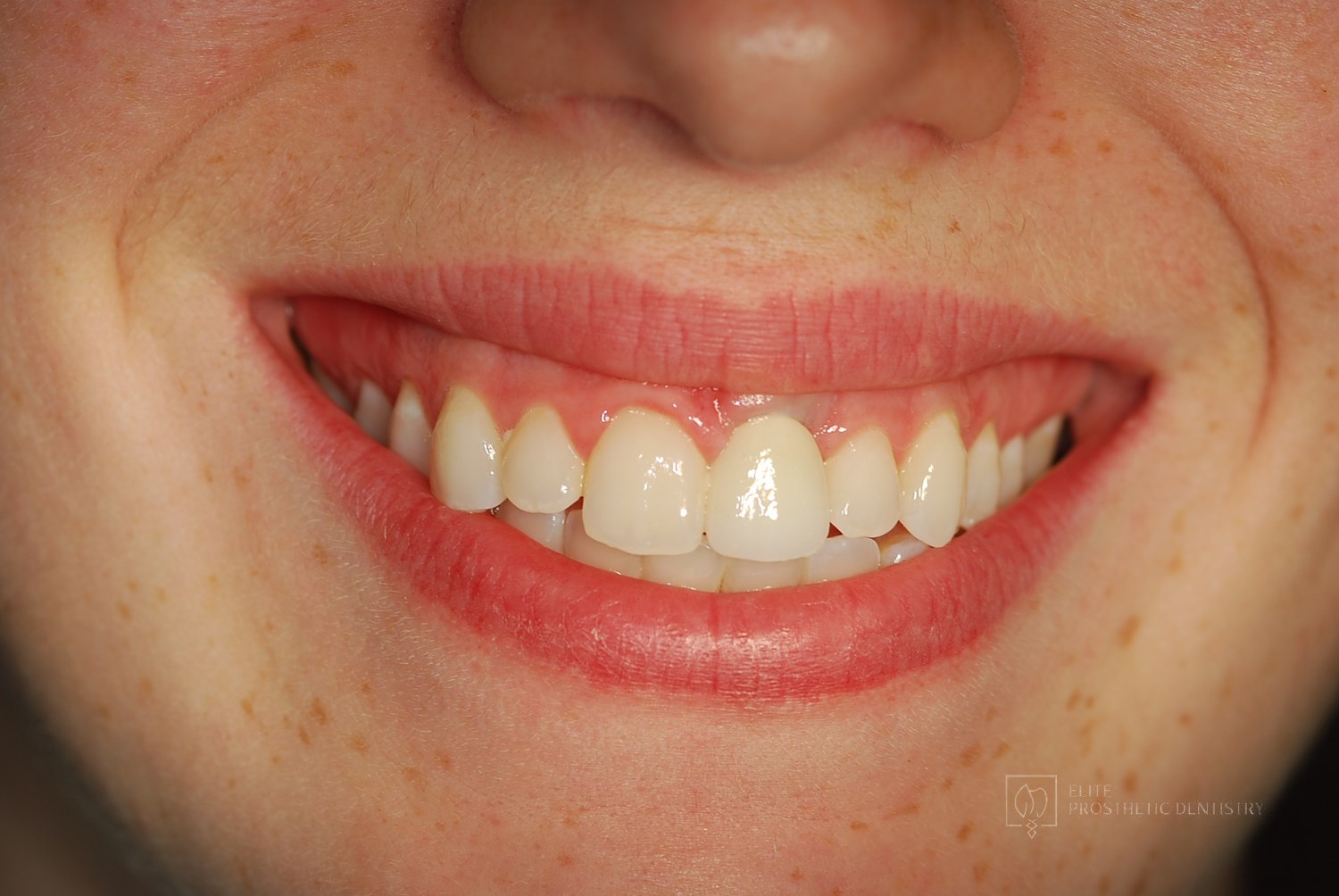
How Older Implant Crowns Were Redesigned for a Better Bite and More Natural Appearance
The patient came in after years of living with implant-supported crowns placed more than twenty years earlier that no longer looked or functioned well. CBCT evaluation, reviewed with a radiologist colleague, showed the implants had been placed too far to the buccal in very thin bone and could not support a healthy long-term restoration.
 Before
 After
How a Front Tooth Lost to Childhood Trauma Was Rebuilt with Bone Grafting and a Long-Lasting Implant
A teenager was referred by her father after earlier trauma left her upper left front tooth slowly failing from root resorption. She was still growing, so an immediate implant was the wrong move. The tooth had to be maintained to buy time, then replaced correctly once she reached skeletal maturity.
Related Services
Related Articles
Deepen your knowledge with additional insights on this topic.
 Choosing a Prosthodontist
The Patient's Guide to Implant, Cosmetic and Restorative Dentistry
How to judge quality in implant, cosmetic, and restorative dentistry: choosing a practitioner, why the lab matters, financing, and the questions to ask.
 Choosing a Prosthodontist
What is a Prosthodontist?
A prosthodontist is a dental specialist with advanced training in crowns, implants, dentures, and complex restorations. Washington, DC specialist.
 Choosing a Prosthodontist
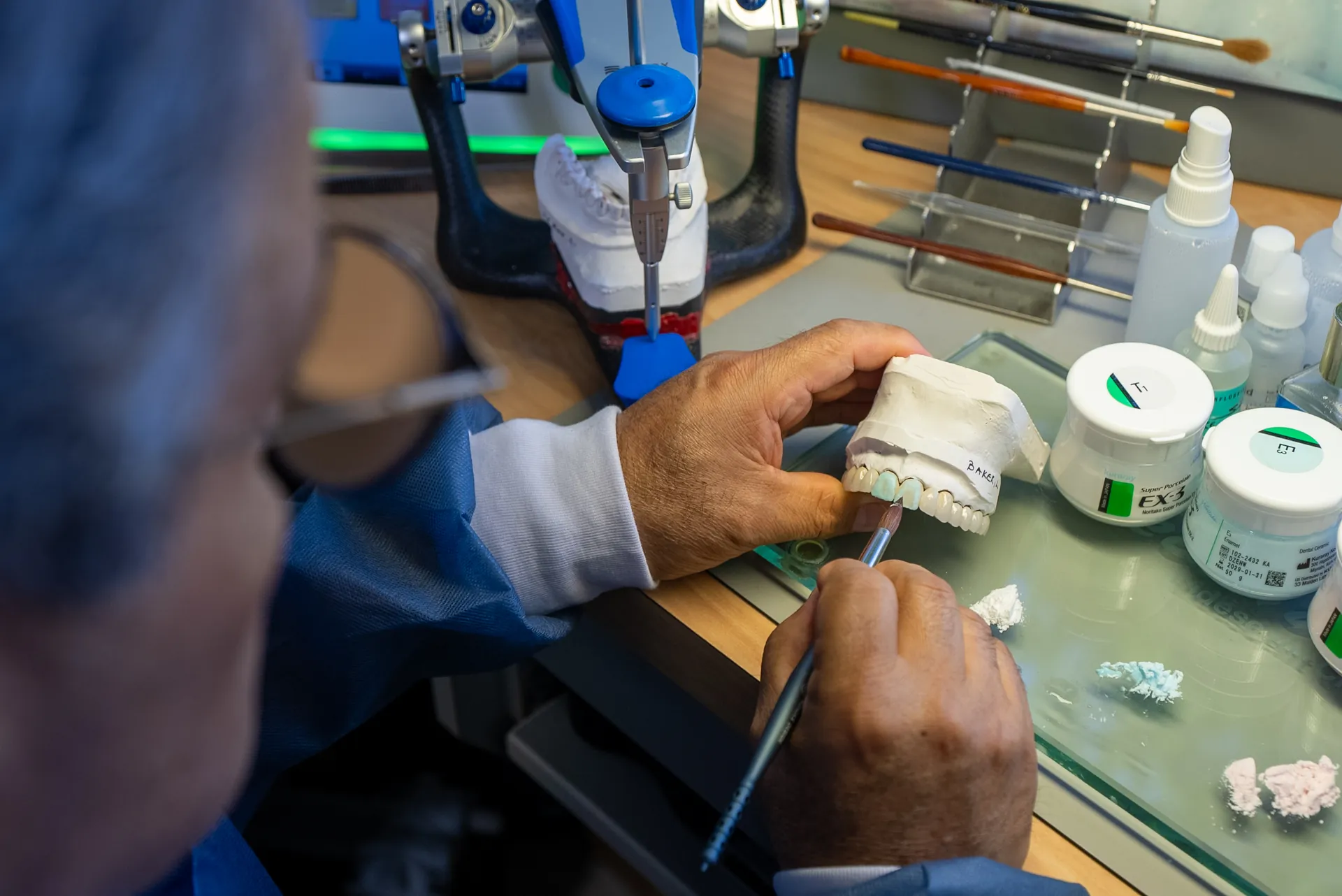
4 Ways You Can Benefit from Our In-House Dental Lab
Custom aesthetics, precision fit, shorter waits, and fast repairs: four ways an in-house dental laboratory changes both your experience and your results.
 Choosing a Prosthodontist
What Is the Difference Between a Dentist and a Prosthodontist?
Every prosthodontist is a dentist, but with years of extra specialty training in restoring and replacing teeth. A DC prosthodontist explains who does what.
 Choosing a Prosthodontist
Don't Wait 'Til It's Too Late: Start with a Virtual Dental Consultation
A virtual consultation is a convenient first step: discuss your concerns, share records, and hear options from a DC prosthodontist before an in-person exam.
 Choosing a Prosthodontist
Emergency Dentistry: The Benefits of an In-House Laboratory
When a tooth or restoration breaks, an on-site dental lab can mean a natural-looking repair in a day instead of a week. How emergency fabrication works in DC.
Ready to Transform Your Smile?
With 40+ years of experience and 3,900+ dental implants placed, Dr. Marlin and the team deliver dentistry planned to last. Request a specialist consultation.