
How to Find the Best Dentist for Crowns in Washington, DC
Choosing a crown dentist in DC: zirconia vs. e.max, how long crowns last, what makes a crown look natural, and the questions to ask before you commit.
The best dentist for crowns is not necessarily the closest or the fastest. Choose a crown dentist the way you would choose anyone doing irreversible work on a visible part of your body: by the quality of the diagnosis, not the speed of the appointment. The dentists whose crowns look natural and last tend to do the same four things well. They find out why the tooth or the old crown failed, they design the crown for your bite, they match the material to the position of the tooth, and they work closely with the technician who makes it.
A crown is one of the most common procedures in dentistry, which is exactly why the differences between providers are easy to miss. Two crowns can carry the same insurance code and look nothing alike five years later. One blends into the smile and keeps a healthy gum line. The other shows a gray edge, looks a shade too bright, traps food, or chips because it was never designed for the way the patient bites.
Many patients searching for a crown dentist are not in pain. They have an older crown that has started to look wrong, a front tooth that needs coverage, or a dentist who has recommended a crown and they want to be sure it is done well. This guide is for that decision.
Five Things That Decide How a Crown Looks and How Long It Lasts
- The reason the tooth needs a crown. Recurrent decay at an old margin, a cracked filling, wear from grinding, and a failed root canal are different problems. A crown placed without understanding the cause can repeat the same failure.
- The bite. A crown that is too high, or that takes more than its share of force, wears, chips, or loosens. Teeth that are worn flat often signal a bite problem that a single crown will not solve.
- The material for that position. Covered in detail below, because it is the question patients ask most.
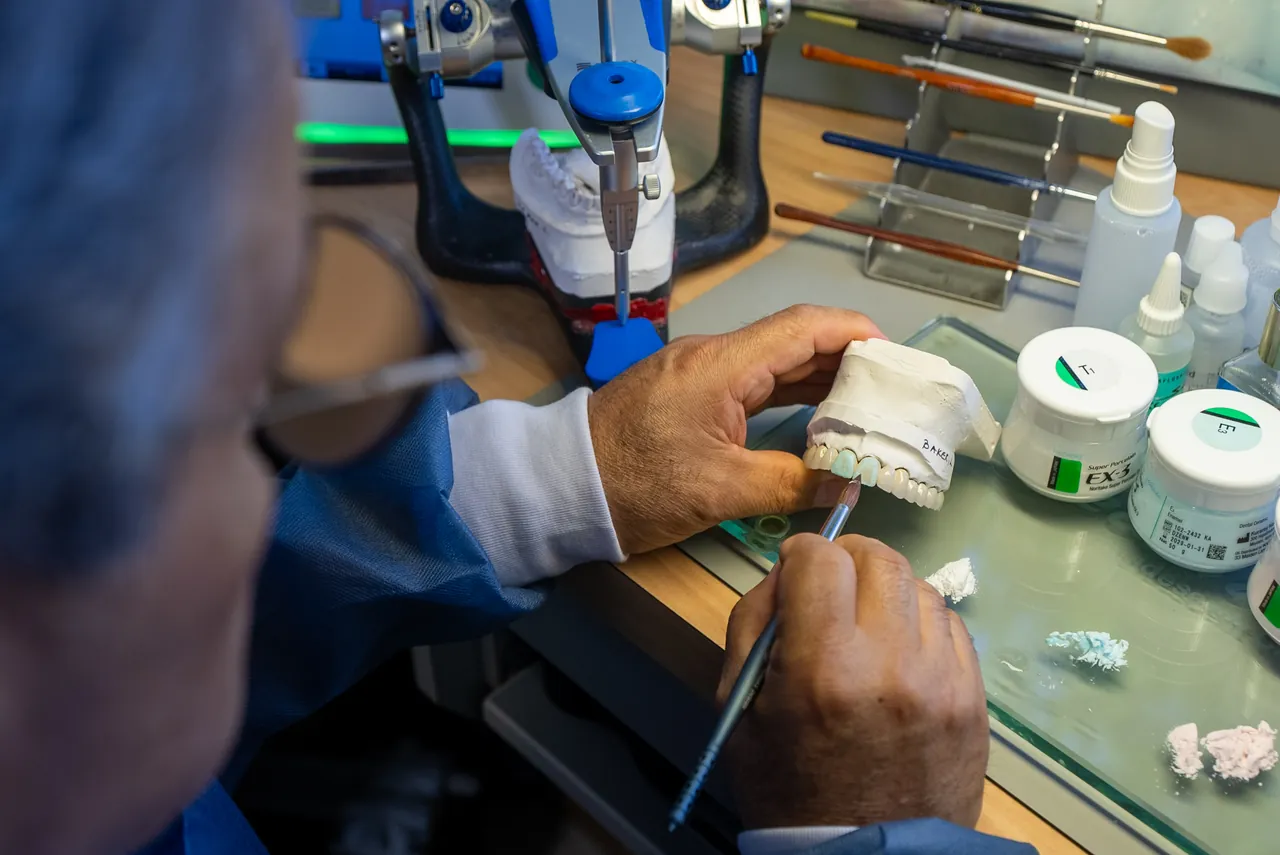
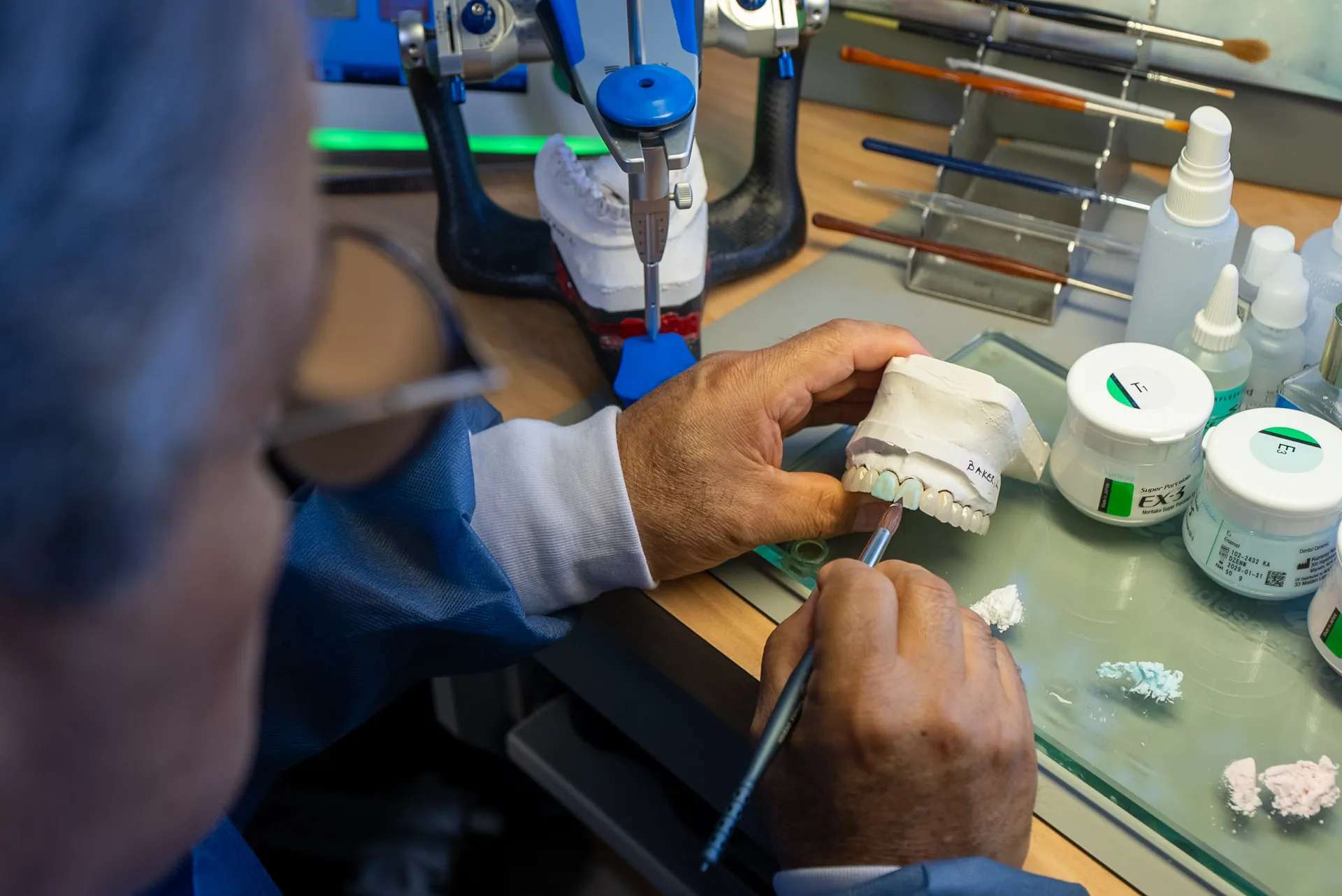
- Who makes the crown, and how they communicate. Most practices send the work to an outside laboratory and communicate through a prescription, scans, and photographs. That can work well. A practice with its own laboratory can also refine shade and contour with the clinician and the patient present.
- How the result is verified. For visible teeth, provisional crowns let you and the dentist judge length, shape, and color in real life before the final ceramic is made.
Zirconia vs. E.max: Which Crown Material Fits Which Tooth?
Neither material is better for every tooth. The right choice depends on where the tooth sits, how much force it carries, and how visible it is. In our practice:
| Zirconia (high-translucency multilayered) | E.max (lithium disilicate) | |
|---|---|---|
| Typical position | Front teeth, premolars, visible areas | Back teeth, heavy grinding, high-stress positions |
| Strength | Exceptional | Strong |
| Appearance | Excellent with layered formulations | Excellent |
| How it is attached | Cemented or bonded | Bonded |
Older porcelain-fused-to-metal crowns are still sound in many mouths, but they often show a dark line at the gum as the tissue recedes, one of the most common reasons patients ask to have a crown replaced. Gold remains an option for back molars when appearance does not matter. The zirconia crowns and e.max crowns pages go deeper on each, and what type of dental crown is best for your teeth walks through the choice tooth by tooth.
How Long Should a Crown Last?
Mainstream patient guidance puts typical crown life at 5 to 15 years with proper care (Cleveland Clinic). The range is wide because longevity depends on things the patient cannot see: how well the margin seals at the gum line, whether the bite overloads the crown, the material chosen for that position, and home care. Crowns from our in-house laboratory have lasted 35 years and longer with proper care. That is a documented example of what careful design and fabrication can achieve, not a promise for every crown. Why fit decides how long a crown lasts explains the margin and fit side in more detail. Why fit decides how long a crown lasts explains the margin and fit side in more detail.
Questions Worth Asking Before You Agree to a Crown
- Why does this tooth need a crown, and would an onlay or a veneer preserve more of it?
- What material are you recommending for this position, and why?
- Who makes the crown, and will I see the shade before it is finished?
- Has my bite been evaluated, and is wear on other teeth part of the picture?
- Are any of my other crowns likely to need replacement soon, and should they be planned together?
- What will you do if the color or shape is not right at the try-in?
A confident dentist answers these without hesitation. Vague answers are a reason to slow down, not a reason to distrust your dentist.
Signs a Crown Was Not Designed for You
Crowns usually announce their problems. A dark edge at the gum line, a tooth that looks opaque or chalky next to its neighbors, gums that stay red or bleed around one crown, food packing between teeth, a crown that feels high, or one that keeps coming loose. If any of these sound familiar, the pages on unnatural-looking crowns, pain under a crown, and a loose crown explain what each one usually means.
Where Elite Prosthetic Dentistry Fits
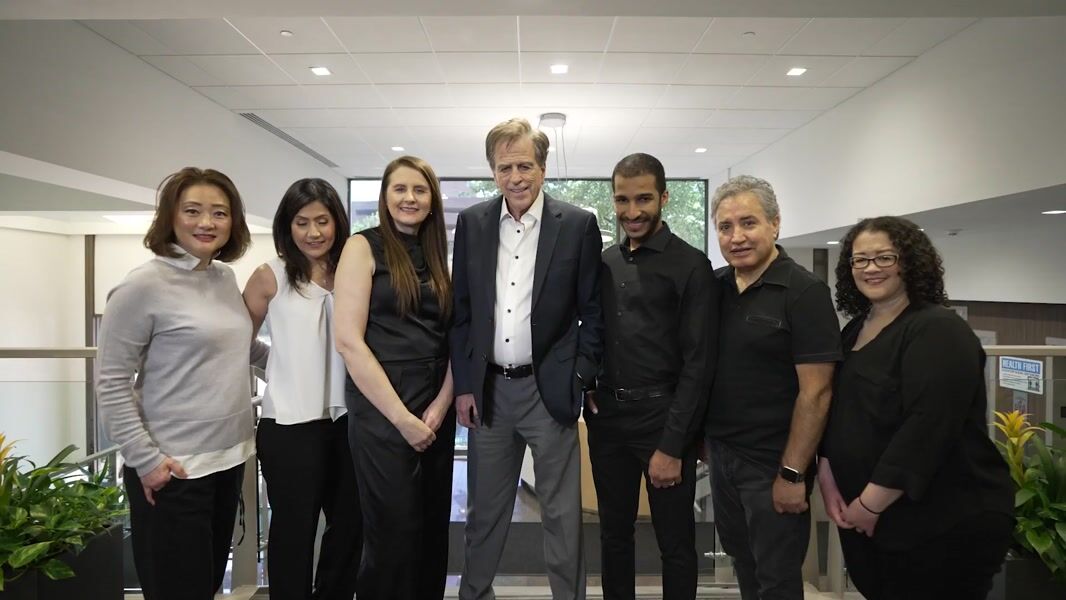
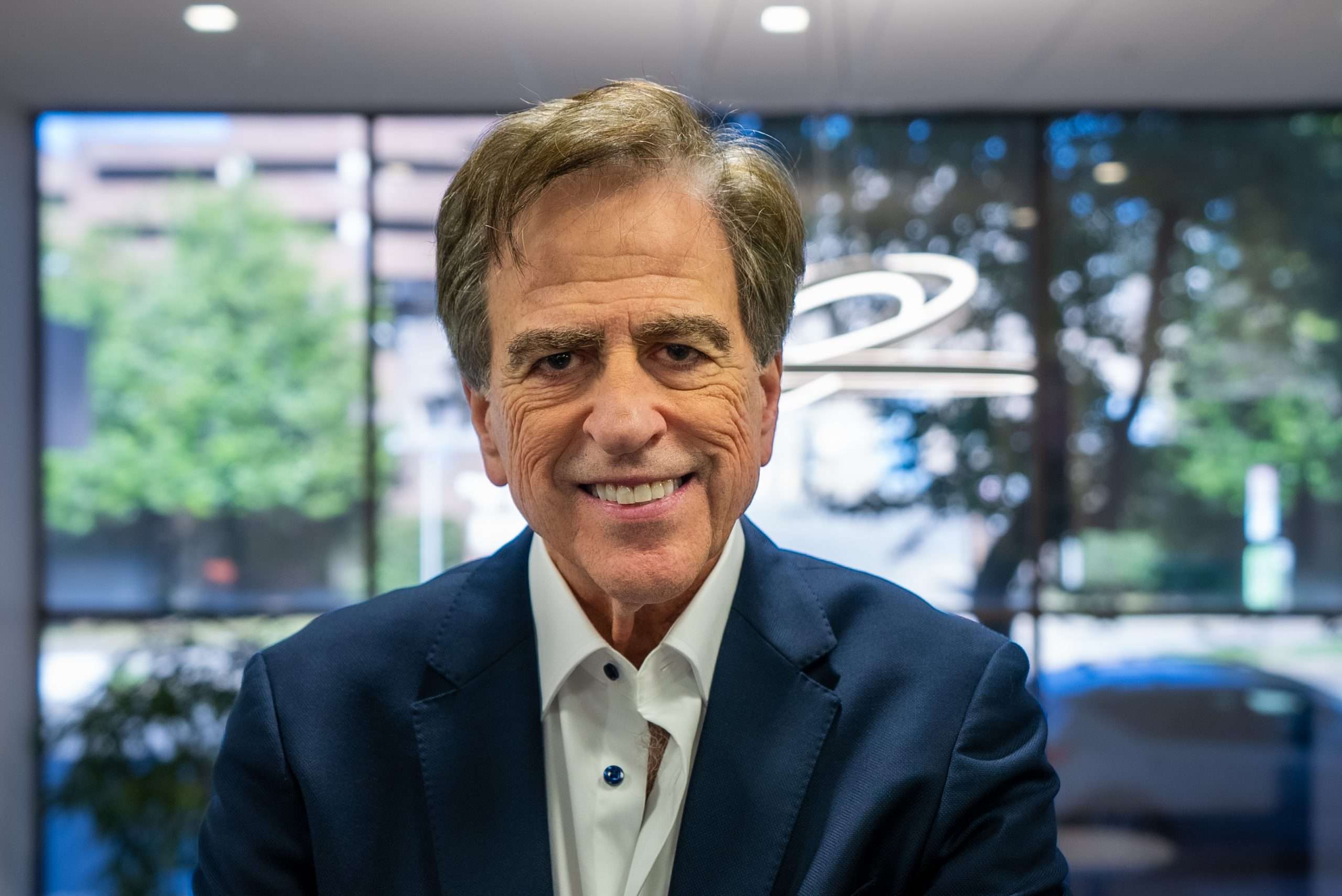
Elite Prosthetic Dentistry is a prosthodontic specialty practice in Friendship Heights led by Dr. Gerald M. Marlin, with more than 40 years of clinical practice and an in-house dental laboratory operating since 1985. Crown work here is planned around the bite and finished with the technician and clinician working side by side.
The practice tends to be a strong fit when:
- A front-tooth crown has to match natural neighbors closely enough to go unnoticed.
- Several older crowns no longer match each other or the natural teeth.
- Crowns keep chipping, loosening, or wearing, and you want to know why.
- A crown has to coordinate with implants, bridges, or veneers nearby.
- You would rather do it once, carefully, than replace it again in a few years.
When Your Current Dentist Is the Better Choice
A routine crown on a back tooth, with a healthy bite and a dentist you trust, rarely needs a specialist. If your main priority is an in-network fee or a crown finished in a single visit, a general practice will usually serve you better, and that is a perfectly reasonable choice. Patients should not feel they need a specialty practice for every crown.
Documented Crown Cases
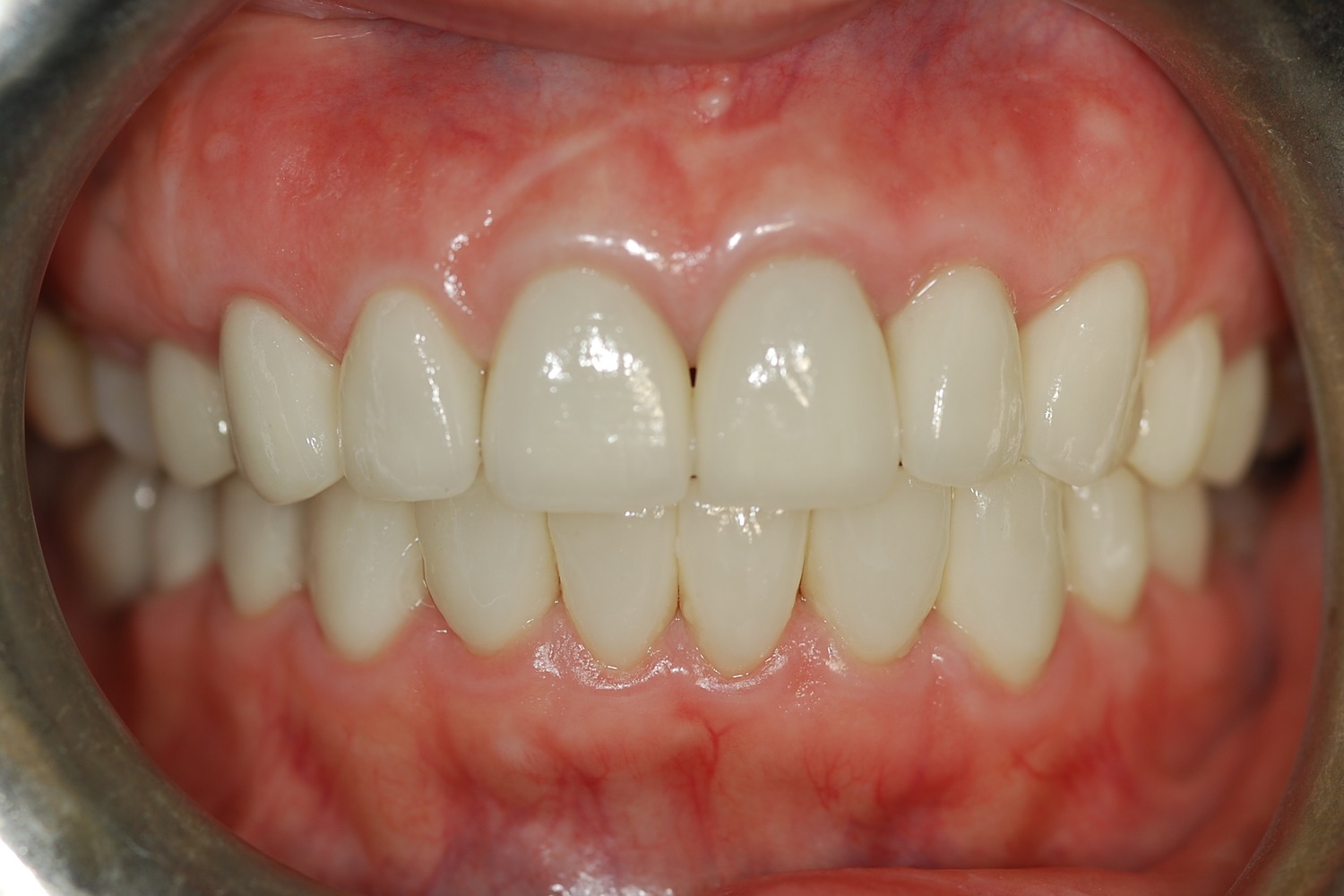
Each of these cases started with a crown question and ended with a plan built around the cause:
- A single front-tooth crown matched to the natural teeth in color, translucency, and shape
- Aging, opaque restorations replaced with customized ceramic restorations
- Two front teeth saved from extraction with custom gold posts and zirconia crowns
- Worn teeth rebuilt with custom ceramic crowns on a stable bite
- Teeth darkened by tetracycline for 30 years restored with custom porcelain crowns
More are collected in the Replacing Aging Dentistry success story hub.
Related Decision Guides
- General Dentist vs. Prosthodontist for Aging Crowns, Bridges, and Implant Restorations, for when several restorations are aging at once.
- How to Find the Best Veneer Dentist, for front teeth where a veneer may be an option.
- Prosthodontist vs. Cosmetic Dentist for Complex Smile Reconstruction
Request a Crown Evaluation
Whether you need one crown or want older crowns reviewed as a group, an evaluation will tell you what is actually needed. Request an evaluation or call (202) 244-2101. No pressure. Clear answers. A defined plan.
Your Best Smile Is Within Reach
Request a specialist consultation with Dr. Marlin to discuss your situation and the most appropriate path forward.
Frequently Asked Questions
What makes a crown look natural instead of fake?
Shade alone is not enough. A natural-looking crown matches the neighboring teeth in translucency, surface texture, proportion, and the way it meets the gum. It also has to fit the bite, because a crown that is adjusted heavily after it is made loses the surface character that made it look real.
Is zirconia or e.max better for a crown?
Neither is better for every tooth. In our practice, high-translucency multilayered zirconia is typically chosen for front teeth and other visible positions, and lithium disilicate (e.max) for back teeth and high-stress positions such as heavy grinding. The decision is made tooth by tooth after the bite has been evaluated.
How long should a crown last?
Mainstream patient guidance puts typical crown life at 5 to 15 years with proper care. Longevity depends on the fit at the gum line, the bite, the material, and home care. Crowns from our in-house laboratory have lasted 35 years and longer with proper care, which is a documented example rather than a promise for every crown.
Should I replace one old crown or several at once?
It depends on why they are failing. A single crown with a local problem can be replaced on its own. When several crowns are aging together, no longer match, or the bite is wearing them down, planning them as a group usually produces a better color match and a more stable result.
Related Patient Success Stories
Explore similar patient success stories demonstrating our expertise in advanced prosthetic dentistry.
 Before
  After
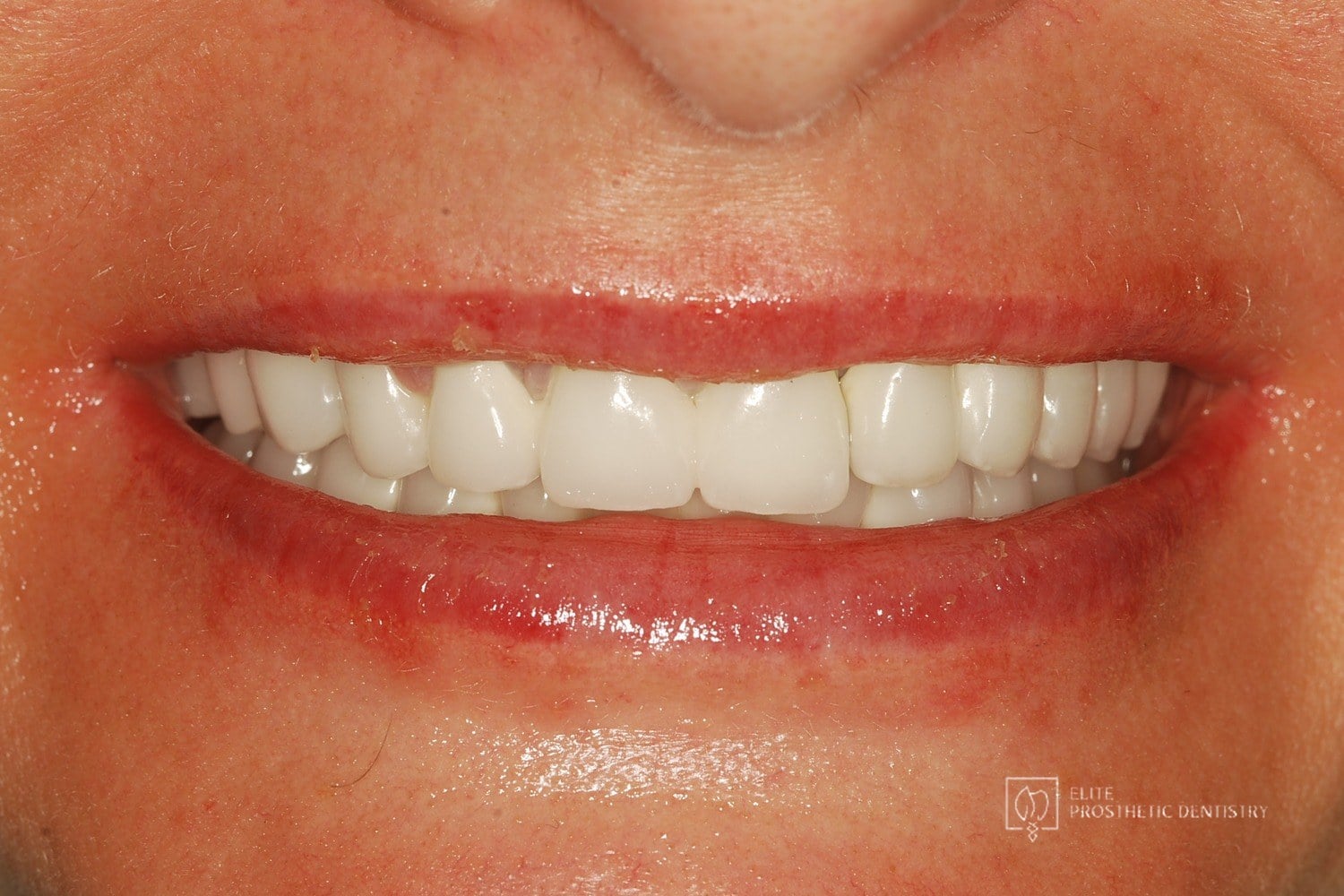
After How Aging, Failing Dentistry Was Replaced with a Coordinated Full-Mouth Implant and Crown Reconstruction
The patient presented with throbbing upper-molar pain, long-standing infections, multiple root canals and unfinished prior treatment, generalized sensitivity, and several hopeless teeth.
 Before After
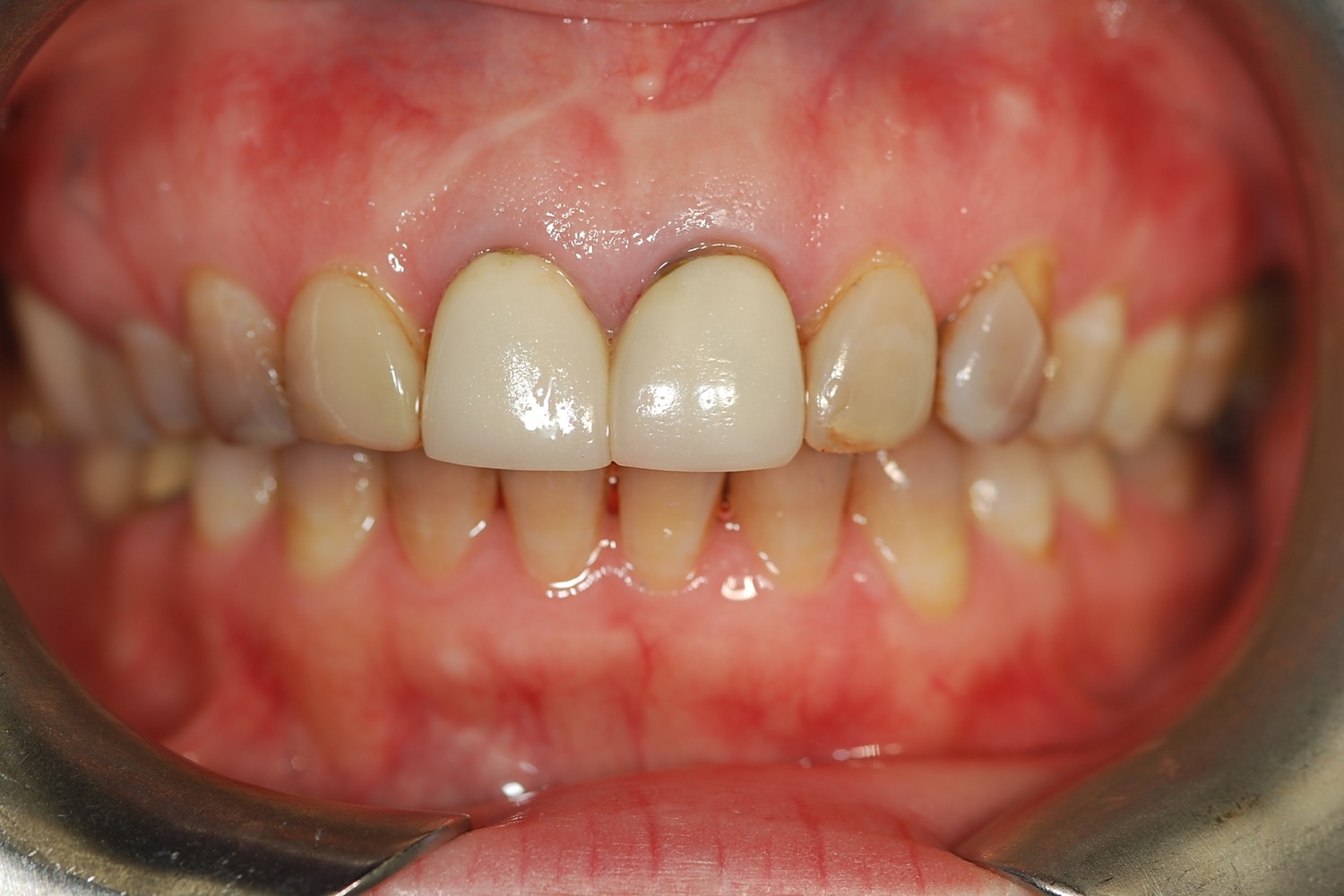
 How Aging, Opaque Restorations Were Replaced with Customized Ceramic Restorations Designed for Long-Term Natural Esthetics
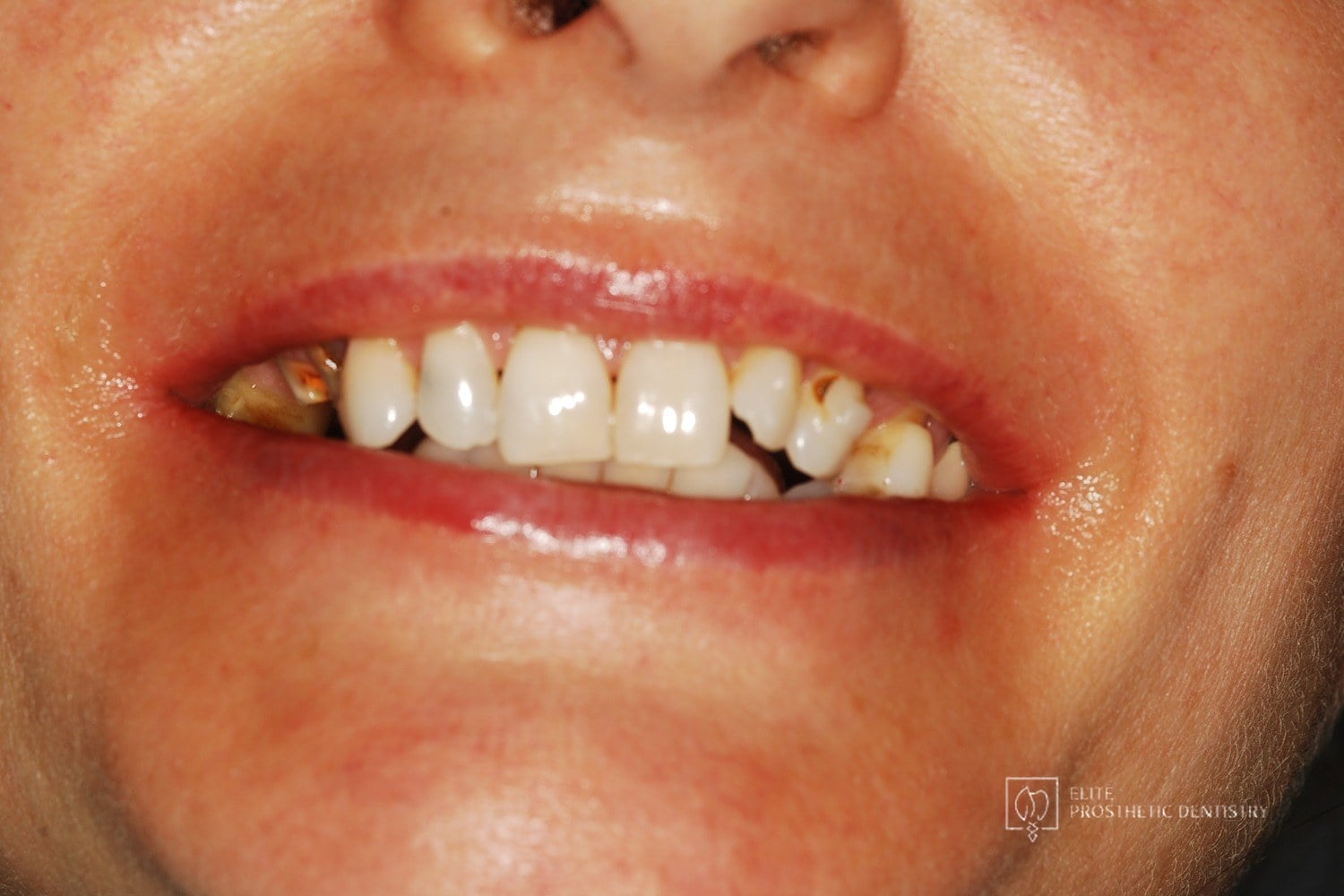
The existing restorations appeared opaque, worn, and unnatural over time, affecting both confidence and overall smile harmony.
 Before
  After
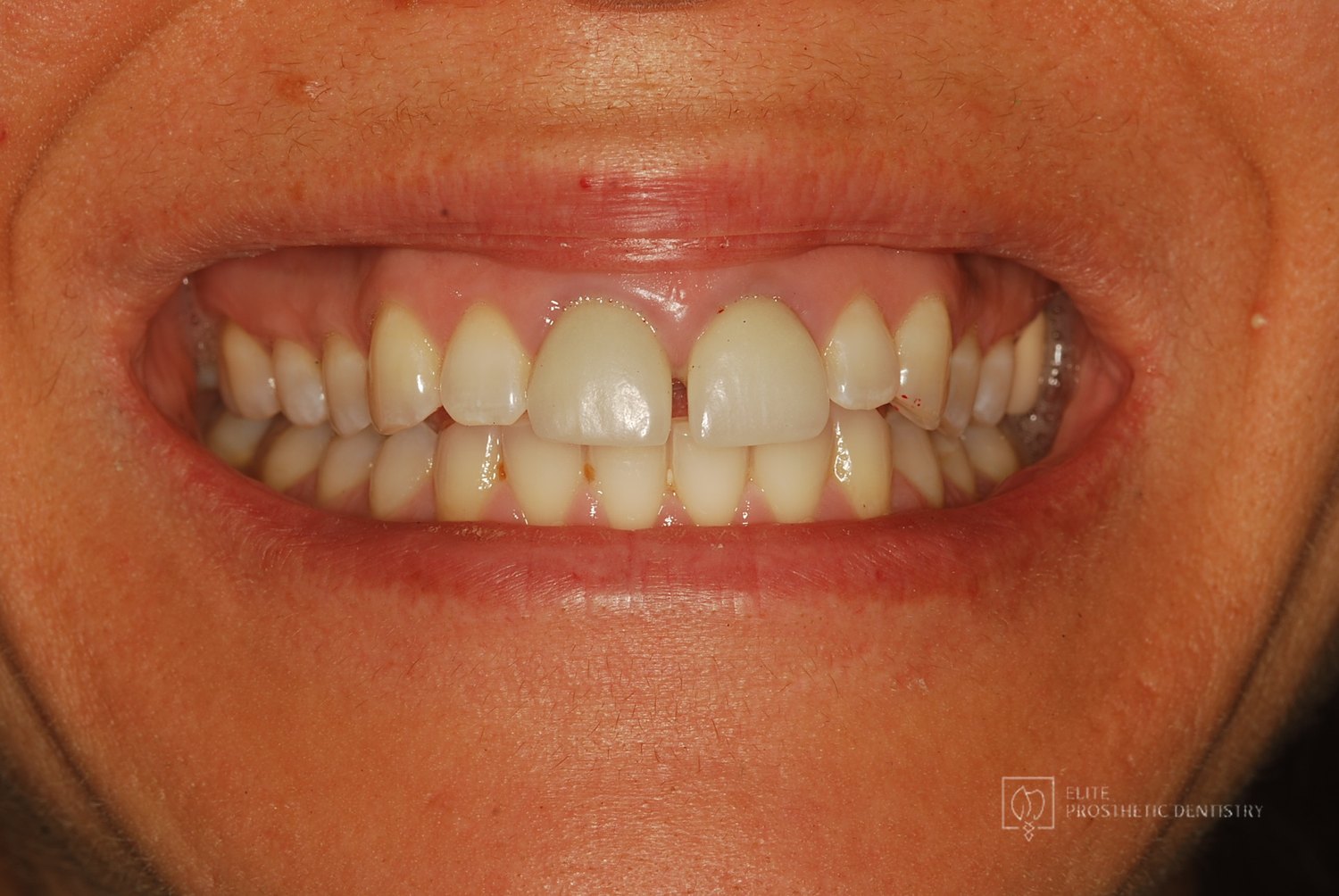
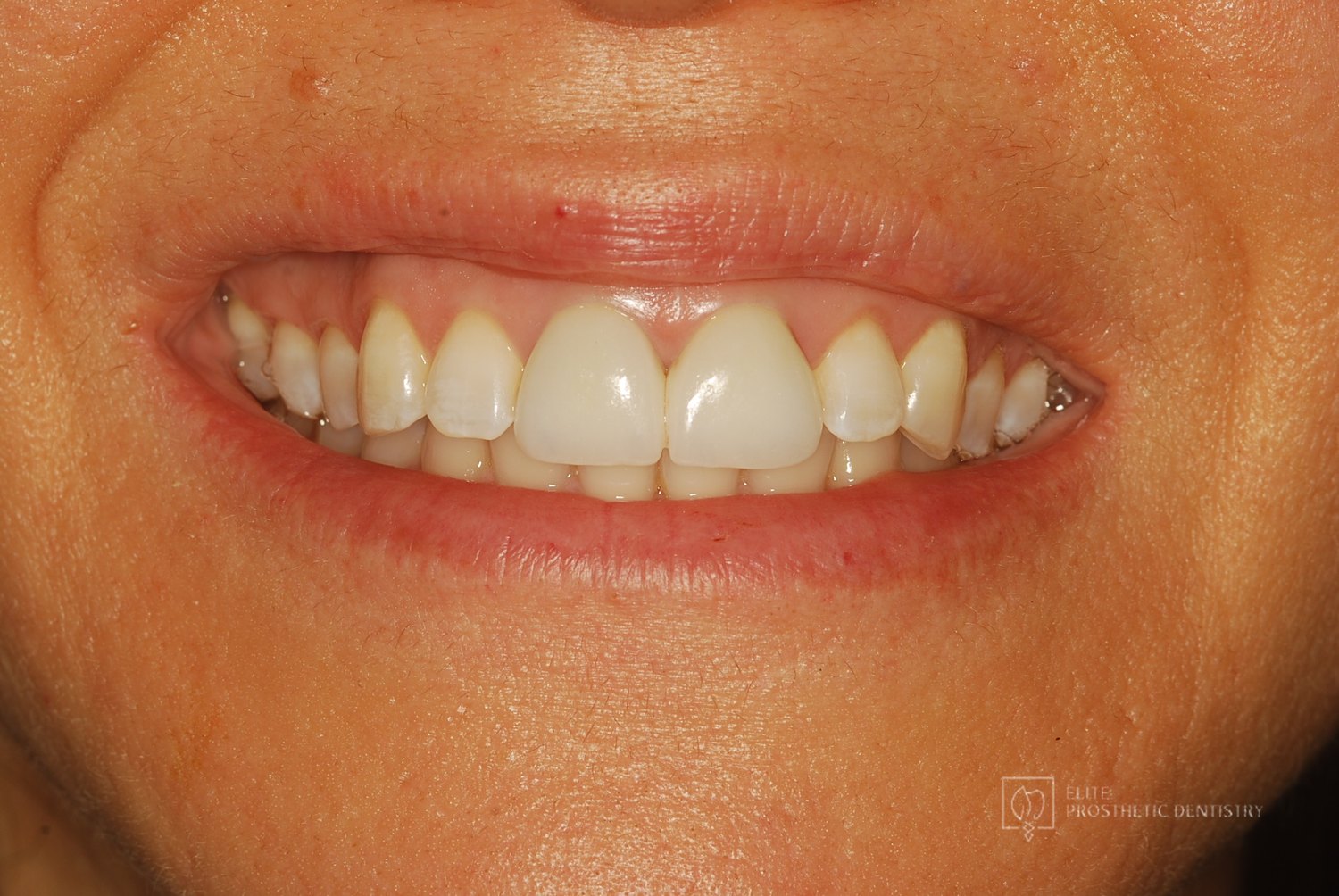
After Two Front Teeth Saved From Extraction: A Second Opinion, Custom Gold Posts, and Crowns Made to Last
Two upper central incisors with failed root canal treatment and recurrent decay had been recommended for extraction and implant replacement. A CBCT evaluation showed that removing the roots from their thin facial bone housing could create a visible esthetic defect in the gum and bone contour, made worse by the patient's high lip line.
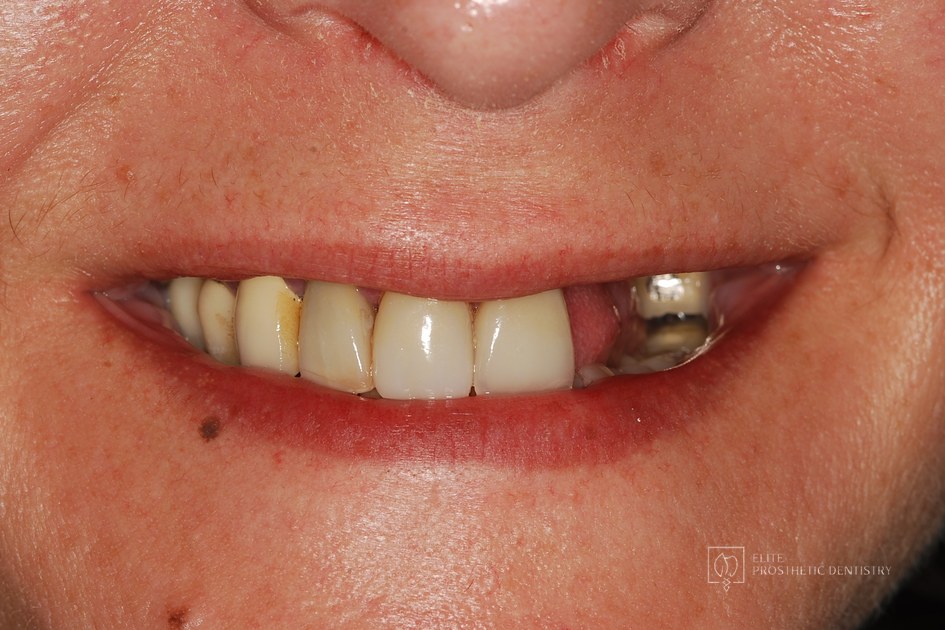 Before
 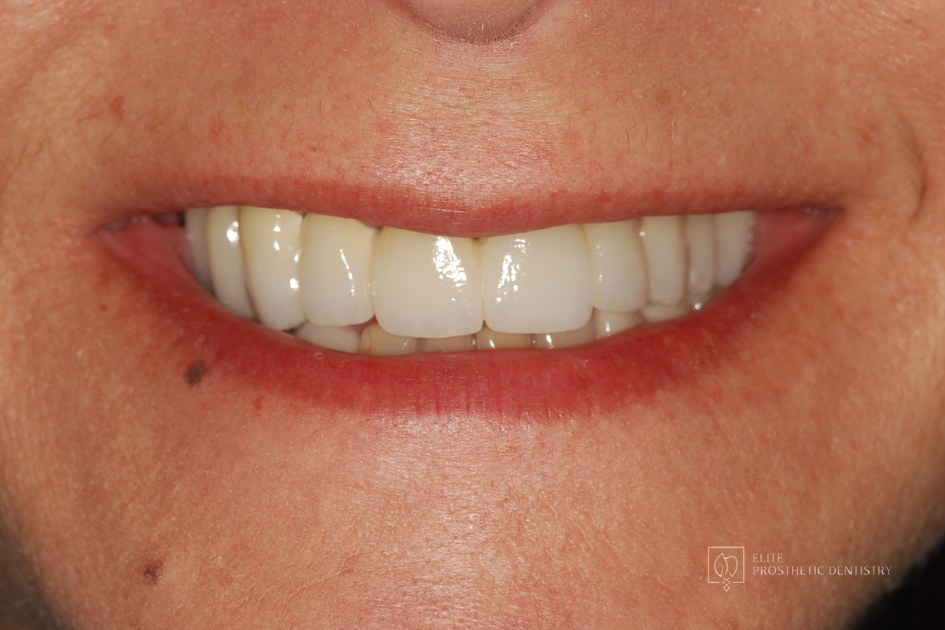 After
After Implant Supported Reconstruction: Failing Bridgework and Missing Back Teeth Rebuilt with Coordinated Specialist Care
Referred by another dental specialist with severe bone resorption on the upper left, multiple broken-down lower teeth requiring extraction, and failing lower back teeth that had left the bite without solid support. No single procedure, and no provider working in isolation, could rebuild a situation this interconnected.
 Before
  After
After How Worn Teeth Were Rebuilt for a Natural, Stable, Long-Lasting Smile
Decades of gradual wear had shortened, flattened, and darkened the teeth, changing the smile and quietly affecting the bite. The patient was not in crisis but wanted the dentistry planned and done correctly, with tooth proportions, esthetics, and bite stability handled as one system rather than patched a piece at a time.
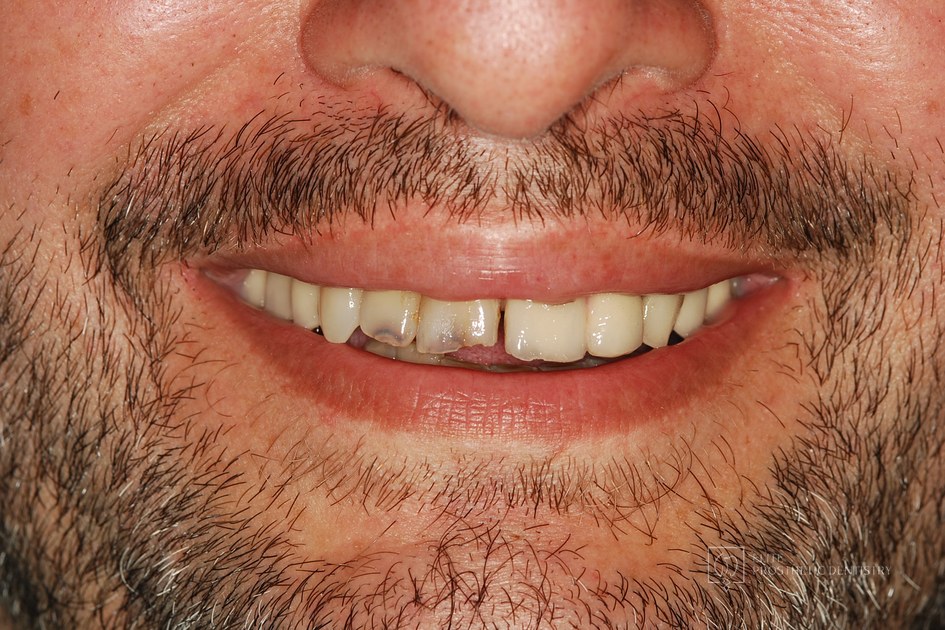 Before
 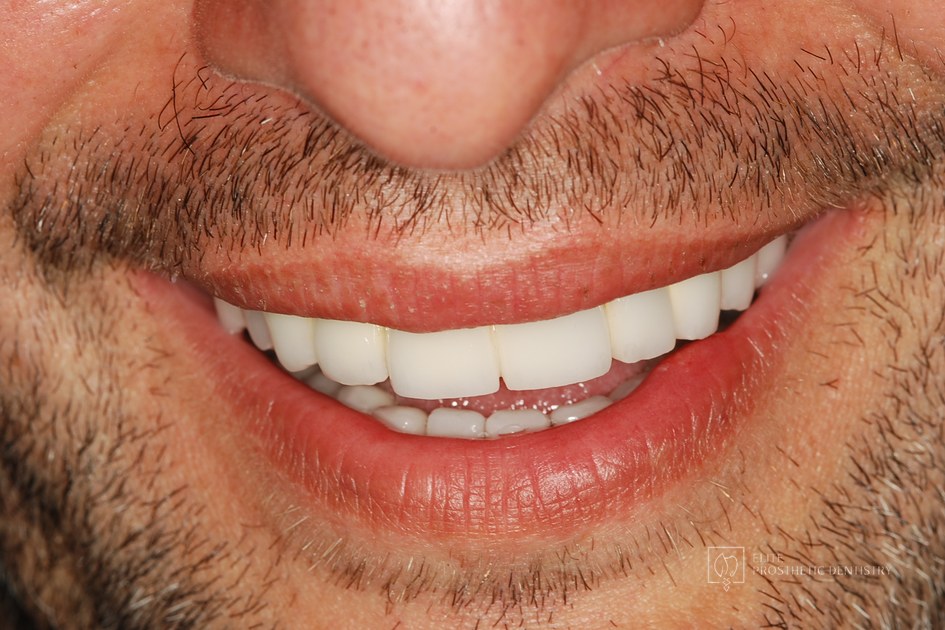 After
After Severe Restorative Breakdown Rebuilt with a Coordinated Full-Mouth Reconstruction
Multiple older restorations placed at different times over many years, broken-down teeth, a significant malocclusion, an asymmetrical smile, and two upper front teeth that could no longer be saved. No single repair could address a pattern this widespread.
Related Services
Related Articles
Deepen your knowledge with additional insights on this topic.
 Choosing a Prosthodontist
 The Patient's Guide to Implant, Cosmetic and Restorative Dentistry
How to judge quality in implant, cosmetic, and restorative dentistry: choosing a practitioner, why the lab matters, financing, and the questions to ask.
 Choosing a Prosthodontist
 What is a Prosthodontist?
A prosthodontist is a dental specialist with advanced training in crowns, implants, dentures, and complex restorations. Washington, DC specialist.
 Choosing a Prosthodontist
 4 Ways You Can Benefit from Our In-House Dental Lab
Custom aesthetics, precision fit, shorter waits, and fast repairs: four ways an in-house dental laboratory changes both your experience and your results.
 Choosing a Prosthodontist
 What Is the Difference Between a Dentist and a Prosthodontist?
Every prosthodontist is a dentist, but with years of extra specialty training in restoring and replacing teeth. A DC prosthodontist explains who does what.
 Choosing a Prosthodontist
 Don't Wait 'Til It's Too Late: Start with a Virtual Dental Consultation
A virtual consultation is a convenient first step: discuss your concerns, share records, and hear options from a DC prosthodontist before an in-person exam.
 Choosing a Prosthodontist
 Emergency Dentistry: The Benefits of an In-House Laboratory
When a tooth or restoration breaks, an on-site dental lab can mean a natural-looking repair in a day instead of a week. How emergency fabrication works in DC.
Ready to Transform Your Smile?
With 40+ years of experience and 3,900+ dental implants placed, Dr. Marlin and the team deliver dentistry planned to last. Request a specialist consultation.