
Full Mouth Crowns in Washington, DC
Full mouth crown restoration places crowns on most or all teeth as a coordinated case. This level of work is appropriate when years of wear, failing restorations, or extensive damage have compromised the entire dentition. It is one of the most demanding categories of restorative dentistry.
40+
Years Experience
1985
In-House Lab Since
2026
Top Dentist List
9
U.S. Patents

Gerald M. Marlin, DMD, MSD
Specialty-Trained Prosthodontist (DMD, MSD)
Washingtonian "Top Dentist" 2026 and Hall of Fame
Why Patients Choose a Specialist for Full Mouth Crowns
- 40+ years of focused prosthodontic experience on complex multi-crown cases
- Every crown designed and fabricated in our in-house dental laboratory
- Bite reconstruction and occlusal planning as part of every case
- One specialist practice manages the entire case from planning to final placement
- 35+ years documented crown service from our in-house laboratory
Or call now: (202) 244-2101
What Is Full Mouth Crown Restoration?
Full mouth crown restoration is a comprehensive treatment plan that places crowns on most or all of the patient's teeth. The crowns are designed to work together as a unified system, restoring not just individual teeth but the entire bite.
Coordinated Multi-Crown Case
Unlike replacing one crown at a time, full mouth crown restoration plans every restoration in advance. Color, contour, and bite relationships are coordinated across the entire dentition.
Bite Reconstruction
Full mouth crowns frequently rebuild the bite to a stable, functional position. This is more than crown placement; it is restorative architecture that affects how the patient eats, speaks, and feels for decades.
Restoration of Worn or Damaged Dentition
Patients who need full mouth crowns usually arrive with significant wear, failing previous restorations, or extensive damage from grinding, decay, or trauma. The case rebuilds the entire system.
How Full Mouth Crown Treatment Works
Full mouth crown restoration is a multi-phase process spanning several months. Clear expectations and a detailed plan before treatment begins are part of how a specialist practice approaches every case.
Comprehensive Diagnostic Workup
Clinical exam, imaging, bite analysis, joint assessment, photo documentation, and detailed treatment planning. Full mouth cases require diagnostic depth that single-crown cases do not.
Treatment Plan and Preview
Wax-up or digital mockup shows the proposed final result. Bite registration, tooth proportions, and material selection are all agreed before any preparation begins.
Phased Restorative Treatment
The case unfolds in planned phases. Stabilization, restorative preparation, and final placement happen in a deliberate sequence designed to maintain function and appearance throughout.
Final Placement and Refinement
Final crowns placed and bonded or cemented. Bite, fit, and aesthetics refined chairside. Follow-up to confirm long-term stability and adapt to any settling that occurs.
Why Full Mouth Cases Require Specialist Care
Full mouth crown restoration is at the upper end of prosthodontic complexity. Cases that go wrong typically went wrong in the planning phase, not the execution phase. Specialist training and the in-house lab structurally affect every dimension of the outcome.
-
Diagnostic Depth
Three additional years of prosthodontic specialty training focused on bite, occlusion, and complex multi-procedure cases. The training is structurally relevant to full mouth restoration.
-
In-House Lab Across the Entire Case
Every crown in the case is fabricated by the same master ceramist working with the clinician. Color, contour, and texture harmonize across the dentition because one team makes every restoration.
-
Bite and Function Engineered Together
Cosmetic full-mouth cases that ignore the bite fail prematurely. Specialist planning addresses appearance and function as one integrated problem.
-
One Plan From Start to Finish
Full mouth cases planned across separate offices can drift between phases. Keeping the case within one specialist practice and one treatment plan ensures every decision flows from the same diagnostic understanding.

Who Is a Candidate for Full Mouth Crowns?
Full mouth crown restoration is appropriate for specific clinical situations. Specialist evaluation determines whether your case warrants this level of treatment or whether a more limited approach is appropriate.
Patients With Extensive Tooth Wear
Years of grinding, acidic erosion, or wear from missing posterior teeth can produce a dentition where most teeth need full coverage. Specialist evaluation determines whether wear is active and what level of treatment is needed.
Patients With Multiple Failing Restorations
Old crowns, large fillings, and aging dental work that have begun to fail in multiple teeth. Coordinated replacement is often more successful than tooth-by-tooth replacement.
Patients With Collapsed Bite
Patients whose bite has collapsed over time due to tooth wear, loss, or restoration failure may benefit from full mouth restoration that rebuilds vertical dimension and bite position.
Patients Combining Cosmetic and Functional Goals
Some full mouth crown cases are driven by aesthetic goals; others by functional concerns; many by both. Specialist evaluation matches the case complexity to the actual need.
When Full Mouth Crowns Are the Right Answer
Full mouth crown restoration is the right answer for a specific category of patient. Specialist evaluation determines whether your case warrants this level of treatment.
Common situations where full mouth crowns are appropriate:
- Extensive wear from years of grinding, acidic erosion, or bite-related stress
- Multiple failing crowns, bridges, or large restorations that have aged out
- Collapsed bite from tooth wear, loss, or restoration failure
- Comprehensive cosmetic concerns combined with functional needs
- Salvage of dentition that has been heavily restored over years
Specialist evaluation also identifies when full mouth crowns are NOT the right answer. Some patients arrive expecting comprehensive crown restoration when a more conservative plan (selective crowns, veneers, or restoration of only the affected teeth) would produce a better long-term result. Cases involving significant tooth loss may be better served by full mouth dental implants or All-on-X rather than crowns on compromised natural teeth.
Full Mouth Crowns vs. Full Mouth Reconstruction
These terms are sometimes used interchangeably, but they are not the same thing.
| Element | Full Mouth Crowns | Full Mouth Reconstruction |
|---|---|---|
| Scope | Crowns on most or all teeth | Comprehensive rebuild that may include crowns, implants, bridges, gum work, and bite rehabilitation |
| Complexity | High | Highest |
| Timeline | 4 to 12 months | 6 to 18 months |
| When appropriate | Tooth structure intact but compromised | Significant damage, missing teeth, or bite collapse |
Many reconstruction cases include full mouth crowns as one component. The decision between the two terms is clinical, not just descriptive.
Material Selection Across the Dentition
A well-planned full mouth crown case typically uses different materials in different positions:
- Front teeth: Modern high-translucency multilayered zirconia for exceptional aesthetics combined with strength
- Premolars and visible aesthetic positions: Zirconia for the combination of natural appearance and durability
- Molars and posterior positions: E.max (lithium disilicate) for reliable all-ceramic performance in back teeth
- Bruxism patients and high-stress positions: E.max selected for posterior cases with documented heavy bite forces
Material selection is part of the planning phase and reviewed during consultation. The choices are clinical decisions made during specialist planning, with the in-house laboratory, and discussed with you.
The In-House Lab Difference for Full Mouth Cases
Full mouth crown cases involve 14 to 28 individual crowns that must work together as a unified system. Color, contour, surface texture, and bite relationships must coordinate across every tooth. Most practices send restorations to an outside laboratory, which works from impressions, prescriptions, and photographs, so refinements travel back and forth.
Elite Prosthetic Dentistry has operated an in-house dental laboratory continuously since 1985. Every crown in your full mouth case is designed and fabricated by the same master ceramist working directly with the clinician. Adjustments happen on-site without shipping. The clinical and aesthetic difference is structural. Read more about our in-house laboratory.
Treatment for Washington DC Patients
Elite Prosthetic Dentistry serves full mouth crown patients across the Washington DC metropolitan area, including Bethesda, Chevy Chase, Potomac, McLean, Great Falls, Arlington, Tysons, and surrounding communities. Our office is located in Friendship Heights, one block from the Red Line Metro station, with building parking.
For patients traveling from outside the DMV region for full mouth work, our travel for care and concierge dentistry services coordinate multi-appointment scheduling and lodging logistics.
Schedule a Full Mouth Crown Consultation
If you have extensive dental damage, multiple failing restorations, or you are considering comprehensive crown work, specialist consultation can clarify what your case actually requires and what the realistic outcome is.
Elite Prosthetic Dentistry
4400 Jenifer Street NW, Suite 220
Washington, DC 20015
(202) 244-2101
Request a Consultation or call (202) 244-2101.
Ready to Discuss Your Treatment Options With a Specialist?
Frequently Asked Questions
How long does full mouth crown restoration take?
Most full mouth crown cases span 4 to 12 months from initial planning through final placement. Timeline depends on case complexity, the number of crowns involved, and whether other procedures (implants, bone grafting, gum work) are part of the plan. Your treatment plan includes a specific timeline at consultation.
What is the cost of full mouth crowns?
Cost varies significantly based on the number of crowns, material selection, and case complexity. Itemized cost estimates are provided after diagnostic workup. Financing is available. Please contact our office to schedule a consultation for accurate pricing for your case.
What is the difference between full mouth crowns and full mouth reconstruction?
[Full mouth reconstruction](/full-mouth-reconstruction/) is broader and can include implants, bridges, gum work, bite rehabilitation, and crowns. Full mouth crowns specifically focuses on placing crowns on existing teeth. Many reconstruction cases involve full mouth crowns as one component of a larger plan.
Will I be without teeth at any point during treatment?
No. Full mouth crown cases are planned so that the patient is never without functional, attractive teeth. Temporary crowns are used during the preparation-to-final-placement phase, and these temporaries are designed to look and function well.
Why see a prosthodontist for full mouth crowns?
Full mouth crown restoration is one of the most demanding cases in restorative dentistry. Three additional years of prosthodontic specialty training, combined with an in-house dental laboratory and more than 40 years of clinical practice, structurally affect what the final result looks like at one year, ten years, and beyond.
Will my bite be different after full mouth crowns?
Yes, typically in a positive direction. Many full mouth crown cases include planned bite reconstruction that addresses years of wear, collapse, or compromise. The new bite is designed to be stable, comfortable, and functional. A specialist consultation explains exactly what bite changes are planned for your case.
Related Patient Success Stories
Explore similar patient success stories demonstrating our expertise in advanced prosthetic dentistry.
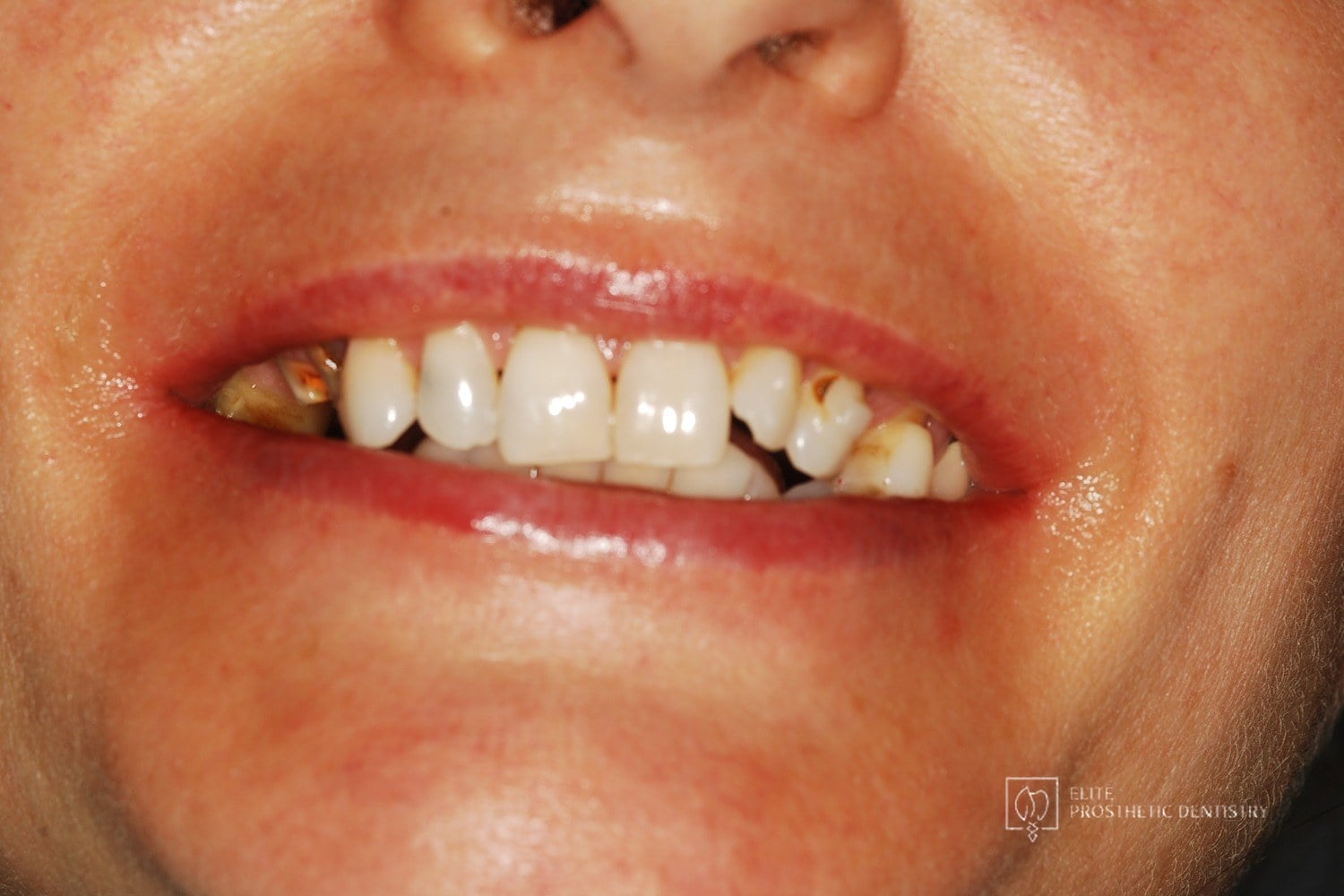 Before
 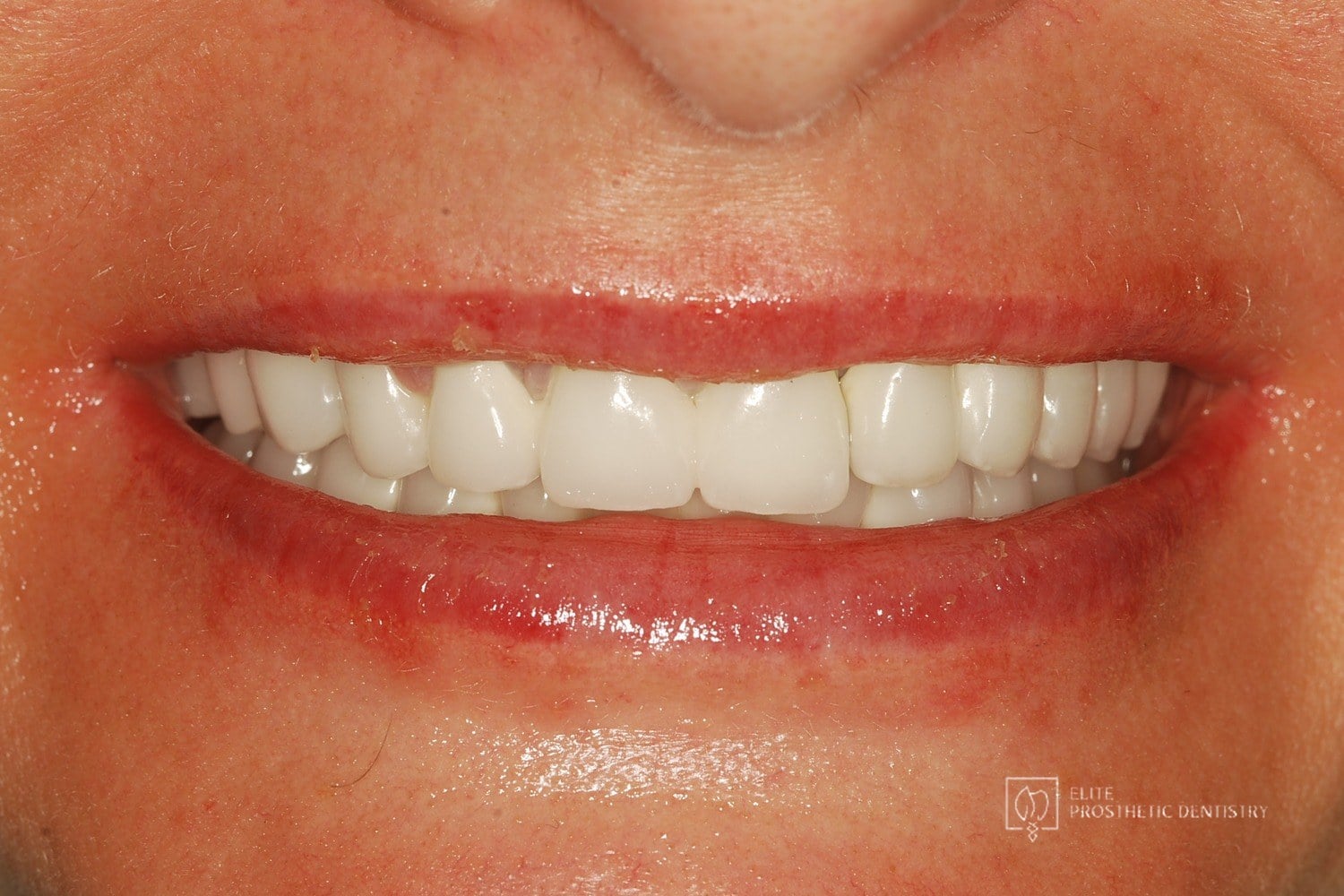 After
After How Aging, Failing Dentistry Was Replaced with a Coordinated Full-Mouth Implant and Crown Reconstruction
The patient presented with throbbing upper-molar pain, long-standing infections, multiple root canals and unfinished prior treatment, generalized sensitivity, and several hopeless teeth.
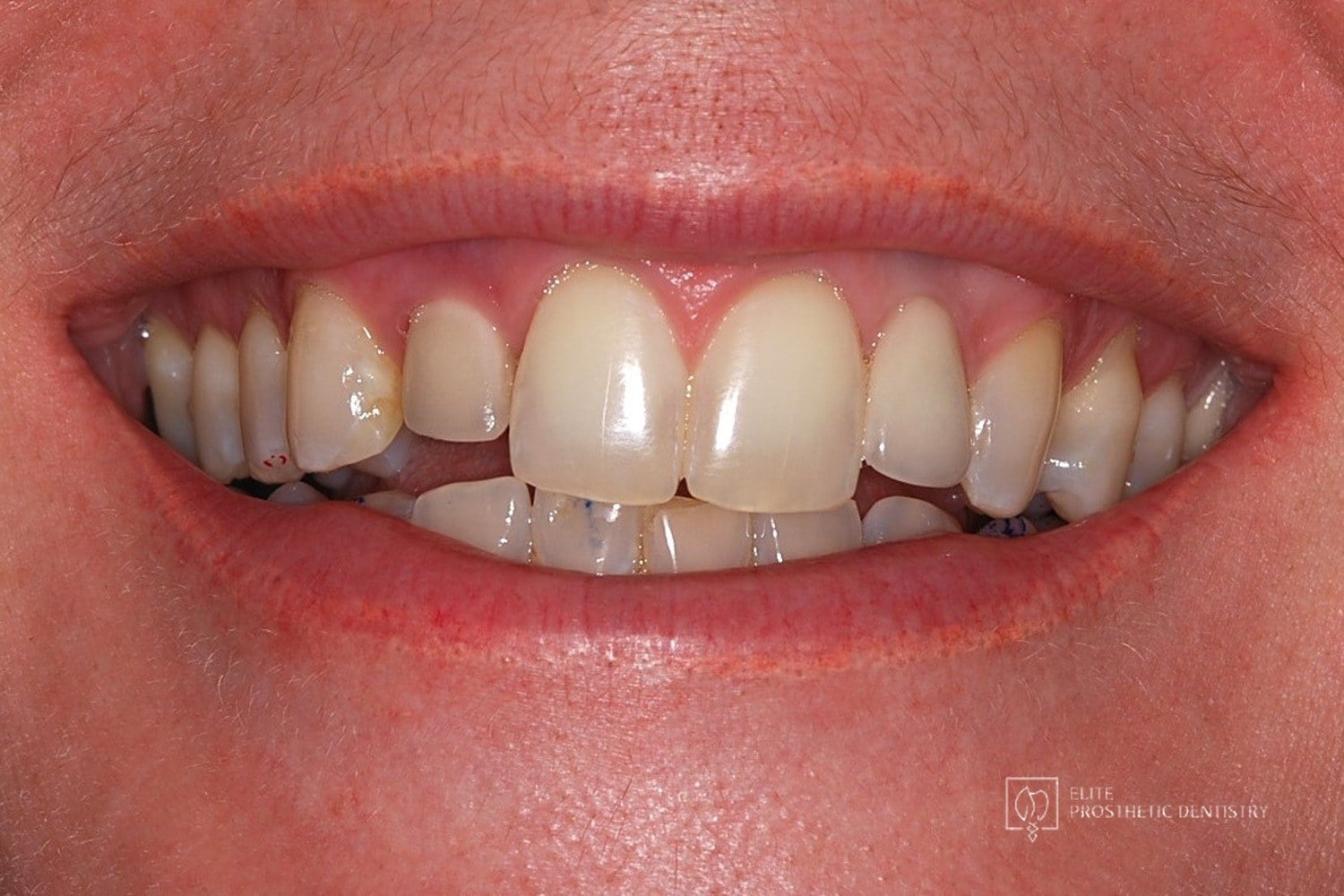 Before
 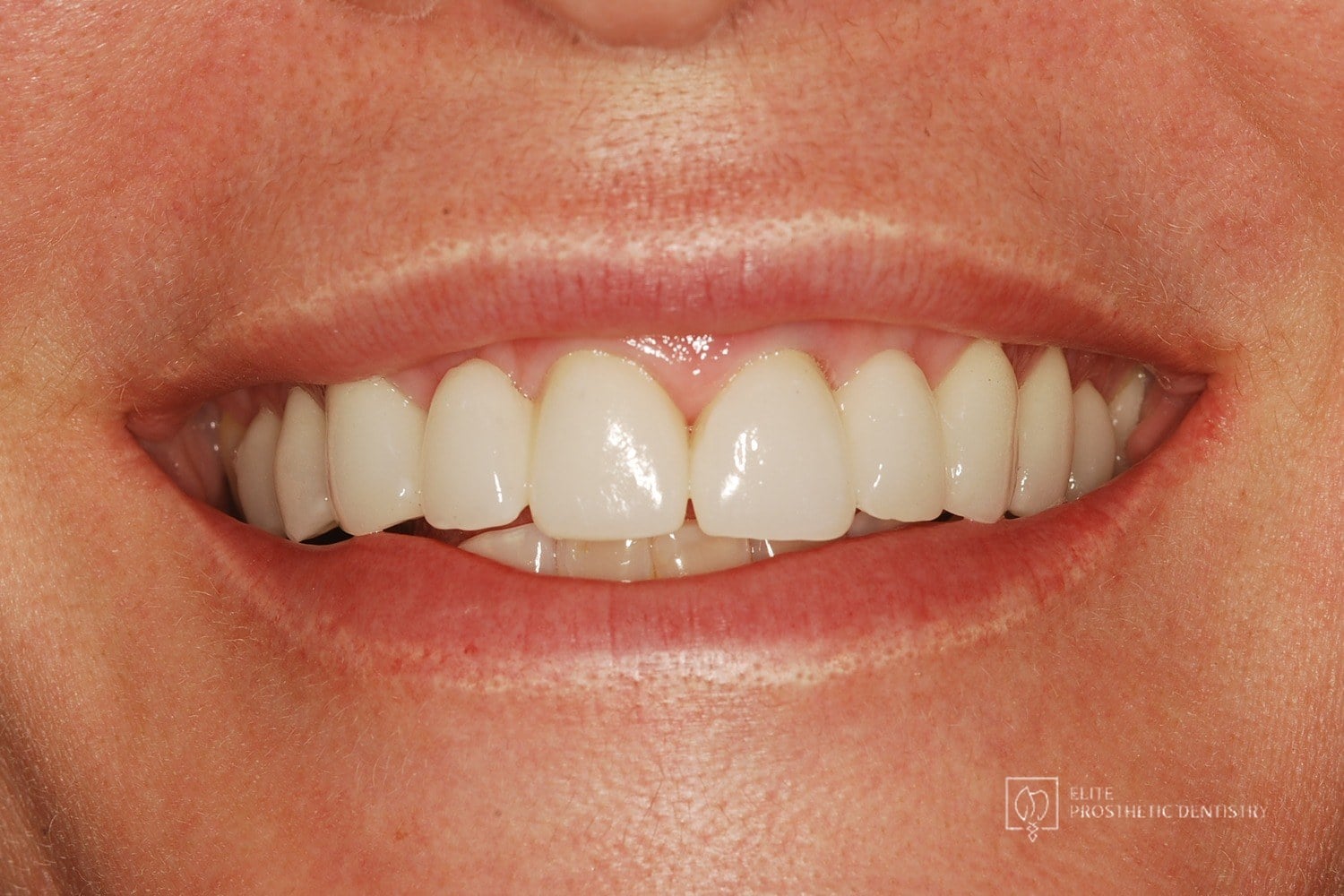 After
After How Failing Lateral Incisor Implants Were Replaced with Custom Zirconia Bridges After Severe Bone Loss Made Replacement Implants Impossible
Comprehensive examination including CBCT imaging revealed significant bone loss surrounding implants that were placed outside the buccal plate, most likely due to placement without a CBCT-generated surgical guide. The implants were determined non-salvageable, and the alveolar ridge was too narrow to support replacement implants without extensive reconstruction.
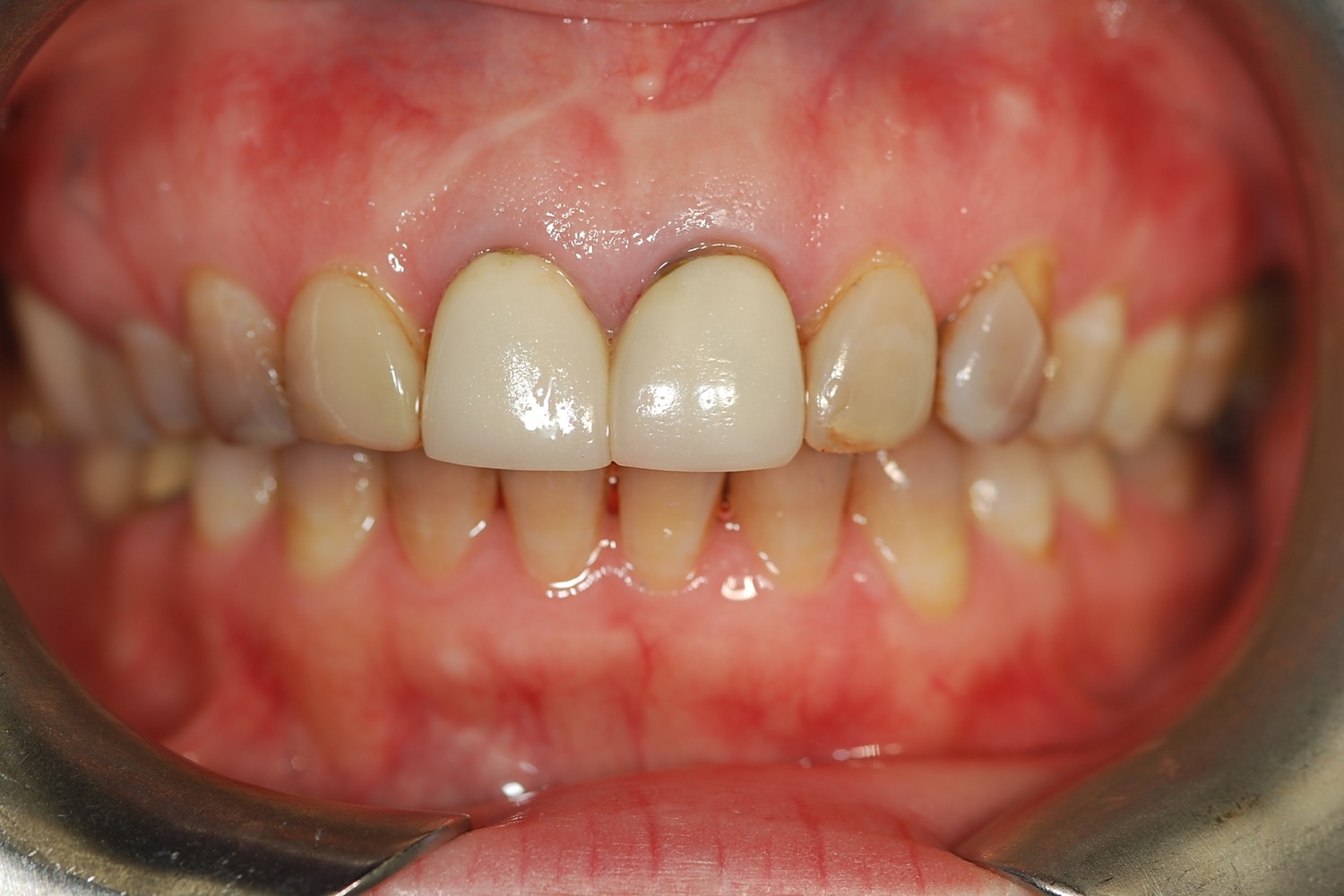 Before
 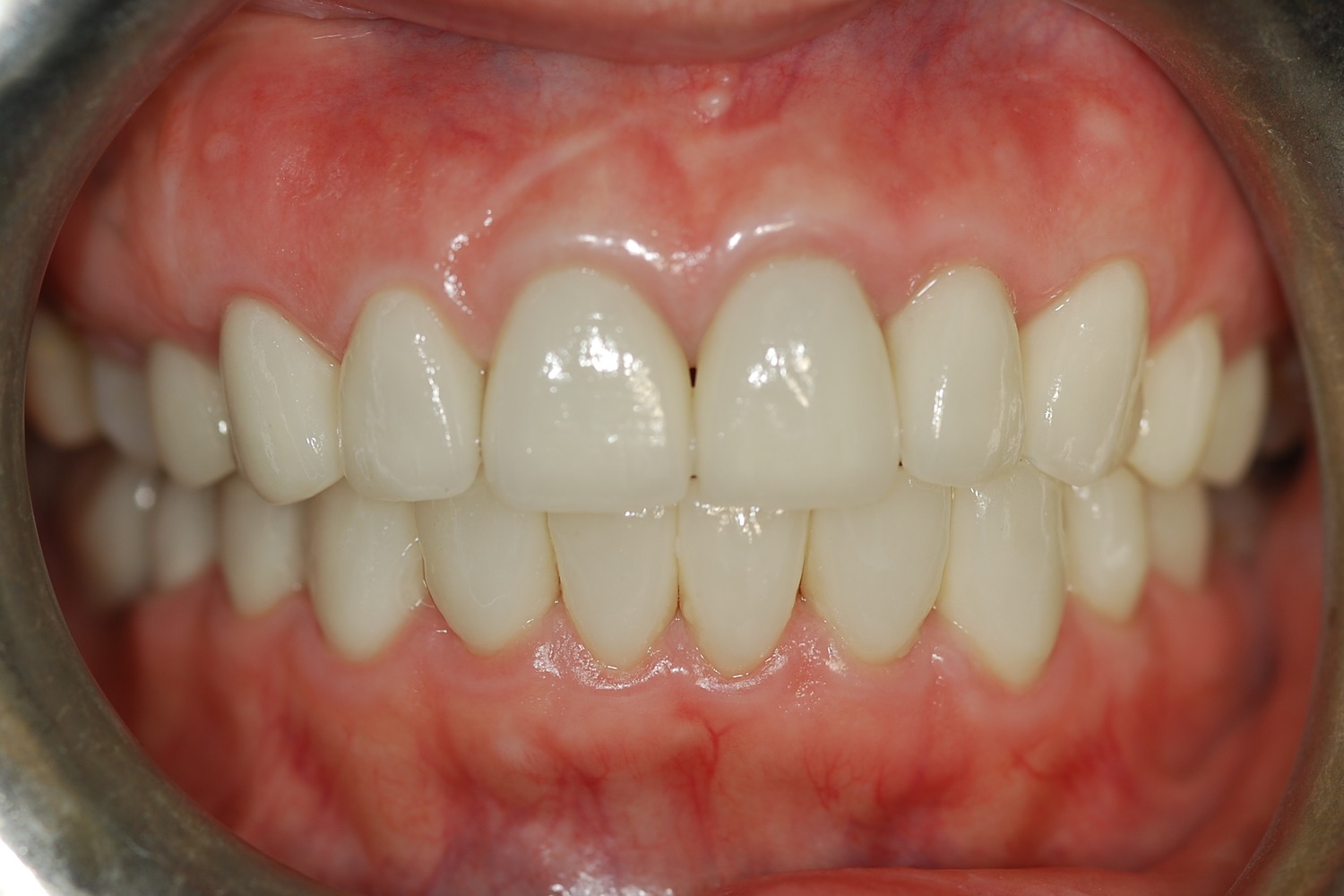 After
After How Aging, Opaque Restorations Were Replaced with Customized Ceramic Restorations Designed for Long-Term Natural Esthetics
The existing restorations appeared opaque, worn, and unnatural over time, affecting both confidence and overall smile harmony.
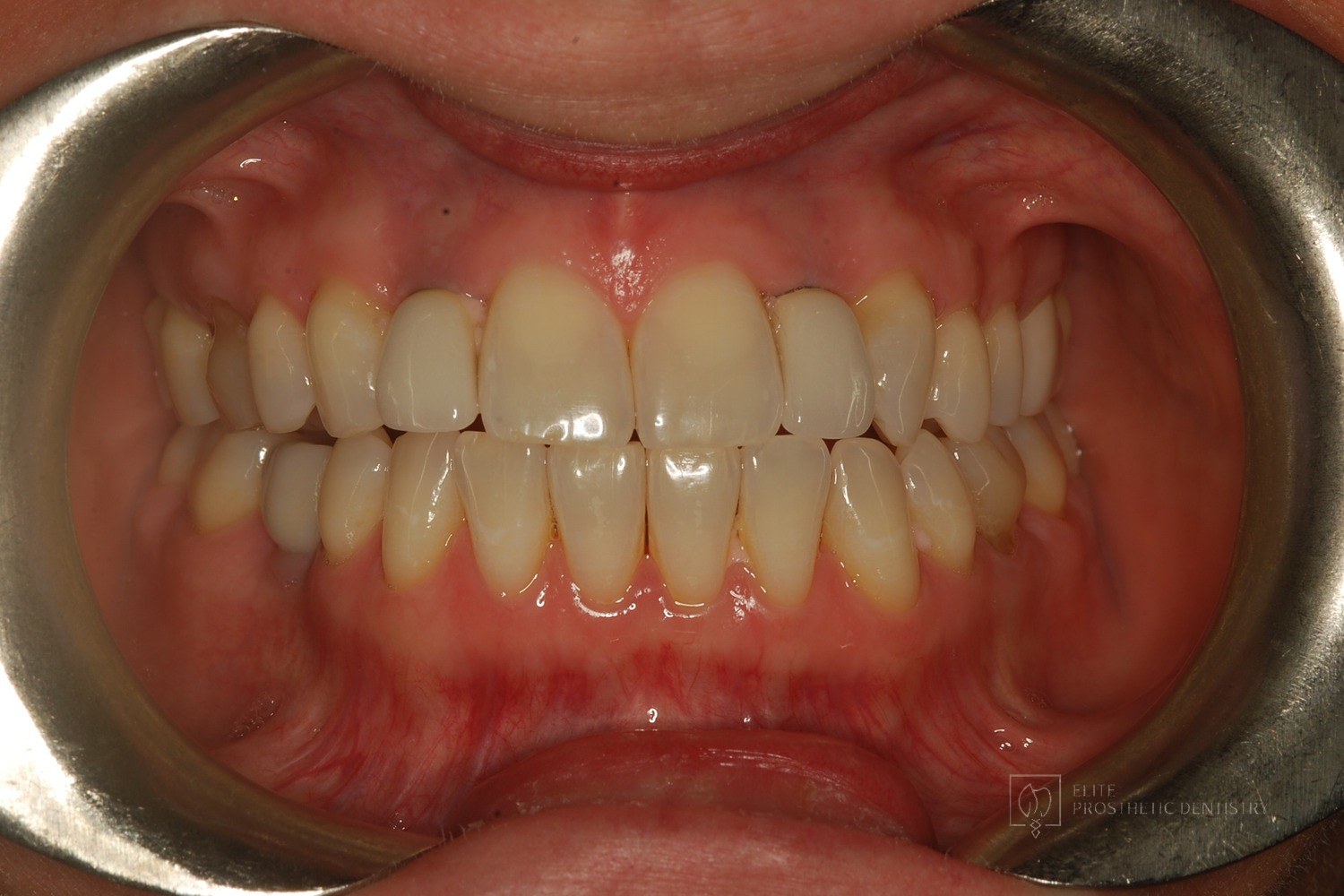 Before
 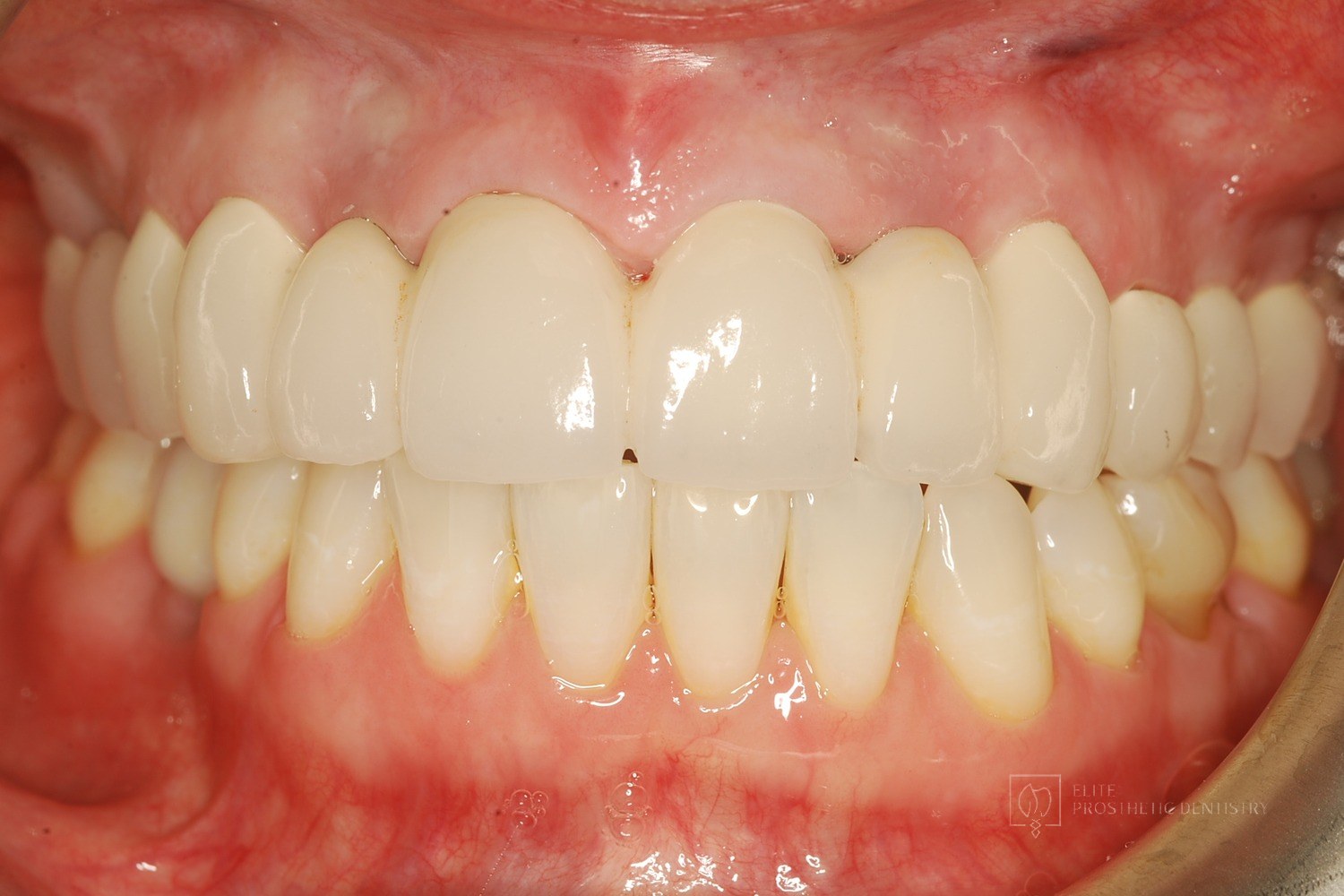 After
After How Older Implant Crowns Were Redesigned for a Better Bite and More Natural Appearance
The patient came in after years of living with implant-supported crowns placed more than twenty years earlier that no longer looked or functioned well. CBCT evaluation, reviewed with a radiologist colleague, showed the implants had been placed too far to the buccal in very thin bone and could not support a healthy long-term restoration.
 Before
  After
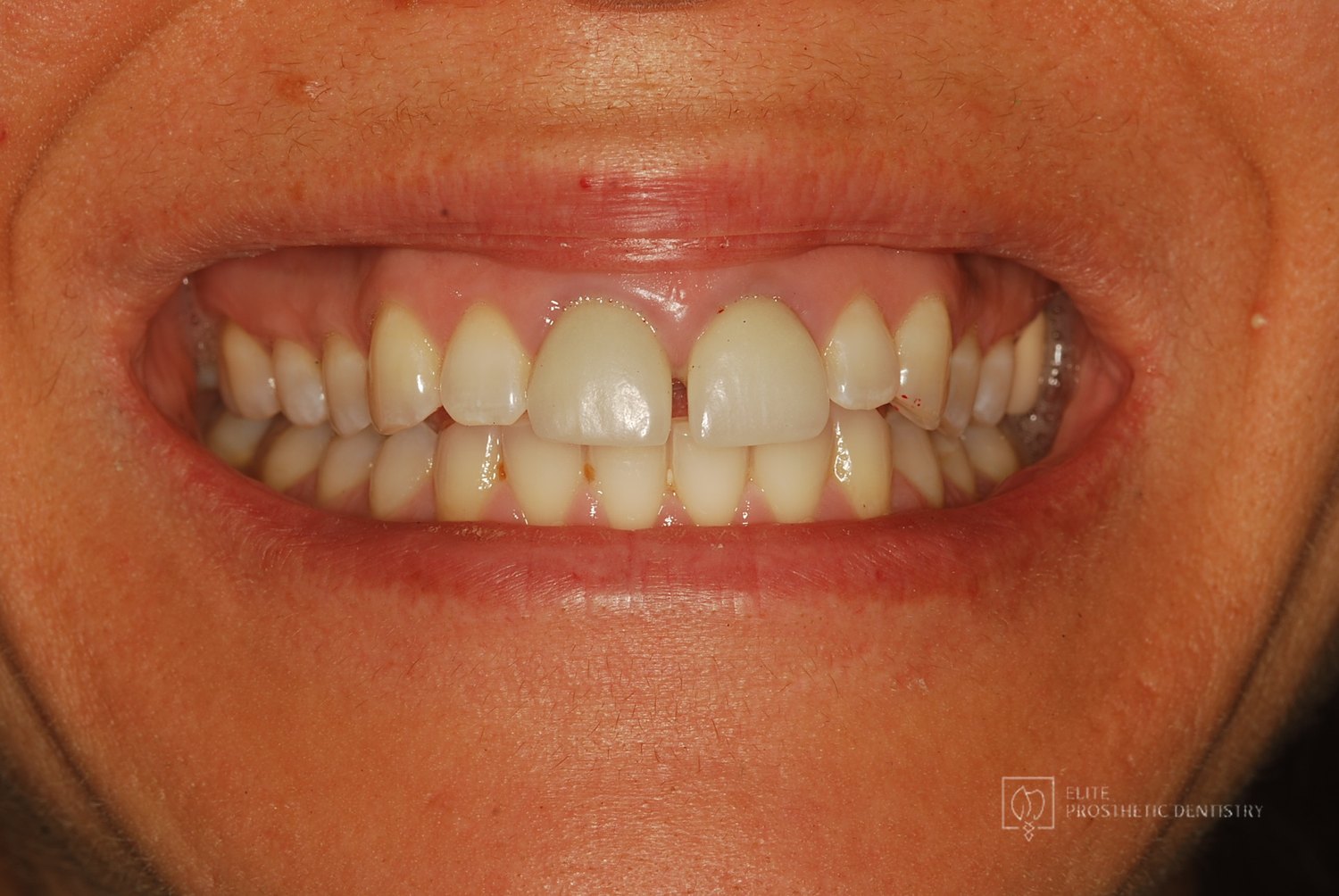
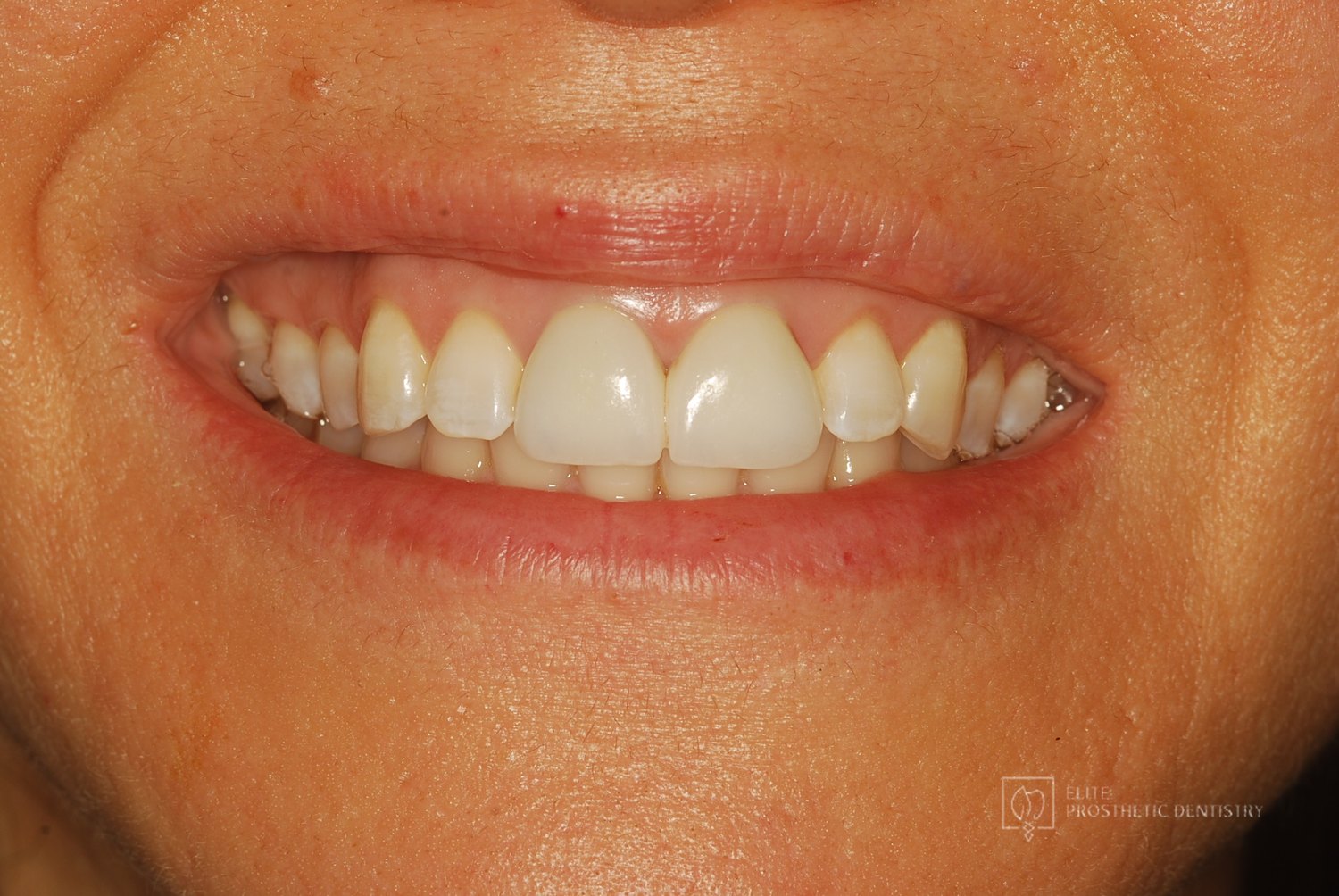
After Two Front Teeth Saved From Extraction: A Second Opinion, Custom Gold Posts, and Crowns Made to Last
Two upper central incisors with failed root canal treatment and recurrent decay had been recommended for extraction and implant replacement. A CBCT evaluation showed that removing the roots from their thin facial bone housing could create a visible esthetic defect in the gum and bone contour, made worse by the patient's high lip line.
 Before
  After
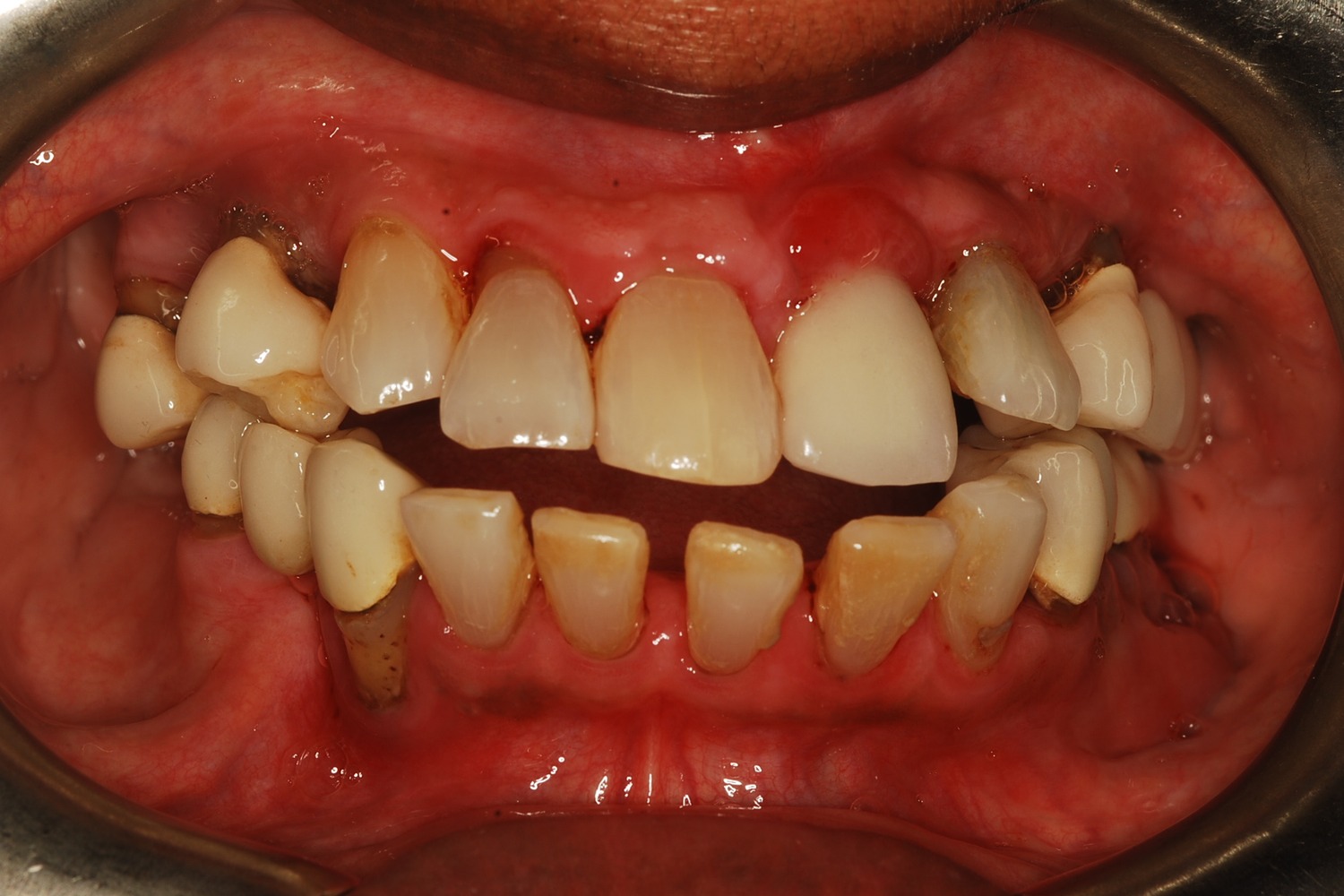
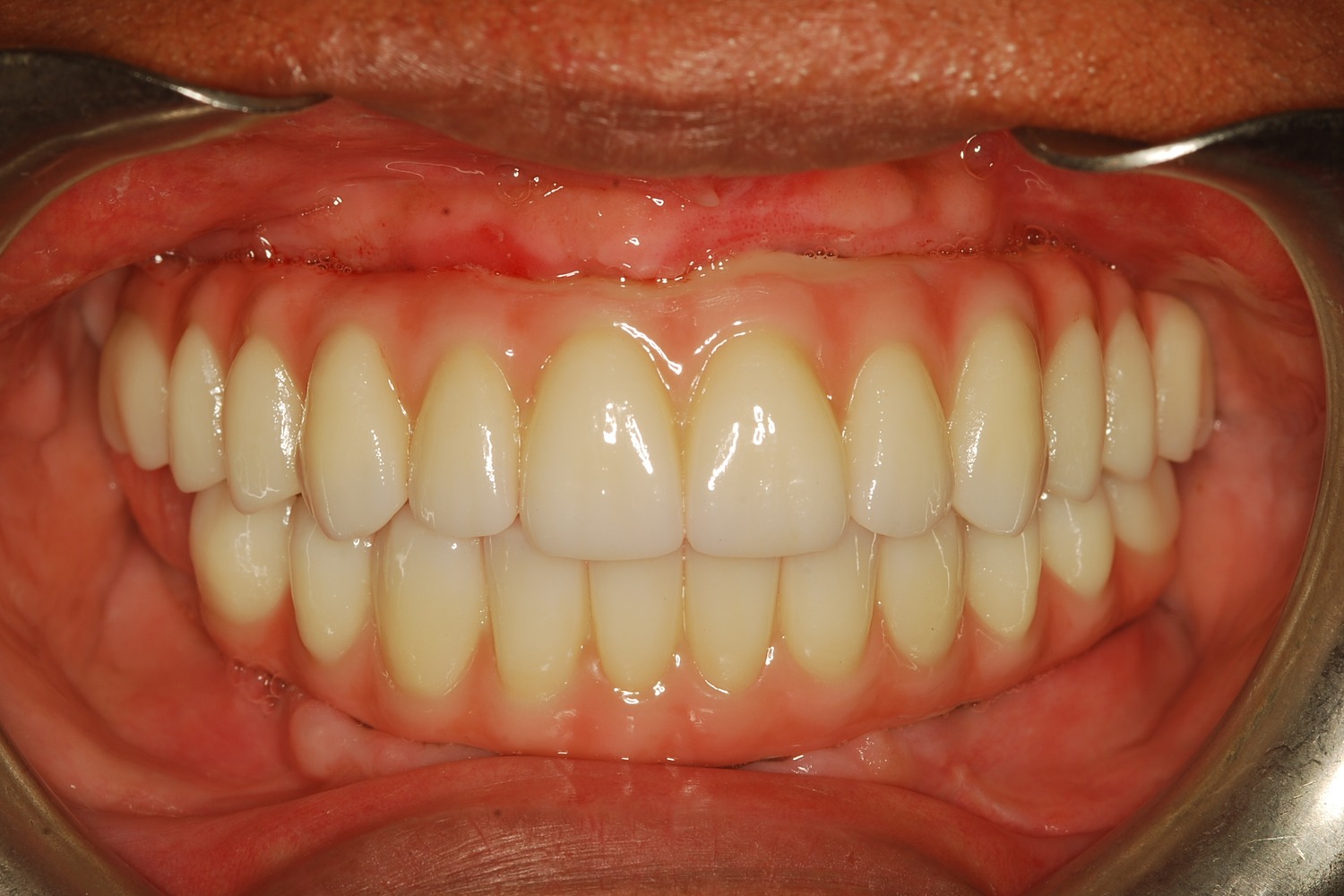
After How Severe Bone Loss and Bite Dysfunction Were Rebuilt with All-on-6 Implants and a Milled Zirconia Hybrid Prosthesis
The patient presented with severe bone loss, advanced periodontal disease, malocclusion, and a dysfunctional bite that required full-arch rebuilding.
Related Resources
Full Mouth Reconstruction
When full mouth crown restoration is part of a broader rebuild that also involves implants or other procedures.
Custom Dental Crowns Overview
The complete crown service hub including single-crown options.
Zirconia Crowns
High-strength material option for back teeth and bruxism cases.
E.max Crowns
Translucent material option for front-tooth aesthetics.
TMJ Treatment
Bite-related issues often accompany the need for full mouth crowns.
Sedation Dentistry
Comfort options for longer multi-procedure appointments.
Our In-House Dental Lab
How fabrication in our own laboratory changes every crown that leaves the practice.
Conveniently Located in Friendship Heights
Serving Washington DC, Bethesda, Chevy Chase, McLean, Great Falls, Potomac, and surrounding communities. One block from the Friendship Heights Metro on the Red Line.
Request Your Specialist Consultation
Personally reviewed by Dr. Marlin or his team.
Hours
- Monday — Thursday8:00 AM — 5:00 PM
- Friday8:00 AM — 2:00 PM
- Saturday — SundayClosed