
Custom Dental Crowns in Washington, DC
A dental crown is a custom-fabricated restoration that covers a damaged, weakened, or aesthetically compromised tooth. At Elite Prosthetic Dentistry, every crown is designed by a specialty-trained prosthodontist and crafted in our in-house dental laboratory by a master ceramist working directly with the clinician.
40+
Years Experience
1985
In-House Lab Since
2026
Top Dentist List
9
U.S. Patents

Gerald M. Marlin, DMD, MSD
Specialty-Trained Prosthodontist (DMD, MSD)
Washingtonian "Top Dentist" 2026 and Hall of Fame
Why Patients Choose a Prosthodontist for Crowns
- Crowns designed and fabricated in our in-house laboratory since 1985
- Master ceramist works directly with the clinician on every restoration
- Specialty-trained prosthodontist focused on restoration longevity
- 35+ years documented crown service from our in-house laboratory
- One specialist practice manages your case from preparation to final placement
Or call now: (202) 244-2101
What Is a Dental Crown?
A crown is a custom-fabricated restoration that fully covers a tooth, replacing the outer surface that has been damaged by decay, fracture, wear, or previous dental work. Crowns restore function and appearance while protecting the underlying tooth structure.
Full-Coverage Restoration
Unlike fillings or veneers, a crown wraps the entire visible tooth. The level of structural protection makes crowns appropriate when significant tooth structure is missing or weakened.
Material Choices for Every Case
All-ceramic, zirconia, porcelain-fused-to-metal, and gold options. Each material has trade-offs in strength, aesthetics, and longevity. Material is selected based on the tooth, the bite, and the case.
Custom-Fabricated to the Tooth
Every crown is designed individually for fit, contour, color, and bite. Mass-produced or stock crowns cannot deliver the precision a specialist crown provides.
How the Crown Process Works
Crown placement is a planned multi-visit process. Clear expectations and a detailed plan before treatment begins are part of how a specialist practice approaches every case.
Examination and Treatment Planning
Clinical exam, imaging when indicated, and detailed discussion of the tooth, the cause of damage, and the recommended approach. Material selection and bite considerations reviewed at this visit.
Tooth Preparation and Impressions
Tooth shaped to receive the crown, conservative removal of damaged structure, and detailed digital or physical impressions captured for the laboratory.
Temporary Crown Placement
A temporary crown is placed to protect the prepared tooth while the final crown is fabricated in our in-house lab. You leave with a functional, attractive tooth between visits.
Final Crown Placement
Final crown placed and bonded or cemented. Fit, bite, and appearance refined before the case is considered complete.
Why the In-House Lab Changes Everything for Crowns
Most dental practices send crowns to an outside commercial laboratory. Communication happens through prescriptions, photographs, and shipping. Elite Prosthetic Dentistry has operated an in-house lab continuously since 1985. The clinical difference is structural.
-
Master Ceramist On-Site
Our ceramist works directly with the clinician on every crown. Color, contour, and texture are refined in real time, often with the patient present for shade verification.
-
Documented Crown Longevity
Crowns from our in-house laboratory have lasted 35 years and longer with proper care. Lab control over fit and material handling is part of why.
-
Same-Visit Adjustments
When fit, contour, or color need refinement, adjustments happen on-site without shipping. This is the practical advantage of having the lab in the same building as the chair.
-
Specialist-Led From Preparation to Placement
From preparation through final placement, your case stays within one specialist practice and one treatment plan. No transfers between practices, no shifting standards.

When a Crown Is the Right Restoration
Crowns address specific clinical situations. Specialist evaluation determines whether a crown, a veneer, an inlay, or another approach best fits your tooth.
Significantly Damaged Teeth
Large cavities, fractures, or structural loss too extensive for a filling. Crowns restore strength and protect the remaining tooth structure.
Root Canal Treated Teeth
Teeth that have had root canal therapy become more brittle over time. A crown protects the tooth from fracture and restores function.
Worn or Bruxism-Damaged Teeth
Teeth shortened or damaged by chronic grinding may benefit from crown protection as part of a broader bite-restoration plan.
Replacing Aging Crowns
Old crowns with margin issues, color mismatches, recurrent decay underneath, or aesthetic concerns. Specialist replacement protects the underlying tooth and restores appearance.
When a Crown Is the Right Answer
Crowns address situations where a tooth has lost enough structure that a filling or onlay will not provide adequate strength or longevity. The threshold is clinical, not arbitrary. Specialist evaluation determines whether a crown is appropriate for your specific tooth.
Common situations where a crown is the right answer:
- A tooth with a large cavity or fracture too extensive for a filling
- A tooth that has had root canal therapy and is at risk of fracture
- A tooth significantly worn by grinding that needs structural restoration
- An old crown with margin issues, recurrent decay, or aesthetic problems
- A tooth supporting a dental bridge or implant prosthesis
Specialist evaluation also identifies when a crown is NOT the right answer. Some teeth are better served by a veneer (sound underlying structure, aesthetic concerns only), an inlay or onlay (partial coverage), or restoration through a different approach.
Crown Materials and Their Trade-offs
Crown material selection is based on the tooth, the bite, the aesthetic priorities, and your specific case factors. No single material is right for every situation.
| Material | Aesthetics | Strength | Best Use |
|---|---|---|---|
| Zirconia | Excellent | Exceptional | Aesthetics of front teeth, premolars, visible areas |
| All-Ceramic (e.max) | Excellent | Strong | Back teeth, bruxism cases, high-stress positions |
| Porcelain-Fused-to-Metal | Good | Strong | Long-term restorations, large bridges |
| Gold | Functional only | Exceptional | Back molars in patients prioritizing longevity over appearance |
| CAD/CAM Milled Ceramic | Excellent | Strong | Cases benefiting from digital design precision |
Selection happens at consultation based on the specific tooth, the bite, and your priorities. Read more about CAD/CAM restorations and the different types of crowns and their indications.
The In-House Lab Advantage for Crowns
Most practices send crowns to an outside laboratory, which works from impressions, prescriptions, and photographs, so refinements travel back and forth. Turnaround is typically two to three weeks, and adjustments that send the crown back to the lab add more time.
Elite Prosthetic Dentistry has operated an in-house dental laboratory continuously since 1985. Our master ceramist works directly with the clinician on every crown. Color, surface texture, contour, and individual tooth character are refined in real time. Adjustments happen on-site without shipping. The result is closer control over bite, fit, contour, and shade.
The practical result for patients: better fit, better appearance, and faster turnaround when changes are needed. Mainstream patient guidance puts typical crown life at 5 to 15 years (Cleveland Clinic). Crowns from our in-house laboratory have lasted 35 years and longer with proper care. Read more about our in-house laboratory.
Common Concerns Patients Raise About Crowns
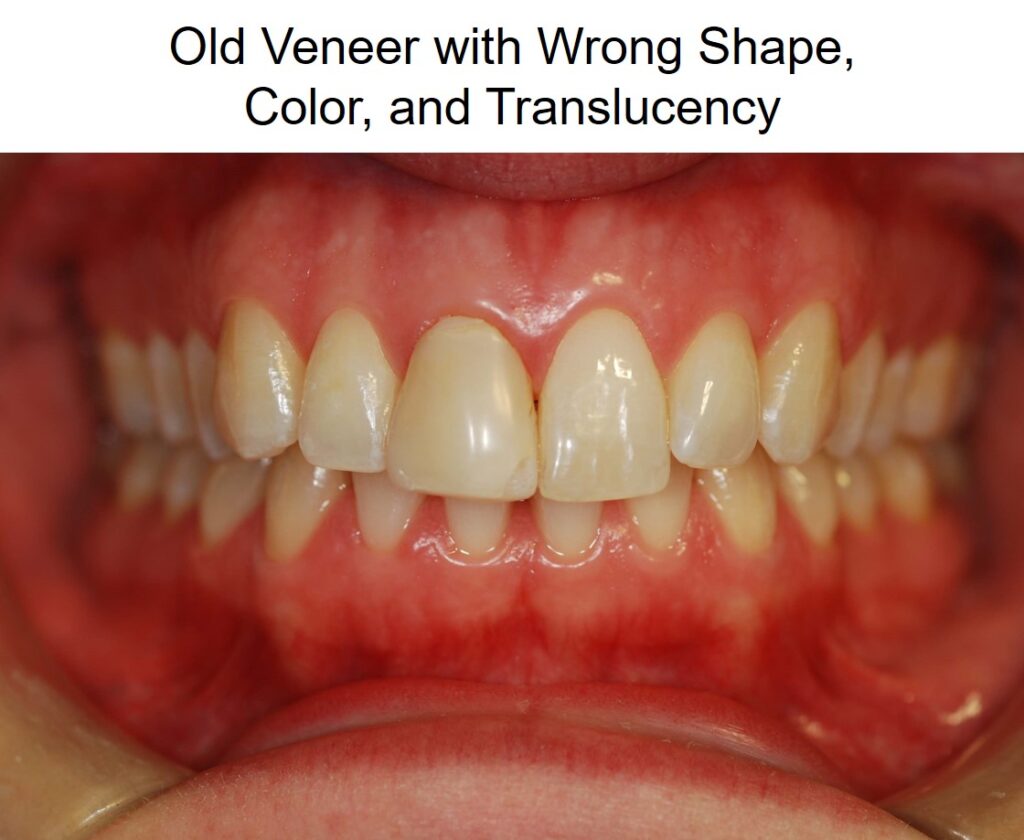
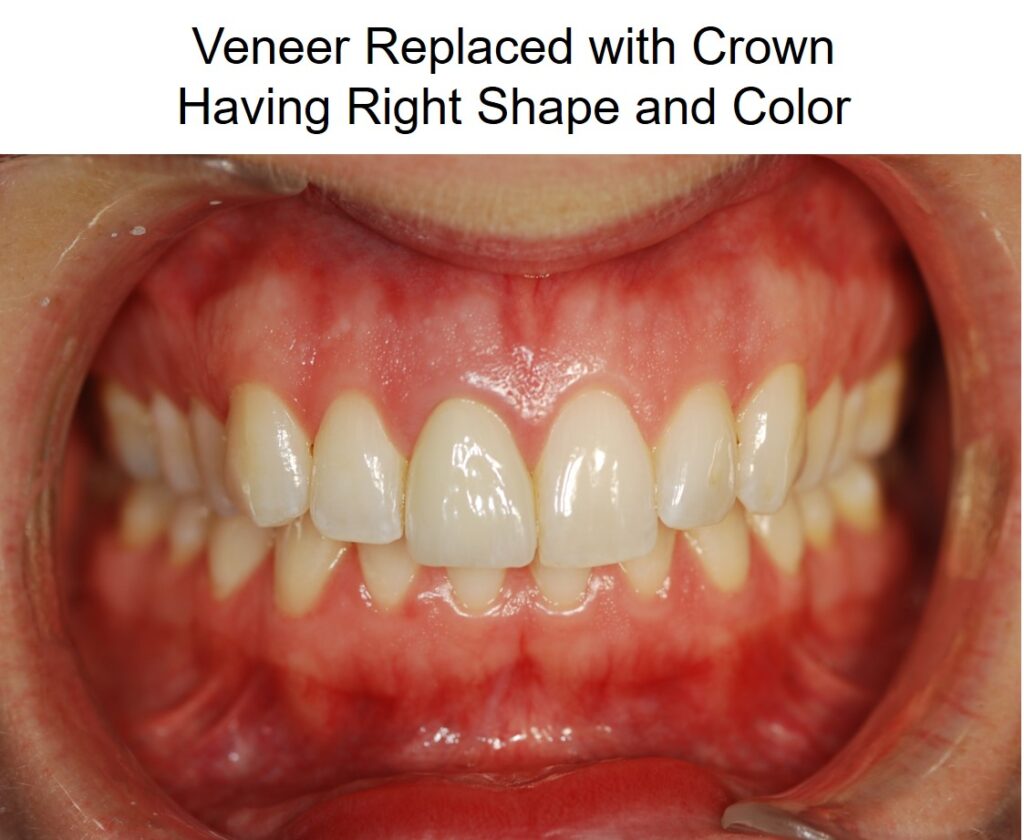
“Will my crown look obviously fake?” Crowns look fake when shade is wrong, when translucency is wrong, when proportions are wrong, or when surface texture does not match adjacent teeth. Specialist design with in-house lab control addresses each of these factors individually for every crown.
“My existing crown has a dark line at the gum.” A dark margin at the gum line typically reflects an old porcelain-fused-to-metal crown where gum recession has exposed the metal substructure, or a poorly designed margin. Modern all-ceramic and zirconia crowns eliminate this issue. Replacing the crown with a properly designed restoration restores the natural appearance.
“My crown feels loose.” A loose crown should be evaluated promptly. Sometimes the cement has failed and the crown can be recemented. Sometimes there is underlying decay or a fracture that requires more substantial treatment. See our loose dental crown page for the appropriate next steps.
“I have several old crowns that no longer match.” Replacing multiple aging crowns is best approached as a coordinated case rather than one crown at a time. When the case is planned as a unit, color and contour can be harmonized across all the restorations. This is one of the reasons patients come to Elite Prosthetic Dentistry from elsewhere in the DMV for crown replacement.
“How long will my recovery take?” Crown placement does not require recovery in the typical sense. Mild sensitivity after the preparation appointment is common and usually resolves within a few days. Most patients return to normal eating within hours of the final placement.
Crown Treatment for Washington DC Patients
Elite Prosthetic Dentistry serves crown patients across the Washington DC metropolitan area, including Bethesda, Chevy Chase, Potomac, McLean, Great Falls, and surrounding communities. Our office is located in Friendship Heights, one block from the Red Line Metro station, with building parking.
For patients traveling from outside the DMV region for crown work, our travel for care and concierge dentistry services coordinate multi-appointment scheduling and lodging logistics so out-of-town consultations and treatment can be efficient.
Ready to Discuss Your Treatment Options With a Specialist?
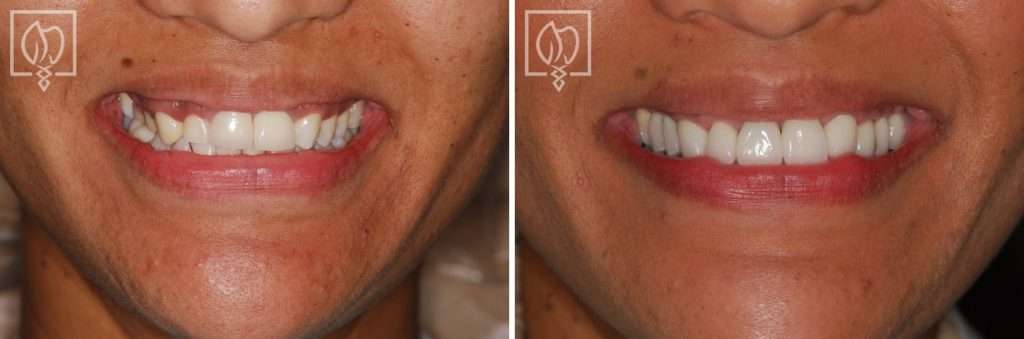
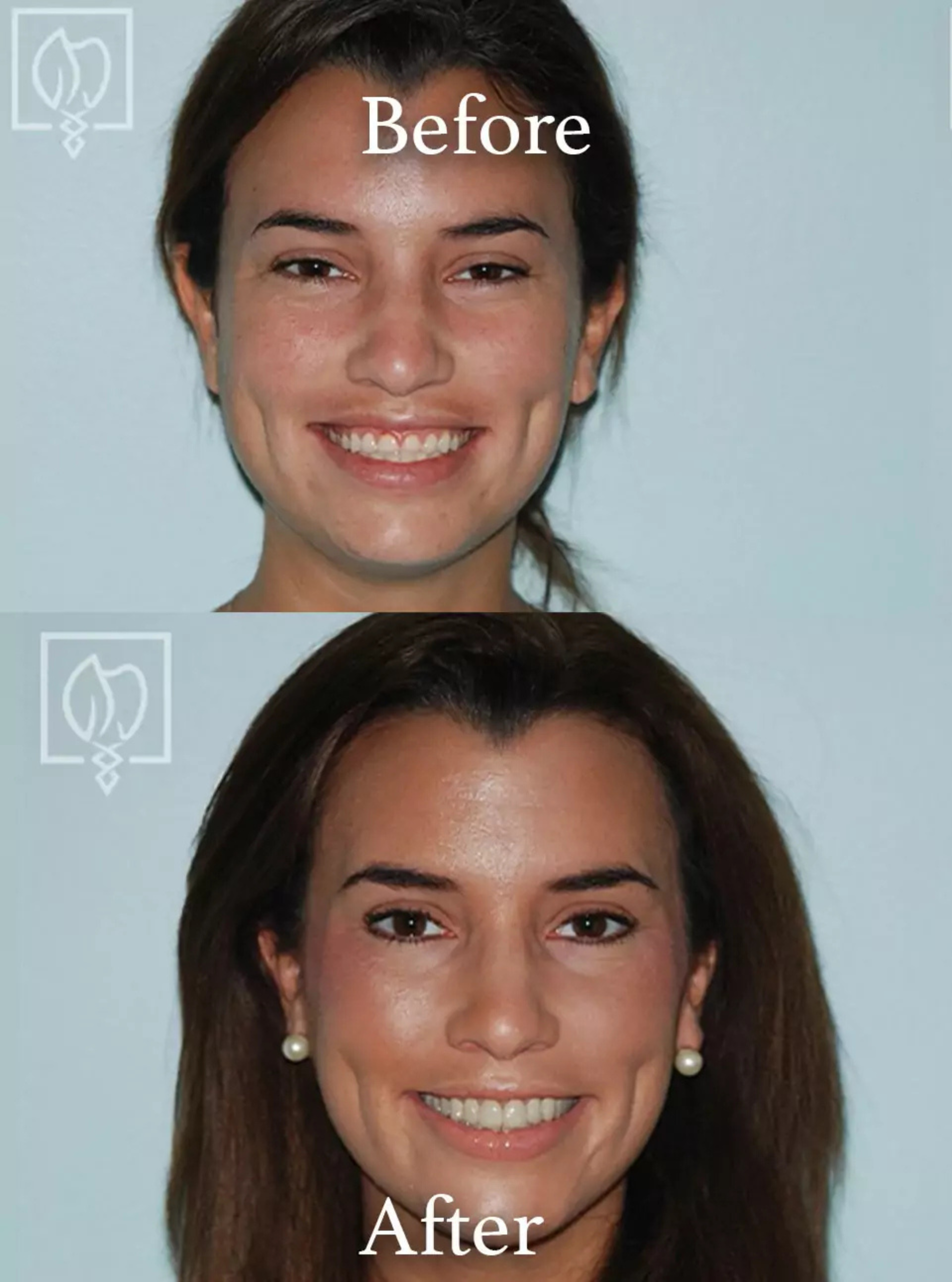
Real Patient Results
Every crown shown was designed and placed at the Washington, DC practice under Dr. Marlin's direction.
When Elite Prosthetic Dentistry Is a Strong Fit
A strong fit if you are looking for
- A crown designed for the bite as well as the tooth, so it does not simply wear or break the way the last one did
- Older crowns with visible margins, mismatched color, or recurrent decay evaluated as a group, not one at a time
- Front-tooth crowns where shade, translucency, and gum contour must match the natural teeth
- A crown that has to coordinate with implants, bridges, or other existing dentistry
- Fabrication in the in-house laboratory, with shade and fit refined with the clinician present
The honest boundary
Elite Prosthetic Dentistry may not be the right fit if you are primarily looking for routine insurance-based dentistry, the lowest-cost option, or a quick single-visit solution without a comprehensive evaluation.
General Dentist vs. Prosthodontist for Aging Crowns, Bridges, and Implant Restorations →
Frequently Asked Questions
How long do dental crowns last?
Crown longevity depends on materials, the underlying tooth, the bite, and home care. Mainstream patient guidance puts typical crown life at 5 to 15 years. Crowns from our in-house laboratory have lasted 35 years and longer with proper care, and specialist planning and in-house fabrication are part of why.
Will my crown look natural?
When designed by a prosthodontist working with an experienced in-house ceramist, crowns can be made to look indistinguishable from natural teeth. Shade, translucency, surface texture, and proportions are individually controlled. Crowns that look obviously artificial typically result from stock designs, generic shading, or restorations fabricated without enough information about the patient's specific anatomy.
What is the difference between a crown and a veneer?
A crown wraps the entire tooth and is appropriate when significant tooth structure is missing or weakened. A veneer covers only the visible front surface and is appropriate when the underlying tooth is sound and the goal is aesthetic refinement. Specialist evaluation determines which is right for your tooth.
What materials are used for dental crowns?
Common materials include zirconia, all-ceramic (e.max), porcelain-fused-to-metal, and gold. Each has trade-offs. Modern high-translucency multilayered zirconia delivers exceptional aesthetics for front teeth, premolars, and visible areas with strength that exceeds traditional all-ceramic. Lithium disilicate (e.max) is well-suited for back teeth, bruxism cases, and high-stress positions. Material selection is based on the tooth, the bite, and aesthetic priorities.
Does getting a crown hurt?
The crown procedure is performed under local anesthesia, and most patients report no discomfort during the appointment. Mild sensitivity after preparation is common and usually resolves within a few days to a week. Sedation is available for patients with significant dental anxiety or for longer multi-crown appointments.
How do I care for my crowns long-term?
Daily brushing and flossing, regular professional cleanings, and avoiding habits that stress restorations (ice chewing, opening packages with teeth, untreated grinding) extend the service life of any crown. Patients with bruxism should be evaluated for a night guard as part of the treatment plan.
Why see a prosthodontist for a crown instead of a general dentist?
Prosthodontists complete three additional years of specialty training beyond dental school focused on restoration, esthetics, and complex case planning. Combined with an in-house lab and master ceramist, the specialist setup changes both the technical fit of the crown and the aesthetic outcome. The training depth matters most on visible teeth, on cases involving multiple adjacent restorations, and on long-term durability.
Related Patient Success Stories
Explore similar patient success stories demonstrating our expertise in advanced prosthetic dentistry.
 Before
  After
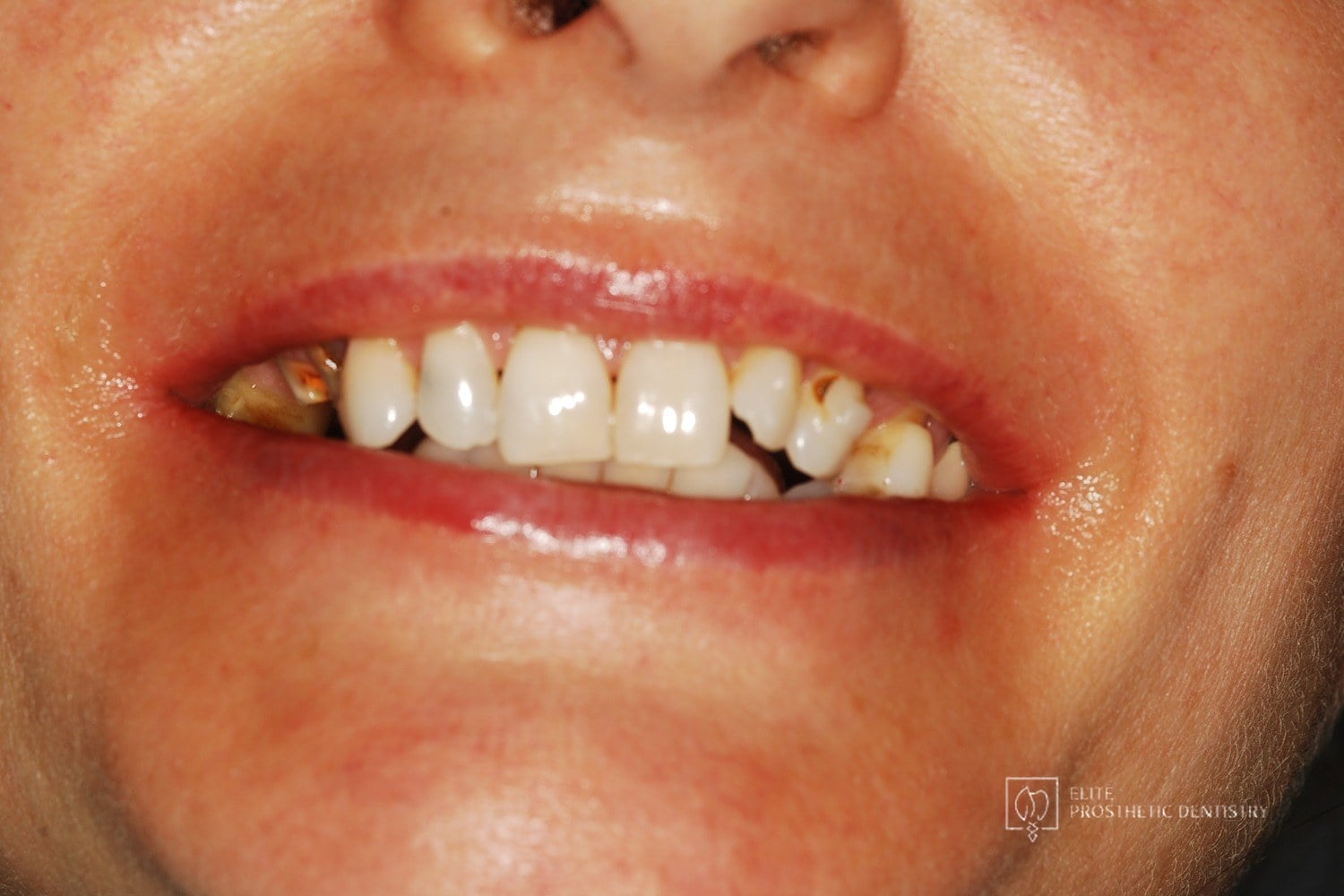
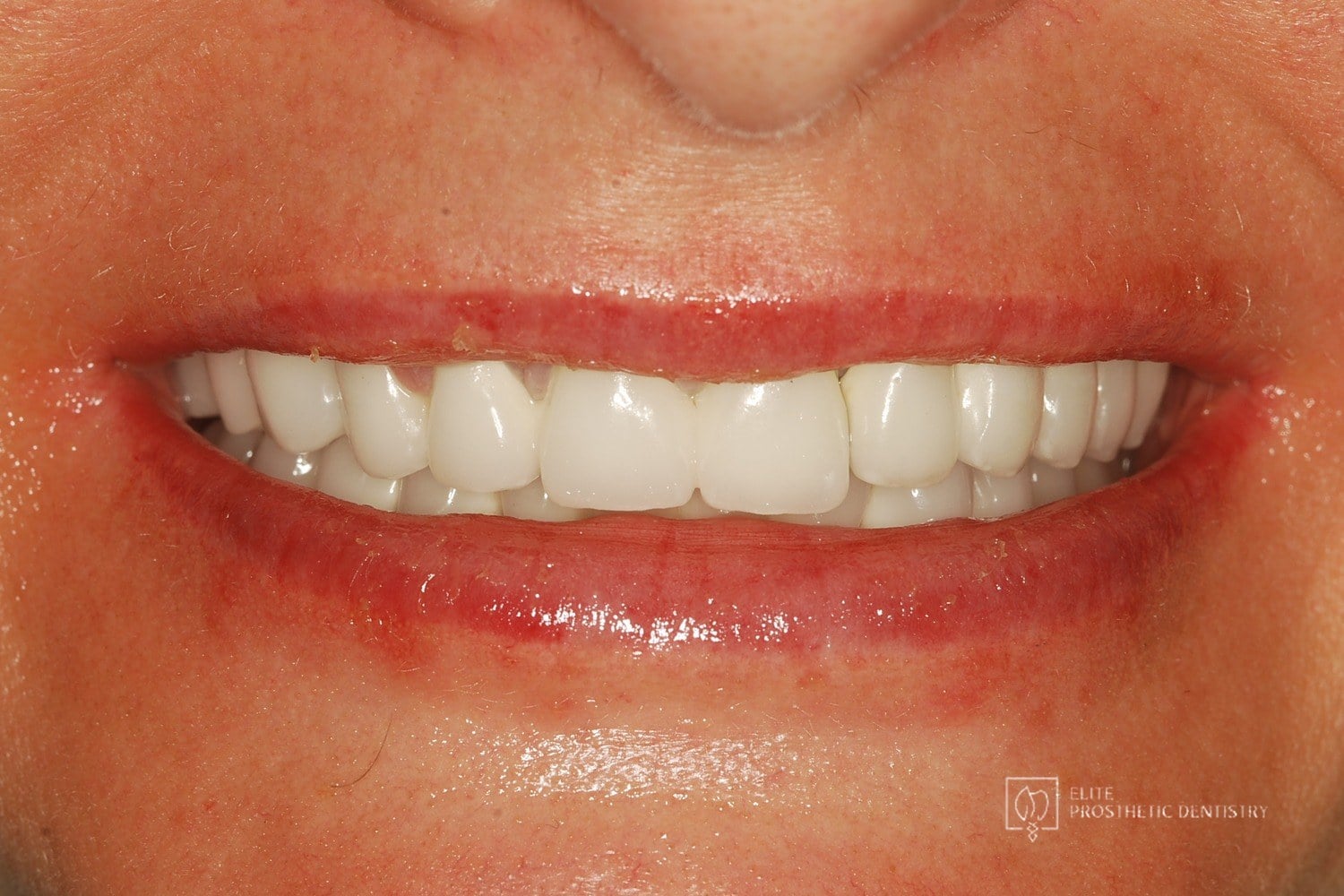
After How Aging, Failing Dentistry Was Replaced with a Coordinated Full-Mouth Implant and Crown Reconstruction
The patient presented with throbbing upper-molar pain, long-standing infections, multiple root canals and unfinished prior treatment, generalized sensitivity, and several hopeless teeth.
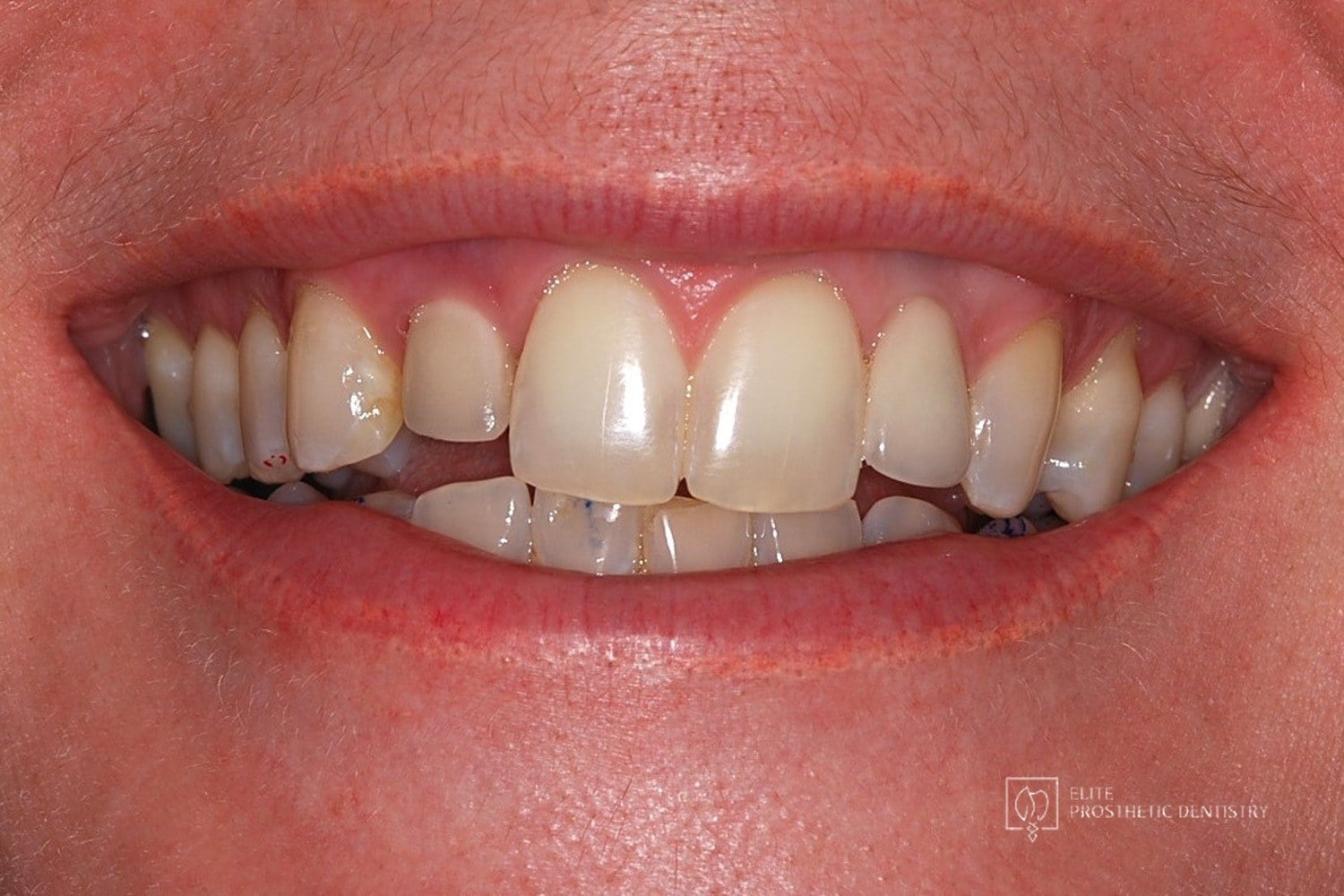 Before
 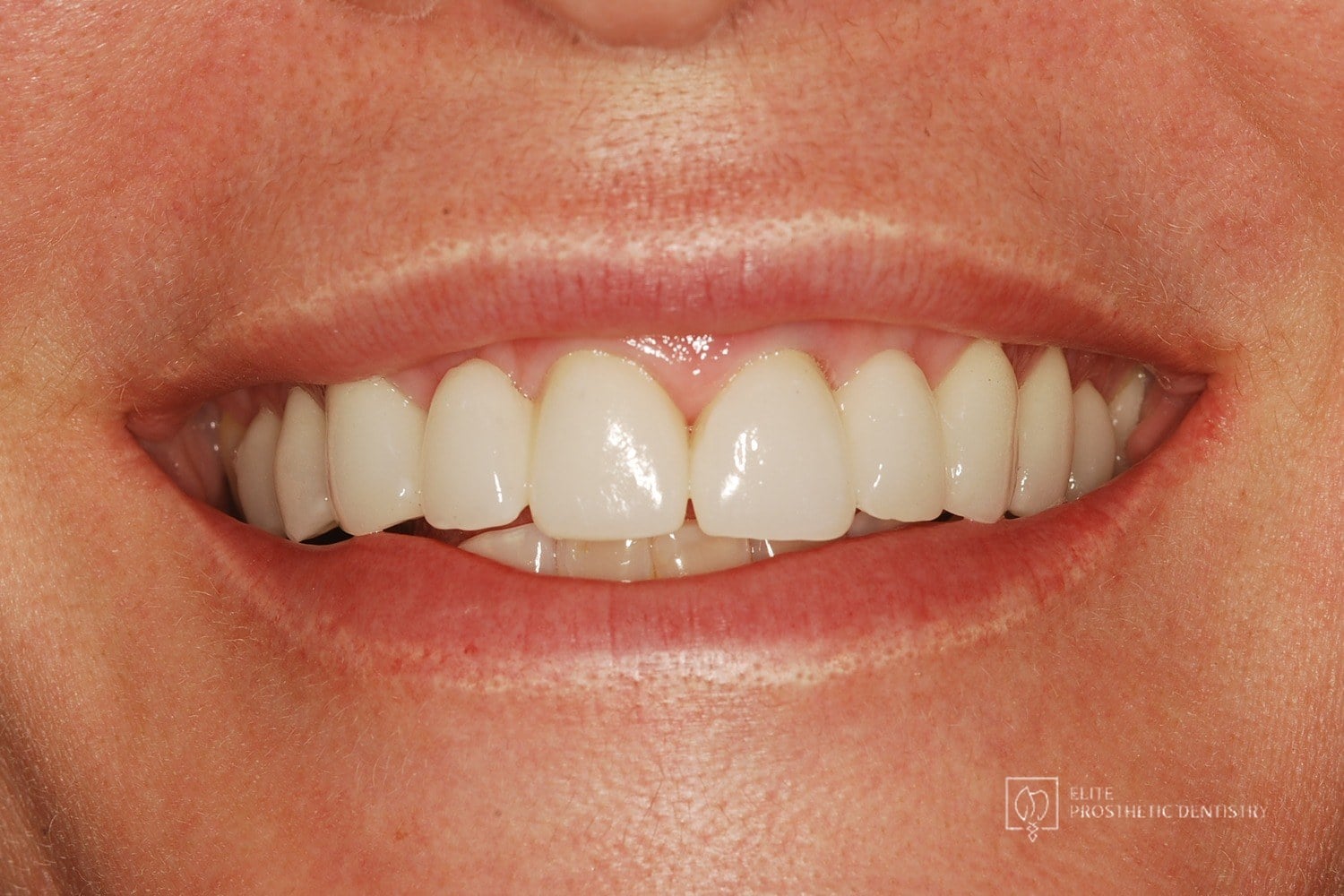 After
After How Failing Lateral Incisor Implants Were Replaced with Custom Zirconia Bridges After Severe Bone Loss Made Replacement Implants Impossible
Comprehensive examination including CBCT imaging revealed significant bone loss surrounding implants that were placed outside the buccal plate, most likely due to placement without a CBCT-generated surgical guide. The implants were determined non-salvageable, and the alveolar ridge was too narrow to support replacement implants without extensive reconstruction.
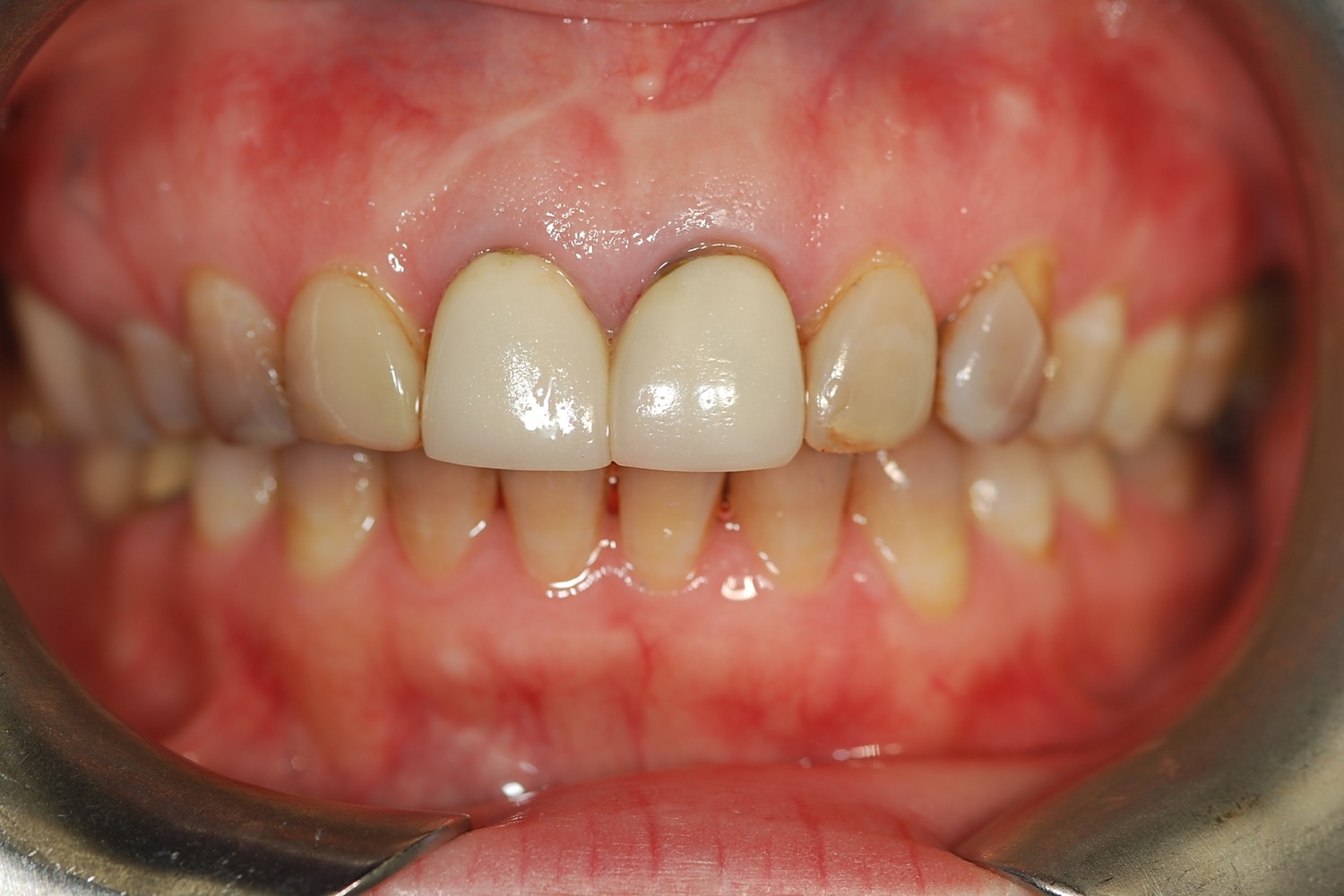 Before
 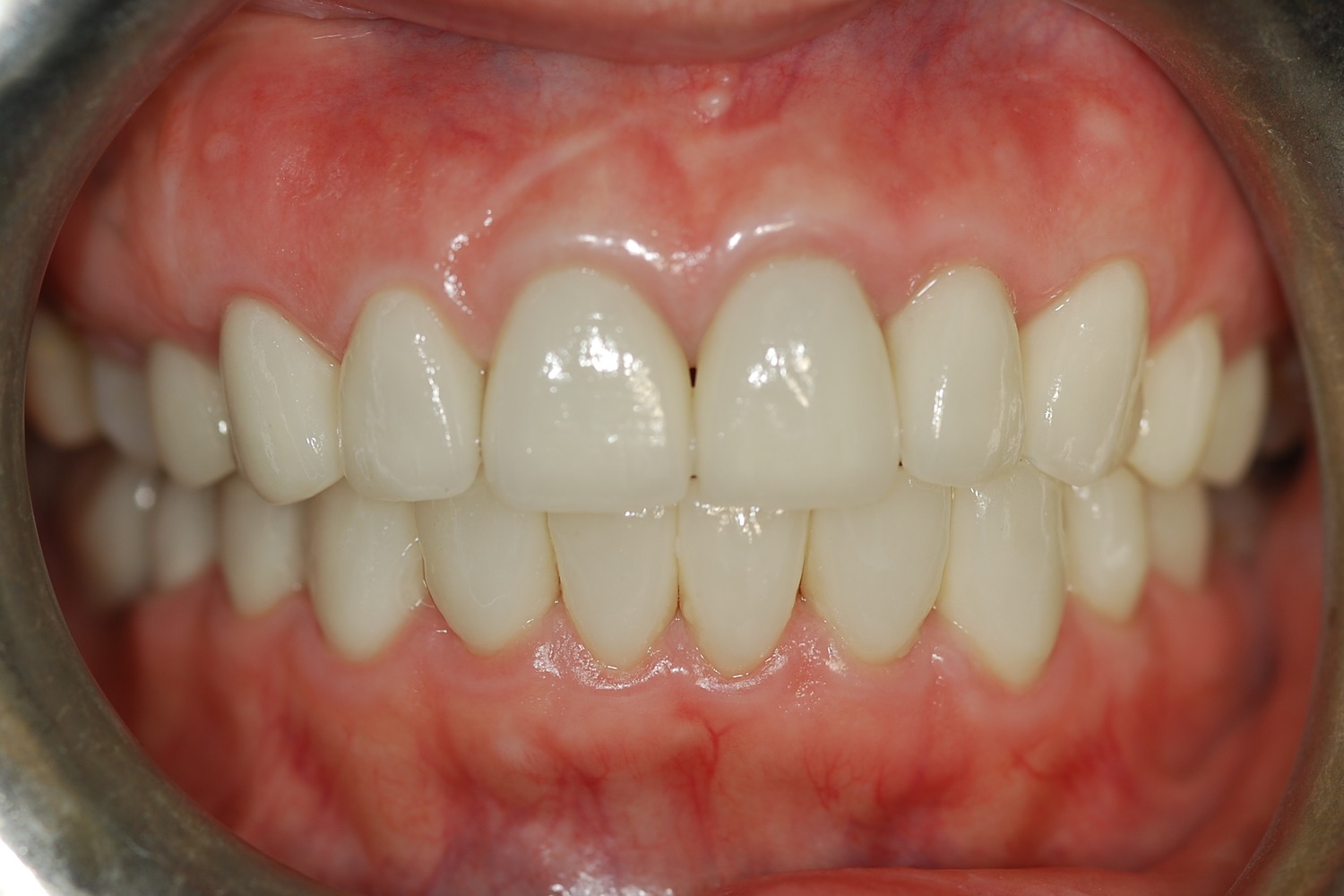 After
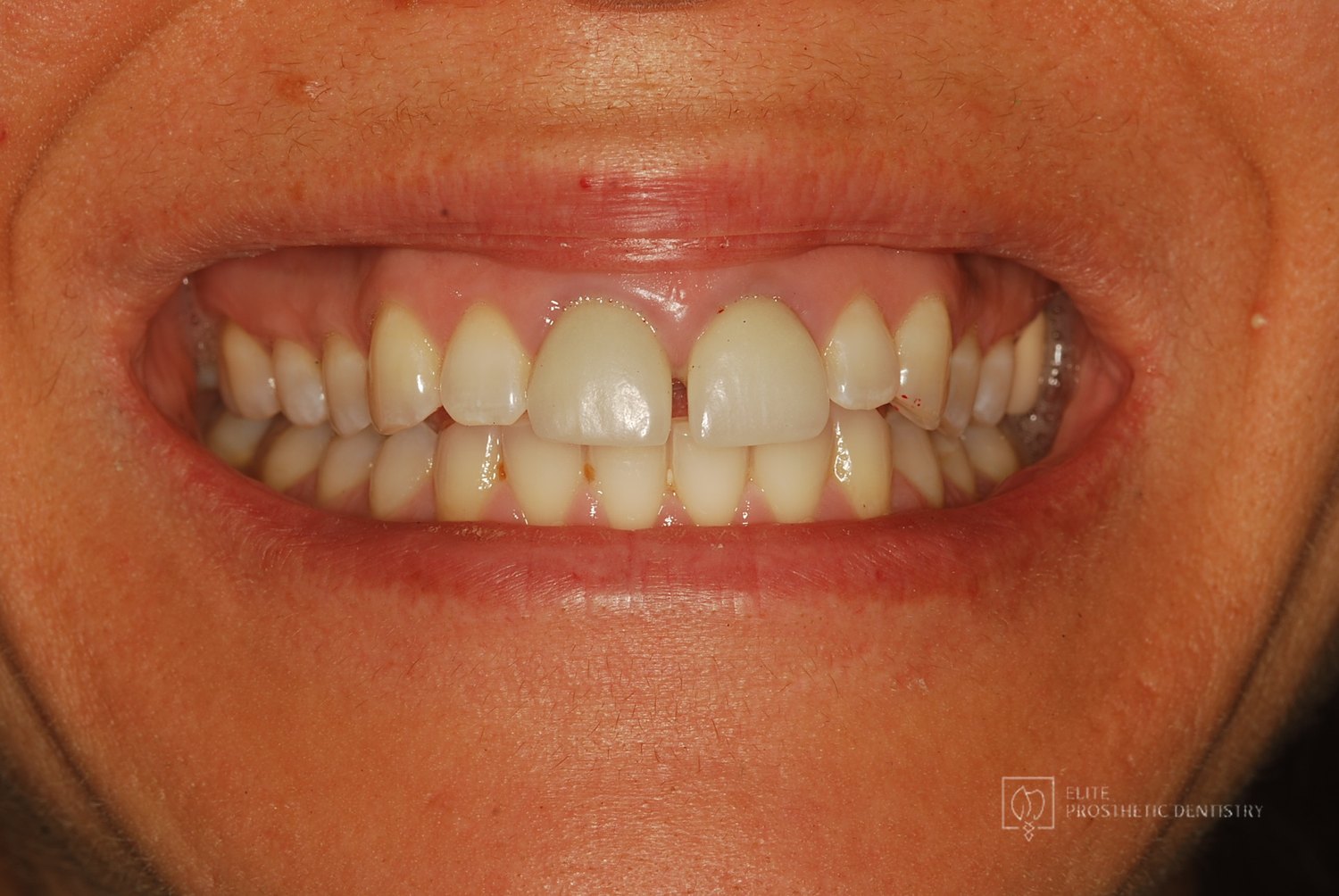
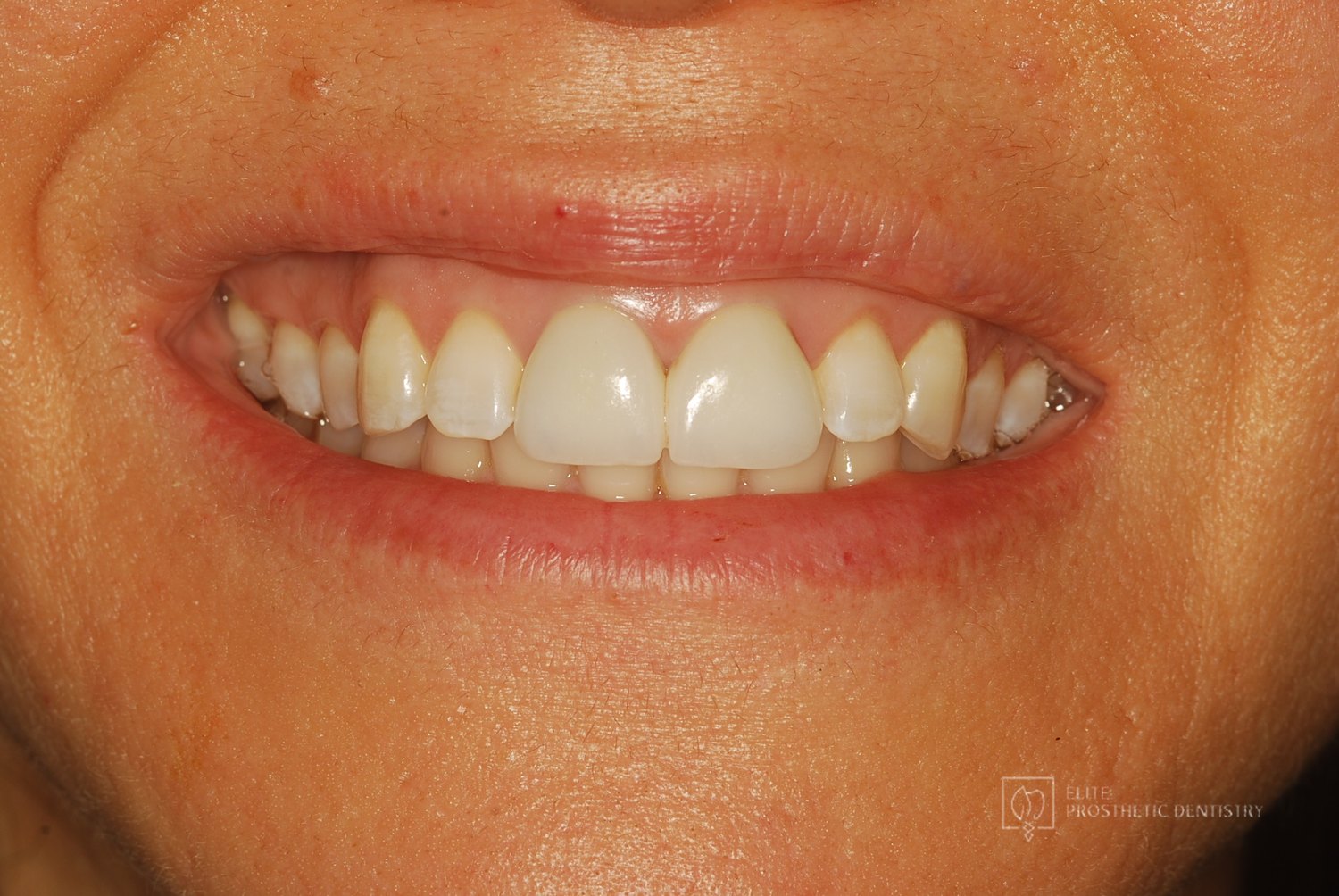
After How Aging, Opaque Restorations Were Replaced with Customized Ceramic Restorations Designed for Long-Term Natural Esthetics
The existing restorations appeared opaque, worn, and unnatural over time, affecting both confidence and overall smile harmony.
 Before
  After
After Two Front Teeth Saved From Extraction: A Second Opinion, Custom Gold Posts, and Crowns Made to Last
Two upper central incisors with failed root canal treatment and recurrent decay had been recommended for extraction and implant replacement. A CBCT evaluation showed that removing the roots from their thin facial bone housing could create a visible esthetic defect in the gum and bone contour, made worse by the patient's high lip line.
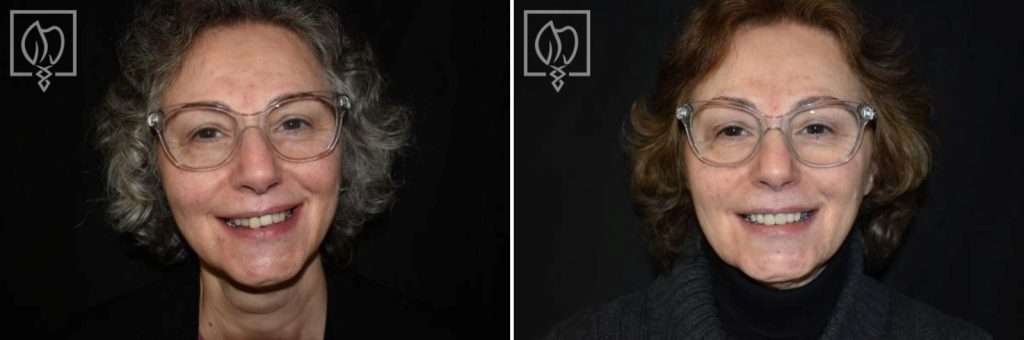
Temporary Crowns Restore a Patient's Smile in One Day with an Immediate Smile Makeover
A patient from Potomac, Maryland came to the practice in pain from a failing dental implant whose restoration was also compromising her appearance and her confidence.
Multi-Faceted Treatment for a Patient Unhappy With the Appearance of Her Crowns, Teeth, and Gums
The patient was unhappy with how her teeth and gums affected her smile: front-tooth crowns that no longer blended with her natural teeth, a missing lateral incisor with the larger canine sitting in its space, and an uneven gum line.
Crown Patient Stories
Crown and Restoration Resources
Zirconia Crowns
Modern high-translucency multilayered zirconia for front teeth, premolars, and visible areas where aesthetics matter most.
E.max Crowns
Lithium disilicate ceramic well-suited for back teeth, bruxism cases, and high-stress posterior positions.
Implant Crowns
Crowns supported by dental implants. Cement-retained or screw-retained options.
Full Mouth Crowns
Coordinated multi-crown cases planned as one integrated restoration.
Dental Bridges
When multiple adjacent teeth are missing and a bridge is the right answer.
Porcelain Veneers
When the tooth is sound and the goal is only aesthetic refinement.
Inlays and Onlays
Conservative alternative when full-coverage is not required.
CAD/CAM Restorations
Digital design and milling for precision-fit restorations.
Full Mouth Reconstruction
When multiple crowns are part of a complete dental rebuild.
Loose or Failing Crown
What to do when an existing crown has loosened or failed.
Our In-House Dental Lab
Why fabrication in our own laboratory changes every crown that leaves the practice.
Custom Dental Crowns in Washington, DC Near You
Dr. Marlin provides specialty care to patients throughout the Washington, DC metropolitan area. Select your community to learn more.
Conveniently Located in Friendship Heights
Serving Washington DC, Bethesda, Chevy Chase, McLean, Great Falls, Potomac, and surrounding communities. One block from the Friendship Heights Metro on the Red Line.
Request Your Specialist Consultation
Personally reviewed by Dr. Marlin or his team.
Hours
- Monday — Thursday8:00 AM — 5:00 PM
- Friday8:00 AM — 2:00 PM
- Saturday — SundayClosed