
How Failing Lateral Incisor Implants Were Replaced with Custom Zirconia Bridges After Severe Bone Loss Made Replacement Implants Impossible
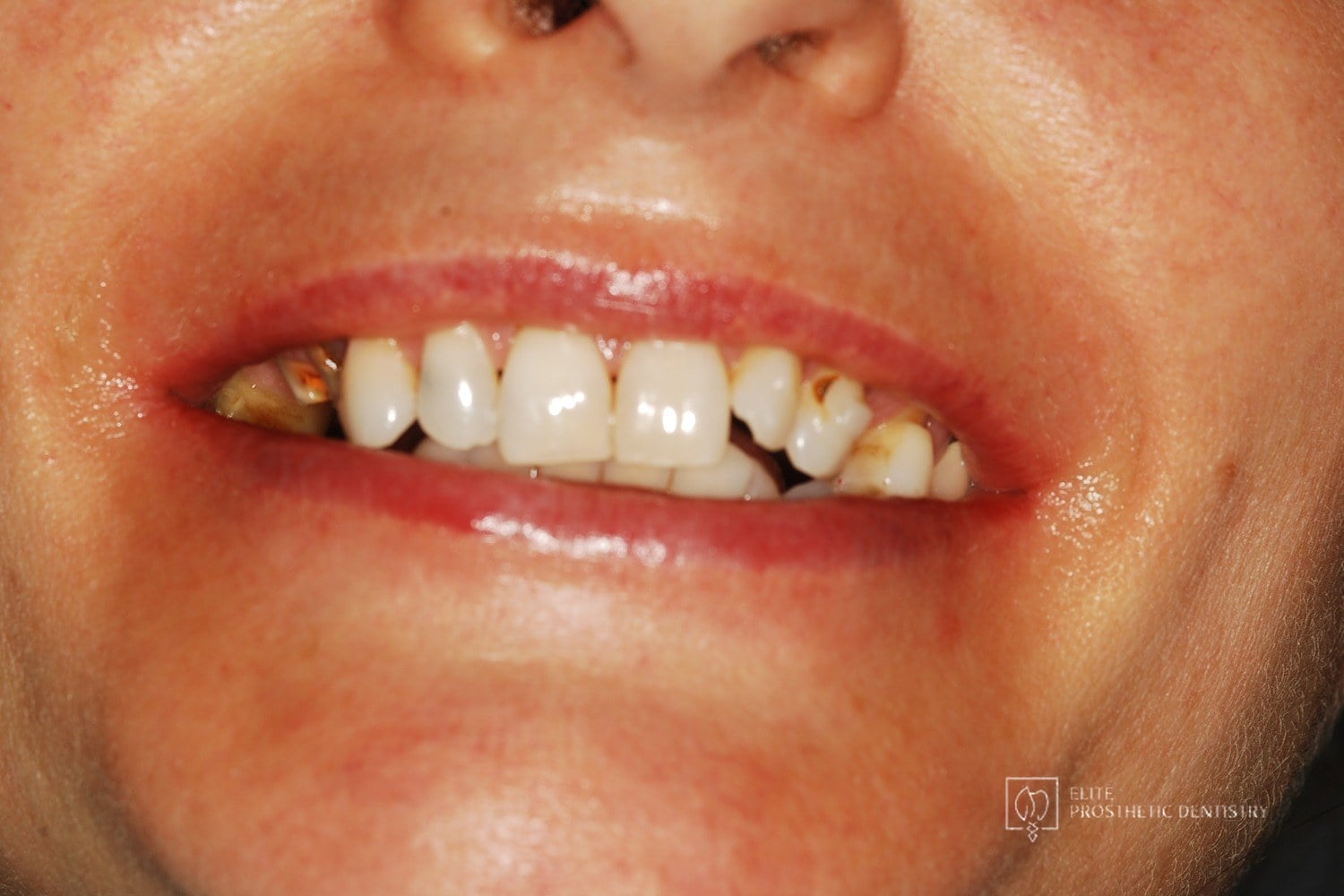
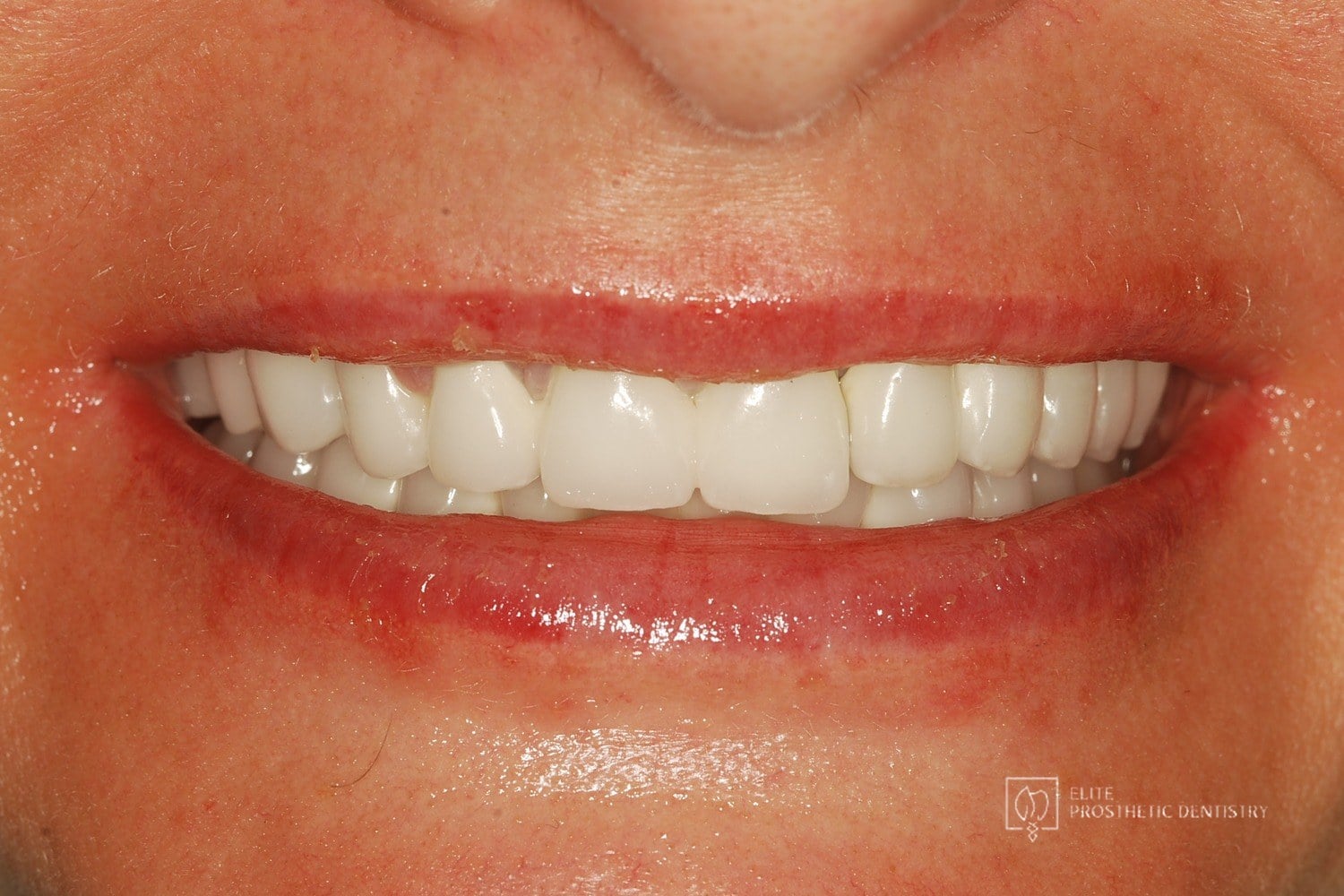
Close-up smile view
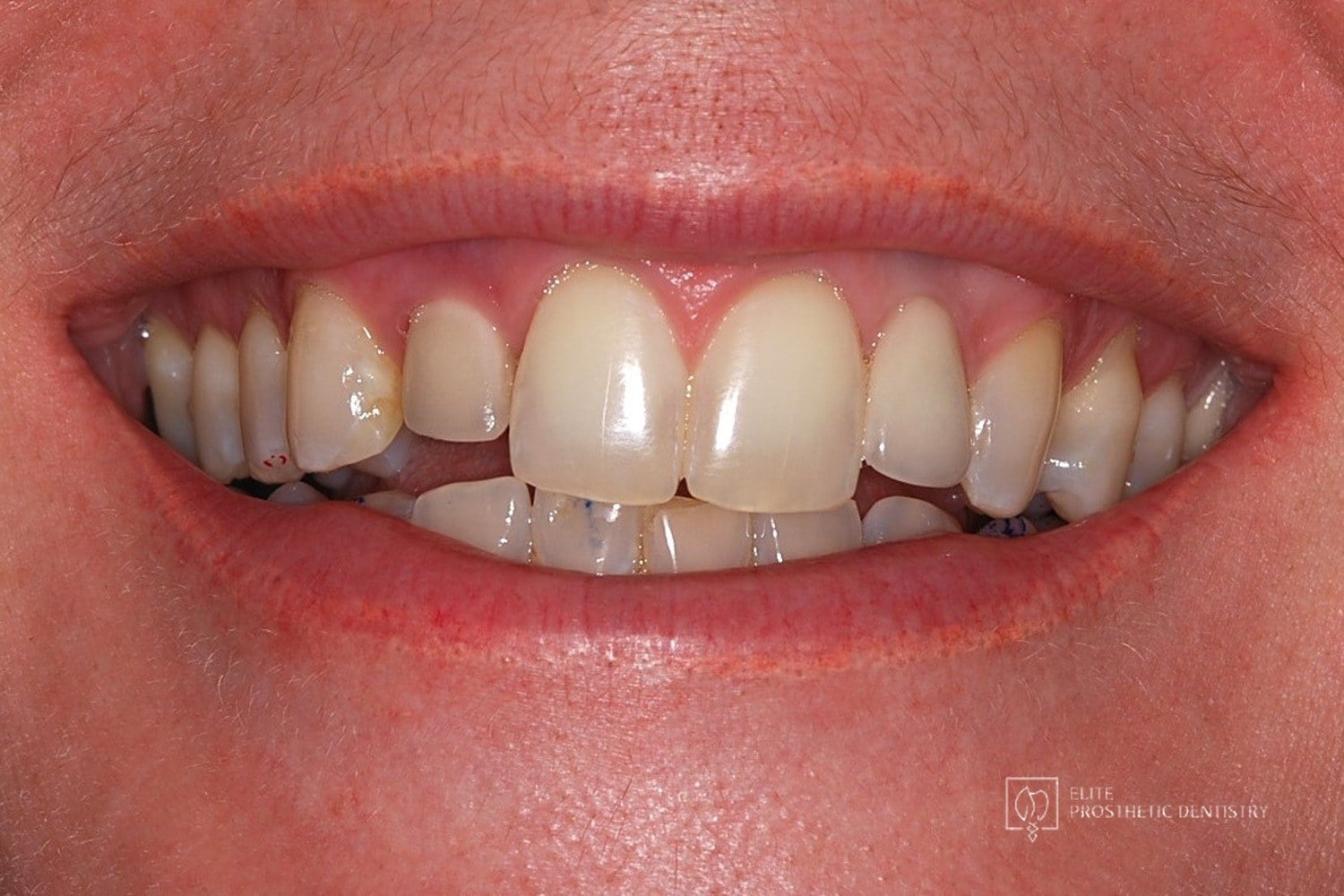 Before
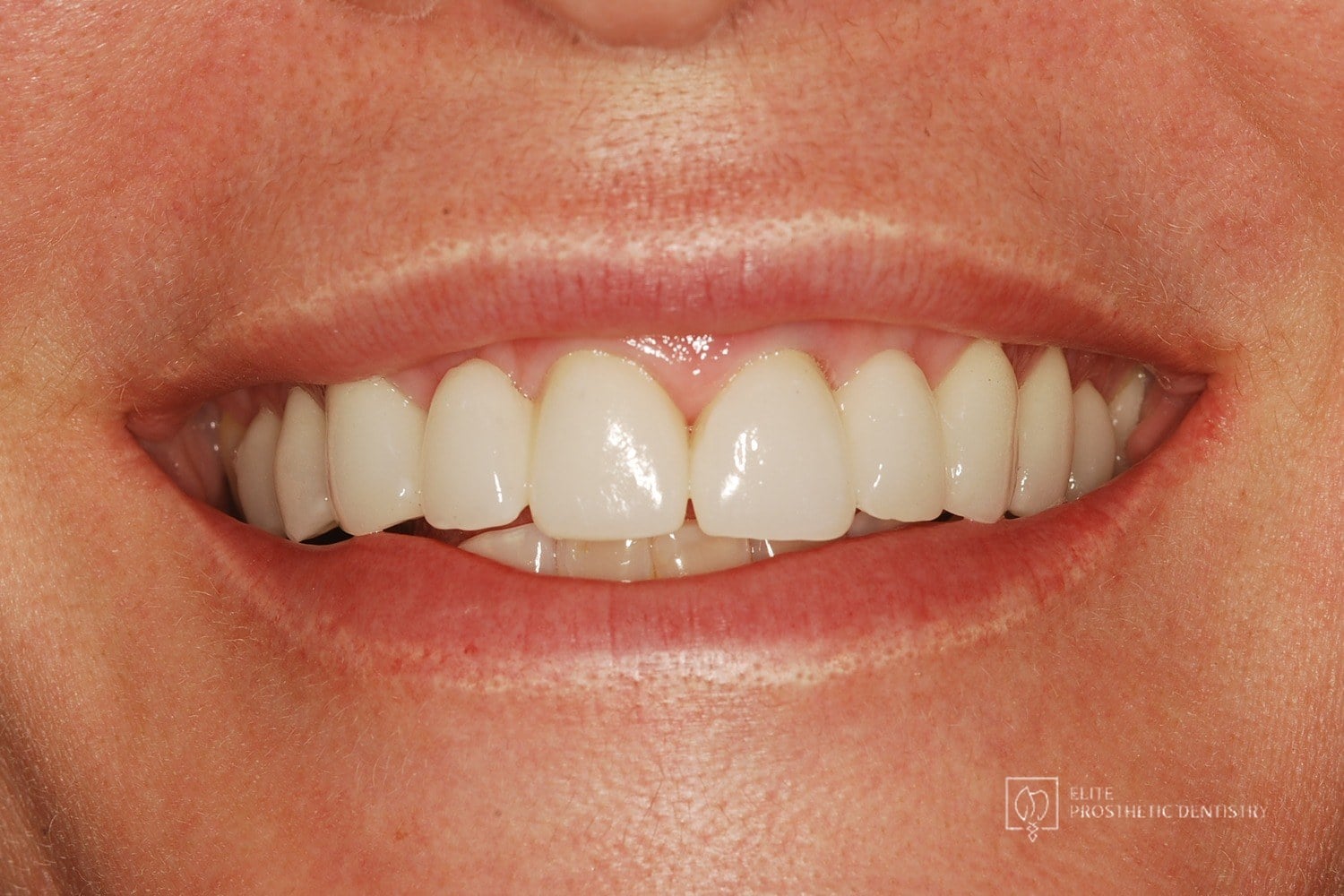 After
After
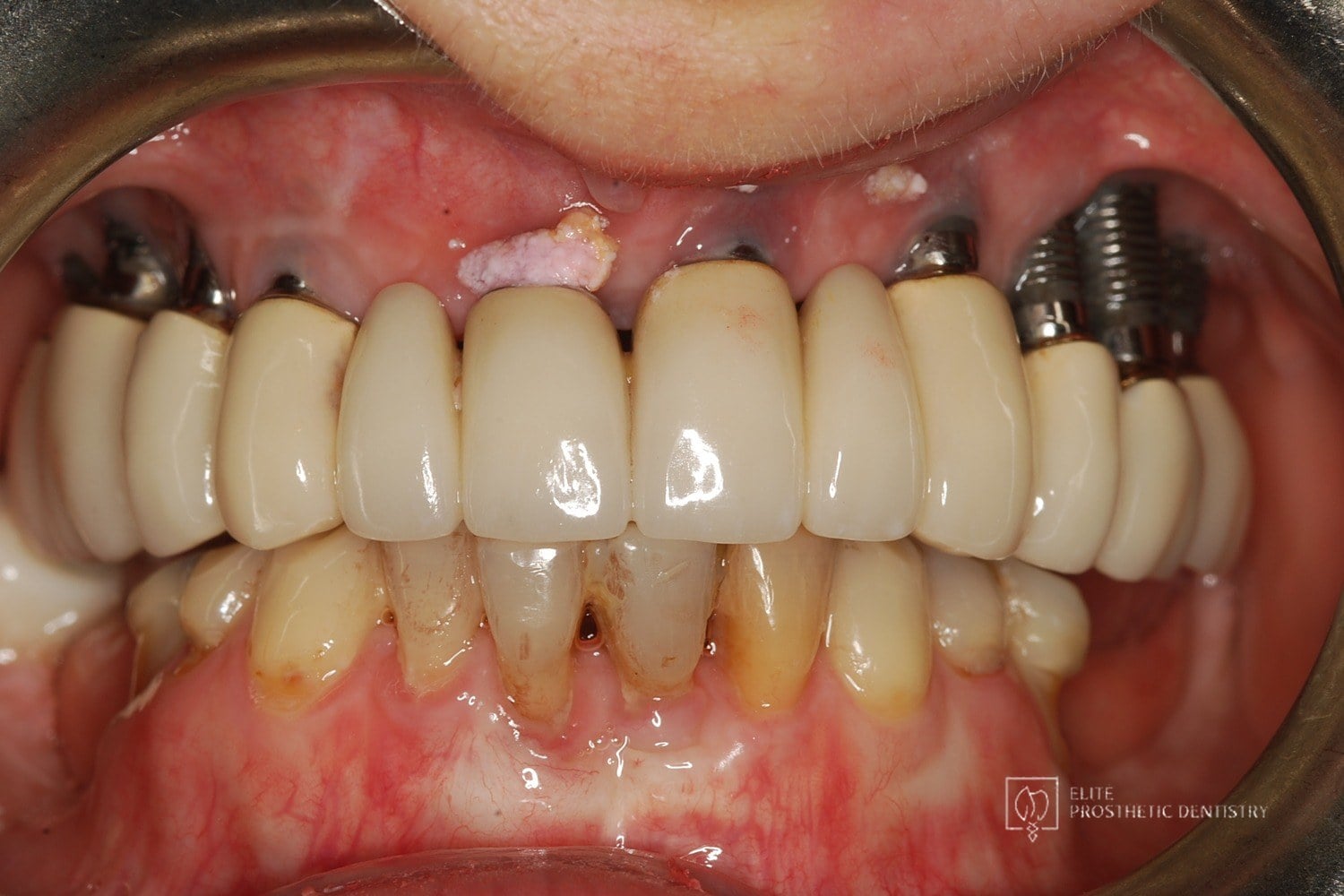
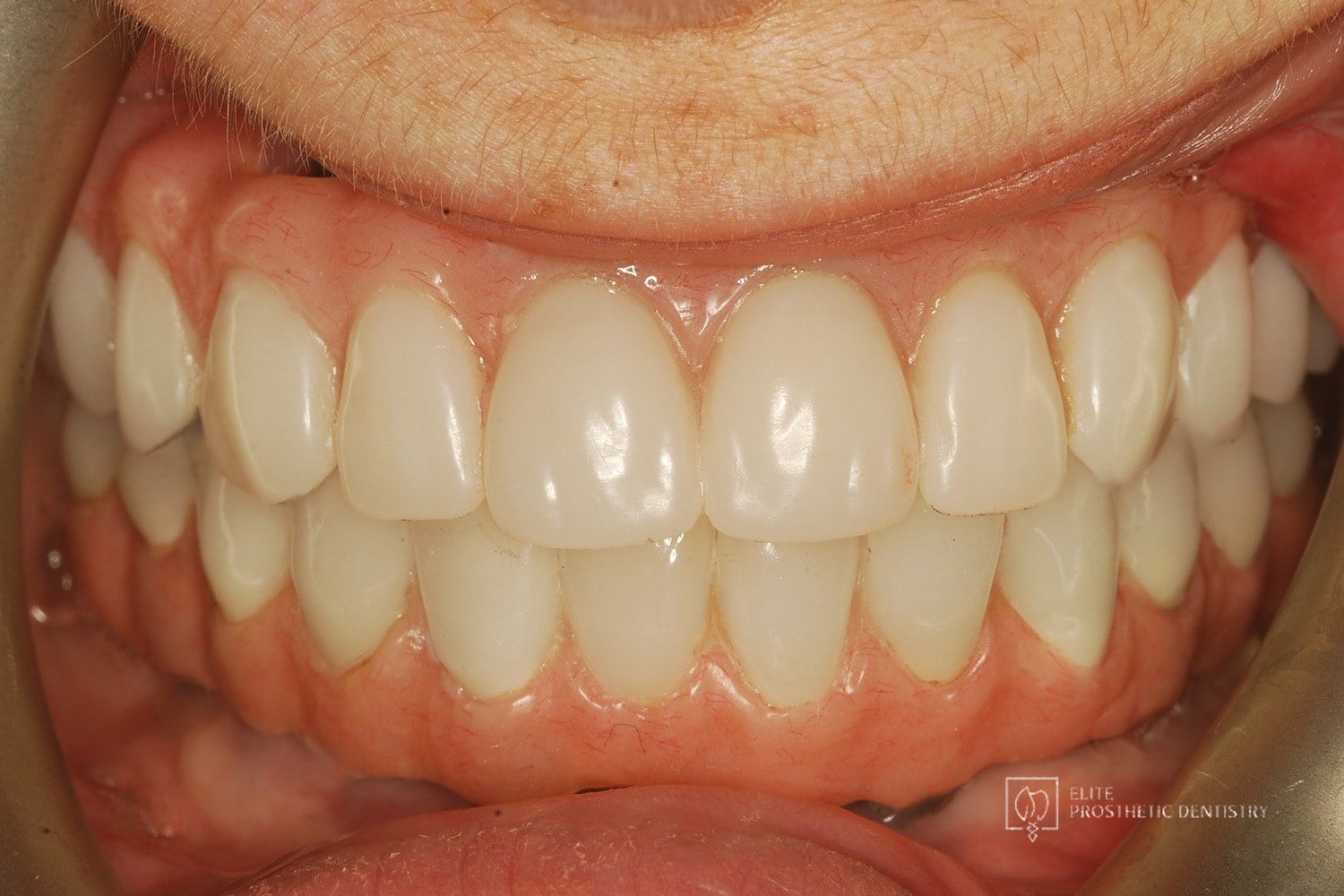
Intraoral view
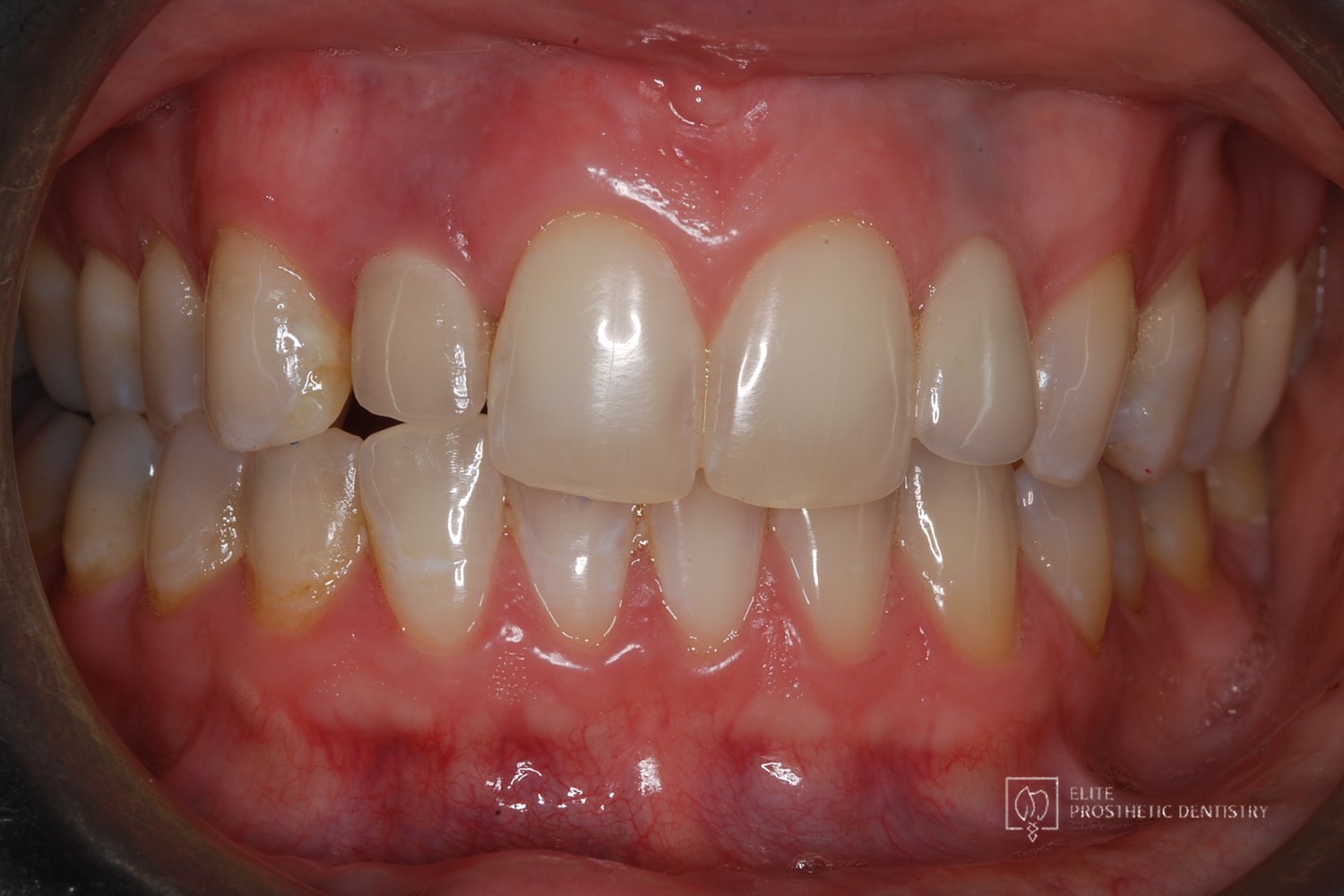 Before
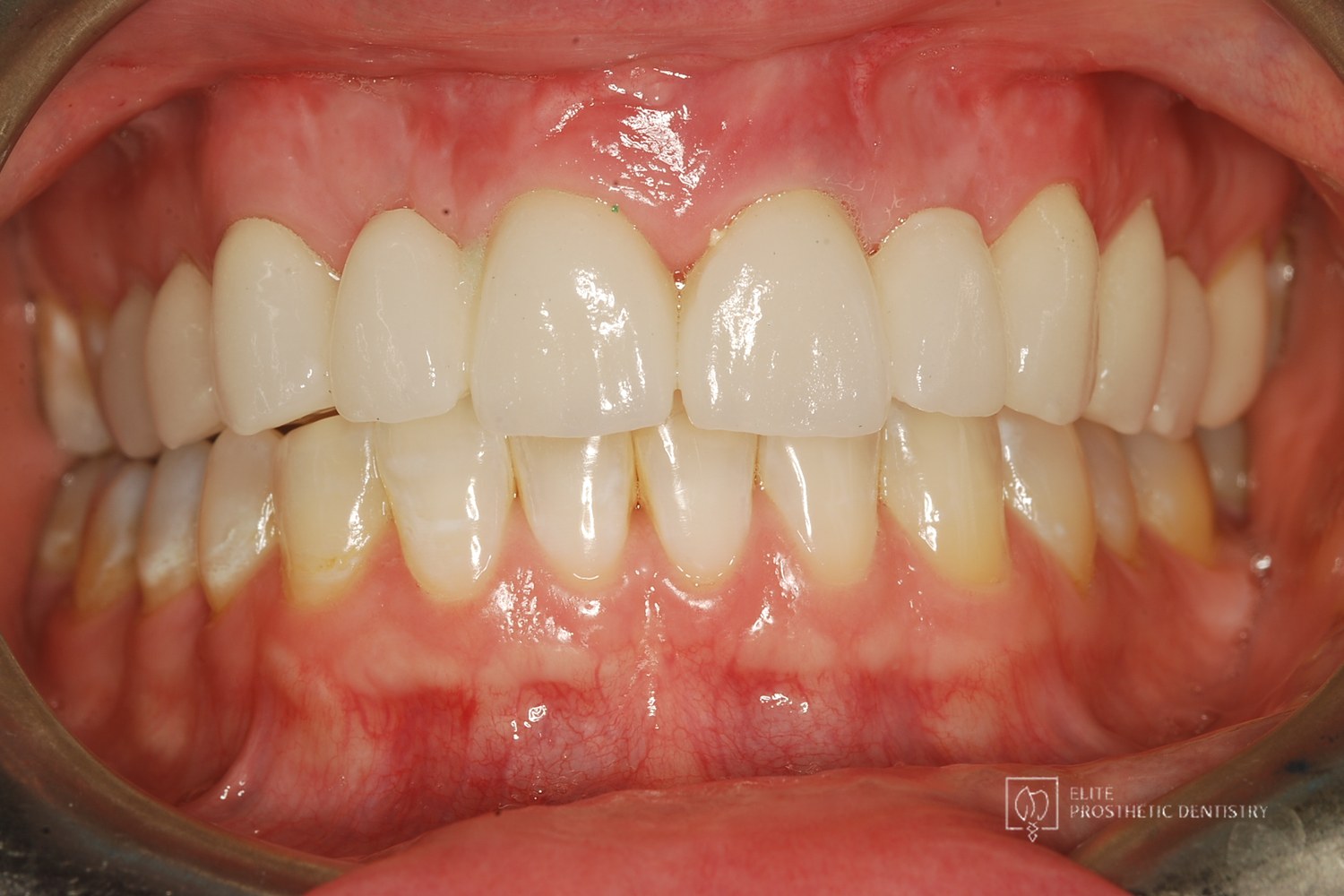 After
After
Failing lateral implants replaced with custom zirconia bridges when new implants were not possible
Restoration of failing lateral incisor implants in Washington, DC after CBCT-confirmed bone loss made replacement implants impossible. This documented case at Elite Prosthetic Dentistry used ridge grafting and two custom zirconia bridges to deliver a stable, natural-looking esthetic result. Treatment was planned and completed by Dr. Gerald Marlin, D.M.D., M.S.D., a prosthodontist focused on implant revision, complex restorative dentistry, and aesthetic reconstruction.
Case at a Glance
- Treatment
- Custom zirconia bridges for failing lateral incisor implants
- Approach
- CBCT evaluation, implant removal, ridge grafting, two custom zirconia bridges
- Case Type
- Corrective implant therapy / Implant revision in the esthetic zone
- Patient Concern
- Upper lateral incisor implant crowns that looked unnatural and did not blend with the rest of the smile.
- Decision Point
- Try to keep the implants, place new implants in a narrow ridge that would have needed extensive grafting, or remove them and restore the space with custom bridgework.
- Outcome
- A symmetrical, natural-looking smile with stable function, achieved without a second round of implant surgery.
- Why It Matters
- Shows that when implants fail in the smile zone, a prosthetic solution designed around the bone that remains can be the more predictable long-term answer than forcing new implants into a compromised site.
The presenting condition
The patient came in unhappy with the appearance of the implant crowns replacing her upper lateral incisors. They looked unnatural to her and did not blend with the rest of her smile. That was the concern she arrived with. The evaluation found a more serious problem underneath it.
A comprehensive examination including a CBCT scan showed severe bone loss around the lateral incisor implants. The implants had been placed outside the buccal plate of bone, most likely because they were placed without a CBCT-generated surgical guide. With that degree of bone loss they could not be saved, and they needed to come out.
Clinical Findings
- →Upper lateral incisor implant crowns that looked unnatural and did not match the adjacent teeth
- →Severe bone loss around both lateral incisor implants on CBCT imaging
- →Implants positioned outside the buccal plate of bone
- →Implants determined to be non-salvageable
- →A very narrow bone ridge that could not accept new implants without extensive grafting
Why replacement implants were not the answer
The obvious next step after removing failing implants is to place new ones. Here the ridge was too narrow. New implants in that position would have required extensive grafting first, adding surgery and healing time with an uncertain final result in the most visible part of the smile. Instead the plan focused on what would deliver both esthetics and long-term stability: remove the failing implants, rebuild the ridge contour, and replace the lateral incisors with custom bridgework anchored to the adjacent teeth.
The treatment plan
The work was sequenced so each step supported the next.
-
1
Comprehensive evaluation with CBCT imaging
Three-dimensional imaging confirmed the extent of the bone loss, the position of the implants relative to the buccal plate, and the width of the ridge that would remain after removal.
-
2
Removal of the failing implants
Both lateral incisor implants were removed.
-
3
Ridge grafting
The deficient ridge was built out with bone grafts so the new restorations would emerge naturally from the gumline.
-
4
Two custom zirconia bridges from the midline
Two zirconia bridges, each extending from the midline, were designed to replace the missing lateral incisors while blending with the adjacent teeth.
-
5
Shape, color, and proportion
Careful attention to tooth shape, proportion, and color recreated natural anatomy and restored symmetry and harmony across the smile.
The outcome
The zirconia bridges restored the smile with improved symmetry, natural esthetics, and functional stability, and they did it without a second round of implant surgery. The patient finally has a smile she feels confident about. The case illustrates how thoughtful prosthetic design can deliver an excellent esthetic result even when implant replacement is not possible because of bone loss.
Result Highlights
- ✓Failing lateral incisor implants removed
- ✓Ridge contour rebuilt with bone grafting
- ✓Two custom zirconia bridges extending from the midline
- ✓Natural tooth shape, color, and proportion recreated
- ✓Symmetry and harmony restored across the smile
Who this case may sound familiar to
This story tends to resonate with patients in a few recognizable situations:
- Your previously placed implants are failing and you have been told replacement implants may not be feasible in the available bone.
- You want to understand the non-implant prosthetic alternatives before agreeing to additional surgical work whose outcome may be uncertain.
- You want a CBCT-supported evaluation of why your original implants failed and what the most predictable next step actually is.
- You want a careful, calm conversation about the trade-offs rather than a one-size-fits-all recommendation.
- You are willing to invest in the right staged plan rather than a quick fix that may produce another failure down the line.
If any of those describe where you are, a consultation with Dr. Marlin can establish the diagnostic picture and the most predictable plan for your specific case.
Frequently asked questions
What can be done when failing implants cannot be replaced with new implants?
When the ridge after implant failure does not allow replacement implants without extensive reconstruction, a custom-designed prosthetic solution can deliver excellent esthetics and stable long-term function. Carefully planned zirconia bridges anchored to adjacent natural teeth are often the right choice in these situations.
Why does implant placement without a CBCT-generated surgical guide carry higher long-term risk?
A CBCT-generated surgical guide helps place each implant in the correct three-dimensional position relative to the available bone, the adjacent teeth, and the planned final restoration. Without that level of planning, implants can end up outside the buccal plate of bone or in positions that compromise long-term support, both of which increase the risk of later failure.
When does a bridge deliver a better outcome than replacement implants?
A bridge is the better choice when the ridge anatomy does not support new implants in the ideal positions, when extensive grafting would be required before implants could even be considered, or when the adjacent teeth are healthy enough to serve as reliable abutments. The decision is case-specific and rests on the available bone, the condition of the adjacent teeth, and the esthetic requirements.
Why graft the ridge if no new implants are being placed?
After failing implants are removed, the ridge can be left with a visible defect under the lip. Building the ridge back out with bone grafting restores the contour so the new bridgework emerges from the gumline naturally, which matters most in the front of the mouth where the smile line is visible.
Can a zirconia bridge match the natural teeth on either side?
A well-designed zirconia bridge can match the shade, translucency, contour, and surface texture of the adjacent natural teeth closely enough that the restoration blends into the smile. The result depends on careful shade selection, laboratory skill, and the prosthodontist’s design of tooth shape and proportion.
More about the work behind this case
This case is treated through the practice’s failed dental implants workflow combined with bridges and fixed partial dentures and custom-crafted crowns. Surgical reconstruction through bone grafting restored the ridge architecture that the prior placement had compromised.
Elite Prosthetic Dentistry treats patients from across the DMV including Bethesda, Chevy Chase, McLean, Arlington, Potomac, and Great Falls.
Related Services
Related Patient Success Stories
Explore similar patient success stories demonstrating our expertise in advanced prosthetic dentistry.
 Before
  After
After How Aging, Failing Dentistry Was Replaced with a Coordinated Full-Mouth Implant and Crown Reconstruction
The patient presented with throbbing upper-molar pain, long-standing infections, multiple root canals and unfinished prior treatment, generalized sensitivity, and several hopeless teeth.
 Before
  After
After How Failing Implants and Severe Bone Loss Were Rebuilt Into a Stable Full-Arch Implant Reconstruction
The patient presented with significant complications from previously placed implants, severe bone loss, failing posterior implants, and an unesthetic full-arch bridge. Both arches required full reconstruction, with the upper arch showing the most advanced bone loss and instability.
Before After How Failing Lateral Incisor Implants Were Replaced with Custom Zirconia Bridges After Severe Bone Loss Made Replacement Implants Impossible
Comprehensive examination including CBCT imaging revealed significant bone loss surrounding implants that were placed outside the buccal plate, most likely due to placement without a CBCT-generated surgical guide. The implants were determined non-salvageable, and the alveolar ridge was too narrow to support replacement implants without extensive reconstruction.