

What Determines the Cost of Implants and Reconstruction, and How to Compare Two Quotes
Why two quotes for 'an implant' can describe different treatments, the seven things that actually drive the cost of implants and reconstruction, how insurance, HSA and FSA money and phasing work with major dental treatment, and how to compare plans line by line.
Practice clinician: Gerald M. Marlin, DMD, MSD, prosthodontist, Elite Prosthetic Dentistry, Friendship Heights, Washington, DC. Last updated .
Patients comparing quotes for implants or a reconstruction are usually comparing documents that describe different treatments. This guide does not quote fees; the practice provides a written plan with fees after an examination, because the fee follows the diagnosis. What it does is explain what actually drives the cost of implant and reconstructive treatment, why two quotes for “an implant” can be different things, how insurance, HSA and FSA money and phasing work with major dental treatment, and how to put two plans side by side so that you are comparing the same thing.

Why “How Much Is an Implant” Has No Single Answer
An implant is not a product. It is a sequence: diagnosis and imaging, any preparation the site needs, the surgical placement, the healing period with a provisional tooth, the connecting component, the final crown, and the follow-up. A quote can include all of that or a fraction of it. Two offices can quote “an implant” and mean, respectively, the titanium fixture alone and the entire sequence through a laboratory-matched crown with a year of follow-up. The number on the page tells you nothing until you know which one you are looking at.
The same is true of a reconstruction. “Full mouth” can mean replacing every tooth with implant-supported prostheses, rebuilding the bite on the patient’s own teeth with crowns, or a mixture decided tooth by tooth. The cost of those three plans differs by multiples, and so does what the patient ends up with.
The Seven Things That Drive the Cost
-
What is actually being replaced or rebuilt. One tooth, a segment, an arch, or the whole bite. A plan that keeps treatable teeth and replaces only what is lost costs differently from a plan that removes everything, and the difference is clinical before it is financial. Our guide on keeping your teeth or replacing them explains how that decision is made.
-
Number and position of implants. A full arch can be supported by four, six or more implants depending on bone, bite force and the prosthesis design. More implants is not automatically better, and fewer is not automatically a bargain; the number should follow the scan and the design.
-
Preparation the site needs. Bone grafting, sinus augmentation, ridge augmentation, extractions, treatment of gum disease, root canal retreatment or crown lengthening before a crown. A quote that omits preparation the site will need is not lower; it is incomplete. Our guide on whether you need a bone graft covers the most common of these.
-
Materials and components. A stock abutment and a standard porcelain-fused-to-metal crown are a different object from a custom abutment and a layered ceramic crown matched to the neighboring tooth. For full arches, an acrylic hybrid and a milled zirconia prosthesis differ in cost, wear, repair and appearance. Material should be chosen for the forces and the appearance requirements of the site, not by default. See zirconia versus acrylic full-arch prostheses.
-
Who places and who restores, and where the restoration is made. A plan may involve a surgeon’s office, a restorative dentist’s office and an outside laboratory, each billing separately, or a single practice that plans, places, restores and fabricates in-house. Neither is inherently cheaper, but the second produces one plan and one accountable party, and the laboratory’s work can be refined with the patient present rather than shipped back and forth. Our guide on split-site versus integrated implant care explains the difference.
-
Diagnostics, provisionals and follow-up. A CBCT scan, a surgical guide, mounted records and a diagnostic wax-up, the provisional teeth worn during healing, bite adjustments, and the follow-up visits over the first year. These are where quotes most often differ silently.
-
The clinician’s training and experience with your kind of case. A specialist practice charges for specialist planning. Whether that is worth it depends on the case: a straightforward single implant in good bone is well served in many settings; implants in the visible front of the mouth, full arches, grafting questions and implants that must coordinate with existing dentistry are where planning errors are expensive to correct. Our guide on choosing an implant provider for a complex case covers that judgment.
How to Put Two Quotes Side by Side
Ask each office for the plan broken into line items, then compare the lines, not the totals:
- Diagnosis: examination, CBCT scan, records, diagnostic wax-up or design.
- Preparation: extractions, grafting, sinus or ridge procedures, periodontal treatment, endodontic treatment, crown lengthening.
- Surgery: number of implants, surgical guide, sedation or anesthesia and who provides it.
- Provisionals: what you wear while healing, and whether it is fixed or removable.
- Components: abutments, stock or custom.
- Final restorations: crown, bridge or prosthesis, material, and where it is made.
- Follow-up: visits included, adjustments, night guard if indicated.
- Contingencies: what happens, and who pays, if an implant does not integrate, a graft does not take, or a restoration fails early.
- Who is responsible for the result: one practice, or several.
If a line is missing from one quote, ask whether it was evaluated and excluded or simply not considered. The second answer is common and is the usual reason a low quote becomes a high final cost.
How Insurance Actually Works With Major Dental Treatment
Dental insurance is structured differently from medical insurance, and patients facing a large plan for the first time are often surprised by it.
- Annual maximums. Most PPO plans cap what they pay per calendar or plan year at an amount that covers a modest fraction of comprehensive treatment. The cap resets each plan year.
- Percentages of a fee schedule. Plans typically pay a percentage of their own allowed fee for a procedure, not of the practice’s fee. Out-of-network benefits can still apply; the practice submits PPO claims for patients at no charge.
- Exclusions and clauses. Many plans exclude implants, limit how often a crown can be replaced on the same tooth, or apply a missing-tooth clause to teeth lost before the policy began. Read the plan or ask the practice to check.
- Predetermination. For extensive treatment, a predetermination of benefits is submitted before treatment begins so the patient knows what the plan will contribute. It is an estimate, not a guarantee, but it is the only reliable one.
- Medical insurance. In limited situations with a qualifying medical basis, such as trauma or certain medical conditions, medical insurance can apply to part of the treatment. The practice helps with documentation where there is a basis; this is the exception, not the rule.
The practice’s insurance and financing page describes how claims, predeterminations and payment are handled, and the implant cost, insurance and financing page covers the implant-specific rules in more detail.
HSA and FSA Money, and Why Timing Matters
Dental treatment that restores function, including implants, crowns, bridges and dentures, is generally an eligible expense for health savings accounts and flexible spending accounts under current federal rules. Two timing points matter for a large plan:
- FSA funds usually expire at the end of the plan year, with limited carryover or grace period depending on the employer. A plan that can be staged across two plan years lets two years of contributions apply.
- Insurance maximums reset at the start of each plan year. Starting one phase late in the year and the next phase early in the following year can apply two years of benefit to one plan of treatment.
None of this should drive the clinical sequence. It should inform how the sequence is scheduled, once the sequence is set. Confirm eligibility rules with your plan administrator; the practice provides itemized documentation.
Phasing a Plan Without Compromising It
A comprehensive plan is decided once and can be carried out in phases. The order is clinical: disease and infection first, then failing teeth, then the structural work that the rest depends on, then the restorations, with the bite designed at the start so that each phase fits the last. Within that order, stable problems can wait, and the schedule can be matched to insurance years, FSA years and the patient’s budget.
What phasing cannot do is change the design mid-stream. A plan that is improvised one crown at a time, with each phase matched to the previous one rather than to a design, ends up as the piecemeal dentistry our guide on when to replace old crowns and bridges describes.
Financing
Elite Prosthetic Dentistry is a fee-for-service practice and does not offer in-house payment plans. It works with three independent healthcare lenders, CareCredit, Happen Bank and Proceed Finance, whose current terms, rates and promotions are set by the lenders and are subject to credit approval. The team can help with an application during a visit. Payment is expected when services are rendered unless arrangements are made in advance, and the practice accepts cash, check and major cards. Details are on the insurance and financing page.
How Elite Prosthetic Dentistry Handles Cost
After the examination, imaging and records, the patient receives a written treatment plan with fees before anything begins. The plan lists what is included and what is not, states the sequence and the phases, and explains the alternatives that were considered. Where a predetermination of benefits is useful, it is submitted before treatment. Dr. Gerald M. Marlin plans, surgically places and restores implants in the practice, and the on-site laboratory fabricates the restorations, so the plan comes from one office and the responsibility for the result sits in one place. The goal is to help patients make thoughtful long-term decisions, whether treatment is limited or comprehensive, and that starts with knowing what the plan contains before it starts.
When Another Setting Fits Better
A patient whose priority is the lowest available fee for a straightforward single implant, with no esthetic or structural complication, has many reasonable options and a specialty practice may not be the best match. A patient who prefers a standardized per-arch package will find that model at implant centers; our guide on implant centers versus prosthodontic implant reconstruction explains when it fits. The evaluation here will say when the specialty setting is not needed.
Related Decision Guides
- Understanding your dental treatment plan: the terms and what they mean
- How to choose a dental implant provider for a complex case
- When to seek a second opinion before dental implants, extraction or major treatment
- Keep your teeth or replace them?
- Fixed implant teeth vs. a removable implant denture
Request a Written Plan
If you are holding a quote and want to know what it does and does not include, request an appointment or call (202) 244-2101. Bring the quote and any imaging; the evaluation will produce a written plan you can set beside it, line by line.
Your Best Smile Is Within Reach
Request a specialist consultation with Dr. Marlin to discuss your situation and the most appropriate path forward.
Frequently Asked Questions
Why did I get two very different quotes for the same implant?
Because they are usually not for the same thing. One quote may cover the implant fixture only, with the abutment and crown billed later. One may include a bone graft the other left out or did not evaluate. One may price a stock abutment and a standard crown, the other a custom abutment and a laboratory-matched crown. One may include the CBCT scan, the surgical guide, the provisional tooth and follow-up visits; the other may not. Until the two quotes are broken into the same line items, they cannot be compared.
Does dental insurance cover implants or full mouth reconstruction?
Some PPO plans contribute toward implants and major restorative work, usually at a percentage of their own fee schedule and only up to the plan's annual maximum, which is typically a small fraction of a comprehensive plan. Many plans exclude implants entirely or apply waiting periods and missing-tooth clauses. A predetermination of benefits, submitted before treatment, is the only way to know what a specific plan will do with a specific plan of treatment.
Can I use my HSA or FSA for implants and reconstruction?
In general, yes. Dental treatment to restore function, including implants, crowns, bridges and dentures, is an eligible medical expense for health savings accounts and flexible spending accounts under current federal rules. FSA money usually has to be used within the plan year, which is why phasing a plan across two plan years can matter. Confirm the details with your plan administrator; the practice can provide the itemized documentation.
Is it cheaper to do everything at once or in phases?
Neither is automatically cheaper. Doing related work together can reduce repeated anesthesia, surgical and laboratory steps. Phasing can spread the cost across insurance years and FSA years and lets stable problems wait. The right sequence is clinical first: infection and failing teeth are addressed before anything is built on them, and the bite is decided once. Within that, the plan can usually be staged to suit the patient's budget without compromising the end result.
Should I choose the lowest quote?
Choose the quote that describes the treatment you need, from a clinician you have verified, with every step and every contingency written down. The expensive implant is the one that has to be done twice. Ask what is included, what is excluded, what happens and who pays if an implant does not integrate or a restoration fails early, and whether the plan was built from a CBCT scan and a restorative design or from a visual exam.
Related Patient Success Stories
Explore similar patient success stories demonstrating our expertise in advanced prosthetic dentistry.
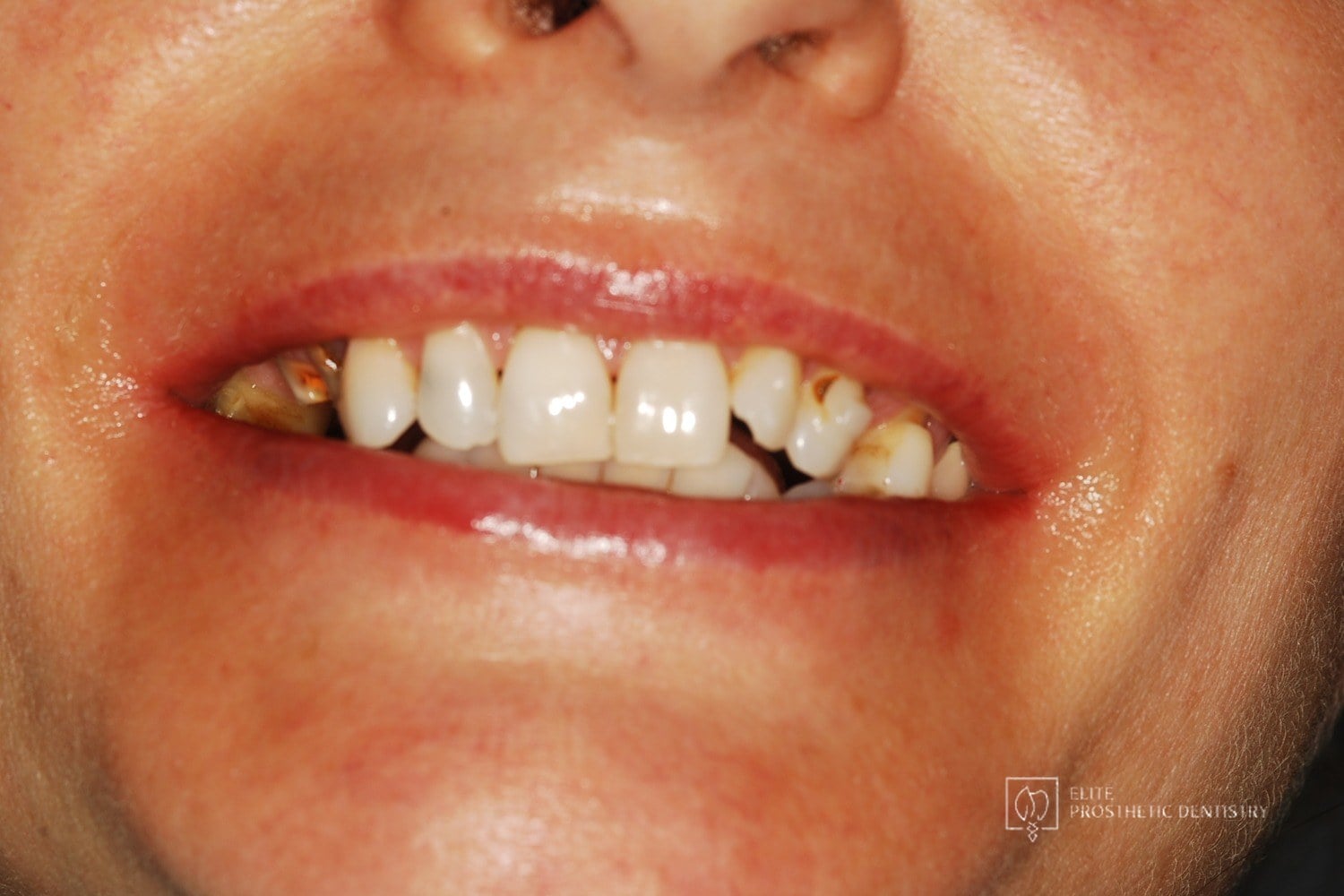 Before
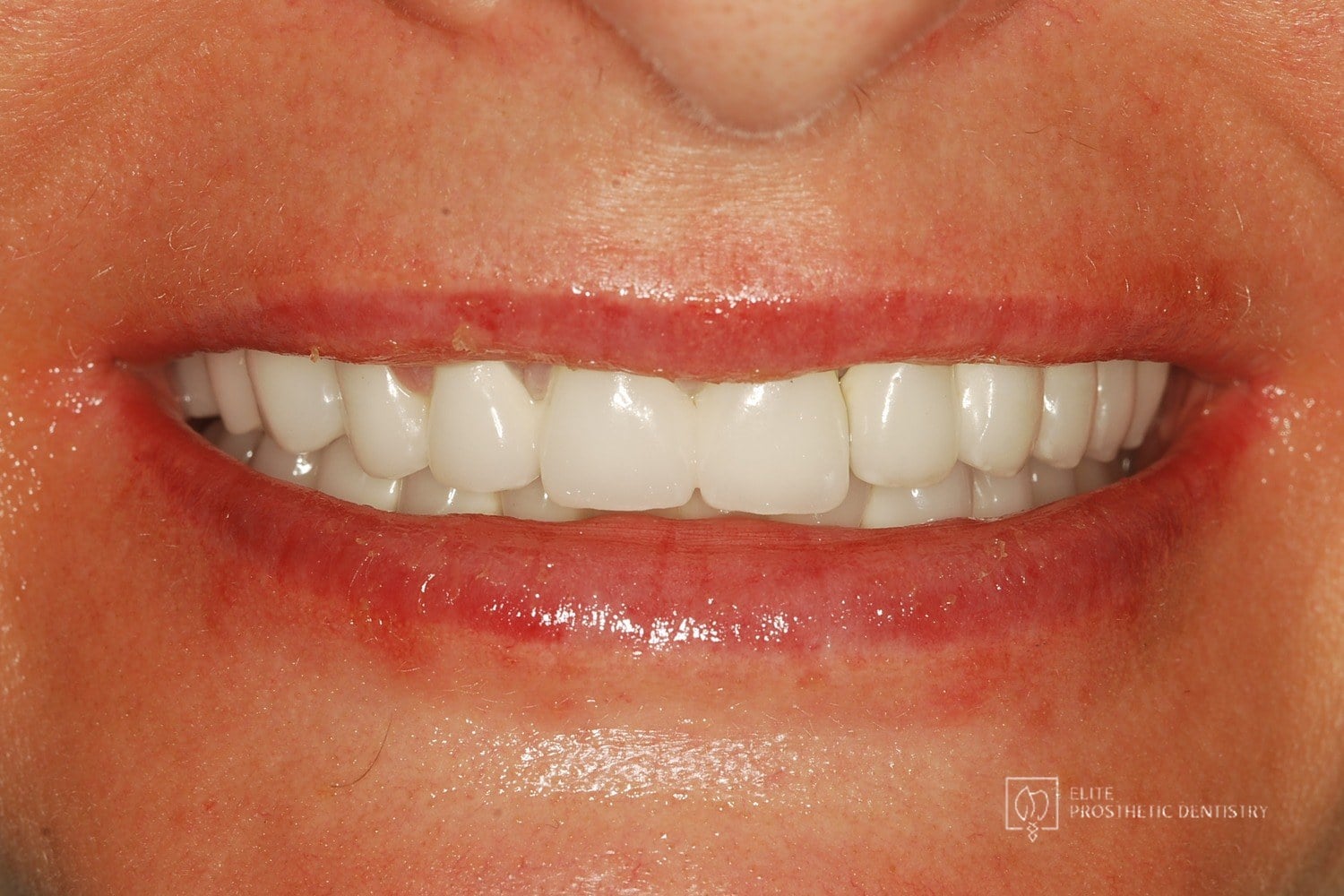 After
How Aging, Failing Dentistry Was Replaced with a Coordinated Full-Mouth Implant and Crown Reconstruction
The patient presented with throbbing upper-molar pain, long-standing infections, multiple root canals and unfinished prior treatment, generalized sensitivity, and several hopeless teeth.
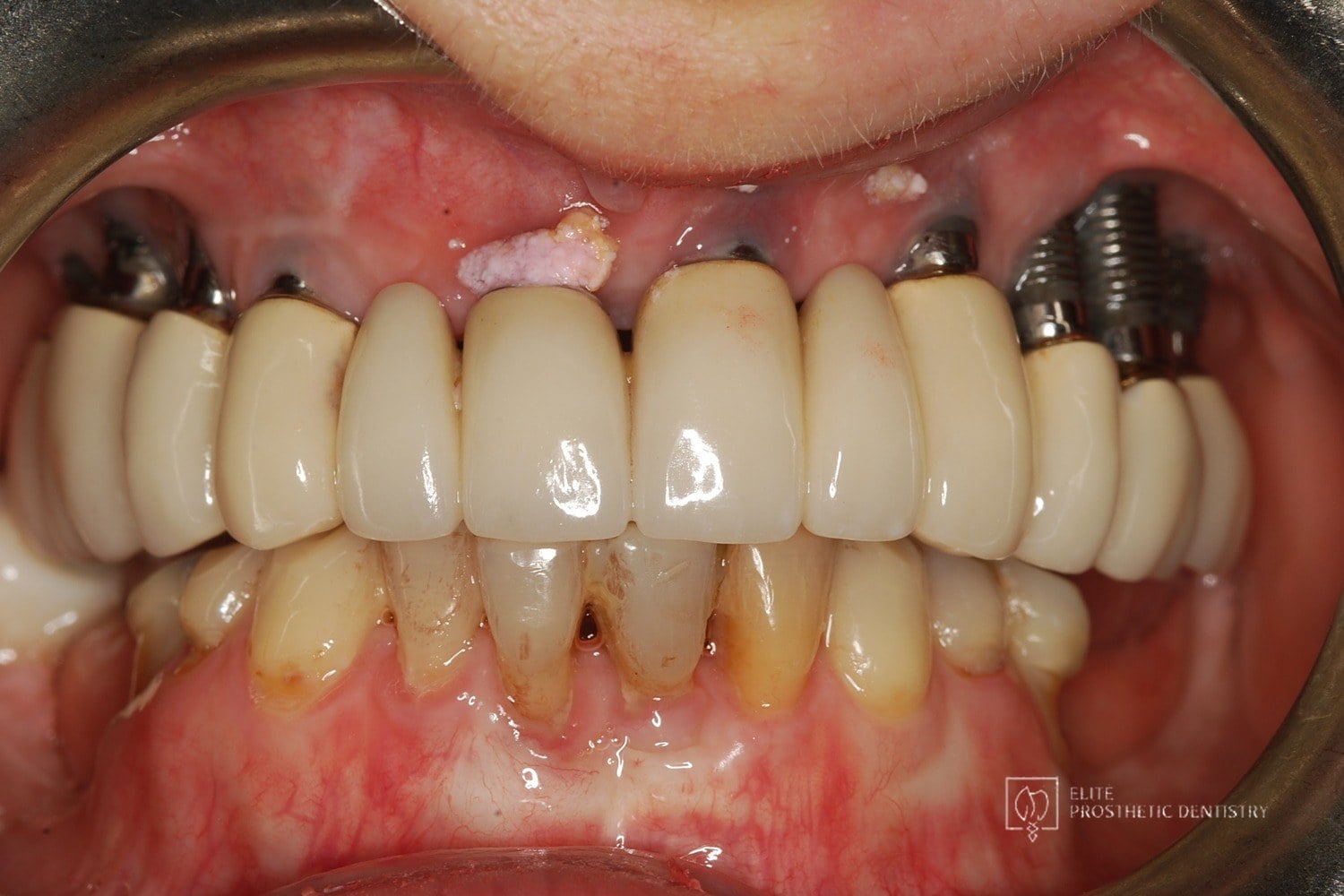 Before
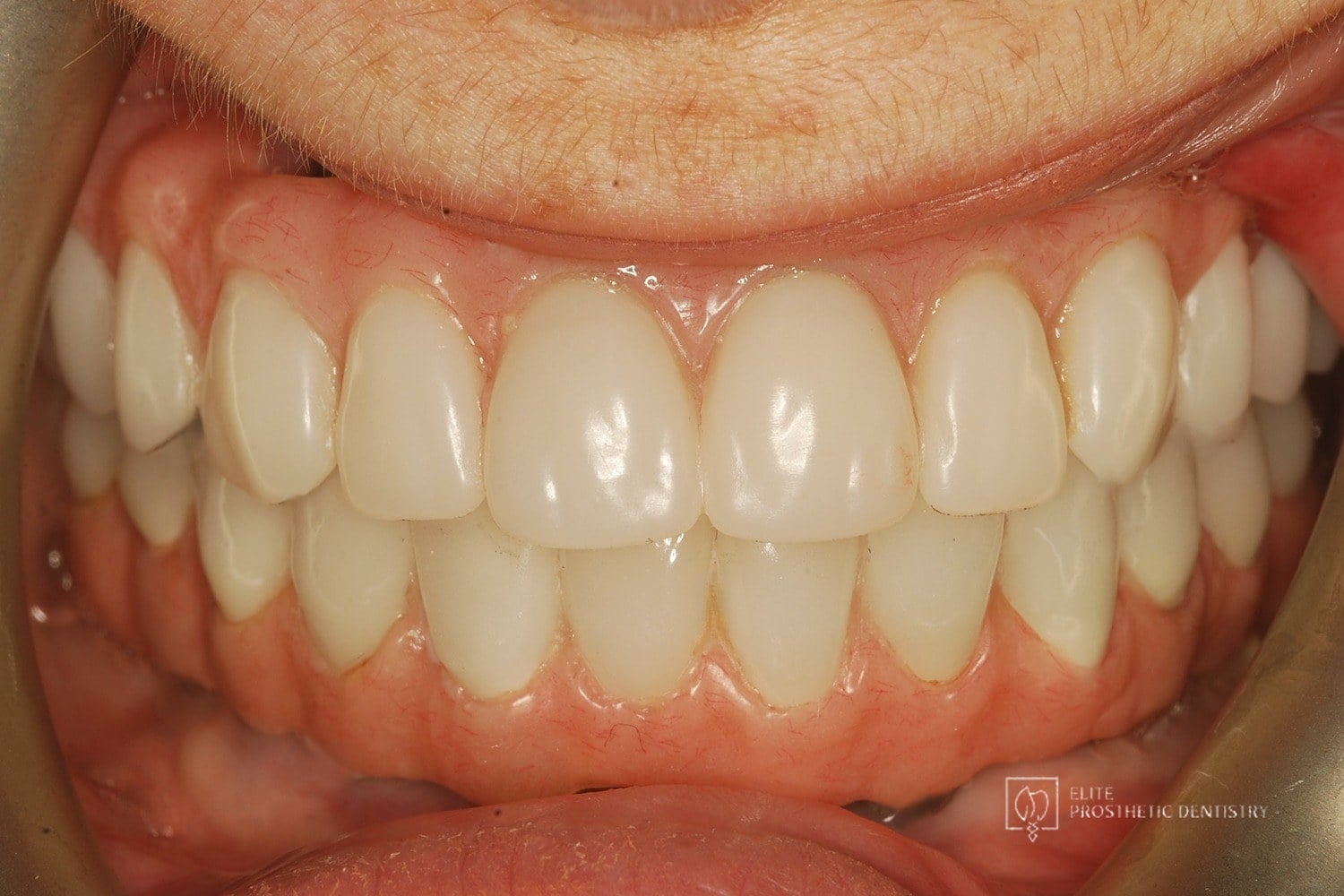 After
How Failing Implants and Severe Bone Loss Were Rebuilt Into a Stable Full-Arch Implant Reconstruction
The patient presented with significant complications from previously placed implants, severe bone loss, failing posterior implants, and an unesthetic full-arch bridge. Both arches required full reconstruction, with the upper arch showing the most advanced bone loss and instability.
 Before
 After
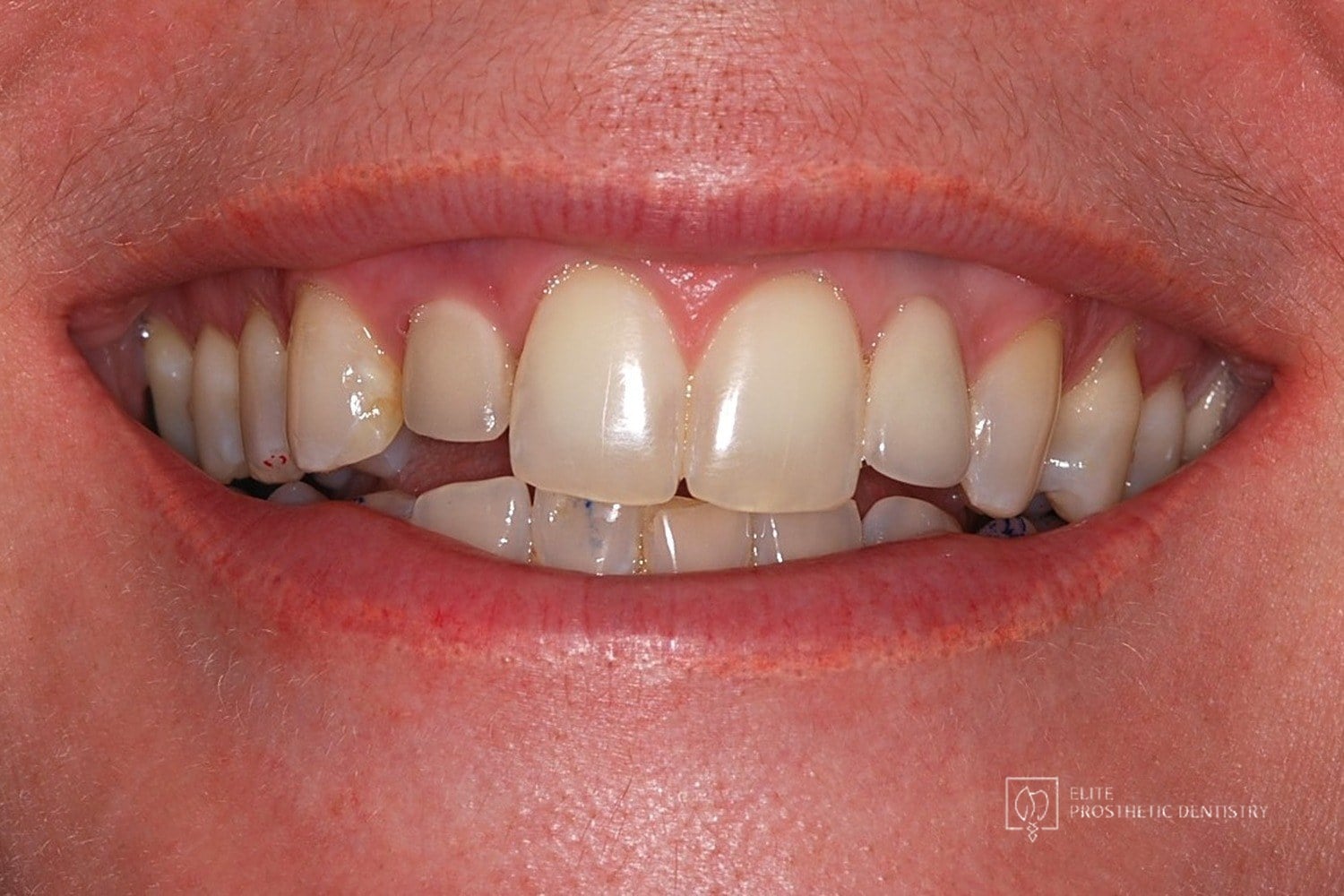
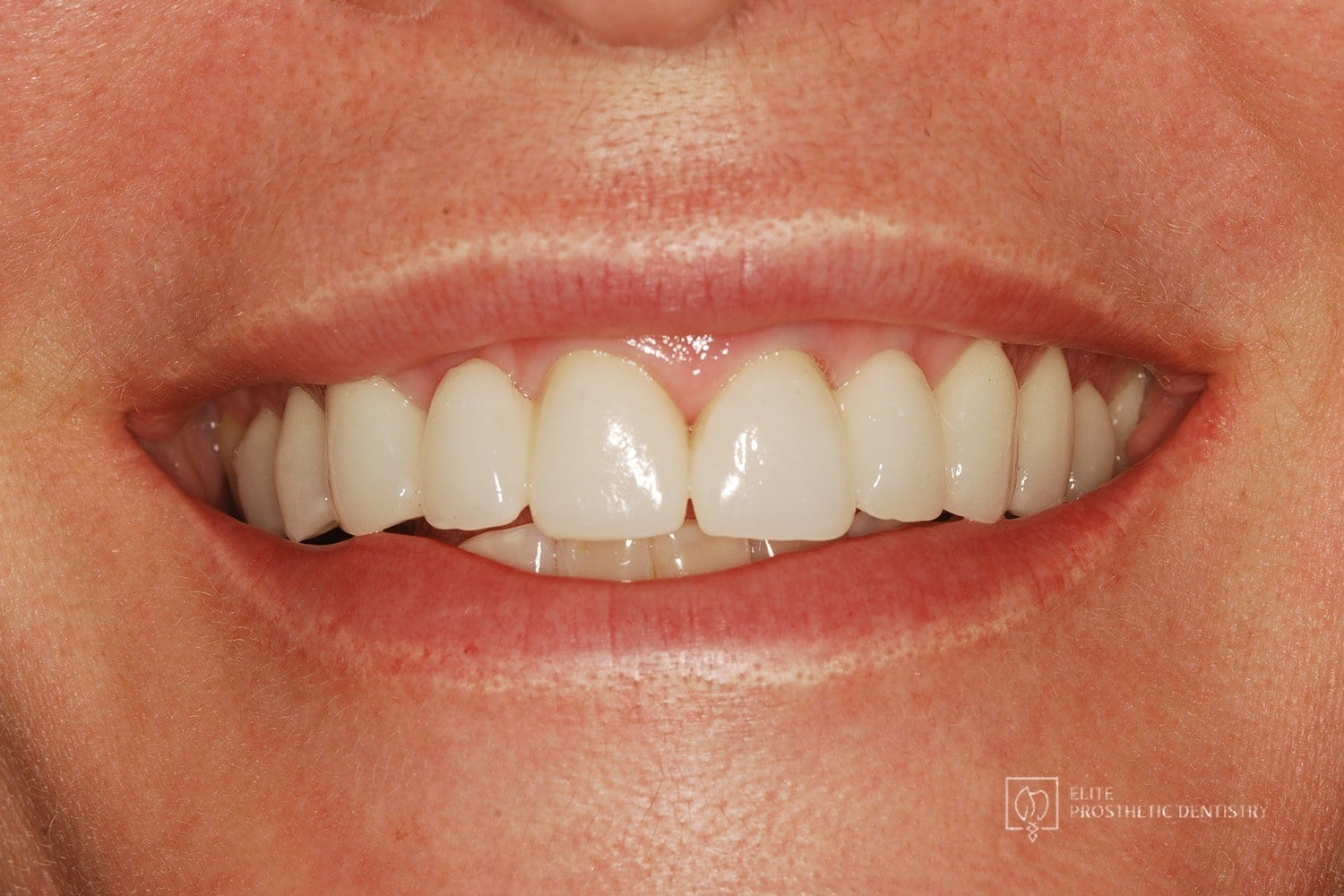
How Failing Lateral Incisor Implants Were Replaced with Custom Zirconia Bridges After Severe Bone Loss Made Replacement Implants Impossible
Comprehensive examination including CBCT imaging revealed significant bone loss surrounding implants that were placed outside the buccal plate, most likely due to placement without a CBCT-generated surgical guide. The implants were determined non-salvageable, and the alveolar ridge was too narrow to support replacement implants without extensive reconstruction.
 Before
 After
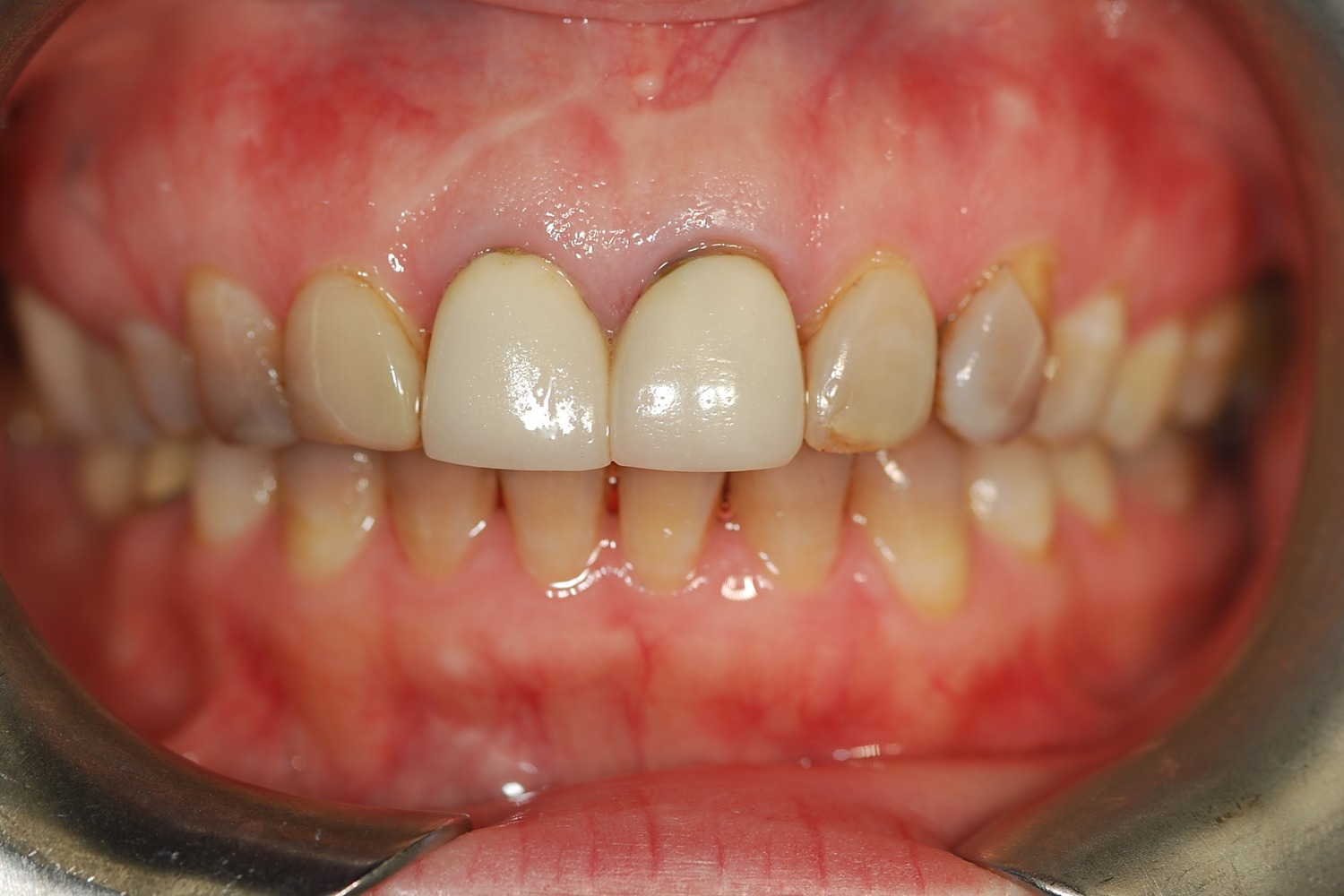
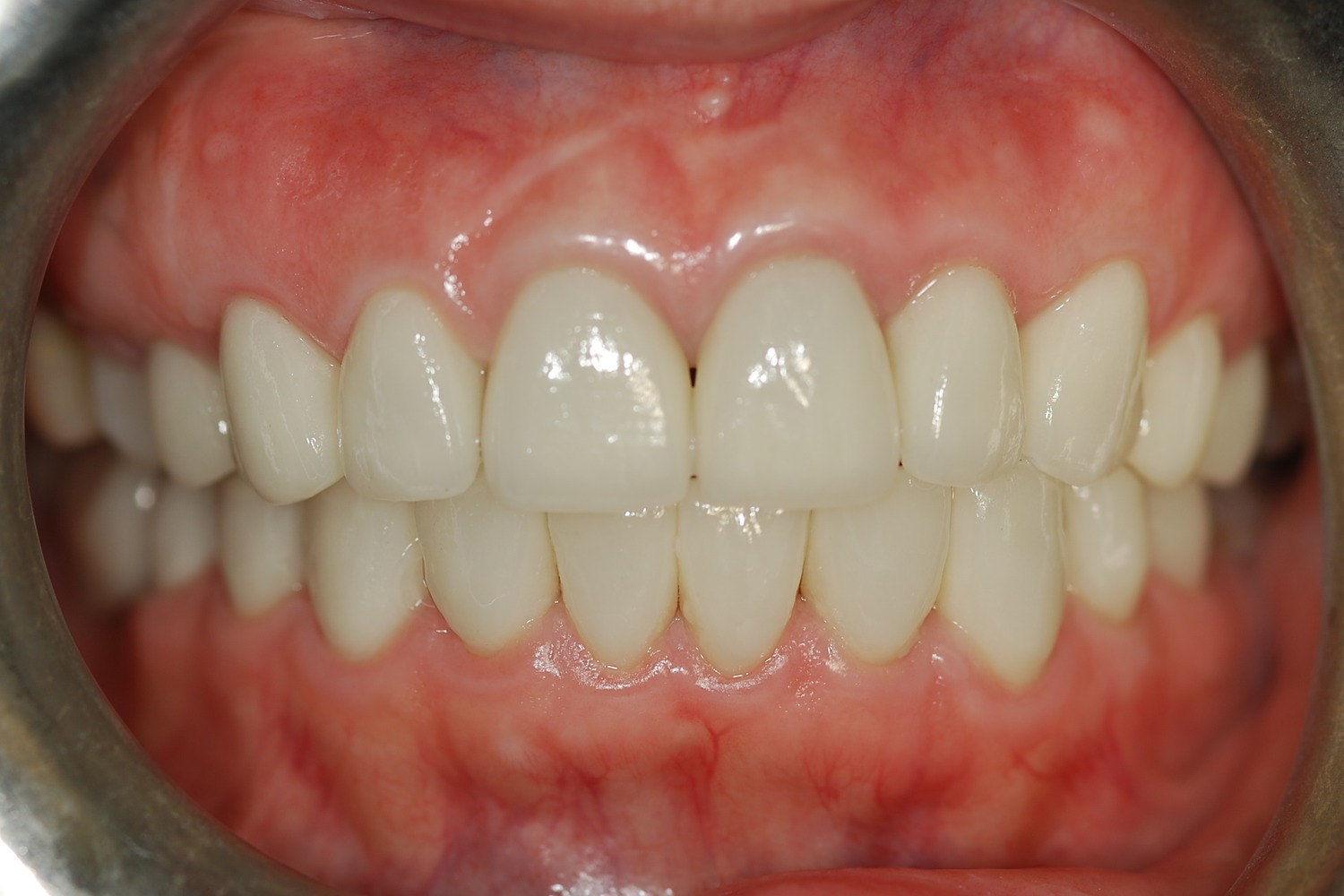
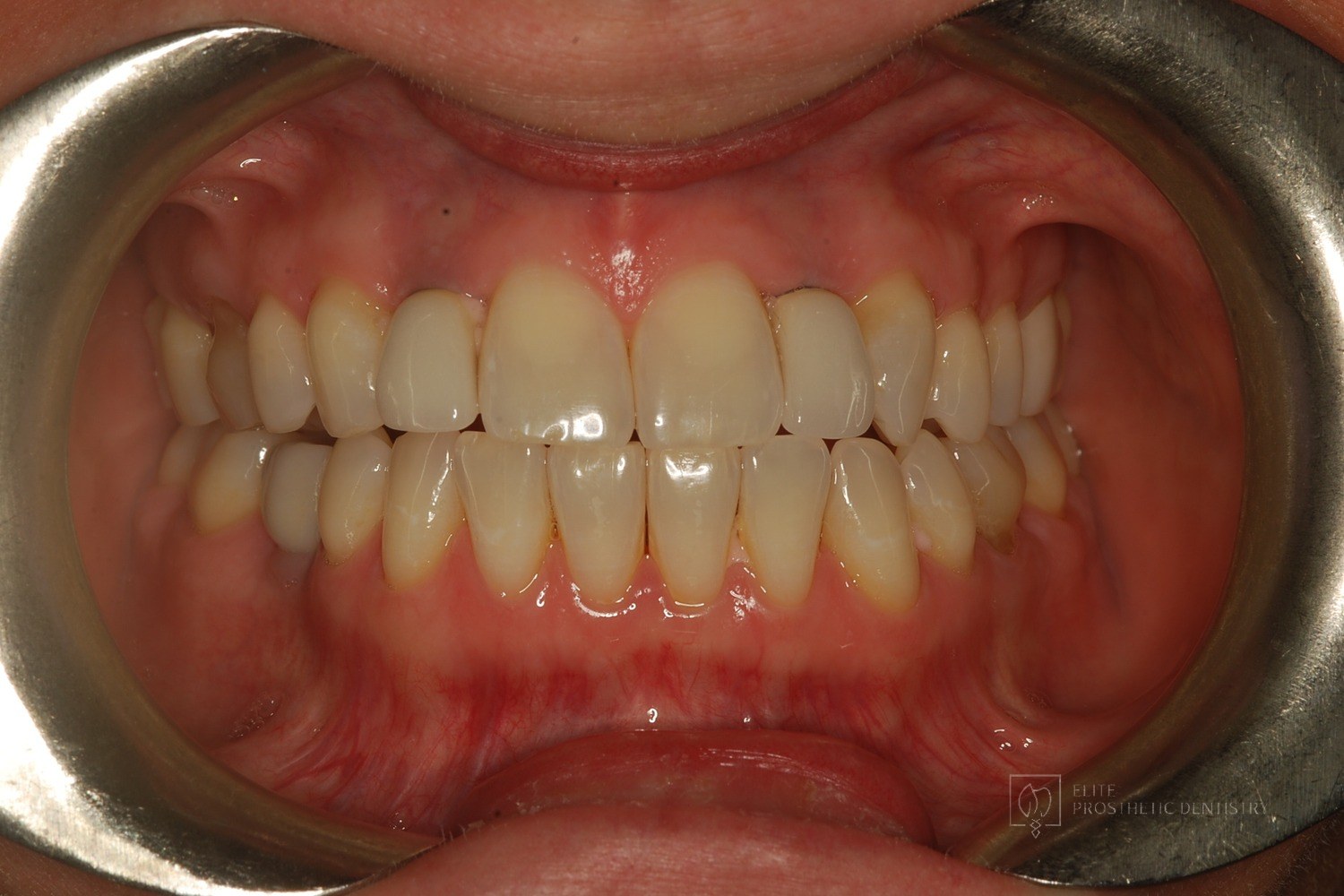
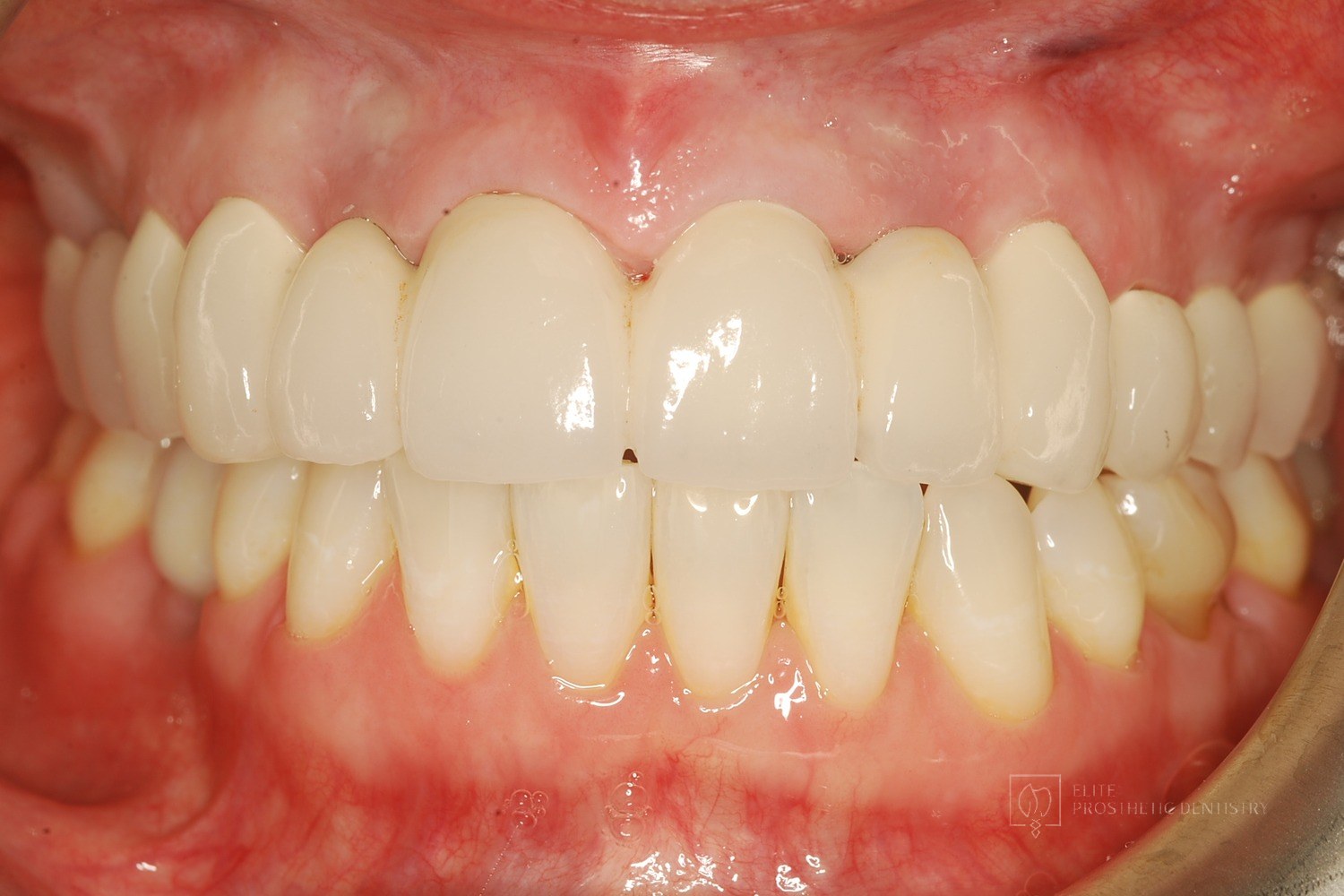
How Aging, Opaque Restorations Were Replaced with Customized Ceramic Restorations Designed for Long-Term Natural Esthetics
The existing restorations appeared opaque, worn, and unnatural over time, affecting both confidence and overall smile harmony.
 Before
 After
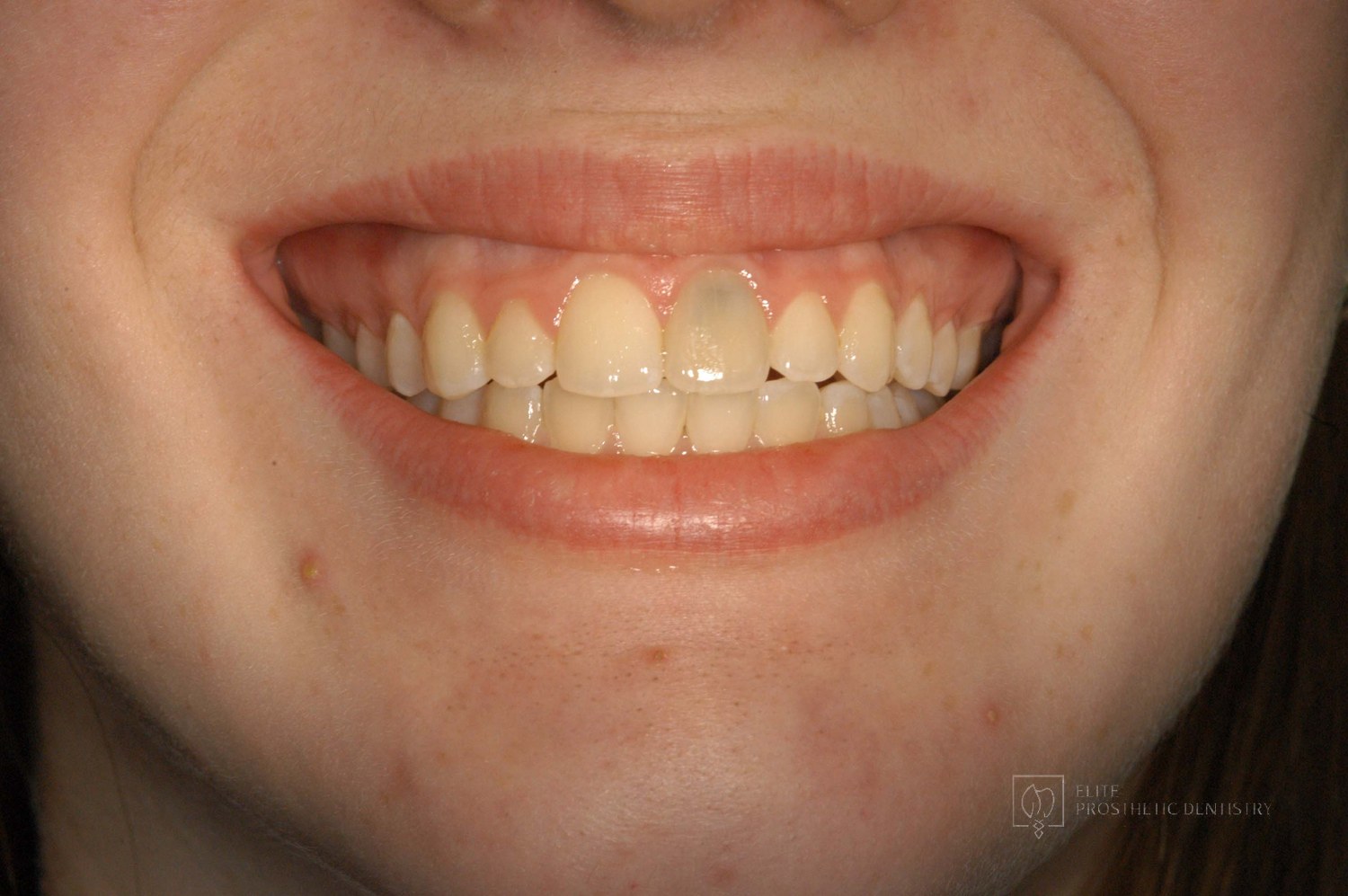
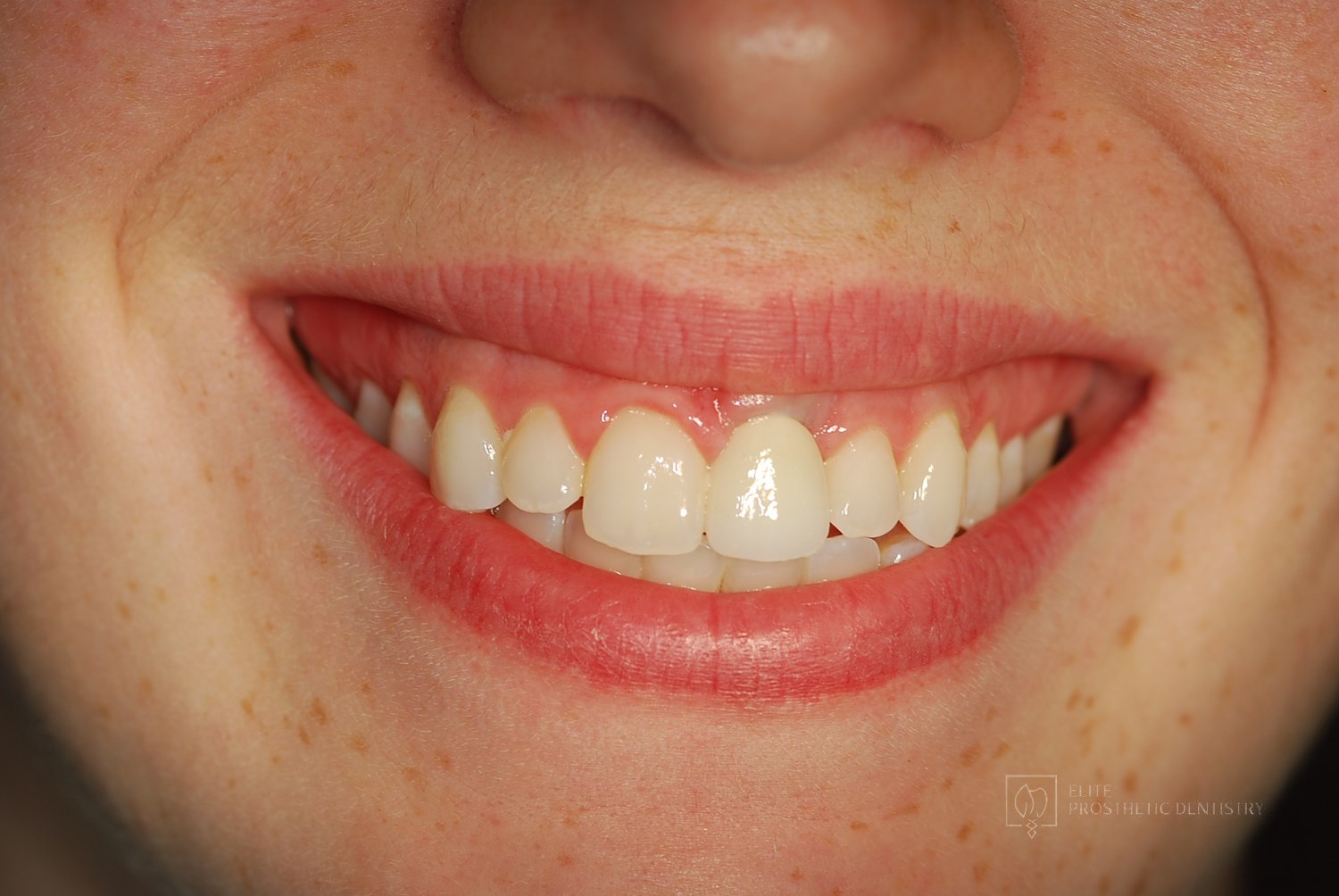
How Older Implant Crowns Were Redesigned for a Better Bite and More Natural Appearance
The patient came in after years of living with implant-supported crowns placed more than twenty years earlier that no longer looked or functioned well. CBCT evaluation, reviewed with a radiologist colleague, showed the implants had been placed too far to the buccal in very thin bone and could not support a healthy long-term restoration.
 Before
 After
How a Front Tooth Lost to Childhood Trauma Was Rebuilt with Bone Grafting and a Long-Lasting Implant
A teenager was referred by her father after earlier trauma left her upper left front tooth slowly failing from root resorption. She was still growing, so an immediate implant was the wrong move. The tooth had to be maintained to buy time, then replaced correctly once she reached skeletal maturity.
Related Services
Related Articles
Deepen your knowledge with additional insights on this topic.
 Dental Implants
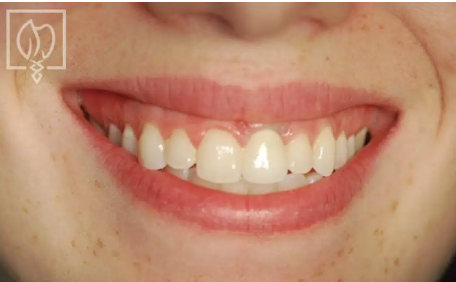
If a Single Front Tooth Is Replaced with an Implant, Can It Look Natural?
Yes. See the four steps, with real case photos, that make a single front tooth implant indistinguishable from the natural tooth beside it. Washington, DC.
 Dental Implants
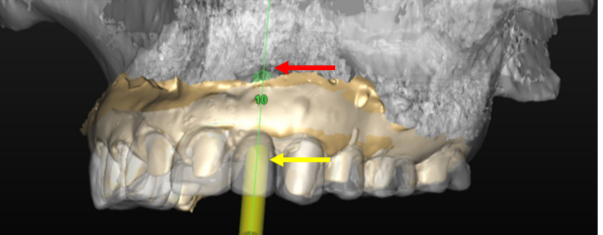
What Is Precision Implant Placement (PIP)?
Precision Implant Placement plans each implant virtually on a CBCT scan, then delivers it with a custom surgical guide. See the three steps with real images.
 Dental Implants
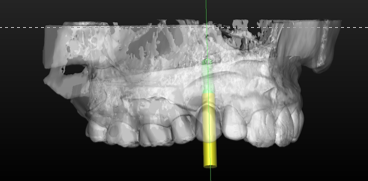
What Is the Ideal Surgical Guide for Precision Implant Placement?
Not all surgical guides are equal. The gold standard is CBCT-based: planned virtually in 3D, 3D printed, and seated on your teeth. A DC prosthodontist explains.
 Dental Implants
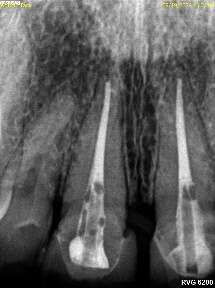
When Should an Implant Not Be Done?
Healthy roots, thin bone, steep bony angles: a DC prosthodontist shows a real case where refusing implants was the right call, and what was done instead.
 Dental Implants
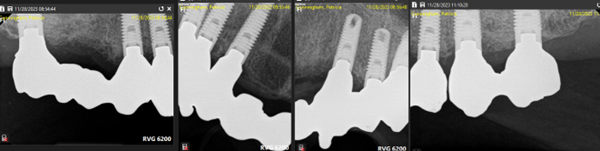
What Is Staged Implant Therapy?
Staged implant therapy replaces failing teeth in phases while you keep fixed teeth the entire time. A DC prosthodontist walks through a real case in stages.
 Dental Implants
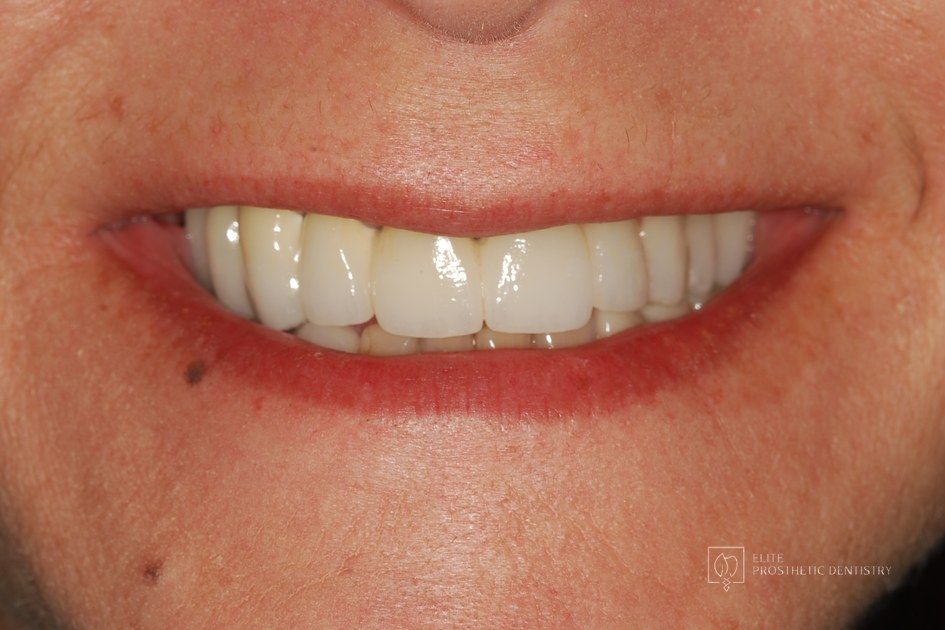
The Four Types of Dental Implants: Which One Is Right for You?
Endosteal, subperiosteal, zygomatic, and mini implants each solve a different problem. A DC prosthodontist explains the four types and who each one fits.
Ready to Transform Your Smile?
With 40+ years of experience and 3,900+ dental implants placed, Dr. Marlin and the team deliver dentistry planned to last. Request a specialist consultation.