
The Patient's Guide to Implant, Cosmetic and Restorative Dentistry
Patients regularly come to us with crowns placed elsewhere that “don’t feel right” or a smile that just “doesn’t look right.” Patients know when something is off. And discomfort is rarely the whole story: a crown that does not fit precisely is also vulnerable to decay underneath, where no one can see it.
Price is easy to compare. Quality is not. Restorations vary by type (crown, implant, veneer), by fabrication method (milling, casting, pressing), and above all by the standard of the laboratory and clinician behind them. This guide gives you the framework we would want a family member to have before investing in implant, cosmetic, or restorative dentistry.
The stakes are real. Crowns fabricated to average standards are commonly quoted at 10 to 15 years of service, yet crowns from our practice have lasted 35 years and more. A restoration that serves for three decades spares you multiple rounds of replacement fees, chair time, and cumulative risk to the tooth. The last thing you want is to pay for the same dentistry over and over.
What Goes Into Quality Care
Quality restorative care rests on three legs. First, the expertise of the practitioner: specialty training, formal education, and years of relevant experience. Second, attention to detail in the clinical work: preparations, impressions and intraoral scans, and verification of the final fit, including X-rays to confirm precise seating. Third, the quality of the laboratory fabricating the restoration.
Notice what is missing from that list: anything you can easily see. The most important part of a restoration is the precision of its fit against the tooth, and that is exactly the part a patient cannot evaluate. This is why choosing the right practitioner and process up front matters so much.
Selecting a Practitioner: How to Interview and Evaluate
“Prosthetic dentistry” can describe any restorative work, from a single filling to a full-mouth reconstruction. The important distinction is between a prosthodontist, a specialist with years of accredited graduate training in restorative dentistry, and general practices offering prosthetic services. There are many skilled general dentists, and we work with them constantly, but a website cannot tell you how deep any individual dentist’s restorative training runs. The word “prosthodontist” can, because the title requires the training. Our article on the difference between a dentist and a prosthodontist covers this in detail.
As you evaluate a prospective restorative dentist, ask:
- How, specifically, would you address my problem?
- How will you evaluate my complete dentition? Clear digital X-rays are essential, and diagnostic models should be made if the case is not routine.
- What alternative treatment plans exist, and why do you favor one?
- Can you show me completed cases like mine?
- What is your educational background: formal residency training or short courses?
A practitioner who welcomes these questions is telling you something important before treatment ever begins.
The Importance of a High-Quality Dental Laboratory
Most restorations are fabricated by technicians in commercial laboratories. These labs are convenient and often competent, but their quality varies widely, and even the best of them never see your actual teeth. Communicating the subtleties of a patient’s aesthetics to a technician across the country is inherently limited.
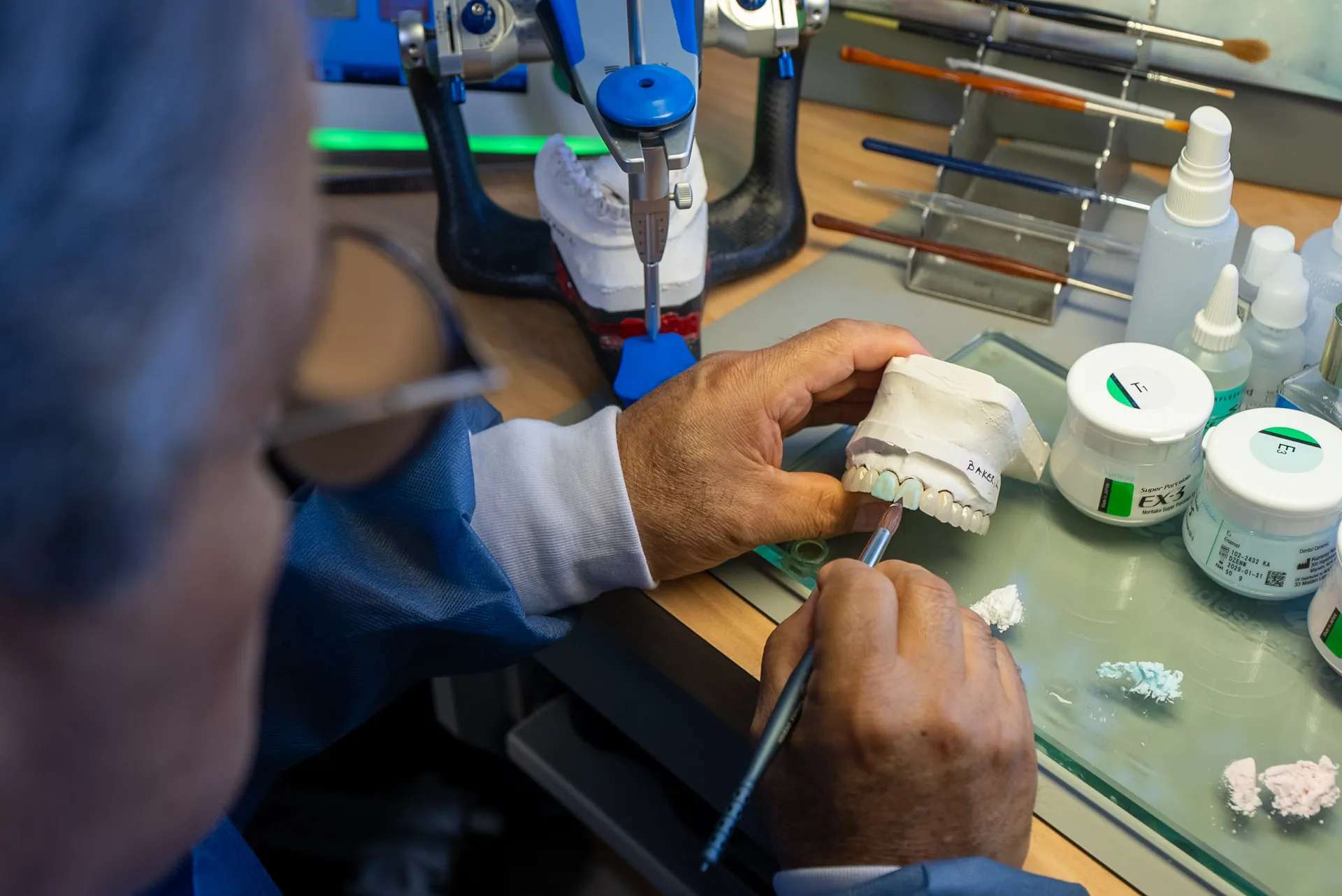
The ideal arrangement is close collaboration between dentist and technician, and an in-house laboratory makes that collaboration continuous. Our technician can evaluate shade and translucency with the patient in the chair, adjust internal coloring in real time, and refine the fit under the prosthodontist’s direct supervision. Elite Prosthetic Dentistry has operated its own laboratory since 1985 for exactly this reason: it gives us control over precision, aesthetics, and function that cannot be outsourced.
Tailoring Care to Your Financial Goals
Cost should not be a barrier to excellent care, and there are honest ways to manage it. Outside financing programs offer a range of payment arrangements for dental treatment, and our office can help you explore the options that fit your situation.
Another practical strategy: begin with strong, custom, natural-looking temporary restorations. Well-made provisionals protect your teeth and appearance immediately while giving you time to arrange finances for the definitive work. We have found this approach very effective for patients who want top-quality results on a realistic timeline. Phasing also pairs well with planning tools like what patients can expect during implant treatment.
Understanding Insurance’s Limits
Dental insurance helps, but it is important to understand what it is and is not. Most policies carry annual maximums and limitations that fall far short of comprehensive restorative needs. Insurer fee schedules also pressure participating practices toward higher patient volume and lower-cost laboratories, which is structurally at odds with the time-intensive, detail-driven work that long-lasting restorations require.
None of this means you should ignore your benefits. It means the practice you choose should act as your advocate, helping you document claims and receive every reimbursement you are entitled to, while being honest that insurance rarely defines what good care looks like.
A Cosmetic Makeover Gone Awry
One of our patients arrived a year after receiving new front crowns elsewhere. She was uncomfortable, and she felt her smile did not look right. Her instincts were correct on both counts. Examination and X-rays showed open margins on all of the crowns, with extensive decay already established beneath them. Aesthetically, the crowns were too square and flat for her lip line, monochromatic, and dull.
The remedy required removing the crowns and decay, root canal treatment, rebuilding the underlying teeth, and fabricating new crowns. The new restorations have a rounded form matched to her lips, internally developed color, and natural translucency, and above all a precise, tightly sealed fit. Her case illustrates the theme of this entire guide: the invisible part of the crown determines its fate.
”Cosmetic Dentist” Is Not a Specialty
You will see the term everywhere, so be clear about what it means: there is no recognized specialty called “cosmetic dentist.” Prosthodontists are restorative specialists whose accredited training includes extensive cosmetic work. Many general dentists also do fine cosmetic dentistry. The point is not to dismiss anyone; it is that you should interview any prospective clinician about their actual training, because a smile makeover is among the most demanding procedures in dentistry, requiring stringent protocols in preparation, impressions and scans, and fitting.
Front Teeth: The True Test
Restoring anterior teeth is the art within the art. An artificial crown must match the internal coloration and translucency of the living teeth beside it, and a single front tooth by itself is probably the most difficult restoration in dentistry. This work almost always requires chairside customization with a technician, sometimes layering porcelain while the patient is present. Monolithic milled crowns, however efficient, simply do not offer that level of customization for the smile line. You can see what this looks like in practice in our case study of two front teeth saved with gold posts and zirconia crowns.
Implant Restoration Therapy
An implant is both a surgical and a restorative undertaking, and the implant’s position and angulation dictate the aesthetics and function of the crown it will carry. There is significant benefit to having planning, surgery, and restoration coordinated in one facility, and to insisting on precise, guided implant placement. CT scanning lets the clinician evaluate bone quality, width, and depth, avoid critical structures, and place the implant exactly where the restoration needs it. The more precise the placement, the better the aesthetics, function, and long-term prognosis of your dental implant.
Learn More
This guide covers the parameters of quality so you can evaluate any prospective restorative practice, including ours. For deeper reading, visit the patient education library, or bring your questions directly to Dr. Gerald Marlin, a specialty-trained prosthodontist with 40+ years of experience in Washington, DC. Call 202-244-2101 or request an appointment at our Friendship Heights office.
See How We Resolve These Problems
Our patient success stories show real cases and real results. Browse outcomes from a specialist prosthodontist with decades of experience and 3,900+ implants placed.
Key Takeaways
- ✓ The most important part of any restoration is the part you cannot see or evaluate yourself: the precision of the fit. Poor margins invite decay beneath otherwise attractive crowns.
- ✓ Quality care rests on three legs: the practitioner's training and experience, meticulous clinical technique, and the caliber of the laboratory fabricating your restoration.
- ✓ The title 'prosthodontist' is the reliable marker of accredited specialty training in restorative dentistry. 'Cosmetic dentist' is not a recognized specialty.
- ✓ An in-house laboratory lets the dentist and technician customize fit, color, and translucency chairside, which is how restorations reach their full potential in both longevity and aesthetics.
- ✓ A restoration that lasts decades costs far less over a lifetime than a cheaper one replaced again and again. Judge value, not just price.
Frequently Asked Questions
How do I choose a good restorative dentist?
Look for accredited specialty training (the title prosthodontist), years of experience with cases like yours, examples of completed work, a thorough diagnostic process including quality X-rays and models when needed, and a laboratory arrangement that supports customization. Then ask how they would address your specific problem and whether alternatives exist.
What is the difference between a prosthodontist and a cosmetic dentist?
Prosthodontics is a recognized dental specialty requiring years of accredited graduate training in restoring and replacing teeth. 'Cosmetic dentist' is a marketing description, not a recognized specialty, and it carries no defined training requirement. Many general dentists do good cosmetic work, but the prosthodontist title is the verifiable credential.
Why does the dental laboratory matter so much?
Because the technician physically builds your crown, veneer, or prosthesis. Commercial labs vary widely in quality and never see your actual teeth. An in-house laboratory allows the dentist and technician to collaborate chairside on fit, internal color, and translucency while you are present, which improves both precision and natural appearance.
Why do some crowns fail after only a few years?
The most common culprit is an imprecise marginal fit. When a crown does not seal tightly against the tooth, bacteria leak beneath it and decay develops out of sight. Bite forces that were never properly balanced and rushed fabrication are other frequent causes. This is why fit and fabrication standards matter more than appearance alone.
Is expensive dental work worth it?
Judge cost per year of service, not the invoice. A precisely made crown that serves for decades is far more economical than a cheaper crown replaced two or three times over the same period, each time with new fees, new chair time, and new risk to the tooth. Quality restorative work is a long-term investment.
Related Patient Success Stories
Explore similar patient success stories demonstrating our expertise in advanced prosthetic dentistry.
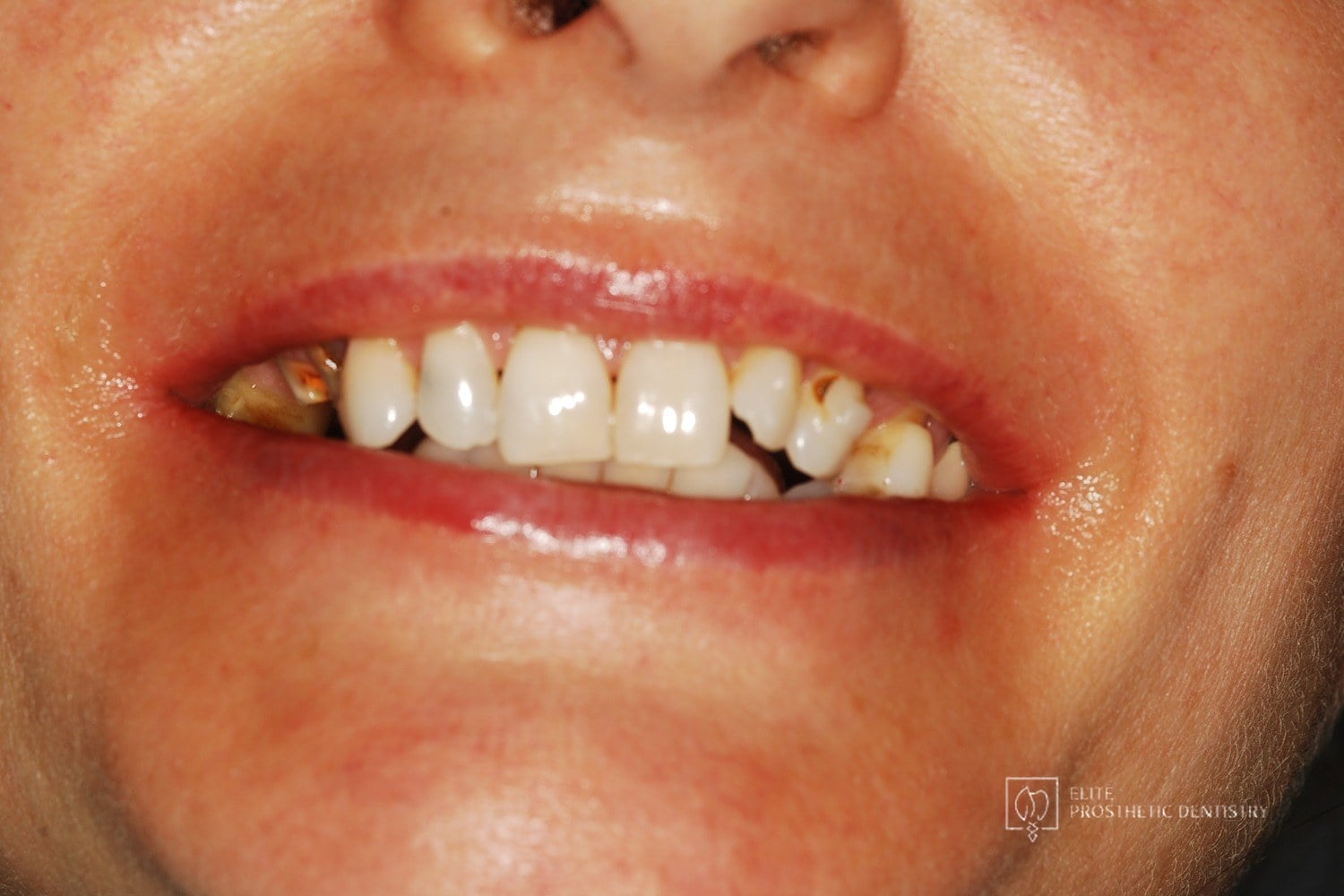 Before
 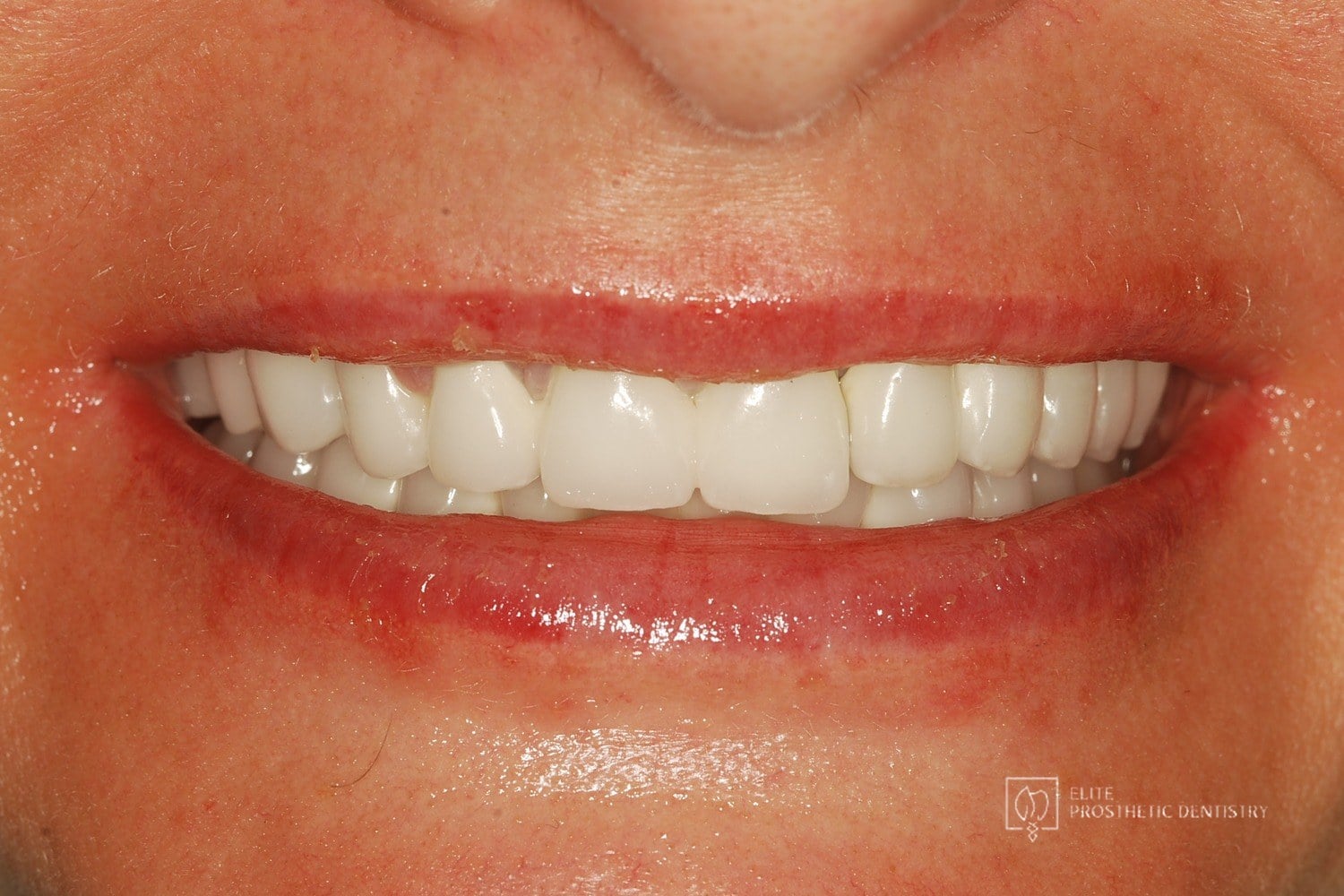 After
After How Aging, Failing Dentistry Was Replaced with a Coordinated Full-Mouth Implant and Crown Reconstruction
The patient presented with throbbing upper-molar pain, long-standing infections, multiple root canals and unfinished prior treatment, generalized sensitivity, and several hopeless teeth.
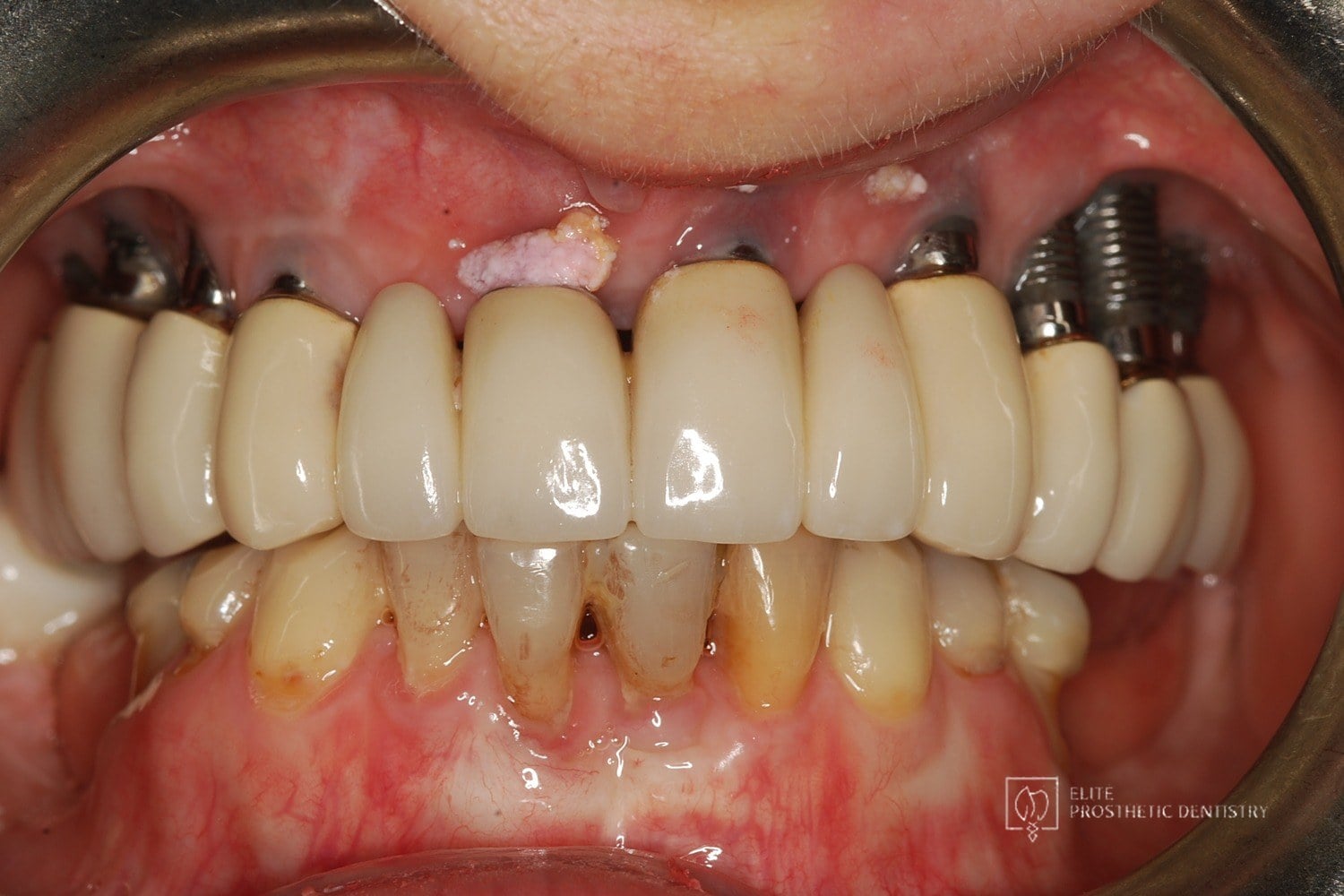 Before
 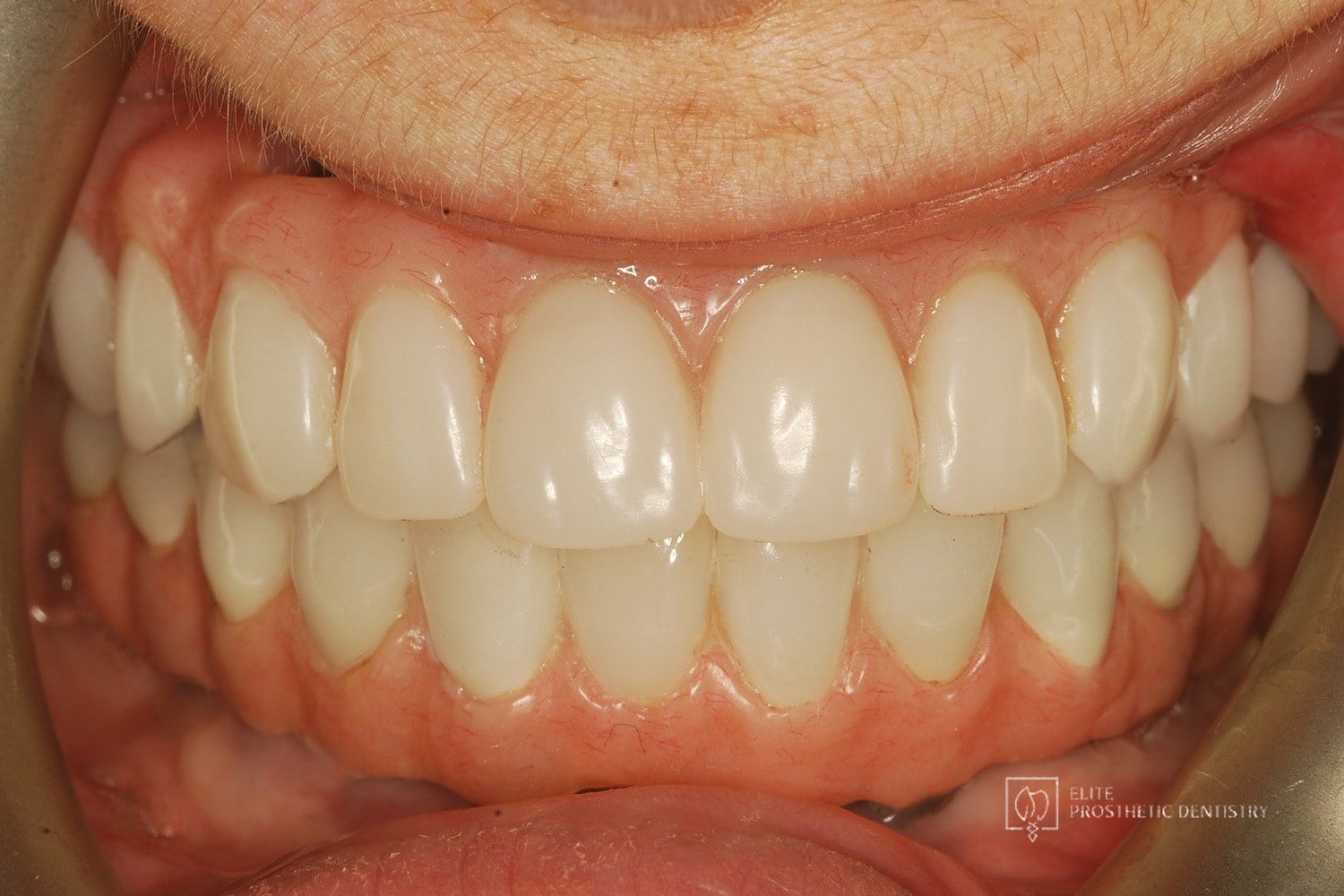 After
After How Failing Implants and Severe Bone Loss Were Rebuilt Into a Stable Full-Arch Implant Reconstruction
The patient presented with significant complications from previously placed implants, severe bone loss, failing posterior implants, and an unesthetic full-arch bridge. Both arches required full reconstruction, with the upper arch showing the most advanced bone loss and instability.
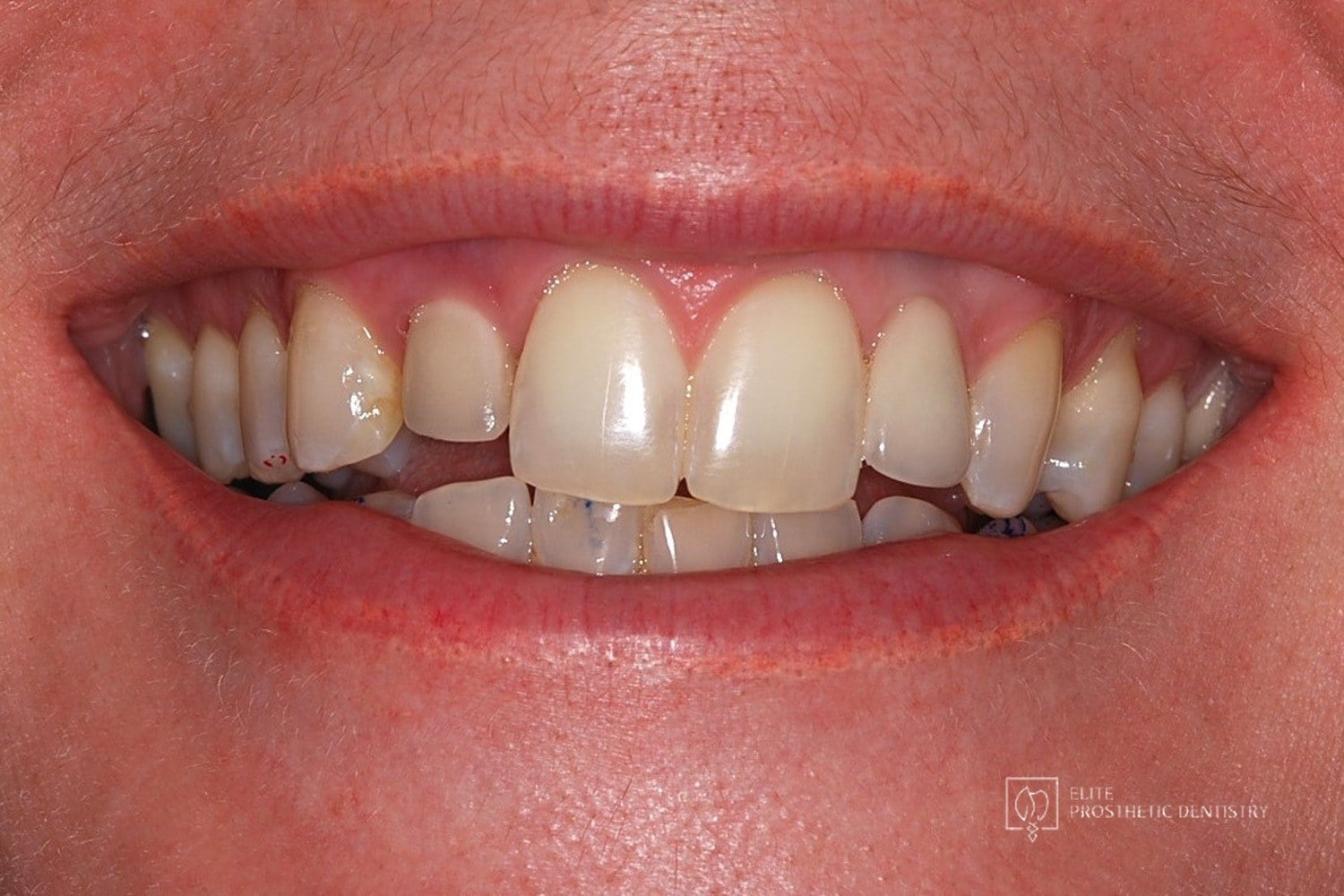 Before
 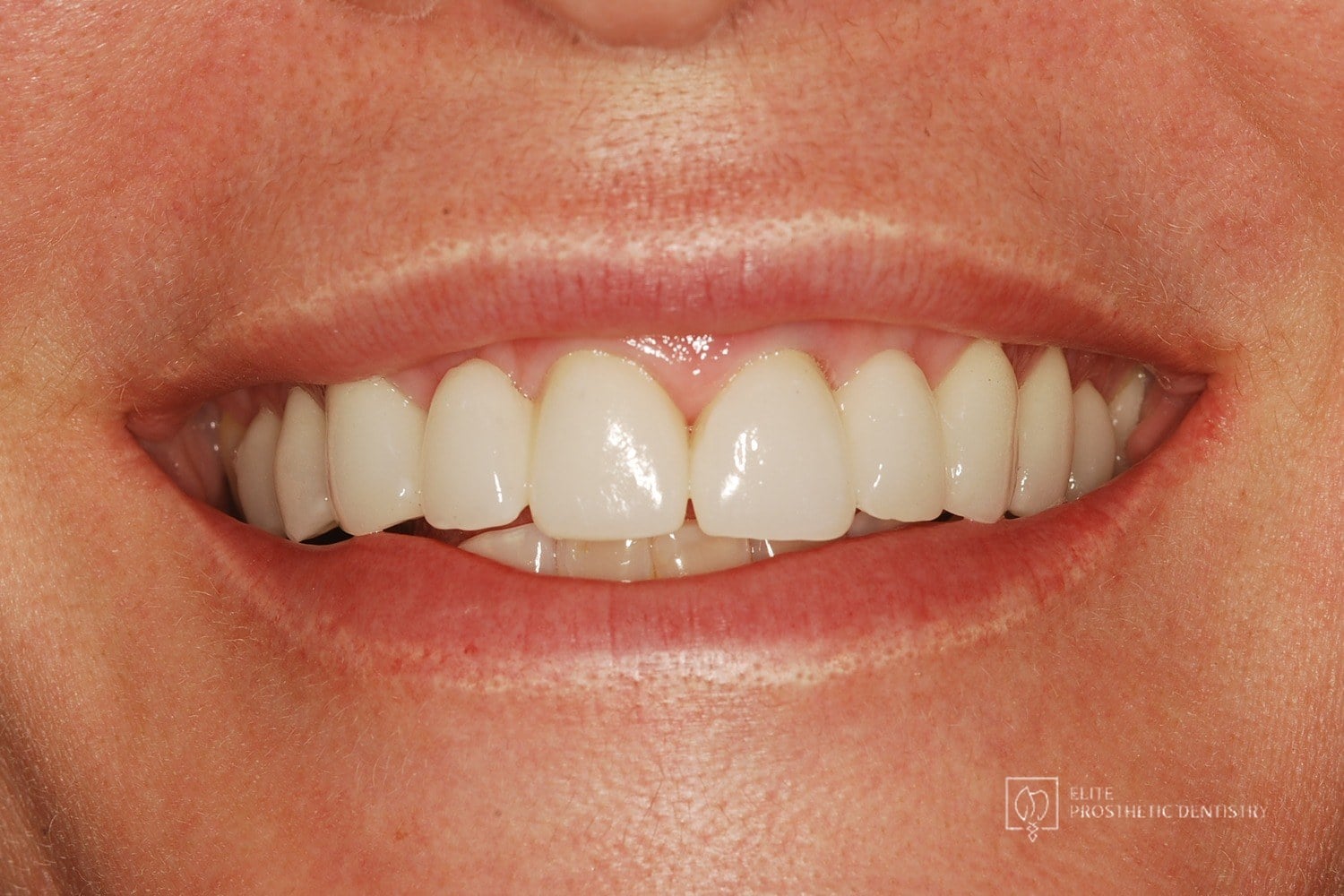 After
After How Failing Lateral Incisor Implants Were Replaced with Custom Zirconia Bridges After Severe Bone Loss Made Replacement Implants Impossible
Comprehensive examination including CBCT imaging revealed significant bone loss surrounding implants that were placed outside the buccal plate, most likely due to placement without a CBCT-generated surgical guide. The implants were determined non-salvageable, and the alveolar ridge was too narrow to support replacement implants without extensive reconstruction.
Related Articles
Deepen your knowledge with additional insights on this topic.
 Choosing a Prosthodontist
 The Patient's Guide to Implant, Cosmetic and Restorative Dentistry
How to judge quality in implant, cosmetic, and restorative dentistry: choosing a practitioner, why the lab matters, financing, and the questions to ask.
 Choosing a Prosthodontist
 What is a Prosthodontist?
A prosthodontist is a dental specialist with advanced training in crowns, implants, dentures, and complex restorations. Washington, DC specialist.
 Choosing a Prosthodontist
 4 Ways You Can Benefit from Our In-House Dental Lab
Custom aesthetics, precision fit, shorter waits, and fast repairs: four ways an in-house dental laboratory changes both your experience and your results.