
How to Choose a Dental Specialist in Bethesda, MD
A decision guide for Bethesda patients weighing implants, full mouth reconstruction, cosmetic work, or replacement of aging crowns. What to evaluate, and when a prosthodontist is the right call.
Bethesda patients evaluating major dental work can choose a provider the way good medicine is judged: by diagnosis, evidence, and documented outcomes. For complex implants, full mouth reconstruction, cosmetic reconstruction, or aging crowns and bridgework, that usually means a specialty-trained prosthodontist. Elite Prosthetic Dentistry is five minutes from central Bethesda, in Friendship Heights.
Good clinical decisions start with four questions: What is the diagnosis? What is the evidence? What are the alternatives? What does the long-term data look like? This guide applies that standard to dentistry for patients coming from Bethesda, from the neighborhoods around the National Institutes of Health and Suburban Hospital down to the DC line.
The Decision Bethesda Patients Are Actually Making
Major dental treatment is a provider decision before it is a procedure decision. A crown, an implant, or a full reconstruction is only as good as the diagnosis and planning behind it. The practical question for a Bethesda patient is not “who offers implants nearby” but “who will evaluate my whole situation before recommending anything irreversible.”
That distinction matters most in five situations, and each has its own detailed guide. If implants are on the table, especially in a visible area or as part of a larger plan, read our guide to choosing an implant provider for a complex case. If teeth are wearing down or several restorations are failing together, the full mouth reconstruction provider guide explains what a comprehensive evaluation should cover. For veneers and crowns where appearance and longevity both matter, see the cosmetic dentist versus prosthodontist comparison. If dentistry from decades past is showing its age, start with repair versus replacement for aging crowns and bridges. And if you are holding someone else’s treatment plan, read when a second opinion is worth getting first, along with the implant center comparison if the plan came from a center.
Reading the Evidence
Here is how to audit any dental practice’s evidence, including ours.
Documented cases beat galleries. A before-and-after photo shows a result on one day. A documented case narrative shows the diagnosis, the reasoning, the staging, and the outcome over time. When you review a practice’s cases, look for ones that resemble your situation in complexity, not just in appearance, and look for an explanation of why the chosen path beat the alternatives.
Ask what the numbers actually measure. Any practice quoting a success rate should be able to tell you what was counted, over what period, and how failures were defined. Our published figures, more than 3,900 dental implants placed and a documented in-practice implant success rate above 97% for implants placed more than 20 years ago, come from tracked clinical records, and we will walk you through what they include.
Imaging is part of the diagnosis, not an upsell. CBCT imaging shows bone volume, nerve position, and sinus anatomy that two-dimensional X-rays cannot. In our practice, every implant case, from a single implant through full-mouth reconstruction, is planned on a CBCT scan. When you compare providers, ask how the implant position will be planned.
Provisionals are the test flight. In comprehensive work, temporary restorations let you evaluate the bite, the shape, and the appearance before anything is final. A plan that goes straight to permanent restorations on a complex case leaves no room to adjust course.
When Elite Prosthetic Dentistry Is a Strong Fit for Bethesda Patients
- You want careful diagnosis before treatment begins, with the reasoning explained.
- Your case involves implants planned around the final restoration, not placed first and restored later.
- Several restorations are aging together and you want a coordinated plan rather than piecemeal repairs.
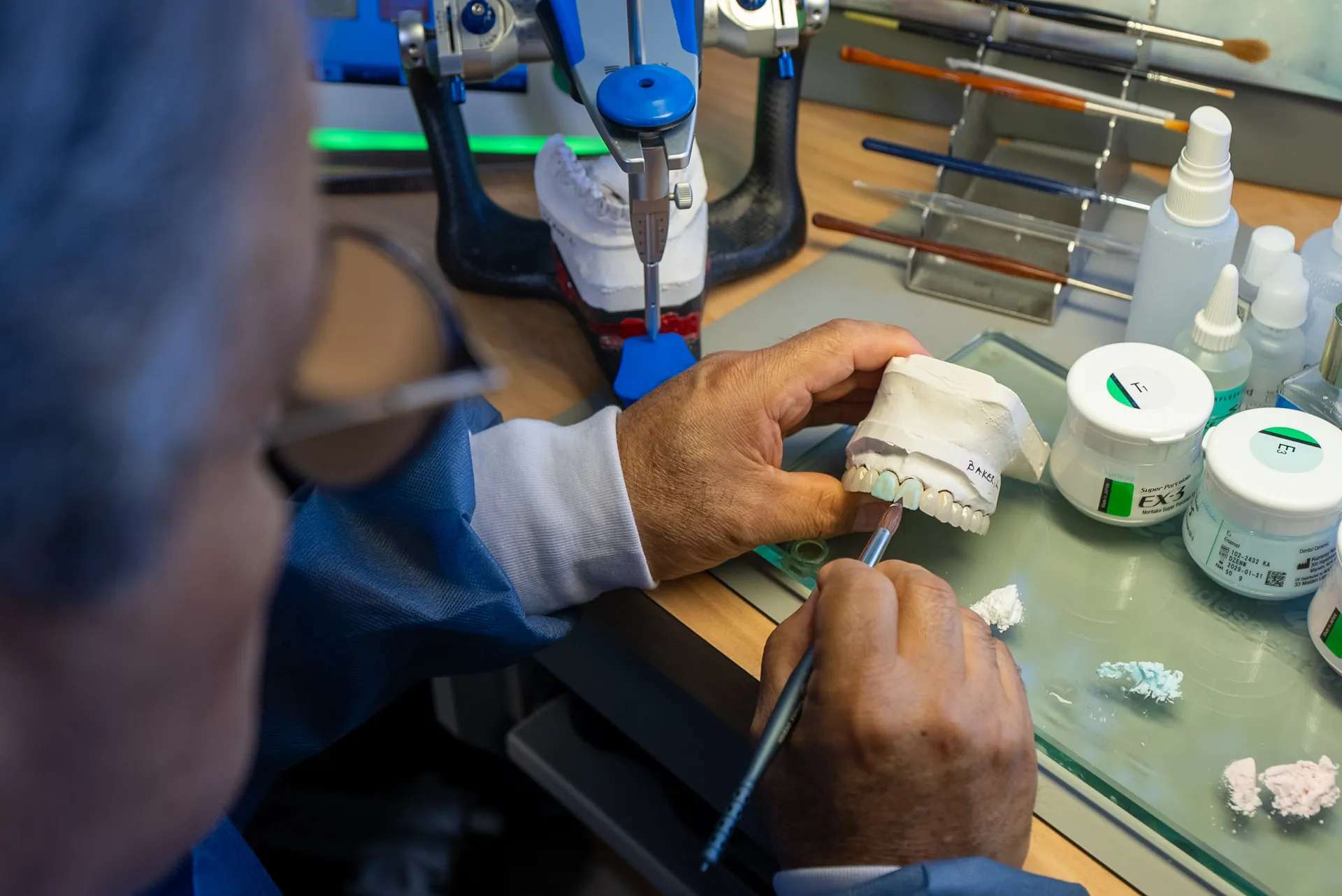
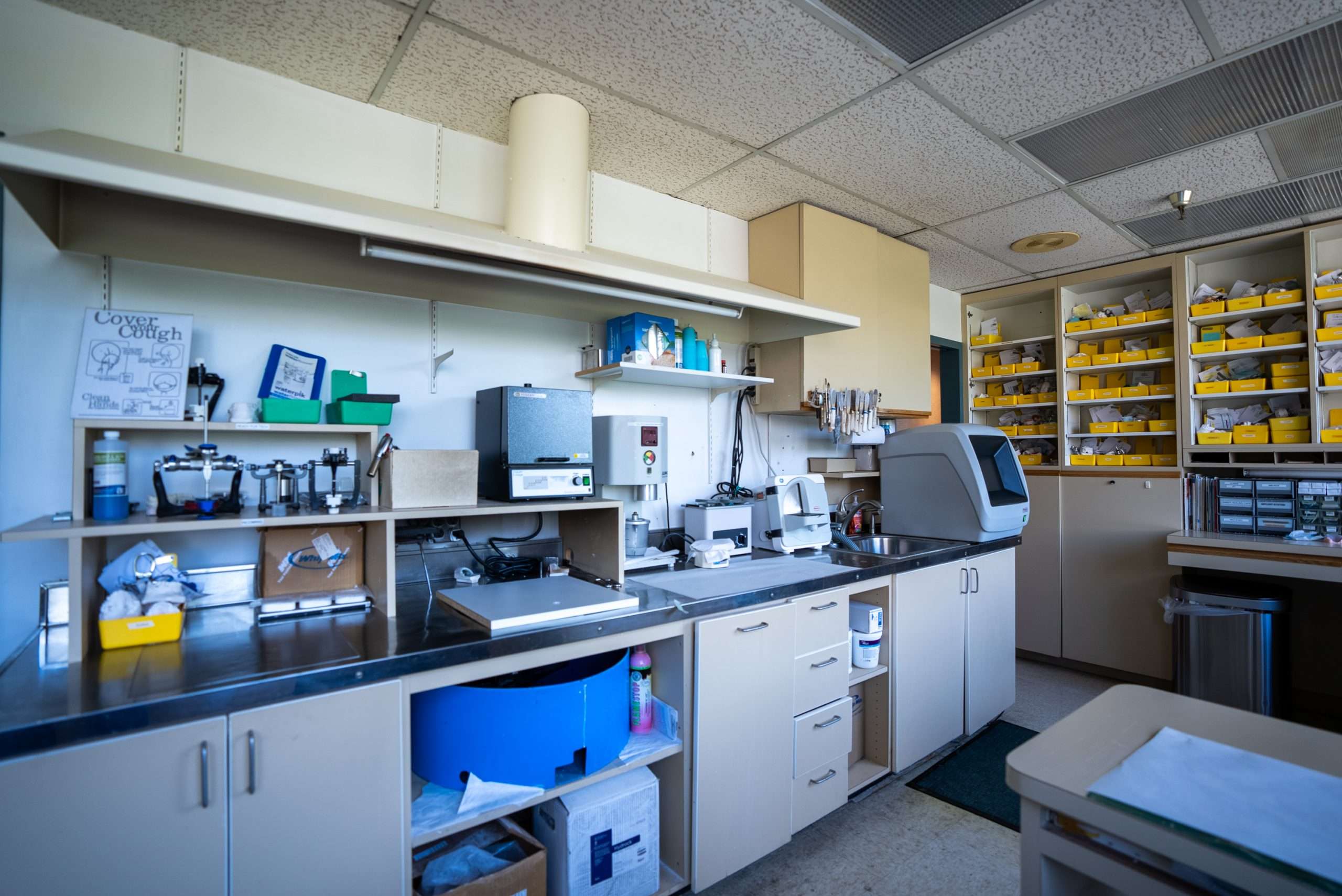
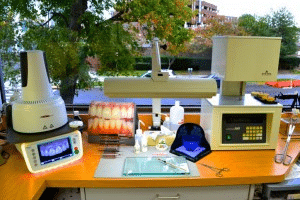
- You value natural esthetics backed by an in-house laboratory that has operated since 1985.
- You want a second opinion before an irreversible step.
When Another Setting May Serve You Better
- Routine cleanings, fillings, and single uncomplicated crowns belong with a good general dentist, and Bethesda has many.
- If your priority is the lowest-cost or fastest option rather than a comprehensive plan, a specialty practice is probably not the right match.
Proof Worth Reviewing
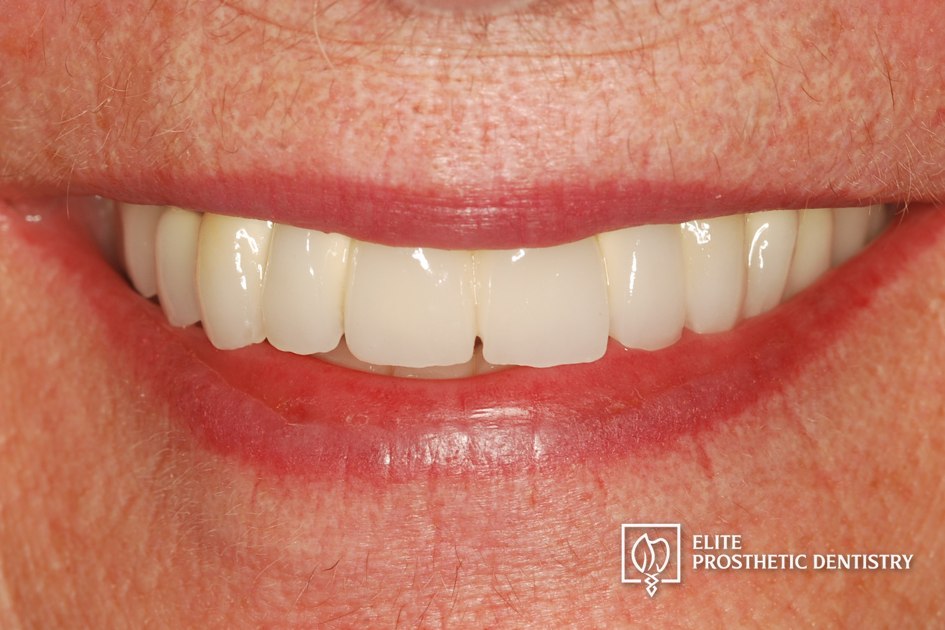
Elite Prosthetic Dentistry publishes its clinical work in a documented case library so patients can check the work for themselves. Two files Bethesda readers often start with: a loose upper bridge and aging crowns rebuilt with staged implant and crown reconstruction, which shows restoration-driven implant planning across a full treatment arc, and severely worn upper teeth rebuilt into a more stable, natural result, which shows how wear is diagnosed and corrected rather than patched.
Fitting Treatment Into a Bethesda Schedule
Complex care is a sequence of planned visits, not a scatter of appointments. Most Bethesda patients reach us in five minutes down Wisconsin Avenue or one Red Line stop from Bethesda station to Friendship Heights, which makes early morning and midday appointments practical around a Bethesda or downtown workday. Between staged visits, provisional restorations keep appearance and function stable, so nothing about the process intrudes on work or life. On-site parking is available in the building.
Start With a Diagnosis
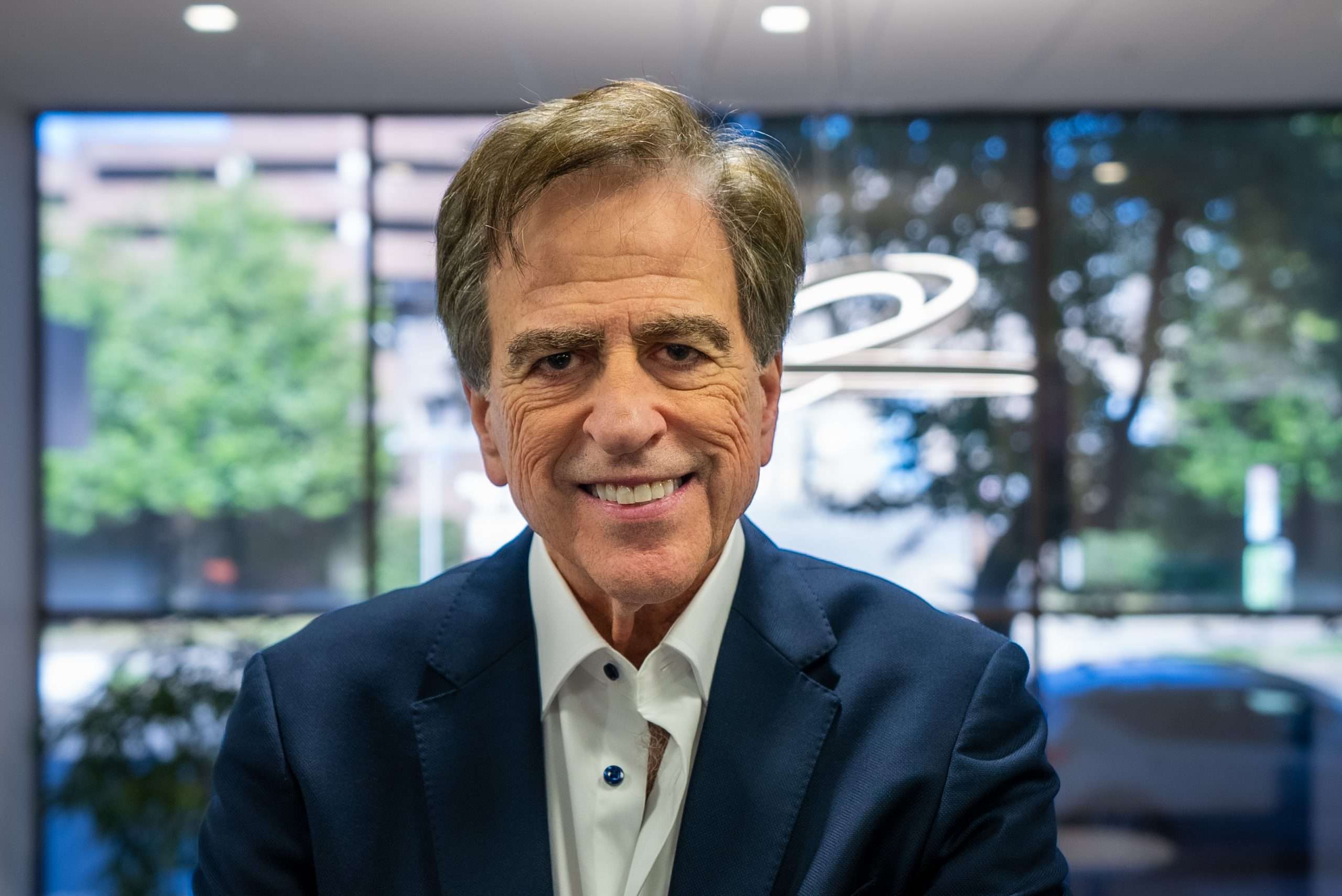
The office is at 4400 Jenifer Street NW, Suite 220, in Friendship Heights, about five minutes south of Bethesda Row. Request a consultation with Dr. Gerald M. Marlin or call (202) 244-2101. No pressure. Clear answers. A defined plan.
Frequently Asked Questions
I live in Bethesda. Is Elite Prosthetic Dentistry actually convenient for staged treatment?
Yes. The office sits in Friendship Heights, about five minutes down Wisconsin Avenue from central Bethesda, and one block from the Friendship Heights Metro station on the Red Line. Staged reconstructive treatment involves a series of visits, and most Bethesda patients fold them into a normal workday.
Which decision guide should a Bethesda patient start with?
Start with the guide that matches your situation: complex implants, full mouth reconstruction, cosmetic reconstruction, aging crowns and bridges, or a second opinion. If you already hold a treatment plan from another office, the second opinion guide is the most useful first read.
Do I need a referral to be evaluated?
No. Many patients self-refer, particularly for second opinions before extraction or implant treatment. Others are referred by their general dentist, and we coordinate with referring practices when patients want their dentist involved.
What should I bring to a first evaluation?
Recent X-rays if you have them, a list of prior dental work with rough dates, any treatment plan you have been given, and your questions. If records live at another office, we can help you request them. If implants are under consideration, a CBCT scan is part of the diagnostic process; every implant case in the practice is planned on one.
Related Patient Success Stories
Explore similar patient success stories demonstrating our expertise in advanced prosthetic dentistry.
 Before
  After
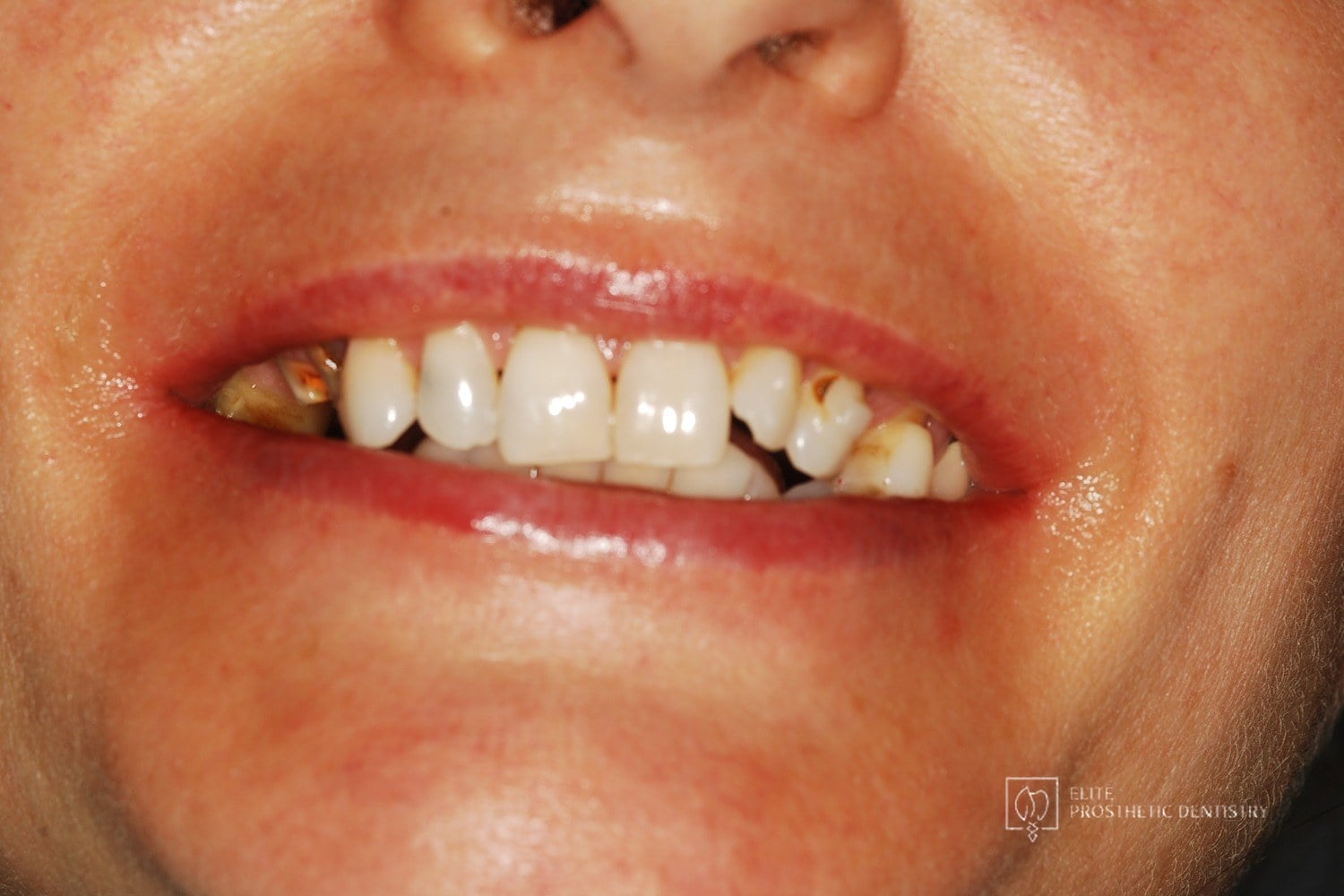
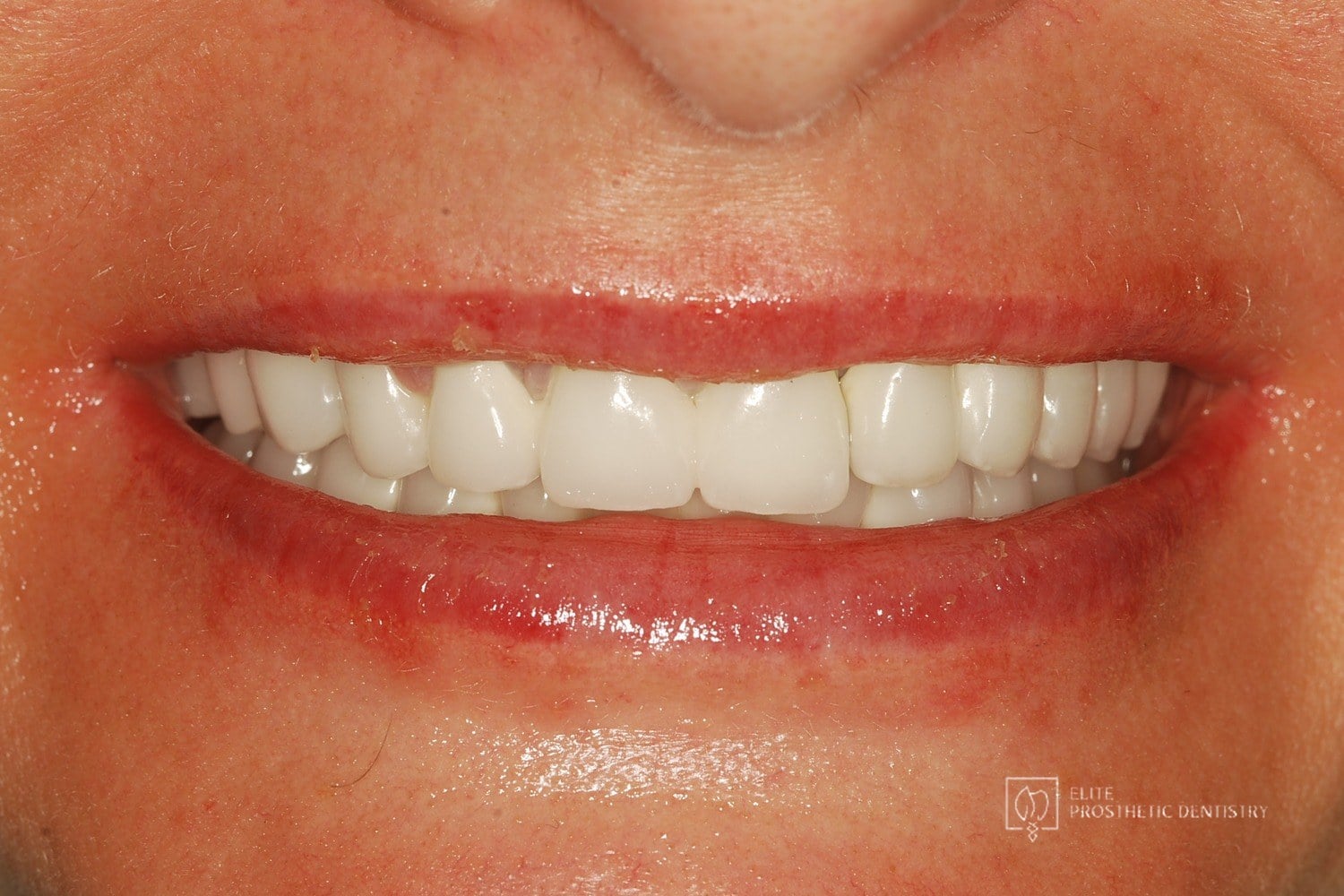
After How Aging, Failing Dentistry Was Replaced with a Coordinated Full-Mouth Implant and Crown Reconstruction
The patient presented with throbbing upper-molar pain, long-standing infections, multiple root canals and unfinished prior treatment, generalized sensitivity, and several hopeless teeth.
 Before
  After
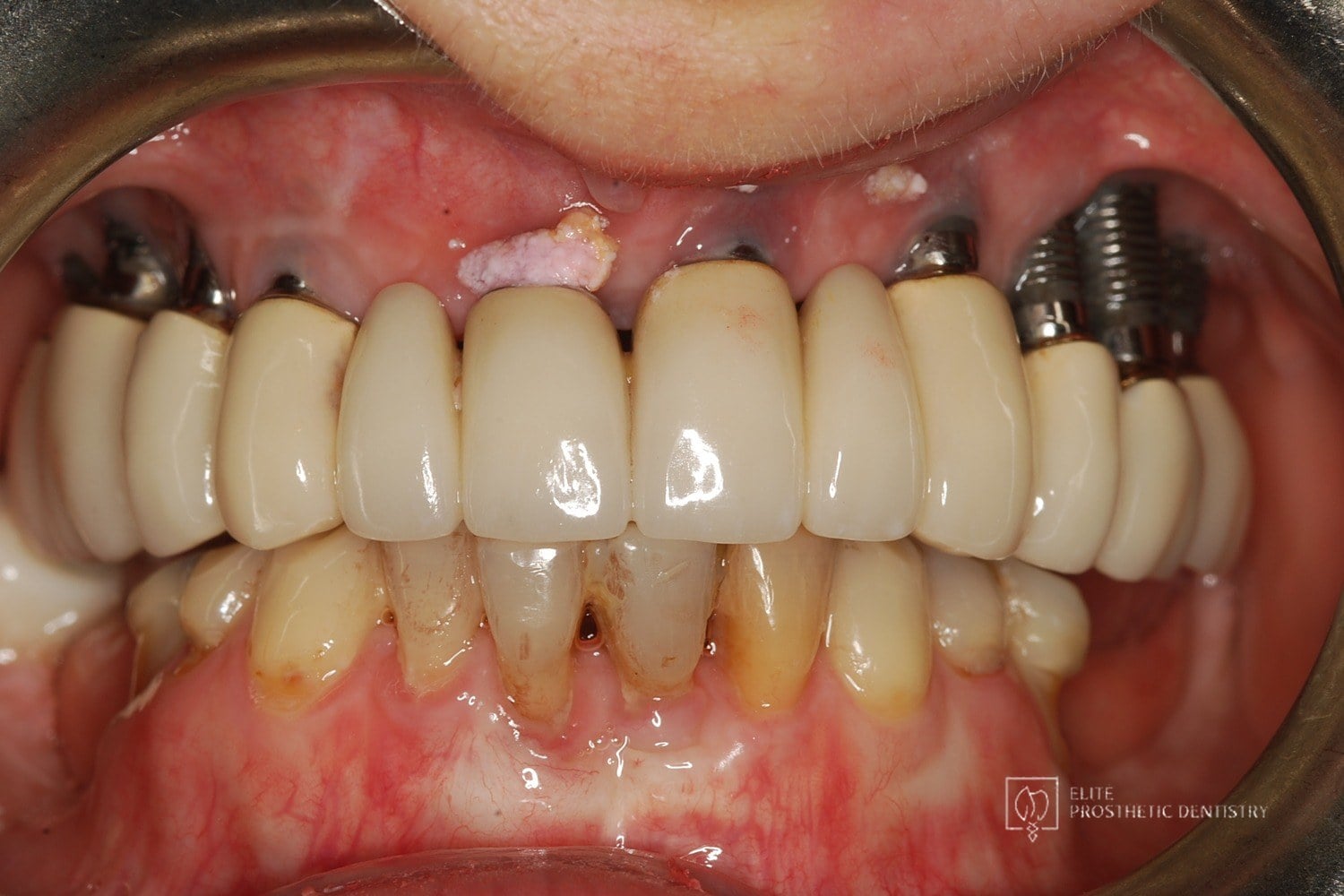
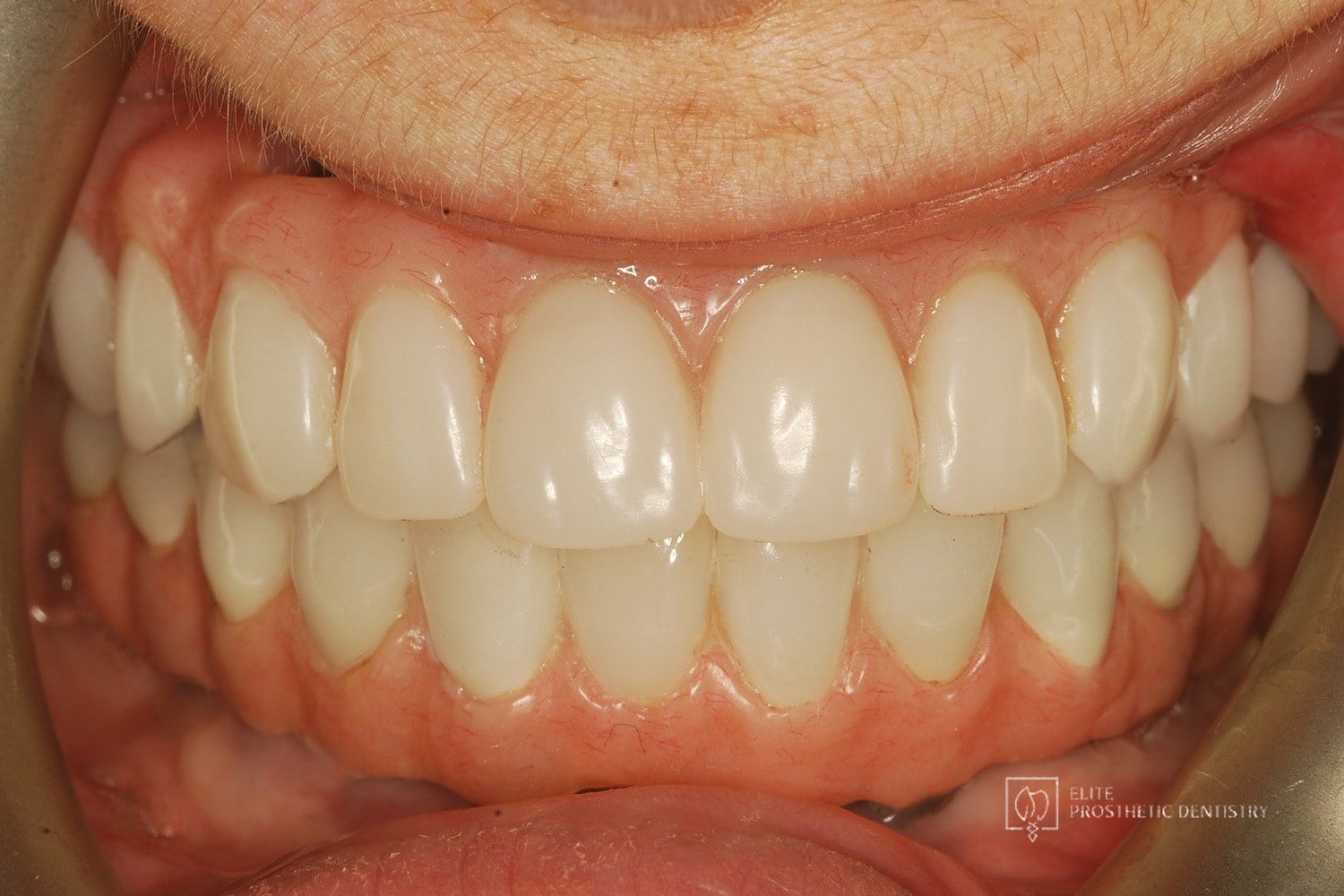
After How Failing Implants and Severe Bone Loss Were Rebuilt Into a Stable Full-Arch Implant Reconstruction
The patient presented with significant complications from previously placed implants, severe bone loss, failing posterior implants, and an unesthetic full-arch bridge. Both arches required full reconstruction, with the upper arch showing the most advanced bone loss and instability.
 Before
  After
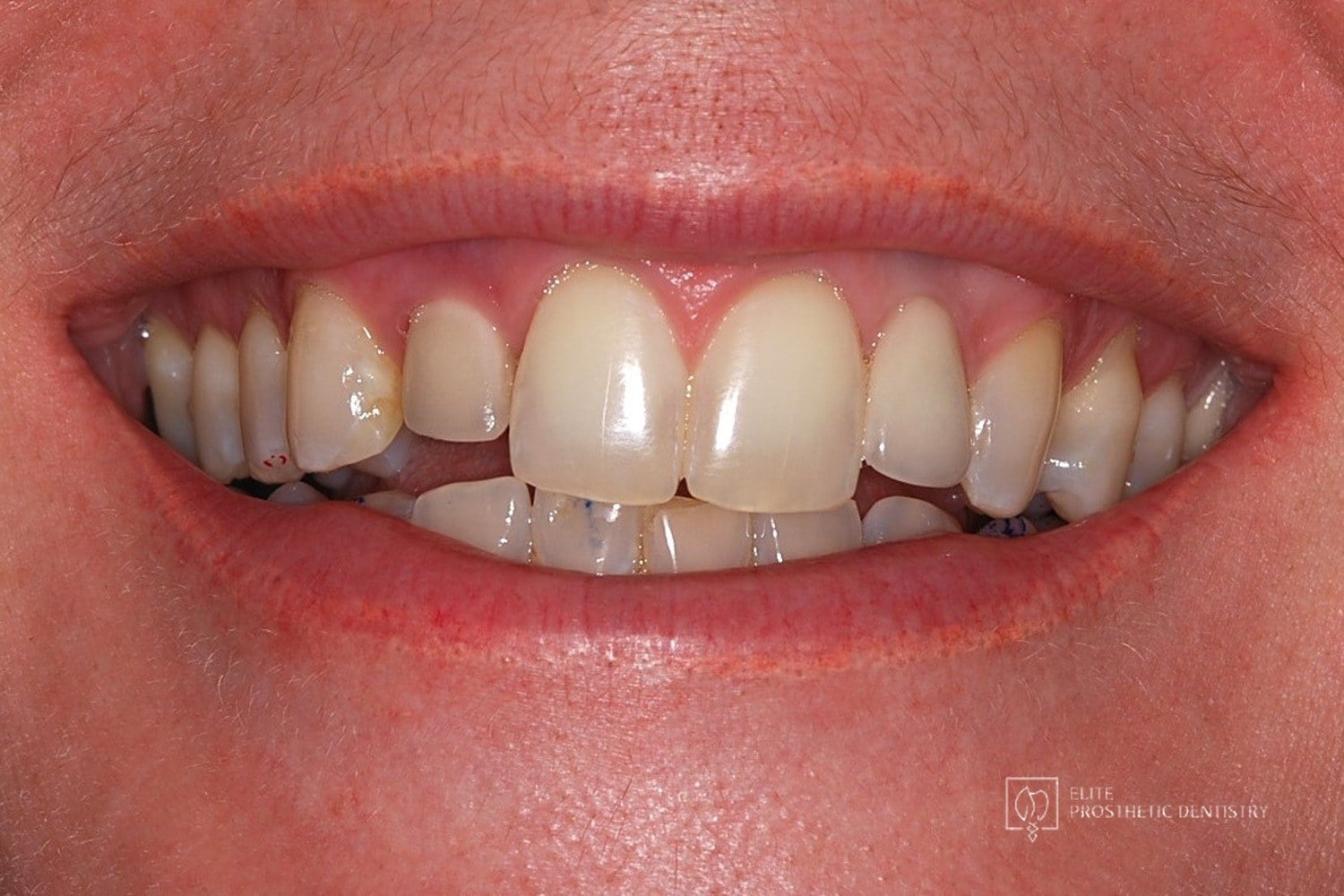
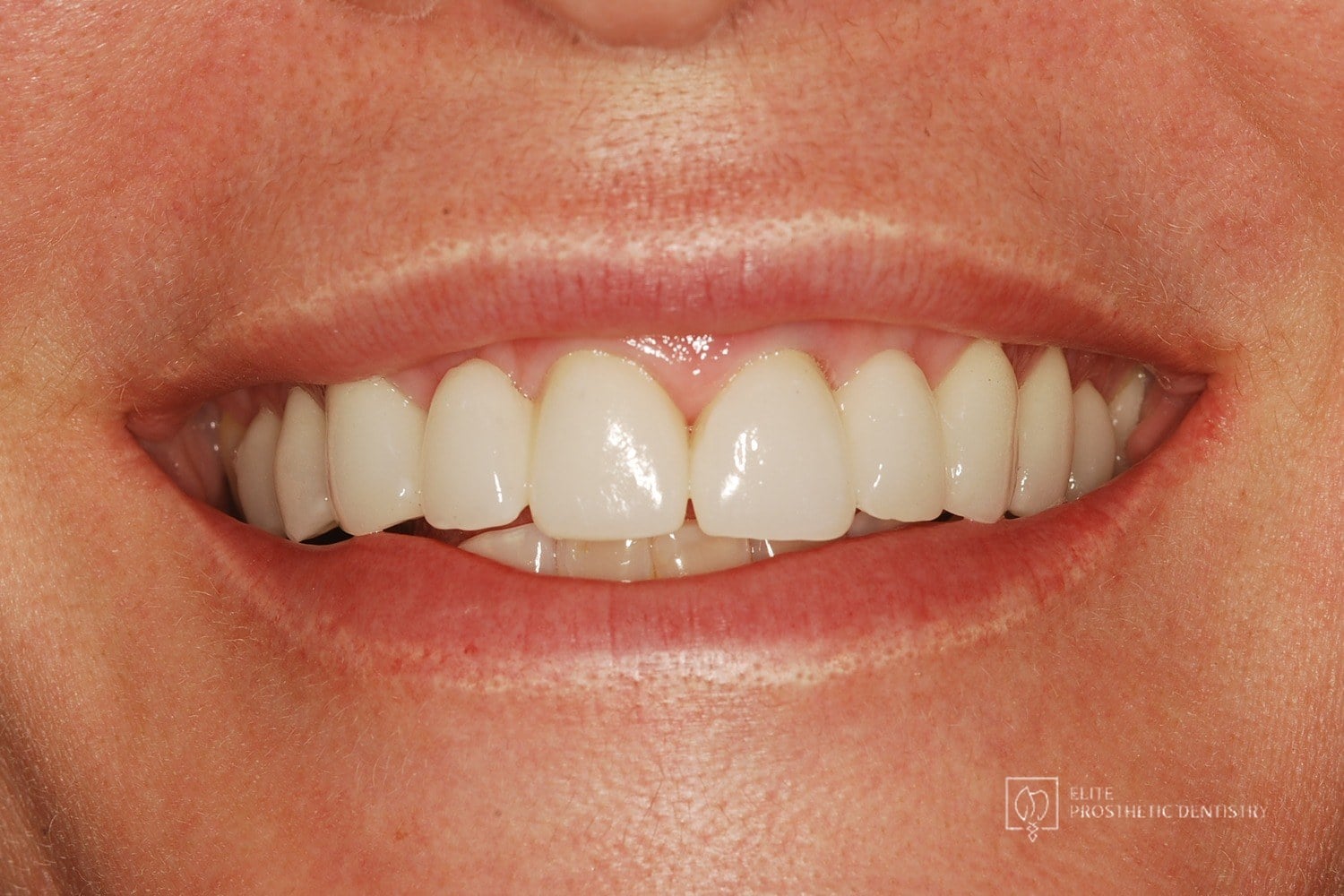
After How Failing Lateral Incisor Implants Were Replaced with Custom Zirconia Bridges After Severe Bone Loss Made Replacement Implants Impossible
Comprehensive examination including CBCT imaging revealed significant bone loss surrounding implants that were placed outside the buccal plate, most likely due to placement without a CBCT-generated surgical guide. The implants were determined non-salvageable, and the alveolar ridge was too narrow to support replacement implants without extensive reconstruction.
 Before
  After
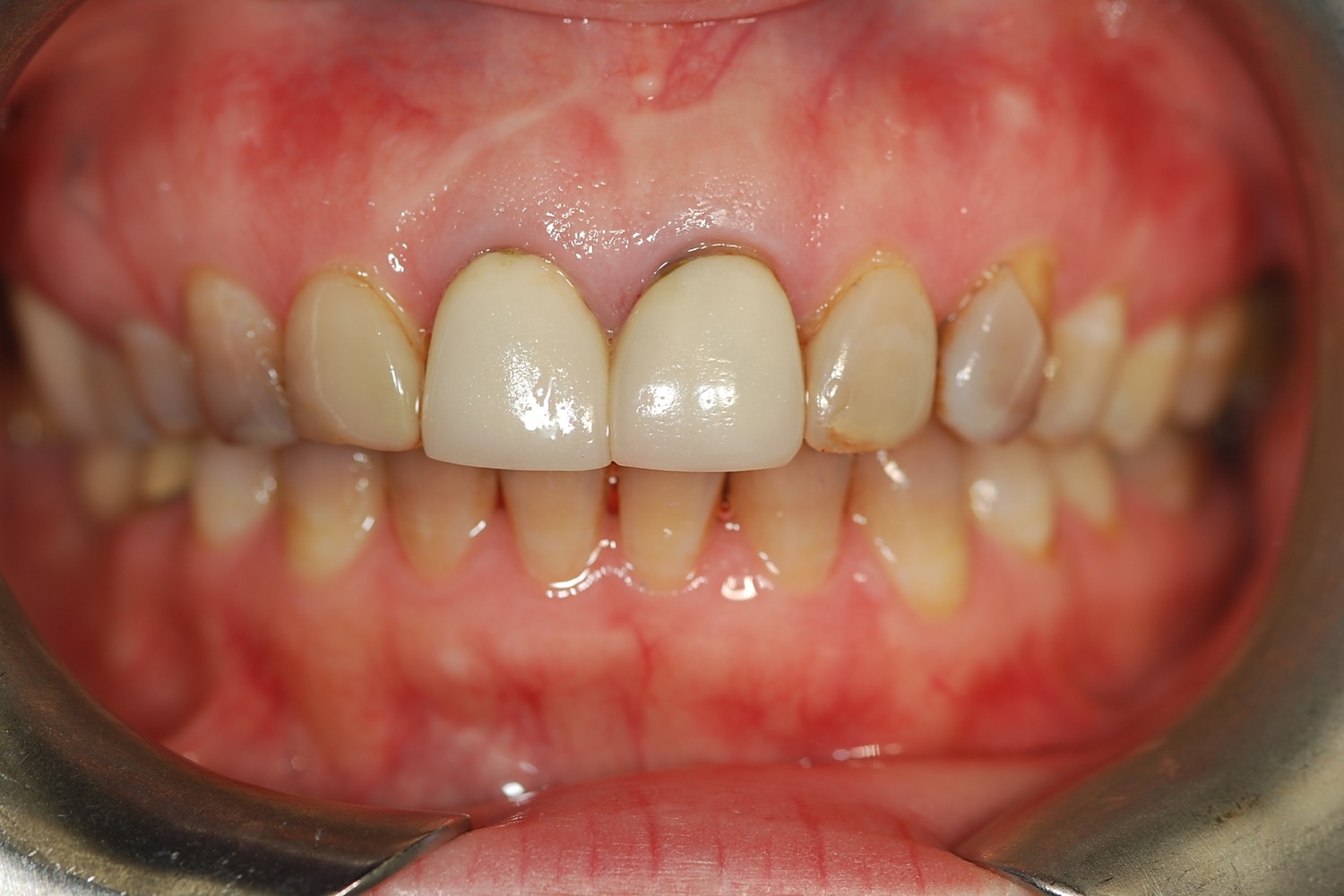
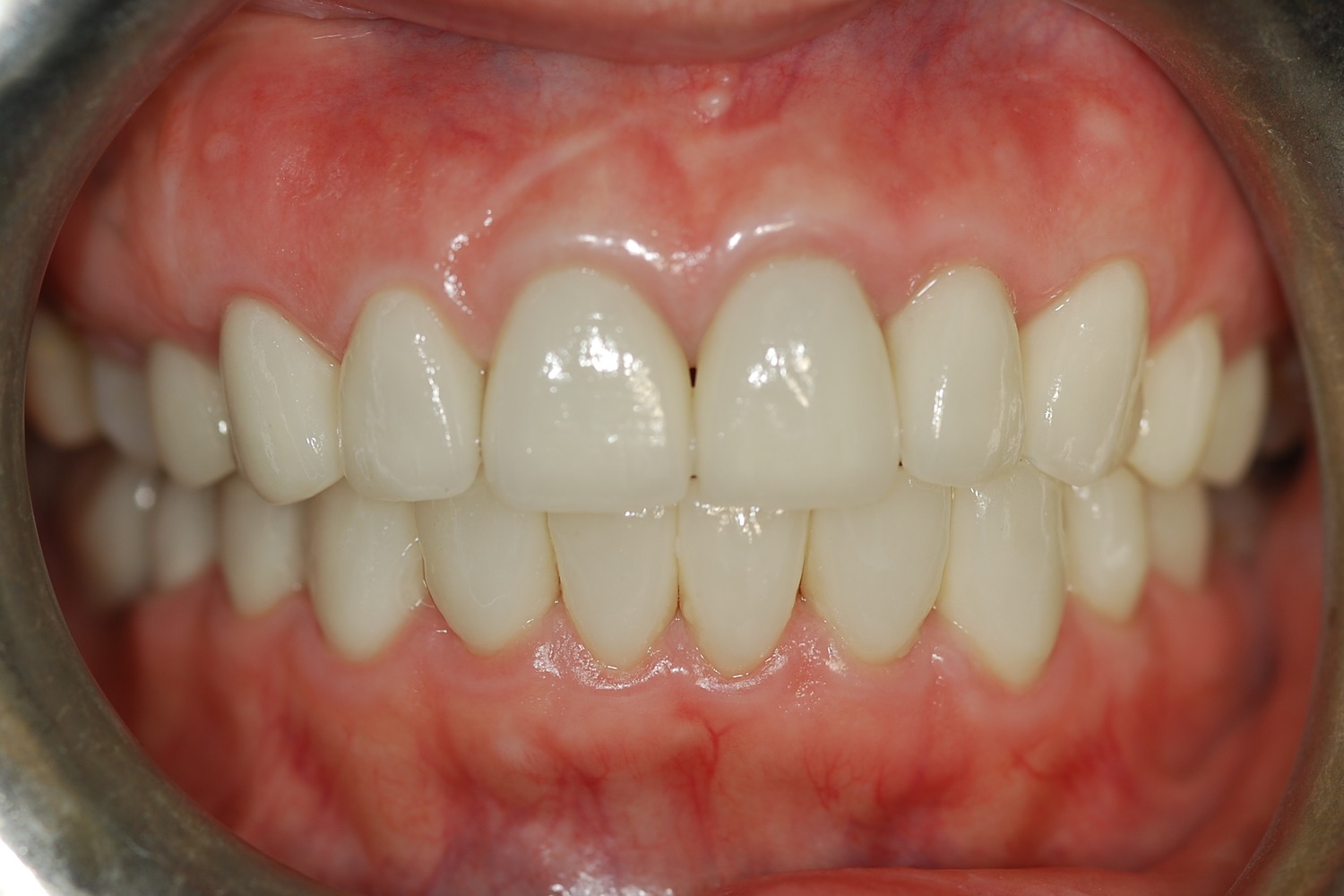
After How Aging, Opaque Restorations Were Replaced with Customized Ceramic Restorations Designed for Long-Term Natural Esthetics
The existing restorations appeared opaque, worn, and unnatural over time, affecting both confidence and overall smile harmony.
 Before
  After
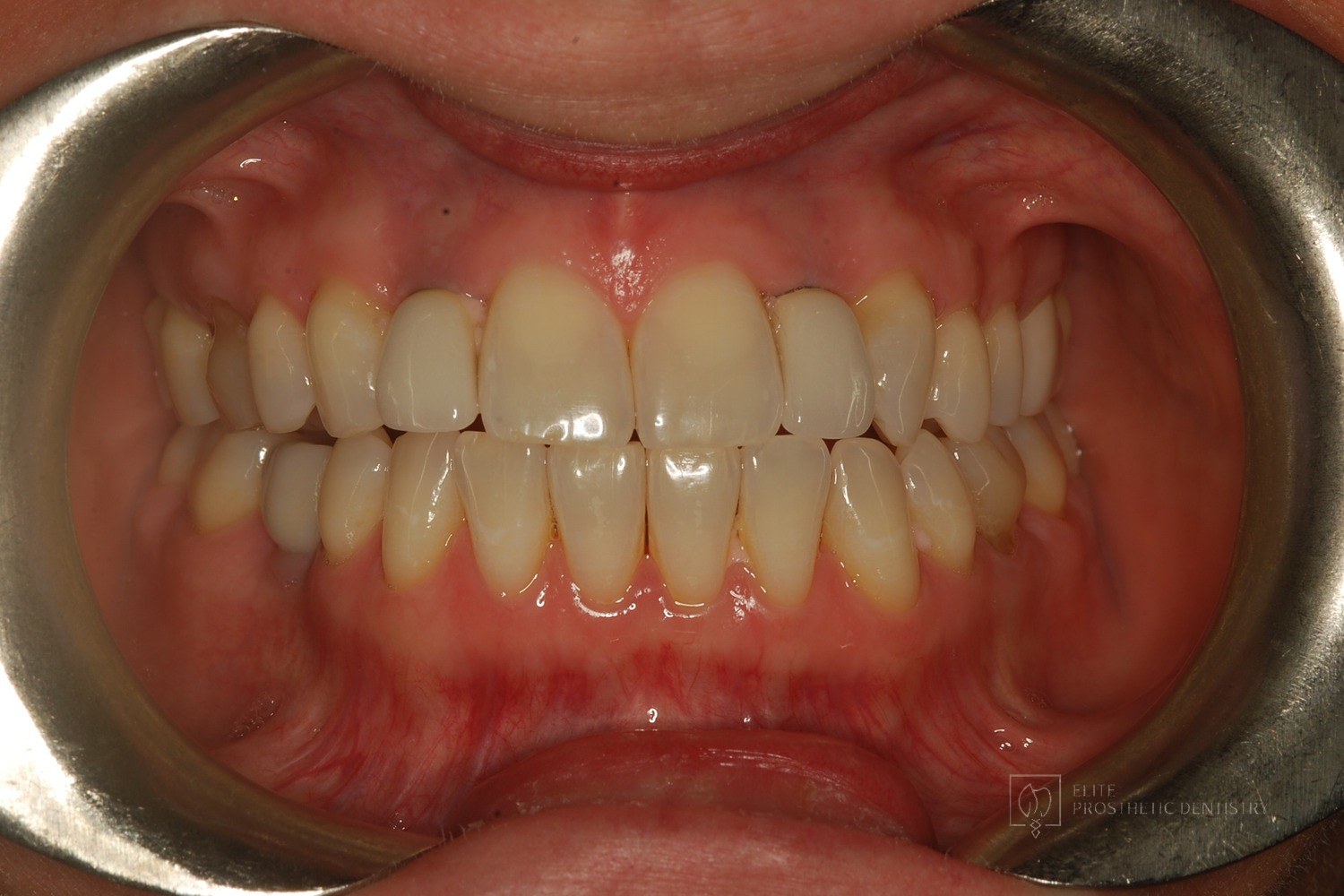
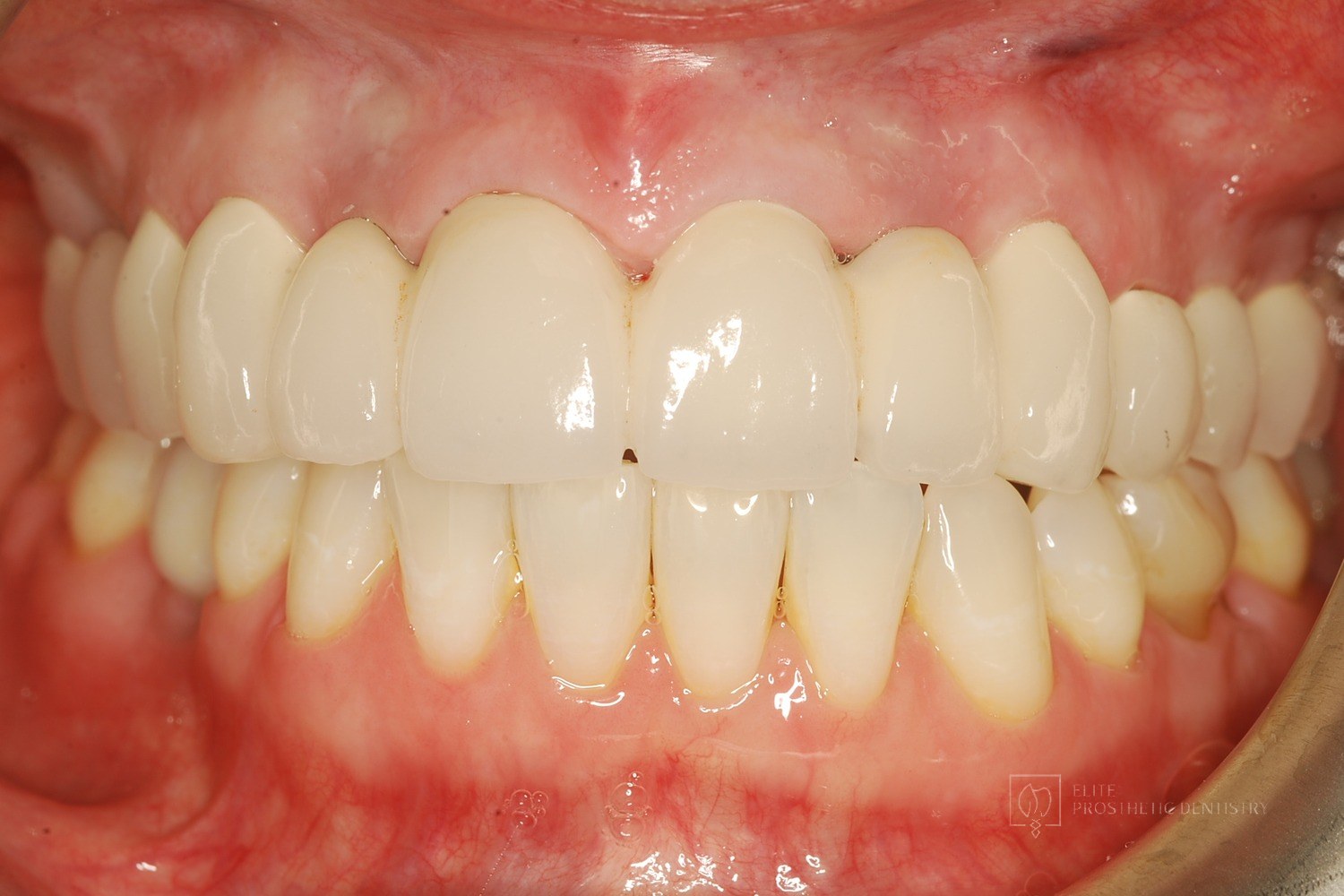
After How Older Implant Crowns Were Redesigned for a Better Bite and More Natural Appearance
The patient came in after years of living with implant-supported crowns placed more than twenty years earlier that no longer looked or functioned well. CBCT evaluation, reviewed with a radiologist colleague, showed the implants had been placed too far to the buccal in very thin bone and could not support a healthy long-term restoration.
 Before
  After
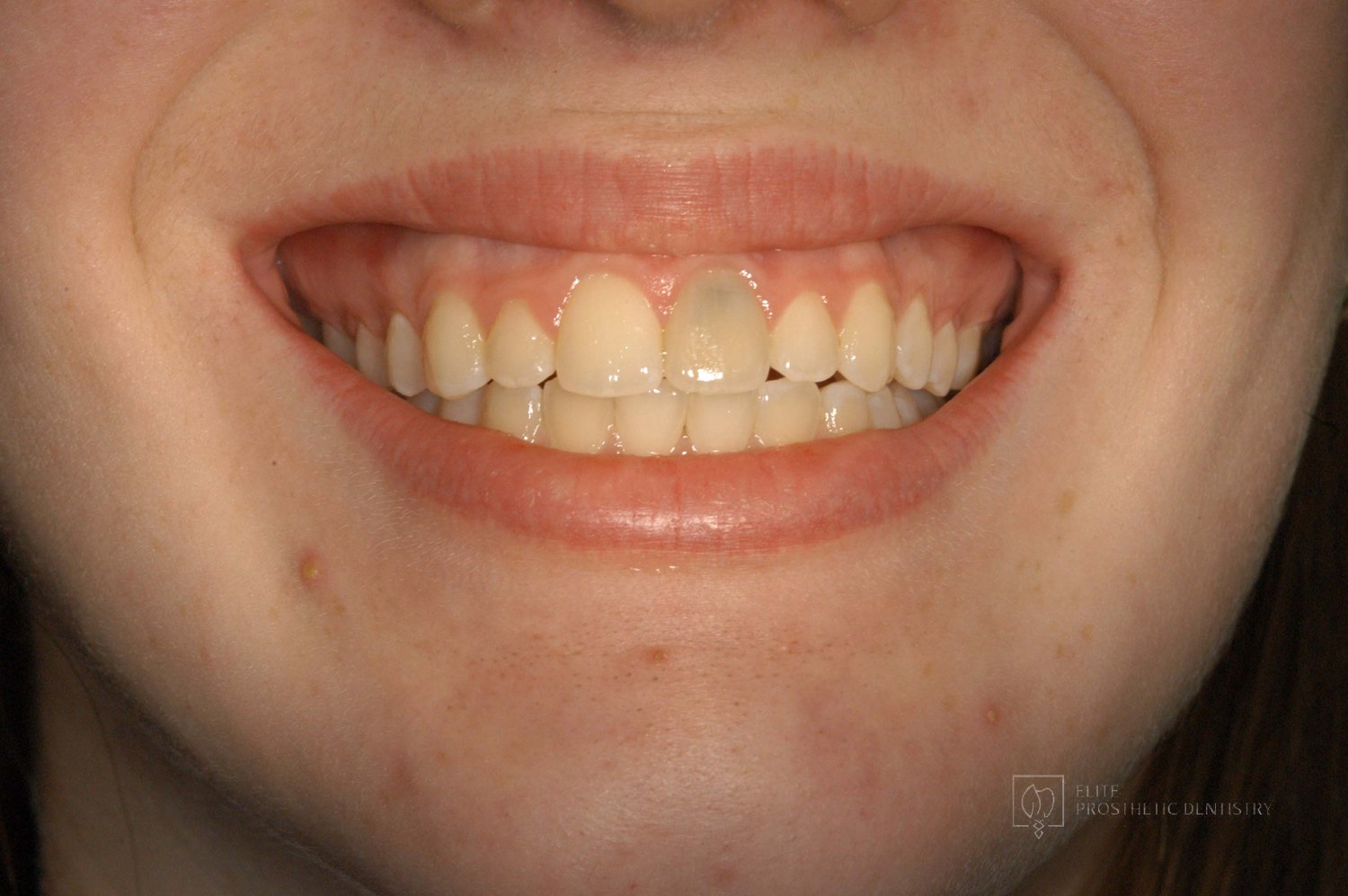
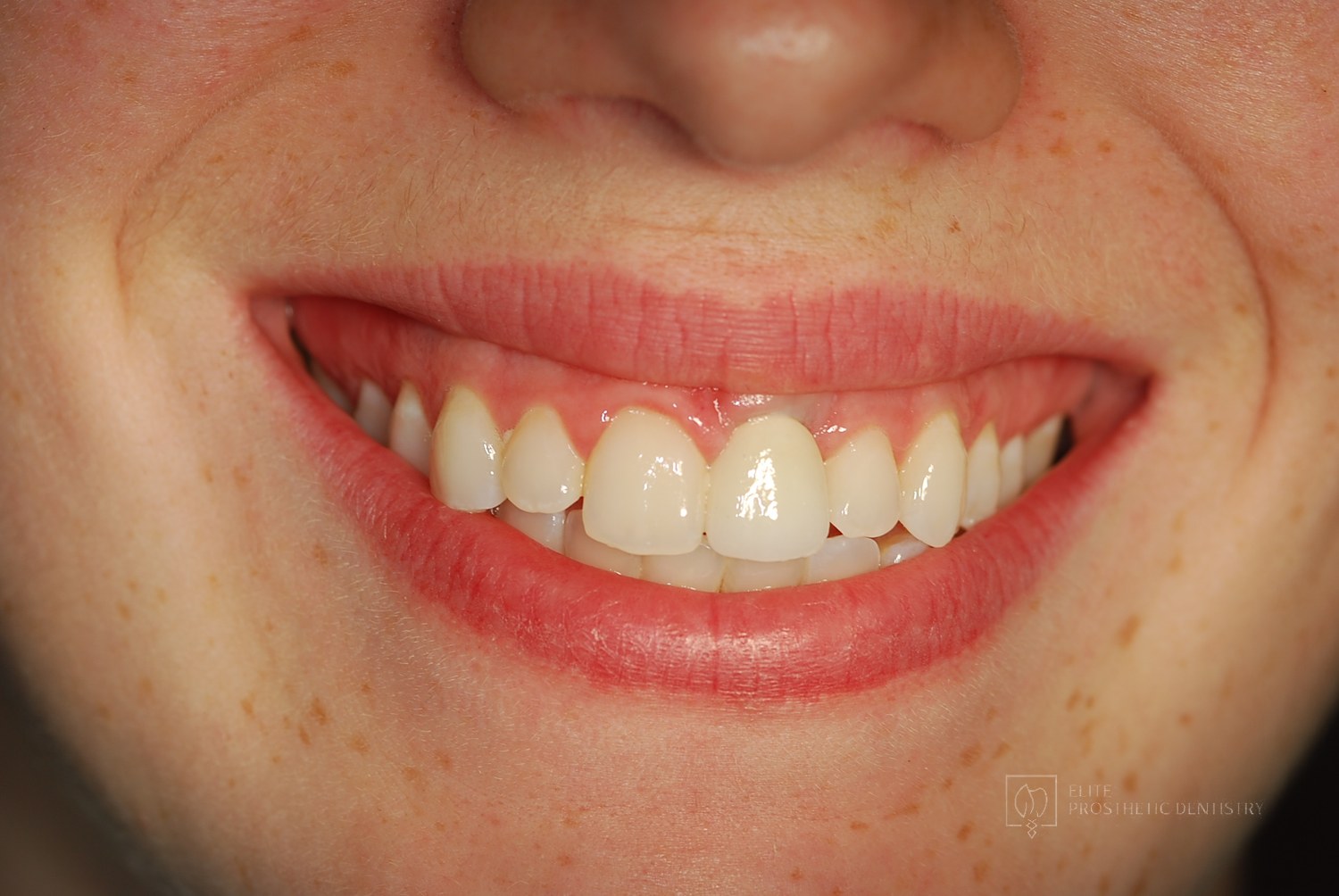
After How a Front Tooth Lost to Childhood Trauma Was Rebuilt with Bone Grafting and a Long-Lasting Implant
A teenager was referred by her father after earlier trauma left her upper left front tooth slowly failing from root resorption. She was still growing, so an immediate implant was the wrong move. The tooth had to be maintained to buy time, then replaced correctly once she reached skeletal maturity.
Related Articles
Deepen your knowledge with additional insights on this topic.
 Choosing a Prosthodontist
 The Patient's Guide to Implant, Cosmetic and Restorative Dentistry
How to judge quality in implant, cosmetic, and restorative dentistry: choosing a practitioner, why the lab matters, financing, and the questions to ask.
 Choosing a Prosthodontist
 What is a Prosthodontist?
A prosthodontist is a dental specialist with advanced training in crowns, implants, dentures, and complex restorations. Washington, DC specialist.
 Choosing a Prosthodontist
 4 Ways You Can Benefit from Our In-House Dental Lab
Custom aesthetics, precision fit, shorter waits, and fast repairs: four ways an in-house dental laboratory changes both your experience and your results.
 Choosing a Prosthodontist
 What Is the Difference Between a Dentist and a Prosthodontist?
Every prosthodontist is a dentist, but with years of extra specialty training in restoring and replacing teeth. A DC prosthodontist explains who does what.
 Choosing a Prosthodontist
 Don't Wait 'Til It's Too Late: Start with a Virtual Dental Consultation
A virtual consultation is a convenient first step: discuss your concerns, share records, and hear options from a DC prosthodontist before an in-person exam.
 Choosing a Prosthodontist
 Emergency Dentistry: The Benefits of an In-House Laboratory
When a tooth or restoration breaks, an on-site dental lab can mean a natural-looking repair in a day instead of a week. How emergency fabrication works in DC.
Our Services in Bethesda
Beyond Choosing a Specialist, Bethesda patients rely on Dr. Marlin for a full range of advanced dental care.
More services available in Bethesda:
Choosing a Specialist Near Bethesda
Dr. Marlin also provides choosing a specialist services for patients in these neighboring communities.
Getting Here from Bethesda
Elite Prosthetic Dentistry is conveniently located near Bethesda, MD.
Patients from Bethesda typically drive Wisconsin Avenue and local streets to reach our Friendship Heights office at 4400 Jenifer Street NW, Suite 220. The Red Line also connects Bethesda station to Friendship Heights in about ten minutes. Building parking is available.
Address:
4400 Jenifer Street NW, Suite 220
Washington, DC 20015
Phone: (202) 244-2101
Request a ConsultationRequest a Specialist Consultation from Bethesda
Bethesda residents come to Dr. Marlin for specialist prosthodontic care. With 3,900+ implants placed over 40+ years, evaluation, planning, and execution are handled with the depth complex cases require.