
Both Arches Rebuilt After Years of Neglect and Heavy Grinding: Eight Guided Implants and an Elite Hybrid Prosthesis
Intraoral view
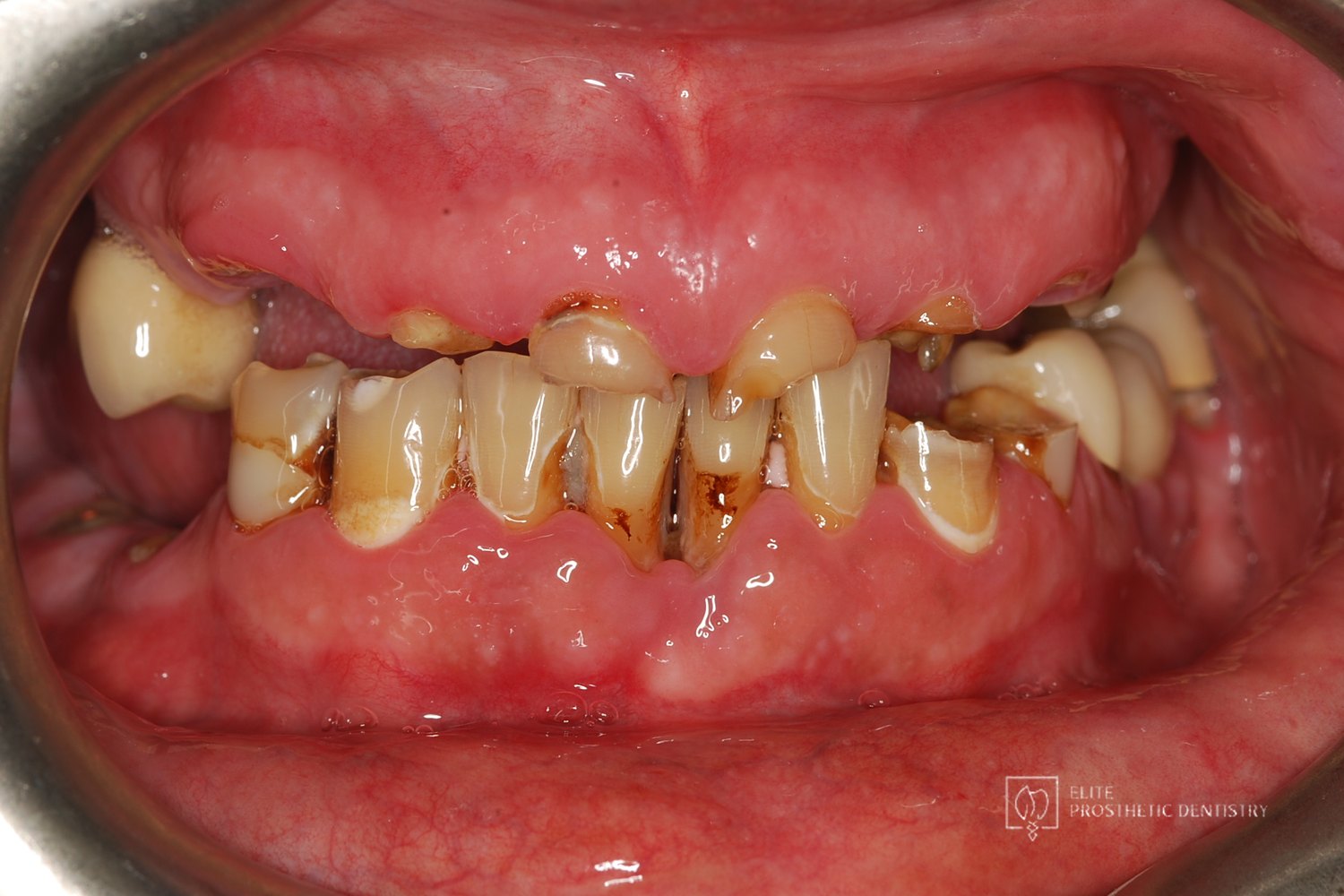 Before
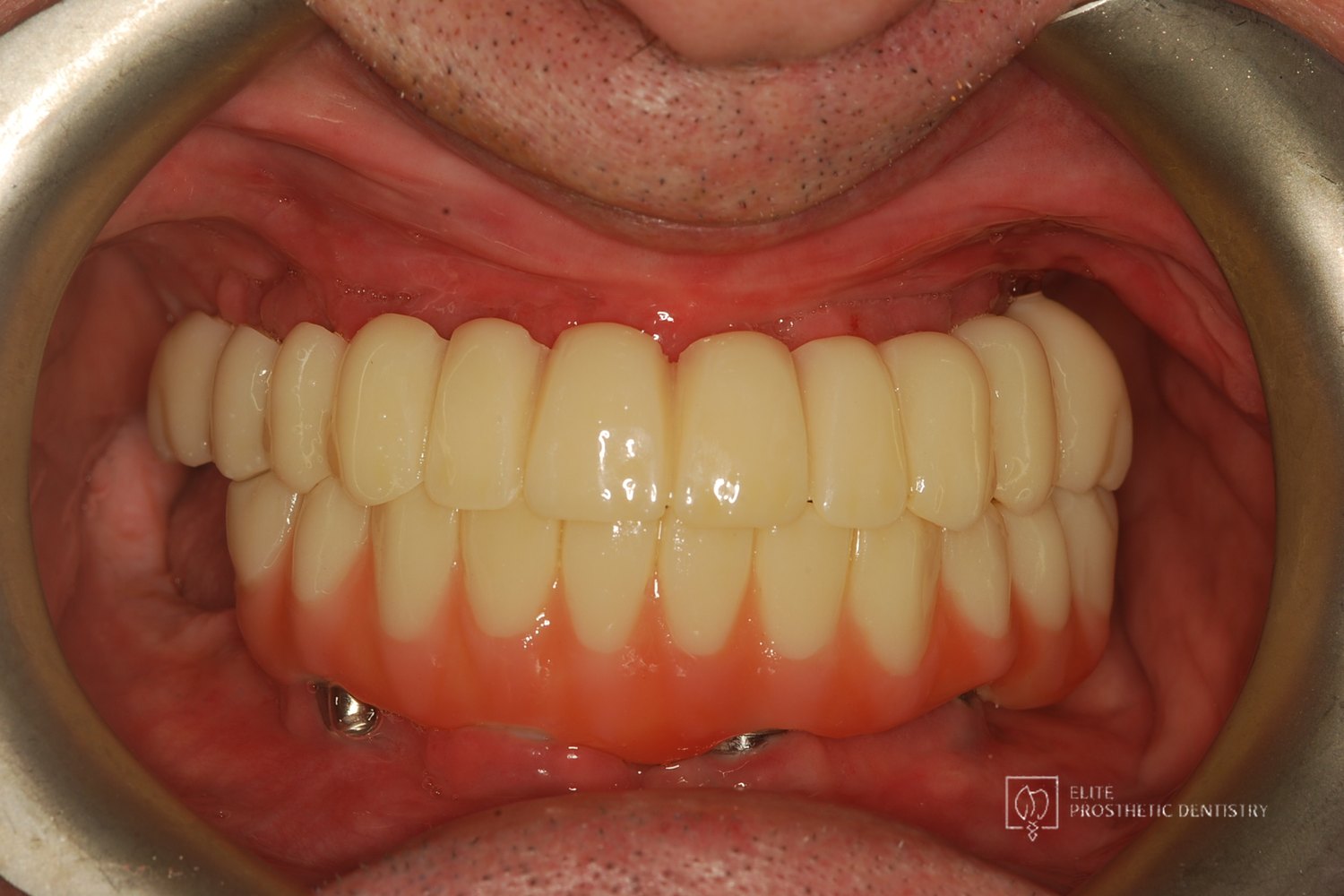 After
Completed smile and full-face view
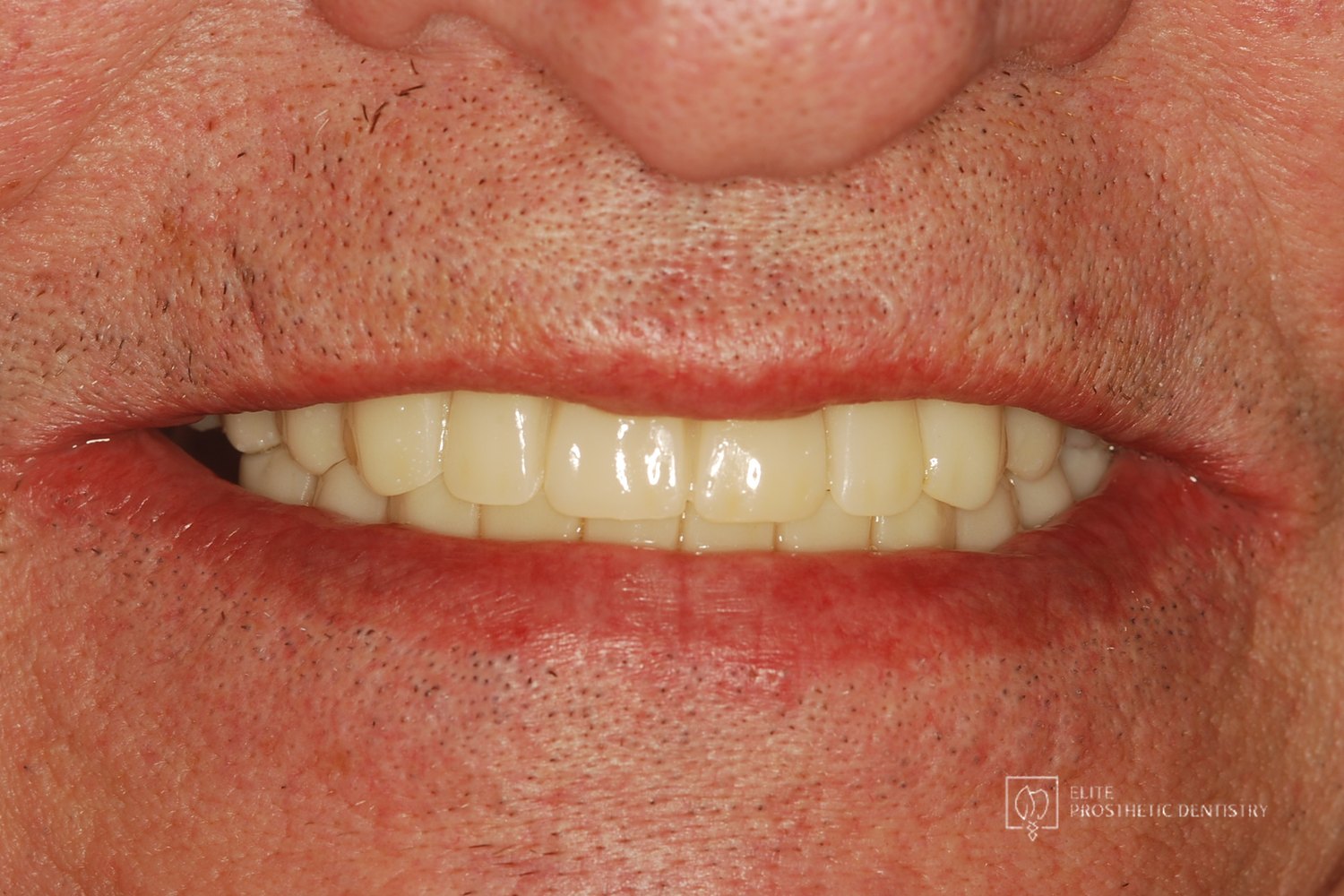
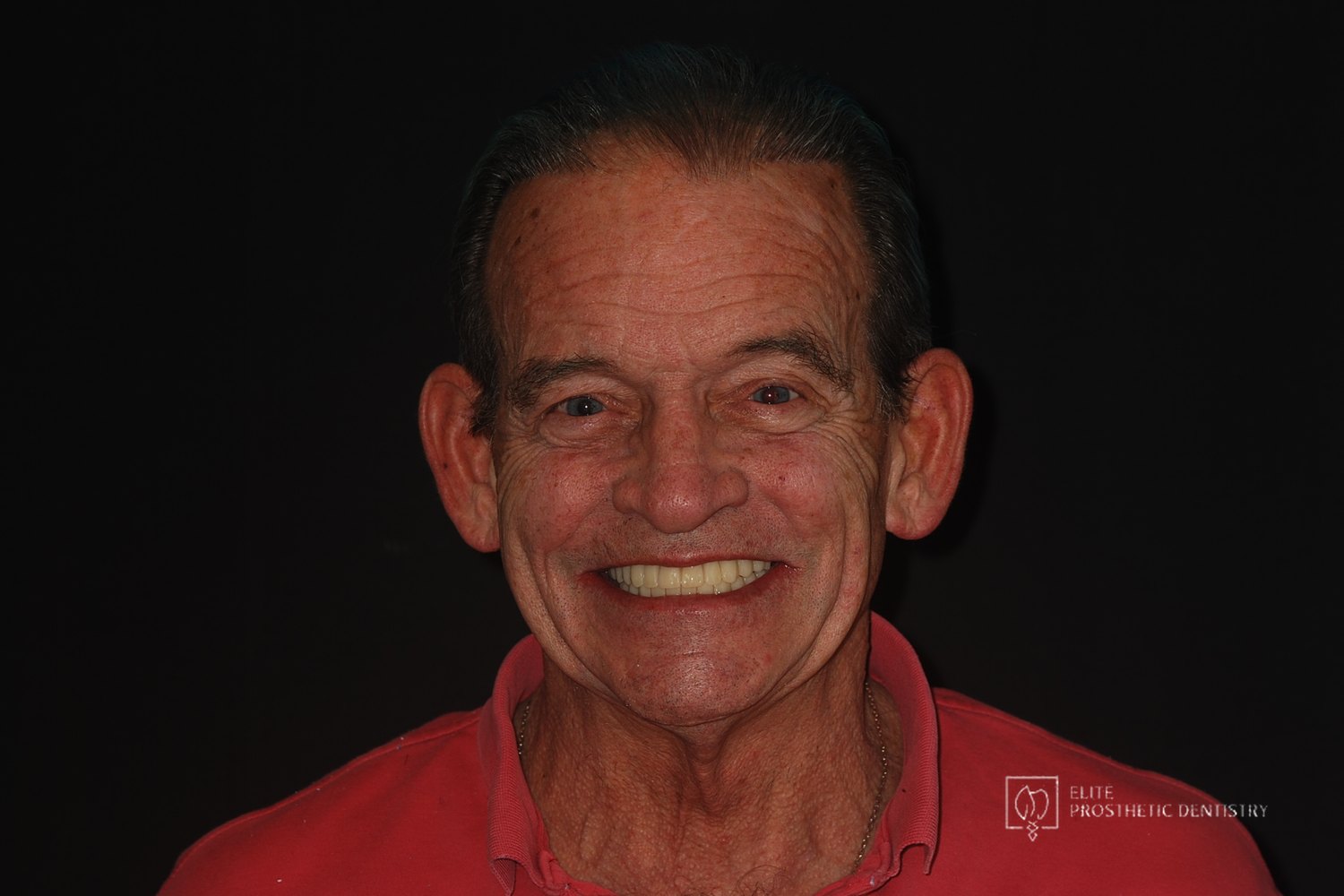
Both arches rebuilt on implants after years of neglect and bruxism
Full-arch implant reconstruction of both arches in Washington, DC for a patient whose teeth had been destroyed by years without dental care and heavy bruxism. This documented case at Elite Prosthetic Dentistry rebuilt the bone with grafting, sinus lifts, and osseodensification, placed four guided implants in each arch, and restored them with an Elite hybrid prosthesis using durable, high-performance teeth. Treatment was planned and completed by Gerald Marlin, D.M.D., M.S.D., a prosthodontist focused on complex implant and full-mouth cases.
Case at a Glance
- Treatment
- Full-arch implant reconstruction of both arches with Elite hybrid prostheses
- Approach
- Extractions, bone grafting and sinus lifts, osseodensification, four guided implants per arch, custom hybrid prostheses with high-performance teeth selected for a heavy grinder
- Case Type
- Implant reconstruction / Full-arch rehabilitation after neglect and bruxism
- Patient Concern
- Extensively broken-down, decayed, and worn teeth in both arches after years without care and heavy grinding; nothing left that could be restored.
- Decision Point
- Attempt to salvage individual teeth with no predictable future, or rebuild both arches on implants with a prosthesis material chosen to withstand grinding forces.
- Outcome
- A stable, lifelike, implant-supported smile on both arches, built to tolerate the forces that destroyed the natural teeth.
- Why It Matters
- Shows how the prosthesis material and the implant plan are chosen together around the patient's habits, so a grinder's reconstruction is engineered to last rather than to wear out again.
The presenting condition
This patient arrived with extensive damage in both arches. Years of dental neglect had allowed decay to spread through most of the teeth, and heavy grinding had worn down and fractured what the decay had not reached. The pre-treatment view at the top of this page shows the extent of it. A tooth-by-tooth evaluation found no teeth that could be predictably saved. The task was not to repair individual teeth but to rebuild the entire foundation and replace both arches in a way that would stand up to the same grinding forces in the future.
Clinical Findings
- →Extensive decay and structural breakdown throughout both arches after years without care
- →Severe wear and fractures consistent with long-standing heavy bruxism
- →No remaining teeth with a predictable long-term prognosis
- →Bone loss in both jaws requiring grafting, sinus lifts, and site preparation before implants
- →A need for a prosthesis material able to tolerate heavy grinding forces over time
Why the material choice mattered as much as the implant plan
Bruxism does not stop when the natural teeth are gone. Whatever replaces them will face the same forces, so a reconstruction for a heavy grinder has to be engineered around that habit from the start. Two decisions carry the load. The first is the implant plan: four implants per arch, placed from a surgical guide in positions that distribute force evenly along the prosthesis. The second is the prosthesis itself: the practice’s Elite hybrid design uses high-performance teeth selected for durability under heavy function while still looking natural. Choosing the implants and the material together, before any surgery, is what lets the final result hold up rather than wear through. A prosthodontist plans that endpoint first and sequences the surgery to serve it.
The treatment plan
The reconstruction proceeded as a carefully planned sequence from foundation to final prosthesis.
-
1
Extractions and bone grafting
The remaining non-restorable teeth were removed in both arches with grafting at the extraction sites to preserve ridge volume for the implants to follow.
-
2
Sinus lifts and osseodensification
Sinus lifts restored bone height in the upper posterior region, and osseodensification was used at the implant sites to compact and widen the ridge, improving the density of the bone that would hold each implant.
-
3
Four guided implants in each arch
Surgical guides fabricated from the digital plan placed four implants in the upper arch and four in the lower, each positioned to support a full-arch prosthesis evenly under grinding loads. See full-arch dental implants for how these configurations are planned.
-
4
Elite hybrid prostheses with high-performance teeth
After integration, both arches were restored with the practice's Elite hybrid prosthesis, chosen for its durable, lifelike teeth. The prostheses were fabricated in direct coordination between Dr. Marlin and the practice's in-house laboratory to control fit, contour, function, and esthetics.
The outcome
The completed reconstruction replaced two arches of broken-down teeth with stable, implant-supported prostheses built to tolerate the forces that had destroyed the originals. The retracted before and after views at the top of this page show the extent of the change, and the smile and full-face photographs show how naturally the result reads. The patient regained the ability to chew comfortably and the confidence to smile freely again.
Result Highlights
- ✓Both arches rebuilt after years of neglect and heavy bruxism had left no restorable teeth
- ✓Bone grafting, sinus lifts, and osseodensification rebuilt the foundation before any implant was placed
- ✓Four guided implants per arch positioned to distribute grinding forces evenly
- ✓Elite hybrid prostheses with high-performance teeth selected for durability under heavy function
- ✓Implant plan and prosthesis material chosen together so the result is engineered to last
Who this case may sound familiar to
This story tends to resonate with patients in a few recognizable situations:
- You have put off dental care for years and now feel that everything is failing at once.
- You grind your teeth and worry that any new dental work will wear down the way your natural teeth did.
- You have been told your teeth cannot be saved and you want a fixed, implant-supported solution rather than a removable denture.
- You want a practice that plans the implants and the final teeth together so the result tolerates your bite.
- You want the work done properly once rather than repaired repeatedly.
If any of those describe where you are, a consultation with Dr. Marlin can give you the diagnostic picture and the specific plan for your case.
Frequently asked questions
Can a patient who grinds their teeth have full-arch dental implants?
Yes. Bruxism is managed through the design of the reconstruction: implants are placed in positions that spread the load, the prosthesis is made from materials selected for durability, and a protective night appliance is often recommended after treatment. The grinding habit is one of the first things a prosthodontist builds the plan around.
Why were four implants placed per arch in this case?
Four implants per arch, placed in planned positions from a surgical guide, can support a full-arch prosthesis predictably when the bone and bite forces allow it. The number is decided case by case from imaging, the available bone after grafting, and the prosthesis planned for the arch, not from a one-size approach.
What makes an Elite hybrid prosthesis different from a standard hybrid?
The practice offers several full-arch prosthesis designs that differ mainly in the tooth material and framework. The Elite hybrid uses high-performance teeth chosen for strength and a natural appearance, which makes it a fit for patients with heavy bite forces or a history of grinding. The choice is made with the patient based on function, esthetics, and investment priorities.
How is bone rebuilt before implants when teeth have been neglected for years?
Long-standing decay and infection often leave the ridge thin and the upper posterior bone short beneath the sinus. Grafting at the time of extraction preserves volume, sinus lifts add height where it is missing, and osseodensification compacts the bone at each implant site. These steps are sequenced from the digital plan so the implants end up where the prosthesis needs them.
More about the work behind this case
This case combines full-arch dental implants with bone grafting and sinus augmentation, planned around a history of bruxism. The approach reflects the practice’s philosophy on complex reconstruction and the material control of its in-house laboratory.
Elite Prosthetic Dentistry treats patients from across the DMV including Bethesda, Chevy Chase, McLean, Arlington, Potomac, and Great Falls, and from much further out for cases that warrant the trip.
Related Services
Related Patient Success Stories
Explore similar patient success stories demonstrating our expertise in advanced prosthetic dentistry.
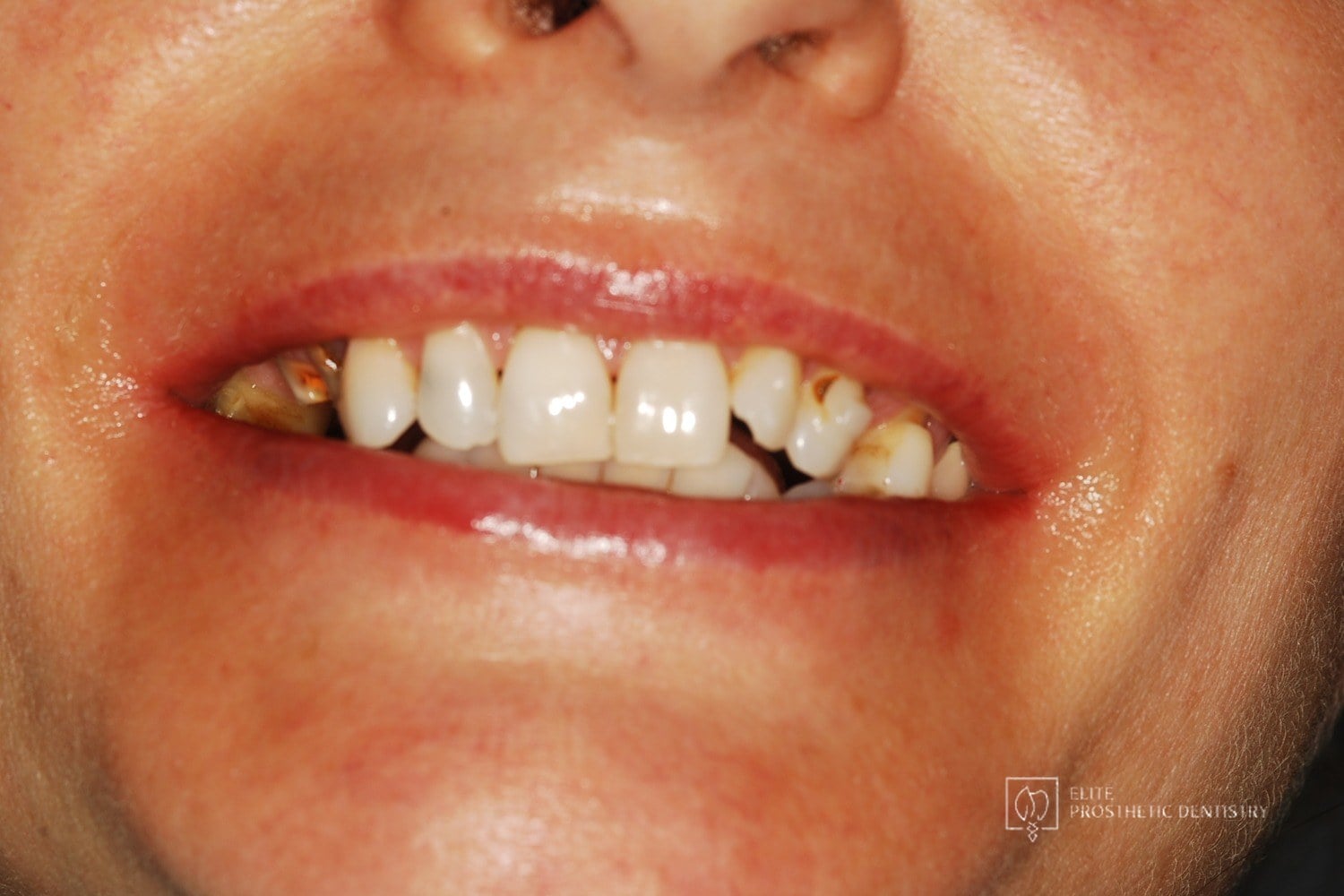 Before
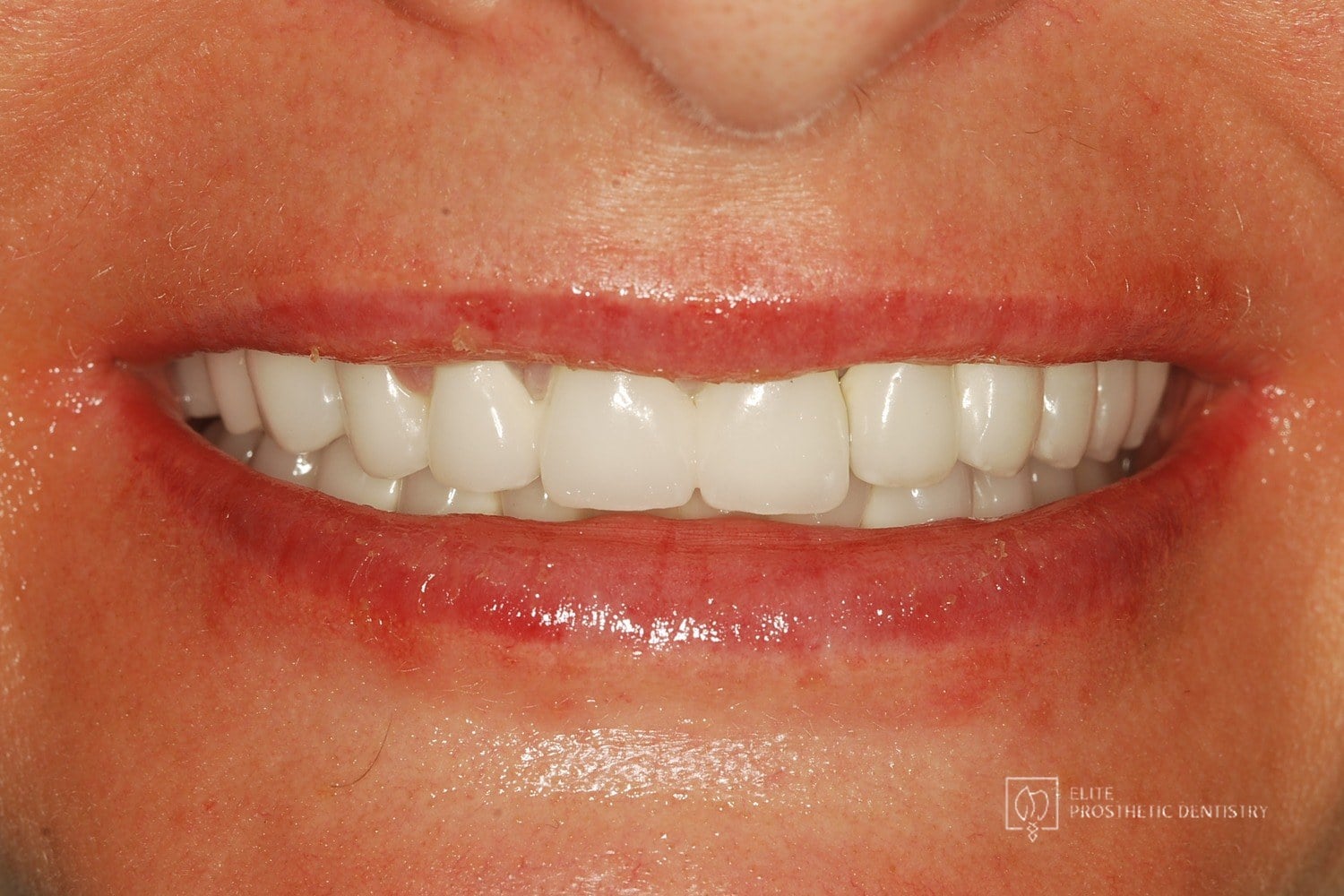 After
How Aging, Failing Dentistry Was Replaced with a Coordinated Full-Mouth Implant and Crown Reconstruction
The patient presented with throbbing upper-molar pain, long-standing infections, multiple root canals and unfinished prior treatment, generalized sensitivity, and several hopeless teeth.
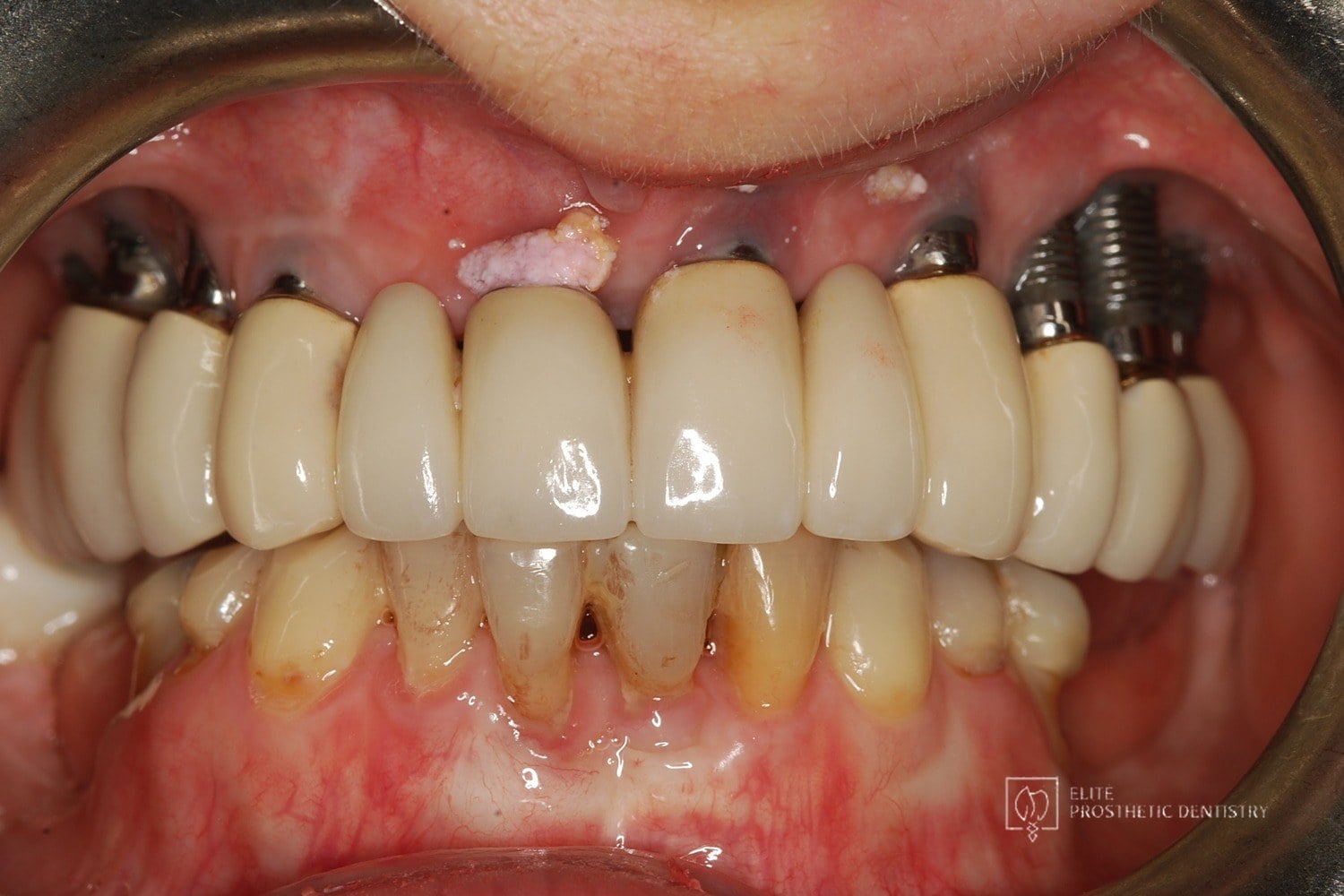 Before
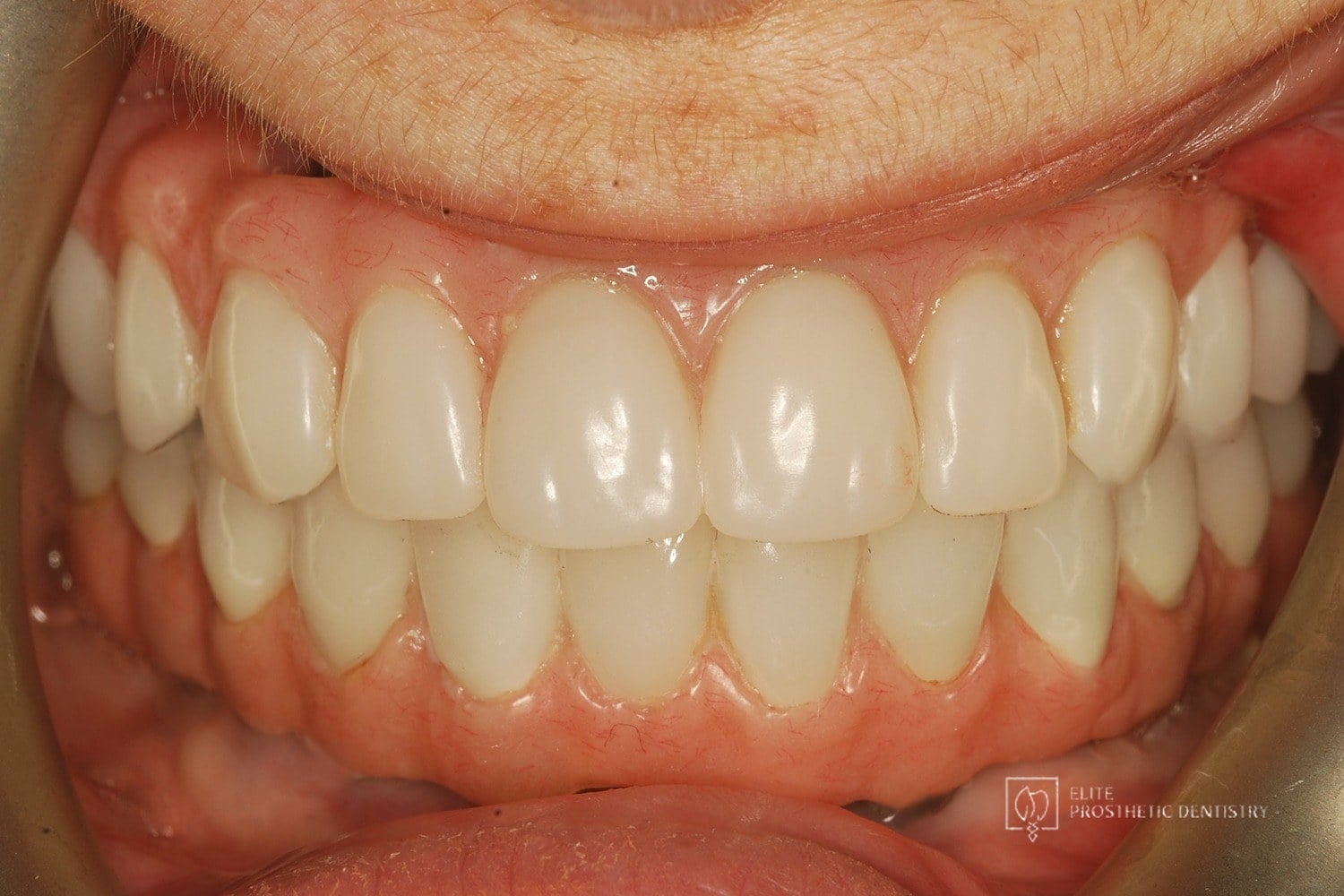 After
How Failing Implants and Severe Bone Loss Were Rebuilt Into a Stable Full-Arch Implant Reconstruction
The patient presented with significant complications from previously placed implants, severe bone loss, failing posterior implants, and an unesthetic full-arch bridge. Both arches required full reconstruction, with the upper arch showing the most advanced bone loss and instability.
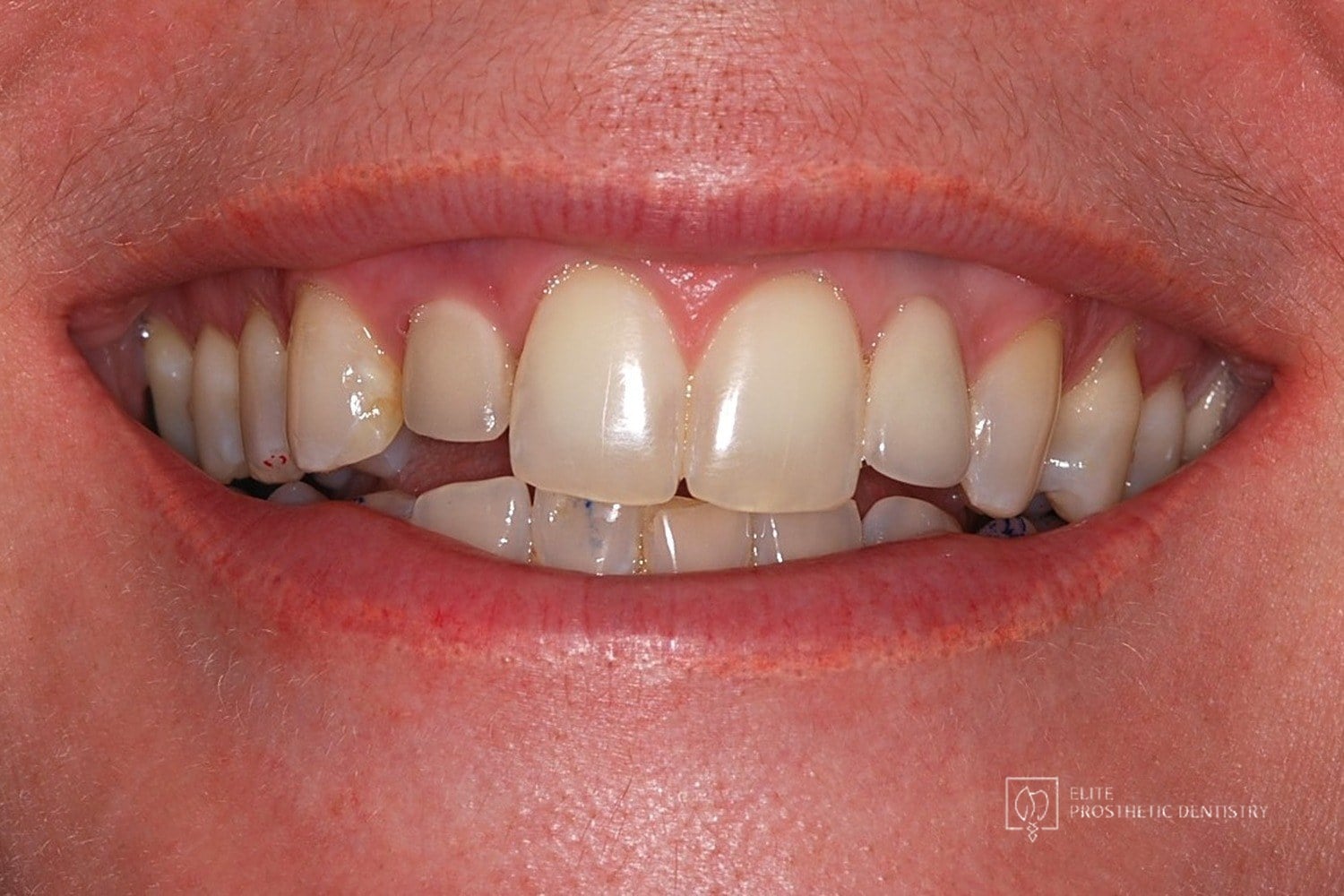 Before
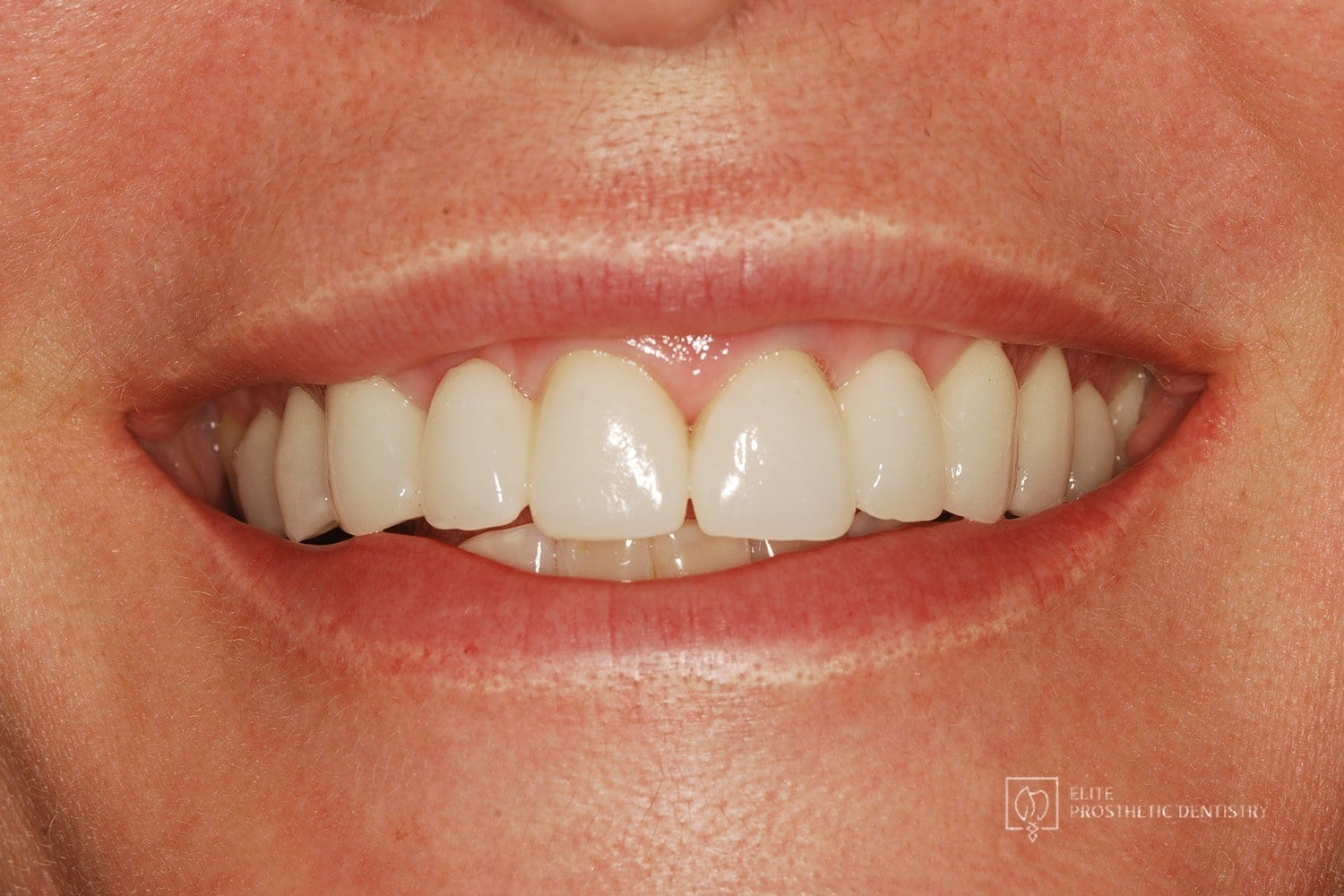 After
How Failing Lateral Incisor Implants Were Replaced with Custom Zirconia Bridges After Severe Bone Loss Made Replacement Implants Impossible
Comprehensive examination including CBCT imaging revealed significant bone loss surrounding implants that were placed outside the buccal plate, most likely due to placement without a CBCT-generated surgical guide. The implants were determined non-salvageable, and the alveolar ridge was too narrow to support replacement implants without extensive reconstruction.