
How Older Implant Crowns Were Redesigned for a Better Bite and More Natural Appearance
Intraoral view
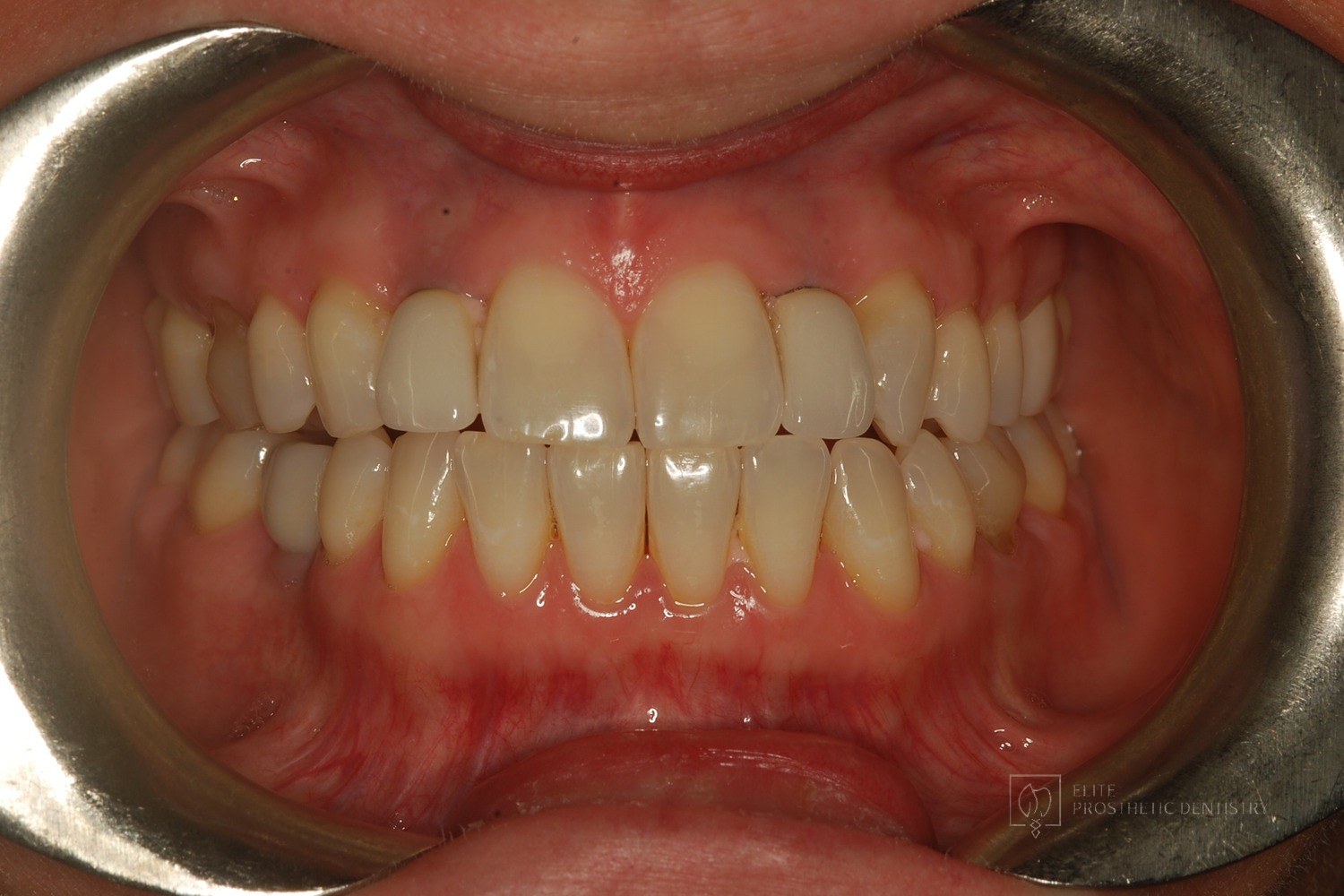 Before
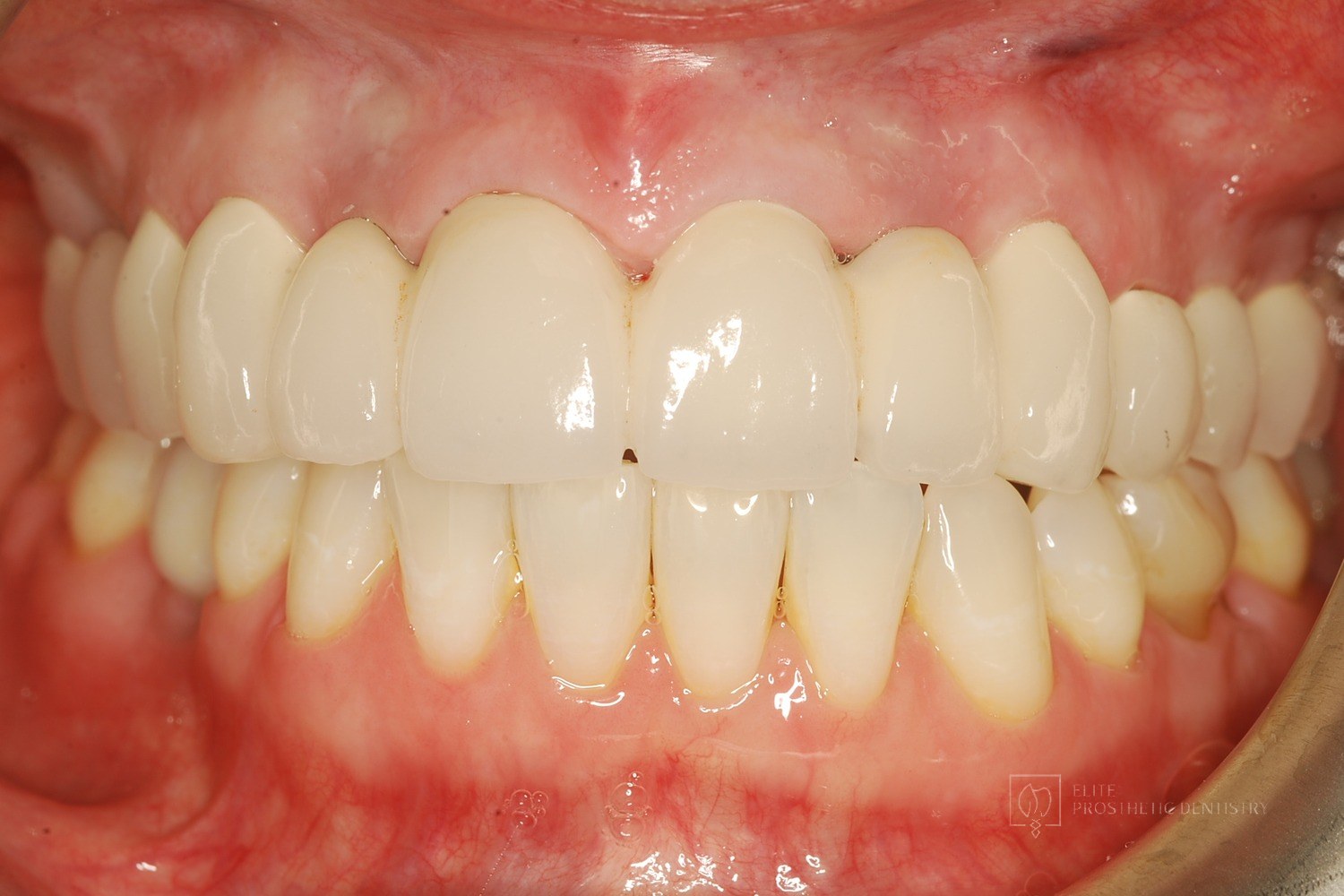 After
After
Final documented view

Treatment-phase imaging
 Before
 After
After
Continued treatment documentation
 Before
 After
After
Older implant crowns redesigned with full upper reconstruction
Redesigning older implant crowns in Washington, DC. This documented case at Elite Prosthetic Dentistry rebuilt an upper arch where aging implant-supported crowns, placed in a compromised position more than two decades earlier, no longer supported a stable bite or natural appearance. Treatment was planned and completed by Dr. Gerald Marlin, D.M.D., M.S.D., a prosthodontist focused on implant reconstruction and complex restorative care.
Case at a Glance
- Treatment
- Full upper reconstruction restoring bite, esthetics, and anterior contact
- Approach
- CBCT with radiologist consult, IV sedation, in-house lab, full upper rebuild
- Case Type
- Replacing aging dentistry / Bite rehabilitation
- Patient Concern
- Living for years with implant-supported crowns placed more than twenty years earlier that no longer looked or functioned well, with a bite that did not come together properly.
- Decision Point
- Restore the malpositioned implants as they sat, remove them and create bone defects, or leave them undisturbed and rebuild the bite and teeth around them.
- Outcome
- The front teeth now meet properly, the anterior open bite is corrected, and restoring that contact addressed a key contributor to the patient's TMJ symptoms.
- Why It Matters
- Demonstrates that redesigning older implant work requires diagnosing why the original implants fail to support a healthy result, not just replacing the crown, since the right plan may mean not restoring them at all.
The presenting condition
The patient came in after years of living with implant crowns that did not feel right cosmetically or functionally. A comprehensive evaluation including a CBCT scan, reviewed with a radiologist colleague, revealed that her existing implants were not positioned or supported well enough to deliver a stable, healthy, esthetic long-term result. Her upper and lower front teeth were not meeting properly, and that missing anterior contact was contributing to moderate-to-severe TMJ symptoms.
Clinical Findings
- →Anterior open bite with tongue thrusting
- →Unnatural-looking implant crowns placed over 20 years ago
- →Implants placed too far to the buccal, following the original bone angle
- →Very thin, low-density bone around the existing implants
- →Missing front-tooth contact contributing to moderate-to-severe TMJ symptoms
- →Significant dental anxiety that required sedation planning
Why this case required prosthodontic-level planning
Older implant crowns are rarely a simple replace-in-place situation. When the underlying implants were placed under outdated planning, lower-density bone, or compromised positioning, swapping out the crown alone produces a result that looks better for a season and then fails on the same compromised foundation. The real question in this case was not which crowns to use. It was what to do about implants that had been placed in the wrong position, in bone too thin to rely on, and that were standing in the way of a healthy bite.
The decision behind the result: what to do about the existing implants
The most important judgment in this case was what to do about the patient’s existing implants. They had been placed years earlier too far toward the cheek side, the buccal, because that was the angle of the available bone rather than the position the final teeth actually needed. The abutments and crowns built on them had been set too far out to compensate, which looked and functioned poorly and left the upper and lower front teeth without proper contact.
A CBCT scan, reviewed with a radiologist colleague, showed the implants were embedded in very thin bone. Two responses would have been conventional here: restore the implants as they sat, or remove them. Neither was right. Restoring them would have locked in the same compromised position that caused the problem. Removing them would have created two unsightly bone defects in the exact area being rebuilt for appearance.
The decision was to leave the implants undisturbed in the bone and to deliberately not restore them. That choice opened the space to position the new upper front teeth where they belonged, so they could finally meet the lower teeth properly. Restoring that anterior contact mattered for more than appearance. Its absence had been contributing to the patient’s moderate-to-severe TMJ symptoms. This is the kind of decision that separates replacing parts from planning an outcome, and it is why a case like this belongs with a prosthodontist.
The treatment plan
-
1
Comprehensive prosthodontic evaluation
Full clinical workup including CBCT imaging, reviewed with a radiologist colleague, to assess bone density, implant position, and the bite relationships supporting the existing restorations.
-
2
A deliberate decision on the existing implants
The malpositioned implants were left undisturbed in the bone to preserve the ridge and intentionally not restored, because their buccal position could not support a healthy bite or a natural appearance.
-
3
IV sedation for patient comfort
Treatment delivered under IV sedation to address dental anxiety and allow for the longer appointments that complex restorative work requires.
-
4
Custom restorations from the in-house laboratory
Every restoration designed in collaboration with the in-house lab for precise fit, contour, shade, and long-term durability.
-
5
Full upper-arch reconstruction
The upper teeth were rebuilt and positioned to restore proper contact with the lower teeth, correcting the bite, the esthetics, and front-tooth function together rather than in isolation.
The outcome
The result was a stable, natural-looking upper reconstruction. The front teeth now meet properly, the anterior open bite is corrected, and restoring that contact addressed a key contributor to the patient’s TMJ symptoms. It is a coordinated long-term result built on a sound foundation rather than another short-term refresh of compromised work.
Result Highlights
- ✓Corrected anterior open bite and restored proper front-tooth contact
- ✓Addressed a key contributor to the patient's TMJ symptoms
- ✓Natural-looking upper reconstruction positioned for bite and esthetics together
- ✓Compromised implants preserved in bone to avoid creating unnecessary defects
- ✓Comprehensive plan delivered under sedation for comfort
- ✓In-house laboratory control over fit, contour, and shade
Who this case may sound familiar to
This story tends to resonate with patients in a few recognizable situations:
- Your implant crowns are 15 to 25 years old and have started to look or feel different from the rest of your mouth.
- Your bite no longer comes together correctly and the older implant work is part of why.
- You have been told the implants may not be ideally supported and you want a real evaluation before deciding what to do.
- You want one coordinated plan to rebuild the upper arch correctly rather than a patchwork of repairs.
- You need treatment delivered under sedation because of dental anxiety.
If any of those describe where you are, a consultation with Dr. Marlin can establish the diagnostic picture and the specific options for your case.
Frequently asked questions
Can older implant crowns be redesigned without removing the implants?
In many cases yes. When the underlying implants are positioned and supported well enough, the visible crown can be redesigned while preserving the existing implant. A prosthodontic evaluation including CBCT imaging confirms whether the implant is suitable to carry a redesigned restoration.
What happens if the existing implants cannot support a new restoration?
They do not always have to be removed. When implants are poorly positioned but well integrated in the bone, taking them out can create defects that are harder to repair than the original problem. In some cases the better decision is to leave them undisturbed, not restore them, and rebuild the bite and the teeth around them. A prosthodontist makes that judgment case by case after reviewing the bone and the planned final result.
How do you know if a 20-year-old implant crown should be replaced?
Signs include changes in fit or feel, esthetic mismatch with the rest of the mouth, bite changes, recession around the crown, or a CBCT showing bone loss or compromised support around the implant.
Why see a prosthodontist for older implant crown redesign?
A prosthodontist evaluates the implant, the bite, and the surrounding dentition as a connected system. That coordinated planning is what allows the redesigned restorations to fit a corrected bite rather than the bite that allowed the original problem to develop.
Is sedation an option for patients with dental anxiety?
Yes. Treatment is routinely delivered under IV sedation when appropriate, allowing longer, more complex appointments to be completed comfortably.
What role does an in-house laboratory play in this kind of case?
An in-house laboratory provides direct, immediate control over fit, contour, shade, and translucency. That level of coordination is difficult to achieve when laboratory work is outsourced.
More about the work behind this case
This case sits at the intersection of full mouth reconstruction, implant reconstruction, and complex restorative dentistry. The diagnostic depth and in-house laboratory control are part of the practice philosophy that supports cases of this complexity.
Elite Prosthetic Dentistry treats patients from across the DMV including Bethesda, Chevy Chase, McLean, Arlington, Potomac, and Great Falls, with a record of out-of-area patients traveling to the practice for complex restorative care.
Related Services
Related Patient Success Stories
Explore similar patient success stories demonstrating our expertise in advanced prosthetic dentistry.
 Before
  After
After How Aging, Failing Dentistry Was Replaced with a Coordinated Full-Mouth Implant and Crown Reconstruction
The patient presented with throbbing upper-molar pain, long-standing infections, multiple root canals and unfinished prior treatment, generalized sensitivity, and several hopeless teeth.
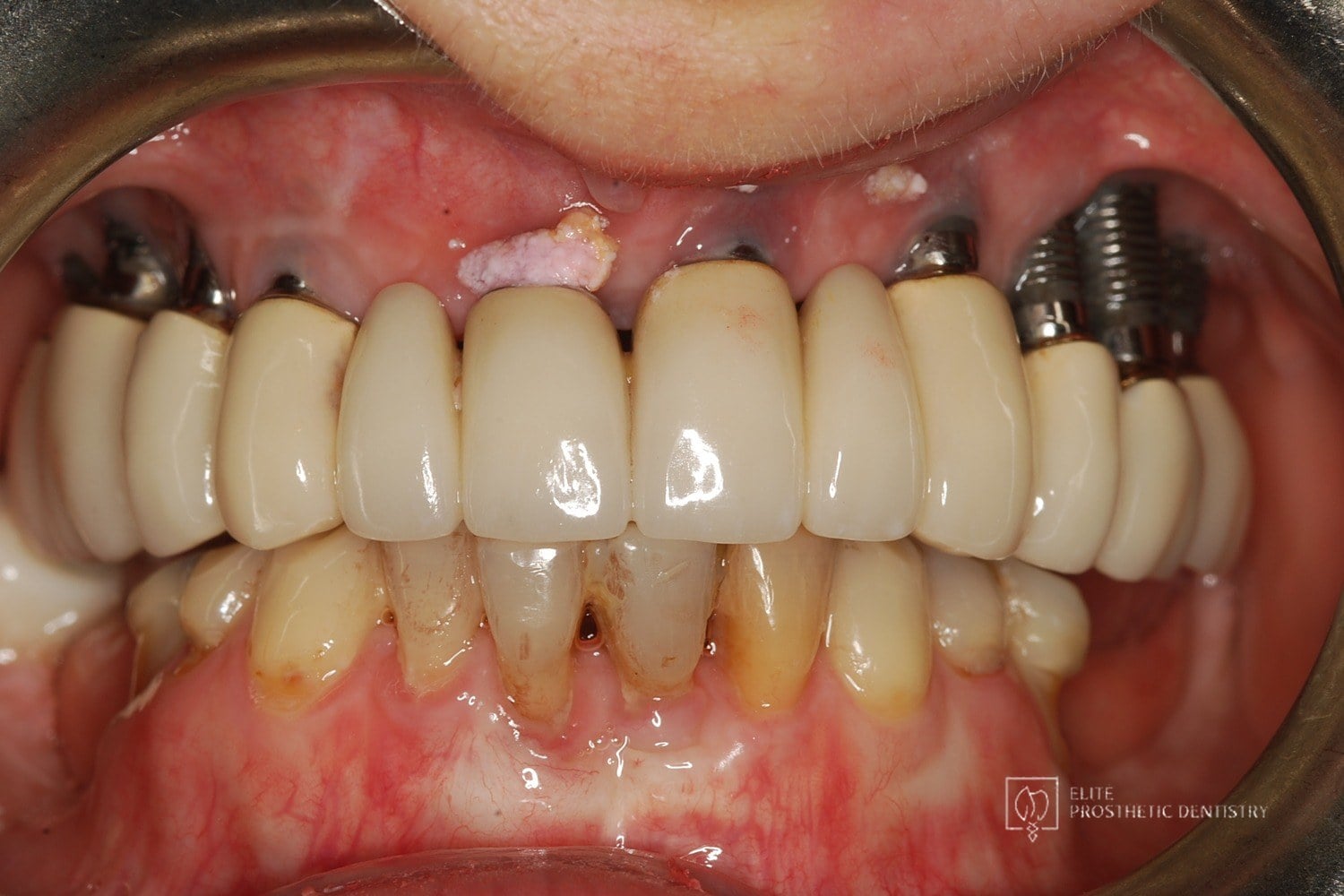 Before
 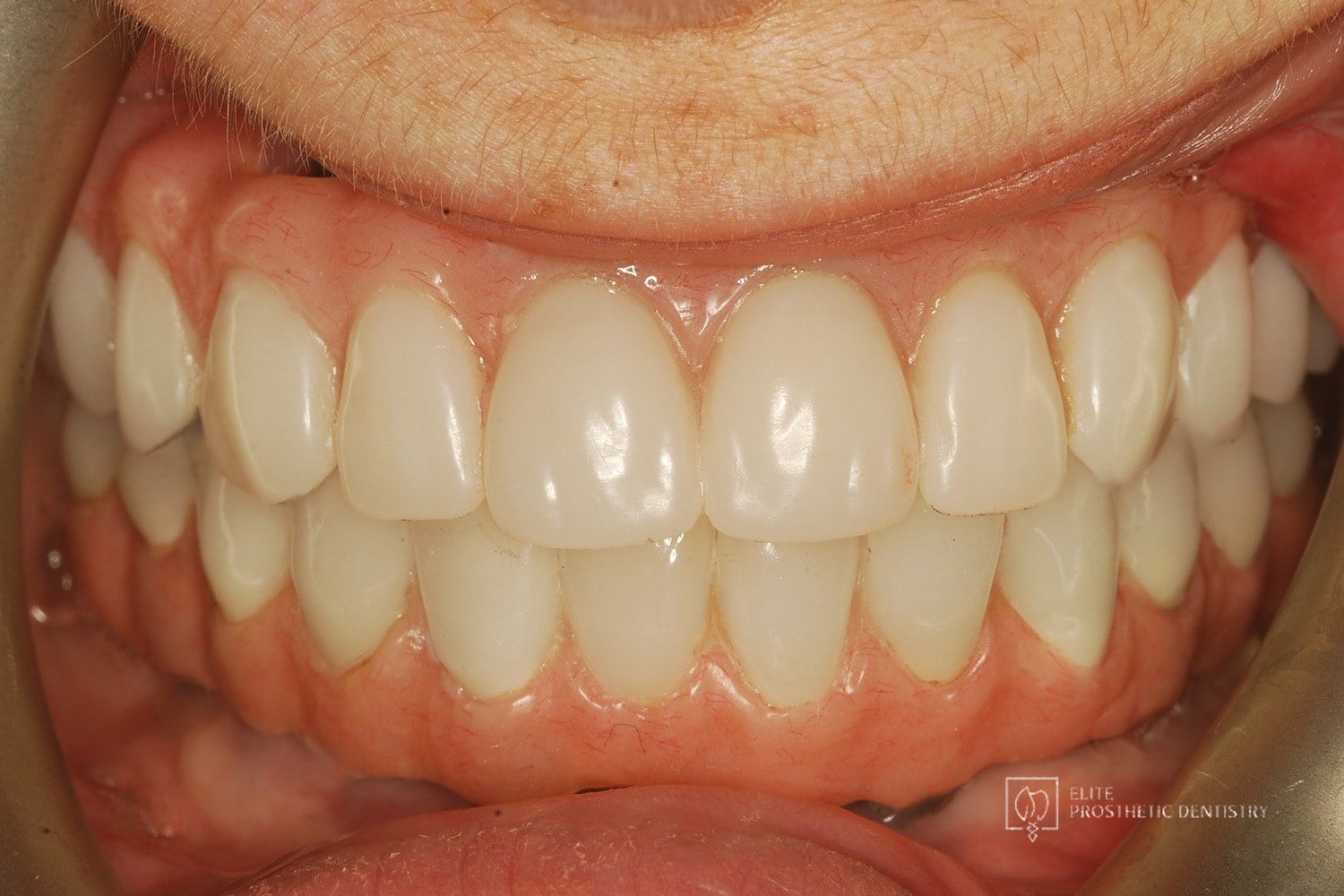 After
After How Failing Implants and Severe Bone Loss Were Rebuilt Into a Stable Full-Arch Implant Reconstruction
The patient presented with significant complications from previously placed implants, severe bone loss, failing posterior implants, and an unesthetic full-arch bridge. Both arches required full reconstruction, with the upper arch showing the most advanced bone loss and instability.
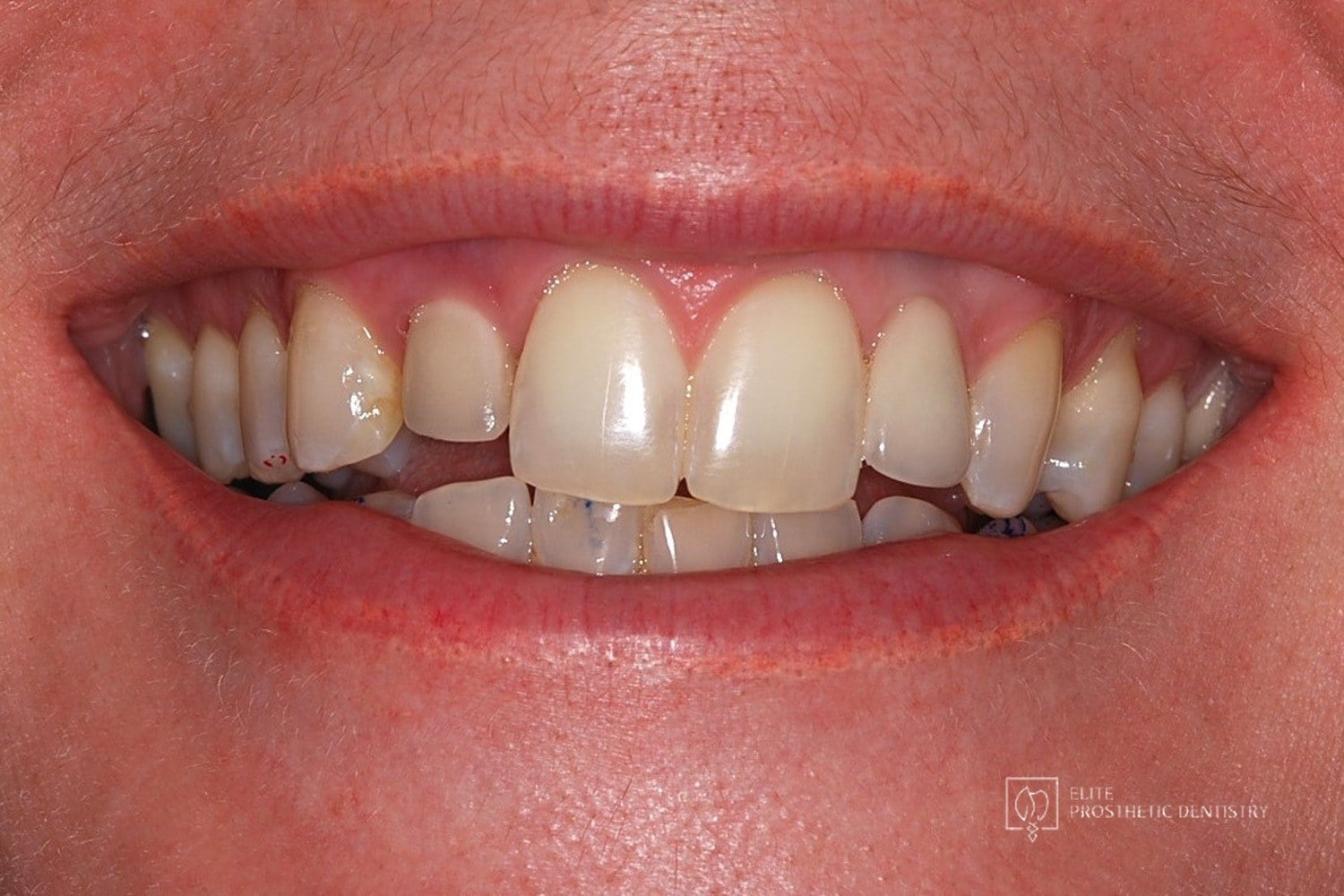 Before
 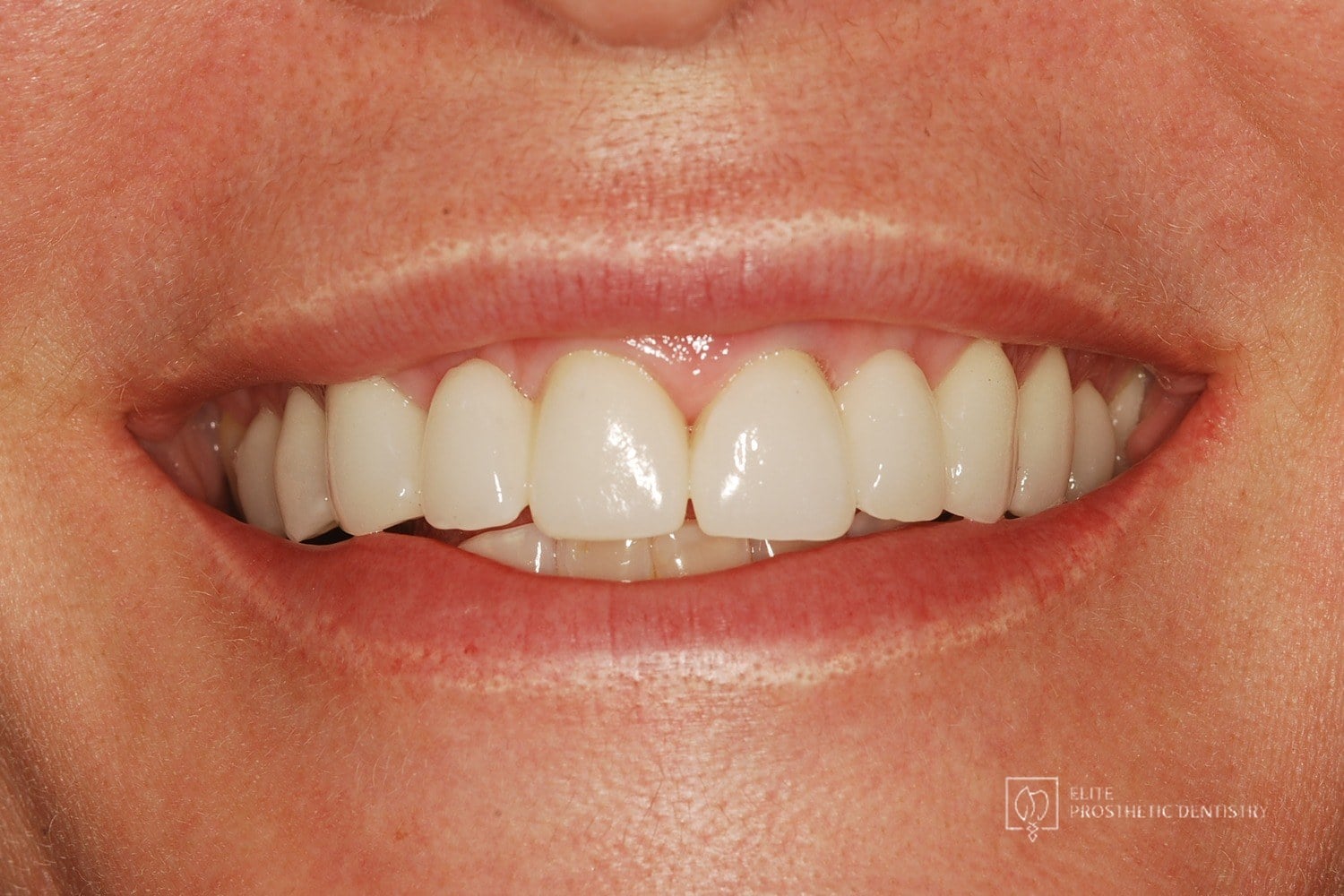 After
After How Failing Lateral Incisor Implants Were Replaced with Custom Zirconia Bridges After Severe Bone Loss Made Replacement Implants Impossible
Comprehensive examination including CBCT imaging revealed significant bone loss surrounding implants that were placed outside the buccal plate, most likely due to placement without a CBCT-generated surgical guide. The implants were determined non-salvageable, and the alveolar ridge was too narrow to support replacement implants without extensive reconstruction.