
Front Teeth for People Who Speak for a Living: Crowns, Veneers and Implants When Your Voice and Smile Are Part of the Job
How new front teeth affect speech and how long adaptation takes, what makes a front restoration convincing on camera and in a courtroom, how provisionals are timed before a public event, and how treatment is sequenced for a professional who cannot be out of circulation.
Practice clinician: Gerald M. Marlin, DMD, MSD, prosthodontist, Elite Prosthetic Dentistry, Friendship Heights, Washington, DC. Last updated .
Washington is a city of people who talk for a living: lawyers and judges, members and staff, broadcasters and correspondents, lobbyists, diplomats, clergy, professors, physicians. For them a front tooth is not only a tooth. It is part of the instrument they work with, seen in close-up and heard in every sentence. This guide covers what is different about front-tooth treatment when speech and appearance are professional requirements: how new teeth affect speech and how adaptation is managed, what makes a restoration convincing under lights, how provisionals are timed before a public date, and how the sequence keeps a professional in circulation.
Speech: What Changes and How It Is Managed
Several sounds are formed against the teeth. The tongue touches the back of the upper front teeth for some consonants; the lower lip meets the edges of the upper front teeth for others; air passes between the front teeth for the sibilants. Change the length, thickness, position or the contour of the back of the upper front teeth and the sounds change, briefly. For most patients adaptation takes days to a couple of weeks. For a person whose work is speaking, a brief change is still a problem if it coincides with a hearing or a broadcast, and a persistent one is unacceptable.
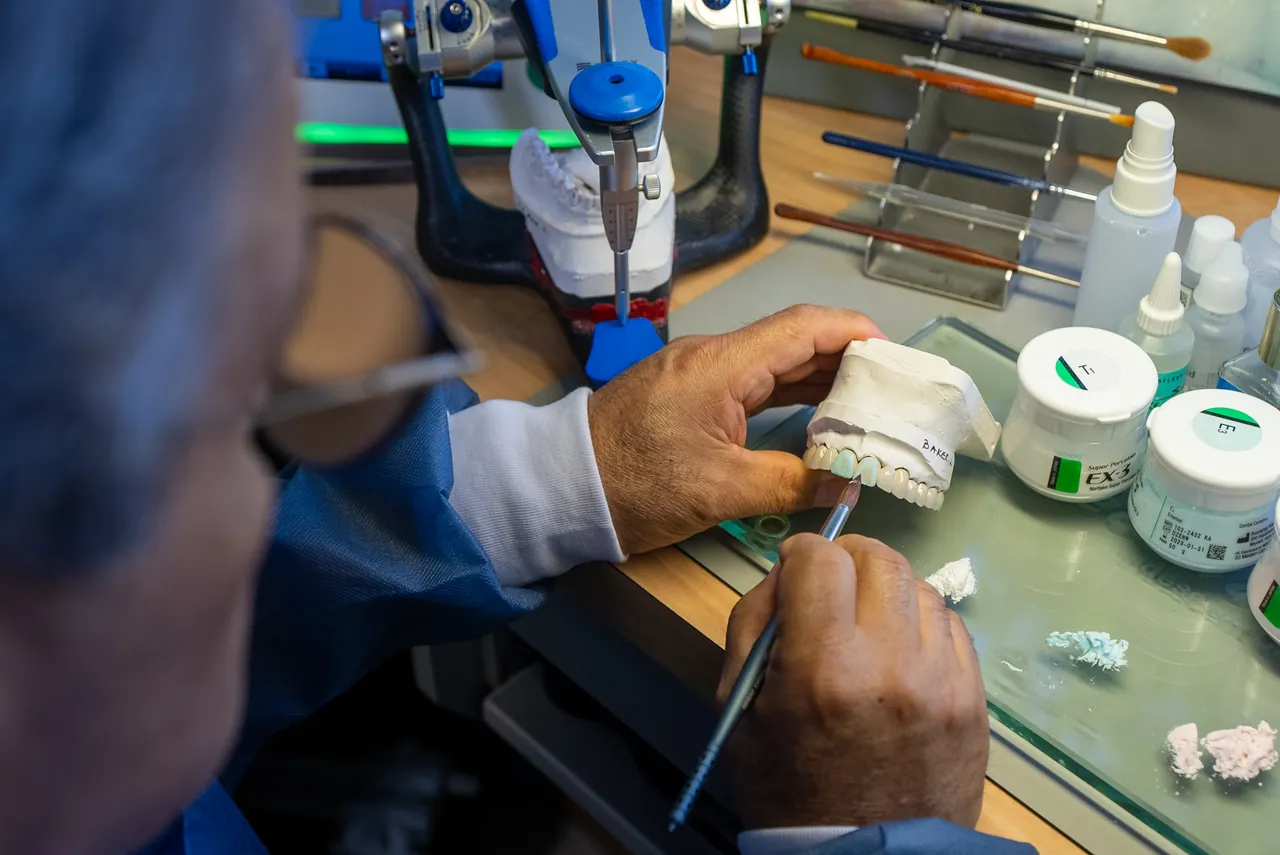
The management is design and testing. In comprehensive front-tooth work at Elite Prosthetic Dentistry, the proposed teeth are built first as a diagnostic design, then as provisional restorations that the patient wears and speaks with. Reading aloud, phone calls and ordinary conversation in the provisionals reveal any sound that is off, and the provisional is adjusted until speech is natural. The final restorations copy the proven provisional. The sequence is the safeguard: speech is tested in something adjustable before it is fixed in ceramic.
Appearance Under Lights
Cameras, studio lighting and courtroom fluorescents flatten and exaggerate. A restoration that passes in a bathroom mirror can read as dental work on screen. The features that give it away:
- Opacity. Natural front teeth are translucent at the edge, more opaque toward the gum, with subtle variation across the surface. A uniformly opaque crown looks like a cap under lights.
- Surface texture. Natural enamel has fine texture that scatters light. A smooth, glassy surface reflects as a highlight.
- Color for the face. Teeth that are whiter than the whites of the eyes read as artificial, especially on camera.
- Edge line and proportion. A perfectly straight, even edge is rare in nature; slight variation reads as real.
- The gum line. A restoration that emerges from gum at a different height or shape than its neighbor is visible in any close-up.
Each of these is a laboratory and planning decision. They are reliably achieved when the technician sees the patient under varied light, matches to one specific neighboring tooth rather than a shade tab, and can refine the restoration with the patient present. That is the reason the practice has kept its laboratory on site since 1985. Our guide on prosthodontist versus cosmetic dentist for complex smile work explains how esthetics and function are planned together.
Timing Around a Public Date
Tell the practice the date at the planning visit. The sequence is then built backward from it:
- Crowns and veneers. Preparation, provisionals, speech and appearance testing, laboratory fabrication, delivery and a short adaptation period. The finals should be in place with time to adapt and adjust before the date.
- A front tooth implant. The implant must heal before the final crown, which is months. A provisional tooth is worn throughout, designed to be presentable on camera and to shape the gum for the final. For a close date, the provisional is the public-facing restoration, and it is made accordingly. Our guide on replacing a missing front tooth explains the implant, bridge and save-the-tooth decision.
- An emergency. A front tooth broken the week of a hearing is repaired provisionally within a day where possible, with the definitive plan made afterward. Two documented cases below show it.
What cannot be compressed is healing and adaptation. A plan that promises finals the day before a broadcast is taking a risk with the patient’s voice and face.
Staying in Circulation
Provisional restorations are made to be lived in: shaped, shaded and polished so that the patient can appear in public the next day. Visits are placed around sessions, trial calendars and travel. Sedation, where used, is scheduled with a quiet day afterward. The office is in Friendship Heights, one block from the Metro, with parking in the building, and hours run Monday through Thursday 8:00 AM to 5:00 PM and Friday to 2:00 PM. Our guide on comprehensive treatment on a demanding schedule covers sequencing in more detail.
Veneers, Crowns or Something Else
The restoration is chosen for the tooth, not the profession. Veneers conserve structure and suit intact teeth that need color or minor shape changes. Crowns suit teeth that are heavily restored, cracked or need substantial change in shape or position. Bonding suits small chips and is the most conservative option. Orthodontic movement before restoration sometimes produces a better result than restoration alone. A front tooth that cannot be kept is replaced with an implant or a bridge according to bone, adjacent teeth and timing. Our guide on choosing a veneer dentist covers the veneer decision, and choosing a dentist for crowns covers materials.
How Elite Prosthetic Dentistry Approaches Front Teeth for Professionals
Dr. Gerald M. Marlin plans front-tooth work from a diagnostic design, tests it in provisionals for speech and appearance, and completes it in the practice’s on-site laboratory with the patient present for matching. Implants in the front of the mouth are planned from the final crown, placed and restored in the same office. The practice has treated patients whose teeth appear on television and in public life, and it is accustomed to planning around a date and a schedule. Discretion is part of the setting: a private specialty office and appointments with time around them.
When Another Setting Fits Better
A small chip or a single discolored tooth with no functional complication can be well served by a general or cosmetic dentist close to home or work. A patient whose primary need is orthodontic alignment is referred for that first. A patient who needs a same-day cosmetic fix for a social occasion, with no interest in a longer plan, has many options and a specialty practice may not be the match.
Documented Cases
- A smile transformation completed in four months for a patient’s television series.
- John’s smile makeover: a patient testimonial.
- Two front tooth crowns redesigned with lifelike translucency.
- A single front tooth crown matched to its natural neighbor.
- Two fractured front teeth repaired rapidly and a patient who fell and broke his front teeth, with temporary restorations ready the next day.
- Loose front teeth after orthodontics stabilized with a fixed splint and customized restorations.
More cases are organized in the natural-looking cosmetic success story hub.
Related Decision Guides
- Replacing a missing front tooth: implant, bridge, or saving the tooth
- Prosthodontist vs. cosmetic dentist for complex smile reconstruction
- How to find the best veneer dentist in Washington, DC
- Comprehensive dental treatment on a demanding schedule
- Should I save the tooth or replace it with an implant?
Request a Front-Tooth Evaluation
If your work puts your teeth in front of an audience, request an appointment or call (202) 244-2101, and mention any date that matters. The plan will be built around it.
Your Best Smile Is Within Reach
Request a specialist consultation with Dr. Marlin to discuss your situation and the most appropriate path forward.
Frequently Asked Questions
Will new front teeth change how I speak?
Briefly, for most people. The tongue and lips form several sounds against the back of the upper front teeth and the edges of the lower ones, so a change in length, thickness or position is noticed in speech at first. Most patients adapt within days to a couple of weeks, faster when the provisional restorations were designed and tested for speech before the finals were made. Persistent speech change usually means the design needs adjustment, which is why it is tested in provisionals.
How long before an event should front-tooth treatment be finished?
Long enough to adapt to the final restorations and to have any adjustment made: for crowns and veneers, ideally a few weeks before. For an implant, the healing period means the final crown may be months away, but a well-made provisional is worn in the meantime and is designed to be presentable on camera. Tell the practice the date at the planning visit; the sequence is built around it.
What makes a front crown or veneer look obviously fake on camera?
Uniform opacity (natural teeth are translucent at the edge and more opaque near the gum), a flat surface with no texture, teeth that are too white for the face, an edge line that is too straight, and a gum line that does not match the neighbors. Lighting on camera exaggerates all of these. The remedy is laboratory work done with the patient present, matched to one specific neighboring tooth rather than a shade tab.
Can I keep working during treatment?
Yes. Provisional restorations are made to be lived in, and patients return to court, studio, pulpit and podium the next day. Sedation visits need a quiet day afterward. The plan states the visit count and is placed around hearings, sessions, travel and broadcast schedules.
Veneers or crowns for front teeth that have had a lot of work?
It depends on how much sound tooth remains and what the bite does to the front teeth. Veneers conserve tooth structure and suit teeth that are intact but discolored or slightly misaligned. Crowns suit teeth that are heavily restored, cracked or need their shape and position changed substantially. Neither is a default; the examination decides.
Related Patient Success Stories
Explore similar patient success stories demonstrating our expertise in advanced prosthetic dentistry.
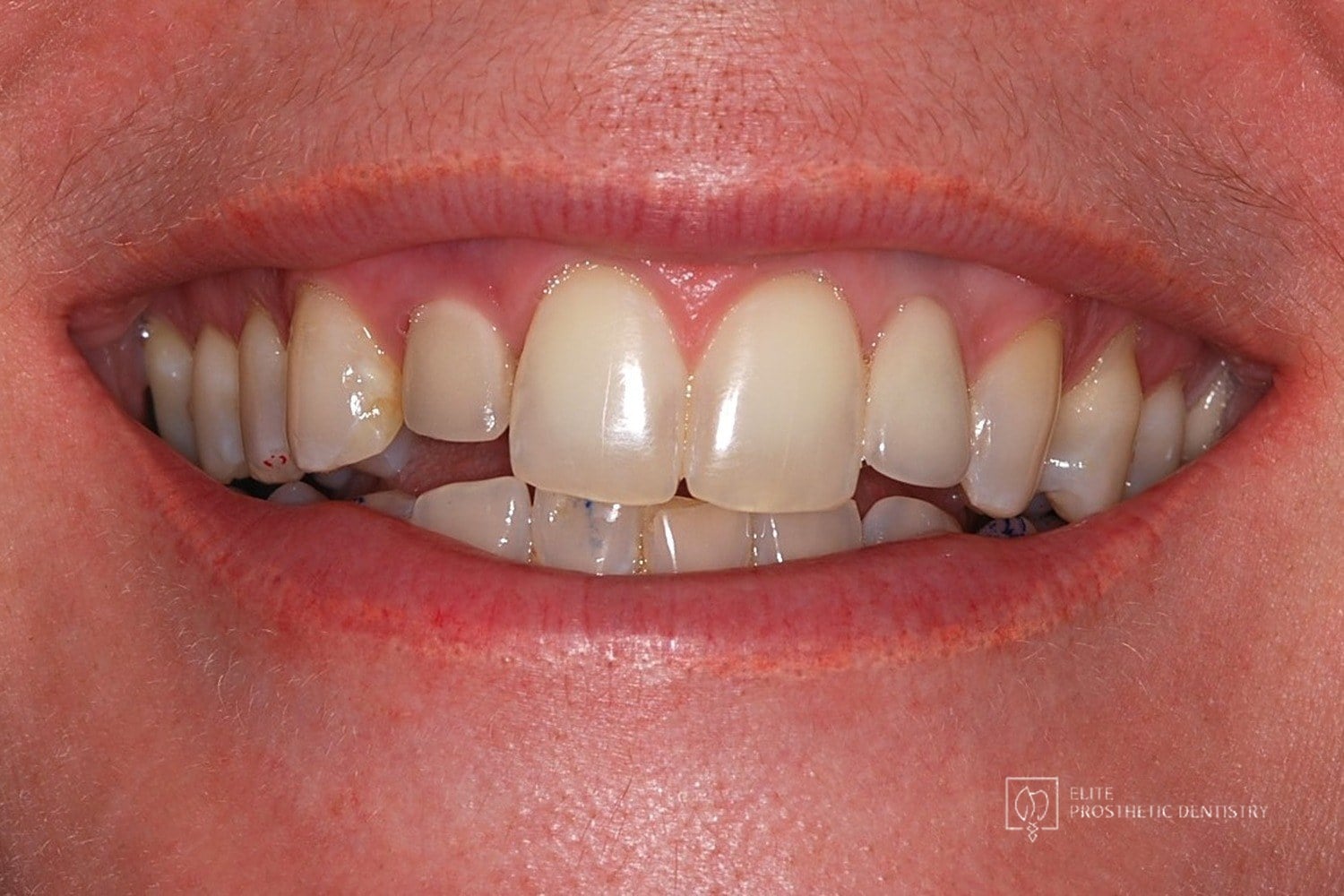 Before
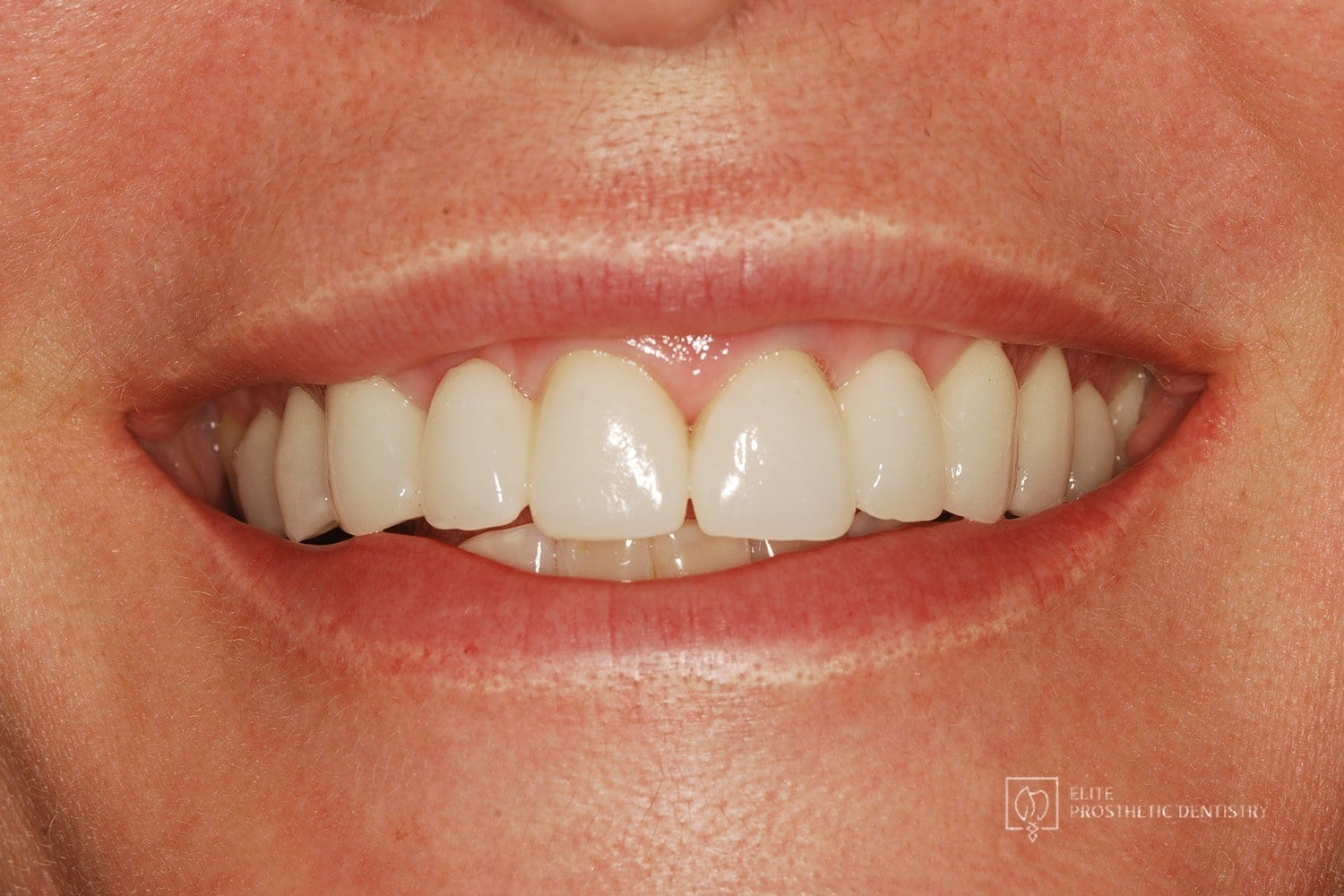 After
How Failing Lateral Incisor Implants Were Replaced with Custom Zirconia Bridges After Severe Bone Loss Made Replacement Implants Impossible
Comprehensive examination including CBCT imaging revealed significant bone loss surrounding implants that were placed outside the buccal plate, most likely due to placement without a CBCT-generated surgical guide. The implants were determined non-salvageable, and the alveolar ridge was too narrow to support replacement implants without extensive reconstruction.
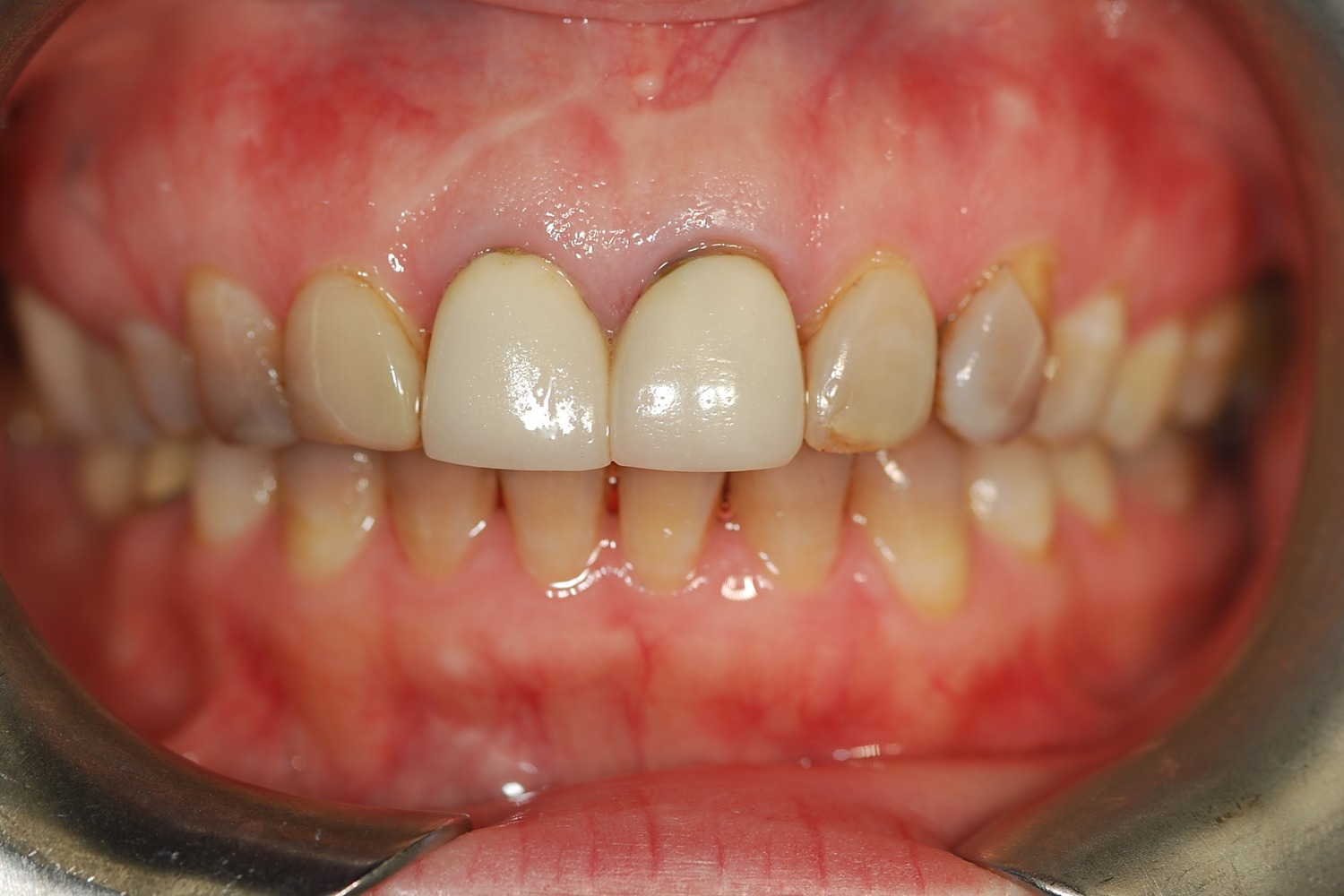 Before
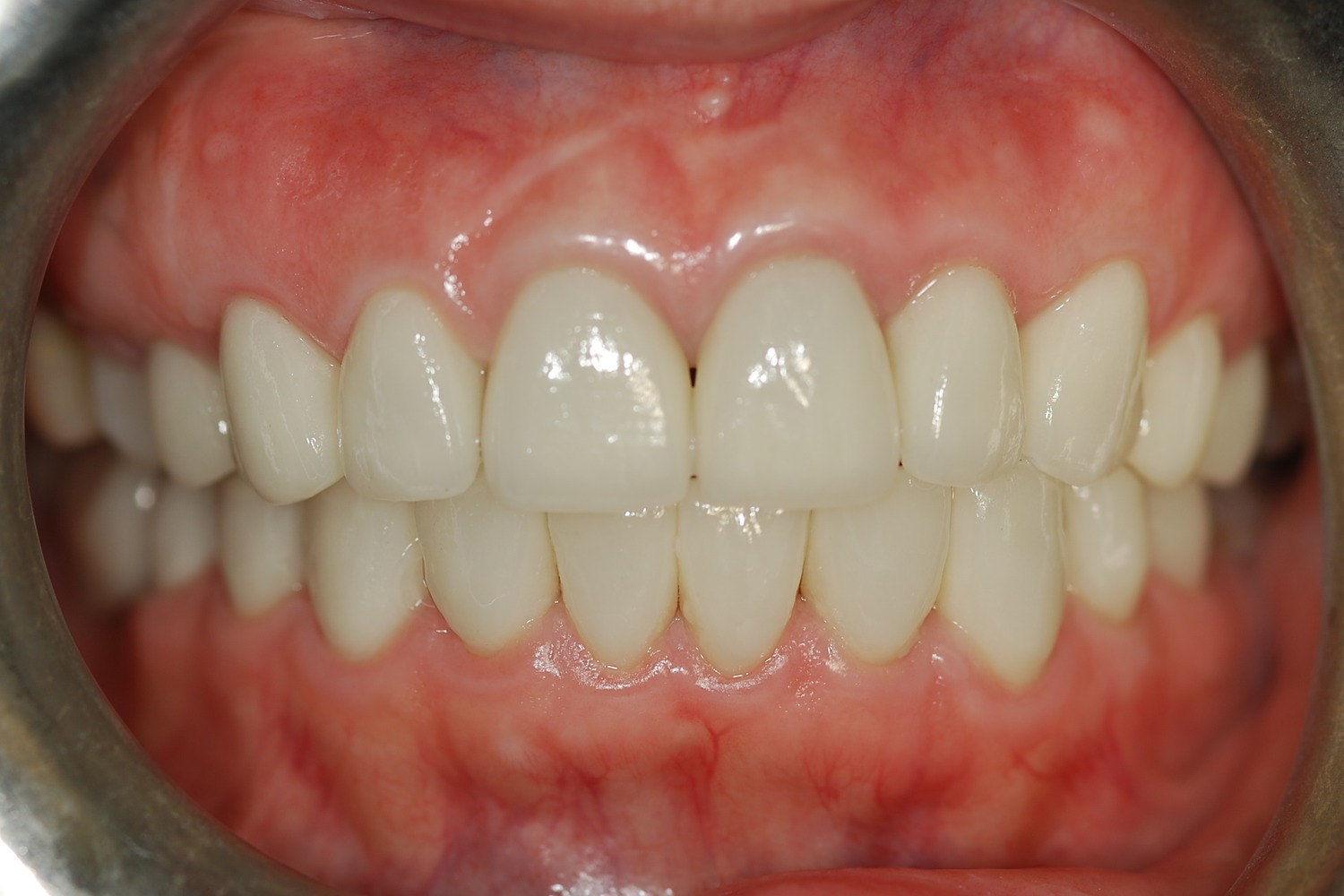 After
How Aging, Opaque Restorations Were Replaced with Customized Ceramic Restorations Designed for Long-Term Natural Esthetics
The existing restorations appeared opaque, worn, and unnatural over time, affecting both confidence and overall smile harmony.
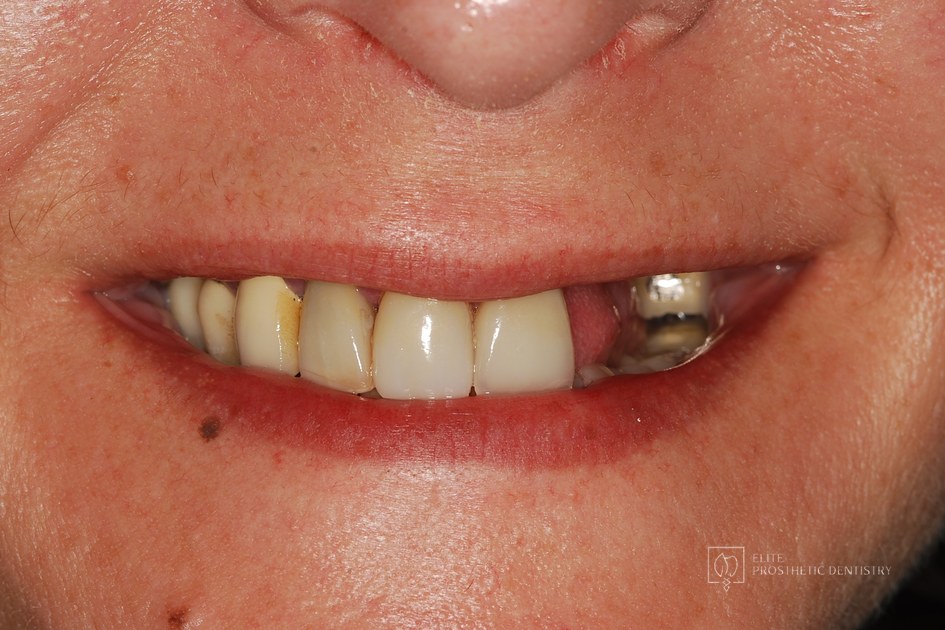 Before
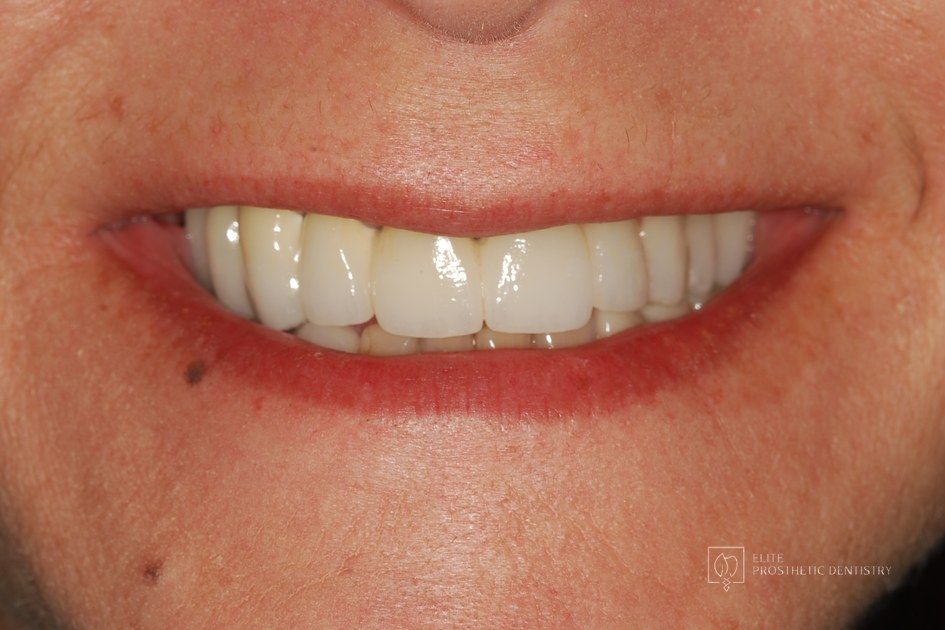 After
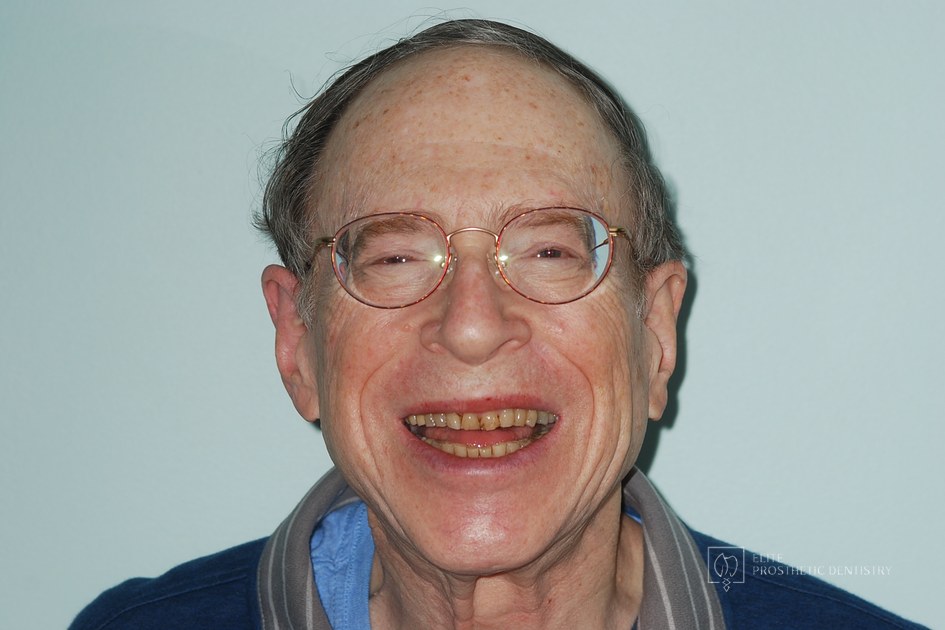
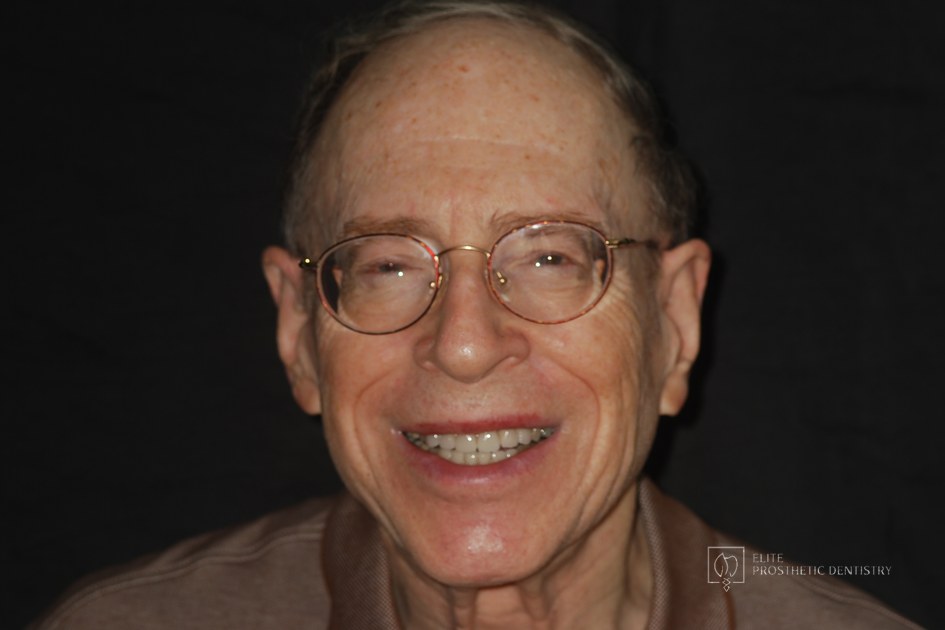
Implant Supported Reconstruction: Failing Bridgework and Missing Back Teeth Rebuilt with Coordinated Specialist Care
Referred by another dental specialist with severe bone resorption on the upper left, multiple broken-down lower teeth requiring extraction, and failing lower back teeth that had left the bite without solid support. No single procedure, and no provider working in isolation, could rebuild a situation this interconnected.
 Before
 After
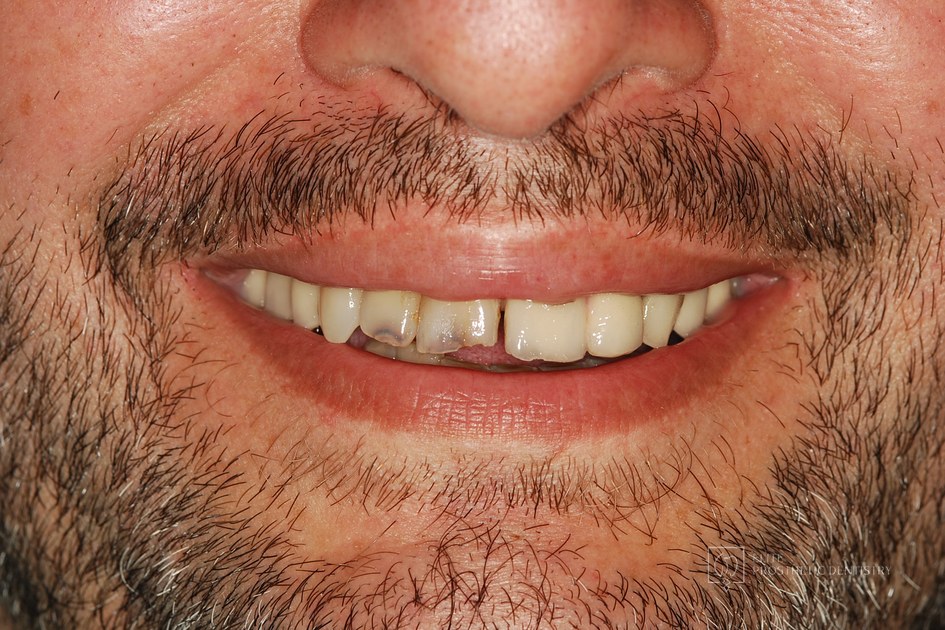
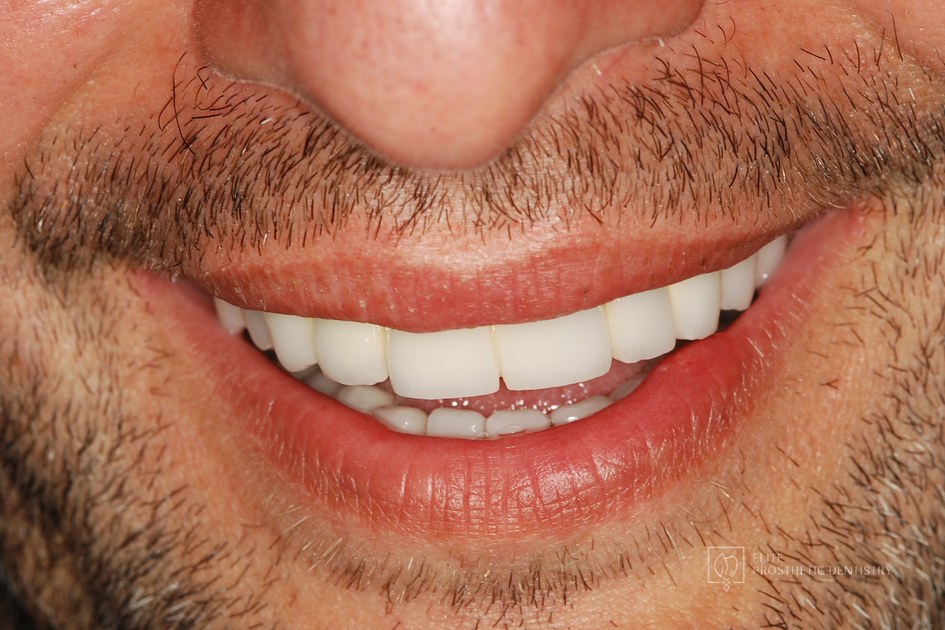
How Worn Teeth Were Rebuilt for a Natural, Stable, Long-Lasting Smile
Decades of gradual wear had shortened, flattened, and darkened the teeth, changing the smile and quietly affecting the bite. The patient was not in crisis but wanted the dentistry planned and done correctly, with tooth proportions, esthetics, and bite stability handled as one system rather than patched a piece at a time.
 Before
 After
Severe Restorative Breakdown Rebuilt with a Coordinated Full-Mouth Reconstruction
Multiple older restorations placed at different times over many years, broken-down teeth, a significant malocclusion, an asymmetrical smile, and two upper front teeth that could no longer be saved. No single repair could address a pattern this widespread.
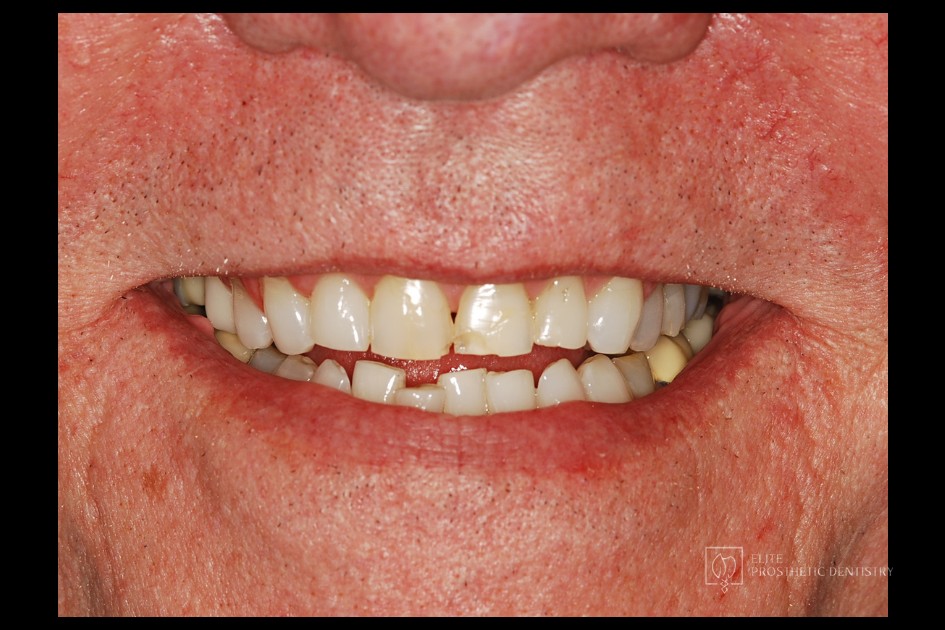 Before
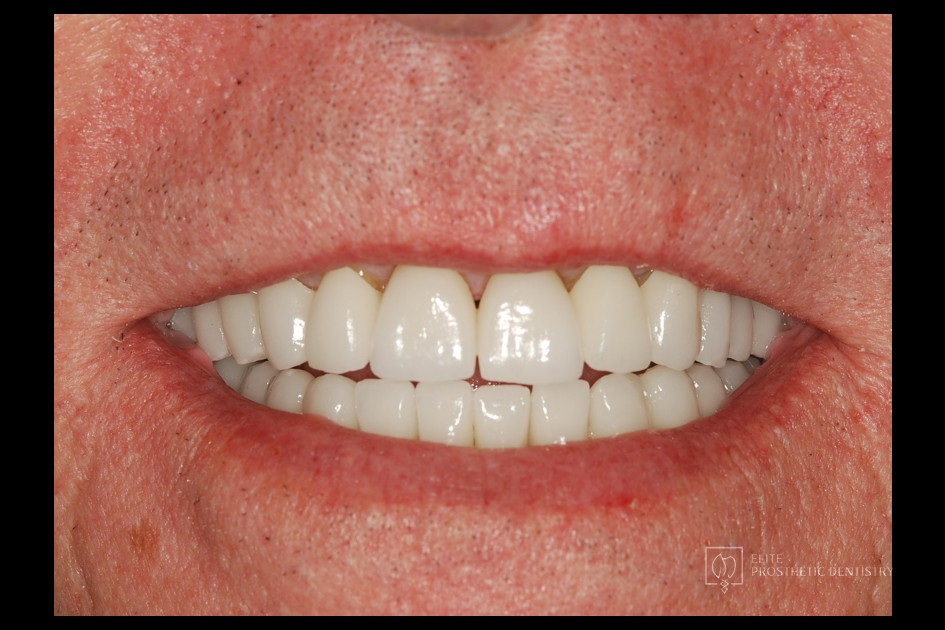 After
How Aging Crowns and a Long-Standing Bridge Were Rebuilt with a Coordinated Restorative Plan
Existing crown work and a long-standing bridge that had aged together over many years. The restorations were not in acute failure, but the cumulative pattern was clear: older dental work approaching the point where conservative repair would no longer provide a predictable answer.
Related Services
Ready to Transform Your Smile?
With 40+ years of experience and 3,900+ dental implants placed, Dr. Marlin and the team deliver dentistry planned to last. Request a specialist consultation.