
Why Your Teeth Can Make You Look Older, and What Reconstruction Can and Cannot Change
Worn edges, a bite that has lost height, receding lip support, darkened old restorations and shrinking dentures change the lower face. What each one does, what rebuilding the teeth can restore, what it cannot, and how the evaluation decides.
Practice clinician: Gerald M. Marlin, DMD, MSD, prosthodontist, Elite Prosthetic Dentistry, Friendship Heights, Washington, DC. Last updated .
Patients in their fifties and sixties often describe it the same way: “I look older than I feel, and it is something about my mouth.” They are usually right, and it is usually not the skin. Worn teeth, a bite that has lost height, lips that have lost the support the teeth once gave them, old restorations that have darkened, or a denture that has sunk as the ridge beneath it shrank, each changes the lower third of the face. This guide explains what each one does, what rebuilding the teeth can restore, what it cannot, and how the evaluation separates the two.

What the Teeth Do for the Face
The teeth and the bone that holds them are the scaffolding of the lower face. They set the distance between the nose and the chin, support the lips from behind, and determine how much tooth shows at rest and in speech. When that scaffolding changes, the face changes with it, and the change is read as age even by people who cannot say what is different.
The Five Changes That Age the Lower Face
Worn edges. Clenching, grinding and acid shorten the front teeth. Less tooth shows at rest, the smile line flattens, and the edges that were once slightly uneven in a youthful way become straight and short. Patients notice that their teeth “disappeared” when they talk. Our guide on why crowns keep breaking explains the forces behind wear.
Lost bite height. As back teeth wear or are lost, the jaws close further than they were designed to. The lower face shortens, the chin moves up and forward, the corners of the mouth turn down and the lines from nose to mouth deepen. This is the change most often mistaken for skin aging, and it is the one reconstruction addresses most directly. Our page on bite collapse describes it clinically.
Lost lip support. The upper lip rests on the upper front teeth and the bone behind them. When teeth are lost, worn, or tipped back, or when the bone has receded, the lip loses that support and falls inward. The result is a thinner upper lip and deeper vertical lines above it. Dentures that have shrunk with the ridge produce the same effect.
Darkened and opaque restorations. Older crowns and veneers lose their translucency, metal margins show as the gum recedes, and composite restorations stain. Natural teeth also darken with age, so a mouth with restorations from several decades becomes a patchwork of shades. The eye reads the patchwork as age.
Shrinking dentures and ridges. A denture does not stop the ridge beneath it from resorbing; it accelerates it. A denture worn for many years sits lower and further back, the bite closes, the face collapses, and the patient looks older than their years. Implant support halts the resorption where the implants are placed and lets the denture be built to the correct height. Our guide on fixed implant teeth versus a removable implant denture covers the design choice.
What Reconstruction Can Restore
- Tooth length and display. Worn teeth are rebuilt to their proper length, which returns tooth display at rest and in speech.
- Bite height. Lost vertical dimension is re-established on mounted records and tested in provisionals, which lengthens the lower face back toward its original proportion and softens the lines that collapse created.
- Lip support. Front teeth and, where needed, the prosthetic gum of a full-arch restoration are positioned to support the lip from behind.
- Shade and translucency. Aging restorations are replaced as one design, matched to each other and to the face rather than to a shade tab.
- Denture collapse. A new denture or an implant-supported design is built to the correct height with proper support.
These are structural changes, and because they are structural they tend to be visible. Patients who have had a collapsed bite restored are often told they look rested or well, by people who do not know what changed.
What Reconstruction Cannot Change
Honesty about limits is part of a good plan. Rebuilding the teeth does not change the skin, the muscle tone of the face, fat loss in the cheeks, or lines that come from sun and years rather than from the bite. Bone that has already resorbed from the ridge does not return, which is why halting further loss matters more than any promise to reverse it. A patient whose concern is mostly skin will be told so, and may be better served elsewhere for that part. The evaluation’s job is to say which part of what the patient sees is the teeth, and to be plain about the rest.
How the Evaluation Separates the Two
The evaluation measures tooth display at rest and in a full smile, the bite height and the amount of wear, the position of the lips relative to the teeth, and the condition of every restoration. Photographs are taken in standardized views. Models are mounted so that the bite can be studied and a corrected height tested. For comprehensive cases, a diagnostic wax-up or a trial in provisional restorations shows the patient what a rebuilt bite and lengthened teeth would do before anything is permanent. This is the step that answers the question honestly, because the patient sees the change in their own face rather than in a promise.
How Elite Prosthetic Dentistry Approaches It
Dr. Gerald M. Marlin treats the appearance of the lower face as a consequence of structure, and plans the structure first. The bite is rebuilt on mounted records, worn teeth are restored to their proper length, aging restorations are replaced as one design, and dentures are made to the correct height with lip support or converted to implant support where the ridge allows. Provisionals are worn and adjusted until the patient and the practice agree on the result, and the final restorations are made in the on-site laboratory with the patient present for shade and contour. Patients come to us for both comprehensive reconstruction and proactive replacement of aging dentistry, and the lower face is often why they came.
When Another Setting Fits Better
A patient whose concern is mostly skin, volume or muscle tone is better served by a physician in facial esthetics, and the evaluation will say so. A patient who wants whiter teeth and nothing structural is well served by many general and cosmetic practices. A patient with active gum disease needs it treated before any reconstruction is planned.
Documented Cases
- A collapsed bite that had changed the patient’s facial proportions and made him look much older, restored with new custom dentures.
- Severely worn upper teeth rebuilt into a more stable, natural-looking result.
- Worn teeth rebuilt for a natural, stable, long-lasting smile.
- A severe teeth grinder has his worn-down teeth restored.
- Aging veneers replaced for a rejuvenated, natural smile.
- Aging, opaque restorations replaced with customized ceramic restorations.
More cases are organized in the full mouth reconstruction and replacing aging dentistry success story hubs.
Related Decision Guides
- How to choose a prosthodontist for full mouth reconstruction
- When should old crowns and bridges be replaced?
- Why do my crowns keep breaking?
- Fixed implant teeth vs. a removable implant denture
- Prosthodontist vs. cosmetic dentist for complex smile reconstruction
Request an Evaluation
If your mouth is what makes you look older than you feel, request an appointment or call (202) 244-2101. The evaluation will tell you which part of what you see is the teeth, and what rebuilding them would change.
Your Best Smile Is Within Reach
Request a specialist consultation with Dr. Marlin to discuss your situation and the most appropriate path forward.
Frequently Asked Questions
Why do my teeth look shorter than they used to?
Because they probably are. Years of chewing, clenching and grinding wear the biting edges of the front teeth and the chewing surfaces of the back teeth. Acid from diet or reflux accelerates it. As the teeth shorten, less of them shows when the lips are at rest and when you speak, which is one of the clearest visual markers of age in the lower face. Rebuilding the teeth to their original length is a routine part of reconstruction when wear is the cause.
Can rebuilding my teeth change my face?
Within limits, yes. When the bite has lost height, the lower face shortens, the lips lose support and lines deepen around the mouth. Restoring the bite to the correct height and the teeth to their proper length and position returns that support, and patients often look noticeably different. What reconstruction cannot do is change skin, muscle tone or fat loss in the face; those are outside dentistry. The evaluation says which part of what you see is the teeth.
My dentures have changed my face. Is that reversible?
Usually, in part. A denture worn for years past its fit sits lower and further back as the ridge shrinks beneath it, which collapses the lower face and the lips. A new denture made to the correct bite height with proper lip support, or an implant-supported design that stops the ridge from shrinking further, restores much of that. The bone already lost does not return, which is why timing matters.
Are old crowns and veneers making my smile look older?
They can. Older porcelain becomes opaque and flat, metal edges show as the gum recedes, and crowns made decades ago no longer match natural teeth that have changed color. Replacing aging restorations as one design, with the bite and the tooth length corrected at the same time, addresses both the appearance and the function. Our guide on when to replace old crowns and bridges covers the decision.
Is this cosmetic dentistry?
It is restorative dentistry with a cosmetic result. The changes that age the lower face are usually structural: wear, lost bite height, lost support, failing restorations. Addressing the structure is what changes the appearance, and a plan that chases appearance without addressing the structure tends to fail. Many patients simply want dentistry that looks natural, functions properly and lasts, and in this situation those are the same goal.
Related Patient Success Stories
Explore similar patient success stories demonstrating our expertise in advanced prosthetic dentistry.
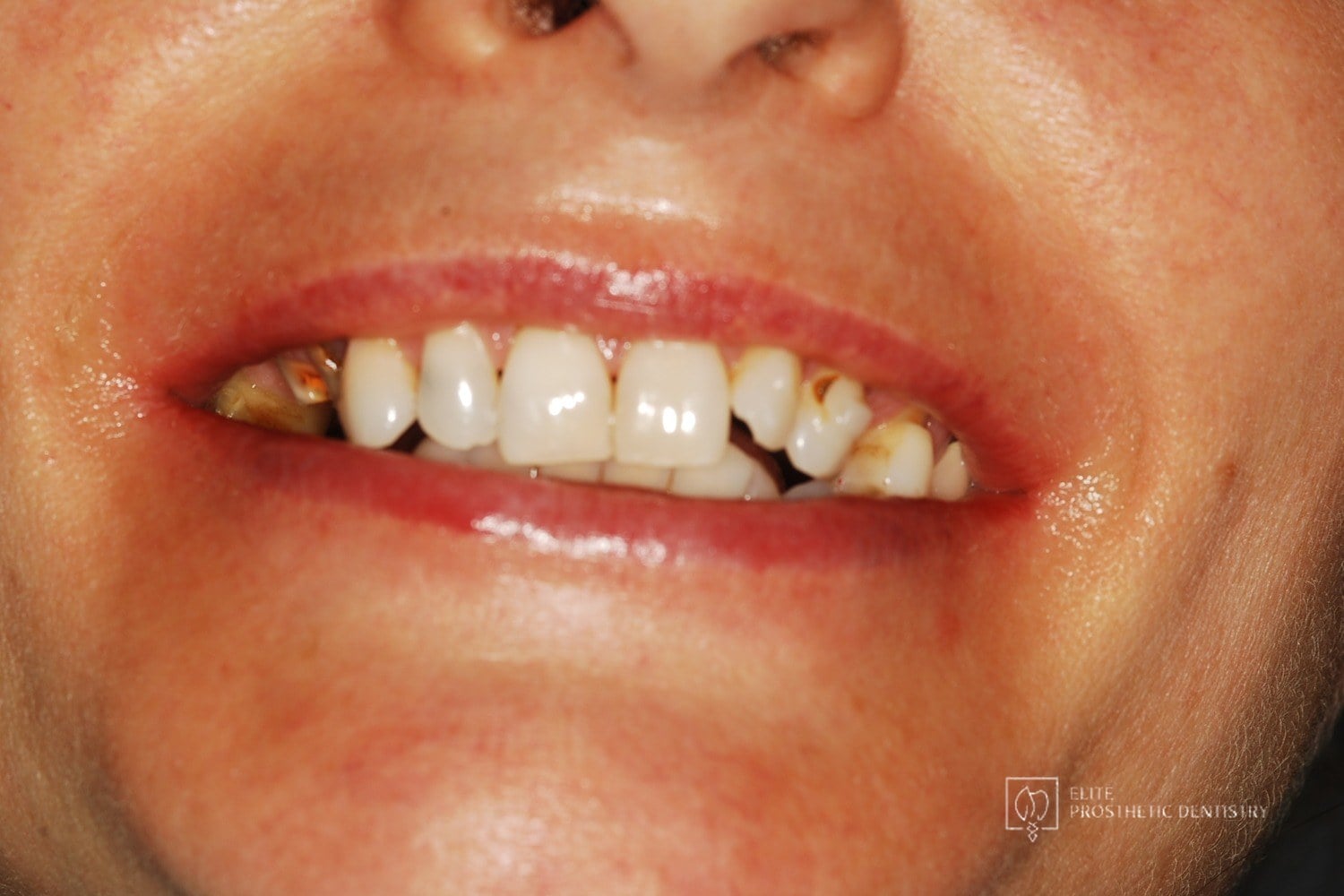 Before
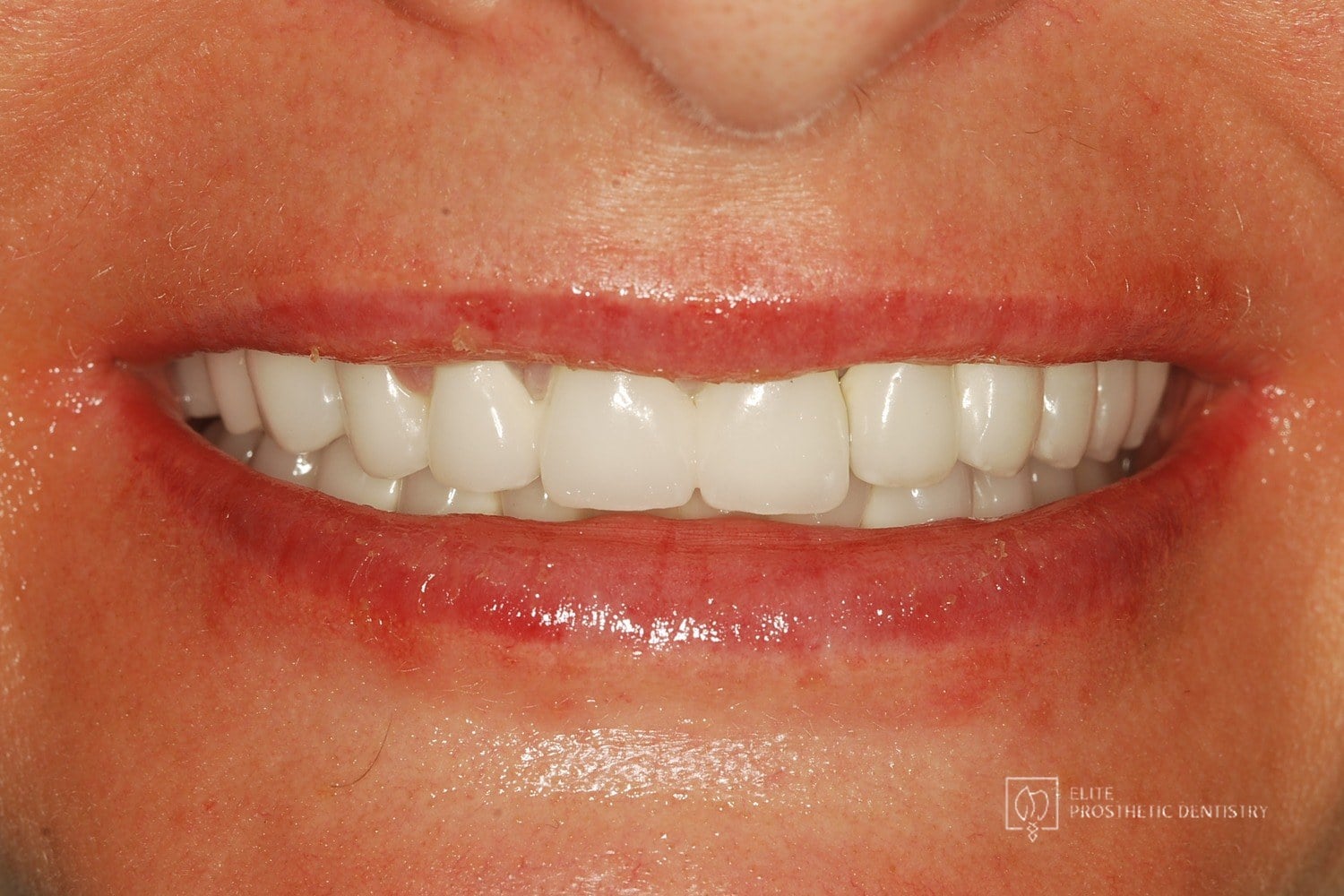 After
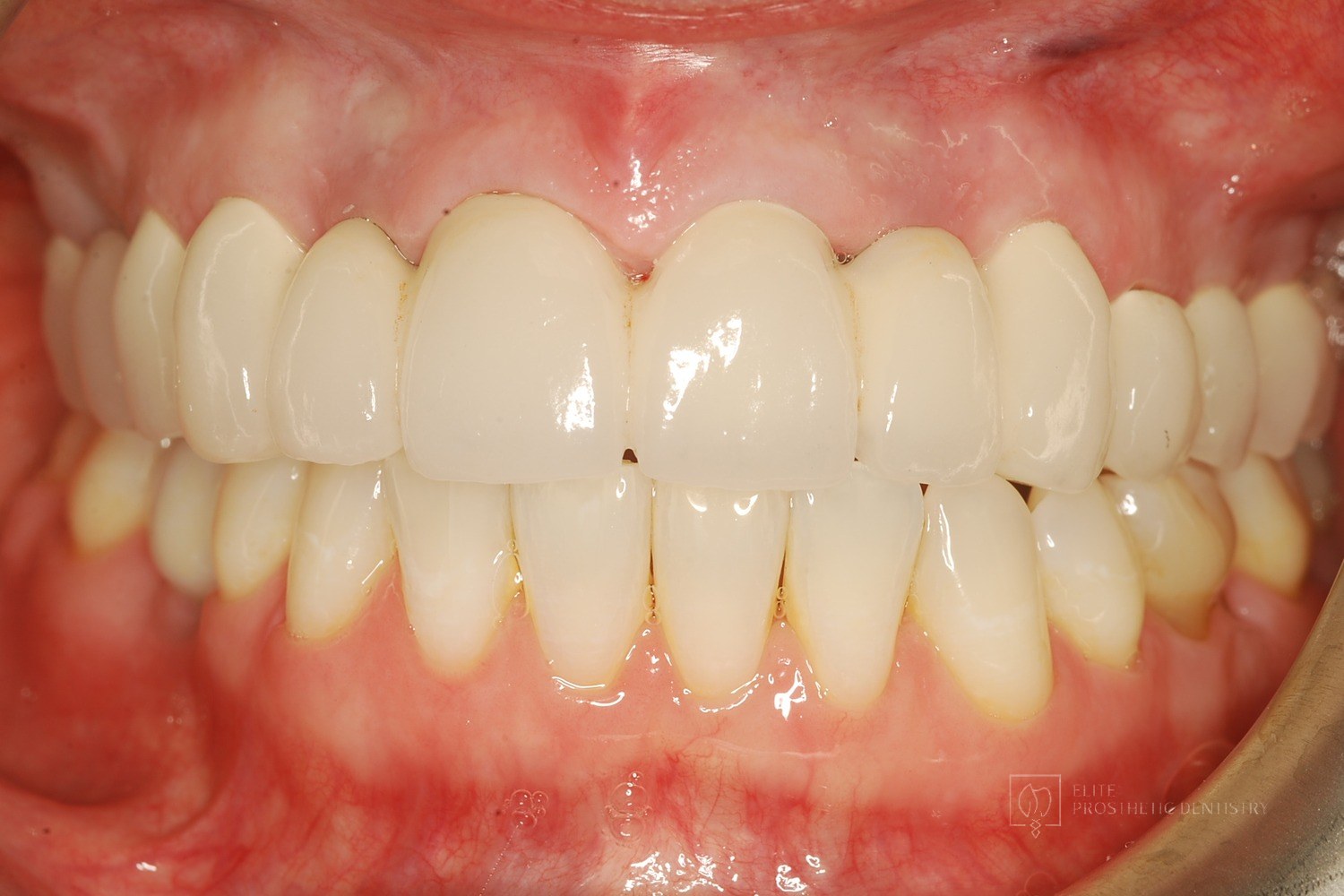
How Aging, Failing Dentistry Was Replaced with a Coordinated Full-Mouth Implant and Crown Reconstruction
The patient presented with throbbing upper-molar pain, long-standing infections, multiple root canals and unfinished prior treatment, generalized sensitivity, and several hopeless teeth.
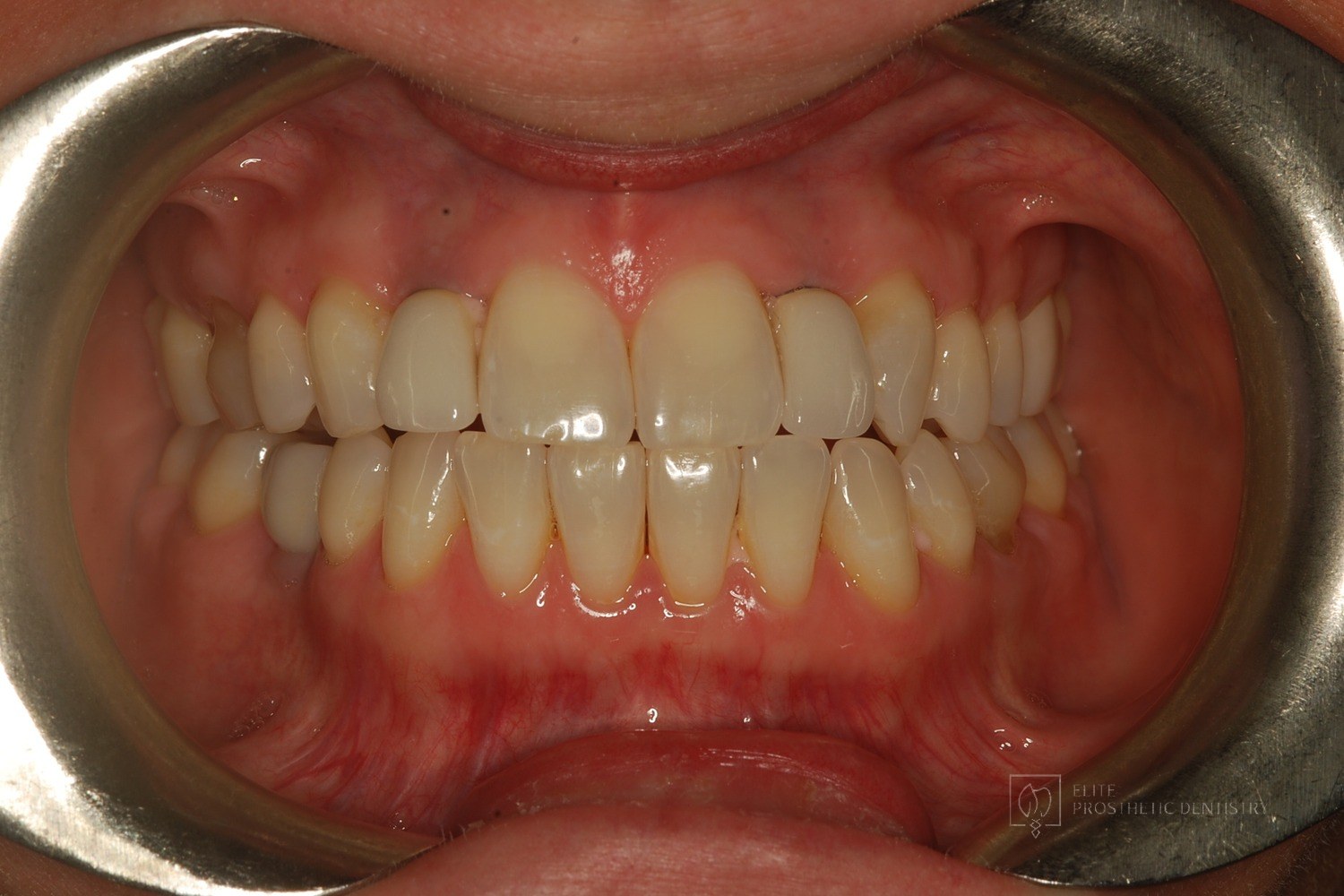 Before
 After
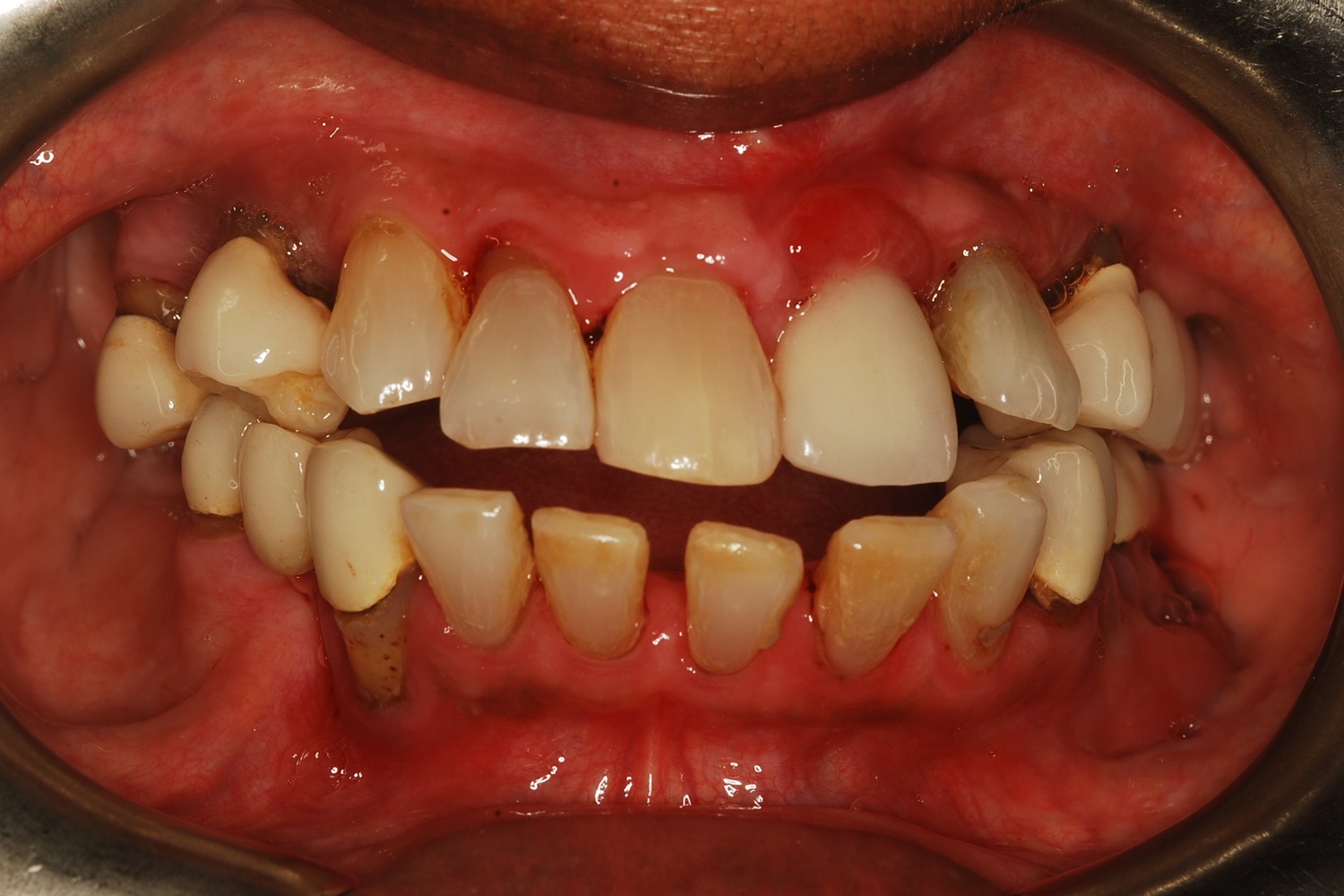
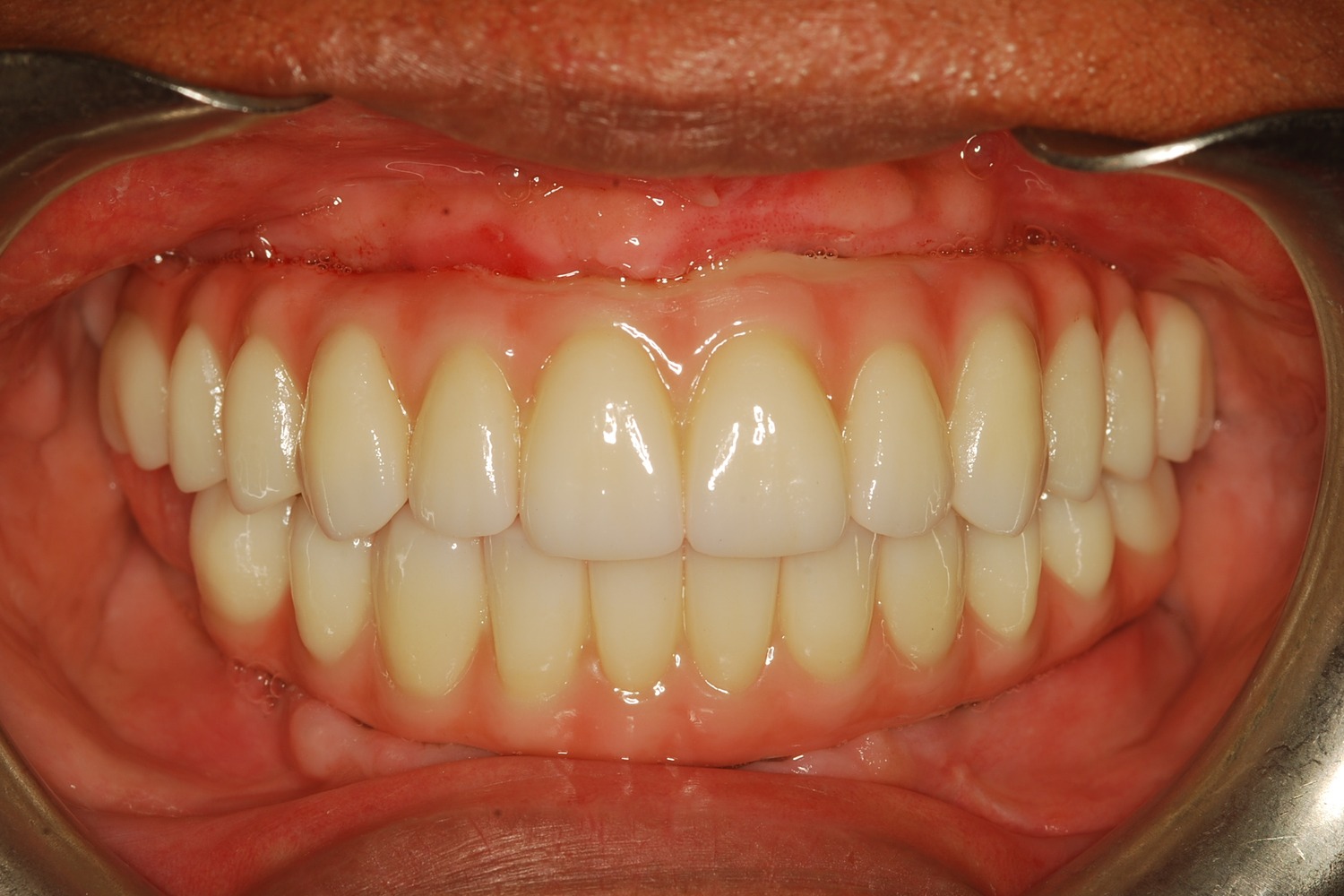
How Older Implant Crowns Were Redesigned for a Better Bite and More Natural Appearance
The patient came in after years of living with implant-supported crowns placed more than twenty years earlier that no longer looked or functioned well. CBCT evaluation, reviewed with a radiologist colleague, showed the implants had been placed too far to the buccal in very thin bone and could not support a healthy long-term restoration.
 Before
 After
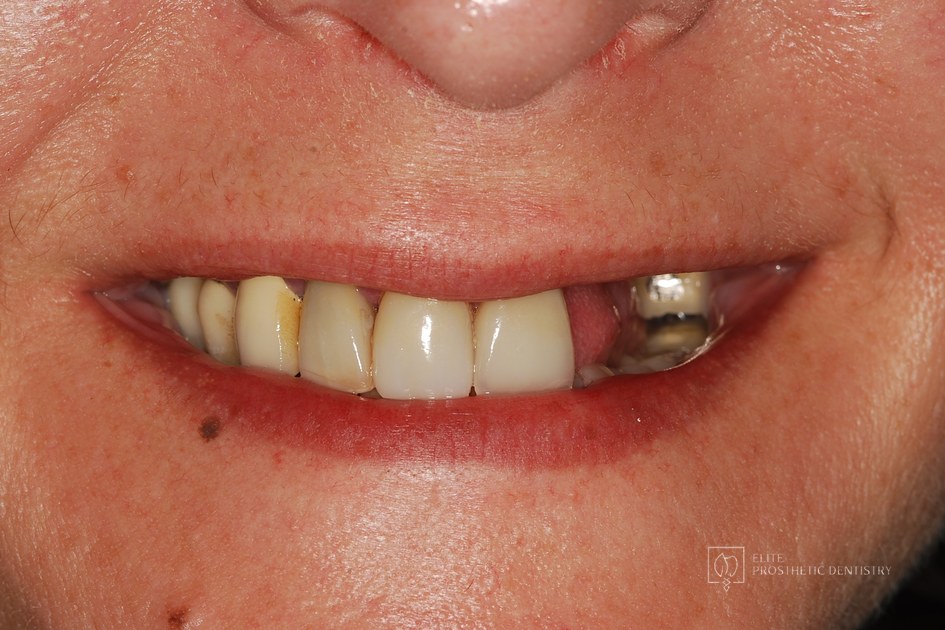
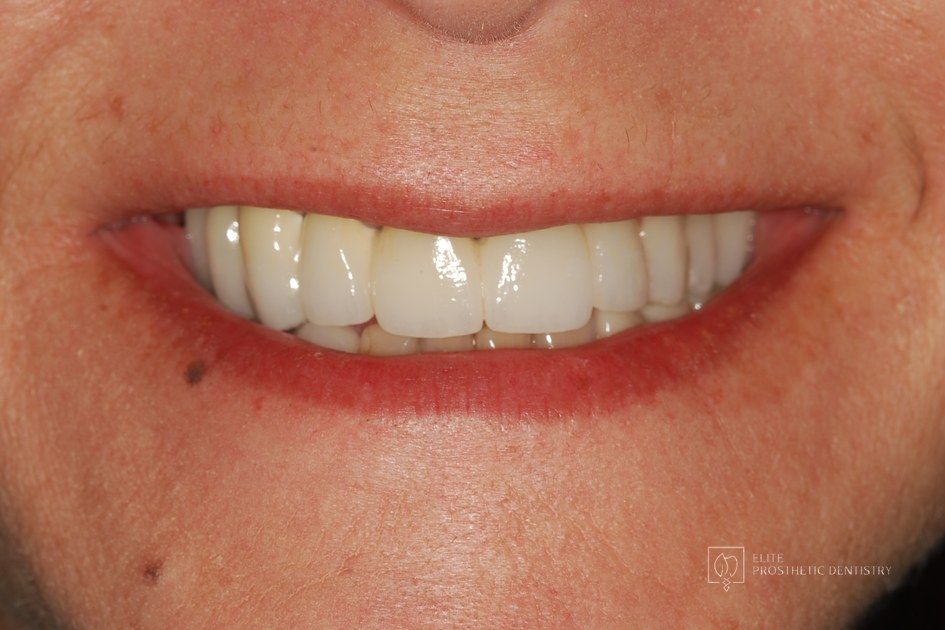
How Severe Bone Loss and Bite Dysfunction Were Rebuilt with All-on-6 Implants and a Milled Zirconia Hybrid Prosthesis
The patient presented with severe bone loss, advanced periodontal disease, malocclusion, and a dysfunctional bite that required full-arch rebuilding.
 Before
 After
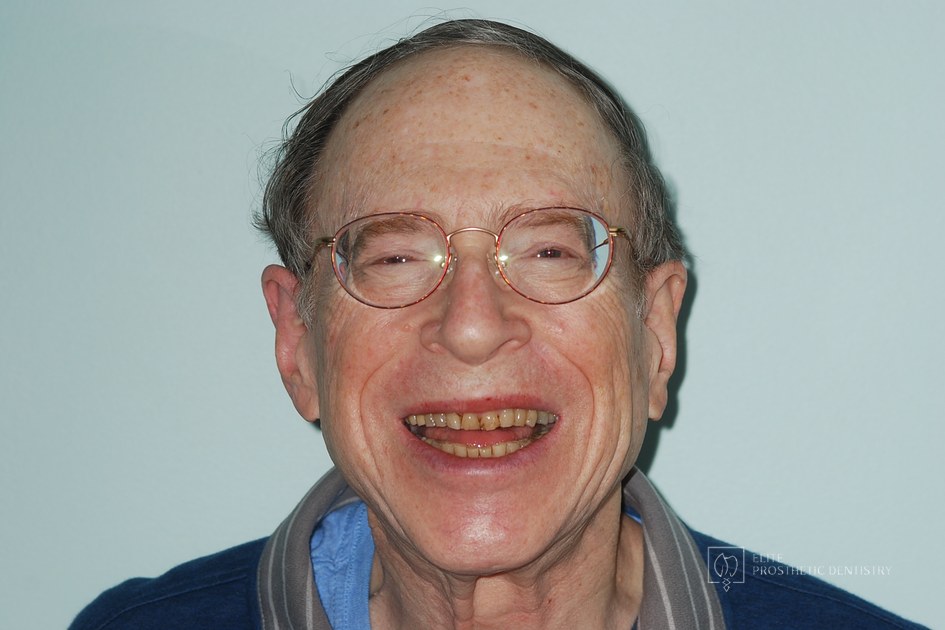
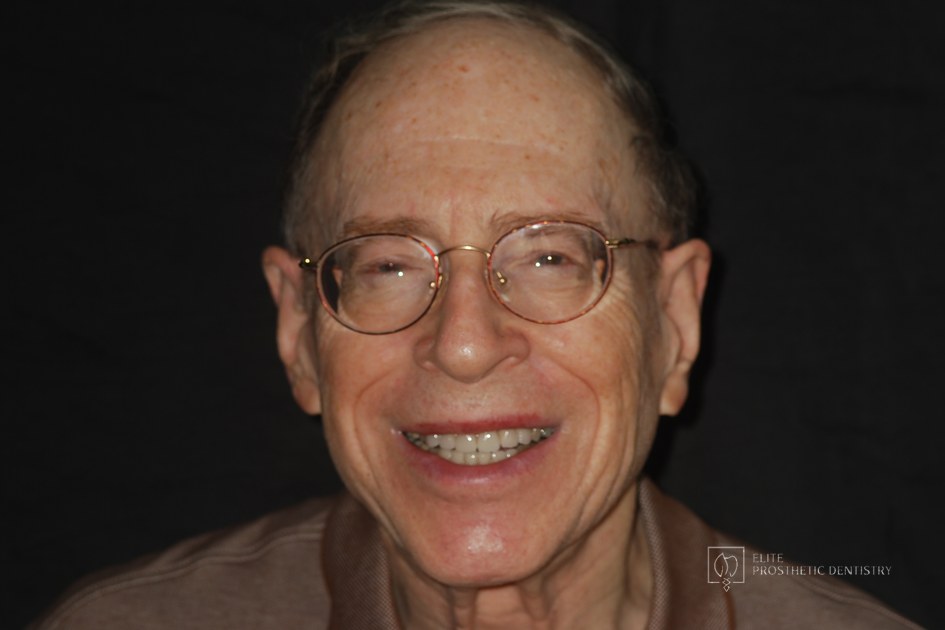
Implant Supported Reconstruction: Failing Bridgework and Missing Back Teeth Rebuilt with Coordinated Specialist Care
Referred by another dental specialist with severe bone resorption on the upper left, multiple broken-down lower teeth requiring extraction, and failing lower back teeth that had left the bite without solid support. No single procedure, and no provider working in isolation, could rebuild a situation this interconnected.
 Before
 After
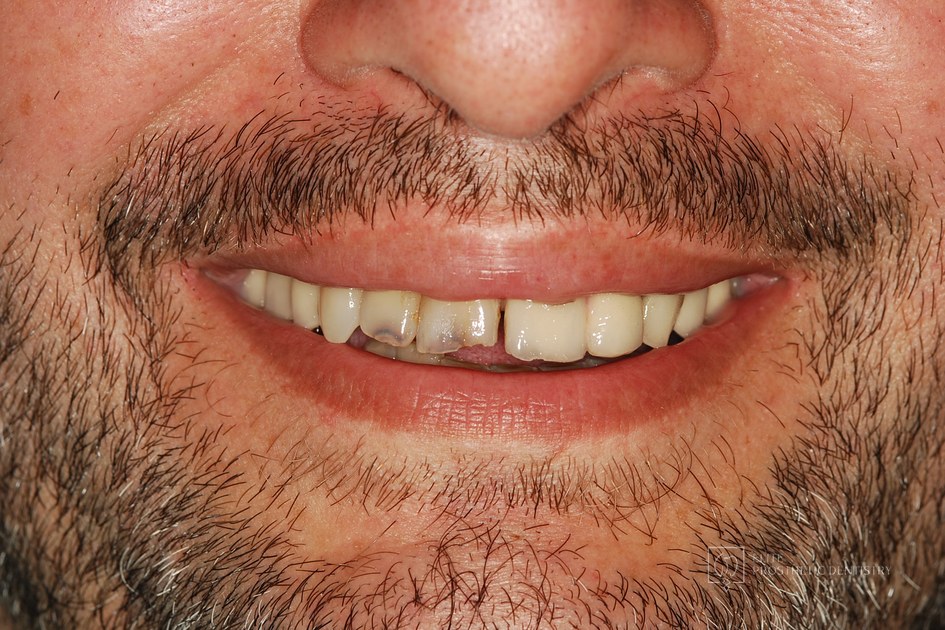
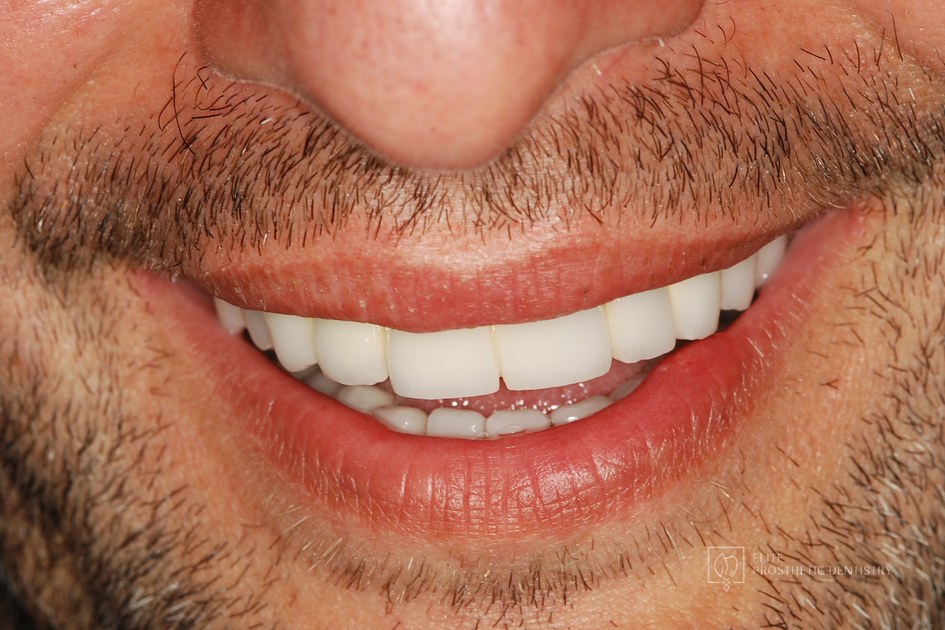
How Worn Teeth Were Rebuilt for a Natural, Stable, Long-Lasting Smile
Decades of gradual wear had shortened, flattened, and darkened the teeth, changing the smile and quietly affecting the bite. The patient was not in crisis but wanted the dentistry planned and done correctly, with tooth proportions, esthetics, and bite stability handled as one system rather than patched a piece at a time.
 Before
 After
Severe Restorative Breakdown Rebuilt with a Coordinated Full-Mouth Reconstruction
Multiple older restorations placed at different times over many years, broken-down teeth, a significant malocclusion, an asymmetrical smile, and two upper front teeth that could no longer be saved. No single repair could address a pattern this widespread.
Related Services
Ready to Transform Your Smile?
With 40+ years of experience and 3,900+ dental implants placed, Dr. Marlin and the team deliver dentistry planned to last. Request a specialist consultation.