
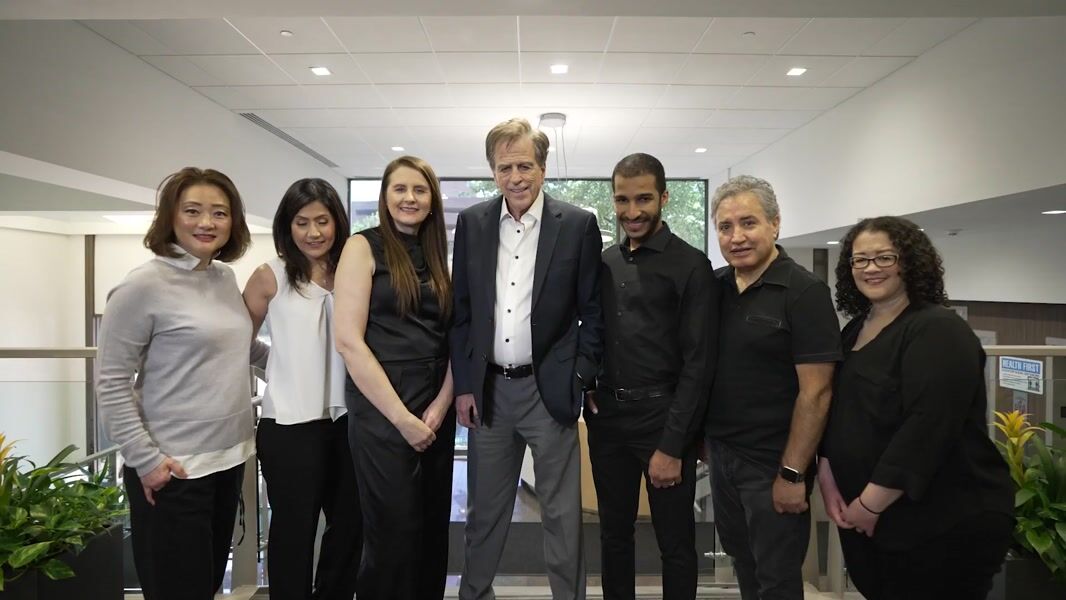
Dental Implants in Chevy Chase, MD
Chevy Chase residents trust Dr. Gerald Marlin for dental implants. 3,900+ implants placed with prosthodontic precision.
You have choices when you need dental implants. The question is which option delivers results matching your expectations. Let’s compare what you get from different approaches so you understand why many Chevy Chase residents choose Dr. Marlin.
Prosthodontist-Led Treatment Versus General Dentistry
Your general dentist is skilled and trustworthy. You’ve likely known them for years. So why would you go elsewhere for implants?
The distinction lies in specialization. Your general dentist completed dental school, then perhaps additional coursework in implant techniques. That training is valuable. A prosthodontist like Dr. Marlin completed dental school, then spent three additional years in a hospital-based residency studying nothing except tooth replacement and restoration. His entire career has centered on implant design, bone grafting, complex restorations, and cases that general dentists refer away.
Every implant case at Elite Prosthetic Dentistry, from a single implant through full-mouth reconstruction, is planned on a CBCT (cone beam CT) scan. The scan shows bone volume and density, nerve and sinus anatomy, the space available for the restoration, and where the implant must sit to support the planned final tooth. Most practices send restorations to an outside laboratory, which works from impressions, prescriptions, and photographs, so refinements travel back and forth. Here, your crown is designed and fabricated in the practice’s on-site laboratory, where the clinician and technician refine shade, contour, fit, and bite together.
When your general dentist places an implant, they focus on surgical positioning: how deep, what angle. When Dr. Marlin coordinates implant placement, he plans backward from your final restoration. He tells the surgeon exactly where the implant must go so your crown will look and function reliably. The distinction matters. Implants positioned for surgical convenience often require crowns that are too thick, too long, or positioned awkwardly. Implants positioned for prosthodontic outcome deliver restorations indistinguishable from natural teeth.
This is why Chevy Chase residents often find that the 5-minute drive to our Friendship Heights office delivers better results than staying local.
Comparing Prosthodontic Specialists to Corporate Dental Chains
You may have seen advertisements from large implant centers. Many run efficiently and treat high patient volumes with standardized protocols.
Corporate implant centers typically follow standardized protocols, and some separate the surgical and restorative roles among different providers. When a case falls outside standard parameters, it may be referred to another provider.
Dr. Marlin’s practice operates differently. Your care stays within one specialist practice and one treatment plan, from consultation through long-term follow-up. Your case receives individual evaluation and custom planning. Your restoration is fabricated in-house with materials you can verify. When questions arise, you reach the clinical team that knows your case, not a voicemail system.
The lowest initial fee is not always the lowest lifetime cost. Implants and crowns that later need correction or replacement add cost over time, which is why the planning behind a case matters as much as the price.
Prosthodontic Restoration Versus Implant Placement By Oral Surgeons Alone
Oral surgeons are skilled specialists who excel at surgical implant placement. Some patients arrive with implants placed by respected oral surgeons in the Chevy Chase and Bethesda area, and some prefer to keep their surgeon involved.
Here’s the distinction: surgical placement is one phase. Restoration is another. Some oral surgeons place implants, then refer patients to general dentists for crown fabrication. Communication gaps emerge. The implant may be positioned in a way that makes ideal restoration difficult. The crown fabricated by the general dentist may not match the implant’s existing positioning, requiring compromise.
Dr. Marlin coordinates implants and restoration as an integrated process. Implants placed in the practice are positioned from the restoration plan, and when an outside surgeon places the implant, that surgeon receives detailed prosthetic specifications dictating exact implant position. The restoration is then fabricated in the practice’s in-house laboratory, so the original plan carries through to the final tooth. This integration prevents the disconnects that emerge when surgical and restorative phases are divorced.
You get superior esthetics, superior function, and superior predictability when the surgical and restorative phases are planned together under one treatment plan.
Why Restoration Quality Matters More Than You Might Expect
You might assume implants are implants, and the main variable is surgical placement. Actually, restoration quality determines whether your implant looks and feels natural.
An implant restoration that is slightly too thick creates a bulky appearance. One positioned too long distorts your smile line. One with improper emergence profile (the way it transitions from gum to visible crown) looks fake. These are restorative details that general dentists and surgeons may not emphasize but that separate adequate results from excellent ones.
Dr. Marlin obsesses over these details. The on-site laboratory allows each crown to be evaluated under different lighting, against your natural teeth, within your smile line, with micro-adjustments made until your restoration achieves the esthetic refinement Chevy Chase residents expect.
When you invest in implants, invest in restoration quality. That’s where your long-term satisfaction lives.
Single Implants, Multiple Implants, and Full-Mouth Solutions
You face different options depending on your tooth loss pattern. Understanding the comparison helps you make an informed choice.
A single missing tooth is ideal for implant replacement. Your adjacent teeth remain untouched. The implant functions independently. This approach is conservative, durable, and esthetic.
A bridge or partial denture spans the same gap using fewer implants or none. The trade-off is that bridges require grinding down adjacent teeth, removing healthy tooth structure permanently. Partial dentures are removable and require daily care routines.
Multiple missing teeth might be addressed through individual implants, or fewer implants supporting an implant-supported bridge. Individual implants give you maximum longevity for each position. Implant bridges reduce costs by using fewer implants, though each implant bears more chewing force.
Full-mouth restoration compares to dentures, bridges, or multiple individual crowns. Full-mouth implant restorations using 4-8 implants per arch provide fixed, permanent replacement functioning like natural teeth. You never remove them. You never worry about slipping or shifting. You enjoy normal eating, speaking, and smiling without restrictions.
If you’re considering options, Dr. Marlin explains the trade-offs: longevity, cost, esthetic outcome, and maintenance requirements. You choose based on your priorities.
What Happens if Your Implant Was Done Elsewhere
You may have had implants placed before consulting Dr. Marlin. Some implants placed elsewhere work reliably. Others develop problems: loose crowns, implant positioning that looks or feels wrong, implants that have failed.
Dr. Marlin regularly treats patients from Chevy Chase whose prior implant work requires correction. Sometimes the implant can be salvaged with a new crown. Sometimes it needs replacement. His extensive experience allows him to evaluate failures and develop solutions where generalists might only offer extraction.
Bringing your prior implant to Dr. Marlin for evaluation doesn’t obligate you to pursue corrections. But many patients discover that problems they’ve accepted as permanent can actually be resolved.
The Investment: Cost, Financing, and Long-Term Value
Implants cost more upfront than some alternatives. You invest in restoration that lasts decades instead of requiring replacement every 5-15 years like bridges and dentures.
Dr. Marlin provides transparent cost estimates before treatment, itemizing every component. Insurance often covers a portion. Flexible financing spreads payments over time. Our team helps you understand your actual out-of-pocket costs and options for managing them.
From a lifetime cost perspective, implants often prove most economical. You avoid years of bridge repairs, crown replacements, and denture adjustments. You maintain more of your natural bone structure. You preserve function and appearance long-term.
Calculate the cost over 20 years, comparing implants against repeated replacements of other options. Implants usually win.
Accessing Elite Prosthetic Dentistry from Chevy Chase
Distance is minimal. You’re 5 minutes away via Connecticut Avenue. The Friendship Heights Red Line station is one stop from Bethesda if you prefer public transit. On-site parking is available in our building and nearby streets.
You don’t need to justify the drive. You’re choosing specialty expertise that delivers superior outcomes. Chevy Chase residents make that decision regularly.
Making Your Decision
You can trust your general dentist for routine care. For implant restoration, consider consulting a prosthodontist. You deserve restoration matching the quality standards you maintain elsewhere in your life.
Schedule your consultation with Dr. Marlin. Call (202) 244-2101. You’ll get an honest assessment of your options, a clear recommendation based on your anatomy, and transparency about costs and timeline.
Chevy Chase patients consistently report that comparing Dr. Marlin to other options clarified why investing in specialist care delivers superior results. You likely will too.
Elite Prosthetic Dentistry 4400 Jenifer Street NW, Suite 220 Washington, DC 20015 (202) 244-2101
Frequently Asked Questions
How far is Elite Prosthetic Dentistry from Chevy Chase?
Our office at 4400 Jenifer Street NW is approximately 5 minutes from central Chevy Chase. Patients coming from the Chevy Chase Circle area typically drive south on Connecticut Avenue and turn onto Jenifer Street. The Friendship Heights Metro station on the Red Line is steps from our building, making it one stop from the Bethesda station that many Chevy Chase residents use.
Why should Chevy Chase residents see a prosthodontist for dental implants?
A prosthodontist completes 3 additional years of specialty training beyond dental school focused exclusively on tooth replacement and restoration. General dentists can place implants, but a prosthodontist like Dr. Marlin designs the entire restoration from the prosthetic outcome backward, ensuring the implant is positioned for optimal esthetics and function, not just surgical convenience.
Does Dr. Marlin handle the surgery and the restoration?
Implant restorations are designed and fabricated in our on-site laboratory under Dr. Marlin's direction. Surgical placement is performed in the practice from a CBCT-based plan, so positioning and angulation serve the final restoration. When a patient's own oral surgeon or periodontist places the implant, Dr. Marlin plans the case with that surgeon and completes the restoration here.
What if I have been told I do not have enough bone for implants?
Many patients who have been told they lack sufficient bone are still candidates with the right approach. Dr. Marlin routinely works with patients who need bone grafting, sinus augmentation, or ridge augmentation before implant placement. He has placed more than 3,900 dental implants, and that experience includes hundreds of complex cases involving bone deficiency.
How long do dental implants last?
When placed correctly and restored by a specialist, dental implants can last decades. Dr. Marlin has patients with implant restorations that have been in place for over 35 years. Longevity depends on the quality of the initial restoration, the patient's oral hygiene habits, and regular follow-up care.
Related Patient Success Stories
Explore similar patient success stories demonstrating our expertise in advanced prosthetic dentistry.
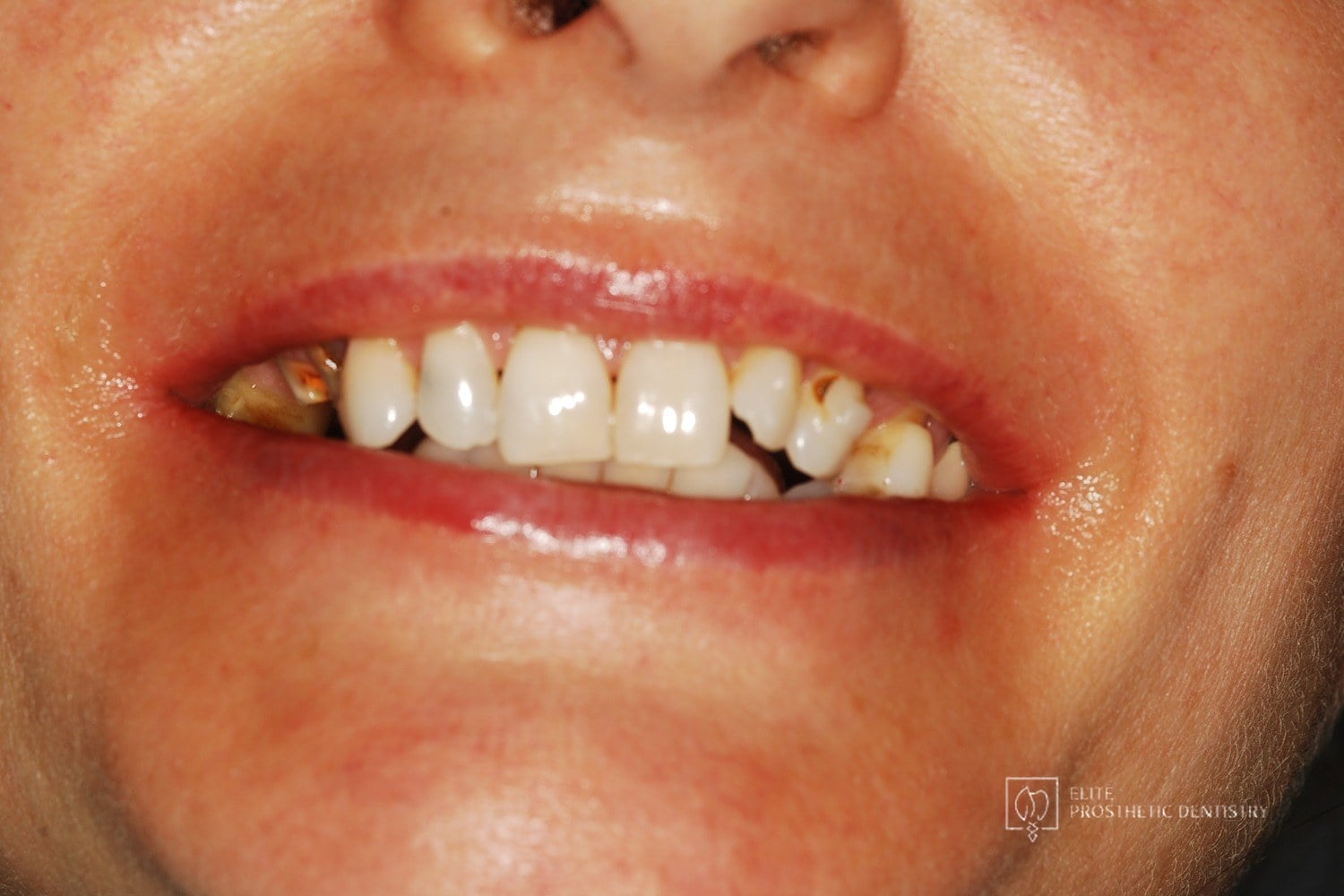 Before
 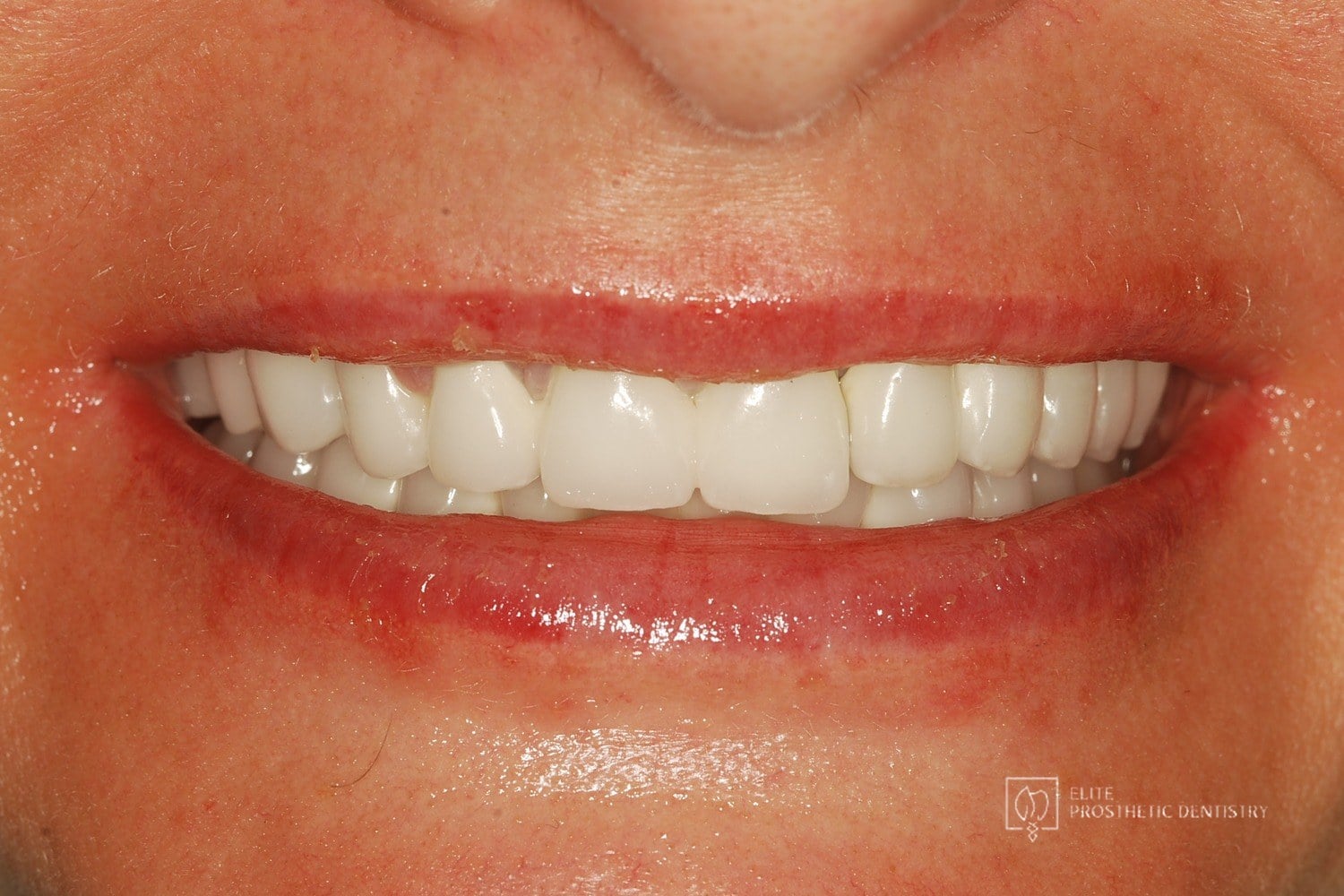 After
After How Aging, Failing Dentistry Was Replaced with a Coordinated Full-Mouth Implant and Crown Reconstruction
The patient presented with throbbing upper-molar pain, long-standing infections, multiple root canals and unfinished prior treatment, generalized sensitivity, and several hopeless teeth.
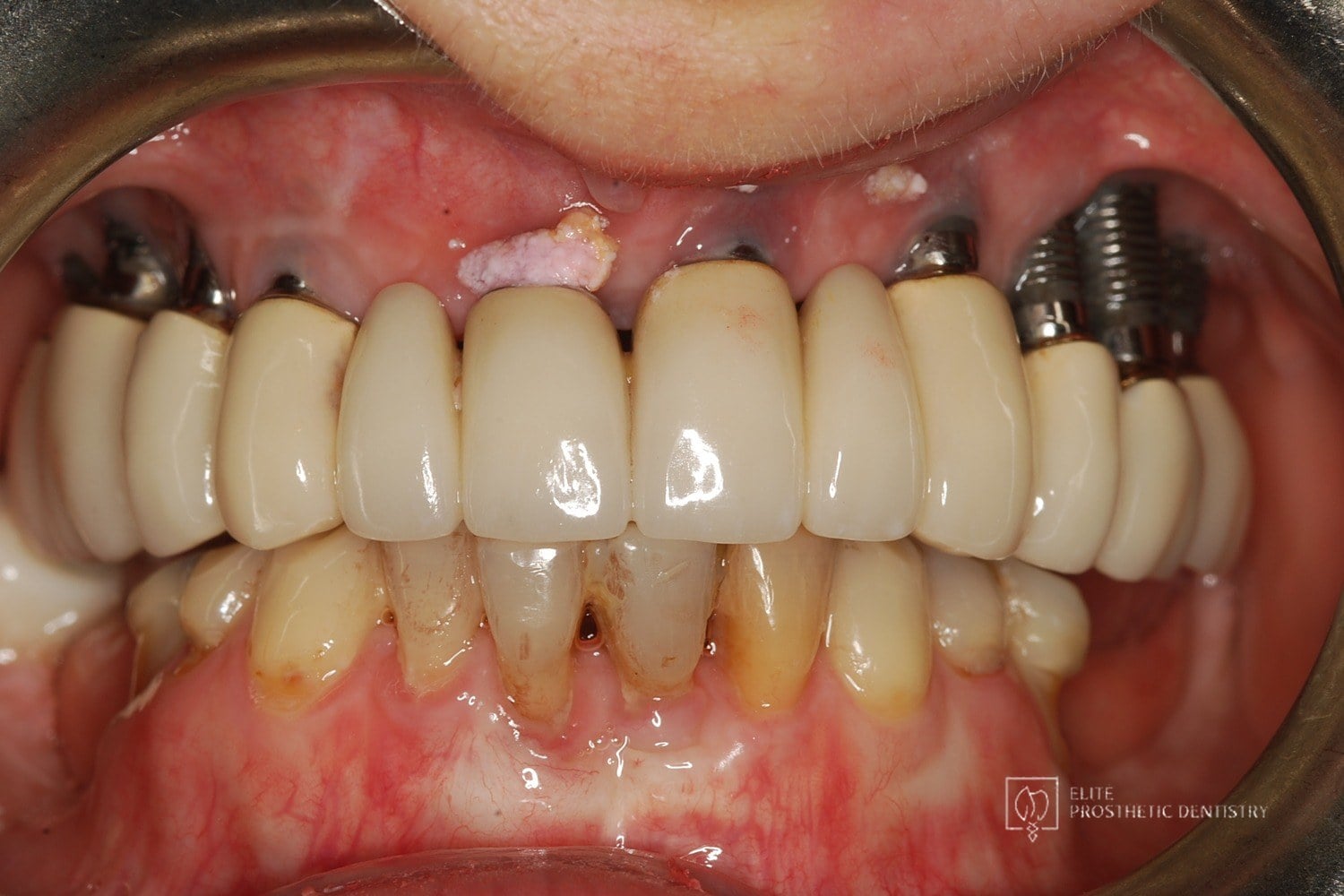 Before
  After
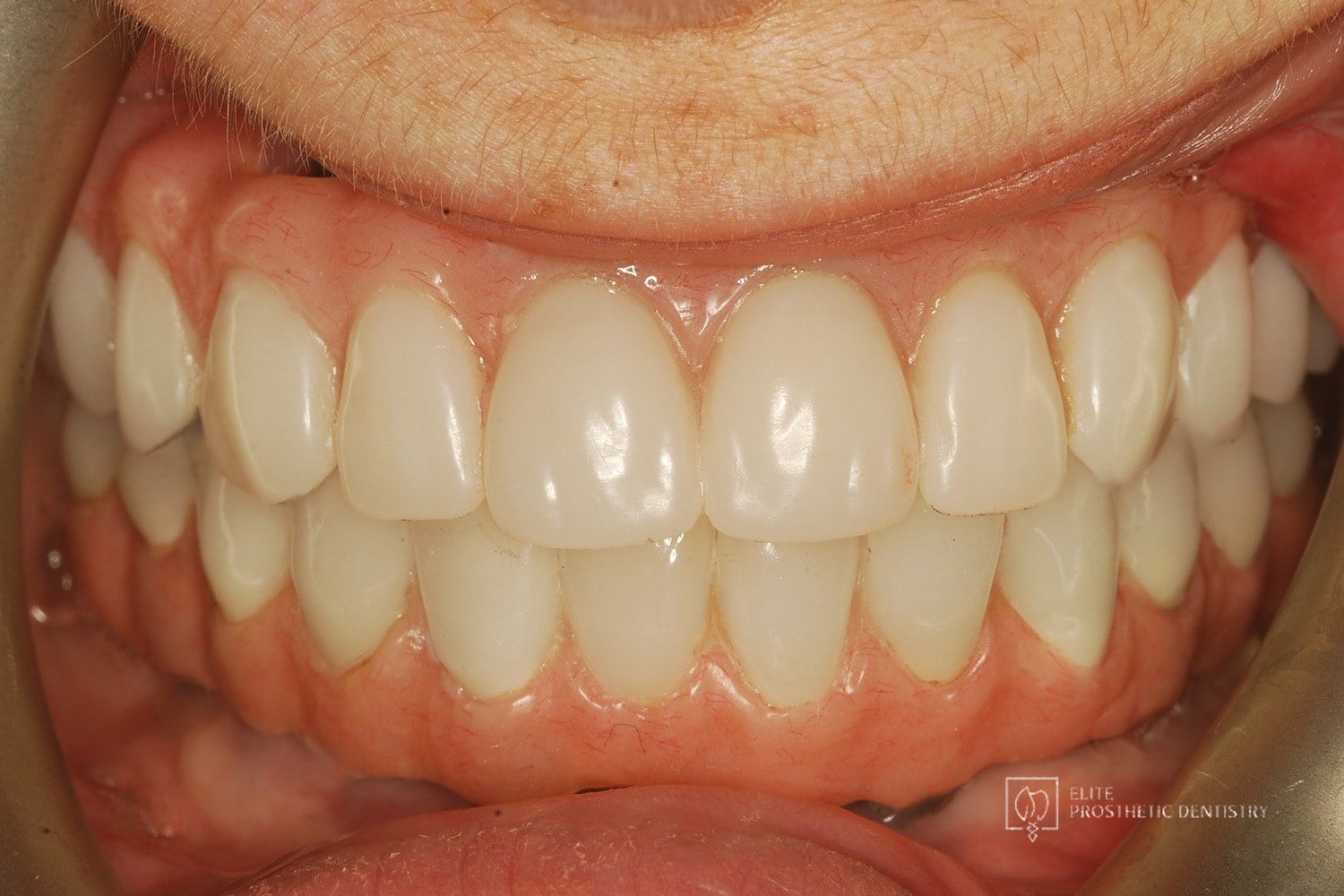
After How Failing Implants and Severe Bone Loss Were Rebuilt Into a Stable Full-Arch Implant Reconstruction
The patient presented with significant complications from previously placed implants, severe bone loss, failing posterior implants, and an unesthetic full-arch bridge. Both arches required full reconstruction, with the upper arch showing the most advanced bone loss and instability.
 Before
  After
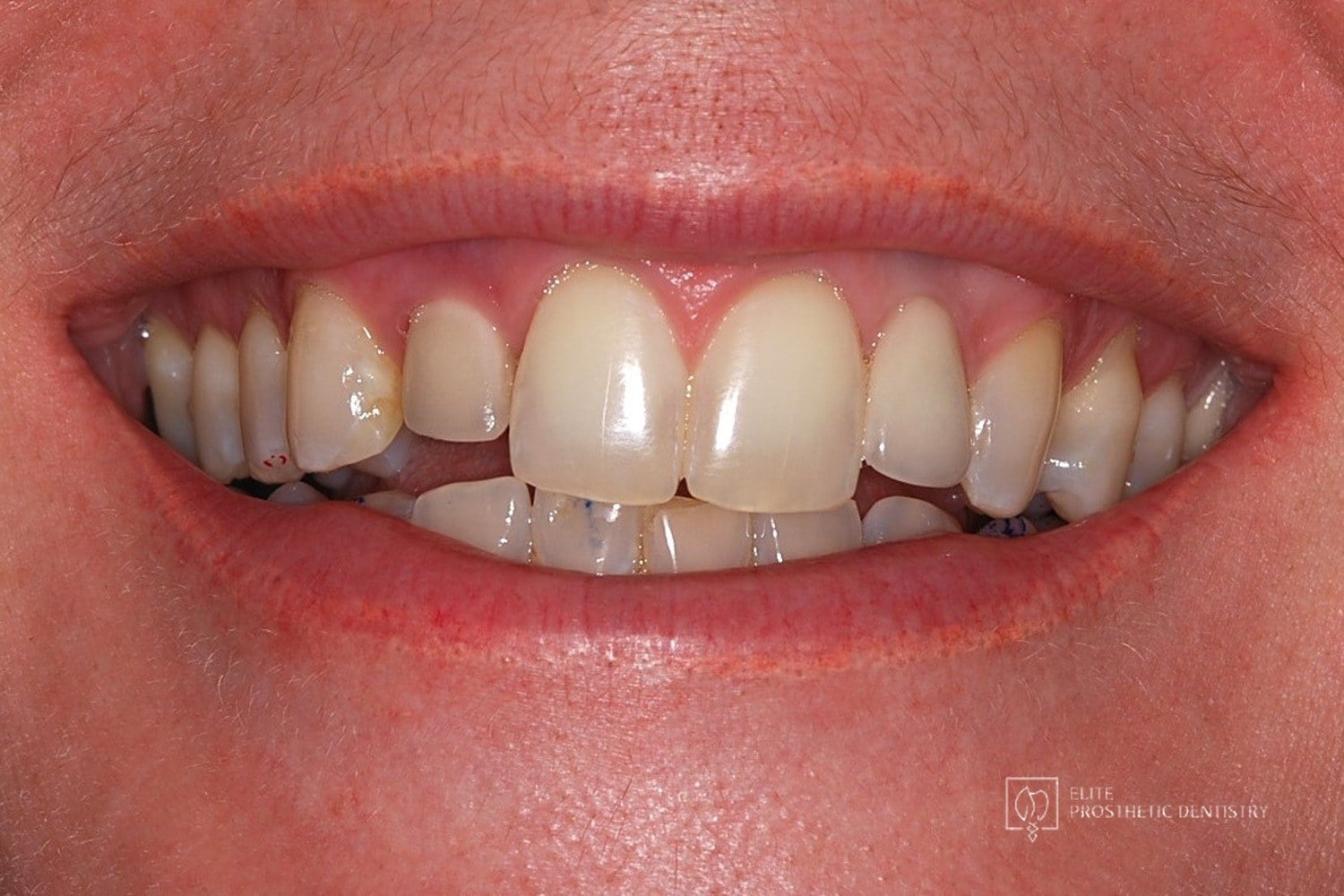
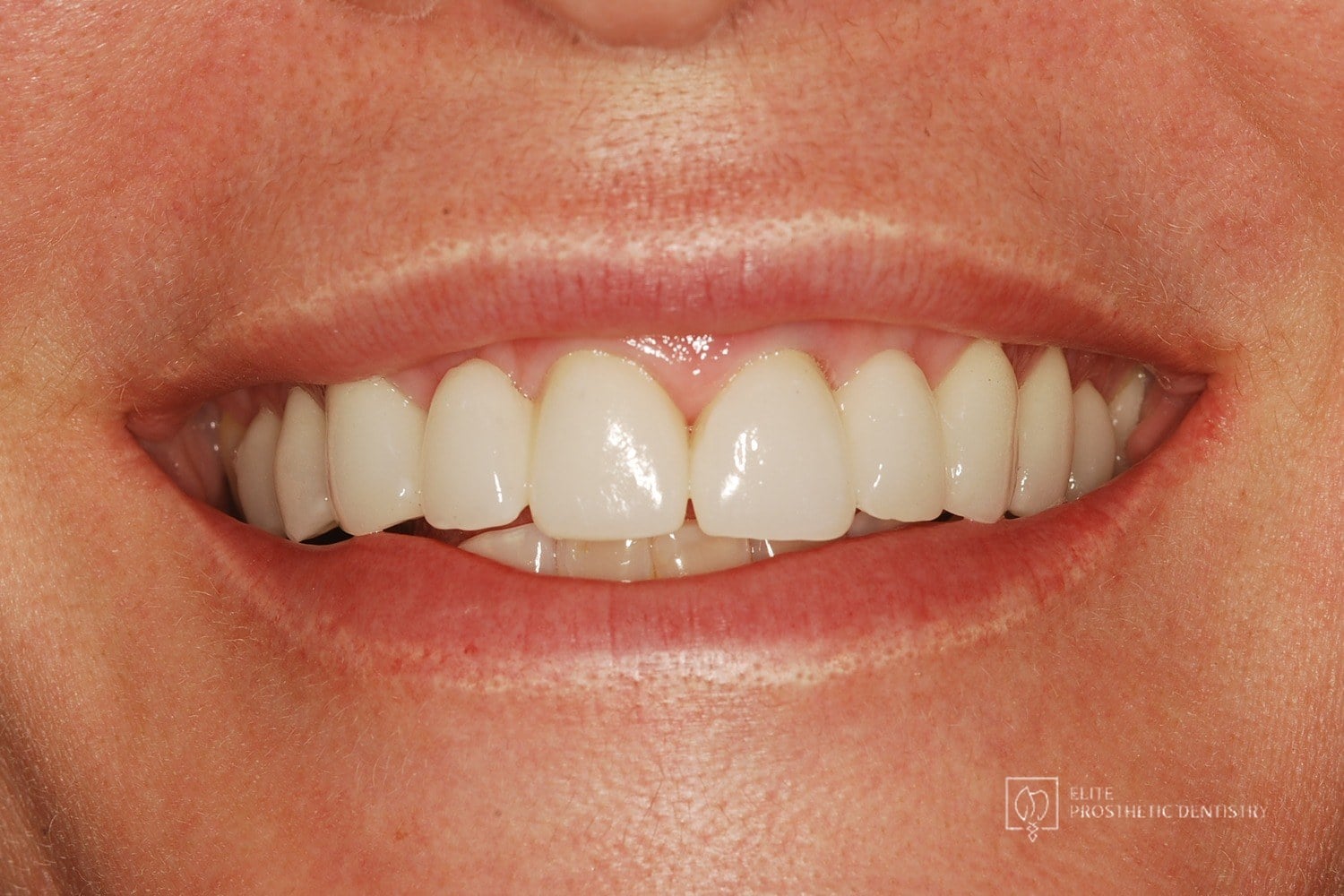
After How Failing Lateral Incisor Implants Were Replaced with Custom Zirconia Bridges After Severe Bone Loss Made Replacement Implants Impossible
Comprehensive examination including CBCT imaging revealed significant bone loss surrounding implants that were placed outside the buccal plate, most likely due to placement without a CBCT-generated surgical guide. The implants were determined non-salvageable, and the alveolar ridge was too narrow to support replacement implants without extensive reconstruction.
 Before
  After
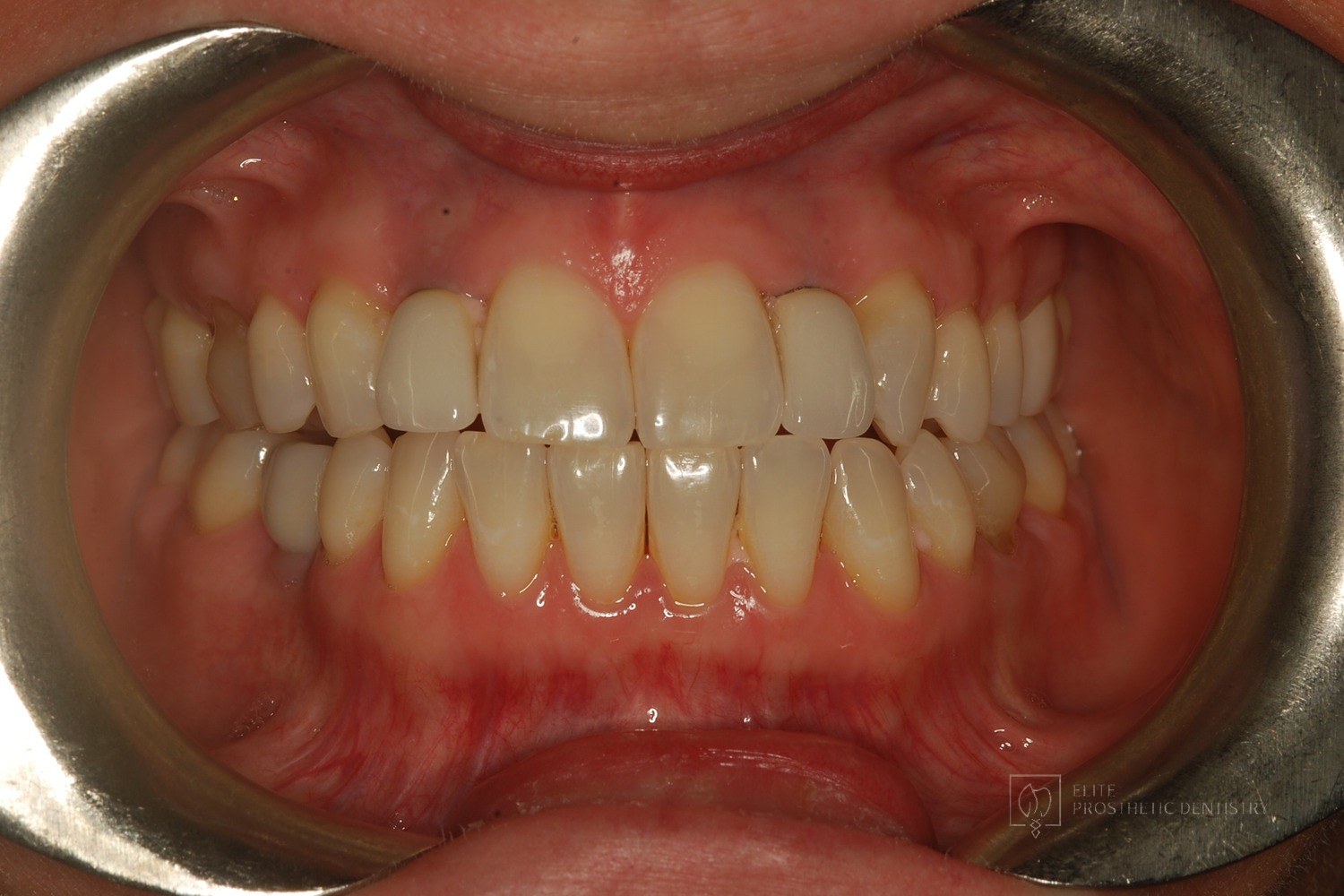
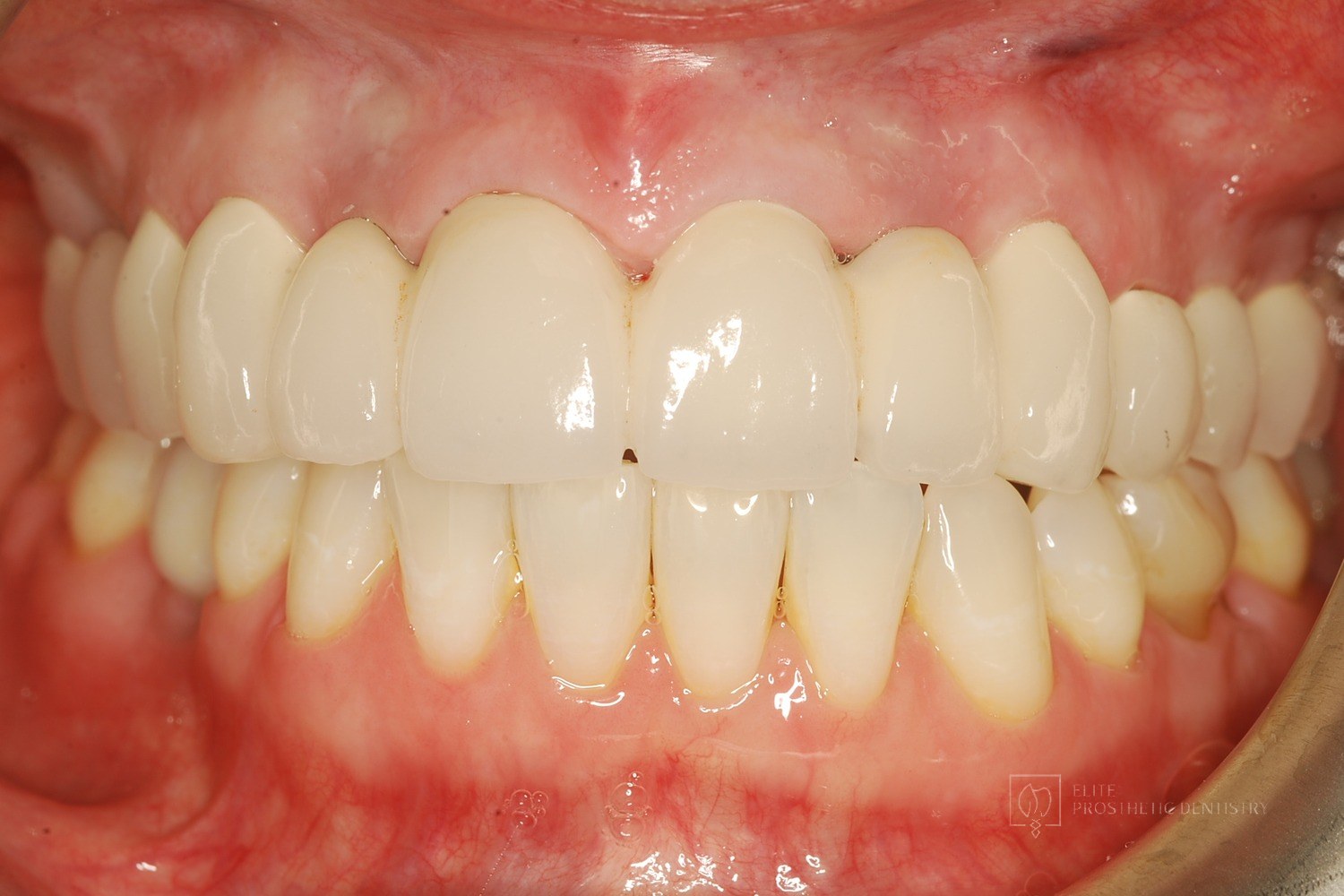
After How Older Implant Crowns Were Redesigned for a Better Bite and More Natural Appearance
The patient came in after years of living with implant-supported crowns placed more than twenty years earlier that no longer looked or functioned well. CBCT evaluation, reviewed with a radiologist colleague, showed the implants had been placed too far to the buccal in very thin bone and could not support a healthy long-term restoration.
 Before
  After
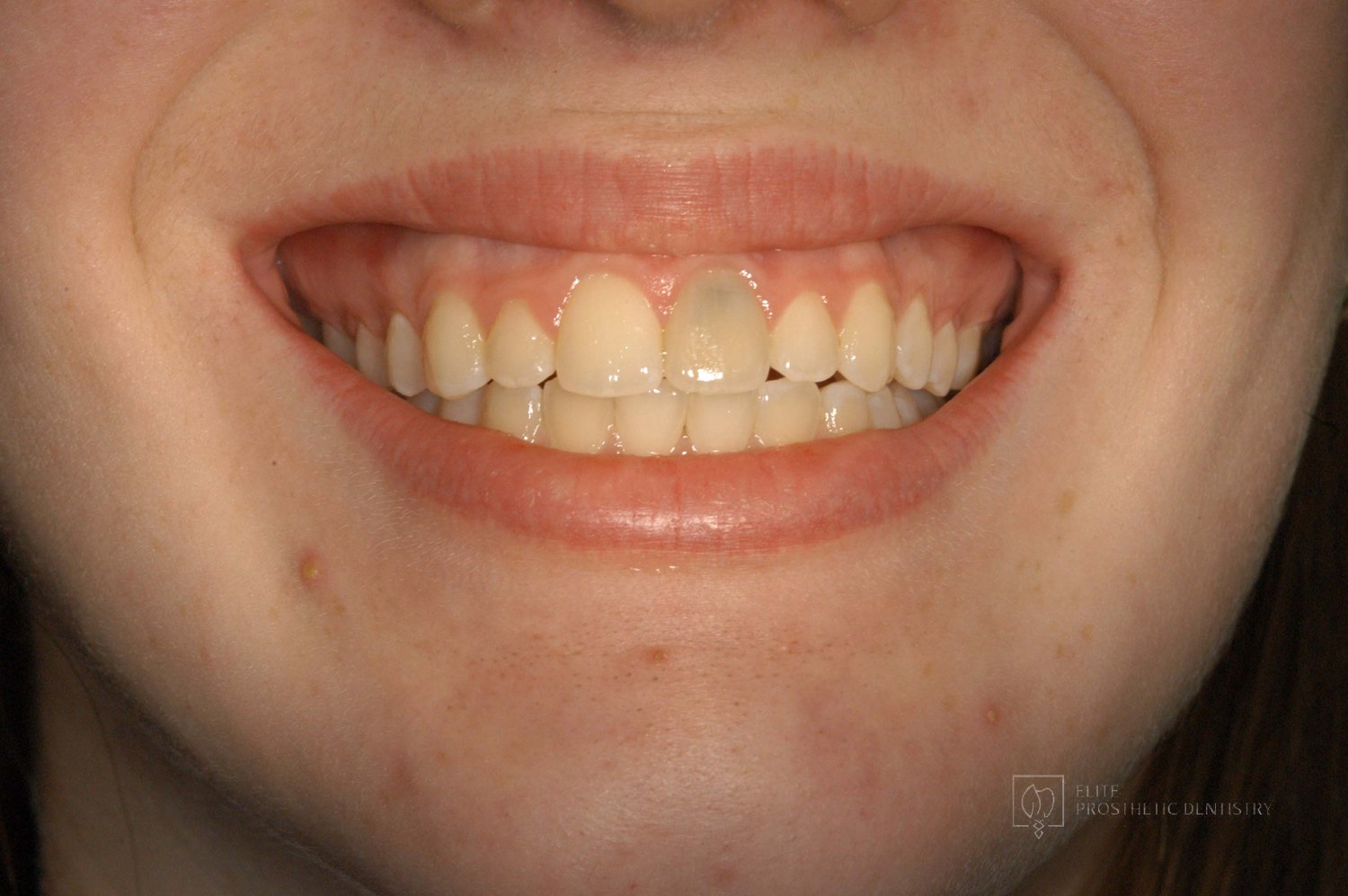
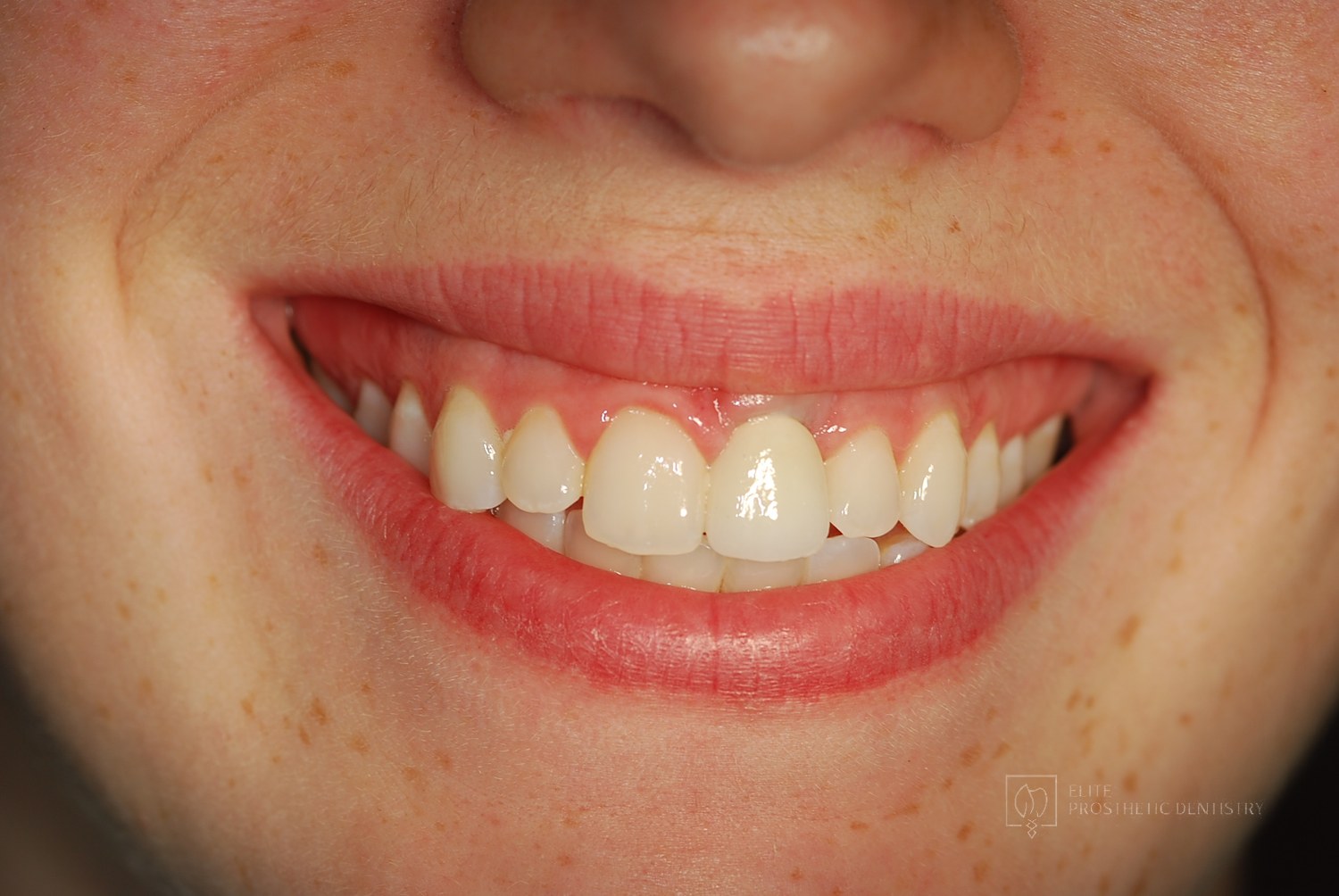
After How a Front Tooth Lost to Childhood Trauma Was Rebuilt with Bone Grafting and a Long-Lasting Implant
A teenager was referred by her father after earlier trauma left her upper left front tooth slowly failing from root resorption. She was still growing, so an immediate implant was the wrong move. The tooth had to be maintained to buy time, then replaced correctly once she reached skeletal maturity.
 Before
  After
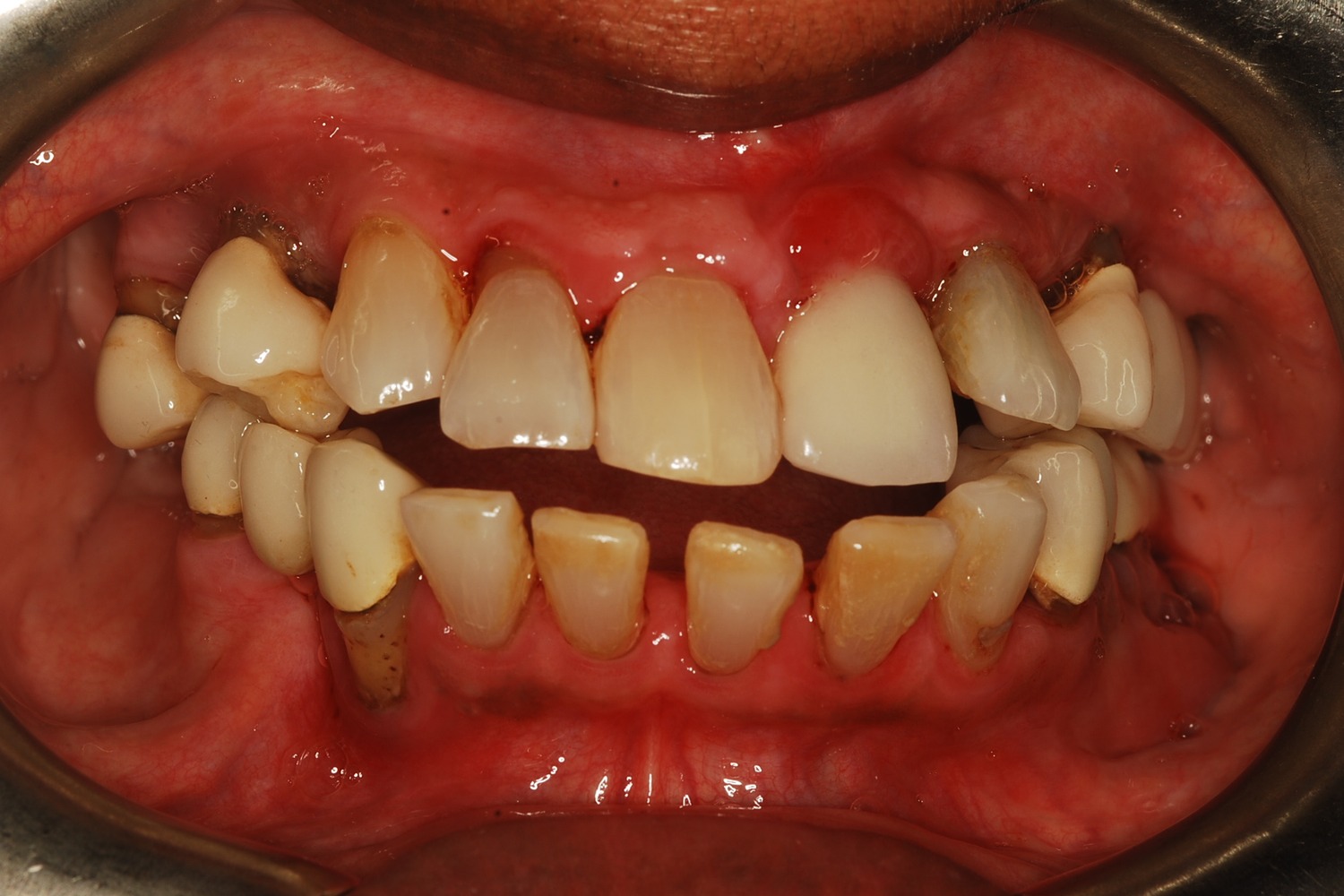
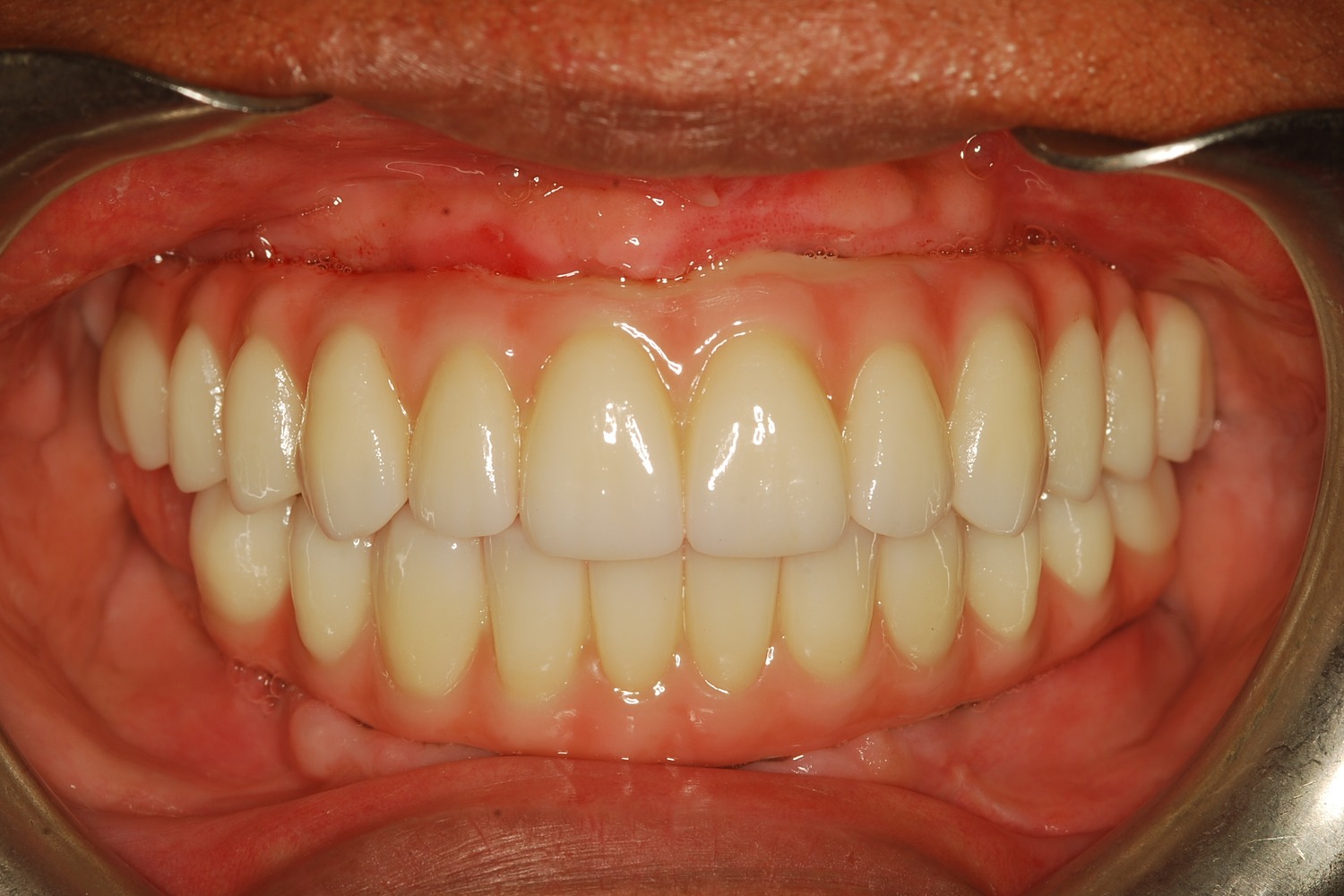
After How Severe Bone Loss and Bite Dysfunction Were Rebuilt with All-on-6 Implants and a Milled Zirconia Hybrid Prosthesis
The patient presented with severe bone loss, advanced periodontal disease, malocclusion, and a dysfunctional bite that required full-arch rebuilding.
Related Articles
Deepen your knowledge with additional insights on this topic.
 Dental Implants
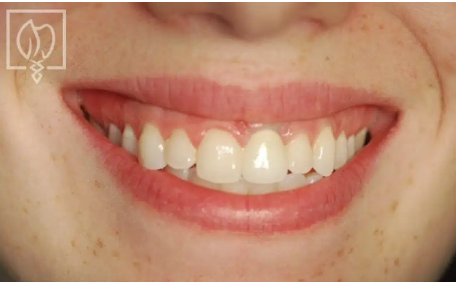
 If a Single Front Tooth Is Replaced with an Implant, Can It Look Natural?
Yes. See the four steps, with real case photos, that make a single front tooth implant indistinguishable from the natural tooth beside it. Washington, DC.
 Dental Implants
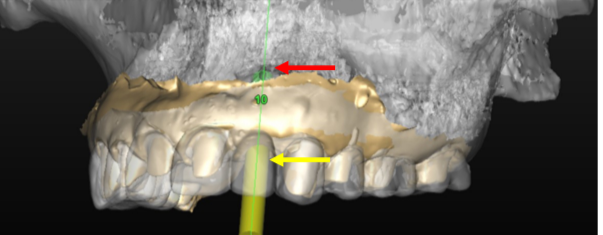
 What Is Precision Implant Placement (PIP)?
Precision Implant Placement plans each implant virtually on a CBCT scan, then delivers it with a custom surgical guide. See the three steps with real images.
 Dental Implants
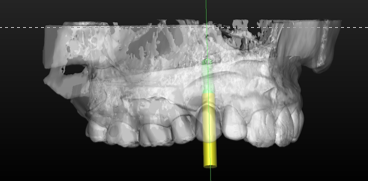
 What Is the Ideal Surgical Guide for Precision Implant Placement?
Not all surgical guides are equal. The gold standard is CBCT-based: planned virtually in 3D, 3D printed, and seated on your teeth. A DC prosthodontist explains.
 Dental Implants
 When Should an Implant Not Be Done?
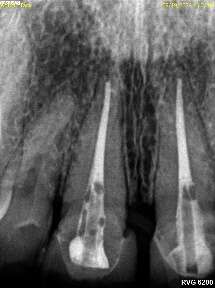
Healthy roots, thin bone, steep bony angles: a DC prosthodontist shows a real case where refusing implants was the right call, and what was done instead.
 Dental Implants
 What Is Staged Implant Therapy?
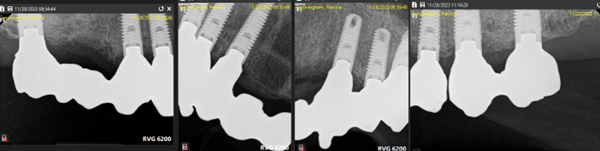
Staged implant therapy replaces failing teeth in phases while you keep fixed teeth the entire time. A DC prosthodontist walks through a real case in stages.
 Dental Implants
 The Four Types of Dental Implants: Which One Is Right for You?
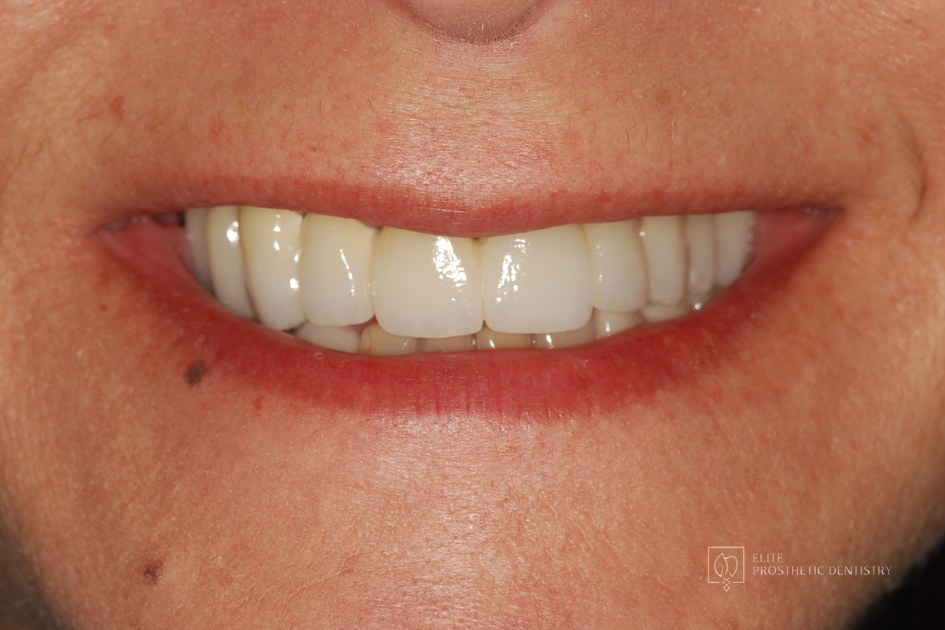
Endosteal, subperiosteal, zygomatic, and mini implants each solve a different problem. A DC prosthodontist explains the four types and who each one fits.
Deciding Who Should Treat You?
Our decision guide for Chevy Chase patients explains when implants, full mouth reconstruction, cosmetic work, or aging crowns and bridges call for a prosthodontist, and when another setting may serve you better.
Read the Chevy Chase decision guide →Our Services in Chevy Chase
Beyond Dental Implants, Chevy Chase patients rely on Dr. Marlin for a full range of advanced dental care.
More services available in Chevy Chase:
Dental Implants Near Chevy Chase
Dr. Marlin also provides dental implants services for patients in these neighboring communities.
Getting Here from Chevy Chase
Elite Prosthetic Dentistry is conveniently located near Chevy Chase, MD.
One stop on the Metro Red Line from Friendship Heights station, which is directly adjacent to our office building.
Address:
4400 Jenifer Street NW, Suite 220
Washington, DC 20015
Phone: (202) 244-2101
Request a ConsultationRequest a Specialist Consultation from Chevy Chase
Chevy Chase residents come to Dr. Marlin for specialist prosthodontic care. With 3,900+ implants placed over 40+ years, evaluation, planning, and execution are handled with the depth complex cases require.