
How Aging, Failing Dentistry Was Replaced with a Coordinated Full-Mouth Implant and Crown Reconstruction
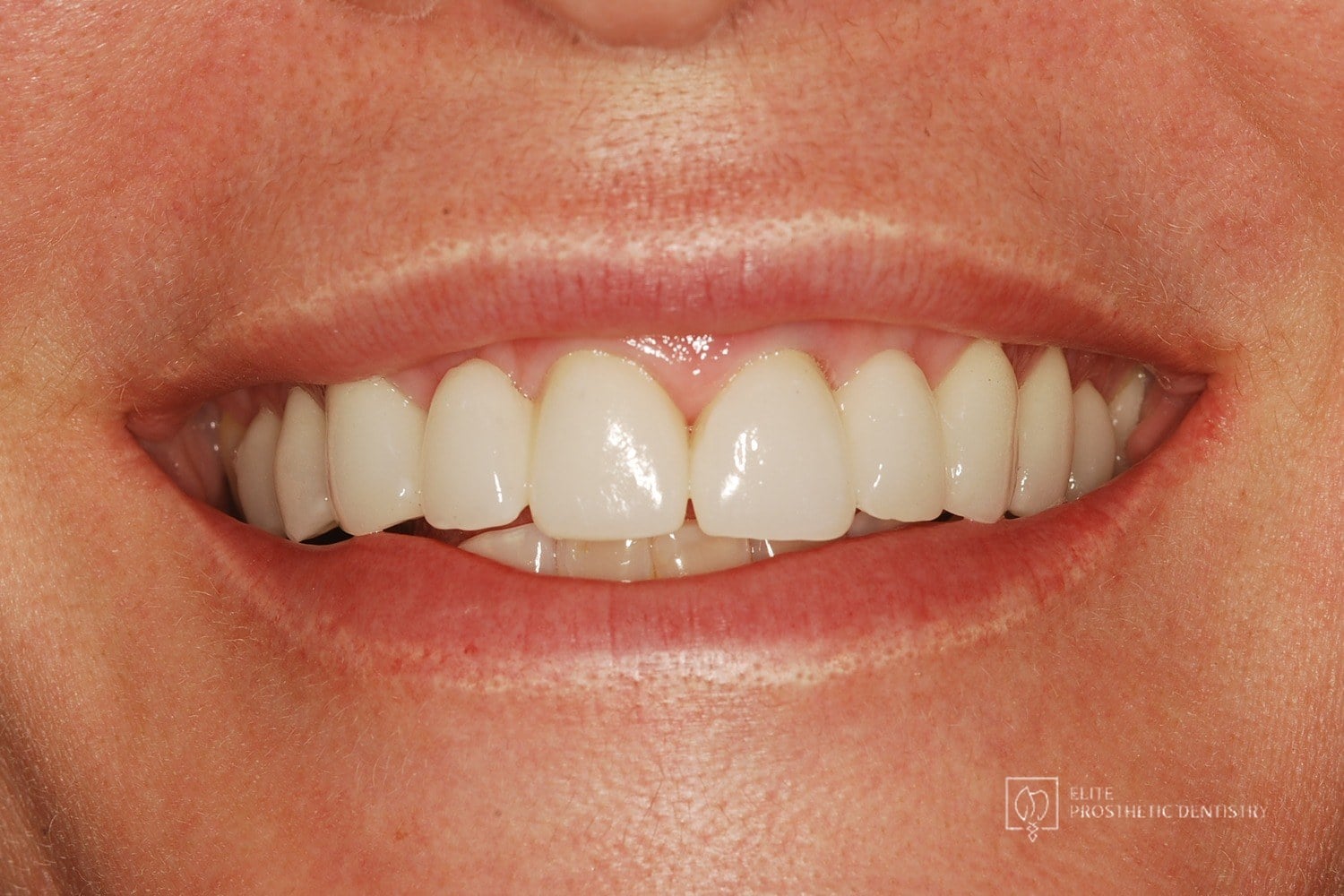
Close-up smile view
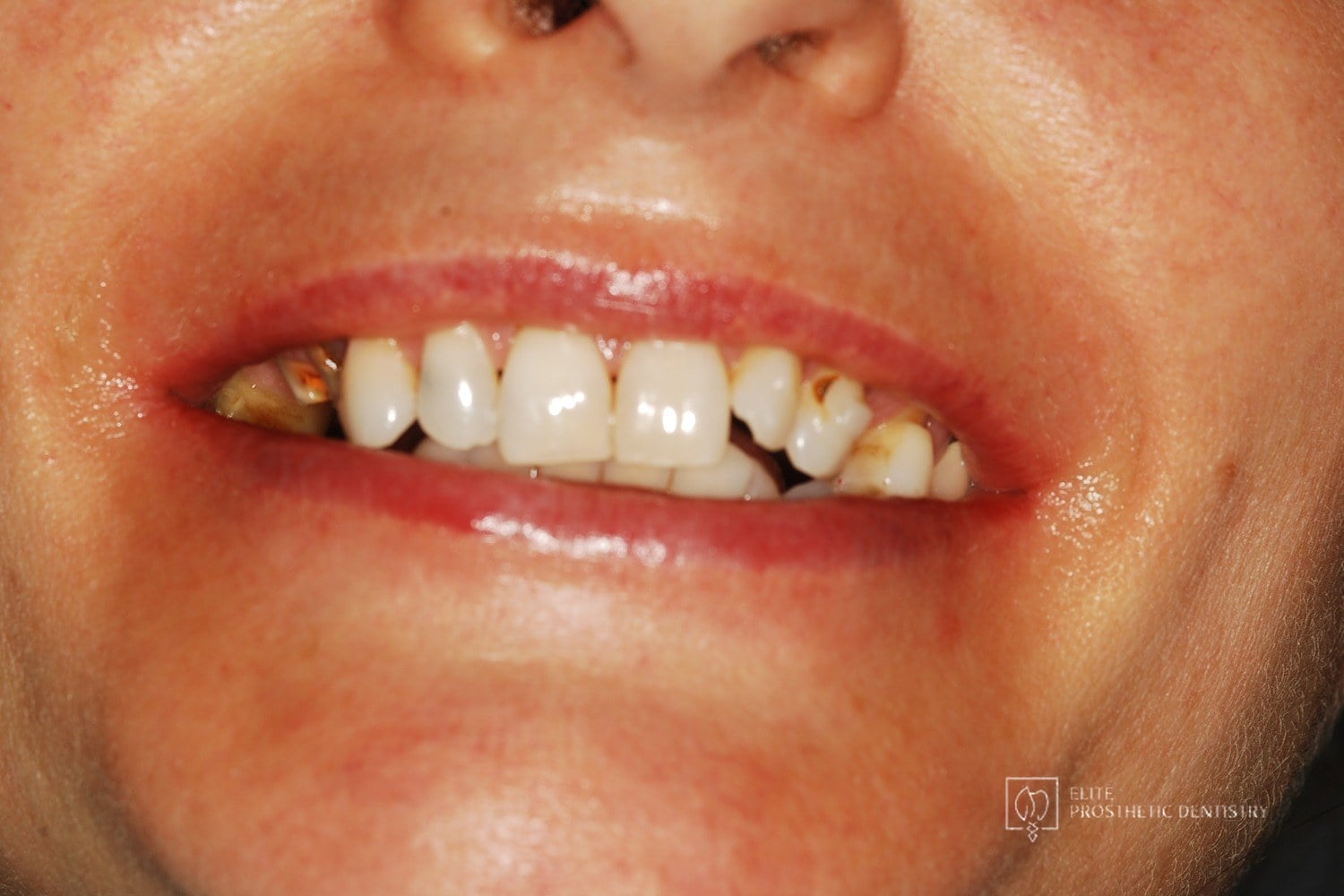 Before
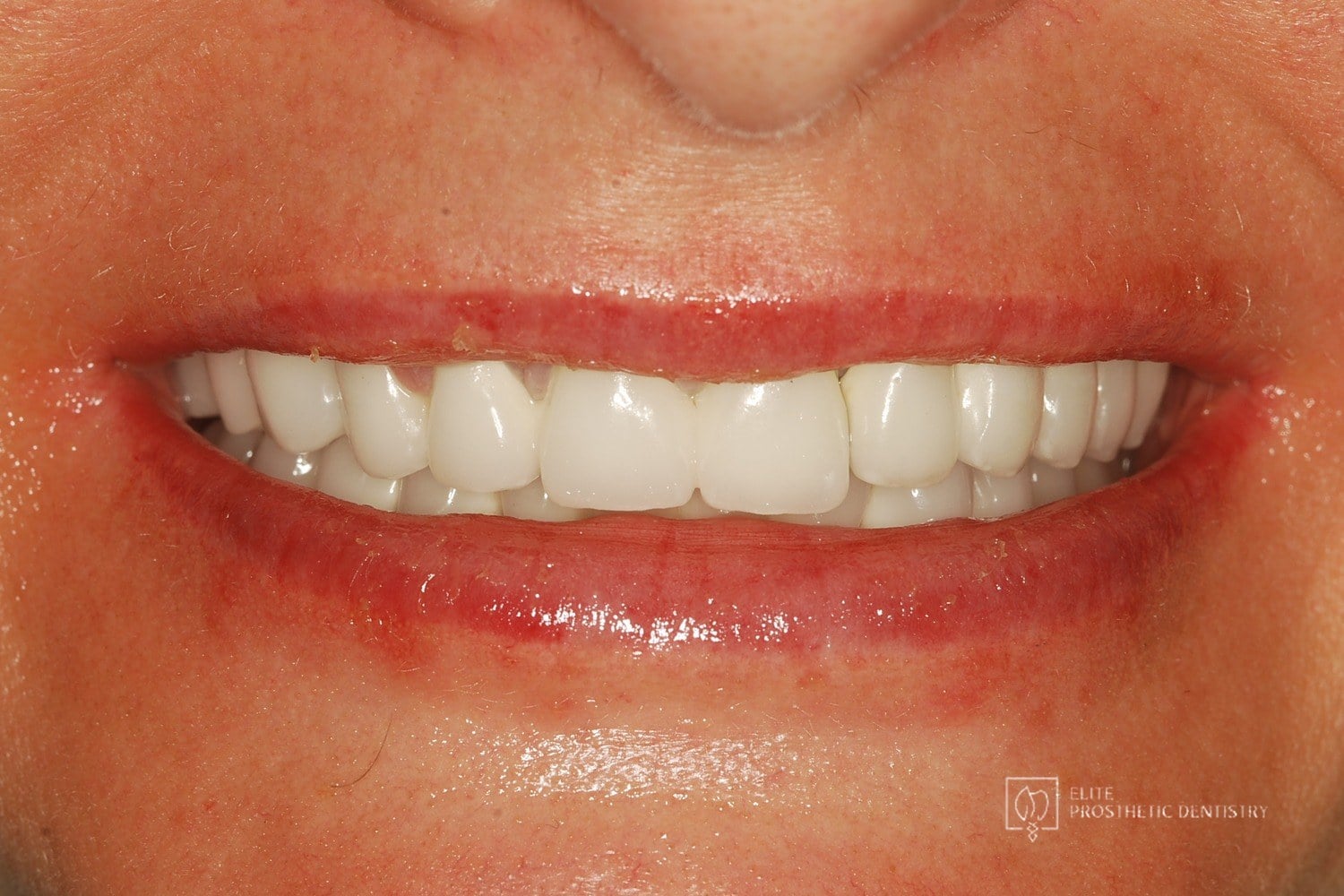 After
After
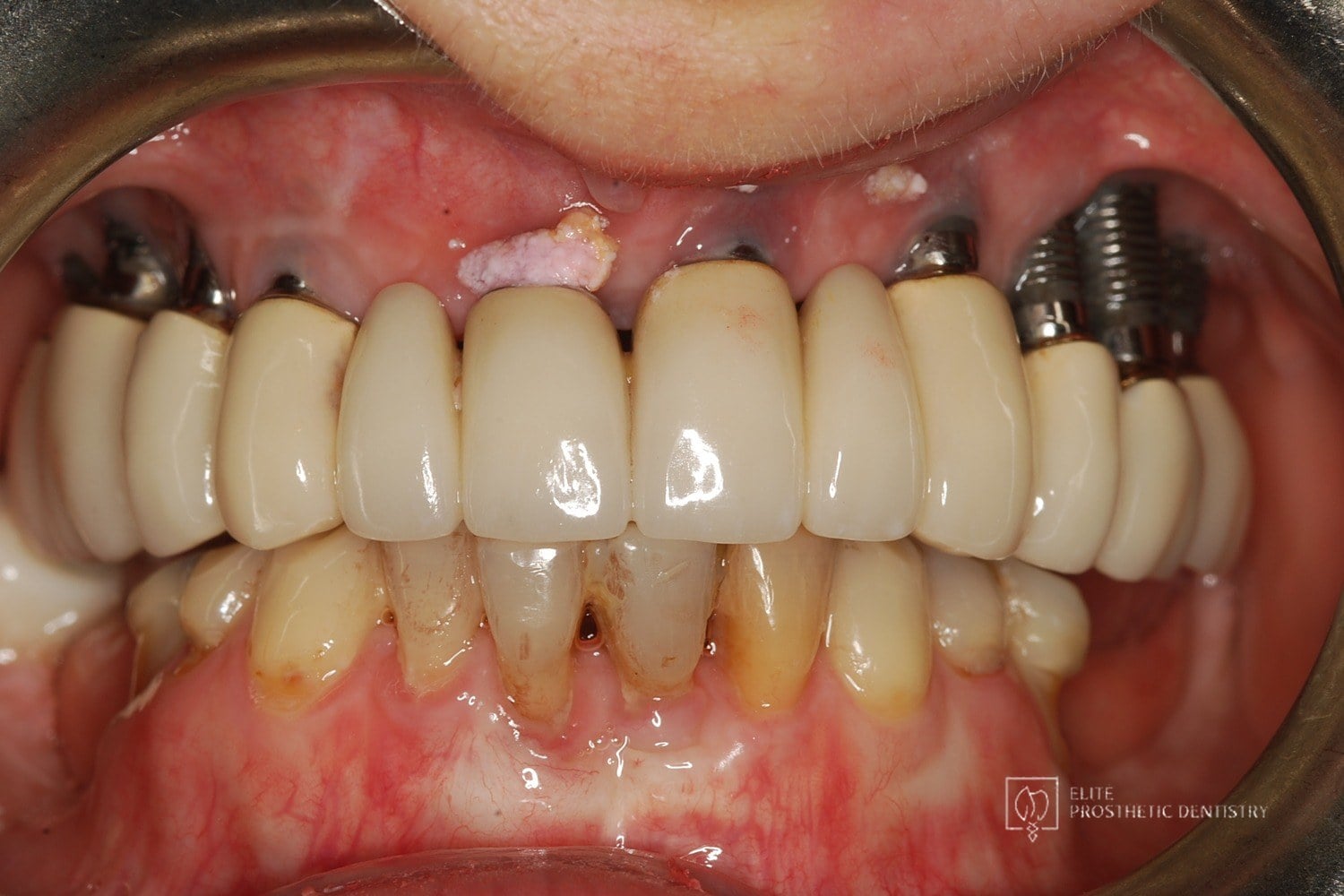
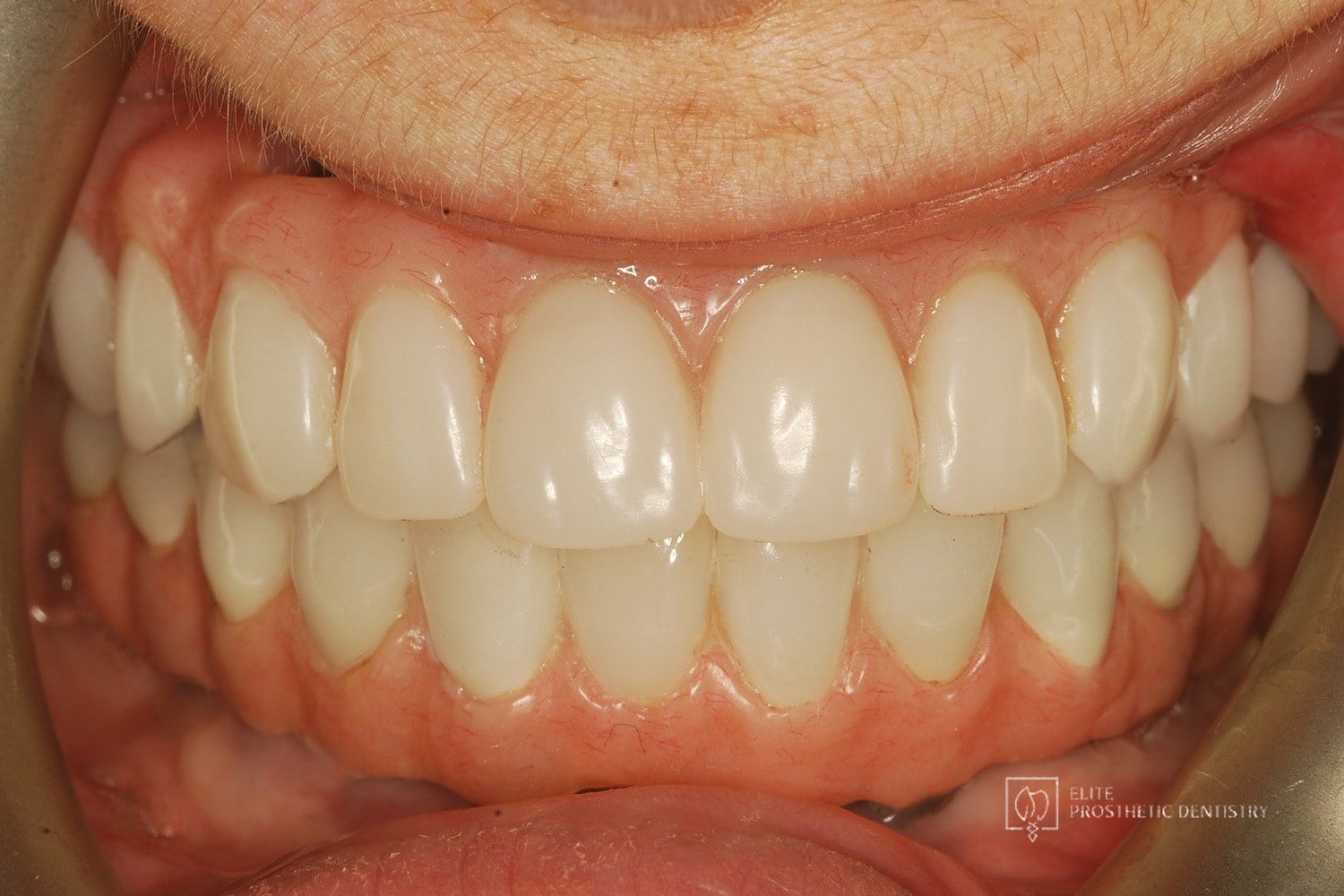
Intraoral view
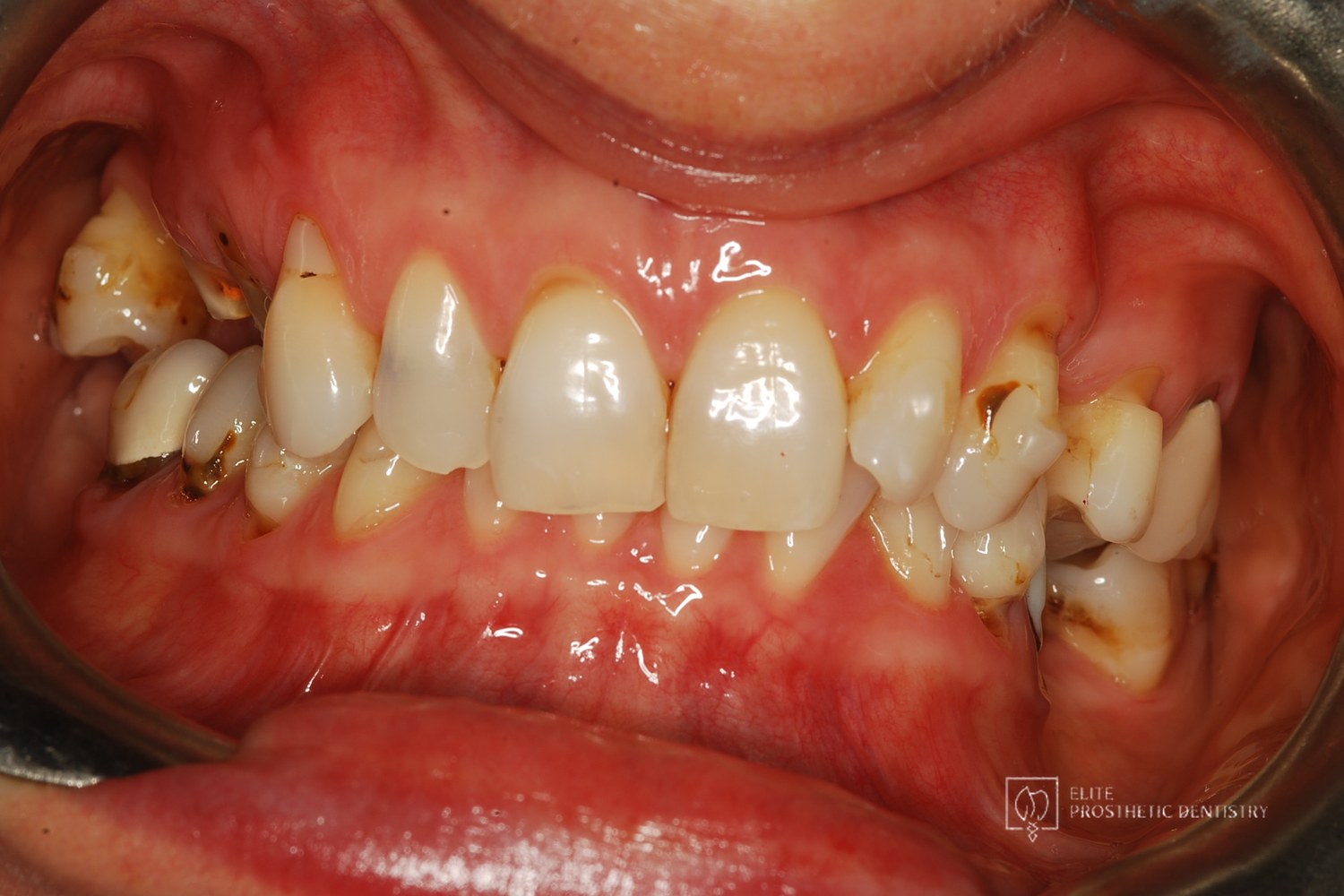 Before
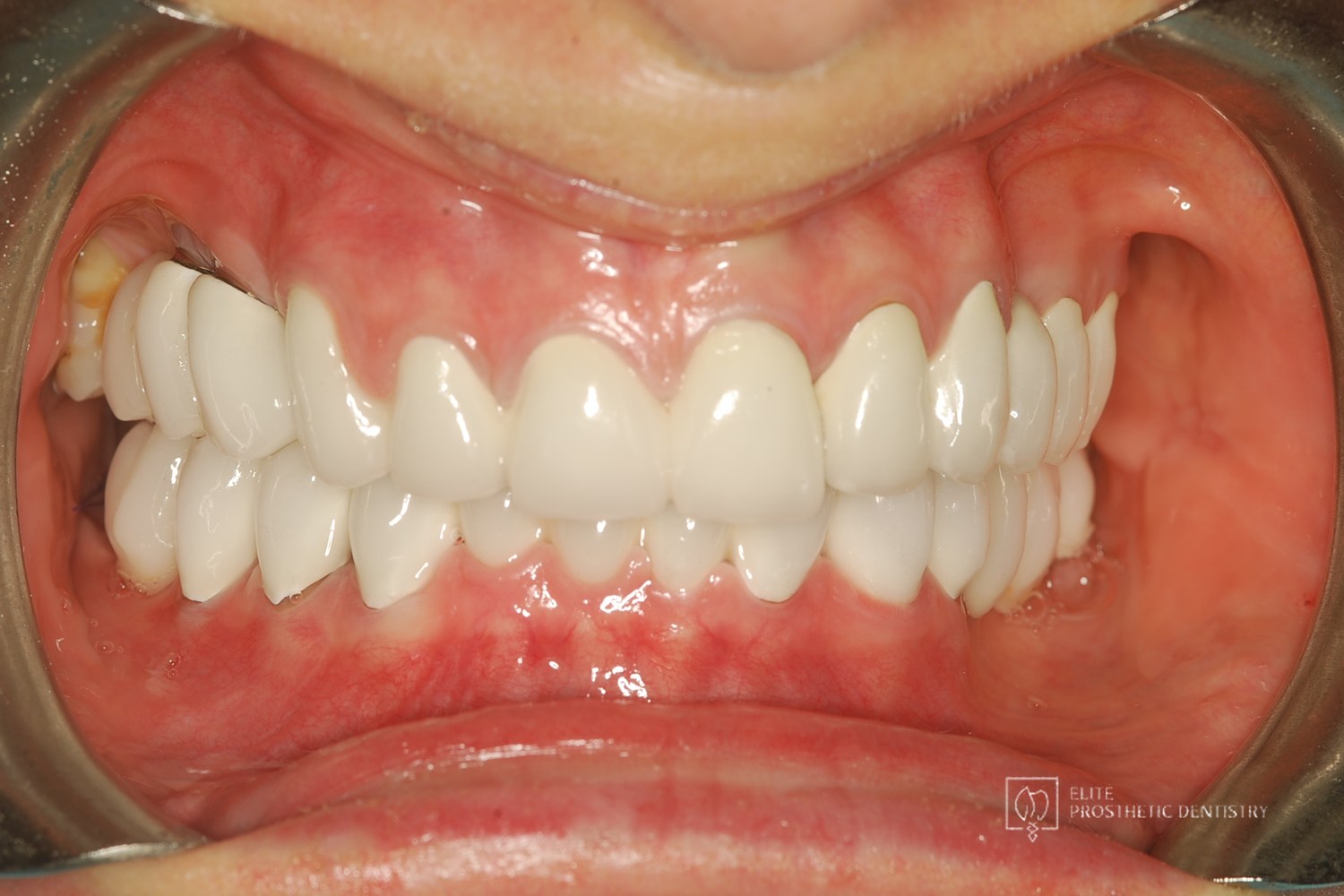 After
After
Treatment-phase imaging
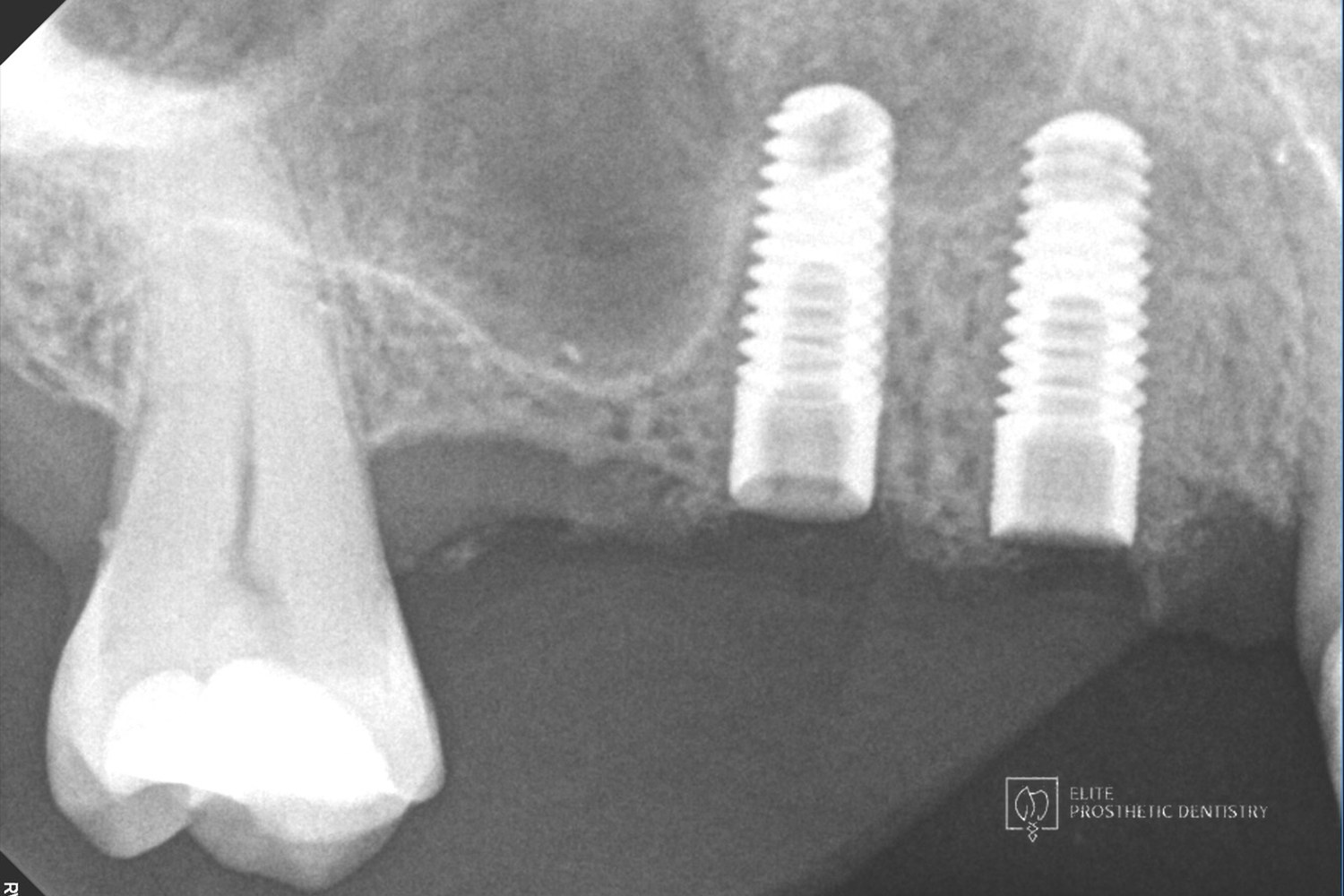
Aging dentistry replaced through a coordinated full-mouth reconstruction
Comprehensive replacement of aging, failing dentistry in Washington, DC for a patient who traveled in from Hilton Head, South Carolina. This documented case at Elite Prosthetic Dentistry rebuilt both arches through coordinated restorative and endodontic care, with implants placed where structurally required. Treatment was planned and completed by Dr. Gerald Marlin, D.M.D., M.S.D., a prosthodontist focused on complex full-mouth cases.
Case at a Glance
- Treatment
- Coordinated full-mouth implant and crown reconstruction
- Approach
- Endodontic evaluation, root canals and retreatments, extractions, implants, natural-looking crowns on both arches
- Case Type
- Replacing aging dentistry / Full-mouth reconstruction
- Patient Concern
- Throbbing upper-molar pain, long-standing infections, failed and unfinished dental work, multiple root canals, and sensitivity in almost every tooth.
- Decision Point
- Keep treating teeth one at a time as they failed, or evaluate everything with an endodontist and rebuild both arches under one coordinated plan.
- Outcome
- A complete, natural-looking full-mouth result with the sources of pain and infection addressed, for a patient who traveled from Hilton Head, South Carolina for the work.
- Why It Matters
- Shows how a coordinated specialist plan resolves years of patchwork dentistry at once, deciding tooth by tooth what to preserve and what to replace.
The presenting condition
The patient had lived with the pain for far too long before deciding it was time to take care of herself. She came in with throbbing pain in her upper molars, long-standing infections, and failed dental work. She had multiple root canals behind her, treatment that had been started and never finished, and sensitivity in almost every tooth. She also had a clear picture of what she wanted at the end: to feel confident about her smile again.
Clinical Findings
- →Throbbing pain in the upper molars
- →Long-standing infections and failed dental work
- →Multiple previous root canals and unfinished prior treatment
- →Sensitivity in almost every tooth
- →Several teeth that could not be saved
Why a coordinated plan rather than more one-tooth repairs
Years of patchwork dentistry leave a mouth where every tooth has its own history and no single repair fixes the underlying problem. A full evaluation lets the specialist decide, tooth by tooth, what can be preserved and what has to be replaced, and then sequence the work so the final result is coherent rather than another layer of patches. For a patient traveling from out of state, that sequencing also means the visits can be planned in larger, productive blocks.
The treatment plan
After a full evaluation, a comprehensive plan was built around four elements.
-
1
Endodontic evaluation of every questionable tooth
Working with an endodontist, each infected or previously treated tooth was evaluated to decide whether it could be saved predictably or needed to come out.
-
2
Root canals, retreatments, and crowns where teeth could be preserved
Teeth with a sound foundation were treated and retained as part of the restorative plan.
-
3
Extractions and implants for hopeless teeth
Teeth that could not be saved were removed and replaced with implants so the final restoration had the support it needed.
-
4
Full-mouth restoration with natural-looking crowns
Both arches were restored with crowns designed to look natural and function together as one coordinated bite.
The outcome
The sources of pain and infection were addressed as part of the plan, and the completed work replaced years of aging, failing dentistry with a full set of natural-looking crowns on both arches, supported by implants where the original teeth could not be saved. The patient committed to the whole plan from the start, and the before and after views at the top of this page show what that commitment produced.
Result Highlights
- ✓Infected and previously treated teeth evaluated with an endodontist before any restorative work
- ✓Teeth that could be saved were retreated and crowned; hopeless teeth were replaced with implants
- ✓Both arches restored under one coordinated plan
- ✓Natural-looking crowns on the upper and lower teeth
- ✓Completed for a patient who traveled from South Carolina for the work
Who this case may sound familiar to
This story tends to resonate with patients in a few recognizable situations:
- You have crowns, fillings, and root canals that are decades old and you can feel things starting to give way across multiple teeth at once.
- You have had teeth retreated and patched repeatedly, and you would rather rebuild the foundation properly than continue chasing individual failures.
- You are willing to travel for the right level of specialist evaluation and care, particularly for a coordinated full-mouth plan rather than a sequence of one-tooth fixes.
- You want the next phase of your dentistry planned to last, not designed to be repaired again in another few years.
- You want one team to evaluate everything, decide what to preserve and what to replace, and sequence the work so the final result is coherent rather than patchwork.
If any of those describe where you are, a consultation with Dr. Marlin can give you the diagnostic picture and the specific plan for your case.
Frequently asked questions
When should aging dentistry be replaced rather than repaired?
Aging crowns, bridges, or fillings should be evaluated for replacement when the underlying tooth structure becomes compromised, when restorative margins are no longer sealing properly, or when the overall bite has shifted in ways that smaller repairs cannot correct. A prosthodontic evaluation looks at the structure underneath, not just the visible surface.
Is it worth traveling out of state for full-mouth reconstruction at a specialist practice?
For complex full-mouth cases, the additional depth of evaluation, planning, in-house laboratory control, and coordinated specialist care available at a prosthodontic practice often justifies the travel. The practice can plan visit sequences so that larger blocks of work are completed during each trip.
How are infected and previously treated teeth managed during a full-mouth rebuild?
An endodontist evaluates each previously treated tooth to determine whether it can be safely retreated and preserved or whether it needs to be removed. Teeth that can be retained become part of the restorative plan; teeth that are not salvageable are replaced with implants where appropriate. This evaluation happens before the restorative work begins.
What is the difference between rescue dentistry and replacing aging dentistry proactively?
Rescue dentistry addresses an acute failure or breakdown. Proactive replacement of aging dentistry addresses restorations that are still functioning but are approaching the end of their predictable service life. Treating proactively often allows for more conservative planning and a better long-term outcome than waiting for a failure event.
More about the work behind this case
This case combines full mouth reconstruction with dental implants where the existing teeth could not be preserved. The coordinated approach reflects the practice’s philosophy on complex multi-tooth cases, and the willingness of patients to travel for that level of care is reflected in the practice’s travel-for-care work.
Elite Prosthetic Dentistry treats patients from across the DMV including Bethesda, Chevy Chase, McLean, Arlington, Potomac, and Great Falls, and from much further out for cases that warrant the trip.
Related Patient Success Stories
Explore similar patient success stories demonstrating our expertise in advanced prosthetic dentistry.
Before After How Aging, Failing Dentistry Was Replaced with a Coordinated Full-Mouth Implant and Crown Reconstruction
The patient presented with throbbing upper-molar pain, long-standing infections, multiple root canals and unfinished prior treatment, generalized sensitivity, and several hopeless teeth.
 Before
  After
After How Failing Implants and Severe Bone Loss Were Rebuilt Into a Stable Full-Arch Implant Reconstruction
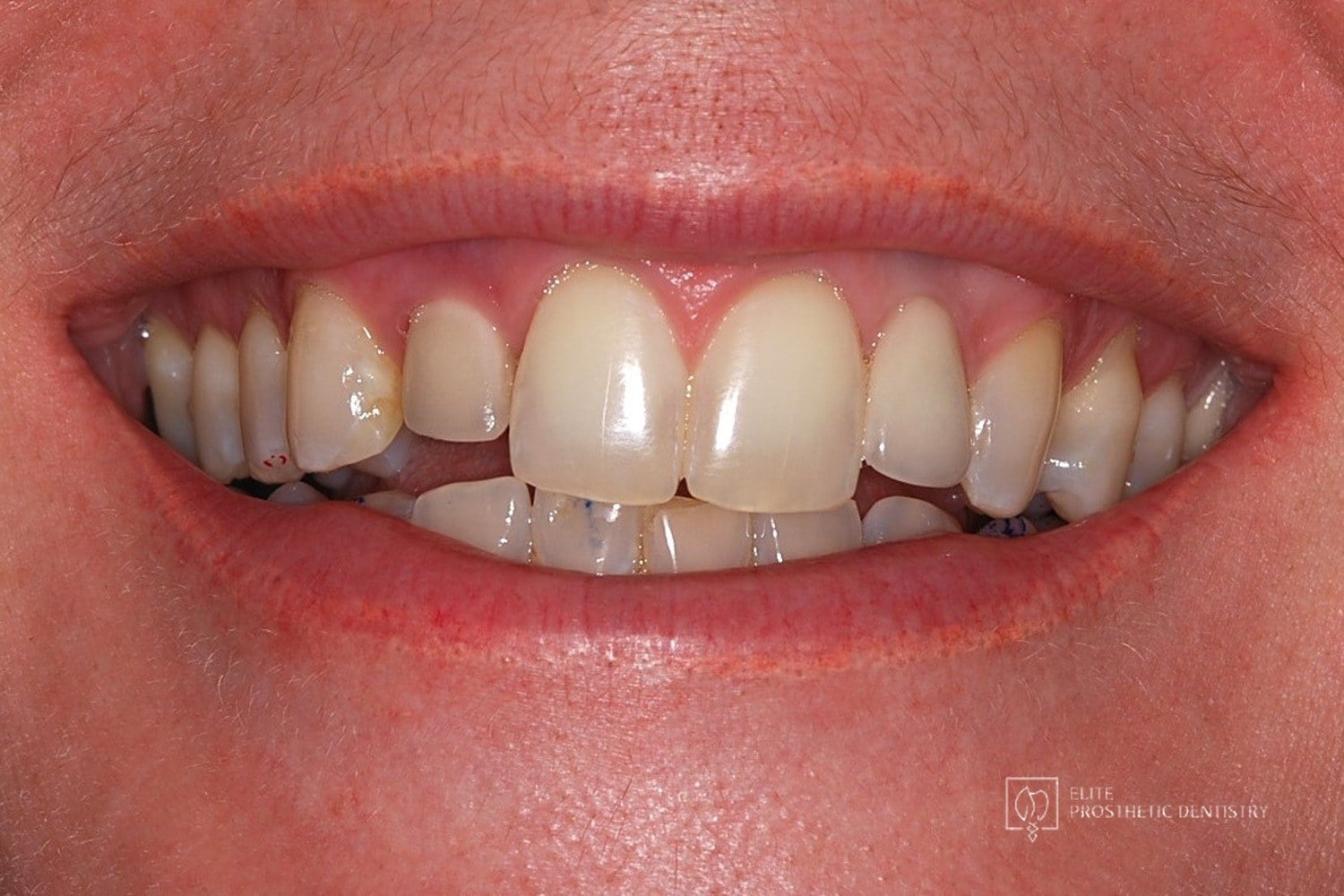
The patient presented with significant complications from previously placed implants, severe bone loss, failing posterior implants, and an unesthetic full-arch bridge. Both arches required full reconstruction, with the upper arch showing the most advanced bone loss and instability.
 Before
  After
After How Failing Lateral Incisor Implants Were Replaced with Custom Zirconia Bridges After Severe Bone Loss Made Replacement Implants Impossible
Comprehensive examination including CBCT imaging revealed significant bone loss surrounding implants that were placed outside the buccal plate, most likely due to placement without a CBCT-generated surgical guide. The implants were determined non-salvageable, and the alveolar ridge was too narrow to support replacement implants without extensive reconstruction.