
How Aging, Opaque Restorations Were Replaced with Customized Ceramic Restorations Designed for Long-Term Natural Esthetics
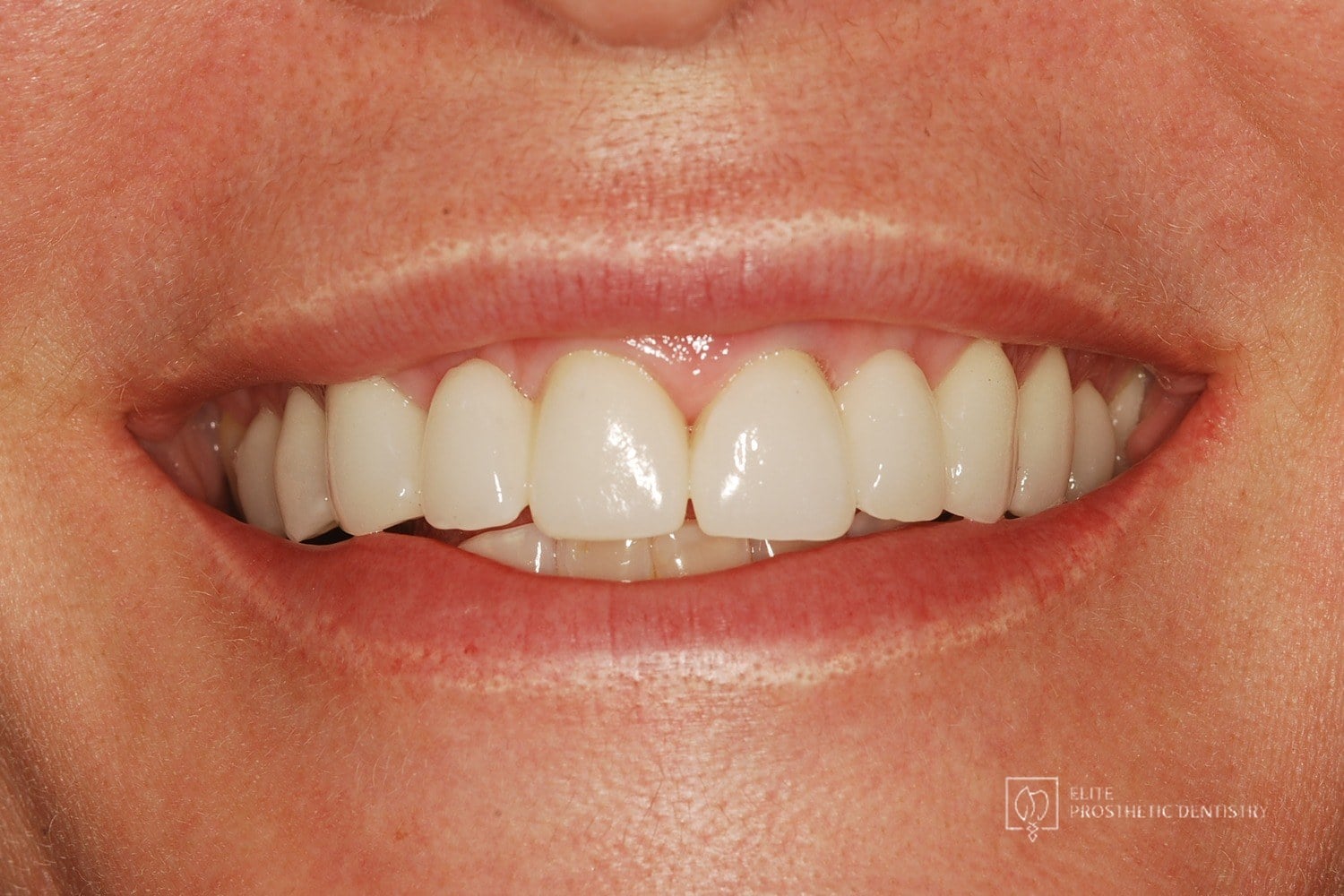
Close-up smile view
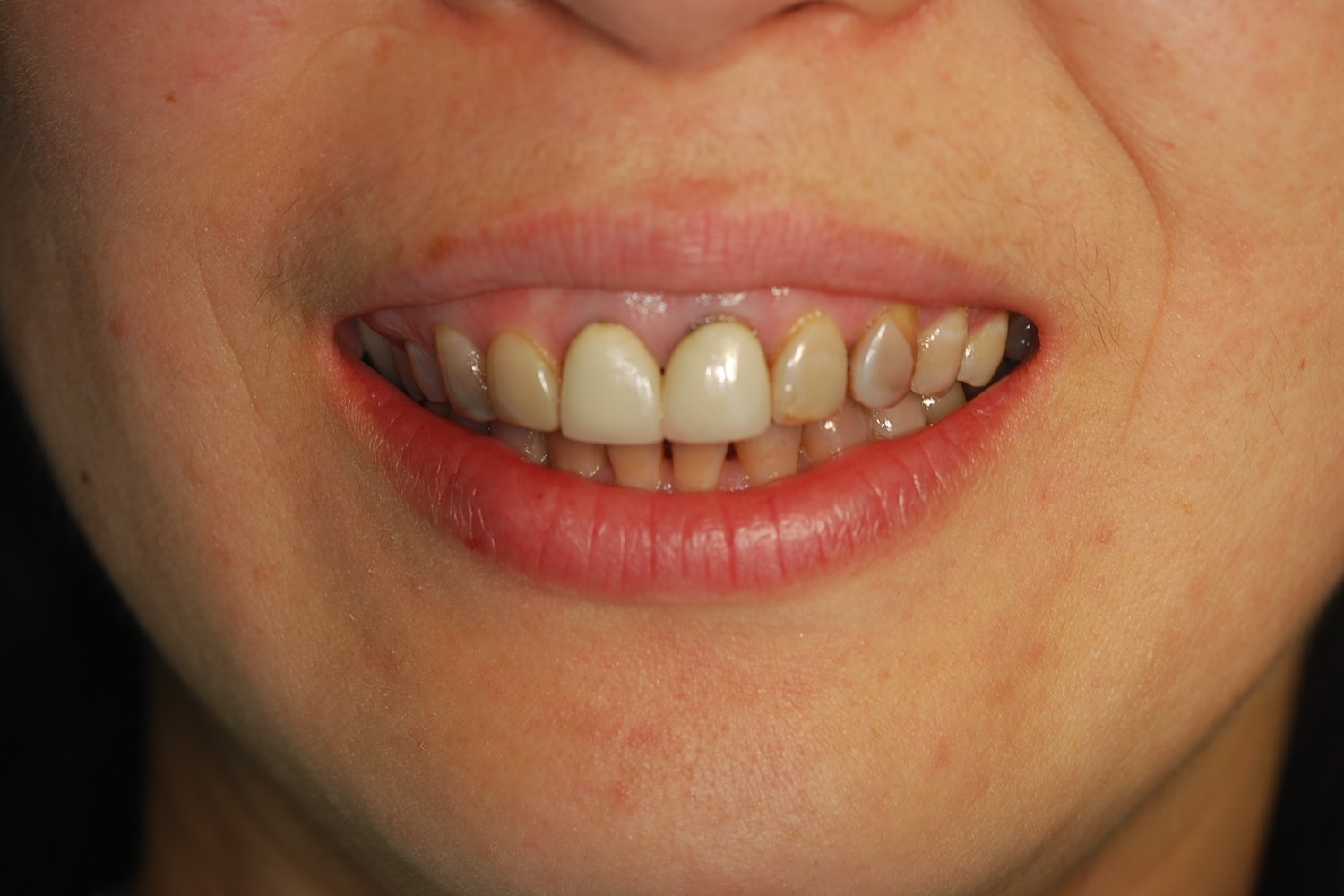 Before
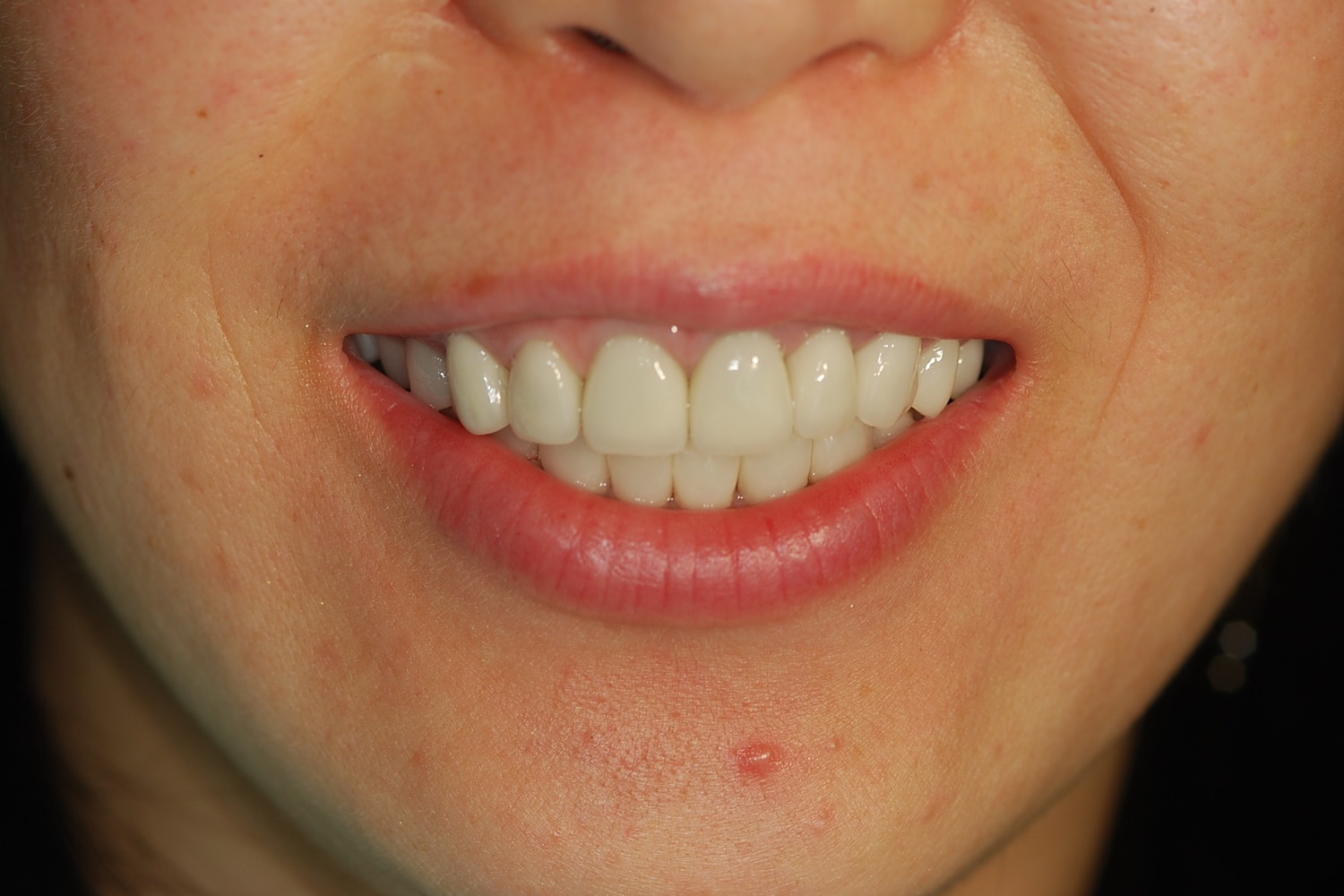 After
After
Pre-treatment intraoral retracted view
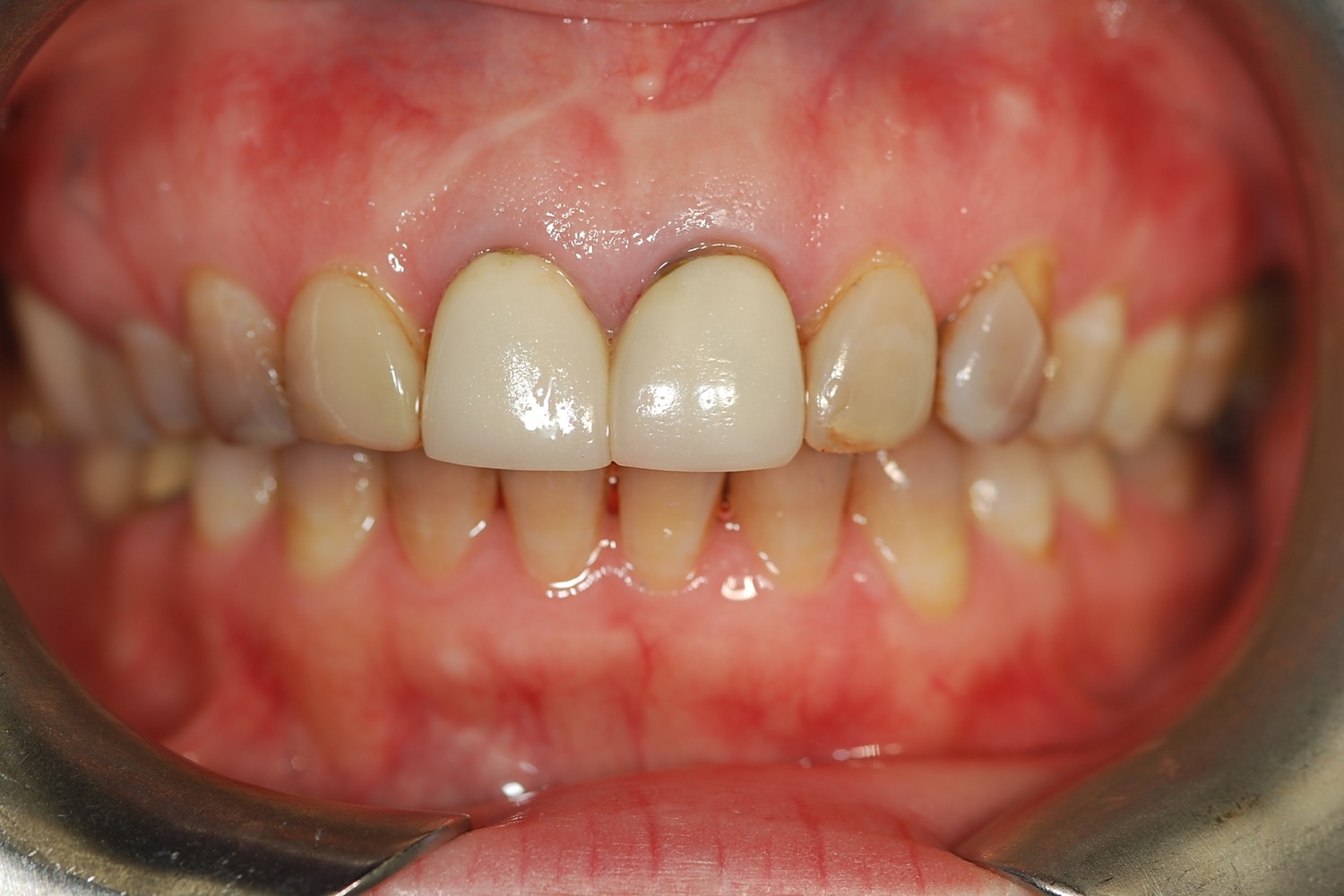
Intraoral retracted view
Before
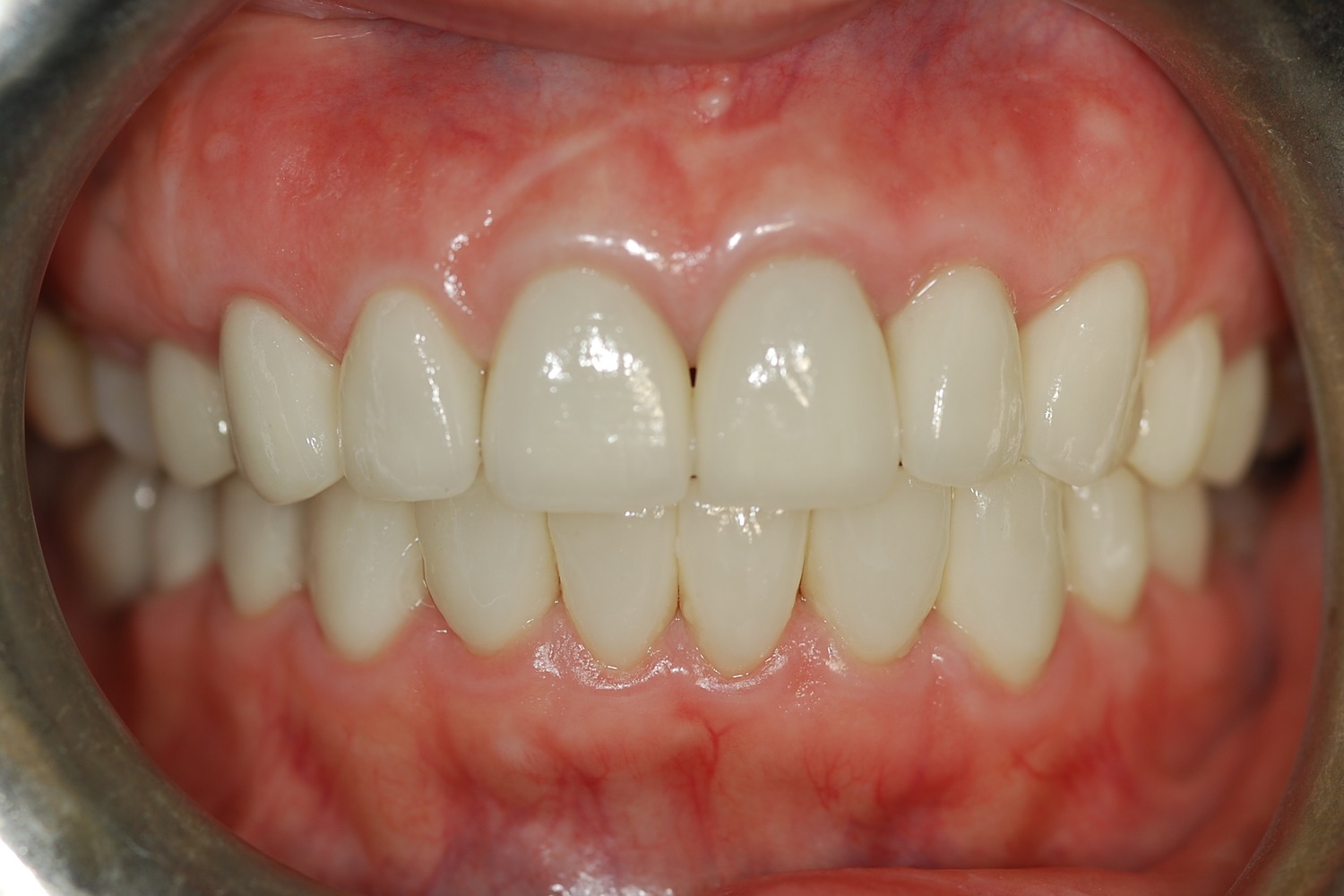 After
After
Final intraoral retracted view
Long-term follow-up at two years
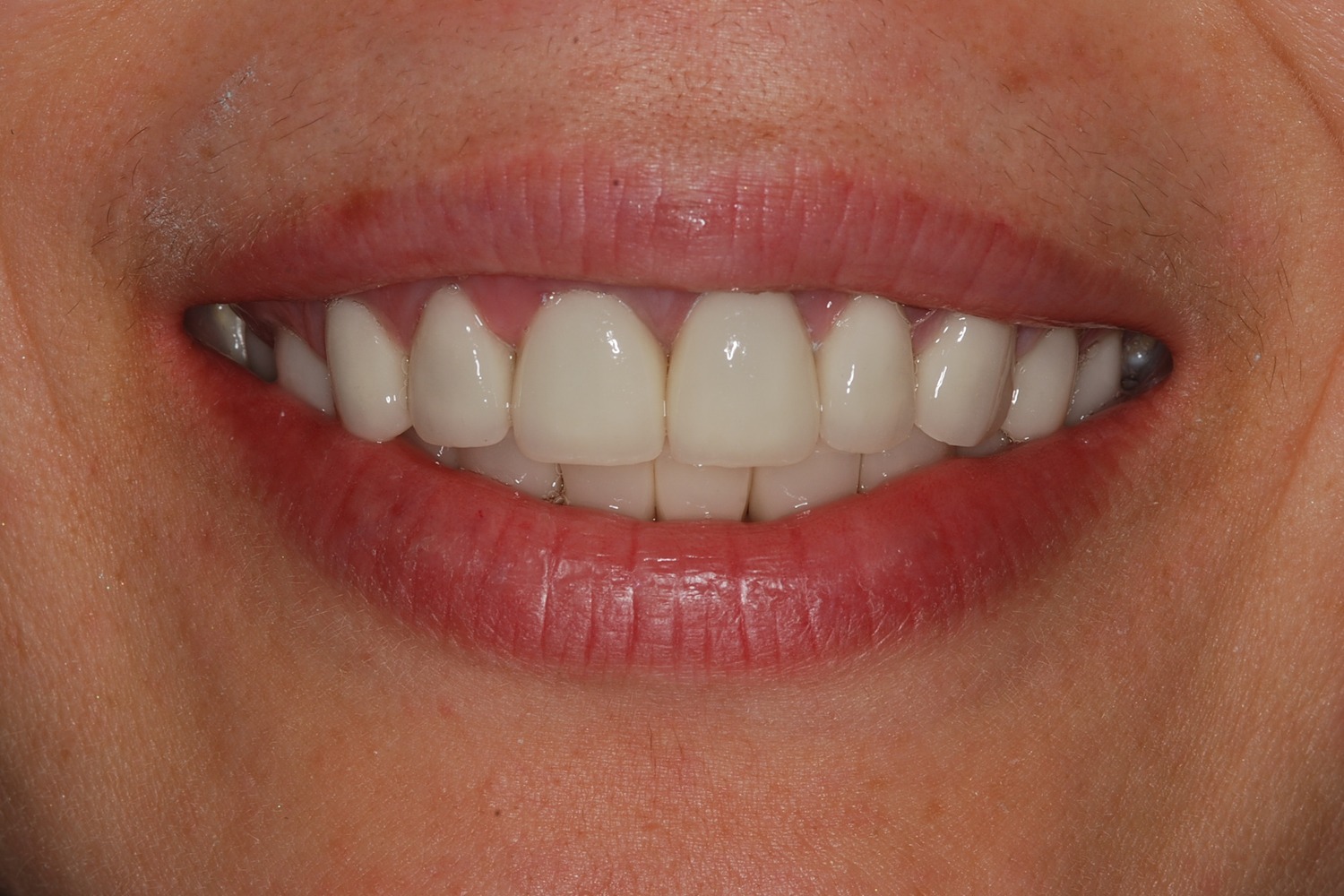
Aging ceramic restorations replaced with customized work, documented two years later
Comprehensive replacement of older opaque restorations with customized ceramic restorations matched to the patient’s facial features, performed in Washington, DC for a patient from Rockville, Maryland. This documented case at Elite Prosthetic Dentistry includes two-year follow-up imaging that establishes the long-term stability of the result. Treatment was planned and completed by Dr. Gerald Marlin, D.M.D., M.S.D., a prosthodontist focused on aesthetic reconstruction and complex restorative care.
Case at a Glance
- Treatment
- Replacement of aging ceramic restorations
- Approach
- Specialist redesign, in-house lab, customized ceramic work
- Case Type
- Replacing aging dentistry
- Patient Concern
- Existing restorations had grown opaque and worn over time and no longer matched her face the way they once did, affecting her confidence in her smile.
- Decision Point
- Repair the aging restorations as they were, or redesign the smile from the ground up with current materials and techniques.
- Outcome
- The result moved from aging, opaque restorations to a brighter, more youthful, naturally balanced smile, documented as stable at two-year follow-up imaging.
- Why It Matters
- Shows that redesigning multiple aging restorations requires coordinating tooth shape, proportions, and shade as one plan rather than individual fixes, and that long-term follow-up is one honest way to evaluate the planning.
Ceramic restorations age. Even well-made work eventually stops matching the patient’s facial features the way it did when it was placed. Translucency dulls. Margins darken. Shade choices that worked a decade ago no longer read as natural under current lighting. At a certain point, the right answer is not to repair the aging work but to redesign it from the ground up with the materials, techniques, and laboratory control that produce a more natural long-term result.
That is what this case set out to do. And, unusually for a cosmetic dentistry case, the result has been documented two years out.
What the patient came in for
The patient came in because the aging restorations she had been wearing no longer matched the smile she wanted, and they had begun to look unnatural in a way that affected her confidence. The brief was not a cosmetic touch-up. It was a redesign of her smile under a coordinated prosthodontic plan.
Clinical Findings
- →Existing restorations appearing opaque and lifeless over time
- →Tooth shape and proportions no longer suited to facial features
- →Shade mismatch with the surrounding natural dentition
- →Confidence affected by the unnatural appearance of the work
- →Need for a redesign rather than another like-for-like replacement
Why aesthetic redesign requires prosthodontic-level planning
Aesthetic replacement across multiple front teeth is not the same as replacing one crown. The work must coordinate the shape of each tooth, the proportions across the arch, the shade selection across multiple translucency layers, the gingival contours, and the way the entire result reads against the patient’s facial features.
Doing that well requires the prosthodontist and the laboratory technician to collaborate directly on every restoration, not communicate by lab slip. Shade selection happens with the patient in the chair, not from a generic shade guide reference. Adjustments during try-in are immediate, not next-week-appointments. The result is restorations that match a specific patient’s specific features rather than generic specifications.
The treatment plan
The upper restorations were replaced with customized ceramic restorations designed under the level of shade and contour control that this kind of aesthetic work requires.
-
1
Comprehensive esthetic evaluation
Tooth shape, proportions, color, and translucency were assessed against the patient's facial features to define the target end-state before any preparation began.
-
2
Treatment planning under a prosthodontic lens
The redesign was planned as a single coordinated case, not as individual veneers or single-tooth fixes, so the final result would read as a unified, natural smile.
-
3
Tooth preparation and provisional restorations
The existing aging restorations were removed and the underlying teeth prepared in line with the approved design. Provisional restorations let the patient preview the planned proportions in her mouth before final ceramics were fabricated.
-
4
Customized ceramic fabrication in the in-house laboratory
Every detail of shade, translucency, and contour was crafted in-house, which produces a level of control that off-site lab work rarely matches for cases of this kind.
-
5
Delivery and final adjustment
The new ceramic restorations were placed and adjusted to a balanced bite, completing a redesign that has held up well into the two-year follow-up imaging.
The outcome, and the long-term proof
The case moved from aging, opaque, unnatural-looking restorations to a brighter, more youthful, naturally balanced smile that matches the patient’s facial features in the way the original work no longer did.
Result Highlights
- ✓Brighter, more youthful, natural-looking smile
- ✓Shade, contour, and translucency aligned to facial features
- ✓Restorations holding up well into the two-year follow-up
- ✓In-house lab control over every esthetic detail
- ✓Result reads as a unified smile, not a row of individual restorations
What sets this case apart from most documented cosmetic dentistry results is the long-term follow-up imaging.
The follow-up image above was taken two years after treatment completion. It shows that the restorations have continued to perform exactly the way they were designed to perform. The shade is holding. The proportions are stable. The gingival contours are intact. The work is doing the job it was meant to do.
Few cosmetic dentistry cases are documented at the two-year mark. Most are photographed at completion and never again. Long-term follow-up imaging is one of the few honest ways to evaluate how well a particular approach actually performs, which is why this case carries the weight that it does.
Who this case may sound familiar to
This story tends to resonate with patients in a few recognizable situations:
- You have crowns, veneers, or front-tooth restorations that are more than ten or fifteen years old and no longer match your face the way they used to.
- The restorations have started to look opaque, dull, or artificial under current lighting and you can see the difference yourself.
- You have been told individual repairs would address the appearance, but you can tell the underlying interface is no longer reliable.
- You want the replacement work to be designed around your specific facial features by a prosthodontist working directly with a ceramist.
- You want documented long-term performance, not just a finished-day photograph.
If any of those describe where you are, a consultation with Dr. Marlin can show you what comprehensive aesthetic redesign looks like for your case.
If your older crowns look opaque, dark at the gumline, or no longer match your other teeth, a comprehensive evaluation can show what customized ceramic restorations would look like for you.
Request a Comprehensive EvaluationFrequently asked questions
When should aging cosmetic restorations be replaced rather than repaired?
Aging cosmetic restorations should be replaced when they no longer match the patient’s facial esthetics, when they appear opaque or worn, or when the underlying bonded interface is no longer reliable. Replacement allows the new restorations to be designed with current materials and techniques that produce a more natural appearance.
What makes a ceramic restoration look natural rather than opaque or artificial?
A natural-looking ceramic restoration combines correct tooth shape and proportions for the patient’s face, appropriate shade matching across multiple translucency layers, and well-designed gingival contours. The laboratory technician’s skill and the prosthodontist’s planning are the two largest factors.
How does an in-house dental laboratory contribute to a more natural-looking smile?
An in-house laboratory allows the prosthodontist and the ceramist to collaborate directly on every restoration. Shade selection happens in the operatory next to the patient, and adjustments can be made in real time during try-in. The result is restorations that match the patient’s individual facial features rather than generic specifications.
How long should well-designed ceramic restorations last?
Well-designed ceramic restorations on healthy underlying tooth structure can serve a patient for many years when the bite is stable, when the supporting tissues remain healthy, and when reasonable maintenance habits are followed. The long-term follow-up imaging on this case documents stability at the two-year mark.
More about the work behind this case
This case combines cosmetic dentistry with custom-crafted crowns and the in-house laboratory control that supports natural-looking ceramic restorations.
Elite Prosthetic Dentistry treats patients from across the DMV including Bethesda, Chevy Chase, McLean, Arlington, Potomac, and Great Falls.
Related Services
Related Patient Success Stories
Explore similar patient success stories demonstrating our expertise in advanced prosthetic dentistry.
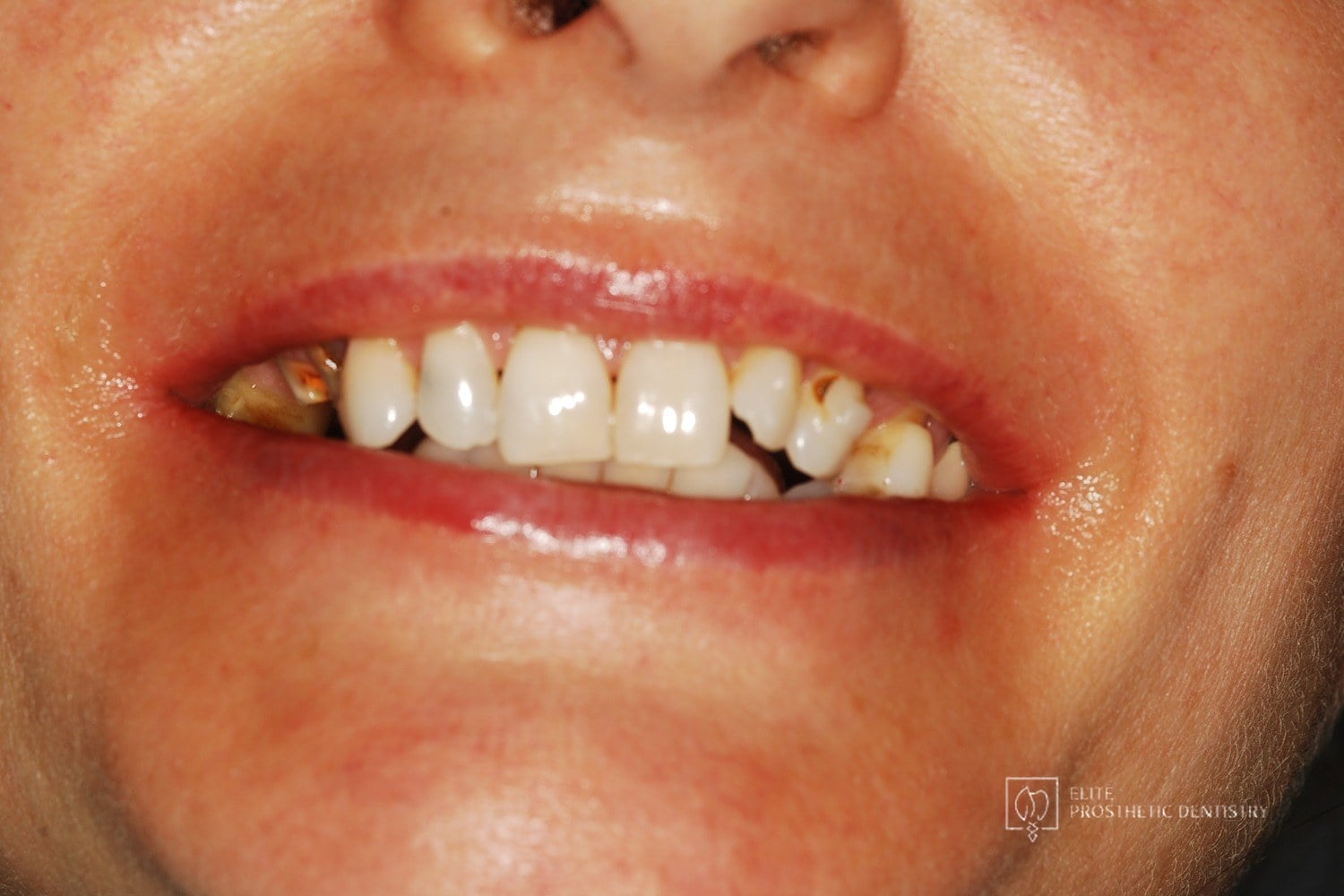 Before
 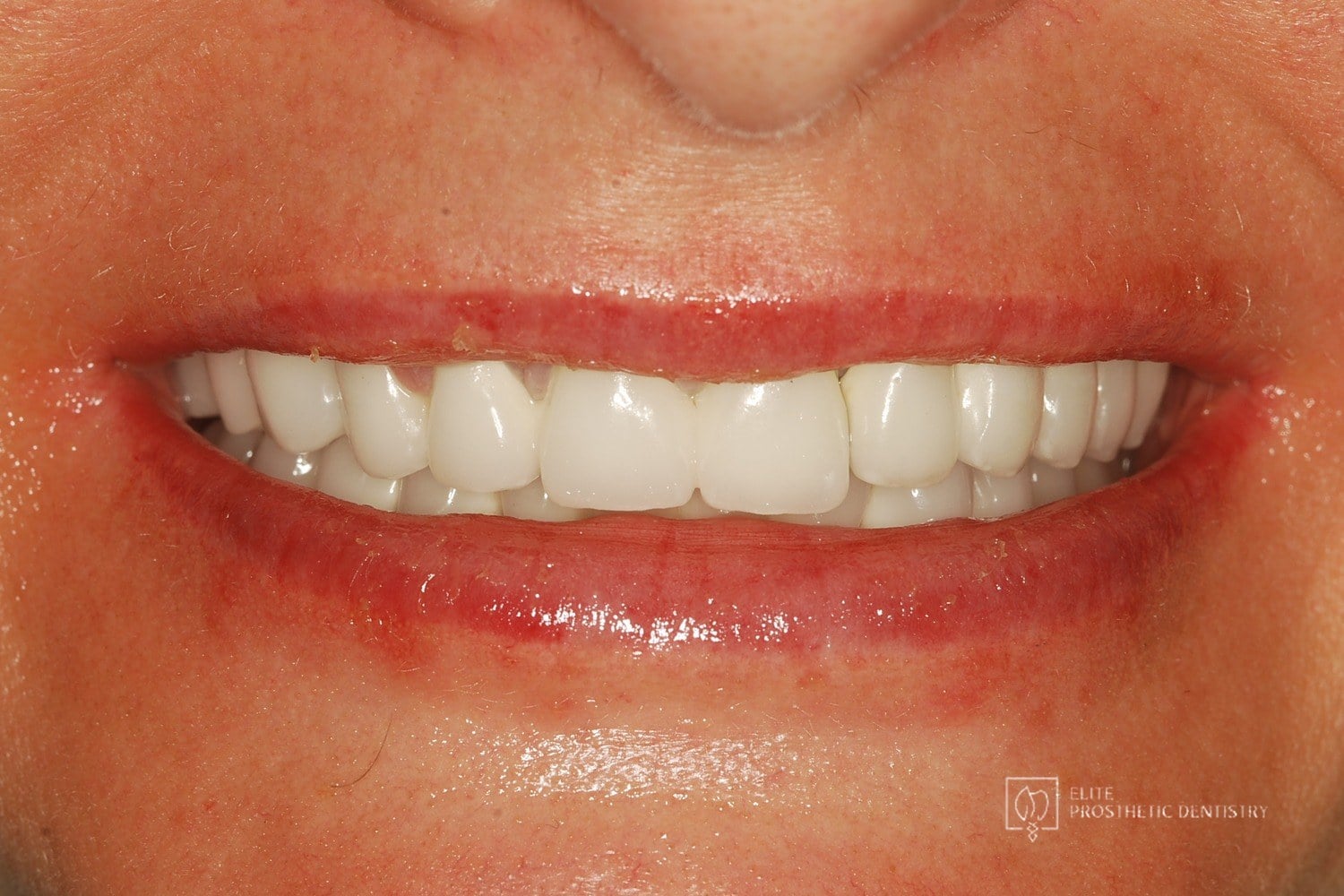 After
After How Aging, Failing Dentistry Was Replaced with a Coordinated Full-Mouth Implant and Crown Reconstruction
The patient presented with throbbing upper-molar pain, long-standing infections, multiple root canals and unfinished prior treatment, generalized sensitivity, and several hopeless teeth.
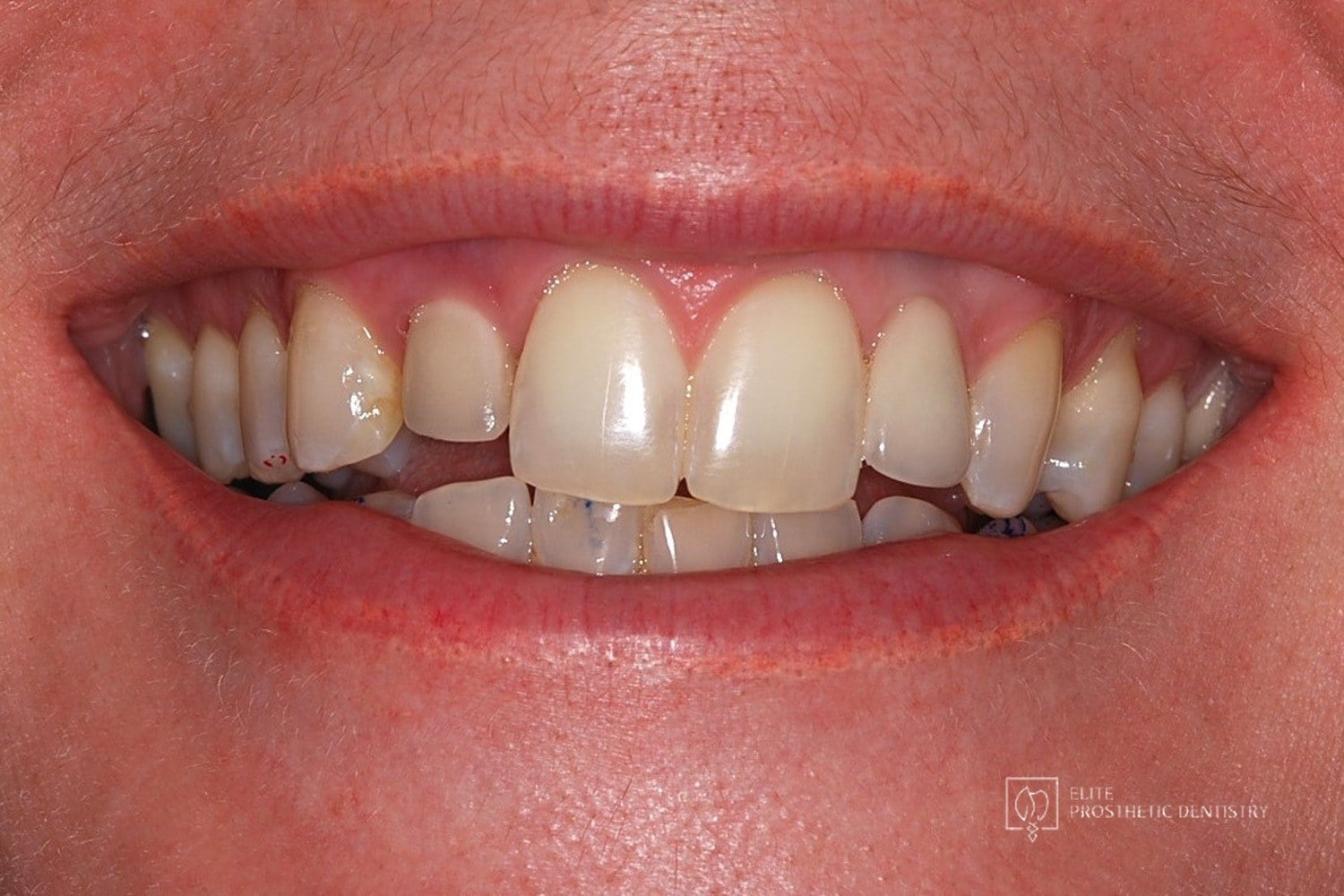 Before
  After
After How Failing Lateral Incisor Implants Were Replaced with Custom Zirconia Bridges After Severe Bone Loss Made Replacement Implants Impossible
Comprehensive examination including CBCT imaging revealed significant bone loss surrounding implants that were placed outside the buccal plate, most likely due to placement without a CBCT-generated surgical guide. The implants were determined non-salvageable, and the alveolar ridge was too narrow to support replacement implants without extensive reconstruction.
Before After How Aging, Opaque Restorations Were Replaced with Customized Ceramic Restorations Designed for Long-Term Natural Esthetics
The existing restorations appeared opaque, worn, and unnatural over time, affecting both confidence and overall smile harmony.