
What Is the Difference Between a Dentist and a Prosthodontist?
Every prosthodontist is a dentist. The difference is what happens after dental school: a prosthodontist goes on to complete several additional years of accredited residency training devoted entirely to restoring and replacing teeth. A general dentist enters practice as the primary-care provider of dentistry, handling the broad, everyday needs of healthy mouths.
Both roles matter, and they are not in competition. Many excellent general dentists refer their most challenging restorative cases to our practice precisely because they recognize when a problem calls for a specialist. Understanding the distinction helps you put the right clinician on the right job.
The Training Difference
A general dentist completes four years of undergraduate education and four years of dental school, earning a DDS or DMD degree, then typically enters practice. Additional skills are built over time through continuing education courses.
A specialist takes a different path. After dental school, prosthodontists complete a multi-year, full-time accredited graduate program focused on restorative dentistry: crowns and bridges, veneers, dentures and partial dentures, dental implants, bite and jaw function, and the laboratory science of fabricating natural-looking prosthetic teeth. Some prosthodontists, Dr. Marlin among them, also perform implant surgery, so planning, placement, and restoration can be coordinated within one specialist practice.
Dr. Gerald Marlin received his DMD from the University of Pennsylvania and completed his graduate prosthodontic training at Boston University, where he also earned his master’s degree. He has practiced this specialty in Washington, DC for more than 40 years.
What Each Does Best
General dentists excel at exactly what most mouths need most of the time: preventive care, cleanings, exams, fillings, and straightforward restorative treatment. They are the first line of defense for your oral health, and a good one is invaluable.
Prosthodontists concentrate on the situations where restorative complexity rises. That includes single restorations where the aesthetic stakes are high, such as one crown or veneer that must match the natural front teeth beside it, and it extends through implant restoration, smile makeovers, worn and broken-down dentitions, and comprehensive full-mouth reconstruction. You can see the range of this work in our smile gallery.
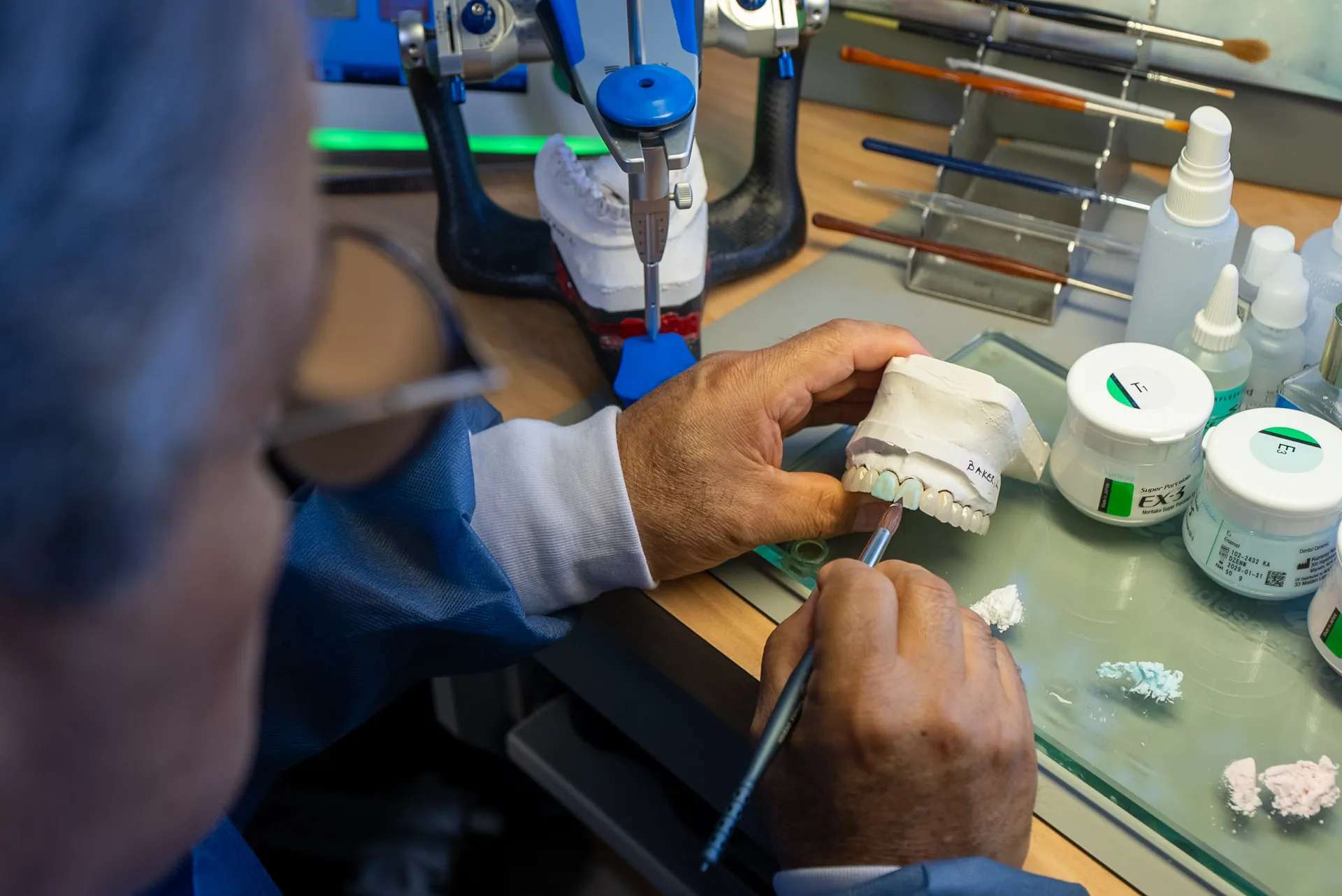
The dividing line is not just skill; it is repetition and depth. A specialist plans and executes difficult restorative cases every day, supported in our office by an in-house laboratory where restorations are custom fabricated under the same roof.
When a Prosthodontist Is the Right Call
Certain situations reliably justify a specialist’s evaluation:
- Replacing or repairing multiple teeth at once, where the bite must be rebuilt, not just patched
- Implants, particularly in the smile line or when several teeth are involved
- Aging dental work: crowns and bridges placed decades ago that are wearing, loosening, or hiding decay at their margins
- Worn, ground-down, or collapsing bites, often related to grinding or TMJ problems
- Dentures that need to fit, function, and look natural
- Complications, including failing implants or restorations that never felt right
That fourth point deserves emphasis. Much of our work today is not emergency rescue but proactive replacement of aging dentistry: evaluating restorations from 20 or 30 years ago and renewing them thoughtfully, on the patient’s schedule, before they fail at the worst possible time.
Working Together, Not Instead
Choosing a prosthodontist does not mean leaving your general dentist. In a well-run relationship, your general dentist manages routine care while the specialist handles complex restorative treatment, and both communicate throughout. Dr. Marlin receives referrals from general dentists locally, nationally, and from abroad, and returns patients to them for ongoing maintenance. If you are weighing who should handle a specific problem, reading what type of dentist specializes in dental implants and our patient’s guide to implant, cosmetic, and restorative dentistry is a good next step.
Talk with a Washington, DC Prosthodontist
If your needs involve replacing, repairing, or restoring teeth, an evaluation with Dr. Gerald Marlin, a specialty-trained prosthodontist with more than 40 years of clinical practice and more than 3,900 dental implants placed, will give you a clear, honest picture of your options. Call 202-244-2101 or request an appointment at Elite Prosthetic Dentistry in Friendship Heights, Washington, DC.
See How We Resolve These Problems
Our patient success stories show real cases and real results. Browse outcomes from a specialist prosthodontist with decades of experience and 3,900+ implants placed.
Key Takeaways
- ✓ Every prosthodontist is a dentist first. The difference is several additional years of accredited residency training focused entirely on restoring and replacing teeth.
- ✓ General dentists are the primary-care providers of dentistry. Prosthodontists are the recognized specialists for complex restorative and replacement work.
- ✓ The two roles work together: many general dentists refer their most challenging cases to a prosthodontist, then resume routine care afterward.
- ✓ Multiple crowns, implants in the smile line, worn or failing dentitions, dentures, and full-mouth reconstruction are classic prosthodontic territory.
- ✓ No referral is needed. You can consult a prosthodontist directly, especially when older dental work is aging toward failure.
Frequently Asked Questions
Is a prosthodontist better than a general dentist?
Neither is better; they fill different roles. A general dentist provides broad primary care: exams, cleanings, fillings, and routine restorative work. A prosthodontist completes several additional years of accredited specialty training focused on restoring and replacing teeth, which is why complex cases are often referred to one. Many patients appropriately see both.
When should I see a prosthodontist instead of my regular dentist?
Consider a prosthodontist when the work is complex or high-stakes: several crowns or bridges at once, implants anywhere visible when you smile, badly worn or broken-down teeth, dentures that never fit right, failing older dental work, or a full-mouth reconstruction. A specialist evaluation is also wise before any large treatment plan is finalized.
Do I need a referral to see a prosthodontist?
No. While many patients arrive by referral from their general dentist, you can schedule a consultation with a prosthodontist directly. Bringing recent X-rays and records helps, but the office can also take its own diagnostic images as part of a complete evaluation.
Can a prosthodontist replace my general dentist?
A prosthodontist can serve as the quarterback for your restorative care, and some patients with extensive dental work choose specialist-led care long-term. Most patients, however, keep their general dentist for routine checkups and cleanings while the prosthodontist handles the complex restorative and replacement work. The two commonly coordinate on the same patient.
Related Patient Success Stories
Explore similar patient success stories demonstrating our expertise in advanced prosthetic dentistry.
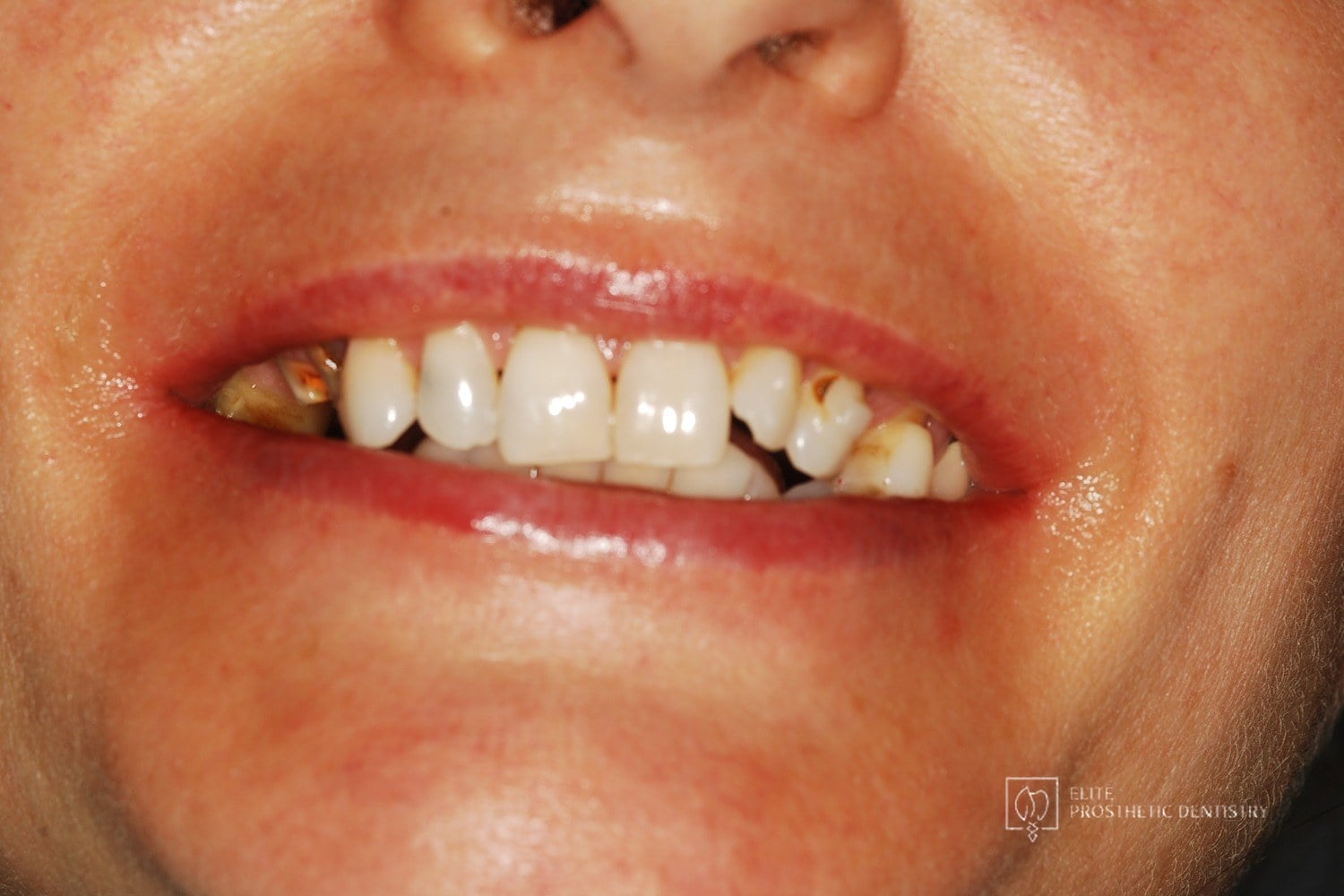 Before
 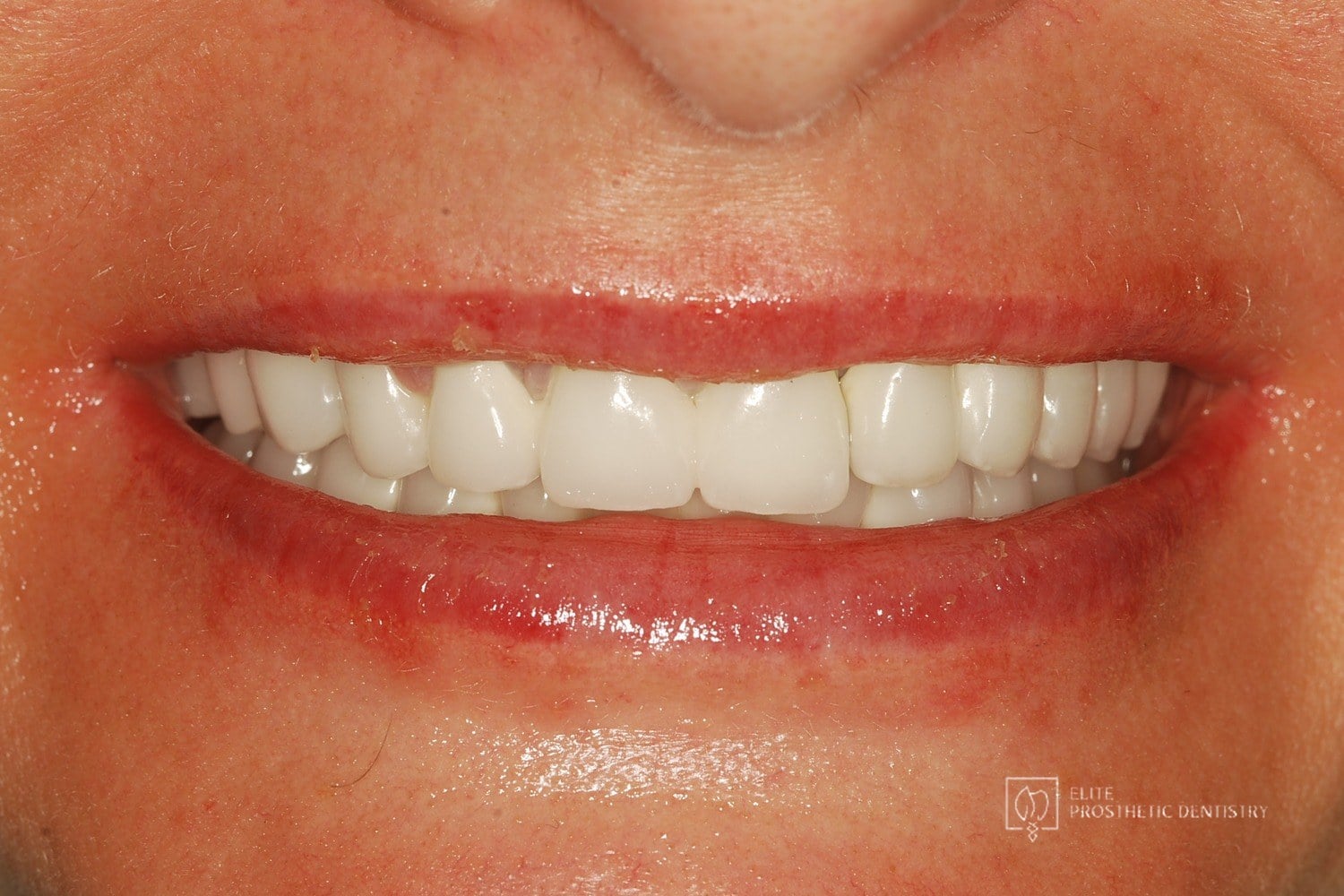 After
After How Aging, Failing Dentistry Was Replaced with a Coordinated Full-Mouth Implant and Crown Reconstruction
The patient presented with throbbing upper-molar pain, long-standing infections, multiple root canals and unfinished prior treatment, generalized sensitivity, and several hopeless teeth.
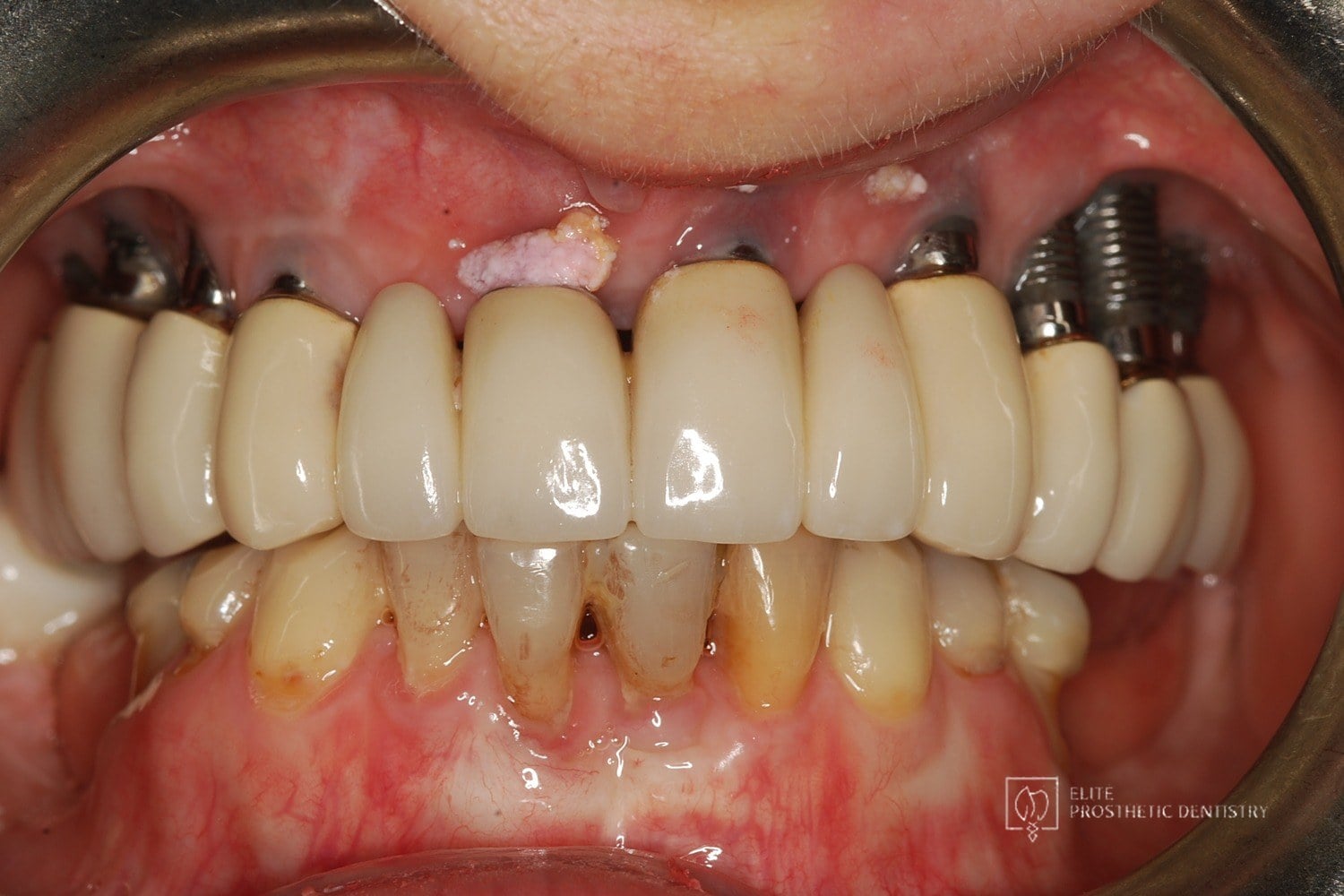 Before
 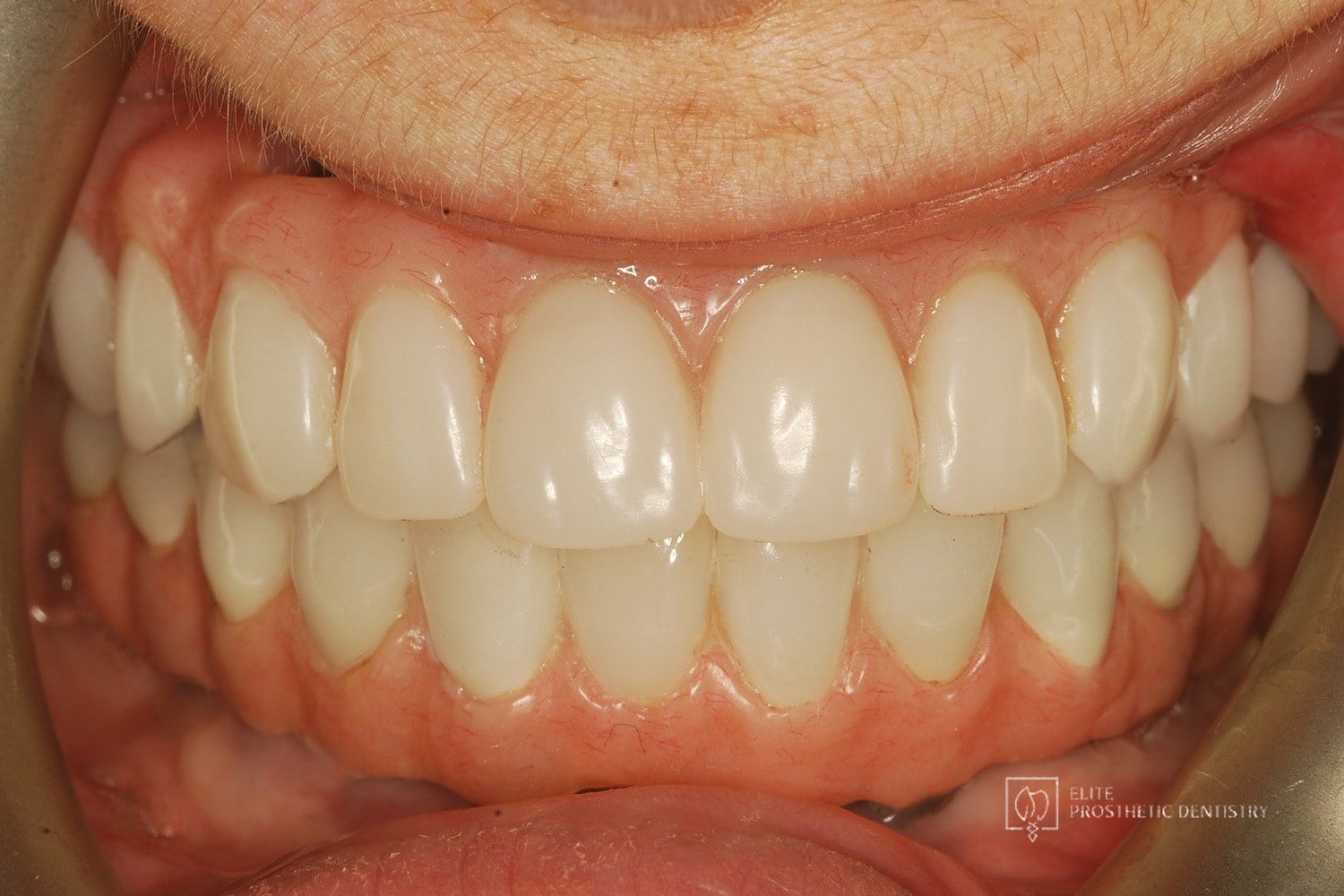 After
After How Failing Implants and Severe Bone Loss Were Rebuilt Into a Stable Full-Arch Implant Reconstruction
The patient presented with significant complications from previously placed implants, severe bone loss, failing posterior implants, and an unesthetic full-arch bridge. Both arches required full reconstruction, with the upper arch showing the most advanced bone loss and instability.
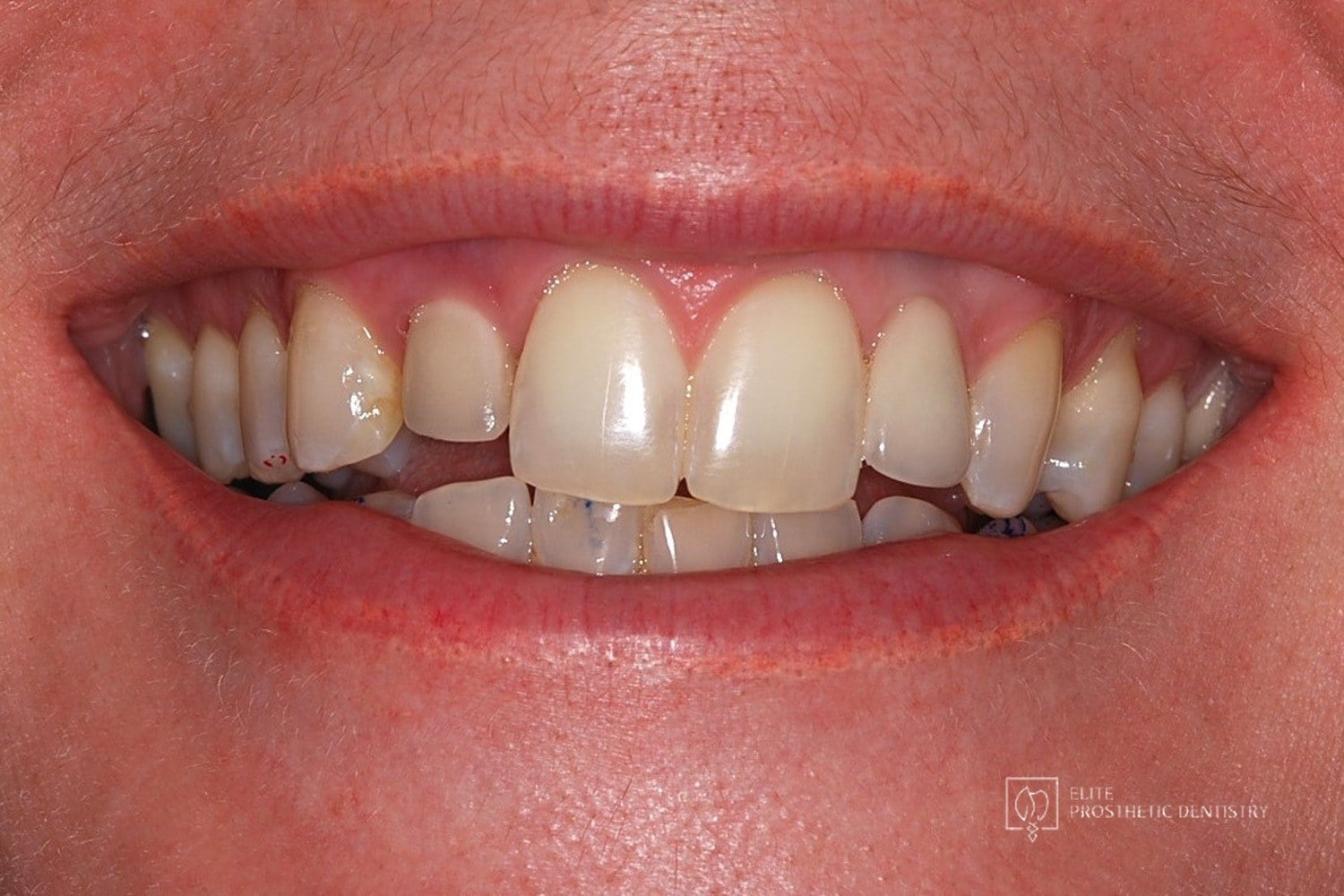 Before
 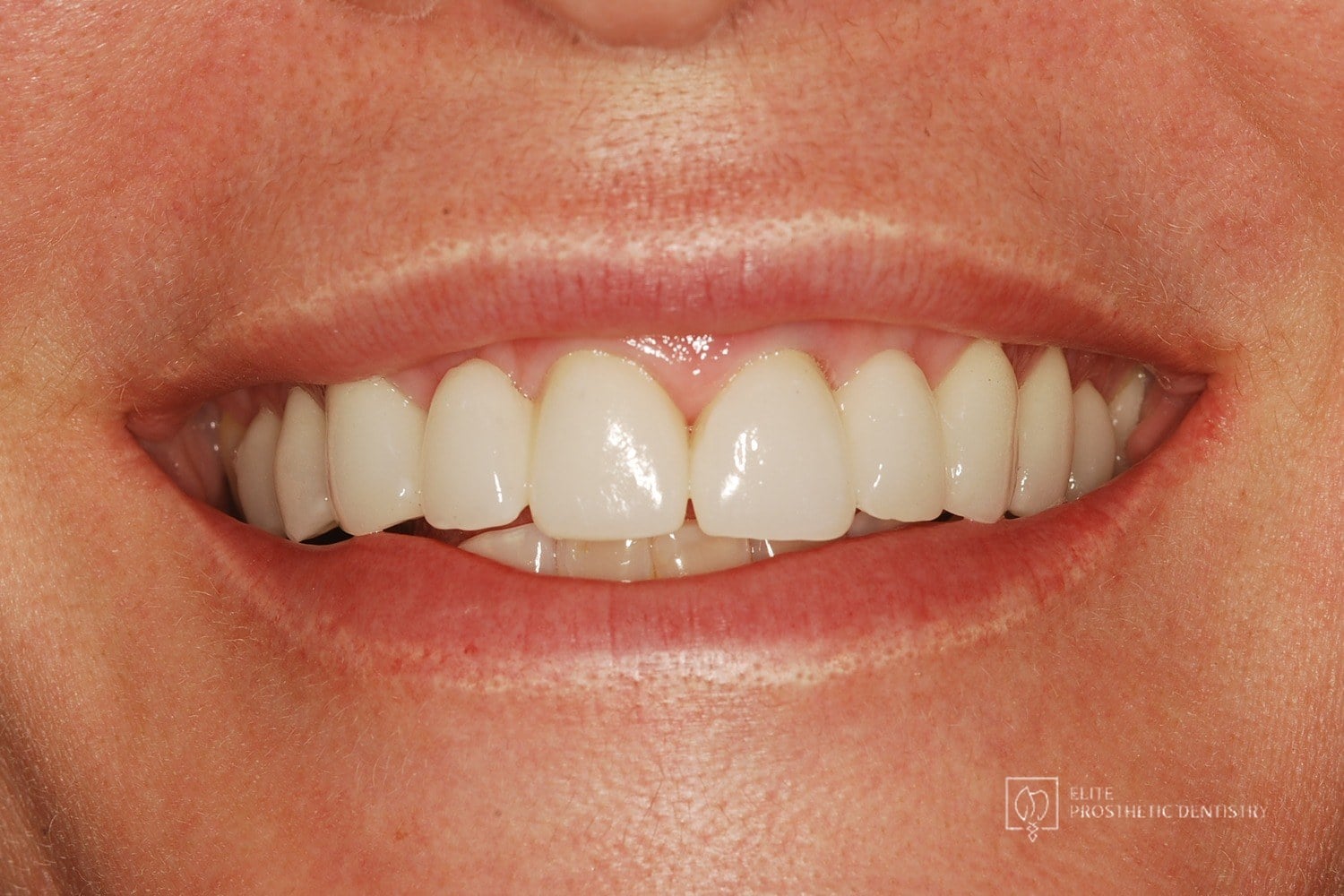 After
After How Failing Lateral Incisor Implants Were Replaced with Custom Zirconia Bridges After Severe Bone Loss Made Replacement Implants Impossible
Comprehensive examination including CBCT imaging revealed significant bone loss surrounding implants that were placed outside the buccal plate, most likely due to placement without a CBCT-generated surgical guide. The implants were determined non-salvageable, and the alveolar ridge was too narrow to support replacement implants without extensive reconstruction.
Related Articles
Deepen your knowledge with additional insights on this topic.
 Choosing a Prosthodontist
 The Patient's Guide to Implant, Cosmetic and Restorative Dentistry
How to judge quality in implant, cosmetic, and restorative dentistry: choosing a practitioner, why the lab matters, financing, and the questions to ask.
 Choosing a Prosthodontist
 What is a Prosthodontist?
A prosthodontist is a dental specialist with advanced training in crowns, implants, dentures, and complex restorations. Washington, DC specialist.
 Choosing a Prosthodontist
 4 Ways You Can Benefit from Our In-House Dental Lab
Custom aesthetics, precision fit, shorter waits, and fast repairs: four ways an in-house dental laboratory changes both your experience and your results.