
All-on-4®, All-on-6® and All-on-X Dental Implants in Washington, DC
All-on-X is the category of full-arch implant treatment where an entire set of teeth is supported by four (All-on-4®), six (All-on-6®), or more strategically placed implants. At Elite Prosthetic Dentistry, every case is planned from the final restoration backward, with surgical placement and restoration coordinated under one specialist-led treatment plan and the final prosthesis fabricated in the in-house dental laboratory.
3,900+
Implants Placed
97%+
Success at 20+ Yrs
40+
Years Experience
9
U.S. Patents

Gerald M. Marlin, DMD, MSD
Specialty-Trained Prosthodontist (DMD, MSD)
Washingtonian "Top Dentist" 2026 and Hall of Fame
Why Patients Choose a Specialist for Full-Arch Implants
- Specialty-trained prosthodontist with 3,900+ implants placed and 97%+ implant success at 20+ years
- Surgical placement and final restoration coordinated within one specialist practice. No hand-offs between offices.
- In-house dental laboratory since 1985 for full-arch fabrication
- CBCT planning for every implant case, with surgical guides where indicated
- 9 U.S. patents in dental implant restoration methodology
Or call now: (202) 244-2101
What Is All-on-X?
The "X" represents the number of implants used to support the full arch, typically four (All-on-4®) or six (All-on-6®). The right answer for any patient comes from a clinical exam and 3D imaging, not from a marketing menu.
All-on-4®
Four implants per arch support a fixed set of teeth. Posterior implants are angled to take advantage of dense anterior bone. Widely studied and well-documented protocol. How All-on-4 works →
All-on-6®
Six implants per arch distribute force more broadly. Often preferred when bone density allows, for added stability and long-term structural support. How All-on-6 works →
Customized All-on-X
Number, position, and angulation of implants planned around the patient's anatomy using CBCT 3D imaging. Not every case is a four-implant case. Compare options →
How the All-on-X Process Works
Full-arch implant treatment is a multi-stage process. Setting clear expectations from the start is part of how a specialist practice approaches every case.
Consultation and 3D Imaging
Clinical exam, CBCT 3D scan, and review of medical history. We plan every implant case, from a single implant through full-mouth reconstruction, on a CBCT scan. The goal of the first visit is to understand the patient's situation clinically, not to sell a procedure.
Treatment Planning
Detailed plan developed using digital tools to determine implant number, position, angulation, and the design of the final prosthesis. Patient walked through every step before treatment begins.
Surgical Placement
Implant placement following the CBCT-based plan, with surgical guides where indicated and sedation options for comfort. A fixed temporary prosthesis is provided during the healing phase so the patient maintains function and appearance while osseointegration progresses.
Final Restoration
After osseointegration, the final prosthesis is designed and fabricated in the in-house laboratory, engineered for fit, aesthetics, and long-term function.
Why Specialist Training Matters for Full-Arch Cases
Full-arch implant treatment is one of the most demanding procedures in implant dentistry. The same procedure produces very different long-term outcomes depending on who plans it, who places the implants, and how the final prosthesis is engineered.
-
One Plan From Start to Finish
The case stays within one specialist practice and one treatment plan, from initial planning through final restoration. No transfers between practices.
-
Bone Preservation Is Part of the Plan
Implant position and prosthesis design influence how the jawbone responds to function over time. Specialist planning accounts for that.
-
Customized, Not Templated
Every case is built around individual anatomy, bite, and aesthetic goals. The number of implants, position, and prosthesis design are determined clinically, not by a corporate protocol.
-
9 U.S. Patents in Implant Restoration
Dr. Marlin holds 9 U.S. patents in dental implant restoration methodology. A depth of research that is unusual in private practice and informs how full-arch cases are engineered.
Who Is a Candidate for All-on-X?
Full-arch implant treatment is appropriate for a range of situations. The right answer for any patient comes from a clinical exam and 3D imaging, not from a phone consultation or marketing material.
Patients Missing Most or All of Their Teeth
Lost most teeth or wearing a denture that no longer fits well. All-on-X restores a fixed set of teeth supported by implants.
Patients With Failing Existing Dentistry
Remaining teeth, crowns, or bridges no longer restorable. Full-arch implant treatment can replace an entire arch in a planned single course of treatment.
Patients Who Want a Fixed Solution
Unlike removable dentures, All-on-X teeth are anchored to implants. They stay in the mouth and function more like natural teeth in chewing, speech, and stability.
Patients Seeking a Second Opinion
Received a full-arch treatment plan from another practice and want a specialist's review before committing? A consultation can clarify your options and expected outcomes.
All-on-4® Dental Implants
All-on-4® is the most widely studied full-arch protocol. Four implants per arch support a complete set of fixed, non-removable teeth. Two implants are placed vertically in the dense bone at the front of the jaw, and two posterior implants are tilted at roughly 30 to 45 degrees so the implant body stays inside available bone while avoiding the maxillary sinus or the mandibular nerve. The angulation increases effective implant length and load distribution, and it is the reason All-on-4 is often possible for patients with posterior bone loss without preparatory grafting. A fixed temporary prosthesis is provided during healing, and the final restoration is designed and fabricated in the in-house laboratory after three to six months of osseointegration.
All-on-4 tends to be the better choice when:
- Posterior bone loss is significant and the tilted-implant geometry can avoid grafting.
- Bone grafting or sinus augmentation is not desired or not appropriate.
- Bite forces are average, without severe bruxism or clenching.
- A fixed full-arch result is the goal at a lower implant count than All-on-6.
After surgery, discomfort is typically managed with prescribed medication and resolves within several days, swelling is normal for the first 48 to 72 hours, and a soft diet is required for the first several weeks while osseointegration begins. A normal diet returns after the final prosthesis is delivered.
All-on-6® Dental Implants
All-on-6® uses six implants per arch to support the fixed prosthesis. The two additional implants serve three biomechanical purposes that the four-implant design cannot match in every case. Chewing forces are distributed across six implants instead of four, which lowers the load on each one by roughly 30 to 40 percent and matters most for patients with strong bites. If any single implant develops a long-term problem, the prosthesis can typically keep functioning on the remaining five. And the extra support allows a more natural tooth position with less cantilevering, so the final design sits closer to the original dentition. Six implants require adequate bone in both the anterior and posterior regions; where posterior bone is limited, grafting or sinus augmentation may precede placement, or All-on-4 may be the better fit.
All-on-6 tends to be the better choice when:
- Bone volume is adequate across the full arch.
- Bite forces are high or there is a history of bruxism or clenching.
- The arch is wide, so additional support reduces cantilever effects.
- Long-term predictability is the priority over the minimum implant count.
Because the extra implants reduce the load on any single point, All-on-6 also supports a wider range of final prosthesis materials, including monolithic zirconia for strength and longevity and an acrylic-hybrid for lighter weight and easier repair. The trade-offs are compared on the zirconia vs. acrylic prosthesis page.
Choosing Between Four and Six Implants
Neither protocol is universally better. The decision is made during planning from the CBCT scan, bone quality, bite forces, arch width, and the design of the final restoration, not from a menu. The treatment timeline is the same for both: a single surgical visit per arch, a fixed temporary during healing, and the final prosthesis after osseointegration. The All-on-4 vs. All-on-6 comparison walks through the differences in detail, and the full-arch candidacy guide covers the anatomy that drives the choice. Patients comparing a specialist practice with a corporate full-arch chain can read how the two models differ on the specialist alternative to ClearChoice page.
All-on-X vs. Traditional Dentures and Bridges
Patients researching full-arch options frequently consider three categories: traditional removable dentures, implant-supported overdentures, and fixed All-on-X. The differences are significant.
| Criterion | Traditional Dentures | Implant Overdentures | All-on-X (Fixed) |
|---|---|---|---|
| Retention | Suction, adhesive | 2-4 implants, snap-on | 4-6+ implants, fixed |
| Removable | Yes, daily | Yes, daily | No |
| Bone preservation | None | Partial | Yes |
| Food restrictions | Significant | Some | None typical |
| Speech adaptation | Often required | Some | Minimal |
| Long-term cost | Multiple replacements | Moderate | Higher initial, lower lifetime |
| Stability under chewing | Variable | Improved | Closest to natural teeth |
Material Options for the Final Prosthesis
The final All-on-X prosthesis can be fabricated in several materials, each with trade-offs. The most common are an acrylic-hybrid prosthesis (titanium framework with acrylic teeth) and a monolithic zirconia prosthesis. Material choice influences strength, aesthetics, weight, repairability, longevity, and cost. The full comparison is on the zirconia vs. acrylic full-arch prosthesis page.
Patient Concerns Specific to Full-Arch Treatment
Patients evaluating All-on-X often share several recurring concerns. Each is addressed during consultation and worth knowing in advance.
“I do not want to lose all my teeth if some can be saved.” Specialist evaluation establishes which teeth, if any, have a reasonable long-term prognosis. Full-arch treatment is recommended only when the remaining teeth are not retainable or when retaining them would compromise the long-term outcome of the rehabilitation.
“I had a treatment plan from a corporate clinic and want a second opinion.” Second-opinion evaluations are a common reason patients come to Elite Prosthetic Dentistry. The goal is clarity, not a sales pitch.
“I do not want to be a number in a corporate operation.” A specialist-led practice is structurally different. Dr. Marlin meets the patient and leads the plan, and the surgery and final restoration are coordinated within one practice.
“I am concerned about long-term maintenance.” Maintenance is part of the planning conversation. Material selection, prosthesis design, and home care protocols all influence what long-term maintenance looks like.
Ready to Discuss Your Treatment Options With a Specialist?
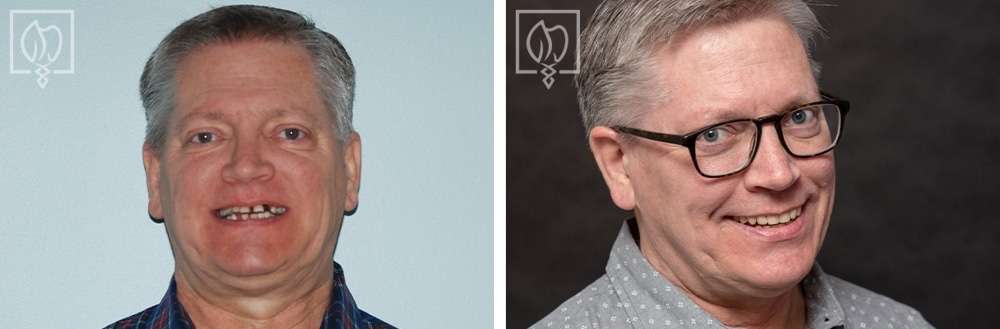
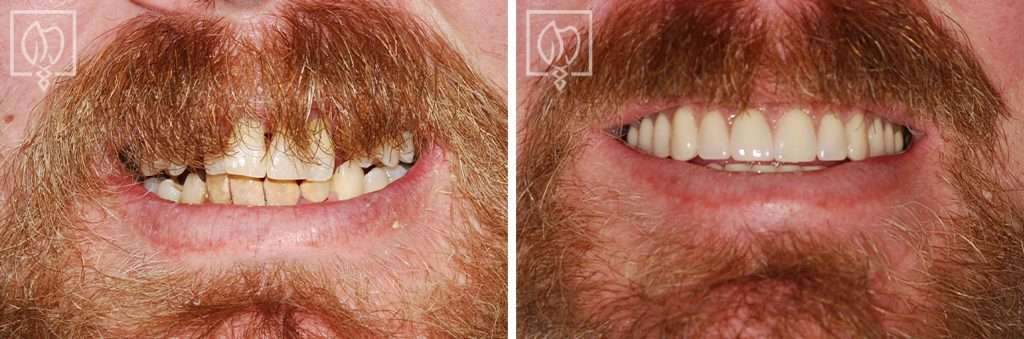
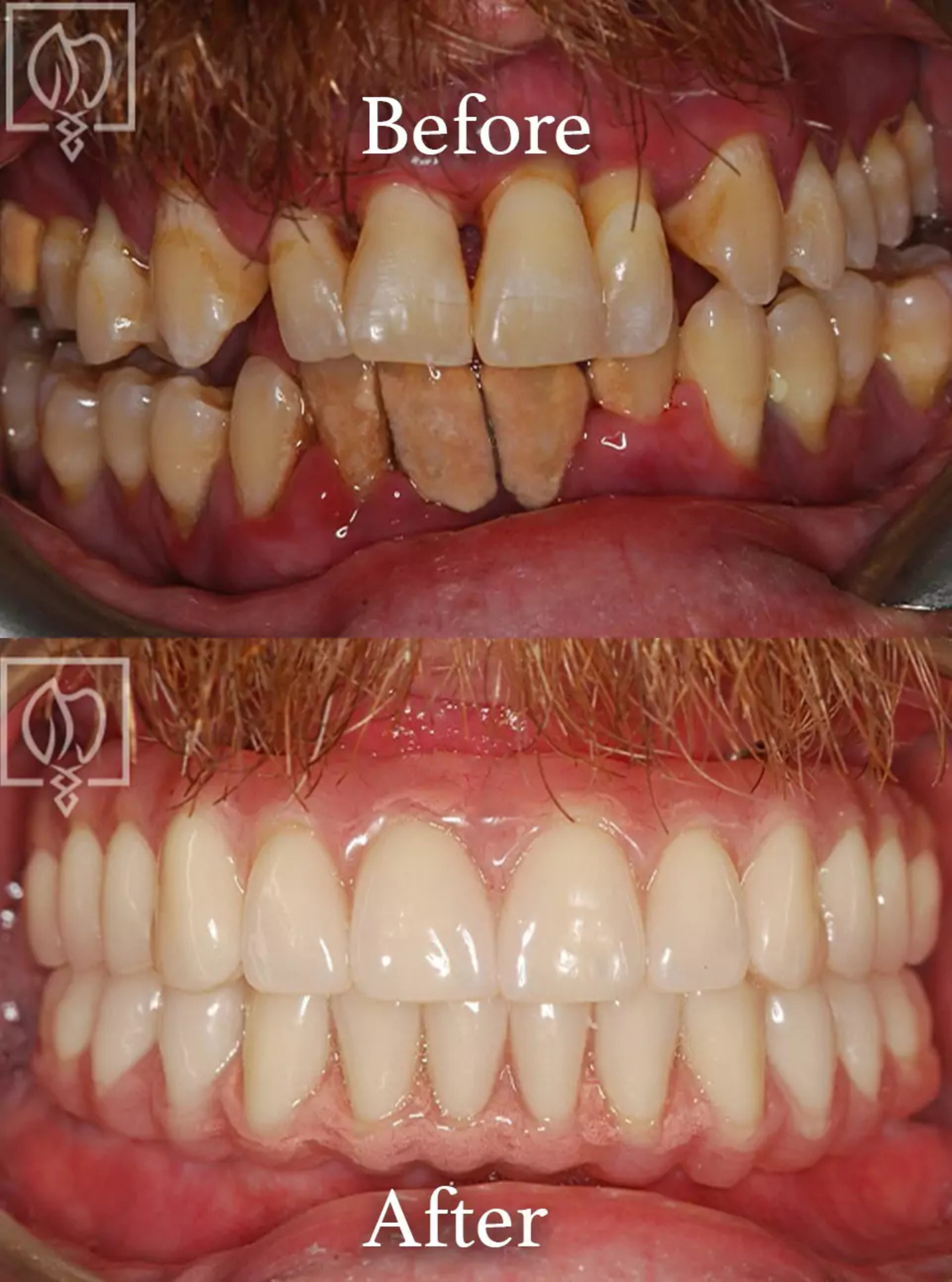
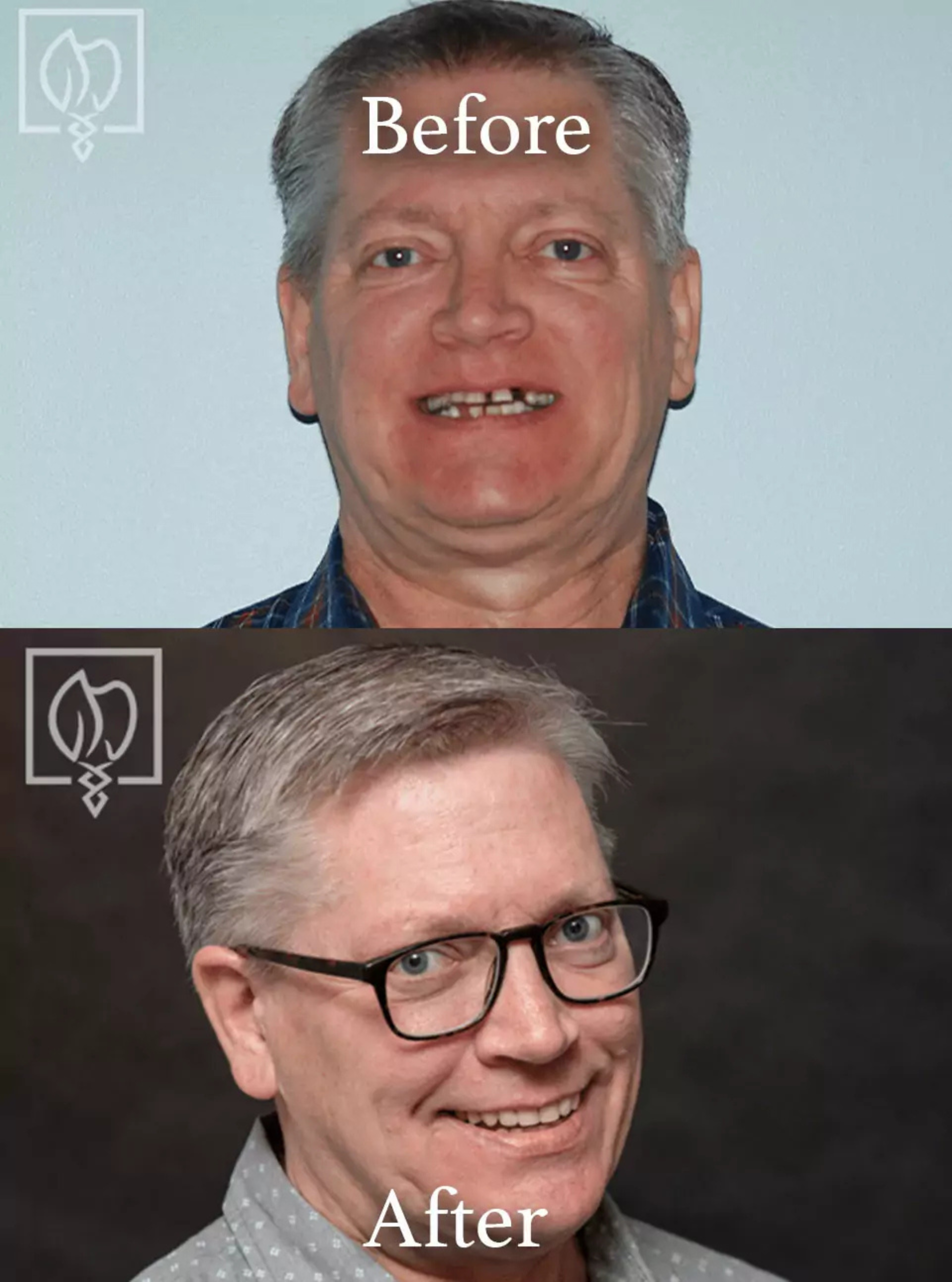
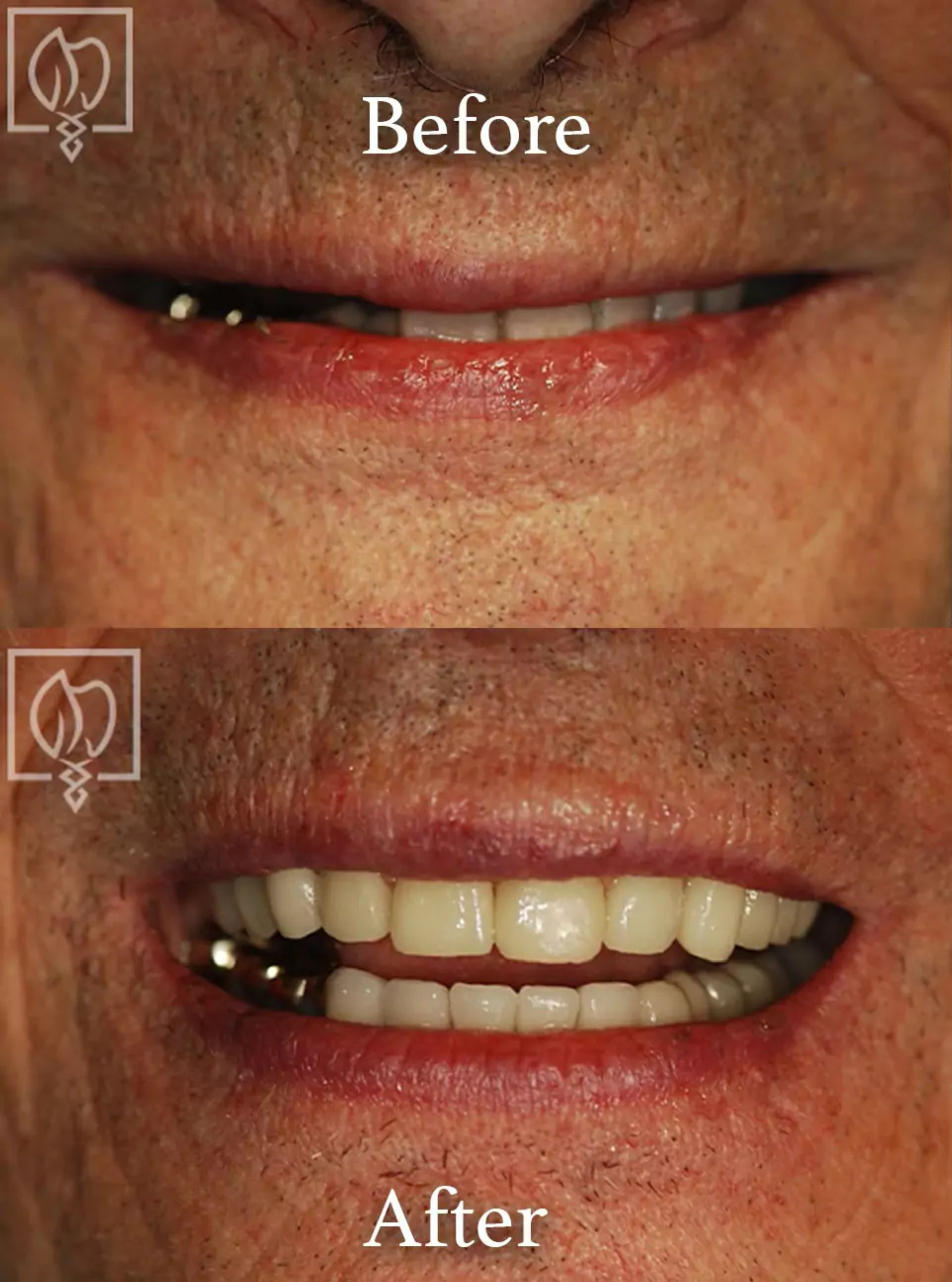
Real Full-Arch Patient Results
Every result below was planned and treated at the Washington, DC practice under Dr. Marlin's direction.
When Elite Prosthetic Dentistry Is a Strong Fit
A strong fit if you are looking for
- A clear explanation of when four implants, six, or a different design is the right choice for your arch
- Full-arch treatment where preserving bone and, where possible, natural teeth is part of the plan
- A prosthesis designed for bite, speech, and lip support, not only for the day it is delivered
- Failing full-arch work evaluated independently before a replacement is attempted
- Integrated prosthodontic care from implant planning to final restoration, with the in-house laboratory
The honest boundary
Elite Prosthetic Dentistry may not be the right fit if you are primarily looking for routine insurance-based dentistry, the lowest-cost option, or a quick single-visit solution without a comprehensive evaluation.
Frequently Asked Questions
What does the 'X' in All-on-X mean?
The X is a placeholder for the number of implants used to support a full arch of fixed teeth, most commonly four (All-on-4®) or six (All-on-6®). The right number depends on bone quality, bite forces, arch anatomy, and the case plan. The decision is made during diagnostic workup, not chosen from a marketing menu.
Is All-on-X the same as All-on-4 or All-on-6?
All-on-4® and All-on-6® are specific full-arch protocols, both falling under the broader All-on-X category. All-on-4 uses four implants per arch; All-on-6 uses six. All-on-X is the umbrella term used when the final implant count is determined by the patient's anatomy rather than a fixed protocol.
What is All-on-4®?
All-on-4® is a full-arch dental implant protocol that uses four strategically positioned implants to support a complete fixed set of teeth on one arch. The two posterior implants are typically tilted to take advantage of the densest bone in the front of the jaw, which often eliminates the need for bone grafting in patients with posterior bone loss.
What is All-on-6®?
All-on-6® is a full-arch dental implant protocol that uses six implants per arch to support a fixed, non-removable prosthesis. The additional implants distribute occlusal forces more evenly, provide redundancy in the long-term load-bearing design, and often allow for a more natural tooth position and angulation in the final restoration.
Is All-on-6 better than All-on-4?
Neither protocol is universally better. The right answer depends on bone quality, bite forces, arch anatomy, and the design of the final restoration. All-on-6 offers more biomechanical redundancy and broader force distribution. All-on-4 is appropriate when bone is adequate anteriorly and the posterior bone is compromised. The decision is made during planning based on the patient's individual anatomy.
Does All-on-6 require bone grafting?
It can, depending on bone volume in the posterior regions where the additional implants are placed. Patients with significant posterior bone loss may benefit from All-on-4 (which avoids the posterior implant zones) or from bone grafting and sinus augmentation before All-on-6 placement. CBCT 3D imaging during planning identifies which approach the patient's anatomy supports.
What is the difference between All-on-4 from a specialist and All-on-4 from a corporate chain?
The procedure name is the same, but the model of care is structurally different. At Elite Prosthetic Dentistry, planning, implant placement, and design of the final restoration are handled as integrated prosthodontic care in one practice. The prosthesis is fabricated in the in-house lab. Some corporate chains separate the surgical and restorative roles and use a centralized production lab.
How long does All-on-X treatment take from start to finish?
Most full-arch cases take three to six months from surgical placement to final restoration. A fixed temporary prosthesis can frequently be placed the day of surgery, so patients are not without teeth during osseointegration. Final restoration is designed and fabricated in the in-house lab after the implants have integrated.
Will I be without teeth during treatment?
Not for the duration of treatment. A fixed temporary prosthesis is placed during the surgical and healing phase so the patient maintains function and appearance while osseointegration progresses. The final restoration replaces the temporary after the implants have integrated, typically three to six months after surgery.
Is All-on-X permanent?
The implants are designed to be permanent. The prosthetic teeth attached to them are durable but, like any restoration, may require maintenance, refinishing, or eventual replacement depending on materials selected. Long-term predictability depends on planning, placement, prosthesis design, and ongoing maintenance.
Why see a prosthodontist for full-arch implants instead of a corporate implant chain?
Full-arch implant treatment is one of the most complex procedures in implant dentistry. Specialist prosthodontic training, coordinated surgical and restorative treatment, in-house lab control, and individualized planning have measurable effects on the long-term outcome. Patients comparing options often want to understand the difference between specialist and corporate models before committing.
Full-Arch Patient Stories
All-on-4 With Bone Preservation
Patient chose Elite Prosthetic Dentistry for its reputation in bone-preserving full-arch procedures.
Extensive Bone Grafting Before Full-Arch
Patient with severe bone loss receives full implant restoration with grafting and All-on-6 placement.
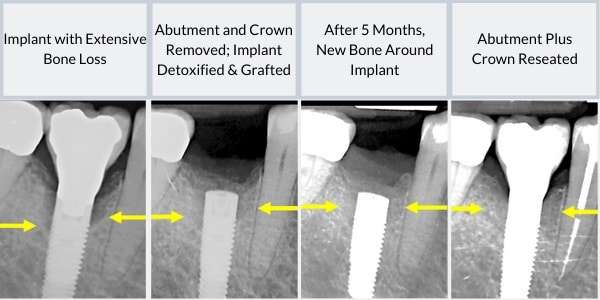
Salvaging a Failing Implant
How a compromised implant was evaluated and successfully restored.
All-on-X Resources
Dental Implants Overview
The full spectrum of implant treatment, from a single tooth to full arch.
Repairing Failing Implants
Diagnosis and correction when existing implant work is failing.
All-on-4 vs. All-on-6
Direct clinical comparison of the two protocols.
Am I a Candidate?
Full-arch implant candidacy criteria reviewed in detail.
Zirconia vs. Acrylic Prosthesis
Material comparison for the full-arch prosthesis.
Specialist Alternative to ClearChoice
For patients comparing the corporate chain model.
Full Mouth Dental Implants
Complete upper and lower arch rehabilitation.
Conveniently Located in Friendship Heights
Serving Washington DC, Bethesda, Chevy Chase, McLean, Great Falls, Potomac, and surrounding communities. One block from the Friendship Heights Metro on the Red Line.
Request Your Specialist Consultation
Personally reviewed by Dr. Marlin or his team.
Hours
- Monday — Thursday8:00 AM — 5:00 PM
- Friday8:00 AM — 2:00 PM
- Saturday — SundayClosed
All-on-4® and All-on-6® are registered trademarks of their respective owners and are referenced here for descriptive purposes only. Elite Prosthetic Dentistry is not affiliated with, endorsed by, or sponsored by the trademark holders.