
How a Front Tooth Lost to Childhood Trauma Was Rebuilt with Bone Grafting and a Long-Lasting Implant
Smile view
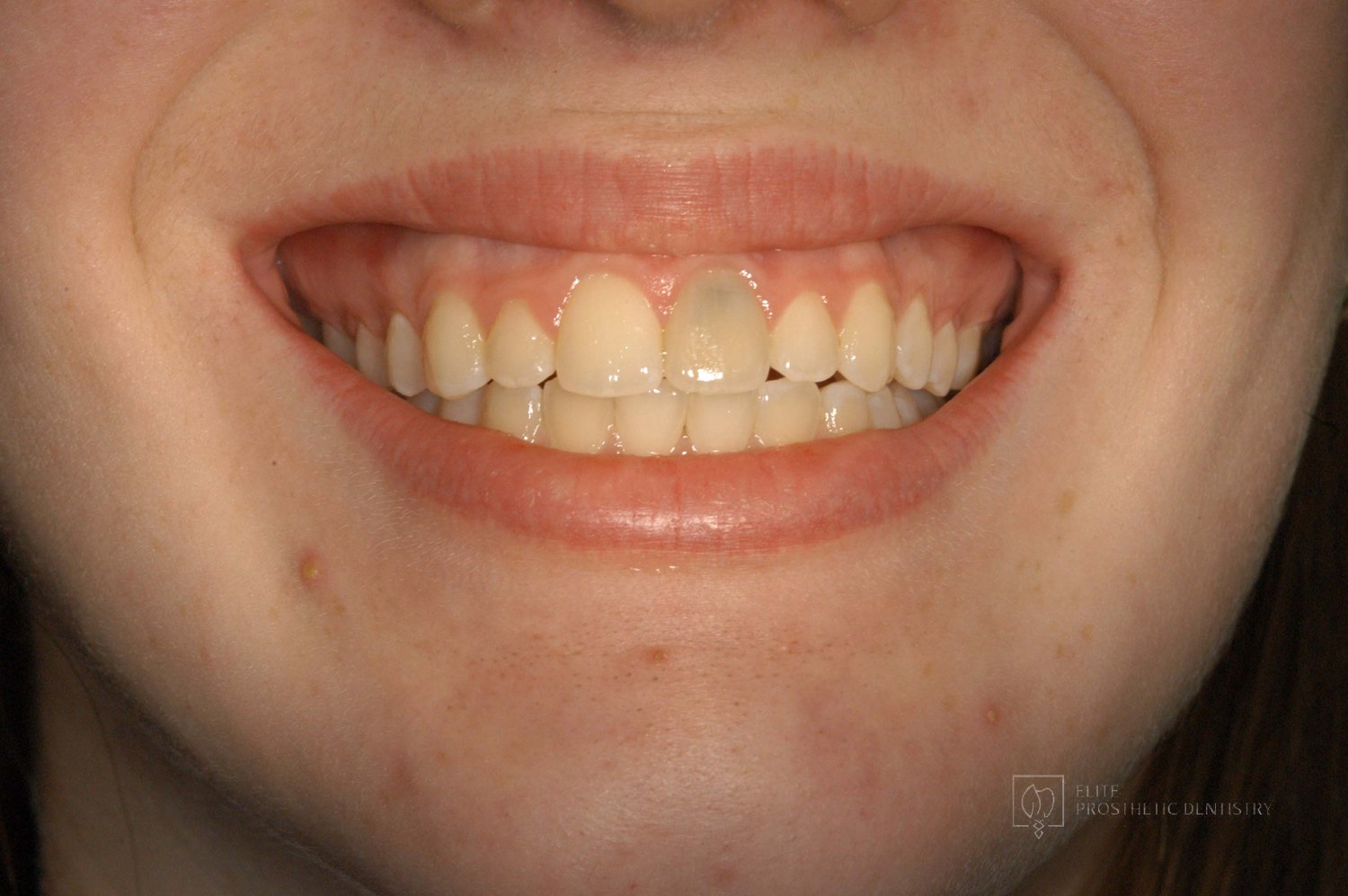 Before
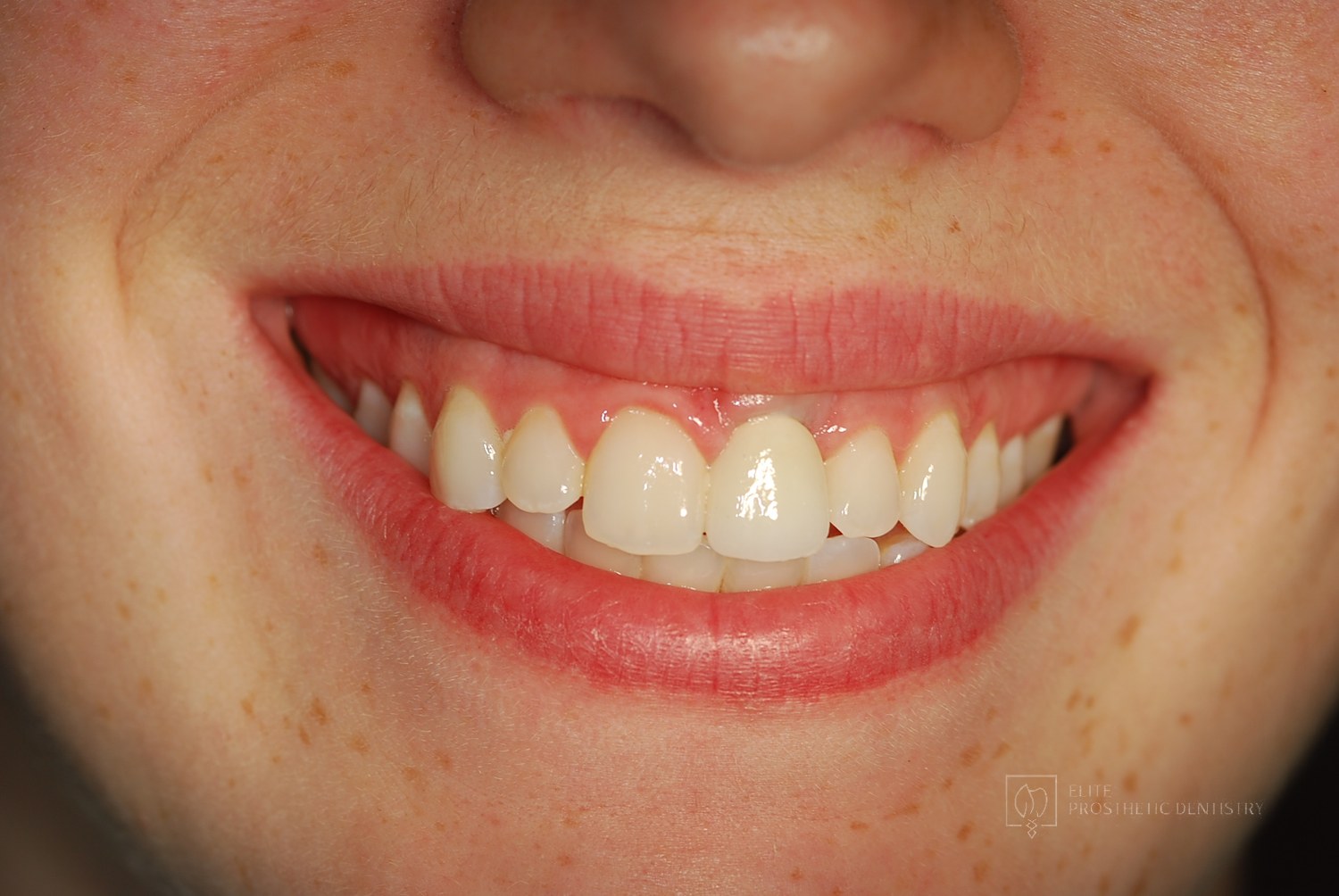 After
After
Treatment and final result
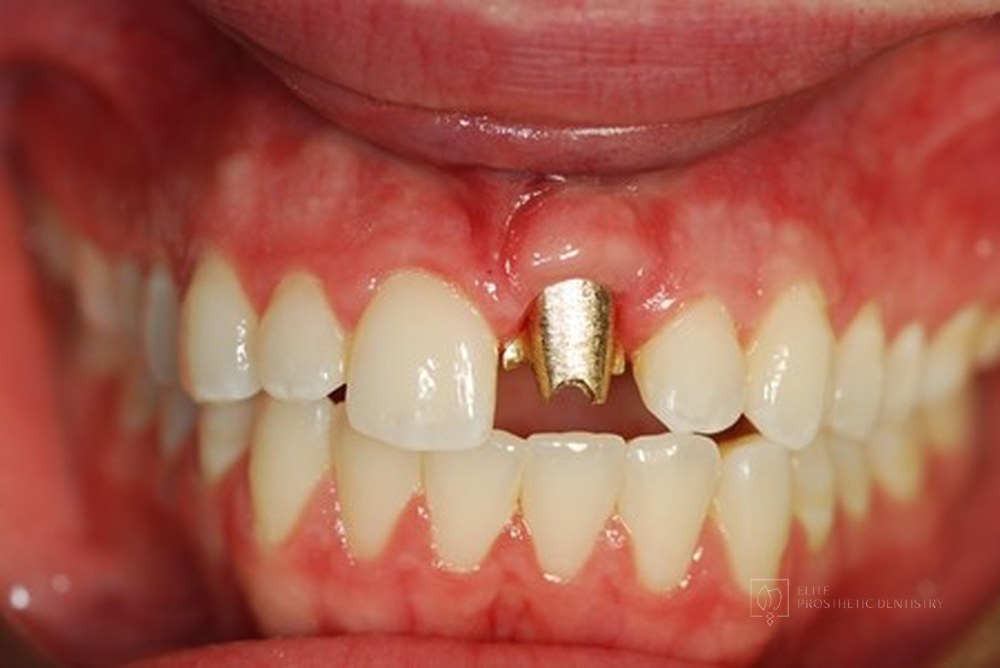 During
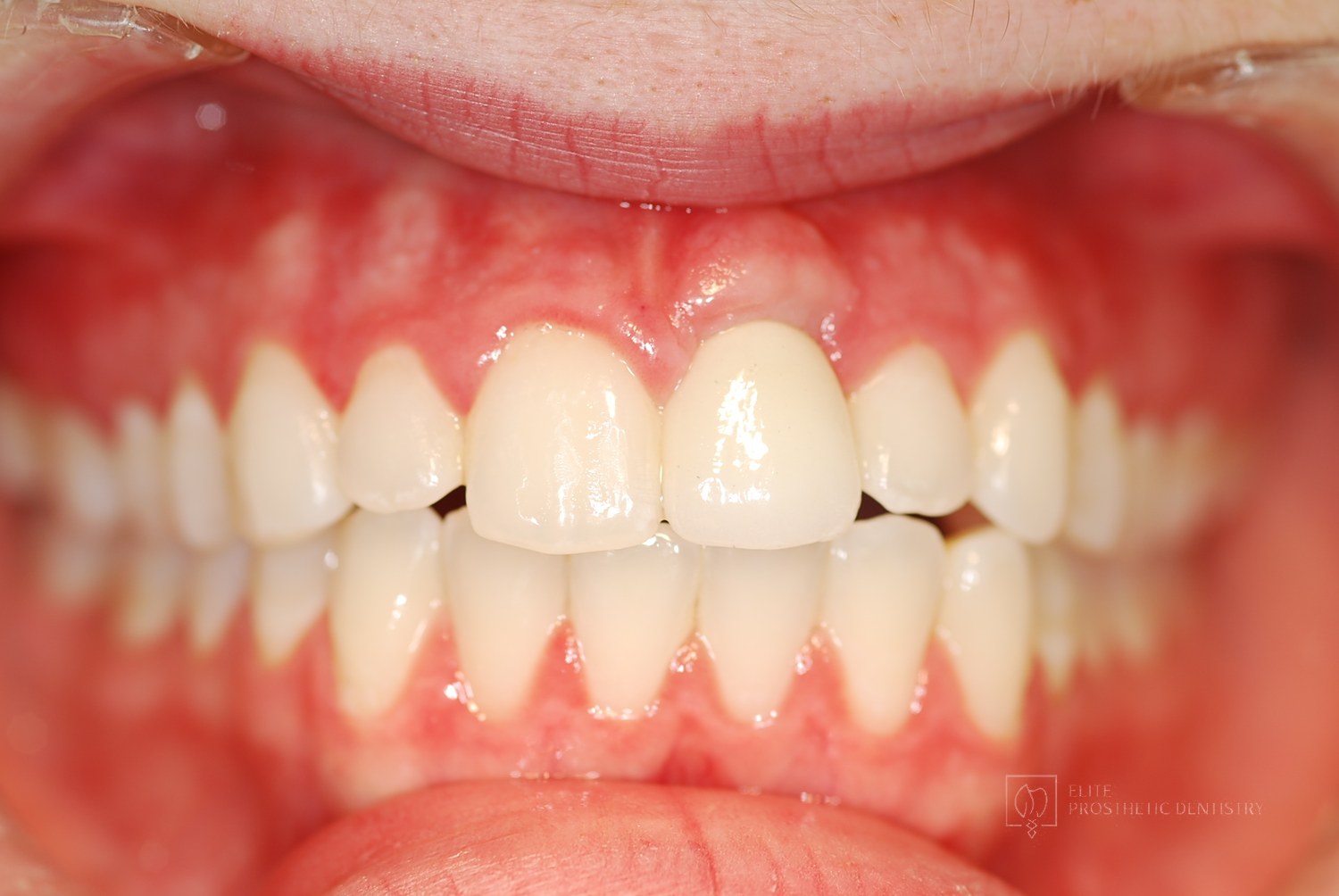 After
After
Implant and final restoration
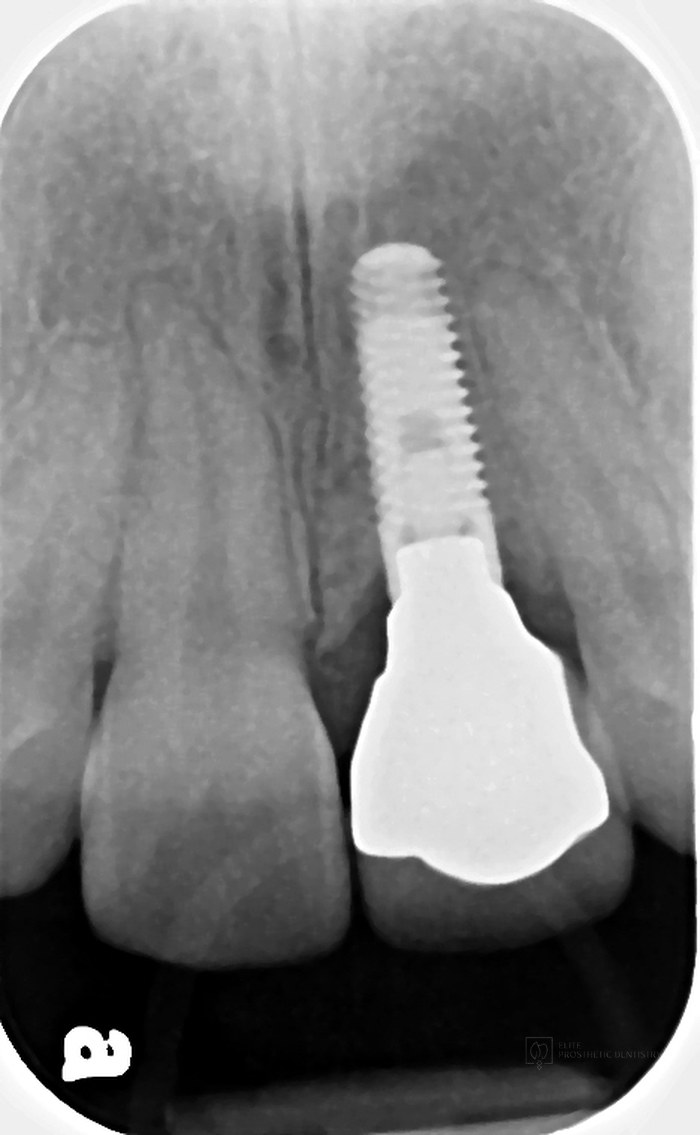
A traumatized front tooth replaced with planned bone grafting and an implant
Rebuilding a front tooth lost to trauma in Washington, DC. This documented case at Elite Prosthetic Dentistry followed a young patient from a failing, trauma-damaged front tooth, through years of careful timing, to a planned extraction with socket bone grafting, an implant, and a custom crown that is indistinguishable from a natural tooth. Treatment was planned and completed by Dr. Gerald Marlin, D.M.D., M.S.D., a prosthodontist focused on implant reconstruction and natural-looking results in the anterior esthetic zone.
Case at a Glance
- Treatment
- Planned tooth preservation, socket bone graft, implant, and custom crown
- Approach
- Maintain to skeletal maturity, extract with socket graft, implant, custom abutment and crown
- Case Type
- Implant reconstruction
- Patient Concern
- A patient's front tooth, damaged years earlier by trauma, was slowly failing from root resorption and could not be kept permanently despite an earlier root canal.
- Decision Point
- Place an implant right away, or maintain the natural tooth until growth was complete and only then extract it and place a permanent implant.
- Outcome
- The implant, placed into preserved bone, now functions and looks like a natural tooth, remaining stable with no bone loss more than a decade after placement.
- Why It Matters
- The case demonstrates that sequencing timed to growth, preserving bone at extraction rather than after it collapses, and planning the final result years in advance are what let an implant restoration last.
The presenting condition
The patient was first referred to the practice as a 15-year-old by her father. Earlier trauma had damaged her upper left front tooth, and although it had been treated with a root canal, the root was slowly resorbing and the tooth could not be kept permanently. Because she was still growing, placing an implant right away would have been the wrong decision. The plan was built around time: maintain her own tooth for as long as it would safely last, then replace it correctly once she reached skeletal maturity.
Clinical Findings
- →Upper left central incisor damaged by earlier trauma, with a slowly resorbing root
- →Root canal completed, but the natural tooth could not be kept permanently
- →Referred at age 15 and still growing, so an immediate implant was not appropriate
- →Treatment planned to span several years, timed to skeletal maturity
- →A high-esthetic anterior site where a natural, undetectable result was essential
Why this case required prosthodontic-level planning
Replacing a front tooth in a growing teenager is as much about timing as it is about surgery. Place an implant too early, while the jaw is still developing, and it can end up out of position as the face and surrounding teeth continue to change. Extract the tooth and let the socket heal on its own, and the ridge collapses, leaving a bone defect that is difficult to rebuild in the most visible part of the smile. The judgment that defined this case was sequencing. Maintain the natural tooth long enough to reach skeletal maturity, then extract it and preserve the bone in the same step, so the implant could be placed into a ridge that had never been allowed to deteriorate. Planning the final result years in advance is exactly what specialist-level care is for.
The treatment plan
-
1
Comprehensive evaluation and a long-range plan
At age 15, a full evaluation set the strategy: keep the natural tooth for as long as it could be safely maintained, then replace it once growth was complete. The case was mapped years ahead rather than rushed.
-
2
Maintaining the natural tooth to buy time
The trauma-damaged tooth was restored and monitored so it could serve for at least three more years, holding the space and the bone while the patient finished growing.
-
3
Extraction with a socket preservation bone graft
Once she reached skeletal maturity at around 18, the failing tooth was removed and a bone graft was placed directly into the socket at the same time, preserving the ridge instead of letting it collapse.
-
4
Implant placement into preserved bone
About four months later, after the grafted site had healed, the implant was placed into a ridge that had kept its shape and width.
-
5
Custom healing abutment to shape the tissue
At implant exposure, a stock abutment and an impression were used to fabricate a custom healing abutment with the correct emergence profile, and the gum tissue was allowed to mature around it for a natural contour.
-
6
Final custom abutment and crown
A matching final custom abutment and crown were made and delivered, producing a restoration with no visible sign that the tooth is implant-borne rather than natural.
The outcome
The strategy worked exactly as planned. The implant was placed into preserved bone, restored with a custom abutment and crown, and the result looks and functions like a natural tooth. More than thirteen years later it remains stable, with no bone loss. What could have become a lifelong gap, or a compromised repair in the most visible part of the smile, is instead a quiet, durable result that has already outlasted most dental work.
Result Highlights
- ✓Failing, trauma-damaged front tooth replaced with a planned permanent implant
- ✓Ridge preserved with a socket bone graft at the time of extraction
- ✓Custom healing abutment used to shape a natural, undetectable emergence profile
- ✓A restoration indistinguishable from a natural tooth
- ✓Stable, with no bone loss, more than thirteen years later
Who this case may sound familiar to
This story tends to resonate with patients and families in a few recognizable situations:
- Your child or teenager injured a front tooth and you have been told it may not survive long term.
- You have been advised to wait on an implant because of age or growth and want a plan for the years in between.
- You are facing the loss of a front tooth and want the bone protected at the time of extraction, not after it has collapsed.
- You want a front-tooth replacement that looks completely natural and is built to last decades, not years.
- You value a provider who plans the final result from the beginning rather than reacting one step at a time.
If any of those describe where you are, a consultation with Dr. Marlin can establish the diagnostic picture and the specific options for your case.
Frequently asked questions
Why not place an implant in a teenager right away?
Because the jaw is still growing. An implant does not move and adapt the way natural teeth do, so one placed before growth is complete can end up out of position over time. Waiting until skeletal maturity, while carefully maintaining the natural tooth in the meantime, protects the final result.
Why extract a tooth and graft the socket at the same time?
When a tooth is removed and the socket is left to heal on its own, the bone underneath shrinks, especially in the front of the mouth. Placing a bone graft into the socket at the moment of extraction preserves the ridge shape and width, which keeps a future implant straightforward and the final tooth looking natural.
What is a custom healing abutment, and why does it matter?
After an implant is placed, a custom healing abutment shapes the gum tissue around it into the natural contour of the tooth being replaced, the emergence profile. Getting this right is a large part of why a finished front-tooth implant can be impossible to tell apart from a natural tooth.
How long does a planned case like this take?
It is measured in years, not weeks, by design. This patient’s natural tooth was maintained for several years to reach maturity, followed by extraction with grafting, implant placement about four months later, and the final crown about four months after that. The timeline is planned around healing and growth rather than rushed.
Why see a prosthodontist for a young patient's front-tooth trauma?
A prosthodontist plans the final restoration first and then works backward through the timing, the extraction, the bone, and the implant so every step serves the end result. For a growing patient, that long-range planning is what turns a difficult situation into a natural tooth that lasts.
More about the work behind this case
This case sits at the intersection of full mouth reconstruction, implant reconstruction, and complex restorative dentistry. The diagnostic depth and in-house laboratory control are part of the practice philosophy that supports cases of this complexity.
Elite Prosthetic Dentistry treats patients from across the DMV including Bethesda, Chevy Chase, McLean, Arlington, Potomac, and Great Falls, with a record of out-of-area patients traveling to the practice for complex restorative care.
Related Services
Related Patient Success Stories
Explore similar patient success stories demonstrating our expertise in advanced prosthetic dentistry.
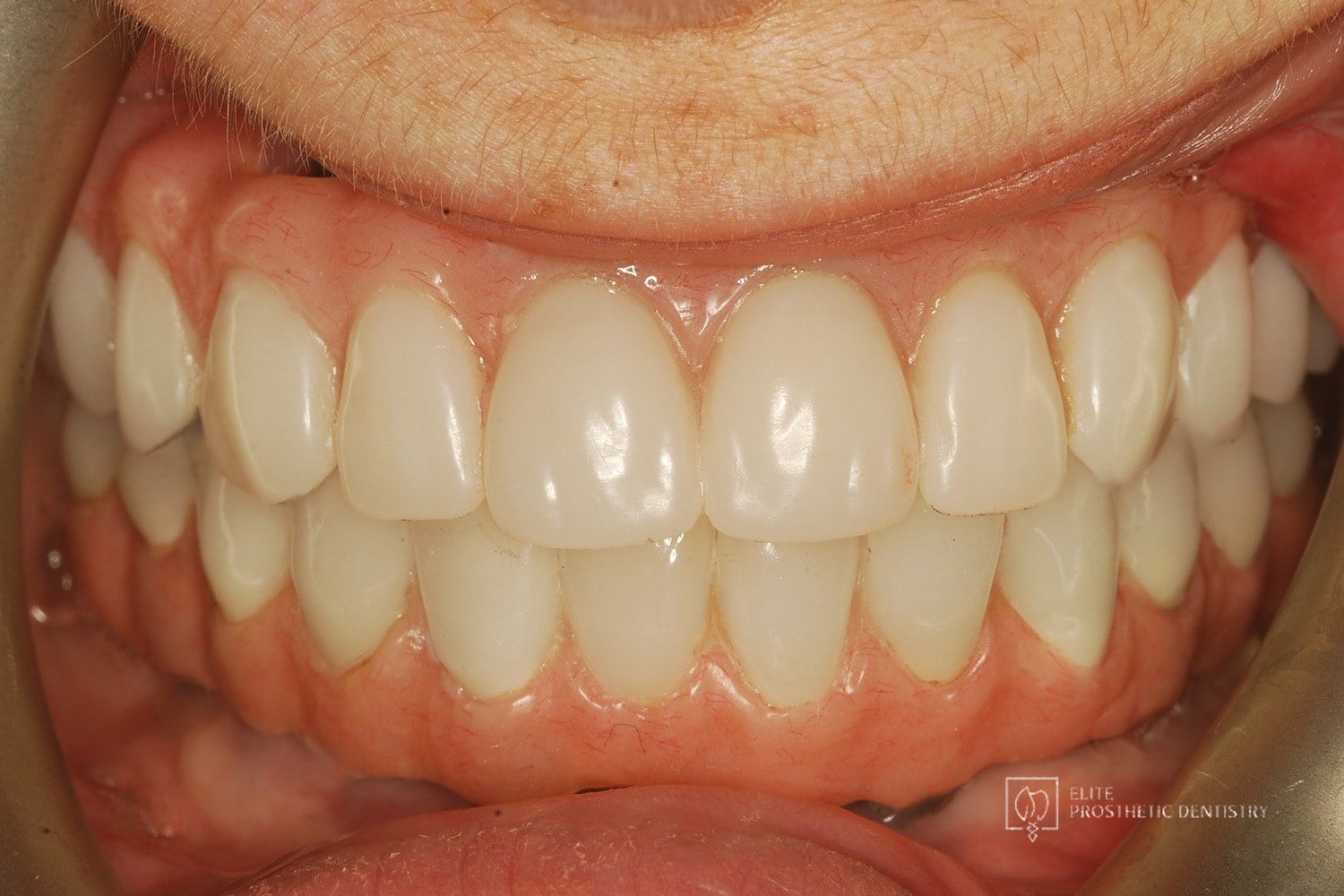
 Before
  After
After How Aging, Failing Dentistry Was Replaced with a Coordinated Full-Mouth Implant and Crown Reconstruction
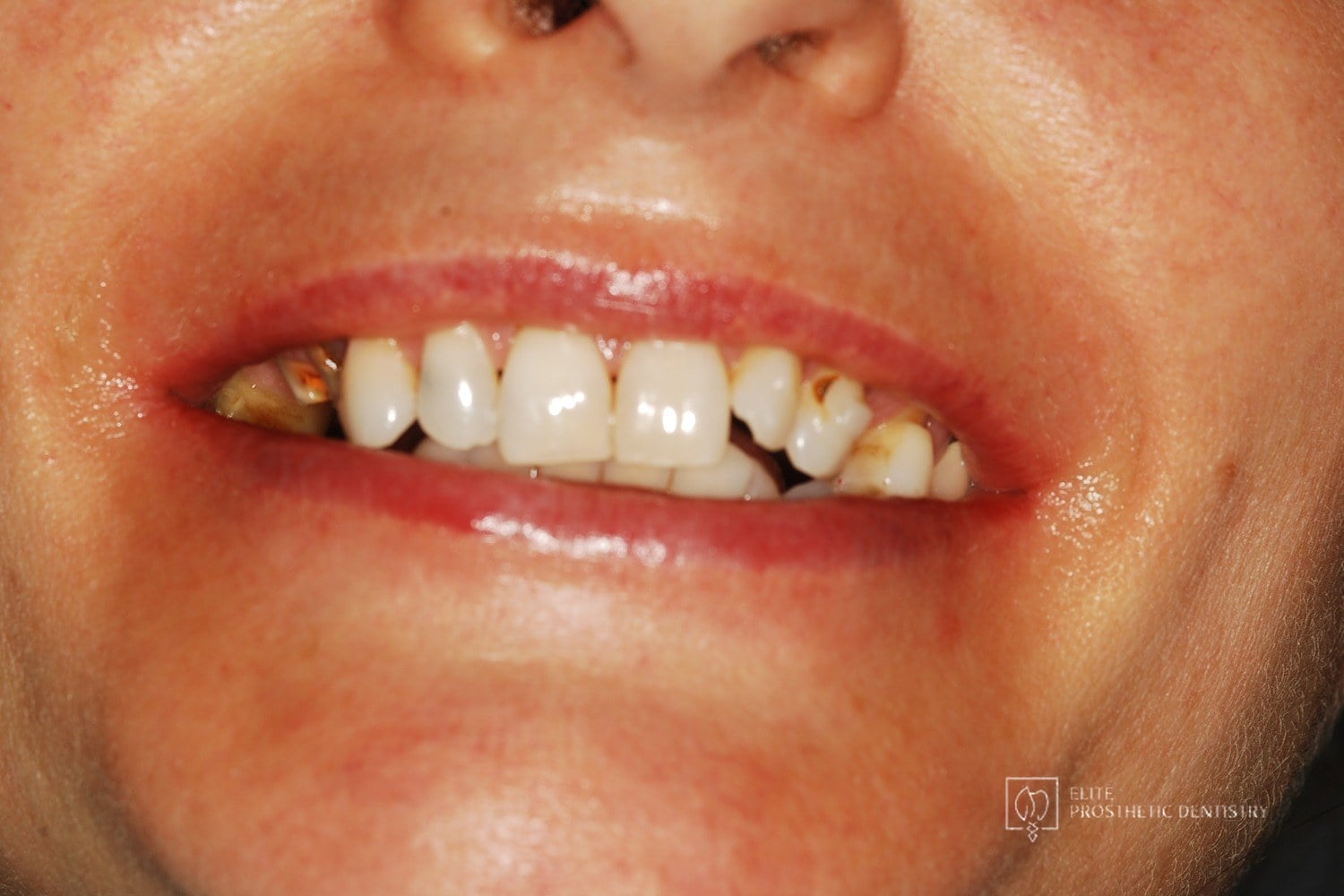
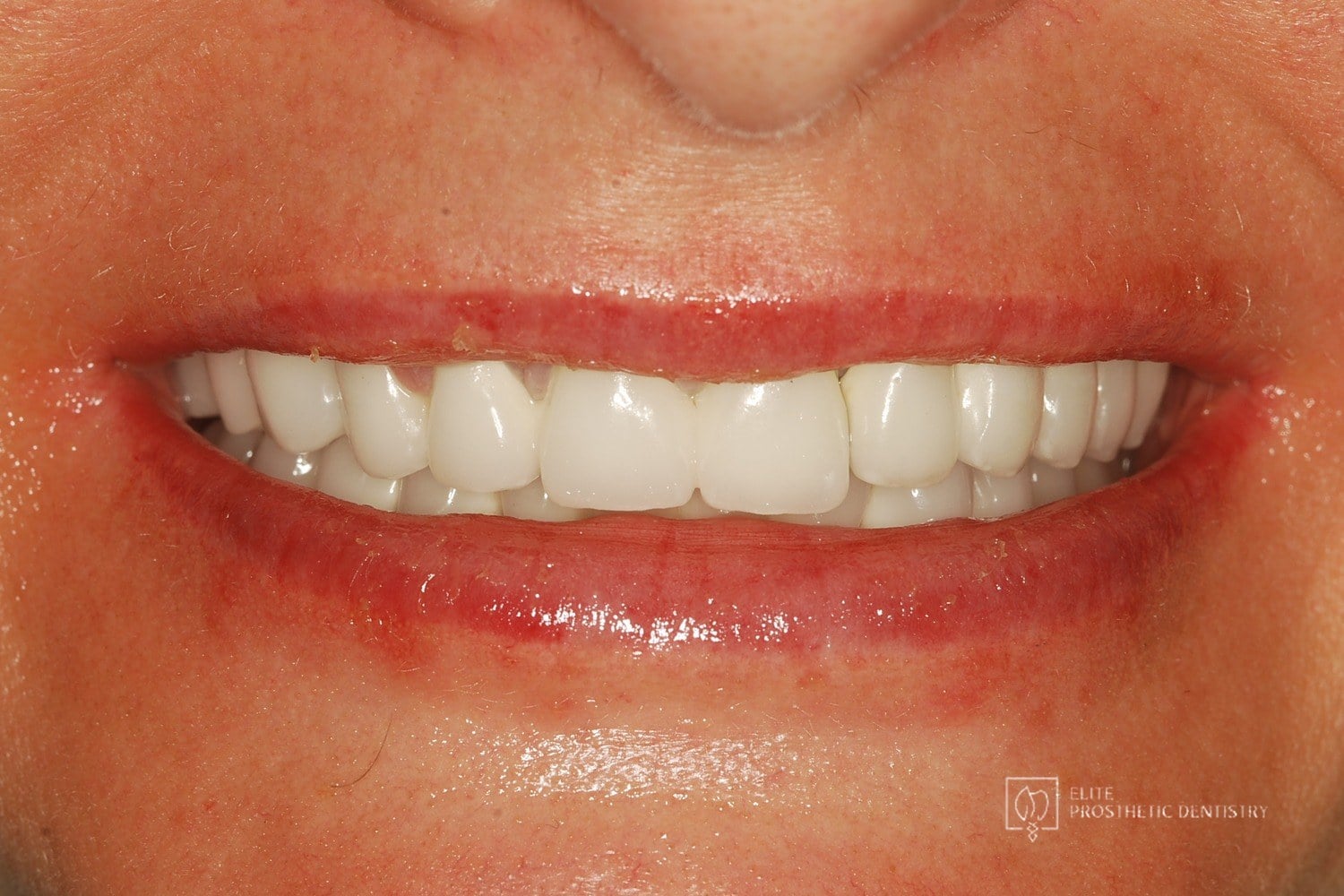
The patient presented with throbbing upper-molar pain, long-standing infections, multiple root canals and unfinished prior treatment, generalized sensitivity, and several hopeless teeth.
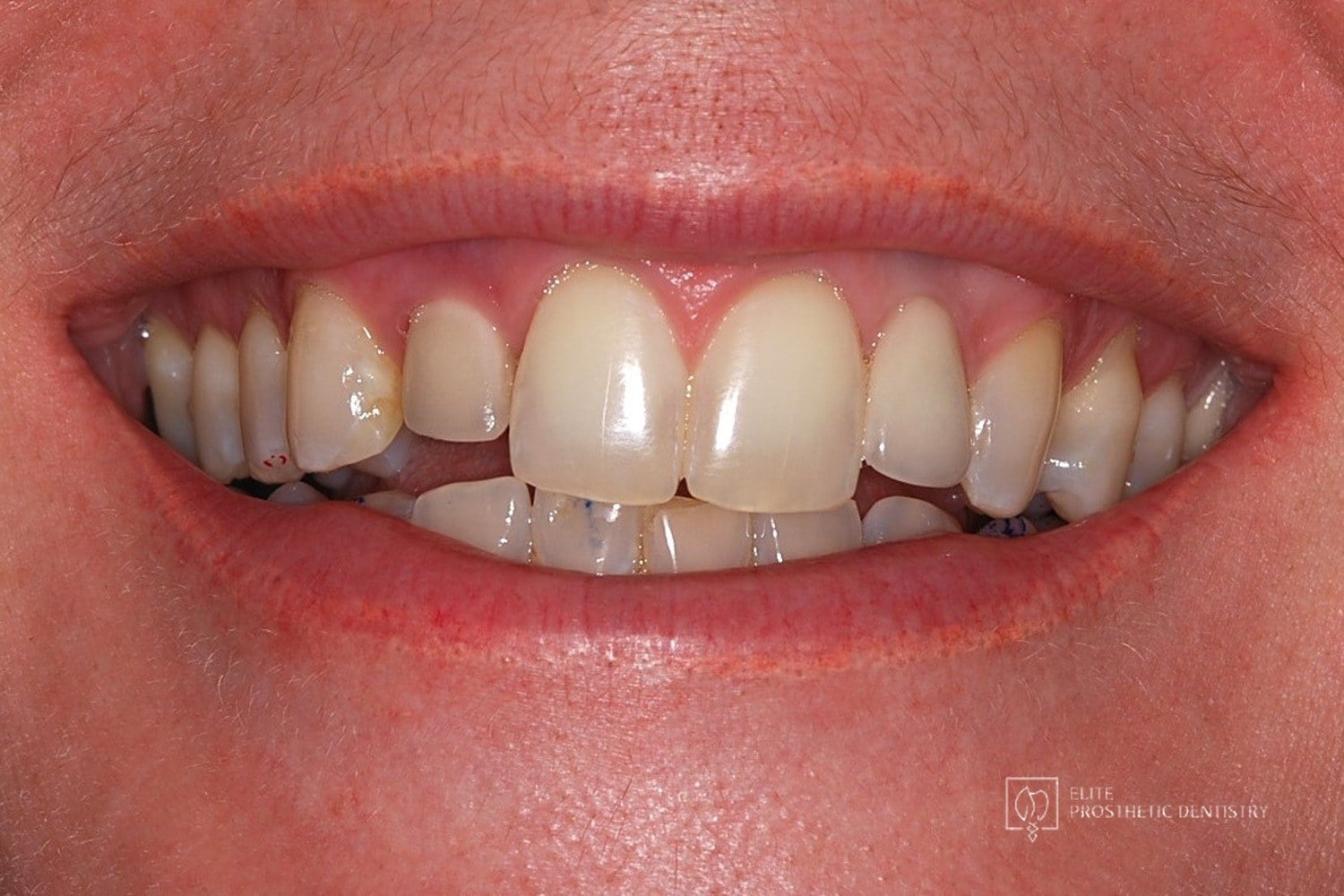
 Before
  After
After How Failing Implants and Severe Bone Loss Were Rebuilt Into a Stable Full-Arch Implant Reconstruction
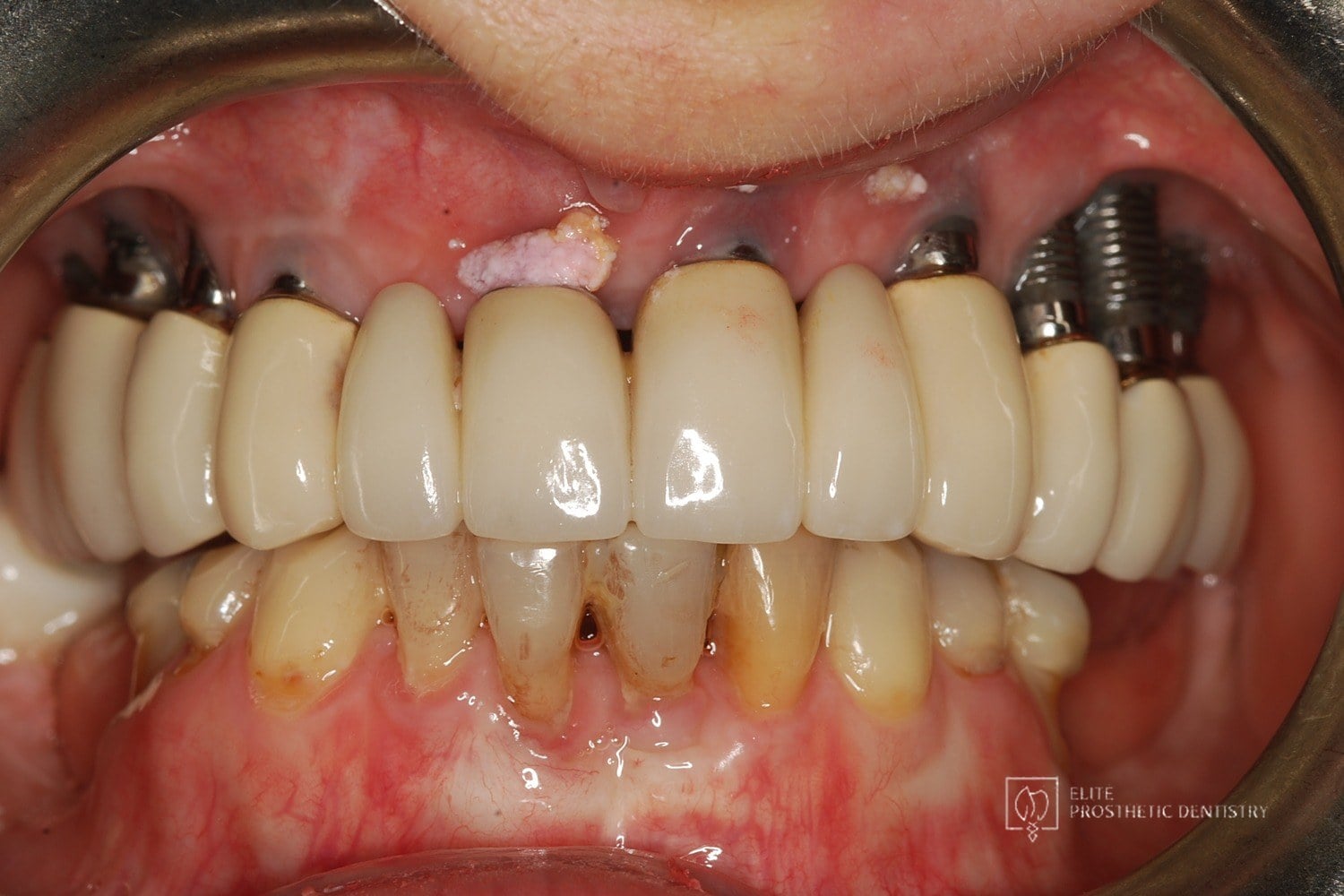
The patient presented with significant complications from previously placed implants, severe bone loss, failing posterior implants, and an unesthetic full-arch bridge. Both arches required full reconstruction, with the upper arch showing the most advanced bone loss and instability.
 Before
 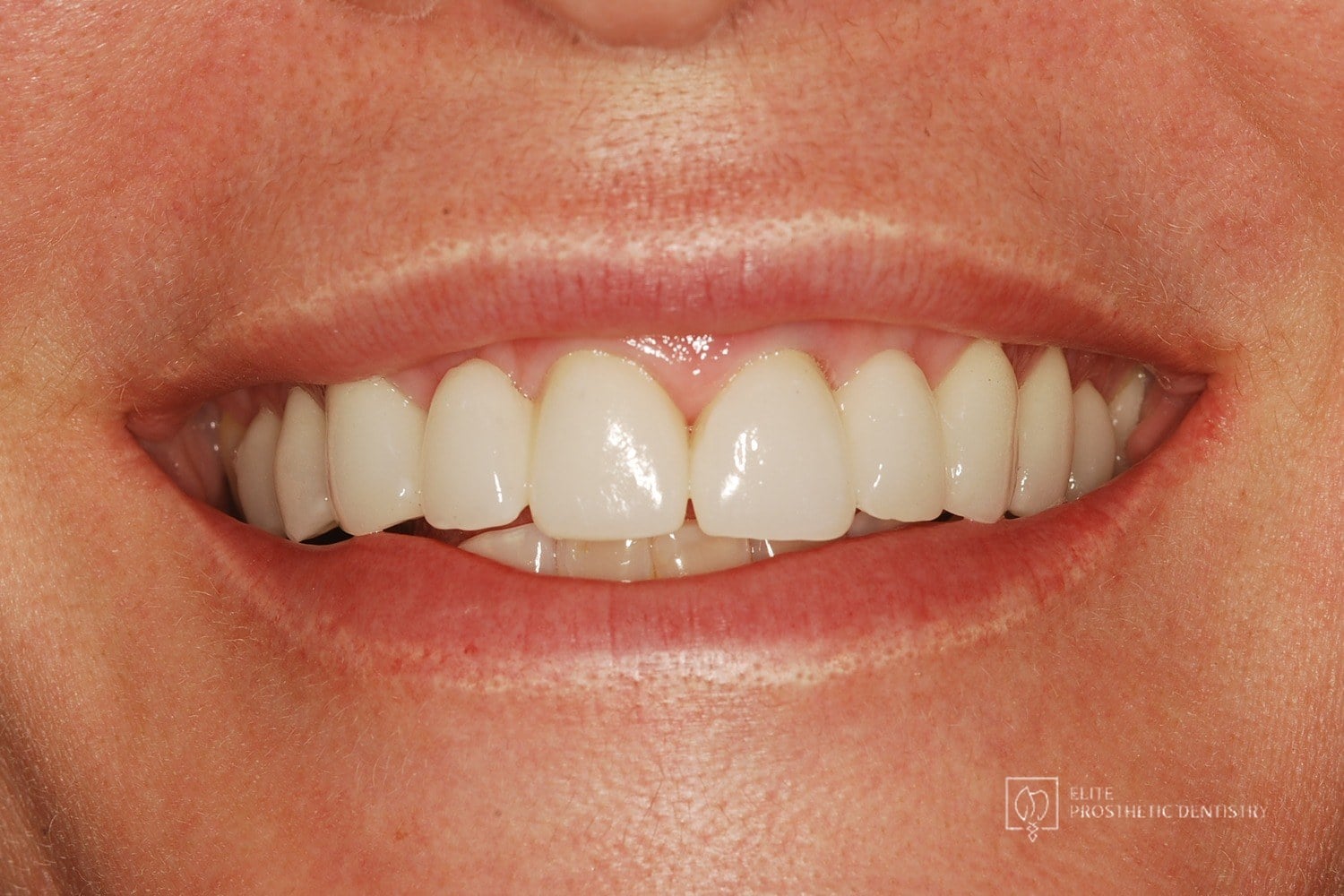 After
After How Failing Lateral Incisor Implants Were Replaced with Custom Zirconia Bridges After Severe Bone Loss Made Replacement Implants Impossible
Comprehensive examination including CBCT imaging revealed significant bone loss surrounding implants that were placed outside the buccal plate, most likely due to placement without a CBCT-generated surgical guide. The implants were determined non-salvageable, and the alveolar ridge was too narrow to support replacement implants without extensive reconstruction.