
Can My Failed Implant Be Salvaged? Bone Loss Around the Implant
When bone loss surrounds a dental implant on multiple surfaces, the situation is serious but frequently still salvageable. This is the defect pattern we classify as Case Type II: the implant is losing support around its circumference, the defect enlarges as bacteria colonize the deepening pocket, and without intervention the implant will eventually fail outright. The repair is more involved than for a single-wall defect, and it is one of the most rewarding procedures we perform, because it routinely saves both the implant and the crown on top of it.
This article covers the encircling-defect scenario specifically. For the broader decision framework, start with our overview of whether a failing implant can be saved or repaired.
A Real Repair, Start to Six-Year Finish
One of our patients presented with a failing implant showing several millimeters of bone loss around it (Fig. 1). The plan followed our standard salvage discipline.
The abutment and crown were removed and carefully stored; they were well made and deserved to survive the repair. The implant surface was then detoxified, stripping away the bacterial biofilm that caused and sustained the bone destruction. With a clean surface to build against, the defect was grafted with growth-factor-enhanced bone (Fig. 2).
After four months the graft had matured, and the original abutment and crown were reseated on the same implant (Figs. 3 and 4). Six years later, the bone around the implant remains intact (Fig. 5).
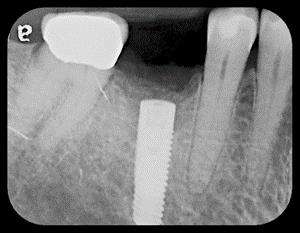
Fig. 1: Failing Implant with Bone Loss Around It
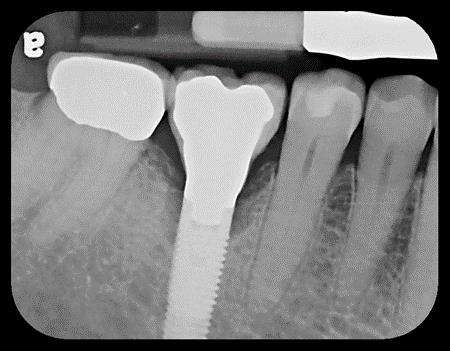
Fig. 2: Bone Graft Repair Complete Fig. 3: Four Months Later, Bone Is Healed Fig. 4: Abutment and Crown Reseated After Healing Fig. 5: Six Years Later, Bone Is Intact
Specialist implant salvage evaluation. Failed implants with bone loss often have salvage paths. The decision depends on the implant condition, the bone available, and what the final restoration requires. Learn more about repairing failing implants, bone grafting, and precision implant placement for cases requiring replacement.
Why This Repair Works, and When It Does Not
Three factors decide whether an encircled implant can be rescued. The implant itself must still be rigidly anchored; a mobile implant has already lost the battle. The defect must be cleanable and containable, so the graft has walls to build against. And the restoration above must be sound or rebuildable, since a poorly contoured crown will simply recreate the disease that caused the loss.
That last point matters more than patients expect. Bone loss around an implant is usually the end of a chain that began with bacteria finding a place to live. Repairing the bone without correcting the cause is renovation without fixing the leak. This is also what separates the encircling defect from its cousins: bone loss confined to the outside surface is a simpler, more contained repair, while bone destroyed by improperly performed implant surgery often requires rebuilding the site and placing a new implant correctly.
The Earlier the Evaluation, the More We Can Save
An implant with progressive bone loss does not stabilize on its own; the defect you have today is the smallest it will ever be. If your implant shows bleeding gums, deepening pockets, or bone shadows on an X-ray, have it measured now. Dr. Gerald Marlin, a specialty-trained prosthodontist with more than 3,900 dental implants placed, will assess whether your implant, and even your existing crown, can be saved. Call 202-244-2101 or book a consultation at Elite Prosthetic Dentistry in Friendship Heights, Washington, DC.
See How We Resolve These Problems
Our patient success stories show real cases and real results. Browse outcomes from a specialist prosthodontist with decades of experience and 3,900+ implants placed.
Key Takeaways
- ✓ Bone loss on multiple surfaces around an implant is a progressive defect: without treatment it keeps enlarging until the implant is lost.
- ✓ Even these larger defects can often be salvaged by removing the crown, detoxifying the implant, and grafting with growth-factor-enhanced bone.
- ✓ The original abutment and crown can frequently be stored and reseated once the graft matures, typically after about four months.
- ✓ In the case shown, the rebuilt bone remained intact at the six-year follow-up.
- ✓ The deciding factors are implant condition, remaining bone, and what the final restoration requires, all measurable before committing to treatment.
Frequently Asked Questions
Can an implant with bone loss all around it still be saved?
Often, yes, though it is a more demanding repair than a single-wall defect. The crown and abutment are removed to give full access, the implant surface is detoxified, and the defect is grafted with growth-factor-enhanced bone. Once the graft matures, the original crown can frequently be reseated on the same implant.
Does the crown have to be replaced during implant salvage?
Not necessarily. When the existing abutment and crown are well made, they are removed, stored, and reseated after the bone has healed. That is one of the quiet economies of treating bone loss early: the restoration you already invested in can often be preserved.
How long does the repaired bone take to heal?
The graft typically matures for about four months before the abutment and crown are reseated, with timing confirmed by imaging rather than the calendar. Full integration of the graft continues to strengthen after that.
How long do these repairs last?
With proper hygiene and follow-up, the results can be genuinely durable. In the case shown in this article, the bone around the repaired implant remained intact six years after treatment. Long-term success depends on maintenance and on correcting whatever caused the original bone loss.
Related Patient Success Stories
Explore similar patient success stories demonstrating our expertise in advanced prosthetic dentistry.
 Before
  After
After How a Front Tooth Lost to Childhood Trauma Was Rebuilt with Bone Grafting and a Long-Lasting Implant
A teenager was referred by her father after earlier trauma left her upper left front tooth slowly failing from root resorption. She was still growing, so an immediate implant was the wrong move. The tooth had to be maintained to buy time, then replaced correctly once she reached skeletal maturity.
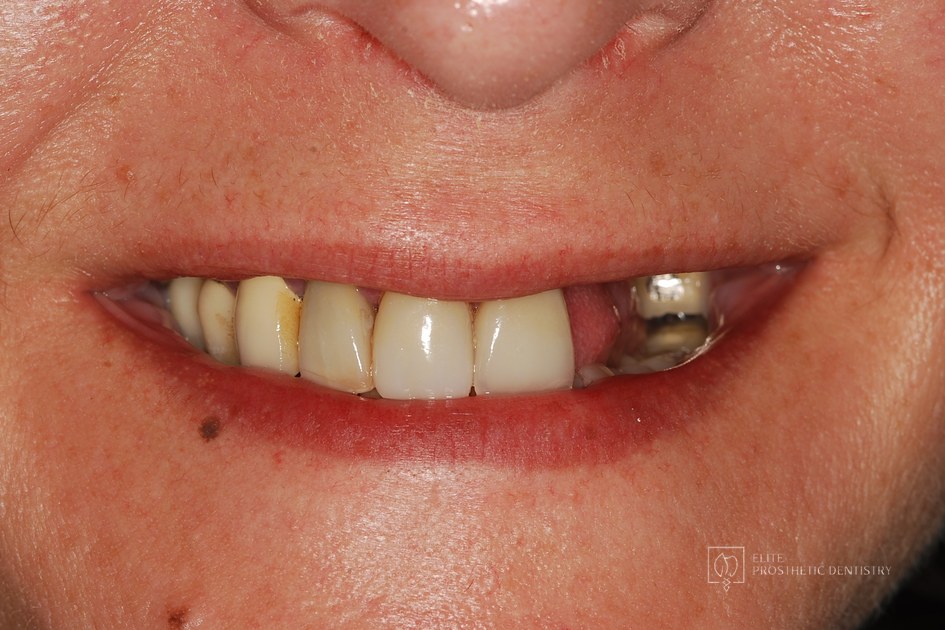 Before
 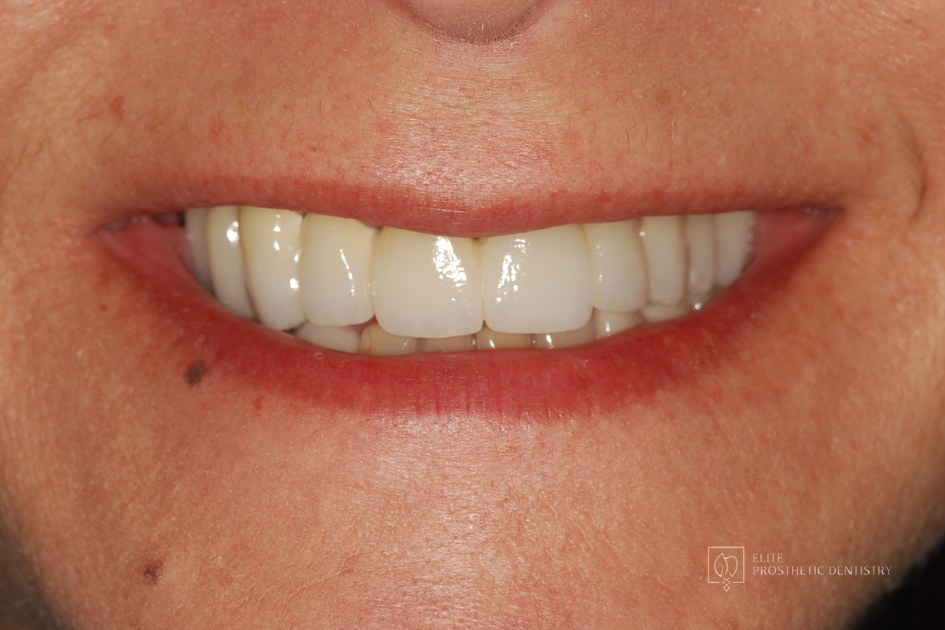 After
After Implant Supported Reconstruction: Failing Bridgework and Missing Back Teeth Rebuilt with Coordinated Specialist Care
Referred by another dental specialist with severe bone resorption on the upper left, multiple broken-down lower teeth requiring extraction, and failing lower back teeth that had left the bite without solid support. No single procedure, and no provider working in isolation, could rebuild a situation this interconnected.
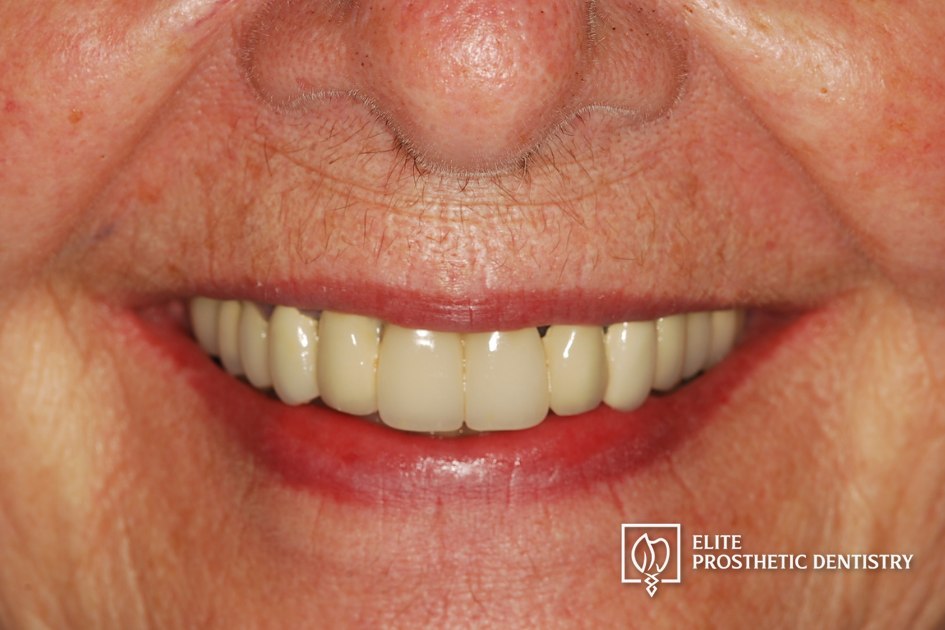 Before
 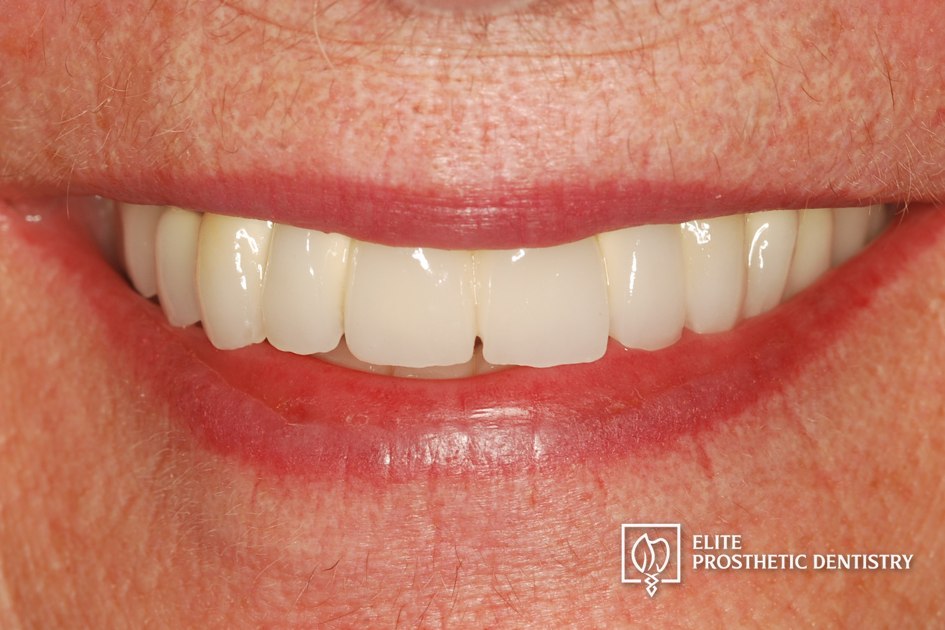 After
After How a Loose Upper Bridge and Aging Crowns Were Rebuilt with Staged Implant Reconstruction
A patient referred by her general dentist after years of aging dentistry no longer holding up. A loose upper bridge and crowns more than twenty years old, combined with the effects of advanced periodontal disease and severely compromised tooth abutments, required a staged surgical and restorative plan delivered with comfort planning at the same time.
Related Articles
Deepen your knowledge with additional insights on this topic.
 Bone Grafting & Surgical
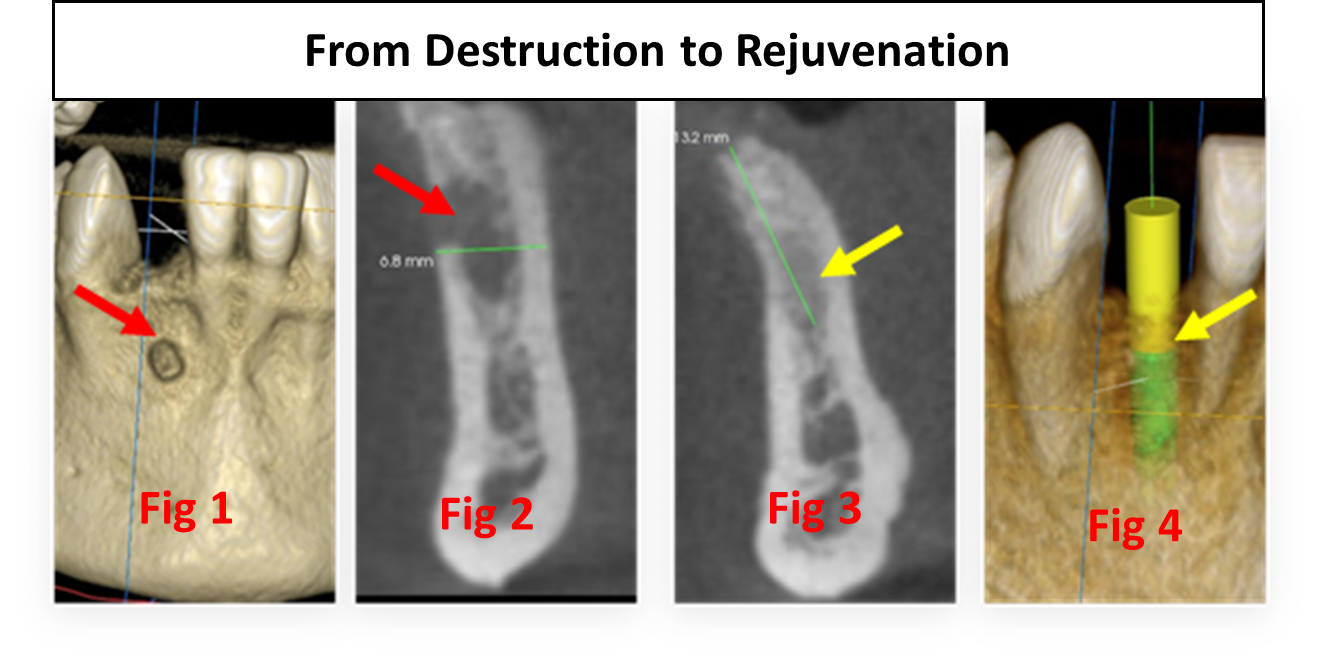
 Rebuilding a Ruined Implant Site with Severely Damaged Bone: The Three-Stage Protocol
Debridement, growth-factor grafting, CBCT-guided planning: the step-by-step protocol that turns a severely damaged implant site into a healthy ridge.
 Bone Grafting & Surgical
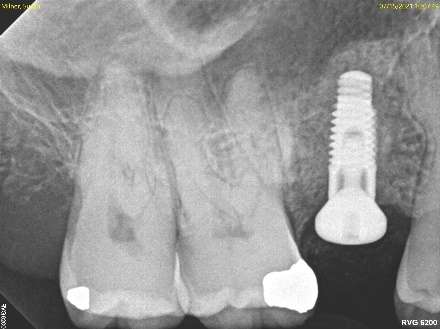
 What Is Ridge Augmentation Bone Grafting?
Ridge augmentation rebuilds a jaw ridge too narrow or angled for an implant. See real measurements from planning to precise placement. Washington DC.
 Bone Grafting & Surgical
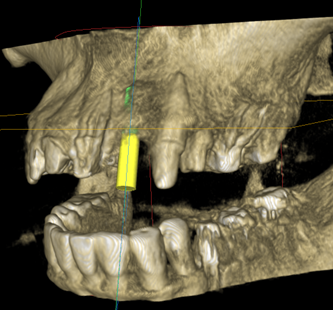
 What Is a Partial (Internal) Sinus Lift?
A partial (internal) sinus lift adds bone at a single implant site through the implant preparation itself, often with the implant placed the same visit.