

Understanding Your Dental Treatment Plan: The Terms, the Phases and What to Ask
Hopeless, guarded, provisional, wax-up, osseointegration, abutment, vertical dimension, predetermination: what the words on a treatment plan mean, how phases are organized, and the questions a plan should be able to answer.
Practice clinician: Gerald M. Marlin, DMD, MSD, prosthodontist, Elite Prosthetic Dentistry, Friendship Heights, Washington, DC. Last updated .
A treatment plan for comprehensive dental work can run to several pages of terms, codes and phases that mean little to a patient reading them for the first time. Understanding the document is the first step in deciding about it, and in comparing it with any other plan you have been given. This guide explains the words that appear on prosthodontic and implant treatment plans, how a plan is organized into phases, what a complete plan contains, and the questions it should be able to answer.

Terms About Diagnosis
Prognosis. The clinician’s judgment of how a tooth or restoration is expected to do. Good or favorable: expected to last with normal care. Guarded or questionable: treatable, with a less certain outlook, usually because of bone loss, remaining tooth structure or a previous treatment. Hopeless: cannot be predictably saved; removal recommended. Each prognosis should have a reason stated, and for hopeless teeth the reason should be visible on the imaging.
Periodontal. Concerning the gums and the bone that support the teeth. A periodontal chart records pocket depths around each tooth; deeper pockets and bone loss indicate disease. Periodontitis is active disease; peri-implantitis is the same process around an implant.
Endodontic. Concerning the nerve and root canal of a tooth. Root canal treatment removes the infected nerve and seals the canal; retreatment redoes a previous root canal; an apicoectomy treats the infection surgically at the root tip. Resorption is the loss of root structure from inside or outside the root, which can make a tooth unsavable.
Occlusion. The bite: how the teeth meet and move against each other. Vertical dimension is the height of the bite, the distance between the jaws when the teeth are together; it can be lost to wear and re-established in a reconstruction. Centric relation is the jaw’s seated position, used as the reference when a bite is rebuilt. Parafunction means clenching or grinding, which loads teeth and restorations beyond normal chewing.
CBCT. Cone beam computed tomography: a three-dimensional X-ray of the jaws that shows bone volume, nerve and sinus position, infections and cracks that two-dimensional X-rays cannot. Every implant case at Elite Prosthetic Dentistry is planned on one.
Terms About Planning
Diagnostic wax-up (or digital design). A model of the proposed result built on mounted casts of your teeth. It shows the planned shape, length and position of the teeth, lets you see and approve the design, and becomes the template for provisionals and surgical guides.
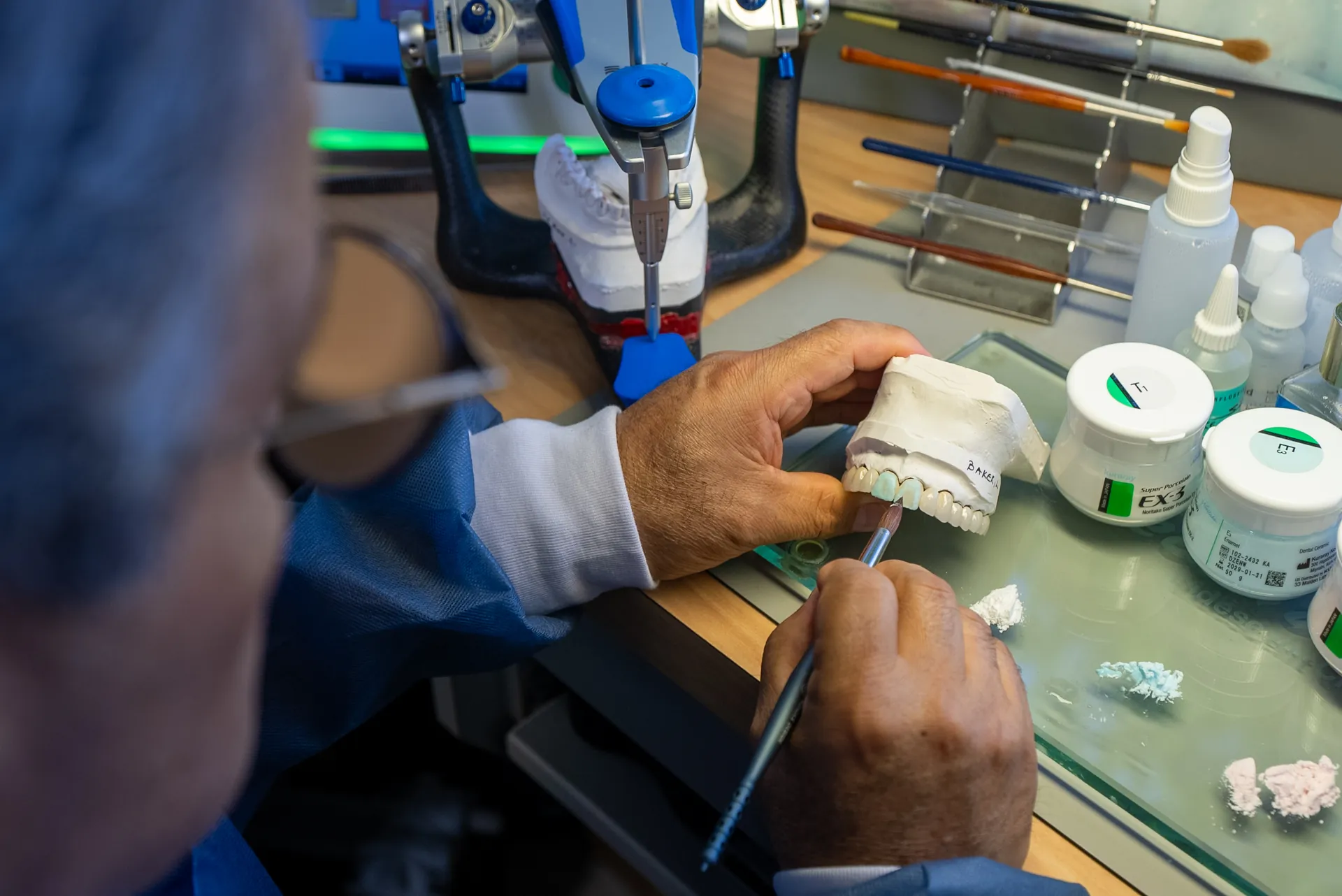
Articulator and mounted records. An instrument that holds casts of the upper and lower teeth in the relationship of your own jaws, so that the bite can be studied and designed outside the mouth.
Surgical guide. A template, made from the CBCT scan and the design, that directs the implant to the planned position during surgery. Used where position is critical: the visible front of the mouth, full arches, sites near the nerve or sinus.
Restoratively driven (or prosthetically driven) planning. Deciding the final teeth first and placing the implants where the teeth need them, rather than placing implants where bone happens to be and designing teeth to fit. The reason the restoration should decide the surgery is explained in our guide on who should place your dental implant.
Phase (or stage). A group of procedures carried out together, in an order the plan sets. Most comprehensive plans have four to five: stabilization, design, foundation, restoration, maintenance. The phases and their order are explained in our guide on where to start after years away from the dentist.
Terms About Implants
Implant (or fixture). The titanium or zirconia post placed in the bone to replace a root. Abutment. The connector attached to the implant that holds the crown; stock abutments are manufactured in standard shapes, custom abutments are made for the specific tooth and gum shape. Implant crown. The tooth on the abutment; screw-retained crowns are held by a screw through the crown, cement-retained crowns are cemented to the abutment.
Osseointegration. The process by which bone grows onto the implant surface and locks it in place. The plan’s healing period is this process. Immediate placement means an implant placed in the socket at the time of extraction; delayed placement means the socket heals first. Immediate loading means a provisional tooth is attached to the implant at placement; delayed loading means the implant heals unloaded first. Which is appropriate depends on bone and stability at surgery.
Bone graft, sinus lift, ridge augmentation. Procedures that add bone where there is not enough for an implant in the correct position. Explained in our guide on whether you need a bone graft.
Full-arch prosthesis, hybrid, overdenture. The three structural options for replacing all the teeth in a jaw: fixed teeth on implants (a zirconia prosthesis or an acrylic hybrid on a framework), or a removable overdenture that snaps onto implants. Compared in our guide on fixed implant teeth versus a removable implant denture.
Terms About Restorations
Crown. A restoration that covers the whole tooth above the gum. Bridge (fixed partial denture). Replacement teeth held by crowns on the neighboring teeth or by implants. Veneer. A thin facing on the front of a tooth. Inlay and onlay. Restorations that replace part of a tooth without covering all of it. Post and core. A post placed in the root canal and a core built around it, to rebuild a tooth that has lost too much structure to hold a crown on its own. Crown lengthening. A procedure that exposes more tooth above the gum and bone so that a crown has sound structure to grip.
Materials. Zirconia: a strong ceramic, used alone (monolithic) or layered with porcelain. Lithium disilicate (often by brand name): a glass ceramic with high translucency, used where appearance matters most. Porcelain fused to metal (PFM): porcelain over a metal substructure, the older standard, strong but less translucent. Gold: still used where strength and gentleness on opposing teeth matter more than appearance. The material choice is explained in our guide on choosing a dentist for crowns.
Provisional (temporary). The interim restorations worn during treatment. In comprehensive work they are the test of the design.
Occlusal guard (night guard). A custom appliance worn to protect teeth and restorations from grinding.
Terms About Fees and Insurance
Treatment plan with fees. The written document listing procedures, sequence and fees. Procedure codes. The standardized dental codes (a letter followed by four digits) that identify each procedure for insurance; they describe what is done, not how well. Predetermination of benefits. An insurer’s advance estimate of its contribution to a listed plan. Annual maximum. The cap on what a dental plan pays per plan year. Missing-tooth clause. A plan provision excluding replacement of teeth lost before coverage began. Out-of-network. A provider not contracted with the plan; PPO benefits often still apply at a different rate. These are explained in our guide on what determines the cost of implants and reconstruction.
What a Complete Plan Contains
- Findings: the diagnosis for each tooth, the gums, the bone and the bite, with imaging.
- A prognosis for each tooth, with the reason.
- Alternatives that were considered, and why the recommended one was chosen.
- The end result: what the teeth will be, in what material, supported by what.
- The sequence, in phases, with what happens in each and roughly when.
- Provisionals: what you wear in between.
- Who does each part: one practice, or several, and who is accountable for the result.
- Contingencies: what happens, and who pays, if an implant does not integrate, a graft fails, or a restoration fails early.
- Fees, what they include and exclude, and what insurance is expected to contribute.
- Maintenance: what the result needs over the years.
A plan that is a list of procedures with fees, without findings, prognoses, alternatives, sequence or contingencies, is a quote, not a plan. Our guide on when to seek a second opinion explains what to do with one.
Questions a Plan Should Be Able to Answer
- Which teeth are hopeless, and what is the finding for each?
- Was a plan that keeps treatable teeth considered, and why was it set aside?
- Where will the implants go, and was that decided from the final tooth design?
- What will I wear during treatment, and will I ever be without teeth?
- What material, and why that material for my bite?
- Who places, who restores, who makes the restorations, and who do I call if something is wrong?
- What happens, and who pays, if something fails?
- What will the result need from me over the next twenty years?
How Elite Prosthetic Dentistry Writes a Plan
After examination, imaging and records, Dr. Gerald M. Marlin reviews the findings and the plan with the patient, term by term, before anything begins. The plan states each tooth’s prognosis with its reason, the alternatives considered, the end result, the phases, the provisionals, the fees and what they include, and the maintenance the result will need. Implants are placed and restored in the practice and restorations are made in the on-site laboratory, so the plan comes from one office and the accountability for it sits in one place. The goal is to help patients make thoughtful long-term decisions, whether treatment is limited or comprehensive, and that is only possible when the patient understands the document.
Related Decision Guides
- What determines the cost of implants and reconstruction, and how to compare two quotes
- When to seek a second opinion before dental implants, extraction or major treatment
- Keep your teeth or replace them?
- Should I save the tooth or replace it with an implant?
- Who should place your dental implant?
Bring Your Plan
If you are holding a treatment plan you do not fully understand, request an appointment or call (202) 244-2101. Bring the plan and the imaging it was based on; the evaluation will explain it and tell you whether the findings support it.
Your Best Smile Is Within Reach
Request a specialist consultation with Dr. Marlin to discuss your situation and the most appropriate path forward.
Frequently Asked Questions
What does 'hopeless prognosis' mean on my treatment plan?
That the clinician judges the tooth cannot be predictably saved and recommends removing it. Common reasons are a vertical root fracture, decay or resorption below the bone, advanced bone loss, or an infection that cannot be resolved. The plan should state the specific reason for each hopeless tooth and it should be visible on the imaging. 'Guarded' means the tooth can be treated but with a less certain outlook; 'good' or 'favorable' means it is expected to last with normal care.
What is a diagnostic wax-up?
A model of the proposed result, built on casts of your teeth mounted on an instrument that reproduces your jaw's movement. It shows the planned shape, length and position of the teeth before anything is done, lets you see and approve the design, and becomes the template for provisional restorations and surgical guides. A digital design serves the same purpose. A comprehensive plan without one is being built without a drawing.
What are provisionals, and why are they a separate line?
Provisional restorations are the temporary teeth you wear during treatment, between preparation and the final restorations, or while implants heal. In comprehensive work they are a test of the design: bite, shape, speech and appearance are evaluated and adjusted in the provisionals, and the finals copy what was proven. They are a separate line because they are separate work, and their quality affects the result.
What does osseointegration mean, and why does the plan have a waiting period?
Osseointegration is the process by which bone grows onto the surface of an implant and locks it in place. It takes weeks to months depending on bone quality, the site and whether grafting was done. The waiting period in a plan is that healing time; a final crown placed on an implant before it has integrated can cause the implant to fail. Some cases allow a provisional tooth on the implant during healing; the plan should say whether yours does.
What is a predetermination of benefits?
A request submitted to your dental insurance before treatment, listing the planned procedures, to which the plan responds with an estimate of what it would pay. It is not a guarantee and it does not change the treatment; it tells you in advance what the insurance contribution is likely to be, so there are no surprises. For major work it is worth doing before you commit.
Related Patient Success Stories
Explore similar patient success stories demonstrating our expertise in advanced prosthetic dentistry.
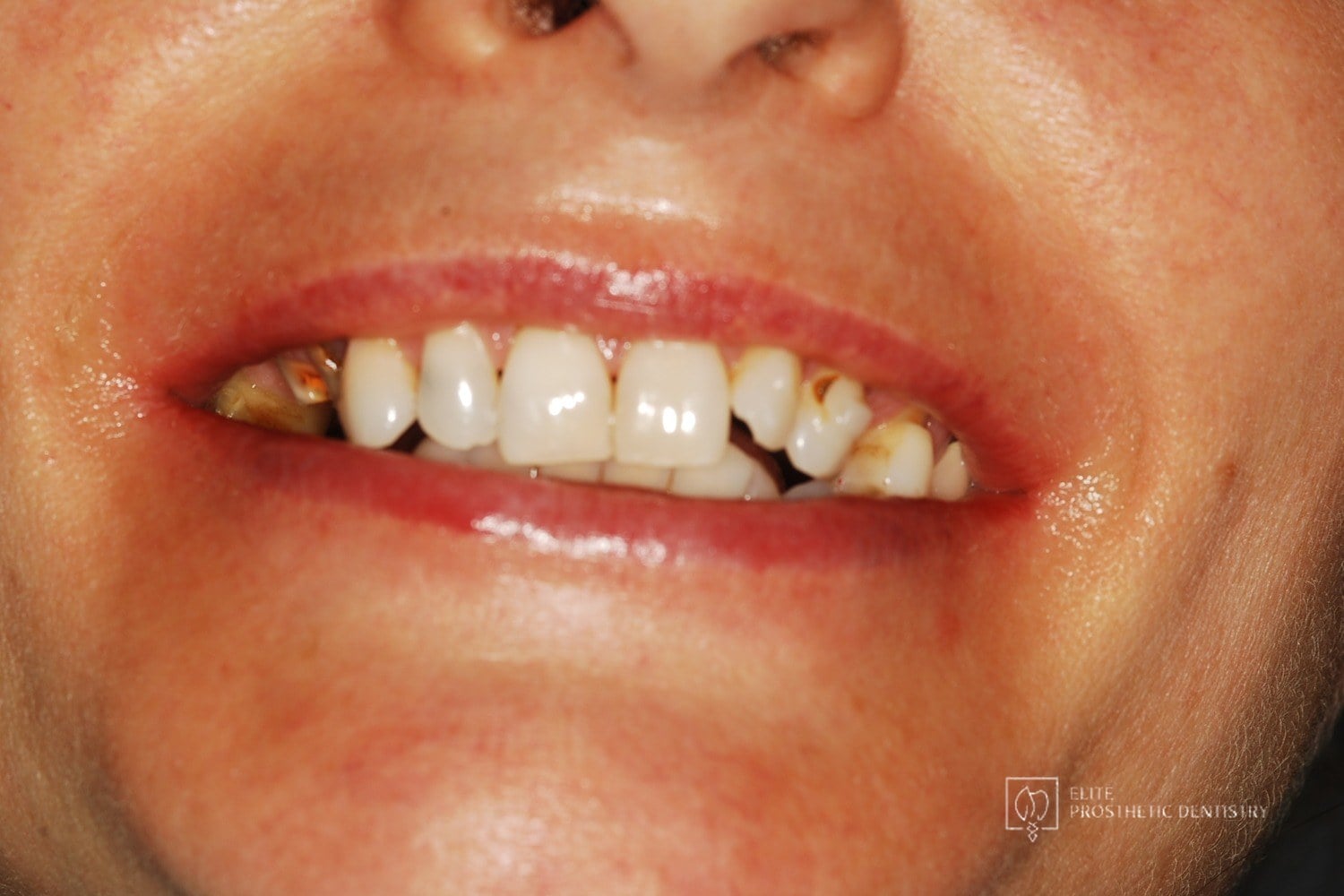 Before
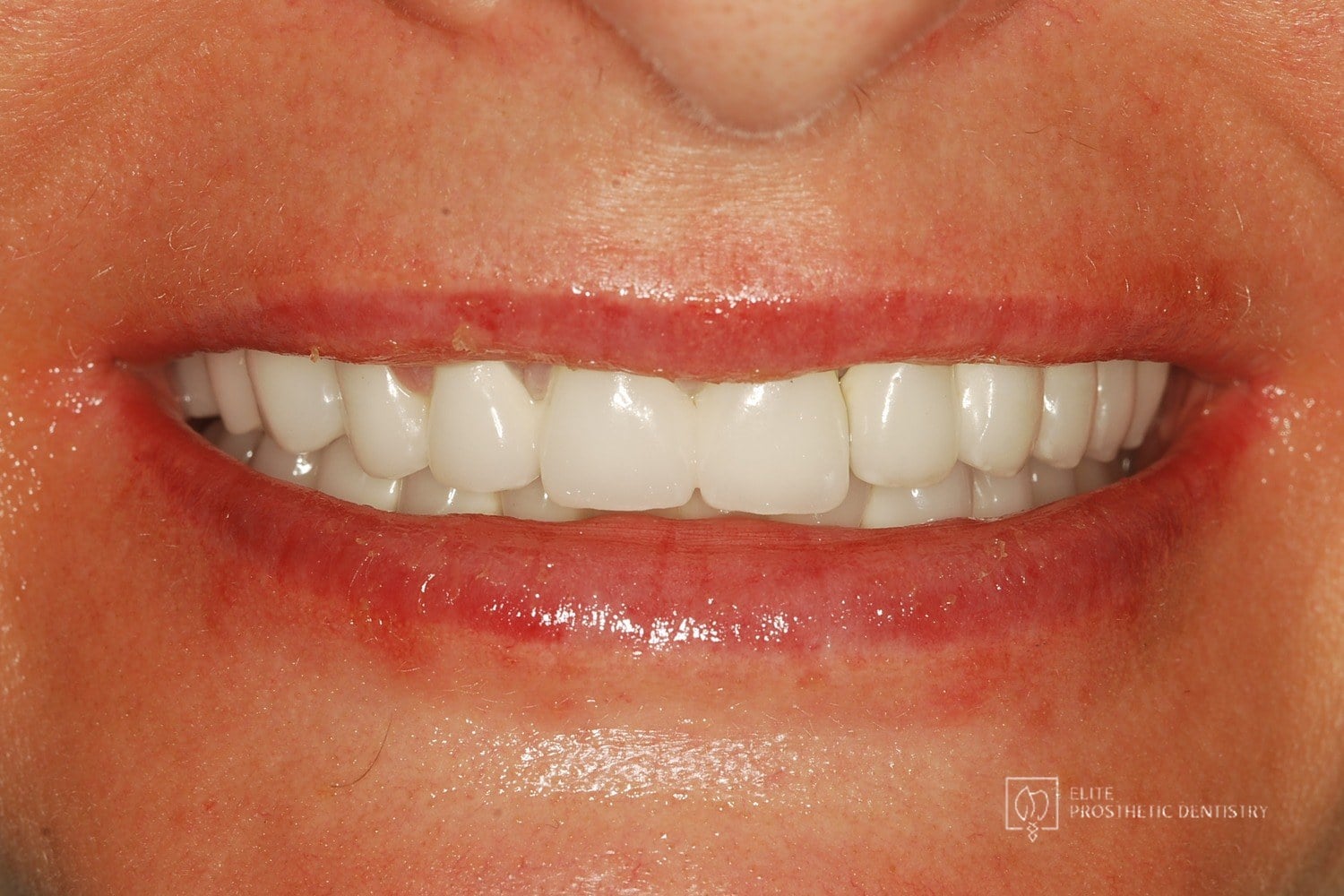 After
How Aging, Failing Dentistry Was Replaced with a Coordinated Full-Mouth Implant and Crown Reconstruction
The patient presented with throbbing upper-molar pain, long-standing infections, multiple root canals and unfinished prior treatment, generalized sensitivity, and several hopeless teeth.
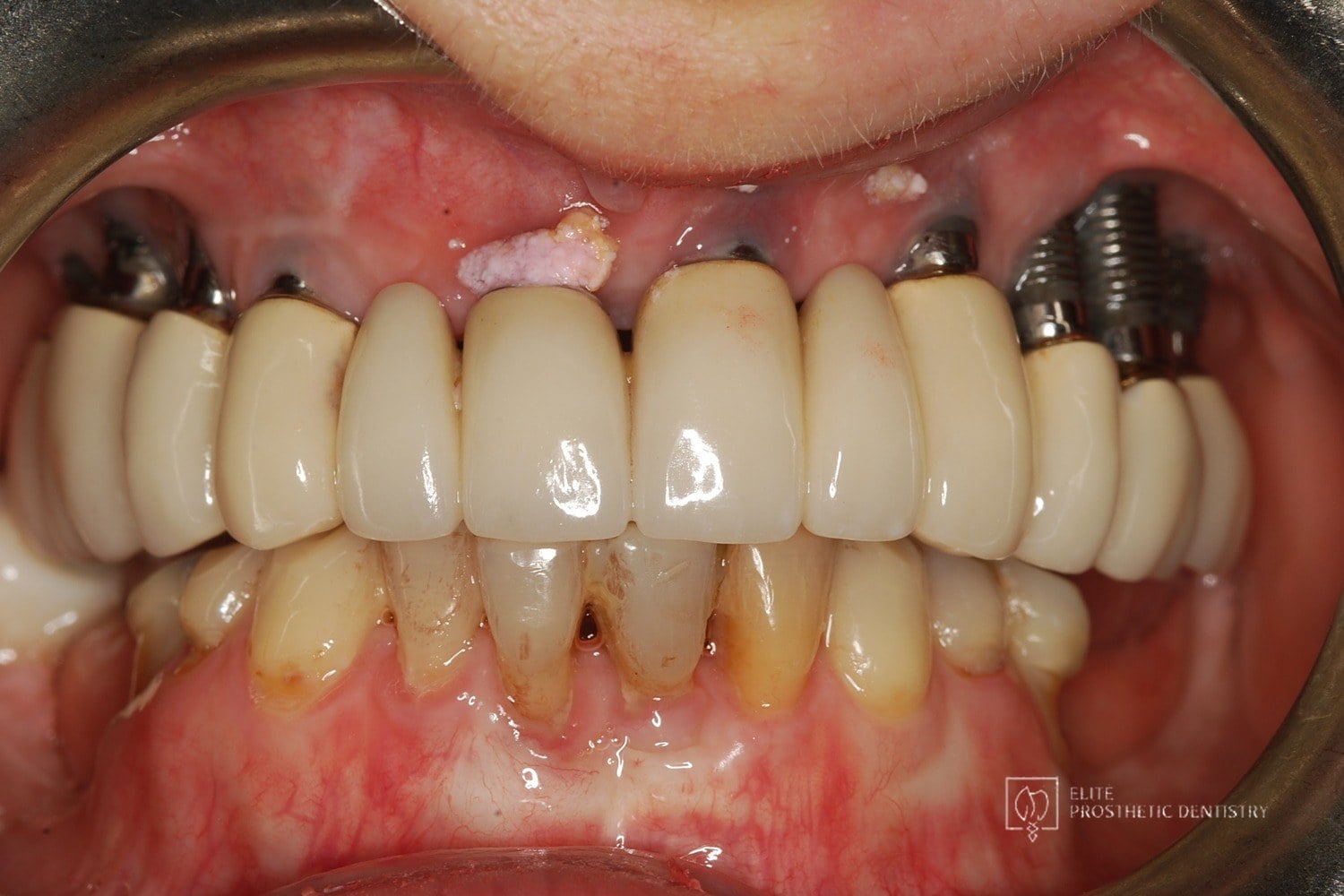 Before
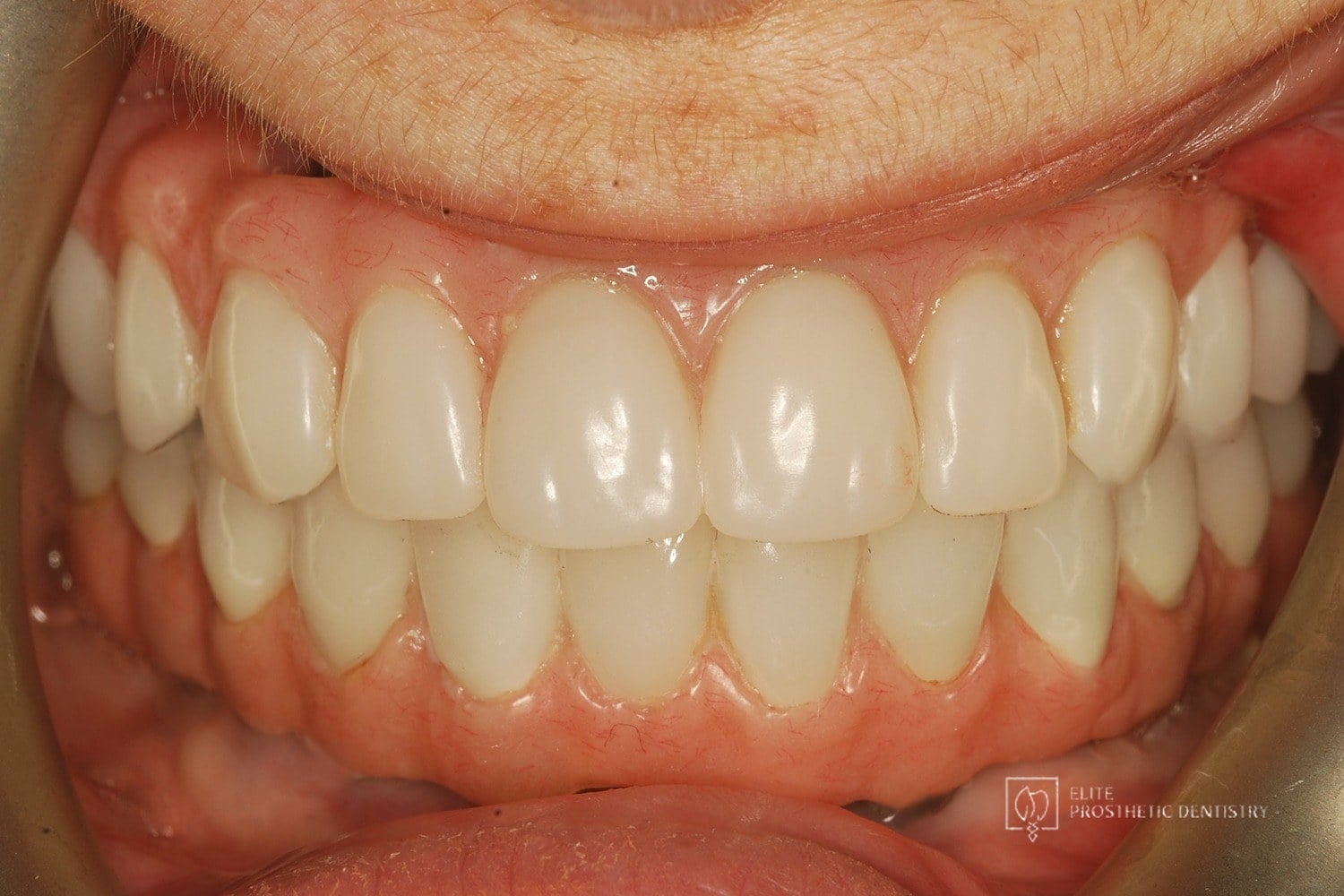 After
How Failing Implants and Severe Bone Loss Were Rebuilt Into a Stable Full-Arch Implant Reconstruction
The patient presented with significant complications from previously placed implants, severe bone loss, failing posterior implants, and an unesthetic full-arch bridge. Both arches required full reconstruction, with the upper arch showing the most advanced bone loss and instability.
 Before
 After
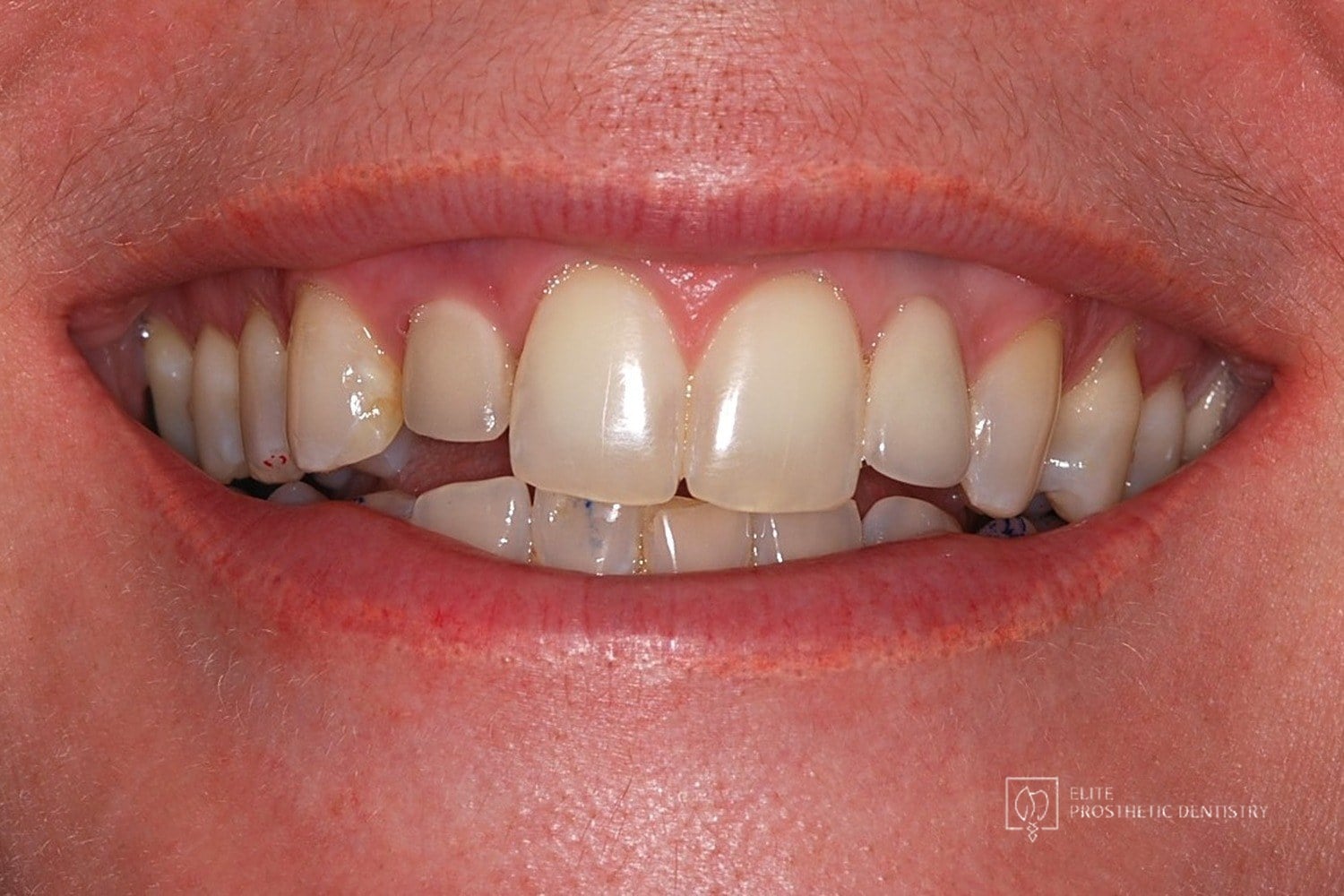
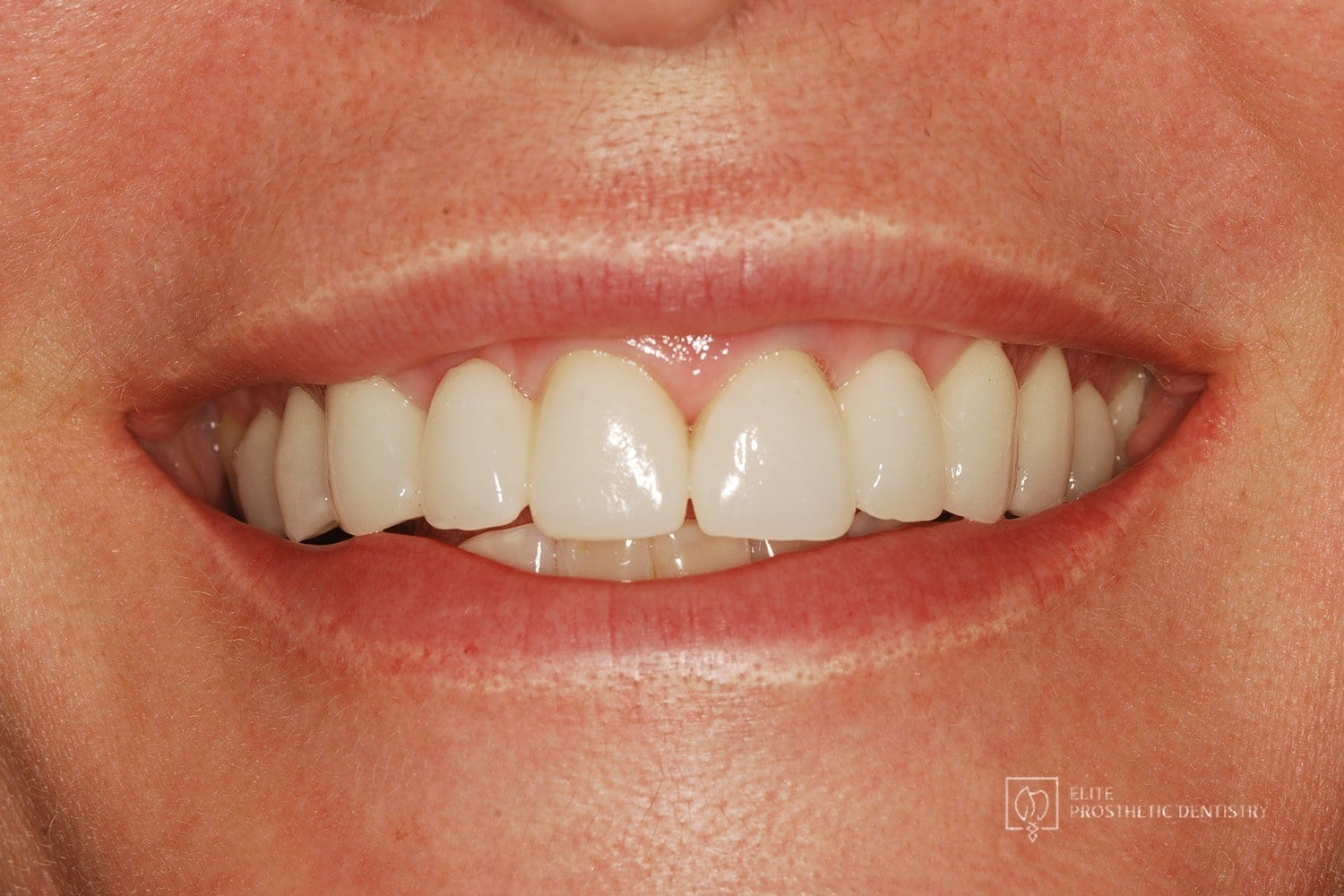
How Failing Lateral Incisor Implants Were Replaced with Custom Zirconia Bridges After Severe Bone Loss Made Replacement Implants Impossible
Comprehensive examination including CBCT imaging revealed significant bone loss surrounding implants that were placed outside the buccal plate, most likely due to placement without a CBCT-generated surgical guide. The implants were determined non-salvageable, and the alveolar ridge was too narrow to support replacement implants without extensive reconstruction.
 Before
 After
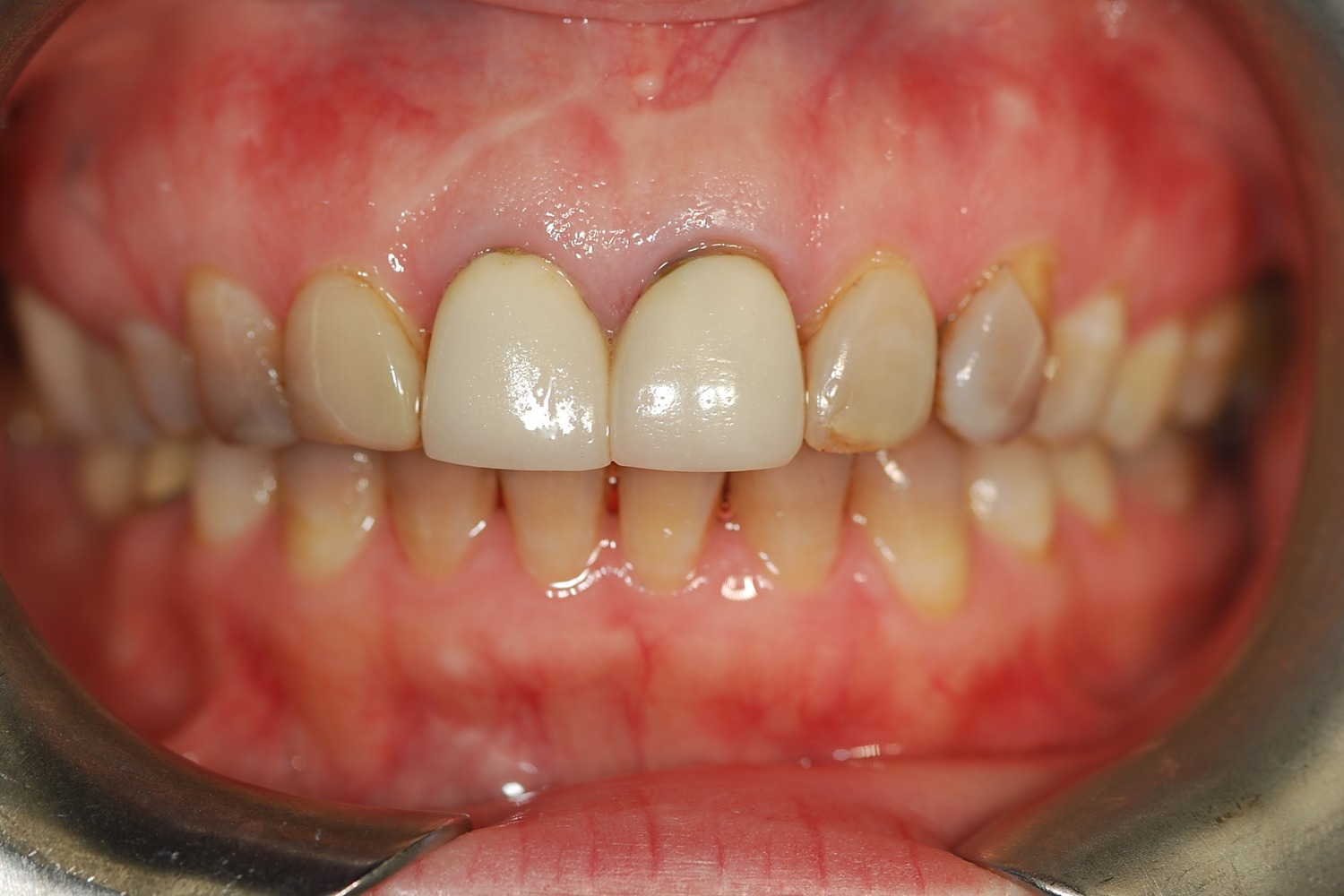
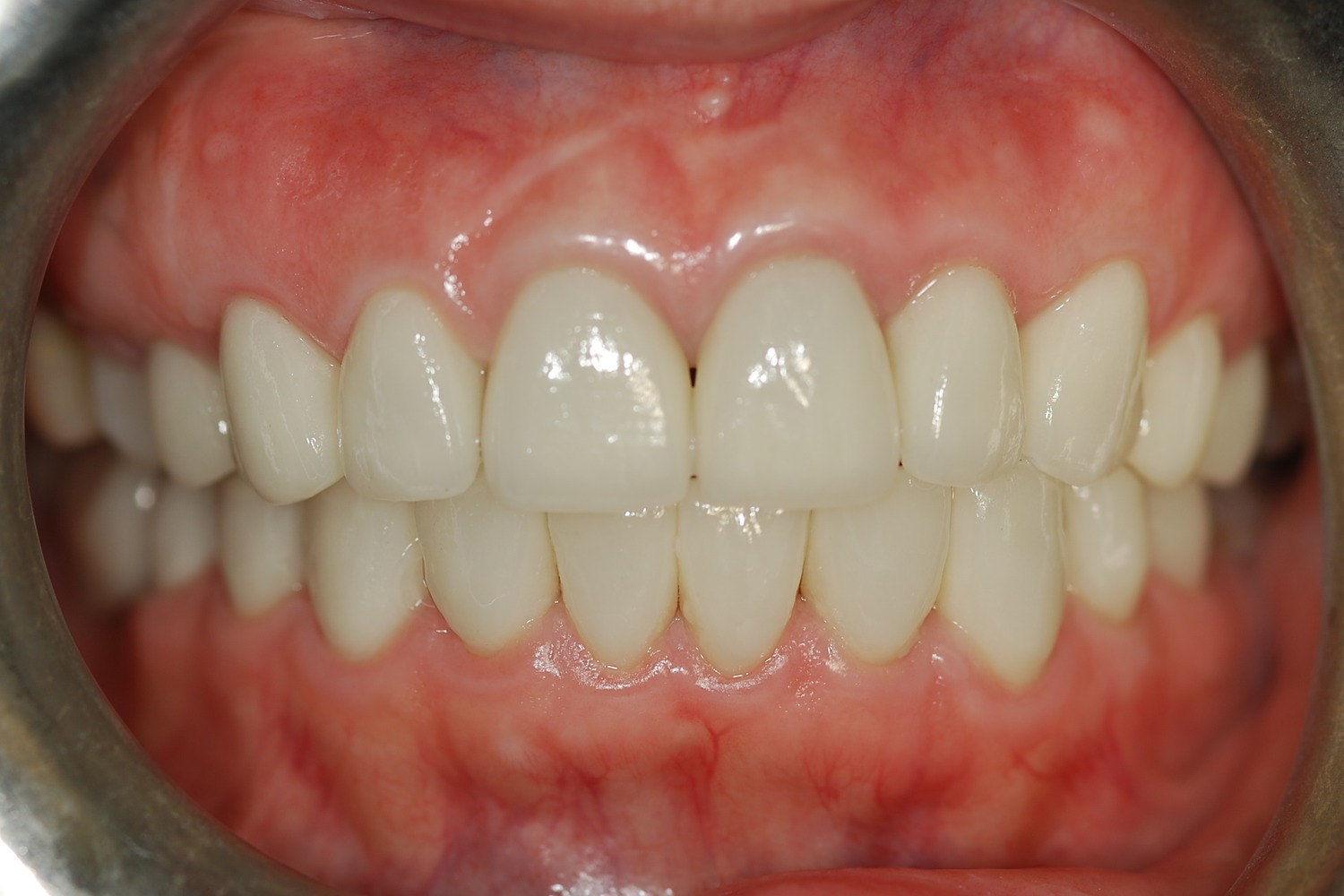
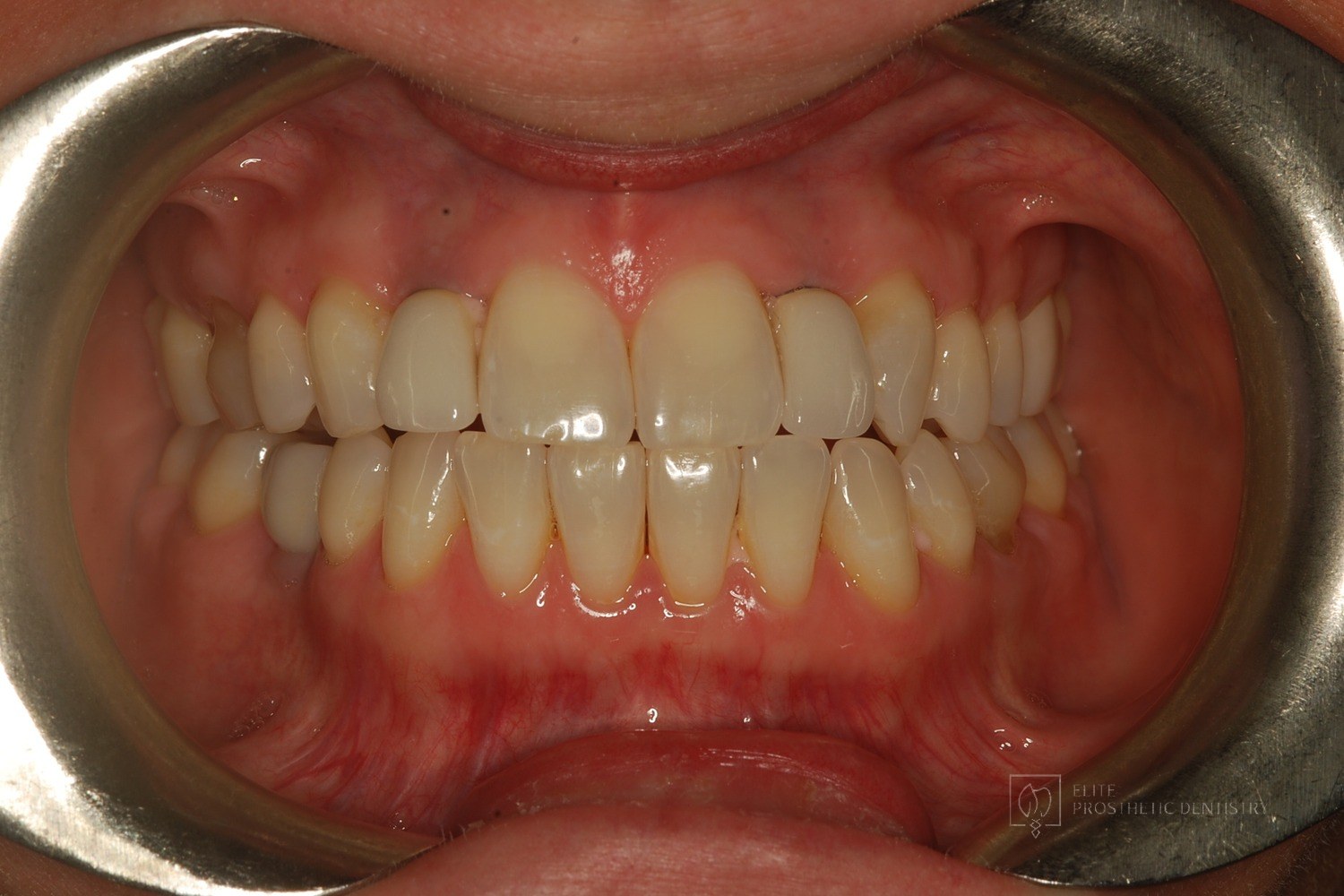
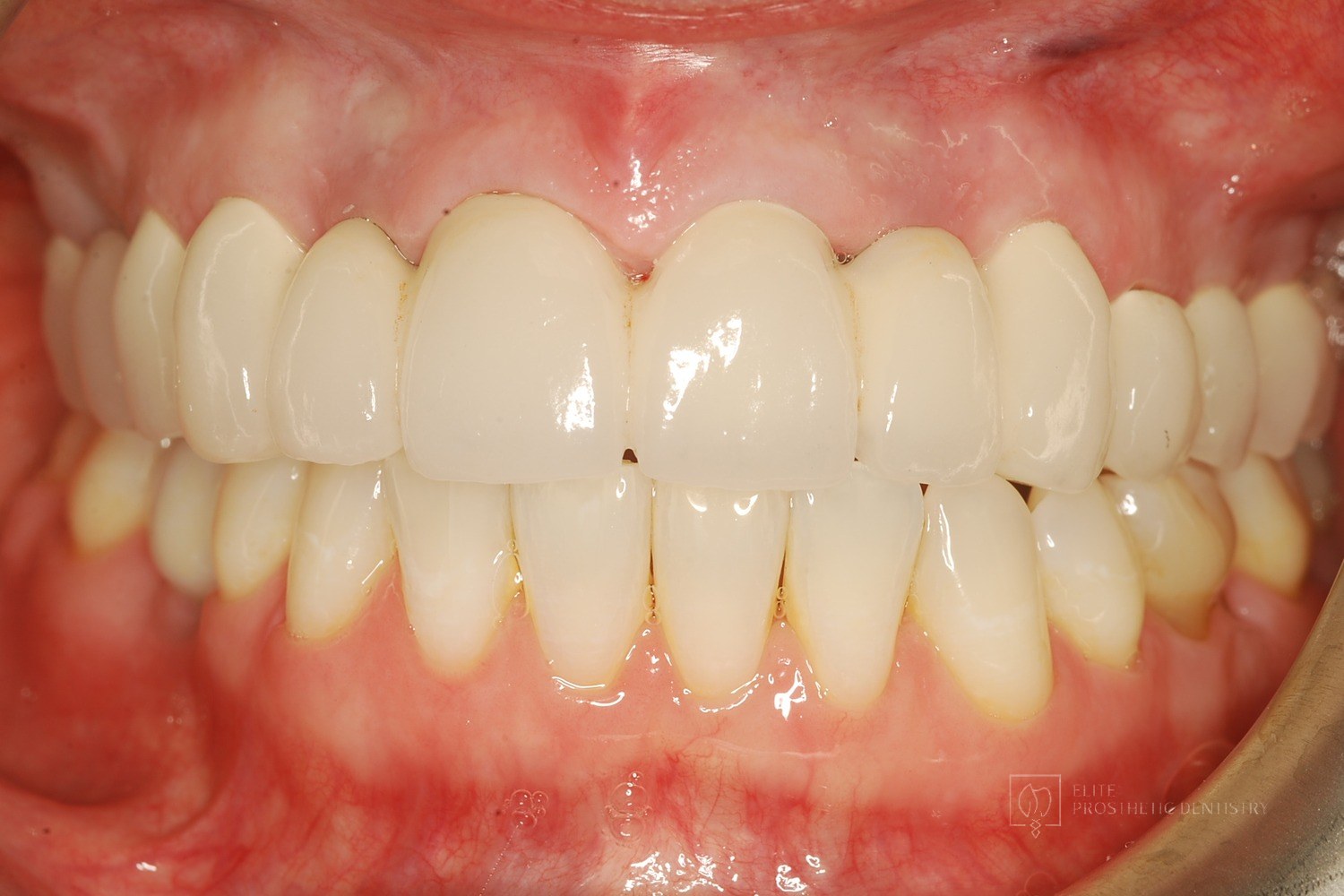
How Aging, Opaque Restorations Were Replaced with Customized Ceramic Restorations Designed for Long-Term Natural Esthetics
The existing restorations appeared opaque, worn, and unnatural over time, affecting both confidence and overall smile harmony.
 Before
 After
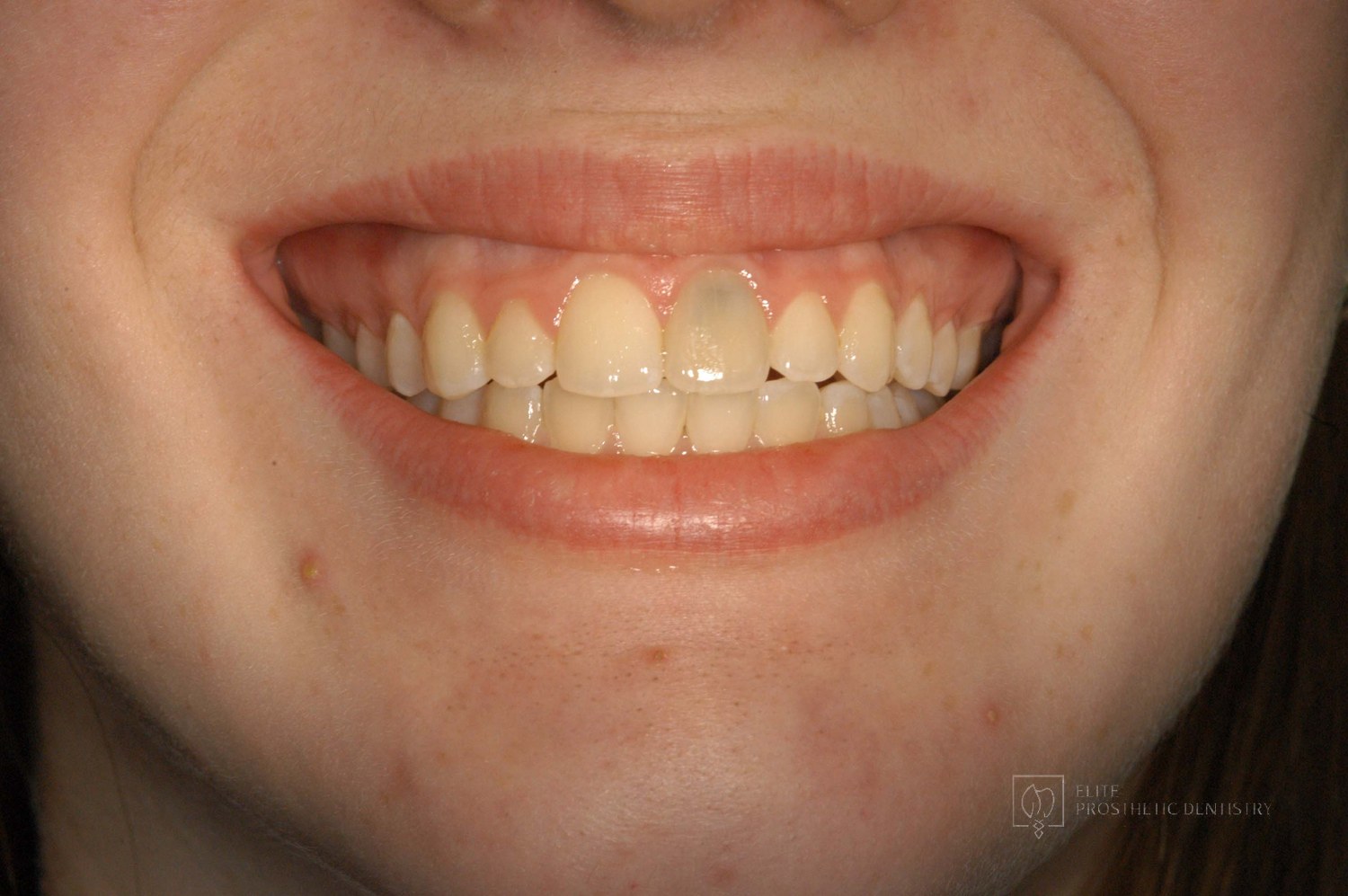
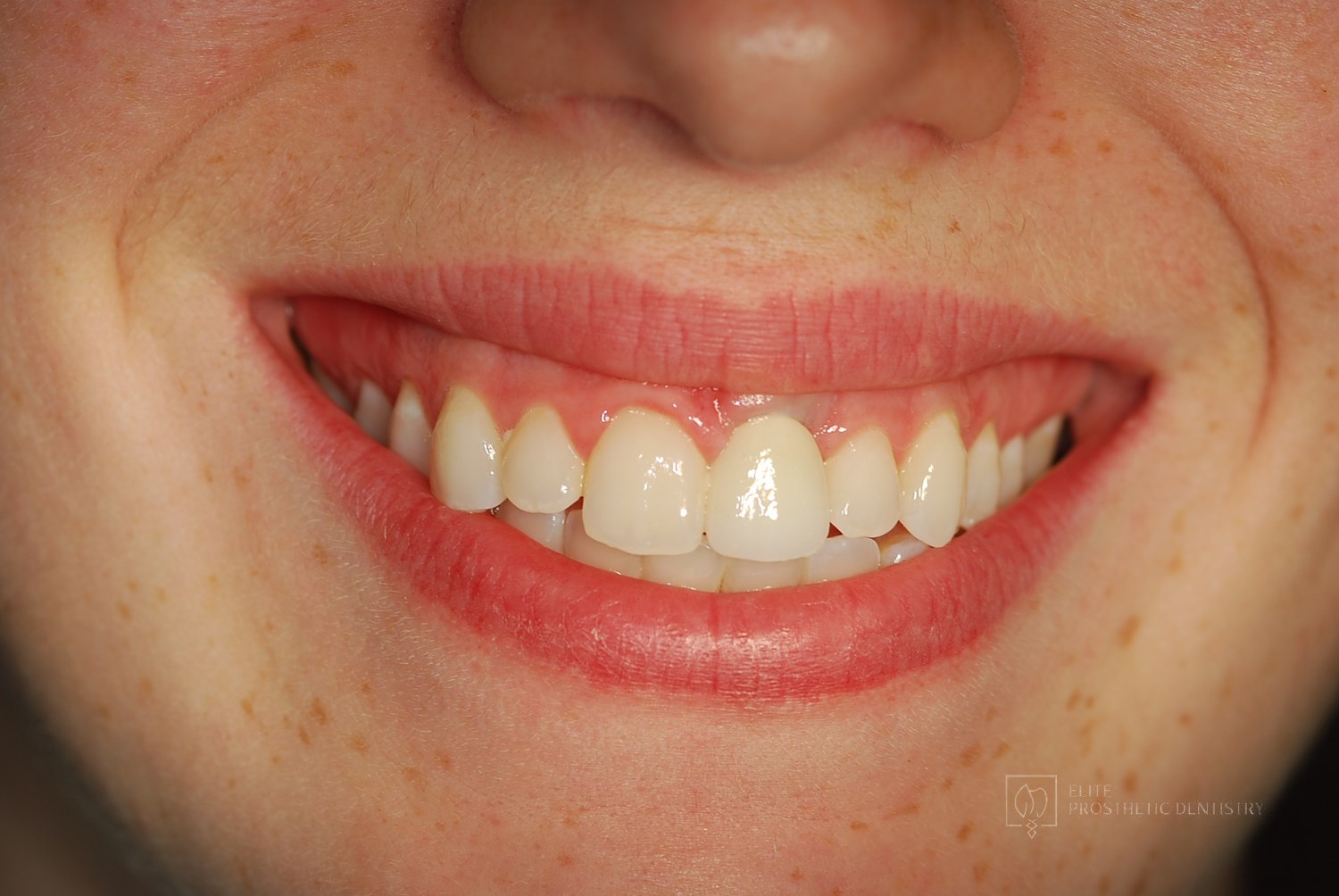
How Older Implant Crowns Were Redesigned for a Better Bite and More Natural Appearance
The patient came in after years of living with implant-supported crowns placed more than twenty years earlier that no longer looked or functioned well. CBCT evaluation, reviewed with a radiologist colleague, showed the implants had been placed too far to the buccal in very thin bone and could not support a healthy long-term restoration.
 Before
 After
How a Front Tooth Lost to Childhood Trauma Was Rebuilt with Bone Grafting and a Long-Lasting Implant
A teenager was referred by her father after earlier trauma left her upper left front tooth slowly failing from root resorption. She was still growing, so an immediate implant was the wrong move. The tooth had to be maintained to buy time, then replaced correctly once she reached skeletal maturity.
Related Articles
Deepen your knowledge with additional insights on this topic.
 Choosing a Prosthodontist
The Patient's Guide to Implant, Cosmetic and Restorative Dentistry
How to judge quality in implant, cosmetic, and restorative dentistry: choosing a practitioner, why the lab matters, financing, and the questions to ask.
 Choosing a Prosthodontist
What is a Prosthodontist?
A prosthodontist is a dental specialist with advanced training in crowns, implants, dentures, and complex restorations. Washington, DC specialist.
 Choosing a Prosthodontist
4 Ways You Can Benefit from Our In-House Dental Lab
Custom aesthetics, precision fit, shorter waits, and fast repairs: four ways an in-house dental laboratory changes both your experience and your results.
 Choosing a Prosthodontist
What Is the Difference Between a Dentist and a Prosthodontist?
Every prosthodontist is a dentist, but with years of extra specialty training in restoring and replacing teeth. A DC prosthodontist explains who does what.
 Choosing a Prosthodontist
Don't Wait 'Til It's Too Late: Start with a Virtual Dental Consultation
A virtual consultation is a convenient first step: discuss your concerns, share records, and hear options from a DC prosthodontist before an in-person exam.
 Choosing a Prosthodontist
Emergency Dentistry: The Benefits of an In-House Laboratory
When a tooth or restoration breaks, an on-site dental lab can mean a natural-looking repair in a day instead of a week. How emergency fabrication works in DC.
Ready to Transform Your Smile?
With 40+ years of experience and 3,900+ dental implants placed, Dr. Marlin and the team deliver dentistry planned to last. Request a specialist consultation.