
How Failing Implants and Severe Bone Loss Were Rebuilt Into a Stable Full-Arch Implant Reconstruction
Frontal intraoral view
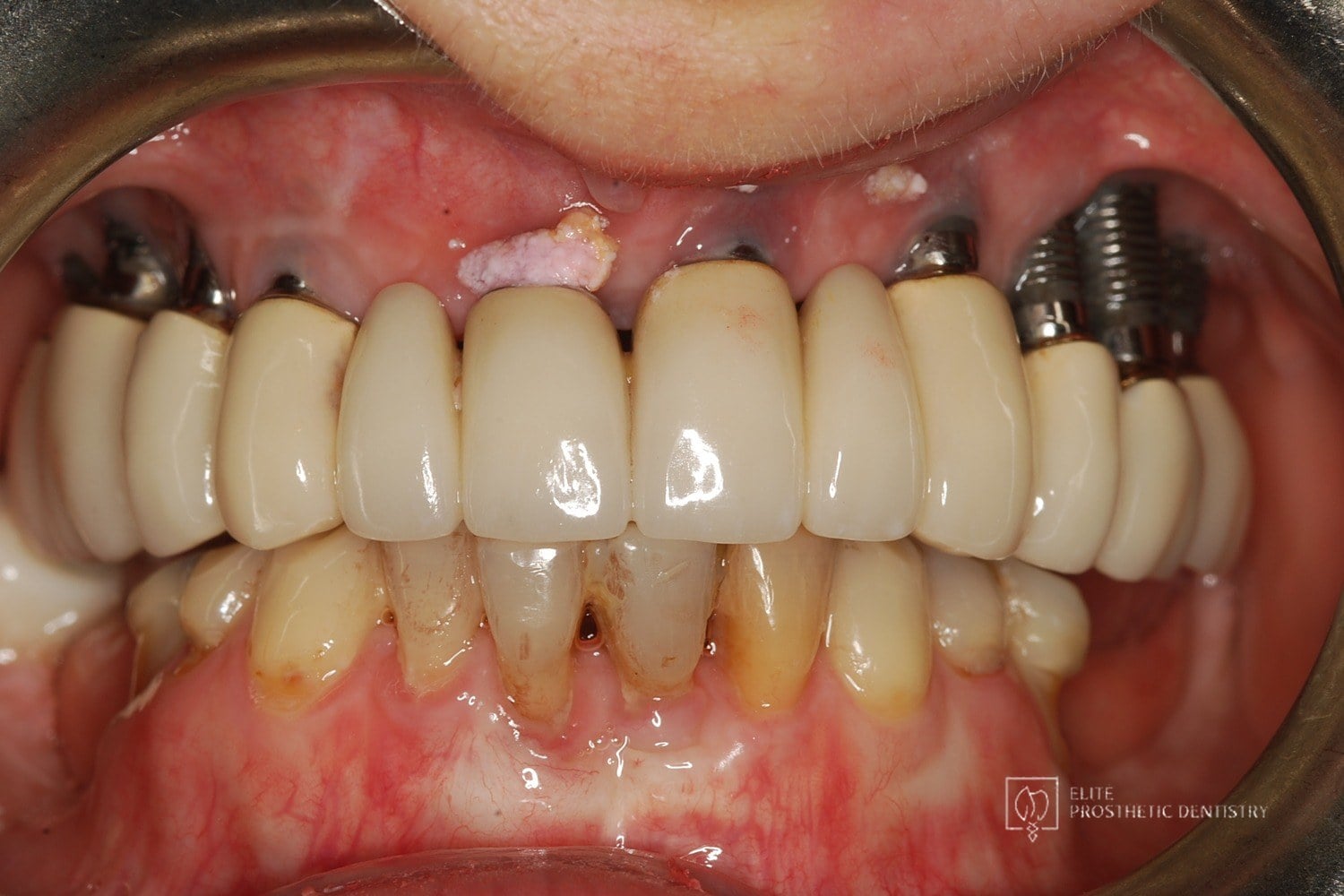 Before
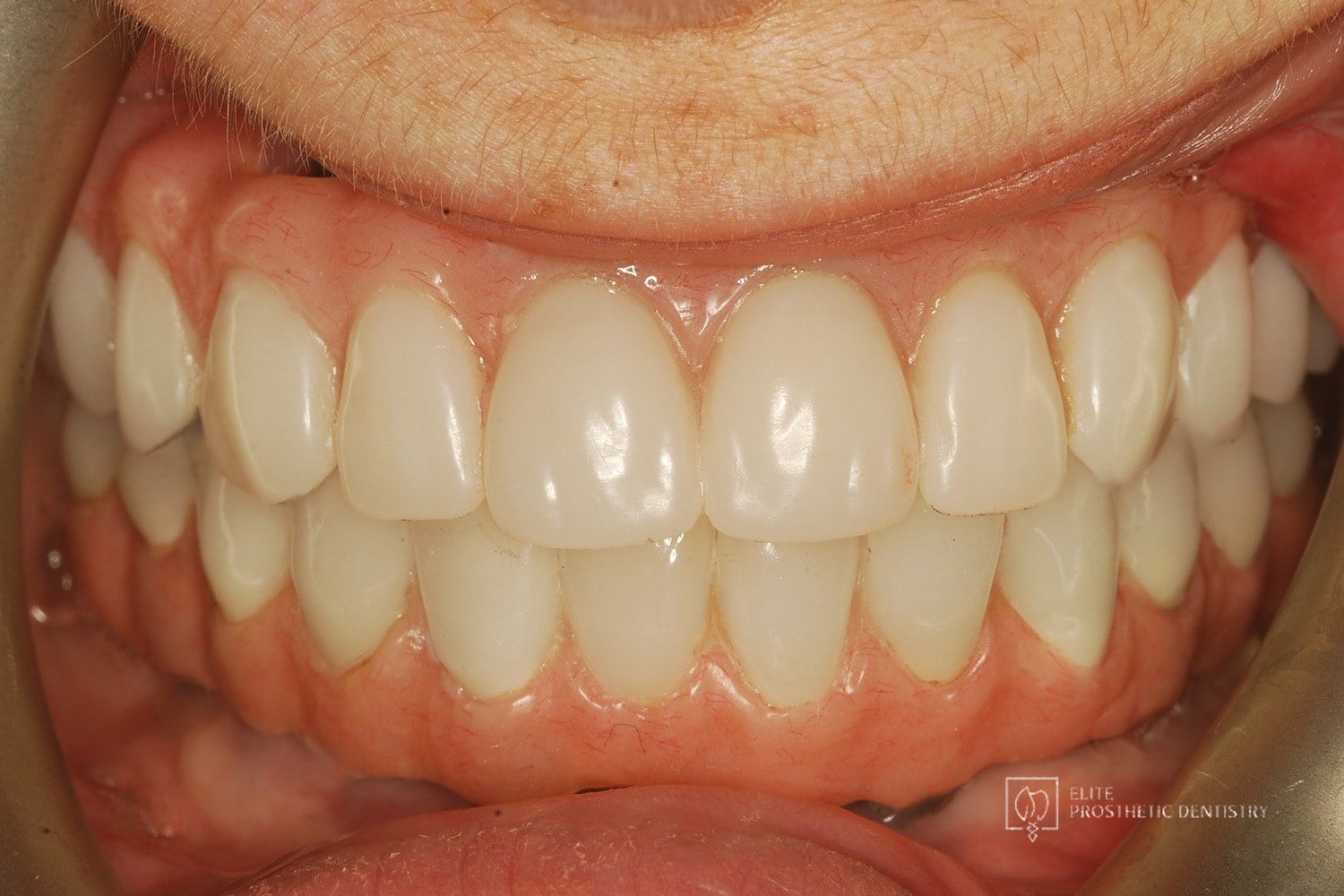 After
After
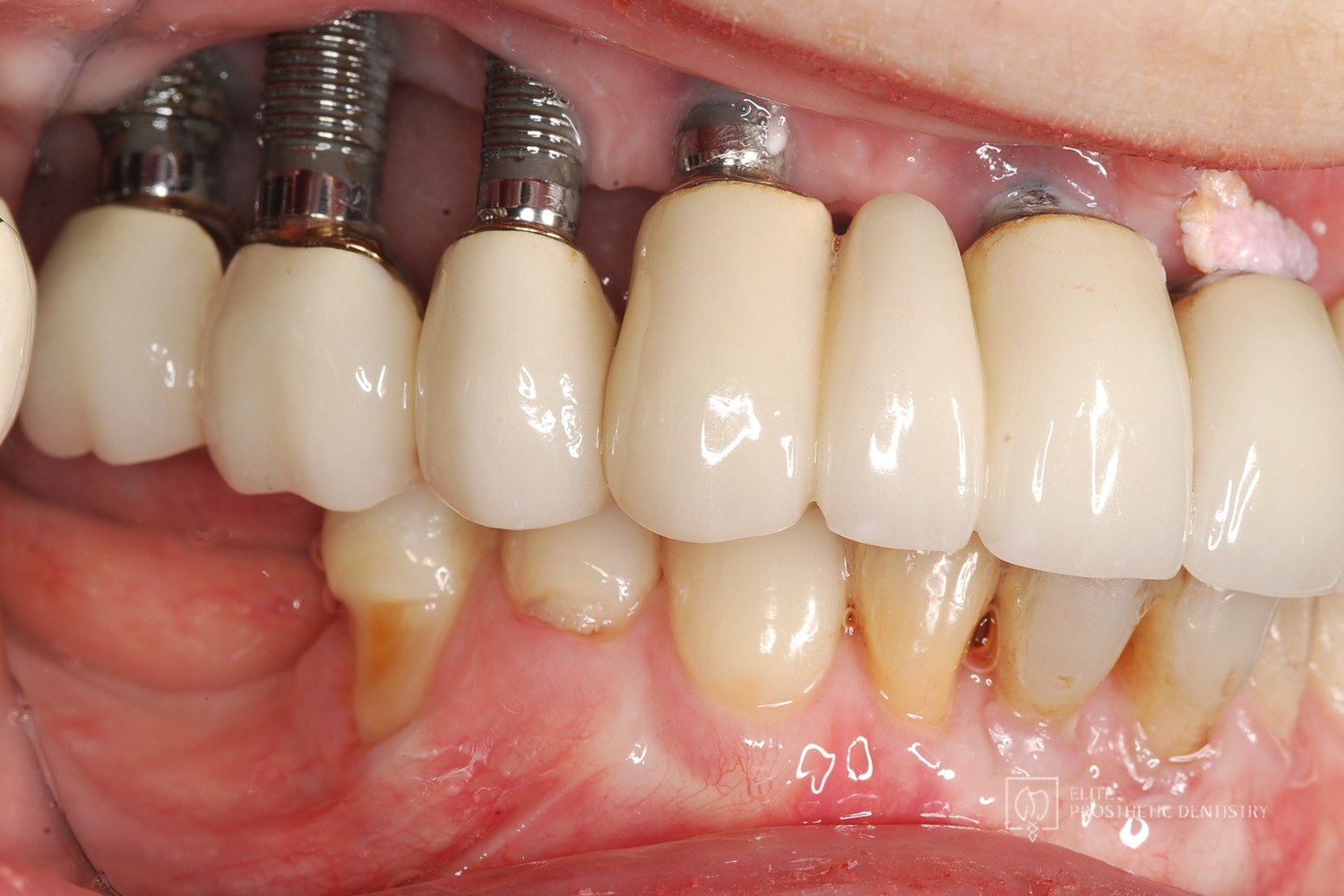
Side view showing extent of failure
Imaging during treatment
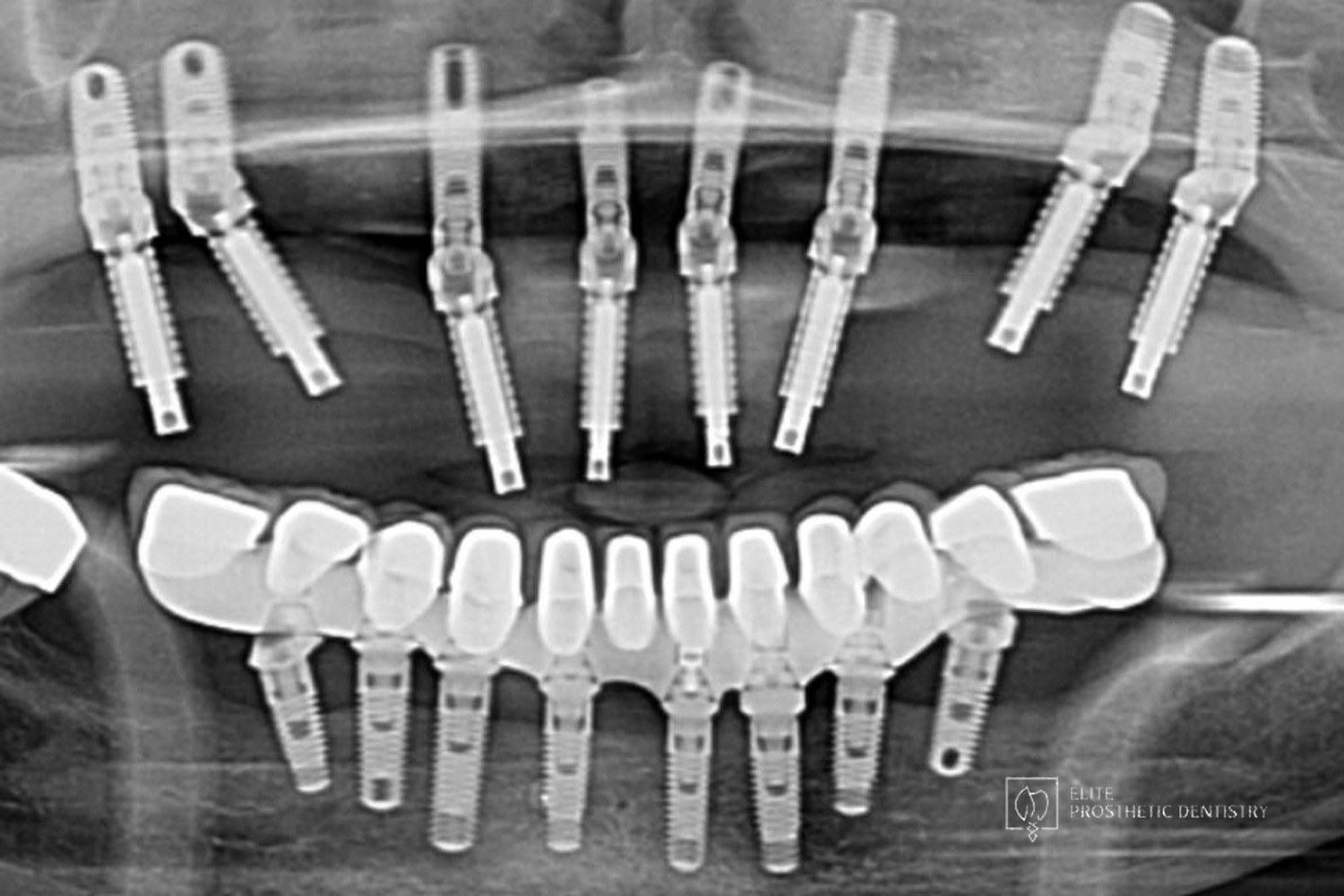
Failing implants rebuilt into a stable full-arch reconstruction
Complete revision of failing previously placed implants and reconstruction of both arches with a new fixed hybrid prosthesis in Washington, DC. This documented case at Elite Prosthetic Dentistry was performed for a patient who traveled from Germantown, Maryland. Treatment was planned and completed by Dr. Gerald Marlin, D.M.D., M.S.D., a prosthodontist who handles complex implant revision and corrective implant therapy.
Case at a Glance
- Treatment
- Full-arch implant revision, both arches
- Approach
- Implant removal, bone grafting, new implants, fixed hybrid prosthesis
- Case Type
- Corrective implant therapy / Full-arch implant revision
- Patient Concern
- Previously placed implants were failing, with severe bone loss and a full-arch bridge that no longer looked or functioned acceptably.
- Decision Point
- Patch the failing work again, or remove the failing implants and hopeless teeth, rebuild the bone, and reconstruct both arches on new implants.
- Outcome
- Stable, natural-looking full-arch restorations; the patient said it felt like the smile she had in her younger years.
- Why It Matters
- Shows that implant failure can be corrected when the rebuild addresses the bone and positioning problems behind the first failure instead of restoring over them.
Implant failure does not mean the end of an implant-supported solution. It does mean that the next phase of the work has to be more carefully planned, more carefully sequenced, and more aware of what went wrong the first time. Revision cases live at a different level of complexity than initial implant placement, and they call for a different level of planning to make sure the second outcome is durable in ways the first one was not.
This patient came in after that decision had become unavoidable. The implants she had been managing were not going to last. The full-arch bridge they supported was no longer meeting her functional or esthetic expectations. She wanted to keep the implant-supported solution but needed it rebuilt properly.
What the evaluation found
The patient came in after previously placed implants had failed and the existing prosthesis no longer provided stable function. Revision at this level is more demanding than initial placement, because the rebuild has to work around prior surgical decisions that compromised the foundation.
Clinical Findings
- →Significant complications from previously placed implants
- →Severe bone loss across both arches
- →Failing posterior implants with no predictable long-term outlook
- →An unesthetic full-arch bridge no longer appropriate for the new plan
- →Upper arch showing the most advanced bone loss and instability
Why revision is more complex than initial placement
Revision cases address every variable that contributed to the original failure. Less bone is usually available. The soft tissue contours have often been compromised. The new restoration has to account for existing anatomy that did not exist at the time of the original placement. And the patient has already lived through one implant failure, which raises the bar on what the next outcome needs to deliver.
The right approach is to remove what is failing, rebuild the foundation, place new implants in positions that take advantage of the available bone, and design a new prosthesis around that improved foundation.
The staged treatment plan
The case was completed in stages, with healing time between major phases so each component had the foundation it needed before the next step was taken.
-
1
Removal of failing implants and hopeless teeth
The compromised implants and the teeth that could not be predictably preserved were removed first, clearing the way for foundational reconstruction.
-
2
Extensive bone grafting
Both arches received extensive grafting to rebuild the foundational support that had been lost, restoring the bone architecture needed for the new implants.
-
3
Ideal-position implant placement
New implants were placed in ideal positions following full-arch implant protocols, planned to make use of the grafted and remaining bone in ways the original placements had not.
-
4
Integration and prosthetic planning
Implants were given adequate time to integrate while the final prosthesis was planned in detail.
-
5
Full-arch fixed hybrid prosthesis
Both arches were finished with a fixed hybrid prosthesis designed to restore stability and a natural appearance, completing the staged rebuild.
The outcome
The case moved from failing implants, severe bone loss, and an unesthetic prior prosthesis to a fully reconstructed, stable, natural-looking full-arch implant restoration. The patient described it as feeling like the smile she had when she was younger. That is the right benchmark for a revision case.
Result Highlights
- ✓Failing implants replaced with stable, ideally positioned new implants
- ✓Bone architecture restored through extensive grafting
- ✓Both arches reconstructed under one coordinated plan
- ✓Natural-appearing full-arch fixed hybrid prosthesis
- ✓Patient reported her smile felt like the one she had in her younger years
Who this case may sound familiar to
This story tends to resonate with patients in a few recognizable situations:
- Your previously placed implants are failing or are no longer giving you the result you expected.
- You have been told your case is too complex for replacement implants without significant reconstruction.
- You want a specialist evaluation of all your options, including non-implant prosthetic alternatives, before making the next decision.
- You are willing to invest in the correct staged plan rather than another quick repair that fails again in a few years.
- You want a calm, thorough conversation about what went wrong the first time and how to make sure the next phase is predictable.
If any of those describe where you are, a consultation with Dr. Marlin can give you the diagnostic picture and the specific staged plan for your case.
Frequently asked questions
Can failed implants be removed and replaced successfully?
In most cases yes, although the process is staged. Failed implants are removed, the bone is allowed to heal and is often grafted to rebuild support, and new implants are placed in positions that take advantage of the available bone. Each step is evaluated before moving to the next.
What is involved in revising an unesthetic full-arch bridge?
Revising an unesthetic full-arch bridge involves removing the existing prosthesis, evaluating the underlying implants and tissue health, addressing any structural problems, and designing a new prosthesis that meets the patient’s esthetic and functional goals. A digital workflow allows the new design to be previewed before fabrication.
How much bone grafting is required when previously placed implants have failed?
The amount of grafting depends on how much bone has been lost around the failed implants and how much additional bone is needed to support replacement implants in ideal positions. A CBCT scan provides the data needed to plan the graft volume and the staged sequence.
Can both arches be revised in one coordinated treatment plan?
Yes. A coordinated full-mouth plan sequences the upper and lower arch work so that the new bite is designed together rather than one arch at a time. This produces a more stable functional result and a more harmonious esthetic outcome.
Why is implant revision more complex than initial implant placement?
Revision cases must address the bone, soft tissue, and prosthetic issues that contributed to the original failure. Often there is less bone available, the soft tissue contours may be compromised, and the new restoration must account for existing anatomy that was not present at the original placement. Specialist-level planning is typically required.
More about the work behind this case
This case is treated through the practice’s failed dental implants workflow and the broader full mouth dental implants capability, with bone grafting used where structural reconstruction was required.
Elite Prosthetic Dentistry treats patients from across the DMV including Bethesda, Chevy Chase, McLean, Arlington, Potomac, and Great Falls.
Comprehensive restoration of an arch often relies on a six-implant full-arch design when the bone supports it and long-term predictability is the priority over treatment efficiency.
Related Services
Related Patient Success Stories
Explore similar patient success stories demonstrating our expertise in advanced prosthetic dentistry.
 Before
  After
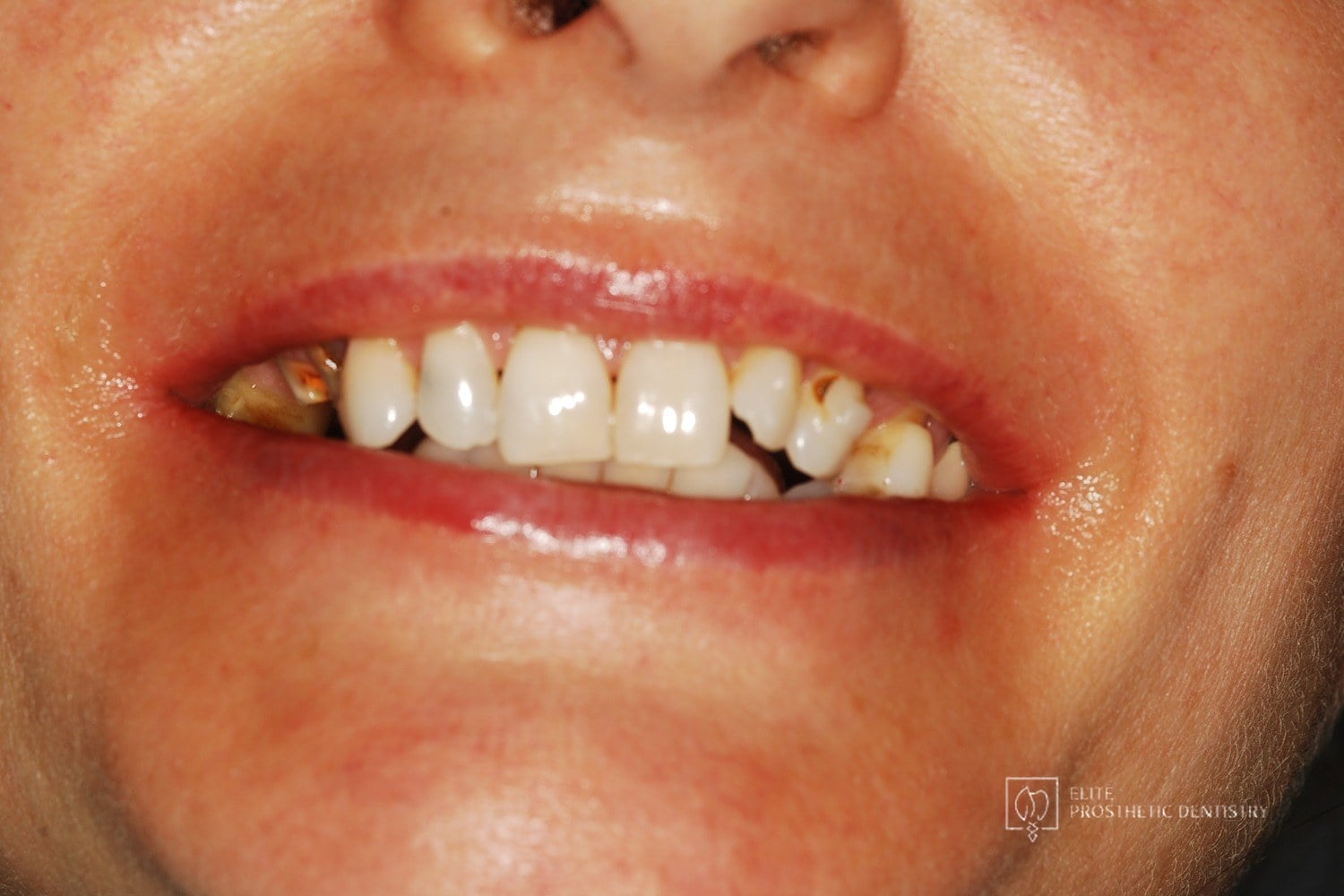
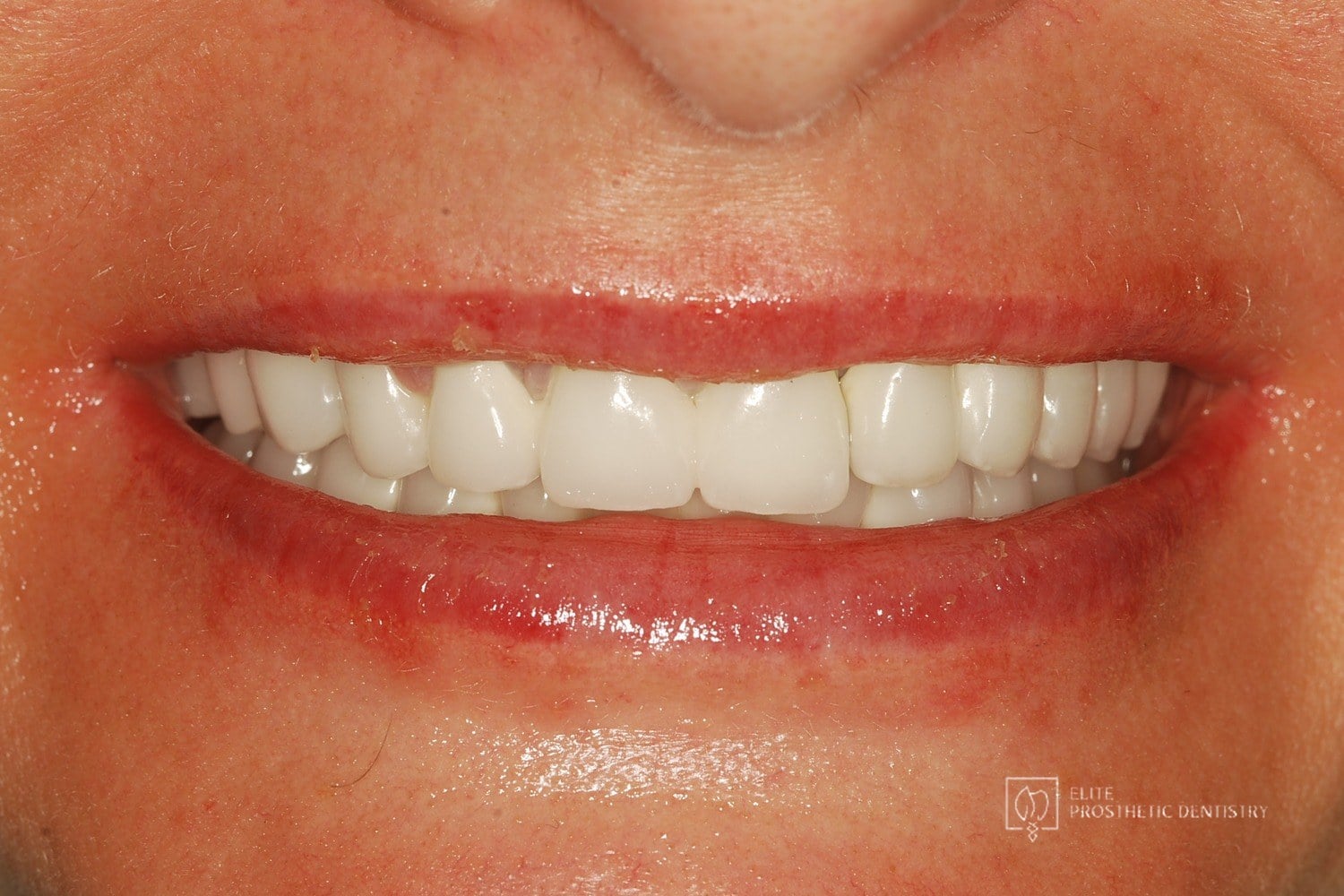
After How Aging, Failing Dentistry Was Replaced with a Coordinated Full-Mouth Implant and Crown Reconstruction
The patient presented with throbbing upper-molar pain, long-standing infections, multiple root canals and unfinished prior treatment, generalized sensitivity, and several hopeless teeth.
Before After How Failing Implants and Severe Bone Loss Were Rebuilt Into a Stable Full-Arch Implant Reconstruction
The patient presented with significant complications from previously placed implants, severe bone loss, failing posterior implants, and an unesthetic full-arch bridge. Both arches required full reconstruction, with the upper arch showing the most advanced bone loss and instability.
 Before
  After
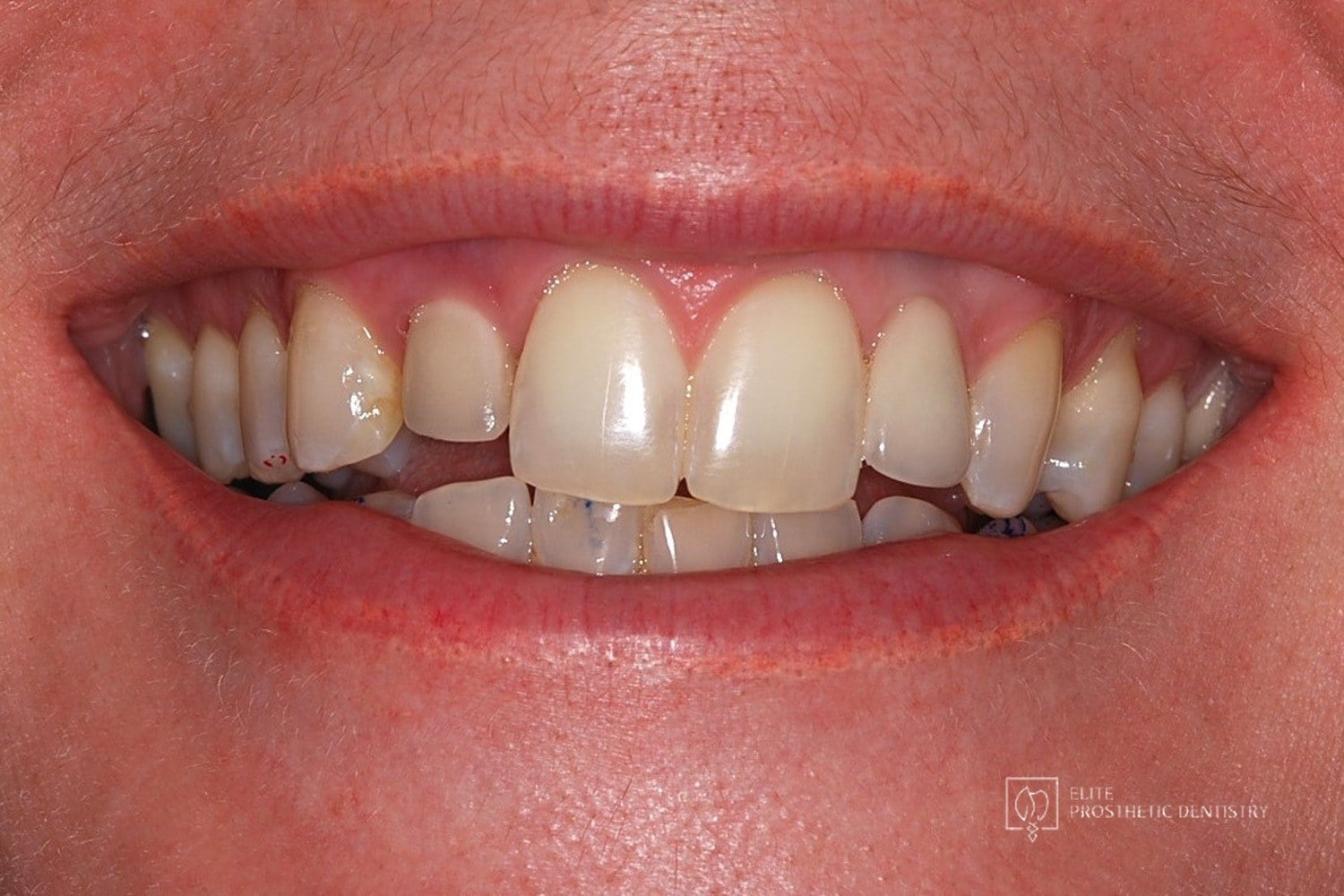
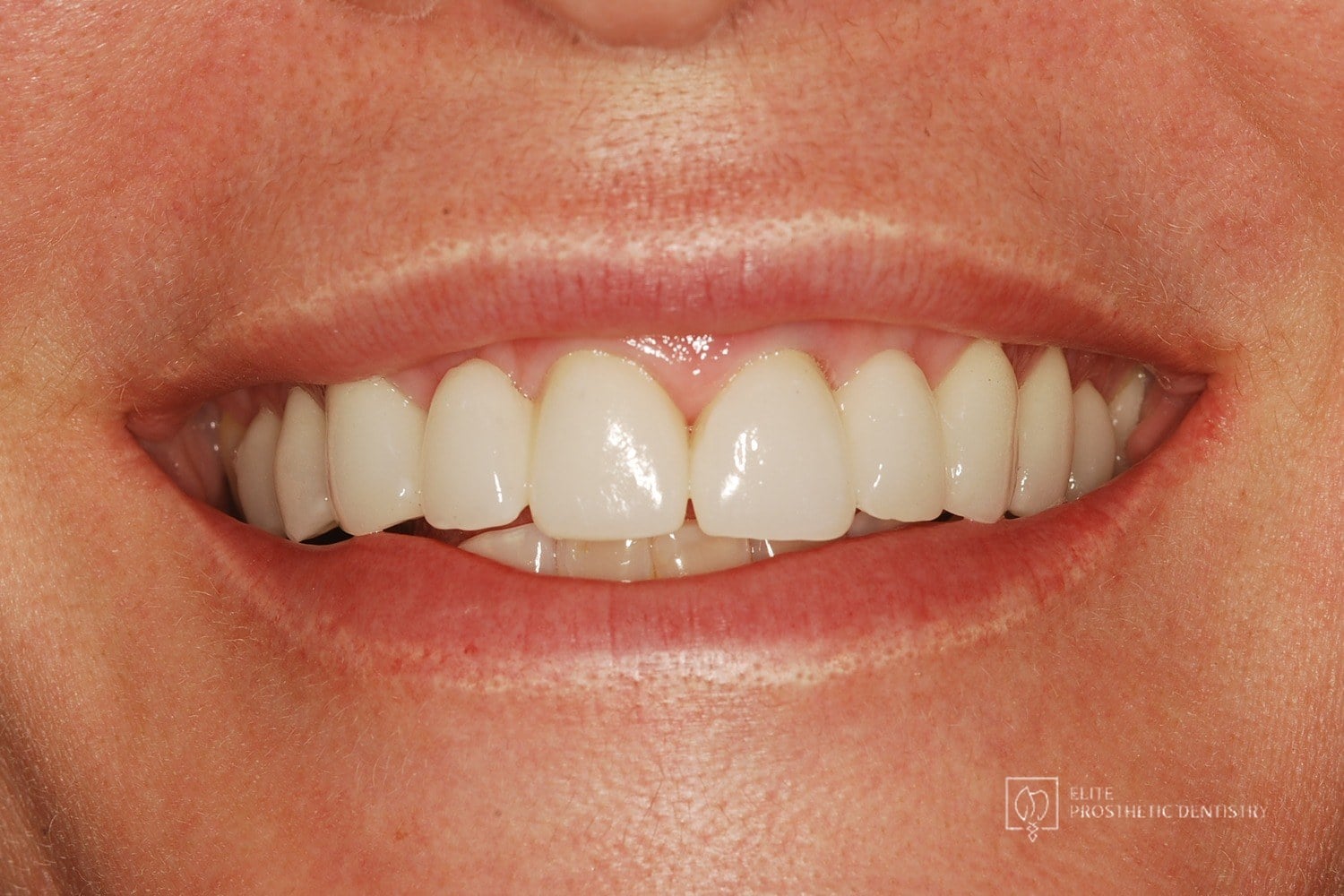
After How Failing Lateral Incisor Implants Were Replaced with Custom Zirconia Bridges After Severe Bone Loss Made Replacement Implants Impossible
Comprehensive examination including CBCT imaging revealed significant bone loss surrounding implants that were placed outside the buccal plate, most likely due to placement without a CBCT-generated surgical guide. The implants were determined non-salvageable, and the alveolar ridge was too narrow to support replacement implants without extensive reconstruction.