
Can Worn-Down Teeth Be Fixed or Do They Have to Be Replaced?
Documented before and after
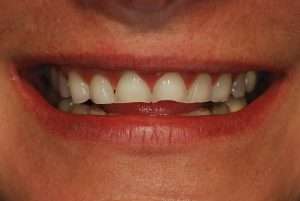 Before
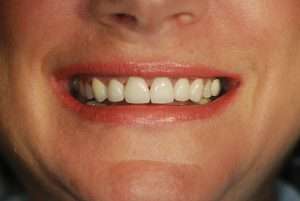 After
After
Restoring a severely worn dentition without replacing the teeth
Restoring worn-down teeth in Washington, DC. This documented case at Elite Prosthetic Dentistry rebuilt a severely worn dentition that was marring an otherwise great smile line, and it answers a question patients bring to the practice constantly: can worn teeth be fixed, or do they have to be replaced? Treatment was planned and completed by Dr. Gerald Marlin, D.M.D., M.S.D., a prosthodontist focused on restoring worn and damaged dentitions so the repair lasts.
Case at a Glance
- Treatment
- Restoration of a severely worn dentition to rebuild the smile line
- Approach
- Cause-first evaluation, restorations matched to the wear, in-house laboratory fabrication
- Case Type
- Full mouth reconstruction / Bite rehabilitation
- Patient Concern
- The patient's severely worn teeth were marring an otherwise good smile line, wear commonly caused by grinding that can affect the jaw and cause sensitivity.
- Decision Point
- Extract and replace the worn teeth, or restore them in place with a repair, bonding, veneers, crowns, or inlays and onlays, matched to the depth and cause of the wear.
- Outcome
- The worn dentition was restored to natural length and contour rather than extracted and replaced, rejuvenating the smile line for both appearance and function.
- Why It Matters
- This case shows that wear is usually a bite-level problem rather than a single-tooth one; evaluating the cause, the bite, and the whole dentition as a system determines whether the repair actually lasts.
The presenting condition
The patient presented with a severely worn dentition that was taking a visible toll on an otherwise great smile line. Worn-down teeth develop through irregular wear, and the most common cause is grinding, called bruxism, which can occur while a person is awake or asleep and does significant cumulative damage to the teeth. The consequences reach beyond appearance. Worn teeth can contribute to temporomandibular joint (TMJ) problems and tooth sensitivity, and they progressively change how the smile looks and functions.
The encouraging answer, in this case and in most cases, is that worn-down teeth can be fixed. Replacement is the exception, not the starting point. The real work is matching the repair to the depth and location of the wear, and to its cause.
Clinical Findings
- →Severely worn dentition marring an otherwise great smile line
- →Wear of this kind most commonly results from grinding (bruxism), awake or asleep
- →Worn teeth can contribute to TMJ problems, tooth sensitivity, and visible esthetic changes
- →Wear that exposes dentin, the softer layer beneath enamel, limits which repair options will hold
Why this case required prosthodontic-level planning
Tooth wear is rarely a one-tooth problem. Years of grinding can compromise the entire dentition, which is why patching a single worn tooth into a bite that is still grinding tends to fail: the new restoration inherits the same forces that destroyed the enamel. Prosthodontic planning starts from the endpoint, a restored smile line and a bite that protects it, and works backward from there. Specialist evaluation determines whether a case calls for custom dental crowns, a TMJ treatment plan that addresses the underlying bite cause, or a coordinated full mouth reconstruction when wear extends across the dentition. Choosing the wrong tier, or restoring the teeth without asking why they wore down, is how patients end up paying for the same dentistry twice.
The decision behind the result: matching the restoration to the degree of wear
Every option for worn teeth has a legitimate place. The judgment that shapes the outcome is knowing where each one stops being enough.
Dental bonding can restore teeth with relatively minimal wear, such as small chips or one or two shortened teeth, and it is a minimally invasive option for misshapen or short-looking teeth. Its limit is real, though. When teeth wear down far enough, the enamel is gone and dentin, the softer layer underneath, is exposed. Bonding material does not adhere as well to dentin, and for a severe grinder, bonding alone will not last.
Porcelain veneers allow a patient to keep the natural teeth while changing their length, shape, and color, which makes them a strong option for worn front teeth. Veneers are thin shells of porcelain ceramic, and they are stain-resistant. Elite Prosthetic Dentistry does not place composite veneers, which stain and yellow over time and are not very strong. Veneer candidacy also comes with a condition: the grinding must be treated first and a night guard worn, because untreated bruxism damages veneers the same way it damaged the natural enamel.
Dental crowns restore what veneers cannot. A veneer transforms the front surface of a tooth, while a crown restores the whole tooth, including molars and chewing surfaces that have been severely worn. Crowns can also be combined with other treatments when a comprehensive solution and a fully functional smile are the goal.
Inlays and onlays address abnormal wear conservatively. These porcelain restorations are bonded to the natural teeth and polished for a seamless appearance. An inlay rebuilds the grooved portion of a tooth and can increase its strength rather than reducing it the way a filling would, while an onlay rebuilds the cusps, the points of the teeth, that have worn down from grinding or improper wear.
The treatment plan
A worn dentition is approached in a deliberate sequence:
-
1
Comprehensive evaluation of the wear
The wear pattern, its cause, and the bite are assessed together, establishing whether the case calls for individual restorations, a TMJ-focused plan, or a broader reconstruction.
-
2
Cause before restoration
Restorations placed into unmanaged grinding inherit the forces that caused the damage, so bruxism control and night guard protection are planned before new surfaces go in.
-
3
Restorations matched to the severity of the wear
Bonding for minimal chips, veneers for worn front teeth once grinding is controlled, crowns for severely worn chewing surfaces, and inlays or onlays for localized wear.
-
4
Custom fabrication in the in-house laboratory
Crowns and porcelain restorations are fabricated in the practice's private on-site laboratory, where the technician works directly with the patient and Dr. Marlin keeps direct control over fit, contour, shade, and strength.
-
5
Rebuilding the smile line
The endpoint documented in this case: worn, shortened teeth restored to proper length and form, rejuvenating the smile line for both appearance and function.
The outcome
The documented result of this case is the one patients with worn teeth are usually hoping to hear exists: a rejuvenated smile line. The before-and-after views show a severely worn dentition restored to natural length and contour rather than extracted and replaced. That distinction matters. A well-planned wear case preserves the natural teeth, rebuilds what was lost, and protects the result by respecting the cause of the damage, so the smile is restored for beauty and for function together.
Result Highlights
- ✓Severely worn dentition restored rather than extracted and replaced
- ✓Rejuvenated smile line documented in the before-and-after views
- ✓Restoration matched to the severity, location, and cause of the wear
- ✓Custom work fabricated in the practice's private in-house laboratory
- ✓Appearance and function rebuilt together
Who this case may sound familiar to
This case tends to resonate with patients in a few recognizable situations:
- Your teeth have been getting visibly shorter or flatter, and your smile looks older than you feel.
- You grind or clench, and the chips and worn edges are starting to add up.
- Small repairs keep breaking or wearing away, and you want a plan that finally holds.
- You notice tooth sensitivity or jaw discomfort alongside the wear.
- You want the case evaluated properly once, whether the right answer is bonding, veneers, crowns, or a fuller reconstruction.
If any of those describe where you are, a consultation with Dr. Marlin can establish the diagnostic picture and the specific options for your case.
Frequently asked questions
Can worn-down teeth be fixed, or do they have to be replaced?
In most cases worn-down teeth can be fixed. The right repair depends on how deep the wear goes and what caused it, but bonding, veneers, crowns, and inlays or onlays all allow the natural teeth to be preserved. Replacement is reserved for teeth that are no longer restorable, and that is the exception rather than the rule.
When is dental bonding enough for worn teeth?
Bonding suits relatively minimal wear, such as small chips or one or two shortened teeth. Once wear has exposed dentin, the softer layer beneath the enamel, bonding material no longer adheres well, and for a severe grinder bonding alone will not last.
Can I get veneers if I grind my teeth?
Not until the grinding is managed. Bruxism needs to be treated and a night guard worn, because grinding damages veneers just as it damages natural enamel. Once the habit is controlled, porcelain veneers can lengthen and reshape worn front teeth while preserving the natural tooth underneath.
When are crowns the better choice for worn teeth?
Crowns restore the entire tooth rather than just its front surface, which makes them the choice for molars and chewing surfaces with severe wear. They are often combined with other treatments when a comprehensive result is needed.
What are inlays and onlays?
They are bonded porcelain restorations for localized wear. An inlay rebuilds the grooved portion of a tooth and can add strength rather than reducing it the way a filling would. An onlay rebuilds worn cusps, the points of the tooth. Both are conservative, minimally invasive repairs.
Why see a prosthodontist for worn-down teeth?
Because wear is usually a bite-level problem, not a tooth-level one. A prosthodontist evaluates the cause, the bite, and the whole dentition as a system, then determines whether the case needs individual restorations, a TMJ-focused plan, or a coordinated full mouth reconstruction. That judgment is what makes the repair last.
More about the work behind this case
This case sits at the intersection of dental crowns, porcelain veneers, and conservative restorative dentistry. Restorations like these are produced in the practice’s in-house laboratory, and the cause-first planning behind them is part of the practice philosophy that guides every worn-dentition case.
Elite Prosthetic Dentistry treats patients from across the DMV including Bethesda, Chevy Chase, McLean, Arlington, Potomac, and Great Falls, with a record of out-of-area patients traveling to the practice for complex restorative care.
Related Services
Related Patient Success Stories
Explore similar patient success stories demonstrating our expertise in advanced prosthetic dentistry.
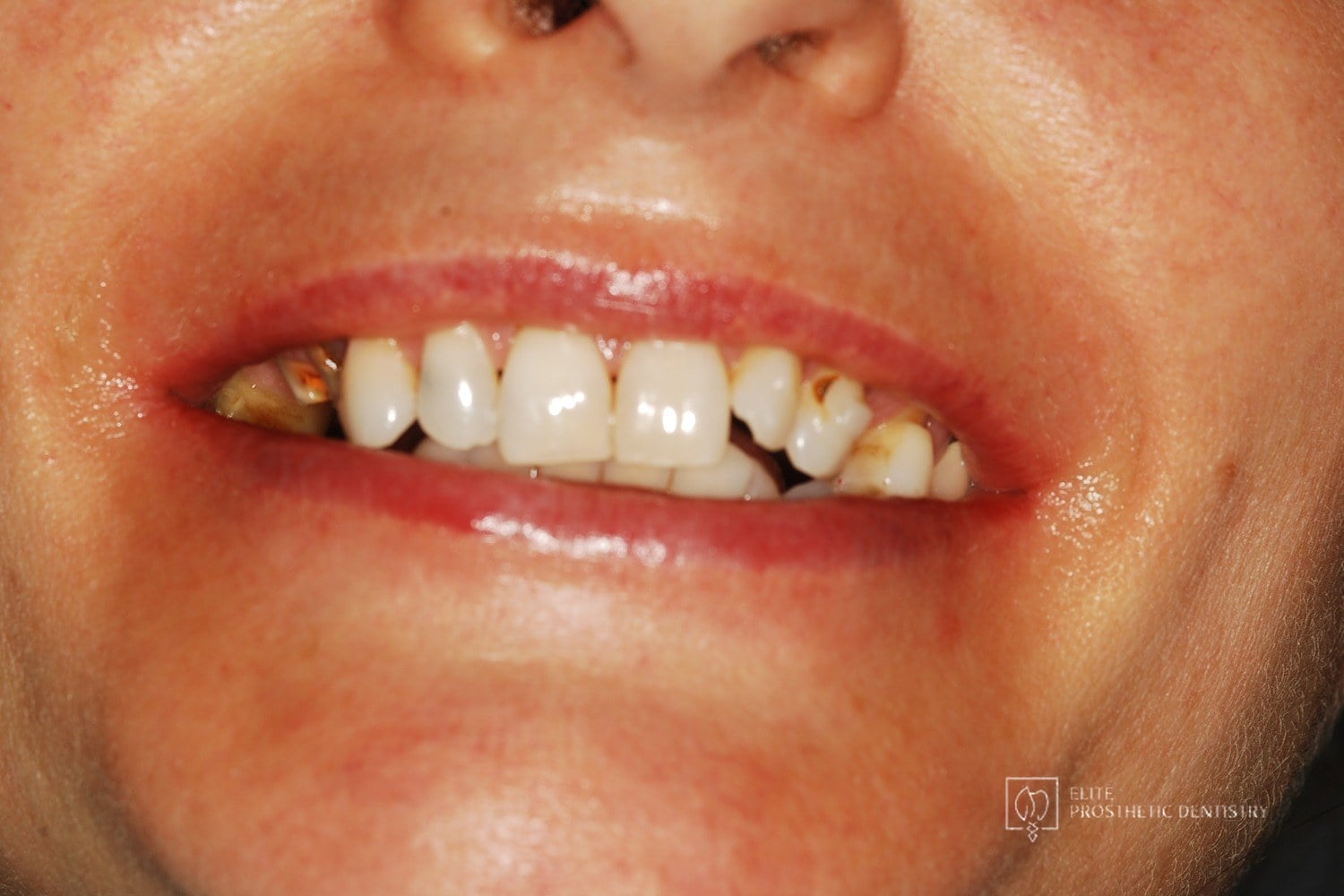 Before
 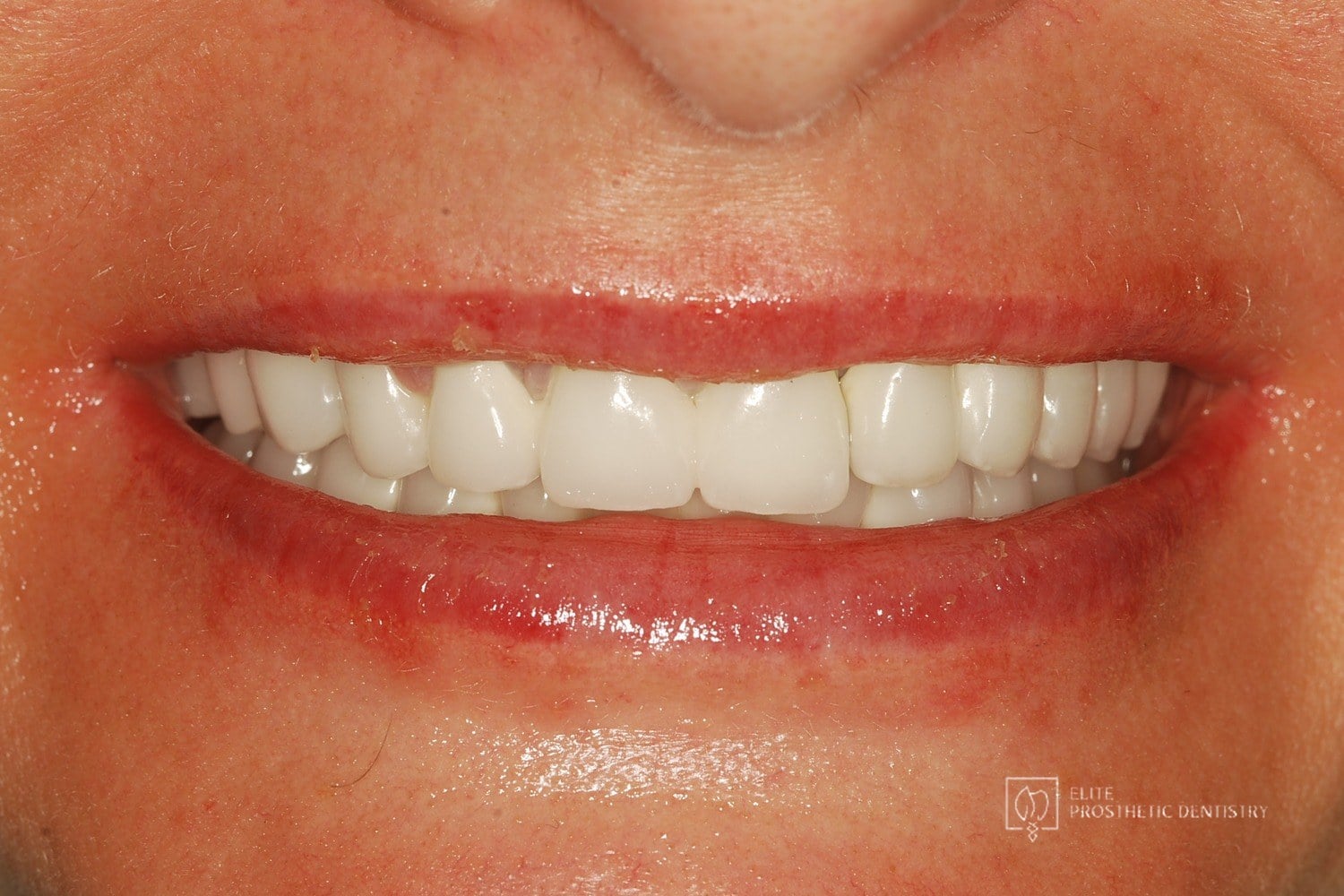 After
After How Aging, Failing Dentistry Was Replaced with a Coordinated Full-Mouth Implant and Crown Reconstruction
The patient presented with throbbing upper-molar pain, long-standing infections, multiple root canals and unfinished prior treatment, generalized sensitivity, and several hopeless teeth.
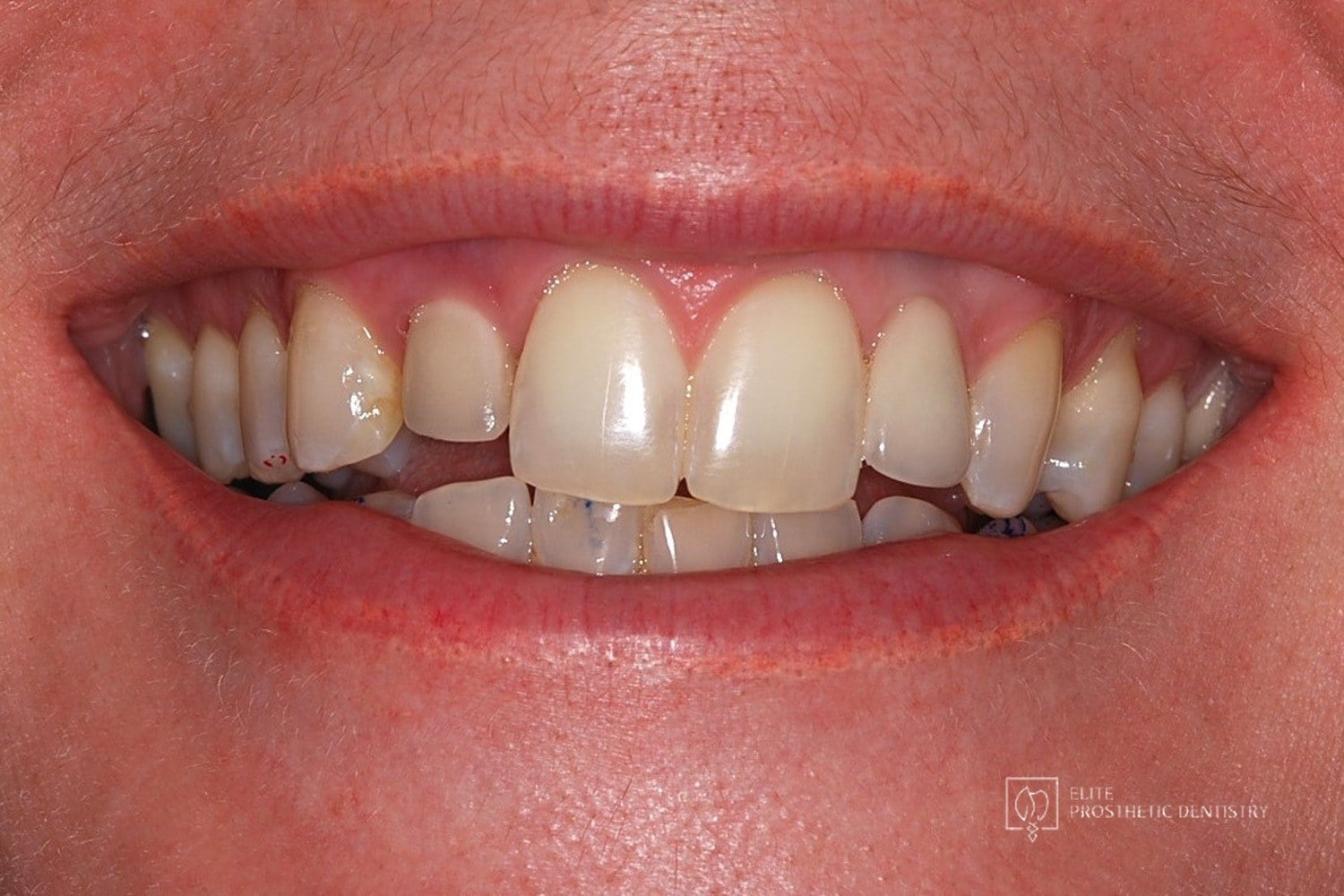 Before
 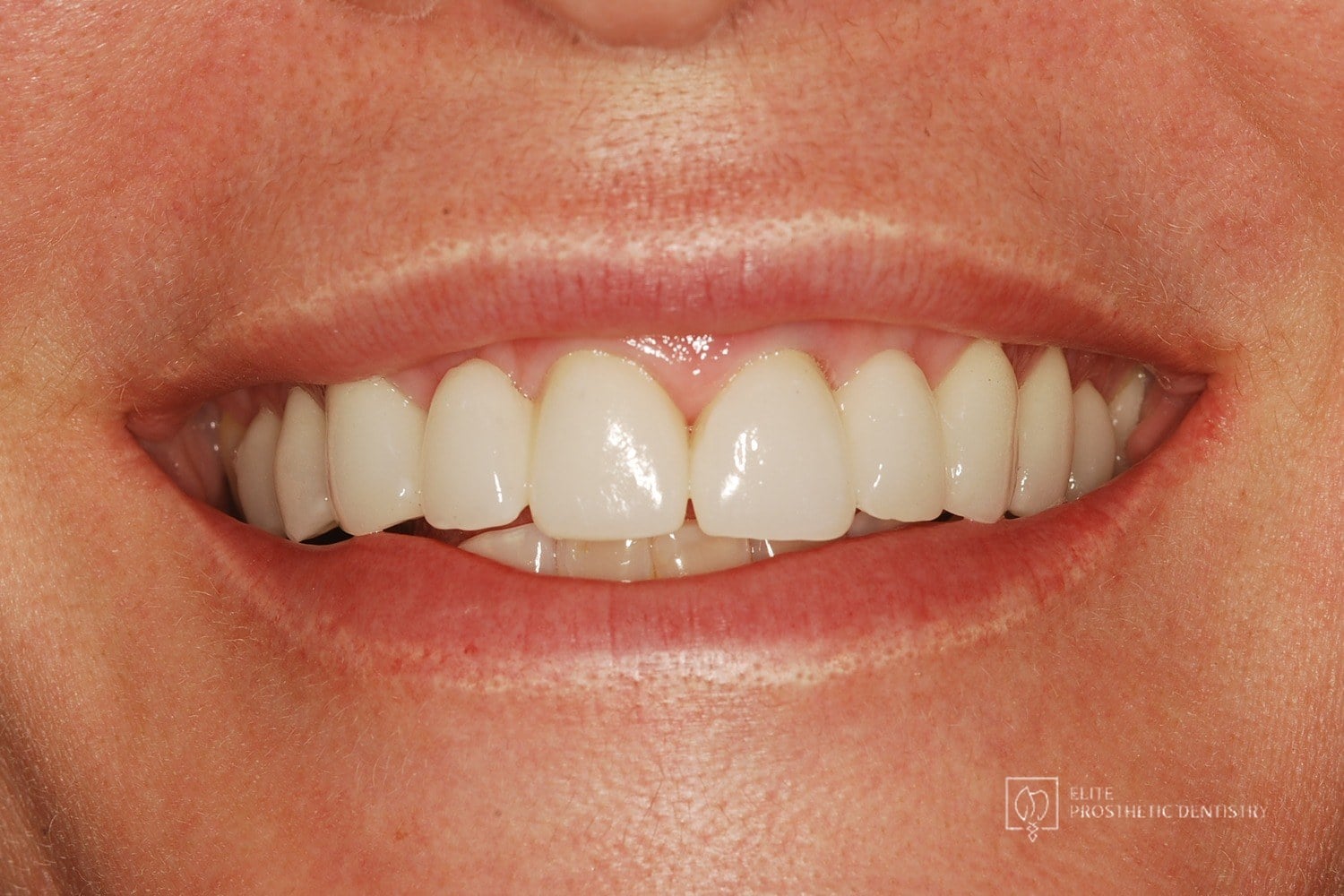 After
After How Failing Lateral Incisor Implants Were Replaced with Custom Zirconia Bridges After Severe Bone Loss Made Replacement Implants Impossible
Comprehensive examination including CBCT imaging revealed significant bone loss surrounding implants that were placed outside the buccal plate, most likely due to placement without a CBCT-generated surgical guide. The implants were determined non-salvageable, and the alveolar ridge was too narrow to support replacement implants without extensive reconstruction.
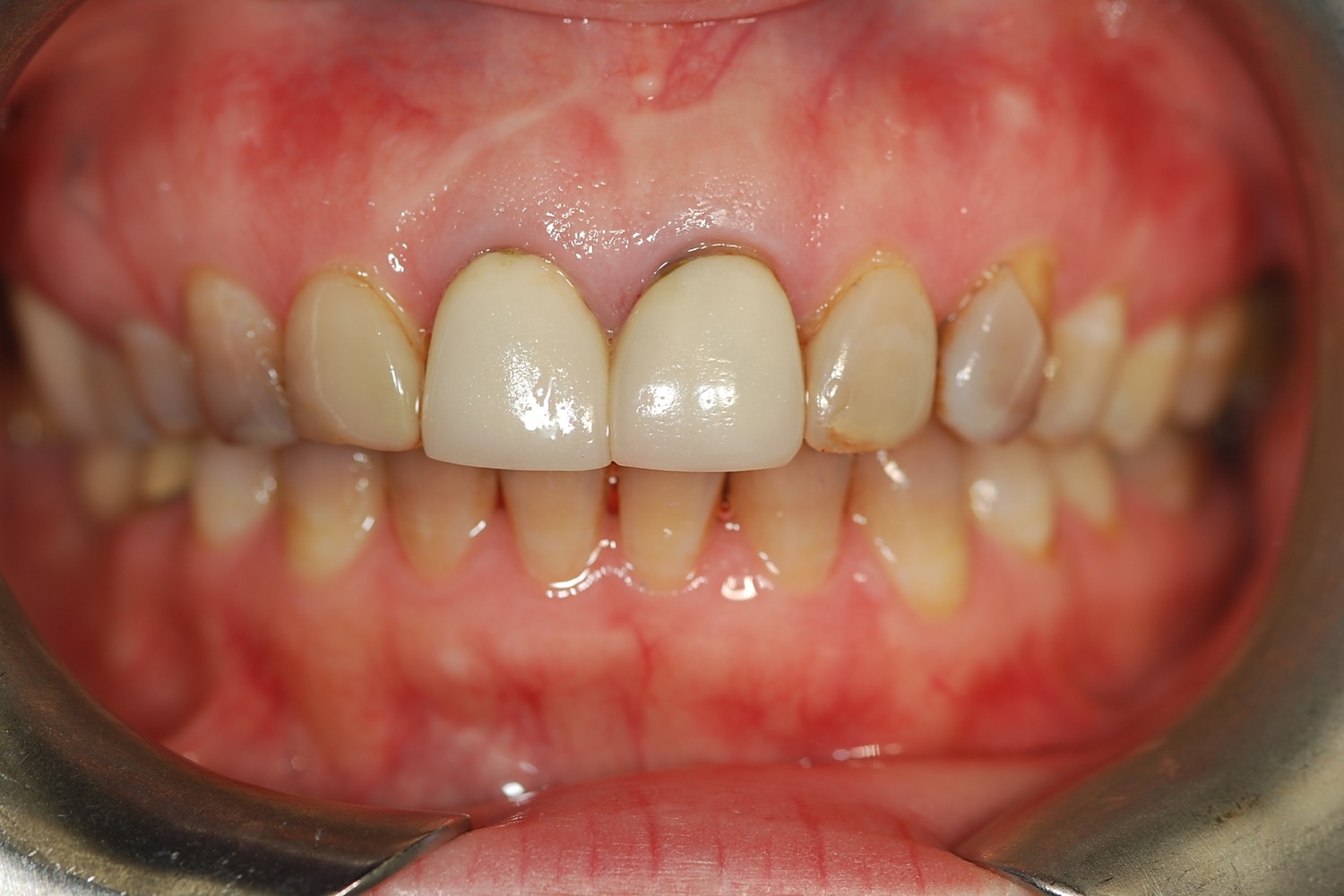 Before
 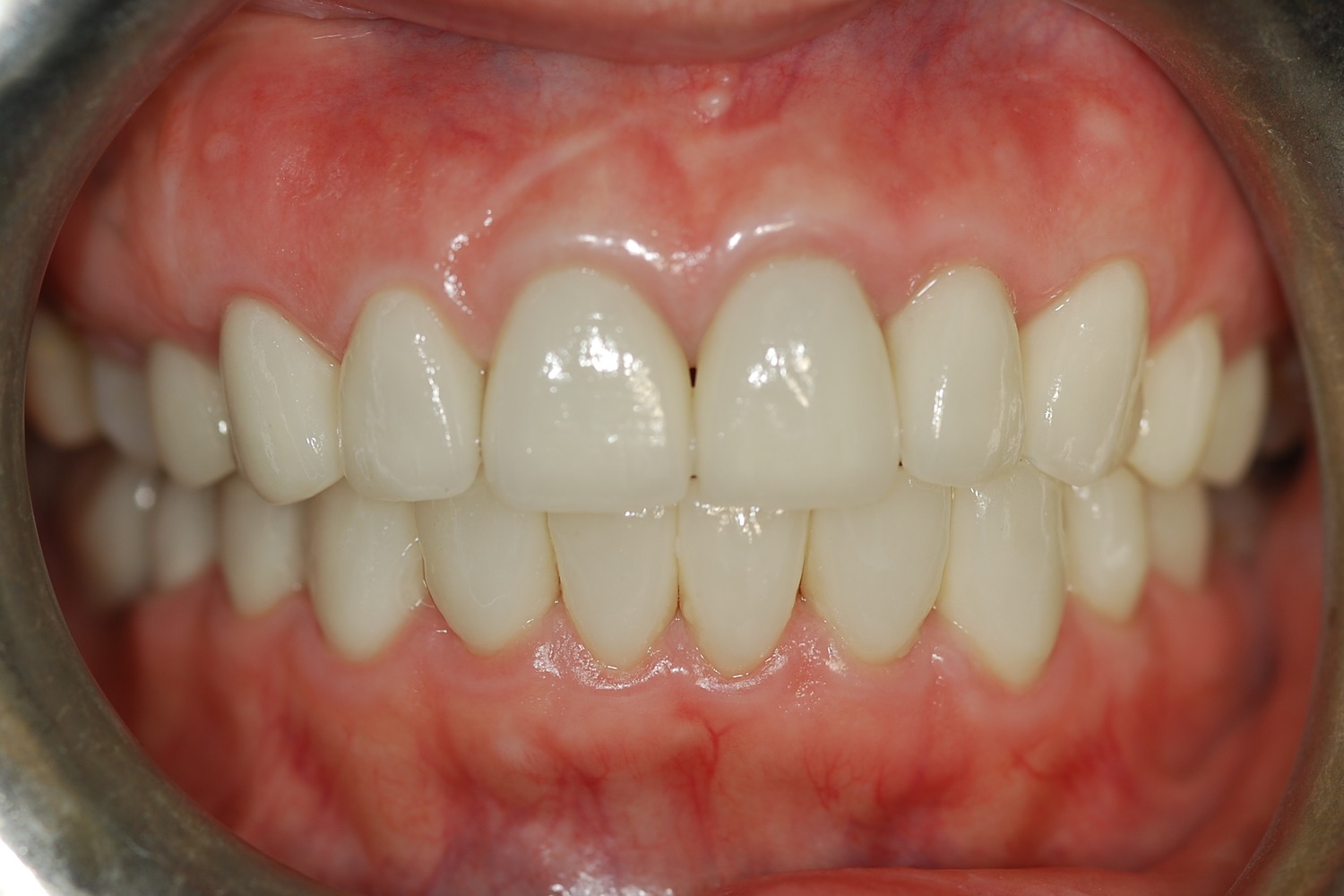 After
After How Aging, Opaque Restorations Were Replaced with Customized Ceramic Restorations Designed for Long-Term Natural Esthetics
The existing restorations appeared opaque, worn, and unnatural over time, affecting both confidence and overall smile harmony.