
Gummy Smile Diagnosis and Surgical Correction in Bethesda
Gummy smile correction through crown lengthening surgery. Specialty-trained prosthodontist Dr. Marlin in DC. Call (202) 244-2101.
A gummy smile results from excessive gum tissue display above your upper front teeth. The diagnosis begins with understanding what causes your specific gummy smile, then selecting the surgical approach that corrects that underlying cause.
Diagnostic Evaluation: Understanding Your Specific Gummy Smile
Gum tissue excess manifests differently in different patients. Understanding your specific cause guides treatment selection. Dr. Marlin measures gingival display (how much gum tissue appears) and evaluates underlying anatomy.
Excess gum tissue is the most common cause. Patients with this pattern display more gum than ideal due to genetics or previous gum disease. The teeth beneath are normal length, but soft tissue overgrowth masks them.
Short clinical crowns (the visible portion of teeth) combined with normal-length roots and gum tissue can create gummy appearance despite normal gum tissue volume. This pattern requires tooth lengthening rather than gum reduction.
Hyperactive lip elevation during smiling pulls the upper lip too high, exposing normally positioned gum tissue excessively. This pattern may respond to Botox or surgical lip repositioning depending on severity and patient preference.
Vertical maxillary excess (upper jaw positioned too low) creates gummy smile as an accompaniment to overall jaw proportions. This pattern may require orthognathic (jaw) surgery referral if correction is desired.
Each etiology requires different treatment. Diagnostic evaluation determines which cause explains your specific gummy smile, guiding surgical planning.
Crown Lengthening Surgery: What Actually Occurs
Crown lengthening surgery removes excess gum tissue and, when necessary, bone to expose more tooth structure and restore balanced proportions. The procedure occurs under local anesthesia with optional sedation for patient comfort.
The surgical area is thoroughly anesthetized. Dr. Marlin makes precise incisions in gum tissue overlying the excess. The gum is carefully reflected back to expose underlying bone and tooth structure. This visibility allows accurate assessment of how much bone adjustment is necessary.
Dr. Marlin then carefully removes bone using rotary instruments, creating contours that will support an ideal gum-to-tooth relationship. The amount of bone removal is minimal and precisely planned based on pre-operative imaging. Bone removal creates a longer appearance of tooth crown without damaging tooth structure.
Once bone removal is complete, gum tissue is repositioned and sutured to new contours. The repositioned gum margin now sits lower on the tooth, exposing more tooth structure. Dr. Marlin ensures the gum contours are esthetic, with proper scalloping matching your natural tooth anatomy.
The procedure typically requires 45 to 90 minutes depending on the number of teeth requiring treatment and extent of bone reshaping needed. Bleeding is controlled with pressure and hemostatic techniques. The surgical site is closed with dissolving sutures.
What Happens During Healing: Timeline and Expectations
The first two to three days involve swelling at the surgical site. This swelling is expected and peaks around 48 hours. Mild soreness is common and manageable with over-the-counter pain medication.
By day three to four, swelling begins resolving. Sutures remain in place for 10 to 14 days. During this time, the gum tissue is establishing new attachment at its new position.
By week two, most of the initial healing is complete. Gum tissue appears much as it will permanently, though swelling has not completely resolved. Your new gum-to-tooth relationship is now evident.
By week three to four, tissue has settled significantly. Any remaining swelling resolves over the following weeks. By four to six weeks, your final result is substantially apparent. Very subtle tissue changes continue for several additional months.
The final result—gum tissue position and tooth-to-gum proportions—is substantially established by week four but continues subtle maturation for several months.
Post-Operative Care and Restrictions
Avoid very hot foods and aggressive rinsing during the first week. Soft diet is recommended for the first week. By week two, most patients can return to normal diet.
Avoid smoking and alcohol during healing. These impair tissue healing. Smoking should ideally be avoided for at least one week after surgery.
Avoid strenuous exercise and heavy lifting for one week. These activities increase bleeding and can disrupt the surgical site. Resume normal activity gradually during week two.
Excellent oral hygiene is essential. Gentle brushing and flossing (avoiding the surgical area) begin after suture removal. By week three, resume normal oral hygiene routine with attention to the surgical area.
Veneers or Crowns: When Tooth Lengthening Complements Crown Lengthening
If your teeth are naturally short or worn, crown lengthening alone may not create optimal proportions. In these cases, veneers or crowns lengthen teeth while crown lengthening repositions gum tissue.
The combination addresses both elements: gum position and tooth length. Results are more dramatically improved than either approach alone. Treatment timing typically involves crown lengthening first, allowing healing and tissue maturation, then veneer or crown placement 4 to 6 weeks later.
What Is Reversible and What Isn’t
Crown lengthening creates permanent changes. Repositioned gum tissue and bone contours don’t return to previous shape. This is the permanent nature of surgical modification.
However, results achieve natural-looking proportions when properly planned. You won’t appear to have unusually long teeth; rather, your gum-to-tooth ratio will be balanced and esthetically appropriate.
Veneers or crowns placed alongside crown lengthening can eventually be replaced, but the surgical gum repositioning remains permanent. This permanence is why careful planning and realistic expectations are essential before proceeding.
Bethesda Proximity and Surgical Access
Bethesda residents have convenient access to Dr. Marlin’s office, just 5 minutes south on Wisconsin Avenue. This proximity makes pre-operative consultation, surgery, and post-operative follow-up manageable around your schedule.
The convenient location enables you to schedule surgery and return home to rest without lengthy travel, important for the recovery phase.
Schedule Your Diagnostic Consultation
If excess gum tissue bothers you, schedule consultation with Dr. Marlin to understand your specific diagnosis and determine whether crown lengthening and/or restorative treatment would address your concerns.
Call (202) 244-2101 or visit 4400 Jenifer Street NW, Suite 220, Washington, DC 20015.
For related care, see our cosmetic dentistry page.
Frequently Asked Questions
What diagnostic measurements determine whether I have a gummy smile?
A gummy smile displays more than 3-4 millimeters of gum tissue above your upper front teeth when you smile. Dr. Marlin photographs your smile, measures gingival display, and assesses tooth-to-gum proportions. Underlying causes (excess gum, short teeth, jaw position, hyperactive lip) determine the surgical approach needed.
Is crown lengthening surgery reversible?
The surgical modifications are permanent. Repositioned gum tissue and bone contours don't return to previous shape. However, the results are not extreme; the appearance is natural-looking when properly executed. Results achieve balanced proportions rather than exaggerated change.
How long does crown lengthening take and what's the healing timeline?
The surgical procedure typically requires 45-90 minutes depending on the extent of correction needed. Initial healing occurs over 2-3 weeks. Tissue maturation and final result assessment occurs over 2-3 months as swelling resolves and tissues fully heal.
Why might Dr. Marlin recommend veneers or crowns alongside crown lengthening?
Crown lengthening exposes more tooth structure but doesn't change tooth proportions. If your teeth are naturally short or worn, veneers or crowns can lengthen them proportionally while gum tissue is reshaped. Combined approach addresses both gum position and tooth proportions for optimal results.
Can non-surgical approaches like Botox fix a gummy smile?
Botox can address gummy smiles caused by hyperactive upper lip muscles that retract the lip too far when smiling, exposing excess gum. This is one specific cause. If the problem is excess gum tissue, teeth shape, or jaw position, surgical crown lengthening is the appropriate treatment.
Related Patient Success Stories
Explore similar patient success stories demonstrating our expertise in advanced prosthetic dentistry.
 Before
  After
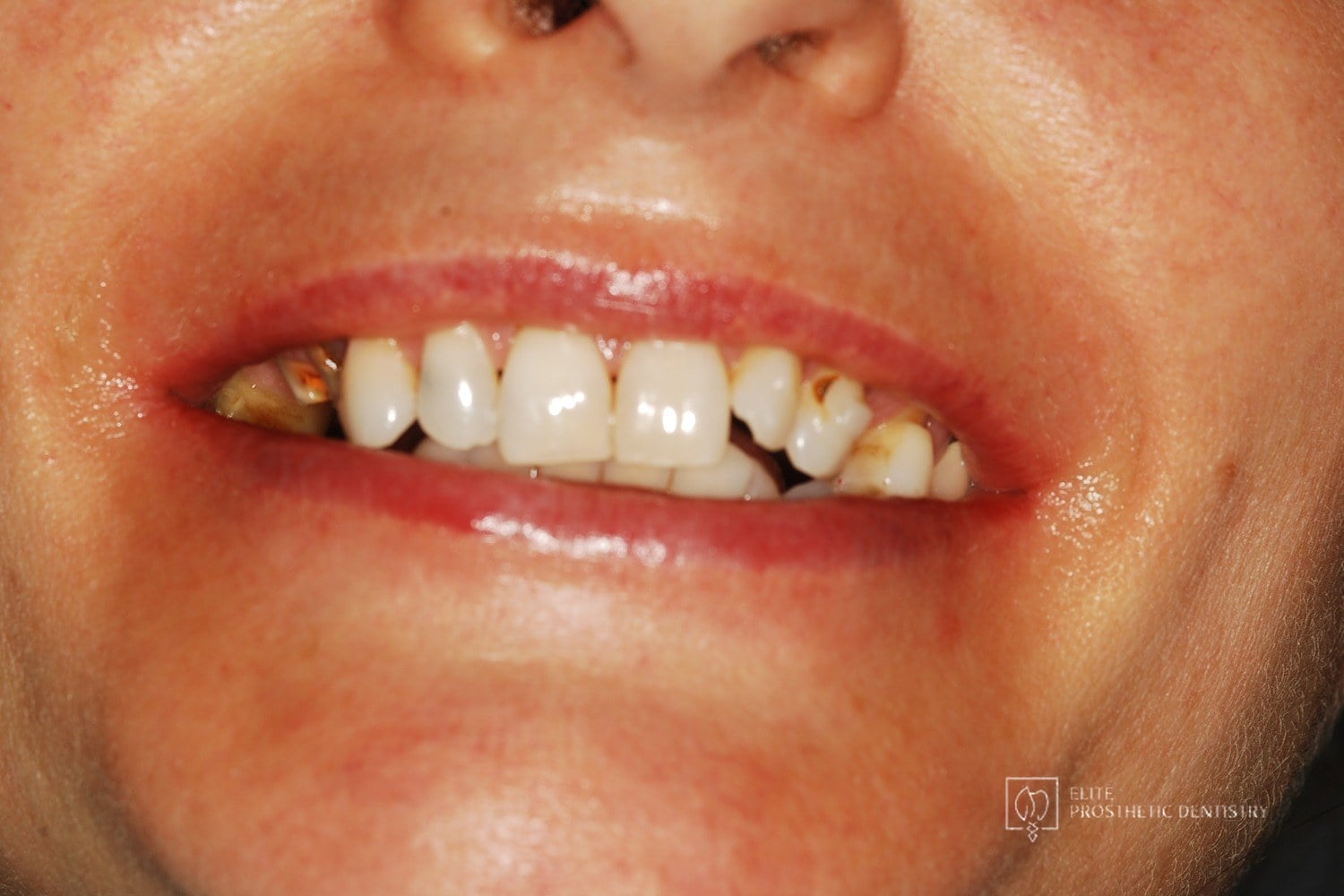
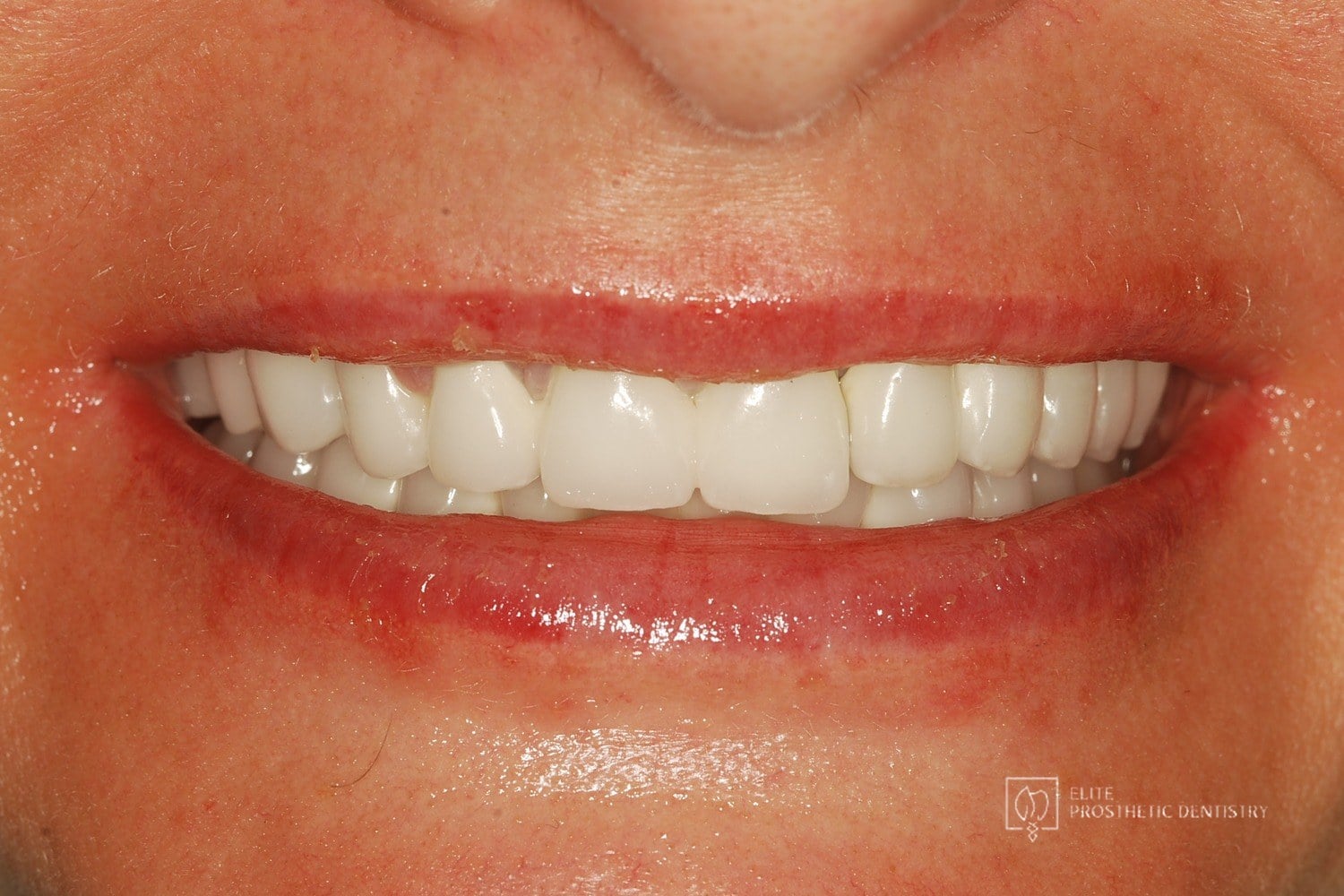
After How Aging, Failing Dentistry Was Replaced with a Coordinated Full-Mouth Implant and Crown Reconstruction
The patient presented with throbbing upper-molar pain, long-standing infections, multiple root canals and unfinished prior treatment, generalized sensitivity, and several hopeless teeth.
 Before
 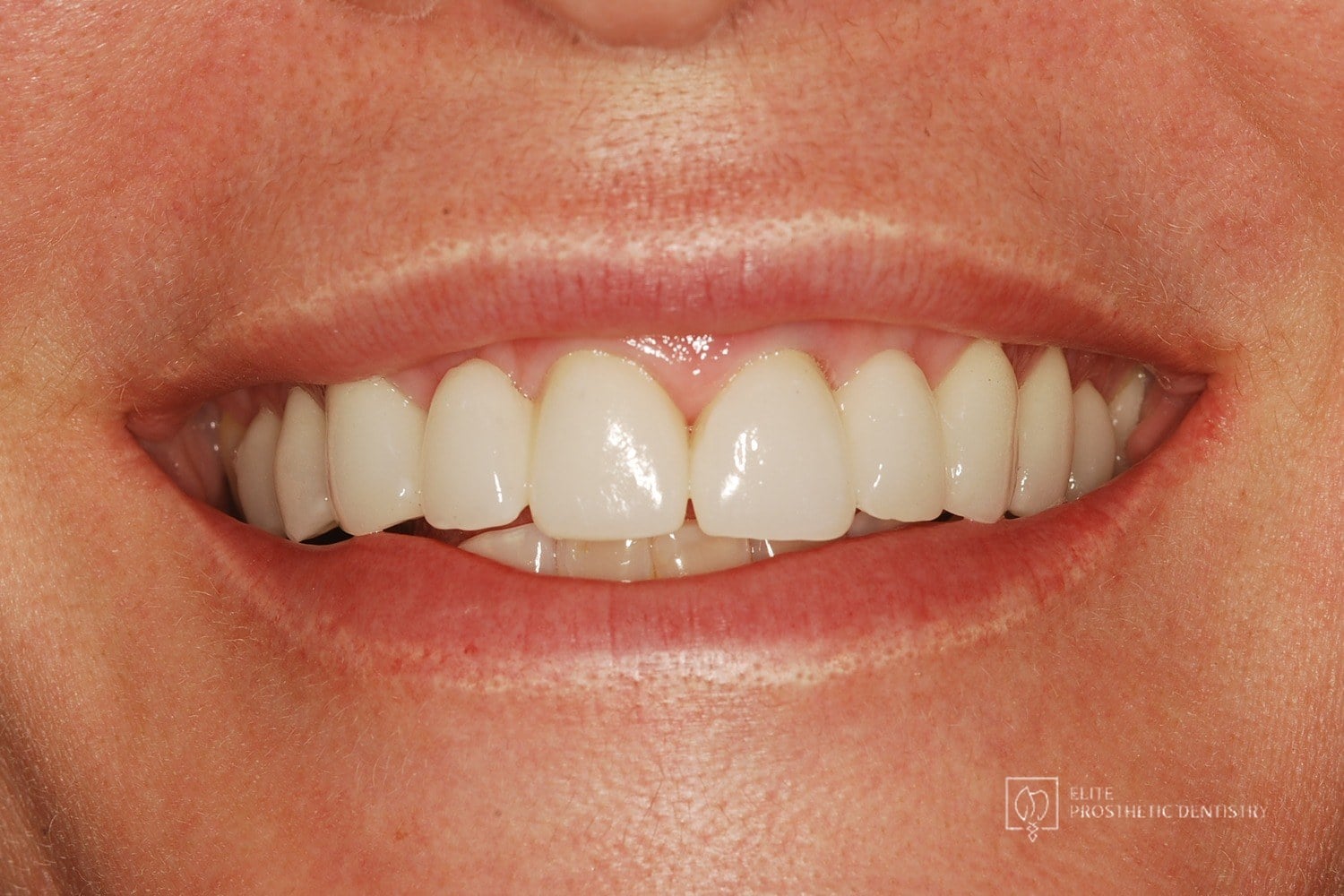 After
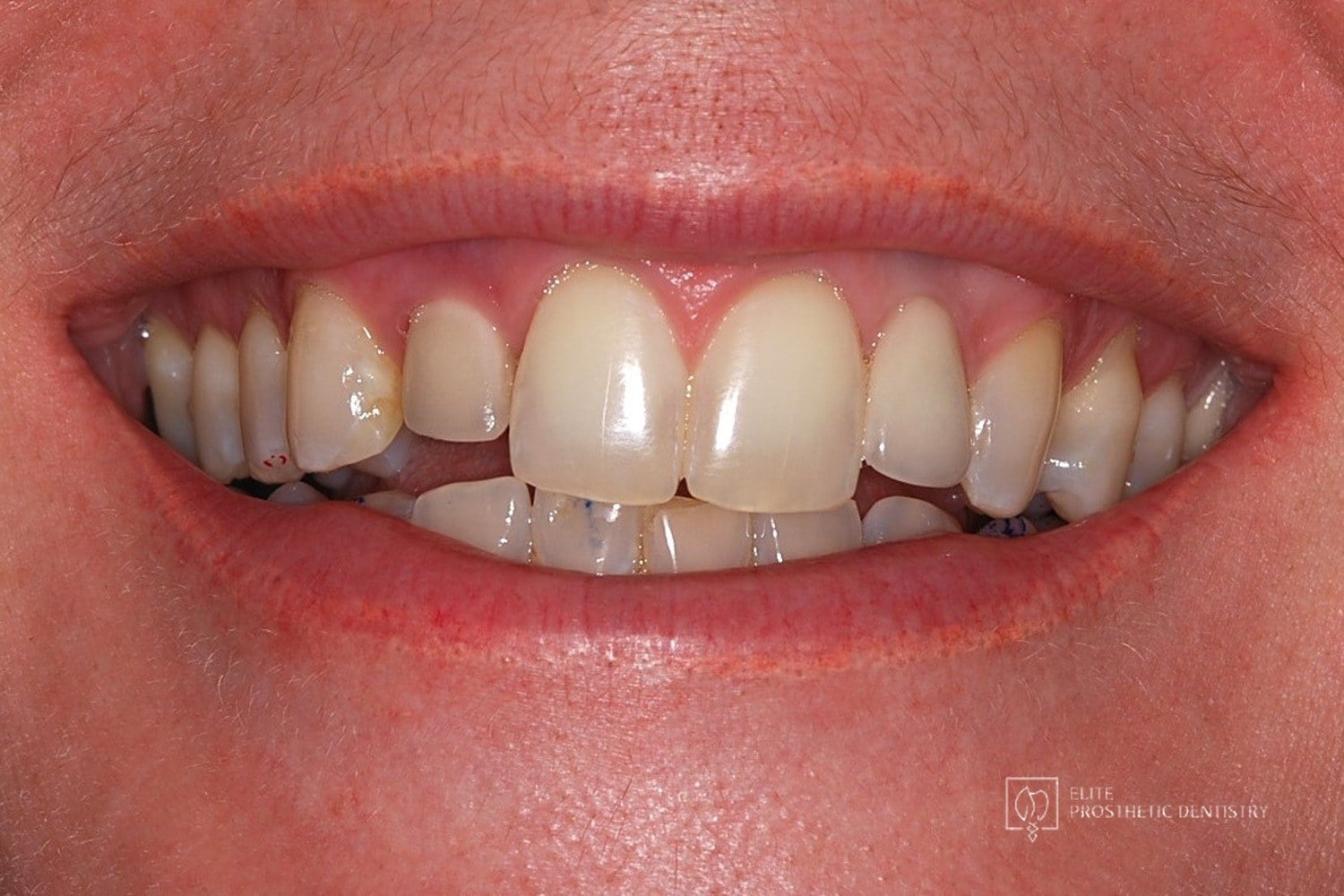
After How Failing Lateral Incisor Implants Were Replaced with Custom Zirconia Bridges After Severe Bone Loss Made Replacement Implants Impossible
Comprehensive examination including CBCT imaging revealed significant bone loss surrounding implants that were placed outside the buccal plate, most likely due to placement without a CBCT-generated surgical guide. The implants were determined non-salvageable, and the alveolar ridge was too narrow to support replacement implants without extensive reconstruction.
 Before
  After
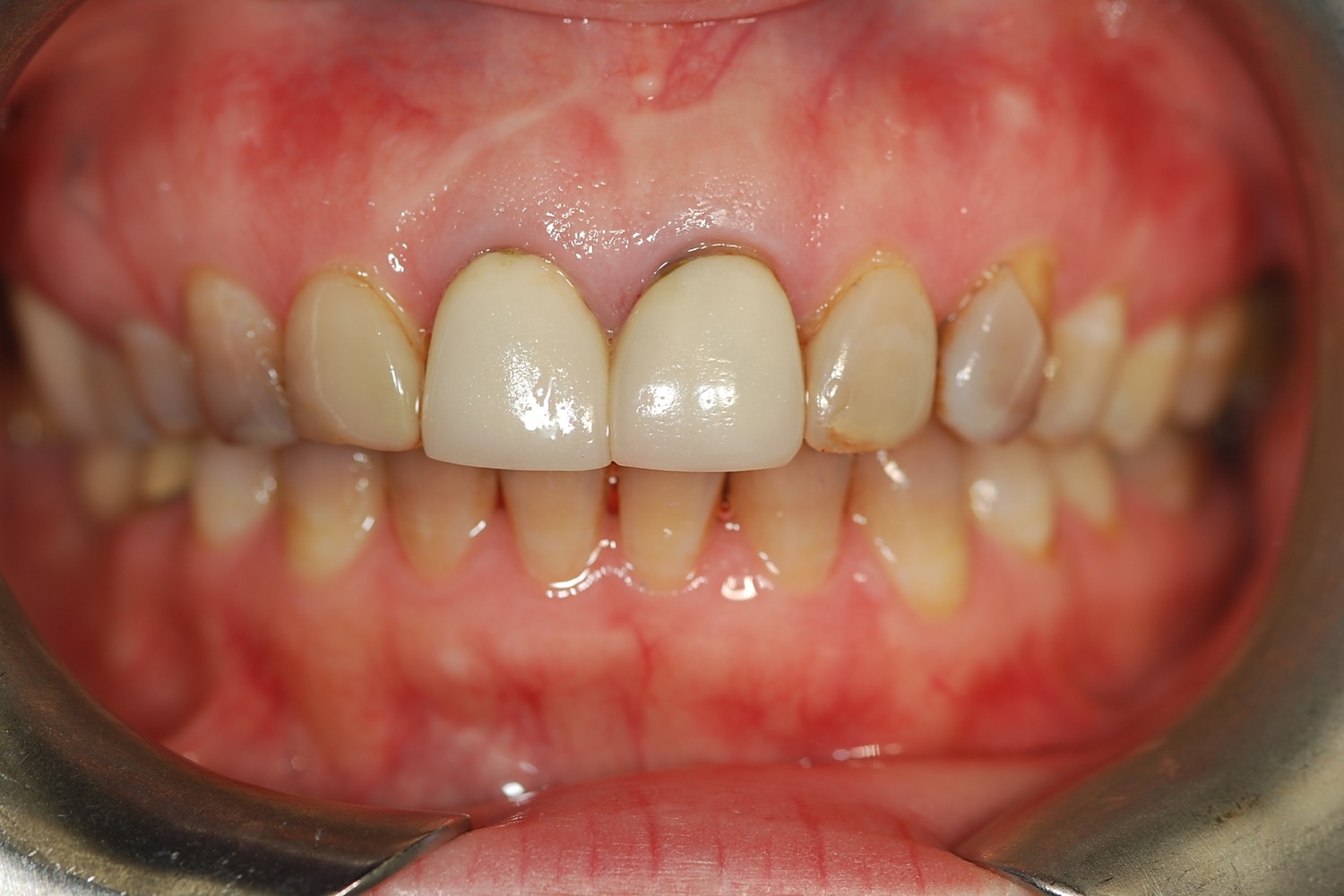
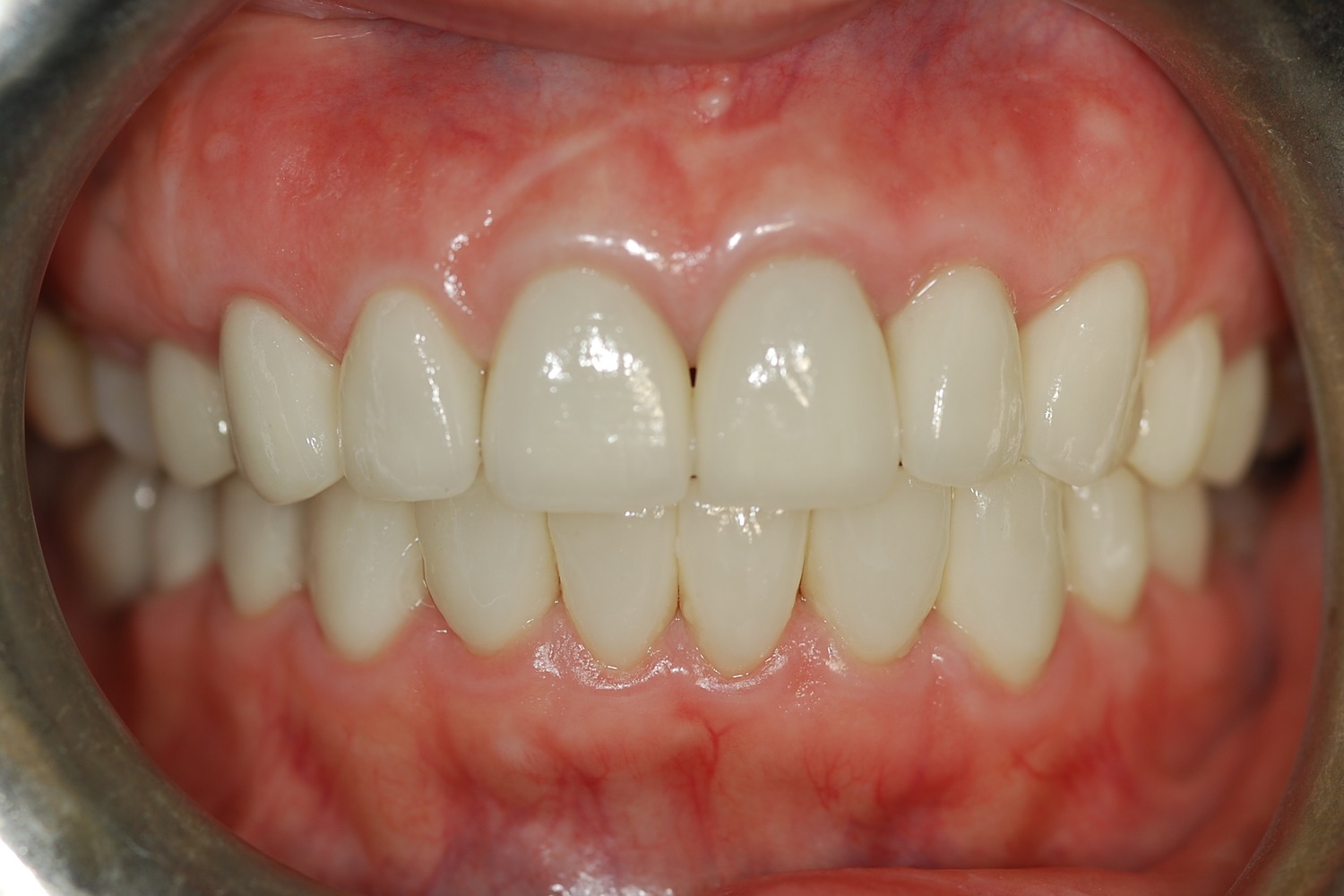
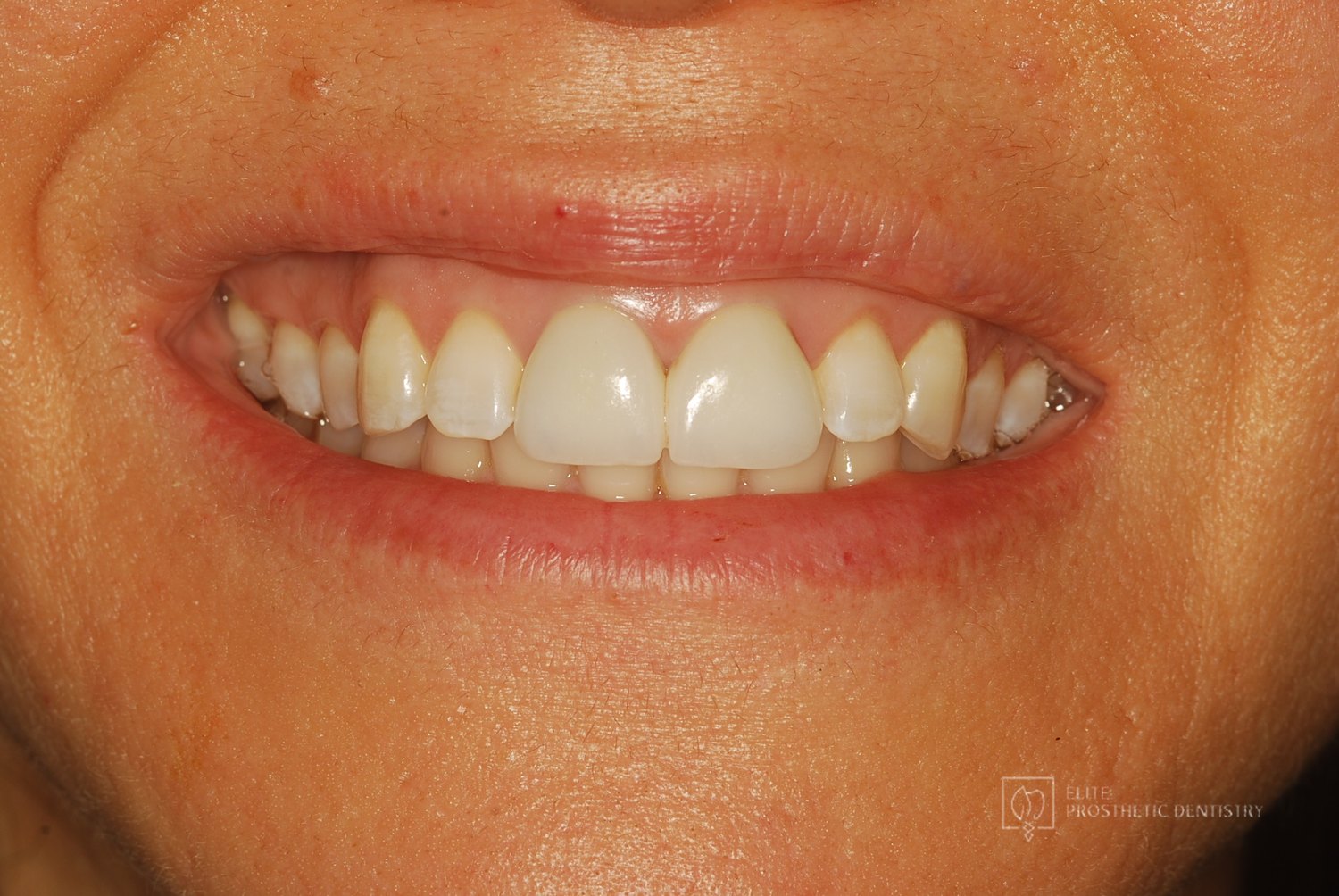
After How Aging, Opaque Restorations Were Replaced with Customized Ceramic Restorations Designed for Long-Term Natural Esthetics
The existing restorations appeared opaque, worn, and unnatural over time, affecting both confidence and overall smile harmony.
 Before
  After
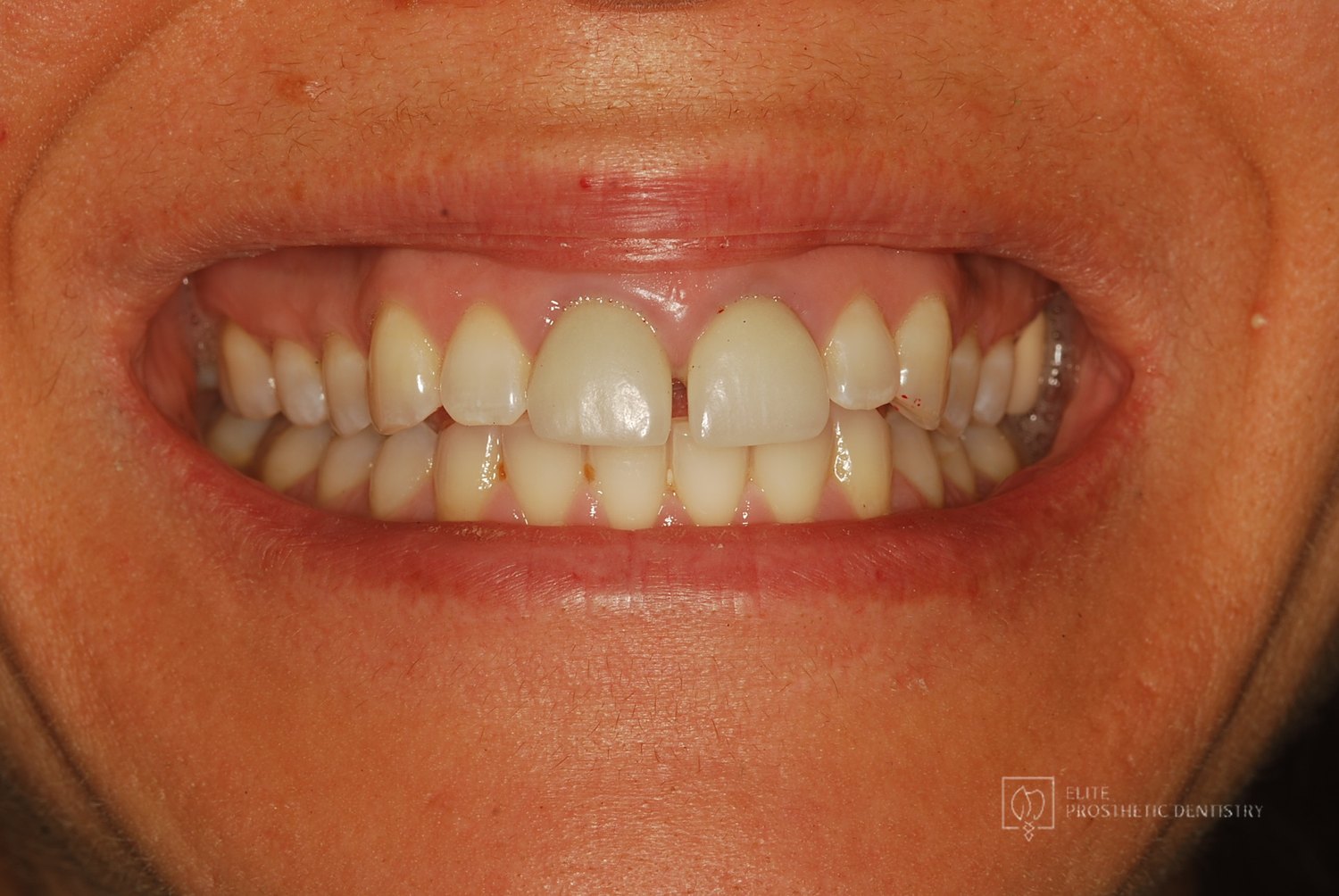
After Two Front Teeth Saved From Extraction: A Second Opinion, Custom Gold Posts, and Crowns Made to Last
Two upper central incisors with failed root canal treatment and recurrent decay had been recommended for extraction and implant replacement. A CBCT evaluation showed that removing the roots from their thin facial bone housing could create a visible esthetic defect in the gum and bone contour, made worse by the patient's high lip line.

Temporary Crowns Restore a Patient's Smile in One Day with an Immediate Smile Makeover
A patient from Potomac, Maryland came to the practice in pain from a failing dental implant whose restoration was also compromising her appearance and her confidence.
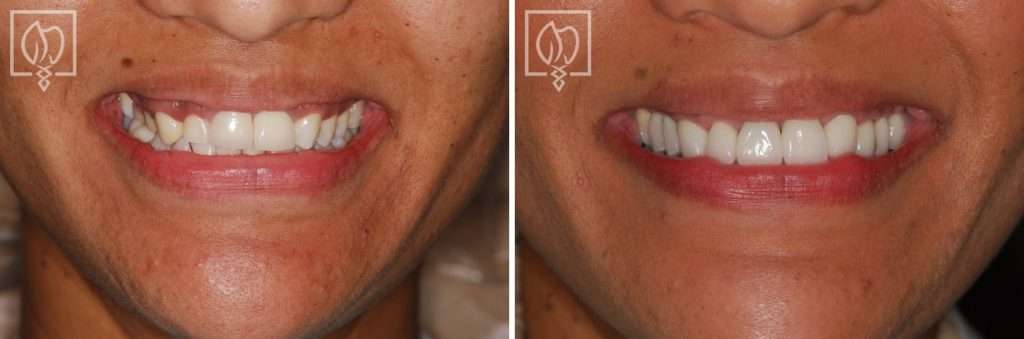
Multi-Faceted Treatment for a Patient Unhappy With the Appearance of Her Crowns, Teeth, and Gums
The patient was unhappy with how her teeth and gums affected her smile: front-tooth crowns that no longer blended with her natural teeth, a missing lateral incisor with the larger canine sitting in its space, and an uneven gum line.
Related Articles
Deepen your knowledge with additional insights on this topic.
 Cosmetic Dentistry
 Can My Tetracycline-Stained Teeth Be Made to Look Beautiful?
Tetracycline staining sits deep inside the tooth, so bleaching cannot fix it. See how translucent porcelain crowns create a bright, natural smile instead.
 Cosmetic Dentistry
 How Is a Gummy Smile Fixed?
From gum reshaping to custom crowns, a DC prosthodontist explains how a gummy smile is fixed, with a real patient transformation and healing timeline.
 Cosmetic Dentistry
 Discovering Cosmetic Dentistry Beyond Aesthetics
Cosmetic dentistry improves more than looks: easier hygiene, restored chewing function, and better long-term oral health. A DC prosthodontist explains.
 Cosmetic Dentistry
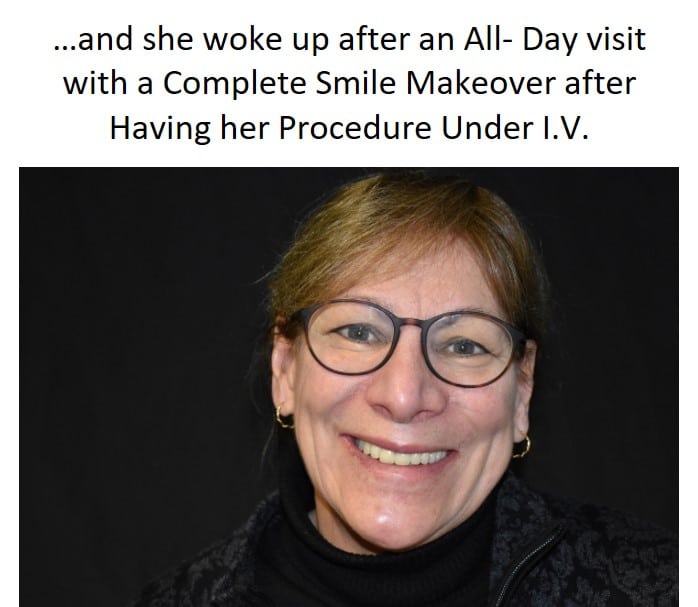
 Benefits of a Cosmetic Smile Makeover With Dental Sedation
Sedation lets longer smile makeover visits feel brief, eases anxiety, and may reduce soreness afterward. A DC prosthodontist explains the benefits.
 Cosmetic Dentistry
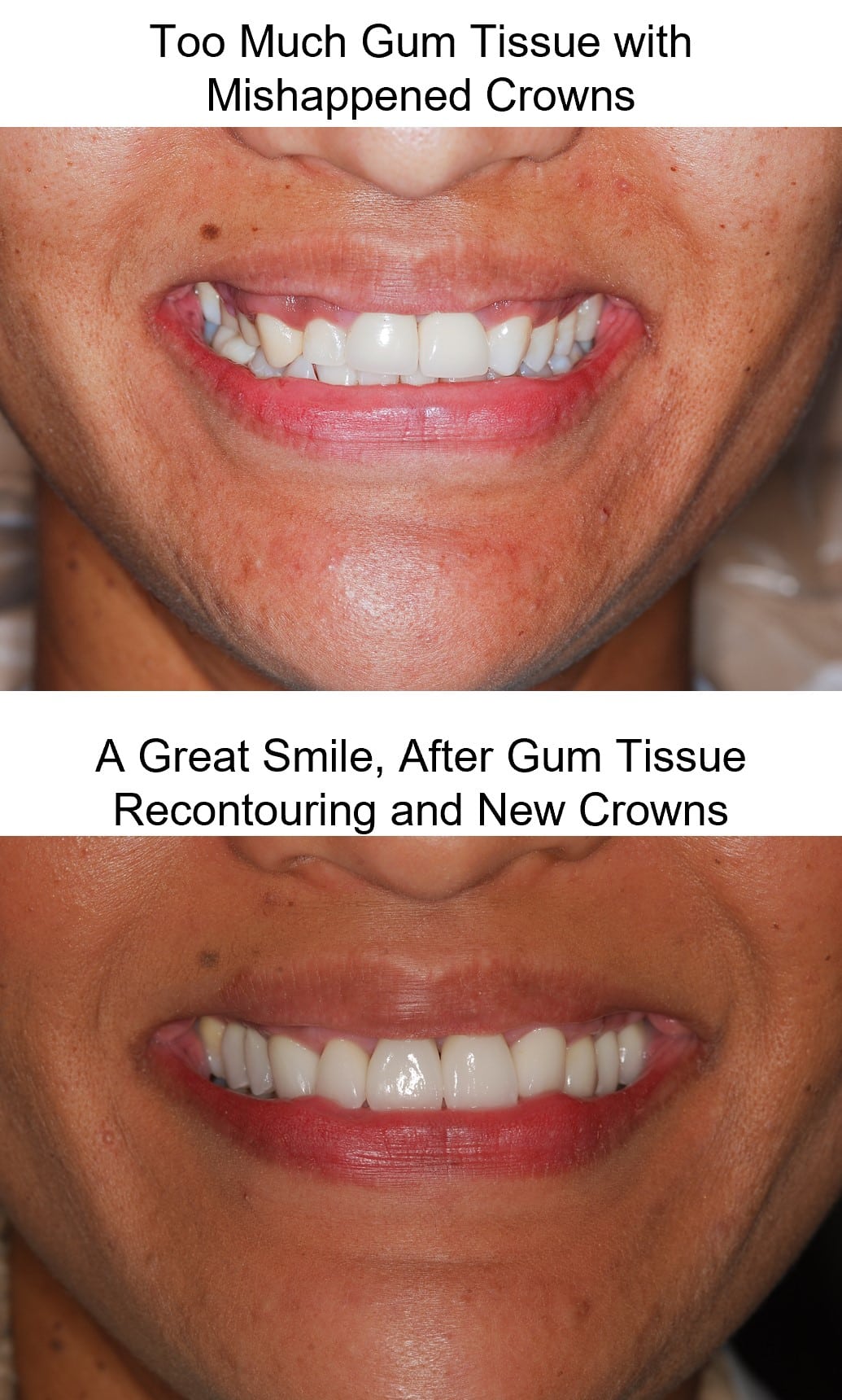
 Does Treating or Rehabilitating a Gummy Smile Require Surgery?
Not every gummy smile needs surgery. A DC prosthodontist explains restorative and other alternatives, and what to expect when gum surgery is the right call.
 Cosmetic Dentistry
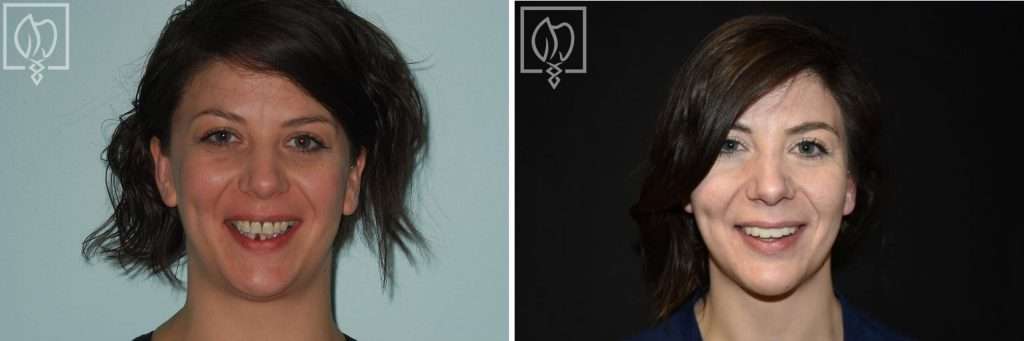
 Treatable Dental Conditions That Make Patients Self-Conscious About Their Smile
Discolored, worn, gapped, or missing teeth and gummy smiles are all treatable. A DC prosthodontist maps each common condition to its modern fix.
Deciding Who Should Treat You?
Our decision guide for Bethesda patients explains when implants, full mouth reconstruction, cosmetic work, or aging crowns and bridges call for a prosthodontist, and when another setting may serve you better.
Read the Bethesda decision guide →Our Services in Bethesda
Beyond Gummy Smile Correction, Bethesda patients rely on Dr. Marlin for a full range of advanced dental care.
More services available in Bethesda:
Getting Here from Bethesda
Elite Prosthetic Dentistry is conveniently located near Bethesda, MD.
Patients from Bethesda drive south on Wisconsin Avenue to the DC/Maryland border at Friendship Heights. Our office is at 4400 Jenifer Street NW, Suite 220, approximately 5 minutes from Bethesda's commercial district.
Address:
4400 Jenifer Street NW, Suite 220
Washington, DC 20015
Phone: (202) 244-2101
Request a ConsultationRequest a Specialist Consultation from Bethesda
Bethesda residents come to Dr. Marlin for specialist prosthodontic care. With 3,900+ implants placed over 40+ years, evaluation, planning, and execution are handled with the depth complex cases require.