
How Severely Worn Upper Teeth Were Rebuilt Into a More Stable, Natural-Looking Result
Full-face view
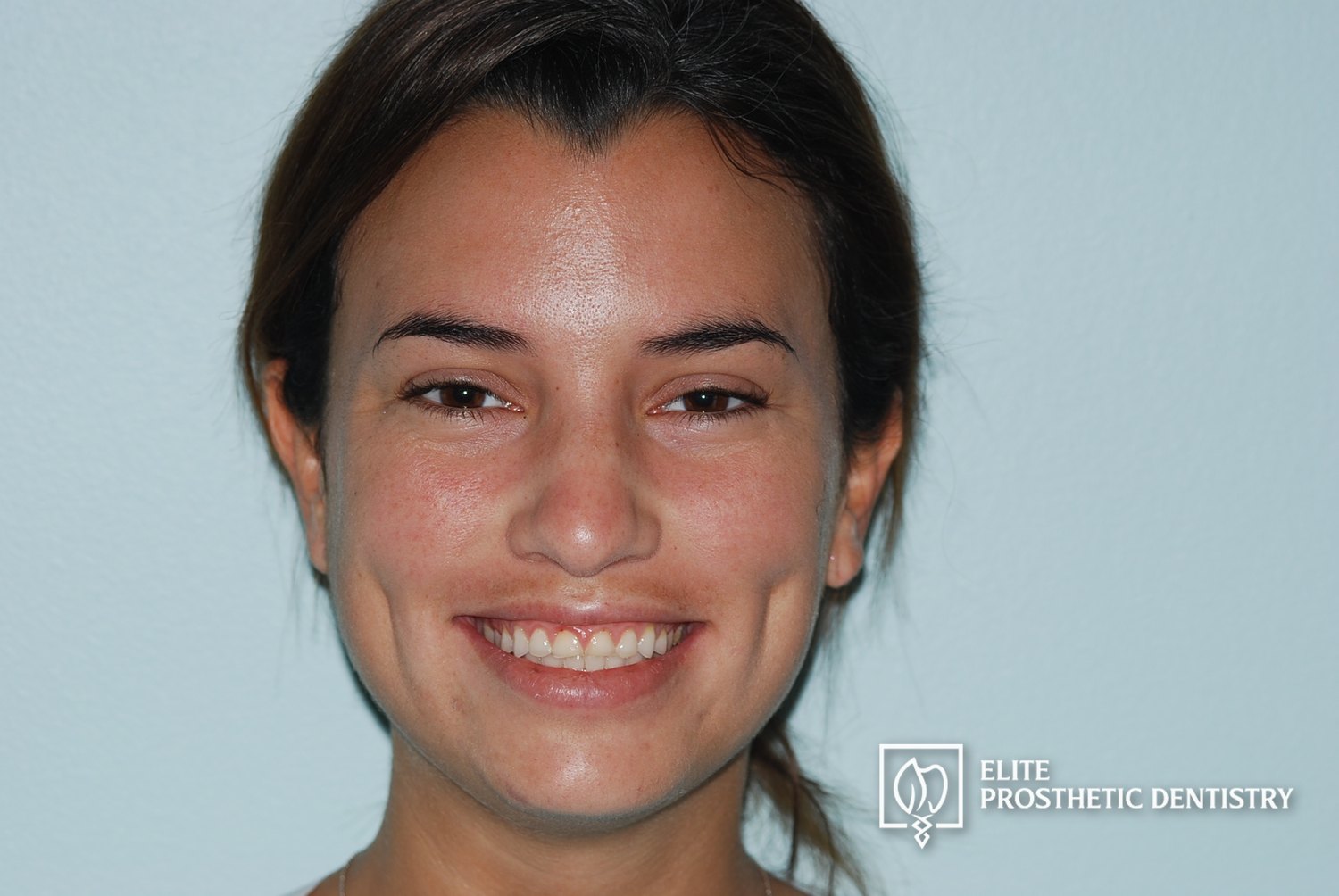 Before
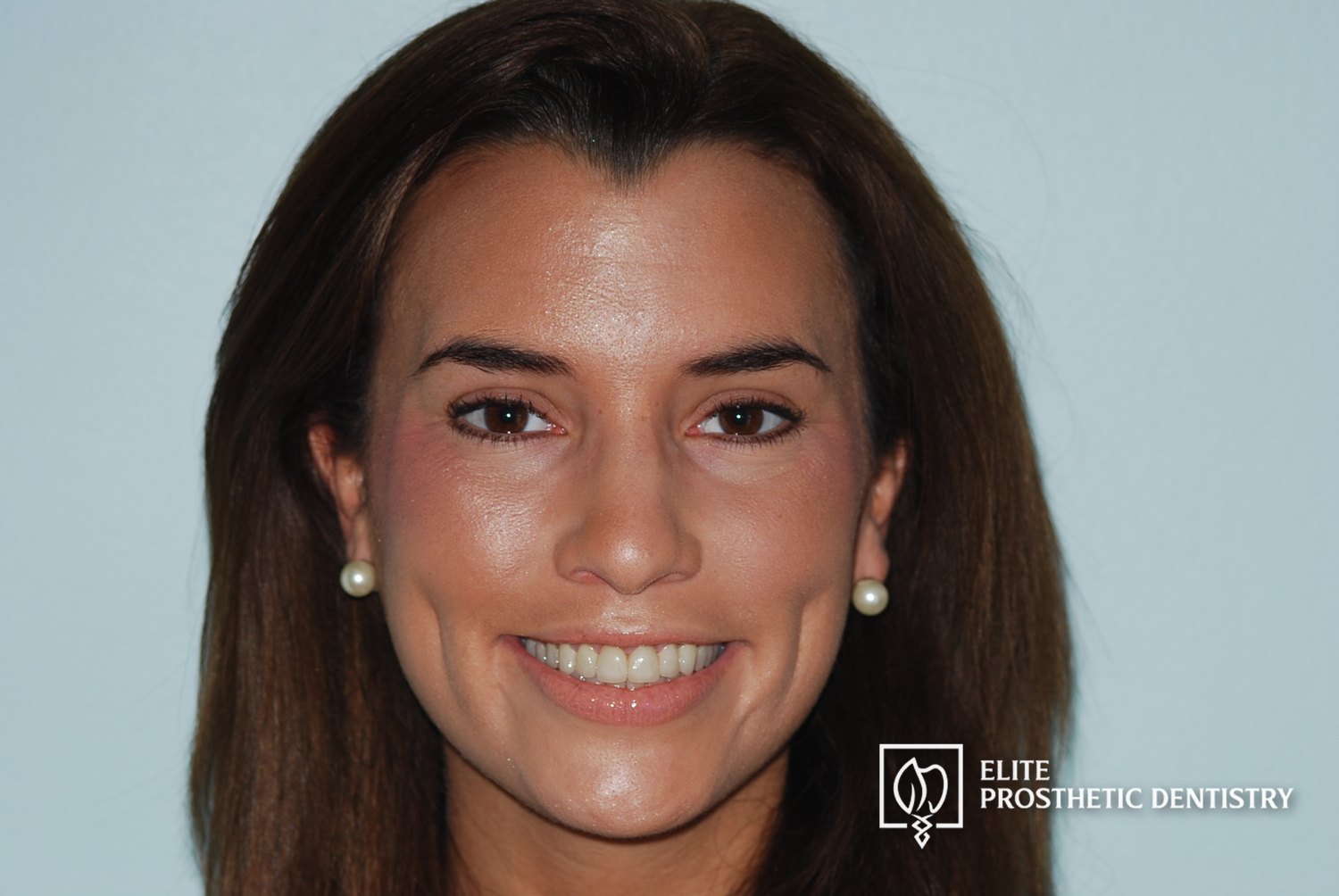 After
After
Close-up smile view
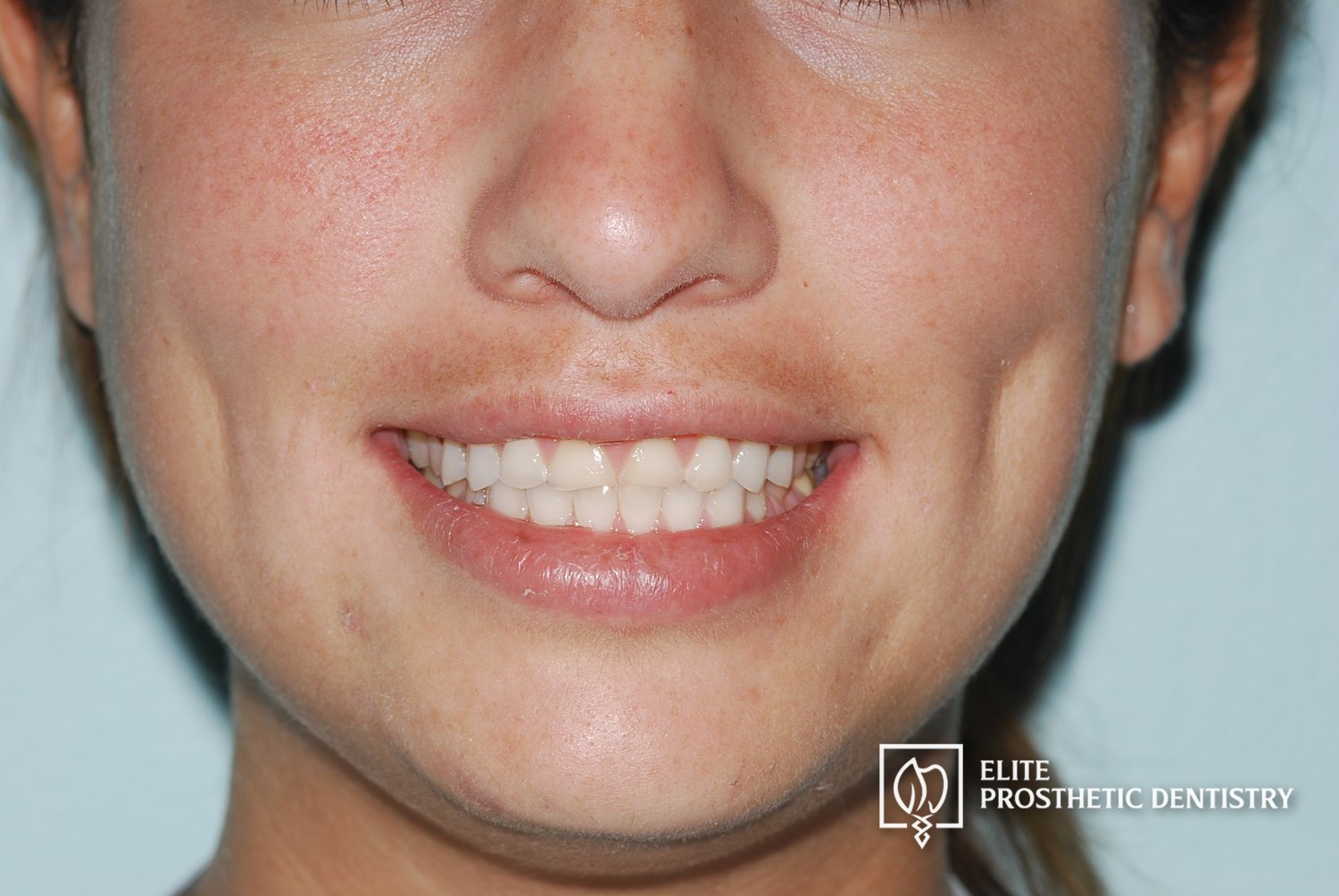 Before
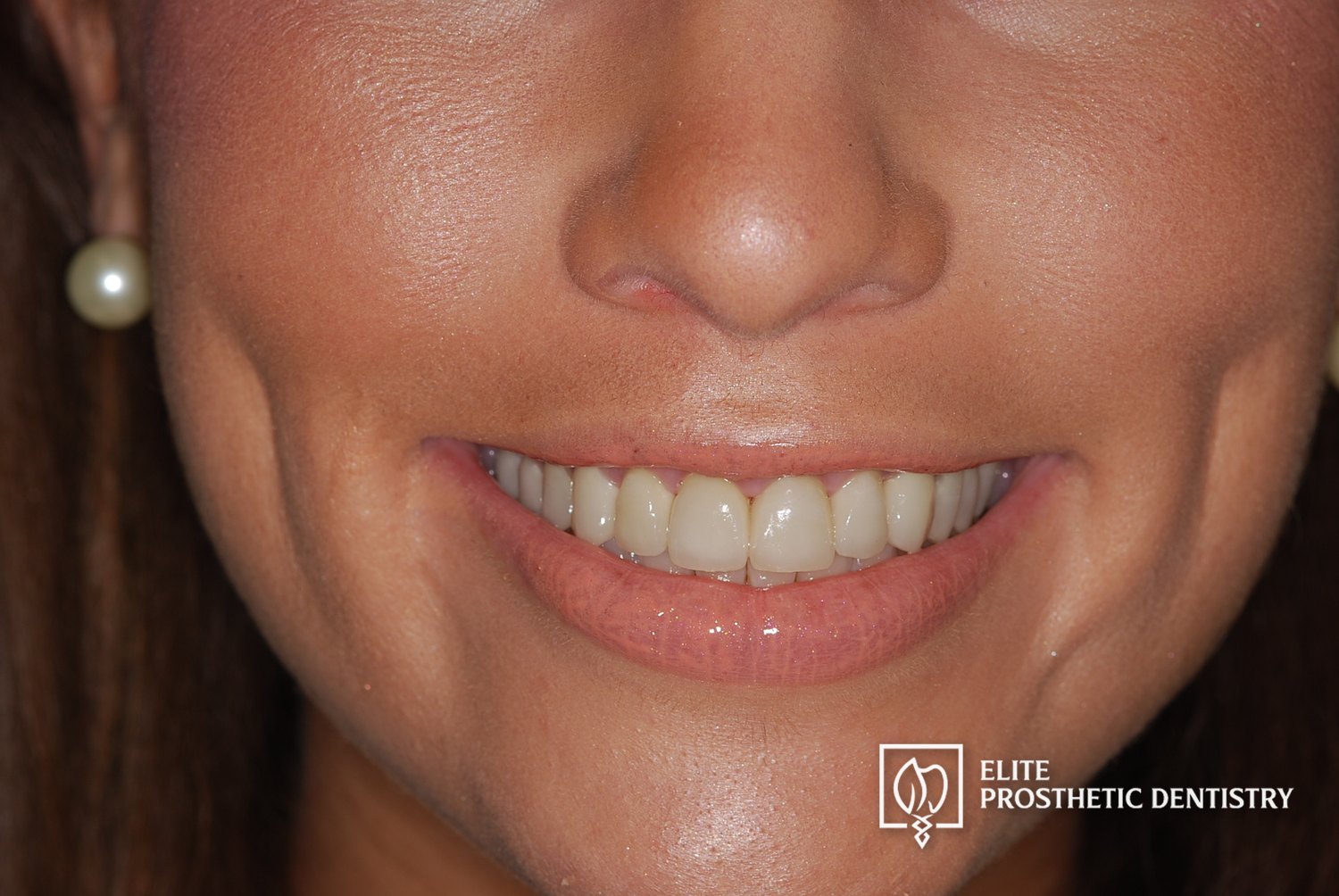 After
After
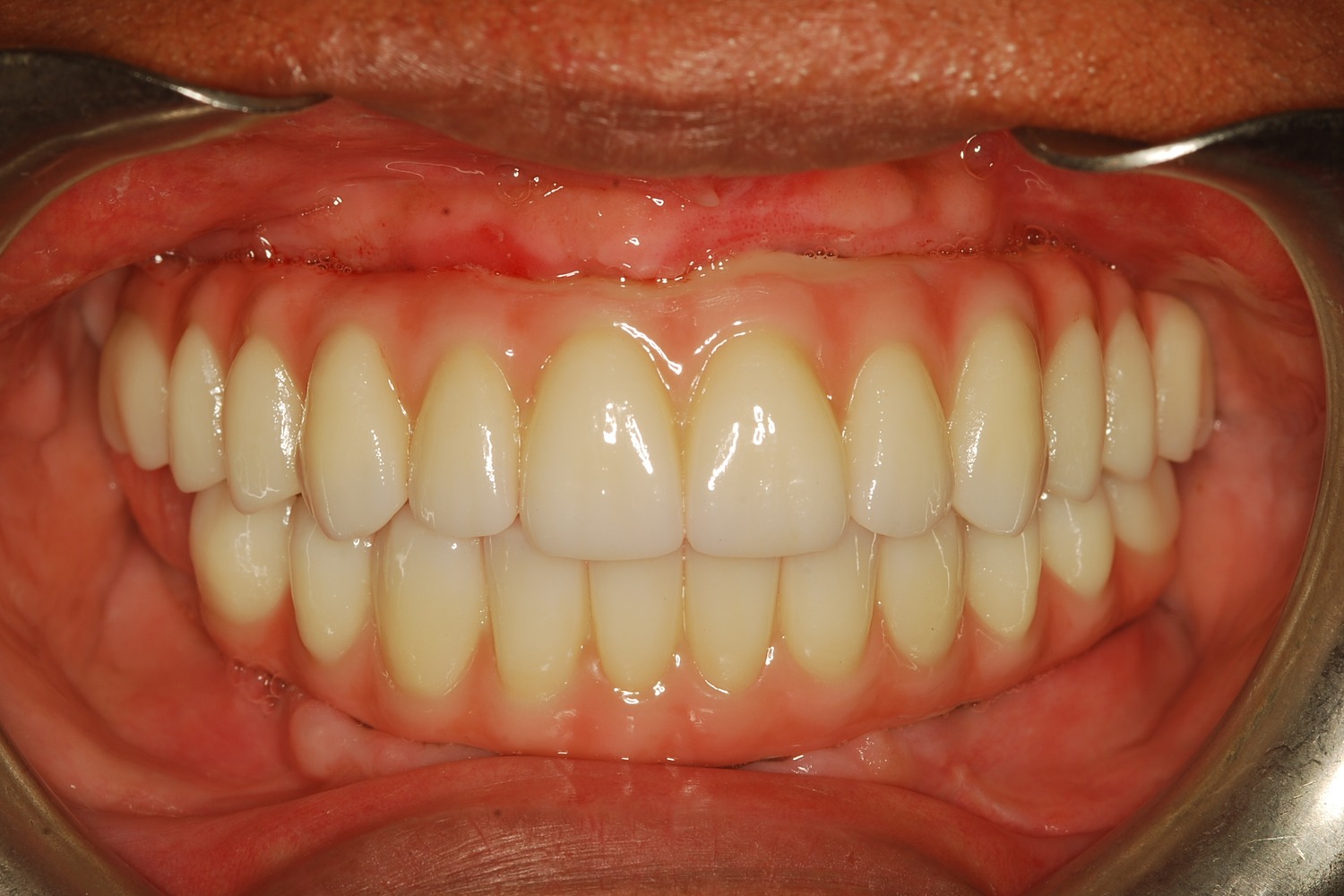
Intraoral view
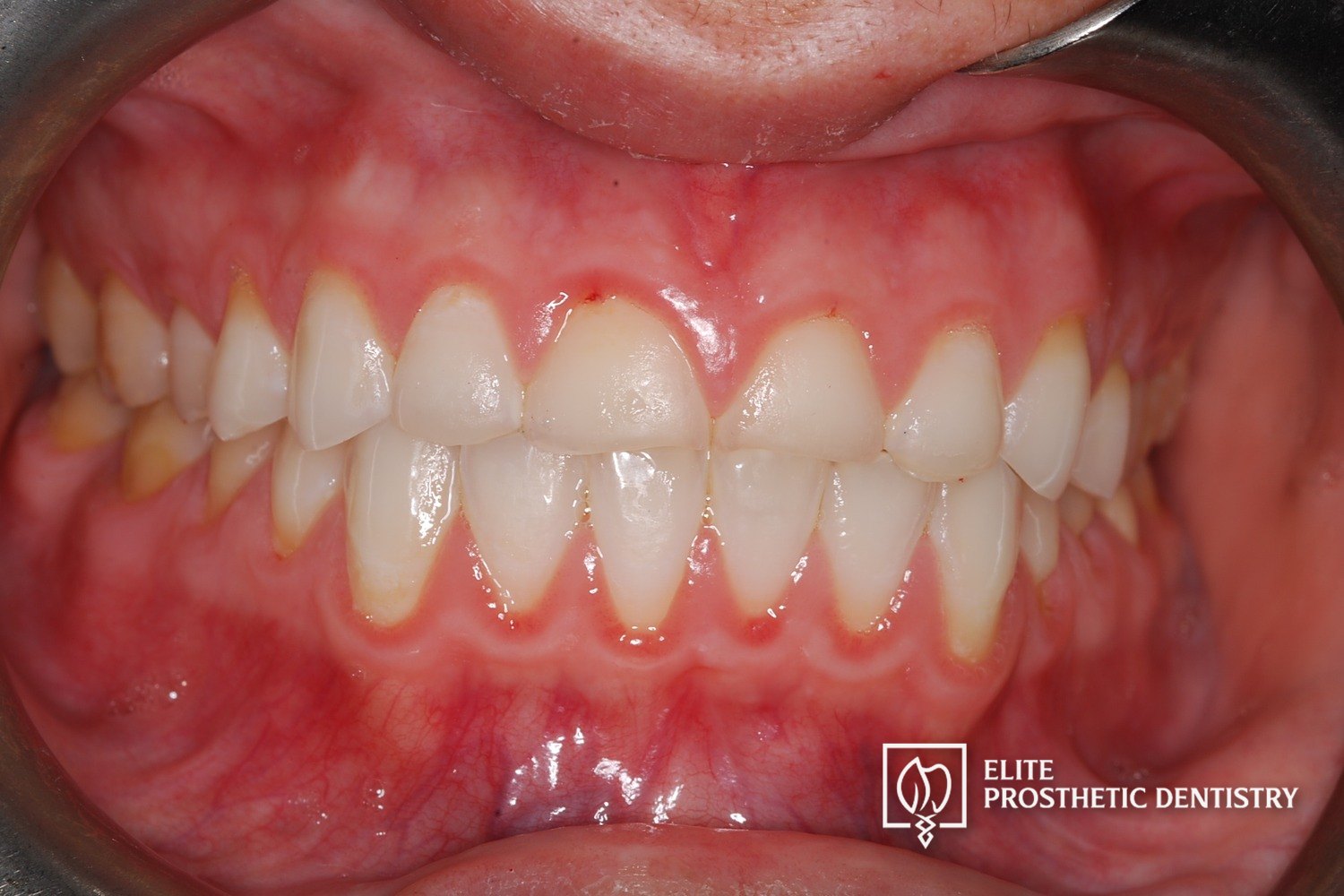 Before
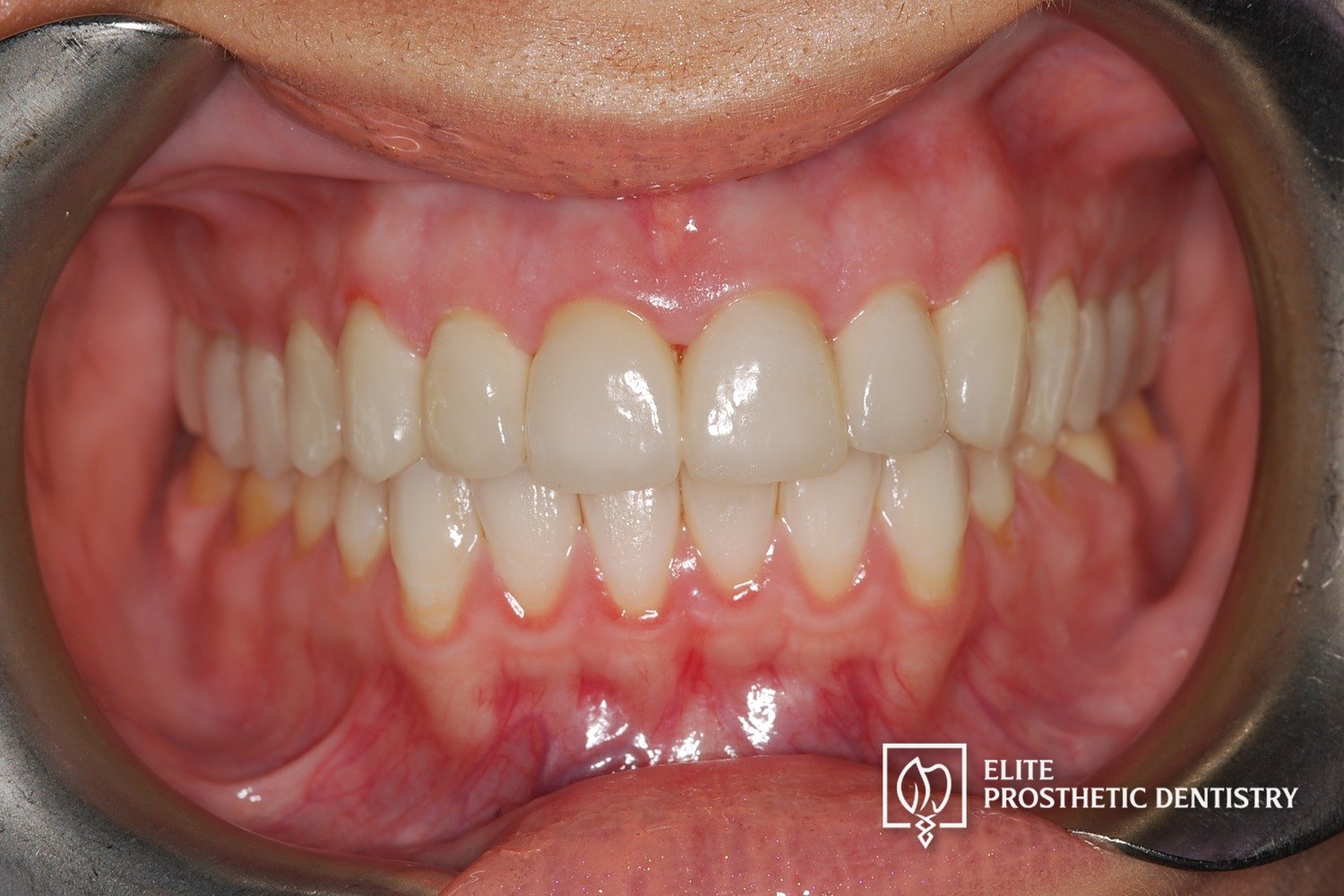 After
After
Custom wax-up
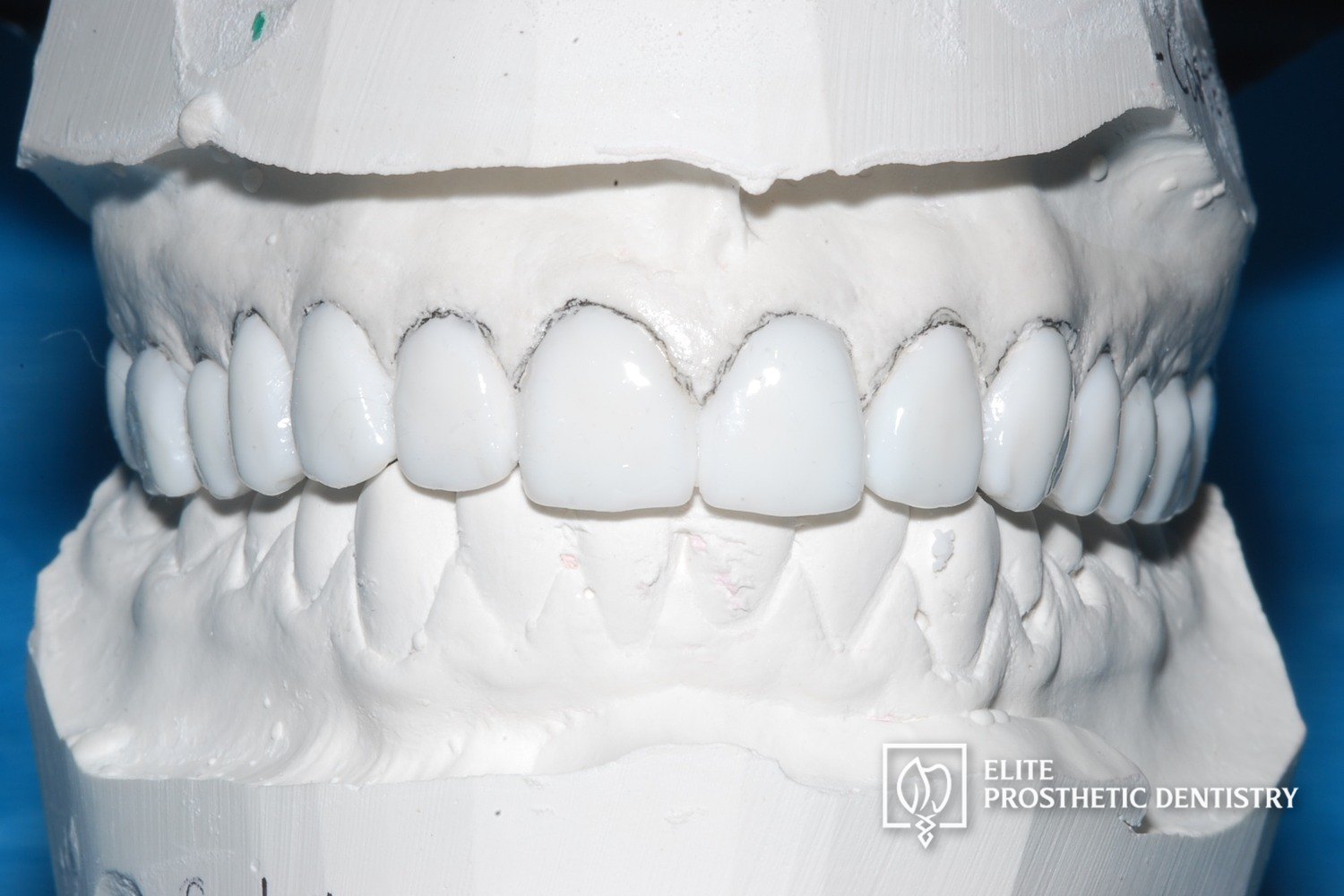
Severe upper wear rebuilt with full-arch restorative planning
Replacing severely worn upper teeth in Washington, DC. This documented case at Elite Prosthetic Dentistry rebuilt an upper arch that had been progressively shortened and destabilized over years of wear. Treatment was planned and completed by Gerald Marlin, D.M.D., M.S.D., a prosthodontist focused on full mouth reconstruction, bite rehabilitation, and complex restorative care.
Case at a Glance
- Treatment
- Full upper-arch reconstruction
- Approach
- Diagnostic wax-up, crown lengthening where required, Emax crowns, and final bite calibration
- Case Type
- Full mouth reconstruction / Cosmetic-functional correction
- Patient Concern
- The patient's upper teeth had worn down and the bite kept changing despite night guard use, leaving a shortened, uneven smile that no longer felt or looked right.
- Decision Point
- Restore a few front teeth for a cosmetic fix, or correct the bite and supporting tooth structure across the whole arch first, then rebuild the esthetics on that stable foundation.
- Outcome
- The upper arch moved from severe wear and an uneven smile to a balanced, natural-looking, structurally sound result, with restored tooth length, refined margins, and a stabilized bite.
- Why It Matters
- This case shows that the material or crown choice matters less than whether the bite, tooth structure, esthetics, and long-term function are planned together as one system before treatment begins.
The patient traveled from Bethesda for a specialist evaluation after noticing that her upper teeth and bite were continuing to change despite night guard use.
The presenting condition
The patient came in because her smile and her bite no longer reflected the way she wanted to look or function. She had been wearing a night guard, but the existing damage had already moved past what the night guard could protect against. The issue was not simply that the teeth looked shorter. The upper arch had lost tooth structure, support, and balance over time, which meant the esthetic concern and the functional concern had to be planned together.
Clinical Findings
- →Severe wear across multiple upper-arch teeth
- →Visibly shortened upper front teeth and uneven smile line
- →Significant enamel loss with exposed restorative margins
- →Uneven bite relationships across the upper arch
- →Posterior teeth requiring crown lengthening for proper restorative space
Why this case required prosthodontic-level planning
A case like this cannot be solved one tooth at a time. The wear was systemic across the upper arch. Replacing two or three front teeth without addressing the broader bite would have produced restorations that looked better for a short period, but they would still have been functioning on the same uneven foundation that caused the original problem. The right approach was to correct the bite and supporting tooth structure first, then build the esthetics on top of that more stable foundation. For patients who are tired of repeated repairs or are worried that dentistry will have to be redone, the most important decision is often not simply which crown or material is used, but whether the bite, tooth structure, esthetics, and long-term function are planned together before treatment begins.
The treatment plan
-
1
Diagnostic wax-up
A physical preview of the proposed final result, hand-shaped in wax on a model of the patient's existing teeth. The wax-up established the target tooth length, proportions, and bite, and served as the clinical blueprint for the laboratory and operatory work that followed.
-
2
Crown lengthening where required
Posterior teeth received crown lengthening to expose enough underlying tooth structure for the new restorations to seat correctly and remain stable long term.
-
3
Tooth preparation
Existing tooth structure across the upper arch was prepared to receive the new restorations, with shape and reduction guided by the approved wax-up.
-
4
Emax crown fabrication and placement
The upper arch was restored with Emax crowns, a lithium disilicate ceramic selected for its combination of strength and natural esthetics in full-arch upper restoration.
-
5
Final occlusal calibration
The new restorations were adjusted to a balanced, stable bite. The coordinated rebuild restored both esthetic balance and the structural longevity that a case at this level requires.
The outcome
The case moved from severely worn upper-arch teeth and an uneven, compromised smile to a more balanced, natural-looking, and structurally sound result. The tooth length was restored. The proportions were designed to fit the patient’s facial features. The restorative margins were refined, the shade was natural, and the bite was stabilized. The goal was not simply to make the teeth look better. The goal was to create a result that could function comfortably and predictably over time.
Result Highlights
- ✓Restored upper-arch tooth length and proportions
- ✓Natural shade selected to complement the patient's facial features
- ✓Smooth, well-finished restorative margins
- ✓Stable, balanced bite designed for long-term function
- ✓Single coordinated rebuild rather than repeated individual repairs
Worn front teeth, a changing bite, or repairs that no longer hold? A private consultation can clarify what is driving it.
Schedule a Private ConsultationWho this case may sound familiar to
This story tends to resonate with patients in a few recognizable situations:
- You have been wearing a night guard for years, but your upper front teeth have continued to shorten and your bite no longer feels right.
- You are starting to see exposed margins or visible wear on your front teeth and can tell the problem is beyond what a single repair can solve.
- You have been told the answer is veneers on a few front teeth, but you are not sure whether that addresses what is happening across your bite.
- You want the underlying structure rebuilt properly so the new restorations are not repeatedly redone every few years.
- You would rather choose a coordinated plan than continue patching individual teeth as each one becomes a problem.
If any of those describe where you are, a consultation with Dr. Marlin can establish the diagnostic picture and the specific options for your case.
If your teeth are wearing down, your bite no longer feels stable, or prior repairs are no longer holding up, a comprehensive evaluation can clarify what is causing the problem and whether a coordinated reconstruction is appropriate.
Request a Comprehensive EvaluationFrequently asked questions
Can severely worn teeth be rebuilt without removing the natural tooth roots?
In many cases yes. When the underlying roots are structurally sound, full-coverage restorations can rebuild the visible tooth shape and length without removing the natural root structure. A prosthodontic evaluation determines whether the existing roots can support the planned restoration or whether additional steps are needed.
What is a custom wax-up and why is it used before treatment begins?
A custom wax-up is a physical preview of the proposed final result, hand-shaped in wax on a model of the patient’s teeth. It allows the patient to see and approve the planned shape, length, and proportions before treatment begins, and it serves as a precise blueprint for the laboratory and clinical work that follows.
Why is crown lengthening sometimes needed when restoring worn teeth?
When teeth have worn down significantly, there may not be enough exposed tooth structure for a new restoration to seat properly and remain stable long term. Crown lengthening adjusts the gum line and supporting bone to expose the required amount of tooth structure, which allows the new restoration to fit correctly and function predictably.
What are Emax crowns and why are they used for full-arch restorations?
Emax is a lithium disilicate ceramic material known for its strength and esthetic properties. It can be used for full-arch upper restorations when the clinical design requires both durability and a natural appearance.
How long does a full upper-arch reconstruction typically take?
Treatment timelines vary based on the specific findings and whether supporting procedures such as crown lengthening or staged restorative work are required. Cases of this complexity are often sequenced across several months with healing time between major steps. The prosthodontic team discusses the expected timeline directly with each patient after a comprehensive evaluation.
More about the work behind this case
This case sits at the intersection of full mouth reconstruction, bite rehabilitation, natural aesthetic rehabilitation, and custom-crafted crowns. The wax-up preview and in-house laboratory control are part of the practice philosophy that supports cases of this complexity. Elite Prosthetic Dentistry treats patients from across the DMV including Bethesda, Chevy Chase, McLean, Arlington, Potomac, and Great Falls, as well as out-of-area patients seeking complex restorative care.
Related Services
About the Provider
This case was treated by Gerald M. Marlin, D.M.D., M.S.D., at Elite Prosthetic Dentistry in Washington, DC. Dr. Marlin is a prosthodontist with more than 40 years of clinical practice and more than 3,900 dental implants placed. Elite Prosthetic Dentistry maintains an in-house dental laboratory for custom-fabricated restorations.
4400 Jenifer Street NW, Suite 220, Washington, DC 20015 | (202) 244-2101
Related Services
Related Patient Success Stories
Explore similar patient success stories demonstrating our expertise in advanced prosthetic dentistry.
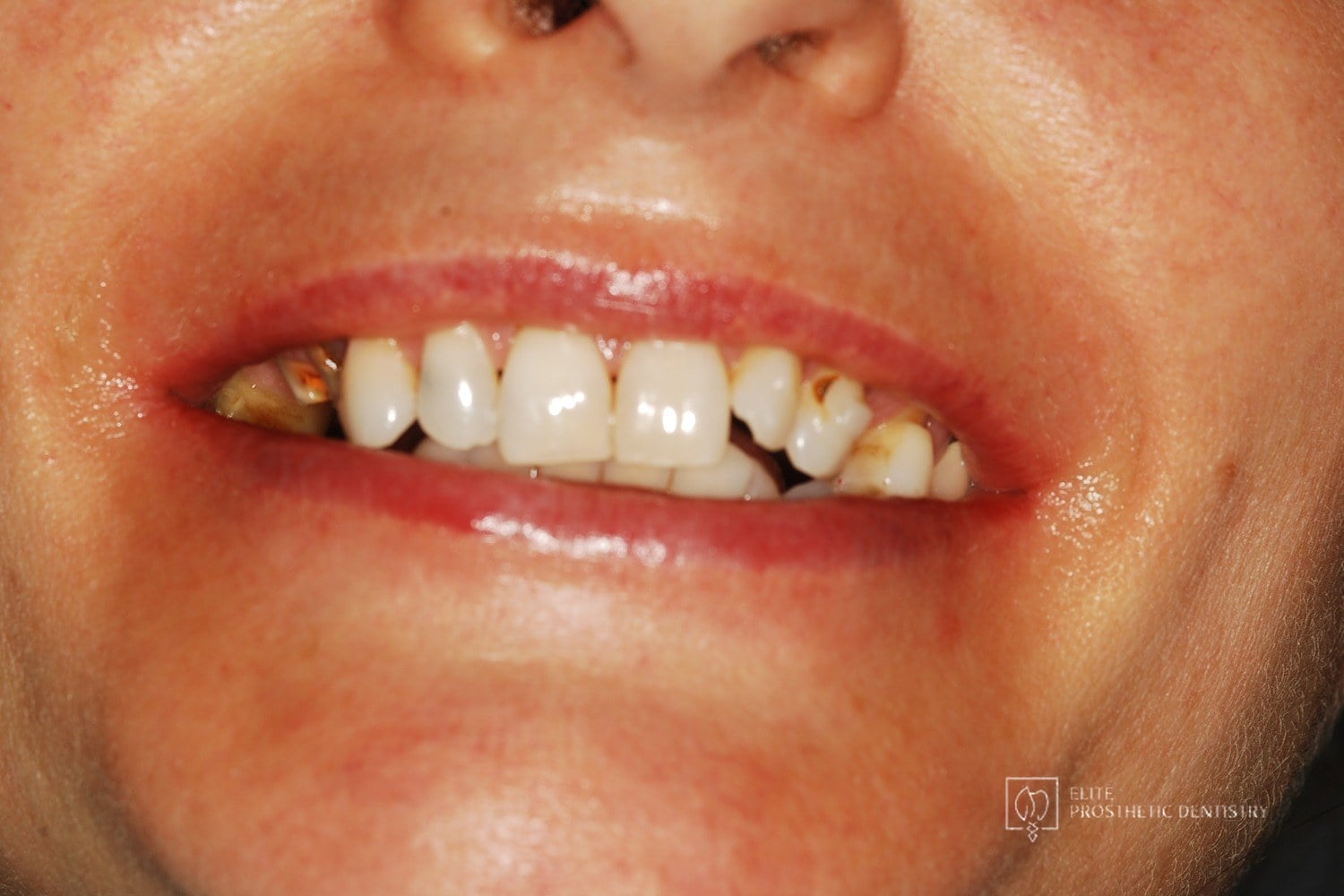 Before
  After
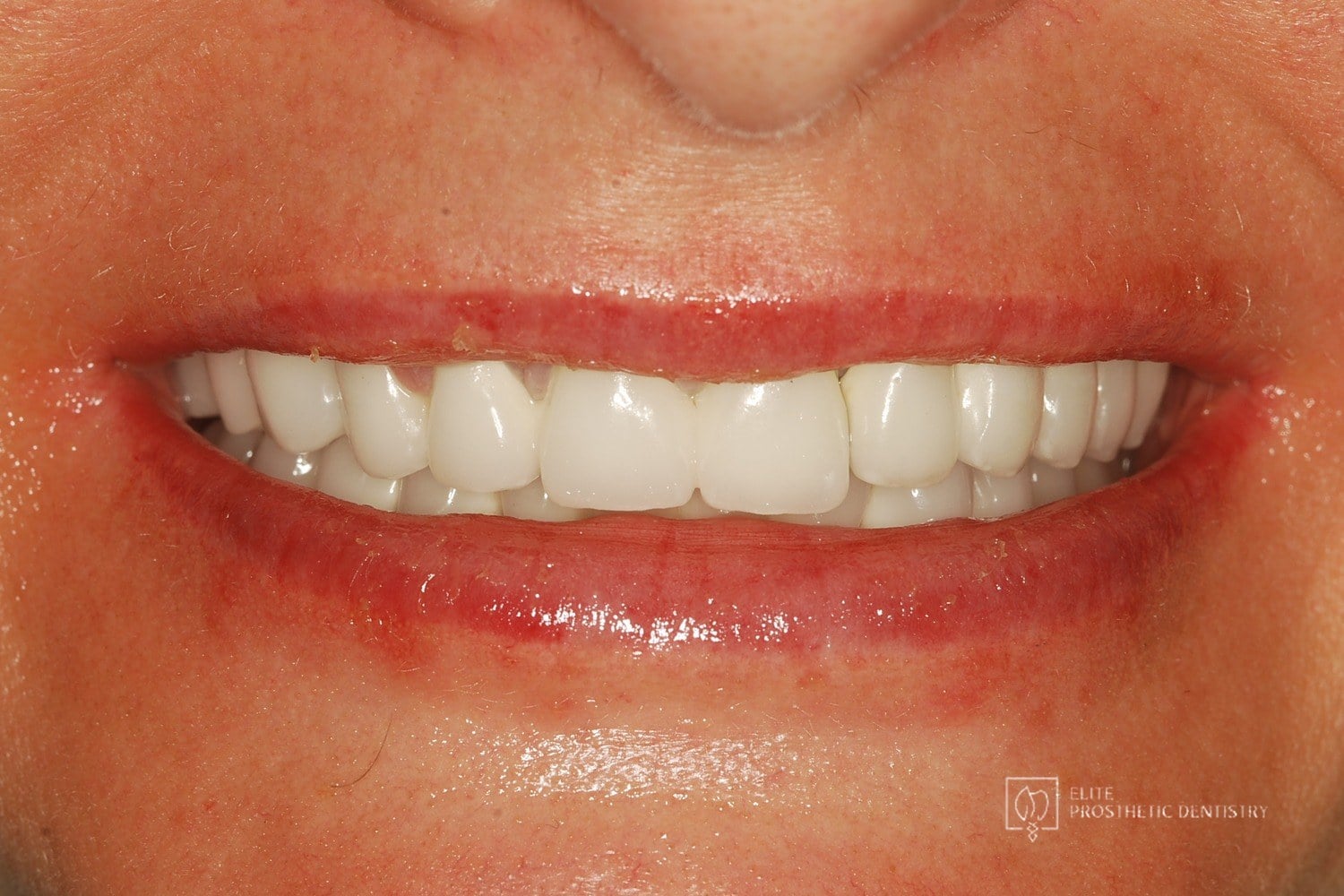
After How Aging, Failing Dentistry Was Replaced with a Coordinated Full-Mouth Implant and Crown Reconstruction
The patient presented with throbbing upper-molar pain, long-standing infections, multiple root canals and unfinished prior treatment, generalized sensitivity, and several hopeless teeth.
 Before
  After
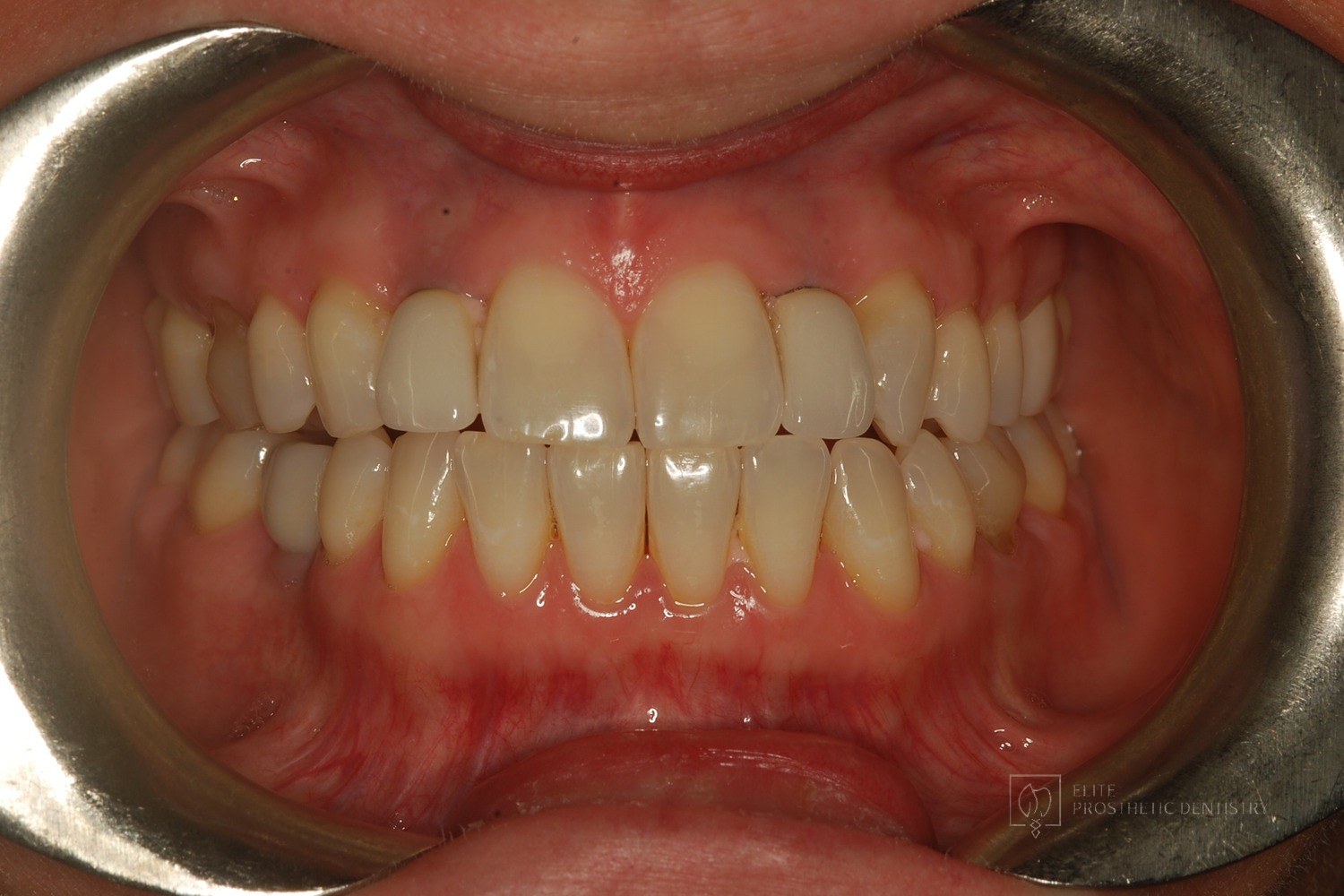
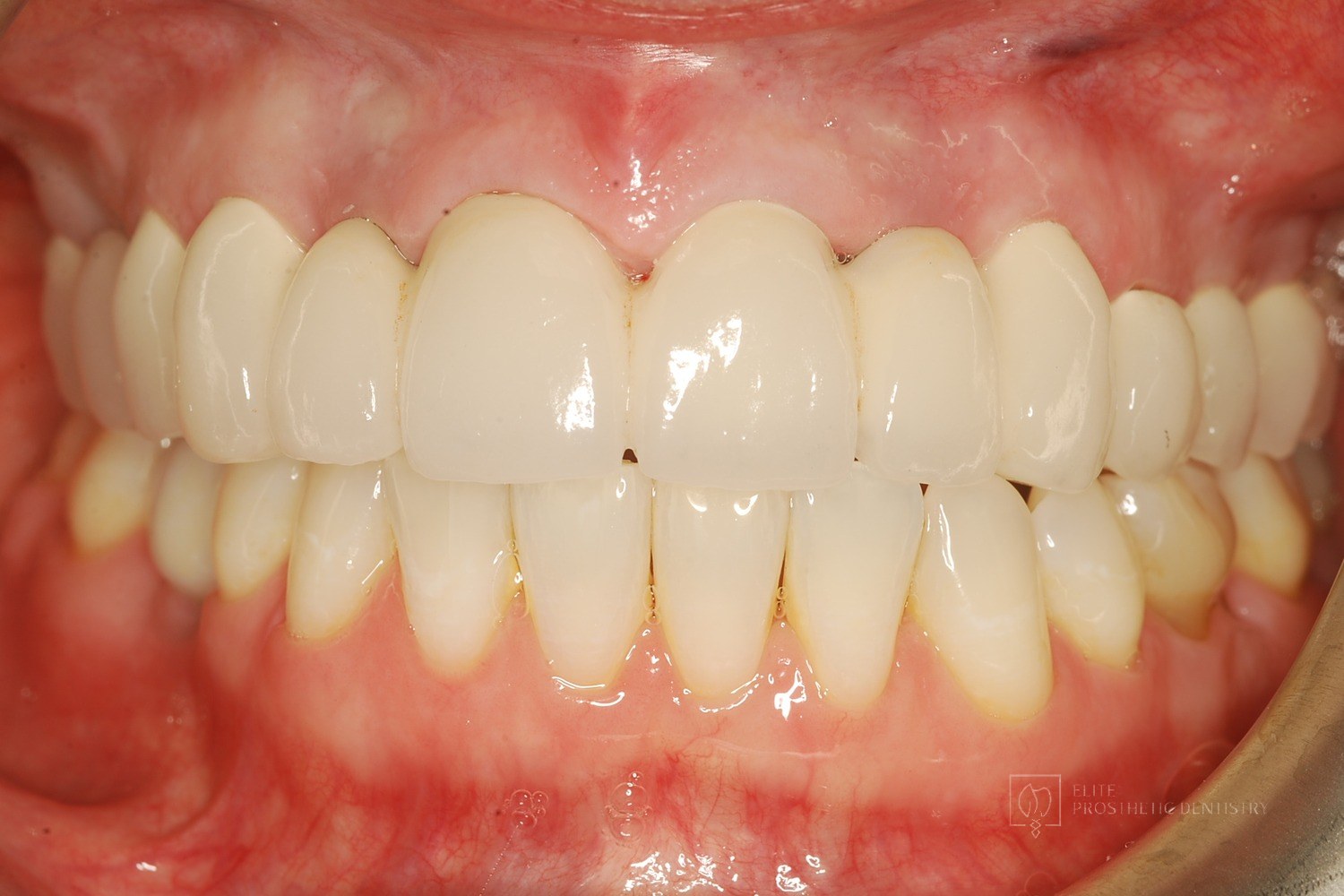
After How Older Implant Crowns Were Redesigned for a Better Bite and More Natural Appearance
The patient came in after years of living with implant-supported crowns placed more than twenty years earlier that no longer looked or functioned well. CBCT evaluation, reviewed with a radiologist colleague, showed the implants had been placed too far to the buccal in very thin bone and could not support a healthy long-term restoration.
 Before
  After
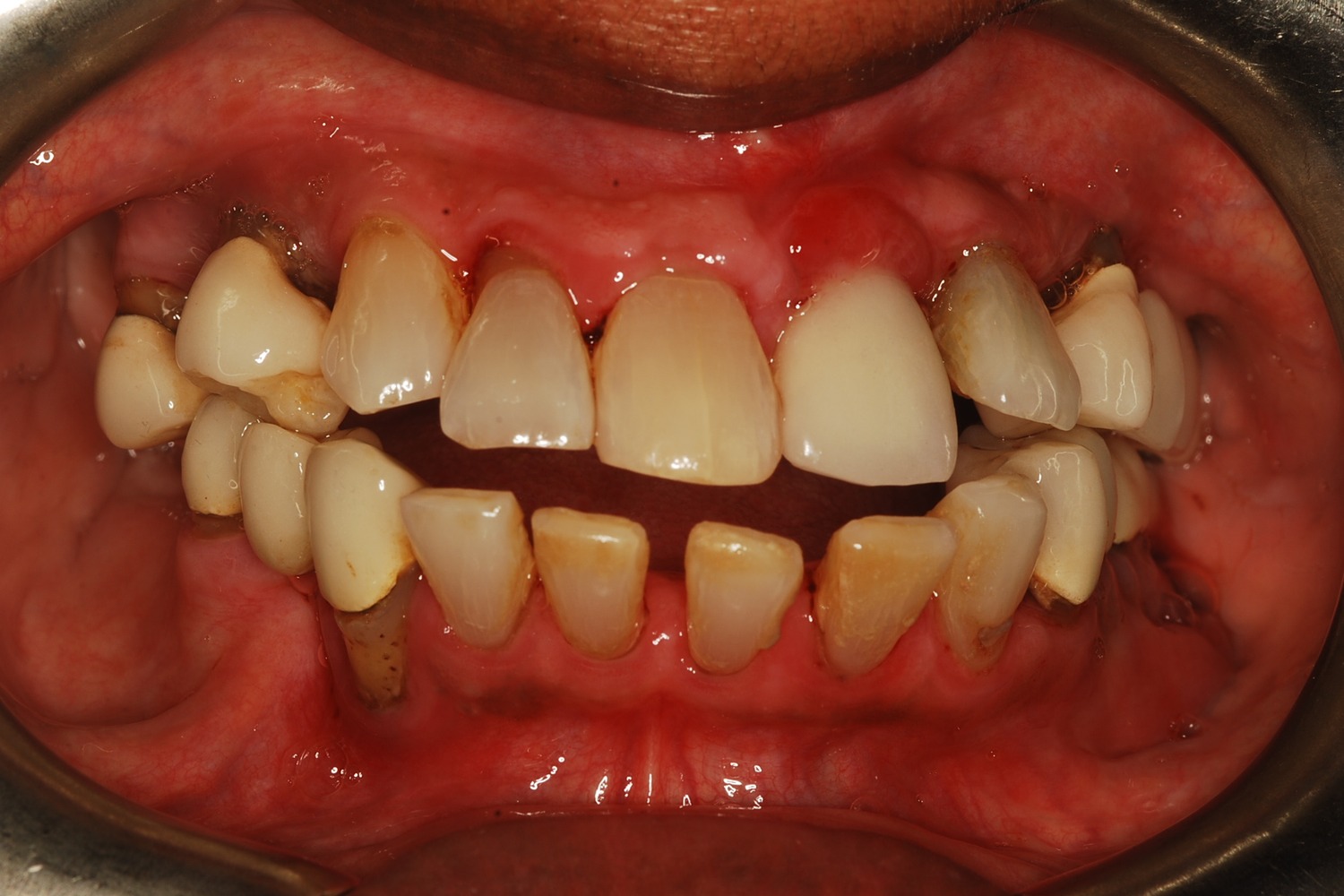
After How Severe Bone Loss and Bite Dysfunction Were Rebuilt with All-on-6 Implants and a Milled Zirconia Hybrid Prosthesis
The patient presented with severe bone loss, advanced periodontal disease, malocclusion, and a dysfunctional bite that required full-arch rebuilding.