
How a Loose Upper Bridge and Aging Crowns Were Rebuilt with Staged Implant Reconstruction
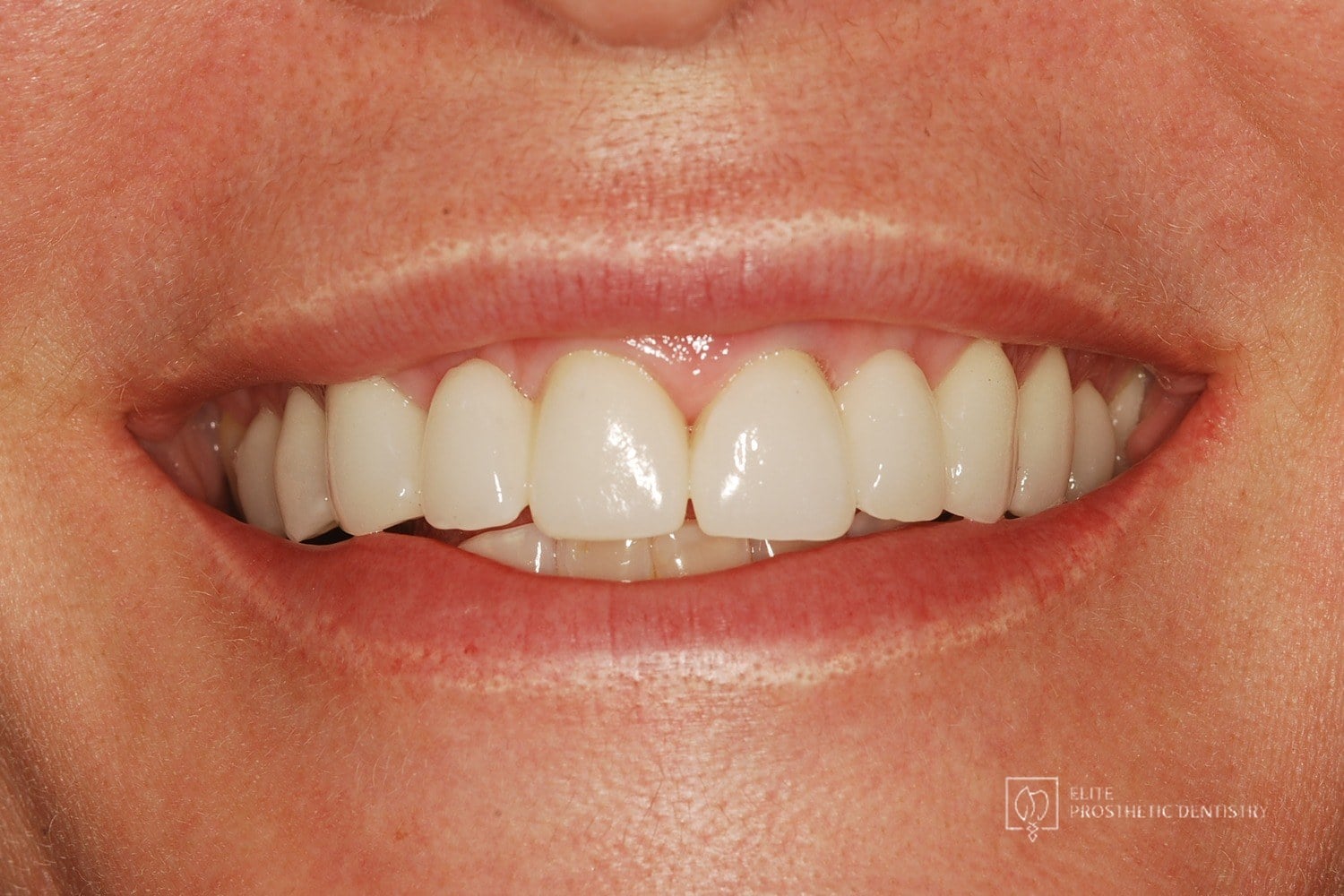
Close-up smile view
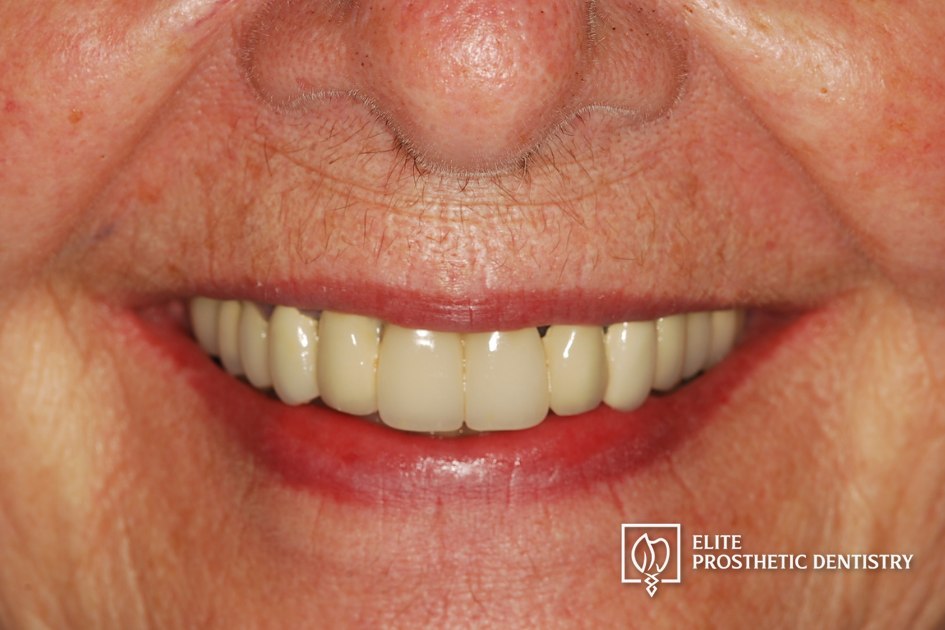 Before
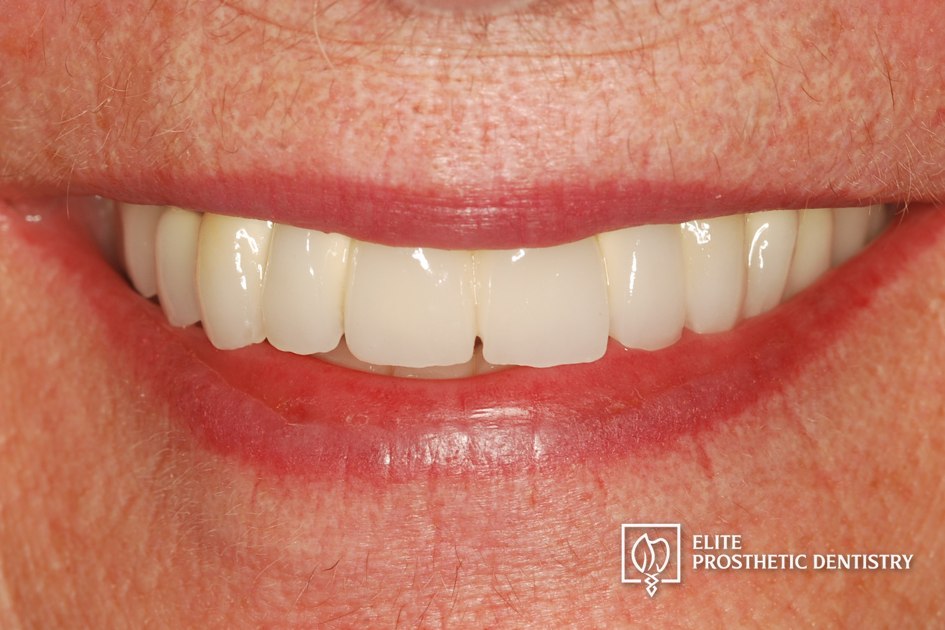 After
After
Temporary prosthesis used during staged implant reconstruction
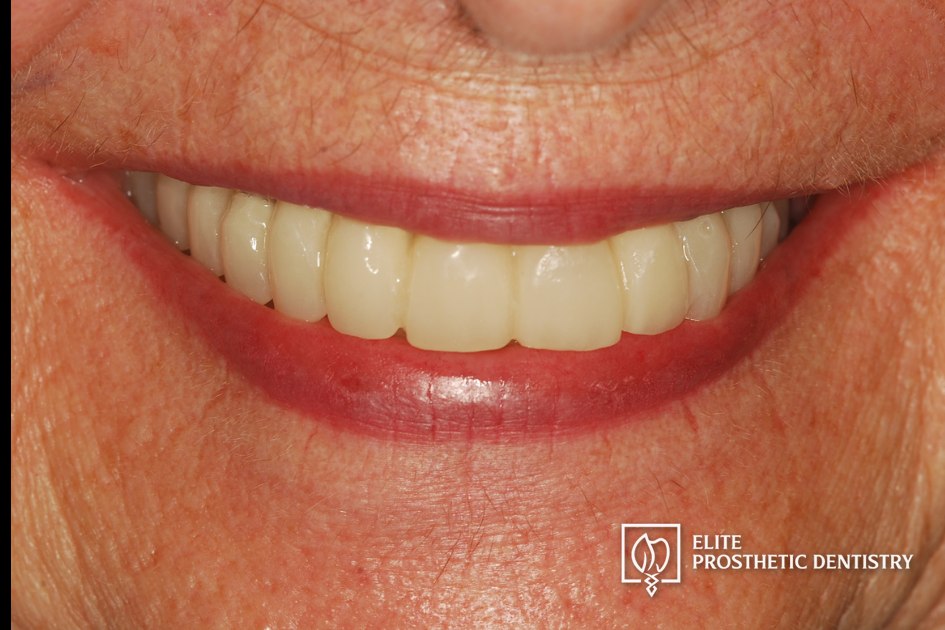 Provisional
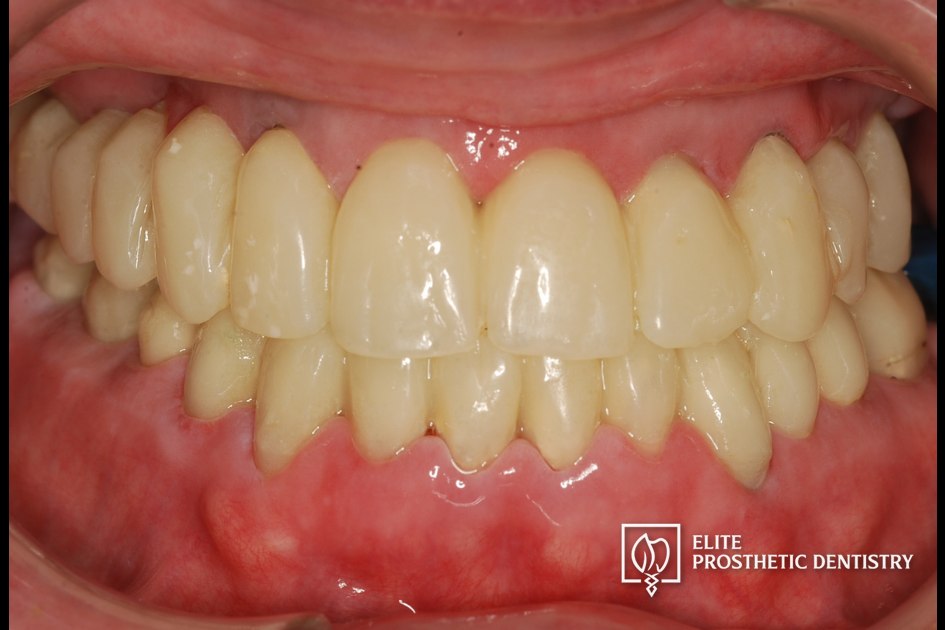 Provisional
Additional intraoral view
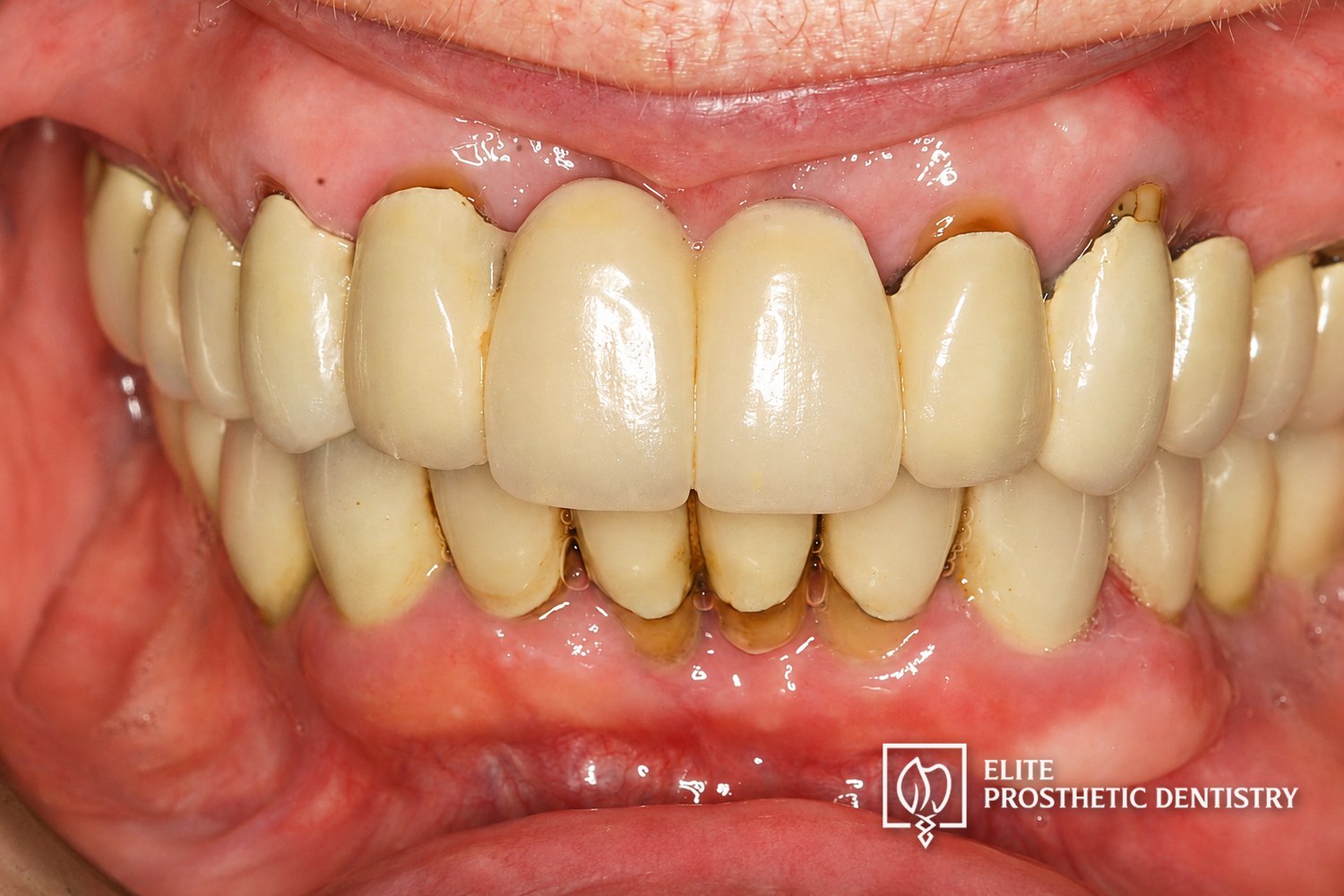 Before
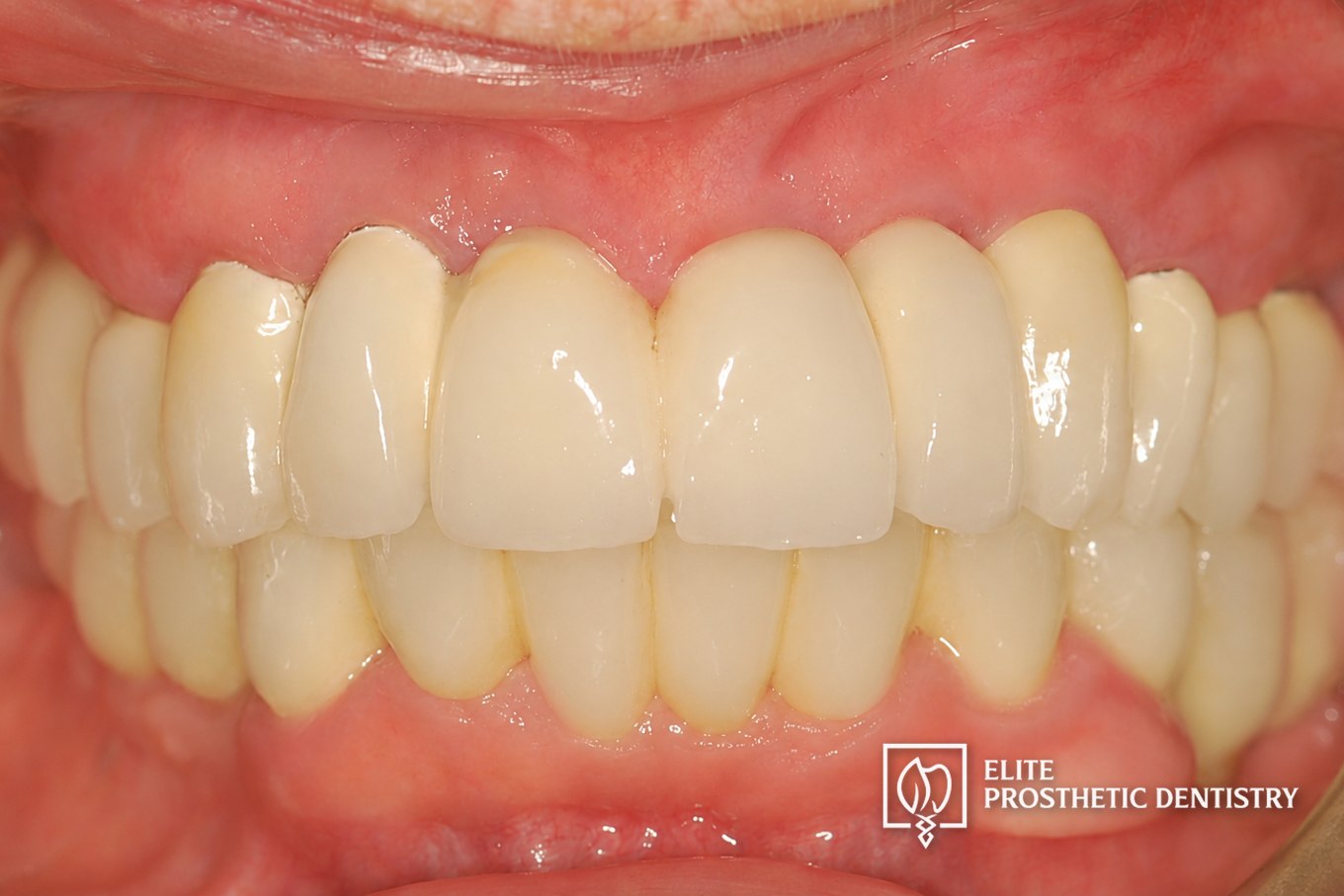 After
After
Post-treatment radiographic series
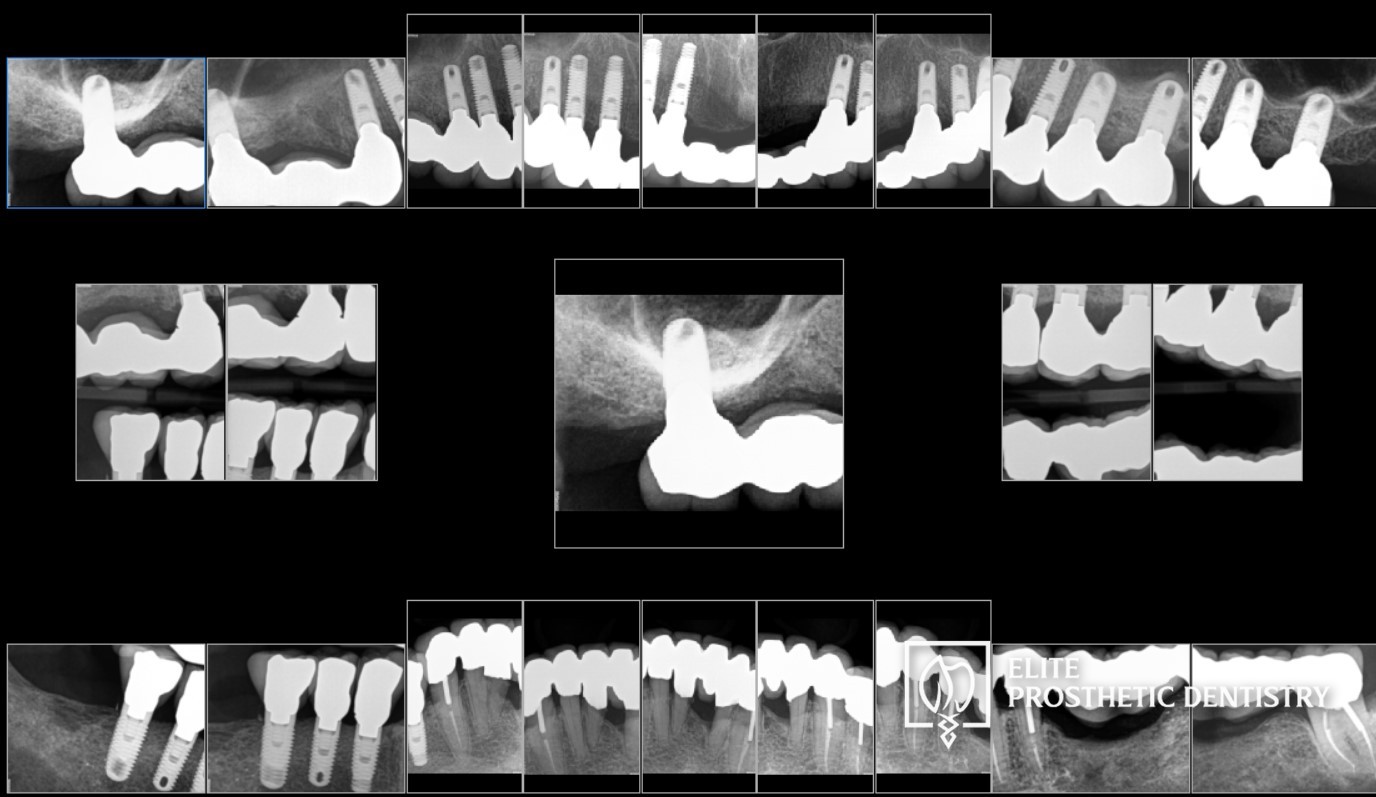
Aging dentistry replaced with staged implant, bone grafting, and crown reconstruction
Replacing a loose upper bridge and aging crowns with staged implant reconstruction in Washington, DC. The patient traveled from Potomac after her long-standing upper bridge and crowns had progressively broken down. This documented case at Elite Prosthetic Dentistry converted failing tooth-supported bridgework into a coordinated implant-supported reconstruction using preparation and temporary stabilization of the remaining abutments, selective extractions, socket bone grafting, staged implant placement, custom abutments, retrofitted temporary prostheses, and final restorations. Treatment was planned and completed by Gerald Marlin, D.M.D., M.S.D., a prosthodontist focused on coordinated full-mouth reconstruction, implant reconstruction, and sedation-supported care.
Case at a Glance
- Treatment
- Staged full-mouth reconstruction converting failing tooth-supported bridgework into an upper implant-supported bridge, with lower implants and crowns restored in coordination
- Approach
- Digital imaging, coordinated planning, preparation of failing abutments, custom temporary prostheses, selective extractions, socket bone grafting, staged implant placement, custom abutments, final crown and bridge reconstruction, and IV sedation throughout treatment
- Case Type
- Replacing aging dentistry / Implant reconstruction
- Patient Concern
- Referred after the patient's longstanding upper bridge and crowns, more than twenty years old, had progressively broken down, complicated by advanced gum disease, compromised supporting teeth, and significant dental anxiety.
- Decision Point
- Attempt conservative repair of the aging bridge again, or undergo a staged conversion to an implant-supported reconstruction sequenced around periodontal healing, comfort, and sedation needs.
- Outcome
- The failing bridge was converted in stages to an implant-supported bridge, the lower arch restored in coordination, the case completed comfortably under IV sedation, with no removable denture required.
- Why It Matters
- This case shows that the critical decision is not which bridge, crown, or implant to use, but whether the surgical sequence, periodontal foundation, prosthetic design, bite, and comfort plan are engineered together beforehand.
After her general dentist saw that twenty-year-old crowns and a loose upper bridge had outlasted what conservative repair could predictably solve, she was referred to Elite Prosthetic Dentistry for a specialist evaluation.
The presenting condition
The patient was referred by her general dentist after years of aging dentistry no longer holding up. A loose upper bridge and crowns more than twenty years old, combined with the effects of advanced periodontal disease, severely compromised tooth abutments, and significant dental anxiety, created a situation that required clinical planning and comfort planning at the same time. This was not a routine bridge replacement. The treatment had to be sequenced carefully so the patient could complete the necessary surgical and restorative care comfortably, predictably, and without losing function or appearance during the process.
Clinical Findings
- →Loose upper bridge no longer providing predictable support
- →Crowns more than 20 years old with visible breakdown
- →Severely decaying tooth abutments under the old upper bridge
- →Damage from advanced periodontal disease
- →Significant dental anxiety requiring sedation-supported care
- →Need for a staged plan coordinating temporary prostheses, extractions, bone grafting, implants, custom abutments, crowns, bite, and final esthetics
Why this case required prosthodontic-level planning
Two things made this case different from a routine bridge replacement. The first was that the problem was not isolated. The upper bridge, lower restorations, supporting tissue, and bite had all aged together, and replacing one section without coordinating the others would have created a short-term answer to a long-term problem. The second was the need for sedation-supported care. A case at this complexity requires a sequence that lets the patient stay comfortable through every phase, not just the cosmetic finish. For patients who want to stop repairing one problem after another, the most important decision is not which bridge, crown, or implant to use, but whether the surgical sequence, periodontal foundation, prosthetic design, bite, and comfort plan are all engineered together before treatment begins.
The treatment plan
-
1
Imaging and comprehensive digital planning
Full diagnostic workup including imaging and digital scans to map the phased treatment sequence before clinical treatment began.
-
2
Temporary stabilization of failing bridgework
The remaining abutments were prepared and temporized so a custom temporary prosthesis could maintain appearance and function while the reconstruction progressed.
-
3
Staged extractions and socket bone grafting
Selected compromised teeth were removed in stages, and the extraction sites were grafted to develop stronger receptor sites for future implant placement.
-
4
Staged implant placement and custom abutments
After healing, implants were placed into the grafted sites, later uncovered, and restored with custom abutments planned around the final restoration.
-
5
Temporary prosthesis during implant conversion
The temporary prosthesis was adapted as implants and abutments were added, allowing the patient to continue functioning and smiling during the staged transition from tooth-supported bridgework to implant-supported reconstruction.
-
6
IV sedation integrated throughout treatment
Sedation support was integrated into the appointment sequence so the patient could complete the treatment comfortably and safely across the necessary stages.
The outcome
The case moved from a loose upper bridge supported by severely compromised tooth abutments, aging crowns, periodontal breakdown, loss of predictability, and treatment anxiety to a coordinated implant-supported reconstruction completed in stages under IV sedation. The upper arch was transitioned from failing tooth-supported bridgework to an implant-supported bridge without requiring the patient to function with a removable denture-type prosthesis during treatment. The lower arch was restored with implants and crowns that coordinated with the new upper reconstruction. The bite, periodontal foundation, bone grafting, implant sequence, temporary prosthesis, final restorations, and final esthetics were treated as one case rather than as a series of unrelated repairs.
The final restorations were fabricated with direct coordination between Dr. Marlin and the practice’s in-house laboratory to maintain control over fit, contour, function, and esthetics throughout the reconstruction.
Result Highlights
- ✓Loose upper bridge replaced with stable implant-supported bridge
- ✓Lower arch restored with coordinated implants and crowns
- ✓Extraction sites grafted to develop stronger receptor sites before staged implant placement
- ✓Advanced periodontal damage addressed within a sequenced plan
- ✓Treatment completed comfortably with IV sedation support
- ✓Final restorations fabricated under direct in-house laboratory coordination
Considering replacing aging crowns or a loose bridge before it becomes an emergency? A private consultation can clarify your options.
Schedule a Private ConsultationWho this case may sound familiar to
This story tends to resonate with patients in a few recognizable situations:
- Your upper bridge is loose or your aging crowns are breaking down.
- Your dental work is 15 to 25 years old and the rest of the mouth has aged alongside it.
- You have delayed treatment because longer dental appointments feel difficult or stressful.
- You want one coordinated plan rather than reactive treatment as each piece fails.
- You want to keep functioning and smiling through the process, not just at the end.
If any of those describe where you are, a consultation with Dr. Marlin can establish the diagnostic picture and the specific options for your case.
If your bridge is loose, your older crowns are breaking down, or you have put off complex treatment because of fear, a comprehensive evaluation can clarify exactly what is happening across both arches and whether a staged reconstruction under sedation is the right path.
Request a Comprehensive EvaluationFrequently asked questions
Can a loose 20-year-old bridge be replaced with implant-supported work?
In many cases yes. When the supporting bone and tissue can be rebuilt or augmented where needed, replacing the bridge with an implant-supported reconstruction can deliver a stable long-term result that an older bridge can no longer provide.
What does staged treatment actually mean?
Staged treatment means the rebuild is sequenced in phases with healing time between extractions, bone grafting, implant placement, and final restoration. That sequencing protects the foundation under each phase so the result is durable rather than rushed.
Is IV sedation appropriate for patients with significant dental anxiety?
IV sedation is delivered under controlled conditions and is appropriate for many patients with significant anxiety or dental phobia. It allows longer or more complex appointments to be completed comfortably when sedation is clinically appropriate.
How long does a staged full-mouth reconstruction like this take?
Timelines vary based on the surgical work required, the patient’s healing, and the prosthetic design. Cases of this complexity are typically planned across several months, with the sequence discussed directly after a comprehensive evaluation.
Why see a prosthodontist for this level of treatment?
A prosthodontist plans the final restorative endpoint first and then sequences the surgical, periodontal, and restorative work to deliver that endpoint. That order matters when the case involves implants, aging restorations, sedation needs, and a coordinated bite all at once.
More about the work behind this case
This case sits at the intersection of full mouth reconstruction, implant reconstruction, bone grafting, sedation-supported dentistry, and complex restorative care. The treatment required extraction sequencing, grafted receptor-site development, staged implant placement, custom abutments, a temporary prosthesis used during implant conversion, and final restorations fabricated with direct in-house laboratory coordination, all part of the practice philosophy that supports cases of this complexity. Elite Prosthetic Dentistry treats patients from across the DMV including Bethesda, Chevy Chase, McLean, Arlington, Potomac, and Great Falls, with a record of patients traveling to the practice for complex restorative and implant care.
Related Services and Internal Links
About the Provider
This case was treated by Gerald M. Marlin, D.M.D., M.S.D., at Elite Prosthetic Dentistry in Washington, DC. Dr. Marlin is a prosthodontist with more than 40 years of clinical practice and more than 3,900 dental implants placed. Elite Prosthetic Dentistry maintains an in-house dental laboratory for custom-fabricated restorations.
4400 Jenifer Street NW, Suite 220, Washington, DC 20015 | (202) 244-2101
Related Services
Related Patient Success Stories
Explore similar patient success stories demonstrating our expertise in advanced prosthetic dentistry.
 Before
 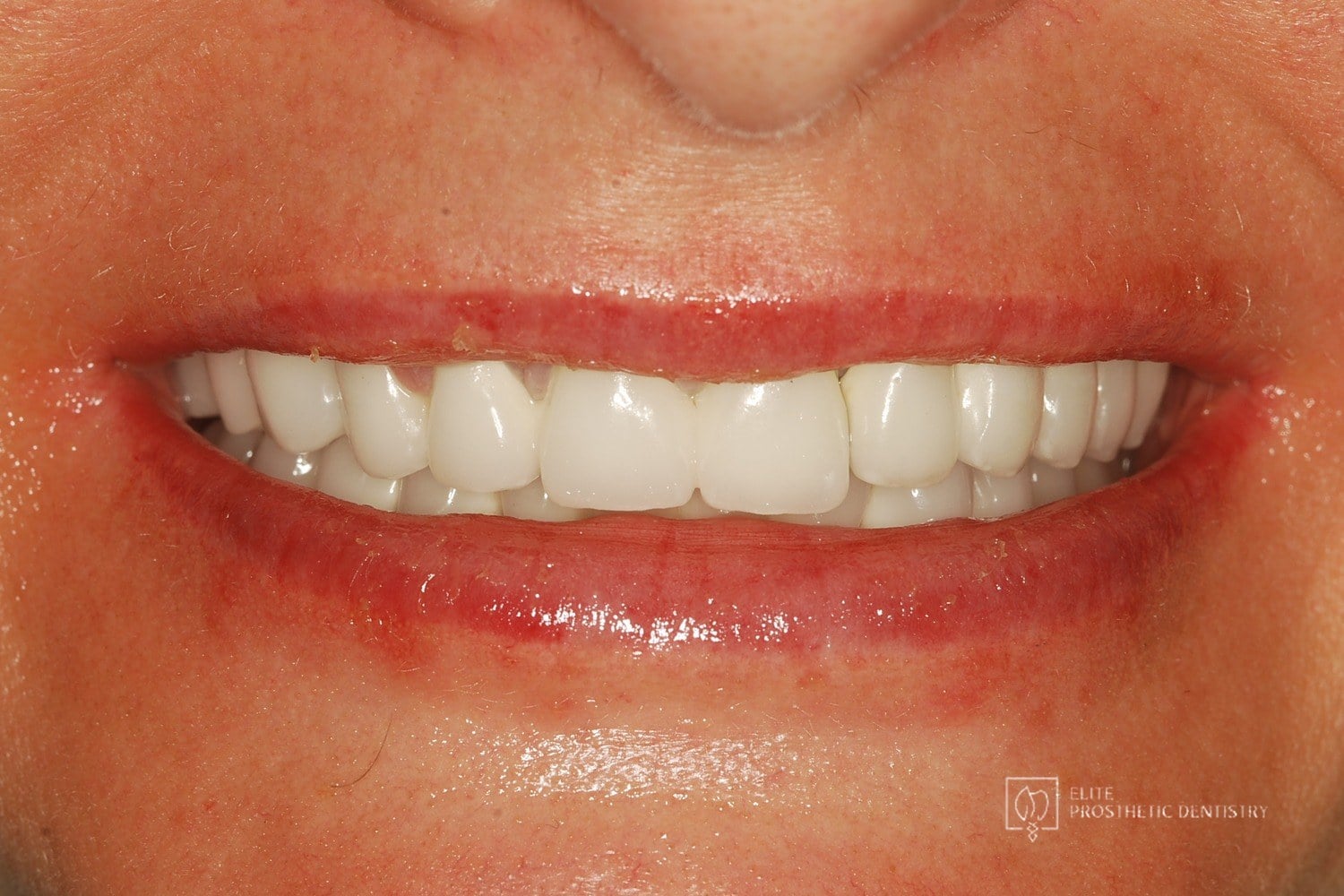 After
After How Aging, Failing Dentistry Was Replaced with a Coordinated Full-Mouth Implant and Crown Reconstruction
The patient presented with throbbing upper-molar pain, long-standing infections, multiple root canals and unfinished prior treatment, generalized sensitivity, and several hopeless teeth.
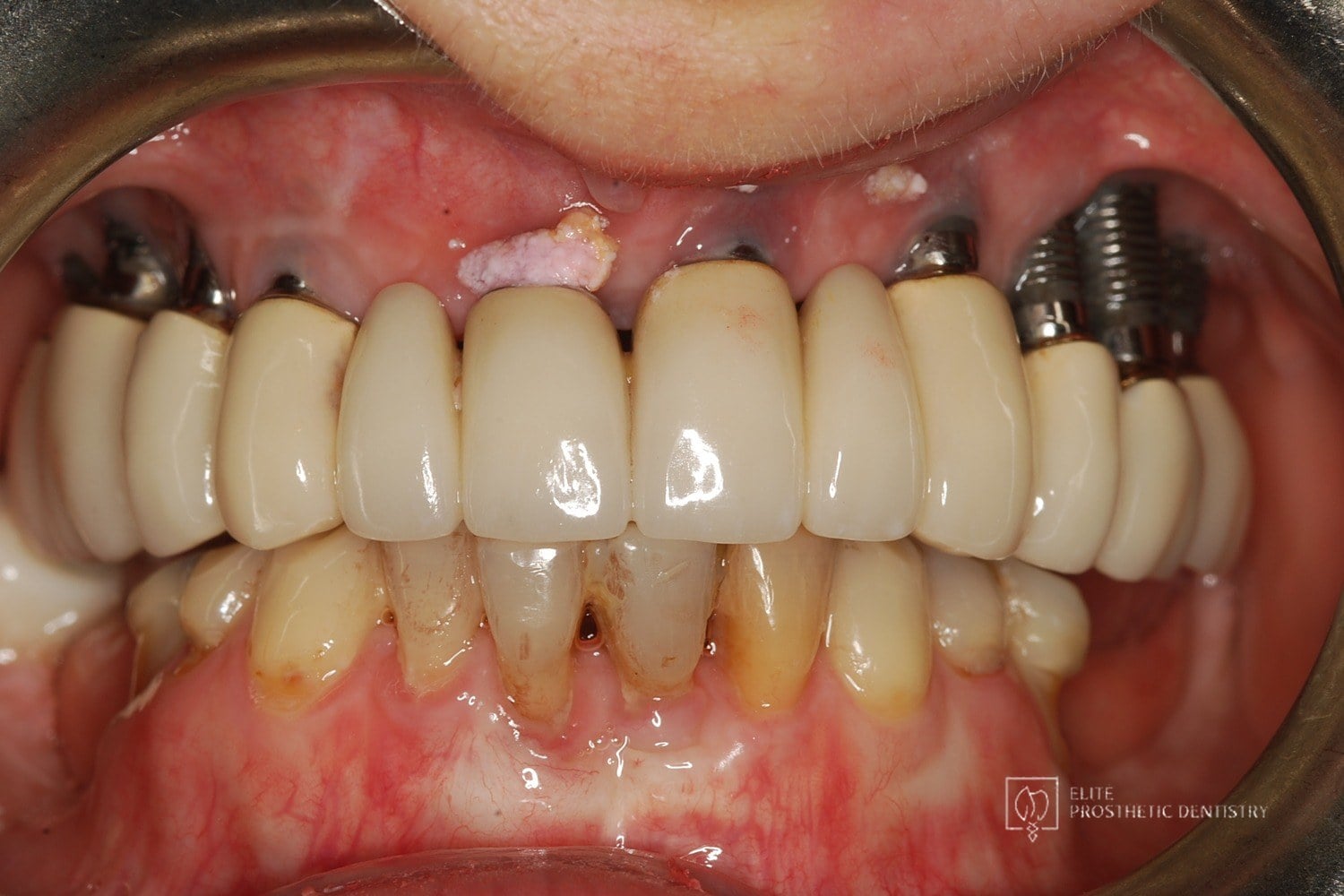 Before
  After
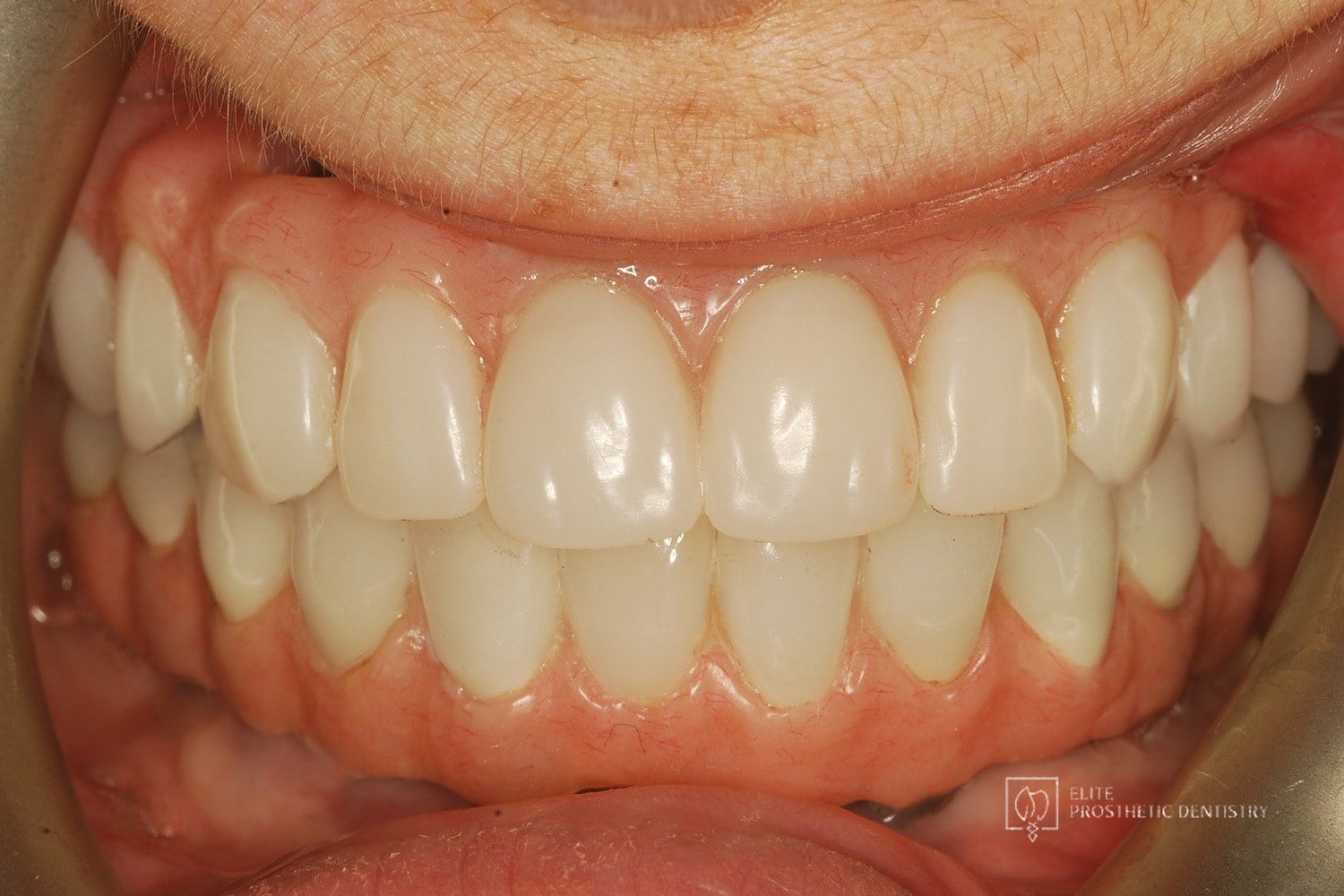
After How Failing Implants and Severe Bone Loss Were Rebuilt Into a Stable Full-Arch Implant Reconstruction
The patient presented with significant complications from previously placed implants, severe bone loss, failing posterior implants, and an unesthetic full-arch bridge. Both arches required full reconstruction, with the upper arch showing the most advanced bone loss and instability.
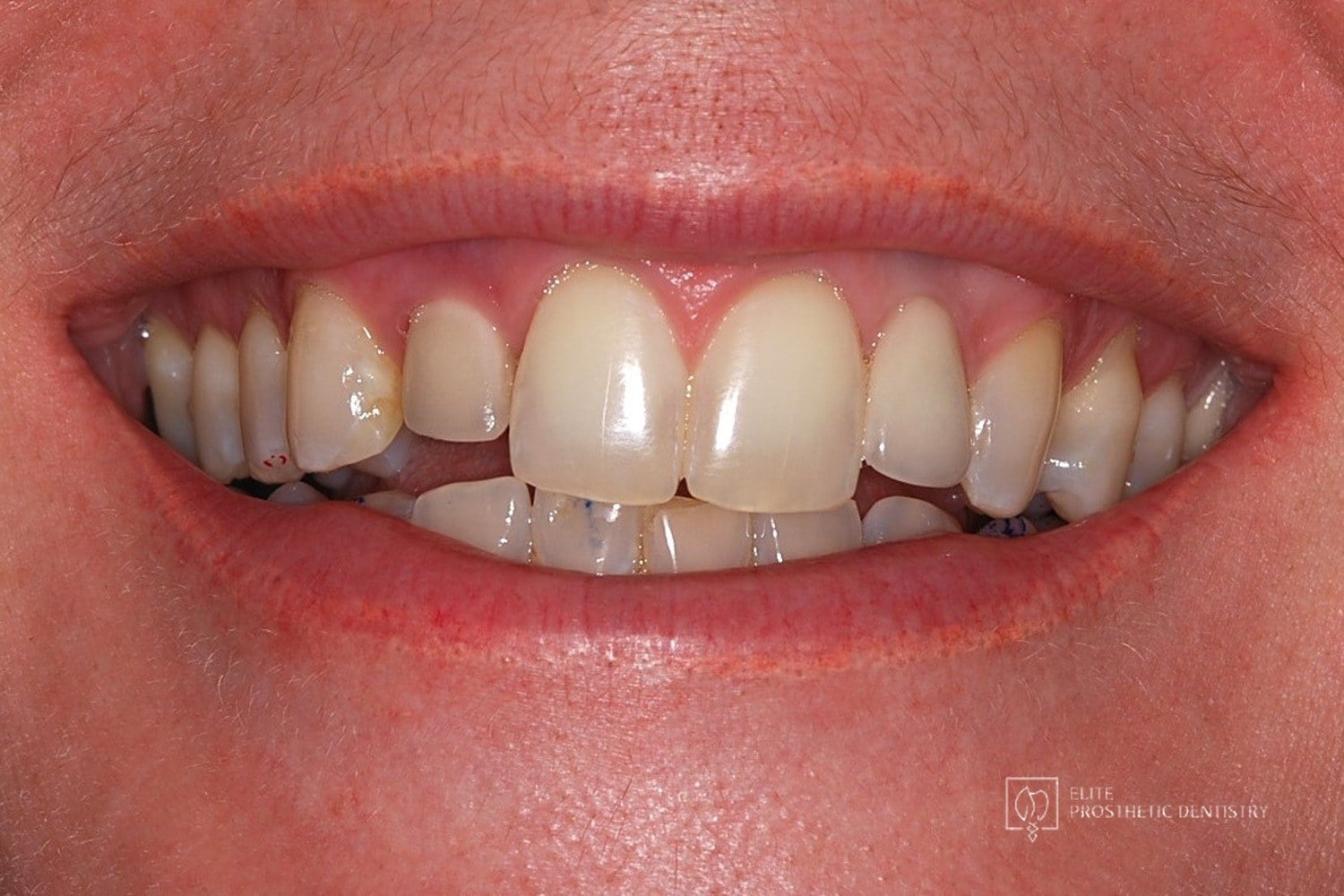 Before
  After
After How Failing Lateral Incisor Implants Were Replaced with Custom Zirconia Bridges After Severe Bone Loss Made Replacement Implants Impossible
Comprehensive examination including CBCT imaging revealed significant bone loss surrounding implants that were placed outside the buccal plate, most likely due to placement without a CBCT-generated surgical guide. The implants were determined non-salvageable, and the alveolar ridge was too narrow to support replacement implants without extensive reconstruction.