
How Worn Teeth Were Rebuilt for a Natural, Stable, Long-Lasting Smile
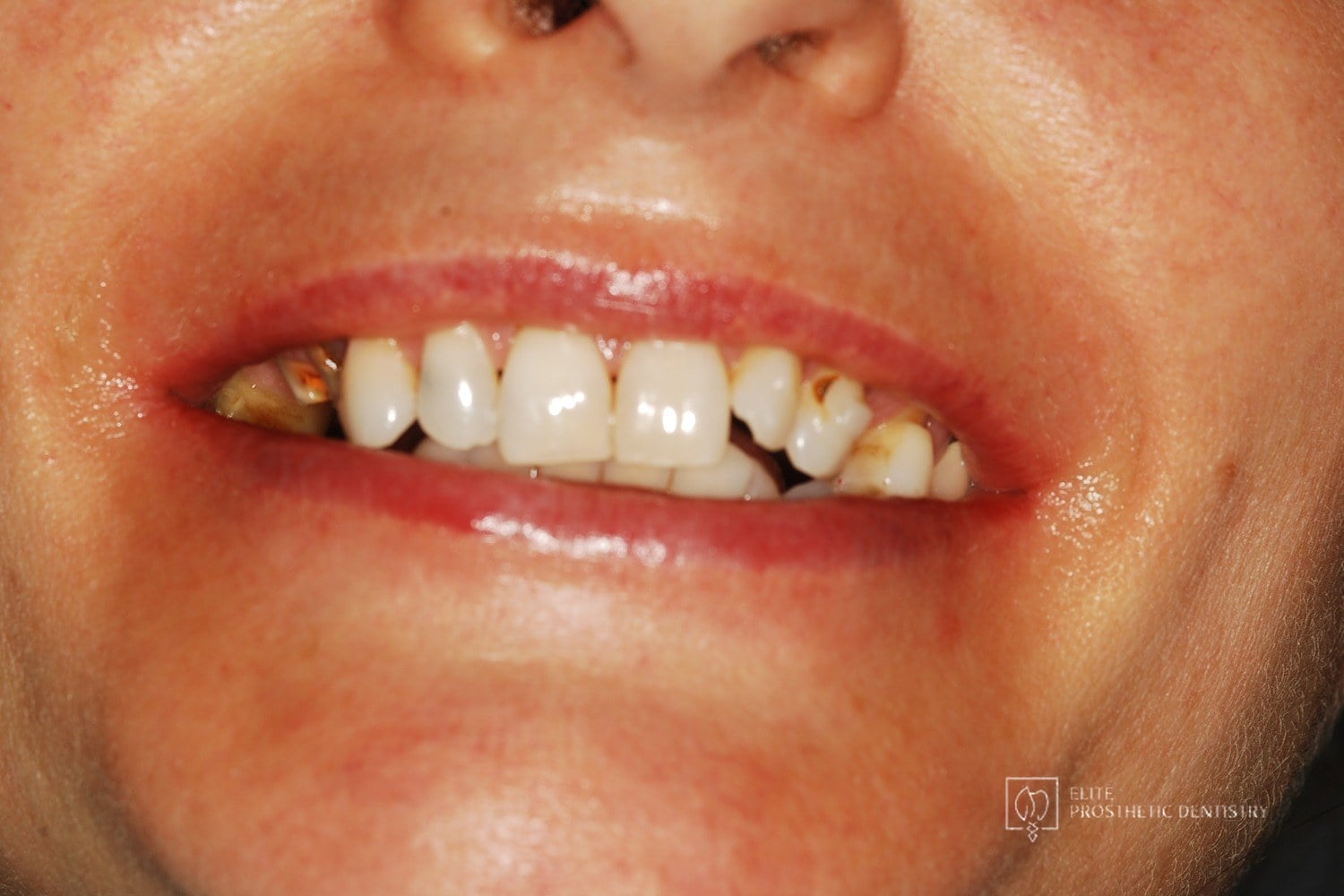
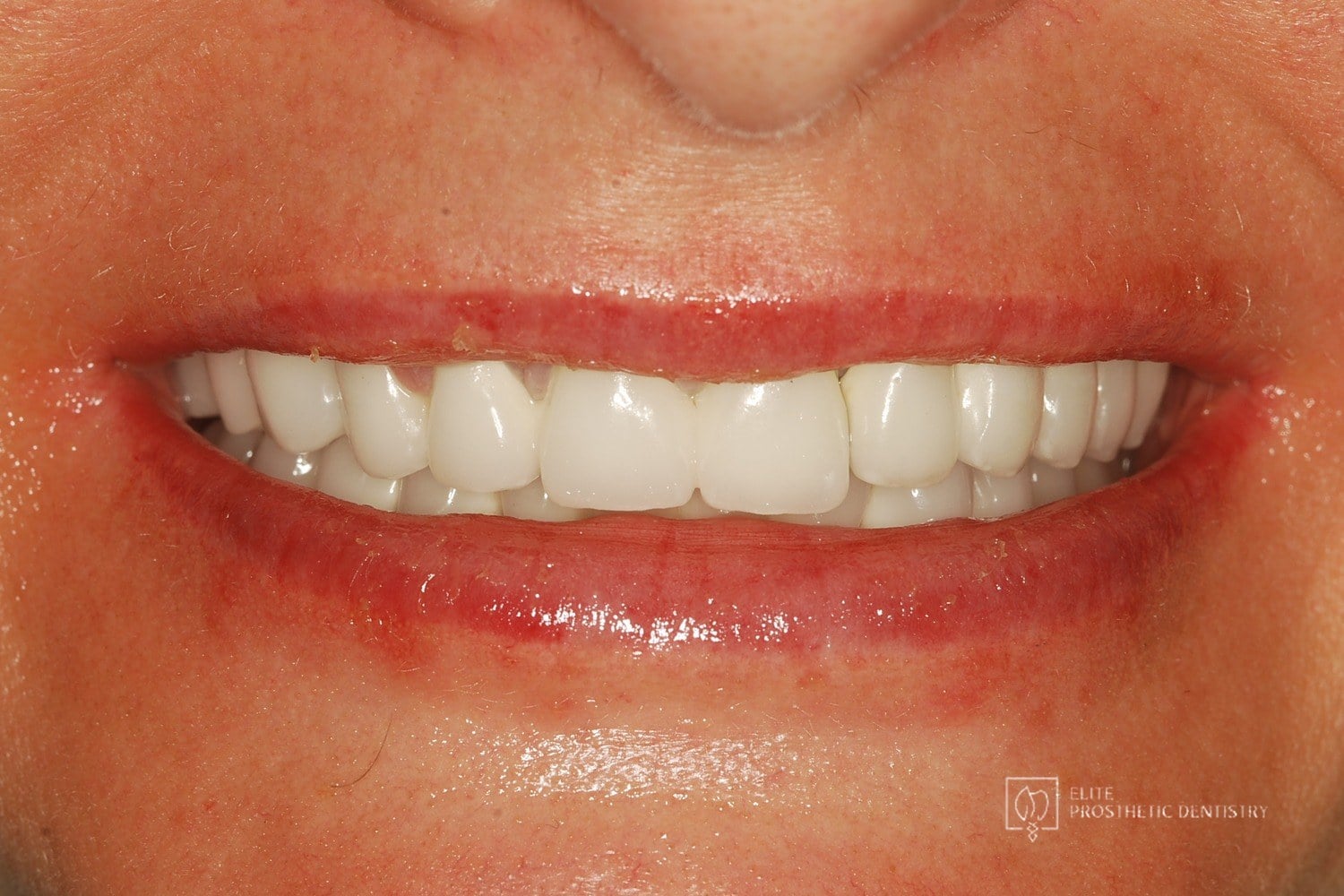
Full-face view
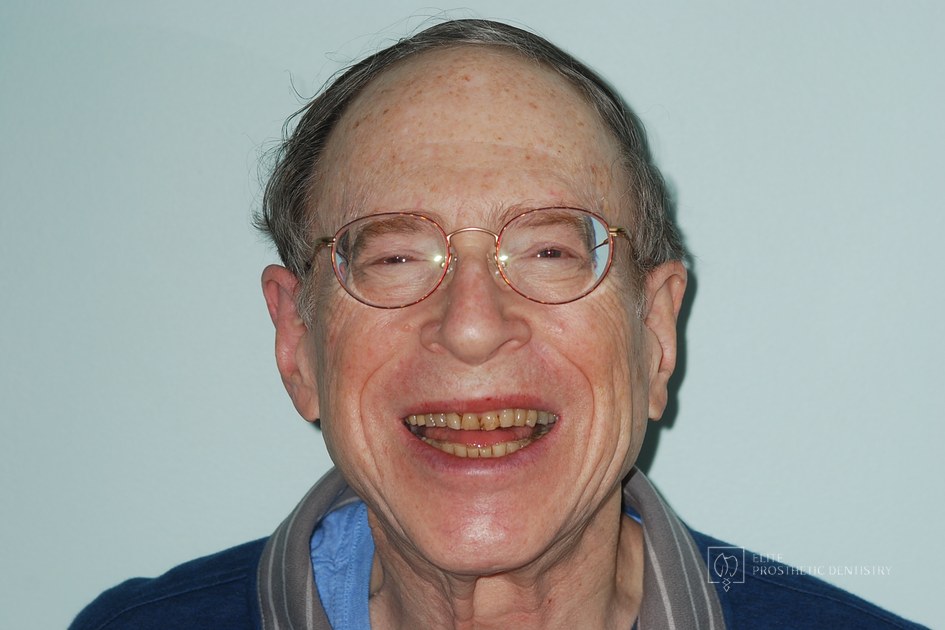 Before
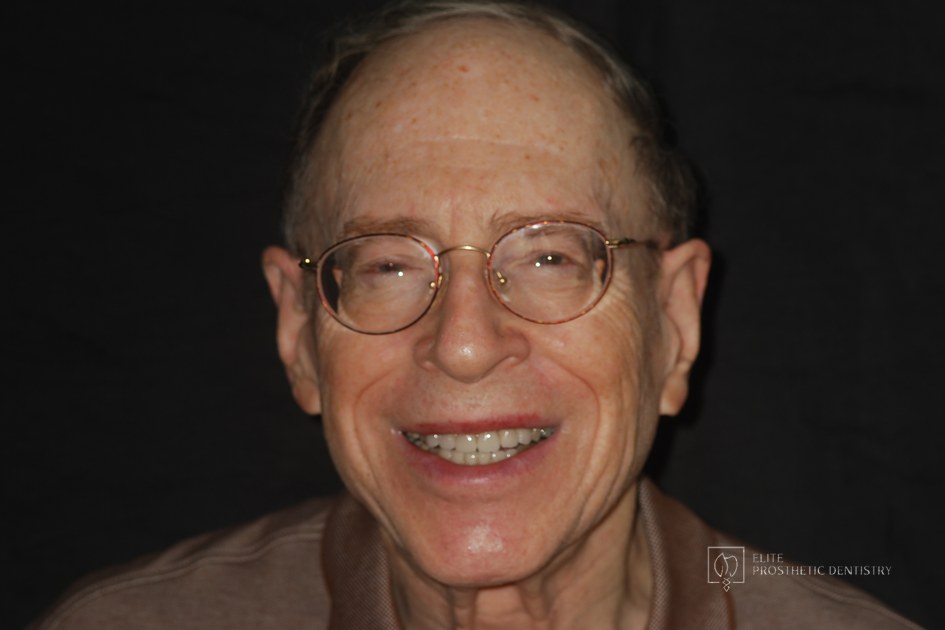 After
After
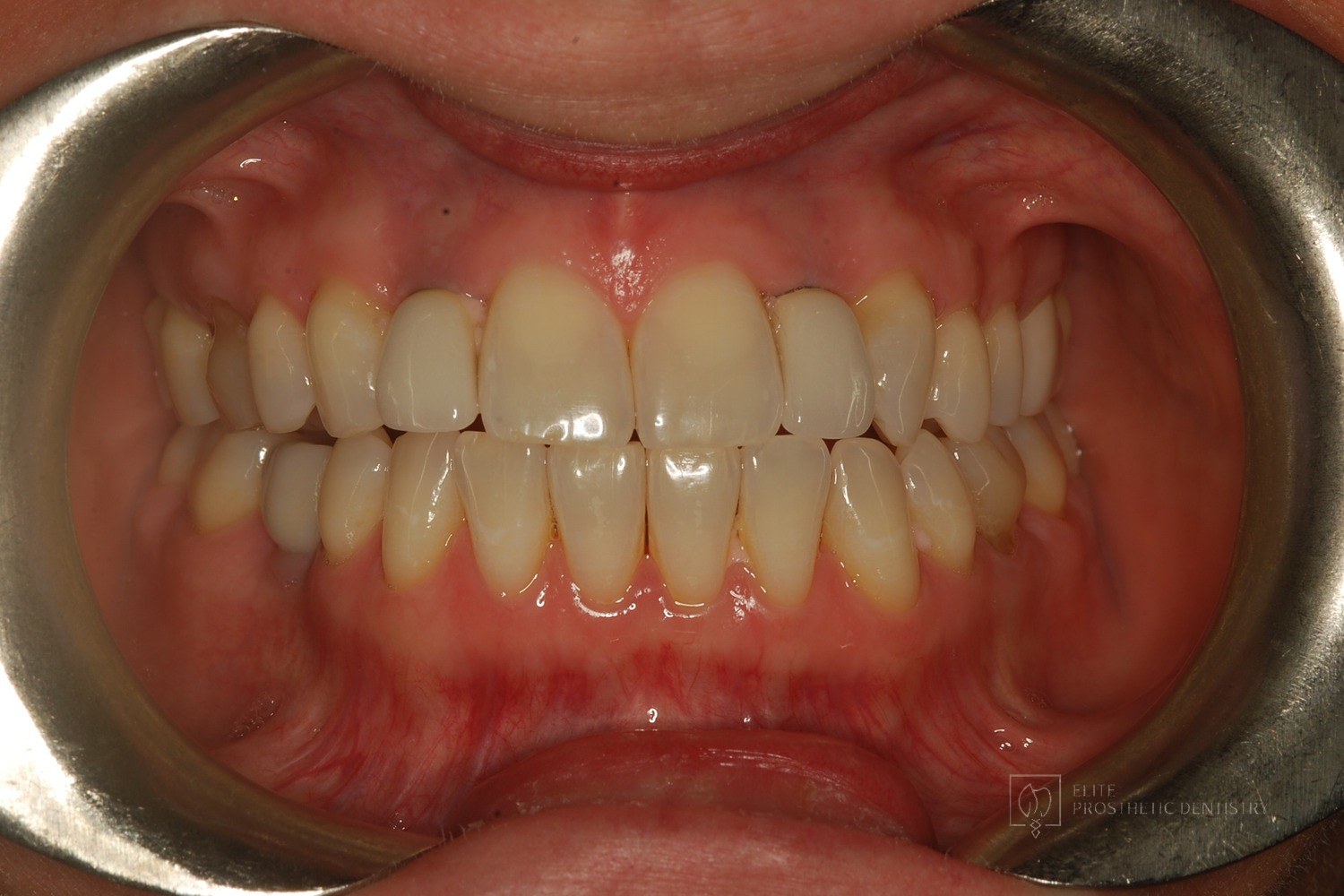
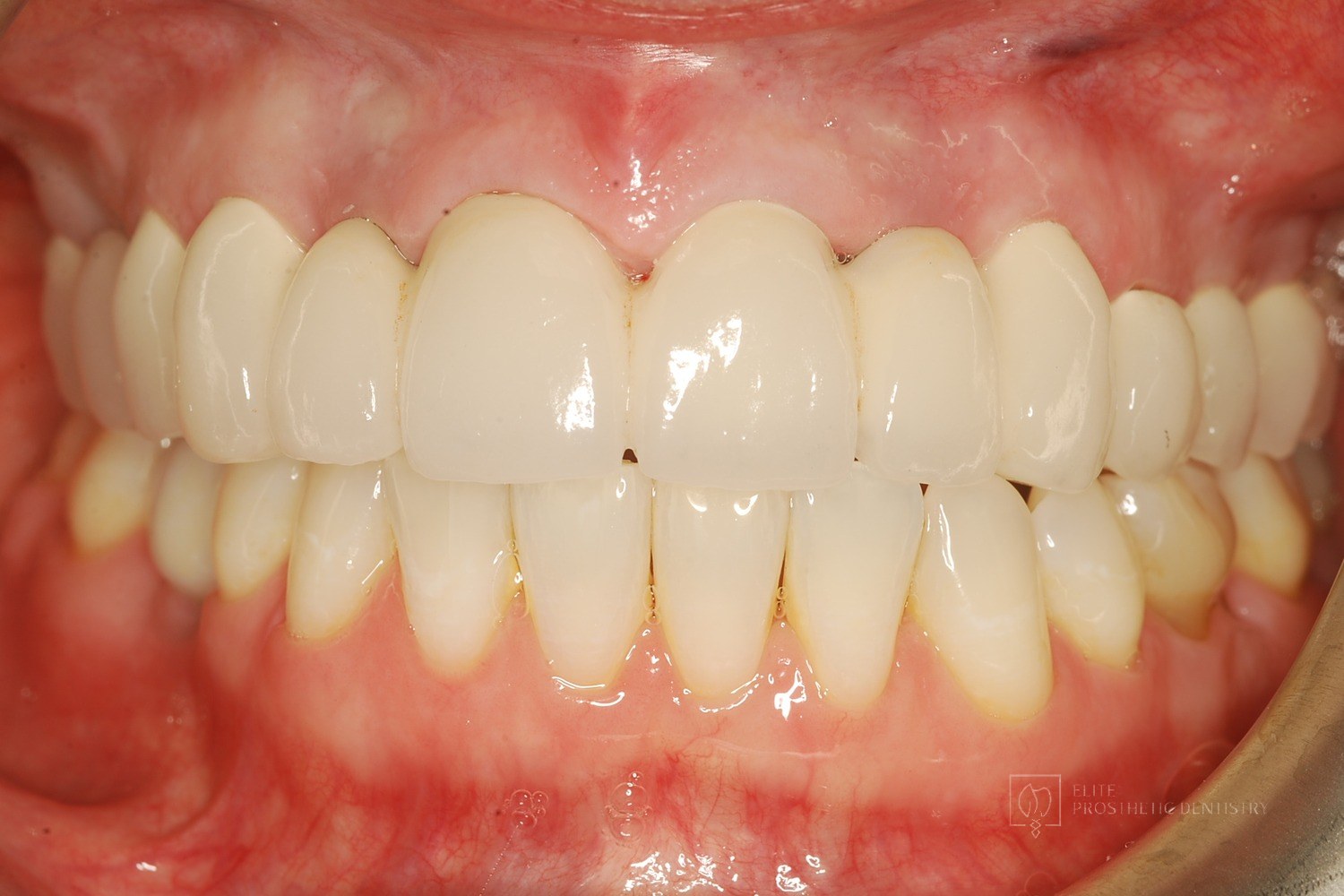
Intraoral view
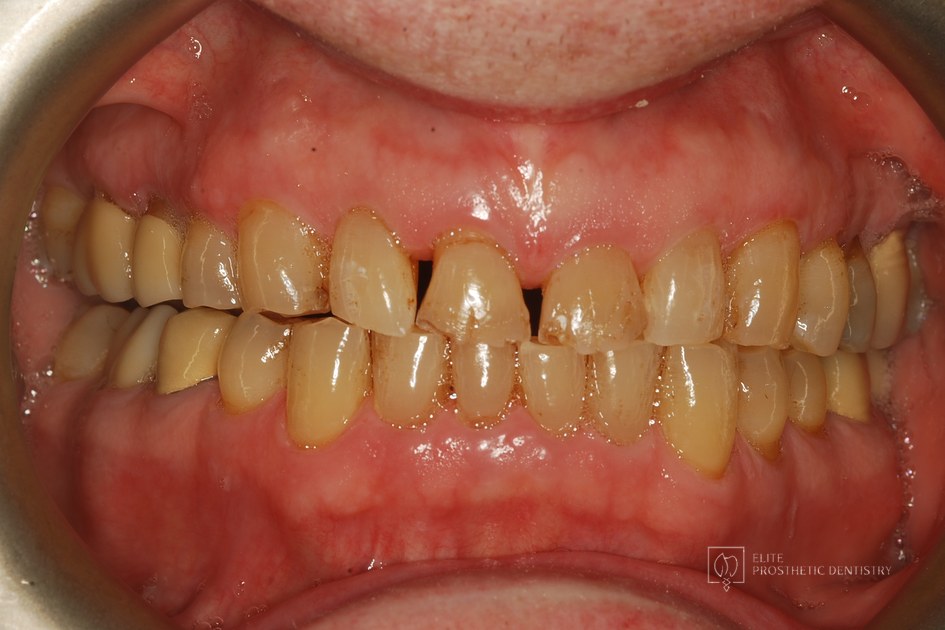 Before
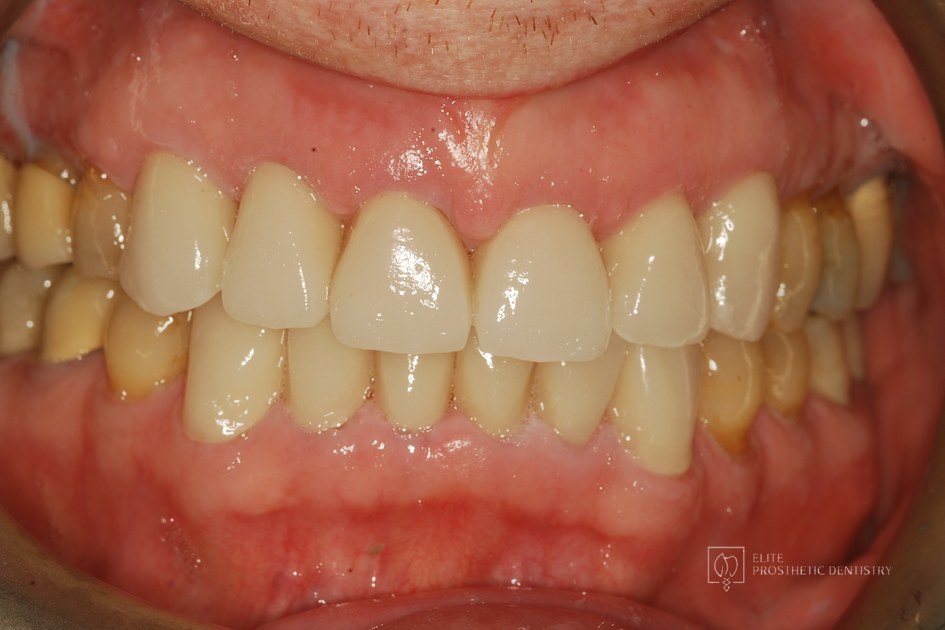 After
After
A worn dentition rebuilt with careful planning for natural esthetics, bite stability, and long-term function
Rebuilding worn teeth in Washington, DC for a result that looks natural and lasts. This documented case at Elite Prosthetic Dentistry shows how teeth that had been shortened, flattened, and darkened by decades of wear were rebuilt with custom ceramic crowns through one planned restorative sequence. The same approach applies whether a patient comes in because the wear has finally become a problem or simply wants aging dentistry rebuilt correctly before it does. Treatment was planned and completed by Gerald Marlin, D.M.D., M.S.D., a prosthodontist focused on restorative dentistry, worn dentition rehabilitation, and long-term crown and bridge care.
Case at a Glance
- Treatment
- Worn dentition rehabilitation with custom ceramic crowns across the visible upper and lower teeth, designed for natural esthetics and a stable, protected bite
- Approach
- Comprehensive diagnostics, bite evaluation, sequenced crown reconstruction, and in-house laboratory fabrication with photographic verification of the completed work
- Case Type
- Full mouth reconstruction / Cosmetic-functional correction
- Patient Concern
- Decades of gradual wear had shortened, flattened, and darkened the teeth and changed the bite; the patient was not in crisis but wanted the wear addressed correctly, not patched piecemeal.
- Decision Point
- Crown a single worn tooth back to its original length while its neighbors stay short, or re-establish tooth length and bite support across the whole arch as one engineered plan.
- Outcome
- The worn teeth were rebuilt with natural length, shape, and color on a bite designed to protect the result, with the completed work verified and documented in final photography.
- Why It Matters
- This case shows that rebuilding worn teeth is prosthodontic work, not cosmetic patching: tooth length and bite support must be re-established across the arch as one decision, or new restorations will fail the same way.
Many patients simply want dentistry that looks natural, functions properly, and lasts. That was the situation here. Nothing was broken in a way that demanded an emergency visit. The teeth had simply been wearing down for decades, a little at a time, until the smile in the mirror looked older than the patient felt. The photographs below document the starting point and the completed result.
How a dentition wears out
In your 20s, teeth carry subtle ridges, translucency at the edges, and small variations that give a smile dimension and vitality. Over the following decades, chewing, clenching, and grinding gradually remove that detail. Edges flatten, leaving teeth looking boxy and uniform. Teeth shorten, sometimes by two millimeters or more. Thinning enamel picks up stain in the fine cracks that wear leaves behind, which is why heavily worn teeth darken in a way that whitening cannot fix. As the teeth shorten, the lower face loses some of its support, and the lips and smile follow.
The difficult part is that none of this happens suddenly. A worn dentition still chews. It rarely hurts. Each year looks almost identical to the year before, which is why so many patients only confront the damage when they see a photograph of themselves or notice an edge that has chipped one more time.
The presenting condition
Clinical Findings
- →Generalized wear across the visible upper and lower teeth, with flattened, shortened edges
- →Darkened, stained tooth structure consistent with years of wear and thinning enamel
- →Chipping and uneven edges across the front teeth, with spacing changes from tooth movement over time
- →A bite relationship that needed evaluation as part of the plan, since wear of this extent always has a functional cause
Why this case required prosthodontic-level planning
Many patients first notice the appearance, shorter teeth, flatter edges, a smile that looks less youthful than it used to. Those concerns are legitimate, and they are also the visible sign of something functional underneath. Treating only the look, without the bite that caused it, produces a result that does not hold up.
Severely worn teeth cannot be fixed credibly one at a time. If a single worn tooth is crowned to its original length while its neighbors remain short, the new tooth strikes first in the bite and either chips, loosens, or drives the bite apart. Rebuilding a worn dentition means re-establishing the correct tooth length and bite support across the arch as one engineered decision. That is prosthodontic work, not cosmetic patching. The cause of the wear also has to be understood and managed, because new ceramic placed into the same destructive forces will wear and fail the same way the natural teeth did.
The treatment plan
-
1
Comprehensive diagnostic workup
Photographs, radiographs, and bite records documented the wear pattern and established how much length and structure had been lost, and where the new edges should sit.
-
2
Bite evaluation and restorative design
The reconstruction was designed around a properly supported bite, so the restored teeth would meet evenly and distribute force instead of repeating the original wear pattern.
-
3
Sequenced crown reconstruction
The worn teeth were prepared and rebuilt with custom ceramic crowns through a coordinated sequence, restoring natural length, contour, and color as one designed unit rather than as isolated repairs.
-
4
In-house laboratory fabrication
Each crown was fabricated with direct coordination between Dr. Marlin and the practice's in-house laboratory, recreating the ridge detail, surface texture, and translucency that make restored teeth read as natural and youthful, and designed against the patient's facial proportions, lip line, and complexion rather than to a generic template.
-
5
Delivery and photographic verification
The completed work was verified in function and documented photographically, confirming even contacts, healthy tissue response, and a restored smile line.
The outcome
The case moved from a dentition that had been quietly wearing away for decades to a rebuilt smile with natural length, shape, and color, supported by a bite designed to protect it. The change is visible at every level the camera can capture: the full-face photographs show a smile that no longer ages the patient, and the retracted views show restored edges and contours where flattened, darkened tooth structure used to be. Whether a patient comes in to correct advanced wear or to rebuild aging dentistry before it fails, the goal is the same, a result planned carefully enough to look natural and hold up for years.
Result Highlights
- ✓Severely worn, darkened teeth rebuilt with custom ceramic crowns
- ✓Natural tooth length and edge detail restored across the smile
- ✓Bite support re-established so the restorations work as one protected system
- ✓Color corrected at the structural level, not masked with surface whitening
- ✓Final restorations fabricated under direct in-house laboratory coordination
- ✓Completed result documented photographically for the long-term record
Watching your teeth get shorter, flatter, or darker, or simply thinking about rebuilding aging dentistry correctly before it becomes a problem? A private consultation can establish how much structure remains and what a planned rebuild would involve.
Schedule a Private ConsultationWho this case may sound familiar to
This story tends to resonate with patients in a few recognizable situations:
- Your front teeth look shorter and flatter than they did ten years ago, and the edges keep chipping in small ways.
- Your teeth have darkened in a way that whitening no longer improves, because the color change lives in worn structure rather than surface stain.
- You grind or clench, or you have been told you do, and you can see the evidence accumulating.
- You keep postponing treatment because nothing hurts, while quietly suspecting the problem is getting more expensive to fix each year.
- You want your teeth rebuilt correctly once, with the bite handled properly, rather than patched piece by piece.
- You are not in crisis, but you would rather rebuild aging or worn dentistry on your own timeline, before it turns into a larger problem.
- You want specialist-level planning for restorative work that looks natural and lasts, even if your case does not feel like an emergency.
If any of those describe where you are, a consultation with Dr. Marlin can establish the diagnostic picture and the specific options for your case.
Worn teeth never move in the right direction on their own. A comprehensive evaluation can document exactly where the wear stands today, what is driving it, and what a coordinated rebuild would look like, so the decision is yours to make on your own timeline rather than an emergency's.
Request a Comprehensive EvaluationFrequently asked questions
Can severely worn teeth be fixed, or do they have to be replaced?
In most cases worn teeth can be rebuilt rather than replaced. As long as the underlying tooth structure and supporting bone remain sound, custom crowns can restore the lost length, shape, and color. The key is acting while enough structure remains. Wear that continues unchecked can eventually push teeth past the point where rebuilding is possible.
Why do worn teeth darken, and why doesn't whitening help?
Wear thins the outer enamel and exposes more of the yellower dentin underneath, while fine cracks from years of function collect stain deep in the structure. Whitening treats surface color, so it cannot correct darkness that comes from thinned enamel and internal staining. Rebuilding the teeth with ceramic restorations corrects the color at the structural level.
At what point does worn dentition need a full rebuild instead of individual repairs?
When the wear is generalized rather than limited to one or two teeth, individual repairs stop being credible. A single restored tooth returned to full length will strike first against shortened opposing teeth and fail. Once most of the visible teeth have lost meaningful length, the honest conversation is about re-establishing the bite and rebuilding the affected teeth as one coordinated plan.
How do crowns restore a worn dentition?
Each crown replaces the lost outer structure of the tooth with ceramic designed to the correct length, contour, and shade. Done across the arch as one plan, the crowns restore the vertical support the bite has lost to wear, recreate the surface character that makes teeth look natural, and protect the remaining tooth structure underneath from further loss.
Why is the bite such a large part of treating worn teeth?
Because the bite is what wore the teeth down. Wear of this extent is the visible record of how the teeth have been meeting and moving against each other for decades. If new restorations are placed into the same force pattern, the ceramic wears or chips the way the enamel did. A prosthodontist designs the new tooth lengths and contacts so force is distributed evenly, and addresses habits like grinding so the rebuilt smile is protected.
How long should crowns on rebuilt worn teeth last?
Longevity depends on the underlying tooth structure, the fit and design of each crown, the balance of the bite, and how destructive habits are managed after treatment. Well-planned, well-fabricated crowns on a properly distributed bite can function for decades. Crowns from our in-house laboratory have lasted 35 years and longer with proper care.
Why does an in-house dental laboratory matter for a case like this?
Restoring a worn dentition is as much an artistic problem as a structural one. The crowns must recreate ridge lines, texture, and translucency so the rebuilt teeth look alive rather than uniform. When the ceramist works in the same facility as the prosthodontist, those details are refined together with the patient’s records on the bench. Elite Prosthetic Dentistry has operated an in-house dental laboratory continuously since 1985.
Is rebuilding worn teeth the same as cosmetic dentistry?
Not exactly. The result usually improves how the smile looks, but worn teeth almost always involve a functional component as well. Tooth length, bite forces, material selection, esthetics, and long-term stability have to be planned together. That is restorative and prosthodontic work, not cosmetic work alone.
Do worn teeth always require full-mouth reconstruction?
No. Some patients need only limited treatment, while others need a more comprehensive plan. The evaluation determines whether the wear is localized or part of a broader pattern involving the bite and the surrounding teeth, and the recommendation is matched to what the case actually needs rather than to a fixed package.
More about the work behind this case
This case sits at the intersection of custom dental crowns, full mouth reconstruction, worn dentition rehabilitation, and bite-protective restorative design. Elite Prosthetic Dentistry does not reserve this level of planning for extreme cases. The same diagnostic discipline behind a full reconstruction also guides individual crowns, veneers, and the replacement of aging restorations for patients who simply want the work done correctly and built to last. The diagnostic depth and in-house laboratory control reflect the practice philosophy that supports cases of this complexity. Related documented cases include severely worn upper teeth rebuilt for a more natural result and aging crowns and a failing bridge rebuilt through a coordinated restorative plan. Elite Prosthetic Dentistry treats patients from across Washington, DC and the DMV including Bethesda, Chevy Chase, McLean, Arlington, Potomac, and Great Falls.
Related Services
About the Provider
This case was treated by Gerald M. Marlin, D.M.D., M.S.D., at Elite Prosthetic Dentistry in Washington, DC. Dr. Marlin is a specialty-trained prosthodontist with more than 40 years of clinical practice, more than 3,900 dental implants placed, and 9 U.S. patents in dental implant restoration methodology. Elite Prosthetic Dentistry has operated a continuous in-house dental laboratory since 1985.
4400 Jenifer Street NW, Suite 220, Washington, DC 20015 | (202) 244-2101
Related Services
Related Patient Success Stories
Explore similar patient success stories demonstrating our expertise in advanced prosthetic dentistry.
 Before
  After
After How Aging, Failing Dentistry Was Replaced with a Coordinated Full-Mouth Implant and Crown Reconstruction
The patient presented with throbbing upper-molar pain, long-standing infections, multiple root canals and unfinished prior treatment, generalized sensitivity, and several hopeless teeth.
 Before
  After
After How Older Implant Crowns Were Redesigned for a Better Bite and More Natural Appearance
The patient came in after years of living with implant-supported crowns placed more than twenty years earlier that no longer looked or functioned well. CBCT evaluation, reviewed with a radiologist colleague, showed the implants had been placed too far to the buccal in very thin bone and could not support a healthy long-term restoration.
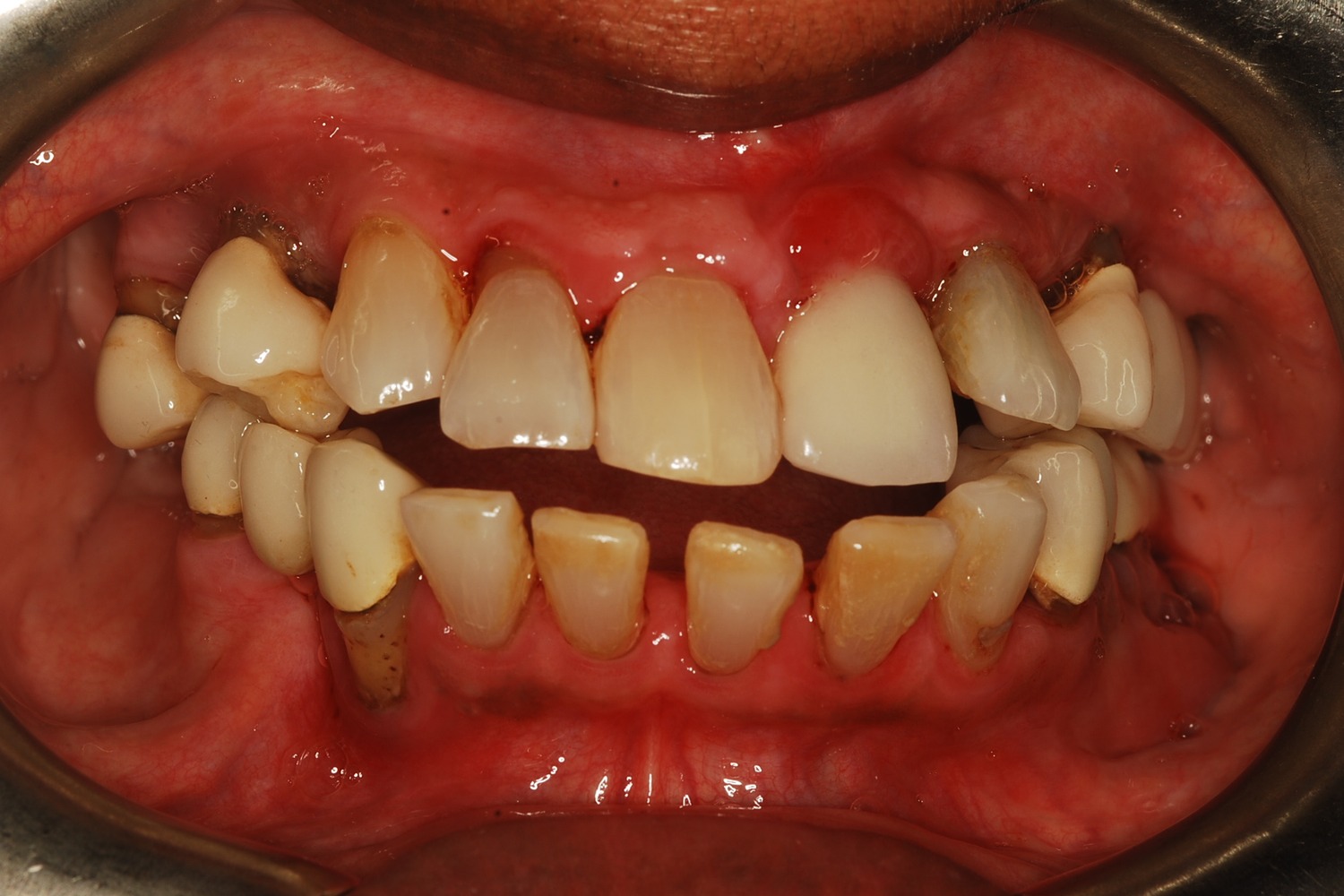 Before
 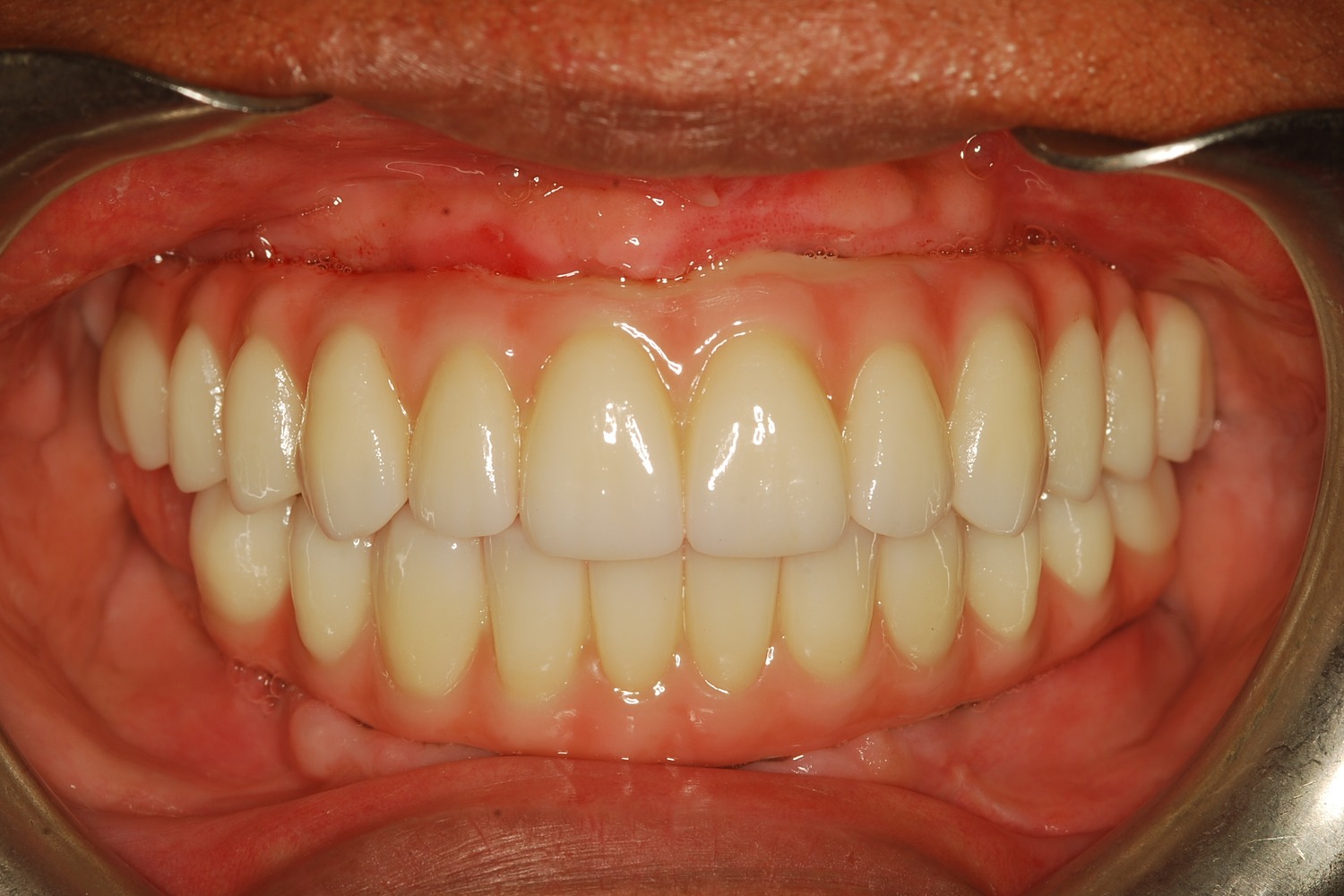 After
After How Severe Bone Loss and Bite Dysfunction Were Rebuilt with All-on-6 Implants and a Milled Zirconia Hybrid Prosthesis
The patient presented with severe bone loss, advanced periodontal disease, malocclusion, and a dysfunctional bite that required full-arch rebuilding.