
An Esthetic Correction: Choosing Crowns Over Veneers for Four Front Teeth
Smile views
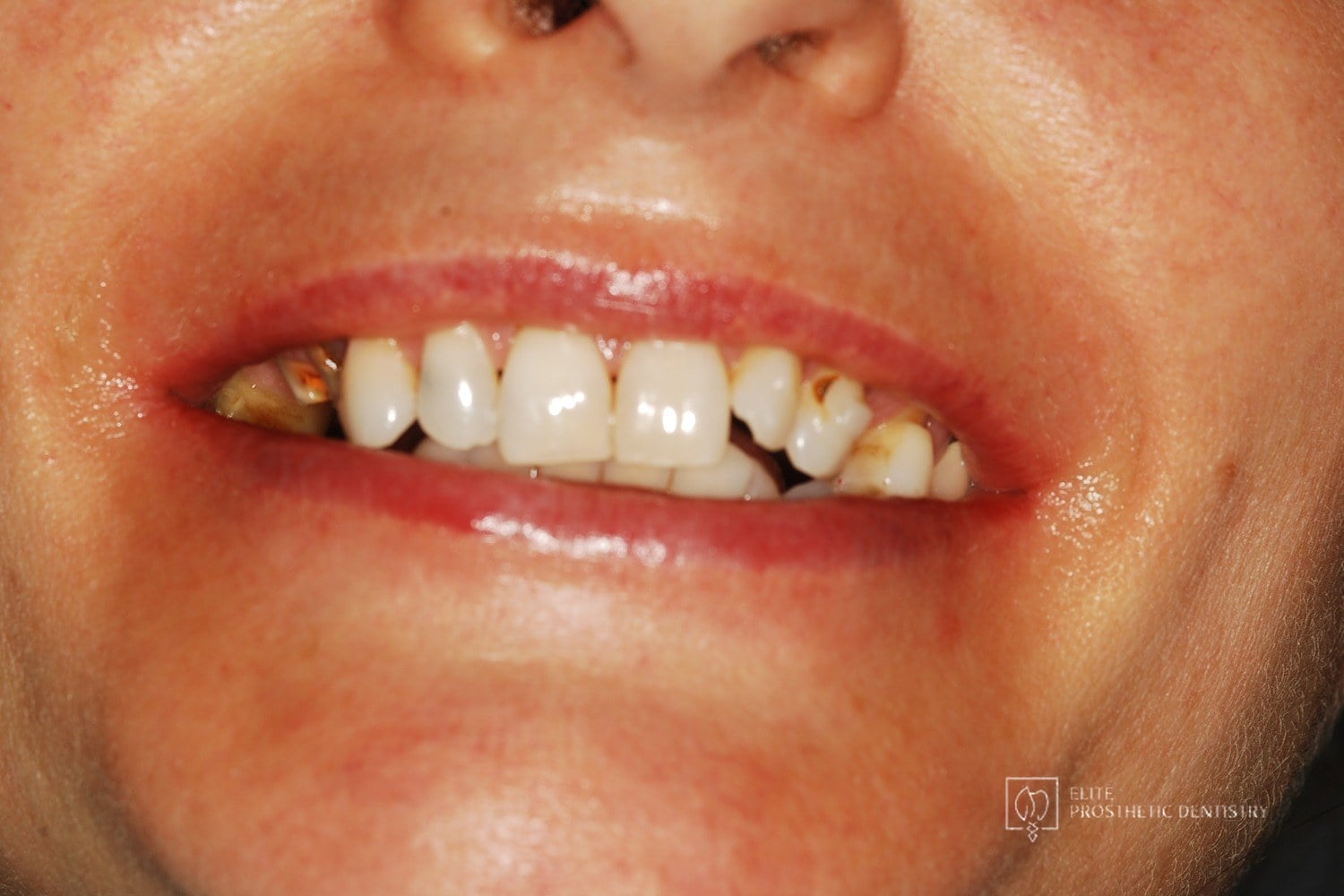
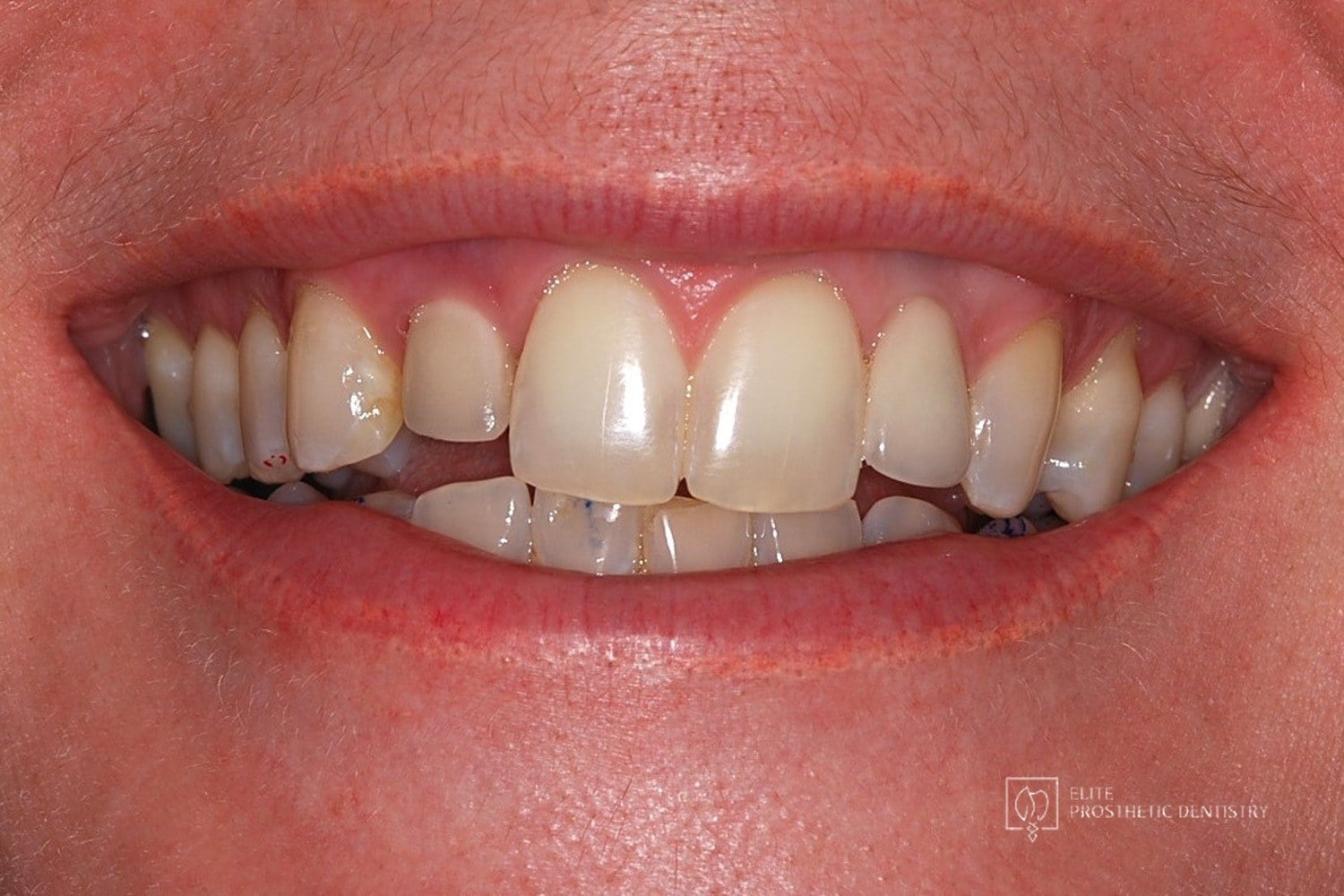
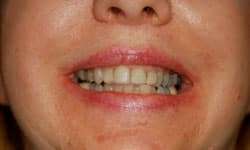 Before
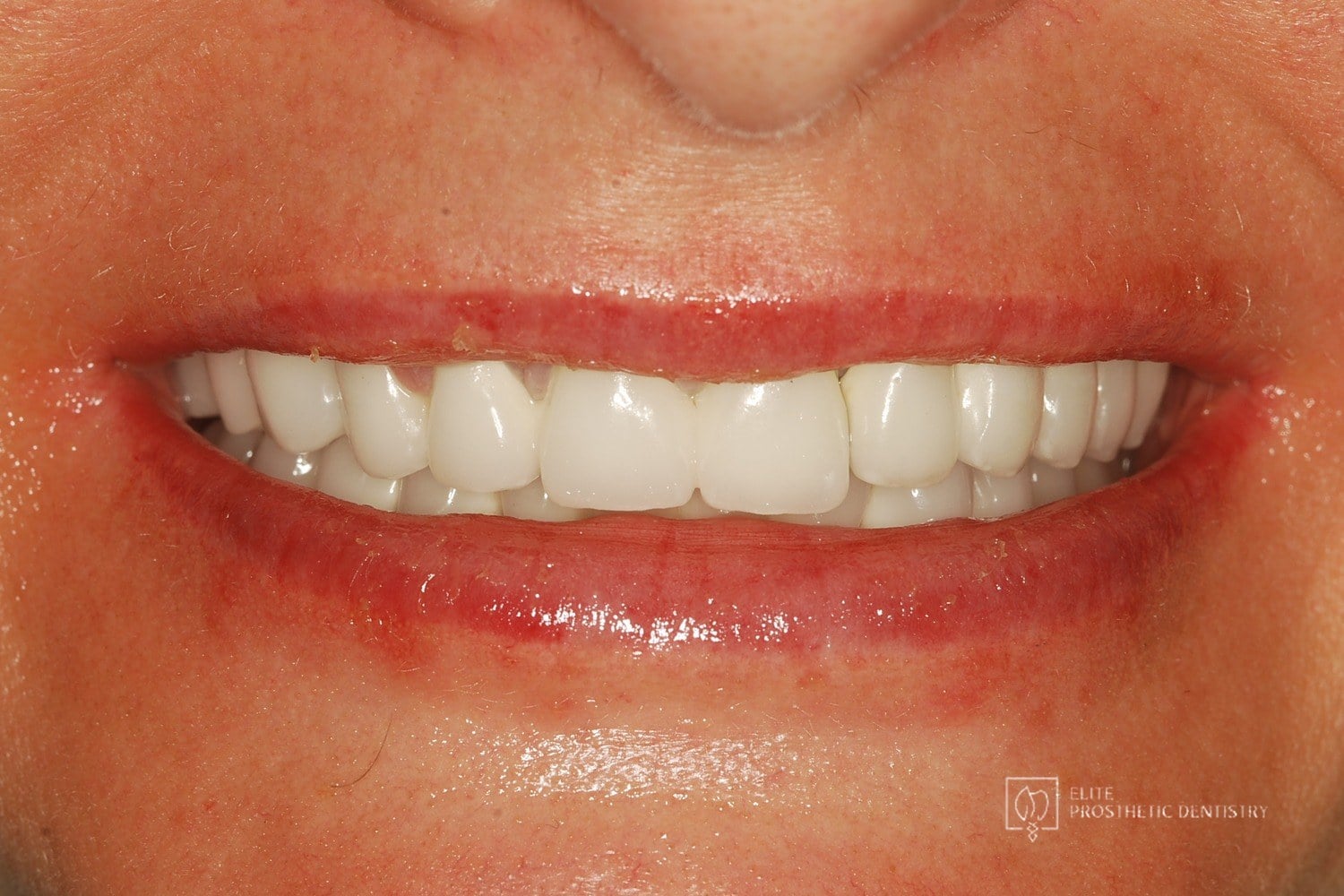
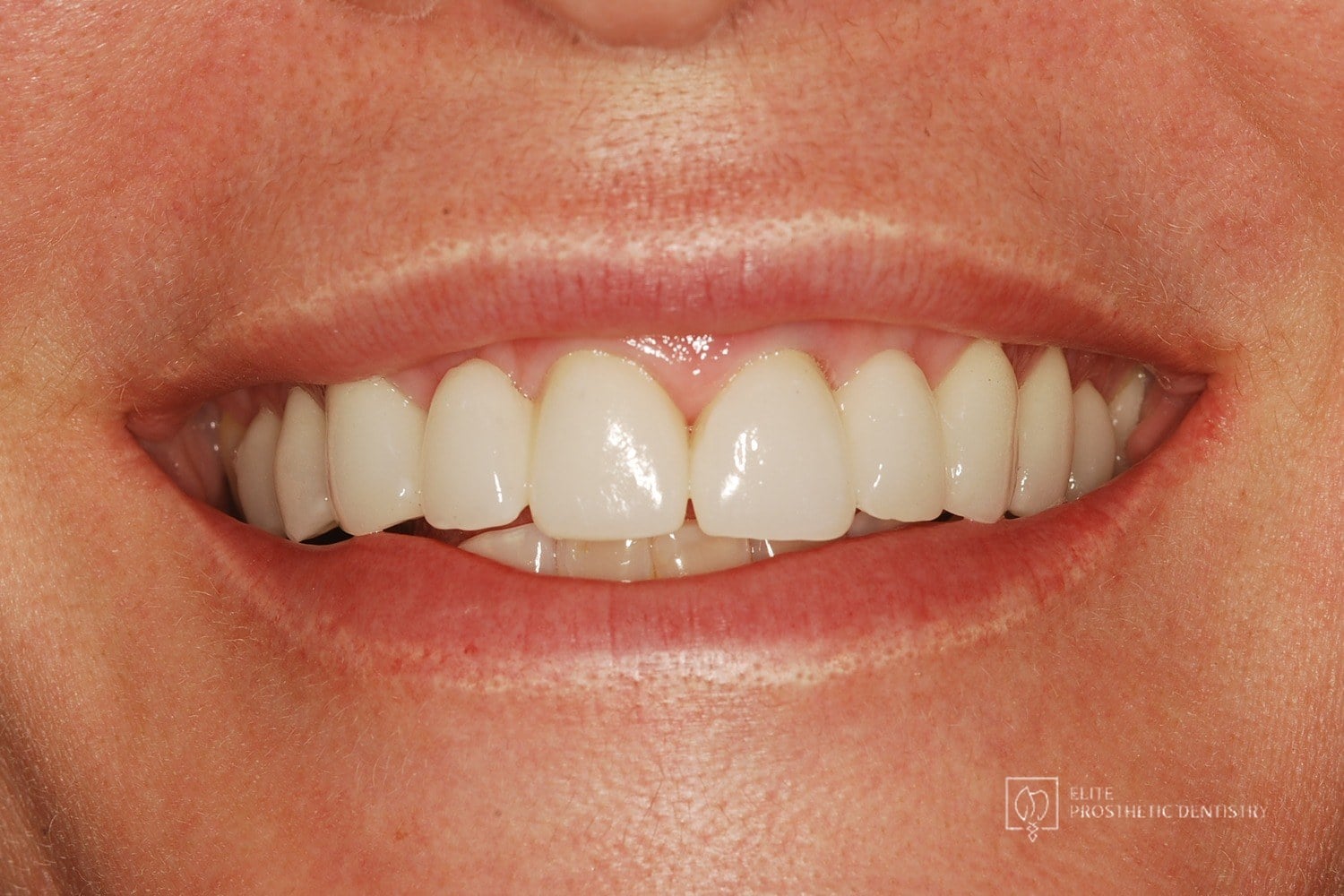
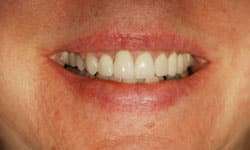 After
After
An esthetic correction: crowns chosen over veneers for four front teeth
Correcting the esthetics of four front teeth in Washington, DC. In this documented case at Elite Prosthetic Dentistry, a patient referred by her plastic surgeon for new porcelain veneers received custom crowns instead, a change of plan driven by what a comprehensive examination found beneath the old restorations. Treatment was planned and completed by Dr. Gerald Marlin, D.M.D., M.S.D., a prosthodontist focused on cosmetic and complex restorative care.
Case at a Glance
- Treatment
- Four front teeth restored with internally shaded custom crowns in place of planned veneers
- Approach
- Comprehensive examination first, restoration type selected for longevity, in-house laboratory fabrication
- Case Type
- Cosmetic-functional correction
- Patient Concern
- Wanted aging composite veneers on four front teeth replaced with new porcelain veneers for a more vibrant, natural look.
- Decision Point
- Proceed with the planned porcelain veneers, or switch to full-coverage crowns after large fillings were found beneath the old veneers.
- Outcome
- The custom crowns achieved the vibrant, natural appearance she sought, and their complete coverage now protects the large fillings beneath from future decay.
- Why It Matters
- Demonstrates that restoration type should follow what an examination reveals about the tooth's condition, not the original request, since no material can succeed on a foundation that cannot support it.
The presenting condition
The patient came to the practice on a referral from her plastic surgeon. Her goal was straightforward: replace the aging composite veneers on her four front teeth with a new set of porcelain veneers. She expected a like-for-like exchange, new porcelain where the old composite had been.
Dr. Marlin’s comprehensive examination changed the picture. Beneath the old veneers, the incisors carried very large existing fillings. That mattered because veneers are thin restorations bonded to tooth structure, and they depend on sufficient sound tooth material to succeed. Bonded over teeth dominated by large fillings, veneers would carry a high risk of future decay beneath the restorations, which could compromise them and force replacement. The straightforward plan was, on clinical evidence, the wrong plan.
The real challenge became achieving the esthetic improvement she wanted while selecting a restoration type that would protect the compromised tooth structure and hold up over time.
Clinical Findings
- →Composite veneers on the four front teeth that were due for replacement
- →Very large existing fillings discovered beneath the old veneers on the incisors
- →Insufficient sound tooth structure for predictable long-term veneer bonding
- →Elevated risk of future decay beneath thin bonded restorations if veneers were placed
- →A clear patient goal of a vibrant, natural-looking cosmetic result
Why this case required prosthodontic-level planning
Cosmetic plans are usually written from the outside in: the patient knows the look she wants, and the restoration is assumed to follow. Sound restorative dentistry works the other way. The condition of the tooth under the restoration determines which restoration can succeed, and no material choice can rescue porcelain bonded to a foundation that cannot support it.
That is where specialist evaluation earned its place in this case. Proceeding with veneers would have satisfied the original request and looked beautiful on delivery day. The large fillings underneath would have remained a vulnerability, at elevated risk of decay developing beneath the thin restorations. An esthetic problem would have been solved by creating a structural one. Recognizing that trade-off before treatment, rather than discovering it years later, is the entire value of planning from the endpoint backward.
The decision behind the result: crowns instead of veneers
Rather than proceeding as originally planned, Dr. Marlin recommended custom-crafted crowns. Crowns require more tooth preparation than veneers, and that trade-off was explained openly. In exchange, they provide complete coverage and protection for teeth with large existing restorations, exactly what these incisors needed.
The natural concern, that crowns might fall short of veneers esthetically, was addressed directly. Crowns can be fabricated with internal shading and advanced translucency techniques that rival or exceed the esthetic potential of veneers. The patient was involved throughout the planning process and understood that the modified approach was chosen for superior longevity as well as for the appearance she came in for.
The treatment plan
-
1
Comprehensive examination
Full evaluation of the four front teeth, including what sat beneath the existing veneers, before any restorative decision was made.
-
2
Restoration type re-selected with the patient
The findings were reviewed with the patient, and the plan was revised from veneers to custom crowns to protect the heavily filled incisors for the long term.
-
3
Internal shading and translucency design
The practice's in-house laboratory designed each crown with internal shading for depth and dimension and carefully selected translucency levels, engineering subtle color graduation rather than flat, uniform porcelain.
-
4
Delivery of the completed crowns
The finished crowns were placed with complete coverage of the underlying tooth structure, protecting the large fillings from future decay and degradation.
The outcome
The patient was thrilled with the result. The custom crowns achieved the vibrant, natural appearance she originally sought, with translucency and depth that give them a three-dimensional, lifelike quality. Because each crown provides complete coverage, the large fillings beneath are protected from future decay and degradation instead of remaining a vulnerability under thin porcelain.
Most telling is her own assessment: she loves the crowns not as a compromise but as an upgrade, a result that exceeded the esthetic potential of the veneers she asked for. The internal shading and translucent porcelain, developed through direct coordination between Dr. Marlin and the in-house laboratory team, produced restorations more vibrant, more natural, and more durable than the original plan would have delivered.
Result Highlights
- ✓Four front teeth restored with internally shaded, custom-crafted crowns
- ✓Large underlying fillings now protected by complete crown coverage
- ✓Translucency and color graduation engineered for a lifelike, three-dimensional result
- ✓The esthetic goal of the original veneer plan achieved with a longer-lasting restoration type
- ✓Designed and fabricated with the practice's in-house laboratory
Who this case may sound familiar to
This story tends to resonate with patients in a few recognizable situations:
- Your veneers are due for replacement and you assume new veneers are the only option.
- You have large fillings in your front teeth and wonder what that means for cosmetic treatment.
- You want the choice between veneers and crowns made on clinical evidence, not assumption.
- You have invested in your appearance and want your dental work planned with the same care.
- You would rather hear about the better option before treatment than discover the problem years after it.
If any of those describe where you are, a consultation with Dr. Marlin can establish the diagnostic picture and the specific options for your case.
Frequently asked questions
When are porcelain veneers not recommended?
Veneers are thin restorations bonded to tooth structure, so they need sufficient sound tooth material to succeed. Teeth with very large existing fillings, extensive older restorations, or too little intact enamel may not support predictable veneer bonding, and full-coverage crowns are often the sounder choice.
Are crowns as natural-looking as veneers?
They can be, and in some situations more so. Crowns fabricated with internal shading and layered translucency can reproduce the depth, color graduation, and light transmission of natural teeth. The craftsmanship behind the restoration matters more than the category it belongs to.
Do crowns protect teeth with large fillings better than veneers?
Yes. A crown covers the entire tooth, sealing and protecting structure that is dominated by existing restorations. A veneer covers only the front surface, leaving more of a heavily filled tooth exposed to future decay, which is why large fillings often shift the recommendation from veneers to crowns.
Can a treatment plan change after the examination?
It should, when the findings call for it. What is visible from the outside rarely tells the whole story, and an examination can reveal conditions, such as large fillings beneath old restorations, that change which treatment will actually last. A specialist explains the findings and revises the plan with the patient before work begins.
Why see a prosthodontist before choosing veneers or crowns?
A prosthodontist is a dentist with advanced specialty training in restoring teeth, including the judgment of when each restoration type is indicated. That evaluation identifies contraindications early and matches the restoration to the tooth, which protects both the esthetic result and the investment behind it.
More about the work behind this case
This case brings together cosmetic dentistry, porcelain veneers, and custom crowns in a single judgment call. The examine-first discipline behind it is part of the practice philosophy that guides every restorative recommendation at the practice.
Elite Prosthetic Dentistry treats patients from across the DMV including Bethesda, Chevy Chase, McLean, Arlington, Potomac, and Great Falls, with a record of out-of-area patients traveling to the practice for complex restorative care.
Related Services
Related Patient Success Stories
Explore similar patient success stories demonstrating our expertise in advanced prosthetic dentistry.
 Before
  After
After How Aging, Failing Dentistry Was Replaced with a Coordinated Full-Mouth Implant and Crown Reconstruction
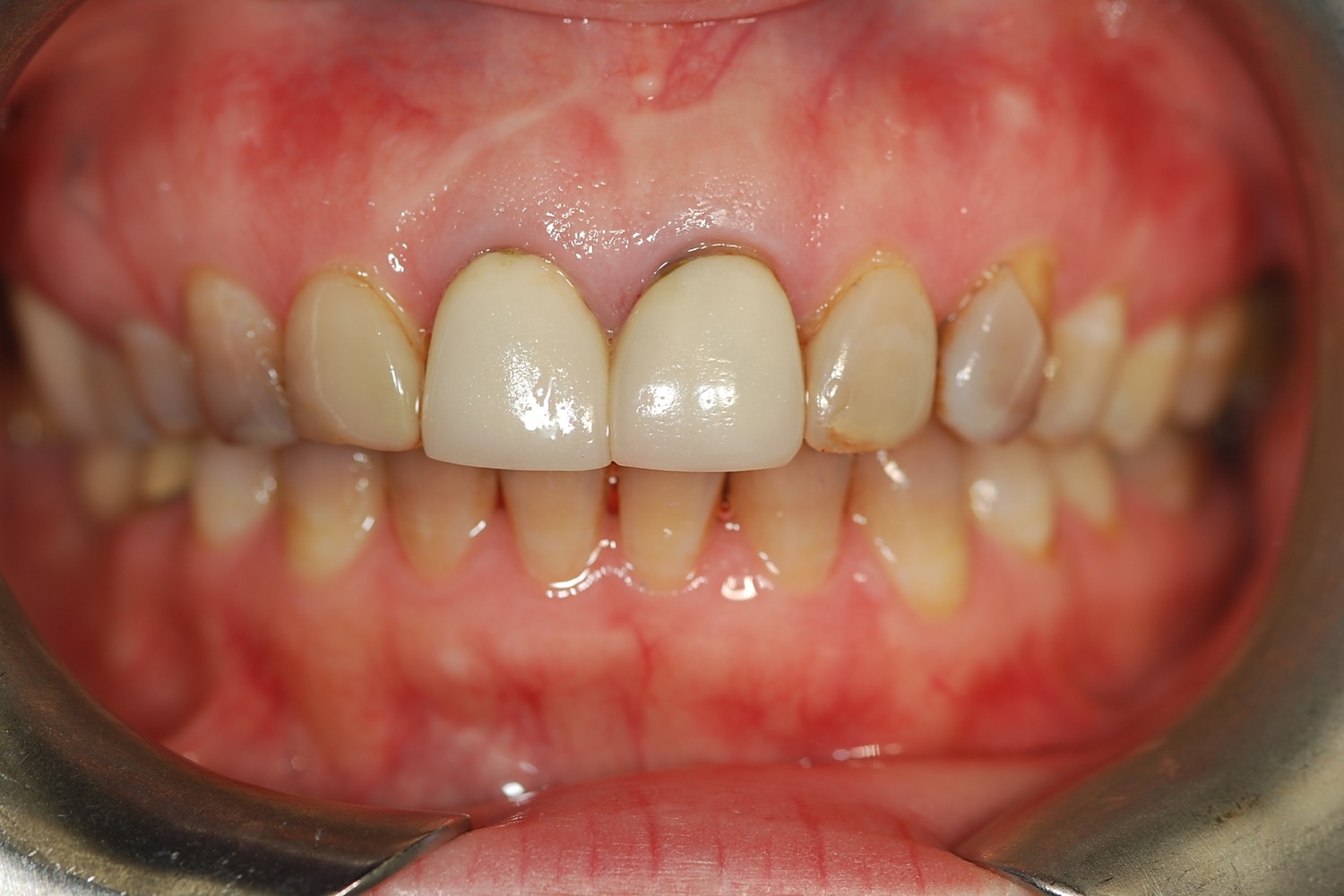
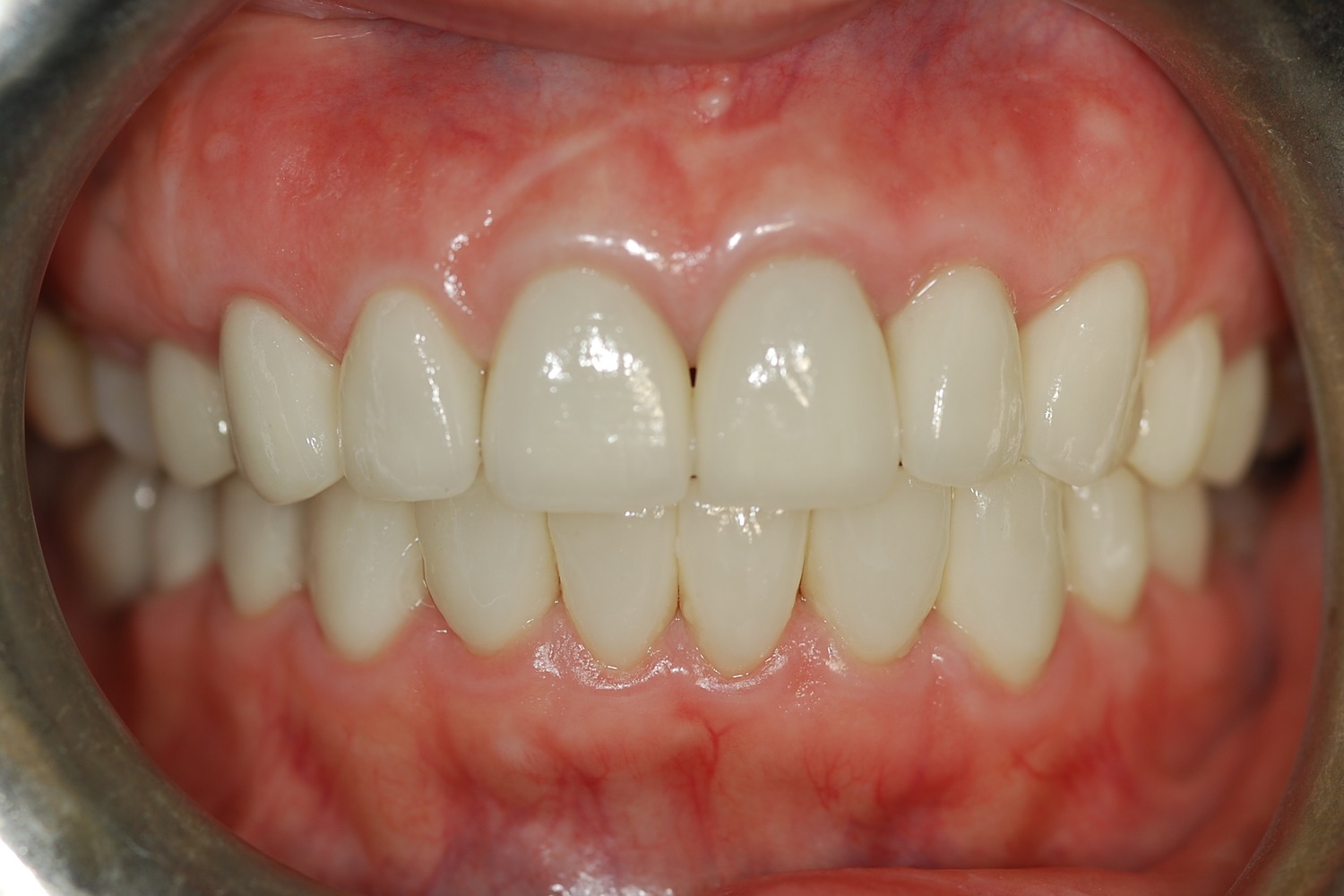
The patient presented with throbbing upper-molar pain, long-standing infections, multiple root canals and unfinished prior treatment, generalized sensitivity, and several hopeless teeth.
 Before
  After
After How Failing Lateral Incisor Implants Were Replaced with Custom Zirconia Bridges After Severe Bone Loss Made Replacement Implants Impossible
Comprehensive examination including CBCT imaging revealed significant bone loss surrounding implants that were placed outside the buccal plate, most likely due to placement without a CBCT-generated surgical guide. The implants were determined non-salvageable, and the alveolar ridge was too narrow to support replacement implants without extensive reconstruction.
 Before
  After
After How Aging, Opaque Restorations Were Replaced with Customized Ceramic Restorations Designed for Long-Term Natural Esthetics
The existing restorations appeared opaque, worn, and unnatural over time, affecting both confidence and overall smile harmony.