
When Are Veneers Not as Good as Crowns for a Smile Makeover?
Several factors can make veneers less suitable than crowns when remaking a smile: dark underlying color that a thin shell cannot mask, gum tissue recontoured high enough to expose root surface, and the need for substantial changes to tooth shape. Before committing to veneer therapy, these factors deserve honest evaluation, because choosing the wrong restoration is how cosmetic work ends up being done twice.
What a Veneer Is, and Why That Matters
A veneer is a thin shell of porcelain bonded to the front surface of a tooth. Its great virtues are conservatism, since it preserves most natural tooth structure, and beauty on the right tooth. Its limitations follow directly from its thinness. A shell a fraction of a millimeter thick can only do so much to block dark color coming from beneath, and it depends on bonding to enamel for its strength.
Crowns cover the entire tooth. That gives the ceramist complete control of the final color and translucency regardless of what lies underneath, allows real changes to shape and length, and does not depend on enamel bonding at the margin. The right choice between them is case by case, and sometimes tooth by tooth within one smile.
Three Situations Where Crowns Win
Dark underlying color. Teeth darkened by root canal treatment, tetracycline exposure, or deep internal staining will show through a thin veneer or force the ceramist to make it so opaque it looks lifeless. Full coverage lets the crown establish its own color with natural translucency layered over it.
A raised gumline. Many smile makeovers reshape the gum architecture to correct short or uneven teeth. When tissue is repositioned higher, root surface is exposed, and veneers do not bond adequately to root. A crown margin, by contrast, is designed to finish precisely along the new gumline.
Major shape changes. Lengthening worn teeth, widening narrow ones, or correcting rotations beyond a certain range asks a veneer to become structural, which it is not. Crowns carry those changes durably, an important consideration for patients whose worn or aging front teeth are part of the reason they want a new smile.
A Case in Point: Replacing Veneers With Crowns
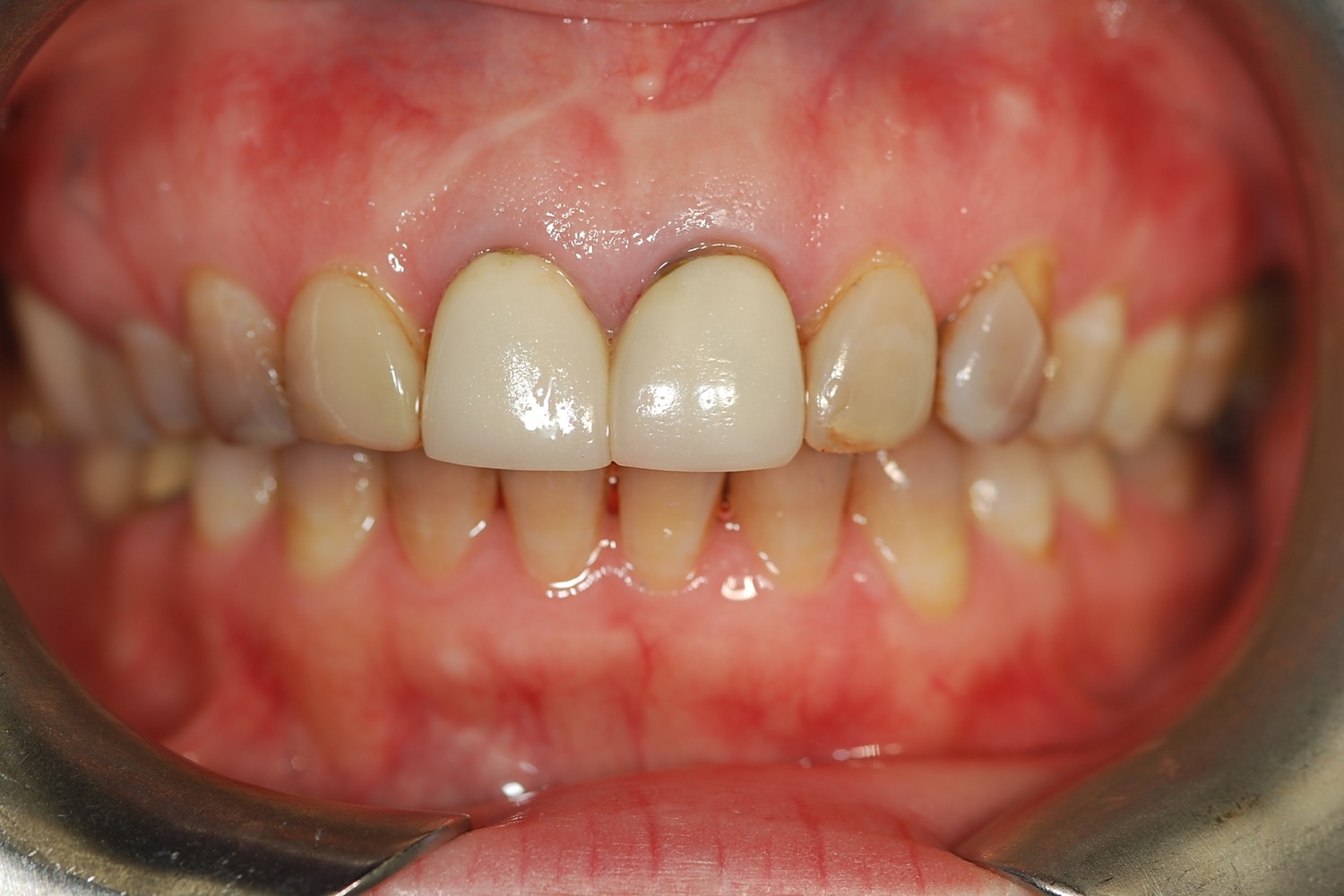
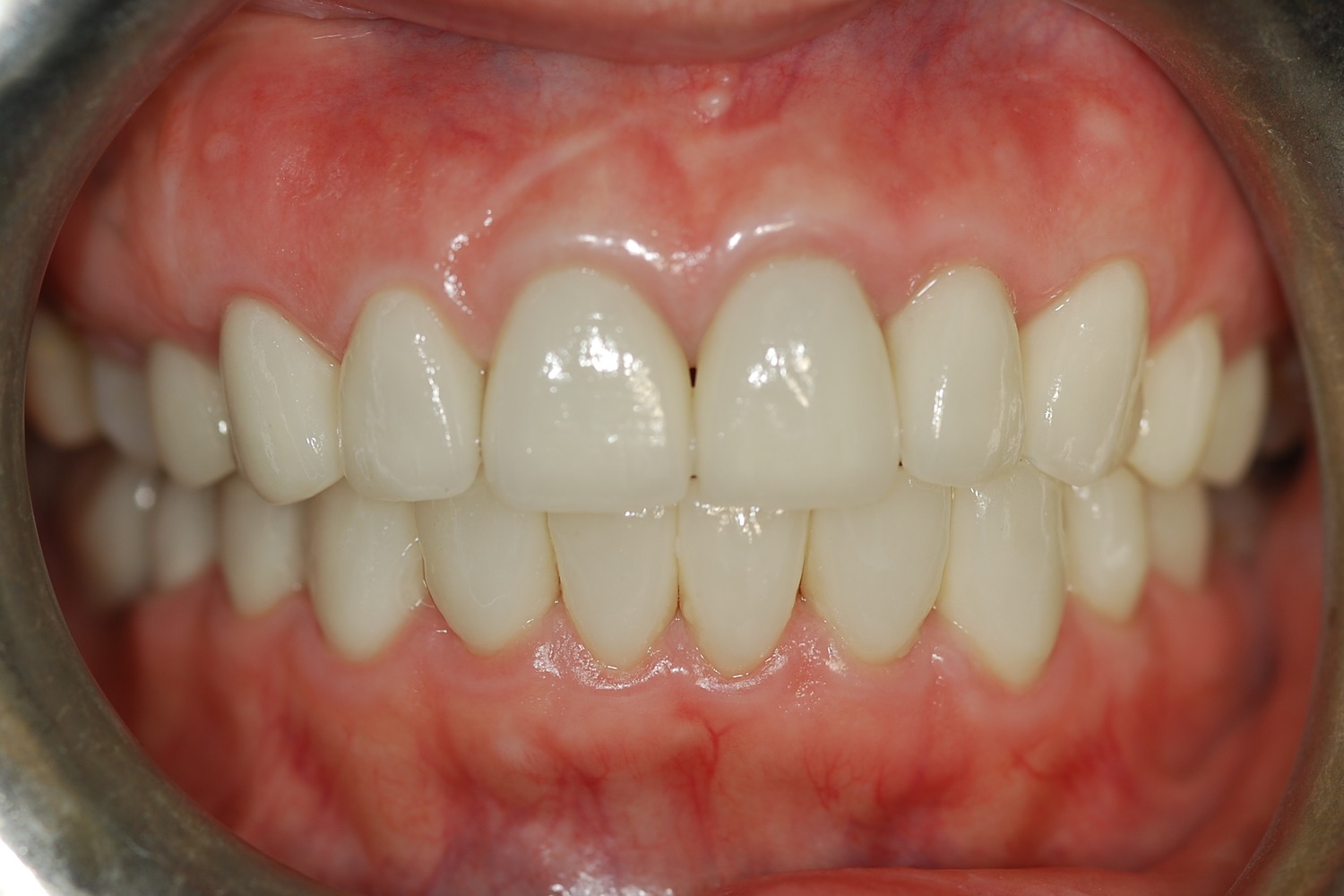
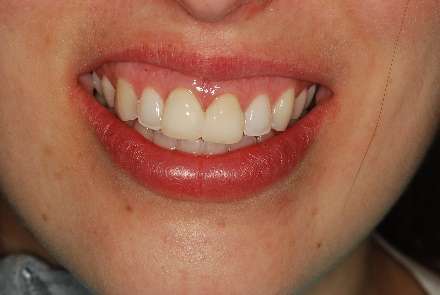
One patient came to us dissatisfied with the veneers on her upper and lower lateral incisors: they were too short and too dark (Fig. 1). Her smile design called for reshaping the gum tissue higher, which removed the option of new veneers, since a veneer will not adequately bond to the exposed root surface that recontouring creates. By placing custom crowns on all four lateral incisors, our in-house laboratory controlled both the new shape and a color matched precisely to her adjacent teeth (Fig. 2).
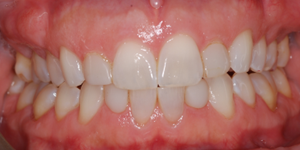
Fig. 1: Veneers on Lateral Incisors That Are Too Short and Too Dark
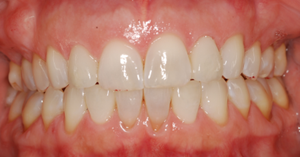
Fig. 2: Veneers Replaced by Crowns with More Natural Shape and Color
The Decision Is Design, Not Doctrine
None of this makes veneers inferior. On teeth with sound enamel, good underlying color, and modest shape goals, veneers are often the ideal restoration, and we place them regularly. The point is that a smile makeover is a design project. The restoration type should be selected per tooth, after evaluating color, gum architecture, bite forces, and what you want your finished smile to look like, not applied one-size-fits-all.
That is also why this decision benefits from a specialist. A prosthodontist is trained in both restorations, fabricates both, and has no reason to force your case into either. What patients want, in our experience, is simple: a smile that looks natural, functions properly, and does not need to be redone in five years. Choosing the right restoration the first time is most of that battle. If a veneer has already failed or disappointed, our article on when a veneer fails covers the replacement options.
Get a Tooth-by-Tooth Answer
If you are weighing veneers against crowns for a smile makeover, or living with cosmetic work that never quite satisfied you, Dr. Gerald Marlin will evaluate your smile and explain exactly which restoration serves each tooth and why. Call 202-244-2101 or book your consultation at Elite Prosthetic Dentistry in Friendship Heights, Washington, DC.
See How We Resolve These Problems
Our patient success stories show real cases and real results. Browse outcomes from a specialist prosthodontist with decades of experience and 3,900+ implants placed.
Key Takeaways
- ✓ Veneers are excellent for the right cases, but three conditions work against them: dark underlying tooth color, gum recontouring that exposes root surface, and major shape changes.
- ✓ A veneer is a thin shell. It cannot reliably mask severe discoloration, and it does not bond predictably to exposed root surfaces.
- ✓ Crowns provide full coverage, complete control over color and translucency, and greater strength for significant shape corrections.
- ✓ The veneer-or-crown decision should be made tooth by tooth during smile design, not applied as a blanket rule.
- ✓ Getting this decision right the first time avoids redoing cosmetic work within a few years, which is exactly what patients fear most.
Frequently Asked Questions
When are veneers not recommended?
Three situations argue against veneers: teeth too dark for a thin shell to mask, smile designs that reshape the gumline high enough to expose root surface where veneers do not bond well, and cases requiring substantial changes to tooth shape or length that exceed what a veneer can structurally support. In those cases crowns produce a better, longer-lasting result.
Do crowns require more tooth preparation than veneers?
Yes. A crown involves preparing the full circumference of the tooth, while a veneer conserves more structure. That is a genuine advantage of veneers when they are indicated. When they are not indicated, conserving structure on day one can mean redoing the case later, which costs more tooth in the end.
Can existing veneers be replaced with crowns?
Yes, and it is a common correction. When veneers were placed on teeth that were too dark, too short, or needed gum recontouring, replacing them with custom crowns allows full control of color, shape, and the margin position along the new gumline.
How long do crowns last compared to veneers?
Both depend heavily on fabrication quality. Well-made veneers can serve for many years on the right teeth. Crowns from our in-house laboratory have lasted 35 years and more with proper care, which is one reason we favor them when a case sits on the borderline.
How do I know which one my smile makeover needs?
Through smile design with a specialist who offers both and profits from neither choice in particular. A prosthodontist evaluates tooth color, gum architecture, bite forces, and your aesthetic goals tooth by tooth, then explains why each restoration was chosen.
Related Patient Success Stories
Explore similar patient success stories demonstrating our expertise in advanced prosthetic dentistry.
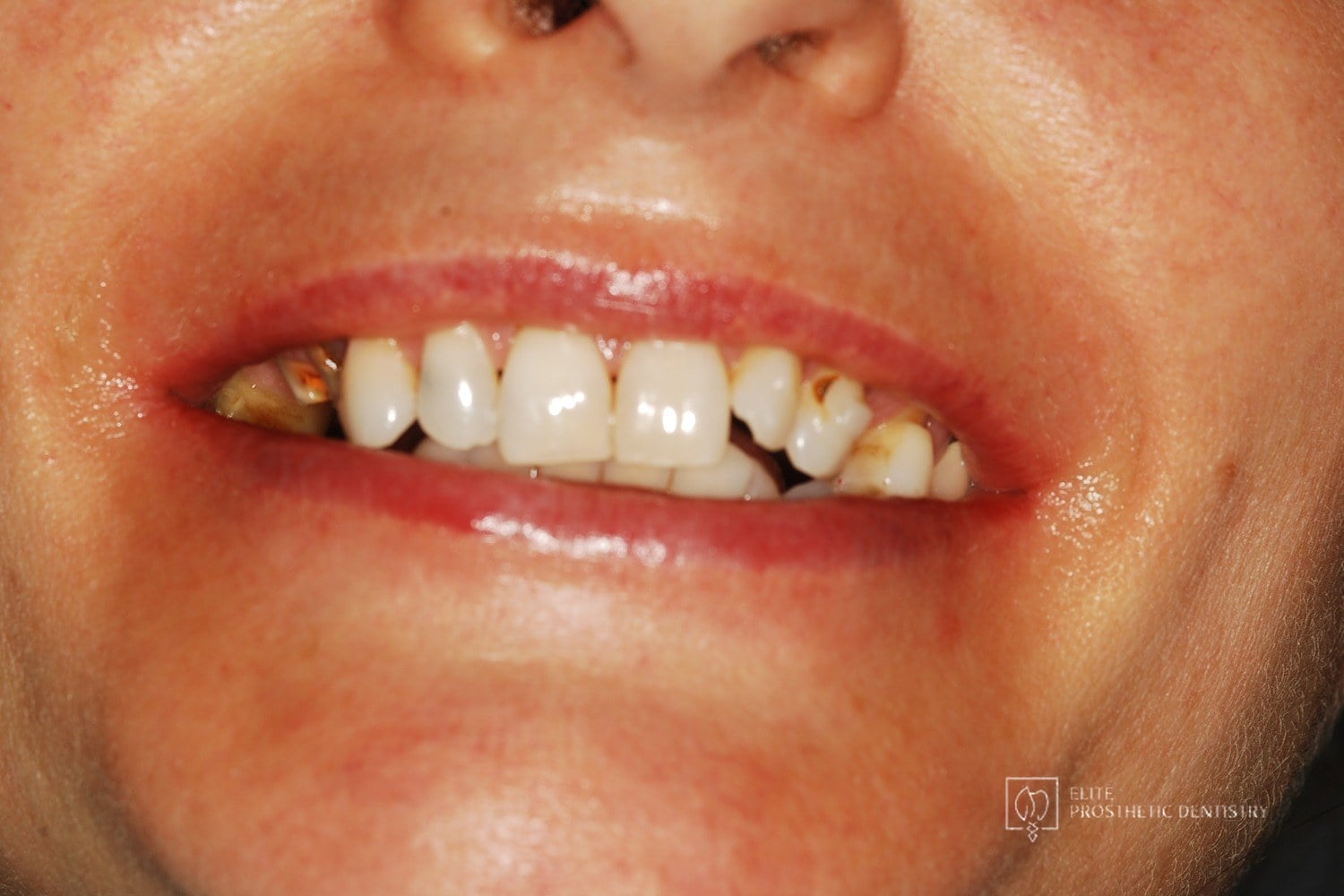 Before
 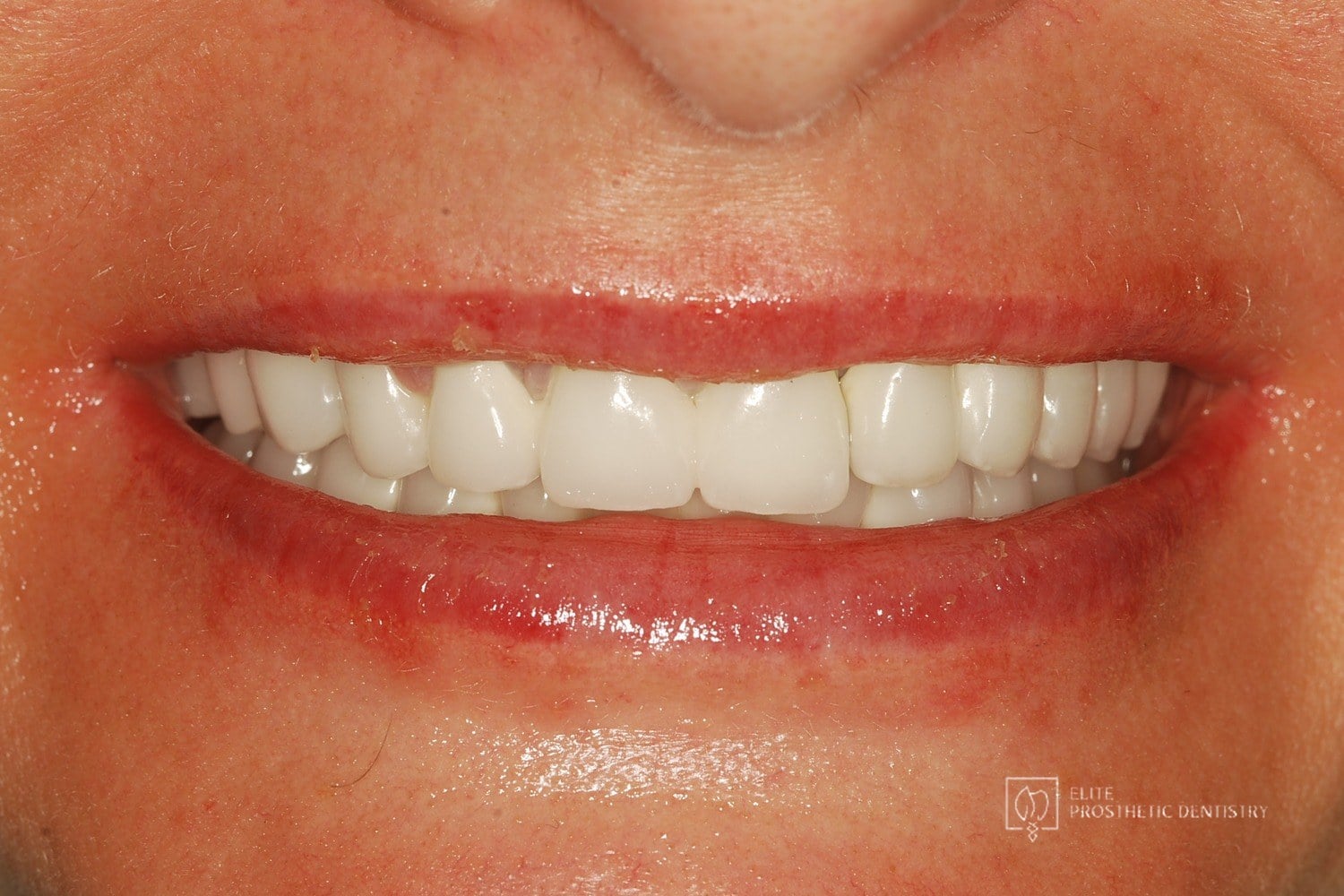 After
After How Aging, Failing Dentistry Was Replaced with a Coordinated Full-Mouth Implant and Crown Reconstruction
The patient presented with throbbing upper-molar pain, long-standing infections, multiple root canals and unfinished prior treatment, generalized sensitivity, and several hopeless teeth.
 Before
  After
After How Aging, Opaque Restorations Were Replaced with Customized Ceramic Restorations Designed for Long-Term Natural Esthetics
The existing restorations appeared opaque, worn, and unnatural over time, affecting both confidence and overall smile harmony.
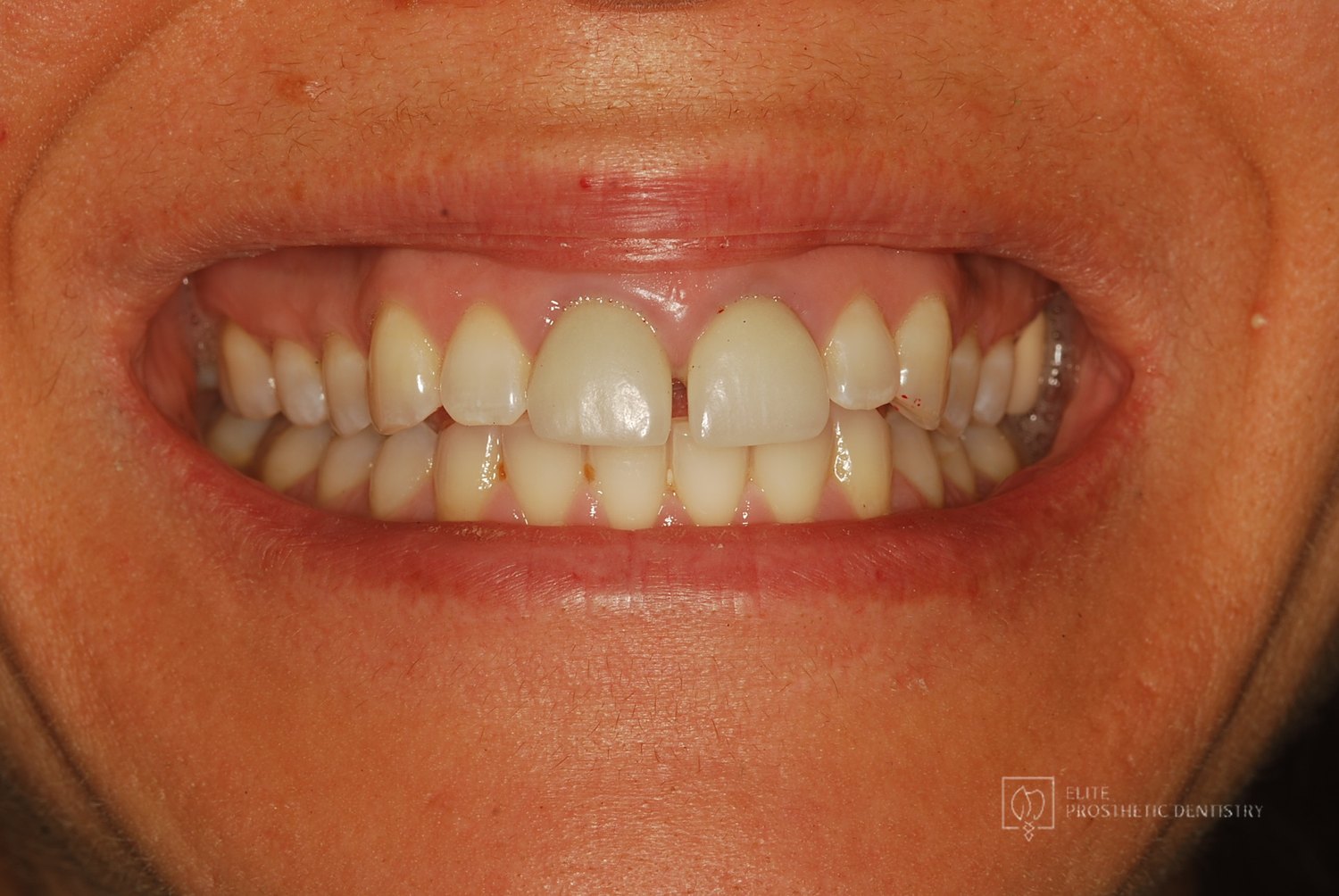 Before
 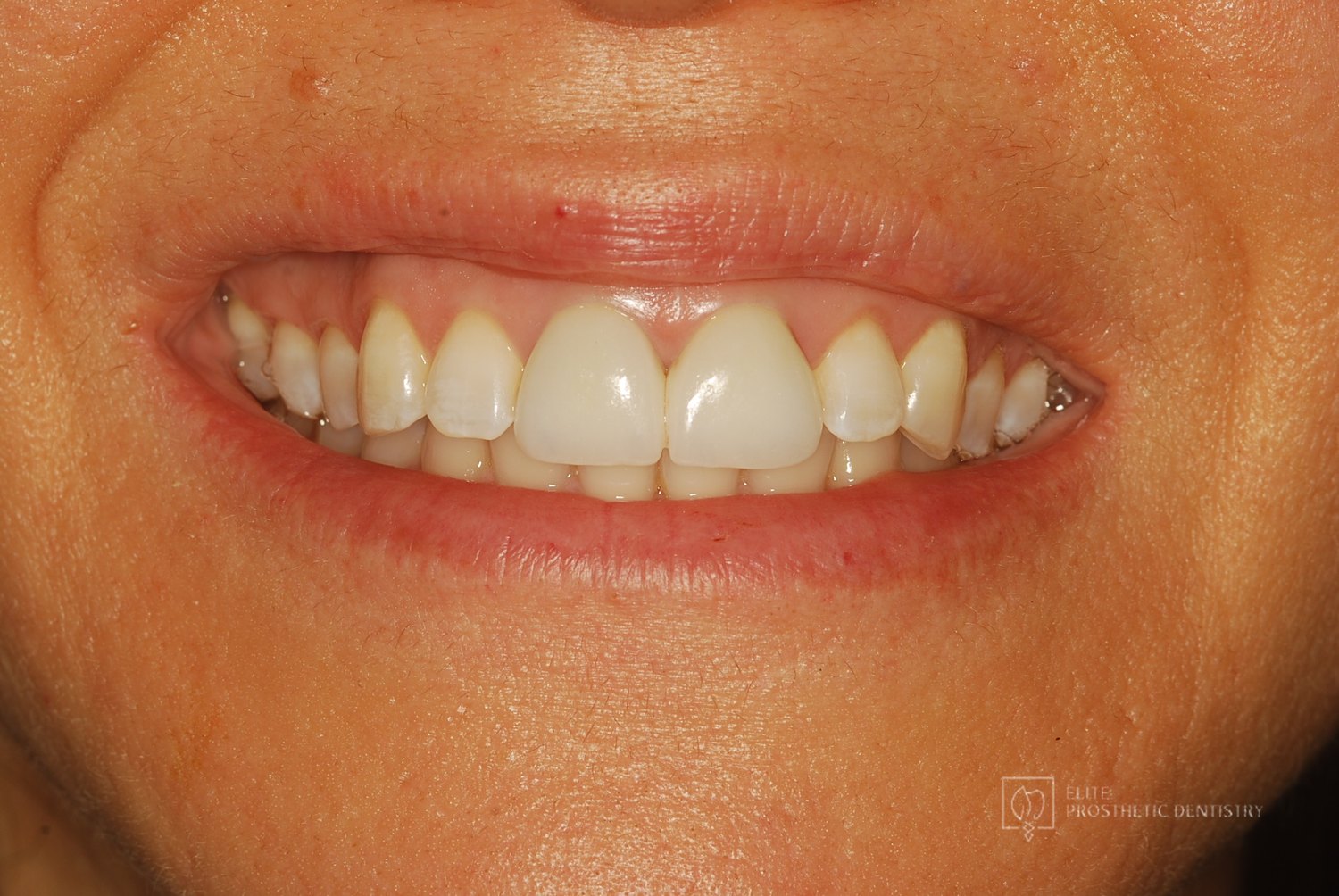 After
After Two Front Teeth Saved From Extraction: A Second Opinion, Custom Gold Posts, and Crowns Made to Last
Two upper central incisors with failed root canal treatment and recurrent decay had been recommended for extraction and implant replacement. A CBCT evaluation showed that removing the roots from their thin facial bone housing could create a visible esthetic defect in the gum and bone contour, made worse by the patient's high lip line.
Related Articles
Deepen your knowledge with additional insights on this topic.
 Dental Crowns
 Why Are Some Temporary Crowns More Natural Than Others?
Temporary crowns do not have to look temporary. A DC prosthodontist explains how lab-made provisionals protect your smile and preview your final crowns.
 Dental Crowns
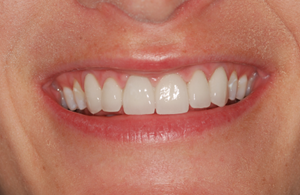
 What Makes a Natural-Looking Crown?
Emergence profile, translucency, internal color, and healthy gum response: a DC prosthodontist explains the anatomy of a crown no one can detect.
 Dental Crowns
 How Is an Immediate Smile Makeover Performed?
An immediate smile makeover transforms your smile in one visit using hand-crafted temporary crowns as a living preview. A DC prosthodontist explains how.