
Two Front Teeth Saved From Extraction: A Second Opinion, Custom Gold Posts, and Crowns Made to Last
Smile view
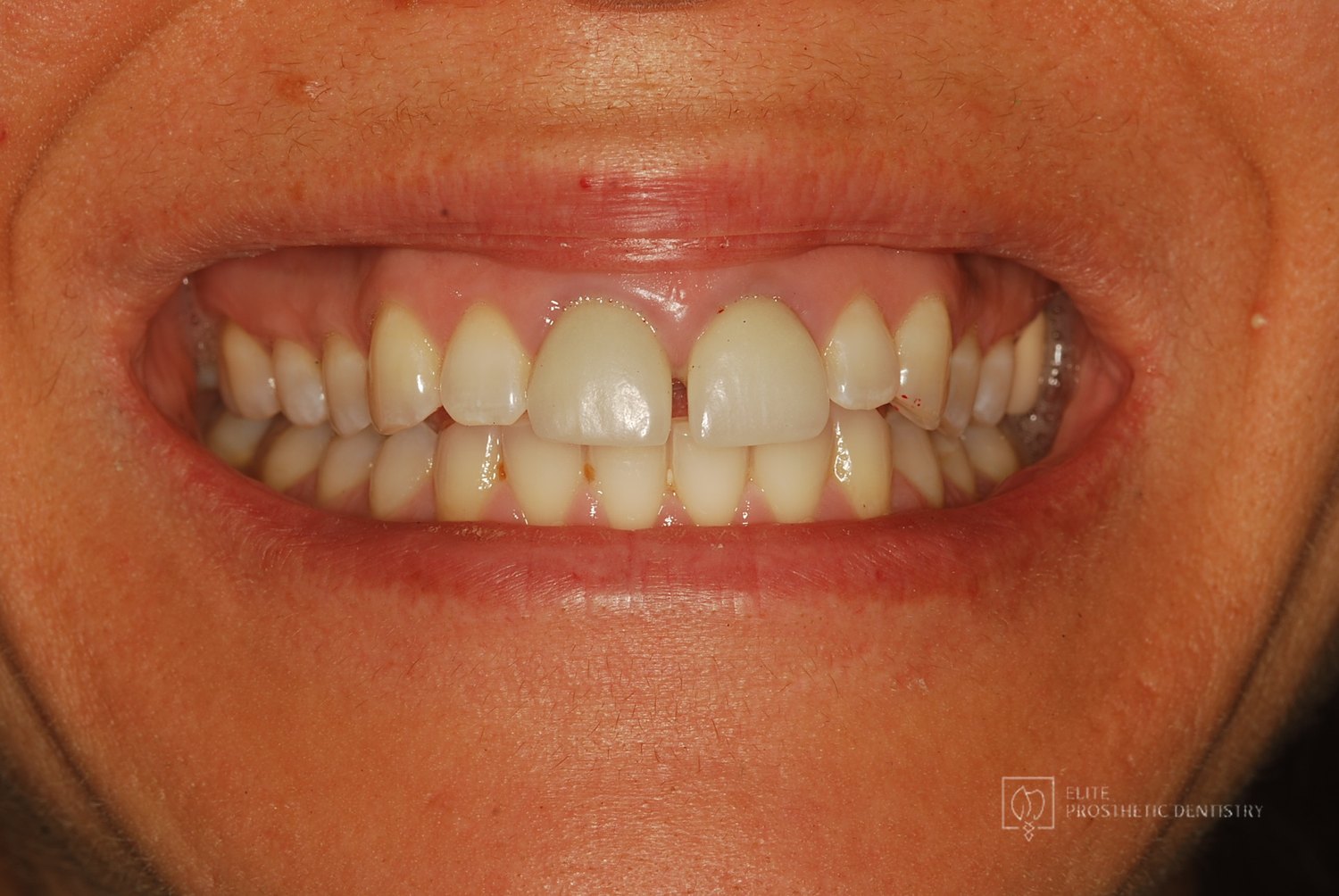 Before
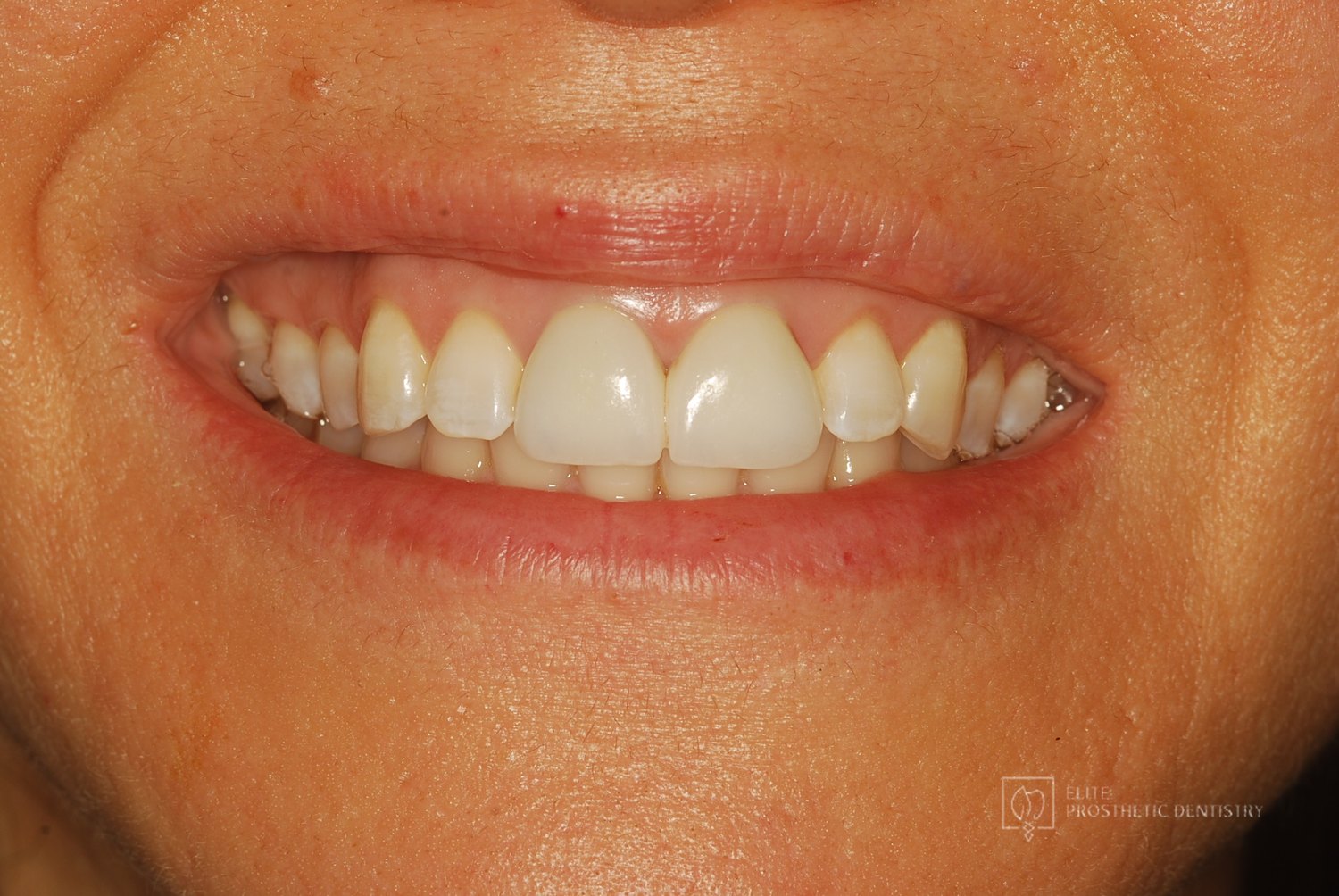 After
After
Before and After
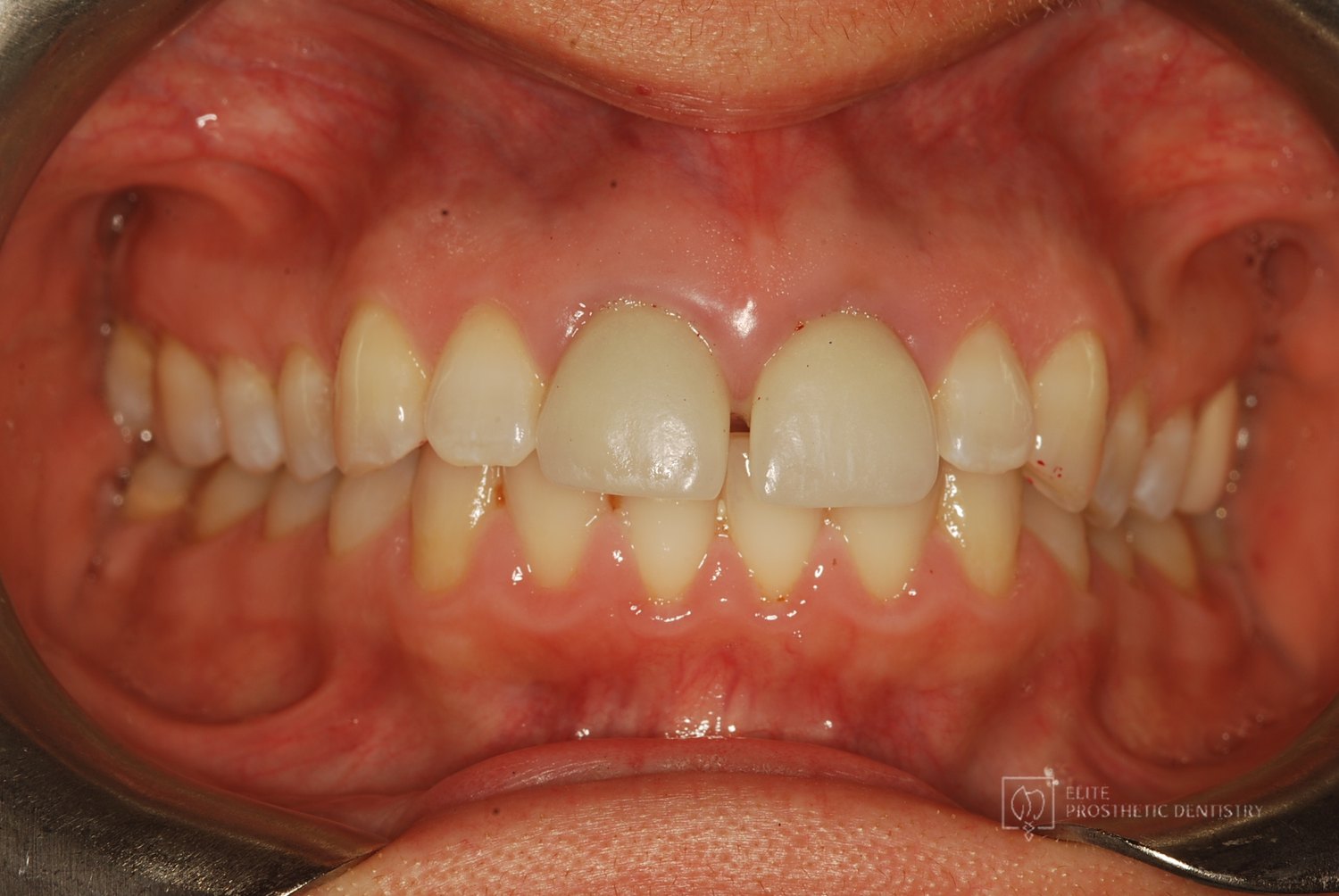 Before
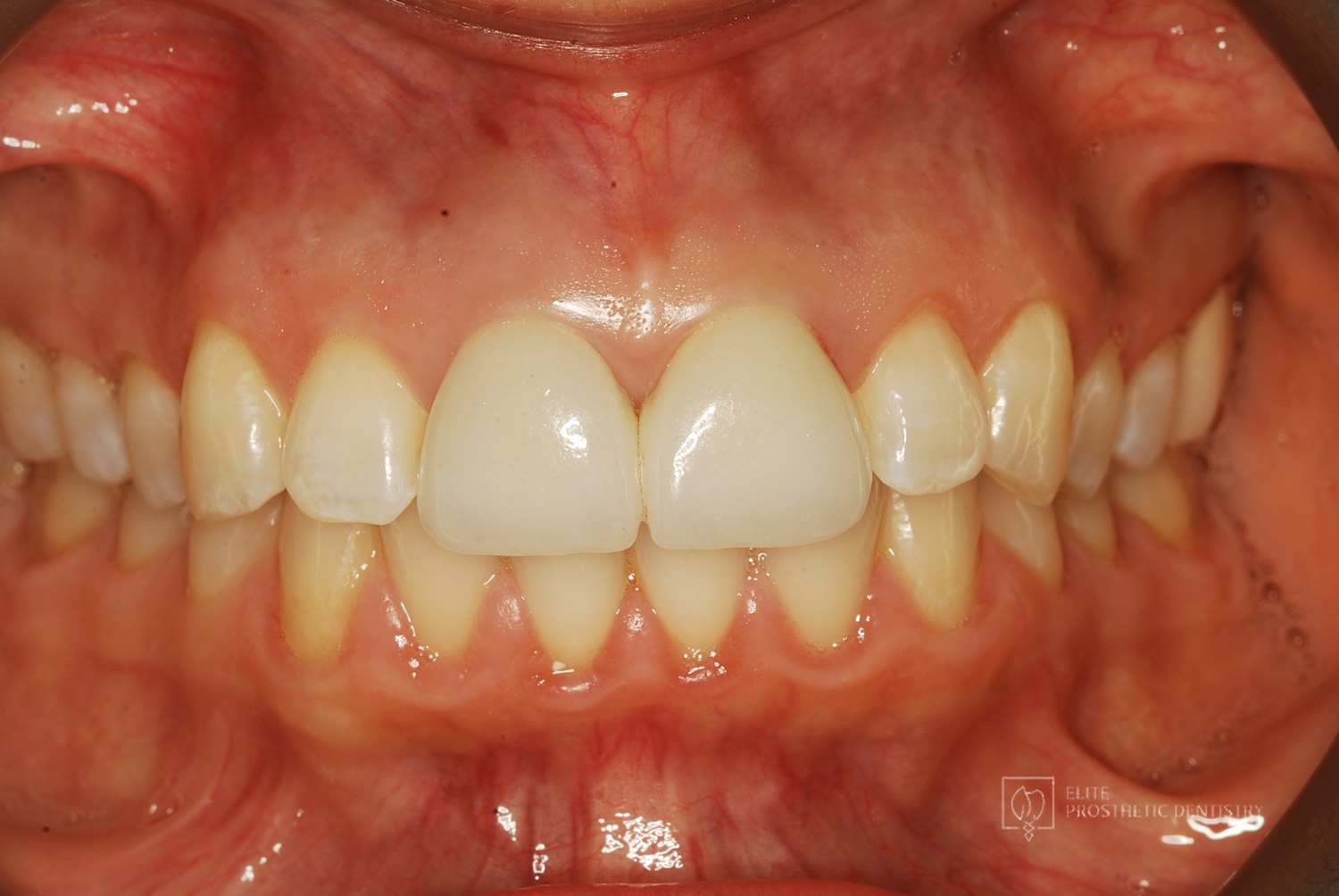 After
After
The Treatment, Step by Step
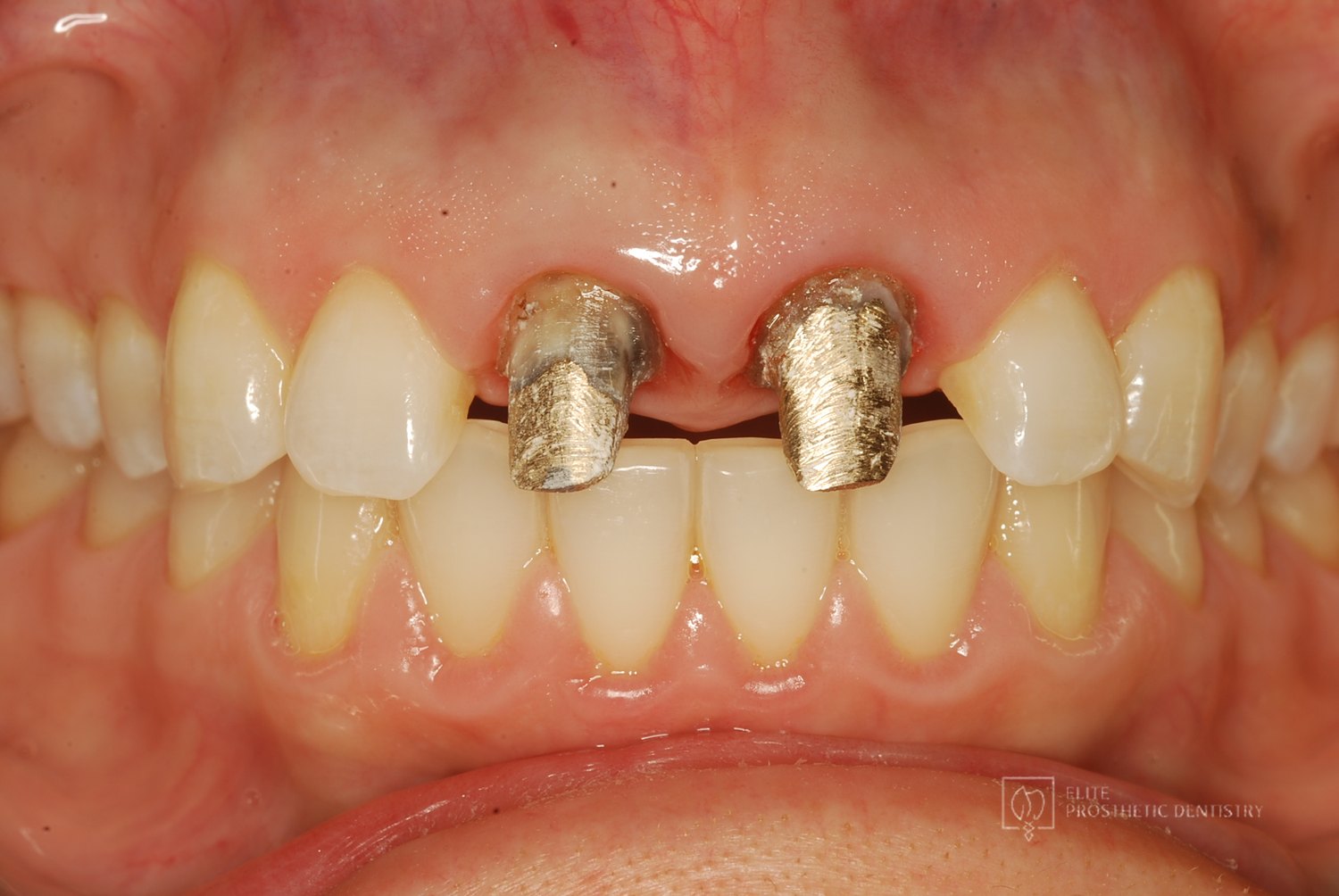
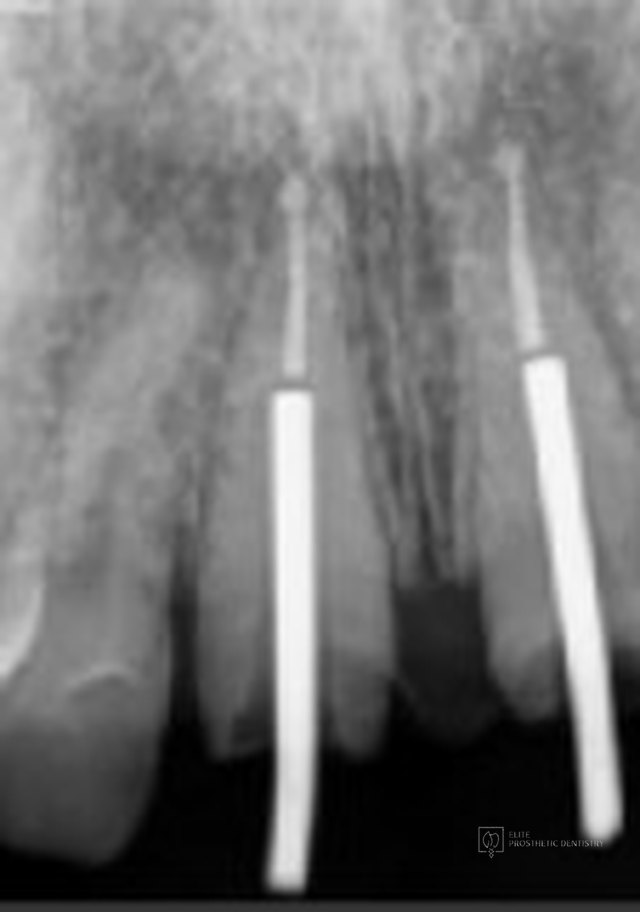
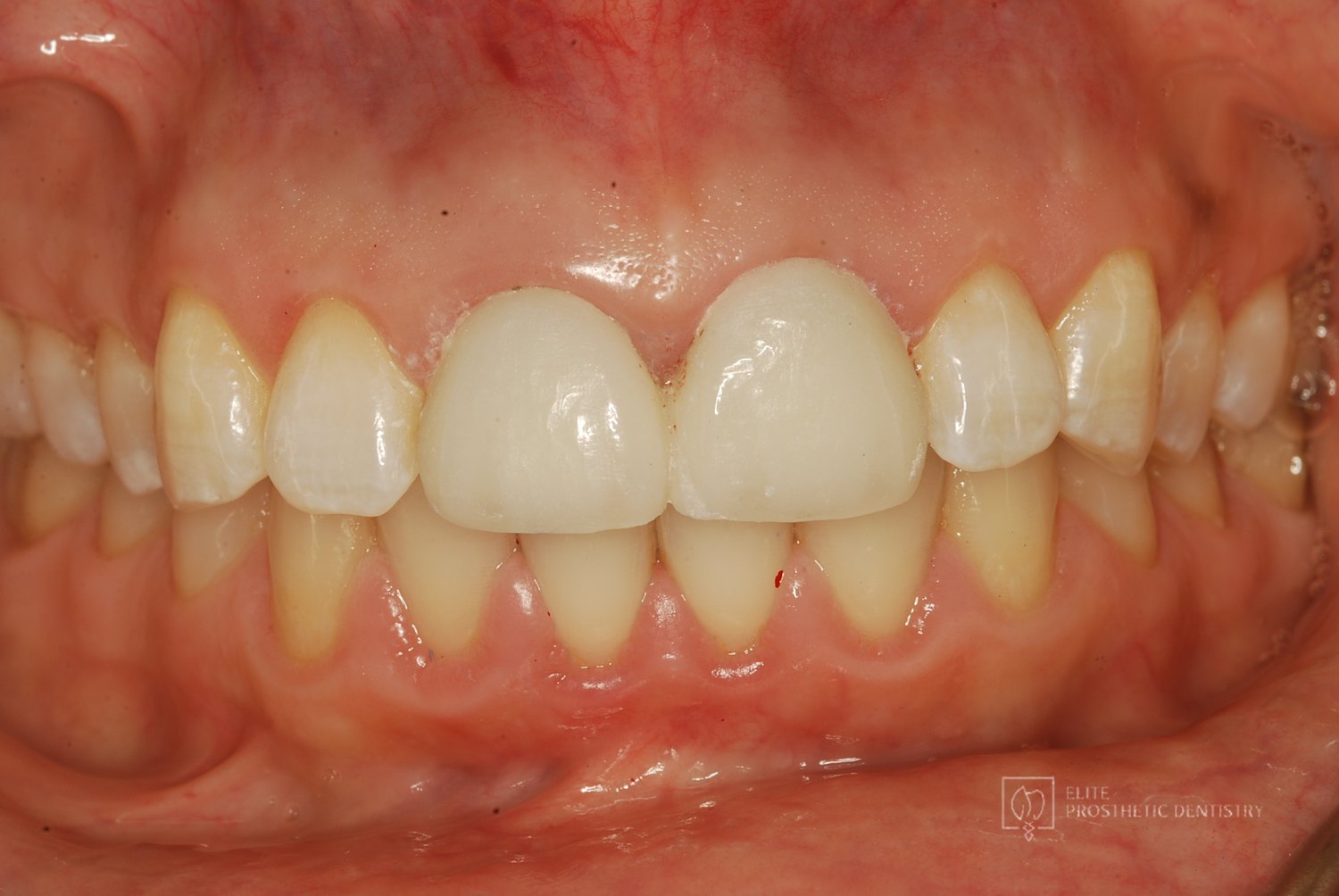
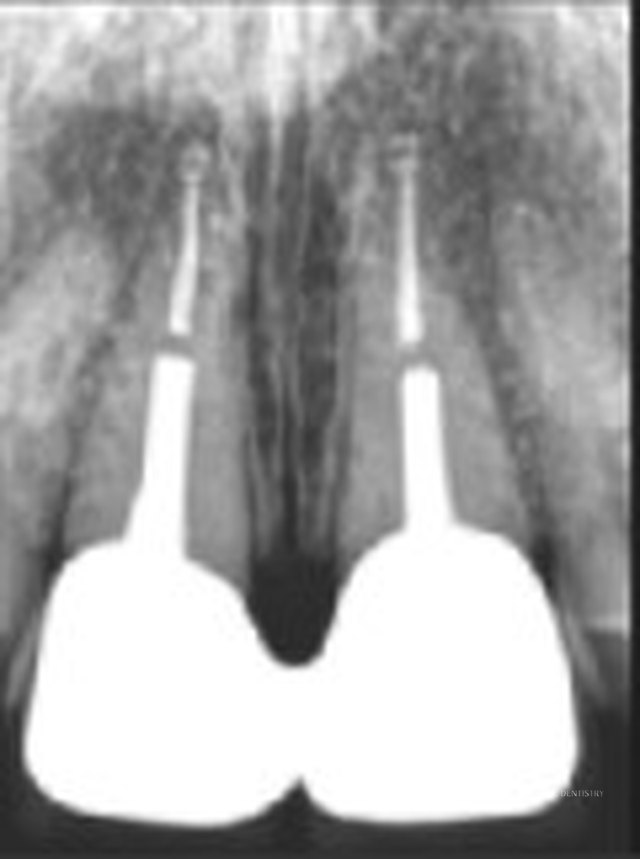
Two front teeth saved with a second opinion, custom gold posts, and crowns designed to last
Two upper central incisors, the two front teeth most visible in the smile, had been recommended for extraction and implant replacement because of failed root canal treatment and recurrent decay. At Elite Prosthetic Dentistry, CBCT evaluation showed that removing the roots from their thin facial bone housing could create a visible esthetic defect in the gum and bone contour. This documented case shows how teeth that had been planned for removal were instead preserved with endodontic retreatment, custom lab-fabricated gold posts, and two high-esthetic zirconia crowns. The same standard applies whether a patient is seeking a second opinion before losing a front tooth or simply wants complex front-tooth dentistry planned carefully and done correctly. Treatment was planned and completed by Gerald Marlin, D.M.D., M.S.D., a specialty-trained prosthodontist who has placed more than 3,900 dental implants, and who recommended preservation in this case because it provided the better long-term esthetic and functional result.
Case at a Glance
- Treatment
- Conservative restoration of two upper central incisors recommended elsewhere for extraction, using custom gold posts and two high-esthetic zirconia crowns
- Approach
- Specialist second-opinion evaluation, endodontic retreatment, custom lab-fabricated gold post foundations, and in-house zirconia crown fabrication with photographic verification
- Case Type
- Second opinion / tooth preservation
- Patient Concern
- Two front teeth with failed root canal treatment and recurrent decay had been recommended elsewhere for extraction and replacement with implants.
- Decision Point
- Extract the two front teeth and replace them with implants as previously recommended, or preserve the natural roots with retreatment and new crowns.
- Outcome
- The teeth were preserved rather than extracted, with the natural roots, bone, and gum architecture kept intact and the crowns restoring shape, color, and function, confirmed in final photography.
- Why It Matters
- Demonstrates the value of a diagnostic second opinion before an irreversible step like extraction, since a careful evaluation of the roots and bone can show that preserving a tooth protects long-term esthetics better than replacement.
Many patients want dentistry that looks natural, functions comfortably, and lasts. That was the situation here. The recommendation to remove the two front teeth was understandable based on the failed root canals and recurrent decay, but extraction in the front of the mouth can carry permanent esthetic consequences that deserve careful evaluation before anything is removed. A closer diagnostic review showed that the roots could be preserved, the surrounding bone and gum architecture could be protected, and the final crowns could be built on a stronger, custom foundation. The photographs below document the starting point, the treatment sequence, and the completed result.
Why a front tooth gets recommended for extraction
When a front tooth has had a root canal that later fails, and decay returns around the old restoration, the tooth can look like a lost cause. The previous work has not held, infection is present again, and replacing the whole tooth with an implant can seem like the cleaner solution. For many teeth, in many parts of the mouth, that reasoning is sound.
The front of the mouth is different. The two central incisors sit in thin facial bone, and that bone depends on the natural root to stay intact. Removing the root often fractures the thin bone behind it, which then resorbs over the months that follow. The gum recedes with it. For a patient with a high lip line, who shows gum and bone contour when she smiles, that loss is visible and permanent, and it is difficult to fully rebuild even with a well-placed implant. The decision to remove a front tooth is one of the few in dentistry that genuinely cannot be undone, which is exactly why it is worth a careful second look before it happens.
The presenting condition
Clinical Findings
- →Two upper central incisors with previously failed root canal treatment and recurrent decay around the existing restorations
- →Remaining root structure intact enough to restore, despite the failed prior treatment
- →Thin facial bone over the roots, with a high lip line that would expose any post-extraction defect when smiling
- →A standing recommendation from a general dentist and an oral surgeon to extract both teeth and replace them with implants
Why this case called for a specialist second opinion
The single most valuable thing a specialist second opinion offers is the chance to weigh the alternatives before an irreversible decision is made. Extraction cannot be reversed. The bone loss that follows extraction in the esthetic zone cannot be fully restored. When the teeth recommended for removal are the two most visible teeth in the smile, the stakes of getting that decision right are high.
A careful evaluation by a prosthodontist who restores complex front teeth for a living asks a different question than whether the teeth can be replaced. It asks whether they should be, when the roots are still sound and keeping them would protect the bone, the gum line, and the smile around them. In this case the answer was clear: the foundation was salvageable, and preservation was the more conservative and more durable path. The prior recommendation was reasonable. It simply was not the only option, and it was not the best one here.
The treatment plan
-
1
Specialist second-opinion evaluation
A thorough review of the teeth, the roots, and the surrounding bone, supported by a CBCT scan, established that the foundation was sound enough to restore and that removing the roots from their thin facial bone housing would risk a visible esthetic defect.
-
2
Endodontic retreatment
The failed root canals were retreated to resolve the underlying infection, returning each root to a healthy, stable base that could carry a long-term restoration.
-
3
Custom gold post foundations
Rather than a standard prefabricated post, each root was rebuilt with a custom gold post cast to match the exact internal anatomy of that individual root, distributing force evenly and giving each compromised tooth a strong, precise platform for a full-coverage crown.
-
4
In-house zirconia crown fabrication
Two high-esthetic zirconia crowns were fabricated in direct coordination with the practice's in-house laboratory, designed against the patient's own tooth color, lip line, and facial proportions so the restored teeth read as natural rather than matched to a generic template.
-
5
Delivery and photographic verification
The completed crowns were verified in function and documented photographically, confirming a healthy tissue response, a preserved smile line, and natural-looking front teeth.
The outcome
The case moved from a recommendation to extract two front teeth and replace them with implants to a conservative result that kept the natural teeth in place. The roots, the bone around them, and the gum architecture were all preserved, and the two zirconia crowns restored shape, color, and function on a foundation built to last. The change is visible at every level the camera can capture: the retracted views show restored, natural-looking front teeth where failing structure used to be, and the smile shows a result that holds its line. Whether a patient comes in to avoid losing a tooth or simply wants complex restorative work done correctly, the goal is the same, a result planned carefully enough to look natural and hold up for years.
Result Highlights
- ✓Two front teeth preserved instead of extracted and replaced with implants
- ✓Natural roots, facial bone, and gum architecture kept intact
- ✓Failed root canals retreated to resolve the underlying infection
- ✓Custom gold post foundations cast to each individual root for a strong, predictable base
- ✓Two high-esthetic zirconia crowns fabricated under in-house laboratory coordination
- ✓Smile line protected, with the completed result documented photographically
Has a dentist recommended pulling a front tooth, or do you simply want complex restorative work planned and done correctly the first time? A private consultation can establish whether the tooth can be preserved before anything is removed.
Schedule a Private ConsultationWho this case may sound familiar to
This story tends to resonate with patients in a few recognizable situations:
- You have been told a front tooth needs to be extracted and replaced with an implant, and you want a specialist to weigh in before you agree to anything.
- You have a failed root canal or recurrent decay on a front tooth and you have been told it cannot be saved.
- You would rather keep your natural teeth than replace them, if there is a structurally sound way to do it.
- You have a high lip line or a visible smile, and you are concerned about how an extraction would change your appearance long term.
- You care about quality and longevity, and you do not want to have the same dentistry redone in a few years.
- You want complex front-tooth work planned and done correctly the first time, by a specialist who does it routinely.
- You are willing to travel for specialist-level planning before committing to an irreversible procedure.
If any of those describe where you are, a consultation with Dr. Marlin can establish whether preservation is feasible in your case.
If a dentist has recommended extracting a front tooth, a specialist second opinion can clarify whether the tooth can be preserved and restored before anything is removed. The decision is easier to make well before the tooth is gone than after.
Request a Second-Opinion EvaluationFrequently asked questions
Can a tooth that has been recommended for extraction actually be saved?
Often, yes. A tooth recommended for extraction can frequently be preserved when the root structure is still sound, when endodontic retreatment is feasible, and when the long-term consequences of removal, such as bone loss and esthetic compromise, outweigh the benefits. Not every tooth can be saved, but the only way to know is a careful specialist evaluation before the tooth is removed.
Why save a natural front tooth instead of replacing it with an implant?
A natural tooth keeps its own root and the bone and gum architecture around it. In the front of the mouth, that architecture is what makes a smile look natural. Removing a front tooth begins a process of bone resorption that is difficult to fully reverse, even with a well-placed implant. When a tooth is structurally sound enough to restore, preserving it usually delivers a more predictable esthetic result and protects the surrounding tissue. Implants are an excellent option when a tooth truly cannot be saved; they are not automatically the better option when it can.
Can a tooth with a failed root canal be re-treated and kept?
In many cases, yes. A root canal that has failed can often be retreated to resolve the infection, provided enough healthy root structure remains. Once the root is stable, it can support a post and a full-coverage crown. A failed root canal by itself is not automatically a reason to remove a tooth, particularly a visible front tooth where preservation protects the bone and smile line.
Why use a custom gold post instead of a standard prefabricated post?
A custom, lab-fabricated gold post is cast to match the exact internal anatomy of an individual root, rather than forcing the root to accept an off-the-shelf shape. That precise fit distributes chewing forces more evenly and provides a stronger, more predictable foundation for a severely compromised front tooth that has to support a full-coverage crown. For teeth being preserved rather than replaced, that foundation is what makes a durable long-term result possible.
How can removing a front tooth affect the smile line?
A high lip line exposes the gum and the bone contour around the front teeth when a person smiles. Extraction in this area can fracture and resorb the thin facial bone that supports the smile line, producing a visible defect that is difficult to hide. When preserving the natural tooth is structurally feasible, it typically protects that smile line far better than extraction followed by implant replacement.
What does a CBCT scan show before a front tooth is removed?
A CBCT scan is a three-dimensional image of the tooth, its roots, and the surrounding bone. Before an extraction in the esthetic zone, it shows how much facial bone covers the roots and how the bone and gum are likely to respond if the tooth is removed. That information often changes the decision, because it can reveal when removing a tooth would create a visible defect that preserving and restoring the natural tooth would avoid.
How long can restored front teeth like these last?
Longevity depends on the remaining root structure, the fit and design of the posts and crowns, the balance of the bite, and ongoing care. Well-planned, well-fabricated restorations on a sound foundation can function for many years. Crowns from Elite Prosthetic Dentistry’s in-house laboratory have lasted 35 years and longer with proper care.
Why does an in-house dental laboratory matter for a case like this?
Matching two front teeth to the rest of a natural smile is as much an artistic problem as a technical one. The crowns have to recreate the color, translucency, and surface character of the neighboring teeth so they do not read as restorations. When the ceramist works in the same facility as the prosthodontist, those details are refined together with the patient’s records on the bench. Elite Prosthetic Dentistry has operated an in-house dental laboratory continuously since 1985.
When is a specialist second opinion worth it before agreeing to an extraction?
Any time extraction of a potentially salvageable tooth is being recommended, particularly for visible front teeth, a specialist second opinion is worth the time. The decision to extract is largely irreversible, so a careful comparison of the conservative alternatives, by a prosthodontist who handles complex restorative cases, is worthwhile before anything is removed.
More about the work behind this case
This case sits at the intersection of a specialist dental second opinion, custom dental crowns, and the discipline of conservative restorative planning where the alternative is irreversible. Elite Prosthetic Dentistry does not reserve this level of planning for extreme cases. The same diagnostic discipline behind a full reconstruction also guides individual crowns, veneers, and the careful preservation of teeth that other providers have given up on, for patients who simply want the work done correctly and built to last. The diagnostic depth and in-house laboratory control reflect the practice philosophy that supports cases of this complexity. Patients travel for care from outside the DMV for that level of evaluation; this case is one example. Elite Prosthetic Dentistry treats patients from across Washington, DC and the DMV including Bethesda, Chevy Chase, McLean, Arlington, Potomac, and Great Falls.
Related Services
About the Provider
This case was treated by Gerald M. Marlin, D.M.D., M.S.D., at Elite Prosthetic Dentistry in Washington, DC. Dr. Marlin is a specialty-trained prosthodontist with more than 40 years of clinical practice, more than 3,900 dental implants placed, and 9 U.S. patents in dental implant restoration methodology. Elite Prosthetic Dentistry has operated a continuous in-house dental laboratory since 1985.
4400 Jenifer Street NW, Suite 220, Washington, DC 20015 | (202) 244-2101
Related Services
Related Patient Success Stories
Explore similar patient success stories demonstrating our expertise in advanced prosthetic dentistry.
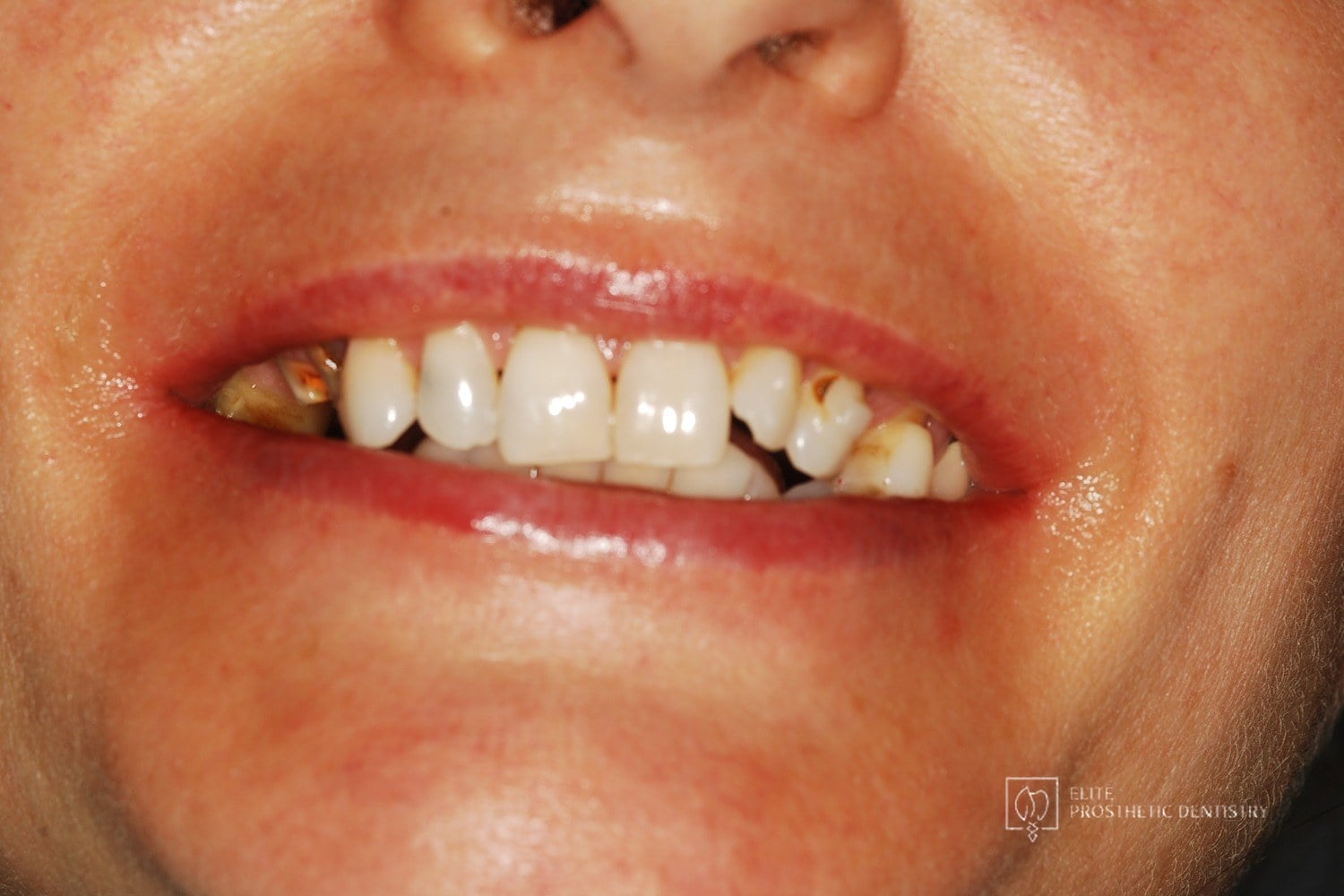 Before
 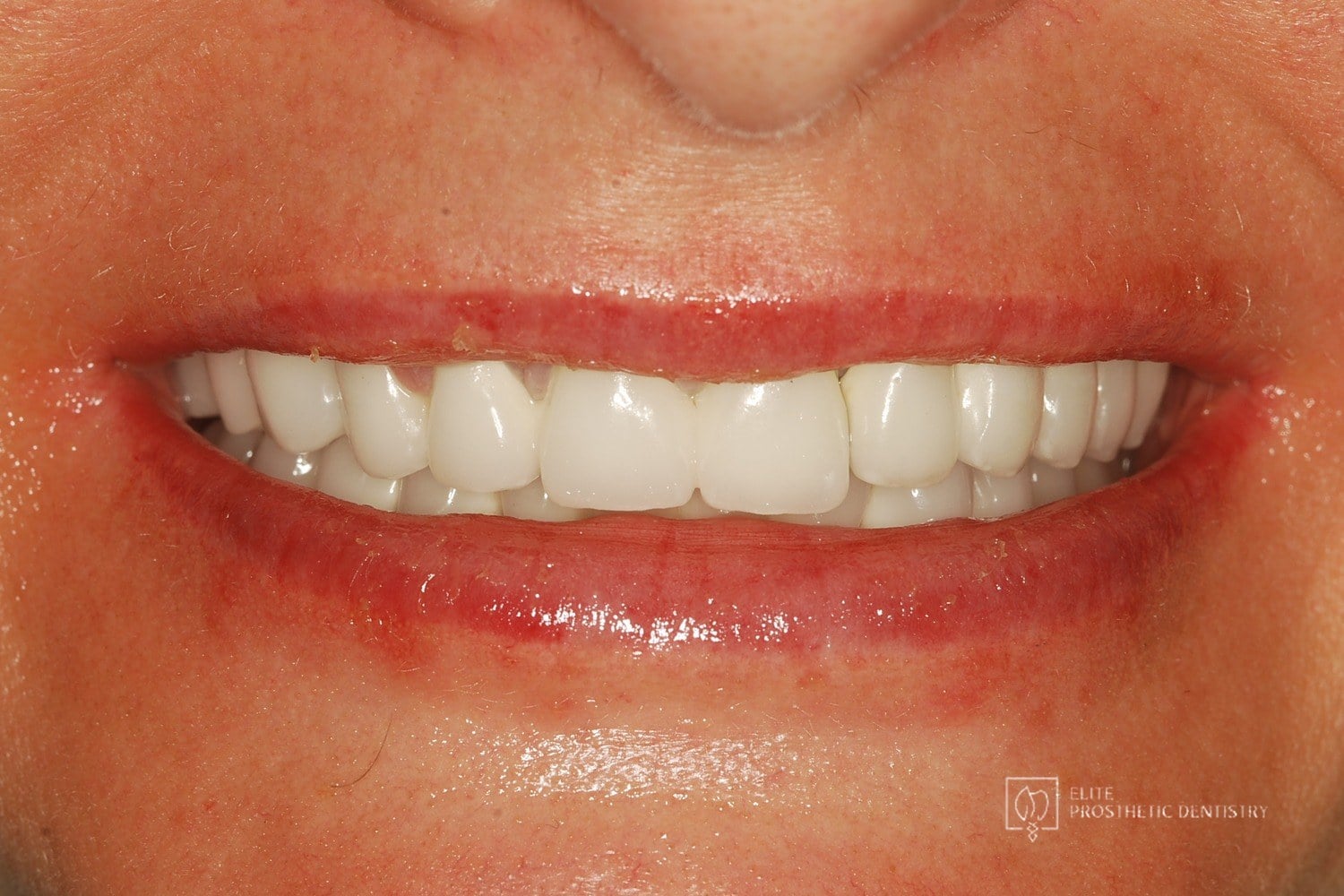 After
After How Aging, Failing Dentistry Was Replaced with a Coordinated Full-Mouth Implant and Crown Reconstruction
The patient presented with throbbing upper-molar pain, long-standing infections, multiple root canals and unfinished prior treatment, generalized sensitivity, and several hopeless teeth.
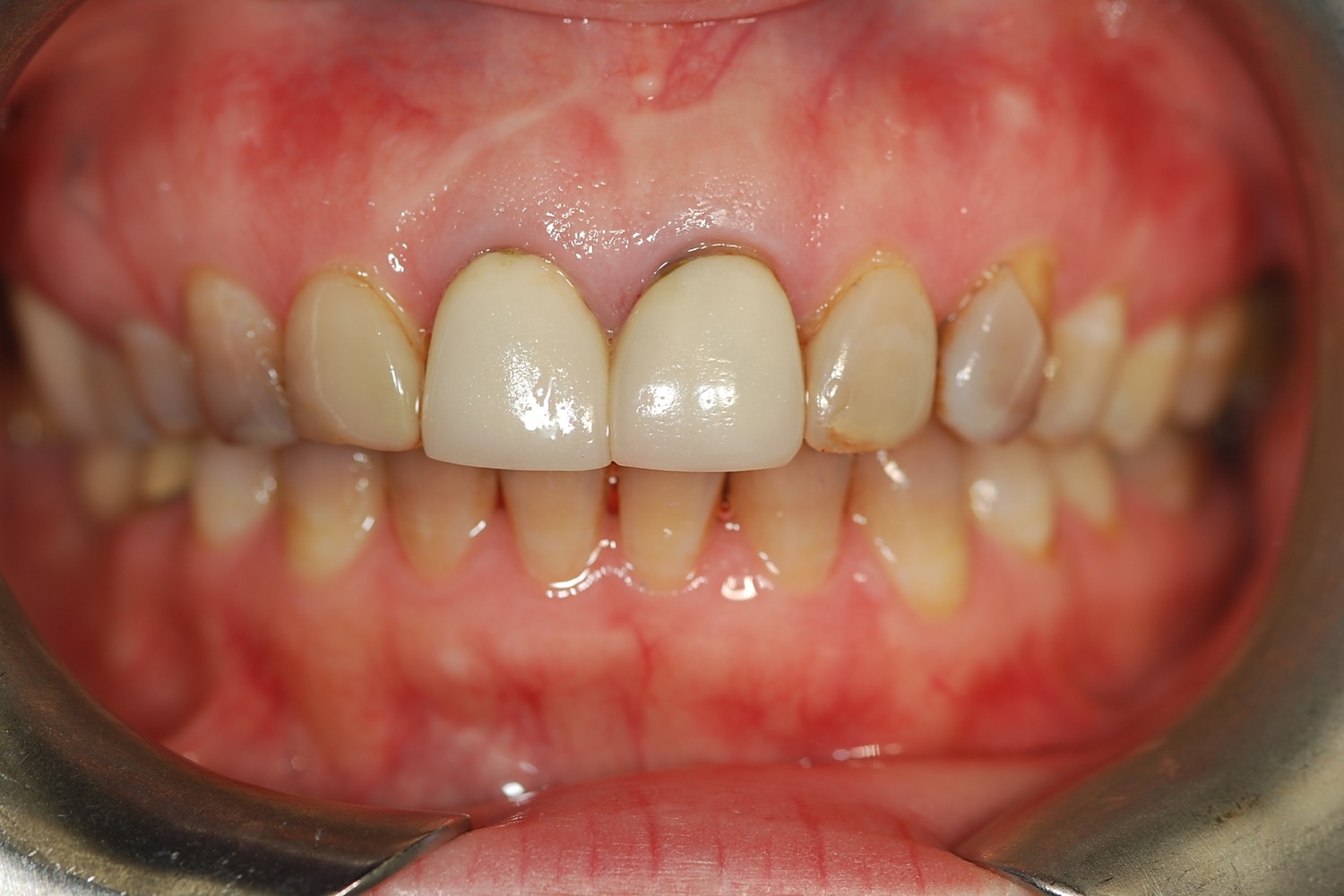 Before
 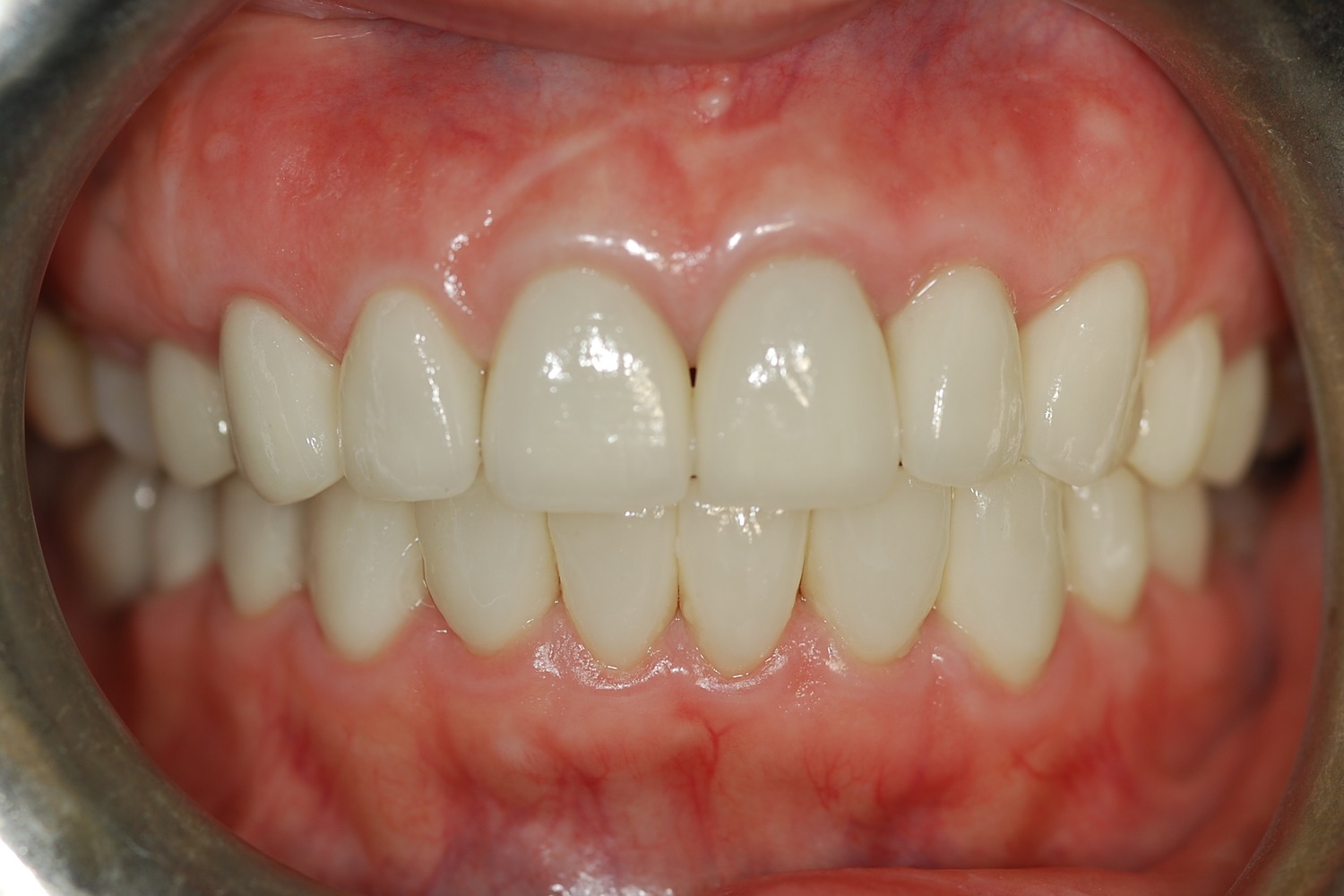 After
After How Aging, Opaque Restorations Were Replaced with Customized Ceramic Restorations Designed for Long-Term Natural Esthetics
The existing restorations appeared opaque, worn, and unnatural over time, affecting both confidence and overall smile harmony.
Before After Two Front Teeth Saved From Extraction: A Second Opinion, Custom Gold Posts, and Crowns Made to Last
Two upper central incisors with failed root canal treatment and recurrent decay had been recommended for extraction and implant replacement. A CBCT evaluation showed that removing the roots from their thin facial bone housing could create a visible esthetic defect in the gum and bone contour, made worse by the patient's high lip line.