
Are You Considering Dental Veneers? What to Know Before Your Consultation
Considering dental veneers is usually the fun part: browsing transformations, imagining your own. This article is the homework part, and it is short. Veneers are one of the most versatile tools in cosmetic dentistry, thin custom-crafted porcelain shells bonded to the front of your teeth that can resolve stains, chips, gaps, and shape issues in a few visits. Whether they are right for your teeth is a separate question, and walking into your consultation knowing what to ask is the best way to get a straight answer.
What Veneers Do Well
On the right teeth, veneers are hard to beat. They preserve most of your natural tooth structure while transforming color, shape, and symmetry, and porcelain reproduces the luster and translucency of enamel more faithfully than any other material. Patients dealing with discoloration that resists whitening, chipped or slightly worn edges, small gaps, or minor unevenness are the classic candidates, a range we detail in what veneers are and who qualifies.
What to Verify About Yourself
Candidacy comes down to a few checkable conditions. Veneers bond to enamel, so your teeth need enough sound enamel to hold them. Your gums should be healthy, since tissue inflammation undermines both bonding and appearance. The underlying tooth color needs to be within range of what a thin shell can mask. And your goals should be proportionate: modest corrections of shape and length, not structural rebuilding.
When those conditions fail, veneers disappoint, and a different restoration succeeds. Teeth that are very dark, heavily filled, or in need of significant reshaping are usually better served by crowns, a decision we map in when veneers are not as good as crowns. One more consideration deserves respect: preparing a tooth for a veneer removes about half a millimeter of enamel and is not reversible, so the choice should be made once, correctly.
Questions That Reveal the Quality of the Practice
At the consultation itself, a handful of questions do most of the work:
- Which restoration fits each of my teeth, and why? The honest answer is sometimes mixed: veneers here, a crown there, whitening first.
- Who makes the veneers, and where? At Elite Prosthetic Dentistry they are handcrafted in our in-house laboratory, where the technician sees you rather than a shade number, and refinements happen with you present.
- How many cases like mine have you completed? Experience with your specific problem, tetracycline staining, worn edges, gaps, matters more than a general portfolio.
- What will they look like before they are final? Well-made temporaries and trial evaluations let you approve the design before it is permanent.
- What should I believe about longevity? Realistic answers beat grand promises; ask what maintenance the result will need.
If you have absorbed conflicting claims from the internet, our review of the most common misconceptions about veneers separates marketing from reality.
What the Consultation Itself Looks Like
Knowing what a thorough veneer consultation includes helps you recognize one. Expect an examination of your teeth and gums, X-rays where indicated, photographs, and a genuine conversation about what bothers you and what you want to see in the mirror. Expect the dentist to talk you out of veneers on any tooth where they are the wrong tool, and to explain the sequence if whitening or gum work should come first. Expect to see examples of the practice’s own completed cases, not stock photography.
What you should not expect is pressure. Veneers are elective, the preparation is permanent, and a practice confident in its work will give you room to decide well.
Why We Publish This
Patient education has been a priority of Dr. Gerald Marlin for decades, including published articles on veneers and their benefits. The reasoning is simple: an informed patient makes a better decision, and veneers chosen for the right reasons, on the right teeth, by the right hands, are among the most satisfying treatments in dentistry.
One more piece of homework worth doing: look at your own smile photos from a few years apart. Changes you barely notice day to day, gradual darkening, edges wearing shorter, become obvious in comparison, and they sharpen the conversation about what you actually want corrected.
If you are considering veneers, bring your questions to a specialty-trained prosthodontist and get answers specific to your smile. Call 202-244-2101 or schedule a consultation at Elite Prosthetic Dentistry in Friendship Heights, Washington, DC.
See How We Resolve These Problems
Our patient success stories show real cases and real results. Browse outcomes from a specialist prosthodontist with decades of experience and 3,900+ implants placed.
Key Takeaways
- ✓ Veneers are a superb solution for the right teeth; the pre-consultation homework is figuring out whether yours are the right teeth.
- ✓ Candidacy depends on sound enamel, healthy gums, reasonable underlying tooth color, and modest shape goals.
- ✓ Come prepared with questions: who fabricates the veneers, how many similar cases the dentist has done, and what the alternatives are.
- ✓ A trustworthy consultation discusses crowns, whitening, and bonding alongside veneers rather than assuming the answer.
- ✓ The goal is a decision you make once, correctly, instead of cosmetic work that gets redone in a few years.
Frequently Asked Questions
What should I know before getting veneers?
Three things above all: veneers require sound enamel to bond to and modest correction goals to succeed; they involve permanently preparing a thin layer of your tooth, so the decision is not reversible; and the quality of the result depends as much on who designs and fabricates them as on the material itself.
What questions should I ask at a veneer consultation?
Ask whether veneers or another restoration best fits each tooth and why, who will fabricate the veneers and where, how many cases like yours the dentist has completed, what the veneers will look like before they are final, and how long the result should reasonably last with proper care.
Who is not a good candidate for veneers?
Patients whose teeth are very dark, heavily filled, structurally weakened, or significantly mispositioned, and those with untreated gum disease or heavy uncontrolled grinding. Many of these patients are excellent candidates for crowns or a broader plan instead, which is exactly what a thorough consultation sorts out.
Are veneers reversible?
No. Preparing a tooth for a veneer removes a thin layer of enamel, roughly half a millimeter, so the tooth will always need a restoration afterward. That is why the decision deserves a careful consultation and a dentist who recommends veneers only where they are truly the right answer.
Related Patient Success Stories
Explore similar patient success stories demonstrating our expertise in advanced prosthetic dentistry.
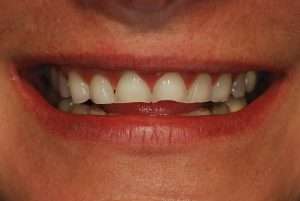 Before
 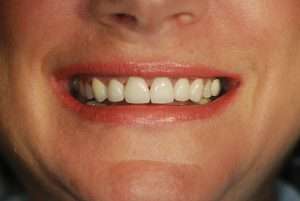 After
After Can Worn-Down Teeth Be Fixed or Do They Have to Be Replaced?
The patient presented with a severely worn dentition that was marring an otherwise great smile line.
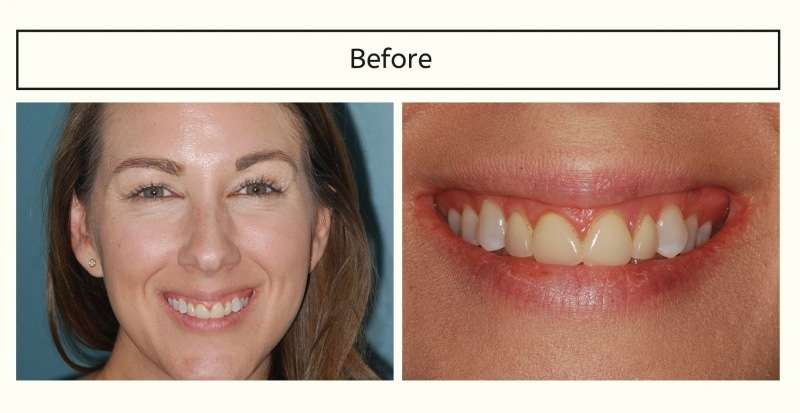 Before
 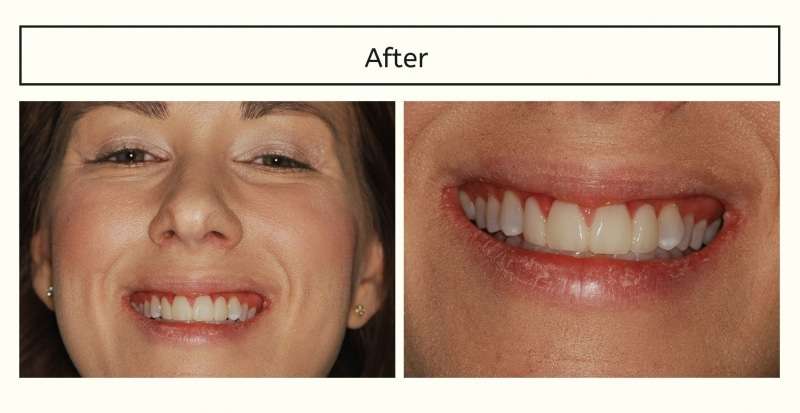 After
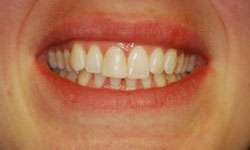
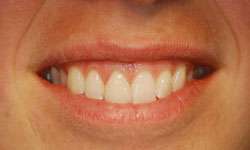
After The Immediate Gummy Smile Makeover
Self-conscious about her gummy smile line and wearing veneers that were not the optimal size or shape for her smile, the patient needed a natural-looking result on a tight timeline before her wedding.
 Before
  After
After The Single Anterior Crown
A veneer on one upper front tooth no longer matched its natural neighbor in shape, color, or translucency, and its contours were irritating the gum tissue around it.
Related Articles
Deepen your knowledge with additional insights on this topic.
 Porcelain Veneers
 Revealing the Process: An In-Depth Look at Veneer Teeth Prep
About half a millimeter of enamel, one careful appointment: a DC prosthodontist walks through veneer tooth preparation and why precision decides the result.
 Porcelain Veneers
 Why Do Some Dental Veneers Chip?
Grinding, bite problems, hard foods, and bonding errors are the usual causes of chipped veneers. A DC prosthodontist explains prevention and repair.
Porcelain Veneers The Most Common Misconceptions About Veneers
Too fake, too fragile, too damaging, too expensive? A DC prosthodontist corrects the five most common misconceptions about porcelain veneers.