
Temporary Crowns Restore a Patient's Smile in One Day with an Immediate Smile Makeover
Documented before-and-after view

Additional documented view
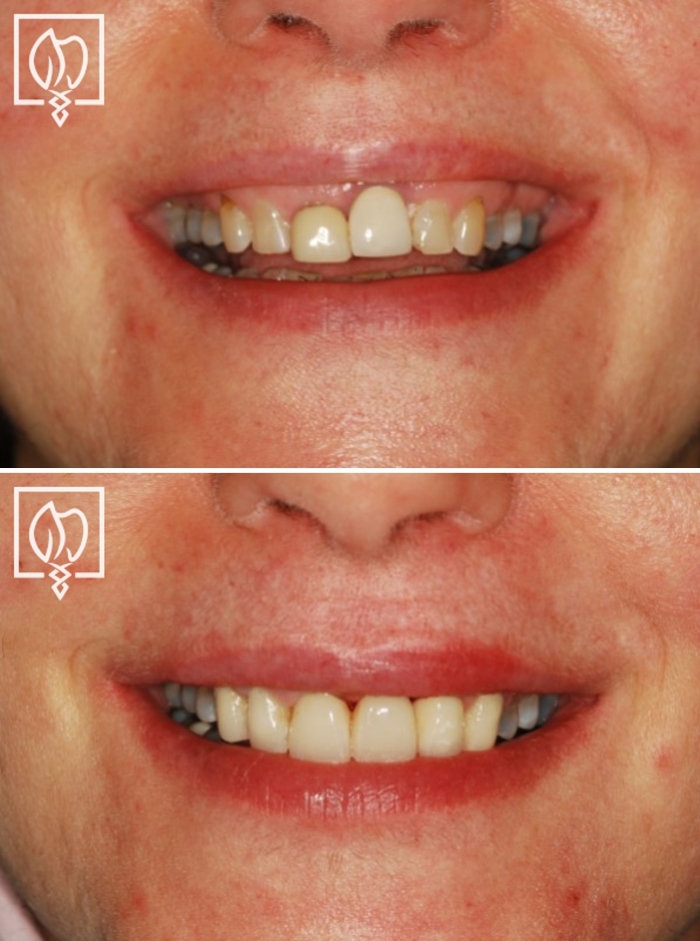
A failing implant restoration and a smile restored in one day
Failing implant restoration treated in Washington, DC. In this documented case at Elite Prosthetic Dentistry, a patient from Potomac, Maryland arrived in pain from a failing dental implant whose restoration was also undermining her appearance and her confidence. In one coordinated visit, the compromised restorations were removed, bone was grafted at the implant site, and a hand-crafted temporary splint restoration from the practice’s in-house laboratory restored her smile the same day. Treatment was planned and coordinated by Dr. Gerald Marlin, D.M.D., M.S.D., a prosthodontist focused on implant and complex restorative care.
Case at a Glance
- Treatment
- Removal of compromised restorations, bone grafting at the implant site, and an immediate custom temporary splint restoration
- Approach
- One coordinated visit supported by the in-house laboratory, ahead of the permanent restorations
The presenting condition
The patient’s chief complaint was pain from a failing dental implant. Implant failure is not extremely common, but it can occur for several reasons, including inadequate bone support, excessive forces on the implant, or problems with the restoration the implant carries.
Her situation was complicated by the fact that the failing implant was not only a source of physical discomfort. The implant and its restoration looked artificial in her mouth and were disrupting her smile line. She had grown very unhappy with how her smile looked and increasingly uncomfortable with her appearance, and that discomfort was wearing on her confidence and self-esteem.
Clinical Findings
- →Pain from a failing dental implant
- →An implant restoration that looked artificial and disrupted the smile line
- →Older crowns and related restorations that were compromising her appearance
- →Bone at the implant site that needed strengthening and rebuilding
- →Growing self-consciousness that was affecting her confidence and self-esteem
Why this case required prosthodontic-level planning
A failing implant is rarely just an implant problem. In this case it involved the bone supporting the site, the older crowns and restorations connected to it, the appearance of the smile line, and a patient who had already spent too long feeling self-conscious. Treating those pieces one at a time, each with its own appointment, its own healing window, and its own wait for laboratory work, would have stretched the process across months and left the patient living with a compromised smile for much of it.
Prosthodontic planning approaches the problem from the endpoint. The final restorations define what the bone must support and what the temporary phase must look like, and that plan determines the sequence. When the diagnostic work is complete before anything is removed, procedures that would otherwise be separated can be sequenced responsibly into a single visit.
The decision behind the result: compressing surgery and esthetics into one visit
The defining judgment in this case was that the patient would not go home without a presentable smile. A conventional sequence would have removed the failing restorations, grafted the bone, and sent impressions to an outside laboratory, leaving days or weeks of waiting before a temporary restoration was ready.
The practice’s in-house laboratory changed that calculus. Because the technicians work in the same building, a temporary splint restoration could be hand-crafted specifically for this patient and inserted immediately, on the same day the surgical work was done. That meant the removal of the old restorations, the bone graft, and the immediate esthetic recovery could be planned as one coordinated procedure rather than a drawn-out sequence, without compromising the quality of any step. It required meticulous planning and coordination across the team, and it is the kind of sequencing decision that a practice controlling its own laboratory is positioned to make.
The treatment plan
-
1
Comprehensive evaluation and single-visit planning
The failing implant, the related restorations, and the bone at the site were assessed together so the full sequence could be coordinated into one visit.
-
2
Removal of the compromised restorations
The old crowns and restorations related to the failing implant were removed, addressing both the failing implant and the restorations that were compromising her appearance.
-
3
Bone grafting at the implant site
A bone graft strengthened and rebuilt the bone around the failing implant site, restoring adequate structure to support a new restoration with long-term stability.
-
4
Immediate custom temporary splint restoration
A temporary splint restoration, hand-crafted for this patient in the practice's private in-house laboratory, was inserted the same day, restoring the smile immediately.
-
5
Fabrication and delivery of the permanent restorations
While the patient wore her custom temporary with confidence, the permanent restorations were completed and delivered for the final, natural-looking result.
The outcome
The patient left the same visit with a natural-looking smile instead of a gap in her treatment. The temporary was not a stock placeholder. It was a carefully crafted restoration, hand-made in the in-house laboratory to match her smile, and it allowed her to speak and smile with confidence throughout the healing period rather than feeling self-conscious while her permanent crowns were being fabricated.
Once the permanent restorations were completed, she had a natural-looking smile she was proud to show. The combination of implant repair, bone grafting, and custom-crafted restorations, all coordinated under one roof, gave her back both function and confidence.
Result Highlights
- ✓Failing implant, related restorations, and bone deficit addressed in one coordinated visit
- ✓Bone grafting rebuilt support at the implant site for long-term stability
- ✓Hand-crafted temporary splint restoration inserted the same day
- ✓The patient could smile confidently while the permanent restorations were fabricated
- ✓Completed restorations restored a natural-looking smile, function, and confidence
Who this case may sound familiar to
This case tends to resonate with patients in a few recognizable situations:
- An implant placed years ago has started to hurt, feel different, or loosen its restoration.
- You avoid smiling because an implant crown or older restoration looks artificial in your smile line.
- You have put off treatment because you fear months of walking around without presentable teeth.
- You want the surgical and restorative sides of your care coordinated by one practice instead of split across offices.
- You want the problem corrected properly once, with the long-term plan established before anything is removed.
If any of those describe where you are, a consultation with Dr. Marlin can establish the diagnostic picture and the specific options for your case.
Frequently asked questions
What causes a dental implant to fail?
Implant failure is not extremely common, but it can occur. Contributing factors include inadequate bone support, excessive forces on the implant, and problems with the restoration the implant carries. A thorough evaluation identifies which factors are involved before any treatment decisions are made.
Does a failing implant restoration always mean starting over?
No. The right response depends on why the implant is struggling. In some cases the bone around the implant site can be rebuilt with grafting and the restorations redesigned. In others a different plan serves the patient better. The decision follows the diagnosis, not the other way around.
How can a temporary restoration be ready the same day as surgery?
It requires laboratory support on site. When a practice has its own laboratory and technicians, a custom temporary can be hand-crafted and fitted the same day as the surgical work rather than waiting days or weeks for an outside laboratory. Whether a single-visit sequence is appropriate depends on the individual case.
What is a temporary splint restoration?
It is a connected span of temporary crowns joined as one unit. Splinting adds stability while the mouth heals, and a well-made splint restores the appearance of the smile immediately. It also serves as a working preview of the final restorations.
What happens while waiting for the permanent restorations?
The temporary restoration protects the treated area and maintains the smile while healing progresses and the permanent restorations are fabricated. Because the temporary is custom made, patients can speak and smile with confidence during that period instead of feeling self-conscious.
Why see a prosthodontist for a failing implant?
A prosthodontist plans the implant, the bone, the restorations, and the smile line as one connected system. That matters in failure cases, where the visible problem is often only part of the picture and the sequencing of surgical and restorative steps determines the quality of the final result.
More about the work behind this case
This case brings together repairing failing implants, bone grafting, and the restorative planning behind a complete smile makeover. The single-visit coordination it required is an expression of the practice philosophy: plan the endpoint first, control the laboratory work in-house, and never leave the patient’s appearance as an afterthought.
Elite Prosthetic Dentistry treats patients from across the DMV including Bethesda, Chevy Chase, McLean, Arlington, Potomac, and Great Falls, with a record of out-of-area patients traveling to the practice for complex restorative care.
Related Services
Related Patient Success Stories
Explore similar patient success stories demonstrating our expertise in advanced prosthetic dentistry.
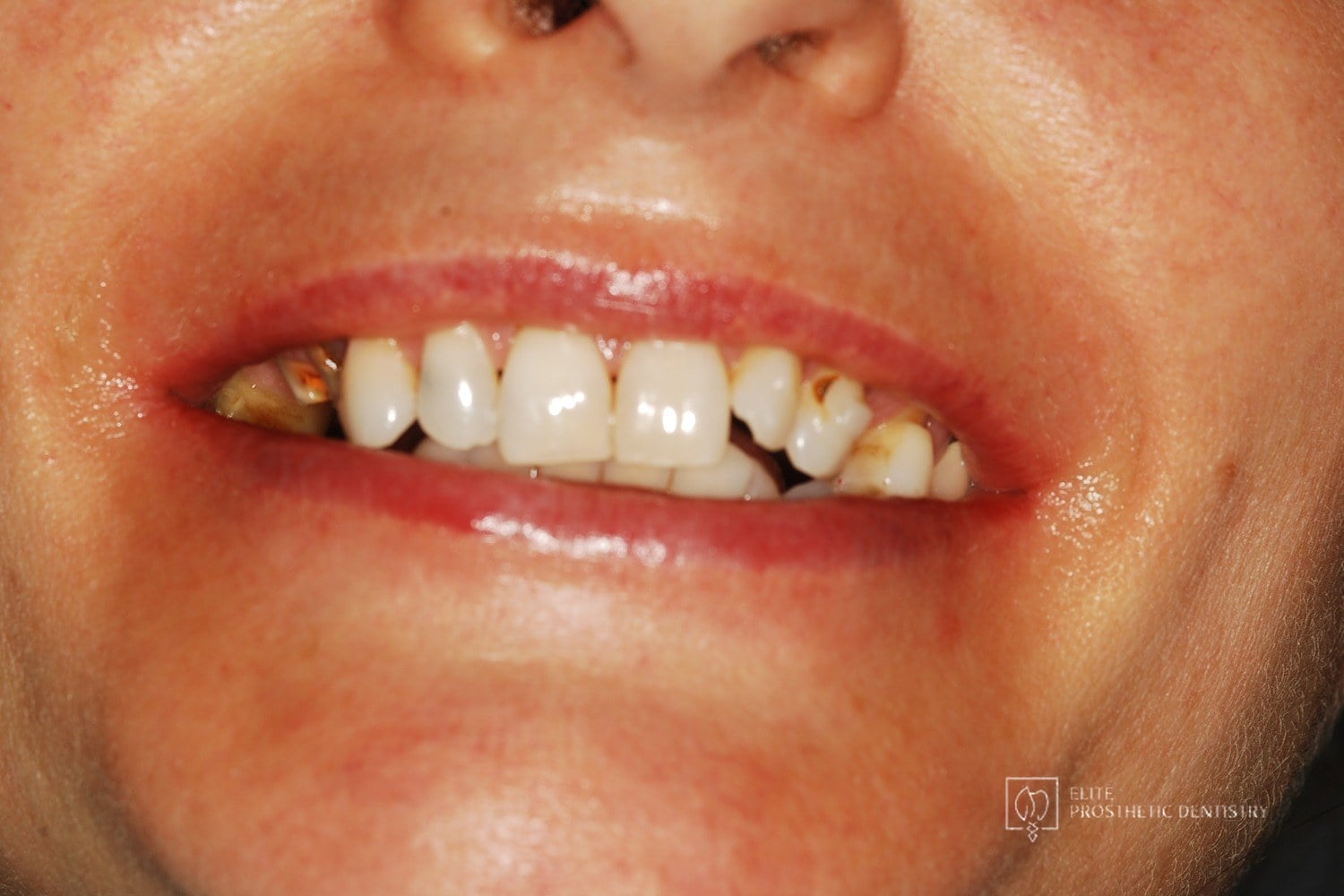 Before
 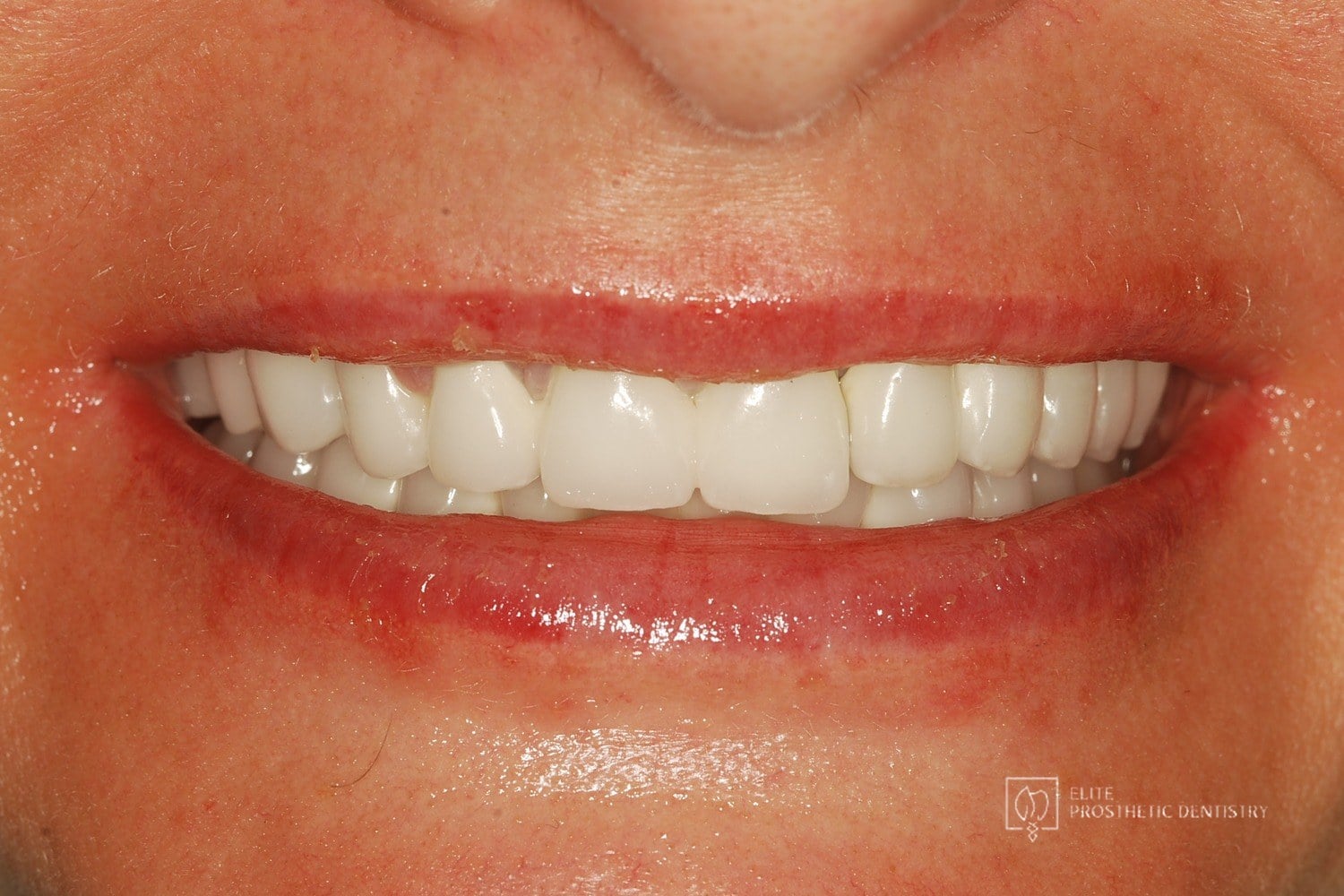 After
After How Aging, Failing Dentistry Was Replaced with a Coordinated Full-Mouth Implant and Crown Reconstruction
The patient presented with throbbing upper-molar pain, long-standing infections, multiple root canals and unfinished prior treatment, generalized sensitivity, and several hopeless teeth.
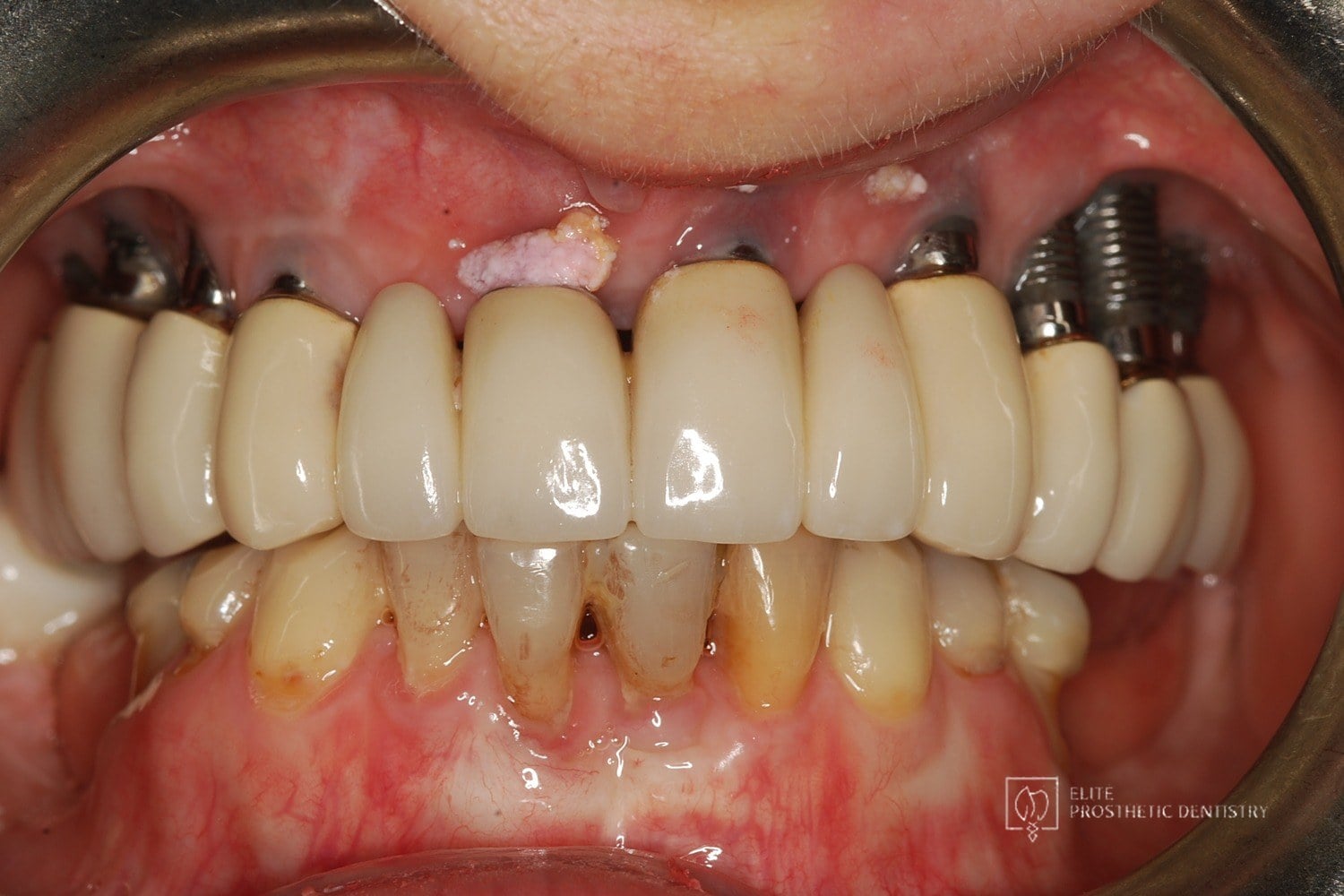 Before
 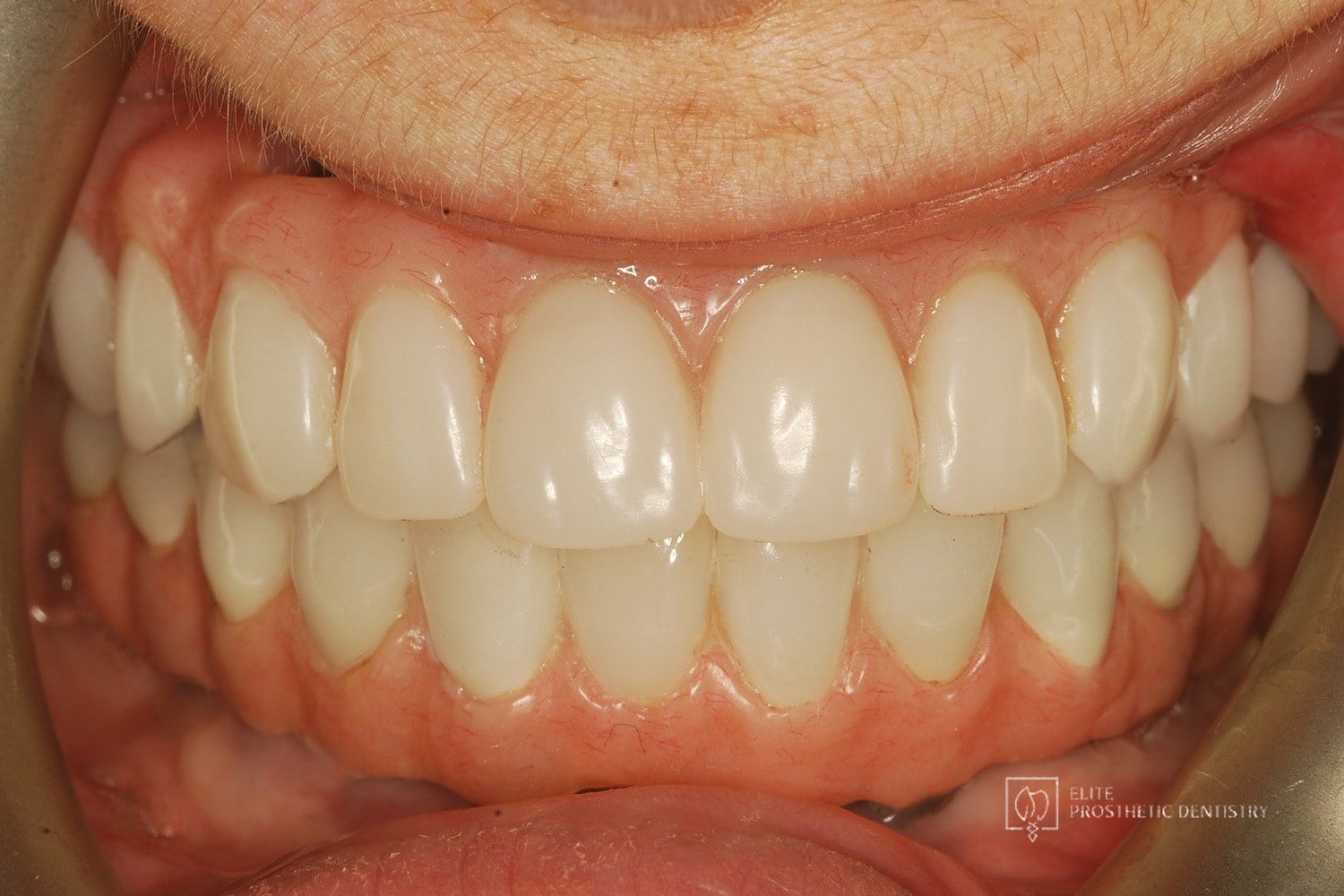 After
After How Failing Implants and Severe Bone Loss Were Rebuilt Into a Stable Full-Arch Implant Reconstruction
The patient presented with significant complications from previously placed implants, severe bone loss, failing posterior implants, and an unesthetic full-arch bridge. Both arches required full reconstruction, with the upper arch showing the most advanced bone loss and instability.
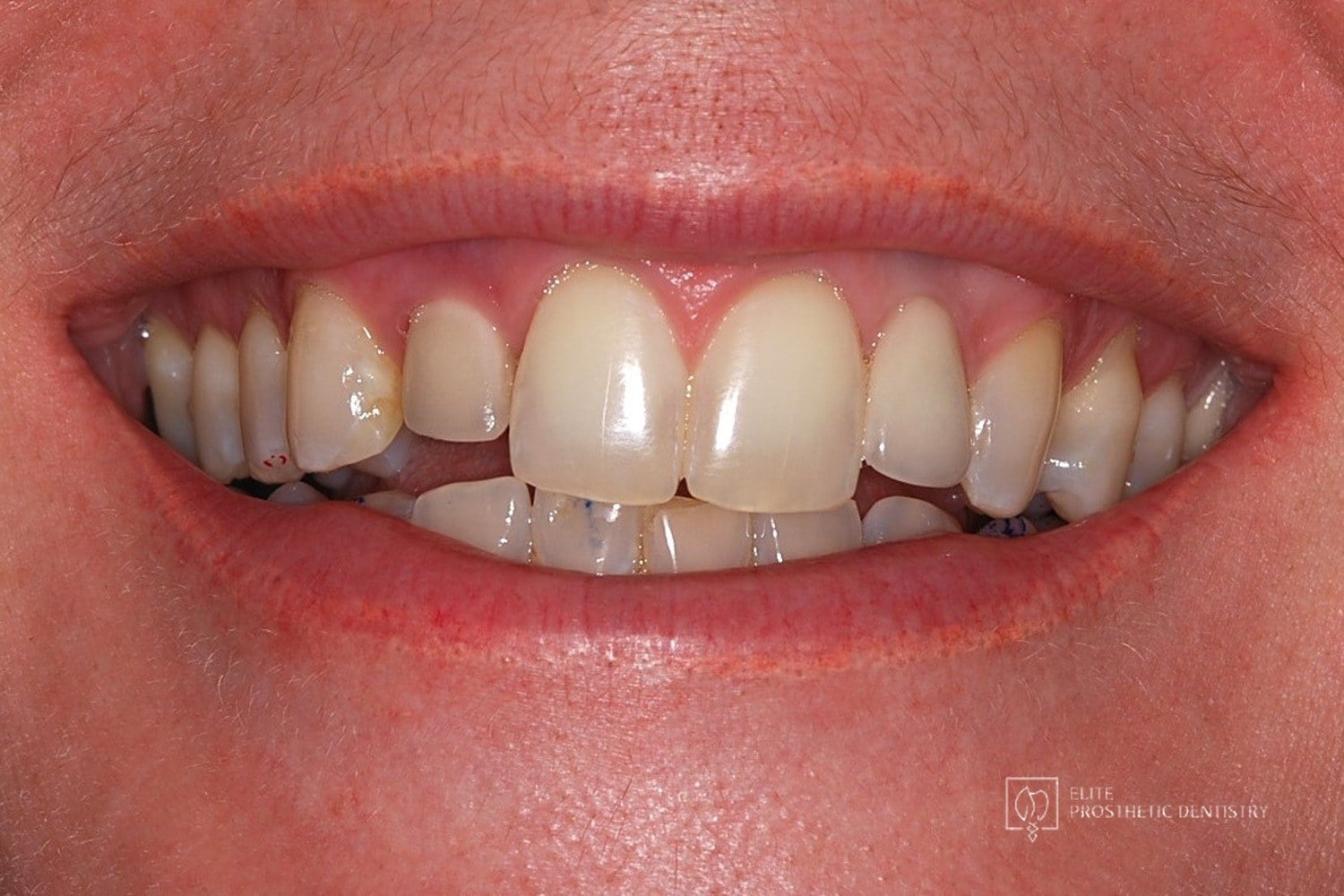 Before
 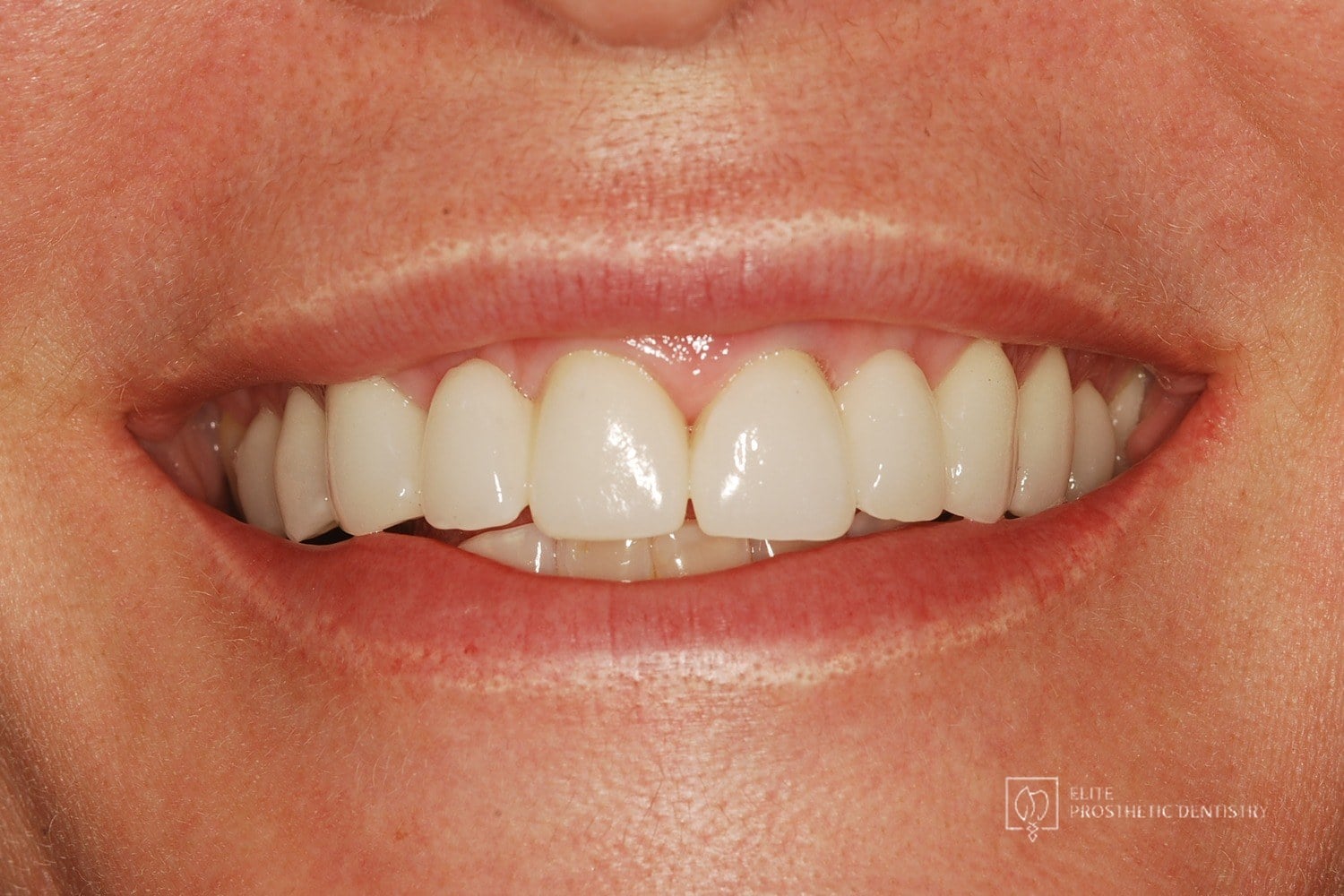 After
After How Failing Lateral Incisor Implants Were Replaced with Custom Zirconia Bridges After Severe Bone Loss Made Replacement Implants Impossible
Comprehensive examination including CBCT imaging revealed significant bone loss surrounding implants that were placed outside the buccal plate, most likely due to placement without a CBCT-generated surgical guide. The implants were determined non-salvageable, and the alveolar ridge was too narrow to support replacement implants without extensive reconstruction.