
Can My Tetracycline-Stained Teeth Be Made to Look Beautiful?
Yes, and the transformation can be dramatic. But tetracycline-stained teeth are a special case in cosmetic dentistry: the discoloration is intrinsic, so whitening cannot fix it, and even veneers usually cannot mask it convincingly. The reliable answer is a smile makeover with custom crowns built around a specific technique: translucent porcelain applied over a masking base, so the darkness disappears without the teeth turning artificially white.
Why Tetracycline Staining Is Different
Tetracycline is an antibiotic that, when taken in childhood while the adult teeth are still forming, binds into the developing tooth structure. The result years later is deep gray or brown discoloration, often in horizontal bands, distributed across the entire dentition. This is not a stain sitting on the teeth. It is part of the teeth.
That distinction decides the treatment. Bleaching gel lightens discoloration it can reach, which is why it works for coffee and wine stains and fails against tetracycline. Patients who have tried round after round of whitening on tetracycline-stained teeth usually arrive frustrated, and the honest explanation is that the chemistry was never going to work. We cover the broader category in when whitening is not enough.
Why Crowns Rather Than Veneers
A veneer is a thin shell bonded to the front of the tooth, and thinness is its weakness here. To block severe underlying darkness, a thin veneer must be made extremely opaque, and opaque porcelain looks flat and lifeless, exactly the “fake teeth” result patients fear. This tradeoff between masking and natural translucency is the same reason we wrote about when veneers are not as good as crowns for a smile makeover.
A crown covers the entire tooth, which changes the physics. The porcelain can establish its own color from the inside out: a masking layer neutralizes the dark substrate, and translucent porcelain is layered over it so light enters and scatters the way it does in natural enamel. Getting that layering right for each patient is ceramist’s work of a high order, and it is the reason these cases are fabricated in our in-house laboratory, where shade and translucency can be refined with the patient at the chair. The same craftsmanship applies if you want the new smile noticeably brighter, as we explain in can crowns and veneers be very white.
A Patient Who Waited Decades
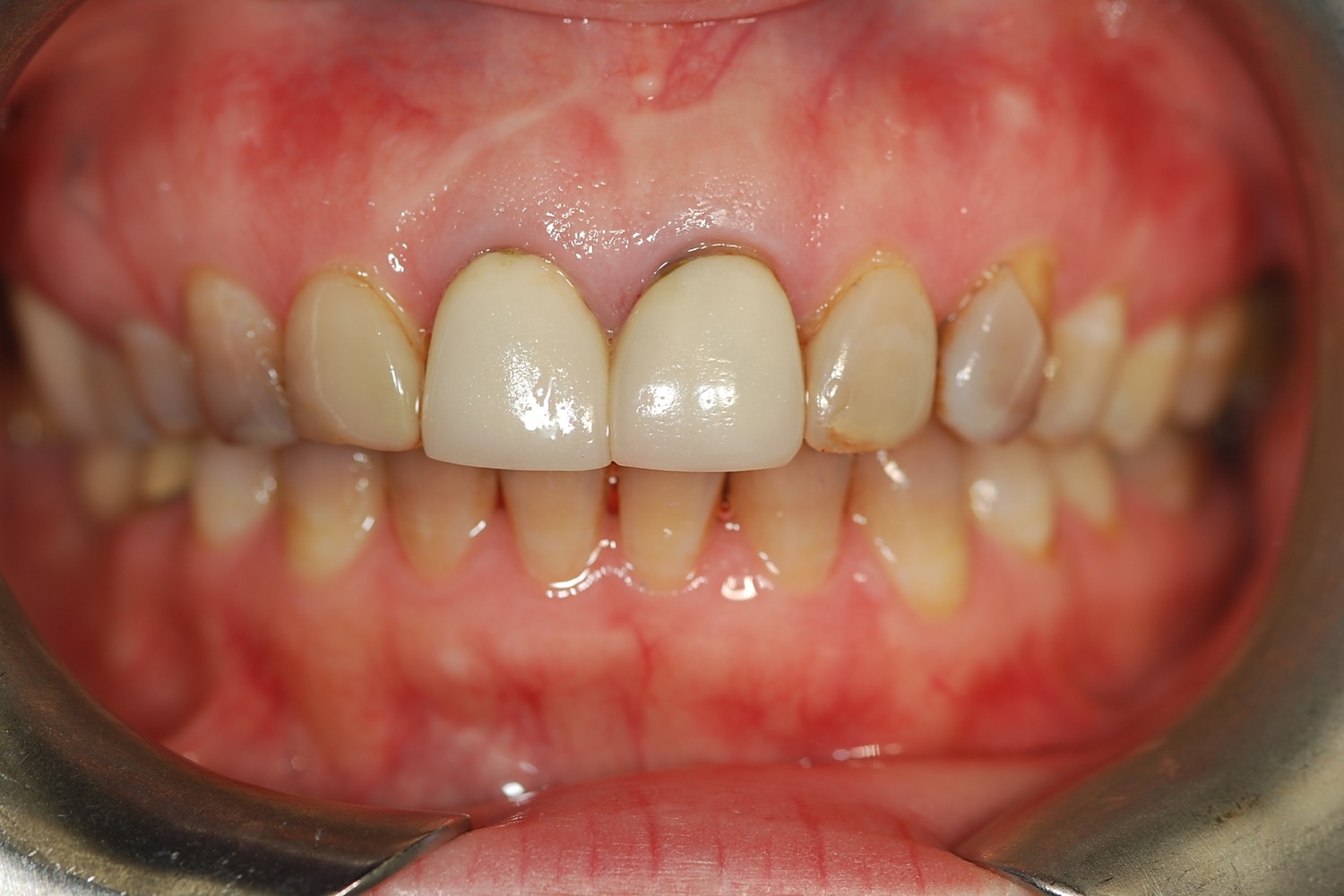
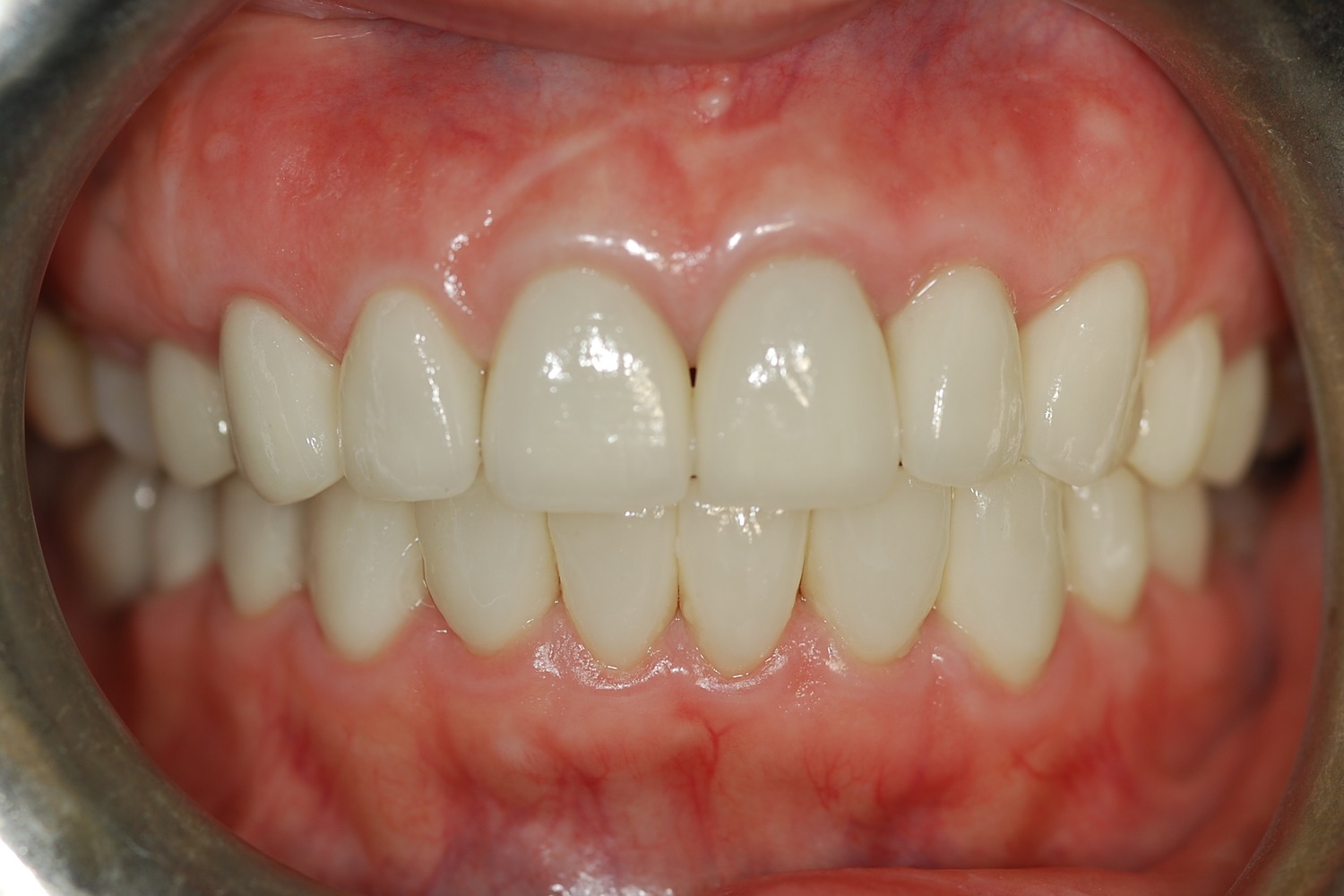
One longtime patient of our practice had lived her whole life with teeth that were very dark from childhood tetracycline use before deciding to change her smile. Since the staining was intrinsic, whitening was never an option. We transformed her smile with custom crowns, and the change began before the final restorations existed: on the day her temporary crowns were placed, the dark bands were gone from her smile for the first time in her adult life. After the permanent crowns were seated, she could not stop smiling.
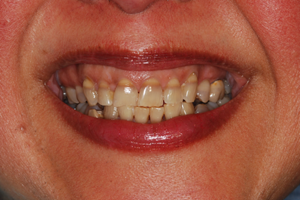
Fig. 1: All Teeth Severely Discolored
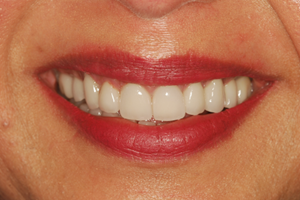
Fig. 2: Permanent Porcelain Crowns Covering Every Tooth
You can read a full account of a similar transformation in our case study of a patient who suffered for 30 years with very dark tetracycline-stained teeth.
What Treatment Looks Like
Treatment typically spans a few appointments over several weeks: evaluation and smile design, preparation of the teeth and placement of temporary crowns, then fabrication and seating of the final restorations. Because the new color is built into the porcelain rather than bleached into the enamel, the result does not fade or need re-treatment the way whitening does. Gum contours are shaped along with the teeth so the finished smile looks seamless and natural.
Why Whole-Smile Planning Matters Here
Tetracycline staining rarely affects one tooth; it runs across the dentition, often in horizontal bands that vary in depth from tooth to tooth. That distribution is exactly why these cases reward comprehensive planning rather than piecemeal treatment: restoring a few teeth against banded neighbors creates a mismatch that draws the eye, while a designed smile establishes consistent color, brightness, and translucency across everything that shows. It is also why the shade decision deserves care; with the entire visible smile being rebuilt, you have a genuine choice about how bright to go, made with trial comparisons rather than guesswork.
See What Is Possible for Your Smile
If you have spent years hiding tetracycline-stained teeth, the problem is solvable, and solving it well is a matter of specialist planning and laboratory craftsmanship. Dr. Gerald Marlin, a specialty-trained prosthodontist, will evaluate your teeth and show you exactly how a natural, bright result would be achieved. Call 202-244-2101 or request an appointment at Elite Prosthetic Dentistry in Friendship Heights, Washington, DC.
See How We Resolve These Problems
Our patient success stories show real cases and real results. Browse outcomes from a specialist prosthodontist with decades of experience and 3,900+ implants placed.
Key Takeaways
- ✓ Yes, tetracycline-stained teeth can be made beautiful, but not with whitening. The stain is intrinsic, built into the tooth structure itself.
- ✓ Crowns, not veneers, are typically the answer, because a thin veneer struggles to mask deep gray or brown discoloration without turning opaque.
- ✓ The key technique is a special application of translucent porcelain that blocks the dark underlying color while still letting light play naturally.
- ✓ Patients often see the transformation on the day their temporary crowns are placed, before the final restorations are even made.
- ✓ Because the new color is built into the restorations, the result does not fade the way whitening does.
Frequently Asked Questions
Can tetracycline stains be whitened?
No. Tetracycline staining is intrinsic, meaning it is incorporated into the tooth structure as the teeth develop in childhood. Bleaching gels work on stains they can reach and cannot reliably lighten this deep discoloration. Crowns built with specialized translucent porcelain are the dependable solution.
Why are crowns recommended over veneers for tetracycline staining?
A veneer is a thin shell, and masking very dark tooth structure through a thin shell forces the ceramist to make it so opaque that it looks lifeless. A crown covers the whole tooth, so the porcelain can establish its own color with natural translucency layered over it, unaffected by the darkness beneath.
How long does treating tetracycline-stained teeth take?
Typically a handful of appointments over several weeks, including preparation, temporary crowns, and placement of the final restorations. You do not wait until the end to look better: well-made temporary crowns transform the smile on the day they are placed.
Will the new crowns look natural or chalky white?
Done properly, they look like healthy natural teeth. The risk with dark underlying teeth is over-opaque porcelain, which reads flat and artificial. The remedy is craftsmanship: layering translucent porcelain over an effective masking base, which is the kind of work our in-house laboratory has refined for decades.
How do I care for crowns after treatment?
Much like natural teeth: brush and floss daily, and keep regular hygiene visits so we can monitor the restorations and your gum health. With good care, crowns from our laboratory have lasted 35 years and more.
Related Patient Success Stories
Explore similar patient success stories demonstrating our expertise in advanced prosthetic dentistry.
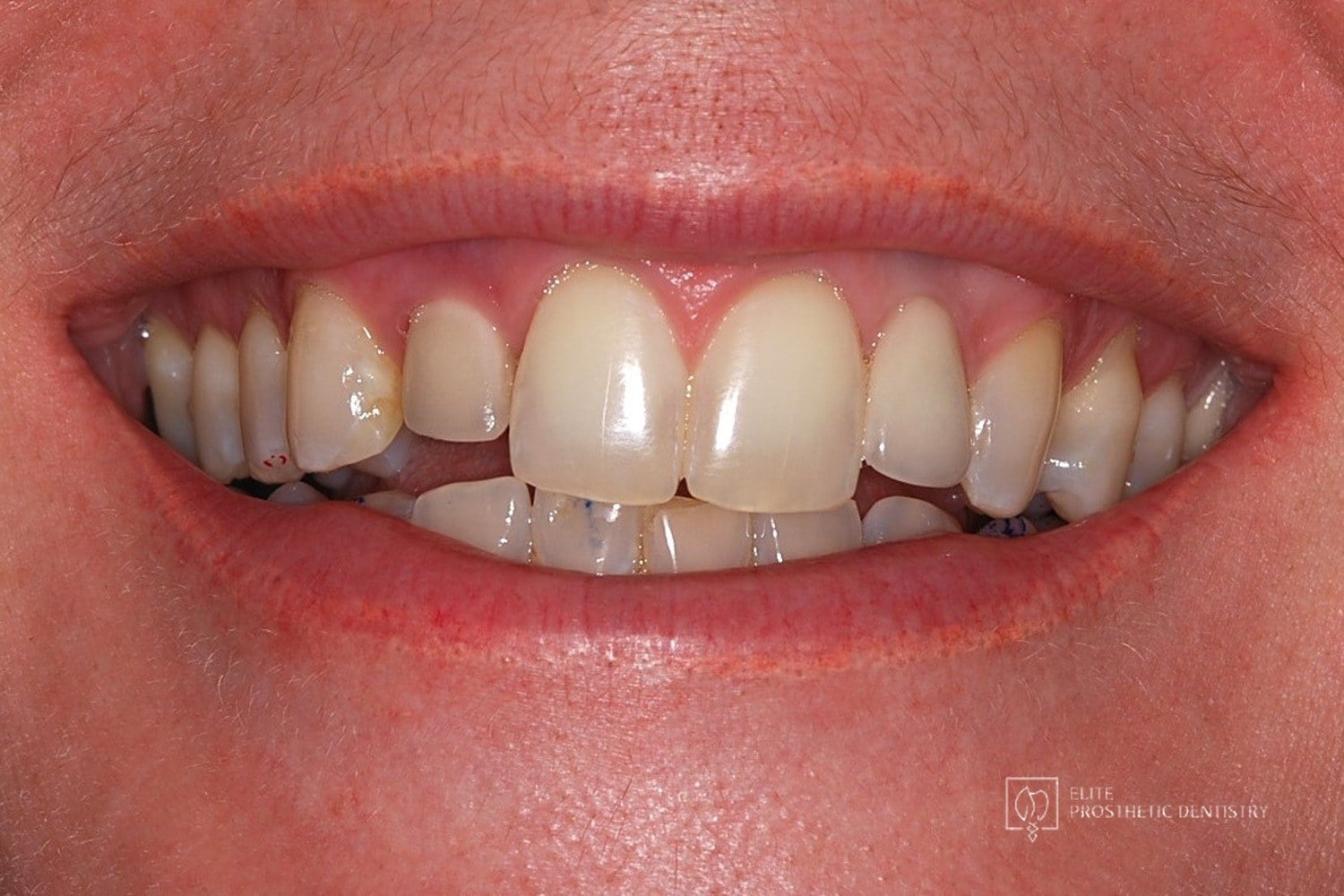 Before
 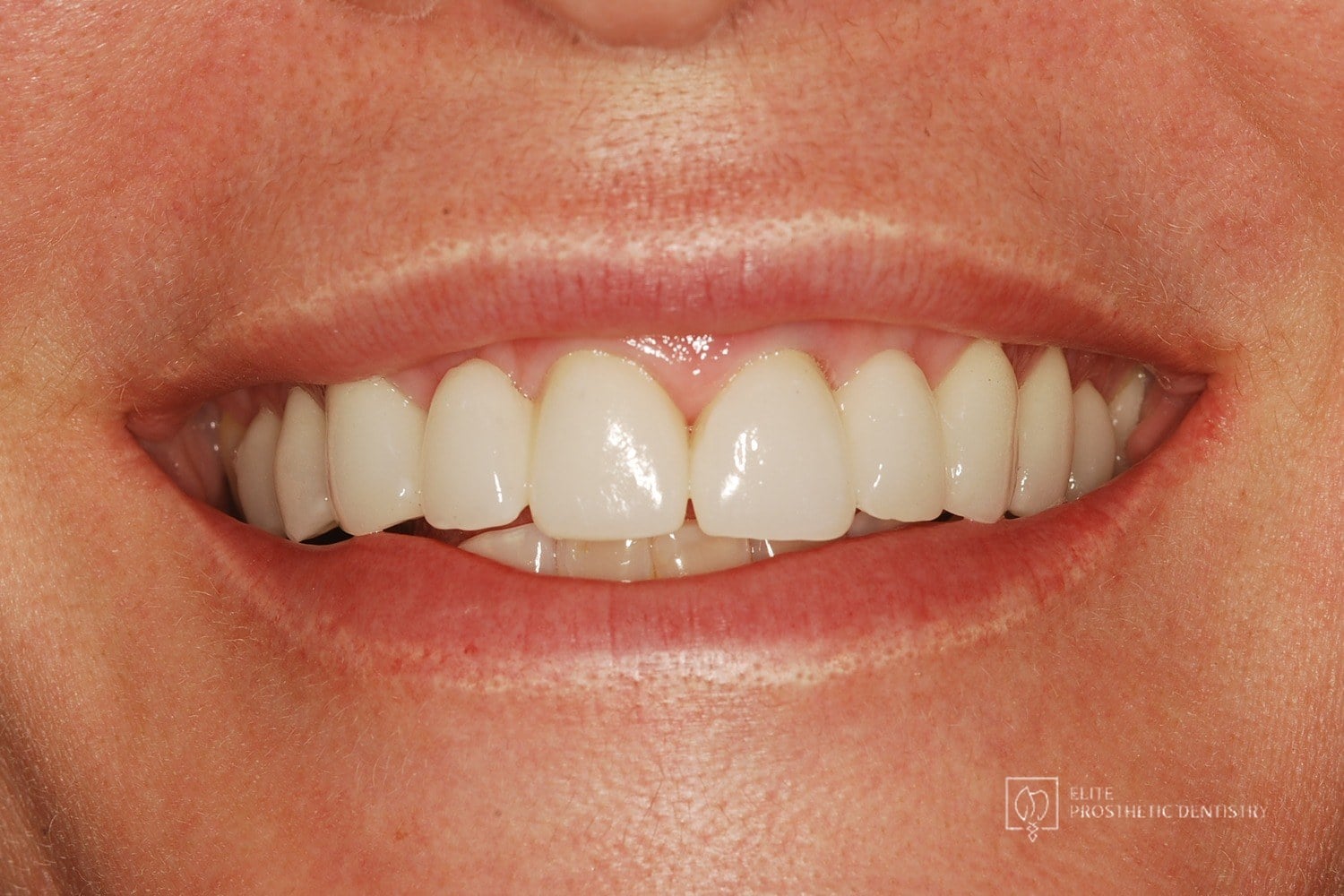 After
After How Failing Lateral Incisor Implants Were Replaced with Custom Zirconia Bridges After Severe Bone Loss Made Replacement Implants Impossible
Comprehensive examination including CBCT imaging revealed significant bone loss surrounding implants that were placed outside the buccal plate, most likely due to placement without a CBCT-generated surgical guide. The implants were determined non-salvageable, and the alveolar ridge was too narrow to support replacement implants without extensive reconstruction.
 Before
  After
After How Aging, Opaque Restorations Were Replaced with Customized Ceramic Restorations Designed for Long-Term Natural Esthetics
The existing restorations appeared opaque, worn, and unnatural over time, affecting both confidence and overall smile harmony.

Temporary Crowns Restore a Patient's Smile in One Day with an Immediate Smile Makeover
A patient from Potomac, Maryland came to the practice in pain from a failing dental implant whose restoration was also compromising her appearance and her confidence.
Related Articles
Deepen your knowledge with additional insights on this topic.
Cosmetic Dentistry Can My Tetracycline-Stained Teeth Be Made to Look Beautiful?
Tetracycline staining sits deep inside the tooth, so bleaching cannot fix it. See how translucent porcelain crowns create a bright, natural smile instead.
 Cosmetic Dentistry
 How Is a Gummy Smile Fixed?
From gum reshaping to custom crowns, a DC prosthodontist explains how a gummy smile is fixed, with a real patient transformation and healing timeline.
 Cosmetic Dentistry
 Discovering Cosmetic Dentistry Beyond Aesthetics
Cosmetic dentistry improves more than looks: easier hygiene, restored chewing function, and better long-term oral health. A DC prosthodontist explains.