
How Is a Gummy Smile Fixed?
A gummy smile is fixed by rebalancing the proportions of gum and tooth: excess tissue is carefully reshaped to reveal more of the natural teeth, and restorations are then designed for the new gumline. At Elite Prosthetic Dentistry, gummy smile correction is planned as one coordinated project, because the gum contour, the tooth shape, and the final crowns all have to agree for the result to look natural.
What Counts as a Gummy Smile
Most dentists consider a smile gummy when more than 3 to 4 millimeters of gum tissue shows above the teeth during a broad smile. For some patients the display is far more pronounced, with tissue extending well down the natural tooth contour so the teeth read as short and small.
The consequences are more than cosmetic. Patients with gummy smiles often train themselves to smile with closed lips or to hold back in photos, meetings, and social settings, and that guardedness affects how confident they appear. It is one of the most common concerns behind the self-consciousness we describe in our guide to treatable conditions that make people hide their smile.
How the Correction Works
When a patient presents with a gummy smile, the excess tissue is carefully reshaped while preserving the healthy pink tissue architecture. This contouring reveals more tooth structure and establishes a balanced gumline across the smile.
Restorations complete the picture. Temporary crowns are placed after the gum reshaping and carved to look natural at the new proportions; they guide the tissue as it heals and let you preview the result. Once the gums have stabilized, typically 4 to 6 weeks later, final crowns are fabricated in our in-house laboratory to replicate the established aesthetics and hold them for the long term. Not every case needs every step, and some need no surgery at all, a question we take up in does treating a gummy smile require surgery.
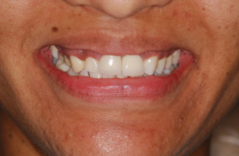
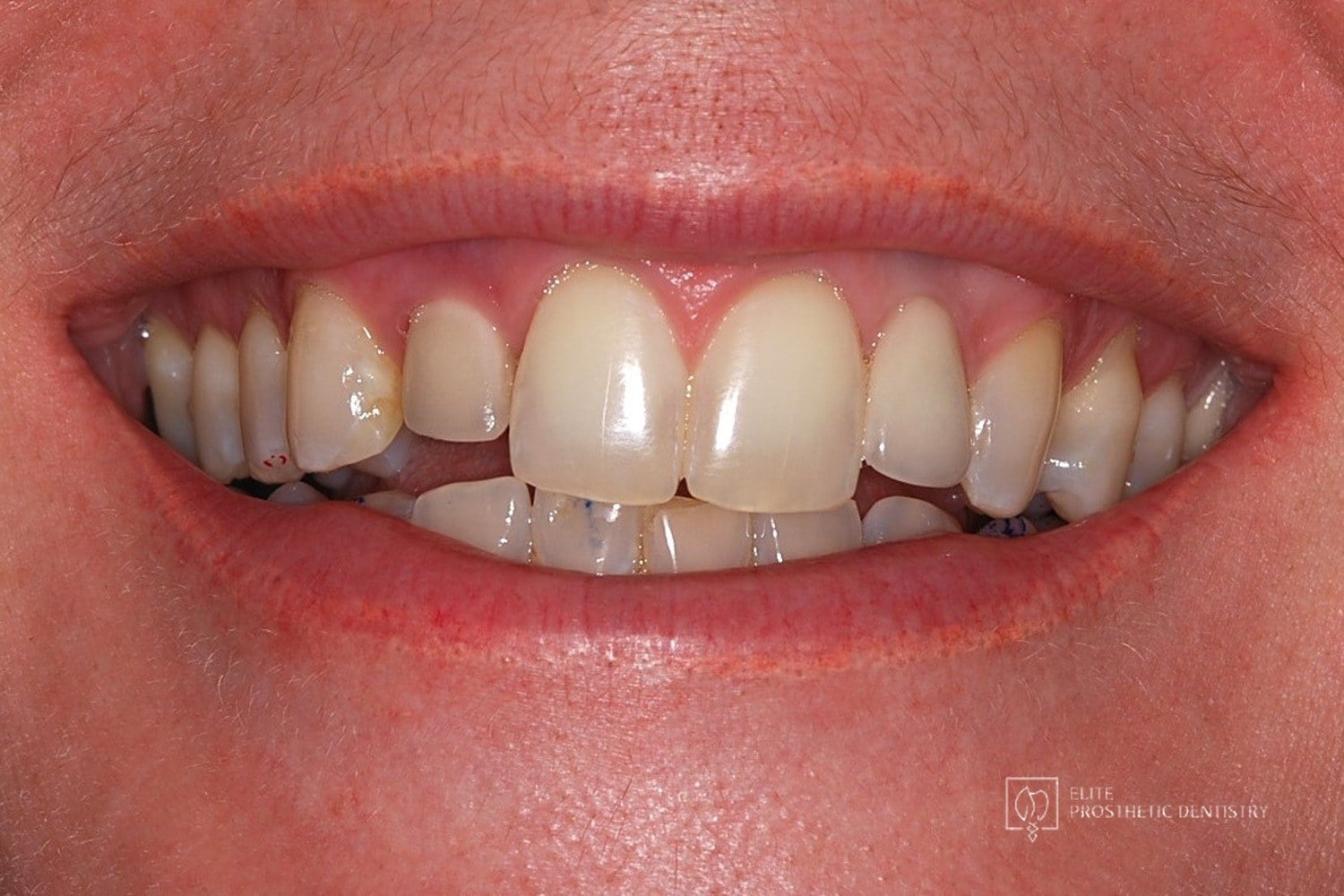
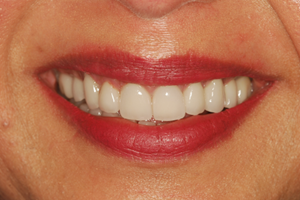
Fig. 1: Gummy Smile with Misshaped Crowns
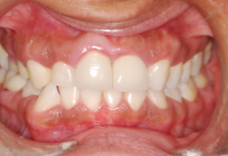
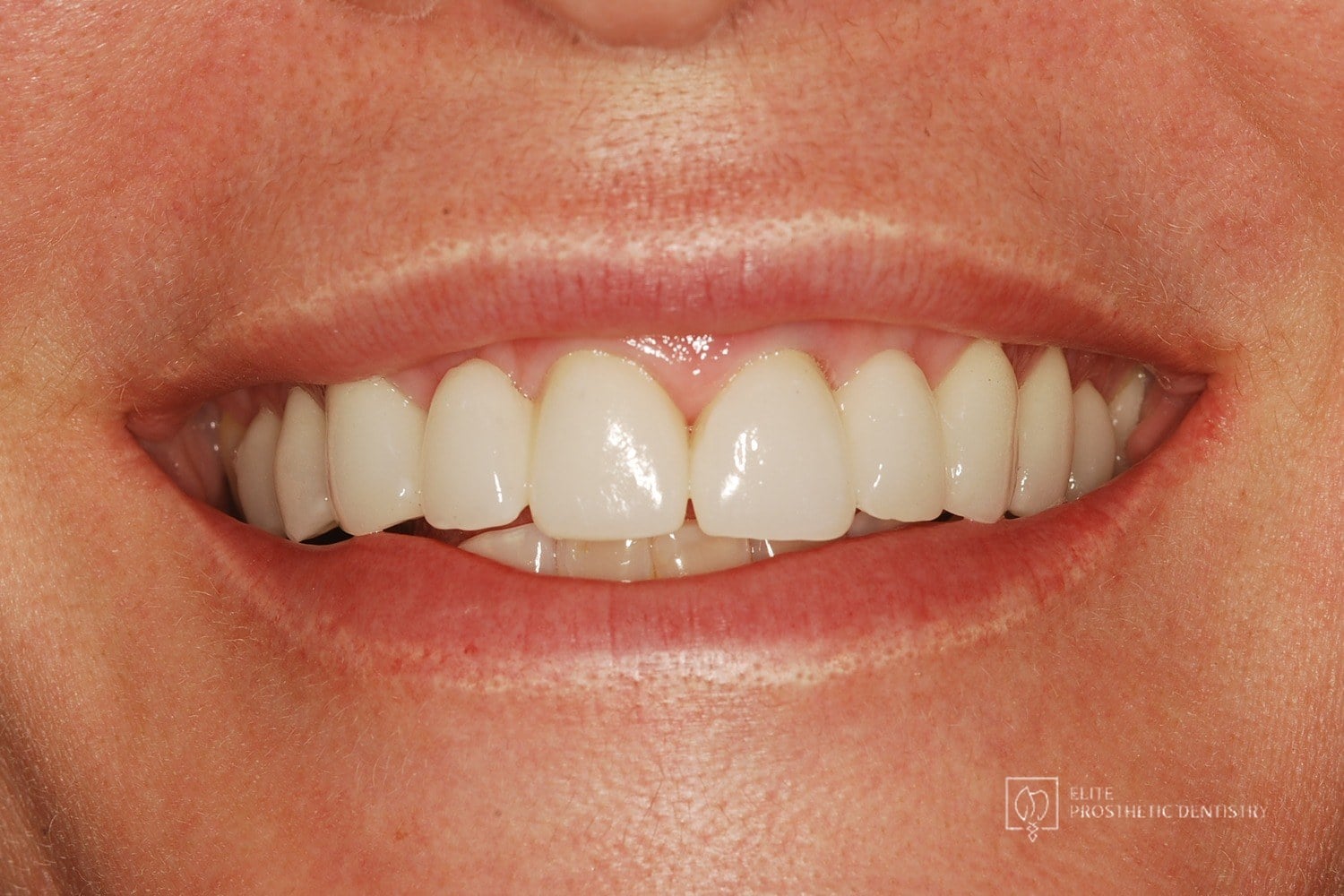
Fig. 2: Misshaped Crowns with a Gummy Smile
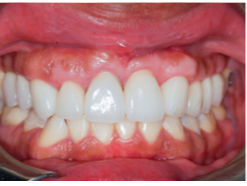
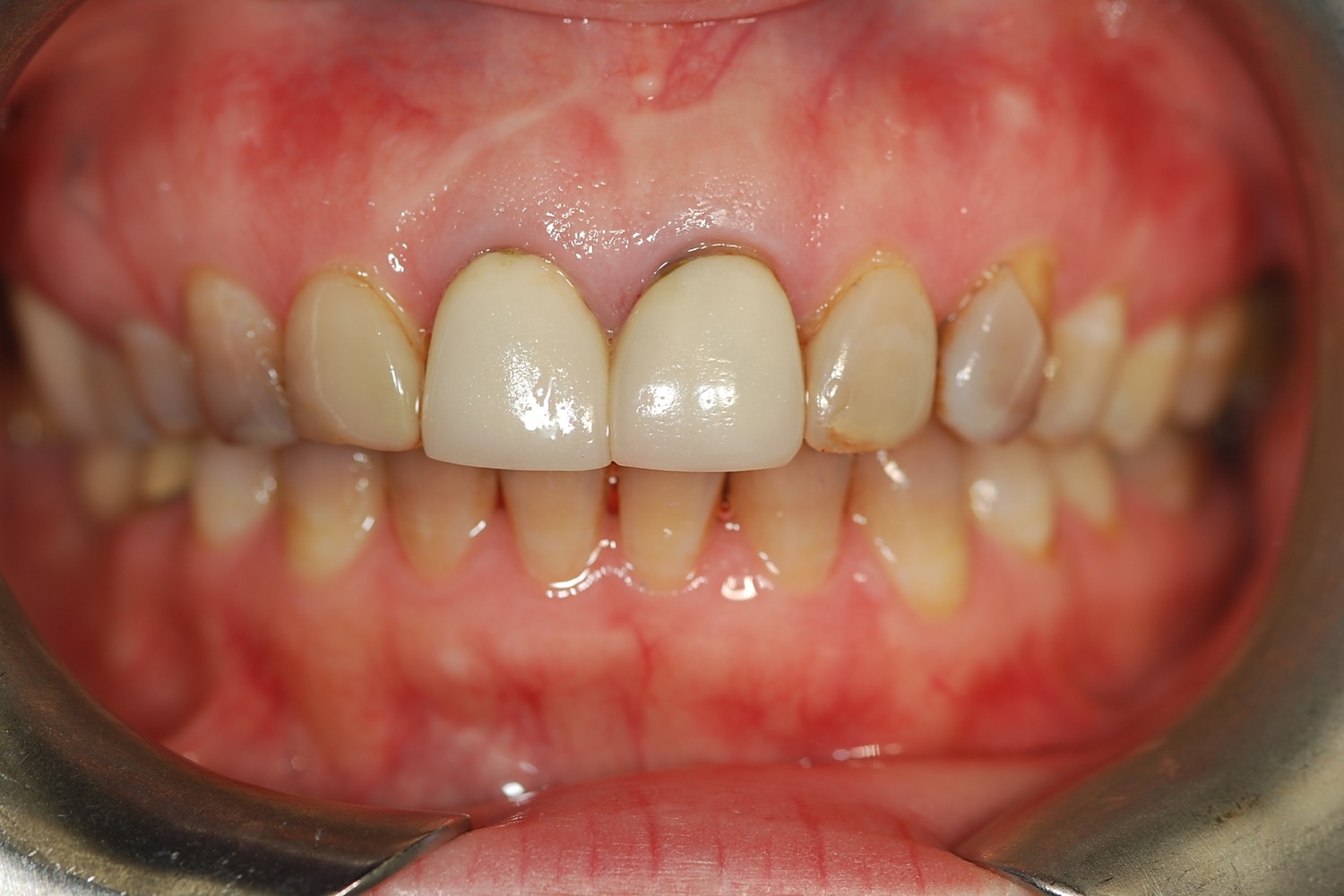
Fig. 3: Excess Gum Reshaped with New Crowns Created
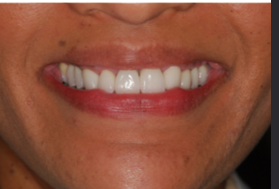
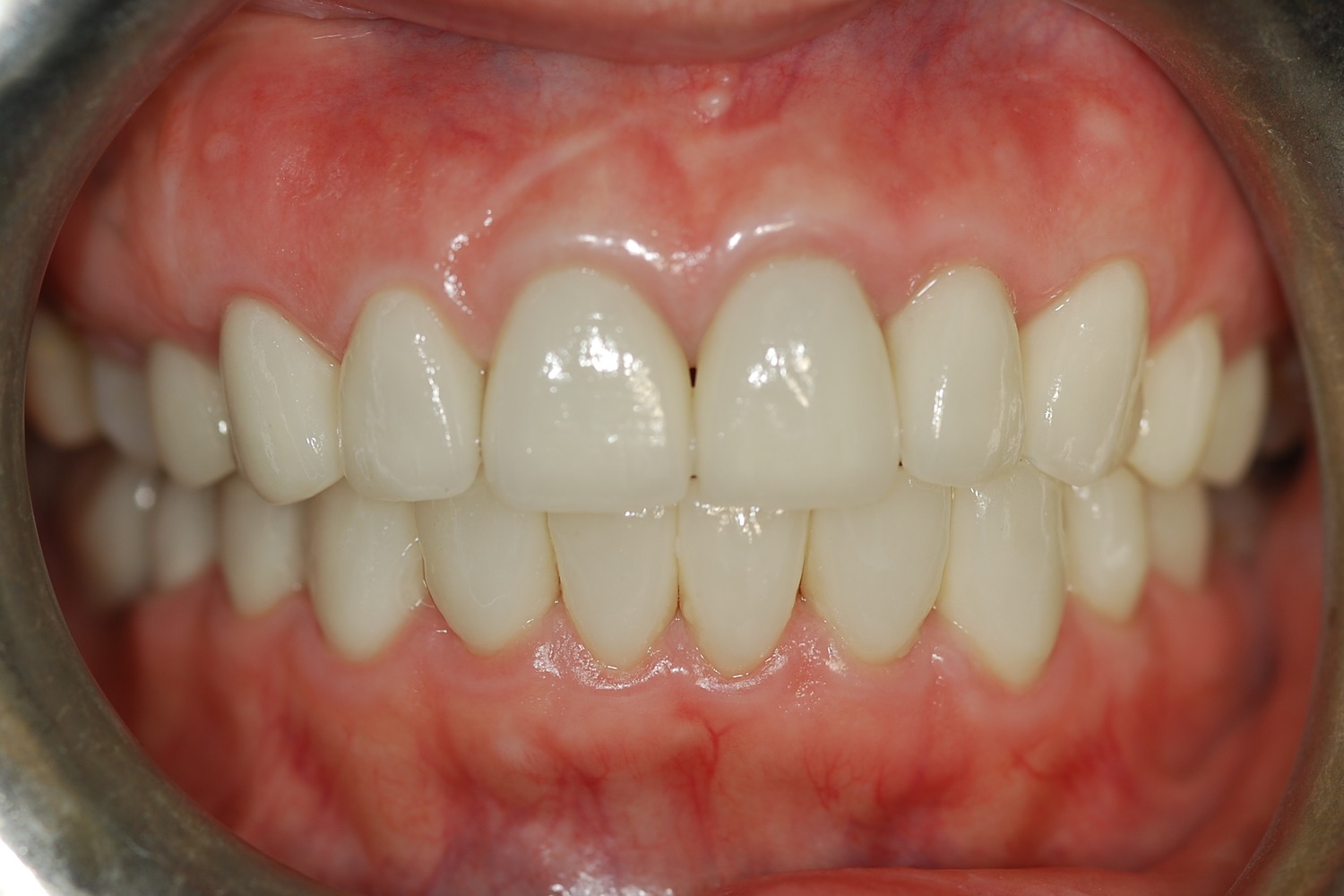
Fig. 4: She Now Smiles Without Being Self-Conscious
A Case Study in Smile Transformation
Our patient was deeply self-conscious about her gummy smile, and the gum display was only part of the picture. Her existing crowns were poorly shaped, with two front crowns that were wide and square rather than resembling natural tooth anatomy, and all of them lacked translucency, reading as opaque white against her complexion and her remaining natural teeth.
The clinical situation was further complicated by a missing lateral incisor. Her canine, a naturally larger tooth, had drifted into the lateral incisor position, adding to the asymmetry. Her gumline was uneven as well, sitting too low on some front teeth and disproportionately high on one side.
The comprehensive plan addressed each element in sequence: the gingival tissue was surgically evened and reshaped, orthodontic treatment realigned the teeth, an implant replaced the missing lateral incisor to restore natural anatomy, and new crowns with proper shape and translucency replaced the old opaque ones. The transformation was remarkable. She went from hiding her smile to smiling freely, with teeth that finally looked like they belonged to her. You can see a similar journey in our case study on correcting a gummy smile, and an accelerated version in the immediate gummy smile makeover.
What the First Appointment Establishes
The starting point is a diagnostic one: measuring how much gum shows when you smile naturally, mapping where the tissue sits relative to the underlying tooth and bone, and determining why the display is excessive, whether the tissue itself, the tooth proportions, the lip, or some combination. Photographs and models turn that assessment into a design you can see and react to before anything is scheduled. Patients are often surprised how much clarity one evaluation brings to a problem they have squinted at in mirrors for years.
Why Planning Determines the Result
A gummy smile is rarely a single problem. Tissue level, tooth proportion, alignment, and restoration quality each contribute, which is why piecemeal treatment so often disappoints. A specialty-trained prosthodontist plans the gum architecture and the restorations together, so the tissue is shaped for the crowns and the crowns are built for the tissue.
If too much gum has been the reason you hold back your smile, Dr. Gerald Marlin will evaluate your smile and walk you through exactly how it can be rebalanced. Call 202-244-2101 or book a consultation at Elite Prosthetic Dentistry in Friendship Heights, Washington, DC.
See How We Resolve These Problems
Our patient success stories show real cases and real results. Browse outcomes from a specialist prosthodontist with decades of experience and 3,900+ implants placed.
Key Takeaways
- ✓ A smile is generally considered gummy when more than 3 to 4 millimeters of gum tissue shows above the teeth in a broad smile.
- ✓ Correction usually combines careful surgical reshaping of the gum tissue with restorations designed for the new gumline.
- ✓ Temporary crowns placed after gum reshaping guide healing and preview the final result before anything permanent is made.
- ✓ Complex cases may also involve orthodontics or an implant, coordinated in one comprehensive plan rather than piecemeal fixes.
- ✓ Final crowns are typically placed 4 to 6 weeks after surgery, once the reshaped tissue has stabilized.
Frequently Asked Questions
Is gum reshaping surgery painful?
Most patients report minimal discomfort. The procedure is done under local anesthesia, sedation options are available for those who want them, and any soreness typically subsides within a day or two with straightforward pain management.
How long after gum surgery do I get my final crowns?
Usually 4 to 6 weeks. That window lets the reshaped gum tissue heal and stabilize so the final crown margins meet the new gumline precisely. In the meantime, well-made temporary crowns keep your smile looking and functioning naturally.
Will my smile look natural after gummy smile correction?
Yes, when the case is planned as a whole. Temporary crowns establish the new tooth proportions and guide tissue healing, then the final crowns are custom fabricated to match your natural teeth in color, translucency, and shape. Our in-house laboratory refines those details with you at the chair.
Are there restrictions after gummy smile treatment?
Only briefly. Avoid very hard or sticky foods for about the first week after surgery, and brush and floss gently around the treated areas. Your hygiene team will give you specific care instructions for the healing period.
Can a gummy smile be fixed without surgery?
Sometimes. When the gum display is modest and the main issue is tooth proportion, restorations alone may achieve the balance you want. Other cases respond best to reshaping the tissue. An evaluation determines which path fits your smile; see our article on whether gummy smile treatment requires surgery.
Related Patient Success Stories
Explore similar patient success stories demonstrating our expertise in advanced prosthetic dentistry.
 Before
  After
After How Failing Lateral Incisor Implants Were Replaced with Custom Zirconia Bridges After Severe Bone Loss Made Replacement Implants Impossible
Comprehensive examination including CBCT imaging revealed significant bone loss surrounding implants that were placed outside the buccal plate, most likely due to placement without a CBCT-generated surgical guide. The implants were determined non-salvageable, and the alveolar ridge was too narrow to support replacement implants without extensive reconstruction.
 Before
  After
After How Aging, Opaque Restorations Were Replaced with Customized Ceramic Restorations Designed for Long-Term Natural Esthetics
The existing restorations appeared opaque, worn, and unnatural over time, affecting both confidence and overall smile harmony.

Temporary Crowns Restore a Patient's Smile in One Day with an Immediate Smile Makeover
A patient from Potomac, Maryland came to the practice in pain from a failing dental implant whose restoration was also compromising her appearance and her confidence.
Related Articles
Deepen your knowledge with additional insights on this topic.
 Cosmetic Dentistry
 Can My Tetracycline-Stained Teeth Be Made to Look Beautiful?
Tetracycline staining sits deep inside the tooth, so bleaching cannot fix it. See how translucent porcelain crowns create a bright, natural smile instead.
Cosmetic Dentistry How Is a Gummy Smile Fixed?
From gum reshaping to custom crowns, a DC prosthodontist explains how a gummy smile is fixed, with a real patient transformation and healing timeline.
 Cosmetic Dentistry
 Discovering Cosmetic Dentistry Beyond Aesthetics
Cosmetic dentistry improves more than looks: easier hygiene, restored chewing function, and better long-term oral health. A DC prosthodontist explains.