
A More Natural Look: Two Front Tooth Crowns Redesigned With Lifelike Translucency
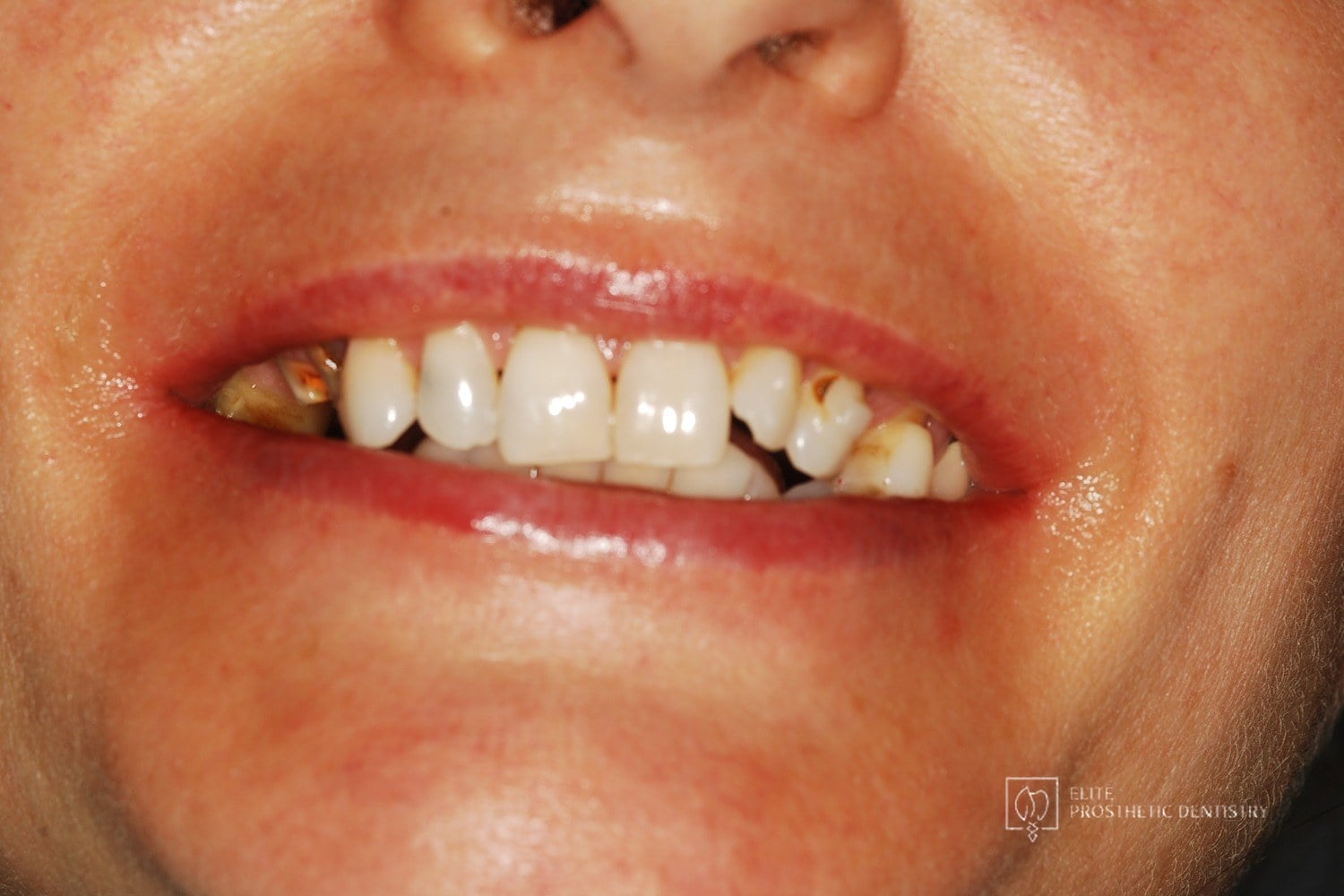
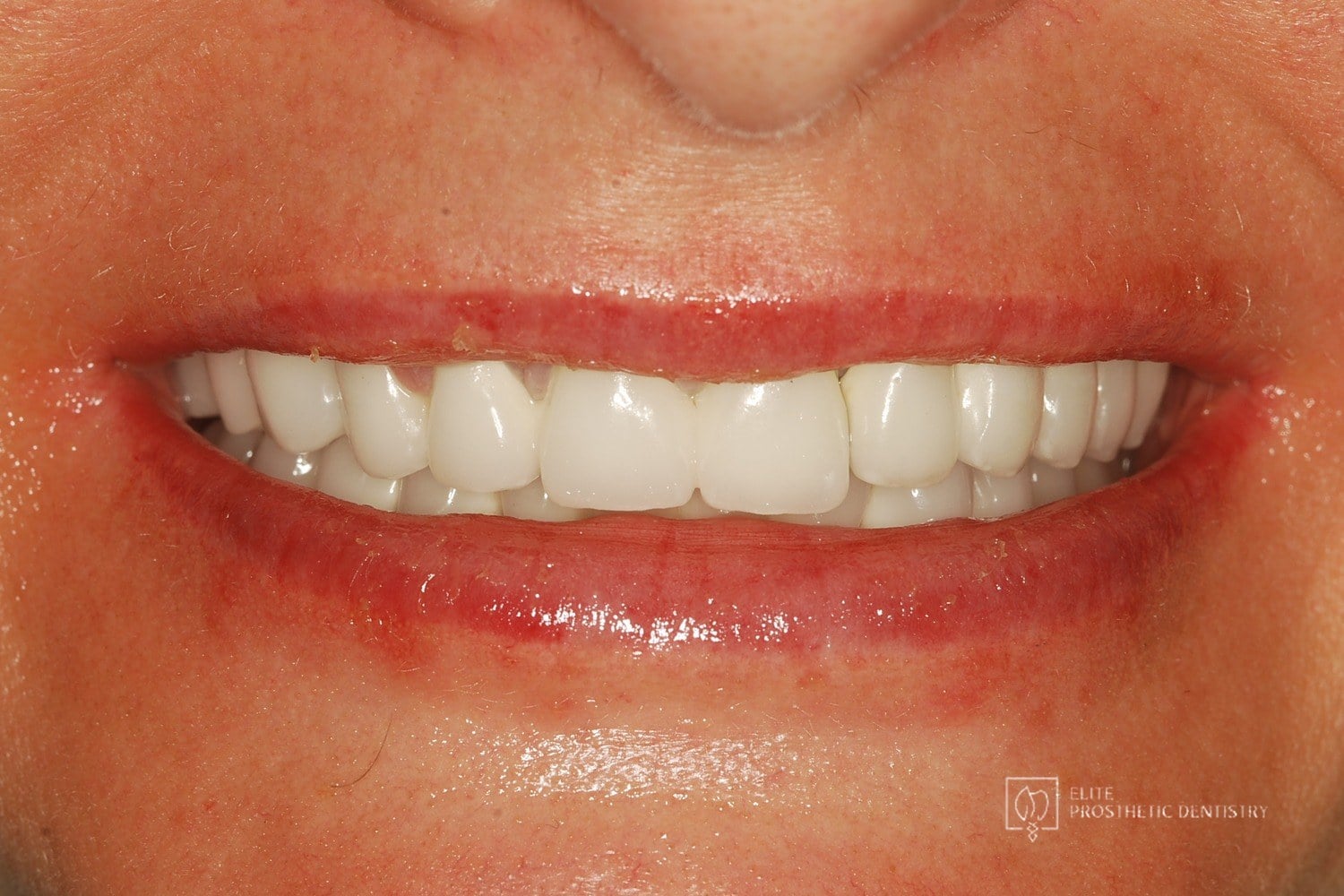
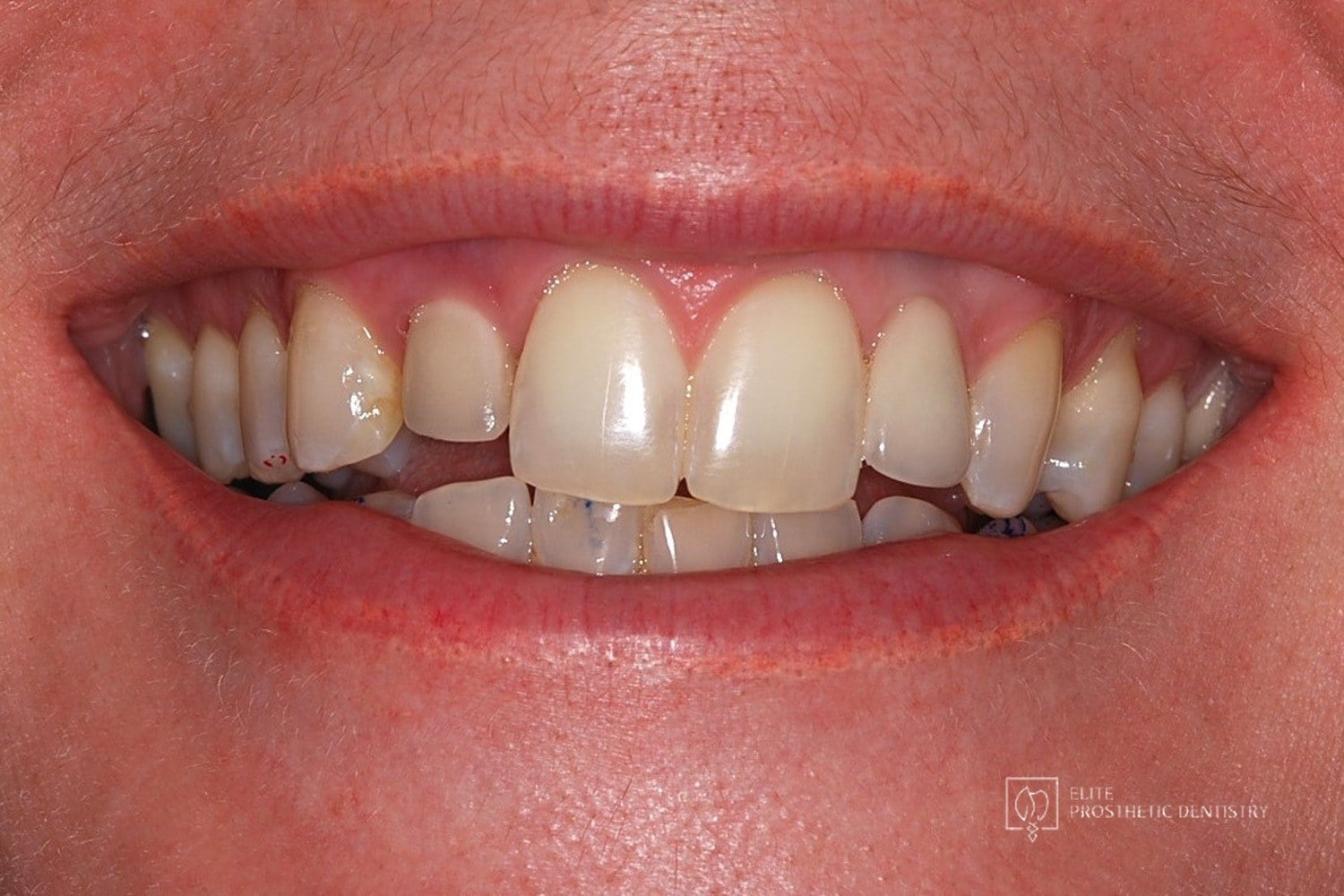
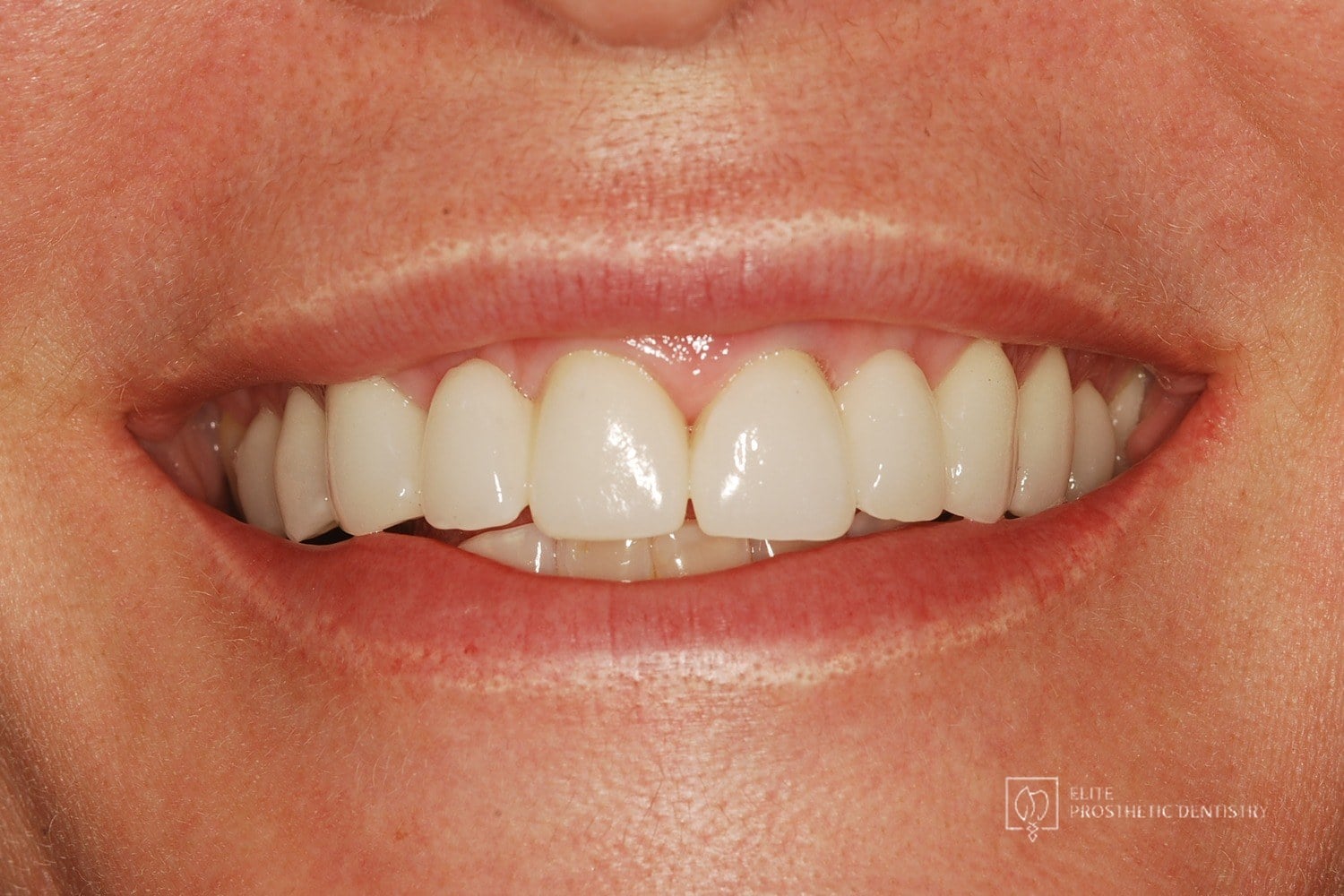
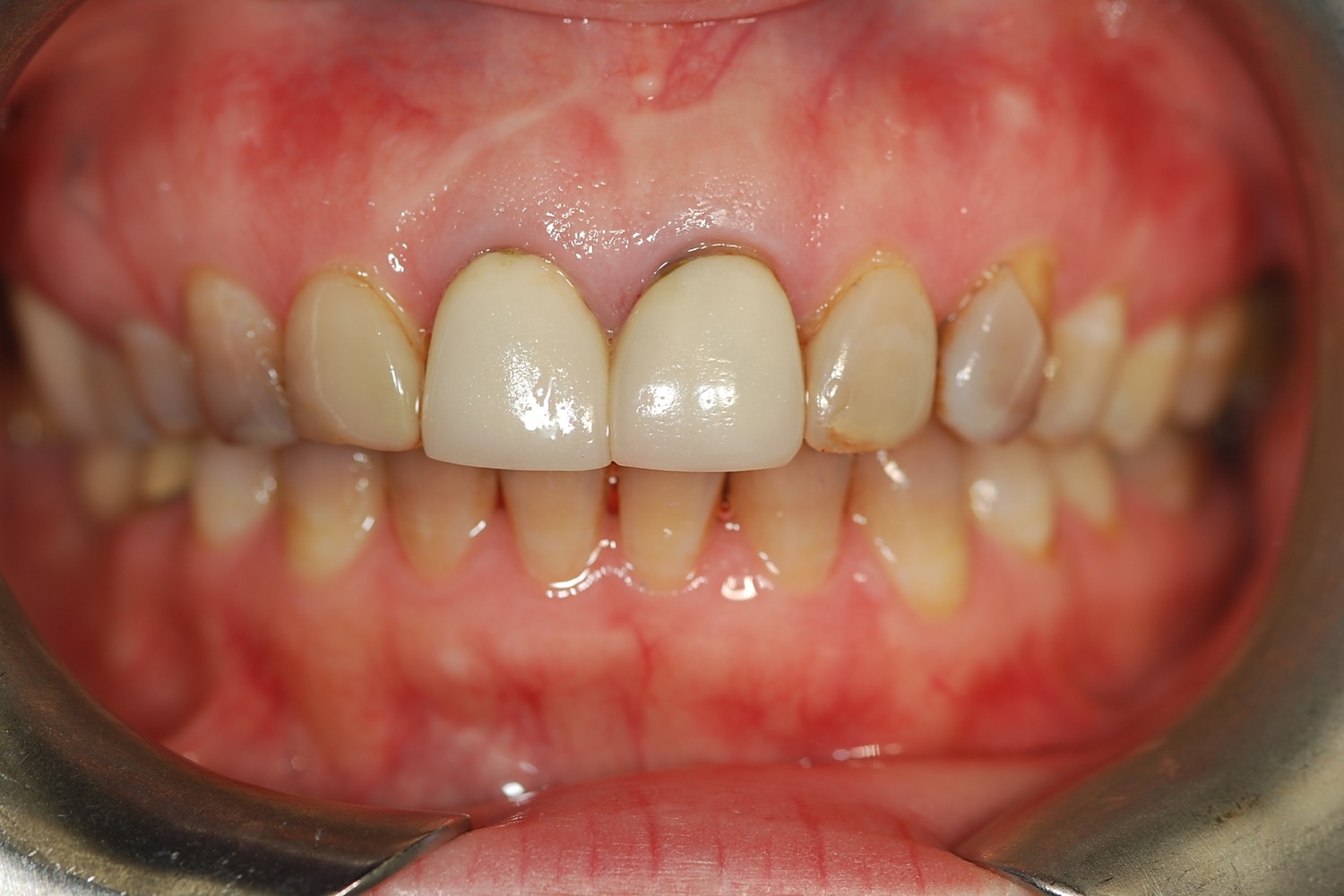
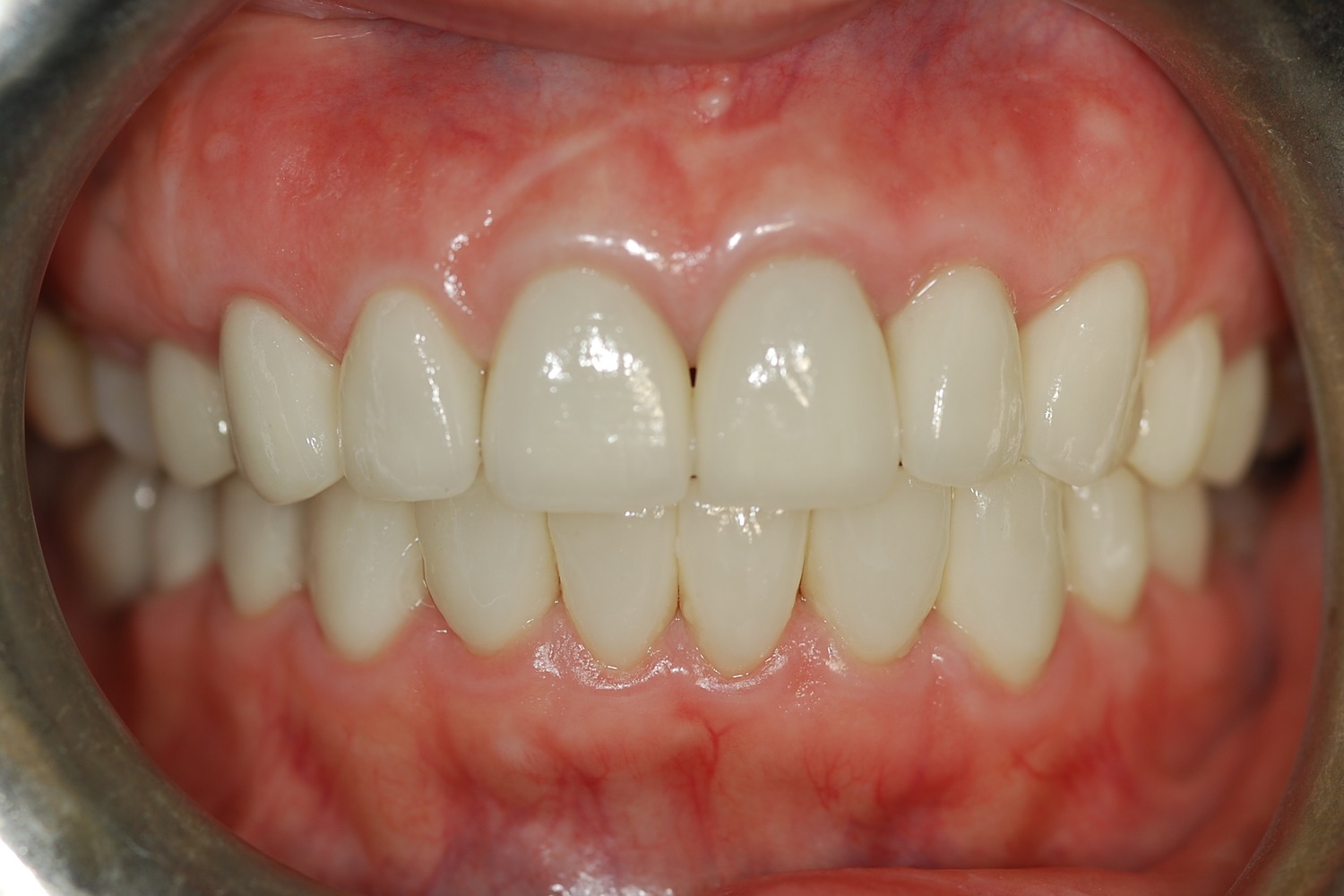
Smile views
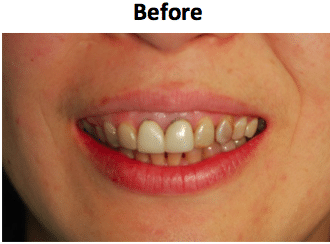
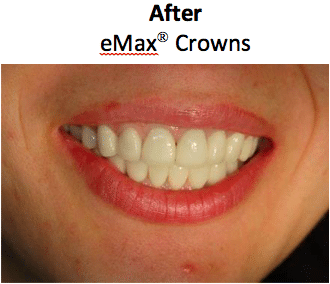
Retracted views
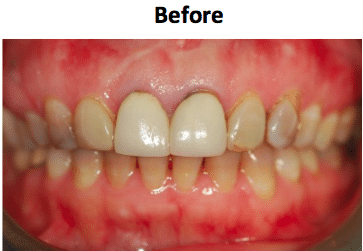
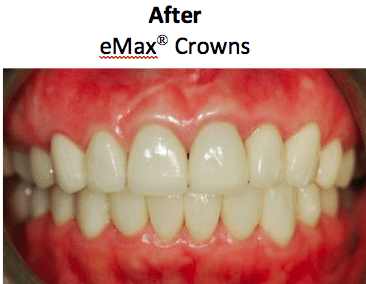
Two front tooth crowns redesigned for a more natural look
Redesigning opaque front tooth crowns in Washington, DC. This documented case at Elite Prosthetic Dentistry replaced the crowns on a patient’s two front teeth, where the existing restorations appeared milky and artificial over very dark underlying tooth structure. Treatment was planned and completed by Dr. Gerald Marlin, D.M.D., M.S.D., a prosthodontist focused on cosmetic and complex restorative care.
Case at a Glance
- Treatment
- Replacement of two opaque front tooth crowns with layered eMax all-ceramic crowns
- Approach
- Individual wax patterns, internal masking with external translucency, chairside refinement, in-house lab
- Case Type
- Cosmetic-functional correction
- Patient Concern
- Self-conscious about two front tooth crowns that looked opaque and milky over very dark underlying teeth, with a protrusive tooth position and a high gum line.
- Decision Point
- Mask the dark tooth structure with opaque porcelain that looks artificial, or engineer layered crowns that hide the darkness while still transmitting light naturally.
- Outcome
- The new crowns achieved a vibrant, natural appearance virtually indistinguishable from healthy natural teeth in the most visible position in the mouth, and the patient's confidence improved.
- Why It Matters
- Shows that a natural-looking result depends on engineering a crown's internal color and translucency for the individual tooth, not on material choice alone, especially when tooth position and darkness limit other options.
The presenting condition
The patient was very self-conscious about her appearance and wanted a significant cosmetic improvement. She came in specifically for her two front teeth, which had been restored with crowns that no longer looked natural to her.
The esthetic problem had several layers. The existing crowns were too opaque and milky in appearance. When light hits a natural tooth, it transmits through the enamel and reflects internally from the dentin, creating a subtle, three-dimensional appearance. When light hits an opaque crown, it reflects superficially, with none of that depth, and the eye reads the tooth as artificial. Her teeth were also protrusive, extended farther forward than ideal, and the existing tooth structure did not allow them to be brought back to a more ideal position. Prominent teeth draw attention, which magnifies any esthetic shortcoming. Finally, her smile showed a very high gum line, a gummy smile appearance, and the underlying teeth themselves were very dark.
The challenge was to create crowns with enough translucency and optical depth to look convincingly natural despite the dark structure beneath them and a tooth position that could not be changed.
Clinical Findings
- →Crowns on the two front teeth that appeared opaque and milky rather than translucent
- →Very dark underlying tooth structure beneath the restorations
- →Protrusive tooth position that could not be brought back to a more ideal position
- →A very high gum line giving the smile a gummy appearance
- →A patient goal of a significant cosmetic improvement with a natural result
Why this case required prosthodontic-level planning
The most common cosmetic complaint about crowns is that they do not look real, which usually means too opaque, too white, too flat. Creating a natural-looking crown is not a matter of picking a whiter shade. It requires understanding the optical properties of natural teeth and deliberately engineering the restoration to replicate them.
This case raised the difficulty further. A dark substrate pushes restorations toward opaque porcelain, because opacity hides darkness. But opacity is exactly what makes a crown look false. The two front teeth sit at the center of every smile and every photograph, and in this patient’s case they sat in a prominent, forward position that could not be retracted, so there was no room to hide a compromise. The restoration had to mask the darkness and still transmit light the way enamel does, and that combination is an engineering problem, not a shade-tab decision.
The decision behind the result: engineering the layers, not just choosing a material
Dr. Marlin recommended replacing the existing crowns with eMax crowns, all-ceramic restorations known for their superior esthetic properties and precise control over translucency and color. The material, though, was the starting point rather than the answer. The key to this case was employing advanced prosthodontic technique to draw the full optical and esthetic potential out of that material.
The practice’s in-house laboratory first fabricated individual wax patterns to precisely control the anatomy and form of each crown. Those patterns were then converted to the eMax crowns with meticulous attention to their optical construction. The porcelain was built in multiple layers at varying translucency levels: a more opaque layer placed over the dark abutment to mask the underlying darkness, and more translucent porcelain toward the outer surface to recreate the natural light transmission and color depth of enamel.
The final judgments were made at the chair. Dr. Marlin worked directly with the patient during crown insertion to establish the optimal anatomic form, internal color, and translucency, with her direct input, so the finished crowns matched her esthetic vision rather than an approximation of it.
The treatment plan
-
1
Comprehensive esthetic evaluation
Assessment of the existing crowns, the dark underlying tooth structure, the protrusive tooth position, and the gum line to define what a natural result would require.
-
2
Material selection with a strategy behind it
Replacement with eMax all-ceramic crowns, chosen for translucency and color control and supported by a layering plan designed specifically for the dark substrate.
-
3
Individual wax patterns and layered fabrication
The in-house laboratory developed individual wax patterns to control anatomy and form, then built the crowns in multiple porcelain layers, more opaque over the abutment and more translucent at the surface.
-
4
Chairside refinement at insertion
Anatomic form, internal color, and translucency were finalized at the chair with the patient's direct input before the crowns were completed.
The outcome
The change in the patient’s smile was dramatic. The new eMax crowns carry the light transmission and color depth of natural teeth, so they read as vibrant and alive rather than milky or flat. The result is virtually indistinguishable from healthy natural teeth, in the most visible and least forgiving position in the mouth.
Her confidence followed. She can now smile freely, without the self-consciousness that brought her in, and the result motivated her to protect her dental health going forward. Because the design, layering, and refinement all happened through direct collaboration between Dr. Marlin and the practice’s in-house laboratory team, control over fit, contour, and optics never left the building.
Result Highlights
- ✓Two opaque front tooth crowns replaced with layered eMax all-ceramic crowns
- ✓Dark underlying tooth structure masked internally without sacrificing surface translucency
- ✓Natural light transmission and color depth restored to the two most visible teeth
- ✓Anatomic form, internal color, and translucency refined chairside with the patient's input
- ✓Designed and fabricated with the practice's in-house laboratory
Who this case may sound familiar to
This story tends to resonate with patients in a few recognizable situations:
- Your front tooth crowns look flat, chalky, or too white next to your natural teeth.
- You have been told the darkness under a crown makes a truly natural result impossible.
- Your teeth are prominent in your smile, so any esthetic flaw is magnified.
- You have replaced cosmetic work before and do not want to do it again.
- You want restorations engineered for your mouth rather than selected from a shade tab.
If any of those describe where you are, a consultation with Dr. Marlin can establish the diagnostic picture and the specific options for your case.
Frequently asked questions
Why do some crowns look opaque or artificial?
Natural teeth transmit light through translucent enamel and reflect it from the dentin inside, which creates depth. Crowns made too opaque or too uniformly white reflect light only from the surface, so they read as flat and artificial. The fix is optical: internal color and layered translucency, not simply a whiter shade.
Can a crown look natural over a dark tooth?
Yes, with deliberate layering. A more opaque porcelain layer can be placed deep in the crown to mask the darkness, with more translucent porcelain built over it to restore natural light transmission. It requires close coordination between the dentist and the laboratory technician.
What are eMax crowns?
eMax crowns are all-ceramic restorations known for their esthetic properties and the precise control they give over translucency and color. They are frequently chosen where appearance matters most, such as the front teeth, and their optical potential depends heavily on how the porcelain is layered and finished.
Why does chairside customization matter for front tooth crowns?
Front tooth crowns are judged against the patient’s own face, lip line, and neighboring teeth in real light. Refining form, internal color, and translucency at the chair, with the patient participating, captures subtleties that photographs and shade guides alone can miss.
Why see a prosthodontist for cosmetic crown replacement?
A prosthodontist is a dentist with advanced specialty training in restorative and esthetic dentistry. Cases involving dark substrates, tooth position limitations, or high esthetic demands call for material and optical judgments beyond routine crown work, and that is the territory prosthodontic training covers.
More about the work behind this case
This case sits at the intersection of cosmetic dentistry and custom dental crowns. The optical engineering and chairside collaboration it required are part of the practice philosophy that supports esthetic work at this level.
Elite Prosthetic Dentistry treats patients from across the DMV including Bethesda, Chevy Chase, McLean, Arlington, Potomac, and Great Falls, with a record of out-of-area patients traveling to the practice for complex restorative care.
Related Services
Related Patient Success Stories
Explore similar patient success stories demonstrating our expertise in advanced prosthetic dentistry.
 Before
  After
After How Aging, Failing Dentistry Was Replaced with a Coordinated Full-Mouth Implant and Crown Reconstruction
The patient presented with throbbing upper-molar pain, long-standing infections, multiple root canals and unfinished prior treatment, generalized sensitivity, and several hopeless teeth.
 Before
  After
After How Failing Lateral Incisor Implants Were Replaced with Custom Zirconia Bridges After Severe Bone Loss Made Replacement Implants Impossible
Comprehensive examination including CBCT imaging revealed significant bone loss surrounding implants that were placed outside the buccal plate, most likely due to placement without a CBCT-generated surgical guide. The implants were determined non-salvageable, and the alveolar ridge was too narrow to support replacement implants without extensive reconstruction.
 Before
  After
After How Aging, Opaque Restorations Were Replaced with Customized Ceramic Restorations Designed for Long-Term Natural Esthetics
The existing restorations appeared opaque, worn, and unnatural over time, affecting both confidence and overall smile harmony.