
Great Esthetics With an In-House Laboratory: Matching a Single Front Tooth Crown
Documented case view
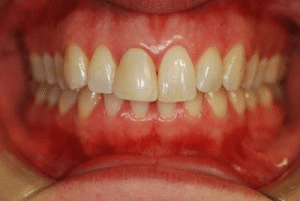
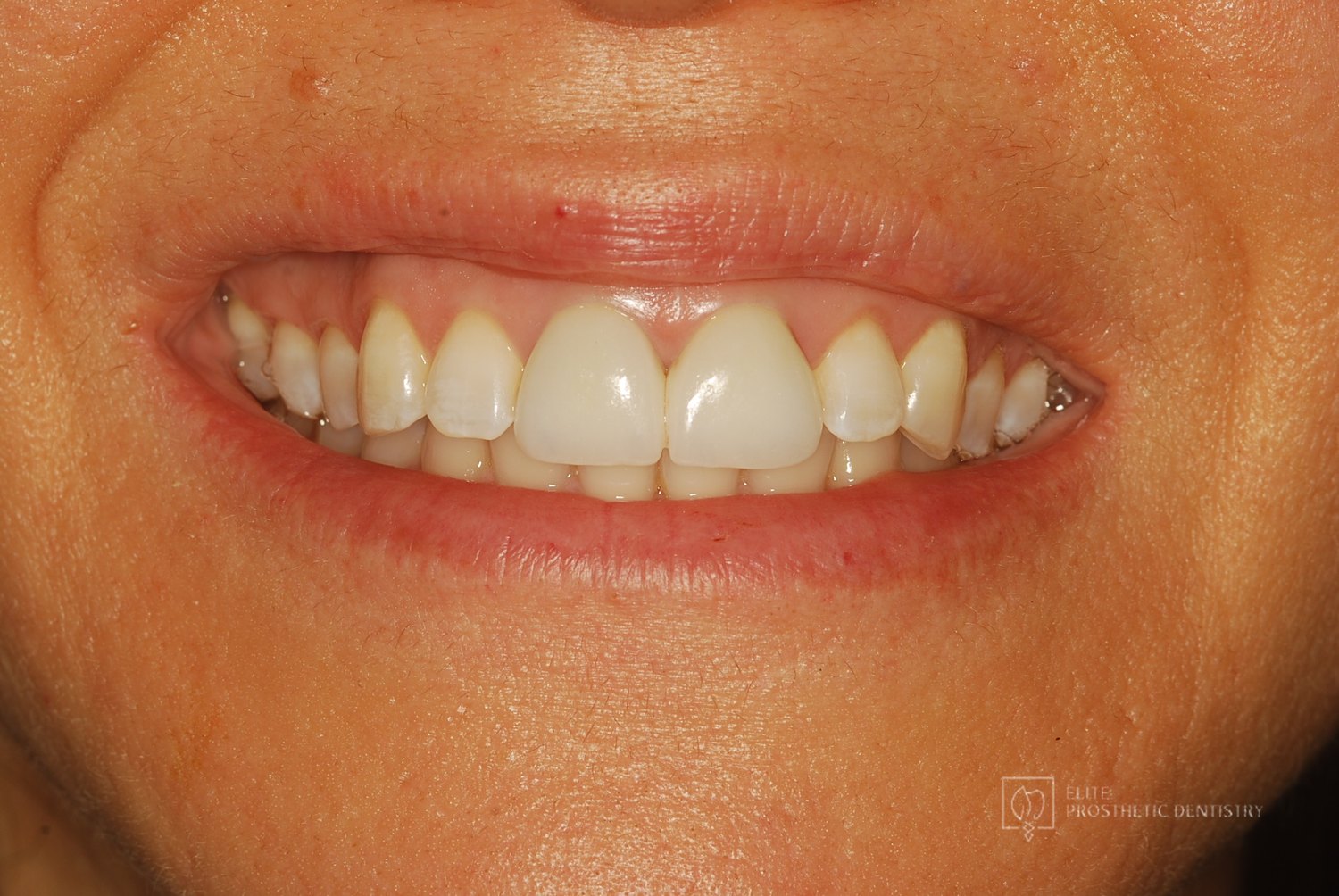
A single front tooth crown matched with the in-house laboratory
Matching a single front tooth crown in Washington, DC. This documented case at Elite Prosthetic Dentistry involved the most demanding restoration in esthetic dentistry, a crown on a single central incisor that had to be indistinguishable from the natural tooth directly beside it. The work was completed by Dr. Gerald Marlin, D.M.D., M.S.D., a prosthodontist, in direct collaboration with the in-house dental laboratory the practice has maintained since 1985.
Case at a Glance
- Treatment
- A single central incisor crown matched to the adjacent natural tooth
- Approach
- Chairside observation by the in-house laboratory technician, internal color development, matched translucency
- Case Type
- Cosmetic-functional correction
- Patient Concern
- Needed a crown on a single front tooth that had to match the natural tooth right beside it exactly, with no room for any visible difference.
- Decision Point
- Have the laboratory match the crown from a photograph and shade guide, or bring the technician chairside to observe the patient and the natural tooth directly.
- Outcome
- The completed crown is virtually indistinguishable from the natural central incisor beside it, in the position where any mismatch would be most obvious.
- Why It Matters
- Illustrates that matching a single visible tooth depends on direct observation of the patient, not only material or shade selection, supporting the case for keeping laboratory work closely coordinated with diagnosis.
The presenting condition
The patient needed a crown on a single central incisor, one of the two front teeth at the midline of the smile. No restoration in dentistry is less forgiving. The central incisor is the most visible tooth in the mouth, and a crown there sits directly beside its natural twin, inviting comparison every time the patient speaks or smiles. Any difference in color, translucency, shade, or light reflection between the crown and the neighboring natural tooth is immediately obvious.
That is why this case is presented less for the complexity of its treatment than for the difficulty of its execution. The clinical task was one crown. The esthetic task was an exact match to nature, with no margin for error.
Clinical Findings
- →A single central incisor requiring a crown restoration
- →A restoration position on the midline of the smile, the most visible location in the mouth
- →A natural central incisor directly adjacent that the crown had to match exactly
- →Internal color and translucency requirements that surface staining alone cannot reproduce
Why this case required prosthodontic-level planning
The color of a natural tooth does not come from its surface. It comes from the dentin, the underlying structure beneath the more translucent enamel, which is why natural teeth show depth, inner warmth, and a subtle glow rather than one flat shade. A crown that is simply surface-stained to match a shade tab can approximate the color of a neighboring tooth and still look wrong, because it handles light differently.
Matching a single central incisor therefore depends on observation. How light reflects off the patient’s natural teeth, how they appear under different lighting conditions, and the small individual characteristics that make each smile unique are things a photograph and a shade guide can only partially convey. Even highly skilled laboratories working remotely, without seeing the patient in person, tend to err on the side of opacity, and opacity is precisely what makes a front tooth crown read as artificial. Elite Prosthetic Dentistry has maintained an in-house dental laboratory within the practice since 1985 on the conviction that direct control over esthetics, precision fit, and the bite is essential to results at this level.
The decision behind the result: building the crown around direct chairside observation
The defining feature of this case was that the laboratory technician did not work from a photograph. Working in the same facility as Dr. Marlin, with direct and frequent communication about the case, the technician came chairside and observed the patient firsthand: the natural teeth, the facial features, and the individual characteristics of the tooth the crown had to live beside.
With that observation, the crown was built from the inside out. Inherent color was applied in the lower layers of the porcelain to mimic the dentin that gives a natural tooth its three-dimensional appearance, producing the natural glow that cannot be achieved by simply surface-staining porcelain to match adjacent teeth. Translucency was then developed to match the way the neighboring enamel transmits light. The proper combination of internal coloration and correct translucency is extremely difficult to create without the technician actually seeing the patient, and it is the difference between a crown that matches a shade tab and a crown that disappears into a smile.
The treatment plan
-
1
Chairside evaluation with the laboratory technician
The technician observed the patient's natural teeth, facial features, and tooth characteristics firsthand rather than working from photographs and shade guides.
-
2
Internal color development
Inherent color was applied in the lower layers of the porcelain to mimic dentin, building the three-dimensional appearance of a natural tooth from the inside out.
-
3
Translucency matched to the natural enamel
The outer porcelain was developed to reproduce the specific way the adjacent natural tooth transmits light, avoiding the opacity that makes crowns look artificial.
-
4
Assessment beside the natural tooth
The crown was evaluated chairside directly against the neighboring central incisor in the patient's own smile, where any mismatch would be immediately visible.
The outcome
The completed crown is virtually indistinguishable from the natural central incisor beside it, in the one position where any error would announce itself. That is the standard the in-house laboratory was built to meet: internal color, translucency, fit, and bite controlled directly, in the same facility, by a technician who has seen the patient rather than a photograph.
Results of this kind are the reason the practice has kept its laboratory in-house for four decades. Patients receiving restorations made this way consistently report that the new crown looks more natural than they expected and matches their surrounding teeth beautifully.
Result Highlights
- ✓A single central incisor crown matched to the natural tooth directly beside it
- ✓Internal color built into the lower porcelain layers rather than stained on the surface
- ✓Translucency developed to match the adjacent natural enamel
- ✓Esthetics, precision fit, and bite controlled within the practice's own laboratory
- ✓Direct chairside observation of the patient by the laboratory technician
Who this case may sound familiar to
This story tends to resonate with patients in a few recognizable situations:
- You need a crown on one front tooth and are worried it will never truly match.
- You have seen crowns that look flat or opaque next to natural teeth and want better for the most visible tooth you have.
- You have been told an exact single-tooth match is one of the hardest things in dentistry, and you want a practice built for exactly that.
- You value craftsmanship and want the technician making your crown to see you in person, not a photograph.
- You want it matched correctly the first time rather than remade until it is close enough.
If any of those describe where you are, a consultation with Dr. Marlin can establish the diagnostic picture and the specific options for your case.
Frequently asked questions
Why is a single front tooth crown the hardest restoration to match?
Because it sits at the midline of the smile directly beside its natural counterpart, where the two are compared in every conversation and photograph. Any difference in color, translucency, or light reflection is immediately obvious, so the crown must reproduce the optics of the neighboring tooth, not just its shade.
What is an in-house dental laboratory?
It is a laboratory located within the dental practice itself, where the technician who fabricates crowns and other restorations works alongside the dentist. That allows direct, frequent communication about each case and lets the technician observe the patient in person rather than working only from photographs and shade guides.
How does chairside observation improve a crown's appearance?
Seeing the patient lets the technician study how light reflects off the natural teeth, how they appear under different lighting conditions, and the subtle characteristics unique to that smile. Those observations guide the internal coloration and translucency of the crown, which is what makes it read as a natural tooth.
What gives a tooth its natural color and glow?
Primarily the dentin, the structure beneath the enamel. Enamel is relatively translucent, so light passes through it and reflects back from the dentin, creating depth and warmth. Crowns built with inherent color in their lower porcelain layers mimic this, while crowns colored only on the surface tend to look flat.
Why do some crowns look opaque or flat?
Crowns fabricated without direct observation of the patient often err on the side of opacity, and opaque porcelain reflects light superficially instead of transmitting it the way enamel does. The proper combination of internal color and correct translucency is difficult to achieve remotely, which is one reason in-house laboratory work stands out on front teeth.
Why see a prosthodontist for a single front tooth crown?
A prosthodontist is a dentist with advanced specialty training in the restoration and replacement of teeth, including the esthetic and functional judgment that single anterior crowns demand. Combined with an in-house laboratory, that training gives the most difficult restoration in dentistry its best chance of an invisible result.
More about the work behind this case
This case is the in-house laboratory advantage in its purest form: one custom crown, one natural neighbor, and no room for error. More about how the laboratory works is at the in-house laboratory, and the thinking behind keeping it inside the practice is part of the practice philosophy.
Elite Prosthetic Dentistry treats patients from across the DMV including Bethesda, Chevy Chase, McLean, Arlington, Potomac, and Great Falls, with a record of out-of-area patients traveling to the practice for complex restorative care.
Related Services
Related Patient Success Stories
Explore similar patient success stories demonstrating our expertise in advanced prosthetic dentistry.
 Before
  After
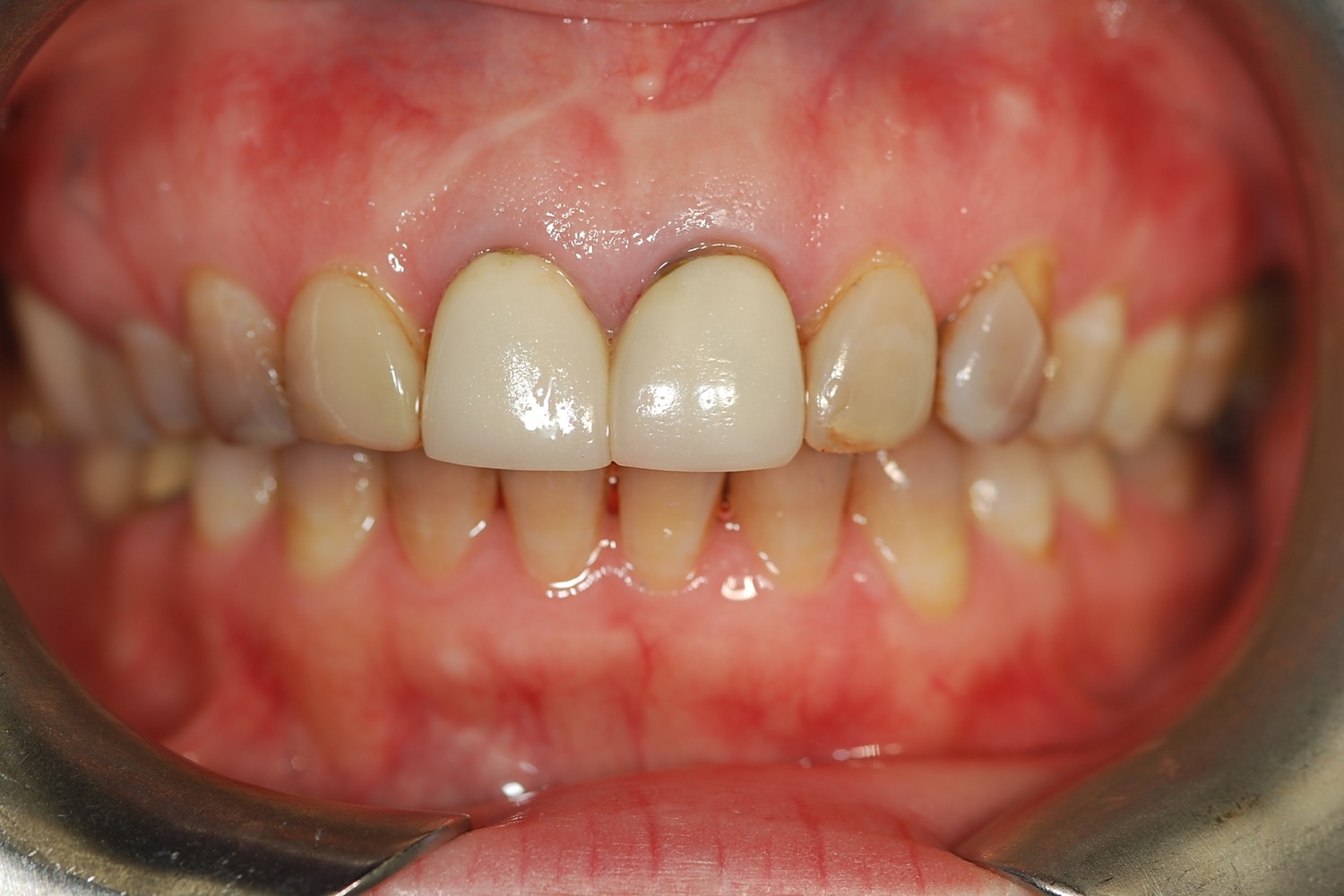
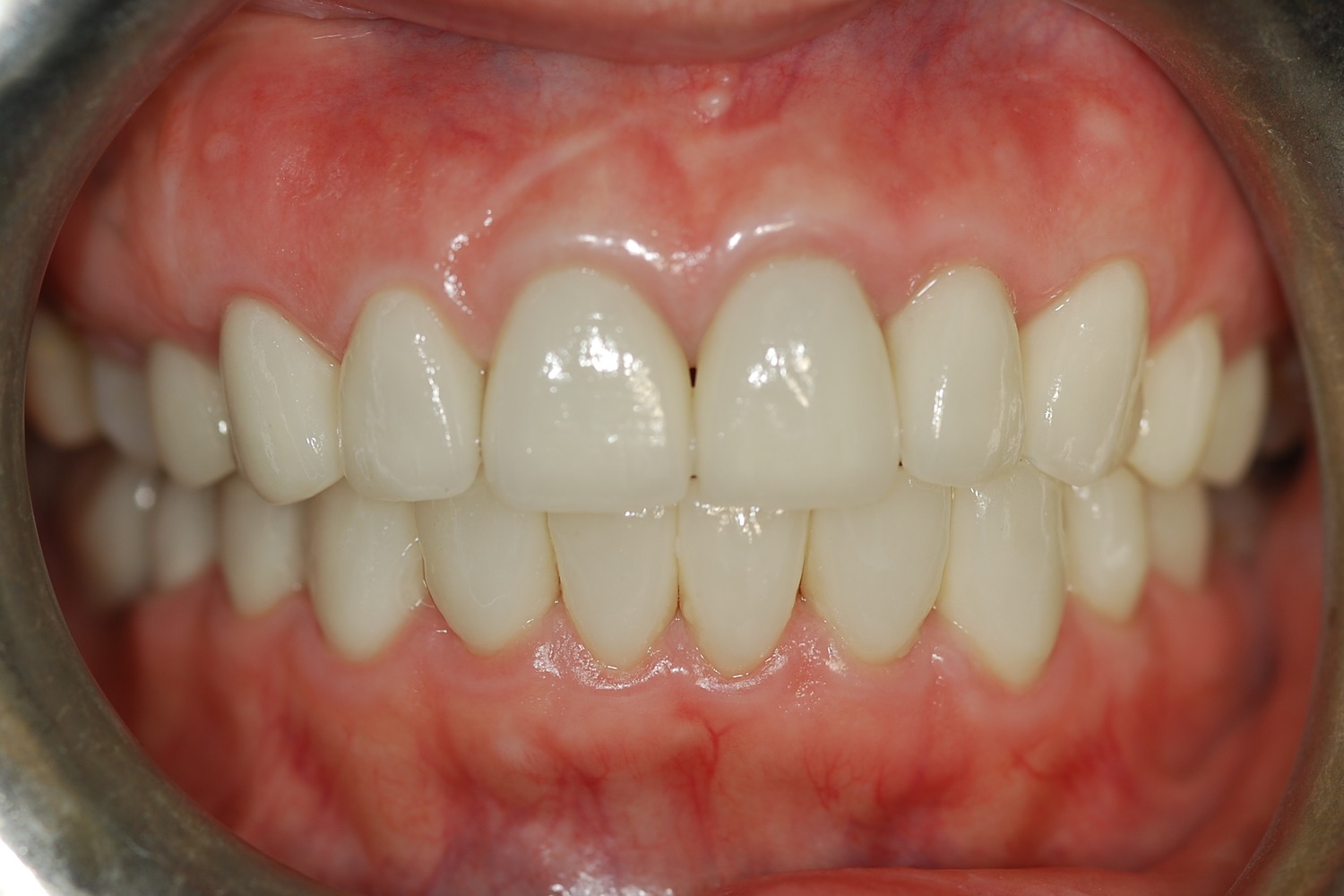
After How Aging, Opaque Restorations Were Replaced with Customized Ceramic Restorations Designed for Long-Term Natural Esthetics
The existing restorations appeared opaque, worn, and unnatural over time, affecting both confidence and overall smile harmony.
 Before
  After
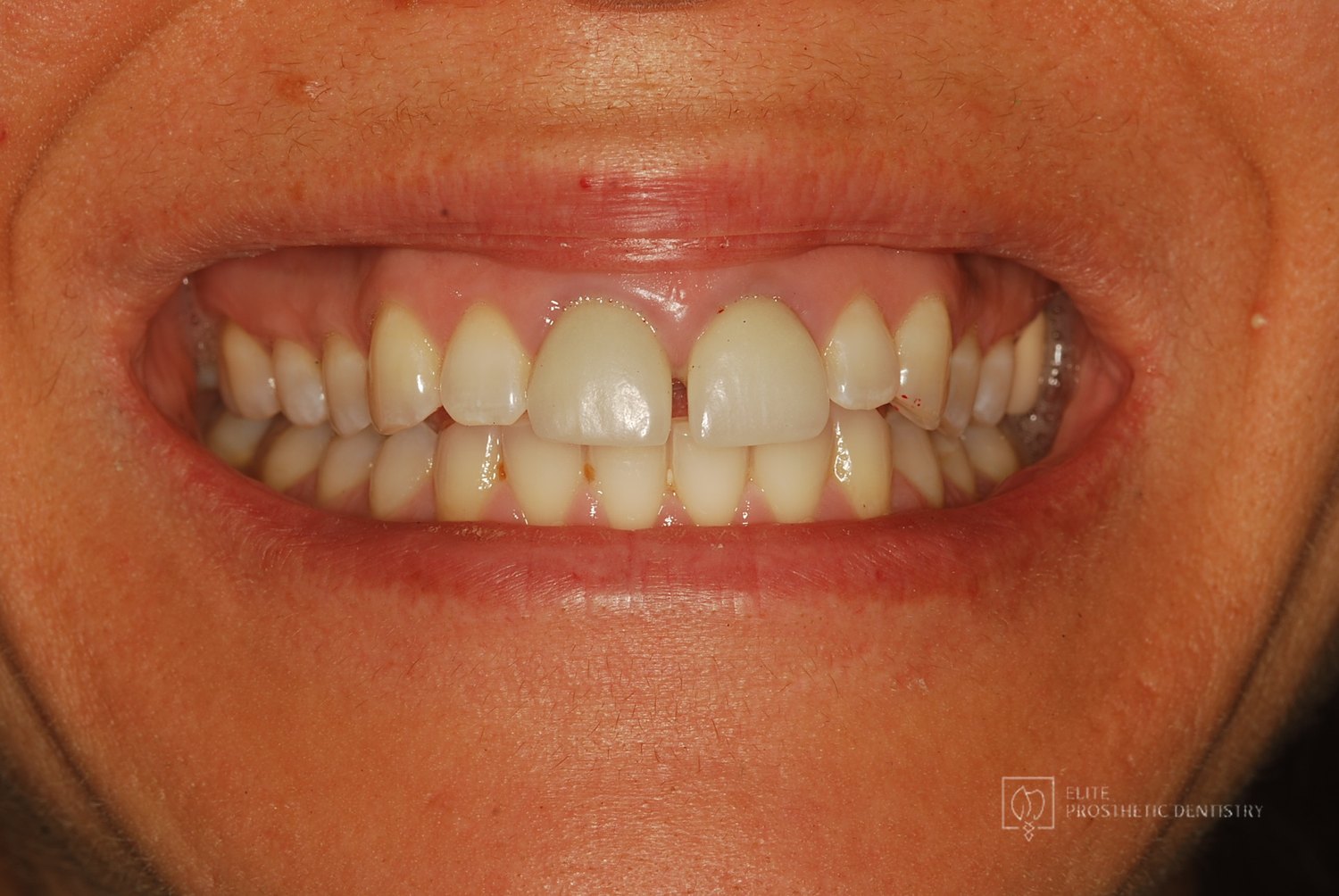
After Two Front Teeth Saved From Extraction: A Second Opinion, Custom Gold Posts, and Crowns Made to Last
Two upper central incisors with failed root canal treatment and recurrent decay had been recommended for extraction and implant replacement. A CBCT evaluation showed that removing the roots from their thin facial bone housing could create a visible esthetic defect in the gum and bone contour, made worse by the patient's high lip line.
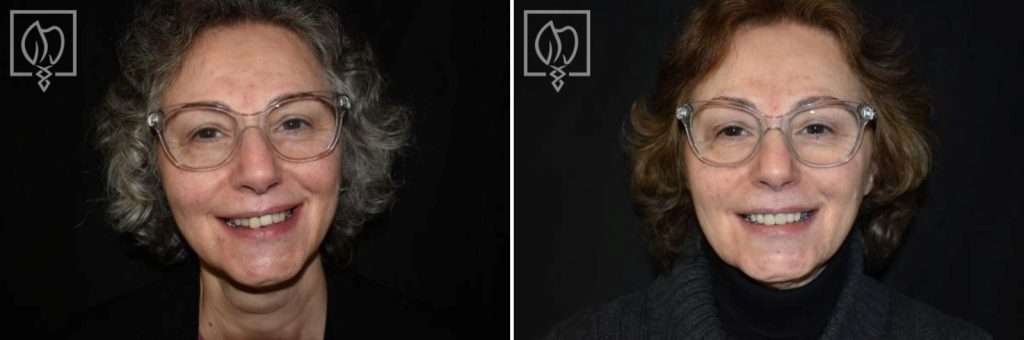
Temporary Crowns Restore a Patient's Smile in One Day with an Immediate Smile Makeover
A patient from Potomac, Maryland came to the practice in pain from a failing dental implant whose restoration was also compromising her appearance and her confidence.