
What You Should Know About Dental Implants Before Your Consultation
If you are researching alternatives to dentures, or facing your first missing tooth, dental implants deserve a place on your list. They are the closest thing modern dentistry has to growing a tooth back. Before you sit in any consultation chair, here is a working primer: who implants are for, what they actually deliver, and what to ask.
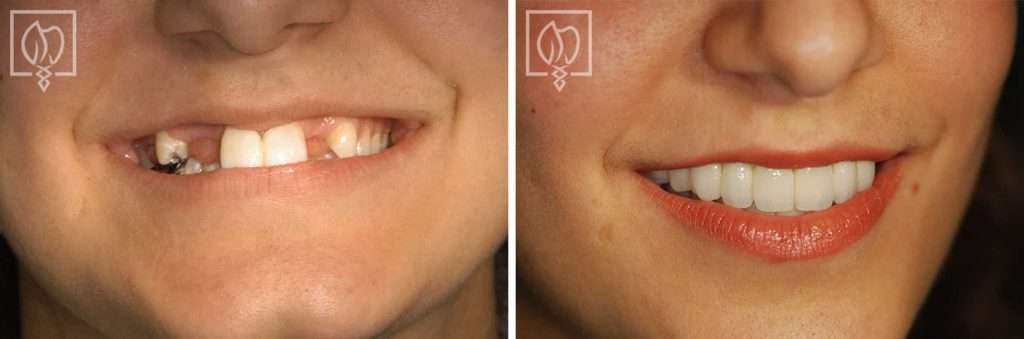
Implant treatment from a completed case in our practice. See the full case
Who Gets Dental Implants?
The candidate profile is broader than most people assume: adults in reasonable overall health who want a long-term answer to missing teeth. That includes people missing a single tooth, people missing several, and, very commonly, longtime denture wearers who are simply tired of the compromises. Age is not a disqualifier. Bone matters, since the implant must anchor in it, but grafting can rebuild deficient sites, and candidacy is settled by examination and 3D imaging rather than assumption. For a fuller decision framework, see when you should consider dental implants.
The Advantages, Stated Practically
Convenience that compounds. An implant is a permanent fixture. There is nothing to remove, soak, or glue, and nothing pressing on the gums or muffling speech the way an ill-fitting denture can.
Eating like yourself again. Missing teeth quietly edit your menu. An implant restores efficient chewing, and the foods you retired come back.
An appearance that is yours. The restoration is designed to match your surrounding teeth in shape, color, and translucency. In our practice that work happens in an in-house laboratory, matched against your actual smile.
A jawbone that stays. The quiet advantage that outranks the others: by replacing the tooth’s root, an implant keeps stimulating the bone, preventing the resorption and facial changes that follow tooth loss. No denture or bridge does this.
Caring for an Implant
The maintenance program is the one you already know: brush, floss, and keep regular checkups. Implants cannot decay, but the gum around them can become infected without hygiene, so consistency matters; the specifics are covered in how to take care of your dental implant. Properly maintained, an implant can last a lifetime.
The Part Brochures Skip: Quality Varies
Implants are not a commodity, and results track the planning, placement, and restoration behind them. Positioning decides whether the crown can look natural and carry forces correctly. Laboratory quality decides how the tooth looks and how long it serves. Accountability decides who stands behind the work in year fifteen.
So bring questions to every consultation, including ours: who plans the position and from what imaging, who operates, who makes the crown, and what happens if bone is thin. The full question list lives in all the questions you want to ask about dental implants.
Dr. Gerald Marlin is a specialty-trained prosthodontist who has placed more than 3,900 dental implants over a career of more than 40 years, with planning, surgery, and laboratory work under one roof. Start your homework with a real evaluation: call 202-244-2101 or set up a consultation at Elite Prosthetic Dentistry in Friendship Heights, Washington, DC.
See How We Resolve These Problems
Our patient success stories show real cases and real results. Browse outcomes from a specialist prosthodontist with decades of experience and 3,900+ implants placed.
Key Takeaways
- ✓ Implants suit people in reasonable overall health seeking a permanent answer to missing teeth, including longtime denture wearers.
- ✓ The advantages are practical: fixed convenience, restored chewing, natural appearance, and preserved jawbone.
- ✓ Care is the same as for natural teeth: brushing, flossing, and regular checkups. No adhesives, no soaking, no special products.
- ✓ Quality varies with who plans, places, and restores the implant. Walk into any consultation with questions about all three.
- ✓ Well-planned, well-maintained implants can last a lifetime.
Frequently Asked Questions
Who is a good candidate for dental implants?
People in reasonable overall health who want a long-term solution for missing teeth, including denture wearers seeking something fixed and comfortable. Adequate jawbone matters, though grafting can rebuild deficient sites. Candidacy is confirmed by examination and 3D imaging, not age.
What are the real advantages of implants over dentures?
Implants are fixed, so nothing slips, presses on the gums, or interferes with speech; chewing power returns close to natural; the restoration is designed to match your teeth; and the implant preserves the jawbone a denture lets shrink. For most patients the daily difference is simply forgetting about their teeth again.
How do I take care of an implant?
Like a natural tooth: brush twice daily, clean between teeth, and keep regular checkups and cleanings. The implant cannot decay, but the gum around it can become infected without hygiene, which is the main threat to its longevity.
What should I ask at an implant consultation?
Who plans the implant position, and from what imaging? Who performs the surgery? Who designs and fabricates the crown, and where? What is the plan if my bone is thin? Clear answers to those questions predict your result better than any brochure.
Related Patient Success Stories
Explore similar patient success stories demonstrating our expertise in advanced prosthetic dentistry.
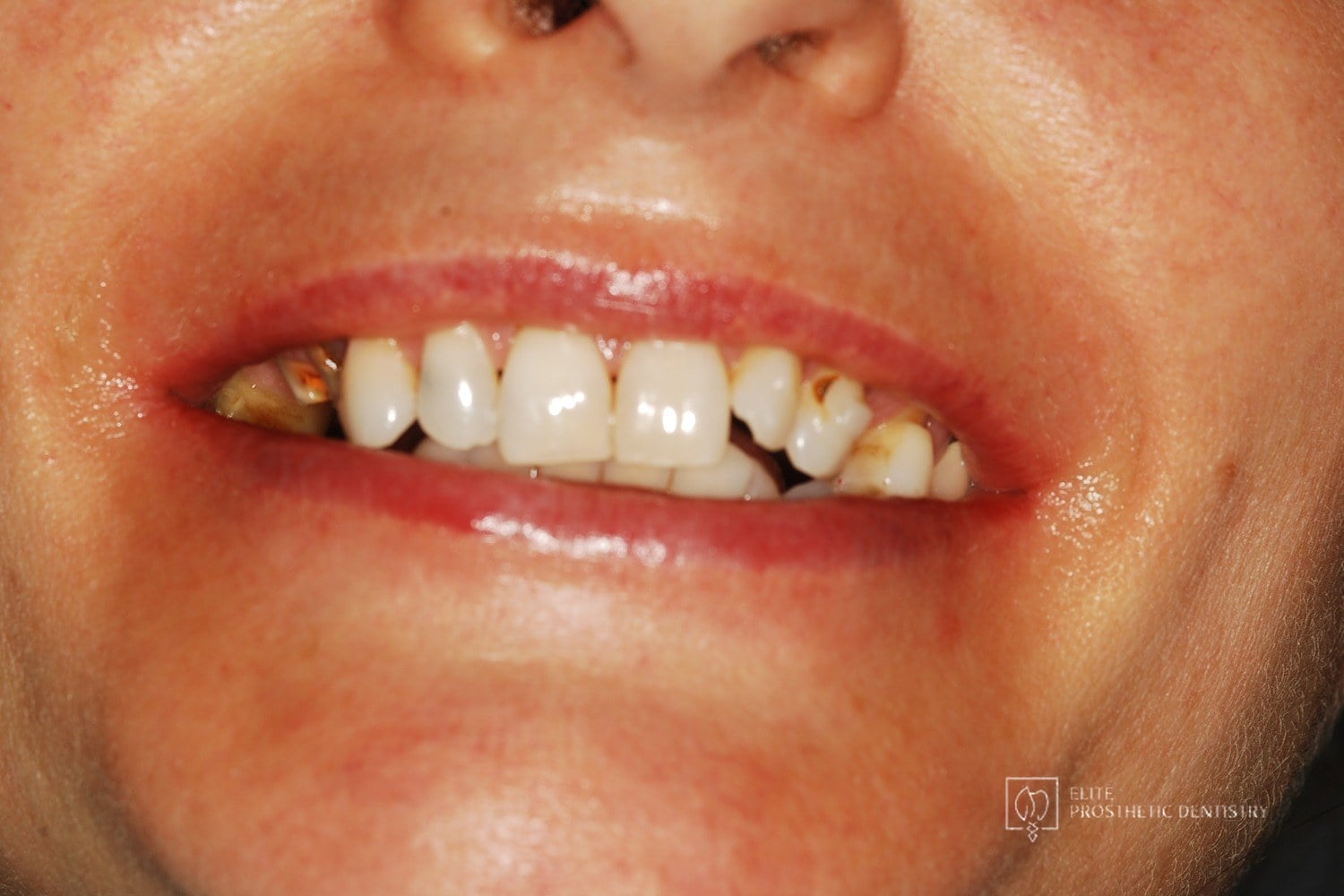 Before
 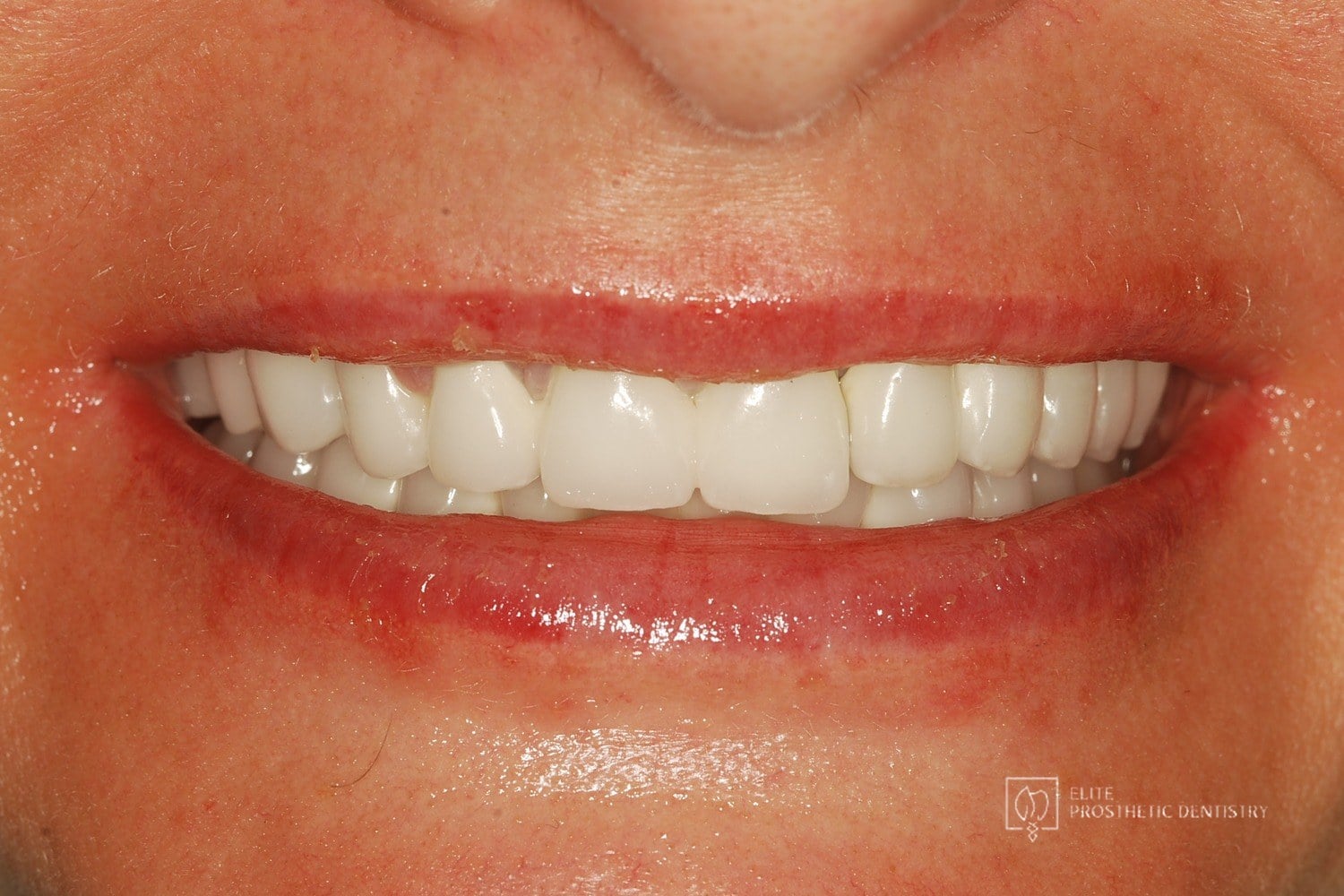 After
After How Aging, Failing Dentistry Was Replaced with a Coordinated Full-Mouth Implant and Crown Reconstruction
The patient presented with throbbing upper-molar pain, long-standing infections, multiple root canals and unfinished prior treatment, generalized sensitivity, and several hopeless teeth.
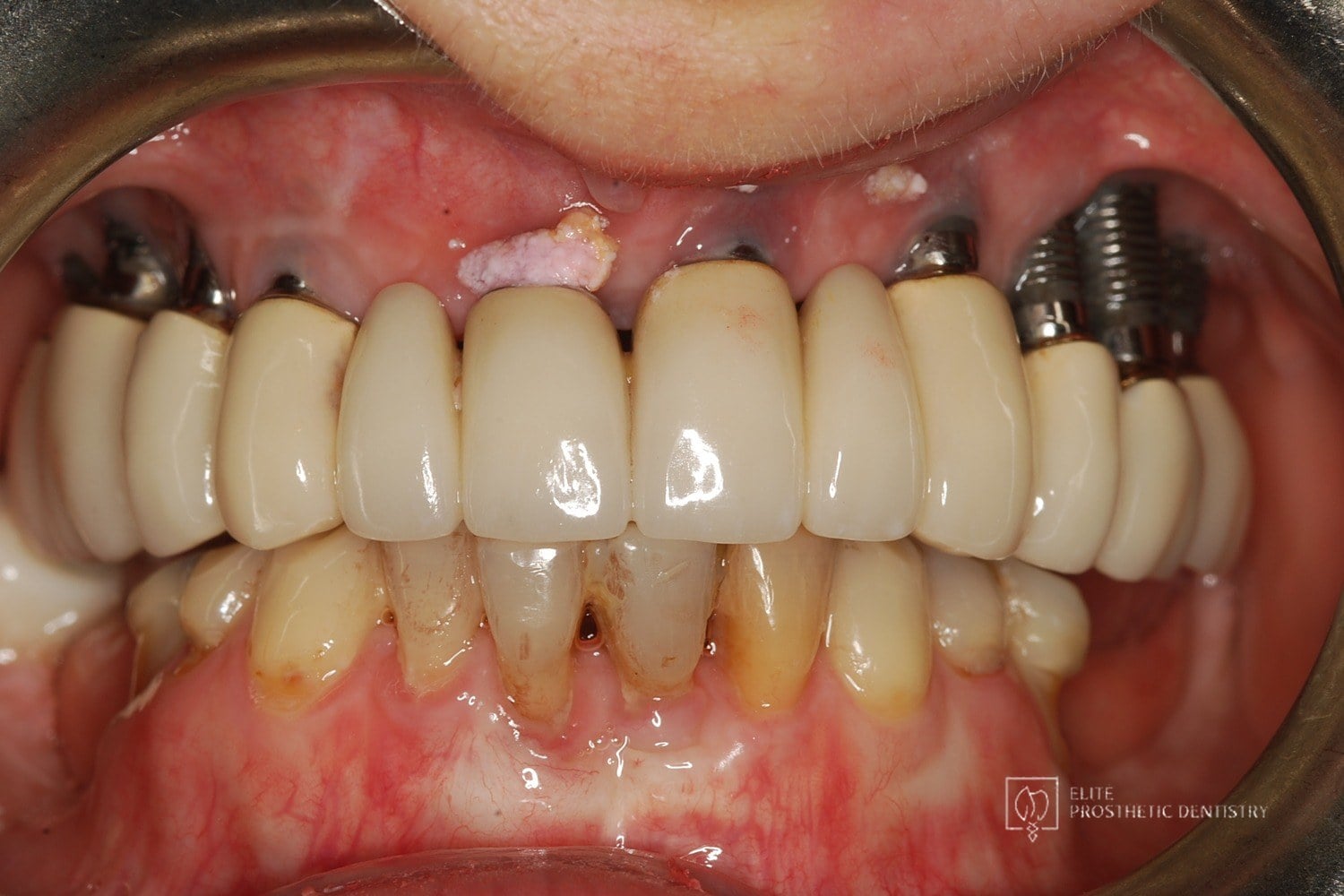 Before
 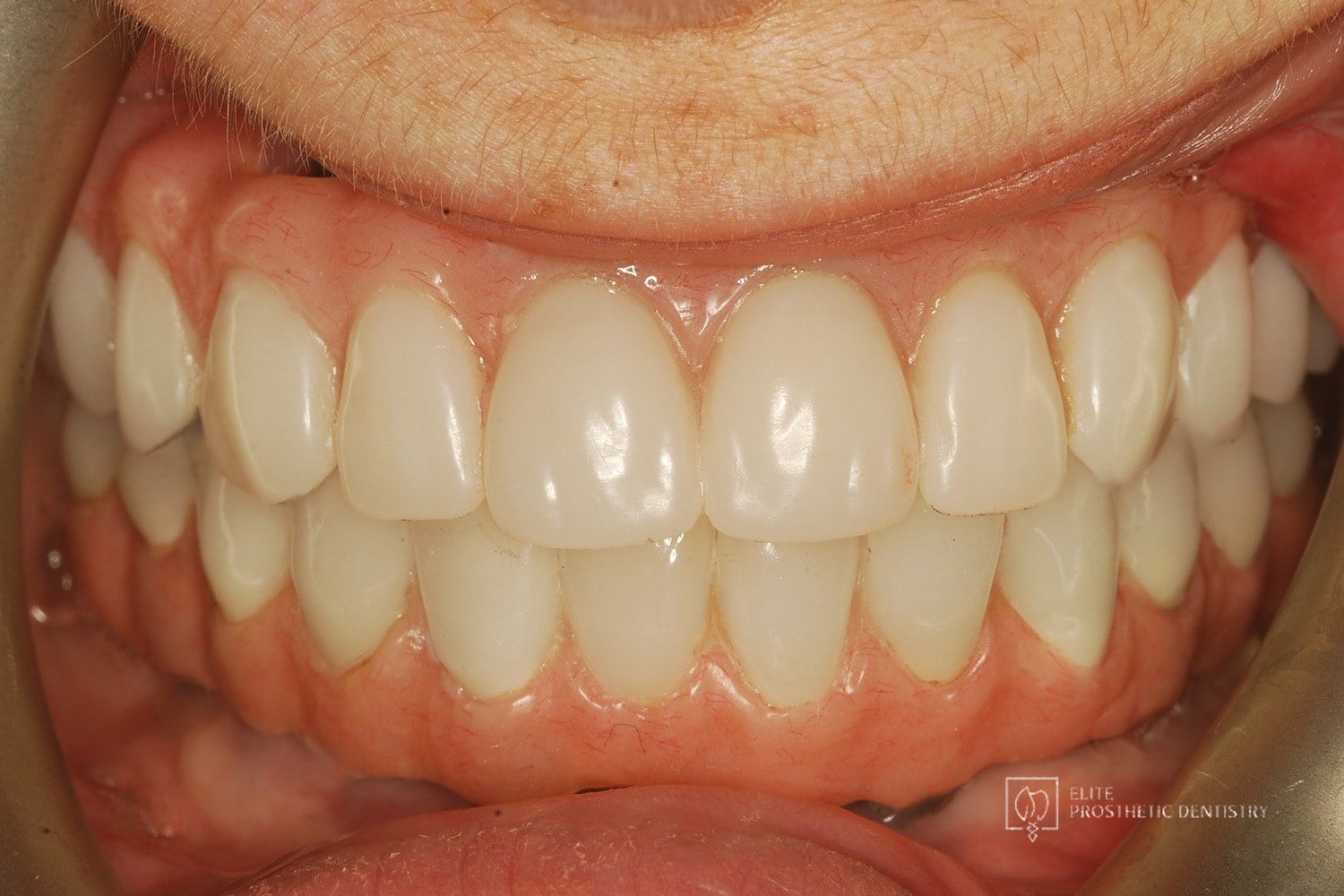 After
After How Failing Implants and Severe Bone Loss Were Rebuilt Into a Stable Full-Arch Implant Reconstruction
The patient presented with significant complications from previously placed implants, severe bone loss, failing posterior implants, and an unesthetic full-arch bridge. Both arches required full reconstruction, with the upper arch showing the most advanced bone loss and instability.
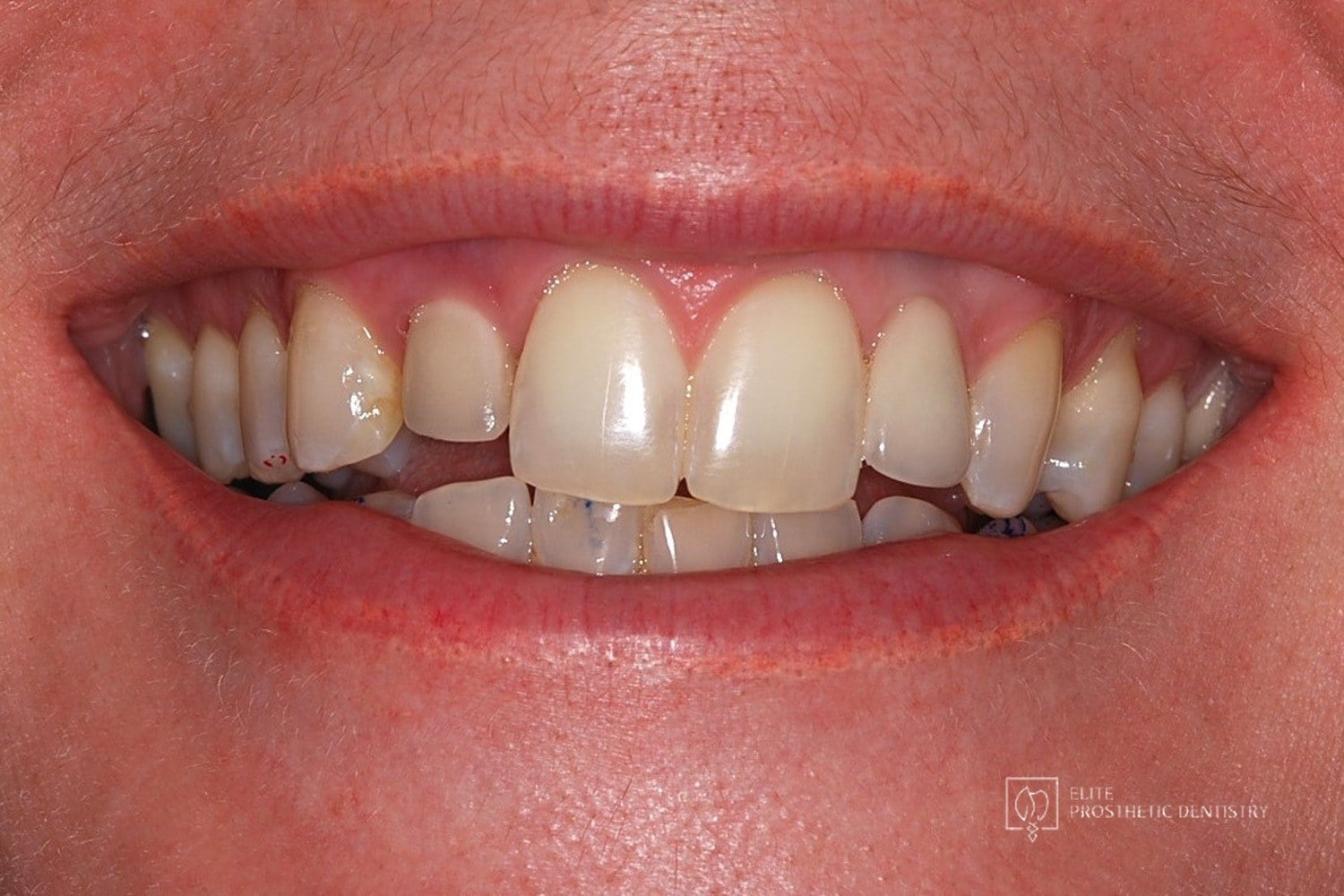 Before
 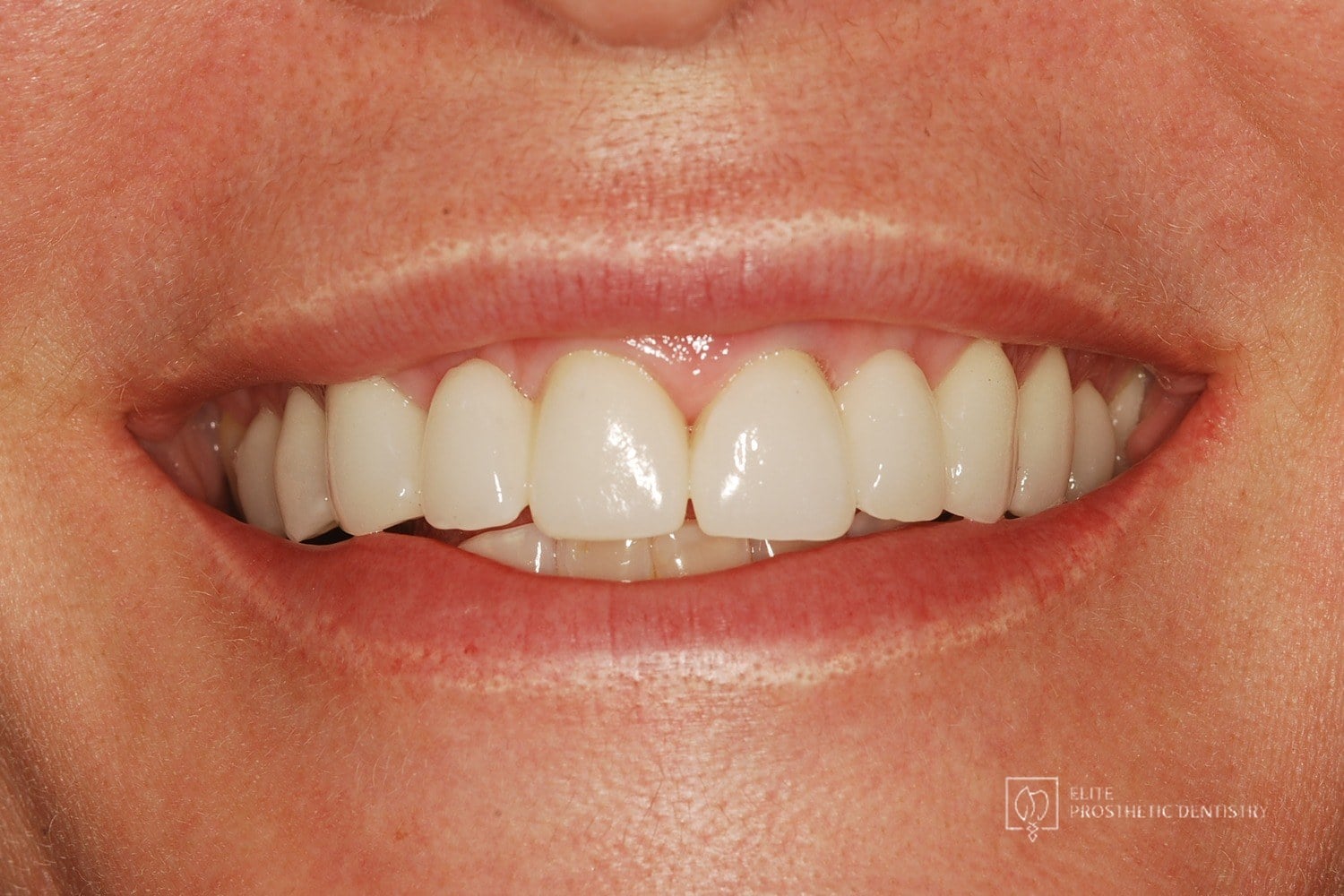 After
After How Failing Lateral Incisor Implants Were Replaced with Custom Zirconia Bridges After Severe Bone Loss Made Replacement Implants Impossible
Comprehensive examination including CBCT imaging revealed significant bone loss surrounding implants that were placed outside the buccal plate, most likely due to placement without a CBCT-generated surgical guide. The implants were determined non-salvageable, and the alveolar ridge was too narrow to support replacement implants without extensive reconstruction.
Related Articles
Deepen your knowledge with additional insights on this topic.
 Dental Implants
 If a Single Front Tooth Is Replaced with an Implant, Can It Look Natural?
Yes. See the four steps, with real case photos, that make a single front tooth implant indistinguishable from the natural tooth beside it. Washington, DC.
 Dental Implants
 What Is Precision Implant Placement (PIP)?
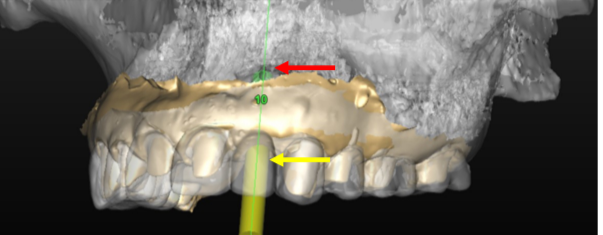
Precision Implant Placement plans each implant virtually on a CBCT scan, then delivers it with a custom surgical guide. See the three steps with real images.
 Dental Implants
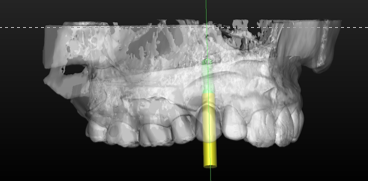
 What Is the Ideal Surgical Guide for Precision Implant Placement?
Not all surgical guides are equal. The gold standard is CBCT-based: planned virtually in 3D, 3D printed, and seated on your teeth. A DC prosthodontist explains.