
Dental Implants vs. Dentures and Bridges: Why Implants Set the Standard
Every method of replacing a missing tooth answers the same question at a different depth. Dentures rest on the gums, replacing the visible tooth. Bridges span the gap by leaning on the neighbors. Dental implants address the root of the problem, literally: a titanium post replaces the tooth’s root, and everything else is rebuilt on that foundation.
That difference in depth explains nearly every practical difference patients experience. Here is the comparison, honestly made.
What Replacing the Root Buys You
The root is the tooth’s living connection to the jaw. Chewing forces traveling down the root stimulate the bone around it, and stimulated bone maintains itself. Remove the root and that maintenance contract ends: the bone begins resorbing, neighboring teeth drift, and over years the face itself can lose support.
An implant is the only replacement that renews the contract. Through osseointegration, the titanium post fuses with the jawbone and resumes the root’s old job, preserving the bone, the alignment of nearby teeth, and your natural facial contours. Dentures and bridges, whatever their virtues, leave the bone unemployed.
Function follows the same logic. Because implants are anchored in bone, there are no adhesives, no shifting mid-sentence, no foods crossed off the list, and nothing leaning on the teeth next door. A bridge, by contrast, requires grinding down the adjacent teeth to serve as anchors, spending healthy tooth structure to solve a missing-tooth problem. Once restored with a custom crown, an implant is visually and functionally indistinguishable from the tooth it replaced.
What the Implant Process Actually Involves
The journey runs in four stages, each with a purpose. It begins with a consultation and 3D imaging to evaluate your oral health and confirm the jawbone can support an implant, and to plan its position precisely. Placement itself is a controlled surgical procedure under local anesthesia, with sedation available, and is typically far gentler than its reputation.
Then comes patience with a purpose: several months while the bone fuses to the implant, creating the foundation everything depends on. You wear an appropriate temporary throughout. Finally, a custom abutment and crown, fabricated in our in-house laboratory and matched to your natural teeth in shape, shade, and translucency, complete the restoration.
The Honest Caveats
Implants are the standard, not a universal answer. They require adequate bone, sometimes rebuilt first with grafting, reasonable health, and a proper candidacy evaluation, including the cases where an implant should not be done. Bridges retain a role when adjacent teeth already need crowns; dentures and overdentures remain legitimate options, especially implant-retained versions that solve the stability problem. The right recommendation comes from an examination, not a brochure.
That is where specialty training matters. Dr. Gerald Marlin, a prosthodontist with more than 3,900 dental implants placed over a career of more than 40 years, evaluates all three options against your actual anatomy and tells you plainly which one your case supports, including when the answer is not the most expensive one.
If you are weighing how to replace a missing tooth, or several, start with real information about your own mouth. Call 202-244-2101 or book your consultation at Elite Prosthetic Dentistry in Friendship Heights, Washington, DC.
See How We Resolve These Problems
Our patient success stories show real cases and real results. Browse outcomes from a specialist prosthodontist with decades of experience and 3,900+ implants placed.
Key Takeaways
- ✓ The three ways to replace a missing tooth solve different amounts of the problem: dentures rest on the gums, bridges lean on neighboring teeth, and implants replace the root itself.
- ✓ Only an implant stimulates the jawbone, preventing the resorption and facial changes that follow tooth loss.
- ✓ Implants stand independently: no adhesives, no shifting, and no grinding down of healthy adjacent teeth.
- ✓ The implant process runs consultation, placement, integration over several months, then abutment and custom crown.
- ✓ Bridges and dentures still have legitimate roles. The right answer comes from an examination, not a preference.
Frequently Asked Questions
What is better, a dental implant, a bridge, or a denture?
For most patients who qualify, an implant, because it is the only option that replaces the tooth root, preserving jawbone and standing independent of other teeth. Bridges suit some situations where adjacent teeth already need crowns, and dentures remain the economical route for replacing many teeth at once. The honest answer follows an examination of your bone, bite, and goals.
Why does replacing the root matter so much?
Because the root is what keeps the jawbone alive. Chewing forces travel down the root and stimulate the bone; remove the root and the bone begins resorbing within months. Dentures and bridges replace the visible tooth but leave the bone unstimulated, which is why long-term denture wearers develop the sunken facial look implants prevent.
What does the implant process involve?
Four stages: a consultation with 3D imaging to confirm bone support, surgical placement of the titanium post under local anesthesia or sedation, a healing period of several months while bone fuses to the implant, and finally a custom abutment and crown matched to your natural teeth.
Do implants feel like natural teeth?
Closer than anything else in dentistry. Because the implant is anchored in bone, there is no movement, no adhesive, and no adjustment period for chewing or speaking. Most patients report forgetting which tooth is the implant.
Related Patient Success Stories
Explore similar patient success stories demonstrating our expertise in advanced prosthetic dentistry.
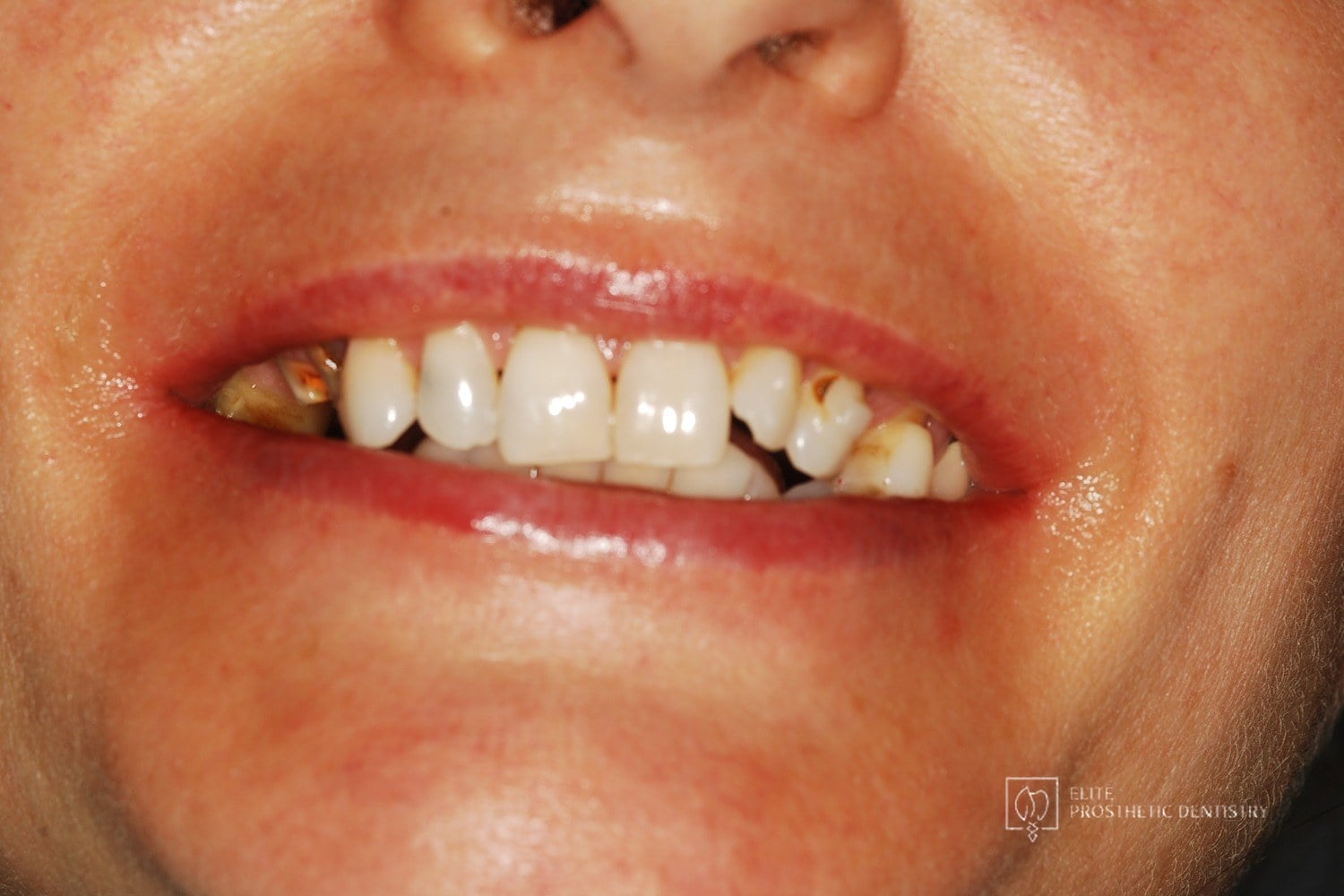 Before
 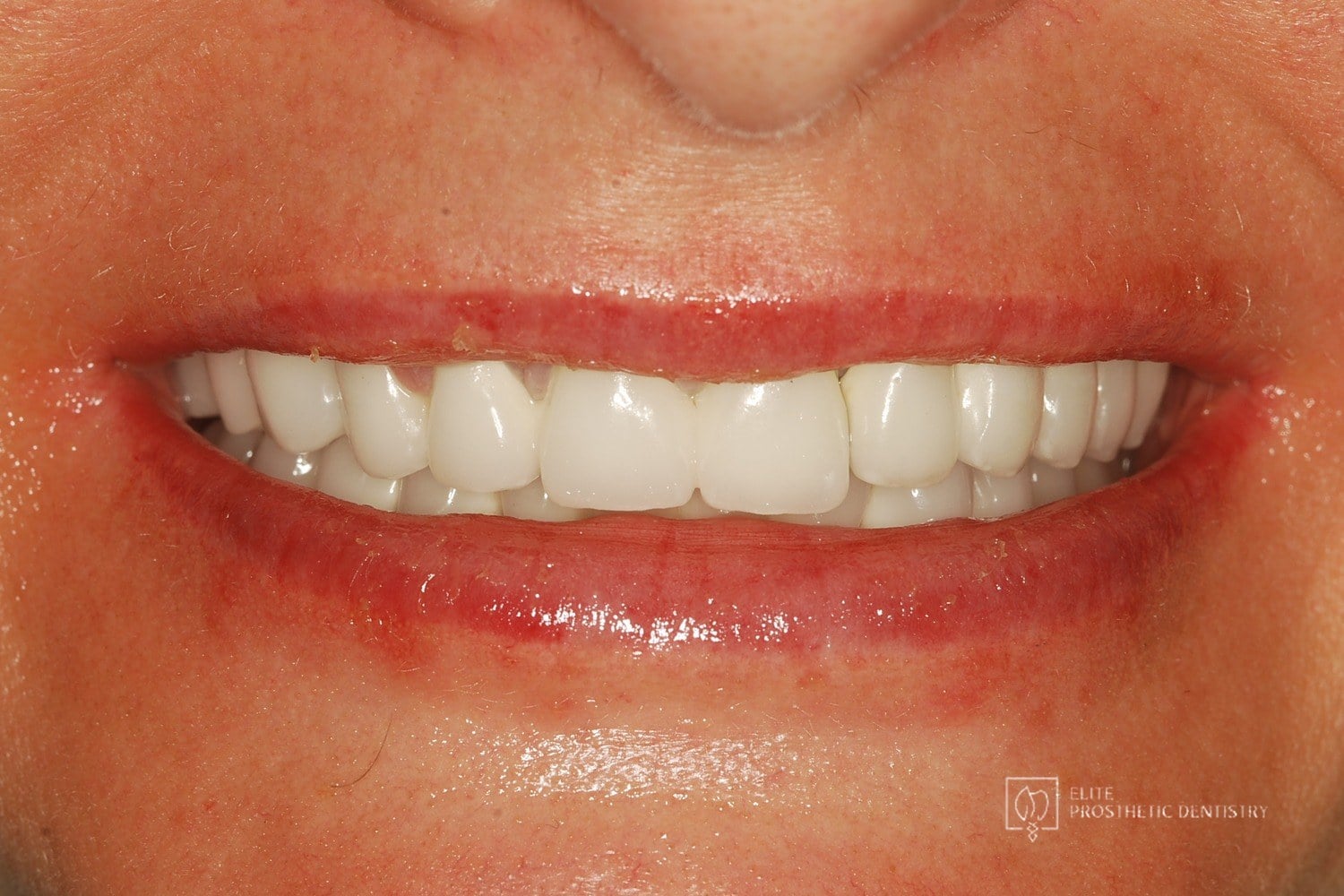 After
After How Aging, Failing Dentistry Was Replaced with a Coordinated Full-Mouth Implant and Crown Reconstruction
The patient presented with throbbing upper-molar pain, long-standing infections, multiple root canals and unfinished prior treatment, generalized sensitivity, and several hopeless teeth.
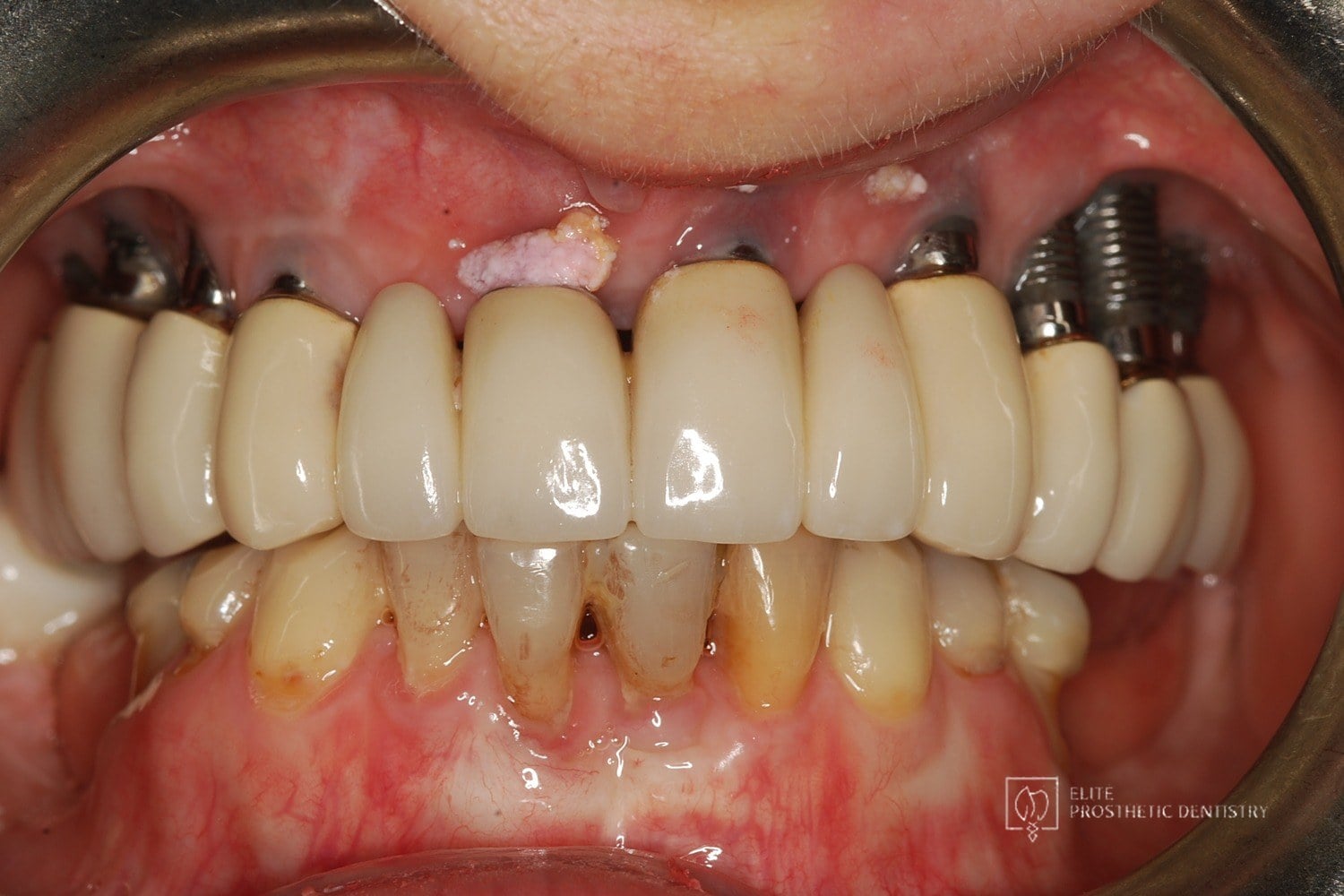 Before
 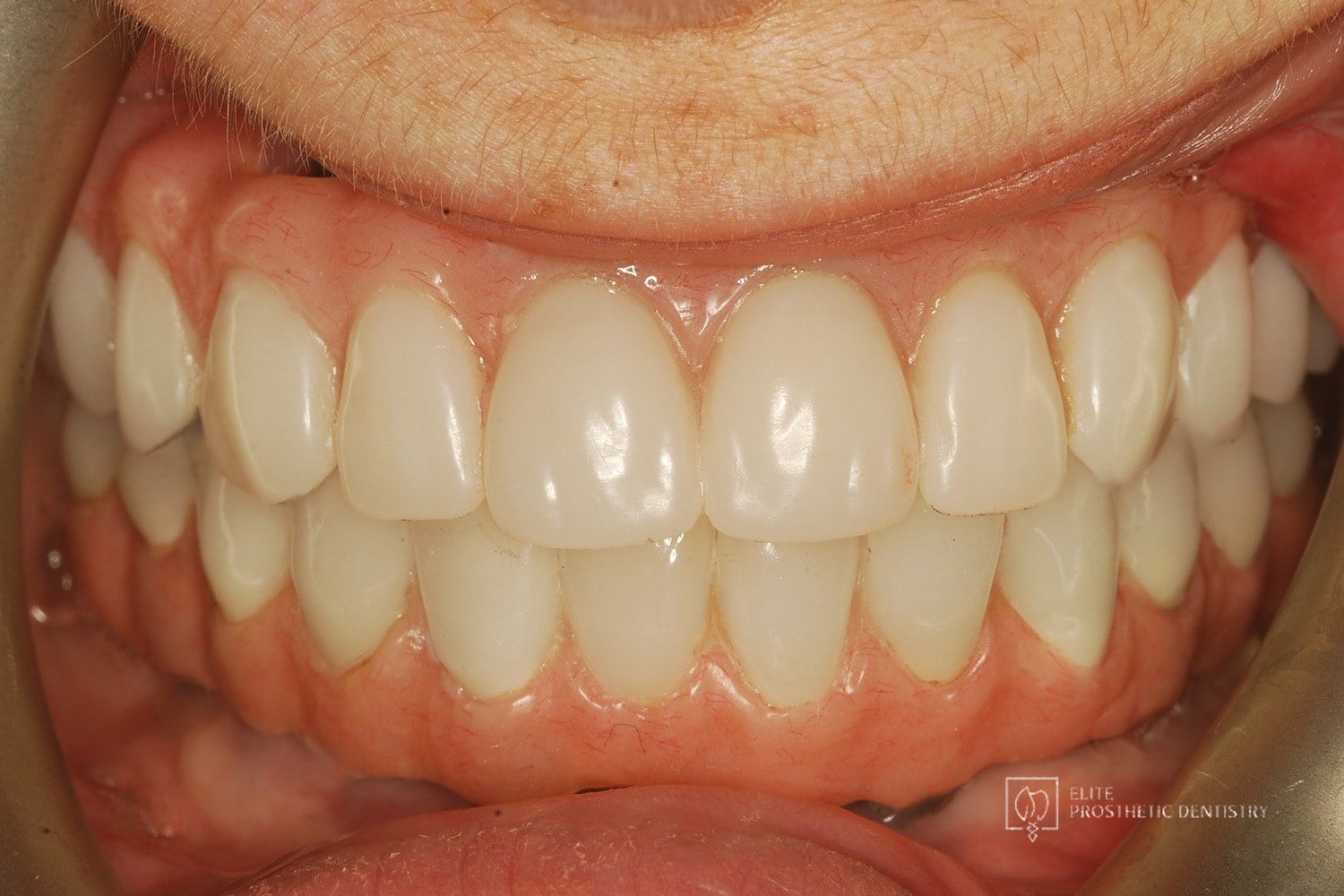 After
After How Failing Implants and Severe Bone Loss Were Rebuilt Into a Stable Full-Arch Implant Reconstruction
The patient presented with significant complications from previously placed implants, severe bone loss, failing posterior implants, and an unesthetic full-arch bridge. Both arches required full reconstruction, with the upper arch showing the most advanced bone loss and instability.
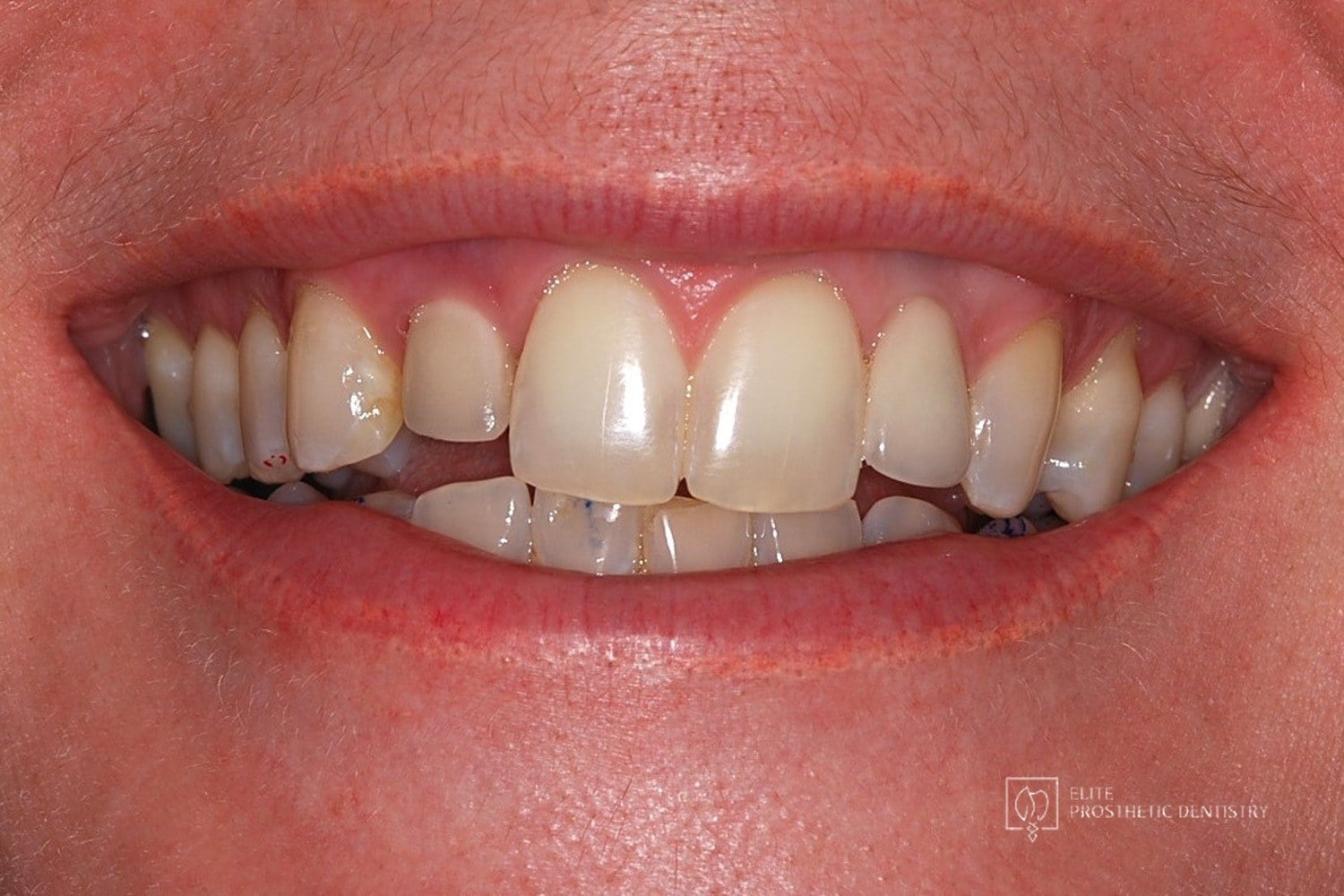 Before
 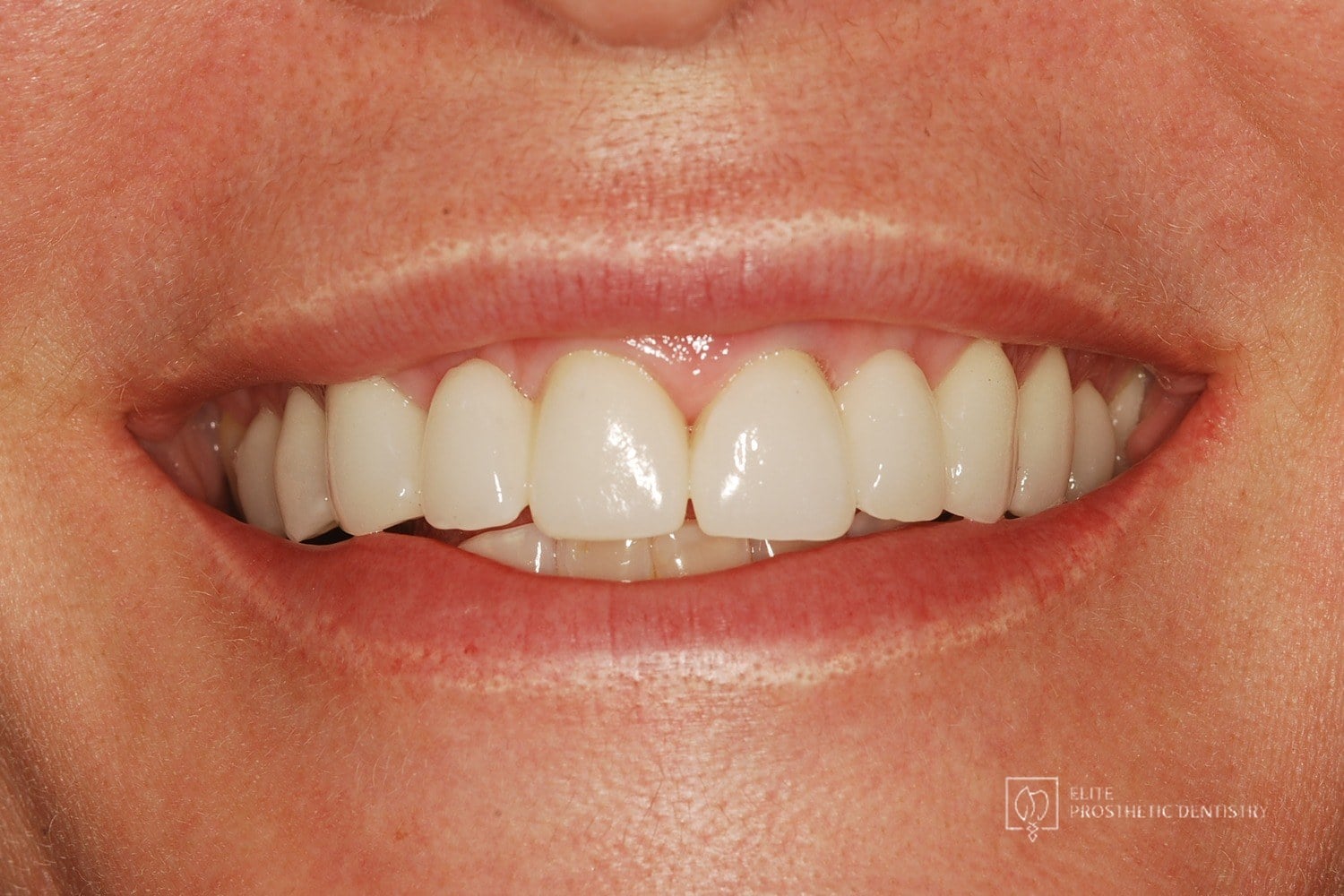 After
After How Failing Lateral Incisor Implants Were Replaced with Custom Zirconia Bridges After Severe Bone Loss Made Replacement Implants Impossible
Comprehensive examination including CBCT imaging revealed significant bone loss surrounding implants that were placed outside the buccal plate, most likely due to placement without a CBCT-generated surgical guide. The implants were determined non-salvageable, and the alveolar ridge was too narrow to support replacement implants without extensive reconstruction.
Related Articles
Deepen your knowledge with additional insights on this topic.
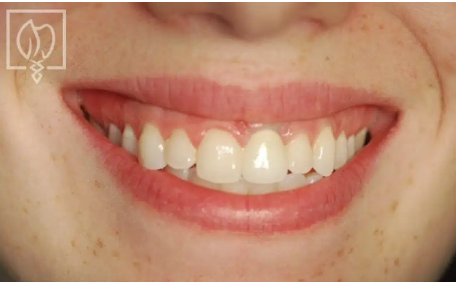 Dental Implants
 If a Single Front Tooth Is Replaced with an Implant, Can It Look Natural?
Yes. See the four steps, with real case photos, that make a single front tooth implant indistinguishable from the natural tooth beside it. Washington, DC.
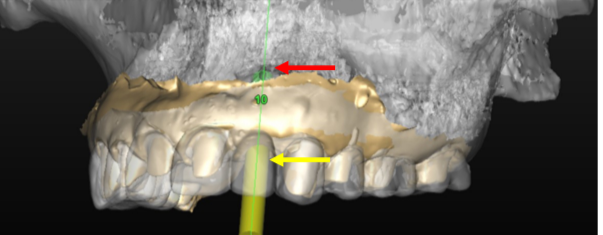 Dental Implants
 What Is Precision Implant Placement (PIP)?
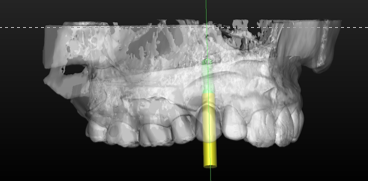
Precision Implant Placement plans each implant virtually on a CBCT scan, then delivers it with a custom surgical guide. See the three steps with real images.
 Dental Implants
 What Is the Ideal Surgical Guide for Precision Implant Placement?
Not all surgical guides are equal. The gold standard is CBCT-based: planned virtually in 3D, 3D printed, and seated on your teeth. A DC prosthodontist explains.